
In short
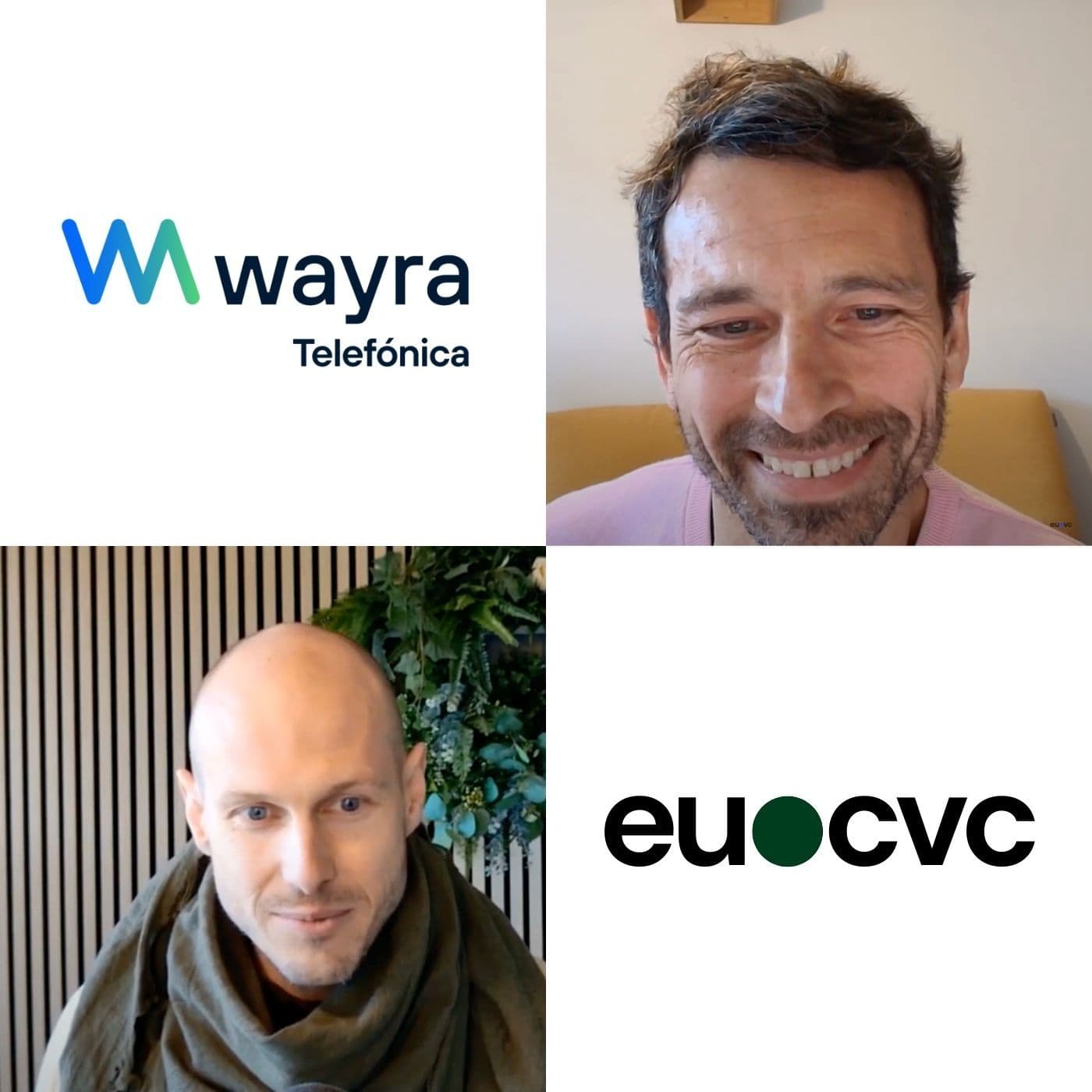
Podcast Notes: EUVC Episode E448 - Bruno Moraes, Wayra
Episode Overview Podcast Title: EUVC Episode Title: E448 | Bruno Moraes, Wayra: Leading Telefónica’s CVC in the UK and Turning Deals into €1B in Revenue Hosts: Andreas Munk Holm and David Cruz e Silva Guest: Bruno Moraes, Managing Director at Wayra Focus: Corporate Venture Capital (CVC) strategies within Telefónica’s Wayra, insights on generating significant revenue through startups.
---
Key Topics Covered
- Investment Strategies and Goals
- Revenue Generation: Telefónica’s CVC, Wayra, aims to create revenue streams through strategic partnerships with startups.
- Investment Scale: Investments range from €10 to €15 million annually, generating over €100 million in revenue — a tenfold return on investment.
- Fund Management and Structure
- Independent Operations: Wayra operates independently within Telefónica but still utilizes its balance sheet for investments.
- Mix of Structures: The fund has a blend of budget structure investment and limited partner (LP) structures through other companies within the Telefónica group.
- Geographical and Vertical Focus
- Regional Presence: Investments are primarily in regions where Telefónica operates: Europe and Latin America.
- Vertical Agnosticism: Although tech-focused, investments span multiple industries, including health tech, due to the vast market reach and B2B opportunities.
- Team Structure and Operations
- Team Composition: Approximately 70 employees, with a small investment team and larger teams focused on value creation and business development.
- Dedicated Value Creation Team: Each portfolio startup is assigned a member from the value creation team to enhance business opportunities and act almost like internal sales.
- Evolution and Growth of Wayra
- Historical Development: Transitioned from a corporate accelerator to a more independent CVC over 15 years.
- Strategic Returns: Emphasis on balancing financial returns with strategic business opportunities for Telefónica.
- Incentives and Compensation in CVC
- Compensation Models: Currently exploring creative compensation structures that balance market-based incentives with strategic goals.
- Cultural Alignment: Need for incentives to account for differences in corporate venture capital versus traditional venture capital.
---
Key Takeaways
- Importance of Strategic Goals: Wayra’s focus on generating revenue for Telefónica highlights the unique objectives of CVCs compared to traditional VCs.
- Value Creation Importance: Assigning dedicated team members to portfolio companies is crucial for capturing business opportunities and fostering growth.
- Balancing Act: The challenge lies in aligning financial incentives with the strategic objectives of CVCs, ensuring that both financial returns and corporate goals are met.
- Ego Management: Essential for CVCs to maintain a humble approach, allowing startup founders to take the lead while fostering collaboration and support.
---
Conclusion
Bruno Moraes’ insights into Wayra's operations reveal the complexities and strategic nuances of corporate venture capital, particularly the importance of aligning financial returns with broader business objectives. The episode provides valuable lessons for those involved in or considering a venture into CVC spaces, emphasizing collaboration, strategic alignment, and the importance of fostering strong relationships with startup founders.
For further information and insights into European VC, follow the EUVC podcast at [eu.vc](https://eu.vc).
Written by AI. May contain mistakes. Listen to the episode to check what was said.
Transcript
Automatic transcript. May contain errors.0:00I'd love to ask you, you know, the notion of having the strategic goal of creating revenue from back into Telefonica. When you invest in a startup, you see the potential of that startup to become a customer or building something that Telefonica can then leverage to get revenue from elsewhere. In this episode, Bruno from Veyra reveals how Telefonica's venture arm has generated billion euros in revenue through an approach that breaks all the rules of traditional venture. We are investing about 10 to 15 million per year, and we are generating more than 100 million. So we generate 10 times more revenue than we invest.
0:41They're a secret, dedicated team with one surprising mission. We always assign to our portfolio companies someone in our value creation team who is responsible for capturing the business opportunities. It's almost like internal sales for the portfolio company. After 15 years evolving from corporate accelerator to independent investment firm, Bruno shares the counterintuitive principle that's made it all work. The ego behind. Let them shine. By working with us, one thing we can give to people in the organization, in the corporation that wants to take risks is to give them a place to shine. If you're building, investing in, or selling to large enterprises, this episode reveals the hidden value that most corporate investors are completely missing.
1:26Join us for this revealing conversation on the European Easy Podcast.
1:56to achieve your goals with confidence. Partner with Ace Alternatives to streamline your operations and elevate your fund's success.
2:07Tear down this wall. It's more than just an ally. This is a union of values. Let's start acting. This show is not investment advice and the hosts of this episode may be invested in the funds and companies featured. Welcome back, everyone, to the European VC podcast. Today, we're doing another CVC episode for the first time without my dear friend, Jepa, who is our in-house CVC expert. But he decided to go to Italy for a bit of winter holidays, which I guess the rest of Denmark is doing as well right now. I am not. I'm here talking to you, Bruno. So thank you for joining us on the podcast. Thank you for having me.
2:52Normally, I always just start by giving an introduction, but I have shined away from doing that here on the CVC episodes because sometimes it's a bit more complex to get it right. So for that reason, I'll let you do the intro of yourself and the firm, Waira. So my name is Ms. Bruno. I've been with Waira for five years. Waira is the CVC arm of Telefonica. Telefonica is a large telco with operations in mainly Europe, Spain, UK, and Germany. You might know by the brand O2 in the UK and Germany, and then everywhere in LATSAM. So Brazil and the rest of almost all the countries in Latin America. This focus, is that driven by where Telefonica is the most active?
3:44Exactly. Our presence mimics exactly Telefonica's presence. So in all the countries where we have operations, we are there as well. Before we really dive into everything about your principles and learnings for building the corporate entity, I just want to ask you, and I asked you this before we started recording as well, when you say corporate clienting, what does that mean? Our main objective is to generate business opportunities between our portfolio companies and telephones. It's quite broad, so it can be reselling the products, So, Telefonica will resell startup products. Sometimes they will co-develop something.
4:28Sometimes Telefonica will be a customer. Sometimes the startup will be a customer. It's quite open, this call, but it is to develop a fruitful business opportunity between portfolio companies and Telefonica. That's our core objective. Obviously, we are investors as well. So, we balance this strategic return with financial return. You made a note in our written notes for this that said 1 billion euro in revenues for Telefonica. Is that the overarching goal or what does that sentence mean? That we just kind of, and that's where we are right now. At the end of 2024, that's what we're doing. So a billion euros revenue for Telefonica from those partnerships between Telefonica and our portfolio.
5:18We always ask the question, are you based on the budget or are you an LP structure? Could you talk a bit about that? Because you're actually both. Let's say our main fund, our wire fund, is a balance sheet investment, a budget structure. And that's where we started. Over time, other group companies also wanted to have their own funds to focus more from our main thesis to something that was more specific to a group company. And some of them have an LP structure. So we have a mixture of both. Can you share a bit? How many funds do you have under management then and the focuses of each? So we have one main fund.
6:01Our call is the WIRE fund. That's our balance sheet investments. And with this investment, all those global investments, but focus on those countries I mentioned. We managed a fund for Vivo. Vivo is our telco in Brazil. One of our biggest. So the 60 million euro fund for that. They want to focus. They want to invest in a startup that can help them achieve those roles. And then we also have a fund in Spain for a group company called Telefonica Seguros. So an insure tech fund called the Opa Ventures that we also manage for Telefonica Seguros. How come you've decided to run those funds under different brand names than Vyra?
6:49Well, they are very linked to their corporate sponsor. Telefonica uses different brands in different countries. It sold two in the UK, in Germany, for example, it is Vivo in Brazil. In Brazil, we wanted that funds to be very linked to Vivo. It invests in companies that can really work with Vivo in a large transformation project they have. So we wanted to leverage that brand. And in a way, for that specific market, that specific thesis, Vivo brand was extremely relevant. Our brand is there, so it's in partnership with us, but we wanted to leverage Vivo brand as well. And then stage-wise, your late seat to Series B with Series A as your sweet spot, which correlates or matches super well what everyone has said on the podcast.
7:45that that is probably the best space to be in if you're a CVC. But you can talk a bit. You were about to add something to it. Yes, we started investing in earlier stages. In the early years of FIRA, we've been around for almost 15 years. The learning is that to be able, with the angle of generating strategic returns for the laconic as well, to early stage becomes quite difficult. I mean, the companies are not ready to work with Telefonica at that moment. And sometimes once they are and they evolve, eventually the focus or the strategy has shifted or they pivoted. So it was more challenging to get those results.
8:33We wouldn't have reached the one billion euro revenue if we had focus on our list. So moving to a bit later, Series A is a switchboard, some Series B. We can go anywhere. We can go anywhere. There's not the very fix, but this is where most of the investments happen. It's around Series A. So they have a product market fix. They have a couple of corporate clients, typically their B2B. They are ready or they are close to being ready to work with us. I think that's the best moment and we can grow together. And then, as we've said, you're investing globally in those companies that are willing to operate in the countries where Telefonica has their presence.
9:20So, in other words, you can go outside of those countries, but primarily that is the bulk of your investments. Yes. So we have investment teams in all the countries. We have local teams. At this stage, we invest a lot to happen locally. We can invest outside the footprint and we have invested outside the footprint, but we must be able to capture that connection between the companies and Telefonica. So it's either something that is geography agnostic or companies that are, for example, expanding into the UK or want our help to expand in Latin America. They should be either doing or having in their roadmap expansion into one of our geographies.
10:15And then the vertical question, which is obviously super tied to this strategic goal of creating revenue for Telefonica. You say you're agnostic, but obviously tech focused. Yes. I'd love to ask you, you know, and pull back the curtain a bit on this notion of having the strategic goal being creating revenue back into Telefonica. When you invest in a startup, do you see the potential of that startup to become a customer? Or do you see the potential of that startup building something that Telefonica can then leverage to get revenue from elsewhere? I mean, the startup to become a customer, it happens.
11:01But I think it's not the most often. It's for sure not the most often. It's usually products that we will bring jointly to the market or that Telefonica will resell in some cases. That's what I mean. So agnostic in that sense, it can be quite broad. So, for example, we have made several investments in health tech with a first impression. I mean, it has nothing to do with health, which is not true. So health tech is one of our core areas we're investing because we develop products. We have one thing that the telcos have in general is a lot of market reach, right? So we are a very interesting channel for a startup, both in B2B and in B2C.
11:56So all companies and all individuals, they have a relationship with one telco. So with telcos, you can reach everyone. That's part of the value that we bring. And then in some cases, very often as well, we have a product that we want to add new features. We cooperate and collaborate with a startup to add features to our product. Sometimes we package all under our product and it's transparent to the customer and they eventually don't even know where it's packaged in one product. Sometimes it's kind of add on that they have the relationship directly with this stuff. So it's very, very flexible, very flexible model.
12:42Can we just unpack that 1 billion euro number? Because what is the entire revenue size of Telefonica? I'm asking because I'm trying to gauge, you know, you have 260 million under management on balance sheet from the mothership, so to say. You've created 1 billion back to the company as revenue, which one might, you know, call 4X. But then, of course, there's not 100%. Yeah, so that's the impact out of it. So we generate impact on different ways, right? Part of it, let's say half of it is through new revenues, right? As I mentioned, product will resell or partner. And substantial part of it are things that we are going to acquire from the start.
13:35So we are clients and we'll acquire technology or products. So we tend to measure in detail the first part. The second part is quite tricky because actually you're measuring what you were spending. It always generates a little bit of a debate if we should do that. So we don't measure that part. We measure how many contracts, how many startups working with us. But we don't measure the actual cost. We measure the revenue. I mean, it is a several billion euro revenue business. when one of my large operators have like 9 billion per year. And then we have a few in the different countries. So it is relatively small in that sense, but it's significant in some particular segments that we are working together.
14:34So it's mostly focused, especially when I think about the UK, it's mainly focused on B2B. So in other countries, more B2C. So it is relevant in those issues. And this 260, we've built that over 15 years of investment. So perhaps a different way of thinking is that we are investing about 10 to 15 million per year, the most recent years. and we are generating more than 100 million. So we generate 10 times more revenue than we invest. Let's unpack that a little bit as well because then now you're saying something interesting because you're investing 10 to 50 million per year. What is the Bayra team size like?
15:31Total about 70 people, the large team. however 1-7 or 0-7? No, no, no, 7-0 7-0 7-0 Although a small part of that team is the investment team 20 % of that team is the investment team and then we have teams working with the business units doing business development One thing that we do on top of what we do for Telefonica we have other partners and other clients as well more innovation services, innovation consulting, that's included in this team size. We consider Telefonica our main, and it's our sponsor, but it's a client in a way. And we have, we replicate those services to some other partners.
16:21The reason I asked it was, I knew your team was much larger than what a fund would be if it deployed 15 million per year. No, no, no, definitely. And I'd love to dig into that a little bit in terms of understanding then what type of beast is a corporate VC firm? Because clearly there's a lot of activities going on inside that are not just investing. So maybe you could share a bit of, you know, now you gave the highlights in the numbers that are allocated to different activities. But if you come to this from a co-investor perspective, what does it mean to get Telefonica on as a co-investor? Or from a founder perspective, what does it mean to get you as an investor?
17:07So I can unpack this on two core activities and then perhaps divide it a little more. So if I look at the investment team, we have the proper investment team, the investors, and the value creation team. investment team working on sourcing new deals, investments, and working with the startups after. But we always assign to our portfolio companies someone in our value creation team who is responsible for capturing, for making sure that they capture the business opportunities that exist. It's almost like internal sales for the portfolio company, which then will work with the business units. And what quite often starts with one, because we started based on existing needs from one of the business units, can develop into multiple opportunities with others.
18:07They also look, so we have people on that doing this in the UK, Germany, Spain. They also look in the other geographies. So we have companies that we invested in the UK made a lot of sense for the business here. and now they are working with us in Latam, in Spain, in Germany. So this is in the investment team and the value creation team. We have the teams that work mainly for Telefonica. If I think about team size, this would be about 20 people, which is typically more than the CVC of this size would have. However, we need to have local teams in all those countries. I mean, for the stage we invest, we need investors in our countries.
18:59And for capturing the business opportunities, we need people with local relationships. I cannot, from the UK, develop the relationships that I need to find opportunities and develop opportunities in Brazil or in Argentina or in Colombia. And then we have people working with external clients that is on top. that is in a way more similar to a consulting business that we develop over time. A lot from demands from clients as well that we see, we're quite early players in the CBC space, or we started as a corporate accelerator in 2011. So it's still quite early players. And then over time, we worked with some Telefonica clients that wanted support on that.
19:54Very often, clients look at telcos for innovation because of the technology angle as well. So we started working with them. So that's a parallel business line for us. No, but it's super interesting in terms of understanding who you engage with. From a VC perspective, whenever I talk to emerging managers, oftentimes the fund size is a bit contingent on how much they can raise more than maybe the market opportunity that they believe that's there. And when I look at the or hear the 10 to 15 million per year number, I would think that maybe there's a lot of opportunity out there that you can't go for, but that would actually be a great match for someone with as big exposure as Telefonica.
20:42So we evolved over time. So Wires started as a corporate area. It's a corporate area of Telefonica. It started as a corporate accelerator. We evolved into CVC. We had fresh capital from Telefonica every year. Then at some point, relatively recently, a few years ago, we moved from that model to being independent, still fully owned by Telefonica, but an operational independent group company. So we're not a corporate area anymore. We were a group company. That meant that we started looking elsewhere as well for sources of funding, right? Before as a corporate area, our only source of funding was Telefonica.
21:29That's when we started creating funds for other group companies because the way we grow now is by increasing our assets and demand. So we started looking internally, initially. That was the first step. And then we launched a couple of funds. We reached this stage with the Telefonica investments, the initial investment that they did over several years, that we created a self-sustainable structure. We can, even if we're with a large team, we can recycle our capital, generate enough returns, and keep reinvesting without needing additional capital from Telefonica. But it's difficult to grow in that model because you just have organic growth.
22:18So we started doing that with group companies. Then we expanded into leveraging Telefonica's capital to create a fund that is less strict to the Telefonica strategy, but still very, very close to the industry and launching an industry fund where we can multiply our capital, bring other corporates together, typically corporates, and with an industry fund. So that's our kind of next step. That's what I'm working on actually right now is to structure and fundraise for that. And then in parallel, we expanded beyond group companies in the dedicated Mono LP funds. So with an offer to, which is sometimes referred to CVC as a service.
23:18So using our investment team to manage a dedicated Mono LP fund for other corporations. So those are the two growth avenues that we see to leverage and expand our assets. But it all comes from this evolution, from being in a corporate area to being an independent company and then evolving for internal capital and now for external capital. I want to ask you, because this is something I've been talking to a couple of people setting up CVCs or joining CVCs about the right incentives in a CVC. What do you see as the best levers to pull when you think about incentives? And where do you see, do you think it's best done in a very market conformed manner to normal venture, so to say?
24:09Or do you think that now you have to recognize very much that CVC is a different beast and we have strategic agenda points and so on and so forth. We don't own the management company. And for that reason, you really need to be creative and think outside of the box when you're putting together the incentive program for employees. And here we talk about the investment team, of course. It's an eternal debate. I think we have not fully cracked the code and probably none of the CDCs have. If it's too market-based, you may miss out some strategic opportunities. And some strategic opportunities will align less with the financial return that you would have on a pure market base, financial CVC with a market base compensation structure.
25:04So I think it's actually finding the right balance and being able to eventually identify what you're investing for financial reasons and makes a lot of financial sense and what you are investing for more strategic returns, where the returns will be elsewhere. So different ways of doing that that we are exploring, either, for example, based on that strategic metrics, your hurdle rate reduces because the company is capturing return elsewhere. So that's a model that can work. Or on investment, it's very clear for strategic basis, you remove that when you are from your carry banks, for example. So that's actually the discussions we are currently having on how to align that.
26:01Like, guys, so obviously you have a base salary. Do you then have a bonus element and then a carry element? or do you purely have? We all know that transition. So managing our internal funds, we have a corporate compensation model. So base salary, bonus, and some long incentive component, but linked to my corporate scheme. All the metrics that we achieve with the CBC, with a corporate scheme. moving into a telephonic group capital, but not our own corporate capital, we kept the same model. And right now, the big discussion is how can we bridge, because we're moving into third-part capital. It is a requirement.
26:57That is the conversation we are on. So we're still debating what we want to do. The debate is how to do, how to implement, how to align, and several conversations at multiple levels that need to happen. Yeah, I'm sure. Bruno, you've been incredibly successful and the organization has existed for a long time. I'd love to ask you some of the principles or core learnings that have kind of both driven this, but also come from being around for so long. If I think on myself and my career at WIDA, I've been with WIDA for five years. before I was an entrepreneur. And as an entrepreneur, I was always seen in B2B and always selling and partnering with large organizations.
27:45However, before being an entrepreneur, I was a management consultant. And as a management consultant, I was kind of working with large corporations, even Telefonica, so I knew how to kind of navigate. But being there, having this knowledge of both sides, I think it was super important for me at least. Our team typically, a big part of our team does not come from the corporate. We like to have founders. We like to have investors that join the team, not to have the corporate traits, let's put it that way. So I think being an entrepreneur was a game changer. It was important, especially as a consultant, both as a consultant and as a founder, I worked in the telco industry.
28:35Understanding the industry was also important. You have to understand founders, you know, understand the ecosystem. However, to find the real good and interesting problems that you want to solve, it's important to understand the industry. I think more and more as the ecosystem evolves and there's more competition as well, the low-hanging fruits are gone. There are fewer of them. So having this kind of industry knowledge, I think, helped a lot. And then the third one, which might be even a little bit more unexpected.
29:19The ego behind. especially as a CBC. You're there for your founders and you're also supporting the corporate teams. Let them shine. By working with us, one thing we can give to people in the organizations, in the corporations that want to take risks is to give them a place to shine. You can give them an exposure that they wouldn't have had otherwise. And I think this belongs to them. Let them shine internally. let's work for the founders and for them to make things happen. I would say those three things probably helped me a lot in the last couple of years. We have had someone else say that on the podcast as well, exactly that as a CVC, the last thing you can do is claim the success of the corporate, so to say, or the corporate champions that inside, you really need to be humble around that because otherwise you'll create antibodies to what you're doing.
30:21And it's actually a great opportunity and something that can attract the rest of the corporate to work with you if you give them these wins. Exactly. I think that's what we have to be. And we know, I mean, sometimes venturing attracts people with the ego. So it can be tricky. Yes. Yeah, right. It doesn't align too well, but that's also a normal venture for you. Big egos are not only a problem in CBC. Yeah. Yeah. I mean, I have had my time as founder. That's where I was. Actually, I'd love to ask you a bit about this because in our notes for this, you oftentimes mention being founder friendly and the importance of working alongside the founders and taking the founder point of view.
31:10Maybe you can talk a bit to that and the importance of your own entrepreneurial experience now that you're at a corporate doing venture. Yeah, so that's not, and that's not only me. I think that, I mean, that is our principle, right, at Waira, of being created by founders for founders. We've said that many times and we mean it. We always take, every one of us, we always take the founder point of view in the relationship with Telefonica. And that's what Telefonica asks us to do. There are enough people in the organization looking after the corporate interests. I mean, we know the balance of power between corporate and startups in many cases, right?
32:02So our mandate is to take their point of view. So we are super founder friendly, both in terms of both in our investment terms, but also on how we deal with the startups in regards with the business developments they do with Telefonica. We have a separate team, so there's no flow of information between the wider team and Telefonica other than what the startup wants to flow. What we learn as an investor, the commercial teams, they don't know. Typically, we don't have many board seats. We never lead around. By design, we never lead. We have some even restrictions on our total shareholding of the company.
Read the full transcript
33:04We can take board seats. We typically don't. More don't than do. In part because those companies are developing relationships with commercial relationships with Telefonic and we want them to develop. So we want to avoid conflict of interest. Yeah, I can definitely get that. It makes a ton of sense. And we've also had stories on the podcast, Jeper being one of them also, who have had long periods of a startup's life where they've had to step out of the board entirely because too many things were weaved together with the corporate. Because of the sector as well, a lot of companies that we invest, they will end up working with other telcos, many of them, in different countries, in different geographies, but not always.
33:53I mean, the large telcos, they have presence in multiple markets. So we don't want our presence in the cap table to be a problem, to be an impediment. And I have had this conversation with many founders many times because we are from all the telcos and the telco CVCs, Telefonica tends to be the one that comes early. We invest in earlier stage than most other telcos. So we're usually the first telco to join a cap table. Very often in some of our best cases, we are the first telco and then many other telcos join in subsequent rounds. So that's a good validation. But that's a conversation I've had with founders many times that they are worried.
34:42Will having Telefonica and MyCaptail prevent me from doing business with others? We have never seen that place because of the way we operate, our posture, our behavior. I think it also helps that it's not part of our strategy to acquire the companies we invest. We typically never do it. I think we've done a couple of times, but it's like extremely, extremely rare. Yeah. But that's also, yet again, another thing that aligns with the rest of the learnings we've had on the CVC series so far. Finally, I want to ask you a bit of a surprise question. Is normal telco going to be completely disrupted by satellite infrastructure and maybe specifically X's Starlink or SpaceX's Starlink?
35:38Yeah, I don't think so. It is a disruption to the industry. I think technology-wise, we're still very, very far. And I mean, one thing that happens as well, if you think the needs for connectivity, bandwidth, low latency, speed in general, they increase substantially as we evolve. so the networks get faster and faster, we'd not necessarily notice because the products we use today, they require the bandwidth we have today. And the products we had a few years ago, we forget. But if you look at a streaming, the quality that you would have 10 years ago was completely different than the quality that you have today because the networks didn't support it.
36:31So I think it's an important disruption, But I think where we are right now, the technology is still far and the needs for bandwidth will probably outpace that. It may have some use cases, but I think it's not going to be completely destructive. Before the smartphone, telcos used to control the interface. Interface in the client was controlled by the telcos until some years ago, 15 years ago. If you had a phone from one telco, it would not work on the other network. What you would see on the menu was different and so on. And the smartphone changed that. And that changed the industry dynamics a lot in terms of commoditization of the connectivity, which is a trend.
37:22I don't think right now that a satellite will be a disruption of that order of magnitude. I think the need, the connectivity need will outpace the technology around. Interesting. Who knows? I had to ask you, Bruno, even though we were coming up at the end of our time. I had to ask you because it's something I'm thinking about. Bruno, thank you so much for joining us for this episode. Thank you, Andreas. It's been a great pleasure. Really, really, really enjoyed our conversation. Likewise, man. Here's a few words from our beloved sponsor.
38:28This would have been a time. Tear down this wall. It's more than just an alliance. This is a union of values. Let's start acting.
From the publisher
In this episode of our CVC series, Andreas Munk Holm talks with Bruno Moraes, Managing Director at Wayra, Telefónica’s corporate venture capital arm. With nearly 15 years of experience, Wayra stands out for its focus on driving strategic business value by connecting startups with Telefónica’s core operations across Europe and Latin America.
Here’s what’s covered:
- 03:40 Investment Strategies and Goals
- 04:51 Fund Management and Structure
- 06:32 Geographical and Vertical Focus
- 08:28 Team Structure and Operations
- 19:54 Evolution and Growth of WRA
- 22:56 Incentives and Compensation in CVC


