
In short
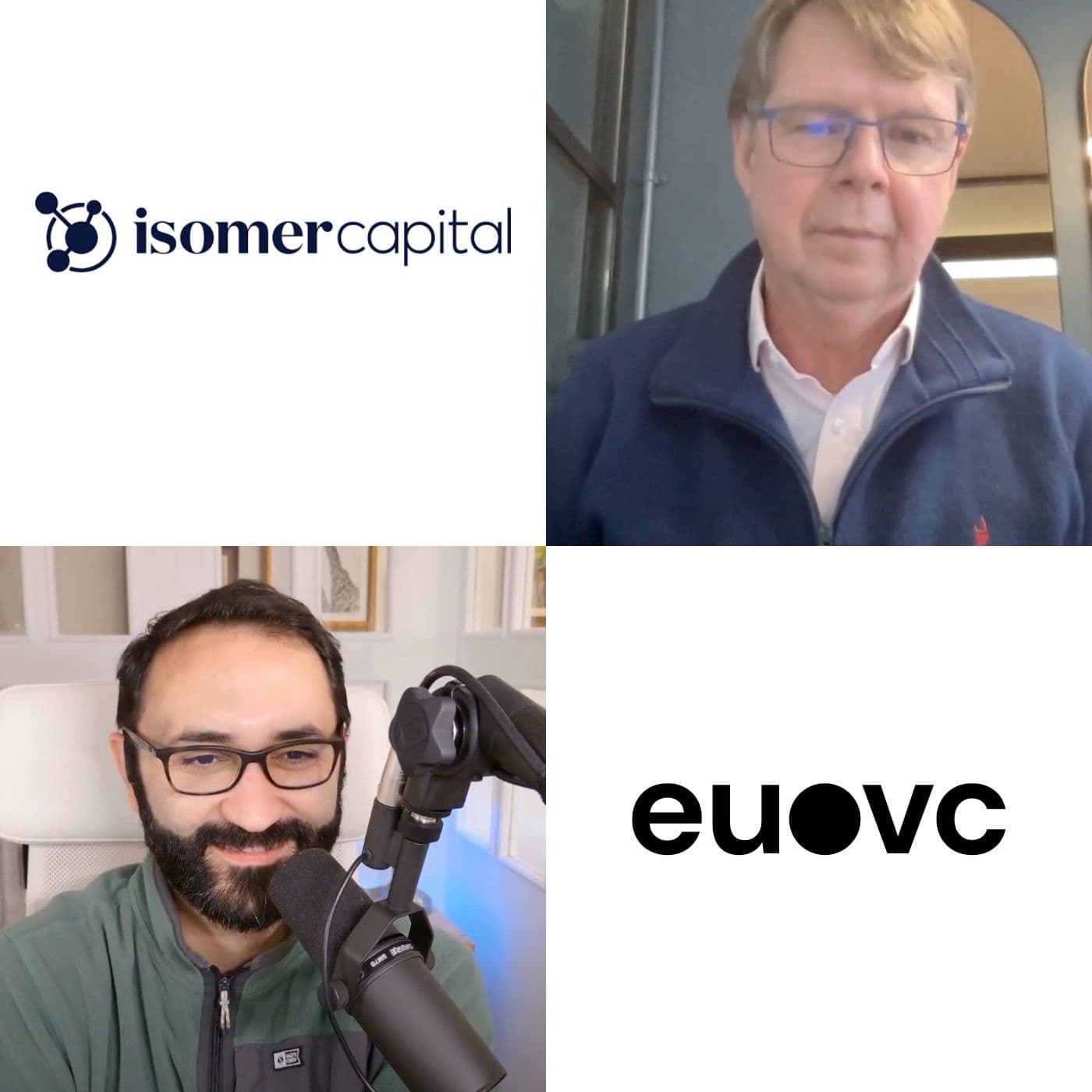
EUVC Podcast Episode Summary: E449 | Chris Wade, Isomer Capital: Navigating The Venture Landscape in 2025
Episode Overview In this episode of the EUVC podcast, co-hosted by David Cruz e Silva, Chris Wade, Co-Founder of Isomer Capital, discusses the evolution of the European venture capital landscape, reflecting on Isomer's decade-long journey and the growth of the European startup ecosystem. The conversation highlights key milestones, challenges, and opportunities within the VC industry as it stands poised for growth in 2025.
Key Topics Covered
- Celebrating 10 Years of Isomer
- Isomer was incorporated in 2015, at a time when Europe had only 20 unicorns; today, there are nearly 400.
- Chris reflects on the journey, acknowledging the growth and the role of various stakeholders in building a vibrant ecosystem.
- Growth and Future of European Venture Capital
- Significant growth observed in the venture capital space, with a shift towards more up rounds rather than down rounds.
- Chris emphasizes maturity in the industry, suggesting that while it may not reach the same scale as the US, European VC can excel in its unique way.
- Challenges and Opportunities in the VC Landscape
- The need for better financial returns to attract larger institutional capital, such as pension funds.
- Discussion on defense tech and computational biology as emerging sectors ripe for investment.
- Transparency and Communication in Venture Capital
- Importance of transparency in reporting to Limited Partners (LPs).
- Chris discusses Isomer’s commitment to detailed quarterly reports and open communication channels to build trust with LPs.
- The Role of VCs on Company Boards
- The evolving dynamics of how VCs contribute to company boards.
- Importance of having diverse perspectives and avoiding a one-size-fits-all approach.
- Understanding DPI and Secondary Transactions
- Discussions surrounding Distributions to Paid-In (DPI) as a metric and the increasing acceptance of secondary transactions.
- Examination of how LPs perceive DPI and its implications for fund management.
- The Future for Emerging Managers
- Emerging managers are encouraged to develop a unique competitive advantage to attract LP capital.
- The landscape for small, focused funds is improving, with opportunities expanding across various sectors.
- EUVC Summit and Awards
- Excitement for the upcoming EUVC Summit, focused on celebrating European VC leaders and discussing critical themes like unlocking pension capital.
- Opportunity to spotlight achievements within the European VC community.
- Questions for the Future
- Chris expresses concerns regarding political and economic stability that could affect corporate acquisitions and overall growth within the VC space.
Key Takeaways
- The European VC ecosystem has matured significantly in the past decade, with a hopeful outlook for continued growth.
- Transparency and communication with LPs are essential for building lasting relationships and trust.
- Emerging sectors present unique opportunities for investment and growth.
- There is momentum towards greater institutional involvement in European venture capital, particularly from pension funds.
- The landscape for emerging managers is evolving, requiring them to differentiate themselves and adapt to changing market conditions.
Conclusion Chris Wade’s insights provide a comprehensive overview of the current and future state of European venture capital, highlighting both the successes and challenges faced by the industry. His reflections on Isomer’s journey and the broader VC landscape reveal a compelling narrative of growth and potential as Europe positions itself for the future. The upcoming EUVC Summit promises to further explore these themes and foster dialogue within the community.
Written by AI. May contain mistakes. Listen to the episode to check what was said.
Transcript
Automatic transcript. May contain errors.0:00What happens when a dream becomes reality, but the hard part is just beginning. When we started, there were 20 unicorns in the whole of Europe, and now there are nearly 400. The amusing thing is, when we were pitching Isomer back in 2014 and 15 and 16, we sold a dream, a dream that has come true. That 20x growth shocked even the most optimistic investors. But as European venture capital matures, Chris Wade of Isomer Capital sees a critical inflection point. I think we're in a sweet spot or emerging into a sweet spot. The number of down rounds is decreasing. The number of up rounds is going up.
0:38After a decade of explosive growth, your startup ecosystem now faces its more important question. We have built a remarkable ecosystem, and we means the people listening to this. And therefore, we need to stand on our own two feet and be very proud of everything that is being created. And is it perfect? Hell no. This is venture. But beneath the surface optimism lies a challenge that could determine Europe's venture future. I see no real advantage in Europe becoming number one in venture capital. We will just do our thing and be very good at what we do and just continue to diversify the ELB capital.
1:16After 10 years of transformation, can Europe's VCs unlock the one thing they need most? In this episode of the EUBC podcast, Chris Wade breaks down exactly what's needed to chart the path to progress for European venture.
1:33Here's a few words from our beloved sponsor. If you're looking to meet key players in Central Eastern Europe's private markets, this is the conference you don't want to miss. Join us for the 14th edition of the premier networking event for Emerging Europe. You'll meet investors from firms like Antenna Digital Ventures, EBRD, EIB, Ersk Group, IFC, Tybus Ventures and many more. Join 0100 Emerging Europe from May the 15th to the 16th in Budapest.
2:19This show is not investment advice and the hosts of this episode may be invested in the funds and companies featured. Chris, nice to have you. Welcome to the UVC podcast again. How are you? I'm great, thank you. And what a year we're having with such amazing news, with the number of up rounds starting to increase. companies like Eleven Labs, Cradle Bio, sort of all doing remarkably well. We are back in the land of optimism, ladies and gentlemen. Yes, we are. And today we're going to talk about a bunch of topics, but I think mostly, you know, the state of venture, how we're seeing the LP landscape, what does that mean for emerging managers, for fundraising.
3:08and we're going to touch on one or two of our own little passion projects. And I think the first one is actually, I was getting ready for this, Chris, and I realized that Isomer is celebrating its 10-year anniversary. So on paper, Isomer was incorporated on the 2nd of Feb, 2025. We're recording this on the 4th of March of 2015, sorry. We're recording this on the 4th of March of 2025. And so first things first, happy anniversary. How are you feeling, Chris? The firm you founded together with your partners in crime is now 10 years old. How does that feel? Well, it feels bad not having him with me since he started all.
3:51But anyway, it's been a wonderful last 10 years. You know, I'm an old guy. I'm so blessed to have such an exciting role at the tail end of my career. And boy, has it been exciting. I was just thinking, when we started, there were 20 unicorns in the whole of Europe. And now there are nearly 400. The amusing thing is, when we were pitching Isomer back in 2014 and 15 and 16, we sold a dream. a dream that has come true, that there indeed would be 400 unicorns. And we were seeing that because we were excited about who was coming into venture capital, players from the major VC corporations. We were seeing people from the US coming to build their venture firms here.
4:54We We were seeing people from corporate VCs building their own firms. But above all, we were seeing amazing young people choosing to entrepreneurship as a career. And at the time, the big sort of input of all that genesis of thinking was entrepreneur first or entrepreneurs first, I now read, which is a nice evolution. I know a little history of why that might be. But those amazing people were inspirational to us to build Isovan. So the first thing I have to say to everybody who might listen to this or refer to this, a huge, sincere congratulations in doing what we dreamt of. You know, we haven't done this.
5:47We've helped along the way. We've put a few funds together. We've invested. We've done secondaries. We've done co-investments. We've done what we said we would do. But the lion's share of the credit goes to our VCs and all their portfolio companies and those that even aren't, that make up the whole remarkable landscape of European venture in 2025. And we'll revisit this topic of celebrating Europeans' VC industry in 2025. And we'll leave that to the end. So this is just a teaser or a cliffhanger, as they call it. But, you know, you mentioned something really cool, Chris, which was 20 unicorns, now 400.
6:33That's a 20x. Do you think we'll still see that growth in Europe? Do you think, you know, has the time of Europe's growth kind of plateaued? What do you think we'll see in the next 10 years, let's put it like that, the next 10 years of Europeans' VC industry? As people who have had the misfortune of listening to me or either on stage or these things know that I have this sort of parallel belief that venture capital is a little bit like the road to enlightenment. You get there in the end, perhaps, but actually it's a continuous learning. So I don't know whether we will be at 800 or not, but I know that we will become more mature and more valuable and the decision makings that we make will become better.
7:28And I'm talking now about the whole industry. it's a true fact that entrepreneurs will become more serial. That's important. So they get to understand and not make the same mistakes. VC is the same and the same with us. We all see this. What we see is a core thesis that remains exactly the same. And that is there's something very special about investing in VC firms that are investing in companies at the beginning of their journey. And that has been our fundamental focus. We have, from the beginning, why are we called Isomer? We're called Isomer because we believe that we're investing in a critical mass of something we invented called entrepreneurium.
8:20We didn't invent it, of course, we just called it that. And that's the center of everything we invest in. And the important thing is that it has nothing to do with your ethnicity or gender or any other fact, whether you've got a beard or haven't got a beard or whether you've got long. This is all irrelevant. And it's been irrelevant from our point of view from the very beginning of Isomer. All we care about is, can we build amazing companies together? Can we make great financial return? And financial return, by the way, is a goal in of itself, but it is the route to enable more LPs to invest and therefore funds to become greater and actually for there to be more funds.
9:14That is the fundamental thing that we have to do, is to make the returns of European venture such that we have the major pension funds of Europe actually investing in this asset class in a way that they're not today. So everyone in the ecosystem knows that EUVC loves Isomer and Isomer loves EUVC. but I have to do my job and ask some tough questions, right? And kind of disagree with you even. So let me ask you one, which you mentioned the number of unicorns, 20Xing. You just talked about European venture maturing. What are your thoughts and or concerns or anything whatsoever with regards to this idea of...
10:01Let me add some context there because you didn't say it, But we also have really interesting data coming out of the returns profile of Europe versus the US as an example, which is really exciting for people like ourselves, you know, proponents of Europe, lovers of Europe. But is there a level where as the industry in Europe matures that we really need to start thinking better and deeper about what differentiates us within the globe, right? Not necessarily the US, but within the globe. We all know the Middle East is developing and becoming super exciting. We all know Asia, Asia Pacific specifically is becoming super exciting.
10:39LATAM is developing, right? What are your thoughts around like the maturity and the potential downside, but also what needs to be done as an industry to make sure we are competitive in the long term? I'm a huge believer in Andy Grove's Only the Paranoids Survive. So we need to continue to listen to our VCs, our customers. They need to listen to the entrepreneurs, and we need to continue to evolve. So some of our more recent investments in ISOMA have not just been about just adding to another VC, but VCs that are changing the very fundamental way that you actually invest into technology startups.
11:24The maturity point is really about financial return. That is fundamental. You have other markets in the world that actually are immature to Europe in terms of those kind of return sort of profiles. It would be a wonderful thing in the future, in the next 10 years, if European venture could have the option not to take government money. Now, government money is extremely valuable for many other things other than just the money. They've become very sophisticated and valuable investors. So I'm not wishing that as an objective. But wouldn't it be wonderful if there was an option? But Europe has today and will continue to have this remarkable 50, 60 micro Silicon valleys across the whole of Europe, which creates a diversity of thought.
12:26And that's important because it means there is not cluster think around how to do things or what to do. I think there are significant opportunities. Two trends we're just seeing that people are spending a lot of time talking about and thinking about is defense tech and why that is important. And of course, that may be even more important than we realized when we first started talking about. and computational biology. It is phenomenal that the type of things coming out of AlphaFold, that the deep mind division of computational biology and the companies that are coming out of that, that are building, and the world recognizes them and the world wants to invest And that, I think, is a really good point.
13:22I see no real advantage in Europe becoming number one in venture capital. We will just do our thing and be very good at what we do and just continue to diversify the LP capital. So as usual with Chris, we start talking about something, we get excited and we talk about everything else. So let's go back to 10 year anniversary of Isomer before we progress. Do you want to share kind of in a, in a, you know, we've talked a lot about different stuff here, but like core learnings, you want to like list one or two things that you'd say, because I think this is relevant for anyone out there trying to build their firm, right?
14:03Because, and let's be clear, Isomer is building a firm. It's not building one fund. It's not building, it's not a boutique play, right? It started within its size and it's growing, but it's not growing just for the purpose of growing. There's this vision of as a firm what we want to achieve. And I think that's we really need that in Europe. And that's why I really want to hash out like some of these core learnings for other GPs listening in, whether they're fund of funds or funds doesn't really matter. Well, we are no different from any other VC firm in that we make mistakes. What we have in Isomer is a culture of no blame.
14:44And we have a core set of learnings. Why do we write a 25, 30-page investment memorandum of everything that we invest in so we can go back and say, well, why did that go wrong? Or indeed, why did that go right? So we continue to learn from our mistakes. I suppose we are, as the opportunity becomes greater and the maturity of the VC becomes greater, we see this emphasis more on financial return. We set ourselves out to be the friend of the GP. And that is what we try to do because we know building a VC firm is extremely tough. We know we've done it and it is extremely tough. It's not a straight line.
15:35It goes up and down, particularly when it comes to fundraising and things like that. But, you know, we just need to continue to be very honest with ourselves and say, look, we are taking institutional capital and we have to return that capital with a significant profit. And that means that we have to more often invest with our brains and not our heart. And that's always a sort of a combination of things. But I think that's where we find ourselves at the moment is evolving that thinking because we have the opportunity to do so. You couldn't do that 10 years ago quite so easily because everything was so nascent and new.
16:24But now you can. You find us doing this. I think we also find ourselves thinking about, you know, the quality of the manager, that that bar has just gone high. because of the marketplace is going higher or ability to be able to invest in ever more high quality managers continues. Could I ask you a dangerous question because we don't want to offend anyone and I don't want to offend anyone asking the question. But on this topic of maturity and the bar going higher, obviously when we look at Europe, Europe is very diverse and you have ecosystems in very different stages of maturity. obvious example is is uk london right and then pick whatever whatever other other city aside from berlin or maybe some cities in the nordics to kind of illustrate that do you feel like that the difference in maturity has shortened so the gap has shortened in the way right because when you say the bar has increased i think that is particularly relevant for the more developing ecosystems in Europe than for London and Berlin as an example?
17:39Well, I'm not sure I agree with you. It's very tempting to say that some of those cities like London who have been doing this for a long time and also have a lot of growth capital and maturity of capital. But you can look at funds in Eastern Europe that have repeatably backed companies that most likely, well, one has and one could become a deckle corn. So I'm not sure that this is a geography thing. I believe that there is sophisticated maturing across the whole of the European continent. Because there are just a few managers who are just becoming very good at what they do. And there's, by the way, those things are different.
18:32So some are small funds, some are sort of slightly larger funds, some are hosting on industry sectors, some are generalists, some are just really good at picking amazing entrepreneurs. Okay, so let's go into a topic I've been hearing lots of talk and I'd love to get your feel. The topic of transparency and communications. I cannot remember how many times over the last couple of months I've heard increased scrutiny on transparency, more focus on LP comms. So I think this ties in beautifully to what we were just talking about, 10 years of Isomer. How have you seen this evolve and play out at Isomer?
19:11And as everyone knows, Isomer has its own LPs. It's both an LP and has its own LPs. How have you seen this topic of LP transparency and comms evolve? Well, we'd like to believe that we've been transparent on day one as we are today. I mean, we do the obvious thing of writing a detailed quarterly report, and then we have a quarterly call to discuss those things. We have a major one-day AGM, and in some cases, we have a separate agenda for our corporates. So we're trying to put that energy in for people to get to know us, to understand us, and to really sort of work with us. I think we're very transparent.
20:02And I think it's an important thing to be very transparent. I suspect we could be accused and have been accused of being too transparent when we worry about, you know, things that aren't perfect. When things aren't perfect, And then we sort of, you know, we sort of slightly wring off our hands on stage at an ADM and say, well, that we need to do better on this and this. And we repeatedly get the feedback. No, actually, you're doing great. You're doing well. I think the learning I have in the 10 years, and I'm probably the chief culprit here in Isera, is we get excited and we get enthusiastic about companies, about funds, about trends.
20:50and we probably go into the crystal ball department about the implications of that because of that optimism. And of course, we need to do that. We need to sell a future. We need to sell that we believe in this stuff. But we are reaching into the unknown. And if we think about the last 10 years, you know, we've had a global pandemic, we've had wars, we've had lots of corporate sort of issues, all were unforeseen, and that has got in the way of those predictions. So perhaps, you know, another approach would have been not to have made those predictions and just been very clear. Here's where we are today, but that's a difficult balance.
21:42And I think that is the debate. We have 1 ,000 companies in each of our funds, or the two funds that are past the investment period. Just one of them starts to do really well, starts to make a significant change to the fund dynamics. We get excited about that. It's working. The model's sort of working, and the predictions become sort of inevitable. it's extremely exciting to see that parallel work when you've got a thousand companies to play with but i think you know we we need to be careful with that and i think that is the the learning wrestle for me is not that i actually know the answer but i know it's the question i need to wrestle with and we need to wrestle with um what i so know and maybe not putting me on stage would useful.
22:37You cannot be in venture and not be an optimistic person. It's the wrong career choice. I think that's right. But you get my point. My point is that one tends to get optimistic. I think what you said about the balance between this is the hard facts of where we are today as a fund, you know, when you're reporting to LPs as an example, right? And like, this is what we think might be the future. Like there's a very gray line there of how specific, what do you want to talk about? What don't you want to talk about? You know? And I think that's important for, you know, anyone who's building a firm and dealing with LPs to really think about it.
23:22It's like, once you say it, it's set. And if you say you believe, as an example, if your fund's at 1.5x and you believe you'll hit 2.5x and then in the next meeting you're not at 2.5x, you're going to be called out. And you need to be comfortable with that, right? So it's not that 2.5 is good or bad, it's that you just created that expectation in your own LP base. And that's, I think, a lot of value in highlighting that, right? I'm not quite talking about such a bold prediction, but it's the subtlety of in between sort of saying nothing and saying that. Yeah, yeah, exactly. I took it to the extreme to illustrate it.
24:05You individually, but you Isomer as a whole, you also take, you know, a seat in LPACs. And I think this gives you an even more in-depth view of these LP dynamics. So I literally want to ask you the exact same question I just did. LP Transparency and Comms, but more focused on your experience as a firm on these LPACs and how have you seen dynamics shift, if at all? Well, I'm glad to talk about LPACs because I'm on a mission here to change their purpose. Formally and legally, they are there to address governance issues or issues that hopefully never happened in a fund, and what to do about them if there's some difficulty either with an LP or a GP.
24:58But that happens rarely. So what happens in the absence of that is essentially a verbalization of the quarterly report, which we have felt in Isomer is a relative waste of time because you can read that report at any time you like. What we would like to see is these LPACs being used in a similar way that boards use it. We've got a bunch of really smart people from different types of LPs around the room. I want to ask them about how they think about fundraising. I want to ask them how they think about its return, Inspector. I want to have a dialogue and give me input for the firm that I'm trying to build.
25:45Not the fund, but the firm I'm trying to build in whatever GP it is. Now, I'm really happy to say that most GPs like that. Some LPs are sort of neutral for this. I think they quite, because it means they have to work. It means they have to contribute. They can't just sit there and just sort of take information in. So I think that's, you get a little bit of pushback on that occasionally. But in the majority of the case is no, and you end up having a really interesting conversation about, well, when's the right time to promote principles to partners? And what should the process be? Should we start the next fund in the fourth quarter of one year or roll it over to take advantage of the vintage period?
26:37These kind of things. And all you're asking for is just to get some kind of input. that is useful. I went to an event recently in London, and we were talking in this case about company boards. And I was making the comment that it's great to have VCs on a company board who have been an entrepreneur themselves. However, I have heard it said many times that you do not want a VC that has been on a company that believes that the company that he's sitting on the board of is essentially building something that he built 20 years ago, he or she built 20 years ago. And therefore, all those things are a little bit like this at the LPAC.
27:23Here's the input, guys, but you need to figure out what you want to do with that information. And that's really important. I often say to people, there's a key word in my title, and it's limited. It does not mean executive. It does not mean that we should say, you know, I'm talking here now about advice. I'm not talking about the formal governance issue that happens very rarely. But actually, we're just giving input. And then it's up to the manager to figure out, well, I like that input. I don't like that input. I'm going to take a halfway house between that input and then sort of create it. One of the big discussions that we've been having at LPACS with the amazing funds that we back is the glorious subject of DPI, the consequence of using secondary transactions to improve that DPI.
28:24That's a very interesting topic. And I actually had a conversation a week ago, I think, with a couple of, I would call them, I would definitely put them on the established GP kind of pedestal or whatever we call that or status, talking about DPI and the different perspective different LPs have towards it. And the conversation at hand was really US versus European LPs and how these different profiles of LPs perceive DPI as an example in less than five years, right? Were you actually, you know, generating returns and focused on creating liquidity or were you actually, you know, kind of leaving potential upside on the table, right?
29:12And there's no right answer, right? I don't know. Do you have any comments? I guess this is exactly the type of conversation that you're saying the LPAC is good for. It's an extremely good example where people around an LPAC table need to give input, but then the manager needs to make their mind up for what they're doing. What I say, to be in a sort of year seven, year eight, and DPI zero may leave the LP to believe that you've forgotten about, and that the idea was that you would return capital with a significant multiple. Now, I'm being a bit facetious to make the point. I would also say that most LPs that I talk to have an irrationally positive sentiment to DPI, irrespective of its magnitude, right?
30:07Just the fact it started to happen says, oh, they've remembered that actually I'd like to get my capital back. But look, seriously, it is a difficult. It is a difficult topic. When do you sell your stars? And the thing, the discussion that we've been having with managers, with the ISOMA Secondary Fund is, well, let us help you with those LPs that do want to liquidate earlier than perhaps you do and take that difficulty away from you or that friction, if you will. And I think that's a really important thing to do. And I think sort of, you know, when I was building companies, the idea of selling some of your founder shares before investors got a return, you'd have been shocked for it.
31:02That was not possible. You'd have got fired probably. But now it's much more commonplace. And so these things are possible. And so the idea of both founder secondaries to enable that the founder can continue to grow and build the company, but also the VC could take sort of a small percentage off the table. I think A is possible. I think there are some very good funds, including Isomar, who are enabling that to happen. And that's a good thing. You just made me, it's funny, right? You have a long career, Chris. Mine is far from that, right? But it's funny that even in the lifetime of UVC, so UVC started less than five years ago.
31:56It's not that long, right? And I can't recall exactly, but I think on episode four or six, and just for context, I'm looking here. Today, we've launched our 423rd episode. episodes so it's been it's been a while um so for 120 episodes ago um we had someone that we both like and enjoy will from frontline talking about um the ability of founders getting money through these deals that you were mentioning and and at the time it was still kind of weird at the time was four years ago right it wasn't that long ago right and so it's the the point i'm making is the maturity of European VC is very different in just four years, let alone 10.
Read the full transcript
32:40But I think this is also one of the beautiful things about our market becoming more mature. And the example you give, Isamer being a player, but there's definitely others. The secondaries market being incredibly interesting these days, like something that we cannot dream of five years ago. Exactly. And these are all mechanisms designed to ensure that the star companies can continue to grow and become very valuable entrants in the next generation economy. Chris, we have a couple of topics that we would kind of like to cover and not enough time. There's a whole conversation about the valuation reset.
33:24You touched upon on some sectors like AI, computational biology, defense tech. I'm going to do something I normally don't do, which is allow my guests to decide what we talk about next. What would you like to focus on? Oh, gosh. Well, I think, I mean, let's talk about, let's talk about, you know, it's close to our heart. Let's talk about the valuation reset. You know, just how is that sort of going? there's there's like an easy answer on these on these topics of valuation resets generally speaking for any professional lp i find at least which is like you just deploy you have integer diversification you don't know when these things are going to happen things go up things go down that's not the end of the world because we are consistently deploying we are consistently you know getting that exposure and getting diversification so i'd like to go a bit beyond that, right?
34:18Try to push the limits here a bit more. Also in terms of, you know, and here I'm thinking of our audience, our audience being two different personas. On the one hand, potential allocators into venture who might be looking at Europe. And on the other hand, the other extreme, which is the emerging manager and how to navigate this. If you have, as an example, you've done your first close in early 2024. As an LP, what would you say? How are you thinking about navigating the post 2024 valuation reset, whatever. Well, I think we're either in a sweet spot or emerging into a sweet spot. One of the exciting things that we do is we look at the number of up rounds and down rounds per quarter in our portfolio.
35:14and that's all super secret sort of stuff, obviously, with all our companies. But let's just say the trend is very encouraging, that actually the number of down rounds is decreasing, the number of up rounds is going up. But with a few exceptions in some notable areas, which everybody knows about, These are reasonable up rounds, which means there is still very good value in European venture. And that's why I say it's a sweet spot. I think we have got in Europe today a set of companies that have become companies. And what I mean by that is they figured out how to make revenues and to grow revenues, how to become profitable on a route to being profitable.
36:09They are eminently investable, but they can choose when they want to have an investment because essentially their cash break even from that point of view. So I think this is a very strong choice. So from an allocation point of view, I think we're at that moment where putting capital into European venture, and to be clear, however you do it, I think is going to be important for long-term returns. You know, we have this very exciting news about Eleven Labs, a Crudo Ventures portfolio company that has essentially, in the time that we invested in Credo and today, that the valuation of that company has gone up 300 times.
37:00And that's just extraordinary. But that isn't a reason in itself to suddenly to allocate to Europe. But it's an indication that you can grow things very quickly, and you can grow very valuable global companies in Europe. So from an allocator's point of view, I think this is a good moment. You know, we've had a lot of stuff, particularly in the UK, about sort of the pension industry getting involved and all the complications that that involves in terms of the requirements of a pension fund. They seem to want us all to work for free, and they furthermore need liquidity. But there are solutions being found on that, which means pension capital is starting to be deployed with venture.
37:52It's our job to ensure that investment is highly profitable and so that they put much more in it. So from an allocator point of view, now's good and the dynamic looks positive. I'll come back to that pension funds topic, but on the topic of it's a good time. And you mentioned like really interesting data there, right? Because Ismer does have like really insightful view into the state of the market, given the size of the portfolio and also the funded backs, but this up rounds, down rounds. What about like fundamentals and economics? Because there's a lot of talk around the fact that how AI is kind of changing the game in a way where kind of what maybe five, 10 years ago was like really amazing metrics to go into raise a series A as an example.
38:44It's being completely reinvented by the fact that AI is now a tool that entrepreneurs can use and leverage to actually change what is the milestone. Are you seeing these dynamics play out in the underlying portfolio? So kind of almost like a resetting of what, let's use Series A as an example, of what a Series A SaaS company looks like from a metrics perspective. Well, lots of talk about it, but frankly, no real hard evidence yet. Yet. Venture, by definition, is making lots of bets on new technology ideas and new business ideas. And AI is a classic example where people are trying lots of different ideas, applying that to different models, particularly in the enterprise space, and some will work and most will not.
39:43And so I don't think we're able to say that the benchmark for an A round has changed any. I think it really remains the case that if you have a superb team executing really well, then you will get funded. Okay, so before we start in wrap-up mode, I want to go into this more emerging manager perspective here. You've spoken at length, actually, in many of the sessions, webinars, podcast episodes we've done around, you know, how you think emerging GPs should think about their firms and the funds that they're raising. I'd like to kind of look at it more from a macro perspective, like what has changed over the last 10 years?
40:33What do you think the next year will demand of emerging GPs that's new, that's different, that might surprise them? Because I guess the fundamentals haven't changed that much, but I'll let you comment on that. I think a couple of things. First of all, as we've already said, Europe has changed dramatically as a place to deploy capital into the venture industry. That has changed beyond any recognition in the last 10 years. There is increasing evidence or increasing realization that relatively small funds are very good for the fundamentals of how we measure venture capital performance. So the idea of having relatively small funds and therefore emerging funds remains the case, and you would argue perhaps much more so.
41:27Furthermore, the waterfront of technology continues to expand. I'm sure there's a water analogy that I'm missing more. Which means that there are opportunities for small, dedicated, focused funds on all the different industries, sort of sectors and stuff. And I think those all remain. Now, the challenge is, can the folks that want to start a new fund, have they genuinely got some competitive advantage? Have they got some uniqueness that says, yes, you should join the ranks of venture capital and therefore will get LP capital? I think it's pretty well known now that venture capital is a get-rich-quit-slowly story.
42:26And it's particularly not rich in the early years as you have to build your firm and do all those things. So what hasn't changed really is the huge momentous decision to actually build a venture capital firm or fund. I think that still is remarkably difficult. We see folks starting new firms on a regular basis. And every now and again, we'll see someone who has a thesis that uniquely ties to that, those GPs or proposed GPs experience. And you say, yes, that makes sense. But the annoying news is it isn't very often. That's why you have a job, Chris. well so it's good news if i was in charge of the world we give everyone capital not sure i'm not sure that would be the best investment yeah no but i understand i understand you are you are a big fan and supportive of european venture so you you love for the ecosystem to develop so obviously you know you want to see these amazing propositions sprout here left right and center and you know but it's uncommon yes you know one of the things that we we continue to measure ourselves against is are we telling people that we're not going to bat them quick enough yeah which is a really really important point because then once that's dealt with unfortunately then we can have a discussion well what could you do or who wouldn't you join or what would be the right thing to do for you yeah i like the idea of no is the second best answer so you know might as well get that straight away yeah okay so we talked about a very interesting topic which is unlocking pension fund capital for our industry and uh isomer and uvc are working together on this project which is the EUVC summits and awards.
44:42And EUVC was founded and created with this view of highlighting European role models. And more recently, I think we fine-tuned that to platforming European VC and its champions. And the reason why I connect these two things is because one of the topics we will cover in the EUVC summit and awards is unlocking European pension capital, amongst many other super interesting topics. So Chris, I'd love to kind of just have an open moment here for you to say, you know, why are you excited with this project that we're working on together? The backdrop of it being for anyone who hasn't seen it yet, you know, it's summit around charting the path for European progress within venture.
45:26So Chris, over to you. Why is this exciting? Why is Isamer involved? What do you hope to get out of it as well as an attendee slash speaker? Love to your thoughts? Well, I think there's room for a specialized kind of one day, I guess it's actually sort of half a day and an evening, I suppose, in reality, where we get great people to come and talk about the things they're passionate about in European venture. That is the focus. And the thing that is, you know, the dream, which we will see on, I guess, May 15th, the day after, whether we achieve or not, or put it more precisely, you achieve, that because it's being curated by people that have spent their entire lives in venture over the last two or three years, that it will have a kind of special agenda.
46:31It will have a special sort of narration. And actually, it will have a lot of really interesting sort of topics. You know, the big conferences, they're great, they're important, but they rely on people like us saying, well, I suggest you do this and that. So the promise, the thing that's really exciting is can EUVC deliver a very different type of conference because they're spending their lives sort of in it? You know, talking about unlocking European pension capital, where is climate tech? Is it dead? Is it alive? Is it necessary? Absolutely. be what is sort of Europe's response to sort of the European resilience as we think about actually having to defend ourselves, et cetera, and all those kinds of topics.
47:32What I very much hope, that this, as a brand new conference, will not be a conference that says, well, we're sort of doing okay, but the US is best, and we hope it might get better, because I think that there is no place for that anymore. We are where we are in the sense that we have built a remarkable ecosystem, and we means the people listening to this. And therefore, we need to stand on our own two feet and be very proud of everything that is being created. And is it perfect? Hell no. This is venture. This is what venture is all about. you have remarkable outcomes and remarkable companies that feel like they're changing the whole very nature of how we live and work and survive in this planet.
48:28And many just fail. And that's the world we're in. And we should embrace that and be comfortable with it. So I'm extremely hopeful that we're going to have a brand new type of summit. And of course, his acid test will be, does it do that? And do people say they'd like to do another thing? And then, you know, for the second year, we do the awards. You know, the year of celebrating the firm of the year purely on financials, the emerging manager, the new manager, exit of the year, impact fund of the year, achievement of the year, just celebrating somebody or some organization that's just done something really special, and then most importantly, the Lifetime Achievement Awards.
49:16We hope that we will do a good job with that because we think we're onto something great. But in the end, our listeners and the people who attend and the people that nominate the things will decide whether this is something they want to continue. I'll leave with you a slight plug. We had significantly more nominations in 25 as we did in 24 when we first started. So I hope the judges will come to some amazing decisions and we'll have a wonderful awards alongside the summit. I think it's always good to remind our listeners of who were the awardees. I don't know if that's a word last year, but we had Newcomer of the Year Amino collective we had achievement of the year wvce we had exit of the year capnamic for the exit of lean ix we had firm of the year seed camp and we had all of hall of fame or lifetime achievement of the year neil reimer founder of index ventures so we're really looking forward to getting to know who's going to join the ranks for 2025 and i personally chris i don't know how you feel about it but i'm kind of looking forward to like in 10 years look back hopefully we can keep on doing the awards for many many years to come but in 10 years looking back and having the 10 newcomers of the year the 10 uh lifetime achievements of the year i'm really really looking forward to be able to have that you know that kind of community of of european vc role models because that's if i'm being honest here that's why i wanted to start the european vc podcast i think it's really cool if we are able to have that have that short list so no i agree thank you chris for your heavy involvement as well in making the awards possible and you and of course all of the other judges but but isomer has been a huge supporter in our crazy ideas at uvc and so without you nothing of this would be possible uvc summit as well so yeah thank you pleasure awesome final question chris before we move on uh as you get ready for 2025 we're a bit late it's end of q1 almost but let's assume it's Jan.
51:27What questions are in your mind? Like what unanswered questions you have top of mind that you're carrying around with you? Yeah, well, there's only one. It's the same one I've had for the last couple of years. And that is, will we get to sufficiently political economic stability for the corporations with all their cash to start making those acquisitions that they've been putting on hold because of fear of being wrong-footed economically or politically. You know, it's been a dramatic sort of couple of weeks. But the prospect of a world with much less wars, the prospects of sort of a more medium interest rate environment is at least hopeful.
52:23However, I have to say that, you know, every day brings a new surprise, and particularly from one quarter. So I just don't know. But that is my sincere hope. Unanswered question. Because there are so many amazing companies that are ready to help the world's corporations really grow and thrive with their amazing technology offerings. So that is my just hope. And on that note, we thank you for listening to this episode, Chris. Thank you. And I hope to have you worst case next year, but hopefully way before that. Thank you, Daniel. Here's a few words from our beloved sponsor. If you're looking to meet key players in Central Eastern Europe's private markets, this is the conference you don't want to miss.
53:11Join us for the 14th edition of the premier networking event for Emerging Europe. You'll meet investors from firms like Antenna Digital Ventures, EBRD, EIB, Ersk Group, IFC, Tybus Ventures and many more. Join 0100 Emerging Europe from May the 15th to the 16th in Budapest.
53:41This is a union of values. Let's start acting.
From the publisher
In this episode of the EUVC podcast, our host, David Cruz e Silva, talks with Chris Wade, Co-Founder of Isomer Capital, to explore the evolving European venture landscape in 2025. Reflecting on a decade since Isomer’s inception, Chris shares insights on the industry's growth and how Europe has expanded from just 20 unicorns in 2014 to nearly 400 today.
Here’s what’s covered:
- 02:25 Celebrating 10 Years of Isomer
- 05:39 The Growth and Future of European Venture Capital
- 08:43 Challenges and Opportunities in the VC Landscape
- 17:56 Transparency and Communication in Venture Capital
- 25:57 The Role of VCs on Company Boards
- 27:17 Understanding DPI and Secondary Transactions
- 39:16 The Future of European VC and Emerging Managers


