
In short
EUVC Podcast Episode Summary: E450 | This Week in European Tech
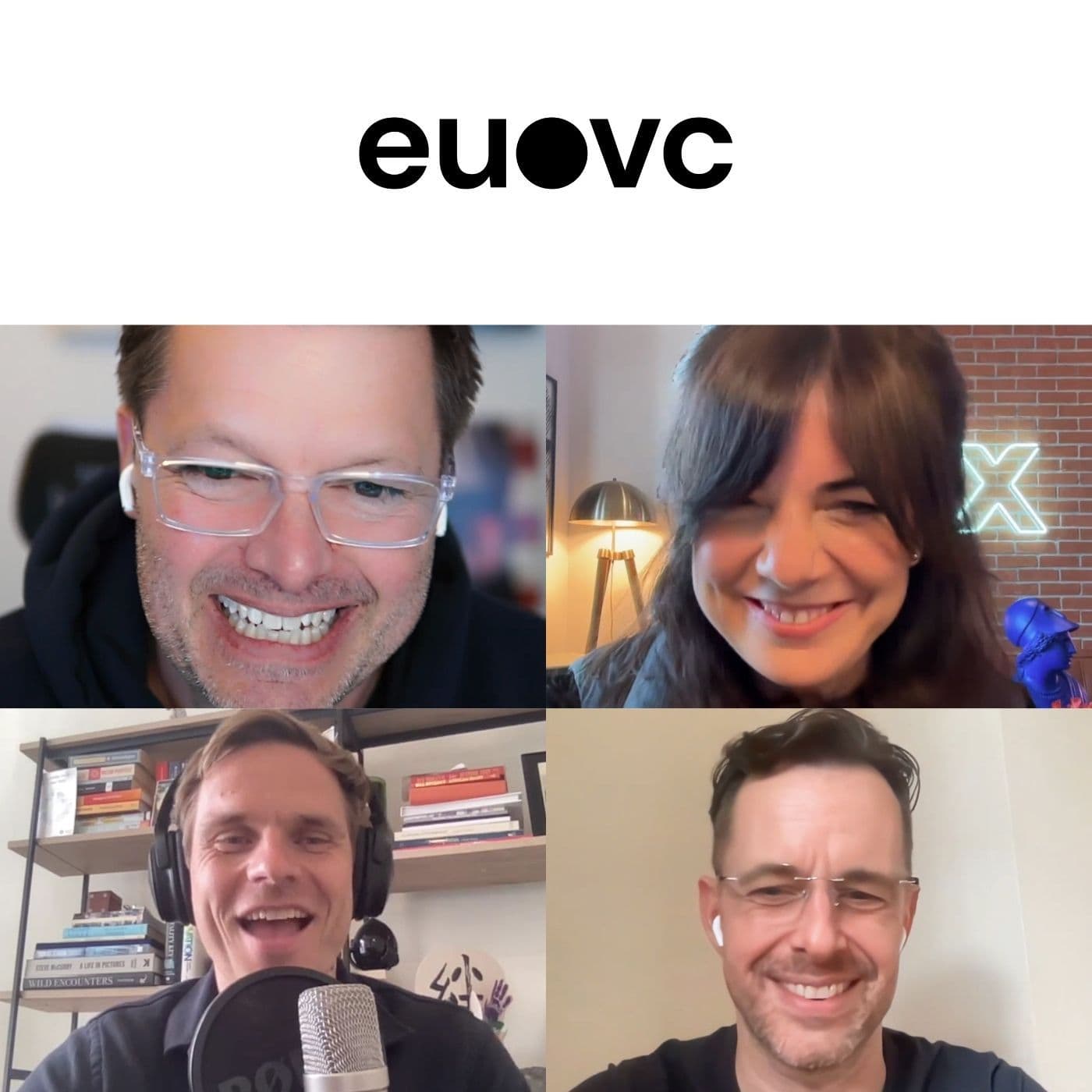
Overview In this episode of the EUVC podcast, co-hosted by Andreas Munk Holm and David Cruz e Silva, the discussion centers on recent developments in the European tech landscape with guests Dan Bowyer and Mads Jensen from SuperSeed, Andrew J. Scott from 7percent Ventures, Lomax Ward from Outsized Ventures, and Dilek Dayınlarlı from Scalex Ventures. The episode covers notable news, trends, and insights from various sectors including defense tech, startup ecosystems, capital efficiency, and future projections based on the 2024 PitchBook Report.
---
Key Topics Covered
- Recent News and Highlights (01:31)
- Murati's Seed Fundraising: Raised $2 billion at a $10 billion valuation, attracting top talent from OpenAI.
- Synthesia's Milestone: UK-based AI video generation platform reached $100 million ARR while partnering with Adobe.
- Defense Spending in Europe: Discussion on controversial signals from the European Investment Fund (EIF) regarding investments in defense tech solutions.
- European Defense and Tech Investments (02:38)
- Concerns over the EIF's reluctance to invest in weapons and ammunition despite the need for enhanced European defense capabilities.
- The mixed messages from Europe regarding defense spending versus investment in critical tech solutions.
- UK and Turkish Startup Ecosystems (07:41)
- UK Ecosystem: The UK remains a leading tech hub with a concentration in health tech and fintech, while also showing early signs of a founder flywheel effect.
- Turkish Ecosystem: Dilek Dayınlarlı shares insights into the growth of Turkey's startup ecosystem, emphasizing the rise of defense tech and operational efficiency in recent years.
- Capital Efficiency in Europe vs. Silicon Valley (30:42)
- Discussion around the differences in capital efficiency between European startups and those in Silicon Valley, with a focus on the operational strategies of Turkish companies.
- Navigating the Middle of the Portfolio (31:34)
- The importance of managing a portfolio effectively, especially during lean times, to maintain liquidity and ensure successful exits.
- Insights from the 2024 PitchBook Report (34:57)
- The report highlights trends in capital flow, with a focus on UK startups raising significant funding while facing challenges in achieving exits.
- Notable stats: UK startups raised $4.2 billion in a year, yet there is a concentration of funding in biotech and fintech.
- The Rise of the Turkish Startup Ecosystem (45:17)
- Emphasis on how Turkey is nurturing a vibrant startup culture with an increasing number of tech companies focusing on B2B solutions and global outreach.
---
Key Takeaways
- Founder Flywheel: The emergence of successful founders reinvesting and mentoring new startups is crucial for ecosystem growth.
- Operational Efficiency: Turkish companies are demonstrating high levels of operational efficiency, making them competitive in the global market.
- Need for Liquidity: There is a pressing need for liquidity in European venture capital to maintain investment momentum and foster growth.
- Diverse Opportunities: The Turkish market presents untapped potential, particularly in tech sectors like gaming, fintech, and defense.
---
Conclusion This episode of EUVC provides valuable insights into the current state and future outlook of the European tech landscape, emphasizing the growing importance of capital efficiency, the role of successful founders in driving innovation, and the untapped potential within the Turkish startup ecosystem. As the hosts and guests navigate these topics, they highlight the unique challenges and opportunities that define European venture capital today.
Written by AI. May contain mistakes. Listen to the episode to check what was said.
Transcript
Automatic transcript. May contain errors.0:00Welcome to Upside for the real stories behind the headlines affecting European venture. Joining today is Dilek from Scalex, Lomax from Outsized, Andrew from 7 % and myself, I'm Dan from Superseed. At last, not a wall of white dudes, I hear you say. This week we're going to be looking back over the last 12 months of startup activity to then look forwards at trends and themes coming up for Europe in 25. Before digging into the Turkish scene, seeing we have Dilek with us, to view the world through her eyes. Now, Dilek is the founder and managing partner of Scalex Ventures. she's an accomplished founder operator and now vc she's turkish the fund is based in the netherlands and they invest in b2b ai robotics cyber and all that cool stuff scalex has also has a founder profit share scheme so everyone benefits when somebody does well in the portfolio now i've only seen a few vcs do that and i think that's really really cool
1:09This show is not investment advice and the hosts of this episode may be invested in the funds and companies featured. Dilek, thank you so much for joining us. How are you and what has caught your eye in the news this week? Thank you. It's amazing to be here. After listening so many episodes, it feels privileged. There you go. You're the listener. Bless you. So what caught my eye is actually the biggest one was Murati's seed fundraising from$10 billion valuation,$2 billion raising. And she got some of the top talent from OpenAI. Nice. No other day passes that it's heating up at AI. It's getting more heating up.
1:53But also the prime minister of Albania, he wants to call him as the industry round. So that was my biggest news. She's from Albania, right? Is that right, originally? Yes, she's originally from Albania. Cool. Lomax, what's been on your mind? What's caught your eye on the news? Well, a few things caught my eye this week. So firstly, Synthesia, which is one of the companies we talked about before, which is a uk ai video generation platform hit 100 million arr they announced in conjunction with a partnership with adobe so this is interesting you know this company was last valued at 2 billion raised over 335 million is one of the most successful companies that's emerged in the latest they are away from the uk so great to see them hitting this milestone so you know ring the bell awesome news somewhat weirdly and controversially although perhaps not not surprised by this we've been talking a lot about defense spending right in the last you know the last three four episodes, especially given what's going on in Europe and the opening of the taps on European and UK defence budgets.
2:49And then we have the head of the EIF in an article with Sifted saying that they do not plan to be investing in weapons and ammunition. So, you know, one thing we've talked about is the need to invest in new defence tech solutions that Europe needs and the UK needs defence sovereignty on a lot of these technological propositions. And here we have the EIF. and the context here is that European Investment Fund is one of the biggest funders of European Venture Capital so they invest in venture funds which then of course invest in startups roughly 10 % of the money in European Venture funds comes from the EIF so this is a huge impact if we're talking about the taps being turned on for defense now we've also talked here that you know a lot of the defense tech money will go into logistics and infrastructure but a lot of it will go into frontline battlefield tech.
3:39So we're actually saying controversially, we're getting mixed messages from Europe here. We're saying on the one hand, let's increase spending. But on the other hand is that, well, actually, the biggest LP in Europe is not going to be investing in a critical part of European defence infrastructure. So it's probably a classic European story. There's lots more to unpack. Do you know if that's fixed, Lomax? Do you know if that's old, as in old policy to be reviewed? Or do you know if that's fixed? I don't know. I mean, she came out and explicitly said this. So I think you can take that from the horse's mouth.
4:09I mean, one thing I've mentioned here before is that if you look in the LPA, so the limited partnership agreements of funds, so the constitutions of venture funds, a lot of them ban a few things. You know, they ban typical stuff like sex, gambling. One of the things they've historically banned is weapons and ammunitions and guns. That was historically. So you would have thought, though, that going forwards, this might change. but you know you look at the biggest like you know the most well-funded defense you know new prime in europe helsing i mean they're developing drones which i'm sure you know would count as weapons and frontline tech that you know may not be able to to take money from venture funds backed by the eif so this is a bit shocking to me and um a bit worrying i was wondering if it's just kinetics though sorry carry on carry on could just be can i guess some of it will come down to come Some of it will come down to definition, and maybe that's where the detail will be, and maybe it's not so bad as we think.
5:03But I think I'm a bit shocked by it. It's mixed signaling from Europe here. In big tech, or as close as to what we have in big tech in Europe, ASML posted really strong results in Q1. But I think the eye-opening thing was that they have announced that orders, which is a crucial measure and metric for future trading of the business, are down 20 % on expectations. And as a reminder, ASML developing critical equipment and machines for developing chips. And so what does this tell us? I think this is a result of tariffs. And the number of chips being manufactured globally is not going down, but I think it just reflects probably the sitting on hands or indecision that's taking place now while people try and figure out where the cards are going to, no pun intended, where the chips are going to fall in relation to tariffs.
5:53Chips are going to fall. You went there, didn't you? You went there. You did it. Yeah, I saw it and went there. We talked about the Klarna IPO being pulled last week. Well, Figma have confidentially filed for an IPO. So we'll see what their S1, their registration document, says when it's published in due course. But that's interesting to see with, yeah, like we're interested to see with, you know, Klarna pulling their IPO recently and missing the window. So Figma feel, despite all the madness that's going on, they have made the initial registration to take the first steps towards an IPO, which bucks the trend at the moment.
6:27So fair play to them. I saw the 1 ,5 pulled their timing. So the German energy business, they're not going to IPO. They said they're going to shelve their US IPO plans. So interesting that Figma are going to go for it. Well, they obviously, they must feel really robust about the numbers under the hood. I mean, we talked here about before about the 20 billion acquisition from Adobe, which was ultimately kiboshed by the FTC. But that company must have really robust numbers if they feel they can get this away in this environment. So good for them. And then the other thing that's happened a lot last week is the U.S.
6:57dollar has been dropping big time. Right. I guess, you know, Dan, I think you, you know, talked about this last part. I think this is something that we we think probably Trump maybe wanted this. Right. It's better for U.S. exports, makes the dollar cheaper. I'm thinking of the impact on VC land and tech in Europe. It's probably good for European stocks. And so it may mean that there's a bit of a rotation there. Probably bad, though, given that a lot of our markups potentially come from US VCs. And suddenly, you know, our deals have come a bit more expensive, which may mean that, you know, they're willing to offer, you know, slightly lower prices.
7:28I mean, this is all in the kind of 5%, 10%, 15 % range. So it doesn't move the needle massively in the venture world, but it's still important nonetheless. Let's see what happens. I mean, who knows what's going to happen tomorrow, right? It's all just so bloody volatile. Andrew, what's been catching your eyes? What's new with you? Well, I saw that the UK government's been lobbying to get a chunk of the Stargate project, which is the big infrastructure play between OpenAI, Oracle, Japan, SoftBank and MGX. And this is about building huge AI hyperscale data centers. I think France and Germany are sort of in the running for that as well.
8:04But really to reflect Lomax's point, we kind of should be doing this ourselves, right? So it's great, obviously, that inward investment would happen. And I hope the UK gets the deal if it comes this way. But also, we kind of just need to match this stuff ourselves, you know, unless we want to become a back garden subsidiary of the US. By the way, you know, Stargate is a$500 billion project. We talked about it last week on the pod,$40 billion is what goes into European venture every year. Like, so I get it. This is infrastructure. This is not like software and biotech and actual early stage startups.
8:38But it's still, these numbers are absolutely huge, right? But surely, yeah, in the UK. What's going on in data centers in Turkey, by the way, Dilic? Is there a huge investment there at the moment? Yes, it's growing really fast in this volatile environment, but definitely. Especially the government requires you to localize all your servers, which requires a lot of investment. Do they? Interesting. interesting interesting i think the difference is though this is a bit like sort of you know the telephone coming of age whenever it did at the beginning of the 1900s and then going oh we'll just let someone else control our telephone network and you know it's that fundamental so i think yeah um dilek you also had some news on hugging face didn't you yes i do have some big news because hugging face just acquired a french humanoid startup uh it caught my eye because i mean after open source AI models now they want to jump into the physical world and they already had a project with them last year I believe inflection point in humanoids are coming up I mean Elon Musk he wants to sell the Optimus for 20k but we know bill of material is around like 50k now so I'm watching closely all the humanoids or robotics companies now it irons very slowly apparently apparently who I was told all those videos that we see it right ironing and then folding apparently it's very slow but it's a fraction of the video speed and legitimately I don't know whether they've improved that since they came out last year but I was like wow that's amazing if someone said no no it's sped up 10 times it's like you know Andrew did you see the um the the camera they've got a new Boston robotics camera guy and it made me think of you because the actual humanoid was moving really slowly with this kind of I don't know what they're called those those camera bodies that keep the camera steady not steady cam they've got a proper name haven't they but um so he was moving so slowly it just reminded me of you andrew because he was like of course there you go they don't need to be doing backflips or doing really really fast ironing so fair enough um i've got i've got a few things that caught my eye this week you may have seen somebody has hacked the crosswalk buttons in menlo parks over in the bay it's not it's not particularly european but it made me smile and they put mark zuckerberg's voices in the when you push the button if you're blind This voice comes on.
10:50So I will play it now. And so they've got Elon Musk. They've got Mark Zuckerberg. And it's very, very funny. And it's not obviously rude, but it's obviously taking the mick out of all of them. And there's a new Finnish startup hub. It's breaking new ground. It's called Maria01. And it means that by 2028, in Helsinki, they'll have a 70 ,000 square foot startup co-working space. So mainly off the back of Slash or other kind of views now on Finland. I thought it was just a really cool thing. They've already got 200 and odd startups in their 20 ,000 square foot space. So they're adding another 50 ,000 square foot there.
11:33So good for them. It's the French Paris playbook, right? I mean, they're just taking the sort of ticket from Station F. Whatever happened to Silicon Roundabout? Did Cameron kill that when he turned up and did that all just die? because we were going to be doing a UK version of this like 15 years ago. Does anyone remember? I think everyone decided that Soho was a better place to have an office than the stinky old shortage, no? Isn't that what happened? The VCs certainly did, yeah. I think the only people there still are like HSV Innovation Banking over in the Finsbury Square. I don't know. I'm pretty sure.
12:07I remember David Cameron turning up to something and I remember thinking to myself at the time, any time somebody from government turns up at a cool, like underground super duper startup it's going to be absolutely stone dead so maybe every time i go clubbing uh dan you know all those nights out you know those monday nights if i see david keman there i never go to the club again but you're 22 dude you're young and cool um i want to do i want to do a big shout out to northern powerhouse too so another kind of uk tick so they've invested 80 million into more than 200 firms up north obviously london is the epicenter rightly or wrongly happily or unhappily london is very much the epicenter so it's really great to see more regional activity and some money money going out to other business up north and to other regions and we've already talked about this um the ipo shelving so i won't go into that but i think my sense is we are still even regardless of figma gonna see fewer ipos in London and fewer IPOs, obviously in the States, but maybe the LSE will be able to take a bit of an uplift as the Americans are not doing so well.
13:19But we'll see. Maybe we'll get dragged down. It's got a long way to claw its way back from. But yeah, quite possibly. We've got to be optimists though, right, Limex? We've got to be optimists. Of course. Maria's interesting. I mean, look, down the road from where I am is the unicorn factory, right? I think it's a good reminder that proximity is very, very important. And obviously we moved into this world of the COVID world of everything being remote, but we've definitely come back. You know, the zeitgeist is now, you know, in person and, you know, when you're building, yes, obviously we're hiring remote teams, et cetera, et cetera, but proximity can be, is extremely important still, right?
13:51So interesting to see that in Finland. I think we should get, we should get a London hub back in action. You know what Boris Johnson says? Not that I want to quote Boris Johnson on a tech podcast, but you know what he said? It's like nothing, yeah, yeah, yeah. Nothing proprinks like propinquity. It's a very Johnsonian thing to say, but it's very true. You know, it's a sort of capture of serendipity. It's a very Chachulian structure, but a quote. He's stolen the whole, I don't know what they're called, top and tail, the thing with the same thing. He's not known for his originality. I was with a friend who did some speaking engagements with him, and he said basically he puts on, he ruffles the hair and does the whole show before he goes on stage.
14:28Talks really normally, Chachulian, and then becomes a pastiche of himself before he goes on stage. So anyway, I think he's still far away out of politics. Right, I've got a couple of reports that I want to go through. I don't want to focus too much on the detail, although I am going to tee both up. And then I want to talk about some Turkish stuff with you, Delec. But to start with, Dealroom and HSBC, now they've launched their Q1 report titled UK Innovation Update. I've always struggled with the word innovation. It kind of feels like one of those corporate... I was going to swear then, but I won't.
15:03corporate um silly words where there's a room over there where all the innovation happens in that room over there kind of just feels a bit of an odd word or an odd phrase so a bit like terribly 90s isn't it it just doesn't feel like your grandpa or your grandma or something yeah yeah let's go and innovate let's go and innovate you must have very cool grandpa grandpa though max well yeah let's give it i'm going to give you some key stats and then and then i think i'm going to hand over to Andrew but some key stats from the report so 4.2 billion raised by UK startups and it's always odd that we use a dollar size even though it's a UK report we're still talking in 4.2 billion dollars another another weirdness health techs are leading the way but these are super concentrated deals and the other kind of key stat from the report is that since 2000 the UK has been basically the leading European tech hub by any measure so we're still still quite up front there So what stood out to you?
16:00What does this mean for the rest of the year? What trends and themes should we focus on? My key takeaway, it's a sign of a maturing ecosystem when you get the founder flywheel. So the recycling has started. We've got SNCC, Wise, Delivery, Revolut, Mafia. That whole founder mafia piece is starting to happen, which I think is great. The UK has roughly three times more unicorns than Germany and five times as many as France. So the UK is still up front, but they're catching up. And we mustn't dismiss Netherlands, Sweden, Scandi, maybe. Dilek, you can talk a bit maybe about the Netherlandish, the Dutchies.
16:33Europe is waking up. However, we're still five to ten times smaller than the US, depending on which metrics you look at. So we're still a long way behind, even though we're growing faster. IPOs have stalled. We've kind of gone into this for obvious reasons, but we'll see what the LSE does later this year. Andrew, what made you stop and read? Two positive bits I took away was, for those of us raising a fund, Arctic in VC actually funding, so both outflow and inflow is good. But the main thing that I was more sort of excited about because it's been my hobby horse for so long is the beginning of a rise of these breakout rounds.
17:10So these breakout stage rounds, like 15 to$100 million rounds. You know, we have, I think, six mega rounds at quotes of over 100 million each. And this is really the way you make this ecosystem sustainable with this sort of strong middle stage funding signals and conviction in UK ventures. And that flywheel needs to really spin. We still don't have the number of rounds we need. And the capital still isn't available there, but it's starting and that's really good because if we get some conviction there, other people will follow. So, you know, as we know, even in BC, it's hugely a sentiment game.
17:46So that was just, you know, finally, we're getting some bigger tickets, It's like actually, and the companies are not automatically having to jump ship Series A or Series B to the US. A lot of them still will have to, but it's, you know, we just need more of the same. We've got to get this, same as we say every week on this podcast, we have to get these mansion house pension rolls. We're going to wave fists, aren't we? Where's our half-billion-dollar hybrid data center? Maybe it's happening. Maybe it's happening. I'm trying to be positive for a change. I love it. I'm loving your renewed energy.
18:21I'm going with it. Dilek, what caught your eye in the report? I know it's very UK-centric. What caught your eye? So I was checking the UK report. The thing that caught my eye is the number one is healthcare investments or health tech investments. Yeah, big. That was a big thing for me. And really prominent startups are growing and doing really deep stuff. That was really cool to see. Sorry to interrupt you, Dilek, though. that was half one round wasn't it wasn't half of that isomorphic yeah half it was isomorphic and another one is 600 million and and vidiva which is 400 million i mean yeah we can talk about it in a minute but yeah one quarter of the four billion raised in the uk was those two deals basically which is still great i mean i agree with you it's still hugely positive right it's still a huge conviction play for health ai but apologies i interrupted oh yeah i love it and Talent caught my eye too.
19:15Talent is always the biggest differentiator. At the report, I saw Ichazo, who is also our advisor. She was talking about the UK universities being the biggest differentiator at the ecosystem. So those were good highlights. Lomax, what kind of drew you in? Can I be a dick now? Absolutely, go for it. No, no, no. I mean, look, so one quarter of the 4 billion deals were isomorphic and Vidiwa. they're both like relatively atypical it's firstly it reflects what we talked about last week when we look at these reports there's always like the power law applies in these reports there's always one or two deals that win the day it's slightly weird this report in the isomorphic is effectively a subsidiary of alphabet right so while it's highly innovative and it was funded by vcs mostly us vcs it's it's a bit of an atypical venture deal and vidiva is a slightly weird biotech deal i mean it's in in glp1s in a very hot area it's basically an in licensing of chinese assets you know all star biotech cap table of 400 million but it's a little bit atypical fine it does reflect the fact that you know the uk has historically and still is very very strong in biotech and fintech and if you look at this report especially they have a little bit in this report about the slated ipos to to come down the pipe in the uk if you look at that list starling monzo lendable revolute blockchain.com accelerant it's a very very fintech heavy list right so i think if you look backwards over the last 10 years where the uk has really really been strong as fintech and and biotech But we don't need to be backwards looking in a forwards looking industry.
20:44So I think going forwards, we know there's a little bit more kind of broader. You now have the Synthesia's 11 Labs. Quantexa was mentioned in this report raising a big round. So I think we're now kind of getting a broader base of software startups to complement what's happened in those areas. The biggest thing missing in this report, where's the liquidity? I don't even think there's a slide on liquidity in this report, right? It's all money in. What about the money out? And I think that's the biggest crisis really going on in the venture market in the US and globally. Yeah, I think so. Yeah, I mean, the report we talked about last week did talk about the WIZ exit, the$33 billion exit to Google, which really moved the needle at the global level, which is great to see.
21:24But if you look at the numbers, and some of it we'll cover in the PitchBook report that we're going to talk about shortly, it's very anemic at the exit level, which is very important. of course for all of us as people who raise money because there's a relatively fixed set of LPs, limited partners who invest in venture funds. And if they're not receiving distributions from the funds in which they invest generated by exits and IPOs, then the ability for them to reinvest is obviously constrained. So there's definitely a lot of capital built up in our industry at the moment that needs returning and recycling.
22:01So I'll be more excited when these reports have a little bit more a bit a bit more on the exit side yeah i'm also concerned if america if mainly american public markets but if public markets generally are struggling that's going to just compound that whole liquidity challenge exactly we just talked about two european ipos that were slated that have just been that have just been um you know postponed it's like those are big liquidity events and a lot of the lps that are in those in those companies are you know or the gps in those companies you know they are they are european funds and um we need the liquidity yeah yeah helpful process vcs raising money but equally you know some of these other companies raising money you want them to keep going you want them to go all the way you kind of don't want them um selling early that's been that's been europe's problem for far too long that they you know people throw in the towel so i want them to keep going no but but andrew the the big but i've got a big but mechanic life is that you at least that gets recycled right if you've got a little bit of m &a you've got a little bit of liquidity coming on before public at least that's being pushed back through the system yes we want the biggies but we kind of want it all so maybe that's just being too i mean seriously andrew i get your point and you know kind of ride or die you want you want companies to keep building and raising and build you know hundreds of millions billions in revenue etc that that is certainly very very important but you need these kind of you need these liquidity fillers in the middle right so there's a there's a separate pitch book report that that i was looking at recently that showed that in the last four years there's been negative cash flow in venture which means there's been more money coming in and more coming out if you look at the 10 years before that from 2011 to 2021 that's 10 years that was more money coming out than coming in so we had to the positive cash flows and the last four years have been hugely negative and and and you know the exit part you need those kind of interim exits to keep you know you can get the big ones like the whizzies etc which do just deliver a lot of capital back but you need that recycling it also means that you don't have the talent trapped i think when you have these exits happen it can actually unlock talent to then go out and spin out and set up their own companies but of course if they're going to leave anyway they might leave anyway but sometimes it's you know they feel more comfortable with a bit of a bit of liquidity in their pockets you're shaking your head andrew you don't agree i think look i mean liquidity you need a strategy as a fund manager to provide liquidity to your dropies first thing is obviously i think when you get the really big um companies that will that the flagship um winners within this industry take something like anduril take a spacex or take you know you know flexport any of those the the secondary markets are pretty healthy you know you see a lot of trading after the series c the series d the series e um you know we've traded some of the stock we i frequently get offers to buy buy stock so there are at that scale there are there are plenty of buyers for those sort of assets um to help move an equity around for those who need it and and transfer transfer those assets to people who want the latest stage and no stage risk um but i think the problem that without having those companies um then you're always capping the the total size of the market and the money that's willing to come into that market so i you know i don't want these companies that are doing these rounds these you you know, a few hundred million rounds to go in 5X and exit.
25:19I want them to keep going into the multi-double digit billion valuations. If that in itself restrains capital going back into the market, I think that doesn't matter because I think the fact that those companies are demonstrating such success will pull other money away from other asset classes into the market in Europe. And it's not that Europe doesn't have the money. It's like this sort of myth that even in the UK that doesn't have the money, we're still the second biggest financial center in the world. It's just the money goes not into tech. People choose to put, institutions choose to put the money elsewhere and they need to choose to see the dollar signs brighter in tech.
25:58And that requires really big outcomes and really big businesses. But it's all a bit out of sync because last year we raised more into UK VC than ever before. I think it was nearly$13 billion. dollars so yes everything is kind of staging and flowing a slightly out of sync maybe we can pull it i don't just i don't disagree you need big thing but health ecosystem has has exits and liquidity all the way up the chain i i agree with you andrew you need the big behemoth you know lighthouse transactions to create and galvanize excitement and interest in the asset class but i'm afraid you need liquidity on the way up well here you go i'll i'll do the opposite i'll say i I also argue that founders should exit earlier.
26:39There are a bunch of founders. There is a habit in Europe and UK, like a sort of dogged blindness to when you're not on a venture scale trajectory. And instead of recognizing that before the value drops out of your business and you become a sort of slightly dysfunctional lifestyle business, you should actually sell. And founders don't sell. And that's partly because, sure, like trade sale in Europe and the UK is harder, but it's not impossible. and we see a lot of founders keep going you know well past their sell by date in terms of the time for that business and that business will never become a dragon a unicorn whatever within the market because they've missed they've missed the inflection point and they should just accept defeat and flip the company while before they run out of money rather than sort of this slow death and i think that's that's something that you see founders are far more comfortable with because culturally in the u.s people are far more comfortable with failure and that's something that VCs should be more willing to encourage.
27:39And a little bit of a bitch about EIS and VCT. That's why I'm not keen on EIS and VCT funds, because often they're much rather the companies stay alive. You know, they collect fees, they collect directors fees, and, you know, they get past the three-year tax break. And it artificially encourages founders that should after 18 months go, we've not hit it, we're not going to win, so we should split or fold and go again. and that's what I'd like to see more of. So I'll agree with you on both sides. Dilek, I want to bring you in also to give us the kind of, this is very UK-centric, I also want to kind of dip into your knowledge and see what the Turkish equivalents are.
28:16So I'm sure there are some parallels here and not. Definitely depends on the cycle, where we are and how we experience the founders. I'll tell you a real story. I had a really good friend. He was only aiming for a$50 million exit. exit then he saw another founder selling at 600 million then his aim became like billion so i think ecosystem also pulls up it also comes with the learnings from the people around you but i definitely believe it depends on the cycle i love liquidity at this environment as a venture capitalist instead of having write-offs i would love to have like four or five or six x returns at each company, but also look for that 100xs.
29:01Maybe give us some more specifics from the Turkish ecosystem because I know you kind of know this world pretty well. Okay. Actually, it's a really, really nascent market and young market comparing to a lot of European markets, especially UK. Imagine the closest one is Poland. They started 20 years before in Germany 30 years before, but they are just getting to have the first generation of billion dollar exits around 2020. So it's mostly M &As. IPOs are rarer comparing to UK, but definitely good M &A is happening. And the good part is entry valuations are like 60 % lower than US and 25 % lower than UK usually.
29:43And they are really operationally efficient. For who? Yeah, for who is the stage ones. That might not be a good thing, depending on what the count table looks like afterwards, right? yeah the thing is i think there's one thing about this ecosystem i would say one word that would tell it resilience and the operational capital efficiency so just to give you two example peak games they just got 18 million investments and the exit was 1.8 billion and my co-founder belkai founded upstream who just got 10 million and made the exit at 300 million so because they They're capital efficient. They don't get that much money.
30:24I was playing on the numbers. $300 million exit kind of worth almost more than a billion dollar exit in US, depending on the capital they raise. Wow. It's a very important point. Capital efficiency in venture is something people forget and dilution. It's hugely important. We know roughly in mainland Europe, in the UK, what would you have to raise? Roughly$350 million to get to a billion valuation. I bet you in Turkey, it's a lot more efficient. Yeah. Actually, our friends from Ulu Ventures, from Kaufman, he made a research about it. Usually it takes 80 % dilution for a Silicon Valley success story from early stage till the exit.
31:06I need to change my model. Okay. But I do also wonder what is kind of this whole, I understand managing cash and being efficient, but also just bloody going for it and just that energy piece of just like just almost throw it at the wall and i just can't help but think that europe needs a little bit more of that attitude but totally accept capital efficiency okay i don't disagree on that you need that you need that but you also need gps who can manage the middle of their book yeah what i mean by that is is there are you know 10 12 companies in the middle of the portfolio if you've got a portfolio of 25 30 companies that you could just sit there and do nothing about.
31:46Actually, I think often the contacts that we need are the M &A departments in all of these tech companies and some of the innovation departments at the old economy companies. And you ring them up and you help effectively negotiate a soft land, not even a soft landing exit, potentially a decent exit from anywhere from 10 to 150 million. I think that is our job. And so some of the best GPs that I know and we know in the game are really, really good at that. It's something that I'm personally working on. It takes time to build these relationships and have the trust to be able to broker these transactions.
32:18It doesn't really work with bankers in our experience. I'm sure you guys have had the same thing, but I think that's a key skill set. And especially in times, leaner times like this, you can have the kind of longer term, you know, shoot for the moon, moonshot in your portfolio, but you need to be able to work the book and also help founders out because it's still a very, very good result for them, right? If they can get the exits like that. you leave the winners alone you ignore the zombie dead wood and you work on the middle bit if we shoot if we're aiming to kind of take the money from lps and anywhere between three to five x right five x would give you a kind of top decile fund you can maybe get a half a turn of your of your book of your funds by doing this or maybe even a whole turn potentially so it's very very valuable dan your comment around sort of more throw at the wall um and i agree with you I think a lot of it depends on the company and the type of company and the market that they're operating in.
Read the full transcript
33:15But does it? What the defining? But does it? Really, really? I mean, is it not a case of just fucking go for it? Really? I mean, forget the market. Almost. I mean, you're singing to the choir here. You're preaching to the converted. I mean, the pension managers in London are now like, they're closing their checkbook they just hit stop on the podcast just had a hernia yeah just threw a schism surely so many European and UK they sort of talk this game but then they don't do it like they get all they get cold feet they don't do it someone will do but keep in mind no one really knows so I did let go why don't they yeah why yeah yeah why they don't they uh i think it's also the follow follow around it's like um having people support them along the way maybe i'm that i was in london and i was listening synthesis founders and obviously when they need to have a big around they need to go to the other side of the atlantic so it definitely has an impact or maybe the success stories are going give them more push like i told you in my ecosystem those success stories always increase the target up and up it's great competitive tension for us as well because as there are more vcs the best founders will gravitate towards those who have got the stomach for it and you know and the rest will get the dross so as far as i'm saying it's all good so we're we're good dan we're on you know we're all we're all we're all um i want to i want to just dig into yeah yes it's another report but we're going to quickly fly through this.
35:02So this is the report from PitchBook. It's titled the 2024 Roundup. Now, 2024 feels like dog years, eons away ago. But this is a really interesting report. It's very rich, interesting, it's useful. Lots of data in context by country city sector over the last decade. So what it will enable us to do is kind of look back, pattern match, and then work out the themes and trends looking forward. I love their, they've got this kind of plotted data on a heat map that's kind of red to greens over what's happening over the last 10 years is very nicely done i suggest you have a read i'll put the i'll put the link to the report in the comments but lomax key takeaways from 24 and then more importantly looking forwards into 25 for founders and funders what were your what were your key things i was less enthusiastic about this report than you dan to be honest i mean maybe i've got report fatigue yeah we are Do you know what, at least we've moved away from tariffs.
36:00Just be bloody thankful. Now we're doing reports. But I think, look, I mean, I've obviously got a beer in my bonnet about liquidity. This report had actually some information on liquidity, which is helpful, which at least shows they consider it. So one of my takeaways looking at the 2024 numbers was that, as you mentioned, Dan, roughly 16 billion of investments were made into the UK in venture. But headline, 6 billion of exits, right? And actually, a lot of that exit's going to be share for share exits. It's not actually going to be cash. It's probably more like two to three in cash. So it goes into that point that we just talked about, that the cash flows into venture are higher than the cash flows out and have been for the last four years.
36:43And this is a major, major point that I sometimes think is, I clearly don't think it's covered enough in this material because it's incredibly difficult. It makes it harder for the funds to raise money. If you look at this report, you see that the biggest funds raised were by the usual names in the UK market. So Axel, Atomico, Bolderton, Index, because LPs have less capacity and headspace and nerve to focus on the slightly more entrepreneurial, snappy GPs such as ourselves, emerging manager types. So I think that that is a consequence of the lack of liquidity in the system. another thing that i thought was was a really interesting piece of data in this report so thank you dan for highlighting it is that it actually lists by entity the biggest lps in investing in funds so actually if you're raising your fund you could go and have a look at the biggest lps apart from government very few repeats yeah so exactly so and you know the takeaway from that is you know the top three are the british business bank and the european the european investment fund and the british patient capital which is an offshoot of the british business bank so what's interesting is that from the peak of 150 new funds launched which was in 2022 which we're not surprised about the last two years have seen 50 funds launched so a third of what it was at the peak and what's interesting slightly shockingly from last year so 51 new funds were launched and if you add up the commitments in into the uk venture funds in 2024 from the british business bank british patient capital and the european investment fund it's 61 commitments so you know there's a lot of commitments i know i know i know i know so again it just it goes back to the point that you know a large proportion of european venture capital is still underwritten by the taxpayer by the state this is fine this is the state of play well it's not fine you know hopefully it will it will become less and less the case as it as the asset class becomes attractive to private capital and this is the but they are making money low max that's the other thing that I think people don't fully appreciate is there's a lot of also fist-waving at the bank and at the British government for playing with these risky startups.
38:56The funds are making money. Yes, there's a little bit of inertia baked in. We don't know what 24 and possibly 25. Some of them are, and clearly some of them aren't sending any money back, right? So it's all paper money. So I don't know. I mean, I think that kind of investment, that's for a sovereign wealth fund, for governments to speculate with their own balance sheet. That's for sovereign welfare. And this is, no, this is about market stimulation, isn't it? This is the hand of the government kind of coming in to stimulate the market, which is fine. But look, the European venture ecosystem is, I don't know, 40 years behind the US.
39:28The US had a lot of government stimulation at the beginning. It's fine that this happens in Europe, but I think it needs to happen less and less, especially when you have unhelpful comments from, as highlighted at the beginning, where the EIF won't be investing in a large section of the emerging defense tech sector. So those are my takeaways from the report. going forward look there is a sort of small up into the right element to this there is more and more funding and more and more rounds getting done bigger deals we just talked about so i think it's it's better and rosier for 2025 and you can see that in the q1 2025 numbers so we are moving away from a big compression in our market which happened in 2022 and we're clawing our way out and once we fixed the liquidity side a bit i think we'll be um in really really good shape which will happen i'm I wouldn't be doing this if I didn't believe otherwise.
40:16Dilek, what did you think? You are thinking we are really moving out in 2025? I'm not moving. No, no, I'm not moving. No, no. This is why I'm here. I'm staying. Okay. You're stuck with me. You're stuck with me. No. You think we are moving out from that depressed market in 2025? That's a very good question. I mean, that was the optimist in me speaking. Yes, I think so. I think we're seeing, you know, both in the US and Europe, I think there's room for optimism to what we're seeing. I think, you know, the only slight thing that will blow that, which will dent investor confidence, is clearly we're seeing a lot of money being thrown without due diligence into AI startups, right?
40:55So, and I think we've seen this playbook before. And people are, and venture funds with a lot of capital feel that the sort of menace of, or the downside of missing out on the next, you know, multi-trillion dollar company does not offset the, you know, losing money in a bunch of rounds by not doing, or more than offsets, you know, losing money by not doing enough diligence in a bunch of AI startups. So I think that potentially will dent investor confidence at some point when there's a bit of a shakedown in that industry, which there inevitably will be. I do wonder if like we'll see in three to five years time, a lot of M &A exit activity around the dual use defense i wonder if it will go kind of blockchain ai defense cyber unpack whatever that all looks like resilience tech then you call it andrew so it looks like that will be the next kind of big game in town in five years time for the exit activity hopefully but dilek did you get a chance to read the report have you have you got any thoughts on this just adding on your note the biggest problem with my defense tech was going to be the exit door for us so there's definitely going to be a room and demand for it, but who's going to buy these companies?
42:10Which is exactly what chatting with a big LP in the US the other day, which is exactly the question she asked me. So clearly it's on the mind of LPs. And Andrew, you've talked about this before and you invest in a lot of defense tech. What do you think? I think there are some big things happening which will help keep the momentum fuel. You stated the biggest one, right? AI, that's not going away. It'll take time for the companies, even if they are basket cases in sort of generative AI to die anyway. So we've got a sort of two to five year window when all these companies are going to look rosy and in about three years time, we're going to realize that their lunch has been eaten by XMI or OpenAI.
42:49Andrew, I asked you, I'm sorry, you have to cut this bit out. Listen, what I asked you about the... I asked you about the fence. You're not listening to me. but ai is such a big uh it's such a big ways that we're going to be riding it for the next 10 years this isn't just something you know that that is is coming out surely not not not the rapper stuff we're not no i think i think i think what's going to happen is the technology will keep accelerating some of these new chips will come out quantum's going to come of age and that will keep the keep the momentum going so i'm not necessarily sure these cycles always look the same.
43:29I mean, if you think about when web two peaked, it was much later than you might've thought it would be if you were sitting at, you know, in 2002, you were in sort of 2007 and you were probably thinking, oh God, this is peaking. This is huge. There's huge things going on. You've got like Facebook growing fast and everything else, but actually then wind forward to 2017 and 2007 was just the start. So I think that's where we are with AI. We're going to see this, it's not going to be that a bunch of AI generative AI companies die and then the money leaves because there's going to be so much excitement about what's coming down the pipe.
44:04Defense completely agree with the Lomax, driven by that 800 billion, the increase in defense spending does depend a little bit. Will there be peace in Ukraine? How will that affect defense spending? I still think that most governments cannot ignore the way that warfare has changed. So they all need cheap munitions. They all need cheap drone character measures, they all need swarm drones, they all need, you know, all this stuff. A lot of that could help prevent a recession. And I think the only thing that, one of the biggest levers that will dictate our industry is interest rates. Because there are these big, fast, gross industrial areas, you know, being affected by AI.
44:44I mean, it's underpinning change in healthcare, you know, the renewal of energy. And we only need one sort of really big breakthrough technology to suddenly come of age, which could then double down on this acceleration. Imagine if one of these fusion companies actually produces a bloody commercially-fired ball fusion reactor. Come in, baby. And the price of energy drops through the floor or there, our wonderful reversal of the computer company when they'd launched their chip and it's actually the cost of energy for data centers drops through the floor, et cetera. So I think it's super exciting.
45:16I'm still bullish. i'm still bullish i think i think we're going to solve energy but i want to i want to um talk about turkey and i want to talk a bit more about the turkish ecosystem because we don't and it's because obviously we're we're london centric i know the guys are in lisbon and you're over in turkey but we don't know much it's not really talked about in the uk press there are so many regions across europe and i do include i know it's not but i do include turkey in that kind of in that grouping the the scandis obviously the duchies the french the germans the spanish there's a lot of noise now coming through but tell us about turkey give us a little bit of a brief history maybe a bit more about you and how you got into this crazy world and then and then and then what what is what it's like over with you i got into venture 12 years ago at the first venture capital for in turkey imagine that's just like 12 years old but the thing is when i first started it was like 10 to 20 million dollar investment now the last year was 2.6 billion after 2018 the first billion dollar plus exit peak games that changed everything in every book report we talked about today it was talking about the talent and mafias i call them spillovers now i see so much spillover effects in the ecosystem peak games alone by itself created like 80, eight zero startups.
46:42Get here created almost 100 of it. So I think it's like a really big inflection point. The biggest difference when I started on now, it was only local. I think that's why you didn't hear that much. But for the last five to six years, we have more high tech stuff, cybersecurity, defense tech, AI, B2B enterprise software, not just B2C companies. you see them going global from day one and creating category leaders. So I think that's a big change. Obviously, if you talk about Turkey, you never stop talking about gaming. And gaming is a big thing, obviously. FinTech came coming up as a big success stories.
47:26I think the next generation is all about defense, cyber and AI companies. So Dilip, what's the reason gaming was or is so big in Turkey? Is that a cultural thing? Was it happenchance? Was there one big company that spawned lots of others? I'm crazy about those stories. By the way, the best book I have ever read is The Power Law about the Silicon Valley's birth. So everybody should read about who's interested in ecosystems. That was one company that made the biggest change. They thought big, they didn't stop, and they created a big company, sold it to Zynga. No one thought about it before. And after that, they said, oh, it's easy.
48:06Actually, Dream Games came out of it. In a shorter period of time, they became a$3 billion company. So you see the spillover effect in the success stories over and over again. A conversation earlier about just how important these bigger companies are, the impact they have. Yeah, I love it when they also invest the people who, I mean, came out of the company, the founders of the original company invest in them and help them. coach them and invest them as an angel, that makes a big difference too. Do they stay, Dilik? Do Turkish founders stay in Turkey? It's one thing selling global, and I'm assuming there's a local market and then there's obviously the foreign market, but do they stay?
48:50Do they go and come back? How does the ecosystem work from the founder perspective? So if you look at different categories, let's say for fintech, I mean, Turkey was one of the best banking systems because the best students of this country became bankers. So that's why we created really good banks. But then fintech became really strong. And now they go and buy companies in other markets. Just to give you an example, on the gaming side, I mean, they stay here. They have so many good incentives from the government if you are a gaming company. But they sell all around the world or apps too. But if you are a B2B company, you see they're mostly going to U.S.
49:32And you see so many success stories coming out from Silicon Valley. But to be honest, I cannot say they only move there. It's just like the Israeli ecosystem. The founders or GTM goes to U.S. Because that's the biggest customer base they can sell. And then the talent pool stays here or wherever they want to grow. Defense tech, it's different. It's all here. so byrector is growing really fast so if it's if it's b2b they go where the customers are and where the money is to get the next funding because it's still if you look at the series b there's a big gap turkey is the fastest growing early stage market in europe and number wise it's number two so it's a pretty seed to seed market now but if you go up to series a a is It's still good, but the Bs are, there's a big gap.
50:27Yeah. Pound, so sort of pound for pound, dollar for dollar, it must be one of the best markets in the world right now. Definitely one of the... Up there with Israel, Sweden, that kind of thing. It was 3x cash on cash, what you invested plus the exit volume. It was more than 3x last time I checked it out. What about at the fund level? Fund level? Turkish funds are doing so well. Early bird east one, 15x phenomenal performance came out of this market. UiPad, but Turkish fund managers. The other funds are doing really well too. I mean, personally, my first fund was doing really well after seven years.
51:06So you see the successes coming out after the maturity comes because it was just 12 years old. After eight years, you start to see the exits and the success stories. And where's the LP money coming from? Believe it or not, EIF was one of the biggest LP investors in Turkish funds. Yeah, lots to watch out. Lots to watch out for in Turkey. Definitely. Is there any opportunity for any founders across Europe to build in Turkey or to raise in Turkey or to do something specific? Is there anything that international founders should be thinking about when they think about the Turkish market on any level?
51:48Definitely the talent level. Really young, high-quality engineering pool, number-wise. I used to invest in companies in Turkey, but they would go global on the B2B side. Now what's happening is they are already in Silicon Valley, but they build their talent pool here, which makes a big difference. Yeah, it makes sense. it sounds it sounds like you've taken that mantle because poland is now as expensive as london pretty much but it feels like that's that maybe there's a turkish opportunity to kind of build and do and you're investing in in both um in turkish companies and turkish diaspora is that right yes i mostly invest in turkish diaspora and there's some phenomenal turkish found it billion billion to one is a turkish founder isn't it is that right billion to one biotech there are so many phenomenal and it's fall lately inside it actually which i invested way back ago just raised 500 million from general atlantic in 25 countries but you see so many companies topping up and creating global success stories right let's move on to deal of the week so dilek you've got some deals that you wanted to to kind of bring to the table what's what's on your docket so mine was incident io why because of my co-founder probably i i heard from him all the cycles of incident management whenever technology changes and it was shocking to hear every time the technology changes there are still so many successful companies popping up in the incident management and incident io four-year-old new york and london startup just got 62 million series b that was eye popping for me still we have incidents uh management companies who doesn't have incidents lomax what was your deal of the week so two exits one one quickly was the ending of a kind of behemoth frankenstein's monster of various ride-hailing apps over the years are they still you remember halo in in london and my taxi in germany ended up being free now which has just been acquired by lyft for 200 million dollars i mean those companies must have raised way more than that over the years and i think i saw an article recently this was owned actually by bmw and mercedes when they put it on the block they were hoping for an exit price three times that so it's a bit of a kind of limp damp squib of that saga there but interestingly very hot off the press and very relevant for today's discussion is the exit of runner which is a four-year-old uk running app which has been acquired by strava runner has been on an absolute tear from from what we know what what we can glean from private sources over the last few years um was named the top three apps in the app store last year i think had scaled to tens of thousands of users probably tens of millions of arr had raised only 10 million from some of our friends both angels and early stage VC funds, Ecoventures, Creative Ventures, but has sold curiously.
54:51We don't know the number. I'm guessing a little spy who's not involved with the company has suggested it may be in the 250 to 300 range. And this is actually a curious one in the context of our discussion earlier is here is a company that had cracked a very difficult format. B2C is notoriously difficult at the moment that seems to have been on an absolute tear and has suddenly sold out. No doubt the young founders have made an absolute mint because they would have taken very, very little dilution to get to this point. But surely if this company was doing so, wouldn't you want them to crack on and build a big business?
55:28Me as a GP, I'm thinking, this is one of the winners in my portfolio. I'd want them to crack on. So I'm conscious that we don't have all the details here. And they may have been offered a fantastic offer in all cash, et cetera, et cetera. But I mean, probably a bit disappointing, right? If we could see a company that could have grown like Synthesia, you know, we talked about earlier to, you know, into the hundreds of millions of ARR, or maybe they saw a cap on their market or they saw something that meant that they needed to take this exit option. I'm curious for your guys' thoughts. But interesting and good to get some liquidity back in the system.
56:00But yeah. Depends on the new economics and depends on what they're going to establish for their growth. Maybe they knew internally what was, you know, they were going to have challenges growing to the next inflection point. Every time you take a funding round, you've got to sell for three, if not more times, more than you're worth today. That's a long journey, right? Adding another two years, you're adding a lot of risk. So it depends on the reason they purchased as well. Maybe they want to go again. Maybe with AI and all these new tool and availability and this ability to kind of spin things up, maybe the founders want to do something else.
56:31Who knows these days? Maybe it's not one all the way. maybe it's five part of the way and you know enjoy the variety and keep spinning up and keep going for it so let's let's congratulate these dudes I think it's a great it's an amazing thing and you know good to them good for them yeah absolutely lovely success and maybe they create so many new companies by investing in the younger entrepreneurs maybe I should go and pitch them my fund yeah the circle of life baby the circle of life Andrew exactly what's happening with you this week what are you up to well it's easter chocolate baby with the babies i'll be on an easter egg hunt no doubt on sunday or rather my son will be and then you'll be on it you'll be setting it yeah yeah and then my there's my evening will be horrendous as all the sugar hits any other sugar grass snaffling snaffling on the way you're like what what are you up to this week have you got any any big plans this weekend or next week the big thing is happening is an intern that I used to work almost 13 years ago.
57:37I'm just investing in his company now. And I realized this is such a long-term game. And I've been talking to him a lot and he was helping me for due diligences and seeing his companies at an inflection point, that blown me away. You never know who are you going to partner with. What a lovely story. Yes. What a lovely story. Amazing. Lomax, what are you up to? Are you chocolating? Are you out and about? What's the score? yeah easter i'm actually about a dash to the airport to pick up a shipment of drugs for me that has come from one of our portfolio companies you might need to qualify that just sorry cancer drugs that is cancer drugs that's come from actually one of our portfolio companies so that also is like you never know who's going to help you out and i never know that when these guys pitch me initially that they might actually be saving my life so i'm going to be dashing off to i know i'm off to the logistics terminal at lisbon airport in a minute but otherwise it's going to be easter egg hunts and uh overindulgence i would have thought this weekend yeah same same hopefully the weather will hold in i'm just south of london hopefully the weather will hold here and yeah we'll be we'll be hunting easter eggs in the garden thank you so much dillac thank you so much to you for joining us thank you for breaking the wall of white dudes um thank you for being brave enough to join us that's it was a pleasure you rock guys and girls see you next time Bye.
From the publisher
Welcome to a new episode of the EUVC podcast, where our good friends Dan Bowyer and Mads Jensen from SuperSeed in a discussion with Andrew J. Scott, Founding Partner at 7percent Ventures and Lomax Ward, General Partner at Outsized Ventures, cover recent news and movements in the European tech landscape 💬
Here’s what’s covered:
- 01:31 Recent News and Highlights
- 02:38 European Defense and Tech Investments
- 07:41 UK and Turkish Startup Ecosystems
- 30:42 Capital Efficiency in Europe vs. Silicon Valley
- 31:34 Navigating the Middle of the Portfolio
- 34:57 Insights from the 2024 PitchBook Report
- 45:17 The Rise of the Turkish Startup Ecosystem


