
In short
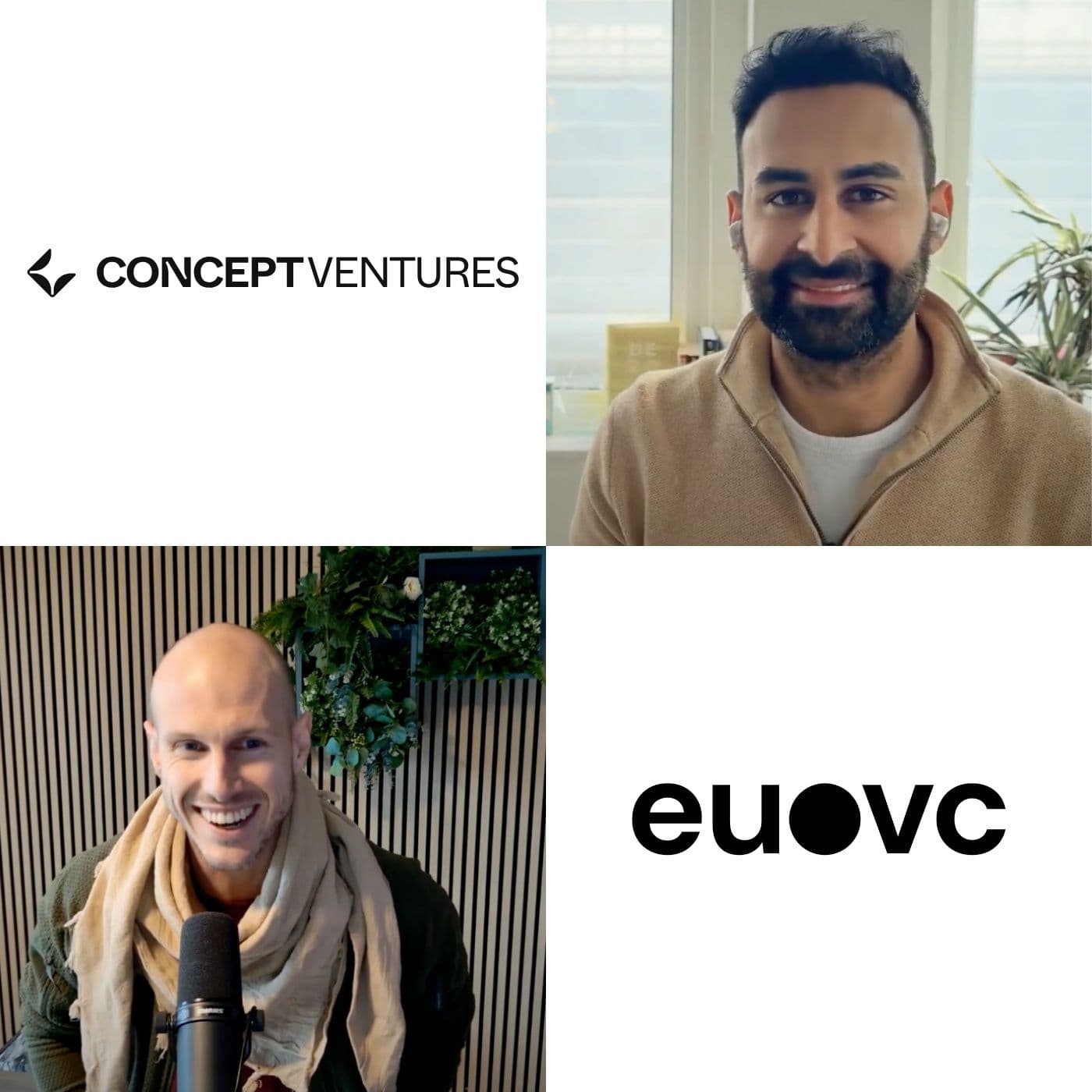
EUVC Podcast Episode Notes: E452 | Reece Chowdhry, Concept Ventures
Episode Overview In this episode, Andreas Munk Holm talks with Reece Chowdhry, Founding Partner of Concept Ventures, a prominent pre-seed fund in Europe. The conversation focuses on Reece’s unique approach to pre-seed investing, which includes leading rounds, writing large checks, and establishing trust with founders right from the start.
Key Themes and Discussion Points
- Reece's Journey into Investing
- Early Investment Experience: Reece's investment journey began at age 13 when he invested in Apple.
- Background: His father, a public markets investor, influenced Reece's understanding of finance and investing.
- Concept Ventures Evolution and Philosophy
- Fund Formation: Concept Ventures is a £65 million pre-seed fund, considered one of the largest in the UK.
- Investment Strategy: Reece emphasizes leading rounds with substantial checks (around £1 million) compared to the typical smaller amounts in the pre-seed stage.
- Conviction Over Signaling: He critiques the reliance on signals and brand over personal conviction in investment decisions.
- Challenges in the Pre-Seed Ecosystem
- Skepticism Towards Ideas: Many VCs hesitate to invest without substantial proof of concept, which hinders innovative startups.
- Need for Conviction: Reece argues that a successful pre-seed investor must invest when others are hesitant, showcasing a need for conviction.
- Collaborative Investment Strategies
- Team Dynamics: Reece highlights the importance of understanding team dynamics and how relationships impact startup success.
- Flexibility in Rounds: He discusses the benefits of being collaborative, allowing the possibility of multiple leads in funding rounds.
- Importance of People in Venture Capital
- Investment Philosophy: Reece’s team focuses on evaluating founders based on specific traits and how well they work together.
- People Process: Concept Ventures has developed a robust framework to assess potential investments based on founder characteristics like growth mindset and team dynamics.
- Family Dynamics in Investment
- Father-Son Team: Reece discusses the unique dynamic of co-founding a venture with his father, Jeff, and how their differing perspectives contribute to the firm's success.
- Public Markets Insight in Venture Capital
- Value of Public Market Experience: Reece discusses how his father's public market background helps in analyzing startup fundamentals and guiding investment decisions in a way that is often overlooked in venture capital.
Key Takeaways
- Contrarian Approach: Concept Ventures’ success stems from leading with conviction in pre-seed investments, allowing founders to skip potential dilution rounds.
- Proactive Relationship Building: Establishing trust with founders early on is crucial for successful partnerships.
- Focus on Team Dynamics: Evaluating the dynamics within founding teams can be a significant predictor of startup success.
- Transparency and Clarity: Reece advocates for more transparency in the venture capital process, arguing that clarity can help build better relationships with founders.
Conclusion Reece Chowdhry's approach at Concept Ventures represents a refreshing take on pre-seed investing in Europe. His belief in the potential of founders, combined with a rigorous evaluation process, positions his fund as a leader in the evolving landscape of venture capital. The conversation challenges traditional VC practices and suggests a shift towards a more founder-centric model, fostering innovation in the European ecosystem.
---
For more insights and discussions related to European VC, follow the EUVC podcast at [eu.vc](https://eu.vc).
Written by AI. May contain mistakes. Listen to the episode to check what was said.
Transcript
Automatic transcript. May contain errors.0:00What does it take to write million pound checks to founders with nothing but an idea. In this episode, we sit down with Rhys, founder of Concept Ventures, a 65 million pre-seed fund, the largest in the UK and possibly Europe. To be a really good pre-seed investor, you need to have conviction when others don't. In a world where most VCs want proof before they invest, Rhys of Concept Ventures is taking a radically different approach. You can't be writing 200, 300K. You need to be like leading around with like a million off the gate. It's a high-stakes strategy that seasoned investors call insane.
0:35$65 million pre-seed, I think that's probably the biggest, definitely the biggest in the UK, if not Europe. But when everyone doubted his contrarian model, something unexpected happened. Our lead rate's actually 90 % on this fund. The results? Founders who partner with concepts are skipping entire funding rounds. The rounds allow founders at pre-seed to essentially, if they do really well, skip a round of dilutions. What's the fundamental flaw Rhys identified in European venture capital that nobody else was willing to address? People not building their own conviction. I think there's so much reliance in our industry on signaling.
1:12Join us for an inside look at how Concept Ventures is rewriting the rules of pre-seed investing in Europe and why their conviction first approach might just be the blueprint for the next generation of venture capital.
1:30Tear down this wall. It's more than just an alliance. This is a union of values. Let's start acting. This show is not investment advice and the hosts of this episode may be invested in the funds and companies featured. Welcome back everyone to the European BC Podcast. today, I have what I hope will soon become a good new friend because I have Rhys with me from Concept Ventures. And Rhys, we were introduced by, I don't know if it wants to be known that he introduced us, but a mutual friend who is very much in AI. And he said, Andreas, you need to talk to this guy. You need to talk to this guy. You need to talk to this guy.
2:17And all of them I said, I've already had them on the podcast, my friend. And then he mentioned you. serendipitously we end up also having you nominated as uh one of the nominees for for the emerging manager of the year award at the euvc awards so i was like amazing this came in just a couple of days before this recording so i think this is destined to be reed that's very kind yeah and thank you for the nomination i'm not sure where it came from no i don't know either actually i didn't check that up i just saw your name there and i thought oh what a beautiful matchup um great to be here thank thank you for having me and thanks for thanks for joining reese so reese as said i didn't know about you and i i don't know whether that says something about me living under a rock sometimes or or or what but tell me let's talk everything about concept ventures but before we go there maybe just do the quick intro on yourself as well sure yeah happy to And, you know, I've listened to the podcast for many years and you had some great guests.
3:21So really, really excited to be to be here. And yeah, look, in terms of my background, I started my career in investing when I was very, very young. And I've talked about this many times where essentially I saved a little bit of my pocket money and various other kind of paper rounds and summer jobs. And I invested in very stupidly my life savings into a company called Apple when I was like 13 year old. It wasn't very much, but yeah, because at the time, people that used Apple products had things called Firewires. And Andreas, you might be old enough to remember what a Firewire is. And people laughed at me.
4:01And so that was like kind of the start of my technology investing career. And I was obsessed with technology. I don't know the Apple journey with years. For some reason, I'm super bad with years. 2013, that is after - I was 13. I don't know what the - You were - So I'm now 36 now. So that was like 23 years ago. So yeah, that's a long, long, long time ago. So that was, was that before or after Steve Jobs came back? I think Steve had come back then and I think they were on the earlier versions of the iPod, the very very early early versions of the ipod and that's what initially sparked my interests um um it was 13 14 and i remember walking into school with this device and you know i've told this story a few times that microsoft had a product called zune i think it was called the zune at the time and i just loved everything the simplicity and of the product everything about it the way it was designed but then people only use Mac for creative design essentially it was like a very you know non-standard thing and I thought this is just something I love and you know people generally laughed at me and I was like I was like okay but I love the product and how do you like I love a product and then like adopt it and be part of that journey and that was kind of the start of my investing career um you know so I think you know I was listening to Magnus Carlsen podcast last night and you know how his his father you know was a very keen chess player and I think the combination of being competitive I was always very competitive plus having you know my father who's in the investing world and the listed side that combination you know allowed for me to have a really interest in kind of both sides of the equation from a very young age and that yeah that was that was a start um fast forward a long time I went to I went to Durham University I studied international business there very you know loved it and I went to do the blue chip thing which was going to EY you know technology management consulting some great great great lessons life lessons there wasn't always um for me I would say uh I was always an entrepreneur inside uh so i left and um i did a number of things i um ended up i would say like almost like incubating some companies now some of those companies were an absolute disaster one of them went on to sell to private equity and that was kind of the evolution of concept after after that i felt that that there was a real gap in the ecosystem for a pre-seed fund that was you know very meaningful in terms of making a first check investment in Europe with nothing because you know I experienced that problem on those other journeys and I just felt that there was a real bias in Europe to like having products having revenue having like and you know I think I could you could see that from the landscape and the funds that have been raised and they're great and they're amazing but there just wasn't this kind of conviction pre-seed fund and we thought you know that that was something we can build particularly with like a very a very people focused lens and so you know over the last seven years we've been doing that we you know started off very small you know really grafted in the early days we you know were not spin outs from sequoia and index and you know like you know uh and we just kept our craft going and going and you know i think um kieran hill i think i don't know if you've had on the podcast always used to say to me never stop investing that's kind of like that was one of our mentalities and you know the way we've kind of shaped over the years is two pillars being exceptionally focused on people so we have one of the deepest people processes that i think i know of any fund in the world and that allows us to build conviction when others can't and secondly being obsessed with investing at the pre-seed stage so nothing is ever too early for us and those two pillars are kind of our guiding planning principles and we've built on those many many years we now are going on to our second institutional fund the first kind of four or five years four or five years we were doing kind of spb small funds etc testing the model in 2022 we closed 65 million dollars which was our first institutional vehicle and now we're going on to our kind of second institutional vehicle and we've been lucky to part some amazing amazing founders and you know i can talk about some of those journeys and some of the stories i'm sure are interesting i gotta ask you i did uh a bit of chat gbt assisted calculation here do you know the value accretion of your uh stock on uh apple from 2002 i don't know because i don't know oh so i sold little bits over the years so yeah probably very high it's it's more painful because i the only thing i remember from that journey is a long time ago is the day steve jobs died i sold all the rest of my holding yes and and if you look at the chart the day he died to the next two three years the value increase was almost the last seven years or eight years combined i'm sure it's a don't quote me on that but like i'm sure it's something like that i can tell you um first of all the sale of the stock when steve passed away just proves that your people earned it yeah uh you're you're at least you stick to your thesis I can tell you that if you'd held on to your stock, it would have increased 1170 X.
9:45Wow. So that would probably not as good as NVIDIA, but it's not bad. Very, very cool. We should definitely talk more about the founder's journey, founder stories that you just described, and we should dive into also the people focus and how you, when you have such a good people process, what does that actually mean? and then the pre-seed obsession. I think there's a bunch we can dive into there as well. I do want to ask you, you're a 65 million fund and you're coming up on the next one, which I'm sure will be at least the same size. Where do you feel, because many that are pure pre-seed would be smaller.
10:23So how do you reflect on that and what's the portfolio model behind it that kind of explains why you're in quotation marks that? Yeah. yeah look when we launched the fund the last vehicle again we've always as a firm had this outside mentality none of us have come from the blue chip landscape we've all come from you know the partners we've all come from all the rest of the team have come from outsiders mentalities everyone no one gave us a chance when we started this business like nobody um and so when we launched that vehicle it was a surprise a lot of people in ecosystem because they said 65 million dollar pre-seed i think that's probably the biggest definitely the biggest in the uk if not europe in terms of just pre-seed you know it was something new at the time and what we we um we realized is that to be a really good pre-seed investor you need to have conviction when others don't and i can give you tons of examples of people in our portfolio where that's the case but to have that conviction you can't be writing 200 300k you need to be like leading around with like a million like off the gate and the profile of founders in europe of the ecosystem has matured and so to write a million with nothing in a round of 1.5 2 million was like you know not there was very few percentage of people that could do that and so i think when we started the fund we thought our lead rate was going to be around 50%, maybe 60 at max.
11:52Our lead rate is actually 90 % on this fund. And I think that is something which we've been shocked about. And the reason why people want us to lead is because that conviction obviously helped building the round. And not many people can have that conviction at such an early stage. And that's such a good vote of confidence but the rounds allow founders at pre-seed to essentially if they do really well skip a round of uh dilution so if you look at some of our best companies at port photo if you take 11 labs you take tree fair or you take v sim uh all kind of companies we fund in the last two three years their next rounds have essentially been 20 million 15 million 20 million so you skip like kind of a traditional five to seven million seed round which is almost like a round of dilution you've missed there yeah that kind of thinking it allows is really good for a pre-seed fund because we're relying we're not a multi-stage fund building ownership etc so i think that product has resonated so much because the vagueness that we operate in people can't build conviction in the kind of the seed landscape or the multi-stage landscape but we can and that's why we end up leading because most of the deals people like this is weird this is early this is like we haven't got anything but there's not many people that write you a million off the gate and so that's that's kind of like kind of our kind of core bread and butter you're saying many things that make me think and i don't know exactly where to start if we start by one common critique and and anyone that goes to your website or your slide deck uh will very quickly and i call it slide deck not pitch deck because in your email you have a deck for founders specifically uh not lps which i think is pretty cool and it describes well who you are.
13:41But you're saying here a lot of critique of the VC ecosystem. And you also say as part of your founding story, we know how difficult VCs can be. Big statement on your website. What do you have to say to those that say that there are too many VCs that are willing to write a lead ticket at the early stage, but not willing to write a lead? sorry a co-invest ticket but not willing to write a lead check yeah or even do you think that there's a plethora of vcs that tell founders go find a lead and come back then we're in and that and that is really you know or doesn't mean that they're in but they're saying that you know then they're interested which i think is sometimes sleight of hand easy way to just get out of a conversation without saying anything real i mean i could not agree with that more i mean that was our frustration in the early days when we were unable to write those large tickets that you know we had built conviction but we could only write 100 200k and we would never come back to us when you get a lead and and i think that my experience of venture is that you have to be right obviously but you have to almost be like non-consensus right if you look at the companies that have done well in inverted commas in our portfolio like 11 labs you know everyone passed their pre-seed like you know it's it's and then we could go into that story when did you join 11 labs we were the first investors oh nice okay yeah congratulations you just won the uh emerging manager of the year that's very kind and yeah look i think uh it's not just that it's i can tell like you know many other stories of of our portfolio where that that is the case and even when people come from blue chip backgrounds when their product is like in a weird market or they haven't got something they can show or it's not fully formed it's very easy to go you know go and find a lead let someone else do it and we could slide in two three hundred as a follower check or a tracker check or a you know we'll put 200 and we'll come and lead your next round and you know like that's fine um and some founders do like that and that's there's lots of reasons um to do that but i think venture for us it's about you know why do we what's the craft of doing this job for me it's generally finding those outlier talented people that are often misunderstood underlooked underrepresented to be clear we aren't the fund that people come to when you're spinning out of deep mind and raising 10 million off the gate that's not us you know there's loads of other funds will do that you know we're the kind of people that are you know and the archetypes of people that we kind of typically invest in fall into kind of three four categories which are you know your ex kind of operators like you take matty and peter at 11 who are palantir and google you take ben and quiver anam who are a live avatar business and they were at synthesia and they spun out and you get the you know a bunch of our 30 to 40 percent of our portfolio second time founders typically sold their business under 100 million so it's not like kind of the daniel x of this world or kind of your you know younger scrappy maybe they've done a phd kind of spin out i would say and if you look at the unicorn percentage in europe 80 come from that category if you look at what vcs are doing at pre-seed, they're actually going after the kind of plus 100 million safe bets.
17:22They're not going after these categories of people that are often under looked. And so that's why, A, we lead 90 % of the time. B, our ownership and conviction level is very, very consistent. We feel that that is something that the market really, really, really likes. How come, Rhys, you are UK pre-seed, not Europe pre-seed? The UK statistically is a really great place to build businesses. If you just look at the numbers, we're actually producing a report in the next few weeks. 65 % of all capital pre-seed is based in the UK. I think the UK has more unicorns from, I think it was 2018 to now, than France and Germany combined.
18:07And so the unicorn rate in the UK is probably around five companies a year, right? I don't know if that's a combination of bio and tech, et cetera. Our job as a fund is essentially per vintage. It's just essentially find one of those per cycle, right? Like that's kind of our job. And then our fund maths works out. And so being very embedded in a talent dense ecosystem, Sequoia did this great report around talent. And, you know, it's like San Francisco, New York, and London combined is like kind of top three places for talent I think that what I really noticed I traveled to New York recently great cities where people want to live where there's talent density quality of life attracts great people and great you know organizations universities around them etc allows for this flywheel and we talk about the flywheel in venture which I think Harry did a really good quote of like if you've had a unicorn in your first three years of your fund you're like 85 percent likely to have three in your next fund and i understand why that's the case because that ecosystem is you know of like having that and that you know that that perception of that kind of flywheel going round and round is is is equally for cities as it is to people and venture so i think being very embedded in one market and going deeper and deeper we've conceded that kind of perpetual flywheel i I think if you look at most San Francisco funds, even European funds, from Creandum to Sequoia and NEA, London has been the place they set up their office.
19:38If it's their second market in Europe or their first market from the US. And I think that says a lot about the city and the density and the platform that it has. now i'm just i'm curious given the success you've had already and and and the the networks you obviously act in i would think that accessing and capturing talent across here wouldn't be too difficult and i would think that limiting yourself to the uk would maybe not make that much sense given where you are already yeah look i think i think that what we found with that is we are actually very european in the base so you you know you take um nick and rapper one of our portfolio companies and capably uh you know uk spain you took matty and peter uk poland and so you know i could go on what i think typically happens is that london as a place or the uk is a that has a node in europe which allows you to unlock other places in europe where i think it's on is very difficult it's a we're not going to set up in france and start doing pre-seed deals when we know the market is completely cornered.
20:45It just doesn't make logical sense to us. But there's always 30 % of our fund, which in the next one particularly, we will do more outside. And that's just through a network, fly, fly, fly, what effect? How? This is a provocative question. I love provocative questions. Well, but it's maybe provocative in a different direction than towards you. I was about to ask you, how do you distinguish yourself from someone like seed camp uh because i imagine that you you would be looking at many of the same deals yeah i think i'm super early with strong commitment as well yeah look i have a lot of respect to seed camp guys um i know them and they've been you know done amazing things in the european ecosystem when there wasn't so you know i think we're with seed camp and us differ slightly it's obviously they they they cover a much much wider geography which is which is i think testament to what they built as as a fund and where they've had success in the ui paths etc and companies and across europe um so i think that embedded nature is it's something that being focused here is is is helpful and i think the second thing is um I think the quantum of investments we do is a lot less.
22:05And so by doing that, typically, and I look, I don't know always their model. So, I mean, we are co-investors with them and we have a great relationship with them. I think what we typically, again, in that lead position with a higher ownership stake in the companies, and that that is just slightly a different model than than um the c camp which which typically have a wider geography and um and and typically i think they we're very focused in in being in rounds up to two million i think for given the nature of their brand and their portfolio and repeat they they they can participate in much larger rounds uh at seed as well as precede so i think that's that's probably like the difference yeah am i right in saying that you often also do work with gil and david at angular no we haven't done any uh deals with i mean again amazing respect for what they've done there and we share we we share um you know an lp in common uh and you know speak very highly of them uh but yeah nothing as to that effect and again i think just on the co-investment But you're both on the lead route.
23:21And that's also why I thought maybe you have, as Michael had done a lot of work with them and not co-invested with them. Because I think you'd probably be more rivals than you and Seep can. Yeah. So I think generally the way we structure our rounds is that there's ultimate flexibility for the founder. You can have two leads. There's enough ownership in most deals to do that. You can have a follower position. You can have us leading with angels. And I think that's what beauty of like what we're doing is we're very collaborative with everybody. You know, we have a lot of co-investors and, you know, we don't want to be that fund that's taking 20 percent ownership up front and just killing the rest of the round.
23:58We want we see the benefit of the ecosystem play. Yeah. And then, Rhys, tell me, how do you think about verticals at the pre-seed? Does it make sense to be vertically oriented or having theses within specific verticals that you're paying extra attention to? or do you think it's more while it helps for the narrative especially towards lps but in reality pre-seed is so much there's so widespread what happens you have to obviously ai is a mecha trend and that's going to permeate everything but really i don't know where the next big thing is i double down on founders i'm trying to be in the right circles and that's where i hunt yeah that's a that's a really good question i think there's there's multi-layered elements to that at pre-seed I think we did some analysis of all the kind of, you know, Midas list funds at Pre-Seed Seed in the US and the history of venture.
24:50And, you know, all of our team are very big students of venture, which I think is really important in our industry. And I think if you look at all the funds that have done really, really well over the years, everyone's kind of first check investor under 100 million generalist fund. And that's exactly what we are. You know, we're never going to deviate from that. And I think the thing is, 80 % of our decision is on people. um we have a very interesting way of looking at people and um i think that brings to light things that other people just don't see and at the beginning it's so weird i mean look at the great stories in venture from airbnb to uber and okay go on and you know even the pivots like slack and so many different things even in our portfolio and the companies just change so much but the people remain consistent and i've always been a believer of i'm never going to be able to predict the next wave at pre-seed just not i'm just not going to be able to do that if someone the last deal we did was just the most random thing i can't talk about at the moment but if i tell you is you would be like what is that you know and people say the market's too small the competition is too small too much and i think smart intelligent people who spike in certain characteristics that we look for find those markets and it is that kind of old i think is all i see thing you need a product which is the surfboard you need a surfer you need the wave but we're really looking for the surfer and they build the right surfboard and then they go find the wave it's kind of the way we look at it okay now i want to ask you another weird question and well not weird but it's it's a peculiarity of your fund that i'm excited about i want to hear about and that is there are two guys with the same surname and an age difference yes is jeff in your family yes jeff is my father um and yeah so that's um that's something that um is yeah is an interesting uh point of our partnership and look i think there's some great father-son partnerships over the years in venture local globing the most incredible beacons there in europe i imagine like unwrap it a little bit for us yes well what's it like to do this with your dad yes it's it's actually great um the reason why is we're just incredibly different people i'm much more focused on you know kind of always being kind of a self-entrepreneur uh you know always kind of you know driving things forward in in different ways and he's been like the ying to my yang he's you know very focused on lots of different elements of the business he is you know amazing at kind of like amazing at strategic thinking in detail he comes from a public markets background so challenges are lost he doesn't get and and because he had you know venture is very especially the team you can get very hyped up in like deals and people leading and you know having that calmness of just being like let's look at the facts let's look look at like the situations and particularly as those companies grow having someone with a public markets background and looked at things rationally and strategically it's just amazing to balance out the team and you know i think that's why lps have liked that and you know there's there's no there's also you know one of the big things adventure is partnership risk right you know partnerships blowing up and i think having that continuity and also ability to you know understand how people are progressing through the firm and transitioning and legacy planning super super important and just an interesting fact just because a lot of people say you must agree with your jeff like a lot me and him on voting records on investment committees have the most uh differing opinions oh you know we looked at it and we said Jeff and Reese disagree the most, which I think is, is, is, uh, in fact that I call him Jeff is also interesting because I have that very clear distinction between that, you know, when he steps in the office and, you know, we just don't, we have a, I'll tell you, it was a great working relationship.
28:43And I think any of the team that you speak to on my side, I think it gives continuity and longevity to, to, to the firm. I am sure my dad and I would also have very different voting.
28:58I want to double click on this perspective of having a public markets investor or someone with a public markets background, because it's actually something I've been wanting to do more on the podcast is bring on more public markets investors, or at least people with that background to kind of try and shine a little more light on the value of that at seed and the value of that at Series A and B and so on. I feel like this is probably one of the places where the U.S. ecosystem and the European is very different in that I think from what I kind of hear, like just observing from the outside, I would definitely say that it seems like the average U.S.
29:47investor has more public markets insight and understanding and so on. than the average European. Yeah, look, I think that's something probably I've observed. If you look at some of the great venture investors of all time, if you look at kind of, I don't know, Bill Gurley or Peter Fenton or like those, they've all kind of had, you know, investing careers in kind of started in public markets, technology, you know, et cetera. And I think that having some kind of grounding in that or having that in your team is a very beneficial thing. Tell me, how does it help you? Okay, so I mean, venture is about power law, right?
30:30Every venture firm says to their LPs, if we hit a power law company, we've returned our fund, great. So having been lucky enough to experience something like that, you essentially look at your portfolio and say, hold on a second 90 of our nav is in one company and then you look at you look at all the decisions you're doing around you say great we could get another unicorn but our job is kind of manage that one thing for our investors if you look at the fiduciary duty from an lp so we've got to be so understanding of the business fundamentals where they're going what decisions are making should we sell should we not sell should we keep should we like and to have a public because basically our power law scale it's a public market company because if you look at the history of public markets amazon and all these companies went public at the companies that these companies are you know valued at and so to have someone when you're doing and there's new funding rounds and you know you look at the fundamentals of the business you know and so for example 11 recent funding round which is now public is at 3.3 billion you know and so you know when that round was going through you know jess said this is the process to analyze this company let's back test all of the growth rate of this company look at the scenario analysis let's run it through the like a you know an ai model let's actually look at the company in a public forget that that this vc is raising around forget everything let's just look at the company like a public markets company there's very few vc funds i know that would take that rational logic they think oh this is one of the hottest companies in the world.
32:10It's an AI. It's like, it's just, we didn't even discuss that. We just literally were like, he just ran that process and was like, this is how we need to think about this company at this point of this scale. Cause I've done it for 30 years, basically. And that's basically why it's so beneficial because, you know, that is one of the most critical decisions you're going to make as a, as a VC manager. I want to ask you then, uh, people process, you described that in the beginning and it's really an underpinning of your firm. So let's dive into that as much as we can. Tell me, what does it mean when you say that you have an incredible people process, probably better than anyone else in the world?
32:46That's what everyone would say. Yeah, of course. What is that process? yeah look i think it's something that's evolved over time and you know we we've we've gone on a very long evolution of it i won't bore you with the evolution but the way the way we look at it is that we have kind of five six core principles that we look in in individuals um and teams basically so you know some of those i'll go through and maybe we could dive deeper into like one or two of them so something like team dynamics so team dynamics is essentially one of the core fundamental parts of our pillars so you know if we take like matty and peter 11 childhood friends we've got three i think three husband and wife teams now as well so i think what we really look for is that kind of ability to understand the dynamics between teams at a very high scale do you think that your dad and yours relationship put you in a special position to underwrite family teams yeah i think that's literally spoke spoke about this with my wife last night and and i said fuck i would not dare do that with you yeah look maybe maybe that is the case but i think what we're trying to do is 80 to 90 percent of vcs have this gut feel we know they're a great founding team we're great like you know what we're doing is it's not a score it's a framework where we build conviction so the way the process works is the partners and the team as a whole have to build conviction in one of our spikes.
34:17So kind of our five spikes are evidence of exceptionalism, team dynamics, relentlessness, domain obsession, growth mindset. So the way we look at teams and individuals and take a second time founder, right? Let's take a second time founder. So one of the spikes that we would really look for in a second time founder is a growth mindset. The reason why that is the case is because we want to really know that they've learned and developed on that journey as a second time founder because if you haven't then you know you will not implement and execute those things if you're for example someone spinning out of university maybe we're looking for a very high spike in relentlessness that kind of you know i'm sleeping under my desk i'm speaking to 50 customers etc so that we have um layered kind of three and and and maybe people haven't known each other very long maybe a couple of years so we're looking for like in in that kind of team dynamics but we really know our co-founder we can complete each other's sentences we interview them both separately we give them our own people um people assessment about roles they do in organizations so we layer all these kind of things and we look for these high spikes so palantir for example i think look for spikes and they're one of the best hiring organization we didn't know that when we spoke to them they they said oh we look for spikes individuals we've done i think five palantir teams now but that's kind of besides the point but yeah look i think i think this this this allows us because i think a lot of people think we have a score and it's like we must invest but i think it's just much more nuanced than that and the way we kind of lay that all in is three levels of research so we have kind of academic research which we know we've kind of gone off the shelf and we're doing some partnerships with some universities as well to build on that and have some proprietary level there's kind of market industry so you know speaking to like organizations who are great at hiring and my colleague uh say and spend a lot of time doing that as the head of people research and that helps us inform the model and there's our own research as well which we you know we've done so that constant feedback luke as a firm we have a very we quarterly go to quarterly kind of off-site and we spend an hour and two looking at the model looking at the deals we missed looking at what how we have improved that model that framework and i think um it's been a real kind of game changer for us in terms of the way we kind of execute and evaluate deals and founders like it because we go through you know five-year increments of their life and they're like hold on a second vcs don't talk to me about who i am and where i've come from and what i've done that you're actually generally a person i want to work with so that's also why our win rate is very high because because of that i came across I was just the other day, an old Myers-Briggs report that was made on me by some employer back in the days.
37:03And I thought, you know, I kind of smiled a bit to myself and thought, oh, fun, a group of idiots. Because I thought what I thought was, oh, man, if someone is relying on that to gauge who I am, kind of and it was even done by an external consulting team right yes what's your take on that type of thing maybe i'm completely wrong no look i think there's a time and place for all of those things and think they all have some merit uh and you know we have looked at them and in detail over the years in in many in many many circumstances and i think well all these things it allows you to kind of maybe uncover some insights that you may have not thought of from a gut feel perspective.
37:49And I think that's the key. If you actually survey, I actually did a little survey of VCs actually a couple of months ago. And I think out of the six or seven I kind of briefly touched about, this is kind of globally, I think 50 % of them didn't even speak to CTO of the company before investing, which I thought was bananas. And so, you know, like the fact that the industry as a whole essentially relies 90 % on kind of gut feel analysis without any kind of framework but consistently says people are everything in this industry is something that you know like is that was baffling to me as as a preceded investor even more look series a and b is completely different like it's like completely different and so i think that um those uh kind of assessments can be used in in ways but you need to have your own a framework essentially of like embedding that and you need to understand what you're looking for with those assessments there's definitely a place for them um and you know you can build on you can go to town on these things you can give people scenario analysis you can do you know very specific types of interviews and questions and you can even start bring psychologists in you can go crazy but i think that we've tested all these things over the years and i think it's about you know our our mission what is our mission as a firm is to solve the people equation and the people equation is if we solve it like the dna equation you know essentially we've unlocked the holy grail we'll never get there but to have that like mission of of understanding that and the way founders and and having that kind of framework is something that like motivates us as a team every single day do you know uh john from meca ventures i know john yes i know he's big on he's big on people and framework thinking around that as well yes and i think i have a lot of respect for ica and again i think what i like about them is they cut the noise they they have their own opinions and they and and then they'll invest kind of like you know forgetting like this is a hype thing they'll just be like right this is what we're looking for and i have a lot of time for vc funds who who are of that thinking that make their own mind up yeah very cool okay reese we have uh a couple of minutes left i want to ask you here before we close because you have such a strong positioning around being different from the rest of the ecosystem and taking a bit of a contrarian perspective or at least a very honest or very and very hard-hitting critique of the problems in venture in general i want to ask you give me the three five however many you want uh biggest critiques of where we are as an ecosystem today in terms of vc behavior and feel free to go as deep as you want the three kind of three criticism I have is something I've touched on before, which in the podcast, is that people not building their own conviction.
40:43So I think there's so much reliance in our industry on signaling. So they're signaling our brand on founder on CV investing on, you know, so many things. And I get it, there's a lot of noise, so you need to cut through it. But having that conviction when other people don't is something that I think where true alpha is. And I think people just over index on others generally so i think that's one thing i think the second thing is clarity of understanding what you are so we're very clear and i think it's taken us a long time together of like we are a pre-seed fund we invest this much for this much this is what we do and look you know i think vcs generally promise so much and we don't we're just like these are the things we'll be good at you know these are things we won't be good at just be honest with people And I think like, you know, that's, that's, that's just like a, something the industry kind of one ups themselves on.
41:39Like we have 50 people in our platform team and we can do this and this and just be like, we're great at these three things. Go and speak to all our founders and just stick to, you know, everything in life is 80, 20, right? So like just focus on the things that, that 20 % that will, you know, move the needle. And yeah, I think just like for years and years and years, you know, we had our term sheet on our website, right? you know now a lot i see a lot of vc is saying oh we're putting our term sheet on our website and it's like a new thing and like why is that it's just so simple like why can't you just be transparent put it on the website like you know and so that clarity of like understanding the process you're going through and the transparency at the end of it now look we're not perfect we get lots of things wrong as well and we're always learning but i think um you know we're always we're always trying to like understand where we can do better on all levels of the organization but those are three i should summarize one is a lack of conviction uh two is a lack of kind of clarity around where you are in the process and you know etc and third is the lack of conviction building when there isn't anything so you know i think in europe it's even more prevalent when i travel to the u.s i think you know they have this mindset of like you know yes and you know I even lived there for a few months and I think that you know I think Europe is doing a great job of catching up on a lot of those things but we're still particularly at that kind of early really early stage very critical of ideas and you know there's less like there's more skepticism than than I would like at times.
43:13Do you think that that is a feature? So yes, in a way, is that a feature of, I think that maybe it is a bit of a feature of our ecosystem rather than a buck. And I say that because our exits are a bit different from the size of the exits in the US. And for that reason, the return profile becomes different of the funds. And then you start having a bit more focused on risk minimization, downside minimization. Do you think that that might be the cause of it? I think there's been some amazing funds in Europe who have made some amazing returns. And some of the stuff is very public. You take something like Hummingbird or many others that I can name, and they've had consistently great returns and big outcomes.
44:08you can you look at you look at the ui pass the spotify's the you know planer now etc 11 and and i think i think that the ecosystem has matured a lot and you know i think this concept of having the you know trillion dollar european company is something that will happen in time and i think that the conservatism i witness is the comment i get backs the most of people that we of backing is like yeah i really like that person but the idea i don't understand the market i don't know i don't understand it's too small they're doing something a bit weird and so if you take that lens and then that is the problem i think so people know they're good people they kind of know they're smart they've even been second time third time founders and you know many cases and they back them before and when you call them up you said yeah they did everything right sold the business well we made a good return but yeah they're just doing something really weird and i can't get that through my investment committee because we need to write a 65 page memo at pre seed about this market and there is no market so i'm like okay like kind of isn't that our job like you know at some level like to understand that these people create markets and like this is a bit weird you know and i think that is the difference right because everyone needs to answer to something and the structural problem of european vcs what i've seen it is that a lot of a lot of pre-seed funds pre-seed rounds are set are people that haven't invested at pre-seed they're like seed or a funds who have like writing a pre-seed check and you need to write this huge memo you need to get 10 partners on board and that's just not how it works yeah so i think that's that's That's the biggest gap I see in the ecosystem.
46:00Yeah, I think we have a structure with oftentimes a lot of power given to ICs rather than the individual partners. And I often do not like that when I see it because I really want to be backing singular people and then, okay, they take it through IC. They do talk to the rest of the team. I obviously want that. But really, I want the partners to be incredibly thoughtful in their own space. And then that's who also leads the deal and does the main work. And then the rest of the group is there to pressure test. I think that's the best approach in 99 % of the cases, to avoid exactly the behavior you're describing.
46:38Rhys, thank you so much for coming on the podcast. I'm so happy. Thank you so much. This was the hour we spent together. That's great. Thank you. Thanks, Andreas. This would now find itself. Tear down this wall. It's more than just an alive. This is a union of values. Let's start acting.
From the publisher
In this episode we're spotlighting Emerging Manager of the Year finalist Concept Ventures. Andreas talks with Reece Chowdhry, Founding Partner of Concept Ventures, about his bold approach to pre-seed: leading rounds, writing big checks early, and building founder trust from day one.
Curious who else made the shortlist? Stay tuned—the big reveal’s coming soon.
Reece shares his journey into early-stage investing and explains how his approach to pre-seed funding means writing big lead checks when others hesitate, building trust and momentum with founders right from the start.
He also opens up about his early experiences in tech investing, which shaped his conviction to back talented teams and innovative ideas in a maturing European ecosystem. Reece also dives into the heart of his investment philosophy, focusing on the power of a strong people process and unwavering conviction.
He outlines how his team’s careful evaluation of team dynamics and growth mindset helps startups skip rounds of dilution and accelerate their progress.
Here what's covered:
- 03:02 Reece's Journey into Investing
- 06:35 The Evolution and Philosophy of Concept Ventures
- 09:44 Challenges and Strategies in the Pre-Seed Ecosystem
- 23:38 Collaborative Investment Strategies
- 25:00 The Importance of People in Venture Capital
- 26:25 Father-Son Partnership Dynamics
- 28:52 Public Markets Insight in Venture Capital


