
In short
EUVC Podcast Episode Notes: E453 | Marika King, PINC
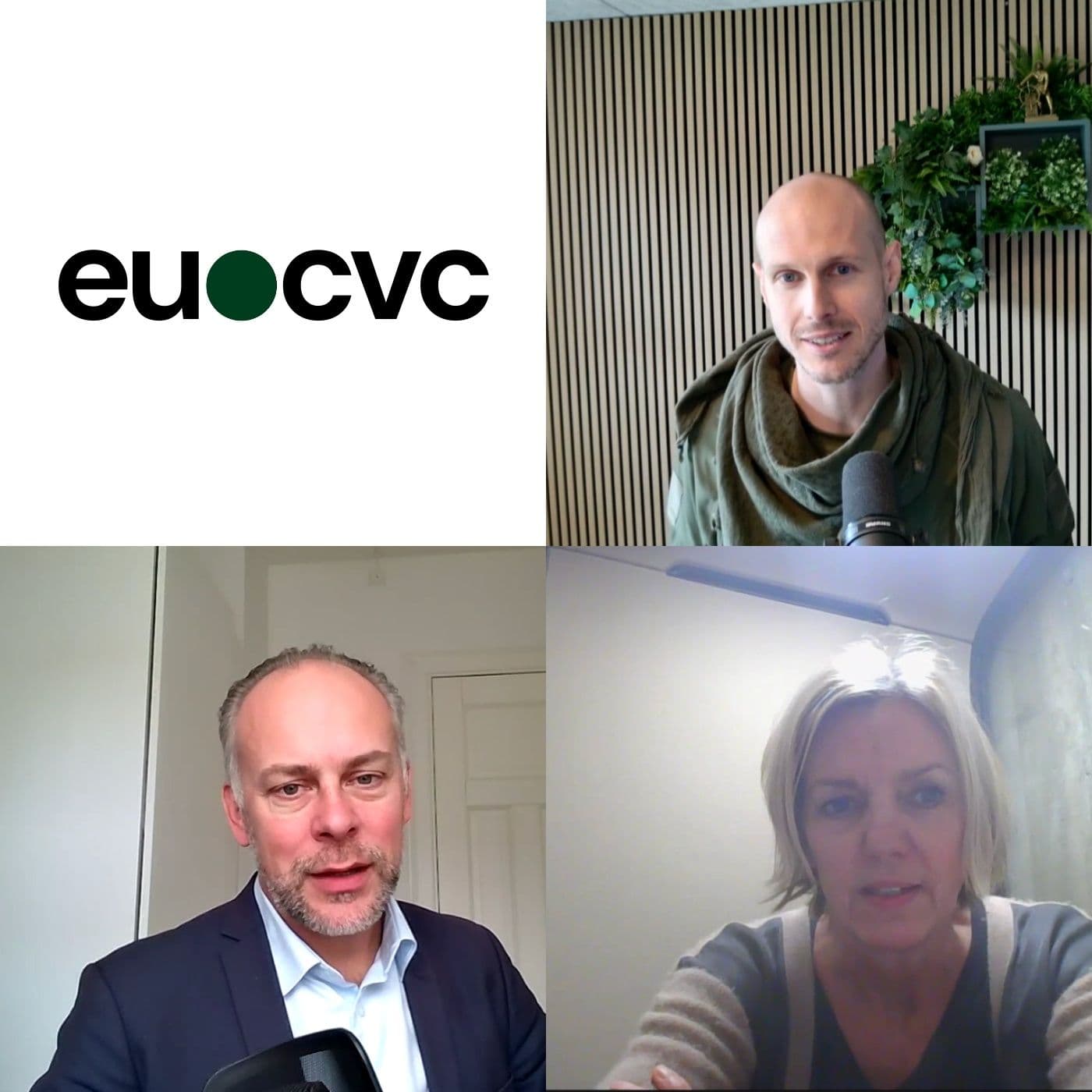
Episode Overview In this episode, co-hosts Andreas Munk Holm and Jeppe Høier converse with Marika King, Head of PINC (Paulig's corporate venture arm), discussing how purpose-driven corporate venture capital (CVC) fosters early-stage innovation and corporate synergy. They explore the unique approach of PINC in investing, governance structures, and insights from Marika's personal experiences.
Key Takeaways
Introduction to PINC
- Purpose and Mission: PINC aims to accelerate core innovation in health, sustainability, and food security. It focuses on societal impact first, followed by strategic and financial impacts.
- Investment Strategy: Unlike traditional VCs, PINC invests at earlier stages, often before Series A or B rounds, allowing them to validate and support startups that align with their mission.
Early-Stage Investing
- Validation Role: PINC leverages Paulig’s R&D capabilities to validate business models and identify attractive revenue streams in startups that other investors may overlook.
- Long-Term Relationships: PINC fosters ongoing relationships with founders, encouraging them to return with updates and new proposals, promoting a reputation as a founder-friendly investor.
Governance and Structure
- Governance Model: PINC reports to the Paulig board through an investment committee led by family members, allowing for long-term strategic focus rather than short-term financial pressures.
- Cumulative Mandate: Marika emphasizes the importance of having a cumulative mandate rather than yearly budgets to allow flexibility and longer-term planning.
Lessons in Structuring a CVC
- Define Purpose: Establish clear objectives for the CVC to drive investment strategies and decisions.
- Investment Committee Composition: A balanced committee with internal and external perspectives aids in making informed decisions.
- Frequency of Meetings: Regular meetings (every two weeks) help maintain agility and responsiveness in decision-making.
Misconceptions about CVCs
- Flexibility and Patience: CVCs can afford to take more time with investments compared to traditional VCs, which often seek quick returns.
- Founder-Friendly Dynamics: CVCs like PINC are perceived as more supportive and less imposing than traditional VCs, prioritizing the founder's journey over purely financial metrics.
Marika King's Personal Journey
- Background: Marika reflects on her diverse experiences, including her previous roles in consulting and NGOs, as well as her journey through burnout, which shaped her values in investing.
- Impact of Burnout: Her personal crisis led her to prioritize authenticity, genuine connections, and a sense of purpose in her investment work.
Conclusion
- Marika's insights provide a unique perspective on the role of corporate venture capital in fostering innovation while emphasizing the significance of purpose-driven investing. Her experiences highlight the importance of understanding the founder's perspective and maintaining long-term relationships within the investment ecosystem.
Episode Details
- Hosts: Andreas Munk Holm, Jeppe Høier
- Guest: Marika King
- Duration: Approximately 55 minutes
- Sponsor: Ace Alternatives - providing operational solutions for fund management.
Recommended Listening This episode is highly recommended for anyone interested in understanding the dynamics of corporate venture capital, the importance of purpose-driven investing, and the innovation landscape in the food and sustainability sectors.
Written by AI. May contain mistakes. Listen to the episode to check what was said.
Transcript
Automatic transcript. May contain errors.0:00Traditional VCs want growth at all costs. But what if corporate investing could actually help founders and the planet? So we look at societal impact first, strategic impact, trying to find synergies with the core. And then obviously we need financial impact as well. Now, for most corporate VCs, that means playing it safe. Pool League's venture arm Pink has other plans. We have a limited money. We want to have a certain kind of impact. We need to get in early. Early stage investing is hard for most corporates, but Pink has made it their sweet spot. We were able to sort of go in and validate, you know, is there a potentially attractive revenue model here that the other investors felt hesitant about?
0:35And we could sort of go and validate. Surviving as a corporate investor requires more than just good deals. You definitely need a cumulative mandate, like not yearly budgets. And we don't need to have a fund, but you can't sort of have yearly budget. While most venture investors move fast and reject quickly, Paulig's venture arm plays a longer game. We never say no. We always say yes, please come back with this. Yes, we would love to see that. And we keep these relationships and build relationships with these startups for years. It's a different approach that's winning over founders in food tech.
1:07A lot of VCs, they would say that they're founder friendly. How does a 150-year-old coffee and tortilla giant beat top VCs to the hottest food tech deals? Join us for the full episode with Marika King to learn Pink's early stage, de-risking playbook that's reshaping corporate venture capital.
1:29Here's a few words from our beloved sponsor. Discover where operational expertise meets innovation. With end-to-end coverage across fund admin, tax, accounting, compliance, ESG and more, we take care of the complexities so you can focus on what matters most. Whether it's supporting visionaries or maximising returns for your LPs, our tech-driven and comprehensive solutions empower you to achieve your goals with confidence. Partner with Ace Alternatives to streamline your operations and elevate your fund's success.
2:11This show is not investment advice and the hosts of this episode may be invested in the funds and companies featured. Welcome back, everyone, to the European VC Podcast. Today, we have yet another of our CVC deep dives. And to do that with me, I have Jeppe, as always. Maybe, Jeppe, will you share a little bit about why we invited Marika to join the pod? So I met Marika roughly three years ago when I worked in the large Danish CVC. Marika and I, we had some great sparring around governance structure and setup in general. What also triggered me was that Marika is in the food space. First time we have the food vertical with us, so really, really eager to get going and learn from Marika and everything she picked up from her work at Pink.
3:04This is where we are. It's going to be exciting. And let's get right into it, Marika. Would you just open up and telling us about the story about King and how you got started? Yeah, sure. Hey guys, nice to be here. So I'm Marika King. I'm the head of PINK. PINK is the venture arm of Powelig. Powelig, for people who don't know, is a Finnish company. It's family owned and it has a lot of coffee, a lot of tortillas. It's a bunch of Tex-Mex sauces, spices, snacks. So it's a typical CPG, a food and beverage company. But it comes from coffee started 150 years ago. So we are the venture arm. And as such, we invest in early stage startups in the whole food system.
3:51And we try to be sort of early stage. So to some extent, I think we maybe go a bit earlier than other typical VCs do in the space. But we have an impact agenda. So we look at societal impact first, strategic impact, trying to find synergies with the core. And then obviously we need financial impact as well. Do you look at societal impact first and then strategic and then financial? Yeah. I mean, obviously they go hand in hand. But, for example, you know, in a startup that works with efficiencies in the supply chain that maybe primarily save cost sort of or something like that, unless it has another sort of impact angle, we typically let other people do those.
4:34And societal impact for us means health, sustainability, and increasingly availability, meaning food security, that we actually have things to eat at all, which, you know, surprisingly, we have to think about these days. Maybe one thing that could be interesting to jump into, right? So you're investing quite early. When we talk to other CVCs, they really like to go A and B rounds. Could you share a little bit more on why you decided to go in early? You know, every CVC has their own purpose. And I think it's really important to define to yourself what your purpose is. We have kind of a dual purpose.
5:18We were created in order to, you know, help speed up innovation in the core by being at the forefront. But also, you know, to have a good legacy, you know, to actually really contribute to a tastier, healthier and more sustainable planet. But when it comes to that, we sort of have to think a little bit in dual. So when it comes to speeding up innovation, it obviously has to be related to the core business somehow, because otherwise it's not a relevant innovation for them. Sometimes we also function as a portal, you know, like we sort of try to funnel things, even if we don't invest in them. We sort of funnel things to the core where they can test and try out.
5:56Obviously, if they test something and it's super good, we get more interested in investing as well. That sort of goes without saying. But sometimes, you know, we also try to sort of funnel things that maybe aren't that unique or disruptive or innovative. And so we still have to kind of we want to feed that to them. When it comes to this second, you know, sort of having a big impact on society, obviously, then it can be a little bit broader than what actually has a super close synergy to the core, if you know what I mean. Because it might have a sort of super big impact on the planet in the long run.
6:27If we talk about soil health is important to all of us, it's also important to Powlig. But it's kind of one of those enablers. If we don't have healthy soils, no, we can't eat. I guess what I'm trying to say is that because we want to have that kind of impact, we need to go a little bit earlier. I mean, we could potentially go later, but then we would need a lot more money. Like, we have a limited money. We want to have a certain kind of impact. We need to get in early. But we also find it's kind of like a little bit of a sweet spot because sometimes, for example, because we try to find these strategic synergies, we can validate better than other people can whether it actually is a good startup.
7:11So for us, maybe it's less risk than some others then. For example, you know, when we invest in Amaterra, which is a French startup that has to do with creating new coffee varieties and other crops, but they started with coffee. Coffee, obviously, is super important to us. You know, we were able to sort of go in and validate, you know, is there a potentially attractive revenue model here that the other investors felt hesitant about? And we could sort of go and validate that. And then we sort of, then it becomes less risky for us. And then other investors can kind of tag along and say, oh, actually, these guys have validated it.
7:46And then we can... There's two things that pops into my mind, Marika, as you talk us through it, right? One of the things, right, since you are going early, could you share also a little bit on the due diligence side, right? You mentioned it, right? So when you evaluate these young companies, how do you leverage your core colleagues, if any? We do as often as much as we can. So in particular, when it's things closer to Paulig, obviously then they can help us validate more. If it's alternative coffee, for example, that's a great example of where we really can have the R &D in Finland test the coffees and so forth.
8:27And they also help us, you know, with alternative chocolate, which we have invested in, for example. Sustainability systems, you know, we have invested in a company called Improven in Sweden. They were, it's a digital tool to sort of make, get better data from farms. And also, just to sort of measure real footprint of carbon, you know, these kind of climate effects, but across the whole value chain with scope three and everything. That was a very good example of us feeling like, this is a super complicated space. There's so many players here. Who is actually the winner? Well, let's try it. And then Pauli said, hmm, interesting.
9:06Our supplier is actually doing an evaluation of this right now. Why don't we plug it in with their evaluation, which are the people that actually all cooperates with the farmers? And then, you know, that took a little bit of time. And then they came back and said, this is one of the best systems we ever come across. And we're like, hmm, okay, interested. But do you find it just as easy to get a hold of your R &D department in Powlig as to now you mentioned, you know, a potential supplier using this soil analytics tool, right? Is it the same, right? Because you're also one of the first where it's really, you know, where we discuss kind of, you know, the R &D stuff.
9:47People love pink in Powlig, I would say, because it's so exciting, everything we do. So and it's also, I mean, sort of a bit of a company culture where we have this sort of one Pauli culture where so everyone is really trying to help out as much as possible, I would say. And then obviously, in some areas, it's easier than in others. But if we don't only talk to Pauli people, that's also why we need to have good relationships with other companies in the space, whether it's, you know, Luntman and agricultural players or whether it's, you know, ingredient companies. We engage with other type companies so we can have other people to ask and validate things with and not just Pauling, so to speak.
10:31But the people in Pauling are super helpful, actually. Super interesting point because I discussed this topic with a large German corporate earlier this week. And one of the discussions is around culture. can you actually expect your core colleagues to spend time with you when you do what you do in pink, right? So I think, you know, could you share, do you think it's a one-off with Paulik and it's a special culture or what do you do to get their assistance, right? Because they have the full-time jobs, they have the corporate KPIs, they need to hit those targets to get their bonuses and so forth.
11:13I think it's maybe a combination of if it's sort of endorsed from the very top. Like, I mean, if Pink has been endorsed that we are going to have this thing and we've decided to have this thing, then it's kind of part of the expectation that you have to, because of this one Pauli culture, it's kind of you have to kind of then help out. But I think it's a little bit more personal than that for a lot of people. I think they actually really enjoy it because they get to be part of something new and disruptive and innovative. It was interesting because when we set up this thing, I was like, do we have to have some kind of internal pricing system, you know, stuff like that?
11:54But I mean, there has never been any, I shouldn't say never, because sometimes when you get to sort of R &D sort of budgets and, you know, you want sort of to have some access, it's not like you'd never have sort of a discussion about what they can do. But I would say like 95%, 97 % problem free. It might be the company culture. It might just be because it's really interesting areas that people care about. It's hard for me to know because I haven't really done this in any other companies. What are your thoughts? What do you think? I think it's super interesting. You know, I would be proud if I were you.
12:32I think, you know, that you can get people's help, right? Because normally, you know, when you work, you have, you know, what you need to deliver as a corporate. And you have company targets. And oftentimes, the CDC as such is not part of those overall KPIs. And that is one of the challenges. and it's some of the things that you need to fight for normally. But I think it's because we try to also solve pain points for the core. Like, for example, we have these sort of regular meetings with R &D and sustainability team where we go through, they have a pain point list for different sections in R &D that we try to make sure that we understand so we can actually help them solve their problems.
13:14It takes also time to go through those things, all right? And sometimes it might cost more than it sort of takes. But sometimes, you know, you get something really cool For example, we had this AI startup in terms of new product development. So using AI tools for new product development. And there's a few of those around and, you know, some little bit bigger players. But normally, you know, you would have sort of some kind of corporate. They would make sort of like some pretty long-term evaluation and it would take a year. And they would, oh, who are we going to cooperate with? But because we found this startup or this startup came to us and we thought they seemed pretty cool.
13:49we said hey is this good why don't we test this you know like and because they kind of need an answer we need an answer relatively quickly then Pauling is forced to test these things faster than they otherwise would be right this is kind of goes to that first purpose that I talked about which is speeding up innovation so then they're like oh okay there's this tool and then they test it and much faster than they otherwise would have and then they've had some really awesome results You know, so if there's benefits like that for them in their normal job, then obviously, you know, it sort of goes towards their target in a way.
14:24No, and I think, you know, when you talk about spending time with Core, right, and sometimes it takes a longer time, but it's also your secret sauce, right? It's your right to play in venture capital. So I think it makes totally sense. Maybe jumping a little back, right, because where we started and also this question came in was you do early stage bets. What's your strategy for follow-on investments? Depending a little bit on how early we come in, sort of two or three rounds, I would say. That's quite normal, I would say, for early stage investors. But I think this whole early stage thing, maybe if I could come circle back to it a little bit.
15:02I feel like sometimes, you know, if you want to be disruptive, sometimes you've got to go a little bit with your belief, right? Right. I feel like later stage, you know, they want more proof points that something works. But I mean, then maybe it's not that disruptive anymore. You know what I mean? So I feel like because we have this pretty disruptive, we want to find these things that really could potentially have a huge impact. Of course, it's a huge risk then. But I feel like sometimes people say that they're early stage, but they still want the proof points of the later stage. And then they sort of say to the startups, oh, it's too early.
15:39It's too early. Okay, but you're not the late, say, investor. So what do you think? You can't sort of have the cake and eat it too, you know. But I think it's super cool, right? I think the discussion is good, right? Because when you go early, right, you normally do it because you have some kind of expert knowledge in the field you are in. And you have the deep knowledge, right? That's why you go early. And then you have the rationale for doing what you do because you can power fuel these startups with everything coming from inside of Paulik, right? Right. That's true. But sometimes we invest in startups that sort of are quite far from the core as well, because we have this broader agenda.
16:17So like when we invest in crop genetics companies, you know, we can't really. Well, it depends. Coffee crop genetics, we can actually help them with flavor profile and stuff like that. But otherwise, you know, like we have crop genetics in wheat. Wheat is super important to us because we make a lot of tortillas and therefore wheat is in prioritized crops. But we can't, as Pink, of course, we can help them as a normal sort of startup scale up. But from a Pauli perspective, actually, we can't help them a lot. So, but we feel like, okay, but we'll still sort of go early sometimes because we feel like we try to learn enough to understand that this could be really important and really could be really successful.
16:57But I know everyone can't go early, right? But it's not like we go, you don't do any analysis. You know, we try to do as much as we can. But then at some point when it's early, you just have to make a bet. But I agree with you. Sometimes it's a more intelligent bet if we can sort of understand more from the mothership in a way. I'd love to understand where does the original idea to do pink come from? Because it does sound like when you create this type of quite open mandate, It might not actually be coming from the corporate as much as it comes from the family that owns the corporate, so the principal.
17:38Is that the case here? Well, it's kind of a combination. I think the first seed was actually from the management because they felt they were a bit slow in terms of this whole innovation. Because what typically happens in these larger corporates is that you tend to get a little bit focused on everyday innovation as opposed to a little bit more disruptive. and that is a little bit hard sometimes to get out of. And, you know, of course, you can debate how much you should get out of it as well, you know. But if you want to have a slightly more Horizon 3 kind of innovation, you know, how do you make that happen?
18:12So it came, I think, as a seed from the management at the time. But I think this whole legacy thing from the family was very important, actually, to get anyone that cared to actually make it happen because it's not so obvious that you make it happen. It's quite a commitment. I mean, relatively speaking, it's not that much money compared to sort of Paulig overall. But still, it is a commitment. And I don't think that commitment would have happened unless it was for the family that really cares about these things. I mean, Pauling as a company as well has a very high sustainability agenda, which can be seen in the sustainability strategies and sort of science-based targets and all of this.
18:58So it sort of jacks into that. So it's a combination of those two, which can also be then seen in how we think about the purpose, because it's also that dual purpose. How about then when you look at the governance of the structure and your team and so on? Is that purely living with the management team, meaning it's a conversation between you and Paulik? Or is the family also involved in this? The family sort of has a very professional sort of organization in how it runs Paulik through a foundation and all of that. There are sort of some family members involved in the board. And our chair in our investment committee is Eddie Pauli, who is also the deputy chair of the Pauling board.
19:48But we have a setup where Pink reports via the investment committee to the Pauling board directly. So we don't actually report to the CEO, which I think is a quite good setup because it signals long-term commitment from the Pauling board to do this. and you don't have to be so worried about, you know, EBITDAs going up and down and all of that. I mean, you know yourself, it's quite easy for sometimes when going gets tough, CVCs get sort of cut out. I think our setup sort of minimizes that risk and give us sort of a more like a long-term reliance on us as a partner. Yeah, but can you comment a bit on that structure?
20:29How often you've seen it? Who else does it? Your own reflections on where the strengths and the weaknesses are. So how often I see, you know, the decision structure of who you report to. And I think, you know, it also changes over the lifetime. So my own journey, reporting directly to the CEO, then going to somebody different in the C level, then going down to head of strategy. And I think I see a lot of corporates where it actually comes out of the strategy department. so it really depends right i've worked what i really love about the the pink setup is that there is a connect directly up to the decision makers super super important for for the longevity of of the setup i guess there's also a very healthy mindset for a board versus the management because the management is in the day-to-day grind and you can be very, as you described it, see a bit of an issue, then you can be very tempted to go and do something with this weird little structure that nothing is happening from the eyes of the big boys.
21:48But then when you're at the board level, you're much more, we're managing the core business and then we have this investment arm that we're going into a completely different mindset when we are evaluating, which I imagine is a very healthy constellation compared to having the day-to-day management team shifting between the day-to-day priorities. Yeah, because it's hard to put different hats on, right? This is sort of a human challenge. It's not because anyone is stupid. It's just because it's very challenging to put different hats on. And what I also like about what you're saying, Marika, it was a management decision to try this out.
22:28but where Pink now lives is towards the board, right? And I think that's solid because you want the agreement. If across the C-suite you are not supporting the initiative of doing CVC, it will die. It will be the not invented here syndrome that then everybody will fight and I think, you know, the setup is good. Also, our discussion earlier on with the culture and so forth seemed like, you know, this is a strong setup. And I mean, I think the key is to have, I mean, to be honest, you know, because like it was a bit of a journey. It wasn't this set up from the beginning, as you know, Jeppe. I mean, so it started where it actually did report into the organization.
23:11And then, you know, there were a few other sort of issues with the initial setup that we had to kind of sort out over time. And one of them was, you know, having a proper mandate and, you know, a proper investment committee and so forth. And when I then did the proposal to the governments we have now with some of the input from you and so on, one of my things was that I wanted Eddie to be the chair of it because he's then the direct link to the board and also to the Pauli family. And that sort of gives a really sort of a strong support. He's also a very smart and capable person, obviously, but it sort of supports that whole structure.
23:50What if you should draw out some core lessons on structuring and governing a corporate venture fund that at the same time as it ensures agility, it also maintains the alignment with the corporate strategy? What would be those core lessons? Sometimes when people put up these initiatives, they think it sounds like, oh, it's cool to have this CVC. But it's really important to understand why you're having the CVC. Like, what is the purpose? Typically, you have to drive that agenda because no one's really thought it through. So you have to kind of drive your own agenda and form your strategy and really be clear about what you're doing and why.
24:30Because that sort of influences everything that you do. So that's the first one. And then I think the second one is you definitely need a cumulative mandate, like not yearly budgets, right? Right. I mean, we don't have a fund and we don't need to have a fund because we don't have a sort of a time limit like that. But you can't sort of have yearly budgets. You need to sort of have some kind of cumulative mandate over X years because that's otherwise it just doesn't work. And then I think this whole having a proper, a really good investment committee with the right people on it that can help making the right decisions and guide you in that.
25:11We have sort of two Pauling people and two external people from other sort of VCs and investment houses on ours. And then, you know, just if you want to be agile, you need to have meetings quite often. Like we have IC meetings planned every two weeks. Sometimes we don't use all of them. But if you don't have that, you become too slow. How does that go hand in hand also with the time that these important people, they have, right? Because they're super busy and everything. So do you have a fixed time schedule where you can catch them? No, we have a sort of, you know, every second, every two weeks we have forever planned that we always plan.
25:59And then we take them away when we don't use them. But I mean, it's not like we have, in particular, the Pauling CFO who is on our investment committee, he's a bit busier than others. So he can't always make it, but that's, you know, it doesn't have to be 100 % attendance all the time for us to make decisions. But he's a very, very, very good person in terms of his capabilities, but also because of his, obviously, that is a connection to the CEO and to the management team, which is extremely helpful. As a CVC, you're obviously in the venture world. When you're engaging with your venture peers, your pure VC firm friends, where do you feel like they're not understanding you correctly or they're kind of misdescribing you, thinking about you incorrectly?
26:51I think since we kind of function as a VC in the kind of sense that, you know, we you know we always think about what's best for the for the entrepreneurs and for the overall consortium there's sort of an arm's length relationship with powellig we would never sub-optimize anything you know on behalf of powellig you know sort of the old school cvc like being you know a bit dodgy i mean there's still some cvcs out there but i don't know like i feel like that's a completely like you can't operate like that so that is sort of super important, right? That you're a standalone sort of professional investment arm.
Read the full transcript
27:32I feel like CVCs these days more or less operate like that. So I don't feel like VCs misunderstand that for the most part. Maybe that's not actually answering your question, but one thought... Well, it's your answer. Yeah, let's see. I'll sort of say something and then we can circle back to your question if I didn't answer exactly that. But I feel like one of the differences is sometimes that we don't have to live up to certain returns or certain numbers in a way. I mean, we have to start creating our money. We can't expect sort of the Pauling to sort of chip in money forever. We have to kind of start getting some money back.
28:16I mean, the aim is for us to kind of be self-financing over time. But we don't have a particular IRR or number of deals and certain percentages. We need to get the overall mathematics of a fund to work. That somehow enables us to be a little bit more flexible in terms of consortium setups. So we don't need a certain percentage for our money to be active on the board. You know, to be fair, we actually prefer to go down in percentage if we make sure we get the right people on board. So we care more about the overall strength of the consortium than us having a certain percentage, for example. We also have more patience with entrepreneurs developing over time.
29:08I feel like other VCs are sort of they want to get a lot of deal flow and they look at things fast and then they say yes or no and then they go move on to the next one because they need to sort of get their numbers up and it's a little bit like that. Whereas we never say, if it's a startup that we're fundamentally interested in the area and we think they have something, maybe they haven't got the right proof points yet or they might not have the perfect team yet. We never say no. We always say, yes, please come back with this. Yes, but we would love to see that. We would love to see that. And we keep these relationships and build relationships with these startups for years sometimes.
29:52I think many VCs don't have the time or patience for that. I'm not saying they're doing something wrong. I think maybe it's inherent in their model or what they need to kind of fulfill somehow. But I sometimes feel like, you know, we can sort of, when we talk to other investors, I can say sometimes, oh, yeah, I've been looking at this company. And they say, oh, yeah, we talked to them like a year and a half ago. And I'm like, yeah, so did we. But, you know, now there's something completely different because we've followed them for a year and a half. And now they're super investable. And then, of course, some can say, oh, let me have a look again.
30:27But some people are like, no, we looked at them a year and a half ago, so we're not interested. I'm like, that's a bit stupid because now they're actually really good. What is super interesting is that a lot of VCs, they would say that they're founder friendly in their investment terms. Sometimes in their behavior, they're not also due to this. They need to be really fast. But I think overall, in general, CBCs are more founder-friendly, in my opinion. And I'm also biased because I love CBC. So, of course, I will take that point in the discussion. And you're totally right on why VC wants it, right?
31:10They operate within the 10-year closed-ended life cycles, and they need to make things happen. And that's also if you, as a founder, do not match into that model, right? Then, you know, it's probably easier to go with the CVCs than the VCs, right? Because they will demand the return immediately and build up the valuation and the companies in a much higher pace than what you need. within a corporate. But that's also where we get some of that bias between the CVCs and the VCs, right? Where the VCs will sometimes claim that you cannot trust the CVC because you behave differently. I think the nice overlap that Andreas and I will always discuss, right, is, you know, 25 % of venture capital in general come from the CVC part, right?
32:02So, we need to find a way through it right yeah i mean the thing is that most of the time you know you you kind of you can't be too you can't be too misaligned like if you need the vcs you need to kind of be aligned but but i also feel that sometimes there are instances where for example when things need a little bit more patience where you need maybe a longer term agenda then you know we it's about sometimes hard to find those investors or, you know, then you have to kind of find, you know, family offices, other CVCs and other kind of innovative finance. I think this is a sort of a bit of an area where we need a little bit of creativity and a little bit of innovation, because I feel like there's a gap, especially in these kind of ag tech, deep tech stuff.
32:51I mean, there's a discussion in deep tech in general, right, about these sort of how long cycles do we need and do we need funds that are structured differently or are there other investors or structures where we can sort of solve that? And that's, I think, is probably needed. My view on this whole discussion is that the beauty and the problem of venture, pure normal VC, is that it is what it is. It is power law driven, which means that you're looking for complete outliers. And if a founder or a business is not that, you're not investable. That does not mean that it cannot become a great outcome or a great company and be hugely investable for someone with a different portfolio model.
33:41It just means that it falls outside of the scope of a VC. So VCs have a big responsibility in describing this to the world. I think they're doing a better and better job. Most are good at describing it okay clearly. Where it gets super difficult to be a corporate or anyone that does not use that model, also an angel, is to be very knowledgeable of what is it that we are actually begging? What is it that we should expect in terms of the journey here? What does it imply that we are betting on a company that does not follow this normal curve or that does not live up to these normal criteria because that does mean that you will have a lot of VCs that fall out of the potential funding pipeline later on.
34:32Yeah, no, exactly. And then, you know, you need to be able to follow through all the way yourself and with these alternative routes of capital. Yeah, exactly. You need to find alternatives because there are definitely a lot of other people out there. That's, I think, the super important thing and neither is right or wrong. But I think that that's also where founders need to be very thoughtful and smart when they take on corporate venture capital, that getting that money doesn't necessarily mean that they're on the venture route. It might actually mean that they got a bet from a strategic investor that says, well, whether this goes big or not, not that important, because we'll learn a lot from being on the side of it.
35:10Maybe we'll end up acquiring it. Maybe it'll be mid-sized, but we can continue using the technology inside. And we're happy with that. No, exactly. But that's why it's super important to talk about the sort of these joint sort of potential exit strategies and stuff like that from the beginning with all the, yeah, with entrepreneurs and the investors that are joining, right? And of course, the problem is when you have done, when we speak about that alignment between the investors around the cap table, the problem arises when the CVC went in being perfectly okay with this second-sized outcome. And the VCs went in with the view, either go big or go home.
35:55Because then you're... No, but that's what I mean. We can't go in with uncertainty. That's why you need to have a discussion up front so that you know which mindset you're in in that particular deal. Marika, what brought you into venture? How did you end up in this role with Ping? There were some stars that were aligned, so someone realized that I would be a good candidate for this job because I was recruited, but I didn't come from investments and I didn't come from food either. What did you do before? I used to be at McKinsey 100 years ago. And then I've been working with an architecture company, helping them to scale from 20 to 80 people.
36:36And then I've sort of also worked in Africa with NGOs. And I've been writing two novels. And so I've been a little bit of a sort of entrepreneur in other ways, as you could put it. But for me, when the sort of pink opportunity came along, it was a perfect storm in a positive way between things that I care about, which is health through food, food as medicine, if you will, and then increasing anxiety about climate and other environmental disasters. Also entrepreneurs, which I've always loved. I think I'm probably too risk averse to be an entrepreneur myself or something, but I love supporting them.
37:17I think it's just being an enabler in a really funky ecosystem with a lot of purpose is sort of a perfect place to be. Marika, you said something that to me is super exciting. You have written two novels. Yeah. Because that background I've not seen before. Could you share? How do you think being an author has helped you in your job? you might be great at storytelling and stuff like that. Yeah, no, exactly. There's a little bit of storytelling. I think, you know, it's funny because when I started writing, I didn't realize there's some elements that are actually very similar between writing a novel and between doing what I do now.
38:04If you think about a novel, it's sort of built up from, you know, you put a word to a word and you create a sentence. You put sentences together and you create a paragraph. You put paragraphs together and then you kind of have a part of like a, how do you call that in English? A chapter. Yeah, I mean, it's even the lower, before a chapter, you sort of have like a scene. Yeah, you'd say you put paragraphs together, you get a scene. And then you put a number of scenes together and you get a chapter. You put a number of chapters together and then you have a curve in a story to get to a certain milestone.
38:44And then the milestones together form different parts. It's typically maybe three or four. And then, you know, those parts form a whole novel. And that story, the novel has to have sort of a red thread or typically has several threads. And it's got a theme, sort of something that sort of resonates in the bottom of the whole thing. You know, when you look at a startup or a pitch deck or anything like that, it's like going from the big picture down to the detail, from the overall theme, the overall milestones and down to the building blocks, which are the sentences, which is maybe a cogs in a model.
39:23So the ability to go from word to word to word and make sort of the big picture and then go down again, zoom in and zoom out. And maybe the suspense in the novel is similar to the valuation of a startup during Lightsman. You just have to make the perfect hockey stick where you have suspense all the way up till exit. Yeah, and you probably have to also be able to endure the uncertainty. Because I'm telling you, I have never almost been so straight. It's funny when you're writing a novel. you know every day when you stop writing you're convinced that the next morning there will not be a single word that comes out it's a strange psychological thing with authors I think you know in the end of when I started sort of stopped writing I mean it was better than it was in the beginning but it's a funny psychological mechanism that you just don't oh my god how is that I mean so there's you have to live in this constant uncertainty and I think with startups it's the same in a way.
40:28You kind of work towards something, but you have no idea what it's going to be. And you just have to have a belief. There's a bit of a jumping off the cliff kind of thing. You know, you can analyze so many things, but at the end of the day, you're betting on something. You're betting on a team. You're betting on a technology. You're betting on sort of the commercial traction. You know, you're betting on something. And then it's just a leap of faith. Can I ask you one final question before we close? It's quite personal, Marika, but you shared it beforehand, so I guess it's okay. You've gone through a pretty hard burnout in your career.
41:05Can you reflect a bit on the learning from that and how that is something you bring with you as an investor? The thing when you go through a sort of a personal crisis, for me, it was very, you know, I got burnt out sort of from that whole McKinsey experience because I just worked too hard and didn't take care of myself in the meantime. And also probably a little bit working hard for the wrong reason. I think when you're very purpose driven and, you know, it comes from the inside, you can work a lot of hours and not get burnt out. but you know I was on the journey of sort of trying to prove myself trying to get over some kind of bad self-esteem or be this kind of you know performance driven you know person that a lot of us are in those early young years when you graduate from university you kind of think you're a recruiting mistake or something you just kind of think you have to prove yourself or I don't know you have to prove your self-worth to yourself sometimes, you know, because you're lacking self, a sense of self for some reason.
42:14So I was on that journey and tried to prove myself worth through being, you know, super performing and then, you know, got burned out. And for me, it was quite bad. Like you can get different degrees of burnout. And I sort of had a quite severe depression where I really thought I would never work a day again in my life. And I had to kind of come to terms with that. Like, you know, I would sort of, I didn't have the energy to do a lot in the day, but I would go to like the local supermarket and I would sort of, you know, to buy milk or something. And that would be the one project I was able to accomplish that day.
42:53And I would look at that person, the shop, what do you call the teller or the person that charges for the... The teller. Yeah. and I would look at her or him and I would think oh my god that person has a job how impressive is that and I would have to think to myself if I could ever if like just work as a shop teller that would have to be my definition of success from here on so so so like when you come to that sort of um level of humility or what should I call it it's like being at the maybe of course it's not the bottom as some people reach the bottom you know I wasn't a drug addict or I wasn't you know but but for me having sort of worked at McKinsey and you know working 60 80 100 hour weeks and like for it was like a sort of a big wake-up call and and when you reach that bottom you know you have nothing to lose and you have nothing you just have to it's like becoming naked in front of yourself in a way and you just have to sort of like nothing really matters you know money or status or like you know performance blah blah blah not like you have to be grateful for just even having a job and being able to go to the simplest job in the in the world and that then you have to be grateful so I don't know it just made me sort of I really don't care about all these superficial things.
44:19What I do when I work is because I really love to make a difference and work towards a purpose with these entrepreneurs. I don't have any patience for superficial things. And I don't have any patience for people who are not authentic and genuine and purpose-driven and sort of where you get the same vibe in a way. Does that make sense? Or It was a very long way of explaining it. You're not about to go back to McKinsey right away. McKinsey was a great school. I'm so grateful. I learned so much there, right? But I was very immature there. And I think it's hard when you're that immature and young.
45:04It's easy to get caught up in that whole circus. Do you see it in ecosystem of founders? When you work with founders, do you do anything here in particular that you think probably this shifted my mindset a bit? Yeah, I mean, I think, you know, I mean, you would have to ask founders, but I think there's that we're quite different than other maybe investors because we are we don't have that sort of. I don't know. I mean, obviously, every all investors are different. I actually find the whole agri-food tech space to be populated with super purpose-driven, authentic people. But I think what founders tell me is that, you know, because we don't have any of that pretense of trying to be more than we are or like being different or being different work than as a person.
45:54You know, we're sort of very transparent, extremely honest and just real people. And I think they feel that. and then we're obviously very passionate about the word they do and they feel that too. That is maybe number one. And then second, I think seeing a person, an entrepreneur as a person, because we tend to sort of see the whole person and not just this kind of go-getter impact person, but a human being, I think they feel that too, that they're allowed to be a human being and we care about them as individuals and their whole lives, not just their professional life. completely getting that.
46:35It's also what I, it aligns very well with everything I see when it comes to the investors that I respect the most. There's no doubt in climate, we have a lot that are doing deep work on their own personalities and their own traumas and with each other and so on. So definitely, I definitely also think that you're in the right vertical and that's why you're also seeing more of this type of behavior. Before you close it up, Ryan, I think let's do a little bit of commercial of also what we do, right? So you have a good list of events at EUVC, right? And one of them is deep work, right? Yeah. We need to get to know ourselves to be the best we can be.
47:15So I think, you know, it is, Marika, there is a reason why Andreas asked you the question. Because it's too important to him, right? So now I will promote his work, right? So for the ones that listens out there that wants to do more work with themselves, the deep work, go into EU.vc and look at the events. I think we as investors, it affects very much how we show up, how knowledgeable we are of what we are ourselves and what we carry and our biases and our experiences. But I also think that there's also the respect for the journey of the founder and being very mindful of what it is we're basically helping them along to do and the pressure we put on them.
48:05So for that reason, I think it's so important that we've done the work ourselves to be able to recognize this founder is probably on a bad path and then having a toolbox to help and also being able to help in the right way then. which does require real work. It's not something you do simply. But building on that, you know, I find it sometimes a little bit strange because I think the whole respect for the entrepreneurs is sort of so core in the way we think about things in our culture. But sometimes I just find, I don't know, you know, like people, investors who do due diligence for nine months or, you know, don't give clear answers or don't give a timeline for closing.
48:52It's just like, it's sort of like when you put yourself on top, when you think you have more power and therefore you're allowed to behave in certain ways because, you know, people are just supposed to kind of eat it because, you know, they're depending on you. I just don't like that. I sort of want to be equal. And I think it's respectful to be super transparent about the processes and what they can expect. But these things aren't necessarily always the case. I hear, you know, and I think that is just, you know, obviously more hygiene factors than what you're talking about, which is then doing sort of deep work on being real with yourself.
49:30But I think, you know, that is also. I did an episode with John from ECA Ventures yesterday and we spoke about this work with founders, not the deep work, but just engaging with founders. And one of the things he said was as soon as you as a VC begin to think of yourself as a customer to the founder, you're way off path. And he said the best founders that I ever engage with, I almost feel like I'm on edge before meeting them because I know that I got to show up as good as I can because they don't have time for anything. They don't have time for shit from anyone. so so is that like you're almost with the very best founders you know it because you have this feeling in your stomach when you're walking into being with them because they're so intense um yeah and i i thought that was an interesting perspective yeah guys i gotta close the podcast we're out of time marika yeah but thank you so much everyone who's tuning in thank you for tuning in i'm so thankful that you bother listening to our us us yeah it was a great conversation thank you so much for having me.
50:37Here's a few words from our beloved sponsor. Discover where operational expertise meets innovation. With end-to-end coverage across fund admin, tax, accounting, compliance, ESG and more, we take care of the complexities so you can focus on what matters most. Whether it's supporting visionaries or maximising returns for your LPs, our tech-driven and comprehensive solutions empower you to achieve your goals with confidence. Partner with Ace Alternatives to streamline your operations and elevate your fund's success.
From the publisher
In this episode of our CVC series, Andreas Munk Holm and our CVC in-house expert, Jeppe Høier, talk with Marika King, Head of PINC, the corporate venture arm of Paulig.
Marika shares how PINC was born to accelerate core innovation and deliver long-term impact across health, sustainability, and food security. She explains why PINC goes earlier than most CVCs and how they leverage Paulig’s R&D and cultural DNA to validate, support, and scale startups. Marika also offers candid reflections on governance structures, founder dynamics, and how her journey through burnout shaped her values as an investor.
Here’s what’s covered:
- 03:10 Early Stage Investments and Validation
- 16:54 Governance and Structure of Pink Ventures
- 24:00 Lessons in Structuring a Corporate Venture Fund
- 26:34 Understanding the Role of a CVC
- 27:03 Misconceptions About CVCs
- 28:49 Flexibility and Patience in CVC Investments
- 31:29 The Importance of Founder-Friendly A


