
In short
EUVC Podcast Episode Summary: E456 | Marie Ekeland (2050) & Douglas Sloan (Better Society Capital)
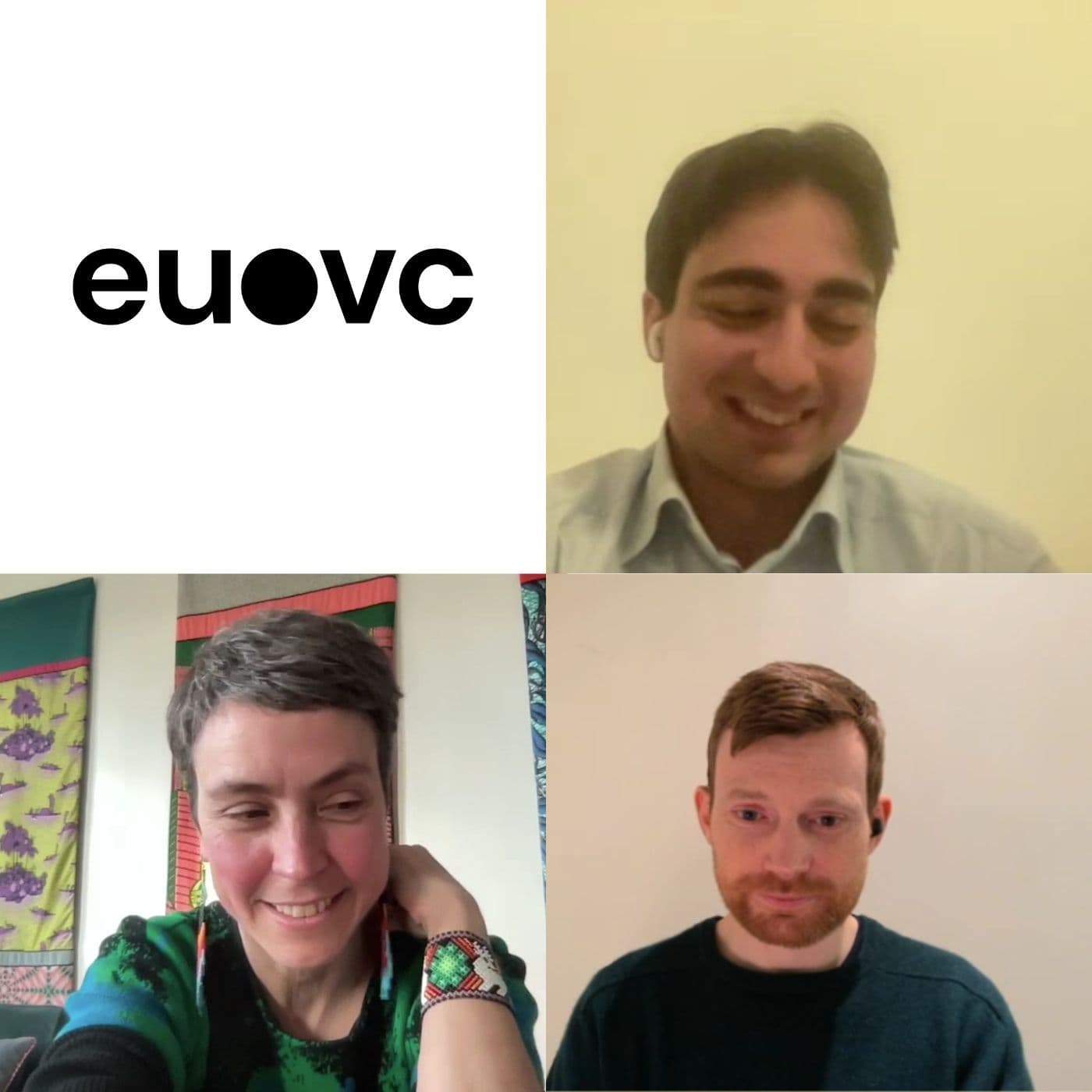
Episode Overview In this episode, co-hosts August Soliv and Douglas Sloan engage with Marie Ekeland, Founder and CEO of 2050, and a prominent figure in impact investing. They discuss the limitations of traditional venture capital (VC) models in addressing contemporary societal challenges and how Marie is innovating the VC model through regenerative finance.
Key Themes and Discussions
Challenges in Traditional VC
- Flaws in Classic VC Models: Marie highlights the inadequacies of traditional VC in effectively addressing today's systemic issues, particularly in sustainability.
- Dependency on Value Chain: Sustainability requires a holistic approach that incorporates the entire value chain, which traditional VC often overlooks.
Reinventing the VC Model
- Regenerative vs. Traditional Funds: Marie introduces the concept of a regenerative, evergreen fund that merges profit with purpose, emphasizing the need for alignment between various stakeholders.
- Extended Time Horizons: The discussion highlights the necessity of extending investment timeframes beyond the typical 10-year closed fund model to accommodate the longer development cycles certain industries require, especially those focused on sustainability.
Alignment in Impact VC
- Understanding Alignment: Marie elaborates on the multiple dimensions of alignment — personal coherence among stakeholders and aligning business models with societal and environmental stakes.
- Practical Tools for Alignment:
- Identifying tensions within companies (e.g., profit vs. impact).
- Utilizing frameworks to foster aligned decision-making among founders and investors.
Case Studies
- Pebble: Discusses a company utilizing carbon mineralization technology and the strategic decision-making around its business model to balance impact with profitability.
- Michelin: Exemplifies how shifting to a new business model (paying per kilometer) can align profit motives with sustainability goals.
- 15: An e-bike sharing company aiming to align incentives of cities and users to promote sustainable urban transportation.
Impact and Commercial Performance
- Business Model Innovations: Marie emphasizes that creating regenerative business models can drive revenue increases and cost reductions while fostering resilience.
- Value Chain Collaboration: Engaging stakeholders across the value chain to build strategic alliances that enhance overall market effectiveness.
Future Trends in Impact Investing
- Geopolitical and Environmental Considerations: Understanding the broader context in which VC operates is crucial for making informed investment decisions.
- Transformations in the Economy: Acknowledging the shift towards sustainability as a key driver of future economic growth and investment opportunities.
Key Takeaways
- The Role of Curiosity and Systems Thinking: Marie's journey emphasizes the importance of curiosity and systems-oriented thinking in evolving the VC landscape towards sustainability.
- Engagement with LPs: Building relationships with limited partners (LPs) is crucial for adapting and innovating within the VC model.
- Need for Better Measurement: There is a strong call for improved metrics to evaluate both financial and impact performance effectively.
Conclusion Marie Ekeland’s insights and experiences underscore a transformative vision for venture capital that integrates impact with financial return. The episode serves as a compelling call for innovative thinking and systemic approaches in the investment space to address pressing global challenges.
For more insights on European venture capital, visit [EUVC](https://eu.vc).
Written by AI. May contain mistakes. Listen to the episode to check what was said.
Transcript
Automatic transcript. May contain errors.0:00What happens when a veteran venture capitalist decides that the entire VC model itself is broken for tackling our biggest challenges. You see the talents moving to sustainability, both as an entrepreneur and just employee side of things. It's happening, making it irreversible. Marie, founder of Impact VC firm 2050, discovered a fundamental flaw in how we fund innovation. For sustainability, you're very dependent from your value chain. This realization led her to tear down the conventional VC playbook and rebuild it from scratch. We built what we call a regenerative fund, which is open-ended like it never been.
0:36We added a liquidity layer to bring freedom to your own investors. But does this radical approach actually work? The evidence is compelling. Michelin paying the tires per kilometer and augmented the revenue per tire two and a half times. Marie's model solves a critical tension that plagues traditional venture capital. The part is that everyone is at the same place. You're not having a conflict of interest with different LPs. Her message to investors isn't just about impact, it's about survival. Understanding how geopolitics, nature, regulation is going to impact this whole thing and take it into account into other investment decisions.
1:18What happens when money and mission finally align? Join us for this episode of the Impact Highlight Series.
1:28Welcome to the Impact Highlight Series by EUVC, Impact VC and Impact Supporters. I'm August Soliv and I'm a previous Impact VC investor and now an author and the podcast host of Impact Supporters, a newsletter and podcast in the Impact VC space. And I'm Dougie Sloan. I'm an LP investor at Better Society Capital and co-founder of the Impact VC community. And I'm really excited that we're joined by Marie Eklund of 2050 today because of the breadth of experiences she brings and the insight that I think we'll get from bringing those things together. So she's been a generalist VC. She's been an impact VC.
2:08Now she's experimenting with the very model of VC itself. She's a systems thinker who's built and changed ecosystems, including as the founder of France Digital a few years ago. And she's been a business builder, being an investor in and on the board of some of the biggest VC-backed companies coming out of France and Europe overall. It was a super exciting conversation that we had with Marie and I think there were really two things that stuck out to me during this conversation. First of all, Marie is truly trying to pioneer a new Impact VC model. So what she did was she tore down the whole classic VC model and said, what can I change?
2:40What would need to change for Impact VC to really function? And she had multiple things that she changed in the model, but two key ones were that she needed an evergreen Impact VC fund model. and second of all she invested in commons on top of sort of some of the deals she was making in order to be sure she could create systems change. The second point that I really want to highlight from this conversation is that she spent a lot of time thinking about the question of alignment. How do you make sure that the startup, the fund and then also the LPs behind are all aligned in sort of an impact VC way of thinking.
3:16I hope you want to listen in so you can learn more about these things and get the whole conversation we had with Marie. Here's a few words from our beloved sponsor. Impact VC is a global community of VCs accelerating impact within venture. Their purpose is to cultivate a community and resources to unlock venture capital's ability to tackle the world's most pressing challenges. The community is made up of over 900 VCs, including both pioneers and newcomers, including generalist VCs and impact specialists. Visit impactvc.co to join the community and explore their resources, including the VC Impact Playbook, the Founder Impact Playbook, and the Impact Investing for VC's online training, which is designed to help VCs integrate impact practices into their investment strategies.
3:59That's a lot of information to get in 30 seconds. This is what they're finding down. Tear down this wall. It's more than just an alliance. This is a union of values.
4:20This show is not investment advice and the hosts of this episode may be invested in the funds and companies featured. Welcome to the Impact Highlight Series by EUVC, Impact VC and Impact Supporters. We're so happy to be here today. I'm August Solip. I'm joined by my co-host, Doug Islo. Hi, Doug. Hey, everybody. Delighted to be here. Super nice. So there we have our great guest, Marie Eklon, Marie Eklon joining us today. Hi to you as well, Marie. Thanks for having me. We're super excited to have you today because we're talking about pioneering how to change the Impact VC model or the VC model in general.
5:01And it's something that I know both Doug and I, we have discussed and thought about a lot, but I know you're spending even more time on it, Marie, and you've already put it in place with 2050. So we're super happy to get that going and to do this conversation. But maybe if you're up for it, then let's start slowly on the more personal side and tell us to know a little bit more about who you are and how you came into the Impact Venture space and what's your journey. It's kind of a, I'm not going to say achievement because it's not the end. It's only the beginning, but it's an important or logical milestone in my career to come up to impact VC.
5:42I'm a computer scientist and mathematician from background, and this is how I started. That was back at the end of the 90s, working for J.P. Morgan in Wall Street. I was coding, so it was really the chew in the heart of how to digitalize the finance industry. At some point, didn't find a lot of purpose. I felt, you know, I wanted to be more useful. And I went back to study STEM, studied economics and corporate finance, and really didn't know what to do after that. So I did what I do when I don't know how to, you know, how to move into my space and make decisions. I met a lot of people. And it was year 2000 in Paris.
6:24Everyone was telling me to go to work to our startup until I met this guy who said, But, you know, I'm starting the venture capital arm of this French bank and you're a double profile. You understand tech. You've been building products and you understand economics and finance. You're super fitted to do venture capital. I was like, what is venture capital? And it was super early days in the venture capital industry. And I really embraced it because I felt I could be useful as being a venture to help and support founders to solve incredible problems. That was kind of my main trigger and driver. It still is.
7:04But also, I'm super curious. I love to understand how the world's working. And it's easier to learn by people who've been digging into their own topics and who tell you what they've learned on the way. so that was also a big piece of me staying in the venture capital industry all that long after and then I like people and you know when you guys know that in this entrepreneurial space you meet people who are that you live a lot of challenges with it's it's difficult to put innovation into practice and you build relationship with the founders and other people on the board that are way more intense than what you can build, I felt, in other industries I've been working with before.
7:49So I think these were the main three things that triggered me to venture capital in the first place and that I've been really thriving from as a venture capitalist. But then what happened is, as I said, it was early days in the French tech. The way it was built, and I guess it's the same for all European countries, it was really copycutting Silicon Valley. And so because I was coming back from Wall Street and also because I was the only woman in the room for 10 to 15 years, I wasn't like copycatting at all and I didn't have any role models. So I got a lot of freedom. So from the very, very early days, I questioned myself about what is a good venture capitalist?
8:31What is a good investor? How can you bring the most value possible to your founders? And then I realized we had two customers. We also had our own investors. So how do you make that kind of matchmaking and bridge a value proposition for the two the best way possible? And I found my way by using the skills I've learned or that I've been practicing a lot, which is problem solving. So basically, I know how to model complex problems. That's the math part of it. And I know how to initiate solutions. And bringing that at a board level was super fruitful. And then I realized that you cannot at a board level.
9:08there's a lot of problems the company is facing that it cannot solve by itself because they're systemic. Like even for the digital transformation, you know, the problems with the data regulation, with the digital single market, with the lack of European digital talents or whatever, we couldn't solve. Even at the biggest like French tech success like Criteo at the time, itself alone, Criteo could not solve this. But we were facing the same exact same challenges all over the place. This is the moment where I basically became more of an entrepreneur because I initiated the Transdigital, which is an association joining forces between VCs and entrepreneurs to solve the systemic issues on the digital space.
9:52And what happened is that one, it was super efficient. We did have a lot of great results to kind of unlock potential, But also it brought me out of tech because then I became kind of a spokesperson for tech, for the French government, for European Commission or for like big corporates or other industries. And then I realized there was way bigger problems that I hadn't seen, you know, on the pure startup scene to be tackled and couldn't get rid of those. So eventually I realized I should put my energy in trying to solve that and basically was driven to the impact scene to really be able to solve all these key environmental, social challenges that I was seeing on the way through all these discussions.
10:40It's interesting because I think you gave different points. Both you say people is sort of a key thing for you. And in this industry, I think that's probably both for BC and BC. But you also talk about some of the systemic problems in tech, for example, not the right people not being there when it was growing and part of the digital industry. Are those some of the things that you still see today now in the impact sphere that first got solved partly in tech, but now come up again in impact? 100%. And it's even more intense now in the impact scene than when I left, kind of left the pure digital growth at all cost scene.
11:16because when you have purpose-driven founders that are building a company that is bigger than them, right, to really achieve something that is coming from deep inside, I always felt they find more, they find the resources to overcome difficulties a lot more than if you're not driven by something that is bigger than you. Like money is not enough, basically, to overcome all the problems that you will meet as a founder building innovative businesses. You will meet these problems at some point. And those who are really want to achieve that mission or purpose or ambition at a super deep internal level, they kind of invent solutions.
12:02They pioneer new ways. They motivate the team in ways because it's for them. It's who they are, basically. So they get way deeper and same in the type of relationship. So I like that. It's just, it's good energy for me. I think that's really, really powerful, Marie. And actually those concepts around mission and purpose and motivation are a really interesting jumping off point into one of my first questions for you, where in the past we've talked about this concept of alignment, which I think you use in a way that touches on purpose and mission and all these different interpretations. But I wonder if you could just say a little around how you define and talk about that in your work at 2050, how you talk to founders about it and how it sort of informs your practice in that sense.
12:53What I really like about this work is that it talks to everyone. It's a French word and it has historically three different meanings that I'm just going to touch base on before telling you how that implements, how I implement that or how we implement that at 2050's portfolio companies level and more generally in how we have structured the company and how it's part of our pure DNA. The first alignment is about you standing upright, right? So the first meaning of it is you stand upright. So basically what it says is that you are kind of aligning yourself between what you think, what you feel, and what you do.
13:36So it kind of brings this personal coherence that everyone kind of intimately or instinctively feel, right, that you need it at some point to be really anchored and at your place. So that is the first meaning that, and you start by the people, right? And it's, so therefore that is a good starting point. But then in a company, usually it's the founders providing this kind of alignment and DNA to the company. But then you have the second meaning, which is to put everything on the same line. It's the line of interest. So then you want the team to be aligned on the mission, but also on kind of the incentives.
14:15it's on all the same scheme you want the company as a moral person to be aligned that usually means its business model will be aligned with the stakeholders interest and society and the planet interest which is after the rest of the line so you have this pure line of interest between the people who initiated the company in the first place so usually the founders are the one driving them now. And then the team, then the company as a moral person, its stakeholders, and then society and the planet, which drive this beautiful line of interest. But then the question is, it's, how can I say that? It's an unstable balance.
14:57You know, shit happens, market changes, team changes. So it's never set in time. So how do you put something, and that is the third meaning of the world, which I love, which is the lineage. So it's introducing time in the equation to say, you also want the third dimensions to come in place, which is time so that you put the right governance in place so you can always find your balance back. Right? So it's really these three different meanings. You start from the people and the mission and the kind of founder's DNA. And then you have the whole line of interest up till the planet. And then you hold that in time or you maintain it in time balance thanks to the governance you put in place.
15:40And that is also thinking about the future generations and all this. So I feel usually this concept when I talk about it because it starts from the people and then it brings you all the way through time and alignment is something that people relate to. But then it's super abstract. So how do you put it in practice so that your company, you can build it internally in it And it does really align interests, meaning you're on a win-win model. Usually when people talk about impact and the kind of bias we all have in mind is that impact comes as a cost to profit, right? So that is because in finance, usually you optimize on one dimension.
16:28It's math. In math, you can only optimize one dimension. So you have to choose do you want to optimize on profit or do you want to optimize on impact? but it's hard to do both. But in nature, you know, this logic of win-win-lose is not relevant, because if you live in a very thriving ecosystem, it will nurture you and give you more, and then you can give back more, and you can build this win-win relationship. That while also it's talking to people, because you'd rather be in the win-win situation than in a win-lose. And so that brings interest and will and envy and appetite for founders to really put it in practice.
17:07But then all the founders are busy. We all have a lot of things to do. It's not priority. Being aligned feels like I'm going to do yoga in the morning. And that's obviously not going to bring a lot of specifics and major changes to the company. So what we have built, and we're doing that together with the We Are Human team, which is the, they founded Kahoot. So the idea is really to put it to not, it's just not principle or best practices. It's really tools, right? So it's really like open source, like the canvas business model thinking. It's about doing this on all the dimension of alignment together.
17:49And so we've been experimenting it with the portfolio companies, and we found what is the right trigger? what is the entry point for the startups to start thinking about that, is that you ask them what their tensions are. You start with the tensions. What are your most vivid tensions today that you need to solve and that are preventing you to kind of be in that win-win model of aligning yourself? And there's a lot, now that we've done it like a dozen times, we know that there's a lot of universal tension. I'll give you a couple of them. like arbitrage between profit and impact. Obviously, that's one.
18:29Aligning the whole board and stakeholders and the new potential one coming in to prepare for your next fundraising. And so where do you want to be? What is this fundraising going to be? And how is this in line with the long-term vision and mission? So readjusting, you know, are we ready for the next fundraising? Are we all aligned on what we want? and what we're going to say to the newcomers in. That is another one. How do you align founders' role? How do that evolve in time? How do you reposition everyone so they're at the best place for them and for the company in time? That usually potentially can evolve during the different rounds.
19:13Or the governance. How do you align interests with all your board, knowing that sometimes it's not? So a lot of things happening like this. And that is how we start with the companies, really identifying these tensions. And then we bring the tools starting to solve that particular tension, which is the most vivid one. And then you can start going into that. And if it works, then founders will want to implement that more in the company. So you have like aligned decision making frameworks. I really like the idea of, as you say, a lot of critiques of impact practice are that it can be quite theoretical at times and quite abstract at times.
19:51So focusing on where there's that really felt tension as the way in sounds like a really powerful way of opening up that conversation. And I wonder if you could give an example, sort of putting you on the spot slightly, of one of those work conversations where you go from that point of tension and you steer that conversation towards tangible kind of impact driving action. So Pebble is a company we just raised a 25 million euro series round with. And what they're doing basically is they're using a carbon mineralization technology, which they are industrializing. So almost 10 % of its natural CO2 capture every year is done through the contact of air with mineral rocks like olivine and basalt.
20:35What they're doing is that they're leveraging this kind of natural reaction through industrial process by crushing this olivine or other rocks, putting industrial CO2 in. there's a reaction which is actually producing energy, which is great. And then at the end, what you get is you get a replacement, a material, which is replacing clinker and the production of cement. So all the way through at the end, what you do have is you have cement, which is storing CO2 instead of emitting CO2 in the process, right? When we were starting to raise the Series A, we had an impact versus profit question, which was, should we, because we know we need CO2 out of the atmosphere super quickly, should we just go and kind of mineralize the most CO2 possible?
21:28And therefore we're kind of a carbon storing company. Or should we define ourselves as a material company that is changing an industry, which is cement industry, by providing new type the materials, but that means it will take longer. We will not be able to store as much CO2 as now, like as if you did it. So where should we be going? And when we did this whole alignment path and questioning, one of the steps in that process is to actually project your impact holistically on all the five essentials of 2050. So our investment strategy is holistic, even though we started with climate change. We have this compass for 2050, which is to say we want to build a fertile future.
22:15And for this, there needs to be five essential goals that are satisfied. The first one is to live and produce sustainably. Second one is to be able to eat enough, eat healthily. The third one is to take care of our body and mind. The fourth one is to empower learning and creativity. So basically change the education and cultural models so everyone can contribute to that fertile future. And the fifth one is about trust. How can you put trust back into the economy with insurance model covering us on new risk or finance model allowing long-term to happen and media industry allowing democracy to function?
22:50So whenever we invest in a company or when we do this kind of reassessment of alignment, we have the founders project their potential positive or negative impact on this very clear, even though it's fluffy, you know, it's quite precise to say, How are we potentially impacting positively or negatively the live and produce sustainably or take care of body and mind? For Pebble, for example, they always right away thought, you know, the materials or the production process should not have bad chemical impact in the atmosphere to not have impact on health or stuff like that. And one of the potential negative impact was to dump unnecessary materials on the land, in the environment, on the planet.
23:39And if you were to capture all these tons of CO2, there's equivalent tons of cement or materials. You know, it's not cement, it's clinker, but of this kind of new materials, that is solid. Where do you put those? So are we going to dump all these solids just because they're storing CO2 and artificialize more land? Or it can be a lot of negative environmental impact that we create on top. So from this kind of analysis, it became clear that the strategy of the company should be to really build a new alternative into the materials industry to completely change and make sustainable the cement industry or be part of that solutioning instead of creating more problems by solving short-term, by having more short-term impact, right?
24:31So this alignment in time saying, where do you want to be in 2050? What is your overall potential positive or negative impact? And therefore, what should be the decisions we make today so we ensure we are still achieving mission and are aligned in time. Actually, it's a nice way of framing quite easily, without complex indicators, to rethink the consistency and the coherence of your own strategy. Maybe just questioning a small part of what you say, because you mentioned in the beginnings of this equation, before you have one factor when you only profit maximize, now you have two factors, you profit maximize and you impact maximize.
25:09And you gave yourself an example where you might not be profit maximizing short term, but potentially long term. You also said sort of humans naturally for humans, it's naturally easier to profit maxim or to maximize with sort of only one factor and not two. How did you sort of argument yourself when you were building 2050 that it is actually possible to do it with two factors in the equation? how that's a very good question i think one is i've been in finance for so long i've seen kind of the power of pattern record reproduction finance is about looking at past historical data and making decisions today based on these data the data we have are financials we don't have environmental or social data that we could put in there to make decisions based on past experience or past track record on these different types of performance.
26:12So it's, and I have been there for quite a while and I've seen how it's not only about good intentions because we are in this kind of way of making decisions. We are always not only optimizing for profit. But on top of that, we're overfitting. We're making decisions that made the most money. And we're not measuring the rest, right? And so now that I've been digging into a lot of the environmental and social problems we have, I see how this way of making decisions and building company is not going to solve for that. So it's all a question of what is your goal? If the goal is to just be on money maximization, then I don't believe this is the way you're going to make the most long-term performance, but I understand why you keep acting the same way.
27:07But if your goal as an investor is to really embrace the overall outcome of your action, which cannot be only on money, because when we invest, we are shaping the future. It's not a band like Vegas where you have kind of a machine that is going, a slot machine that by hazard is going to give you plus or minus money. There's people around, there's new usages, and there's some resources that are used. There's some consequences in real life of the things we do and the decisions we make as investors. And so these consequences in real life, either you accept the fact that even though they're complex, you need to embrace them into your own kind of performance analysis.
Read the full transcript
28:00And then the question is, how do you optimize for like a greater goal? Or you stick to only money. I understand money is, as I was saying, like easier because we have the practice, we have the pattern. I don't think long-term doing this is going to be the best performance, to be honest, because I believe the change we're living is a complete transformation of the economy. And therefore, the champions of tomorrow are not going to be the champions of yesterday. It's a different, we're at the end of the cycle. It's a new cycle coming in. We need the new best practices coming in to make these decisions.
28:38It is harder than the way we don't have best practices to do it yet. I think there's a lot of people experimenting on how to make these best, better decisions. It will not be pure math. This is also why we are thinking about pausing these different type of frameworks, because it's a lot of good sense. You know, when we're doing this kind of 360 impact analysis with the founders, it's not very scientific. but it's your own personal compass, and then you can optimize on different dimensions. It will not be as precise, but today we need to go back to our good sense compass of how to put our actions into a direction where we believe is the best, is the one we want to contribute to.
29:25I'm sorry not to be more precise. I do believe we need to get a little bit out of pure math and a little bit more around what actually we, each one of us, value. And I don't think like humanity's happiness is only about money. It depends on the health of the ecosystem we live in, on the planet we live in, and on the society we participate in as well. And so we will need to experiment until we have better instruments and to put a lot of effort into building those so that after we can ensure a more preciseness of how to make these decisions. I pretty much agree that impacting climate or social as well investments are sort of part of that transition, right?
30:12But it's always an interesting discussion of how can you actually rationalize it in the end. But I think those are actually sort of some of the limitations of the traditional VC model is that it doesn't necessarily work for value creation in the next phase, as you say, or the next cycle. But then I think the question I was going to jump to is then how have you taken that into the 2050 next generation VC model and how have you reinvented the VC model? As I said, I think like what we're living in is complete transformation of the economy and like the digital was. And we put a lot of effort into trying to define where is the actual venture model limited in its capacity to fuel that transformation?
30:59and where could we optimize, how could we build a model which is more designed actually to be able to accelerate and take the most advantage of this transformation. And so there were three different areas where we felt there's some changes to be made. One of the major difference between the two transformations is that the digital one was really a disruption one. It was disruption of new technologies who were bringing in new type of solutions and potentially replacing some companies or creating new usages, etc. So you could, at a company level, transform yourself just by putting an e-commerce site that was making you access directly your customers.
31:45You could build a better productivity in Trinity with software, CRMs, AI, productivity tools from within. So you could have a solution at a company level. For sustainability, you're very dependent from your value chain. I cannot say I'm a sustainable company if my suppliers haven't started the move and are not supplying me with sustainable or future-proof materials. I cannot say that if my customers are not using my products in a quite circular way that is using recycling or upcycling capacity and putting all this into usage. So it has to be thinking at a value chain level. Which means that it's quite interesting because you have to be able to create like this movement.
32:40So to invest at the different nods of the value chain. So invest in different type of material company like we did with Pebble, different type of infrastructures. Of course, the digital space to kind of optimize the whole thing. But also like circular economy, companies, etc. So we need kind of this full range of innovation at a value chain level to be able to create the movement and to create, accelerate the shift and to have very successful companies. But the other piece to that, so it means you cannot only invest in software, to be short. It's not like software eating the world. It's not enough.
33:24It won't happen. You need to be able to invest in all these different types of companies that require different types of fundings. You're not going to fund it only by equity. So it's a complete different mindset. So that was one, is to say we're going to stop investing only in software. We need to invest all along the value chain. and on top of that, you know, just like I did, remember when I was talking about France Digital that was born to help us solve the systemic blockers of the value chain shift, the technological value chain shift at the moment. Well, we will have the same blockers at each value chain level.
34:04So you also need to invest not only in companies, but also into understanding how you can help solve these systemic blockers. and what is required for that? How do you adapt regulation so it's not a blocker, but it's an accelerator? How can you share best practices within the different companies in the value chain? Like for finance, I was saying we're not there yet until measuring environmental and social net impact, but we're working on it. So if we work together, we can go faster. So these are kind of assets for the ecosystem to increase the change to go faster and to make that shift successful that we also need to integrate.
34:48So what we did as 2050 is not only did we say, we're going to invest all along the value chain in all these different types of company, but on top of that, we're going to invest 10 % of the money of our LPs and 50 % of our performance fee, so the carried interest, into solving these systemic blockers. starting by us on how we can use this to make us better investors, but also to be able to solve these at the portfolio level. So that was one, really having an ecosystemic view of the change and not thinking about how we can build one company which is super strong and disrupting its industry. The second thing we did was to, which for me is very different from the classic VC model, is to change the time horizon.
35:38So the fact that we've been working with 10-year closed fund for so long is putting artificial pressure to the founders because they need to think about giving an exit, and usually it's an exit for 100 % of the company, to their investors in kind of seven, eight years. So there's this kind of cycle which is implicit in the model where you have to, because you have this artificial pressure, think about kind of end goal to your company. And that has nothing to do with the strategy of the company or with what the founders really want to do or anything like this. And so we thought about a model that can bring that freedom to founders.
36:24And one of the reasons is that because it's a value chain shift, we also invest, as I was saying, in a company like Pebble is producing new type of materials, that cycles are longer. It's not going to be in 7, 8, I mean, if we were thinking about when to put on the first-of-a-kind plant, who's going to produce these materials in hundreds of kilos, even though they've been accelerating the cycles like crazy, it's not going to happen until next two years. And then it's, I mean, it's impossible to put that timeframe into like the classic VC length. So one is different type of companies, but two, when you're building not only on financial performance, but integrating, I also want to have a positive environment and social performance, it's not as focused, and you're building in a more aligned way, and it's slower.
37:16Even if you want to build software champions, because we're doing more by integrating the complexity that we want to have a triple performance, it's not going to be at all costs. and it can be hyper growth, but you need longer cycles. So the time is super important. This is why we built what we call a regenerative fund, which is open-ended like an evergreen. But we added a liquidity layer because you still also want to bring freedom to your own investors into saying, let's stop this kind of tenure and you put your money and you don't know when you're going to see it. Again, it really depends on market cycles.
37:56There could be liquidity crunch like we have now. You're quite dependent on the vintage. So let's try to align also the investors' interests so that they can have a diversified risk dependent on the market evolution and start getting some actual liquidity returns, so liquid returns, realized returns, starting year six in a more regular basis. So the investment strategy is quite different because instead of putting like all my money at the beginning, then maybe one or two refinancing round, but that's it because I'm like early stage investor or growth investor. And then wait till we can have like full exit.
38:39It's way more let's support the company up till a certain moment where we can still be anchor investor of the company and be a kind of a robust pillar to their strategy and to their governance and then decrease in time. So you also have partial liquidity that you can bring to the investors as well to have more like regular returns. So it's smoother, if that makes sense, with the idea that it can actually bring more regular returns and therefore de-risk as well for the LPs, but also make them patient so they can have a longer term to unlock the full potential of the companies that they're invested in?
39:24I think the comments are very well covered, but maybe the evergreen model, I think I have two small questions that I'm going to combine into one and then you can answer it to however you want to do it. But I think first part is just evergreen model. How do you sell that to an LP? I mean, it doesn't fit into the classic buckets. What do you do? And then I think the second part, which is sort of the rationale behind is from a portfolio modeling perspective, of how did you model it differently when it's an evergreen model? Because as you're saying, maybe some companies will be slower. Is it then the sort of the high performing ones where you, let's say you invested in Tesla 50 years ago.
40:02Okay. Then it's fair enough. It takes a little bit longer because the returns are still going to be exceptional. And then you sort of accept some of the, maybe the less high performing ones to be just slower and not as high performing. How did you sort of rationalize the modeling behind the evergreen model? You have it. Two questions. You haven't said it. I'll put it in my words. But basically, you saw instinctively the interest with evergreen models like this is you can really diversify risk. So first of all, we are multistage because you won because when you have an ecosystemic investment perspective, Lance, there's in an ecosystem, you have small ones, you have big ones, you know, there's snow, you just won the champions, right?
40:48So there shouldn't be any kinds of size thing. And this is how you want to build your alliances. The second thing is because we are providing liquidity starting year six, you also want to have more mature companies that will exit earlier and leave time for more earlier ones to go all the way through. And then you're right, there's very different type of companies. Software will still be faster than industrial startups. and so a company like Sweep, we were seed investors in the company. They did Series A, Series B and raised 100 million euro total in two years. It's still, even though they are like mission driven, they are looking at triple performance.
41:34It's still, in terms of numbers and revenue and growth, a lot more linear than like companies like Pebble where you take a very big R &D industrial risk at the beginning, and then it will have more stages like this of growth, and you need to be patient. It's a way of really thinking about the way to build your portfolio into having this understanding. So something I didn't say is that to be able to invest in the value chain, you need to spend some time understanding what are the key problems that there is. When I said we started with climate change, the first thing we did was actually to understand the science beneath.
42:18And so we co-wrote a climate course with Université Paris-Dauphine, which is looking into what are the physical challenges or what is the physics behind carbon cycles? What is the biology behind biodiversity loss? What is the IPCC scenario projecting? What does it actually mean to the different sectors? how do you have the history of energy to kind of project what's going to happen in the future what could happen and what has happened in the past and then like social sciences as well to kind of also integrate like political environment into all this so we have some background to really try to be able to understand what are the kind of root problems and also try to identify keystone solutions, right?
43:10So we first, before doing anything else and looking at value chain, try to understand this to be able to, because if we believe if we're going to solve like major problems, there should be like transformative champions as well, right? It has value. So then you have this diversification around the value chain. You have diversification in stages and in geographies as well. So that is building kind of a robust portfolio that you want to be able to have like different levels of maturity, different years to be able in time to kind of adjust for liquidity. One thing which is, which I never thought before actually managing an evergreen fund or an open ended is that in periods of time like this one, like kind of market crisis, where as a closed fund, you are kind of stuck in the investment strategy you have sold to your LPs, and you're stuck because you don't have reserve, for example, being able to support your portfolio companies in the same fund in difficult times, or to potentially even be aggressive into getting a greater stake into portfolio companies that other VCs, even if they do believe it's a great company, cannot do because of a very rigid investment strategy, it's actually quite an opportunity.
44:36It's limiting your vintage risk because you don't need to exit, for example, or you can be more patient, but you can also really be even more ambitious in the way that you support the best companies of your portfolio. And the interesting part is that everyone is at the same place. you're not having a conflict of interest with different LPs. That is so comfortable that you can, even for companies that, you know, if it was fund one and you have a great company, but then, you know, it needs more time or you have an internal round and you need, you know, this is like something that you should absolutely support, like as an investor, but your fund has no reserve or that's not what you, or you need to be in an exit mode.
45:31And then the other fund is really hard to use that one, right? Because it's different people, it's different interests, it's different values. So I feel the flexibility that an evergreen model uses. It's a really interesting point around flexibility and the kinds of risk you can put in the portfolio. Whereas typically in a closed-ended fund, And you're thinking about that portfolio of types of risk a little bit differently. I guess with the LP hat on for a second to your question, August, we tend to think about the liquidity side of evergreen funds. And we, with the Better Society Capital hat on, we are in a few evergreen funds in the UK in different asset classes and have been historically.
46:13And it tends to be understanding that liquidity profile and what the underlying business models look like and what return we think they might generate, what impact they might generate. and when there's liquidity options through those companies or through other mechanisms. And then the second piece is what upside you're getting as a consequence of taking the slightly different shape of liquidity than you would take in other funds. And a lot of those articulations of opportunity are similar to those that Marie's talked about in terms of fitting those business models and the things that they need to do to do well to deliver commercial performance and impact and understanding the shape of the opportunity there.
46:48It's a slightly different conversation. And so one of the things we always talk about to Evergreen Funds is how they're talking to other LPs. And Marie, you'll be able to speak to this much better than me. I think it is generally speaking tougher to raise for Evergreen Funds and close-ended funds at the moment. Yes.
47:06It's tougher because it's not the practice. You know, I was talking about how usually in finance you make decisions, investment decisions based on past historical data. There's so many variances of evergreen. People put everything in the same bucket. But, for example, we added this kind of more engaging liquidity layer than the classic evergreen, which is why we call it regenerative. generative because you want to take that responsibility of bringing more freedom to the LPs and more, you don't want it to be forever, right? So it's more a way of saying we want the money to flow regularly in all parts of our ecosystem.
47:54So to be able to re-inject in the portfolio companies and in the new portfolio companies, but also to give money back to the ELPs on a regular frequency and also the part around the ecosystem assets to be nurturing that on a very regular basis as well. So it's bringing resilience and robustness in the model. Why it's harder for Evergreen apart from the fact that it's a different product and so usually teams are not super used to it. So it's more complex to apprehend the different pieces of it. So we do a lot of efforts in trying to kind of translate the equivalent between this is how you should think about it and to do all the modeling about how it changes liquidity, kind of also do some simulation around what if markets are down, what is this, so to really be able to bring some level of reassurance and this is how it works in good and bad cases.
48:58The reason it's difficult is that usually investment teams, if you only talk to investment teams, a lot of them are just asset managers. And when you manage assets, there's some defined asset classes. And so like the type of funds we are or initiatives we have, like us or home.earth or a new wave in the impact scene, some of it could be saying it's difficult to really plug them in directly into the classic venture capital asset class because we're a little different. And so there's no mandate to say if you go to kind of a classic asset manager and you say, do you have mandate to invest in like a holistic impact regenerative fund investing in the shift of value change?
49:47They're like, no. But then what's interesting is if you talk to them about what they see around impact, for example, or climate, they will say, yes, we know the 10-year closed fund is not adapted. We need more time. And so they're not even investing sometimes into climate-backed funds through a kind of classic fund of funds, even though they feel they should be investing, but they feel it's not the right vehicle to do that. so there's it's when you dig more into it you see they're actually asking themselves as lps what is the best way to tackle this and so that's the moment when you can open up the discussion and usually what happens is then you start being into more strategic level of their thinking around how to position themselves into what is their role into fueling this transformation.
50:46And then it becomes super interesting because finance is an industry like the others. And so if we believe this is a value chain shift, well, we need the LPs to shift with us. Else it's not going to happen. So this is when the interesting discussions come in where you say, you know, this is what we've built to answer, and this is what we see, is really important for the founders to be successful and for the fund to perform. How, from your LP's perspective, can you adapt to this or can you not? So, for example, the liquidity model we have at the fund level, it has already been improved twice because of LP's feedback.
51:30So we already, in our kind of, this level of discussion is really interesting because then you can try to build together this kind of new product market set or new product class to not only be adapted to what we see on the economy side, but also to adjust to the LP's interest. That was fun because there's not that many places where when you make a change in your product, you get all your customers to vote, which is basically what's happening because you get your LP agreement to change. We did it twice. And they all vote. So when you think about it that way, it's like you're a startup, you have a product, whenever you want to make a huge release, you get all your customers to vote.
52:16At least you know if they like the product or not. That's pretty useful. I mean, this is actually, you know, quite, I was saying about, you know, good relationships you have when you're innovating. It's the same for us. I mean, we're innovating in finance. So I like our relationship with our own investors because they get engaged as well and we can co-build. Maybe just closing the fundraising sort of envelope is, are there any other things that you've seen that are sort of different in impact VC fundraising compared to general VC? Because I know you've been fairly successful at both ends. So are there some things that you sort of take with you or some things that are different?
52:54One thing is when you're fundraising for an impact fund, not talking specifically about 2050, you need to demonstrate that you're super good on financial performance and super good on impact performance, right? And then so because everyone's so afraid of impact washing or greenwashing or social washing or whatever, that you have to be really solid into how you measure that and how you communicate around it so that it's visible. One of the problems we have through this impact measurements is that like tons of CO2 captured in the atmosphere, it doesn't talk to people. They don't see the value. They don't feel the value.
53:39Euros, they feel the value. They know we're trained to it. So on the impact side, we realized that you not only need kind of numbers to be clear that you're not, you're doing it the right way. You have a net positive impact. So we use benchmarks like the Upright project so we can show that we are part of the top 1 % of the whole upright platform around the net impact score we have. And it's not us saying this, it's this third party who has been, you know, looking at all the different impact funds on their platform and measuring them on the same framework that is holistic, that is based on science, on social plus environmental, and then it comes with this kind of benchmark and say we're top 1%.
54:23So it's like pitch book, you need some reference on the impact. with other people saying they're good, right? But then you also need the stories because numbers don't make people move. So you need the stories about what is really, what is in real life, what you're doing gonna change for the future and how is this part of the investor's either core belief of what should be done or its own particular mission. Doogie, for example, you can share probably a bit better society capital. They have very clear purpose in what they're doing. So they will select the funds that are being part of them achieving their own mission.
55:11So you have to fit in as well on their strategic thinking around what is the impact they want to have as a company or as an investor. And then the third thing that usually people challenge you on, and that is a surprise for me always, but I have it regularly, is they will always ask for the depth of the market and of the deal flow, right? because they believe sometimes it's niche and that is because the what i've been talking about since the beginning that this is a complete transformation of the economy you know that we need to adjust to the new geopolitics uh setting to nature's uh evolution um to regulation evolution we need to solve the key challenges that we have all together all this right and how it's actually The driving, and we see the same driver as digital, which is you see the talents moving to sustainability, both on an entrepreneur and just employee side of things.
56:13That was number one in Atomico's latest tech report. So it's a clear trend. You see consumers, part of them, the early adopters, really moving towards sustainability, more local impact potentially than green impact. But still, it's there. It's happening. You see a lot of individual investors that want their money to be at the service of the solutions and not of the problems and not creating more problems. So there's this kind of individual trends that are in there that are making it irreversible. But we also have these acceleration factors that is making it quicker. And so usually they don't see these ground wells trends at work.
56:52And this is why they believe, you know, this is kind of a niche around social inclusion or climate tech or whatever. And so this is when we need some kind of education to show, you know, no, this is actually going to be like tomorrow's champions, basically, as I was saying. You kind of preempted my next question a little bit by talking about some of those themes. But bringing all of that together and changing gear, maybe out of fundraising and into more the business building and how you combine impact and commercial return at the company level. I'm interested in understanding how you think about doing impact well as a driver of commercial performance.
57:33And you talked about some themes there. You talked earlier about founder resilience and those might be parts of it. But I'm interested in your articulation of that. I agree, Dougie. founder resilience is a key one because it's a constant that as when building a startup, you will have these problems to solve. You know, finding the right resources is super key. But then if you go into the other drivers, I would say there's three of them. One is if you have a lined business model, you can think about how to augment revenues revenues through usage. So I'll give you the example of Michelin on that one.
58:17And before I go there, because I'm going to lose my thinking, I feel there's three different things. One is increasing revenue through new type of business models that are more regenerative and aligned to impact and that are basically using less resources, but increasing usage and so getting more revenue per product. So that's one. Number two is the cost reduction piece. Because we're going to use less resources, you can actually optimize on cost and be more frugal. And so you're increasing profitability. And the third one is the value chain thinking, which can bring you to build strategic alliances who can build more network effects and help you accelerate your growth as well.
59:06So on the different examples from kind of my, on these different themes, on the business model, I really like the Michelin example, you know, Michelin, the tire, do you say manufacturer? They've been trying this new business model about not being, not buying tires per unit, but paying the tires per kilometer driven. So you're actually, when you were buying your your tires uh you were not paying them one shot you were just leasing them you know and per kilometer and so basically you're reducing the environmental impact by trying to make these tires last the more and so their whole r &d was how can we make our tires last more you know and they actually augmented the revenue per tire two and a half times on this so that's It's just a business model change on a historical thing, and it increased.
1:00:10It's a different revenue stream. So I really feel there needs some thinking about how you can build regenerative business models where you can come into these type of thinking and models. The second one on kind of cost reduction, this is really, we are also investors in a company called Sweep, which is extra financial data management software. So carbon, biodiversity, ESG, data management. And what it brings is that not only is it assessing and bringing all the data out of, it's built for very big corporates. So it has customers like L 'Oreal or Orange or like SNCF in France, big corporates. And it's going up to scope three, so to the suppliers.
1:00:58and then it shows to you where is your massive carbon footprint, for example. Where do you get it from or other types? And so it points to you where you can actually reduce that footprint and usually it's by limiting the resources used or the way to produce them and it's also limiting your carbon footprint. And in time, this is really what they see is that it's reducing costs because you're tackling what is costing you most, usually what is costing you most in CO2 or is linked to energy. It's linked to, there should be the same for water. So it's linked to use of resources. And so you learn to use less.
1:01:40And so that usually reduces cost as well and brings greater profitability. And so on the value chain to think the last thing through, there's a lot like the Mishla example around the business models. We have another one of our portfolio company called 15. It's an e-bike sharing infrastructure that is selling to cities. Today, the way the RFPs are done is that cities will pay per bike, they will pay per spare parts, and they will give you a fixed monthly cost, whatever the usage of the bikes. so if you think like if you're purely financially incentivized what it actually means is you need to sell the most bike possible that are breaking all the time because you're more paid on spare parts and that are never used because if you will get paid whatever usage and you don't get the costs associated to the usage so it's completely misaligned And so if you think about it, the interesting part is that e-bikes are actually incredibly impactful, not only for the people using the bikes from a health perspective, but for everyone living in the city because it's decreasing air pollution, which is one of the number one cause of sicknesses and linked to urban areas.
1:03:08and it's also limiting the noise, building more secure cities, et cetera. So it's good for the citizen. This has been demonstrated really scientifically. So what you want to have as like an alignment of the whole value chain is to have a business model that is based on the use of the bikes. So they can optimize for robust bikes that never break and that are used all the time and increase the impact. But you need the value chain for that. It's not 15 alone, right? So you need this kind of new alliances on how to build this together, just like us with the LPs or with the founders saying, you know, how do we adjust this?
1:03:43So it works for everyone. And then the other piece is when you see these blockers like that are systemic blockers. When we did the alignment work with Pebble, what we saw is one of the key blockers or key challenges we will have to build the first of a kind plant was the financing of the plant. because as a first of a kind, it's never going to happen if you don't have offtake agreements. So you need the upstream of the value chain to already be contracted with you into offtake agreements to ensure they will buy the materials, that that materials will be actually built into cement and that it will be used for construction industries and sold to end user.
1:04:31And when we realized we absolutely needed these offtake agreements to happen quite early on, we thought our best chances to get them was to align interest with these people from the value chain, like with strategic partners. And so we opened up our Series A to the upstream value chain. And so today we have as part like 40 % of the Series A was brought by three different industrial actors that are coming from there. One is Holcim, that is one of the biggest cement manufacturer. The other is the family office from the Goldberg family, which is in the construction industry. And then you have molding, sorry, in quotes.
1:05:24And then you have Amazon Climate Pledge, the Climate Pledge Fund, who actually has committed as well in main terms of offtake agreements to use the Pebble material going through Holcim and to being able to build their data centers in Europe for AI. So we have a line interest all along the value chain with key partners who at the same time started negotiating like offtake agreements so we could get that through. And everyone in the value chain has interest. This happens. I mean, there's a lot of really interesting threads in there. I feel like we could talk about this. We know a whole separate podcast just on this topic.
1:06:05I think there's a lot of interesting stuff in and around these business building levers and lessons. And that's really rich. So thank you for sharing those examples as well. But as a sort of final question, would love your really quick headline, your tip for VCs thinking about this topic. What would be your one thing for VCs listening to this who are thinking about how do I hear more about, think more about, how should I engage more with impact? What's the tip you'd give them? The main thing is really understanding what is at stake. What are the big trends here? understanding how geopolitics, nature, regulation is going to impact this whole thing and take into account into other investment decisions.
1:06:49I always take this example of AI. You know, AI is like the biggest strength today. And we just had this report from Gartner saying, because it's going to increase like energy demand from the data center so much, they're expected that 40 % of the data center are going to have power breaks in 2027. So it's not about 10 years, 15 years from now, it's already impacting. So I feel for a generalist VC, really understanding how is this going to impact now or in the coming years? And even if you start investing now, you have this seven, eight cycle, eight year cycle. It's long term. so you will have to actually adapt in the type of resources that you use the first thing we're going to lack off is water you know there's this incredible WWF research I think it's WWF I'll share it around the fact that 40 percent of the industrial water needs are not going to be fulfilled in 2030 this is five years from now so any type of decisions you take understanding the science beneath because it's not like mark it's not a marketing trend it's inertial we we know it's science right this is what is happening and there's very limited volatility to it so i think i would i would say just yeah understand what's going on so on your day-to-day decisions you can actually optimize for the right decisions even if you're not an impact fund it will have an impact on you.
1:08:36I think that's a great way to round it off to remember that we all have a role in this. And I think you can do it in different ways, of course. Thank you so much for joining, Marie, and for telling us the way you've done it at 2050 and the approach and the rationale and really taking the time to explain the rationale. I think that's super valuable. At least I learned a lot. So thank you very much for that, Marie. You're welcome. Here's a few words from our beloved sponsor.
1:09:32the founder Impact Playbook, and their Impact Investing for VC's online training, which is designed to help VCs integrate impact practices into their investment strategies. That's a lot of information to get in 30 seconds.
1:09:47Tear down this wall. It's more than just an ally. This is a union of values. Let's start acting.
From the publisher
Welcome to a new episode of our podcast series focused on impact, where August Soliv, author of Impact Supporters, and Douglas Sloan, Managing Director at Better Society Capital, talk with Marie Ekeland, Founder and CEO of 2050 and one of Europe’s most forward-thinking impact investors.
In this episode, Marie shares how her path, from coding at J.P. Morgan to founding France Digitale and now 2050, has been driven by a deep curiosity and a passion for building businesses that matter. She discusses why the classic VC model falls short in addressing today’s biggest challenges and how she is rewriting the rules with a regenerative, evergreen fund that aligns profit with purpose.
Here’s what’s covered:
- 05:53 Challenges and Systemic Issues in Tech and Impact VC
- 10:15 The Concept of Alignment in Impact VC
- 28:17 Reinventing the VC Model for a Sustainable Future
- 33:17 Rethinking the VC Model: Extending Time Horizons
- 37:14 Evergreen Model: Diversifying Risk and Liquidity
- 39:53 Understanding the Science Behind Climate Change


