
In short
EUVC Podcast Episode Notes
Episode Title
E462 | George Robson (Sequoia) & Benjamin (Tech BBQ): Scaling Global Ambitions, Deep Tech, and the European VC Landscape
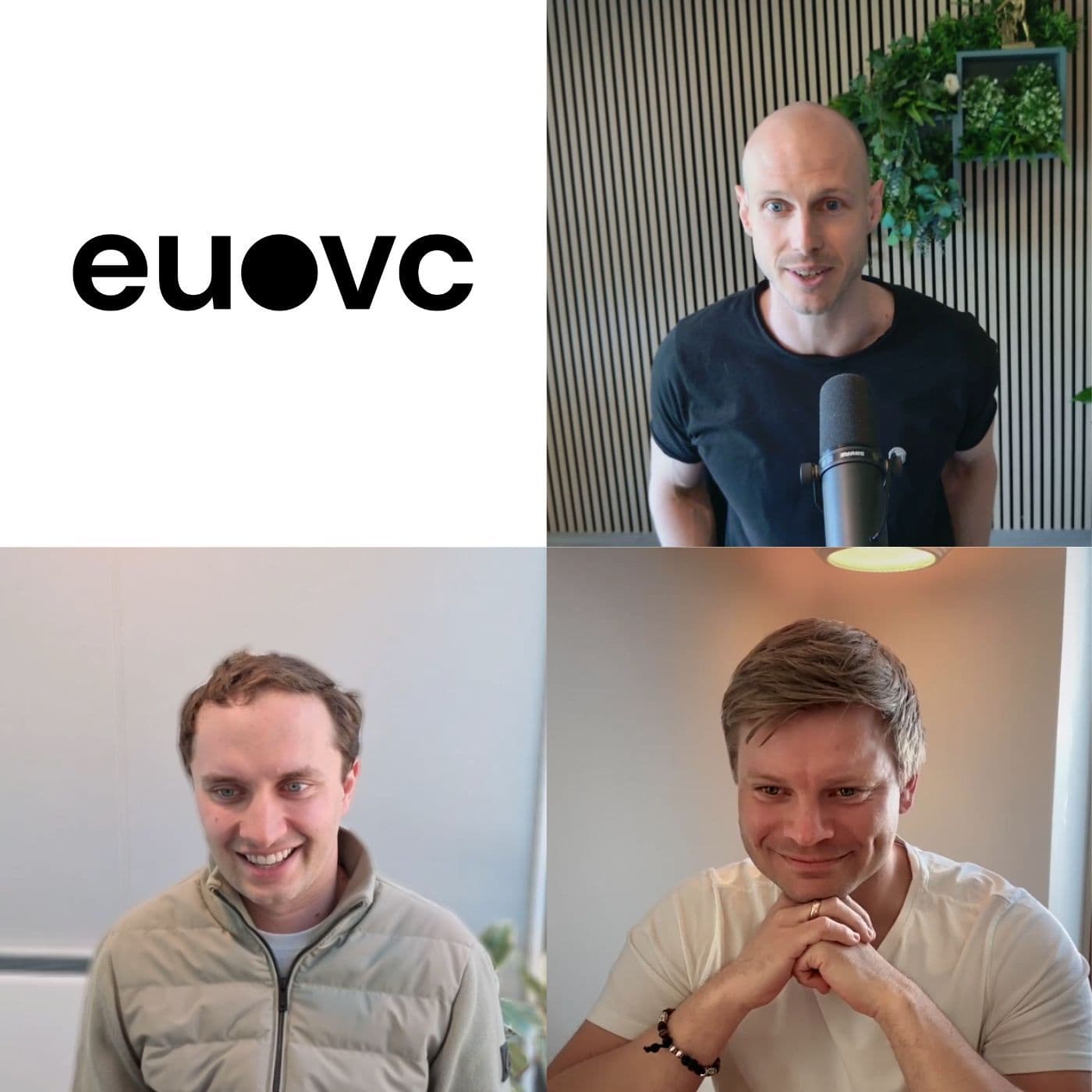
Summary In this insightful episode of the EUVC Podcast, co-hosts Andreas Munk Holm and David Cruz e Silva converse with George Robson from Sequoia and Benjamin from Tech BBQ. They explore the transformative impact of AI, the potential of the European VC landscape, and the disconnect between innovators and mainstream users regarding AI adoption. Key topics include the contrasting perspectives between European optimism and U.S. skepticism, challenges faced by deep tech founders, and the evolving metrics for AI companies.
Key Takeaways
- European Optimism vs. U.S. Skepticism
- Contrasting Views: The episode opens with a discussion on the perception of Europe as "uninvestable," often propagated by figures like those from the All In podcast. However, this is countered by the emergence of successful European founders and innovation hubs.
- Reframing Narratives: A new generation of founders and investors is transforming Europe’s tech narrative, showcasing rapid growth in cities like Munich.
- The Role of AI in Content Creation
- Slow Adoption: The hosts discuss the surprisingly slow uptake of AI technologies among mainstream users, despite its potential to revolutionize workflows and communication.
- Changing Workflows: Innovators are already rethinking how they interact with technology and manage processes.
- Deep Tech vs. SaaS
- Reviving Venture: George Robson discusses the resurgence of interest in deep tech, highlighting the need for funding and support tailored to deep tech founders, contrasting it with the SaaS model.
- Evaluation Criteria: Founders of deep tech companies face unique challenges, and Sequoia is focused on understanding the specific metrics and potential of these companies.
- European VC Landscape
- Global Ambitions: European startups have the potential to scale, but face perceptions that can limit their growth. Robson emphasizes the necessity for a supportive ecosystem.
- Capital Accessibility: The conversation touches on the perception that there is a lack of capital in Europe, especially for scale-up ventures. However, Robson argues that exceptional companies can still attract significant investment.
- Foundational Principles for AI and Company Building
- Early Culture Establishment: Emphasized the importance of formalizing company culture from day one to ensure alignment as the company grows quickly.
- Building in Public: Founders should share their journeys and customer successes publicly to enhance brand visibility and attract future customers, employees, and investors.
- AI Integration: Companies should actively institutionalize the use of AI tools within workflows, monitoring engagement rates and operational efficiency.
Detailed Breakdown of Discussion Points
European Optimism vs. U.S. Skepticism (05:46)
- Historical Context: Discussion on how Europe has been seen as underfunded and lacking liquidity, but this is changing.
- Innovation Hubs: Examples like Munich emerging as hubs for technology development.
Misconceptions about Europe (17:22)
- Perceptions: Examined how U.S. perspectives on Europe can be overly simplistic and lack nuance.
Deep Tech vs. SaaS (21:00)
- Investment Focus: Emphasis on the importance of deep tech and its potential for growth compared to traditional SaaS models.
Evaluating Founders (24:00)
- Assessment Criteria: Insights on what Sequoia looks for in deep tech founders—a combination of unique insights and technical expertise.
Adapting to Technical Founders (26:59)
- Investment Strategy: Discussion on how Sequoia is adapting its platform to better serve technical founders.
Scale-Up Capital in Europe (29:57)
- Reality vs. Perception: Exploration of capital availability for European startups and the challenges they face.
AI Company Metrics (32:11)
- Changing Signals: Discussion on how metrics for AI companies are evolving and what investors should prioritize in evaluations.
Founder Explosion in the AI Era (34:56)
- Rise in Founders: While the number of new founders is increasing, it poses both opportunities and challenges.
Scaling Challenges for European Companies (36:59)
- Growth Limitations: Discussion on why some European companies struggle to scale to the size of their U.S. counterparts.
Foundational Principles for AI Era (42:54)
- Cultural and Strategic Foundations: Insights on the foundational elements necessary for building successful companies in the AI landscape.
Conclusion George Robson’s insights provide a comprehensive look at the current state of the European VC landscape, emphasizing the importance of understanding the unique challenges and opportunities that European innovators face. The discussion highlights a balanced view of optimism and the need for tactical approaches to harness the potential of AI in company building.
---
This structured summary encapsulates the key points and discussions from the podcast, providing a clear and organized overview for readers interested in the evolving European VC landscape.
Written by AI. May contain mistakes. Listen to the episode to check what was said.
Transcript
Automatic transcript. May contain errors.0:00In the global tech landscape, Europe has often been dismissed as the underdog. We have voices like the All In team saying that Europe is basically uninvestable. It's a perception built on a painful reality that once held an entire continent back. Historically, we didn't always have the depth of liquidity, right, to be able to invest in those founders and support them as they went out. But that narrative is being flipped on its head by a new generation of founders, investors and ecosystem builders. The depth of capital is here, the talent is certainly here, the scale of our mission is here as well.
0:28The proof? Look at how rapidly entire innovation hubs are emerging across the continent. Munich, for example, is a new system. Ten years ago, it wouldn't have necessarily been on people's radar. What's driving this explosive growth? The very skepticism that was meant to hold Europe back. I would never underestimate anyone with a chip on a shoulder. It is incredibly powerful. But in this accelerated era, European founders need to think differently about building. Formalize the company culture early. I think that's a day one conversation. Companies are able to grow faster than ever because they go from having two employees to 30 employees within a year.
1:01Join us as we sit down with George, partner at Sequoia Capital, to explore how Europe is transforming from underestimated to unstoppable, and what it means for founders building the next generation of world-changing companies.
1:21Tear down this wall. It's more than just an alliance. This is a union of values. Let's start acting. This show is not investment advice and the hosts of this episode may be invested in the funds and companies featured. Welcome back everyone to another episode of the UVC podcast. As you know, we're all about connecting and championing European VCs and the LPs that back them. And today I am so happy to be joined by both George Robson from Sequoia and our good friend and ambassador in Denmark, Benjamin from Tech Barbecue. We're going to talk both about, of course, George's journey, Sequoia and Europe, what you're doing and what you're up to now.
2:05Then we're going to talk a bit about the powerhouse that is Europe and the position we're in in the global landscape today. And then we're going to talk a bit about the future of investing versus what it is right now versus the past. So, Benjamin, before we start, because you made the connect to George, I thought you should definitely join us for this conversation. Could you say a few words just about yourself and Tech Barbecue and kind of why you thought George was the right guy? Yeah, I think I'll make him short and sweet because George is the interesting guy in this conversation. He's a truly remarkable person.
2:38And we've been very fortunate to be hosting him at Tech Barbecue for a few years, at least by now. Maybe it was four or five years ago was your previous parliament Miller came. And then very shortly after, George took over, I think, the youngest partner in Sequoia's history and came in and really embraced what we did at Take BBQ, which is very founder-focused. I think you have been a jury member in multiple of our pitch competitions, attended our various dinners, contributed to stage concert, met a lot of people. I even believe that one of the years you were the most active, I don't know, jury member or meeting explorer within a category, which popped up internally and were like, oh, that's amazing.
3:21He's really handsome and he's really looking deep. And so I just think there are a few people like George who take their work or put themselves to as high a standard as a venture capitalist should do in the ecosystem in Europe that we have today. and that's just really amazing to work with and that he has a plan for him like Sequoia to embrace and work through. It's just phenomenal. Those were some kind words, George. Tell us about yourself and your journey and then the audience, those that don't know you yet, will be able to make up their mind if you deserve those wise words. Yeah, that is high praise, Ben.
3:57Thank you. No, I mean, I love Tech Barbecue. I think it's an amazing event that pulls in a lot of exceptional talent from across the region. So yeah, you'll see me there for many years in the future. So I joined Sequoia five years ago. We opened an office in London, which was, we've been investing in Europe for a long time with Sequoia, actually back to 2007, 2008. Companies like Klana and Unity were actually our first two investments. They're both out of the Nordics, as you know. So the first of hopefully many, many, many more. But we opened our office here as a relatively new chapter in Sequoia's history, just to open an office to be on the ground, obviously to be closer to European founders.
4:31And it's been part of that, I think, that's really introduced me to the venture world. Before that, I'm British. You know, I grew up in London. I studied at LSE. And LSE really exposed me to the world of entrepreneurship for the first time. I actually co-founded when I was there what was a kind of lowly accelerator with a few friends where I was on a panel in my final year talking about that accelerator, you know, on campus. And Revolute was actually on that panel with me. And Revolute would have been a pre-seed or a seed company at that time. So I was first introduced to the team, you know, the level of ambition that that organization has at the time.
5:02it was just a multi-currency travel card, right? Who knew if we could get on to become one of Europe's first financial super apps? And when I was intoxicated by that, I think the intensity of that team. And I remember kind of learning about that experience in a couple of months when I was working at Morgan Stanley, I knew that they were based in Canary Wharf, you know, just across the square. And I reconnected with Alan Chang, who was the guy that I'd met on that panel a couple of years earlier. And I joined the business to basically build and scale their consumer subscription business. So Revolut Premium.
5:31I did that job from the first day I joined to the day I left. And it really introduced me to the world of technology and I think the speeds which you need to move at to build a company of that global scale. And yeah, I'm grateful to say, Sequoia picked me up and I was coming out of Revolue. And it's been five years of education, building out the office here, building the footprint and working with some incredible founders. And I'm doing that as part of one team across US and Europe. George, we could talk a ton about what it's like to go from being an operator to being an investor and those types of things.
6:01I'm sure you've done podcasts on that with others. We also have perspectives from a bunch of people on that. So I don't think that's the most exciting thing we can talk about now. I do, however, think that given we've seen Europe get into such a, both headwind and tailwind at the same time, because here in Europe, I was just saying this just before we started, we've never seen a bigger rallying around Europe, at least for those of us that are inside Europe. And then at the same time, you're with a bit one foot on both sides of the Atlantic. And then you're seeing the US definitely not necessarily being as big proponents of Europe, or at least we have voices like the All In team, as an example, where you have Tamath last week.
6:45Now I'm dating this episode, saying that Europe is basically uninvestable. George, how do you square this as a person inside Sequoia, the world's leading venture firm, trying to figure out and position Europe in this world that is in a massive upheaval right now? The beauty of our setup is we have incredible flexibility, right? We partner with companies from literally the idea stage, but we have funds that lead all the way up to the level to invest through the IPO and actually be on the IPO. The reality of that is we work as one fund family really across the whole geography from Israel to San Francisco.
7:21We just want to find the best founders, you know, wherever they may be. And that's exactly why we opened the office, right? The track record of Europe speaks for itself. I think what was remarkable is that you had a long history of European champions being built from this part of the world. But you've had over the last, if you look at the last seven, eight years, plenty of examples now across categories of businesses that are built from Europe that go on to global dominance in that category. You have businesses like UiPath, you have Revolut, you have companies like Miro. Obviously, you didn't go as far back.
7:48You have companies like an SAP. You have these organizations that have been built here to prove we have the depth of the talent pool. But historically, we didn't always have the depth of liquidity, right? To be able to invest in those founders and support them as they went out. And what's incredible, if you look at the last 10 years in particular, we have a very large number, a high density of these incredible C funds. We have increasing capital at Series A. We have growth funds that can match that scale of ambition and that speed of execution. You see that in these cohorts of companies that are coming out now.
8:15It's kind of pre-IPO businesses that are doing great work in companies like 11 Labs and AI. Obviously, the amazing heritage of DeepMind that you have out of London, et cetera, et cetera. I think what is interesting about this world today, again, in the era of AI, is many new sets of technologies and many new market opportunities have rebuilt themselves. If you think about the fact that Europe has historically had this incredible industrial base, this manufacturing base, there are very few places in the world that are better. I would argue Europe is the best place to think about building vertical robotics applied to some of these problems.
8:45We have an incredible history in life sciences going back many, many decades. We're seeing a lot of that energy and that enthusiasm being applied to these new technologies. So I think there's a pretty strong argument that actually Europe has been the best place it will, it's been forever as a place to build a company. The depth of capital is here. The talent is certainly here. And we see and we feel it every day that the state of ambition is here as well. So yeah, we're like continue to be excited to be based here, you know, investing in these European companies. Could you just highlight for everyone, because US interest, US commitment to Europe has kind of varied from firm to firm.
9:19We saw towards the end of the SERP cycle, we saw everyone coming in, establishing offices here. Then we've seen quite a few pulling back. Could you tell us where is Sequoia on this journey today? How many are you in London? What functions do you have in London? So on and so forth. Also, maybe a bit to those that don't know, how does the investment decision making process happen inside Sequoia? When you're particularly looking at a European deal. Absolutely. So a few points there. So we opened an office in London about five years ago. We are, I think we're five or six investors based here in London, about 20 people in the office.
9:58And we've actually built it to replicate exactly the structure we have in the US. So we invested in building, for example, an amazing talent function. They help our founders recruit, obviously, but they help a lot with finding pre-founders who are thinking about taking that leap of faith to build a company. I'm thinking about, you know, compensation and performance management for these businesses, etc. Exactly as we would do in the US. I touched on it earlier, but it's the same fund family, right? It's the same partnership. Effectively, we have$180 million seed fund. We have a$600 million venture fund.
10:26We have a growth fund, a pre-IPO fund. All of those funds mandate is just to go out and find the best companies wherever they may be, right? And if you think about European founders, they typically fall in one of two buckets. They're either trying to build a European champion, right? A business like a trade republic, you know, would be a case study of that, or maybe a penny lane in France. or they're a business that is building from here but has ambitions to maybe go on and take on the US. For that, I'm thinking about a business like, you know, an N8N or an 11 Labs. The reality is we can help both those founders.
10:54We can help them to expand across Europe. We can take some of the learnings, maybe some of the playbooks we've seen from the US, trying to apply that to the European market. Or if their ambitions are to go to the US market directly, we can help them with thinking about setting up in the US, thinking about accessing, you know, the talent pool there and the customer base there. We don't really care. We just want to help our founders that have those ambitions to go out and win. So I think the reality is today, again, I mentioned it, but the opportunity set for you to raise capital here is as big as ever.
11:21At Sequoia, we don't have a dedicated sub-allocation in our fund. We don't have a separate IC. We apply, if you like, a global bar as we think about the people in which we want to be in business. It just so happens that more and more and more of those founders of that bar and of that ambition are coming from Europe. Can you break down, George, a bit how you think about the state of potential opportunity across the UK and continental Europe? Are there specific geographies where you're focusing more on what's your approach to each geography? Do you think of it as such? Do you see Europe as one big and you get a funnel that is Sequoia and then for that reason, you just get the width?
12:04Or what's your approach to ensuring coverage across Europe? I think the remarkable thing about Europe is exactly that level of diversity. And I think that the diversity comes from a few places. I think one, you know, in each different European market, you have different aircraft carrier type business, meaning a business that went on previously that was founded, that is maybe a pre IPO or even a public market company that has been incredibly successful as tall people who worked at that business, what scale looks like, right? You know, what, what grade looks like. And frankly, for a lot of those people, it's provided enough financial security that they can think about taking risks and going about and building again.
12:41Examples of that, you know, I'm talking about a business like Klana, obviously a Spotify previously, a business like a Revolue. You know, you have free IPO companies now that are really making that up. So I think that that's the first piece. And that often has, you know, pretty serious implication on the types of businesses that are being built, right, that are coming out of those companies. And sometimes it's not all that obvious. To give you an example, a business like Bolt in Estonia, Bolt is obviously a consumer marketplace, but it just so happens that actually Bolt is also one of the largest vertically integrated manufacturers of e-scooters in the world because it's a very important part of their business.
13:16And it so happens that in Estonia, you're obviously on the border with Russia, you have military service, so you have a lot of people that have military training. So, Missonia has really emerged as one of the defense hubs in Europe. And it wouldn't have been obvious, you know, combining those three facts, that you would see all of that talent density coming out of a business like Bolt and going on to found defense companies. But you did. So, in Europe, you have to understand that story at each point in time. Again, first with the aircraft carriers. Second, with just the industries that are surrounded by it.
13:43You know, we've seen the incredible rise in Munich, for example, as an ecosystem, right? Ten years ago, it wouldn't have necessarily been on people's radar. Today, you see this incredible density of robotics companies. and hardware companies and things like that coming out of the region. You obviously have this incredible life sciences history in the Nordics, right? Obviously, Denmark, you see it, you feel it every day in the entrepreneurial community. The UK has FinTech, incredible track record in FinTech. And actually, a lot of that energy has started to bleed into climate tech and into crypto.
14:10As it turns out, the markets are kind of structured similarly. There's regulation, it's high volume, it's low margin. So I think in Europe, you need to understand the shape of those different ecosystems and sort of where those core competencies are coming from to make sure that you can capture the kind of offshore as you see it coming into the landscape. I think Europe is at a particular point in time where the choices we make have a profound impact on the future of the ecosystem. And I think it's a very hard time to navigate because we are decentralized and we're trying to come together. But if we come together, there's so many chefs at the table that it's hard to make decisions.
14:49So we end up being these nations trying to do the best that we can do in order to make Europe great, et cetera. And so I don't think there is one answer that's correct for how Europe gets a seat at the table. But I do think that Europe has a chip on its shoulder. And I think we've seen it through the likes of Project Europe and more initiatives around. And I would never underestimate anyone with a chip on its shoulder. It is incredibly powerful. And so when you're told you can't do something, like watch me. And I think that's what we're seeing from a lot of founders. And I don't think we should underestimate the value that we see being created from such statements that created chips and shoulders in a couple of years from now.
15:30And I do think that local nations all around Europe are making great initiatives going forward, doing their biddings to help. I think it was about a few months ago that I think it was Germany that put in one or two trillion and kind of front-loaded it into industry around the time that, you know, Zelensky was in the US and things went down and front-loading one to two trillion into an industry. You're going to feel that. I mean, I'm just curious to see how that's going to play out for Germany in a few years. But I don't think we have it all. I still think we lack capital. And if you ask most least used to say we don't, but I think we do.
16:09And I think we can see it in many ways. And I think we should maybe also accept that instead of trying to say, all right, we're independent and it's Europe for Europe and we're not going to collaborate globally. I don't think that's going to fly. I don't think that's going to happen either. I do think that capital has a way of finding its way into opportunity. And I think it was in 23 or 24 when the global stage was set for the fact that defense and dual use were going to become a thing. It turned out that in 23 or 24, already then, about 65 or 70 % of capital running to European defense and dual use startups came from the U.S.
16:47investors, something like that. And that's also going to happen. So when we double down on deep tech, life science, defense dual use, you name it, that are categories that we could win with the talent that we do have winning AI. I think it was a report from you guys at Sequoia Atlas or something that mentioned that we have something on the magnitude of 30 % more AI talent concentration in Europe. And so I think even if we have the talent, which most VCs are saying that are lacking, we have the tablet, right? We just can't find it. And even if we get that, it's going to be a global collaboration to fund and build startups.
17:24I just hope that most of them that gets created will stay in Europe, or at least a large portion of it will stay in Europe, have global customers and be supported by the best VCs along the way. And so it's hard to navigate that because it seems like we're all for Europe now. And I'm all for Europe. But how to balance that, it's easier said to done. George, Benjamin said some things there that captures the zeitgeist of Europe right now. I asked you a question before, which you, I wouldn't say you sidestepped it, but you described instead the openness in the Sequoia platform for you to be able to let capital go where the best opportunities are.
18:03But I'd love to double click on this question of the European side guys around everyone rallying for Europe versus one, at least in the public sphere, could feel like an anti -European side guys in the US, meaning it's US first. It's Europe is not investable. It's this type of thing. You have your daily walk on both sides. I'd love to ask you one off the social media platforms. What is the conversation in the US about Europe? So if you're someone who's based in the US market, there's time and energy required to educate yourself on the European opportunity. And there's a few reasons for that. It depends on the businesses, of course.
18:51But the markets look different. We have different regulations. We obviously have very different, like the strategy and the playbook as you think about going country to country in Europe is very different than going state to state in the US. There are, frankly, a bunch of different market features that are very different here. We have different levels. Some things are very cheap here that are very expensive in the US and vice versa. But also more than that, founders also look and sound different. There's a level of calibration you need to have on what does it mean to go to one of the best European universities.
19:20You might never have heard of that university. You might not know that the program in that university is well-classed for what it does. You might not understand that, you know, in the US, I think lots of founders are, you know, taught from a very young age, the sort of power of storytelling and the sort of power of marketability. And I think in Europe, people tend to be a little bit more direct on some of those characteristics and not necessarily sell themselves as aggressively, which, you know, in a fundraising context can actually be a detriment sometimes. So all of that nuance is like, I think, why people who are from Europe appreciate that and in fact love it here.
19:52But frankly, it requires, you know, activation energy. for you to be able to get there if you're a venture capitalist who doesn't spend a huge amount of time in the European market. I think the reality is being able to do that from the US is more challenging, for sure, unless you're going to be on a plane all the time. That's why we opened an office here to be able to be closer to these people. But I think that that is the single biggest factor is basically like what you get in or what you invest, sorry, is what you get out, I think in Europe, in terms of you being able to understand it. So I think that's how we perceive it.
20:19But I think that that is why you have those different opinions. I think you're absolutely right. I think that that is exactly the point, that if you don't have boots on the ground, you're from the outside. It does not compare to what it actually is once you're here, especially because, as you said, the narratives in the states that have been built up are so fortified and they are so distorted from what you might call unnuanced views and unnuanced storytelling that you just completely disregard what is actually here because you haven't been here. And I think it's funny to see the nuance with which the U.S.
21:01investors can describe the U.S. And then when you hear Europe described, you don't, as an example, as you just said, you get none of that nuance that says exactly that, well, Estonia is the right place to be for the defense sector right now because of the aircraft's stories, because of the proximity to Russia, because of X, Y, Z. And it is this nuance. And also, I think with the universities, you're absolutely right. This is a peculiarity of Europe that it's not an entire university that's necessarily world-class. It is a research environment in one university, which is puzzling to many, but it is absolutely fundamental.
21:38And that is why you cannot attack Europe just as one big thing. We have at the EUVC Summit, we have back ventures. we have them coming to talk about exactly why Europe is not monolithic. And if you're not here, you have no capacity to understand. It's absolutely impossible. George, I'd love to shift a bit focus to ask you about the statement that you made where you said, let me phrase it differently. Everyone is talking about the transition from venture. First, we started out in the semiconductor industry. Venture was actually about research, actually about real breakthrough innovation, actually about the hard tech.
22:20And then we've had a long period where everything seemed to be some version of consumer and enterprise and software. And now the provocative investors would say that's kind of been competed out. Now it's the private equity play. If you just back metrics, that's perfectly fine. It works, but it's not real venture. Now real venture is what we call deep tech. And then as you said in the beginning, Europe is at the forefront here. We have incredibly strong, both research environments, but also industrial bases all across Europe. And that's also why we see the hubs jumping out from such disparate places.
Read the full transcript
23:05I'd love to ask you to expand a bit on that, comment on all the stuff I just said, whether you think it's correct or unnuanced and so on. Yeah, I think, I mean, for a little bit of perspective on that, I mean, we were one of the first investors in NVIDIA. We were one of the first investors in Apple, one of the first investors in Google. We've seen that arc of like how, I guess, infrastructure innovation can convert to like enduring mobs in companies that can last for decades. Right. And I think you described it well, you know, there is true IP in some insight there that unlocks the ability to build a very large business on top of it.
23:40obviously the combination is you need to have a team that has that scale of ambition and the grit to be able to get the distance and i think in europe again a lot of founders have had quite britty journeys to building those companies right coming through their phds potentially with meaningfully less funding than it would have received had they been in the u.s and potentially having to fight you know much harder to be able to get access to first customer pocs things like that right then you may get an equivalent you know u.s business so the grit is there i think the funding is increasingly there, right, from partners who are pretty educated and interested in that world.
24:11And as we touched on earlier, you have these different ecosystems where you have very high talent entities, right? As I mentioned, we see it for sure in Germany, we see it at Switzerland, we see it across the Nordics. The UK has a long heritage at places like Milton Keynes and in Cambridge and places like that. So I think we see that there are definitely clusters of founders who are coming up together to build those companies. I think that's an important piece, because actually a lot of the technologies that they're building will serve problems that are almost measured in percentage of GDP type terms, right?
24:36It's how do we reintegrate and innovate inside of manufacturing? How do we do the same thing in healthcare, right? How do we think about that in the life sciences world? So these are like societal level problems, right? That will actually change the way that humanity works. I think it's important to recognize that that's just the current inclination of those tools. And it's a lot by a set of technologies that have actually been in development in many cases for 10 to 15 years, but now reaching the level of performance where you could start to implement it. At the end of the day, though, you know, So for some entrepreneurs, you may not come from those research backgrounds.
25:06I think sometimes it can feel a little bit confusing. Is this an era for me where I think I can contribute? The reality is, of course you can, right? Because while you might have seen the incredible rise of open AI and companies like that over the last four, five years, now what you've observed is that infrastructure, the rate of change is sort of stabilizing. So you have this beautiful moment in time where now you can build much more predictable applications on top of that core innovation. and actually to build the best application in any given category requires understanding the customer, consumer taste, a sense for design, being obsessed with the customer problem.
25:38All of those things that actually have been true for any company over the last hundreds of years, you're just building on top of different infrastructure. So I think it's very important for founders if they don't come from those deep research backgrounds, not to feel disheartened by it. There is a way to contribute and win and build an enduring business. You just have to understand how the jigsaw is coming together around you, those pieces of infrastructure. How do you, George, yourself as an investor, think about backing founders that are so hugely technical compared to what you might call the more digital, pure digital product founders?
26:11So when we think about investing in or partnering with a new founder, generally what we're looking for is founder problem fit. What I mean by that is there's some unique insight that this team has earned through their professional experience or educational experience, whatever it might be, that they're applying to have some unique wedge into some market. And like different companies, the shape of that will obviously differ massively. For a lot of these deep tech companies, as you said, it might be an IP innovation around the infrastructure. That means you could have more performing infrastructure at lower cost.
26:42There might be some insight around the manufacturing or the assembly of that product or something about how you think about implementation because you never see lots of industries. I think manufacturing is a good example where there's been a promise of robotics in manufacturing for a decade plus. It's only more recently you have companies like Robco or businesses like that that focus on how do people self-install. The end lock there is, yes, robotics, but it's very much about how do you get it in people's heads. So even if the founders are very technical and they have that earned technical insight, there's obviously a bunch around that that is required to make it a successful business.
27:14Part of that actually is understanding, you know, where is this person exceptional? Where are their gaps potentially in that experience? How can we complement that in the founding team if they haven't done it already? Again, remembering that most of these people, many of these people are kind of self-aware enough that in their co-founding teams, they've already managed to round out the bench. And actually, that leads us to how we think about company building for these businesses, because we've seen quite sort of generalist teams built across a long period of time. So we just want to take this person that is going to be exceptional at one core thing that is tightly correlated with the success of the business and work very, very hard to round them out.
27:48So it really just changes our strategy of how we interact with that founder. It doesn't change our likelihood of investing in the business or our level of excitement. Could you tell me a bit about then the consequences for the Sequoia Value Act? So to say, you obviously have a platform, your five to six investors, as you said, in Europe, and then you have a team of 20. So how does this changing face of the typical prototype founder affect how you're building the Sequoia value add? I think the main difference, I mean, we've been investing for kind of a decade in our talent and recruiting teams.
28:24I touched on that a little bit earlier. But if you think about what that function has to do to serve our founders best, is there some level of anticipating what are the types of companies we might invest in? What are those founders? What are the talent pools they need that are going to really support them? And to say the obvious, when you go from investing in primary software companies, because as you said, a lot of the innovation as the emergence of mobile migration to the cloud has been software at the core. As you move into a world of having more hardware companies, potentially more AI researchers or even relatively low level systems engineers, you need to invest in building talent pools and talent density in those networks, because the problem statement is always the same.
29:05The question from the founder is, how do I find the best person to help me do X? It just so happens that X is changing. So I think that's kind of piece one, right? Really making sure that we can marry a little bit the needs of the customers with, you know, with actually finding the right talent. But two, you know, we launched this program called ARK about, you know, maybe three years ago. So ARK basically takes a relatively small cohort, 10 to 12 companies from across US and Europe twice a year through this relatively intense company building program that basically just focuses on storytelling.
29:34Where the insight is, as an early stage founder, you tell three versions of the same story to your first investor, your first employees, and your first customers. Those needs are universal, whether you're a software founder, a hardware founder, a deep tech founder, whatever it might be. What is different is people come into that with slightly different levels of experience. I think in doing those things. So sometimes you just need to work a little bit harder to tell some of the stories of these more deep tech companies because sometimes the business model may be a little bit unclear today. The trajectory for the company, maybe even the end product, frankly, might be a little bit less clear, but you know that this team is special.
30:07So you need to find the right way to shine a light on that given that stage of the business. Benjamin said something in his statement earlier where he said he reflected on the availability of scale-up capital. I know, George, that most founders that get backing by Sequoia won't have a problem attracting follow-on capital. But when you look at Europe and the state of our scale of capital, what do you think in general? Do you agree with what Benjamin said that we're lacking here? Or are you more on the stage where I think I personally probably come down, at least for the majority of verticals, costs, that scaling capital is really global.
30:52So if you have a company that's performing, capital will flow. I actually think both points are true in that, are you able to raise larger growth rounds in Europe if you're an exceptional company? The answer is absolute yes. And the reality is that most of that capital probably comes from the US, right? We don't have a large number of domestic growth funds in Europe. That is slowly changing, but it's arguably still a little bit too slow. It's also partly the role that I think when you have a number of US multi-stage funds that are set up here, they're trying to support that next stage in companies' growth.
31:24But it's certainly true that it's easier to raise follow-on capital from the US at the growth stage, probably than it is at the early stage. But what I would say more generally, I think is, it's not just about access to capital. It's also about recognizing that if that capital exists, what would you do differently? Really, capital is just a tool that helps you to realize your vision as a founder. And I think if in your mind, whether it's consciously or not, you're sort of dealing with an artificial constraint of like, you're not assuming you will be able to raise that hollow on capital and you're not assuming you can go on and be ambitious.
31:56And in your mind, maybe you're delaying your US launch because you don't think you have it in the budget for this year because where's the money going to come from? Those are the kind of decisions that we're excited to say have been kind of eradicated over the last few years because there's now a perception that that money does exist to match your level of ambition. So I really think that is the most important thing because obviously money is not the only thing that matters it's not it's certainly not the most important thing right the team and the insight and the product and the customer base is but now this money exists in the ecosystem to help you realize whatever that goal is that money come from the states it come from europe you know it's awesome what are the signals that you're looking for today when you've invested in let's say for instance ai to double down on because i think that the signals that we typically looked for back in the day are not the same that we're seeing today, like the speed of which they generate revenue, the almost immediate validation of customers coming up and paying your$20 a month kind of thing, those signals come in very quickly and you might be able to very quickly have a very fruitful business.
33:00If you look at AR and it's extrapolated, it might look really well, but is the churn coming around? Can you wait to see if the churn is going to bite yourself in the ass? How do you look for these signals? Because you can't really wait a year to see in DC someone else will take the route. Yeah, I think that's a phenomenal question. We talk about that a little bit internally. The benchmarks have moved a little bit. I think the reality was in the pure B2B SaaS world, you were to go from zero to 3 million of ARR in 18 months. That was exceptional execution, right? Implying a lot of customer love, a lot of careful thought into the product, et cetera.
33:34And the reality is today, you can build the same product with a smaller team, right? You can use a bunch of different AI tools to think about how you pull that together. In cases, you know, the extreme cases, we see companies who haven't even had to raise capital, right? To be able to build the MVP and potentially in year one, grow to like 5 million or 10 million of ARR, right? So I think that those signals are important because they still indicate obviously a level of customer intrigue and sort of customer value prop fit, right? That exists at least the high level that people feel this is a technology that can really help me.
34:03I think what matters in this world, these things were important always, but even more today. One is the numbers behind the numbers. It's what you described. If you look at retention, you look at net dollar expansion, you speak to the customers and you get the texture directly of understanding what workflow is this really replacing today? Is this cheaper, better, faster? How important are those different things? Does it work 100 % of the time or 20 % of the time? It's that nuance, which I think is really, really important. That's piece one, the numbers behind the numbers. I think piece two, though, is, and this is, again, it's always been important, but I think you had longer to form it.
34:39I think today it's actually about vision. There are different north stars for these companies. And the reality is, on day one of building the business, they might all look the same in a given set of competitors that are going off at the same price. But the vision for the founder is important because in AI, again, you can build these technologies so quickly that understanding the sequencing, I think, is the really important piece. How do you go from a wedge product to a platform product over the next three to five years, what are the steps as you see it as the founder and be able to do that? And we want to look in the founder's eyes almost and understand where does that insight come from?
35:13How refined is it? How in the weeds are they with their customers of understanding it? Again, I think all these things are always important. The reality though is today, you just have meaningfully less time to respond than to form these hypotheses. You need to see that speed, that clock speed almost being constantly leader right inside the business. I believe it's safe to say that the barrier for building has vastly decreased in recent time. And that could lead us to believe that within, you know, months even, but at least years to come, we'll see many X in the amount of founders that we see today.
35:43So one could say, all right, did this enable, you know, four or five times as many founders a year to try to build something and scale it that are not technically innate by education otherwise? is there enough capital to accommodate them? Will they get a chance to scale? Will they need to grow as big as traditional B2B SaaS used to be? I mean, do they require the same capital intensity to build meaningful companies that can save global customers? I think it's an important question. So I do agree that, you know, with the proliferation of AI tools, it is both like easier for a less technical person to build a better product.
36:24And it is true that for the same team, you can build more or at least build more and more quickly and potentially more efficiently. So I certainly think that's the case. I think you're right to say that that will lead to more companies being formed. We certainly felt that in 2020, 2021. We're certainly feeling it again today because of AI. The thing that is important to remember, though, is at the end of the day, it's still very hard to build a generational company. It still requires a decade plus of effort. It requires founders that are true missionaries in what they want to build. They have very, very deep conviction and a very deep vision for that.
36:56Talent still matters, right? Your ability to hire, attract, retain exceptional people, again, in a competitive marketplace, arguably an even more competitive marketplace. And in today's world, again, above all else, speed really matters. I think, again, to intellectually believe you know what that means is one thing, but to have lived it, right, and be willing as a founder to live your life at that level of intensity, I think, is something else entirely. So I think our observation is that while there are many more companies being formed, we kind of feel that it's kind of a similar cadence as like the best years we've had in the past of having the companies with really serious founders going after the most important problems.
37:33And again, while there's a lot of application software and innovation in AI, a lot of that IP is coming from, as we touched on earlier, very deep technical problems and true technical innovation, where there's actually a relatively small number of people in the world that have that skill set. how many AI engineers are there in the world? It must be like low hundreds of thousands, right? Measured versus maybe the 25, 30 million software engineers and the like six, seven billion people on the planet, right? So in some ways, a lot of that, you know, expertise has arguably become even more concentrated at the innovation level.
38:04And it might become more accessible at like the implementation level, but those things are slightly different. So in some ways, you know, it's created a little bit more noise out there in the world. But I think we look for the same things, the same level of ambition, and we see it at, you know, roughly the same frequency. There's a tie-in question to this conversation, which is the one side, there's the ambition, the hyper ambition. Is that inside the founders? But then there's also the question of does a company that is built within this sector, if it originates from here and so on, will it be able to reach the size where it is meaningful for the fund that invests?
38:41This is where the right sizing of funds to the European opportunity is sometimes smaller than one might argue for a global fund or a US fund, because the average exit size in Europe is not as large as it is in the States. I know that obviously, just as any investor, every time you invest, you invest with a global mindset. But I imagine that there are also some considerations around we tend to see European companies not stall out, but just not go as large as the U.S. counterparts. How do you think about this? Do you think it's a systemic problem in Europe? Do you think it's an ambition problem?
39:20Do you think it's a fake problem? What's your take? Like it's obviously also connected to the investors that come into the companies because there's also an ambition level there and a route that they take the companies on. So the point is here, not everything resides with the founders. I think much of it doesn't. I think for a long time, there was a conversation in Europe around when will the first billion dollar companies be built? And then it was, you know,$10 billion companies be built in Europe. And we are squarely in the round now with$100 billion companies. We have companies like a Revolut that are very much on that trajectory.
39:54We've obviously had Adyen as a public company for a long time. The heritage and the foundation is there for companies of that scale. So I think the nice thing is we have existence proved now. And hopefully, if that inspires investors, it should obviously inspire entrepreneurs. You can build a company of that scale from Europe. So that's, I guess, piece one. But then for ourselves, part of the reason I mentioned earlier, so we invest as one fund family, we have a global bar. The reality is if we find a business for whatever reason where we think it doesn't have that kind of generational potential, we would not be excited to invest in that company as a corporate capital.
40:29It doesn't mean that there won't be many great partners for that business. It doesn't mean that the founders of that company won't be able to make potentially generational wealth for themselves and their loved ones, all of that amazing stuff. It's just not the kind of thing that gets us out of bed in the morning. To provoke you a little bit here or to force truth here, do you see seed stage come? So at the pre-seed level, just getting out of the garage or getting into it, maybe even, most people have huge ambitions. However, you can add the seed stage and series A stage, start seeing the conscious of this business and the trajectory it's on.
41:06Do you see that there's a maddening out there in any way and that there are businesses where you fundamentally would love to go in, but you're just not seeing the science that you would want to see? Do you in any way see that that is something that's more prevalent in Europe than it is in the States? I think it probably is on average. But again, in tech, the average is unimportant. It's a power law driven business. It's a small number of companies that matter, you know, as part of each part of each year. I think for those businesses, the founders are the same. They have exactly the same ambitions in both regions.
41:44I think the difference is you move, you know, below that, say, top 10 % who have been part of these communities where they've seen those stories before. Maybe they came out of a revolute, etc. The reality is in the US, the average founder grows up in a cocoon where they're surrounded by entrepreneurs. Their friends are angel investors. Family members may even work in tech. things like that. And that gives you just a higher average level of exposure to what the industry looks like from an earlier age. So I certainly think that is true. I think the reality is though that like, that is, you know, the lived experience.
42:14If you look at the educational experience, again, the quality of like the expertise, it's comparable. So a lot of the work we do, particularly with seed and pre-seed founders is trying to give people that cocoon, right? Give them that structure. In many cases, it's sort of reminding exceptional people that it's okay to be audacious, right? Part of being a founder of an exceptional company is you're almost hoping to create an unreasonable outcome, right? You are a team with no product, no capital. You certainly have no customers. And yet somehow, for some reason, you believe you can build a company of that scale.
42:45And that's okay. And in the US and in Silicon Valley, it's always okay. People default to yes. I think in Europe, sometimes you need to nudge people to find that self-confidence, that self-belief. But it's in there. And as I said, we have existence proof now that you can do it. I think you're absolutely right. And I think that you phrase it as a cocoon. We normally call it when it's negative, an echo chamber. But I think the beautiful thing is that every new generation now grows up in their own echo chamber, meaning their own cocoon. And if you, for whatever reason, end up fixating your mind and your algorithms to stuff around tech, wherever you are in Europe, you will get the right input.
43:25Because you'll get the input from the people that are in the tech ecosystem that are all building this. normally you would not you would not before but today i think as soon as you show interest in in in tech and venture you will very quickly live in an environment that is almost like a cocoon so i think you're absolutely right and i think there's one thing there that we can happy be happy about our social media platforms for i want to ask you one final note before we close i know we're very close to to the end of uh our our conversation but i want to ask you if you were to set out some core principles for company building in the future, not the past, not today, but what you think will really matter in the next era, so to say, of AI and everything we're in right now.
44:10What do you think those will be? Just a couple of foundational pieces and then specific to AI. I mean, one, make sure you formalize the company culture early. I think we see founders that typically do that too late. I think that's a day one conversation. The reason it's a day one conversation that gets heightened today is, you know, again, when companies are able to grow faster than ever, because of some of these technologies, you might go from having two employees to 30 employees within a year, right? And at that point, if you haven't already thought about formalizing that in your processes and how you think about performance management, now you think about your employer brands, the reality is it's going to be too late, but you're going to start to lose control.
44:45So that's piece one. I think piece two, you know, we've seen, we have a lot of discussions with our founders of there's a lot of building in public Like today, sharing updates publicly on LinkedIn of the company's progress, all these things. And we get questions from founders sometimes of like, does it matter? Is the right thing to do to focus just inside the building and focus on ourselves? And the reality is, in yesterday's world, that was maybe okay. In today's world, again, in this very dynamic marketplace, it is important that you think about how to elevate the brand, show the customer wins and do it not necessarily full disclosure on Twitter, but actually more thinking about it is like, how do I tell a story for future customers obviously future employees and finally, you know, future investors, that we have positive momentum around the business.
45:27I think that's point two. I think point three is, you know, as a founder, you should really be asking yourself, you know, what is our internal AI strategy? You should be monitoring that almost at the workflow level within different functions. You should be saying, you know, how many of our software engineers are using code generation tools as part of their everyday flow? You should be expecting them to go out and be curious about other tools and trying to bring them into the business. You should be kind of institutionalizing that mindset and that knowledge. And it's to the point now where, you know, in our board meetings for some of our larger companies, we are asking them about penetration rates of these tools.
45:58It's actually the KPIs they are reporting on. And some of them are operational in nature, right? Customer support requests, people by AI, et cetera. But a lot of them are just about process and getting a sense of how many people in these different functions, the marketing function, the operations function, the product function, are using these tools on a monthly basis. So make sure that you institutionalize that as you go through it. I am baffled every single time I talk to people that are not full on the AI train. It is incredible, especially as a content creator. Obviously, we were very heavily impacted very early, but I cannot understand how far the average person is from AI adoption.
46:35It's a long way to go. That's right. George Benjamin, thank you so much, both of you, for joining us on the podcast today. It's a pleasure being here. Thank you for having me.
46:48Tear down this wall It's more than just an alliance This is a union of values Let's start acting
From the publisher
Here’s what’s covered:
- 05:46 Reconciling European Optimism with U.S. Skepticism
- 17:22 U.S. Views on Europe: Misconceptions & Missed Nuance
- 21:00 The Return of Real Venture: Deep Tech vs. SaaS
- 24:00 Evaluating Deep Tech Founders: What Sequoia Looks For
- 26:59 Adapting Sequoia’s Platform to Serve Technical Founders
- 29:57 Scale-Up Capital in Europe: Reality vs. Perception
- 32:11 AI Company Metrics: Changing Signals & Due Diligence
- 34:56 Explosion of Founders in the AI Era: A Double-Edged Sword
- 36:59 Why Some European Companies Don’t Scale Big Enough
- 42:54 Foundational Principles for Building in the AI Era


