
In short
EUVC Podcast Episode E471 Summary
Episode Information
- Podcast Title: EUVC
- Episode Title: E471 | Ryan Lieber, Snowflake: Sales and Scaling Strategies: First SDR and EMEA’s Go-To-Market Leader [Path to Market]
- Co-hosts: Natasha Lytton & Micah Smurthwaite
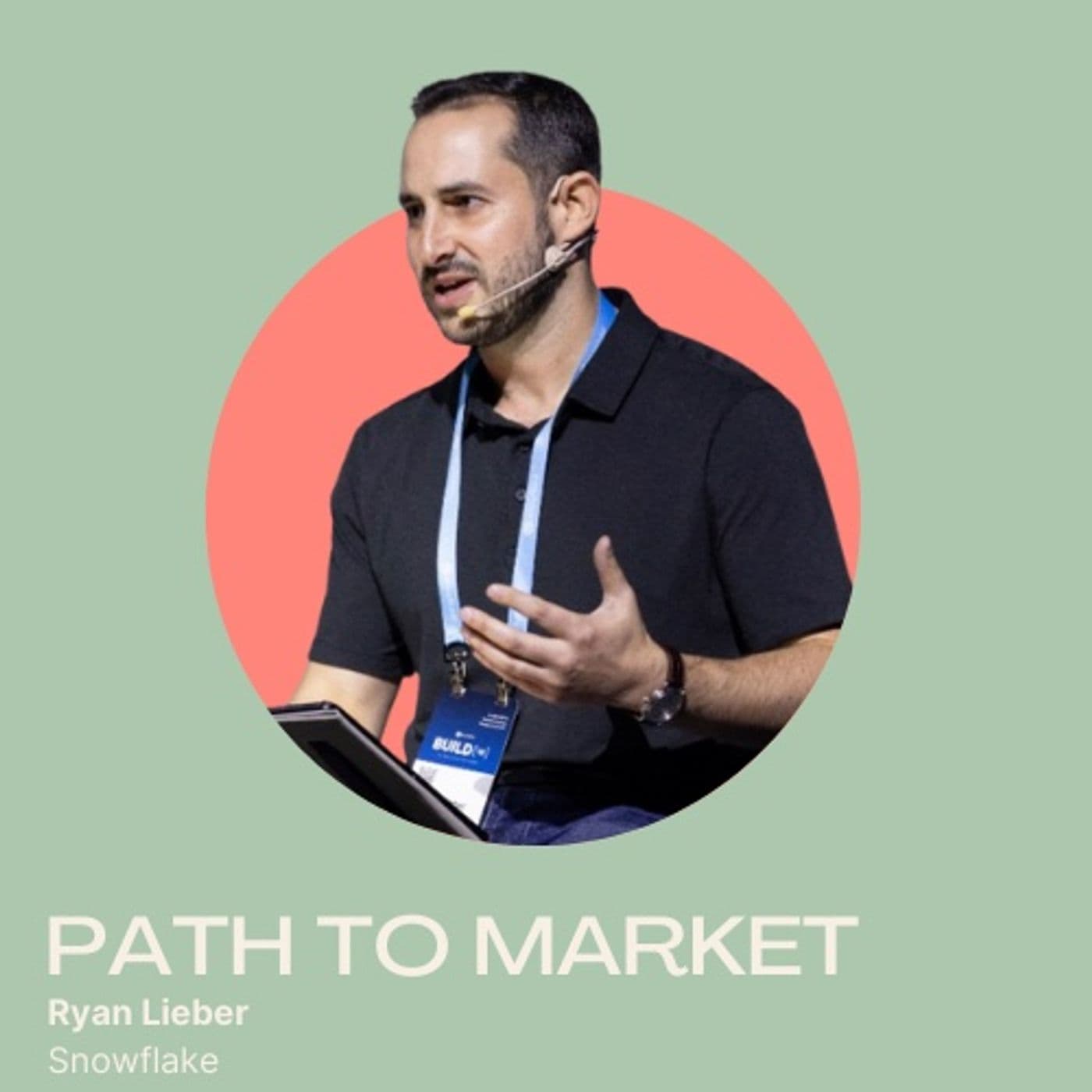
- Guest: Ryan Lieber, Go-to-Market Leader at Snowflake
Episode Overview In this episode, Ryan Lieber, one of the first employees at Snowflake and its first Sales Development Representative (SDR), discusses the impressive growth of Snowflake from a little-known startup in 2014 to a data powerhouse with over 7,000 employees and a market capitalization exceeding $50 billion. The conversation covers various topics including sales methodologies, the challenges of category creation, the importance of hiring sales teams correctly, and effective go-to-market strategies.
Key Topics Discussed
- Snowflake's Journey
- Joined as the 40th employee in 2014 when Snowflake was still in stealth mode.
- Responsible for defining the sales strategy and market outreach in Europe after relocating to London.
- Snowflake's growth metrics:
- Over 10,000 customers.
- Q2 revenue run rate of $3.5 billion.
- Challenges of Category Creation
- Emphasized the necessity of being different—not just better—in a market that was not yet established (cloud data warehousing).
- Importance of evangelizing the product and overcoming skepticism from potential customers.
- Early marketing messages that highlighted speed and flexibility compared to traditional competitors.
- Sales Methodology: MEDDPICC
- Introduced as a framework for qualifying deals and moving them through the sales cycle.
- Acronym breakdown:
- Metrics
- Economic buyer
- Decision process
- Decision criteria
- Pain
- Paper process
- Identify pain
- Competition
- Champion
- Hiring Sales Teams
- Recommended hiring the first SDR early to relieve founders from cold outreach, allowing them to focus on product development.
- Desired traits in SDR candidates:
- Competitive mindset
- Growth orientation
- Coachable attitude
- Curiosity about the customer's business.
- Sales and Marketing Alignment
- Stressed the importance of having a strong marketing leader to unify the company's brand message.
- A coherent message across all platforms enhances brand recognition and trust.
- International Expansion Strategy
- Importance of understanding regional cultural nuances for effective sales communication.
- Recommended identifying core markets for initial expansion.
- Suggested utilizing local systems integrators (SIs) for regions where direct presence is not feasible.
- Mistakes to Avoid in Expansion
- Avoiding exclusive arrangements with resellers that limit growth potential.
- Ensuring that the market is mature enough to support the product before placing sales personnel.
- Current Role at Snowflake
- Leading Snowflake's startup program aimed at helping data-intensive startups succeed by leveraging Snowflake's infrastructure.
- Providing resources and connections to help startups scale effectively.
Key Takeaways
- Sales Development: Hiring SDRs early is crucial for freeing up the founder to focus on product development.
- Sales Methodology: Familiarity with MEDDPICC can significantly improve sales efficiency and success rates.
- Cultural Sensitivity: Understanding regional differences is vital when expanding into new markets.
- Marketing Alignment: A unified marketing message is essential in fostering brand credibility and awareness.
Conclusion Ryan Lieber shares valuable insights into building a successful sales team and navigating the complexities of market entry and scaling. His experiences highlight the critical importance of strategy, cultural awareness, and team roles in achieving sustained growth.
---
For more insights and to stay updated on European VC, follow EUVC on their [website](https://eu.vc) and listen to the full episode for a deeper dive into the discussed topics.
Written by AI. May contain mistakes. Listen to the episode to check what was said.
Transcript
Automatic transcript. May contain errors.0:03If you're a category creator, you really do have to be a zero to one. Your idea has to be differentiated. It can't just be better. Snowflake, we were truly different from what was on the market. Welcome to Path to Market, the podcast where we unravel the art and science of go-to-market strategies for startups and scale-ups. Brought to you by Natasha Lytton from SeedCamp, the day one partner for Europe's most exceptional entrepreneurs, and Micah Smirthwaite, seasoned investor and sales leader. This series dives deep into the challenges, opportunities, and insights that to find a company's journey to market success.
0:37Together, Natasha and Micah will share their own learnings, uncover practical advice from seasoned go-to-market leaders, and dispel the myths surrounding what it really takes to master go-to-market. So whether you're a founder, operator, or investor, this series will empower you with actionable insights to navigate your path to market success. Let's dive in. We're really excited today. Natasha and I are going to speak with Ryan Lieber. Ryan was early at Snowflake. He joined in 2014 in California as the 40th employee and was the first SDR. He then relocated to London to help build out the EMEA go-to-market team.
1:16And if you're not familiar with Snowflake, today Snowflake has storage and compute resources that businesses use for a variety of workloads from data integration to business intelligence. But what's remarkable is the size and scale of Snowflake. They have over 7 ,000 employees. They closed Q2 with a revenue run rate of$3.5 billion, over 10 ,000 customers, and a market cap of over$40 billion. And that's today. But Ryan joined when it was 2014. Prospects didn't know what Snowflake was, let alone a cloud data warehouse. And he was the first SDR. So Ryan, can you share with us a little bit what it was like in the early days to join a small company and some of the responsibilities you've had along the way?
2:06Yeah, happy to. And I guess, well, first off, thank you very much for having me on, Natasha. I'm really excited to be here and share those early day stories. is maybe before I get there, I'll just talk about how I ended up at Snowflake in the first place, because I think that's probably the most common question I get. So if you go back to 2014, I graduated from University of California, Santa Barbara in California, and I always wanted to work for a startup. So one of the degrees I did was technology and entrepreneurship. I knew I didn't want to work for a big company because you would feel, at least for me personally, I didn't want to feel like a cog in the machine.
2:45So graduated from Santa Barbara and then moved back up to the Bay Area where I'm from and used a recruiter in order to get into startups because first job, didn't even know how to contact a startup really. And she sent me four companies. I won't list the other three, but one of them was Snowflake. And I didn't know what a cloud data warehouse was. As we'll get to, it really wasn't even a true market yet. that they were based in San Mateo, California, which if you're from California and you're young, you want to be up in San Francisco. You don't want to be living down in San Mateo. No offense, San Mateo.
3:18It wasn't the cool place to be at the time for a younger individual. But what did catch my attention was Bob Muglia, who was the CEO at the time. And if you know anything about Bob, he was the third most senior person at Microsoft. It was him, Steve Ballmer, and Bill Gates. So to know that he ran their SQL server,$16 billion business, and then went to a small startup. That's what ultimately grabbed my attention. And yeah, I went to apply and fortunately got the job. I can share a little more about that interview process later. But yeah, joined 40th employee. And what was really exciting about it is we were a small company, even though 40 employees, it feels like a larger number than it was.
3:57But 40 is not a big number when you get there. And right when I got to that environment. You could tell they know what good looks like. It was a lot of industry veterans, someone with my first job. It was high pressure. Not that anyone was placing the pressure on me, but when you're around great people, you want to be able to execute. And being their first SDR, I was effectively the guinea pig. It's what they called me at the time. And because we didn't have an SDR, we didn't really know any outbound. We didn't know our ICP. We were still in stealth mode, so there's no website. So it was a lot of trial by fire and trying to learn on the go on what is our correct messaging, who's the right personas, what use cases should we even go after.
4:35And we really didn't know any of that at that particular point in time. So I'm sure we'll touch on how that evolved a little bit later. I'm sure in those early days, as you're building a process and playbook, it's a lot of experiments and then you codify what works and turn that into a process. And then can you talk about over the last 10 years, some of the other roles you've had? Yeah. So it went from an SDR. And then I think what's always been fun about Snowflake and to their credit, they've always effectively let me create my next role. And I think that's really important for startups is that you provide career opportunities for individuals at the organization, no matter the seniority level.
5:14Because what do they say? They say you leave your manager, not a company. And if your manager is not helping you create career opportunities, that's pretty stifling and motivating. And that's one of the areas which effectively led me to be at Snowflake for a little over 10 years now. There's always been an opportunity for career growth. Moved from SDR to senior SDR, which I just got a pay raise. There wasn't any more responsibility. And effectively at that time, then we said, hey, we need to create an inside sales team. We had a few people from account executive perspective who were in the field, but we really didn't have anyone just to go after those more midsize accounts who didn't have any experience.
5:49So I became our inside sales of Director East. They didn't really care what our title was. It was, you know, seem bigger than you are. And that was our motto at the time. In late 2016, our CRO, Chris Dugnan, effectively said, hey, we're going to open operations in Europe. If someone wants to go, there's going to be opportunities. So I created my business case. I asked Chris for a meeting. Chris was my initial manager at the time. And I said, hey, I want to go to London. And he said, you can go. and that was pretty much the conversation and then I asked him if I could you know still I put a lot of effort into this business case can I at least share it with you moved to London in March 2017 we had four of us there on the ground on that day and I think it was like March 13th or or 14th and that's what I call my x-factor year because I did sales worked events ordered catering I was our IT person in Europe it's the only job that I wanted to get fired from I was the worst IT person and people would join and not know that I was actually in sales.
6:49And they'd be like, wow, this IT guy is actually not very good. And he doesn't know a lot about Apple laptops. And people would have to politely inform him saying, Ryan doesn't actually do IT. He's just the only person in Europe who actually knows how to set up this laptop. And late 27, early 2018 was when I'd say life changed a little bit, which is when we got our first inbound lead from Israel. And they said, Ryan, why don't you cover it? And that was the beginning of a really fun, but challenging career journey opening Israel for Snowflake. So I did that for three years until we had about a$14 million business and 2021 passed it off to a local team because it got big enough at that point in time.
7:28But just for anyone who's joining a startup, I did partnerships in Europe at some point in time, as I mentioned, IT, catering, they still say my greatest legacy will be getting us a free delivery for the office. So I'm not sure I'll ever beat that, but it was just, I guess, It's a lot around just staying flexible. And if you're going to grow with an organization, you have to be willing to wear multiple hats. That really is the beauty of working at a startup. There is more work to do than there is people to do it. Then there's always that tension point, isn't there, where you're used to running kind of all these different areas.
8:00But then there's a maturity level that kind of comes in and actually you start having to put people in place. It was really interesting hearing you speak because there's always we want to be so intentional, right, with how we scale up the business, with how we launch international. But your story is a perfect example of actually a lot of the time it's opportunistic and inbound things come in and not necessarily what you're anticipating. And you have to jump on opportunities as and when they arise. And I'd say, yeah, one other learning there, especially if you're an early employee in sales, your territory only gets smaller.
8:32And you have to, I think, really be selfless and recognize that, yes, your territory is getting smaller, but ultimately adding more people to your territory is going to help from a brand awareness standpoint. More people are going to actually know about your business because you've got a double the amount of people trying to educate the market. And you do see salespeople who get territorial who don't want additional people added. Or yes, there's a moment of saturation, but I think when you're that small, you want more salespeople because ultimately they're going to help with the greater message of the company.
9:00So I used to have the whole world for sales and so I've always just gotten smaller from there. It can only get smaller when you have the whole world. system. Yeah, exactly. I want to sort of rewind a little bit and go back to some of the early days. And you alluded to it a little bit, which was really interesting that when you joined 40 people, there wasn't actually any understanding yet of ICP, but they were still making a decision to hire an SDR and someone they wanted to figure it out. So where was the responsibility of when you think about the responsibility of finding customers for a new company category?
9:33And with category creation there's such a large amount of education and skepticism can you talk about how you guys at Snowflake approached that as you said you didn't know what a cloud data warehouse was when you started out so for any startup founder or teams who are trying to build in a new category do you have any guidance that would help them yeah when I initially heard about Snowflake I was doing that research you couldn't google cloud data warehouse because nothing even popped up on google and if you looked up data warehousing, it was very boring. And I was like, I can't believe this is the company I'm going to apply for.
10:09And it just shows almost how immature the market was back then and how much actually needed to be created in order for Snowflake to really be possible and exist. If you look at the category creation side, yeah, when you don't have a working website, I think all it said, it was faster than Teradata, more flexible than Hadoop. And there was one other line I can't remember, but you couldn't click on anything. Why would anyone know what Snowflake is? So in those early days when you're a category creator, a lot of rejection, which ultimately means there's a lot of evangelizing, a lot of learning reinforcement.
10:39And the most difficult part about being a category creator is overcoming misperceptions and fear, particularly if someone's worried about their job. Since we were a cloud data warehouse, naturally our kind of enemy at that time, which we had to discover, we didn't know who our enemies would be, but it was individuals who were managing on-premise data environments like Teradata and Natiza, SQL Server. When they have a cloud data warehouse, they immediately get scared. It's like our day in AI. Some people worried about their jobs. For us, these on-premise DBAs, they were worried about their jobs.
11:11And a big part of our rule was to share with them, this is the future. These are the benefits. But also people didn't trust the cloud in 2014. They didn't know where the cloud was. I didn't even know it was in what US West is in Oregon. I was actually a little bit disheartened when I I figured out that the cloud was a physical data center somewhere. So educating people around actually the cloud is a lot more secure than you managing it yourself. And what we had going for us is if you're a category creator, it kind of goes back to that Peter Thiel, where you really do have to be a zero to one. Your idea has to be differentiated.
11:47It can't just be better. And Snowflake, we were truly different from what was on the market. You can tell something's different by the questions customers ultimately have to ask. And fortunately, we were also very innovative with our separation of storage and compute. And that was the messaging we, through our education, that we were going to lead with. Back to your question around ICP. We did, shame to say it now, a lot of spamming at the time, sending up thousands and thousands of emails to go out before I went home. And poor people who are in our CRM because we didn't have a Salesforce administrator.
12:18So poor Joe Johnson was in our CRM four times. We get four emails from me and I would not get very nice messaging back from him. So there was a lot of inefficiency with our outreach. But ultimately, after sending these thousands of emails, we were getting responses from ad tech companies, media, and gaming. And what we figured out was, one, these companies were more innovative. They didn't have as much technical debt. And two, they were getting a lot of semi-structured data. So JSON, Avril, XML, Parquet, Clickstream, which no other platform at the time could really ingest. And this is how we found our ICP.
12:53we really took signals from the market and who was actually responding to us. And that's how we got our first customers. It was White Ops, which is now human, still a customer today. And oh gosh, and one other ad tech company. That's what we then honed our messaging on. Because at that time, we didn't care about the deal size. We just needed happy, referenceable customers. And especially when you're a category creator, it's really an education sale to begin with. And we knew if we could just get them to the demo, they were going to see the promised land and we were going to be golden. It was truly differentiated.
13:25So we got to the demo. They were like, wow, I think I heard them call it black magic about three times, which I was told by more senior people, Ryan, this doesn't happen. Data engineers who believe in science don't call technology black magic. That's when you've got a really exciting feeling like we are on to something here. I know this is probably a long-winded answer, but I'd say there's one more famous line which one of the early sales guys told me and he said, Ryan, it's not our job to sell the religion and the Bible. And what he meant by that was, it's not our job to sell the religion in the cloud.
13:54If a company doesn't believe in the cloud, they're definitely not going to move their data to a cloud data platform. So we need to go after companies who already believe what we believe, and they're already open to the cloud. They already trust it. If you don't believe in religion, period, you're probably not going to go after Buddhism, Christianity, you're probably not going to be open to it. And that always stuck with me. And that's always what I tell founders is you have to go after people who already believe what you believe from the technology perspective. I think that's great that you ran all these experiments and you were able to find these people who had the religion of the cloud in these few verticals.
14:26And as you ran all these experiments with your thousands of outbound emails and started to get sales opportunities, that's how a sales process gets codified is you just take those experiments and you start to run them and that becomes the playbook. In the early stages of a company and when founders, before they have a salesperson, they often are doing a lot of the sales themselves. And one framework that I know you use at Snowflake is MedPick. Many founders, technical founders may have never heard of MedPick. So can you talk a little bit about what that is in terms of the sales process and how MedPick is used at Snowflake?
15:05Yeah. So we got, I'd say lucky there, where John McMahon, who was the head of our board, was I think the founder of MedPick or one of the kind of key pillars of it. So we really got it ingrained in our business from day one. And if you're not familiar with MedPick, it's a sales methodology that helps qualify deals and help move deals through the sales cycle. And it stands for metrics, economic buyer, decision process, decision criteria, pain, paper process, identify pain, competition champion. And I think I mentioned it twice in there, but you got the gist of it. And when I meet with founders, I'd say that's probably the number one piece of advice I actually give them is I ask them if they know MedPick, particularly if they're doing founder-led sales.
15:44More often than not, they don't. And I advise them, look it up because it's really going to help them qualify their early engagements and close them at a much quicker rate. And the big aspect of MedPick is you want to help increase your chance of closing while decreasing the risks associated with deals. And if you don't know the letter of MedPick, then that's a big red flag in actually being able to successfully get that deal done. And from a founder perspective, if they're hiring a salesperson and they plan on being involved in pipeline review, QBRs, and they're asking questions, the sales team is going to have a lot more respect for them if they know MedPick.
16:18There's nothing worse than having a founder who doesn't know sales who wants to be involved in sales, but hasn't taken the time to learn it. Yeah, that's been involved since Snowflake at day one in our QBRs. In MedPick, it's the methodology. I think anyone can learn it. It's not rocket science. But if you do see it get it commonly messed up all the time, but you make every mistake once and then you learn from it. Yeah, it's funny. Sales is art and science and MedPic put some of the science behind it. And it's as simple as when a founder will tell you, hey, we're talking to X company. And you say, okay, well, is that person the champion or do they have budget and economic buyer?
16:55And just the simple questions of framing who are all the stakeholders in a buying process can really help close a sale and advance it along. One question about selling as a team, and you're not just the salesperson, but having technical buyers wanting to buy from technical counterparts. And so as a salesperson, you may engage with engineering product, your marketing counterparts, even some of the founding team. Can you talk about how to include these cross-functional teams into a sales process? Yeah, I think especially in the beginning, selling those early deals, it was very much a team effort.
17:32And before we were trying to acquire first customers in stealth, it's, yes, they have to believe in our technology, but they also have to believe in the vision of the company and where we want to go, which is why it was important to not just have the salesperson and our sales engineer, but we would get our CEO involved, who could really provide the credibility of what Snowflake was then and where we're going to be in the future, but also because people didn't trust the cloud, we would actually get individuals on the call who created Snowflake's security systems. So they could really walk them through and make them as comfortable as possible what we've implemented from a security perspective.
18:08With those early customers, obviously we want to make them happy reference customers. So we bring in the individuals responsible for marketing. So we could share them, hey, if you adopt Snowflake and you leverage it XYZ way, here's actually how we want to develop a more strategic partnership with you. So it was really important to get all these different individuals involved. And I think at any stage, it takes a village to close a deal, especially when you're a small startup and you're willing to show the faces of these really valuable people at your company to a prospect. It definitely means a lot to them, especially as you climb up that ladder, because typically we weren't engaged with the decision makers in these early deals.
18:45It was the technical people, someone who was maybe a coach who we wish would become a champion, And if you put it in MedPIC terms, and once we started getting up the ladder to the decision makers, that's when we really like to engage our CEO who could bring that gravitas of coming from Microsoft, having real experience in the space. So he could have that kind of leader to leader conversation. Was it at different parts of the sales funnel that you'd kind of interspersed those people? Because that's a lot of different people, right? I totally get and can see the value in having all of those different counterparts, whether it's marketing, security, CEO, et cetera, coming in.
19:19But how did you break down like almost when best to play that person in the various stages of your sales process? Yeah, I think it really would come in as we would put the proof of concept or MVP together, because obviously you don't want them involved too early because then they've got their day jobs as well. So you really want to bring them in when the deal is qualified, I would say, and the customers bought in to actually trialing out Snowflake. And as you go through and put that evaluation together, say security is going to be one piece of it. okay, well, if security is going to be a piece of it, let's get your SOC or security team or your CISO on a call and we'll arrange a call with security person.
19:56And as you mature through the deal process and it gets more, you start taking off the required capabilities and you really think it's going to go more towards a deal. Then maybe that's when you bring in marketing and say, hey, this isn't just about the technical aspects. We're really looking at this from a partnership perspective. So it really depends on, I'd say, yeah, the maturity of how that deal is progressing. and as you get more towards the decision maker level, more towards a contract, maybe that's when we bring in our CEO at the time. That helps answer the question. Definitely does. Thank you very much.
20:27I guess on that, it'd be really good to delve deeper into all things hiring because, you know, not everybody is fortunate enough to find a you. And obviously you joined Snowflake relatively early in your career and you've been able to build an amazing career there. For founders looking now to hire somebody and start making go-to-market hires, when should they be looking to bring on an SDR? At what stage does it make sense? And also what's the job spec? What realistically do you want this person to be doing and how do founders go about finding these holy grail people? Yeah, I think you probably hire an SDR earlier rather than later because one, they're not that expensive to begin with depending on, I guess, the amount of funding you have.
21:12But also they take so much workload off of that founder's plate. Because one of the hardest parts of a founder, I think, is particularly if they're technical, is they're trying to build a product. And if you're building a product, you want to be in that flow state from a coding perspective. And you have to get out of that and also then think about cold outreach. That's a really hard balancing act to do as a founder, given the other million tasks that you have at hand. So I would say actually bringing on that SDR earlier rather than later. It's funny when I got that job spec for Snowflake, you know, cloud data warehousing, I didn't know what a data warehouse was.
21:43So I messaged my friend who did computer science and I said, Hey, I'm looking to apply for this cloud data warehousing. And he just responds back saying, you have no business applying for a cloud data warehousing company. You don't even know what it is. And I thought that was really funny. So I told the recruiter, yes, I want to apply. And then I started my research on what was the data warehouse to begin with. So I went into that interview. And I started to waffle about what I thought a data warehouse was. And Chris just stopped me. He's like, it doesn't matter. Stop trying to tell us what a data warehouse is.
22:15You can learn it. What they were really curious about more was my character. Who was I as a 22-year-old coming out of school? Really digging into what sort of challenges or obstacles did I have to overcome in life to that date? And not really what were the obstacles, but also how did I put myself in the best position possible to overcome those. Because that's what really sales is, is you get a target and then it looks very daunting. It happens at the beginning of every quarter when I'm sure Micah remembers it from his sales days, you get a number and you say, how the heck am I going to hit that?
22:45And you've got about 10 minutes of sulking. And then you say, okay, well, I have to put myself in the best position possible to achieve it. And that's really what an SDR has to do on a daily basis. So I'd say being able to put yourself in the best position possible, but then looking at different personality traits, I'd say, yes, you see a lot of athletes in sales. But I don't think it's just athletes. It's just individuals who are hyper-competitive and hate to lose. And that can come in many different aspects. And that's a really key component of an SDR, someone who's not content with not hitting your quota meeting for the week.
23:18But the other part of that is having that growth mindset saying, well, if I need to get six meetings a week, I'm going to shoot for eight, bringing that positive energy because you're just getting kicked to the floor every single day. You're lucky if you can make 100 calls and you set say one meeting that would be most people one to two meetings that's a happy day and you really need to be able to create that positive mindset and at that age you need to be coachable because you don't know anything so you need to have i'd say positive managers people willing to dedicate the time but you also have to soak in what they're telling you and be able to apply it quickly and the last part i say being curious because really being an sdr is just about asking questions and making the customer feel like you want to understand their business better and then be able to put it in a format where your technology can actually solve their business pains.
Read the full transcript
24:04So interesting and so many useful insights and things to take away from that in terms of even just questions you should be asking when hiring people in these roles, right? Less about the technological depth of your understanding, but actually interrogating their mindset and how they're overcoming adversity. Thinking about maybe when those hires haven't always gone right, or you haven't found necessarily the right people? Do you have any red flags you can share with early salespeople who perhaps didn't work out? Yeah, I have to. And it's funny thinking back now that I was 23 years old by getting pulled in to interview a 30 plus year old AE applying for the role.
24:43But I'd say, yeah, I think two red flags probably come to mind. And maybe it's less with SDRs and actually more towards AEs, where if you're looking to hire someone for sales and they come in and they really start talking about the great network and contacts that they have, I think it feels like nine times out of the 10, those contacts dried up immediately. Or if they were coming from someone who, from a field, which wasn't actually relevant to Snowflake, they call up that individual and they say, well, I worked in CRM. Like, no, I actually don't know anyone on the data platform side. So I'd say people who really talk about their network.
25:18And if they talk about their networking contacts, I typically saw that associate with them not being open to actually prospecting and doing cold outreach because they did that at their last job and they felt like they built up this contact base and they don't need to do it again. So I felt like that was, I'd say a big red flag and oh gosh, what was the, well, well, I'll add one. And I agree with you. The Rolodex based salesperson, as you said, there's a time decay on these networks. They may not be hungry. And if hunger and grid are a key component of the job, maybe they don't have the fire in the bell anymore.
25:53I would add a red flag for me was simply quota attainment. And if you ask a salesperson, hey, how'd you do in your last job? And they said, I always achieved over my quota. Well, you have no idea what the conditions were behind that. They just have a great territory where they had bad teammates and they stole deals from their peers. And so yes, every good salesperson should hit their quota. That should be table stakes, but no hiring manager or founder should have stars in their eyes for someone just because they overachieved their quota. It can be a misleading indicator. True. And I know that's extremely true.
26:30I can say I never got a deal given to me, unfortunately, in my entire time, which also comes when you're on the leading edge, there's nothing to get given to you, which is the downside of it. But I did remember the second red flag. And this is, I think, really common for founders who are trying to hire experienced salespeople where they come from big companies, or they come from companies that have brand awareness and name recognition. Because if you come from, say, Stripe, and you're going, you joined Stripe later, come from a big company, you're actually going to a very small payment startup now.
27:02You go and you say, oh, what do you mean they don't know who we are? They're not going to answer our emails right away. You don't have any brand recognition or name awareness. And maybe they're also not used to wearing multiple hats because the larger company gets, the more specialized your role gets. So making sure that if you are going to hire a more experienced salesperson, and say you're a pre-seed or seed startup, that they've already worked in that type of environment before. They're used to not having any marketing resources. They're not used to anyone knowing who they are. And they're used to dealing with, you know, maybe lack of a bit of chaos of the role and being open to wearing multiple hats.
27:35That's a really common mistake that I even saw in our early days where, you know, you hire someone, say, from Oracle and they're joining Snowflake and no one knows who Snowflake is, but everyone knows who Oracle is and they're not used to proving that our company is reputable. For sure. Someone who was effective in a resource-rich organization may join a resource-constrained organization and say, where's marketing to help me with a webinar? Or where are my training videos? And you say, hey, this is a startup. You have to build all that yourself. We all have multiple jobs. If a founder had just hired their first AE and first SDR, what kinds of metrics would you recommend that founder to put in place?
28:14Would it be calls booked, pipeline, qualified meetings? What is a qualified meeting? What are some of the metrics founders should be keying in on? Yeah, I'd say from the SDR side, there's probably three buckets. There's, I'd say, activity-based metrics, then you've got lead and quality pipeline metrics, then conversion metrics. So you mentioned one of them, activity-based metrics. You want to find that balance of velocity and quality because you don't want to spend 30 minutes writing every email. Most often not, that person's not going to respond. So you need to find that correct balance. So keeping track of how many cold calls you're making, how many emails you're sending, let's say how many messages you're sending on LinkedIn, finding that right balance, particularly in Europe where it feels like every country, I'd say, has their own nuances in terms of what mediums they like responding on most.
29:03So I'd say that's a really important aspect to keep in mind. And if you're a startup and you're fortunate enough to have inbound marketing activity going, having like a 40-hour SLA where if an inbound need comes, you make sure you respond within 48 hours. Otherwise, that person may completely forget what they actually filled out. And I'd just say on the activity-based side, making sure that SDR is already efficient with their time is probably the most important aspect to it. and one I'd say habit that we found helpful was setting blocks of like two to three hours. Where two to three hours, there's a very common theme for your pipeline outreach saying one, two to three hour, you're just cold calling a particular persona in a particular industry.
29:47And that way your mindset and your talk track is solely focused in that area. If you're bouncing around to different news cases, industries, I'd say personas all within the same timeframe, that's really hard to keep track of. So I always advise SDRs to make it easy on yourself. Find a common pattern for your outreach for that particular day or that particular block of time. If you're just going to email for two to three hours, great. Set up your cadences for a specific topic during that time. Otherwise, you're trying to keep track of multiple talk tracks, arguments, rebuttals, challenges in your head.
30:19So make it easy on yourself. I'd say on the second point, just kind of lead quality and metrics or pipeline metrics. If you're a small startup, you don't really have a CRM. So you really need to build that out and keep track of how many contacts is your SDR adding to that CRM per day. And similarly, make them focused on a particular industry and titles that they're just going to go after. If you're developing a front-end analytics tool, you're just adding BI managers for that block or period of time. But you talked about qualified meetings. I think that definitely does change as you mature as a company.
30:52When we were in stealth, from an SDR perspective, we had to set six, I'd say, qualified meetings per week. And qualified meant anyone who was within the realm of data. It was very broad. And at that point in time, we just wanted people to listen, to hear about Snowflake, give us their feedback. Maybe it would lead somewhere. And if anything, we learned more giving those pitches at that point in time, because we got to hone our message. We could see what resonated, what didn't. And we weren't going to be landing the top prospects at that point in time. So I think it's really important just to be having conversations.
31:29Once we went more towards GA, that's when we shifted towards sales qualified opportunities set of meetings. So we actually got a lot more focused and specific with who are we actually going to qualify as meeting? What were we going to pay SDRs on? And it wasn't just going to be, you said, a meeting with Joe XYZ from a consultancy who will never be a potential customer. It was, no, you actually have to set someone within a relevant industry and they will pay you if they've got budget, relative position of authority, and a timeline. Those are really the three criterias and how we said, hey, this would be a sales qualified opportunity that we would then pass to in AE.
32:07And I'd say one other metric just on the pipeline metrics is just show rates. Because when you're cold calling, the show rate is a lot lower because you're more or less maybe bullying someone into saying, yes, I'll have a meeting with you. So really keeping track of who's actually showing up to those meetings. And then just the third, I mentioned the three buckets, I'd say like lead conversion. So lead to opportunity conversion rate. How many of the leads which you're actually setting up for your AE are converting into opportunities? And if it's a really low rate, then maybe you're not aligned on what's the correct persona that you should be targeting.
32:38If it's high, great, high alignment with the AE and you're targeting the right individual who actually has a project that's relevant for your particular company. There's so much that you just said around show rates, activity blocks, lead qualification being so broad early just to hear the voice of potential prospects and then dialing it later as you get sales qualified or SQLs. There's so much there to put that founders can use to put in their early stage sales teams. One other question that founders have and they get conflicting advice is when to bring on the sales leader or senior hire. One school of thought is bring on someone who's been there and done that.
33:20And the other is, hey, bring on the more junior person who punches above their weight and then layer over them as the organization scales. Snowflake has a unique story in that one of your first sales hires and VPs of sales, Chris Dignan, is now the CRO. So how do you think early stage founders should approach making their first senior sales leader hire? Yeah, I think Snowflake did it really perfectly with Chris, where they brought in someone who had strong sales experience, but was also someone who really wanted to get their hands dirty in the sales process. And someone who was very humble, still coachable, and wanted to be involved in the action.
34:01They weren't above cold calling, trying to set meetings on their own. And then they let Chris evolve into becoming our CRO. He's done a fantastic job. And I really don't think you want to bring in someone who's going to come in and be the CRO. And then they're going to bring in people below them, because ultimately it may lead to that particular persona sitting in an ivory tower and being above picking up the phone and calling, actually reaching out to people on LinkedIn, writing cold emails from scratch. I think if you want to get the best bang for your buck, You hire someone who will do that work on their own and then let them progress and earn the title of CRO one day.
34:38Sounds like a player coach more than just an architect. Yeah, absolutely. Because also at that early stage, money is tight. Do you have the funds to hire a CRO and a senior salesperson? I think you're better off going with someone who's not afraid to get their hands dirty, has sales experience, and then maybe augment that with an SDR. Great advice. It sort of leads back to what you were discussing earlier and where I totally agree, right? Like the tendency or temptation to chase down the big logo, but is that big logo going to get their hands dirty and operationally be producing what you need in the realms of a small company is just really critical.
35:13So where would you see this in the early stages without that senior person? What would the reporting structure look like? Is this person reporting into the founder, these SDRs? Yeah, so I'd say in the early days. So yeah, I reported directly in to Chris. And then it wasn't until we probably had about maybe four of us or five of us where then we put more of an SDR manager in place. So that was the reporting structure at the time. Pretty much everyone went to Chris and we had three outside salespeople all reporting to Chris. We were pretty a small organization at that time. Makes sense because the founder still has to be so close to what's going on in all things sales.
35:51I want to sort of broaden it out a little bit, sales scaling and how sales work with marketing. So if you had one piece of advice for a founder managing the transition from those early stages where everyone's hustling, not necessarily these defined roles, how can you create, once you have product market fit, a highly repeatable and scalable go-to-market strategy? What was the one piece of advice you would give to any founder managing this transition about how to go about that? Yeah, I would say don't underestimate the power of having a strong marketer on your team. That made a world of difference to us when we brought in Denise Pearson, our CMO, and I think she joined in 2016.
36:35And one of the first things that Denise did when she joined was she wanted to understand how were individuals portraying Snowflake? What sort of brand were we putting out there? And through her research, she quickly realized that we were all telling a slightly different story, or all of our sales decks were different, or marketing were different, fonts were different. And if you put yourself in the shoes of the market, how on earth are they going to know who you are if they're getting different messages left, right, and center around what Snowflake is? So what she really did, which was genius, is she really got the company together on one unified message, which was incredibly important from a go-to-market perspective.
37:12So we were reinforcing the same message across all of our different mediums. And I would recommend that any founder, once they get past that stealth, or even in stealth, if you can't afford a marketer, don't underestimate what they can do from a brand awareness perspective, but also just a messaging alignment approach. That makes total sense. The power, as you're running all these experiments and everyone has their own messaging, you have to figure out which experiments work and get everyone on the same page. and in a healthy organization, marketing and sales are together and have a unified front externally.
37:46On the same topic of scaling, not only with marketing and other roles internally, but scaling internationally, when you moved from California to London to set up the EMEA operations, certainly not all the best practices were codified. And when you came up, I'm sure there were challenges and I'm sure there were things that you guys got right. So when a founder starts thinking about opening their second office, and if it's in another country, what are the critical things that they must do to set up the team for success? What are key mistakes they should avoid? Yeah, I'd say probably one of the first things that I did was when our VP of me and I got here, he told me about this book called The Culture Map, which if you haven't read it, I think it's relevant for everyone, which is really all about understanding how different regions communicate.
38:32And that was really important for me at that time because I was covering pretty much Europe and Europe and then I would still get stuff from Asia as well. And really understanding what are the difference in these high context, low context cultures like the UK and Nordics are very low context where, believe it or not, UK is low context where what they tell you is what they mean. There's not a lot of like nonverbal cues. If you get to like Southern Europe or Meta, it's very high context where they'll tell you one thing, but there's a lot of subcontext or body language to what they actually mean.
39:05And that's incredibly important in the sales process. And if you're oblivious to these signs, you could completely misunderstand how well you did during a sales meeting. So definitely a big piece of advice, understand how each region communicates. Particularly for Europe, our strategy was we want to put people in our core market. So we put someone in the UK, France, Germany. And just back to your question, I'd say identify your core markets and put someone in those regions. There's definitely markets in EMEA where they don't have to be as high priority or maybe they're more used to buying over the phone.
39:41I'd say Israel is a great perspective where I work that region remotely for three years. We were highly successful and it just goes back to Israel. They are used to working with sales reps from London or New York. but it is different per region. So I'd say get a good understanding of how do you like to buy in those regions and are they okay speaking English? Or in a perfect world, can you find reps who speak multiple languages, which is highly advantageous and something that you should definitely look for. So those are two pieces of advice. I'd probably say the third is find trusted regional SIs or systems integrators for regions where you don't plan on putting someone on the ground right away.
40:26And this was hugely beneficial for us, particularly in the Nordics and in Israel, where Israel, we found a really trusted partner who is effectively willing to bet their next 10 years of their business on Snowflake. Because you find regional SIs who are well plugged in, they're trusted by the ecosystem, they know the competition, they know the key influencers, and that gives you a really good awareness of what is the best way to approach this market. And you have to speak with a lot of them because these are long-term relationships that you're looking to get into, and you need to make sure that there's particular synergy there.
40:59You can do these for your core markets as well. And I would recommend that any startup figure out who are those trusted regional SIs for your markets and get in touch with them and have a conversation. Maybe there's a partnership opportunity to develop. And I guess it goes back to if you want to go fast, go alone. If you want to go far, go together. I love that. There are plenty of partners who sell to buyers who just don't want to buy direct from the vendor and want to work through the partner. And those partners can truly be a Salesforce multiplier. You mentioned the mistakes. Yeah. What are some mistakes?
41:33Yeah, I definitely say on the topic of size, I'd say one mistake. I think it is different per market, but I would say in general, at least for Snowflake, not signing exclusive reseller agreements. We definitely got approached with those a number of times. Some SI would say we're the best in the region. Here are the logos we work with. Sign exclusivity to us. And we never did. And it's hard in those moments because you get distracted by the great logos. But ultimately, the best thing we did was say, hey, if you want to work with us, ultimately, we're not going to sign exclusivity. And you'll come back to us if we do our job correctly.
42:07And every time it did, they come back two or three years later saying, actually, we want to work with you guys. Don't worry about the exclusivity. So really keep your options open because you never know how a market's going to develop. And I would say the second mistake to avoid is make sure that if you are putting a salesperson in region that you're setting them up for success and that the market is mature enough and ready for them. I'd say particularly if we look to the US 2014, the West Coast and New York, much more advanced in terms of cloud adoption. We hired people for the Midwest, the South, even the Mountain West, like Colorado, those areas.
42:42And there was just no cloud adoption at that time. And it goes back to that religion and the Bible. So we put people who all of a sudden trying to tell them that the cloud was great. So they might as well have worked for AWS. But unfortunately, we did not set those individuals up for success. Not that they weren't great sales individuals or hires. It's just the market wasn't ready for them. So if you are looking to physically put a person in the market, really do your market due diligence and make sure that that particular market is mature enough for your technology. because I think that is a common trap.
43:13It's always better to sell to a market from abroad and validate that they're ready to purchase before you just parachute someone in the cold and expect them to unlock the thing. Well, so you've had a variety of roles at Snowflake and today you help run a startup program. Can you share more about what that is and how startups and founders can benefit from it? Yeah, never thought you'd ask. Yeah, I lead our Snowflake startup program. Effectively, our vision is to have the next generation of data intensive startups, all building their data applications, running their AI, ML workloads, all on top of Snowflake's data cloud.
43:47And the reason that we create the program is to really help enable and accelerate the success of these startups for when they get to that point of mass scale, fast growth. And I'd say finger in the air, probably about 60 % of the startups we work with that are coming from platforms like MySQL, Postgres, RDS, frankly, because they're really easy to get started on. But once your startup starts to scale, that's when issues related to performance, scalability, total cost of ownership, and your valuable founder CTO is becoming a DBA again. And how we help startups, we provide them with a certain number of credits, but I would say the real value is that we've got architects on our team who are designed to help these startups design their data applications or AI, ML workloads.
44:28So they are providing the best end customer experience that they can. And then we've got a number of different self-service marketing options because we want to help these startups effectively use the Snowflake brand to be bigger than they are. And that kind of goes back to what we were speaking about earlier. When we came out of Stealth, we used AWS's logo, and that provided so much validation to the medium and enterprise customers. That, oh, if AWS gave them the logo, there must be some legitimacy to what Snowflake is. And that's something that we really aim for these startups to do. And we see a lot of startups who use our logo successfully, and they use it to sell into our existing customer base.
45:04and that's a really great go-to-market mechanism for them. And also when they look to raise their next round, personally, the favorite part of my role is helping to put founders in touch with investors and get those conversations going because we speak with some founders who don't know any investors and some who knew every single one and everyone in between. So if we can help there, we're happy to. And it sounds like if any of them needs sales advice, they can come to you also. Absolutely, yeah. I enjoy talking about these early days. It gives a nice element of nostalgia. I love that you use that example.
45:33it's something I always say to startups I'm working with as well. And there's early days, you have to stand on the shoulders of giants to help lift you up when you don't yet have the brand recognition yourself. And then what you hope for is this inflection point where you can stand on your own two feet and you have that credibility and trust, but being able to leverage established brands and logos like Snowflake in the early days are incredibly valuable. I'd say within moral reason, don't let the truth get in the way of a good story. Love it. Well, this is terrific, Ryan. And there are a lot of tidbits in there that I'm sure will help a lot of founders as they build their products, scale to market, hire their first salespeople and first SDR.
46:11So thank you so much for sharing all of your experience with us. Absolutely. Thank you for having me on. Thank you.
From the publisher
Together they discuss Snowflake’s impressive growth trajectory, the challenges and strategies of category creation, key sales methodologies like MEDDPICC, the best approaches for scaling internationally, and cross-functional sales efforts. Ryan shares his experiences from joining Snowflake when it was an unknown startup in 2014 to its current status as a data giant with over 7,000 employees and a market capitalization of over $50 billion.
He also delves into when and how founders should hire their first SDRs and sales leaders, the metrics for measuring their success, and the role of marketing alignment in scaling sales. Moreover, he emphasizes the importance of understanding regional cultural and communication nuances, and how to leverage partnerships in new markets.
Lastly, Ryan discusses his current role leading Snowflake’s startup program in Europe, aiming to help next-generation data-intensive startups succeed using Snowflake’s data cloud.


