
In short
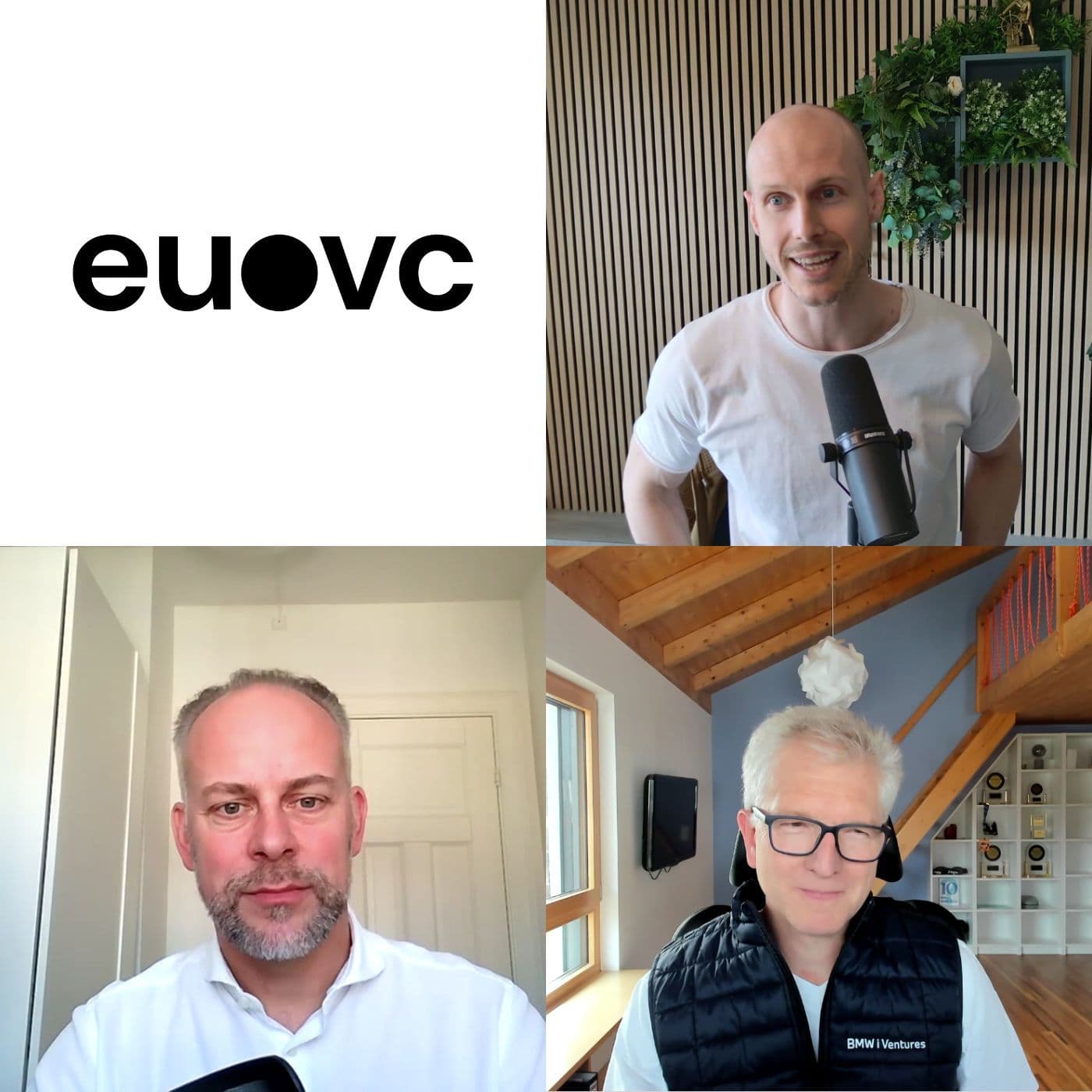
Summary of Podcast Episode: E473 | Marcus Behrendt, BMW iVentures: Hedging the Future of Mobility, One Strategic Bet at a Time
Podcast Overview Title: EUVC Description: EUVC provides insights into the European venture capital (VC) landscape, featuring prominent figures from the industry. Co-hosted by Andreas Munk Holm and David Cruz e Silva. Episode: E473 Guest: Marcus Behrendt, Managing Partner at BMW iVentures Focus: The episode discusses how corporate venture capital (CVC) can transform European industries, particularly in the automotive sector, emphasizing strategy, sustainability, and emerging technologies.
---
Key Topics Covered
- Investment Focus
- Key Areas:
- Smart supply chains
- Sustainability
- Automotive technology including autonomy and electrification
- Investment Strategy: Emphasizes direct investments in startups, primarily in Series A and B rounds, with initial checks up to $10 million.
- The Auto Industry Landscape
- Current Disruptions:
- Rapid changes due to technology (e.g., Tesla's influence, vertical integration in companies).
- The struggle of legacy auto manufacturers to adapt.
- Cultural Shifts: Corporate culture is vital in innovation; organizations must avoid the "Kodak trap," where established companies fail to adapt to new technology.
- Integration vs. Modularity
- Future Automotive Leaders: The conversation revolves around whether integrated models (like Tesla) or modular approaches (traditional automakers) will dominate.
- Corporate Strategy: Companies need to identify valuable heritage elements to maintain while innovating.
- Sustainability and Supply Chain Resilience
- Key Focus: Investments in natural fibers and rare earth materials to achieve CO2 targets.
- Circular Economy: Emphasizing recycling and sustainable material sources to bolster supply chain resilience.
- Challenges Faced by European Tech
- Legal Complexities: Discusses the challenges of operating within varied legal frameworks across Europe, impacting startup growth and investor confidence.
- Need for Cohesion: Highlighted the necessity for a unified approach to regulation and incentives to foster innovation.
- Political Engagement
- Venture Policy: The hosts discuss the importance of engaging politically to advocate for the VC industry and ensure supportive policies.
- Comparison with the U.S.: European companies often struggle for visibility and resources compared to U.S. counterparts.
- Conclusion
- Single-LP Structure: BMW iVentures operates as a single limited partner fund, allowing focused investment without the complexities of multiple LPs.
- Future Vision: The discussion concludes with optimism for the European automotive ecosystem, praising the potential in the region despite existing challenges.
---
Key Takeaways
- Corporate Innovation: Corporate venture capital can steer legacy industries towards modernization if they remain agile and culturally receptive to change.
- Strategic Independence: BMW iVentures maintains independence from corporate bureaucracy, enabling them to make bold investment decisions that may deviate from core business strategies.
- Sustainability as a Core Principle: The integration of sustainability into venture strategies is crucial for future success and resilience in the automotive industry.
- Political Advocacy: Engaging with policy-makers is essential to create an environment conducive to growth in the venture capital sector.
---
Final Remarks The episode provides a detailed exploration of how BMW iVentures approaches investment and innovation in the rapidly evolving automotive sector, highlighting the importance of agility, sustainability, and strategic foresight in corporate venture capital. The conversation encourages a reevaluation of how European startups can compete on a global scale while maintaining their unique advantages.
Written by AI. May contain mistakes. Listen to the episode to check what was said.
Transcript
Automatic transcript. May contain errors.0:00In the automotive world where Tesla, China and startups rewrite the rules, What happens when a century of expertise suddenly becomes your biggest obstacle? With all those new technologies, sometimes experience becomes a baggage. For BMW iVentures, managing partner Marcus, staying relevant means one thing. Move at a speed of disruption. We're changing our focus as fast as the industry or the development does. But in a world of quarterly pressures, how does a corporate venture fund find the patience to build what's next? We get dedicated, committed capital from a single LP, and then we're on a 10-year journey with each of the funds.
0:36The stakes could not be higher. Autonomous driving, electrification, AI, the automotive landscape faces its most profound transformation in a century. Times of things are changing, but I think the industry in itself is robust enough to take on that change. Their mission isn't just picking winners. It's architecting the future supply chain. We're building suppliers for the industry. That's a little bit our idea. And while Silicon Valley gets the headlines, Marcus sees Europe's innovation ecosystem ready to challenge global dominance. We have super universities, we have super smart people, we have actually a lot of entrepreneurs, and we do have a lot of money from early stage.
1:14Can a corporate venture firm outpace both tech disruptors and legacy thinking? Join us for a conversation with Marcus of BMWi Ventures as we explore the race to reinvent mobility in Europe and beyond.
1:30Here's a few words from our beloved sponsor. Make an impact with the bank made for the innovation economy. We always take a relationship-first approach, bringing passion, dedication and unparalleled international connections to everything we do. Our specialised, flexible solutions for founders, firms and funds are built on deep expertise that are designed to facilitate growth and enhance your prospects for success. HSBC Innovation Banking. connecting you with what's next.
2:13This show is not investment advice and the hosts of this episode may be invested in the funds and companies featured. Welcome back, everyone, to the European Easy Podcast. Today, as part of our efforts to try and bring together the ecosystem and showcase all the actors that we have here, we are bringing on another CVC podcast, of course, with Jabe as always, and this time also with Markus Behren, managing partner of BMW iVentures. Jabe, would you maybe say just a little bit about why you're excited to bring our dear friend Markus on the pod? I started with Maersk in 2018. My first visit to a CVC that are one of the most promising in the world was BMW iVentures in Munich.
3:02So one of my first baby steps in becoming an expert is based on the foundation that Marcus has been part of building. So again, I'm super humbled to have Marcus with us here. And I just look so much forward into learning from him and his journey. So you guys are up for a great job. Thank you so much. As we said, I'm Marcus. I have been with our fund now for over six years. But actually, I was not the one building it up. So the credit goes to the folks that admitted it. But I'm very happy to what I inherited. And we're trying to make it stronger, make it bigger and more impactful. That is our idea.
3:43If we should just recap the investment focus of you guys, you are, of course, headquartered in Mountain View in the States. And you write initial checks of up to 10 million to support Series A and B startups. You're focusing on both North America and Europe, including the UK and Switzerland. And then when it comes to the vertical, I almost want to leave that for you to cover because that's less just pure numbers than what I just said. Yeah, I'm happy to. Thank you, Andreas. Maybe one additional remark. We also have investments in Israel. Situation down there is difficult right now, but we have investments there, especially in the field of cyber security.
4:24So that is the geofence area that you talked about where our fund is active. As you said earlier, we were funded a long time ago. So in 2011, we started, but we started as a CVC, like many CVCs in the beginning, off-balance sheet investments with all the loops and hoops you have to spring through when you go and invest for off-balance sheet. You have to go through a lot of meetings. You have to get a lot of approval to your business, you're going to buy in. And in 2016, a very smart group came to the conclusion to actually change that into a real fund structure. and we see a couple other CVCs out there, but it's not too often.
5:01So we're having a dedicated fund structure. We get dedicated, committed capital from a single LP and then we're on a 10-year journey with each of the funds and we're in our second fund now. So the first one started in 2017, second, 2021. You rightly said we're interested in Series A, Series B. We've done a couple of seed investments. We also sometimes look a little later. It depends always on what is on the table, but our sweet spot seriously is series A and B. We can write up to 10 million initial checks. We always keep reserves as follow-ons because we want to really help our companies grow and become stronger over the years.
5:42And the fields, the search fields, as we call them, in which we are active is, of course, structured around automotive. It's fairly broad. So we've done some silicon investment, hardcore tech investments. We did some investments that were close to material resources. So mining, coming close to mining investment. So we're very broad. Whenever it touches the automotive realm, I say, then we're interested to take it closer. But to give you the real search fields, we do things that go into the car. So car development, we broadly call it as one of our verticals. We have a smart supply chain. everything that goes into the supply chain, smart production, and then point of sales.
6:26We sometimes call it digital point of sales because we also do fintech if it is applicable for our business, right? And underlying to these verticals, we have like horizontals that are, first of all, information technology. So we won't invest in anything that is not digital anymore to some extent, but sometimes it doesn't really fit one or two of these fields, but it's more in platform thought. it's touching more of them so then we have information technology as a as a search field and uh as the last one sustainability so we really believe in helping uh with frontier technologies to our company to achieve its co2 targets and maybe even the industry so we're looking for companies that really change the game that have an impact and try to help them grow and strive and hopefully make money with this as well awesome uh marcus just another thing for the listeners to do fund investments in BMW iVentures?
7:21So no, we do only direct investments. We do not do fund and fund investments. We have all the tools and prerequisites and the team that is capable of doing the direct investments. BMW iVentures is dedicated from the BMW group to do startup investments. We stay humble and only do the direct investment. One thing that I think is super interesting, right? So now you are investing out of your second fund and I can also see on the dates and so forth that you are in the process of your third fund in some way or form, right? But you always are, right? Everybody is, right? So if you go and look at fund one to fund two, what has changed in the investment strategy?
8:02What is new now? You know, times are changing. So in our first fund, we were at the beginning of electrification and the beginning of many of the sustainability aspects that we have. And we were not talking much about AI back then. It was just a nuance on the bottom of the page, basically, in our investment fields. And so therefore, you always, of course, because we're looking for new leading technology, we're changing our focus as fast as the industry or the development does. So if we might have looked at different things in the past, more like crowdsourcing maps. We were invested in Mapillary.
8:46The map space has become very saturated and organized and it's not so much new tech anymore, right? It's available. So now we're looking more into what I just mentioned, AI, of course, and how is AI shaping certain industries. So it's such a buzzword, but I think the application of the technology into certain areas is what is very interesting and critical. One of the investments in a very young company in the Silicon Valley is Athenic AI. So bringing AI into the business world, so not just the large language models for us when we replace it for internet search, but also in the business context based on business data tuned to business.
9:26right so robotics ai and autonomous driving is back right um so that was something that we looked at in the beginning that it kind of died down there was consolidation but there's a lot of things going on right now again in the space with the players that are still still available and are still playing and we see a lot of progress there so from that interesting opportunities will also arrive yeah that's that's my dream right to to drive an autonomous or not that's not what it's called, to sit in an autonomous car. To ride it. Yeah. Correct. Because you cannot drive it, right? You shouldn't. So I always say one thing that is very true about a VC is that we spend all our time living in the future.
10:09We're backing founders that are building the future, and we're doing that on the back of trying to live as much as we can 10 years from now, at least in our minds, so that we're then able to back those that are building that future today. I cannot imagine an industry that's in a bigger upheaval right now than probably automotive. You have Tesla that has been around for a while and has been challenging many parts of the status quo in the industry. A lot of the, you know, they of course like to call it the legacy car companies, but a lot of the traditional behemoths in the car industry have really been put to the test.
10:54Some say that the whole structure of not having fully vertically integrated car companies is dead. You've got to be building like that. That's obviously a Tesla invention and runs very counter to a structure like BMWs. And then you have in China, you have the rise of companies like BYD that also seem like they have in this electrification of the car industry completely taking us all by surprise. I'd love to ask you, where do we stand in the car industry in Europe? This is of course a very difficult answer because it's a very complex question. So first I want to really state I'm speaking for BMW Ventures, right?
11:38So I cannot make any statements on behalf of the BMW Group, which is I think very important to that I'm very much focusing on what you intro looking into the future, right? So I think we do see a major change in the industry. It's a change that has been going on over years, but actually every disruption goes on over years. You just don't really feel it to the point where it starts breaking things, right? So in the print media industry, everybody knew you could write in computers and you have to have digital files, but nobody cared. And then one day, basically, in one year, it really switched, right?
12:15Printed papers became just the lower end, and then you had the second choice, and then you had all the digital media coming up, and everything was churning around this. I, back then, worked in a company that did automotive research, and the research industry also completely changed, right? It was like you were filling out questionnaires and sending them in by letter, and then somebody was like working on them. From one day to the other, you could do online research. That was such a change. I think we see similar things in the auto industry. You always have a heritage and you work, the incumbents work in their patterns and they try to move and change, but they have so much heritage with them.
12:56New players don't have that heritage. They have the risk of failing. They have the risk of no experience. They have the risk of maybe constrained capital resources and whatever, but they're at least not carrying the baggage. This is what is so interesting in the automotive industry right now, that with all those snow technologies, sometimes experience becomes a baggage. So then you have to identify yourself, what do I have to let go of and replace? And what do I have to stay and keep? Because it actually makes the difference and makes my experience really valuable. Back to your question, where's the state of the auto industry and the European auto industry?
13:40I'm actually very sure that it will still be there tomorrow. And the reason is I think there will be consolidation. There will be changes. There will be major changes in the product and in the way we sell the product and the way we actually interact with the product. Maybe how the product interacts with us. Tons of things are changing. But the same is in the print media industry. Most of the companies from before are still there from the disruption. They have adopted and changed. Some will lead the market and some new will come in. But I think the industry in itself is robust enough to take on that change.
14:19It gets a lot of beating for sometimes being slow or being old school. But if we look at the electrification numbers in Germany, for example, So I think the market share of electric vehicles in January and February was really, really large compared to the months before. And it's increasing again. So people are actually willing to go out there and buy those vehicles. You know, it's maybe not the pace we were all imagining, but it is coming. And it is coming because of the new technology making it accessible, right? Suddenly the cars can drive much further. So range gets less of a problem. Charging becomes much better because of the interfaces of higher charging voltages and all these kind of things.
14:59So it creeps in and it will be just hard. There was a nuance in my question, which was this battle of the integrated car company versus the current or the old model, so to say. I think that one is very interesting to unpick a little bit because it has huge ramifications for the types of companies that can be built adjacent to the car industry. Because are you even able to be a supplier or are you not? Because they're going to build integrated. I'd love to hear your perspective on that if you have any. Or you think it's just we're going to have car companies that are vertically integrated and we're going to have some that are not.
15:40I think the latter. Because this is really up to what you're good at. and how you can actually achieve these integrations. There always have been the escape route for some of the car companies, right? I remember back then, I think Mercedes-Benz becoming a technology company and integrating aviation and all these kinds of things. And they worked like this for a while and then they just came back. So I think that it's not so much the distinction. I think it's more how good do you play in that market in which you want to operate? So do you want to supply solar panels or, let's say, battery storage yourself as a car company?
16:21Or do you just want to focus on your car and hope that somebody else will supply this and you engage in partnerships, right? So I think that is very, very interesting to understand for each company. And each company will hopefully find their ways of actually serving that portion of the industry. There might be nuances, and this is what we start to help, where there's transition phases. If public infrastructure is not fast enough, right, then we need to foster public infrastructure. So, for example, charging infrastructure, who's willing to do the investments if you don't know if the cars are coming?
16:56So probably the ones that are actually planning on the cars are the best to actually look into infrastructure, in the beginning at least. And just as a note, we were invested in the US in ChargePoint and also in ChargeMonster back in the day. Because we believe that we need to understand how charging works in order to understand how electrification and total will work. One of our thesis back then was to invest in these future technologies. Today, it's common sense to understand how this will work. If it's then vertically integrated or not, that is up to each of the single companies. But it's a perfect example, right?
17:35You need to understand the playing field of where you operate, right? I think a couple of things from my side, right? And this is not to put the auto industry in this bucket, right? One of the interesting observations of one of these, you know, you can get killed by a startup is Kodak, right? So they got killed by the digital camera. But when you search this, what you need to understand is that the development of the digital camera came from within Kodak. If you look at the Netflix Blockbuster story, Blockbuster had an opportunity to acquire Netflix early on. So I think there is something around the culture within a shoot organization like the BMW.
18:23And here it comes to my question, right, to you, Marcus, right? So the right to play also for BMW iVentures is how you harvest the understanding, knowledge, technology from within your core organization. Can you talk a little bit to that and how that influences your investment strategy? So a little bit back to the mission of BMW iVentures, right? So we're set up as a venture fund because the organization has learned or the markets have shown that if you're independently trying to find the companies that really scale, you probably also have a chance to find the players of the future. So if you only purely go strategic and say, this is what we're working on, this is why we invest as companies, might not be the winner in the future.
19:10Our assignment is to really scan the market a little independently from what our mothership is working on. So we really look at trends that are out there, and we're also allowed to hedge. BMW says this is the technology path that we are taking if we believe through our due diligence that maybe, you know, BMW takes the right turn. We're saying, hey, let's take the left turn. That might lead to something as well. We're entitled to do this. We're actually encouraged to do this, to stay close to that other technology that is developing or the other direction, and to live through that and work with them.
19:49And if the right term was the wrong one, hopefully BMW can still switch because we have been close with those companies. If we made the wrong decision, it's also okay because we all learned a lot and we're the venture business. So we take plenty of decisions and hopefully one or two following the power law will work out to repay the fund. But we've learned a lot along the way. We have some of those examples. So we invested early on in 2018 at a a company that was actually developing edge compute sensors, while the entire industry was talking about central compute. But we were so convinced by the story and by the founders and their vision that we said we want to understand this.
20:32And if there is a slight chance that they might be successful, we want to be part of it. So while the industry was moving central compute, vertically integrated, we were more going to the other direction, at least with this company for sensors. And it was not a wrong choice. We were wrong. At the moment, everybody goes for Centric Compute. But the company is still alive, is doing very well. They've pivoted a little bit. Their technology for this inference at the edge has proven to be very helpful for inference in general. They're really harvesting the AI boom right now. And we're probably making our money, hopefully, get a good return, help this company to strive and find the right way and enhance technology.
21:13but it didn't actually contribute to our mothership in this. In other cases, we supplement something to BMW where they have not had the time and not had the ability to take dual routes. They have their investment direction and we might explore one, two, three others. In Miami, they merge at a certain point. That's, I think, the beauty of it. When you do hatch against, So to say the wrong decision being made within the mothership, how do you make sure that most of the potential of making that hedge carries over? One thing is, of course, that you're hedged financially because you have a bet on their success.
21:59But I guess it's just as much about also being able to feeding back knowledge about how is this other technology moving and how do you do that structurally or organizationally? and make sure that it happens well. It's probably not hedging like in a financial, fully financial term. It's more exploring, right? Hedging, I mean, yeah, you're dedicated on one route and we look into others. How do we do this transformation or this exchange of information? I think that's a very important part. And this is something that CVCs should really, really focus on is we call it business development. So how do we help the companies that we invest in and that we work with to actually work with V &W?
22:39So I think we're independent. And that really means independent in the terms of we invest without business unit buy-in. We don't need business units to sign off on this. We have an investment committee separate from the corporate and we will make our decision. But the same freedom is on the corporate side, right? So if the business unit says, I don't like your completion, then they don't have to work with it. So there's no obligation. It's always voluntary. early. Of course, before we invest, we will check with our experts if it makes sense, if there's any merit to it. But we're not burdening them with this.
23:14We're just asking them. They can give us their true answer. And then we make our decision. And oftentimes, because we're early with those companies, those business units say, well, it could be interesting, but I don't have time for this. I have to get cars to the market. And then we can work three, four years with those companies. And hopefully they find a product, they have something that fulfills the mission that they were on. And then we can bring the two together again in our business development interaction. And with this, then suddenly we can explore if there's any benefit for the two companies to work together.
23:46And hopefully they will, our startups will be helped by our corporation in how to industrialize a product, how to market a product, how to build it to automotive specs. and also we hope that our corporations is inspired by the way how focused, how on target and how lead our startups often develop things. So it's like a win-win situation and if this works out well, we have a third win. That is our financial win because we have made that company successful. We'll have an exit someday and then we even make some money off of it and then fulfill the full VC spirit that we're focusing. So, Marcus, that is how you would describe ultimate success, right?
24:32Is that something financial, super powerful, and strategic at the same time? Yes. And I think the beauty in this, again, lies in the volunteer relationship, right? So nobody is obliged to do something. Everybody wants to work together. That's a prerequisite that you have some interest in each other. But then from there on, it is totally fine. And I put a little bit more to the extreme. We're building suppliers for the industry. That's a little bit our idea. And if any other OEM will be the first customer of the company we've invested in, that's good too. Because we showed it's automotive ready.
25:12For whatever reason, BMW might be in a different cycle, might have a different technology, might have a different package heritage. So they won't work with this company yet, but hopefully soon. But then we have proven that we have found an automotive champion that can deliver to the automotive. And with this independence, I think we're really powerful to what you said earlier. So one of the things that I often talk with corporates about, right, and also the VCs, is that I'm a super pro CVC. Everybody knows that, right? So I think the true value to a founder from a CVC comes from the access to asset, brand, customer data and expertise within the corporate, right?
25:54That's also why, you know, dependence on when I guide corporations on how they should do their CVC strategy is that, well, you need to go back a little bit, understand the culture of the big corporate and how they work. and then you actually have to figure out how you can harvest those elements, right? And I think, you know, so, you know, a lot talk about, you know, we need a distance to the mothership so they don't interfere. I'm a little bit probably more pro to engage with your core to understand what it is that they're missing, right? And as you talk about what you did before, right? Corporates, they have the most a three to five year strategy of how to innovate, right?
26:39The luck for all of us on this show is that we do 10-year bets, right? And we can be a little bit more ambitious in what we do, right? So could you talk a little bit more on, you know, how close are you to understanding the core and how do you even more leverage that, right? Because I hear what you say, that they don't have to engage, but you still need the knowledge transfer to do your job. Yes, we do. And we... And we do want to stay close. We carry the name in our brand name as well for the reason that we want to be identified with BMW for all the benefits that it brings, right? And one of this is, of course, that we understand and have a very close relationship on what our future targets are.
Read the full transcript
27:23So we do know if BMW starts vertically integrating and we can start finding companies that can maybe help or will be interesting partners in that game. So what we do very intensively is that we match up with the strategy departments at Bien-Laurier and discuss with them what is their plan of the future. Where are they heading to? We also, for example, talk a lot to merger acquisitions, and we are very separate in our operation. But we talk a lot. We are in constant exchange with them because they're doing more of the strategic approaches, right? where BMW, for example, starts to become vertically integrated.
28:03So BMW Group, together with other OEU, started Iona in the US, Iona T in Europe, Ioncha, I think it's called in China, to have high-performance charging offers to the customers that drive electric vehicles. This is a strategic decision from them, and they design it all, but we try to understand the thinking all the time so that we can maybe, in more adjacent fields or even more future fields, find opportunities, right? Find solutions. CO2 targets, right? Reduction of CO2 targets is something that we all know there's, you know, the EU commission has all these rules and you try to, how can we achieve them?
28:41This is something where we very early on try to find companies that can bring in technology that can help with it. So for example, we are invested in Switzerland in the company called B-Cone. They do natural fiber-based composites, right? So as much as we all like carbon fiber, we do know the CO2 footprint is not the greatest and it has some other downsides. And why not combine the good strengths of, you know, tensile strength and all these positive characteristics with using a natural fiber? And this company in Switzerland has actually found out how to innate this product, Automotive Ready, which is so complicated.
29:22And they are now equipping since quite a while, I think, the German GT4 Series racing series. And now they're making their way into series production vehicles. And again, same example where Coe invested with Porsche Ventures and with Volvo Tech Fund. And interestingly, with Airbus, because we all think the industry needs that kind of decarbonization in their vehicles. And we want to have the supplier that is actually able to deliver on this. To give you one example, the other is we all know how difficult it will be to get to critical resources. So we invested in this company in North America that does recycling of rare earth materials.
30:05We're all complaining about the supply chain is so complicated and we're relying on these few companies that can supply rare earth materials to us. And we have no effort at the moment to recycle those. So we were like, hey, there's so much of that material already in our circulation. We should get to the point where we can actually circulate it, get it back, and reuse it. And so therefore, we invested in cyclic materials, which is really making a point in increasing the recycling of these materials. Because if we stick to that strategy, right? So for my time and my own kind of history on this, right, is that where I got the most credit...
30:49was when I did investments that were pure on strategic target for Merck. Super financial, amazing companies that were just where Merck were moving, but that's super difficult to do and very, very expensive. But that's also why you're a little bit later. But the other ones where I hit elements of the core operations was where I got a lot of acknowledgement, right? So when I hit an AI for procurement, amazing company, right? That is where you really start. Then you get the attention of your core colleagues. But when you, that's kind of like in the stomach of the mothership, right? But then the one that I mentioned before, autonomous self-driving trucks, right?
31:41I hit it spot on. It was right there where Merce wanted to go. But then again, in my own brain, I was kind of like, okay, people buy a pair of shoes from a brand that is producing in Thailand, for example. How do I get that to Andreas in Esbjerg, Denmark? And then I started investing in last mile delivery. And today I would never have done that because I know that was kind of the moonshot. within your portfolio, where do you think to get most bang for the buck where you get the strategic financial return? The game is not over, right? The companies are still evolving. And it's like in a football league, right?
32:24They switch positions once in a while. If I name one or two now, I'm not saying those are the only childs. We have many, many very nice children. There is companies that are actually, of course, more to the heart, right? So we're invested in the U.S. in a company that's called Our Next Energy that is actually supplying or will be supplying batteries in North America, which could be right up the alley of the auto industry being so reliant on other countries for battery supply. And they have some other additional benefits to them, which would fill a full other podcast. But what I'm trying to allude to is this is super core.
33:05And we were lucky to get in there and actually help this company strive. And hopefully there will be a fruitful relationship between those two companies in the future. So that's a great achievement. We just did an investment not too long ago in Mbotech, the company that is already serving BMW. But we really saw the chance to help them and enhance their reach into other industries. And because you were talking, MERSC, this is a very good example because they're in the space of autonomous driving in yards, yard hustling. So MERSC is now one of their customers as well, which is really nice because they're providing some technology that is beyond what we are talking about when we talk about robo-tex.
33:52It's a little different environment. You have different prerequisites and different frameworks. And in the BMW case, they're driving the vehicles from the end of the line to the parking lot outside, autonomous. So once the car is finished in the assembly, it has to drive out to the parking lot to be loaded on ships or trains or other vehicles. This is today done by people, by workers. They drive the car outside. They have to leave the car, go to a bus station, be picked up by a bus, be driven back into the production line and take the next car outside. And if you can just automate that, that is such a relief for the folks that really don't like their job.
34:29And also it helps, of course, to just steady the process of how we produce vehicles. And this is already active in three plans. And we now also invested because we hope, as we see, that they can also service harbors. So they are actually helping trucks to maneuver in harbors and deliver the containers to the cranes and all these things. And they can do this mixed traffic. The nuance here is that they can integrate vehicle sensors together with infrastructure sensors, which robotaxis don't do, right? They are like focused on their own sensors. So you find these niches and you find these companies and then you really make them strive and help them integrate and lose both the company, the industry, and hopefully, in our case, BMW.
35:15Part of my mission with EUVC is to provide a counter narrative to the U.S. tech bros. And lately, there's been a very hard banter on Germany's automotive industry and the future that we're looking at. You're investing across both the US and Europe. And you're not looking just at the old established industry, but you're looking at the startups that are growing up. What do you think is the status quo of the European tech industry when it comes to automotive and adjacent industries? So I'm very optimistic. I do think we have super high potential over here. we are not where Silicon Valley is. There is no question, right?
36:03We're not playing in the same league even. We're probably playing one league lower. But I do really see you're catching up and making its pace in terms of understanding how to foster innovation. So I think that where the big advantage in Silicon Valley comes, it's a well-oiled industry. It's a machine that runs at a high speed. And we in Europe, and I think this accounts for all of Europe, are not that organized yet. We're not that oiled machine. We're still having so many obstacles on the way to really move smoothly and fastly. So the one thing I'm always quoting is like every startup in the US is a Delaware corporate.
36:47You have a very set legal system. everything is basically designed and it's a complex game, but there's rules to the game. And within this game, everybody plays. The financing rounds are structured that way. The employee incentive is structured that way. If it's up round, down round, for everything, there's a set of rules and things you can play. And you always tweak and adjust to the financing rounds that you have of the situation at hand. In Europe, it's so difficult and different. You have so many different jurisdictions. You have oftentimes very complicated company structures that have evolved over time and people wanted this right and that right.
37:28I've had two European companies that didn't have preferred shares. So we said we're not investing. We need certainty and we need a rule set that plays to what we understand. That means we need preferred shares. We need common shares. We need ESOPs. Some companies didn't have ESOPs. So all these things are not as well running in Europe. This is more the VC industry, let's say. Now you asked about tech. I think in tech, it's a little different. We're really, we have super universities. We have super smart people. We have actually a lot of entrepreneurs and we do have a lot of money for early stage.
38:03There is a lot of money in Europe for fostering early stage companies and helping them develop their ideas. Now, if we can get the bureaucratic rule set better and smoother, I think we help a lot of companies. And then we have to find a way how we can ensure gross capital and how we can ensure good exits. Because what really hurts to see is that some of the very successful companies from Europe start going to the U.S. eventually. And that's a brain drain that would not be necessary, I think. We should be able to keep the ideas, the companies, and the people here in Europe with whatever it takes.
38:42We know that EU Inc. is incredibly important, and there's a lot of work being done there. Similarly with indexes not optional program and so on, there's a lot of movement in the early stages, so to say, to provide the right frameworks to be building and starting out. This last part that you commented on, which is European companies going to the States, that seems like a Gordian knot that is incredibly difficult to solve. Do you see any good route and any important movements, anyone that's making inroads here? I have no solution. But interestingly, what I'm observing, I was at the Business Sweden Summit in Stockholm, and we were presented from the government there.
39:26Actually, I don't know exactly who mentioned those numbers, but it were speakers of the administration that were mentioning that I think Sweden had more IPOs than three or four other European countries together. I didn't look it up before the show, so I don't want to quote. But it was really impressive. It was like, oh, really? Oh, you have a very active IPO market in the times when nobody else has an active IPO market? You have so many good startups. I mean, there's glorious stories like Skype and Spotify. We have to caveat it a little bit because it's a great story when you look at the numbers.
40:04But if you look at the total market value of those companies, we have this very lightweight problem. There's actually one part to this, right? That is a little bit different, right? Because I've been part of doing IPOs in life science companies in Sweden. What is super, super interesting when you go back in time with the Swedish population and the structure they have created, they have incentivized tax-wise people to invest into shares. And it's part of their culture. If you take Denmark, you know, my grandfather told me, yeah, you need to invest in bonds. That is the securest asset you can get, right?
40:42So the Danish population has been brought up without taking chances. That's also our culture is around that, right? So I think actually what is happening right now, what we see with what is happening in the US and what they will force us to do is Europe. is also we see some of the US pension funds investing back into Europe, right? Because like the Germans taking these big loans during infrastructure investments. So we will see a lot of the money coming back to Europe is my own opinion. And that will also mean, so Marcus, when you say about, you know, we need growth capital and so forth, I think it will come.
41:21I think it will be a natural thing because the pension funds will look at where can we place money in Europe, where we can get these returns that we normally got in the U.S. So I think, you know, the U.S. are really, really doing us a favor. And also with Andreas, though, we shouldn't, you know, we should strive for it and we should find the root causes in the problems. And Andreas, that was the last sentence I didn't make anymore, is yes, the valuations are much lower, but there can also be a chance because you can go IPO maybe earlier. You can actually create exits earlier. That means, and once you're in that market and the market works and the analysts accept your company and you're part of the group, then that might work very well.
42:06So what happened from my point of view in the US after 21 with all the spec hype, too many companies went public prematurely in the US and they fell off the radar of all those analysts and the guys that look into which stocks should we invest on because there were just too plenty, too many new stocks, all not creating revenue, all not ready companies, but they were suddenly listed. So many fell through the cracks. I think we need to avoid these kind of overshoots. I think we need to increase valuations. We need to get better returns. But I'm with YEPA too. I mean, we see a lot of capital inflow at the moment from overseas, I guess.
42:47That's why stocks in Europe are up and the US suffer it. We don't know how long this will last and I'm not predicting anything, but we should take our chances to actually create an environment where the exits will work as well. For example, I do think if we can bring the London Stock Exchange a little bit closer to the one in Frankfurt, we can get something up and running. But our challenge is that we have so many countries in Europe and we are not aligned whatsoever. So we are basically making it super, super difficult for ourselves with all these rules. So as long as the European Union starts softening up on some of that, I think we are into a great future.
43:26I think there's a motion going on in Germany, at least, that life insurances and pension funds also now can take part in venture funds. So I think there will be a lot of money flowing in once they can allocate their risks differently. And Canada, by the way, has large pension funds. And I would see them investing more in Europe right now, at least for the given situation, than maybe somewhere else at the moment. Who knows? That seems like a very likely outcome of the current situation between the US and Canada. I also think that everything you're saying here makes me think that this is exactly why we as the venture ecosystem need to get more active politically.
44:13I always use the, like, we might not like how the U.S. have ended up in terms of what they're doing and so on. That's up to each individual to decide. But the U.S. is right now dominated in the White House by tech people. Tech investors and former founders and current founders are making their way in and out of the White House constantly right now. something which we're not seeing in Europe at all. In Denmark, I don't know how far down the list of influential people I have to go before I find the first VC. And I think that is something that we need as the venture industry in Europe to own up to and take the mantle and get involved.
45:01And it does mean that, yes, some people will not agree with what you're saying. You might end up, if you end up being the most listened to person, you'll also be just as hated as the most listened to person in the US is right now. That's the consequence of getting in the arena. But I do think it is absolutely imperative that our industry steps up to the responsibility that it is to be the ones that live in the future. And you don't have to subscribe to this. This is my viewpoint. That's another show. That's another show. I can't suspect it because, you know, so if you're a free fund, you can do that.
45:38I'm of course playing in that field with our corporation and we're neutral to that. So I can't chime in and I can't just describe what I see right now. I wanted to close this episode with one question. And that is, we started out describing that you're a freestanding agent. You are not just investing out of the balance sheet of BMW. Does that mean that you're taking external LP capital into the structure as well? So, no, we don't. So we are a single LP fund. And as of today, that will remain. The reason is a little bit, we still carry the name, right? So you have a couple of companies that have taken on different names and they take on different talent.
46:25the philosophy from our side and especially mine is that if i have multiple lps so bmw just becomes one of the lps in our fund or in a fund then they have the freedom of choice and they can go anywhere so there's good automotive funds out there and you you as a corporate can invest in them and you you it's different right but you can still see what the industry does you can still get deal flow. Everybody talks about this. I mean, it's more about intelligence and connection to those companies. But I think we take the, or BMW takes the liberty and the opportunity to have a dedicated venture fund, but it stays their own, right?
47:07And it also helps you. We don't have to fundraise. Go out and ask funds how much time they spend on fundraising. You probably know. we have one LP and as long as this LP believes in us we don't have to really fundraise we can concentrate on the work we do so therefore actually we're very lean on the cost side we're super super lean with the team because we can draw up on so many resources in the corporation we have outsourced the very important portions which we don't want the corporation to influence but we want to act like a VC so for example we do all the legal questions we do with the lawyers in those markets that are specialized in VC business because internal lawyers have different requisites and different work.
47:54Let's put it this way, very general. So in order to specialize, fast working, very focused, we outsource all these things. So we try to take best of both worlds. We always cherry pick. And I think having a single appeal is an option of very cherry picking because you can focus on ULP and deliver the best to them financially as well as strategic. Marcus, I want to close the episode here. Thank you so much for joining us. I see the weather is beautiful behind you. Oh, I didn't think here in Denmark. So let's stop the episode here and wish you a great weekend. Thank you so much, Andrea. Thank you so much.
48:31It was a pleasure. It was a good discussion. And thank you for joining, Marcus. It was a pleasure. Here's a few words from our beloved sponsor. Make an impact with the bank made for the innovation economy. We always take a relationship first approach, bringing passion, dedication and unparalleled international connections to everything we do. Our specialised, flexible solutions for founders, firms and funds are built on deep expertise that are designed to facilitate growth and enhance your prospects for success. HSBC Innovation Banking, connecting you with what's next.
49:09Tear down this wall. It's more than just an ally. This is a union of values. Let's start acting.
From the publisher
, Managing Partner at
, joins
and
to explore how corporate venture capital can drive transformation in Europe’s most iconic industries. From autonomy to AI and natural-fiber composites, the episode dives deep into how BMW’s venture arm scans, invests, and hedges across global markets while staying rooted in strategy and sustainability.
🎧 Here’s what’s covered:
- 04:11 Investment Focus: From Smart Supply Chains to Sustainability
- 09:56 The Auto Industry in Flux: Disruption, Legacy & Tesla’s Vertical Model
- 14:31 Integration vs. Modularity: What Will Define the Next Automotive Leaders
- 17:01 Avoiding the Kodak Trap: Why Culture Eats Strategy in Corporate Innovation
- 25:56 Leveraging the Core: Staying Close to BMW’s Strategic Heartbeat
- 28:04 Natural Fibers & Rare Earths: Investing for CO2 Impact and Supply Chain Resilience
- 34:42 Scaling Autonomy in the Real World: From Car Plants to Ports
- 37:33 Europe's Structural Weakness: Legal Complexity and Inconsistent ESOPs
- 44:11 Pensions, Politics & the Case for Venture Policy Engagement
- 47:04 Why BMW iVentures Remains a Single-LP Fund—and Proud of It


