
In short
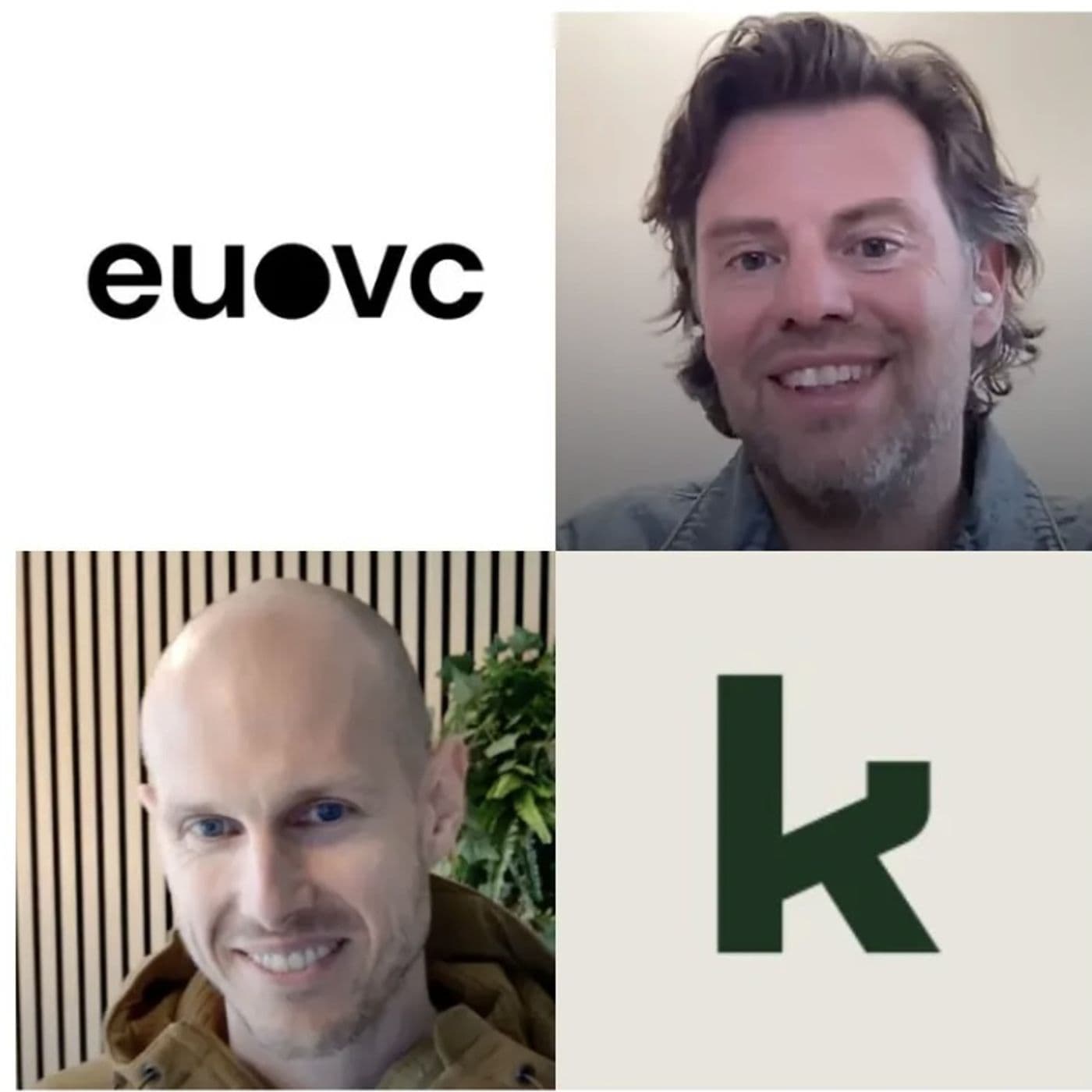
EUVC Podcast Episode E475: Kasper Hulthin, Kost Capital - Breaking the “Better” Myth & Building Food for the Many
Episode Overview In this episode co-hosted by Andreas Munk Holm and David Cruz e Silva, they welcome Kasper Hulthin, co-founder of Kost Capital, to discuss innovative approaches to building impactful food startups. Kasper emphasizes that the focus should not just be on creating better food products for the elite but rather on designing for scalability and accessibility. The conversation also highlights the challenges faced by food startups and the necessity of a supportive ecosystem.
Key Themes
- The misconception of "more options equals better food."
- The need for scalable food solutions.
- Transitioning from traditional VC models to support food startups.
- The significance of storytelling in transforming food narratives.
- Balancing purpose with commercial viability.
Episode Breakdown 00:45 - More Food Options ≠ Better Food
- Discusses how simply providing more food choices does not inherently improve quality or health.
03:30 - Whole Foods Optimization Challenges
- Explores why focusing solely on whole foods isn't a sustainable growth strategy.
06:20 - Ketchup Analogy
- Compares exclusive vs. inclusive innovation in food production.
10:15 - Scaling Challenges
- Highlights distribution, regulatory, and public perception hurdles that food startups face.
14:05 - Understanding Consumer Routines
- Discusses what founders often overlook regarding consumer behavior and routines.
17:50 - Building Platforms, Not Just Products
- Stresses the importance of creating scalable platforms that address broader needs.
21:10 - Role of Storytelling
- Explores how effective narratives can reshape the public perception of food.
25:00 - Defining “Better”
- Examines concepts of nutrition, access, and equity in relation to food production.
Key Insights from Kasper Hulthin Entrepreneurial Journey to Kost Capital
- Kasper reflects on his success in tech entrepreneurship, including the exit of Podio for $700 million, and recognizes a gap in investment for innovative food startups in Europe.
Need for a New Ecosystem
- Identifies the lack of risk capital in the food sector and the importance of creating a supportive ecosystem for food innovation.
Fund Structure and Approach
- Kost Capital operates with a unique model combining venture capital with a food innovation studio, enabling them to develop ideas alongside traditional investments.
Focus on Sustainable Alternatives
- Kasper describes recent investments in companies focused on alternatives to traditional food products (e.g., coffee substitutes) that address both market needs and sustainability.
Challenges in the Food Venture Landscape
- Kasper highlights that food innovation requires specific knowledge about consumer markets, technical expertise, and navigating a less written playbook compared to tech ventures.
Insights on Alternative Protein and Ingredients
- Discusses the importance of clean labeling and transparency in food alternatives, as well as the need for better scalability solutions.
Conclusion Kasper Hulthin’s insights into the European food startup ecosystem reveal the challenges and opportunities in creating better food for more people. With a focus on building platforms and leveraging technology, Kost Capital aims to redefine food innovation and provide valuable solutions for the industry. The conversation underscores the need for collaboration, effective storytelling, and a deep understanding of consumer behavior to succeed in the evolving food landscape.
Additional Notes
- The discussion emphasizes the necessity of an ecosystem that supports food as an investable commodity, addressing both health and environmental concerns.
- The episode encourages listeners to rethink traditional VC models and consider how innovative structures can facilitate better outcomes in the food industry.
Written by AI. May contain mistakes. Listen to the episode to check what was said.
Transcript
Automatic transcript. May contain errors.0:00What happens when a highly successful tech entrepreneur walks away from Silicon Valley playbooks to solve the world's food crisis. Six years later, we sold the company to Workday for$700 million. And obviously, that sounds very straightforward. And there was a lot of hoops and loops and whatever in between. But all in all, a great summer house trip and a fantastic learning experience afterwards as well. After a massive exit, Kasper Holten spotted a critical gap in Europe's investment landscape. And it became pretty obvious to me that from the deal you were seeing in Copenhagen, there is just a lack, particularly in here, but maybe in Europe in general, of sort of risk capital into this.
0:43Like, I think it was sort of underserved area in food with massive potential. You know, I come from an entrepreneur background, so I have this sort of, you know, I've seen enough funds saying, you know, we're going to put a million in. Is Solution a revolutionary$25 million studio fund model that combines elite culinary expertise with tech building experience? At Michelin Chef, we have gastropesicians. We have people that have been investing into food for years who obviously have deeper knowledge than me. I've been spending my time on software. And funny enough, some of the enabling technologies that we are looking at, we just invested in a Dutch company called Orbis, which are combating food waste inside kitchens.
1:27The results are already transforming the market with innovations like an alternative to one of the world's most climate vulnerable commodities. Rest is creating alternative coffee based on date seats. Coffee has basically sort of prices have gone up more or less similar to Bitcoin. But there's a critical challenge standing in the way of founders trying to solve our global food crisis. The playbook is not very well written, so it's very hard to go out there and quickly learn as someone who hasn't done it before. So to say, how do I best build and scale this company? How do I best go to market? That is not written by 50 different US VCs 10 years ago and tried and true.
2:10Casper's mission extends beyond individual companies to building an entirely new ecosystem. But we also want to build a community here. I mean, if you look at Denmark in particular, we have probably the largest amount of GDP in the world made in a bioreactor. We take Novo, Carlsberg and so forth. Join us on the European VC podcast as we discover how a proven tech founder is rewriting the rulebook for food innovation and creating a powerful new model that could outperform software while helping to solve our climate crisis.
2:45Here's a few words from our beloved sponsor. This episode is presented with our good friends at Haynes Boone. At Haynes Boone, they understand the complexities and challenges faced by VCs. Specialising in fund formation, they expertly manage the establishment of multi-billion dollar funds and innovative private fund products, ensuring their VC clients are equipped to attract global investors and excel in competitive markets. Beyond fund formation, Haynes Boone is deeply involved in the life cycle of startups, providing nuanced guidance on everything from entity structuring and capital raising to navigating exits through IPOs and strategic acquisitions.
3:25Their comprehensive legal services support VCs in maximising their investments and achieving successful outcomes. Whether you're looking to launch a new fund or invest in cutting-edge startups, Haynes Boon positions you at the forefront of the European venture ecosystem, enabling you to capitalise on opportunities across health tech, AI and beyond. Stay ahead of the curve by tuning in to the European VC Podcast. Join us in celebrating the art of venture capital with Haynes Boone.
3:58Tear down this wall. It's more than just an ally. This is a union of values. Let's start acting. Welcome back, everyone, to the European BC Podcast. Today, I have Kasper Hultin with me. And just one big note for all of you. Apologies beforehand, because we're going to be two Danish people talking to each other with, I'm sure, a terrible accent that all of you will hate listening into. But sometimes you got to do what you got to do, because Kasper is building something beautiful with cost capital. So for that reason, I had to bring him on the podcast, despite us both being Danish. Kasper, welcome to the pod.
4:41Thank you so much. So Kasper, before we dive into Cost Capital, you're quite delighted in the Danish ecosystem and maybe even in the European. So maybe let's just start with your story and where you come from before we dive into Cost Capital, which is the newer chapter. Thanks for the introduction. I don't know about the legendary status, but I'll do my best at telling the stories. So I've done a couple of things in this context with Cost Capital. I used to say I've been working on SaaS and building SaaS companies, sort of my daytime job. And then I have a passion for food that's been done on the side.
5:21But for this part of the interview, we can stick to the daytime job. So I've co-founded and sold a couple of SaaS companies. we started. And after my sort of first couple of companies, which I typically refer to as the non-intentional nonprofits, so a couple of things that didn't work, and that's how it goes. And we shut one company down, and on the other side of the street, there was two guys, Anders and Jörg, who was building a software company out of Copenhagen in a basement. with the idea to build a collaboration platform that enables people like you and me, NoCode, to build their own apps.
6:10NoCode has become popular again in these AI times, but this is 2008, 2009, and it was a little bit of a different time. The project turned into Podio, which we took to San Francisco, and eventually Citrix, who at the time had GoToMeeting and go to general platforms. Got very interested in the idea of combining synchronous and asynchronous collaboration and acquired Podio relatively early on. So I spent a lot of time in San Francisco and subsequently in Santa Barbara with Citrix. Is the exit value known? It was very secret back then, but I think it's been posted more or less everywhere ever since.
6:57because at that time it was a public company, but the exit value was around 50, 60 million dollars, which a couple of years in for 30 guys out of Copenhagen was a very big thing. And also for the Danish ecosystem. Yeah, and I think that was a bit the thing. I mean, that was sort of an early wave of Danish startups, not that they haven't been startup before, but like product-centric SaaS startups. Obviously, many people know Sendesk. Trustpilot was also originated in those days. So there was sort of a little group of Danish entrepreneurs. And I think the fact that somebody went outside of Danish borders and ultimately also exited or as Sendes did, obviously took it further.
7:47It ignited a little bit the ecosystem. So that was obviously very nice to be part of that. And it was a fantastic team and culture back at Podio. I think it's one of those where if you ask the people that were there in the beginning, it's been hard to find something similar ever since. But as you said, Casper, you didn't just say one startup, you said a couple of startups. So you didn't go directly into then doing a VC event as one would do today. but rather you said, let me bring back together the guys and then see what we can do from here. Yeah, exactly. And that was very much the genesis of it, to bring back together the guys.
8:28So Phil, Christian and I, who have been part of the leadership team in Podio, together with the fourth guy, Dan, that still knew from prior work, decided that we wanted to build a company we actually wanted to work for. before the idea, there was the idea of building something together. That was the driver. And to be honest, we couldn't really figure out what to do, but obviously you need to put something on the shelf. So we, after some time, ended up in a summer house and brought all the ideas and probably even more beers. And late night, one guy said, you know, how about HR after discussing cool things like music and food and whatever?
9:11and at first we thought what what what but having been inside a big organization for three years and and i think all of us having a passion for for the people side of things and then obviously also seeing the the the business case in in that we we decided to to to build something in the hr space focused around employee engagement with the simple note that that if you look at marketing you have a funnel of acquisition growth retention and and the cmo have changed significantly over the past 20 years from sort of the madman style cmo to to a much more sort of modern cmo focused on on data real time experience and so forth and and essentially the people side of the business have exactly the same funnel we just call it recruiting growth and retention and everyone was building software for recruiting and no one was building for the rest.
10:10And the idea was that you would see the same shift in sort of the Madmin style towards the much more data-driven that turned out to be right. And that turned into Pecan. So we got up the next morning and wrote the first version of the business plan on a piece of paper and then got started. And six years later, we sold the company to Workday for 700 million. dollars and obviously that sounds very straightforward and there was a lot of hoops and loops and whatever in between but but all in all a great summer house trip and a fantastic learning experience afterwards as well tell me casper because we got to touch a bit on this personal interest in food because you then go from doing these two completely non-food related startups to then do a food focused fund how does that end up well it actually started after we sold Podio as I said I spent some time in San Francisco I lived there for a couple of years and California is a fantastic place to grow food products like fruit and vegetables and so forth so that also means that there's some amazing supermarkets and you know your buy rides and whatever it's called of the world where you can buy like super high quality products and i moved back home to to denmark and i i really like cooking so so that's like a sort of the origin of the the passion and i came home and got pretty annoyed with the danish supermarkets and unfortunately they haven't got much better but my local butcher closed and a few other things and a friend of mine and on holiday decided like why don't we do something around it and i have a childhood friend that at the time had been a chef at some of the best Michelin restaurants in the world.
12:08And I asked him, do you know anyone that could run a food shop? And he was like, I'm super tired of the work hours and being a Michelin chef. So why don't we join forces? So we actually opened what in my head is still the best food shop that ever existed in Copenhagen. But then after a couple of years, I found out that retail is tough. And then we sort of slowly converted the company into being a consultancy and food development, recipe development, food cultural development. So it sort of came from a food shop into a lot more to date. So I've actually worked with Fooch for the last 11 years, but I sort of a sidekick to working on Proteo and Peacon.
13:02And then obviously as Peacon wasn't my everyday job anymore, I had a little bit more time to put into that passion. And now you're then raising the first fund that's called Cost Capital. And we should talk a bunch about that. But as a segue into it, let me ask you, what have been the big realizations for you in terms of how is it different to build a fund or a firm from building a startup? Because you've done the first two very successfully, and now you're embarking on the second one. There's still learnings to be had, I'm pretty sure. But of course, it's a little bit different. And as I said, we are maybe very quickly on the backstory of how we sort of ended up doing this.
13:52So as I said, you know, I started investing a little bit into the food space as an angel via my own vehicle called Future 5. And it became pretty obvious to me that from the deal you were seeing in Copenhagen, there is just a lack, particularly in here, but maybe in Europe in general, of sort of risk capital into this. I think it was sort of underserved area and food, which had massive potential. As you know, I come from an entrepreneur background. So I have this sort of, you know, if you, I've seen enough funds saying, you know, we're going to put a million in and we will add all the value in the world.
14:37And then after you got the million, you didn't see them until you sold the company. So I think we've had this entrepreneur and it started with, you know, I had this realization that me as a small fish putting small tickets into a couple of startups, fine, but it doesn't really move the needle. And then I've, with some friends, Christian Yagov and Mark, they had similar experiences going into it. And then we sort of joined forces. So more to say, this has been a very entrepreneurial journey. We are not from finance background that are going into this. We are builders that are trying to build a fund and that we've done some things differently.
15:22It's not necessarily fully cookie cutter approach that we are taking. And that, of course, have added a few loops on the journey, but we also believe that that's adding value. So I think a big realization is when you deal with funds as an entrepreneur, you don't deal with their fundraising. When you're working on a fund, fundraising is quite a big part of the job. Yeah, and we'll get into this around your setup because it's not exactly pure vanilla. and the thing is as soon as you get not pure vanilla, it gets super difficult just because a lot of people don't know how to deal with it. And that's definitely, or I can imagine, something that you've come to realize and have had to navigate and figure out how to solve.
16:16I want to ask you though, there are so many VCs that come to venture wanting to be the VC that they wish they had. You've now done the first investment both as an angel and as a fund. How has the experience been so far? Do you feel that you've really been able to realize this promise that you set out for yourself of not just being that guy that puts a million and then comes back to ring the bell? Yes, I do actually think that we are doing quite a bit of that. So maybe just super quick on the structure of cost capital to answer the question. So we are 25 million fund, deliberately small. day one we are focused on inputs for the future food system typically enabling technologies or ingredients focused on p2p very focused on on defensibility so more to say we don't do consumer ketchups or whatever it could be not there's anything wrong with ketchup but you know it's it's typically the stuff behind it so we can come into the future investments later but as you have these two things, you both have food angles.
17:29So the way we are set up is we invest either directly into startups that are already there, pre-seed, seed, early hay, and we have a studio connected to cost capital, where we also develop our own ideas. So in that sense, you can say, if we can see that there's an area of opportunity in food and we can find the right companies, we have the opportunity of building companies ourselves. So in that sense, we have a little bit of that hybrid where you can say our entrepreneur backgrounds come to play, right? I can come into an example later of what we do out of the studio, but I think in that sense, and because we come as builders, actually we're different.
18:16I mean, I'm not the expert in food. I know a little bit, but I'm not. You know, we have food scientists. We have, as I said, Michelin chefs. We have gastro physicians. We have people that have been investing into food for years who obviously have a deeper knowledge than me. I've been spending my time on software. And funny enough, some of the enabling technologies that we are looking at, we just invested in a Dutch company called Orbisk, which are combating food waste inside kitchens, which is a combined hardware, AI, but also software play. and as the hardware is now working and they're starting to scale, the software part becomes bigger part of it, which I then happen to know a little bit about.
19:01So I think we actually, in all the investments we've done, we've had the opportunity of actually pitching in both on very deep knowledge on food, but also on the commercialization. I think that combo is actually interesting in this industry, whereas in SaaS where I come from, the product's risks are less nowadays, and it's largely an execution risk, where obviously in food you still have a little bit of focus. Tell me, the studio that you have, is that purely for incepting things from the bottom up, or is it also a place where the founders you invest in come and do some of their work and that type of thing?
19:47So the studio is a partner to capital. The studio is an independent business that also helps bigger organizations with knowledge and development in food or like core R &D together with universities. The partnership we have with the fund is that the studio enables the fund to do pretty deep R &D very quick in the process. So think of it as like you have all the experts that are just sitting right next to you as you are doing the deal making. So we don't have to do the heavy DD post term sheet when you don't jump out again. We can do it in the process. And then the other thing we do at the studio is, as I said, also developing ideas.
20:33So think of them as your initial CTO or chief science officer. and then we together would find founders. So either it's ideas coming from within the studio where we source the CEO slash management team to it, or it can be someone coming to us with an idea that needs that sort of technical expertise to get off the ground. Yeah. So far, Casper, how much has been incepted things from the studio, so to say, and how much of your investments have been inbound slash companies you found out outside of the studio? No, so the majority is still direct investments. Last year, we did five investments directly.
21:21We did one spin out. Obviously, for the spin out, there's a little bit of lead time in them. We're still investing directly. We are doing that fairly active and will also be very active in that this year. Yeah. And you're investing across Europe. Tell me a bit about how the food vertical works, so to say. Does it really make sense to narrow Europe as one or would it make more sense? Or why would you not go global? Or why would you be pan-European instead of Nordics? cost capital fund one is is a european focused fund that is a relatively deliberate choice because we have these two angles we have the direct investments which we probably have proximity of course is important but a little less important where on the studio side proximity seems to be higher because it's a lot of things ideas coming out of universities and stuff like that so i would expect that the majority of our spin-outs will be focused around Nordics, where actually the other ones.
22:27And right now, there's Italy, Switzerland, France. So we are pretty pan-European. And Bodil and the team have managed to build a great brand relatively quickly. So we actually do get invited into quite a lot of deals. Also, I think because that we can add more than just the dollars. Why are we not more than Europe? I think that's mostly a bandwidth question for Fund One, to be honest. So we obviously see deal flow from other places in the world, but we also believe that what we are trying to prove here is sort of the thesis of making food investable again. I mean, obviously, we had the first wave of food investments that were very heavily focused on D2C brand making and also some of the alternatives that was alternative, but potentially not better for either humans or the planet.
23:23So obviously, our big mission is to create better food for more people. And obviously, that will ultimately need to take us outside of Europe, but we decided to start with Europe. And then tell me, food is a vertical. What are the technologies or the inflection points, the trends that you're seeing that really make food such an interesting market as a VC? Yeah, that's a good question. So first and foremost, we kind of look at it as, I mean, the top hat is kind of bioeconomy, right? Like within that, we are focused on food, but obviously bioeconomy as a whole is super interesting. I guess that's sort of, no, everyone agrees to that.
24:07Why is food then super interesting? as I said one of the things that we have seen trends in basically just since we started is that if you look at at the input side or the ingredient side as one thing you just see some of the natural ingredients today as searching in price because of the climate so when we first came out and talked about this two years ago you know better food for more people that's fine it sounds a little bit like half philanthropy and stuff like that. But nowadays, you see very concrete proof in why this is important for the planet, but also makes financial sense. So as one example, our first spin out out of the studio is a company called REST.
24:53REST is creating alternative coffee based on date seats. Coffee has basically sort of prices have gone up more or less similar to Bitcoin in 24. all. It is going up because the demand is surging in the East, where China, India have started to drink coffee instead of tea. So this year, there will be 20 ,000 coffee shops opening in China, just by the largest four brands, which is crazy. On the other hand, the supply side is struggling big time because of climate changes. So making an alternative to coffee is no longer like this would be very nice to have to make a green alternative. This is a need to have to save coffee companies.
25:42Our product, Near Rest, is a blend. You can essentially blend it 50-50 with a normal coffee and it would taste pretty much the same. We have an opportunity to do a lot of things with that and load it with other things. But the very interesting part is that we can deliver it at half the price of coffee. So the value proposition is not only, let's save the planet, the value proposition is this is better and cheaper. So it's like higher margins. And for the higher margins, you actually also get the sustainability part of it. We made another direct investment into a company in Italy called Foreverland, which is doing alternative chocolate, which is very similar to coffee, also raising in prices.
26:27and you could continue down the line, olive oil, oranges. You have all of these things where the value chains are struggling due to climate change, which is pushing the prices up and therefore pushing the urgency on alternatives further. And I think this is actually very interesting. That's why we're interested in B2B as well, right? because when we are building REST, we are building a B2B product that could fit into the largest. Like in one year, we managed to create something that can be created in tons at the time and not small parts. Were you seeing the dynamics of building a business in food being the most different from your background in SaaS or what we might describe as from the normal venture model?
27:25Are there things where it really pays dividends as a founder to get a food specialist on board versus one of the many journalists? I mean, the obvious difference to SaaS is obviously that you can taste it or touch it at least. And that is wonderful when you work with it. I love coming in. So at our office in Copenhagen, downstairs, we have a test kitchen. So that actually means that when you come to work, you can go downstairs and someone has been testing something. So that's the beauty of it. But it's also the flip side. It also means that it can break and you have all of those things. And I think for that reason, that the technical knowledge here is important, and particularly as you're scaling up.
28:13So one of the things we've done as well in the sort of group level cost is to build a company in sort of biomanufacturing that helps all these products, all these companies, not only cost capital, but in general companies, a single use bioreactor company helping scale, essentially taking the super heavy OPEX investments that most of these fermentation companies are spending all their VC money in. and making that like something that is much faster, OPEX investment, a company is called Swan Lake Bio. But again, they are also part of our group. And I think that this is not easy, but it's doable to make inventions at a lab scale.
29:01The hard part in food is to make it into the big tanks where it is to make the money, given it's a fermentation company we're talking about. And I think that journey is very important where you can say for a software company, of course, you need to scale the servers and so forth. But it's pretty global kind of day one, right? That's the big difference. And I think there's a lot of founders here that get a little lost in the tech and maybe also needing a bit of commercial sort of go-to-market help and support in this part of it. it's just a less mature venture market than if you look at SaaS, for instance.
29:45Yeah, the playbook is not very well written. So it's very hard to go out there and quickly learn as someone who hasn't done it before. So to say, how do I best build and scale this company? How do I best go to market? That is not written by 50 different US VCs 10 years ago and tried and true. So I can definitely see the importance of having a team with real experience like yours has in its entirety. I'd love to ask you, and this is a completely different question, but it's one that I think you've met many times. And I've definitely spoken to a lot of European VCs that are thinking about building firms in a slightly different manner than what's maybe the most typical proven path.
30:32If we start by describing how are you different, and you have already done so, but in this mindset. So from the LP perspective, looking in the cost capital, where is it that you are different so that an LP starts to think, huh, what is this setup? If you start by describing those, and then we can then pick on each of them and say, how do you then discuss this? How do you frame it in a way so that an LP understands why this is actually a strength and not a random deviation from the standard playbook of VC? or maybe even something that's dangerous? So I think we have a fairly unique setup with how we set it up.
31:14So we are, as I said, we are four sort of founding LPs. We are lucky that for now we are not sort of greedy on the management fees. So you get a lot of people for a relatively small fund, which is by design to prove this model, which also means you get a lot of value add to the companies. Most importantly, we have a fantastic GP, Bodil, who has built funds and been part of Uber and also been part of this ecosystem. Together with Bodil, we have Paul, who has been investing into this market before. An excellent team, which everyone would claim. But I think here, you know, we don't just have the operational team.
31:59We actually have someone. So the IFC is Bodil and the four of us. And then on top of that, we have the partnership with the studio, which allows us access to deep knowledge, literally the table next to you, right? So we have made investments into, as we said, chocolate or Salir, which is a scaffolding technology for cultivated meats, where we can basically go to the studio and like, what do you know about these technologies? we work very closely in the studio with the best universities in Europe. So A is like the due diligence part of it and two, obviously the ability to build companies ourselves out of the studio.
Read the full transcript
32:52So I think the setup is quite unique and I think that's why we get invited in because we offer synergy to lots of other funds that are good at parts or some or maybe where we can add a different perspective and also help the companies further down the line. We are a relatively big team for a small fund. So you get a lot. But at the same time, from the LP perspective, when you're a big team in comparison to the fund size, that means you're a bit unsure what are people doing, Who is it exactly that's doing this and that? Because as an LP, when you get a solo GP, you know what it is. So I'm just trying to unpick this because I think it's hugely interesting.
33:47And I think that there's a lot that can be done to the venture model. And I think that we're so lucky that we have people like you and your co-founders that say, we want to do a venture. We want to help the ecosystem. but we also think that there's another way to do it than say, okay, this is the only thing I'm going to do. I'm going to be the solo GP or the two of us are going to be the only GPs. We're going to drop the studio because that's not, you know, that makes this look weird in LP eyes. But instead, because we're from an LP perspective, a lot of LPs are very closed minded when it comes to what must the VC fund look like.
34:24So that's why I'm picking on this because I think it's so important to try and both get the LPs that are listening in to reframe how they think about this. And at the same time, also give the GPs that are building non-standard structures some weapons, some tools to maybe convince LPs that this is a great idea. Yeah. I mean, so first of all, on the structure, it's very simple. Vodil is the GP, so she's the main. And together with the team, the four founders are in the IC and we help all the portfolio companies the best we can and then as I said we have the studio so of course there is and you're not the first one asking of course we get the question what is all of this but I also think for and of course I mean as for everything when you're different you scare some away and for those that like it it is the unique part I mean I think we are further ahead and the J-curve than most funds would be at this point because we have the studio and because we've actually managed to prove that we can put companies into orbit or whatever you say, and they've successfully sort of moved on to the next steps in the venture model.
35:44So our point is to prove that this is possible, and so far that's going pretty well. And as I said before, that's going well because the team is great in executing, but it's also going well because the externalities are playing in our favor, unfortunately, to some degree, because I would rather have the planet was less hurting and chocolate wouldn't be too expensive and stuff like that. But now that this is a fact, and obviously with all other insecurities going on in the world, I think food safety is a legit thing, right? On the enabling side, as I said, we invested in a hardware-software company.
36:28Of course, there's a lot of AI and things coming in to waste. It's a huge thing. As most people know, one-third of all the world's food is wasted. And of course, there's things you can do in the value chain, but a lot of that also needs tech enabling. And there you have AI trends and other things coming in. So I think there's many dimensions here to why it's interesting. But speaking of food insecurity, everyone in Europe obviously are talking about what's happening geopolitically right now. And Ukraine was a wake-up call for all of us. How have you seen the Ukraine war and everything that's happening geopolitically affect the food value chains across the world?
37:16And are you seeing an uptick in companies that are trying to solve this problem? It's a big question to answer. But I think as we talked about before, I think the sort of innovation into food has changed slightly over the last, call it five years, where we had in the very early days in our deck, we had a sort of favorite version in food investment, which was someone that invested, I think,$50 million into what was called ketchup leather. So think of it as like when you have a burger, instead of putting ketchup, and you put like a sheet of ketchup so it won't spill ketchup on yourself, right? And I think that's for me sort of the hits of me of the last wave of sort of consumer food investment where this is not making better food for more people, right?
38:11This is just because you can. And I think that obviously with the geopolitical things, climate impact clearly happening, all of that is dramatically changing to become a much more fundamental thing people are looking at, right? So this is making clean products, obviously for the health of people, but it's also making alternative products for the health of the planet. And as I said before, a lot of these things are actually driven by prices. And I think that may be the biggest challenge for most of all these technologies is that is there a market for a sustainable premium that is double the price?
39:00That probably have been disproven, right? So I think, you know, you have to find things that honestly can scale. I have some questions that are product specific, so to say, or vertical specific that I care a lot about food as well. And I definitely see the movement and I'm thinking personally about many things that I would like to change, so to say, in my own diet. So I just want to ask you some food specific questions that I'm unsure whether you'll be able to answer since you're saying. See if I can. Yeah. But first question is, when we look at all these alternative protein sources, my thought in the supermarket, looking at them, is always I have my beef perspective, which people have been eating forever.
39:51And it hasn't killed anyone to date, I think, at least not too many, as long as you don't go overboard and grill it too hard, so to say. but then you've got this meetable or whatever the name of the company is next to it which if I flip it and look at the ingredient list is a bunch of stuff I don't know how should I think about this that is a very fair perspective and I very much agree with you that one of the things that we are looking at as I said before is like essentially it's creating clean labels and that's a bit what I meant around last wave that created alternatives, but ultimately just with even longer ingredient lists and quite a lot of E numbers, right?
40:38So we have one investment into a company called Nutri-Mami. It was fantastic. They found that Frederick that started it, which is sort of natural multifunctional protein. So that can be added to other things, but essentially think of it as when you have an alternative things you need salt or you need you know all kinds of things and and and um stabilizers and and so forth so forth and protein b12 and you would typically add them uh through synthetic or like e-number things but with neutral mammary you they have most of these components but built on on natural products and fermentation so essentially it's just natural things in it and you could maybe take four or five e-numbers out that also would have a cost back to the cost parity thing and replace it with the Nutri-Mami product to then get some of those features that resembles the e-numbers.
41:41My point being like this is just as a good example to what you just said right like I think the end goal for food here is not to create just more alternatives with more e-numbers, the end goal is to ultimately create healthy products for people. That's why we talk about better food for more people. It's very important for us that it's better, which is, you know, I think some of the stuff you talked about now obviously is a fictitious case, but questionable on the better side. And the more people is back to the whole scaling thing, right? Like we are not trying to make the world's best ketchup that can only be sold at the most exclusive supermarket in London or wherever it is.
42:24We need something that scales. If you think about some of the largest successes in food and also being venture-backed, which of them comes to mind where you say, these are tackling a trend that I truly think is important and will sustain? And there's a lot happening here. One is cocoa, as you described. We also have, I have in my underlying portfolio, my nucleus, a chocolate company. You know them very well. You described the coffee company just before. What other examples of great food innovations are there that we should all be knowledgeable of and maybe even think about trying? If you think of it a little bit more as sort of waves, of course, to the case you had, you have the alternative proteins that will go, So, you know, that was very popular.
43:18So everyone's trying to make alternative meets. And that's, to some degree, the good part about venture, right? Like there's money to place bets and someone or maybe a handful will emerge as winners and hopefully do it better and do that. So I think, you know, obviously, most of all have tried alternative meets. the other thing that we're looking into and what is a lot of these days is alternative fats and oils we've worked a bit with a company in Estonia called IO that is doing essentially the replacement of palm oil but based on sawdust and so I think some of these innovations are pretty foundational we are looking into a lot of things from the ocean, which I think is sort of a lost thing.
44:16So again, like how can you turn ocean microalgae and other things into good things for you? We are looking at a lot of waste streams. So one example we did in the studio, we did a journal for the things government recently, but for the press cake from rapeseed oil, which is very big in Denmark, you could essentially feed the entire Danish population for a year and a half with the waste stream alone. So waste streams also contains massive opportunities here. As I said, we are building a coffee alternative out of dates, which essentially is a waste stream from the dates production. So waste, I think, is a huge potential.
45:10Obviously, fermentation at large is a huge potential, and there's a lot of good investments going into that, whether, as you said, it's meat or it's oils or whatever it is. For fermentation, the main thing is the scaling risk, which is why we did Swannik Bio. I think we will hopefully taste all of these things in stuff that you eat already. Ideally, the Nutella doesn't have chocolate in it in a couple of years from now, but it will still taste great, assuming you like Nutella. But will just be hopefully even cheaper and better for the planet. I think that's exciting. And if we can get that movement going, we can probably even push it further and create food alternatives for even more people.
46:06Yeah. Final question before we close. I obviously love the LP world. And for that reason, I want to ask you, what's the typical LP profile for your fund? So we have, you know, everything from the Danish sovereign fund to bigger family offices. We have entrepreneurs that love to be part of this because it's built by builders. You don't need to have a passion for food. I think the numbers actually look pretty good as well. But of course, we see a lot of people that like the world, not necessarily because they are master chefs or fermentation specialists, but because it makes sense for real people.
46:51And obviously, the terms of some of those things are enormous, right? So for fund one, as I think most fund ones, it's, you know. My question was specifically ignited by you also talking about how these products will be integrated into the existing food value chain and existing products, which made me think, I would imagine that there's a bunch of corporates to whom a fund like you would make a lot of sense. Yeah, we're starting to build all of those partnerships. I have built a lot of those because obviously we want to ultimately put products in, B2B products into the world that makes sense for the existing systems we have.
47:36So we are very happy to invite corporates, obviously as partners, but also as SLPs. What's the most important thing for people to understand when you think about corporates as SLPs? As I said, we started off with this was new for me. So I haven't worked with corporate LPs for years. And I think the important thing here is that in food, maybe more so than in other ecosystems, in broader tech, you have a pretty unique distribution model that is controlled by many of the big ones. So I think it's ultimately important to understand how it goes. And that obviously comes to that this is typically physical things moving between physical locations.
48:26Whereas software, it's a little bit easier. No offense. I've done it myself to put it online. And then one guy in Austria and one in Switzerland and one in the US can use your product. So here, distribution, obviously, in food has a lot more weight to it. And therefore, I think the corporate holds both a responsibility, to be honest, to also invest in these things and to drive the right innovation. We have done this to obviously show fund, make great returns for our LPs, which is also why we're keeping it a small fund. I mean, we are one-to-one aligned as founders of the fund with the LPs. Like we only make money as the fund make money.
49:07But we also want to build a community here, right? I mean, if you look at Denmark in particular, we have probably the largest amount of GDP in the world made in a bioreactor. If you take Novo, Carlsberg and so forth, we have one of the best gastronomical scenes in the world, at least relatively to size of country. And for those reasons, we have some fantastic universities that are literally world class on food. And then we have a terrible venture system. And that was the opportunity, right, to build something. and that obviously goes beyond just Denmark. So I see it like that's why we build the kitchen, we build the space, we can also move the ecosystem.
49:48We start having students from universities around Europe coming to CoS Studio to want to be part of this and build their next ideas. So there is so much opportunity and I think you have to go about it at a little bit different mode than just a cookie cutter 220. fund. I think you're absolutely right. And I completely agree both on the power of the ecosystem that we have in Denmark for a fund like yours. I think that you tap into something absolutely beautiful. And also the opportunity of lack of good venture funding for this type of thing in Denmark, because you are truly a unique fund that's coming to market.
50:30So excited to have you on the podcast, Casper. Thank you so much for joining me. Thank you so much, Andreas. Here's a few words from our beloved sponsor. This episode is presented with our good friends at Haynes Boon. At Haynes Boon, they understand the complexities and challenges faced by VCs. Specialising in fund formation, they expertly manage the establishment of multi-billion dollar funds and innovative private fund products, ensuring their VC clients are equipped to attract global investors and excel in competitive markets. Beyond fund formation, Haynes Boon is deeply involved in the life cycle of startups, providing nuanced guidance on everything from entity structuring and capital raising to navigating exits through IPOs and strategic acquisitions.
51:16Their comprehensive legal services support VCs in maximizing their investments and achieving successful outcomes. Whether you're looking to launch a new fund or invest in cutting edge startups, Haynes Boone positions you at the forefront of the European venture ecosystem, enabling you to capitalise on opportunities across health tech, AI and beyond. Stay ahead of the curve by tuning in to the European VC Podcast. Join us in celebrating the art of venture capital with Haynes Boone.
51:49Tear down this wall. It's more than just an alliance. This is a union of values. Let's start acting. Acting
From the publisher
In this episode,
talks with
, co-founder of
and
, to unpack what it takes to build food startups that change the system. Kasper argues that creating better food is not about crafting the perfect health product for the elite, but about designing for impact, scale, and real-world distribution.They explore why traditional VC models often fail food startups, how founders can balance purpose with platform thinking, and what it means to move beyond “more alternatives” into a world of more and better.
Here’s what’s covered:
- 00:45 – Why “more” food options doesn’t always mean “better”
- 03:30 – Why optimizing for Whole Foods isn’t a scalable strategy
- 06:20 – The ketchup analogy: exclusive vs. inclusive innovation
- 10:15 – Scaling challenges: distribution, regulation, perception
- 14:05 – What founders miss about consumer routines
- 17:50 – Building platforms, not just products
- 21:10 – The role of storytelling in transforming food narratives
- 25:00 – What “better” really means: nutrition, access, equity


