
In short
EUVC Podcast Notes
Episode Title
E478 | David Clarke (VenCap), Ertan Can (Multiple Capital) & Chloe Dagnell (Isomer Capital): The Path to Superior Venture Returns in Europe (EUVC Summit 2025)
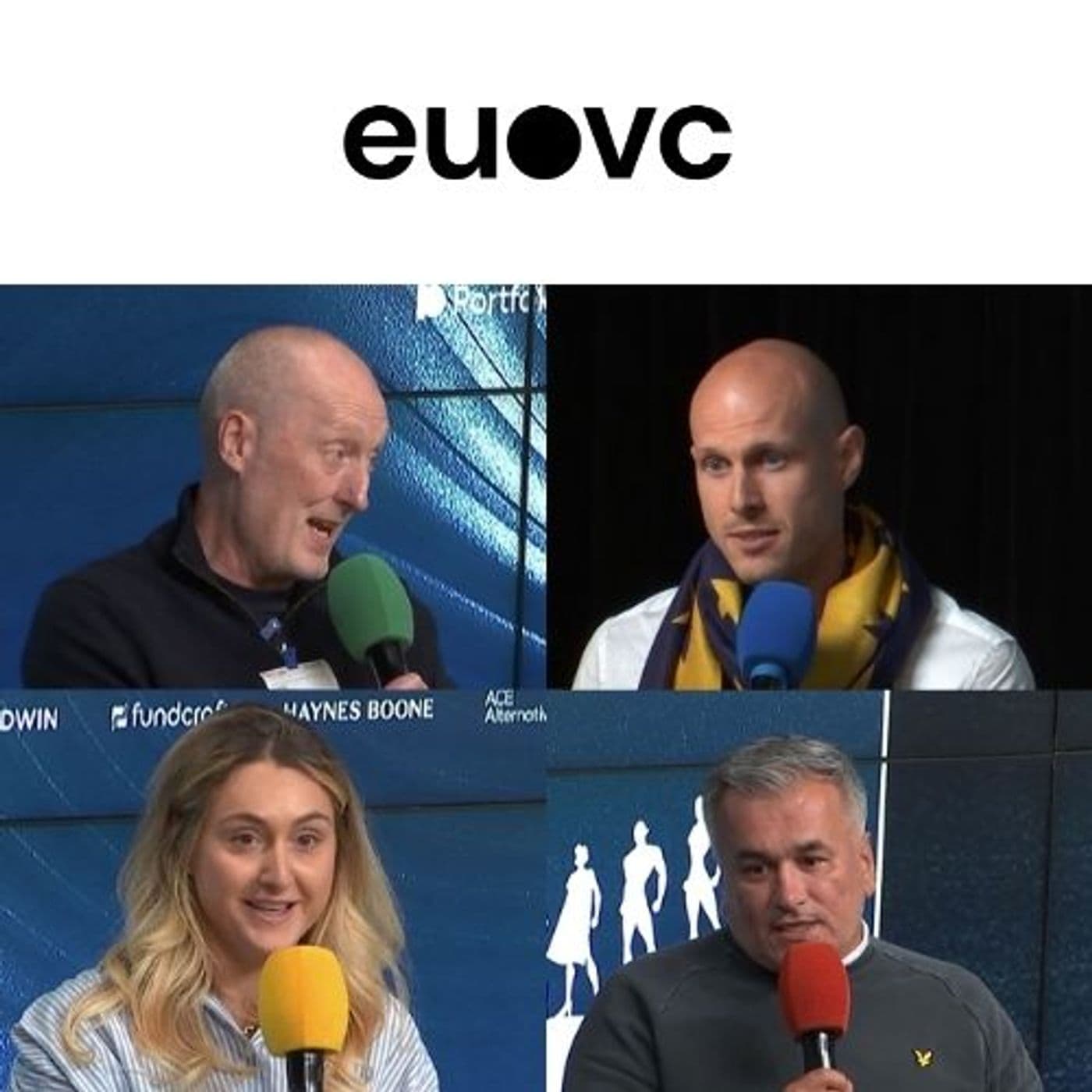
Episode Overview In this episode, the co-hosts Andreas Munk Holm and David Cruz e Silva bring together three prominent figures in European venture capital for a spirited debate on venture economics and fund performance. The episode features David Clarke (VenCap), Ertan Can (Multiple Capital), and Chloe Dagnell (Isomer Capital), discussing their differing strategies on achieving superior returns in the European VC landscape.
Key Takeaways
- Venture Economics Debate
- Data Limitations:
- The reliability of publicly available data on VC fund returns is questionable.
- Significant gaps exist in data coverage, especially for smaller funds (<$100 million).
- Common data sources like PitchBook and Cambridge Associates have low coverage of smaller fund performance.
- Performance Metrics:
- There is debate surrounding the performance metrics used to evaluate venture capital success.
- The emergence of the $20 billion outcome as a new benchmark for outstanding performance.
- Early-stage investments are characterized by low probability but high upside potential.
- Fund Size vs. Quality
- Opinions on Fund Size:
- David Clarke emphasizes that "quality over fund size" should be the focus for LPs.
- Ertan Can argues that fund size significantly impacts outcomes, highlighting the importance of having "skin in the game."
- Chloe Dagnell advocates for backing "small, early, and smart" ventures to maximize potential returns.
- Attrition Rates:
- Discussion on the attrition rate from seed to Series A funding rounds, reported at only 15% for recent years.
- This statistic emphasizes the risk involved in early-stage investments.
- Emerging Managers vs. Established Funds
- Debate on Performance:
- Continuous questioning of whether emerging managers outperform established funds or merely dominate a distorted sample.
- Data analysis by Cambridge Associates showed that emerging managers comprised a significant portion of top-performing funds.
- Qualitative Insights:
- Attention drawn to the necessity of understanding the context behind the statistics to accurately gauge performance.
- The importance of extreme outliers in venture investing, emphasizing that investors are interested only in the top 1% of companies.
- Market Trends and Realities
- Shifting Benchmarks:
- Historical comparison of exit valuations indicating that today's 99th percentile exits require substantially larger valuations than in the early 2000s.
- Discussion about how the landscape has evolved and the implications for fund performance.
- Ecosystem Dynamics:
- Larger funds are seen as having challenges to achieve the same level of success as smaller funds, due to scale.
- Discussion on how established firms like Andreessen Horowitz are investing in micro VCs to ensure a strong deal flow from smaller funds.
Closing Remarks The episode culminated in a lively discussion, with the co-host emphasizing the importance of continuing this dialogue within the ecosystem. The participants expressed openness to further discussions on their differing views and strategies regarding venture capital.
Acknowledgments
- Special thanks to the partners who supported the EUVC Summit, including:
- HSBC Innovation Banking
- Google Cloud
- Ace Alternatives
- Hainspoon
- CW Communications
- Fundcraft
- Digital Native
- Full Suite
- Lux Headquarter
- Portfolio IQ by Synaptic
- Goodwin
Written by AI. May contain mistakes. Listen to the episode to check what was said.
Transcript
Automatic transcript. May contain errors.0:00Europe's venture ecosystem is on fire with heated debate among allocators on how best to capitalize on this momentum. We've brought together three of Europe's most active LPs with wildly different strategies and perspectives to battle out this age-old discussion. David Clark, Chief Investment Officer at Vencap, renowned for their long-term support from large top-performing fund managers. Airtan Khan, founder of Multiple, an unrelenting backer and supporter of Europe's micro VCs. And Chloe Dagnell, principal at Isomer Capital, Europe's most active VC fund of funds, backing micro VCs and doubling down on Europe's outliers through co-investments and secondaries.
0:48Join us as Chloe, David and Ayrton debate and discuss their contrasting views on how to achieve superior long term returns in European venture. This is the big fight we always hear. Is it being discussed all the time? We've seen especially Ayrton on stage and on LinkedIn and I don't know where, arguing that if you invest in anything but the small funds, you must have lost your mind and you're just lazy. We've seen David Clark argue almost the exact opposite. So we're here to find out who is right. The first question to you, in 15 words or less, what is your doctrine on fund size and LP strategy?
1:33I'll let you go first, David. Optimize for quality, not fund size. Airtan. Fund size matters a lot. I think skin in the game is one of the key things in venture. Chloe. You need to back small, early and smart. Small, early and smart. Now, David, as you just said, fund size isn't predictive at all. Ayrton, Chloe, you believe it is. I think the math is simple. If you are able to pick, let's say, a company, the right company, with a smaller fund by investing only at the earliest stage, the multiple will be just higher for that fund. So that's the whole thesis that we're focused on. I guess two bits to that answer quickly.
2:20One is if you're looking at the publicly available data on VC fund returns, it's incredibly unreliable. So PitchBook, which is where most of the studies come from, they have returns data on just 5 % of the sub -$100 million funds that were raised between 2010 and 2020. Cambridge Associates have returns data on less than 4 % of the European VC funds raised over the same period as well. So if you're drawing any conclusions from those data sets, then be my friend. But we won't do that because we don't believe those data sets are statistically significant. The math one is interesting because, you know, all of the things being equal, I would agree with Ertan.
3:05Unfortunately, in venture, all of the things aren't equal. And I think the one big thing that's missing from that is what's the probability of hitting one of those larger outcomes? And the earlier you go as an investor, the less probable you are to hit one of those outcomes. And we've seen the data just recently from Carter showing the attrition rate between seed and series A. So over the last two years, just 15 % of companies that raised a seed round have gone on to raise an A round. So you need to go down and really think this through, not just believe the stuff you hear and see on social media.
3:41The data is very limited, right? And I think that we all know that there's gaps in the data. So we kind of have to take what we do know, which is maths, right? And put those two things together and understand that, you know, if you have a$100 million size fund, you own 10 % of a company, it exits a billion dollars, that returns your fund. To be able to do these for some of these very, very huge funds, the outcomes they have to be hitting are just so, so huge. So if we focus our efforts on betting small, betting early, but also running a whole program to speak to every European VC in the ecosystem so that we can also bet smart, we can hopefully get some of those high performing outcomes.
4:24Did you see Paki McCormack's analysis that he published yesterday where he looked at what was a 99th percentile exit in the early 2000s? And it was about a billion dollar exit. Today, that's an 85th percentile exit. And to get a 99th percentile exit, it's a 20 billion dollar outcome. So if you're a hundred million dollar fund, nobody was saying a hundred million dollar fund was too large in the early 2000s. Yet a$2 billion fund still needs to get the same percentile exit as 20 years ago. But all of a sudden that fund's too big. So, you know, we see multiple funds, multiple billion dollar funds that have been able to return the entire fund with a single company.
5:08Very low probability. But it's possible, of course. Right. So it's not impossible. Just to put some numbers on that. So sorry. Just to put some numbers on that. We've had nearly 60 fund returning outcomes that have returned over a billion dollars back to a single fund. Great results, I would say. I agree with you with the data. So I think there is some or not enough data, especially not when you're talking about Cambridge Associates and PitchBook, because most of those data providers or advisors don't cover really the funds below 100 million. So if you look at PitchBook, I think 80 % of the funds we've invested in are not in that data set.
5:47Having said this, the data is very much available for the larger funds, for the funds that you are investing. It's more available than for the smaller funds, of course. If you look at the last vintages, and there's this very famous graph, most of the vintages, most of the funds or the probabilities higher that smaller funds or emerging managers, which in the end are smaller funds outperform in the top 10 of most best performing funds. Do you know what the incidence was though of those size funds in the sample set? Because you can't say they outperform unless you know what the incidence in the overall sample was.
6:23What do you mean by incidence? So this is the Cambridge Associates one I'm assuming you're talking about, where it says that it was something like, I wanted to say like 50, No, it was about 70 % of the top 10 funds in each vintage over a 10-year period were emerging managers, so funds one to three. But you don't know. So those emerging managers might have represented 90 % of the sample size, yet only 70 % of the top 10. So in that sense, if that's the case, they're underperforming. So again, you have to go back to the primary data to really understand what these things justifiably say or not. If you are looking for data, then you don't have it.
6:59If you're really needing data to prove that model, it does not exist. I'll take that as a win. So can we now agree then that nobody's going to use Patriot and Cambridge Associates to prove emerging managers are better? Or your case, I think still, if you're looking at venture-backed exit valuations, I think the average venture-backed exit valuation is still around$100 million. So yes, there might exist companies like UiPath, by the way, in one of the micro-vices we invested in. And the larger managers we invested in, of course. That would have returned that fund more than one time. More than one time.
7:38Anyway, that's fine. You know, it's returned it definitely more than one time. But more importantly, the average venture-backed globally company exits at 100 million. Exitable venture-backed companies. So we think that you have to earn your money with those kind of exits. And if you have a unicorn or a decacorn in your portfolio, that's great. But if you have it in a small fund, that's multiple times greater than in any larger fund today. I remember Shardell Shah of Index being interviewed by Harry Stebbins, and Harry asked him a similar question with that. And Shardell's response was, who's investing in venture for averages?
8:16We're only investing in venture for the top 1%, for the extreme outliers. the managers that we back are consistently able to find and back those extreme outliers at an early stage. I think that's why we focus on backing small funds, right, for that uncapped upside, right? It's really, really unlikely with a$5 billion fund, which I think is A16Z's latest fund size, that you're going to get a 10x fund. But if you're backing a really small micro fund, 30 million, you know, 50 million, 100 million, that uncapped upside is still there. And that's what we're really excited about. And that's what we're looking for, you know, not an averagely good return, but that uncapped upside.
8:58People are looking at firms like Andreessen and saying, you know, they actually raised 7 billion for the last set of funds. But let's be clear, that was split between five funds, I think. So that early stage funds are about a billion dollars. and a firm like Andreessen have consistently been able to find fund returning outcomes that have returned multiple billions of dollars back to their early stage funds. When we mention those funds like Andreessen, I think we have a regular call, I think, once a quarter with some of the GPs of Andreessen and guess where they are investing in. So they are trying to understand which micro VCs they should put their money into the European ecosystem.
9:37So we can talk about data, but those people who raise the$7 billion want to put their own money into those funds that we think could be the next big outliers. I think you'll find the partners, Andreessen, are larger investors in their own funds than they are in any third-party funds. Of course they are. And one of the reasons that they're investing in those third-party funds is because they want to seed the ecosystem and to make sure that they continue to get really good access to the companies that are bubbling up out of those seed funds. And so by building relationships with the founders of those seed funds, they see that as an opportunity to drive deal flow into the firm.
10:15So this was this episode of the Jerry Springer Show Venture Model.
10:24I was here only to moderate and avoid that you didn't have a full-on fight. I think we managed. We have to stop in respect of dinner and everything. Thank you, everyone, for making noises that actually seem like you want to be here. Thank you. Thank you so much for taking the fight here. I'm sure we'll have it somewhere else and even louder and even longer. I'm happy to do it on a podcast coming to you soon, by the way, if you guys are willing to go into more time on this. I would love to. That's an accepted.
11:04Before you go, I just want to give a massive shout out to the partners who made the EUVC Summit and Awards possible. So please do not tune out. We're partnering with these firms because they're great people with offerings that we know from our friends in the ecosystem are truly world class. First up, I want to give a big thanks to HSBC Innovation Banking. They helped us incept the awards in the very beginning. And truly, they are the leading bank for anyone in European venture. There's a reason why everyone knows them. Google Cloud, they were our venue hosted the summit. What a team, what a big effort they put on to help us.
11:39We're hugely grateful. Make sure to reach out to Arabella or Oksana at the Google Cloud team to hear how they can help you as well as your portfolio. massive credits goes to them. Ace Alternatives, we have so many friends in the Berlin ecosystem partnered with these guys. Just the best fund ops team around. And as with any good restaurant, where the locals are is also where you get the best service. And now they're expanding across Europe, so they're definitely someone to talk to. Hainspoon, they're longtime partners of ours in both our own legal work. They're great supporters of us here at EUEC, and I definitely think that they are one of the go-to legal teams to have in your corner.
12:18CW Communications, our dear friends who helped us secure CNBC, Bloomberg, Financial Times, and many more for this summer. It's a joy working with Dan and Kathy and the team. Fundcraft, Digital Native, Full Suite, Lux Headquarter, and a great partner as you grow your firm out of Luxembourg. Definitely a fund admin to consider in your stack. I can only say that the team are incredible to work with. I'm very thankful that I've gotten to know them. I think they're one of the up and coming fund admins that you want to be thinking about. Portfolio IQ by Synaptic. You may know them for the Discover tool, which is branded on a Synaptic, but Portfolio IQ is absolutely a product you should know because there's no one that understands intelligence better than this team.
13:03And finally, Goodwin. They are a truly world-class legal partner. You can trust their hands-on business oriented and expert in everything and anything transatlantic. So those were our partners for the summit and awards. I know this might've been a bit long and boring, but really, if you have these guys on your side, I don't think your firm could be in any better hands. And also they're helping us do what we're doing every day for you.
From the publisher
But if what you came for was a razor-sharp, high-stakes debate on the mechanics of venture economics—then this was your moment. Fourteen minutes of fierce dialogue at the EUVC Summit, and not a second wasted.
Here’s how it went:
“If you're drawing any conclusions from those data sets... be my friend. But we won't do that.
”Why? Because the data is still messy. Still underpowered. And when you're modeling venture returns—especially for emerging managers—it’s more art than science.
But oh, did we try.
This fast-paced exchange brought clarity (and fire) to a few of venture’s most misunderstood dynamics:
- Why the $20B outcome is the new benchmark for greatness
- How fund size maps to percentile outcomes
- The hard math behind Seed-to-Series A attrition
- Why early-stage investing remains low-probability but high-upside
- And the eternal debate: do emerging managers truly outperform, or just dominate a distorted sample?
We’ll get back to that.


