
In short
EUVC Podcast Episode Notes
Episode Title
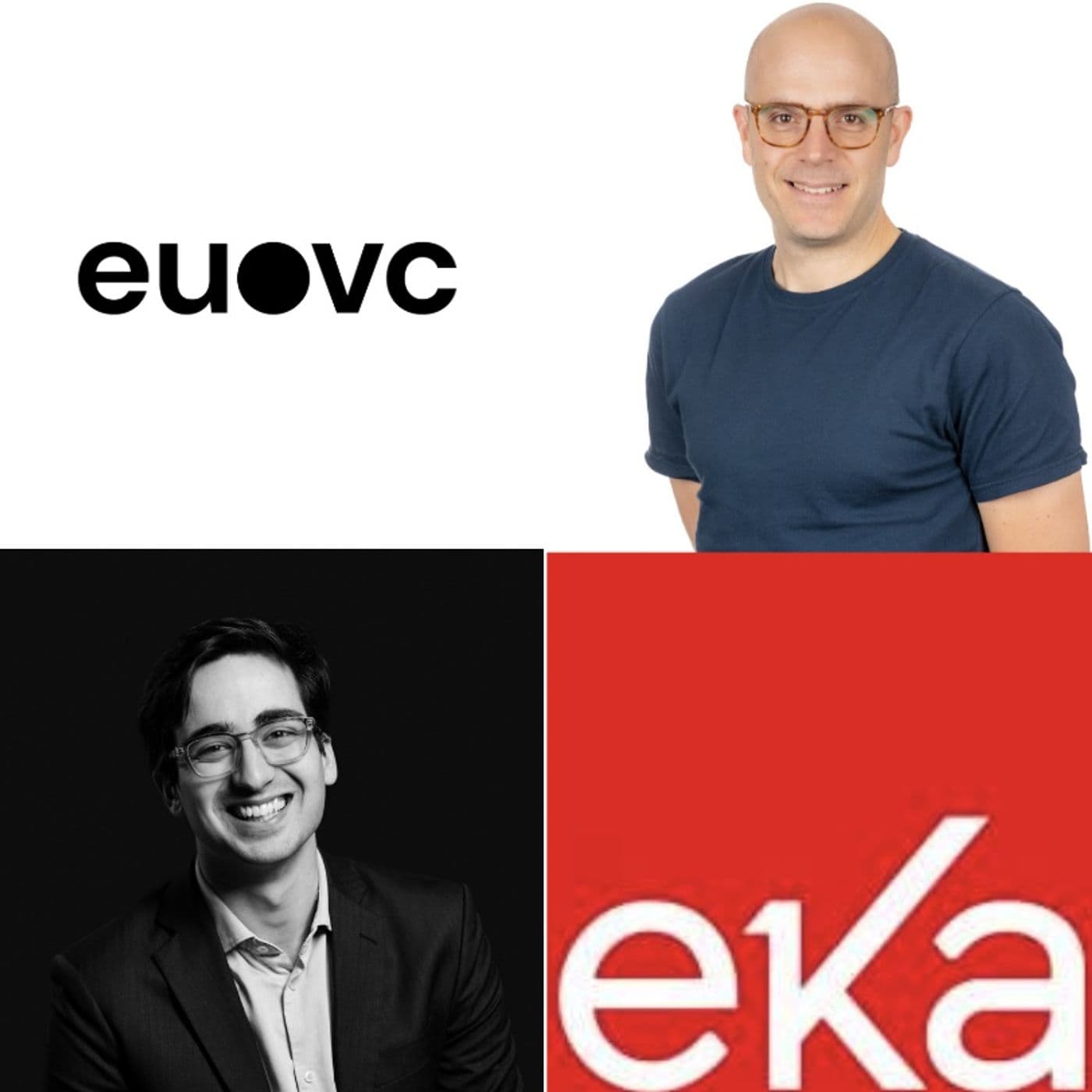
E490 | Jon Coker, Eka Ventures: Building Systemic Impact, Why Shared Value Wins & The Founder Learning Curve
Episode Overview In this episode of EUVC, co-host August is joined by Jon Coker, founding partner at Eka Ventures. They discuss Eka's mission to drive systemic change in consumer health and sustainable consumption through their £68M Fund I, which has backed 21 early-stage companies. The conversation highlights the transition from MMC Ventures to establishing a dedicated impact fund, insights from backing unicorns, and the significance of founder learning velocity as a key success metric.
---
Key Topics Covered
- Jon's Career Journey
- Transition from analyst at MMC Ventures to co-managing partner.
- Founding Eka Ventures with a focus on impact investing.
- Launching Eka Ventures
- Motivation for creating a dedicated impact fund.
- The need for a home specifically for impact-focused investments.
- Thematic Focus Areas
- Consumer Health: Shift from a treatment-driven to a preventative care model.
- Sustainable Consumption: Transforming linear, carbon-intensive supply chains to more efficient, circular models.
- Shared Value Concept
- Definition: Creating economic value and societal value in parallel.
- Real-world examples illustrating the shared value principle.
- Distribution Challenges in Health
- Emphasis on access as a critical barrier in healthcare.
- Case studies of investments that focus on consumer engagement.
- Generalist vs. Specialist Investing
- Eka Ventures positions itself as a specialist in consumer technology with a focus on health and sustainability.
- The importance of understanding the unique market dynamics of these sectors.
- Fund I Analysis
- Review of what worked and what didn’t in their first fund.
- Notable statistic: 70% of their deals had no competing term sheets, indicating a unique value proposition.
- Lessons from Unicorns and Founder Growth
- The significance of founder learning velocity as a metric for long-term success.
- Attributes of successful founders: desire to learn, clarity in communication, and a bias for action.
- Evaluating Teams and Founders
- The challenges in assessing founder potential and alignment with growth objectives.
- The role of psychometric testing and deep references in their evaluation process.
---
Key Takeaways
- Importance of Founders: The founders' capability to scale alongside their businesses is crucial for success.
- Shared Value: This dual focus on societal and economic benefits is essential for sustainable investment.
- Investment Approach: Eka Ventures deliberately seeks opportunities where they can be the lead investor, particularly in consumer-focused areas often overlooked by others.
- Learning and Development: Founders who are committed to continuous personal and professional development are more likely to succeed.
- Industry Dynamics: Understanding the nuances of consumer health and sustainable consumption is key to driving impactful investments.
---
Final Thoughts The conversation with Jon Coker sheds light on how to redefine venture capital through a lens of impact. By emphasizing the importance of aligning economic returns with societal benefits, Eka Ventures exemplifies a forward-thinking approach to investment in the European VC landscape.
For more insights on European venture capital, follow EUVC at [eu.vc](https://eu.vc).
Written by AI. May contain mistakes. Listen to the episode to check what was said.
Transcript
Automatic transcript. May contain errors.0:00What if the venture capital industry has been thinking about value completely backwards? Water is a commodity to me right now, but if you don't have access to it, it suddenly becomes the most valuable resource in the world. And that's the same for capital. While most investors chase crowded deals, one fund discovered something startling about where real opportunity hides. The world spends staggering amounts of money on health care. It's almost exclusively on treating people once they're symptomatic. Trillions wasted on reactive solutions. But what if there was a way to profit by fixing the system itself?
0:35So when we talk about shared value at EECA, we're specifically talking about creating economic value and societal value in parallel. This approach led to something unprecedented in venture capital. The vast majority of the time, when it comes to us putting that term sheet in, we are the only term sheet at that point. 70 % of their deals had no competing term sheets. But even the best thesis means nothing without the right execution. The single biggest driver of success is the founders and their ability to scale with their business. So how do you identify founders who can deliver both impact and returns?
1:11That pace with quality, it's like a cheat code on building a business. Discover the playbook that's redefining impact investing. Catch the full conversation on the Impact Highlight Series.
1:26Welcome to the Impact Highlight Series powered by EUVC, Impact VC and Impact Supporters. I'm super excited for the conversation that we're having today with John. John Coker is the founding partner of EACHA Ventures. He's very deep on everything related to shared value, founder assessments and consumer health to get digital tech. I had a really good conversation here today, but I really had three things that stood out to me. First of all, John talked about how he found his niche in the consumer health and climate check space. Second of all, he talked about how Impact is not a thesis in itself and he really encourages other Impact VCs and general VCs looking at Impact to really find their thesis within Impact.
2:11Third of all, John shared a super interesting fact. He said that out of their first fund, 70 % of the deals they had, and they did, didn't have any competing target sheet. That's what I call true impact additionally. So I hope that was exciting. I hope you're as excited as I am. Let's jump right into it. Here's a few words from our beloved sponsor. Impact VC is a global community of VCs accelerating impact within venture. Their purpose is to cultivate a community and resources to unlock Venture Capital's ability to tackle the world's most pressing challenges. The community is made up of over 900 VCs, including both pioneers and newcomers, including generalist VCs and impact specialists.
2:54Visit impactvc.co to join the community and explore their resources, including the VC Impact Playbook, the founder Impact Playbook, And the Impact Investing for VC's online training, which is designed to help VCs integrate impact practices into their investment strategies. That's a lot of information to get in 30 seconds. Let's put their money down. Tear down this wall. It's more than just an alliance. This is a union of values. Let's start acting. This show is not investment advice and the hosts of this episode may be invested in the funds and companies featured. I'm super excited for today because I have John with me here today.
3:39We're going to talk about a lot of things from shared value to impact to foundry alignment a little bit as well. So thank you very much for joining us, John, and welcome. Great to be on here. I'm excited for the conversation and thanks for asking me out. Yeah, super excited. But let's dive into you maybe a little bit first, going a little bit on the personal side and joining to where you are today. And do you mind telling us a little bit about yourself and what you do today? So I'm one of the founding partners and general partners at a venture firm called EcoVentures. We're an impact focused investor.
4:16We specifically focus on two impact themes, consumer health and sustainable consumption. We're currently investing out of a 68 million pound fund one. I've made 21 investments at that fund so far. Before setting up Eco, I did an engineering degree a very long time ago. went into the city for a couple of years and then that was kind of 2007 and around about that time electric vehicles were just starting to be a thing well they weren't you know mainstream but the tesla roadster was you were starting to see them on the road occasionally and then there was a it was an indian make of electric vehicle called reaver and i think it just really kind of got my engineering kind of interest going and it felt like they were the future.
5:06They actually, to be honest, like a core of the core of that, we're going to come on to talk about it, but the shared value element of an electric vehicle like was really interesting to me. And so this, I was at JP Morgan at the time and I started to research electric vehicles and where they were going and realized that that's when I discovered the venture capital industry. Like I realized that there were of these funds that were backing companies like Tesla and Reva. And so I started emailing them, not really sure why, like just to find out more information. And that then really got me kind of increasingly interested.
5:38And so I actually ended up just leaving JP Morgan with a belief that I wanted to go into venturing. And so that was probably end of January 2007. And I was lucky enough to meet the founders of a venture fund called MMC Ventures back then. And at the time, it was mainly an angel syndicate. So it was founded by three individuals who'd been at angel investing and were kind of bringing together a team to help them source and find great companies. And so I joined there as an analyst, as one of the early employees. And then I ended up spending 11 years there and ended up as co-managing partner alongside one of the founders, someone called Bruce McFarlane.
6:18So that was my kind of journey into venture. And MMC was a generalist tech investor. And so I left there in 2018 and teamed up with my co-founder, Camilla Dolan, who had been working with MMC for a while, four years. And we started Ica. And we started Ica with this kind of core belief that we wanted to change three things in the venture industry. So the first is this focus on shared value this belief that there's an opportunity to build impact and economic value in parallel in certain elements of our economy second was a focus on consumer technology it's what camilla and i know it's where we made money and we believe there was an opportunity for some real impact through that and then the third was a focus on founder development and i believe that we needed to kind of rewire the way that vcs were assessing founders yeah and that was the beginning and and have loved every minute of it to this point.
7:15And yeah, now sort of scaled portfolio with 20 companies doing some incredible stuff. It's come to reality. Could you not have invested an impact out of the more generalist fund that the MMC Ventures was? Why did you create a e-cap? Yeah, I mean, sorry, MMC does do a lot of investing in some of the themes that we invest in. They're slightly later stage than we are. I think that just the time was right for me to start a new fund i'm still really close to the team there they're doing they've done some incredible stuff since i left but uh yeah for me it was the right time to start a new fund and i yeah i wanted the kind of remit to be dedicated to these two impact themes and so that was really the kind of core of it why do you think today that these two areas of impact uh are waiting to sort of create outperformance or top portal returns?
8:10Is there a specific reason for? Yeah, I think there's probably two separate but connected reasons depending on the two themes. I'll go into a little bit more detail about what I mean about the themes. So consumer health for us is all about a shift from a focus on a very treatment-driven healthcare system to a more proactive and preventative one. We spend, the world spends staggering amounts of money on healthcare. I think it's something like$10 trillion. It's basically 10 % of GDP of all the main countries. But if you look at where that money is spent, it is almost exclusively like 95 % spent on treating people once they're symptomatic.
8:50And obviously what's happening is we have an aging demographic and we have rising chronic disease. And so having a system that only focuses on treatment means that the costs of that system are rising exponentially and there's nothing we can really do about it. And so it is not a new concept that we need to shift that to a more preventative model. When you think about what that actually means, it means getting to things before they become symptomatic. So engaging with people outside of the healthcare system, which inherently is a consumer, from a business model perspective is a consumer. You're going to be selling consumer products, whether or not you're selling them directly to a consumer or whether or not you're selling them through other channels, the reality is that product and service needs to be engaging with a human in their daily life in a way that it doesn't if you're focused on selling your products into the healthcare system today into a very clinical B2B style setting.
9:51We believe that that requires a different type of investor. It requires an investor who understands consumer products and services. and so that's I guess our reason for being why we think that opportunity exists and so if you look at the way that we invest in health we are often co-investing alongside your typical kind of health tech investor but we're bringing a completely different mindset to the to the business so that's the reason kind of the reason on consumer health consumer health in the way that we define it is a shared value theme like if we can focus more on prevention then we will have better health outcomes, better quality of life, less health inequality and a lower cost of care, like kind of perfect shared value wrapper.
10:34And then sustainable consumption for us is all about how do we move from very linear carbon intense and wasteful supply chains in our big consumer industries to ones that are more efficient, more circular and less reliant on fossil fuels to power them. And we believe those supply chains are just better, like in every way you look at it. The cost will be reduced and the environmental impact will be significantly reduced. But we believe part of those kind of that shift needs an investor with a consumer mindset. Whereas if you look at a lot of climate tech investors, they're very focused on the kind of deep tech B2B side of things, whereas we're much more interested in the kind of application layer of these new technologies, whether that be in logistics with a company like Hived or the other areas that we invest in.
11:28So that's the two reasons we pick those themes. We think they kind of play to our skill sets and will create a huge amount of shareholder value and a huge amount of societal value over time. I'm actually changing up my whole logic for what we're going to talk about here, but maybe just jumping a little bit on the health side that you're talking about. I've actually spent quite a lot of time in the health area from an insurance perspective in some of my previous jobs. And there's always a lot of discussion about where they should really. So first of all, get people on the health training early enough to actually avoid diseases in the end, but also just convince them that they should spend money from a B2C perspective at least to get into this.
12:11Then you can do a little bit other distribution ways, of course. But how are you seeing this? Are people ready to, first of all, prevent diseases? And is this reversion B2C at least possible in the UK slash European markets? It varies. So at one end of the spectrum, we have investments in companies like RUNR, which is a run training app focused on getting people more active, basically. and they are that's a direct to consumer business that is focused on serving people who have never run before and are very inactive through to people who are trying to go sub three hours in a marathon right so it it's building a brand that caters for everybody and we actually think that's important in that kind of it's it's not what they're not doing is saying oh we're trying to help people who are, they're not building a brand that's focused on people who aren't good at running.
13:12It's kind of an aspirational brand for everybody. And they're having a huge amount of success through that. And one of the things we do at Ica is we track all of the written reviews on every single portfolio company and the variation of reviews from people who thought that they would never get into running and were completely physically inactive and are now hooked on it versus those who are like saying, yes, you know, I've just dropped 20 minutes of my marathon time. It's kind of cool to see. I think there there's a direct to consumer motion. And also, you know, there's a big part of their plans, which are free, which are focused on getting people into running.
13:45So that's easier to do. And other element would be, we have an investment in a business called Flock Health, which is focused on physiotherapy and building a digital physiotherapist. They are distributing, it's a consumer app. Like it's the kind of thing that you would expect to engage with if you downloaded it out of the app store. It's an incredible product, but they're distributing that through your traditional health setting. So, you know, people are referred to it by their GP. And so there, they're not reliant on the consumer paying, but that's important because in that category in physiotherapy, there is a huge underserved group of people who can't afford to pay for physiotherapy.
14:27And those people are they're also most likely to have a job that is giving them back pain most likely not to be able to do their job because they have back pain and least likely to be able to afford private care and so having 13 the average wait time for physiotherapy for the nhs is 13 weeks having someone like that sat waiting for 13 weeks is a massive problem and like flock can solve that so we think in our impact when we think about consumer health we think that distribution channels you need to think really carefully about the distribution channels, especially with the perspective of impact.
15:04I noticed when looking at your website, right, is that one of the first lines on your website is that we invest in founders creating positive system change. My question to you is what does that exactly mean? And is that all new pick startups that create that system change? Because I've talked about a couple of the ones you've already invested in, or how do you make that tangible in your work? I'm going to say like a generalist comment and then I'll apply it to us. So I think great venture investing, not all venture investing, but the way that I think works for us and I think you see done across the world really well is thematic.
15:41So you pick a theme that you believe, you pick a change that you believe is going to happen over the next 20, 30 years, empowered by technology. And then you find founders who are building in that theme. Then if you think about what does that mean at a system change level? Like the two, our two themes are system change. Definitely. What we're looking to find is the best founders building companies that are the building blocks of that system change. I guess that's what we mean by founders building positive system change. Like we're looking for people who share our worldview and are building companies.
16:16I think what we need to be good at is identifying themes and finding great founders. what we don't need to be good at is finding great ideas within those themes it's not our job to think what the building blocks are founders bring us ideas that are the building blocks and and then we invest in them when you're thematic you can also still have some assumptions about what would be the best type of solution whether they feel do you not build those uh sort of hypotheses of uh of this is the best within consumer health that we can look at right now how do you then approach it more specifically is it all inbound or if you would go out and do outbound and chase would you then chase pyrohypopsis or more on a large basis?
17:03Yes it's a really good challenge I think maybe I'll use another example to prove what I mean so we believe that technology is going to enable us to diagnose disease earlier and cheaper well you can only diagnose disease earlier if it's cheaper because you need population level screening so let's say the kind of two go together but yeah so that's a thesis for us so early diagnostics would be a thesis for us and so we're interested in founders building into that we have a data platform that finds about 50 percent of the investments that we make and it identified a company called oxford Cancer Analytics, which is building a early stage lung cancer diagnostic.
17:45Now, the team there shares the same thesis as us, which is, it's important to move diagnostics earlier. But their idea is that they can use a technique called proteomics and combine that with machine learning to identify early stage lung cancer. You know, Arthematic is early diagnostics. Their idea is proteomics, machine learning, and early stage lung cancer. We would never come up with that, those three things. We might come up with lung cancer, but we'd never come up. That's their job. They're the experts there. So I suppose that's what I mean. We have themes within the theme, but the core kind of technological innovation normally comes from the founders.
18:30Maybe then taking a little bit of a step at what we talked about, which is fairly specialized, I think we discussed a little bit beforehand whether you would see yourself as a generalist fund or more as a specialized fund. How do you view that and how specialist do you need to be when you're in the fund? Maybe, again, step back, think about venture as a whole. If you think about where you can focus as an investor, you can focus on a stage. So you can be broad or narrow at stage. So you see some funds that will go pre-seed all the way up to growth. And then you see some funds that are super narrow on that.
19:10We're pretty narrow on that, right? We're pre-seed, seed. So, and there's expertise in that. So that's one area of focus. Second area of focus might be sector. There you'll see like insure tech funds or fintech funds or logistics funds. Or, you know, you see these kind of very focused and that's not us. So from sector, we're pretty industry agnostic. The third area, I'd say, is business model. So there you'll see enterprise software or SaaS or potentially AI, but I think that's a bit more, or consumer tech. There we're really focused. We like products and services that ends up in the hands of an individual, and we believe we really understand that, and those go to market motions.
19:58and then you have thematic investors and typically if you're a sector focused investor you won't be thematic we're really focused on two themes and those themes cover multiple sectors but we're very focused on them and then finally you have geographical focus so you might be an investor that focuses on the whole world or you might be focused on a single country and we're focused on the uk we think that is important at seed we think it's important to be a local investor at seed so So I guess depending on who you talk to, they will think we're very focused or not focused. If you talk to someone who's only focused on insurance technology, they will think we're super broad.
20:36If you focus on like a generous investor across the world, they'll think we're super narrow. So I don't think impact is different to that. Like we think we're pretty focused in the way that we invest and we've picked thematically, that's where the impact plays. We're pretty focused on two themes. Yeah, I think there's a lot of interesting things you said there. I think one point that I've actually not heard that put as clearly before is the difference between thematic and sector focus. Because often those are put in the same bucket as one overlapping thing, but you're right, it is two separate parts.
21:12When preparing this quickly, I also saw that you said one thing, which was that 70 % of your investments that you made actually didn't have a competing term sheet. Can you elaborate a little bit on that point? Yeah, so that's actually something that we kind of discovered doing the analysis looking back on FundOne. And our style as an investor is we really like to be the lead or the co-lead. We really like to be the first institutional investor. Typically, if you look at the majority of investments that we've made, we're investing one to one and a half million pounds in rounds of two to three, and we're the largest investor.
21:50what we've actually found when we look back on it is that the vast majority of the time when it comes to us putting that term sheet in we are the only term sheet at that point there's there's something that people use a term that people use in the impact world called additionality for us that is a real sign of like we have a reason to exist as a VC what comes next from that which is important to think about is it's okay to be different on your first investment but then you want your companies to be able to access capital the next round so you kind of need something to change so that they don't have a problem at the next round and we have also like really good data on that happening like our companies have a very very good follow-on rate have raised a lot of capital from great investors so we kind of feel like we have this place in the market where we are different and it's really valuable and i think there's a few parts that play into that consumer tech investing is is not something that lots of people are doing at the moment it it just for whatever reason the industry is much more excited about like enterprise software or whatever it would be and that's great for us because we think there's a huge amount of value there and then i think the second thing is that we just like there's stuff that we will do that a lot of other like we quite like stuff that operates in the real world like a logistics business or yeah business that's helping visually impaired people navigate like stuff that you can kind of touch and see and like happens in people's lives is interesting to us but complicated as an investor and i think that is different about the way that we invest yeah i'm thinking the status quite rare for the for this extent do you have a benchmark of uh of the industry or or not really because I was surprised to see the level.
23:44Yeah, no, we don't. Yeah, we don't. I mean, I'm pretty sure it's high, but we don't have a benchmark on it. Yeah, no, I'm 90 % sure it's high, but I wouldn't know if they didn't want to. I think the other, sorry, there's a really important kind of sub point with that is that if that's where you're playing, you also need to be very like kind of, that's not the same as saying that means that we get, like we can price wherever we want. Like the founders that we're backing still give themselves options they're just we we want to be like really really fair in the way that we price the round so i think that's also an important point it's kind of like this is a strange analogy but a lot of people talk about the venture industry as being a commodity like we're just selling capital and and that's a commodity but if you think about maybe like use another analogy which is water like water is a commodity to me right now because i it's here i can turn the tap on.
24:41But if you don't have access to it, it suddenly becomes the most valuable resource in the world. And that's the same for capital. So as a VC, in order not to be a commodity, you need to play in places where capital isn't easy to access. And so I guess that's important to us because then we're valuable. People talk about value add in VC. Well, the most value add you can ever do is be the investor that really believes in a founder when others don't and believes in a way that they're prepared to put really sensible terms on the table. Especially as an impact VC, it's important, right? Because you said it yourself, right?
25:21You pretty much have additionality, two ways to companies. Either it's putting in a ticket at a point when nobody else wants to cook it for the table, or then it needs to be throughout the whole period. you need to be adding extra value somehow that nobody else would have been able to give this company. Otherwise, you're not having impact additionality. Maybe jumping a little bit, because now you started talking directly about shared value as well between the founder and you. Can you give us a little bit of a definition of what that is and how you use it at EECA? Well, yeah. So when we talk about shared value at EECA, we're specifically talking about the process of creating like economic value and societal value in parallel.
26:03I always end up using food waste as the example, right? So, I mean, you walk into a supermarket and there's food everywhere and something like 20 % of that food is going to get wasted. 15%, 20 % of that food is going to get wasted. And the reason that that waste exists is because the supermarket can't accurately predict what it's going to sell that day. And so it kind of has this trade-off between the cost of food that it doesn't sell if it's wasted and the margin of food it doesn't sell if it's sold out. And it's kind of got that equilibrium. With modern technology, you can shift that equilibrium.
26:47So you can come better at predicting what you're going to sell. And so therefore that trade-off changes a bit you can have less food waste without giving up the margin and if you do that your economics improve because the cost of the food waste reduces for the same margin so your bottom line improves but so does your environmental impact because you're holding less food waste and so that's that kind of double like the two together they're in luck and that's shared value. So if you look at all of our companies, that dynamics at play, whereby they are doing something that both improves the economics of their industry and the impact of their industry.
27:27And that's what we're looking for. And maybe without mentioning any, but do you feel like there are some impact startups that are not doing that today or that get venture backing, but that are not having that, I guess you call it a lockstep model between societal value and and economic value as of how do you then assess it when you're when you're looking at a company i would say that there is a really important like hugely important part of the impact investing world where that doesn't exist where they're where they are looking like actively like kind of on a mandate where they will take a a reduction in returns in order to deliver an impact and and that is really important so i think there's that area and i i'm fascinated by that area and and it's hugely important i think there's another area where you're investing and relying on some kind of demand trend to drive the growth so it might be you're relying on consumers being happy to pay a bit more for more sustainable goods that's not shared value that's just kind of a demand trend driving it or it might be that you're relying on a regulatory change to drive a behavior which increases like purchasing in that area that's also not shared value we actually think that if you get the shared value bit right you then access those demand trends and so suddenly you have more demand plus better economics and that's like a double whammy on the on the shared value for us to invest we need the shared value first yeah i think you've uh you've done fairly fairly well so far with uh with that from from what i could understand beforehand both see that you i think in all the years you've invested in vc if you've backed two companies that have gone to become unicorns i would say are there any sort of business building lessons from from those investments or from the time you you've done all all the investments in these 15 years and and are there any things that you would both regarding to shared value but also outside of the shared value model that you would actually sort of really recommend people to think about when they look at investments?
29:39The single biggest driver of success is the founders and their ability to scale with their business. When I think about the founders that we've worked with who've achieved that, like real scale in their organization, they have had this unbelievable desire to learn. And, you know, there's probably a few different, I mean, without going into the detail of it, but they do just have this drive to kind of upskill their ability ahead of their business. So you think like their business is scaling really quickly, but they are scaling even. They kind of know that they're learning into where they need to be in a year's time rather than catching up and trying to kind of hold on.
30:19And that's really powerful. And I do think you can kind of develop, we believe you can look for that as you're investing. I think some of the behaviors that we then see in founders when they are on that journey is extreme clarity of communication, major bias for action. Like they make decisions, they make thoughtful decisions very, very quickly. And they have an incredibly high quality bar. And like those kind of things together, that pace with quality, it's like a cheat code on building a business. And you've got to find it. And so, yeah, I just, it always comes back to people for me. If you think about what we're doing now, the alignment with what they're trying to achieve is incredibly important to us.
Read the full transcript
31:09Like if you find people who are trying to do this are aligned with us in what they want to create and they're creating it like I just described, that's really powerful. Hugely energizing. Like working with people like that is, it's just, you get so much energy from engaging with them. I really like the concept of scaling the founder at the same time as a scaled company. Did you create that concept or is that something we'll do? I don't hear a lot of other people talk about it. But the content that is being created around founding businesses is a lot to do with founders wanting to learn. So, yeah, I mean, we just had a few experiences with founders where they were learning, they were doing stuff to learn that really surprised us, whether that be, you know, an executive MBA while running a business.
32:01All those traits I just described, they do better than I do. And so, you know, you kind of listen to what they're doing and you can't comprehend how they're doing it. Like you don't understand how they're running the business like they're doing and finding the time. It's not even finding the time. It's like having the discipline to carve out the time to learn. Yeah, we've just seen it three or four times in founders that have scaled huge businesses. And we then set up Ica to try and select for it. And we see a higher percentage of it in the founders we work with at Ica, which is really exciting.
32:33And have you then sort of created a way to identify these early on? Because having been on the VC side myself, it's also hard to see if this person is really learning quicker than that. If X process is only free, then why do you? Yeah, so we do have a process that we use. We put a lot of thought into what we do. I don't know if the process itself is particularly good at identifying development capacity or it is the investment in the time and doing it over and over and over again that means that you then become better at understanding it. we do a process between like before we do we go issue a term sheet or investment committee or kind of any kind of due diligence where we focus exclusively on the founders we ask them to take a psychometric test with hogan not because we have a view on what a good psychometric profile is but because it really helps us then for the next stage which is we have a 90 minute session with each of the founders where we ask them to kind of take us through their life and their experiences and talk about where they've excelled and what they've learned and the decisions that they've made.
33:49We learn a huge amount from that and then we do really detailed references. And what we're looking for is awareness of their own, like, have they got really good awareness of where they're strong and where they're weak? Have they got really good awareness of how they impact on people around them? have they got really good structures in place for learning and then can they point to times in their life where they have rapidly developed and like outperformed uh and that can be in any context and actually what we see is that you often meet people where they've just done it three or four times through their life and you know it could be it could be in academics it could be in sport it could be in music it could be in early business it could be in anything but they just have this ability to take something that's new to them and become very, very good at it.
34:33And is that different for an impact startup founders than more traditional startup founders? Or is there anything you would say that you need to think about with specifically looking at an impact startup founder? The why, I guess, maybe, which we spend some time with them on, like why are they building this particular business? And there's normally a story there that kind of points towards it. And that's important to us. the process of building a business is the same as in the need to develop your leadership rapidly is the same in a generalist VC back business as it is in an impact VC business.
35:08One of the key measures of impact is scale. There's depth and scale. And I think a lot of the impact industry forgets about the scale bit. These businesses will be impactful if they scale, but if they stay tiny, they won't. And so finding people who are up for building big business is important in a way that still maintains that impact. If you were a generalist investor and you were looking at the impact field or impact VC field, what would be your best tip for that generalist investor? So we've co-invested with a lot of generalist investors in our portfolio. And normally what happens is that one of our companies is in one of their themes or sectors.
35:49So we We have an investment in a company called Urban Jungle, which is in the insurance industry. And that has a number of specialist insurtech investors in it because they are trying to change the insurance industry. And that fits with what insurers focused investors are looking for. And so I think if you're a specialist or if you're looking for particular things as a generalist then kind of think through what what's the the change that that technology is going to create what's the positive change that that technology is going to create in your industry and then look for companies within it probably one of the other points that i i make all the time is there's often confusion between impact and esg and so that is important and so impact is is what the company does, what the product does, and ESG is how the company does it.
36:44And both are really important, but I think the kind of delineation between the two and the way that you think about yourself as an investor is equally important. Would that be a similar tip that you would give to another impact investor? I assume that since they would already know some of these impact things, like what would you give as an tip to another impact VC investor? It's difficult to give tips to other people because there are some great impact VCs out there. I think in general, VCs and impact VCs should think more about founders than they actually do. If you ask any VC or almost any VC what the most important thing is, they will say people and team.
37:26if you ask them okay great how do you think about understanding people and team normally breaks down a little bit and that I think is something that the whole industry could benefit from changing yeah I think that's a good final tip and a way to round it off super super interesting John and thank you so much for joining the conversation I really appreciate it I loved it thank you yeah see you soon Here's a few words from our beloved sponsor.
38:24their impact playbook and their impact investing for VCs online training which is designed to help VCs integrate impact practices into their investment strategies. It's a lot of information to get in 30 seconds.
38:39Tear down this wall. It's more than just an alliance. This is a union of values.
From the publisher
In this episode, August is joined by Jon Coker, founding partner at Eka Ventures, to unpack how the team behind the £68M Fund I has backed 21 early-stage companies driving systemic change in consumer health and sustainable consumption.
They dive into the team’s shift from MMC Ventures to launching a new kind of impact fund, the lessons learned from backing 3 unicorns, and why founder learning velocity is Jon’s No. 1 metric for long-term success.
Eka Ventures is an early-stage VC fund with a clear mission: to back the founders building a more equitable, sustainable future with business models that scale both shareholder value and societal return.
Here’s what’s covered:
- 01:50 Jon’s journey from analyst to co-managing partner at MMC
- 05:15 Launching Eka Ventures: why impact needs its own home
- 08:30 Choosing the themes: consumer health & sustainable consumption
- 12:45 Building conviction around shared value
- 16:00 Distribution in health: why access is half the battle
- 19:25 Generalist vs. Specialist: where Eka fits in
- 23:10 Fund I analysis: what worked and what didn’t
- 27:45 Operating in the “real world”: why it’s harder, but worth it
- 30:10 Lessons from unicorns and founder growth
- 34:00 The problem with how VCs evaluate “team”


