
In short
EUVC Podcast Episode Notes
Episode Overview
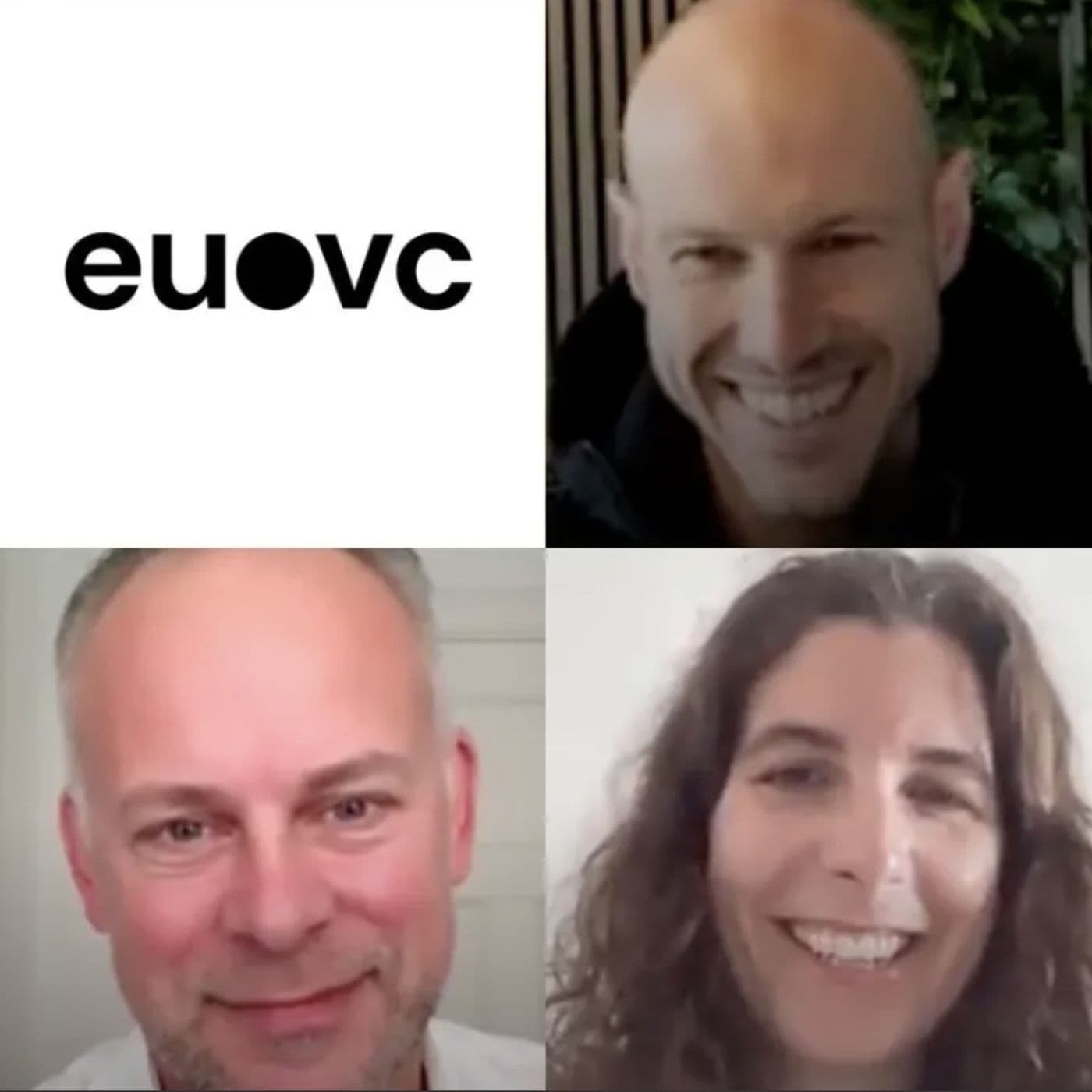
- Title: E497 | Nicole LeBlanc, Woven Capital: Corporate VC, Strategic Alignment & Value Creation at Scale
- Co-hosts: Andreas Munk Holm and Jeppe Høier
- Guest: Nicole LeBlanc, Partner at Woven Capital
- Description: Discussion on corporate venture capital (CVC) strategies, the role of Woven Capital as a growth-stage fund backed by Toyota, and insights on navigating corporate dynamics to create value for startups.
Key Topics Covered
- Structure of Woven Capital
- Relationship with Toyota: Woven Capital is a single LP fund focused on growth-stage investments aligning with Toyota's strategic interests in mobility, industrial sectors, and sustainability.
- Comparison with Toyota Ventures:
- Toyota Ventures focuses on early-stage investments as a feeder for Woven.
- Woven Capital emphasizes growth-stage partnerships that can collaborate efficiently with Toyota's business units.
- Portfolio Success Team Model
- Internal Collaboration: Woven's Portfolio Success team facilitates relationships between startups and various Toyota business units to navigate complex corporate environments.
- Bridging Gaps: The team helps startups leverage Toyota's resources while maintaining their independence.
- Challenges in Corporate Venture Capital
- Cultural Differences: Nicole discusses the varying approaches to CVC across different regions (Japan, US, Europe) and the internal challenges of aligning corporate culture with startup needs.
- Incentives and Collaboration: The importance of collaboration incentives for Toyota's business units and the need for clear communication and priority setting.
- Insights for Founders
- Identifying Red Flags: Nicole highlights how founders can spot potential issues with CVCs, such as lack of engagement or unclear M&A strategies.
- Choosing Between VC and CVC: Founders should assess the value proposition of corporate alignment against the potential conflicts of interest that may arise.
- Value Creation in CVC
- Key Contributions: Nicole outlines three main areas where CVCs can provide value:
- Subject Matter Expertise: Access to in-depth knowledge from industry experts.
- Scale Benefits: Leveraging corporate resources and networks.
- Long-term Vision: Building relationships that can offer stability and strategic growth over prolonged timelines.
- Toyota Open Labs Initiative
- Objective: A program aimed at facilitating collaboration between Toyota and startups in Europe by mapping business unit challenges and aligning budgets.
- Goal: To streamline the engagement process for startups looking to work with Toyota.
- Learnings from Fund Investing
- CVC LPs’ Needs: CVCs need to understand what GPs require to foster successful partnerships and maintain an open communication channel.
Episode Takeaways
- Strategic Alignment: The importance of corporate alignment without losing startup independence is crucial for mutual success.
- Networking Opportunities: Founders are encouraged to leverage resources like Toyota Open Labs for potential collaborations.
- Cultural Integration: Successful CVCs must recognize and adapt to the cultural dynamics within their corporate parent companies and their partners.
Final Thoughts
- Nicole emphasizes the ongoing need for innovative corporate partnerships and the potential for CVCs to act as facilitators of significant growth opportunities for startups.
- The hosts encourage corporate entities interested in CVC to take lessons from Woven Capital's approach to effectively integrate innovation and strategic investment.
---
This markdown file provides a comprehensive summary and insights from the podcast episode, emphasizing key themes and takeaways for anyone interested in corporate venture capital and its implications in the European market.
Written by AI. May contain mistakes. Listen to the episode to check what was said.
Transcript
Automatic transcript. May contain errors.0:00What if the world's largest automaker could actually make your startup unstoppable? As a CBC, I have the ability to be a kingmaker because I could bring contracts in for those companies. That's Nicole LeBlanc from Woven Capital, Toyota's$800 million growth fund. But here's the problem every founder faces with corporate giants. Startups don't have the resources and time to force it. So how does a 300 ,000 employee behemoth actually help instead of crushing young companies? Nicole reveals their secret weapon. We have the portfolio success team that can really be this sort of shepherd within the company.
0:32These aren't just empty promises. Watch what happens when Toyota's business units hit roadblocks. They also do it the other way around, where they're already talking to those teams and they come to us with a problem. And then we're able to then go hunting for solutions and companies. But there's a catch that separates the real players from the pretenders. If we're not a good steward of capital for Toyota's money, then the strategic return will be more challenging. The window is narrow, but the opportunity is massive. We're looking for companies before they're raising their Bs. Go to that Toyota Open Labs website because that's specifically only for Europe and we're really trying to build out the European market in collaborations with the European team.
1:07Discover how the world's most unlikely partnership is revolutionizing mobility and why every founder needs to hear Nicole's playbook for turning corporate muscle into startup rocket fuel.
1:20This will definitely turn. Tear down this wall. It's more than just an alliance. This is a union of values. Let's start acting. This show is not investment advice and the hosts of this episode may be invested in the funds and companies featured. Welcome back everyone to the EUVZ podcast. Today we're doing yet another of our beautiful corporate deep dives together with our good friend Jebe. Jebe, welcome to the pod. Thank you. And then we're talking to Nicole LeBlanc. Nicole used to be a lot in Copenhagen because she used to be with 2150, good friends of ours here at the show. But today she is no longer.
2:06She is now with WoW and Capital, which is an 800 million growth stage fund. How should I say this? I was about to say managed by Toyota, but it's not Toyota's venture arm. Nicole, maybe you could tell us a bit about that whole investment approach around sustainability, mobility and smart cities. And then after that, we get into the meat of this episode, which is, of course, understanding how to best work together with corporates. Thanks for having me here. I love listening to you guys. You have lots of great people and lots of great topics. So at Wolpen Capital, we're the growth stage venture fund for Toyota.
2:41So we're backed by Toyota and we make growth stage investments in companies that can collaborate with Toyota. So across three key areas, the first being mobility, which is what you'd expect from a company like Toyota. The second being industrial. So, you know, how can we improve our manufacturing processes, reduce cost, you know, improve efficiency, help with sustainability. And then lastly, sustainability and helping us meet our 2030, 2040, 2050 goals. And really those three pillars are intertwined. So companies can often fit in more than just one. Is Womern Capital a balance sheet fund or is it a single LP or what is the legal structure around it?
3:20Yes, we're a single LP fund. So we are set up that way by design. We have a sister fund called Toyota Ventures that does early stage investing. They're mainly based in the Bay Area and they have a similar structure. So all of us are set up because we have both financial and strategic alignment goals. And it was really important to have that separation. Tell me a bit more about that sister fund and why the decision was made to make two individual. So Toyota Ventures has been around since 2016. And they have two streams. So they have their Frontier Fund, which invests in a lot of very disruptive tech that's more kind of general.
3:58And, you know, that would be under mobility and industrial and other categories. And then they have their climate fund as well. And so they have been focused on early stage. So really as a feeder system, if you go to their website, it talks about, you know, we are explorers. So they're really looking for these technologies that can, you know, drive the long term vision of where Toyota needs to go, what we need to be thinking about, what we need to learn. And then as some of those companies were aging and growing, an early stage fund, it's a very different strategy to then bolt on a later stage fund just on top of that.
4:29So the decision was made to create a separate fund. And Wobin Capital is our name. It's a very interesting name because if you look at the history of Toyota, the original founder, his father was an inventor. And he invented the very first automated weaving machine in Japan. And so if we think about where we are now, we're at this, you know, really important, I would say, time in the automobile industry where we're all transitioning to these mobility companies. And we really need to get back to our roots to think about how to weave the past and the future together. And, you know, it really, you know, getting back to our roots around this inventor culture.
5:02And so that's one of the rationales behind that, or that is the rationale behind the Wilkman Capital name. You're touching on a lot there that, of course, relates back then to Toyota. Whenever we do these podcasts, we try and really dig a bit into what is that relationship between the fund and the mothership and why is it actually valuable? How does that affect if you take money from you guys, if you collaborate with you around the cap table? So maybe you can talk a bit about that. Yes. So we, both us and Toyota Ventures, report up through the CFO function. And that's by design because it really needs to be about making money.
5:41If we're not a good steward of capital for Toyota's money and being able to provide that financial return, then the strategic return will be more challenging. So we're really this balance between both the strategic and the financial return elements. At Wolven Capital, the strategic element is much stronger than it is for an early stage fund with Toyota Ventures because it's so much harder to have a strategic collaboration with a seed stage company. need. They're just not ready to work at the scale that Toyota needs, but they're really interested in learning from Toyota and understanding what we're doing and kind of sharing that back and forth.
6:14At Woven Capital, we really have what we call these business unit champions. So we have a portfolio success team. So there's the investment team that looks at making the typical investments, doing the due diligence, being on the board and managing the investment like a traditional VC would. But then we have the portfolio success team that can really be this sort of shepherd within the company. And so they are often co-located with some of the business units. They're meeting the business units. They're understanding what Toyota's priorities are. And they're helping our companies project manage kind of in a way to be able to then navigate Toyota.
6:50So what happens is we make an investment in the company and we found one early collaboration. And it might be with, you know, TME, Toyota Motor Europe. And it's to, you know, do something with that group locally, but it could actually deploy across Toyota globally. But Toyota Motor Europe has a goal of serving their European customers. And sure, they can make introductions to maybe their counterparts in the US or Japan, but we actually take that as an OKR. And that's something that we do is we then are able to then take that company and help them navigate. And we're able to get really great feedback.
7:22So it might not fit the US market for various reasons because the The technology just doesn't apply there or the market's different. So we can give that company that feedback very early and say it's not actually going to work for Toyota. And so then it's about optimizing those resources and getting that feedback loop in place really quickly. So you're part of the investment team, right? So what is your connect to your core colleagues then? Is that part of your job or is that only through your value creation team? So our teams work really closely together. Most of us actually are in Japan. So if you look at the team, we're actually not a huge team.
7:58So we all know each other and we all sit together and we're able to really have those dialogues. We have, you know, like every venture fund, you know, our pipeline meeting every week, a couple of hours long. And our value creation colleagues join that meeting. So it's not just the investment team talking about, hey, this is how we're moving in due diligence, although that's the primary point of the conversation. We also touch on where the strategic alignment could be and how strong we think that is. And how do you leverage the value creation team under due diligence? So it's great. So there's two types of deals where, you know, through our network, if you look at the profile of the investment team, none of us worked for Toyota before.
8:35All of us come from mainly a financial background. We have one engineer on the team, so he always gets the really good detailed questions in. If you look at our team, you know, we're really focused on those, you know, kind of like typical investment elements. And then what we do is we find deals and we would really love to do this deal because we think it's a great fit, both from a financial and a strategic perspective. But we don't have maybe the direct relationship with some of those business units. So our value creation colleagues are able to go in and test the waters and see if this is something of interest, you know, set up a demo, see if they want to do that.
9:08They also do it the other way around where they're already talking to those teams and they come to us with a problem. They're saying this team is looking for a solution that does X or Y, and then we're able to then go hunting for solutions and companies. We may be monitoring that sector as well because we do some thesis-driven approaches where we actually do an assessment of the market and of what Toyota's needs are. So we're sort of monitoring sectors that we know are a priority for Toyota. Sharing a little bit from my own background. So at Merck, what we actually then did when we did follow-on investments, we had a portfolio model and did portfolio ranking.
9:42So we would actually leverage our value creation team in the collaboration between the startup and the core. We would rank that together with a financial ranking. And then it was a classical BCG matrix. Top right corner gets the money and the attention, right? Is that something you do at Bowen? We don't necessarily put it in a matrix per se, but as part of our due diligence and in our quarterly priority setting, we're able to understand what should a priority be for our team and what is the priority for Toyota. So there's a little bit of, I would say, near-term and longer-term strategies where there's some things that are near-term.
10:23We want to reduce costs now. We want Toyota to be more competitive. We want to reduce costs, particularly with everything going on with the geopolitical situation and tariffs and things like that. So there's a couple of areas we're really focused on getting companies to help Toyota now. But there's a couple of other areas, if you look at some of our portfolio companies, where we just really want to understand what the potential is for Toyota to play in this space or to get access to information in this space. So space is actually one of the areas. We made an investment in a company called Stokes Space, and they make a fully reusable rocket.
10:56So both sides of their rocket is reusable. And it's really important from our perspective because Toyota's been doing some work on the lunar rover. You know, is this an area that could be of future strategic value to Toyota? The future of cars is all about connectivity, and space is going to play such a key role in that. And so although it's not something that Toyota is able to do now, it is something that we're going to have to help Toyota figure out for the future. Are there any incentives in line for your core colleagues to collaborate with you? No. So the different Toyota groups, they have their own KPIs and OKRs.
11:30ours. What we have done and we've just started is we have an annual summit and we bring a lot of our, we bring all of our portfolio companies together and we bring and we invite many Toyota colleagues. And then we have kind of like a floor or almost like CES where people could walk the floor, talk to the, you know, the head of BD or the head of engineering for a lot of our portfolio companies so that the engineers within Toyota can really kind of talk technical elements with them and learn about it because we've been able to map to certain business units where we think there's an immediate priority, but we don't know what's going on across.
12:05Twitter is a huge company. There's over 300 ,000 employees. So being able to then make sure that other people could just see organically and apply that to their job. And then we also highlight case studies. So we pick two or three companies that are working really, really well with Toyota and highlight that as an ideal case study. So it's more about the carrot versus the stick at this point. So one of the very, very challenging things in corporate venturing in general is getting the cultural alignment right and integrating your CVC into the core competences. Could you share a little bit more about this conference?
12:39Because I studied a little bit before we went on the show here. Because I've not really seen anything similar. And it seems to be quite successful because you're gathering a lot of people in the same space. So could you share a little bit more for the listener? I'd like to say we're trying to find how to have the best of both worlds. So, you know, as a CVC, I have this, you know, group of this brain trust of, you know, these Toyota engineers and all of these Toyota business units who are deep experts in their field. So in theory, I should be able to have the best financial returns out there because I have all of this customer information and I have the ability to be a kingmaker because I could bring, you know, contracts in for those companies that I know are relevant to Toyota priority areas.
13:23but we all know it's a little more challenging than that. It's not that simple. And so we have multiple cultures within Toyota because although we're based in Japan and a lot of decisions are made here, there's still a lot going on in the US market and a lot going on in the European market that are very localized to those markets specifically. So they have to make their own decisions there. And I would say like just generally between those three large geographies, there's huge cultural differences in the way we work and the way we work with startups. startups. So it's challenging because we really have to spend a lot of face time, you know, with a lot of our business units really trying to understand what their priorities are.
14:00And is this something that they want to bring, you know, a startup in to help? Because if you look at a lot of, you know, kind of CVCs in the auto sector, some have done, you know, gone really deep on batteries, as an example, and made lots of battery investments. We're actually not because Toyota has a huge battery team doing a lot of innovation in-house. And there's really not a lot of room for startups to participate in that right now at this point in time. And so it's really about trying to figure out where the spots are that the startups can play a role because there's sort of like the build by partner analogy we always talk about.
14:30And, you know, we don't want to push a rope. We want to find the willing business units that are ready and able to work with startups because startups don't have the resources and time to force something. We agree. You know, oftentimes I describe, you know, a CDC as an organ transplant. and what you're doing right now is feeding kind of the human body the medicine, right? So that is the culture for me, right? It's C-suite and board talking about, you know, the CDC at all point of time and how important innovation is. So I think it's spot on what you're doing. Super, super interesting. So you recently made an article for Forbes on value creation.
15:12Could you give us a little bit more detail on that one? Because, you know, I read through it. I'm 100 % in agreement with what you wrote. So let's bring this to the listener. Sure. So there were three main points on that. And it's really about kind of like the changing mandate of CBC. When you think about, you know, CBC in general, it used to be just these big corporations putting small checks out everywhere, They're really just using it as a business development tool, trying to hedge against maybe internal projects or trying to figure out who is going to be the winner. And that's not really the case.
15:45Like if you look at like a lot of your previous guests, and some of them have mentioned this, that their teams are, you know, financially motivated. Their teams don't come from the corporate HQ. And, you know, we're there to really try and bridge the gap between, you know, those two types of organizations. And so there's three things that we feel CVCs can bring to the table. And that's what we try to do every day. The first one is subject matter expertise. So we have engineers, like as an example, I spend a lot of time with our hydrogen team. And these engineers and technical and business people have been working on hydrogen for 25 years.
16:18They're deep experts in this field and they're deploying and they've seen the highs and the lows and the highs and the lows. And so we're able to really bring that deep expertise to the startup. So that's really important that they can get this real-time feedback as to what's going on with a friendly customer. So we want to be collaborating with all of our companies. And so it's across all of those sectors that we can bring that subject matter expertise. The other one is scale. And so that's something that Toyota really has. We sell well over 10 million cars a year. We have the Toyota production system.
16:51And we're able to really help give that feedback to our startups. Sometimes it can be technical. Sometimes it can be business. But really helping them understand what we're doing at scale and how to bridge the gap for them to get there. And then lastly, it's about long-term value. So although we do have financial returns as a motivator, a lot of the projects that we're working on within the automotive industry, there are three and four year design timelines. And so if a startup is willing to be in that process, it's a lot of work at the beginning to build the relationship and to go through all of the requirements.
17:29But once you're there, you're in that process and you have that stability that comes with that. And so a lot of CVCs can bring that long-term vision to the table. So those are the three things that we really spend a lot of time thinking about with our portfolio. When you kind of talk about this subject, are there any of your portfolio companies that you normally highlight? A couple. So we actually have three in Europe. So we are a global fund. Most of us are based in Tokyo right now, but we have 16 investments, three in Asia, three in Europe, and then the rest of them are mainly in the US. So the three in Europe, we have a German company.
18:08They actually, nicely enough, they hit all three of our pillars. So we have a German company in the mobility sector. They do virtual sensors. It's called Compredict. And they can actually help remove hardware from the vehicle, which is a cost-saving element. And then they increase the functionality, particularly around preventative maintenance, which is really important around the longevity of things on the car. So that's number one. The second one, and they're working actively. So they started working with our team in Europe, and now they're starting to work with our team in Japan. Then another one is called Chapeo.
18:42It's a French company based in Paris, and they're helping with supply chain visibility and supply chain elements. Particularly, you know, it's becoming more and more evident that that's really an important part to be able to have control over. And so, again, they started with our European group, but we're bringing them into the U.S. market with us as well. And then lastly, on the sustainability side is a company called Corvus, so a great Nordic company based in Norway. And they are focused on zero emission shipping. And so they have batteries, but they're also using our hydrogen fuel cell. And we're able to really help them hit those goals.
19:17And that's an adjacent market for us. So it really helps us understand what's going on with hydrogen in a market that we normally aren't actively in because, you know, we don't make ships and it's likely not something that we'll do. So those are the three that we talk about, and all three of them have very active collaborations with our different business units. Having that in mind, then going back to your Forbes article, right? One of the discussions there was also, as a founder, how should you choose between a VC and a CVC? Yeah, I think it's really important for the founder to know what they're looking for from their investors.
19:52So if they really do want that corporate alignment, and there's pros and cons that come with that. So sure, we can bring this really quick, real-time feedback loop. We can give them technical or business information and data on what's important for us as a customer. But at the same time, you know, if we could be a potential acquirer or they have more than one OEM, as an example, on their cap table, it can actually be a lot of juggling for them to be able to understand the conflicts of interest and how they're going to interact, you know, with that corporate. So it's not for everybody. I think it's just really important for the founder to know what's the value this CBC brings, but what are the challenges that come with it?
20:35And a lot of it depends, you know, on the different models as well. If it's a balance sheet investment versus, you know, an LP, you know, kind of like a separate entity investment, they often have different mandates and different goals and really trying to understand, you know, how they work closely with the M &A team or, you know, how closely they work with their business units. As an example, we have a firewall between us and the business unit. So I go to the board meetings and my colleagues go to the board meetings that we're on, but we don't share those decks with our business unit. And we've been very clear with our companies that we don't do that.
21:06Now, if I think something's very relevant and I'd like to share it, I get their permission and say, do you mind if I share this section or if I share slides five to eight with the business unit? And we often have a monthly or a quarterly call set up so that all of them can talk. And sometimes they're talking without us, which is great. They don't need us there. And so it depends on the company. We're really trying to manage that conflict of interest element very closely because we think it's really important to have that transparency with the founder. I think it's really important, right? I'm one of the ones that are super pro CVC.
21:38Of course, otherwise I wouldn't run this. And I think oftentimes, you know, as a CVC, you bring even more to the table, right? Because of the network you get from, on your side, from Toyota, right? Can I ask the both of you a reverse question then, so to say, because now we ask the question, what should founders look for? Why is it good? And so on. What would you say are the signals, both for a founder or a co-invester, that this corporate is maybe not a good partner to get around the cap table? Seeing that board interaction is really important. So who's going to be on the board? That's a very important question to ask.
22:18Who's going to be the observer, the director on your board? And if it is the investor and not the business unit, ask that clarifying question, like how involved is the business unit? So making sure that you understand how the triangle of founder, investor and kind of corporate business all work. I think that one's really important because, you know, I have relationships with the business unit and it's about, you know, kind of the bigger value chain. So this might be one of many investments. So I think that's really important is having like the understanding how that works. Number two is, you know, really understanding what the M &A strategy of that corporate is.
22:54So look and see, are they acquiring a lot of their portfolios? And if so, you can ask them, like, you know, what is your intentions with me? And, you know, am I on this agenda or not? And, you know, how does that process work? Because are you going to be sharing information as part of this acquisition? So I think that, you know, there can be, you know, some concerns there from founders. So it's important that as part of due diligence, you're diligencing your investor every time, just as much as we're diligencing you. And you really need to understand what that looks like. And there are legal ways to protect yourself.
Read the full transcript
23:24So in our side letter, we have a number of clear things and the founder can review that. And they can also make sure that there's elements in that as well to cover exactly the type of relationship that they are looking for. I think it's a huge win to get an investor that is a potential acquirer of your company. But it's a huge discussion. Also used to be a part of a life science fund, right? So there you would always have the pharmaceutical companies on your cap table. So different story. But Andreas, to your question, right? I think the exercise from a founder is the same whether you choose a VC or a CVC.
24:02Is it a first-time manager, right? How, you know, what does their history look like? How is their reputation in market? Are they well connected? I think if you, as a founder, get on board with the right CBC, that can help you scale, that can give you access to potential customer, that can help you validate, especially here when we speak to Nicole, when there are deep tech elements. Yes. It's the same discussion we had with Rick from Speed Invest roughly a year ago, right? Where, you know, if you get a CVC on the cap table, it's kind of a clear sight that somebody has done their due diligence diligently, right?
24:50So I think there's so many benefits of getting a CVC at the right point of time at the stage where your startup is. Is this entirely true, though? And I ask you because provocatively, I kind of say that, well, venture at least is. So if you look, if you take the venture ecosystem, business angels, you make money. That's your, you know, that means you can do whatever you want because that's your money. If you're a VC, you have to go and raise that money, which means that there is at least some barrier made. So angels can vary incredibly because they can kind of pick and choose and do what they do, do what they want.
25:30For a VC, you need considerable backing from people that are typically quite financial. A student understand the ecosystem and the business that you're trying to run, which kind of puts at least a lower barrier on the level or quality of the VCs that are put in the market. Definitely agree that not all are great, but at least there is something there. In a corporate context, is it incorrect or is it correct to say that, well, there are definitely CVCs that are spawned for the wrong reasons and where the teams that are put in place are not like meaning, in other words, quality issues in corporate venture capital?
26:15Do you think that those exist? I think this is about the emerging, you know, kind of role of the CVC. And a lot of the funds that are set up like us, you know, we think like a financial VC. A lot of us have worked for a traditional VC fund. And we're coming in, you know, we're not taking sides per se, but we definitely understand the challenges that the founder and the other investors might view with the CVC. So we're really trying to figure out how to navigate that. One of the things that's important is not having just one CVC on your cap table, but having multiple. So that way, you know, you can actually see how they're interacting together.
26:52And that actually helps with validation as well. One of the things that I recently went through is we made an investment and there was more than one OEM on the cap table or participating. We were writing the largest check and we could have asked for a board seat. But I talked to the founder and then I actually talked to my business unit and I said, if one of the other OEMs had a board seat, would that give you hesitation to work with this company? And he said, yes. And I said, OK, well, that means I'm not going to ask for a board seat because I don't want this company to be handcuffed because, you know, somebody thinks Toyota has over too much influence in this company.
27:25But it's important for us to have board access and be able to support the company at that board level. And so I think those are the types of things that's really important to understand the dynamics of is, you know, do you have more than one CDC and like how are they actually really helping? If it's somebody that's just kind of maybe more junior and they haven't gotten the mandate and maybe every two years they're being rotated out, then that's obviously probably not the situation that gives that proper validation that the founder is looking for. And I think especially if you go to bed with a CBC that is a balance sheet investor, you need to be careful, right?
28:01Because we know that people in strategy change within corporate life, right? So you need to be aware of that. But that's where you have to go in and look at the history. But I think it's the same as a founder, right? I have never in my time that I've spent in VC, I've not had one founder being interested when in the VC life cycle is this fund, right? Are you the last investment in the active investment period of a VC? So you know you need to be exited within five, six years, right? Founders, they don't look at that, right? They look at the potential collaboration they can get, the network, they can get the money.
28:43And frankly, then valuation is a huge, huge thing, right? And CVCs, they tend to pay a higher valuation if they set the valuation themselves. Nicole, I'd love to ask you about mobility, the state of mobility. Were you interested in both mobility, but also, of course, sustainability? So we have the three investments in Europe so far. And there's a couple of things that I'd like to highlight here. Number one is, you know, Europe is really leading on the climate front. You know, when I lived in Copenhagen, just the general intelligence and sentiment around this topic within the general population was so much higher.
29:22You know, I would joke, I'd go back to Toronto or I'd go back to New York and I'd say, you know, what are the 17 SDGs and how does this align with your work? And people wouldn't even know what I'm talking about. And so I think that that's a real asset around, you know, being able to scale things faster because there's just this momentum within companies that people feel this is something that needs to be done. And we all have to hit our 2030, 40 and 50 goals. Like that, that's just the nature of like, we're corporates, we've set these goals, we're retooling our manufacturing and all of our processes to align with that.
29:52So it's really important. So we're seeing actually a lot of, you know, great solutions come out of Europe on this topic, but we're finding that they're not getting the full funding that they need. The rounds in Europe are smaller compared to some of the companies that might be doing something similar in the US. And we really want to find out How can we find these companies? How can we lead their growth rounds and really help them think about maybe raising a bigger round? Because I'm originally from Canada and we're very similar in the sense that you want to find your early investors locally and they help you validate the technology.
30:26And if they are only going to do small rounds, then you're kind of trying to be really practical because you just want to get back at building your business. But what I'd like to do is we rate typically between a 15 and 25 million euro check in the Series B and up round. And I really want to find companies that, you know, are thinking that way and really want to, you know, start to look at rounds that way. I listened to your podcast, you were talking about some of the Q1 results, and they're starting, you're starting to see some of these bigger rounds emerging. And I think that's really important.
30:52So number one, we want to, you know, help support that as much as we can. Number two is, we have a lot of flexibility with some of our European business units, they're really keen, and they really want to work with startups. So we've actually launched this program called Toyota Open Labs. And what it is, is the business units have gone in and they've mapped their problems. They've assigned a budget, they have a scope, and they have a champion. And then we put that out to the market. And it makes it so much easier for a company to want to work with a corporate when you know all of those things are already done.
31:23You know, not everything is there. And, you know, some of the topics might not be of interest too much to startups just yet. But it's really a mechanism that we're really trying to utilize in Europe to validate this model and then be able to take it to other jurisdictions and other geographies within Toyota as well. You invested on behalf of 2150. You invested also globally, but you were based in Copenhagen. Now you're investing globally also in Europe, but you're based in Japan. I'd love to ask you, how do you see kind of this dynamic play out? Do you see that it's actually harder to now get a good grasp of Europe and the other way around when you were at 2150?
32:01did Japan seem a bit far away? Yes, I think it's really important to have boots on the ground, you know, in the jurisdictions in which you're investing. So a lot of us are in Japan because we're a first-time fund, and it's really important for us to be close to leadership, to be able to engage with them as a corporate, for them to see on an everyday basis, you know, how we're thinking about things and bringing them into the fold on that. And I think that's been really successful. As I mentioned earlier, you know, this innovation exercise that we did, that was all internal, and it was all in Japan.
32:31And so that's really the fund one of what we're doing. But as we grow, we're going to be expanding our footprint. So we now have three people on the investments team in the US, and we have, you know, half a person in Europe. And we're looking to expand that, I would say, over the next couple of years. So there's two ways that we're going to do that. One, we're just going to grow our team, you know, as our portfolio grows, and as we have more collaborations with business units. And my goal is to relocate back to Europe again, because I loved my time in Europe and I love the market there. And I think there's lots of opportunities.
33:04Number two is we have a fund to fund strategy. So we're actually at LP in 2150 and eight other funds globally. And the reason that we do that is they actually have the boots on the ground. They have the local knowledge and, you know, we can really get, you know, deal flow, market insights, expertise from them. And that's been an important part of our strategy to be able to utilize that that fund-to-fund investment as an LP in some of these earlier stage funds to be able to get that access and insight. How do you work with the VCs you have invested in? Is that a structured thing where you get knowledge from them?
33:40Do you do co-investments with any of them? Yes, it depends on the fund. So it depends on, like, some of the funds are first-time managers and they're rather small, and we invest in because they're deep experts in AI or deep experts in cybersecurity. And it's really more about having a monthly check-in with those partners to get those insights. And deal flow may come, but they're mainly pre-seed or seed stage funds. So I think the deal flow is still a little too far. But other ones, when they are closer to our investment stage, it is about having that structured. Like some of them send us, hey, here's our pipeline for the last month.
34:16Let us know, we can make any introductions. Do you wanna talk about companies? They often refer companies when they're raising the Series A. so they know that the company's starting to get into our wheelhouse so we can start that strategic discussion. Because although we typically invest at Series B and Up, we want to talk to the company after they close their A because we'd much rather make those introductions to the business unit, get that collaboration going. So we have a lot more sort of meat on the bone when we actually take it to our investment committee because we actually have a much clearer idea of how they're going to collaborate.
34:44Nicole, tell me about the collaboration with the Pre-Seed Seed Fund for you. First, I'm curious about your motivation. Is it that monthly meeting and then the returns at some point? That's basically why you're doing it. Or are there other things? Maybe after that, we can also dig a bit into what you have learned in when doing diligence managers as a corporate investor, because you, of course, are not just there for the returns. You are also there for other things. And I think there's a huge opportunity in it. But I definitely also know that as an LP, you've got to know what to ask and you've got to know what to look for if you're hoping to get anything but returns.
35:27Yes. So financial returns is certainly one of the things that we look for in these funds. We want to invest in funds that will eventually have deal flow for us. And they're talking to the same types of companies we are. So that's number one. And number two is sector expertise. So having that monthly call is really important for some of the, especially the precedency stage, because they can really help us understand, you know, AI, like all these, all big corporations, We're all trying to figure out how to incorporate AI. And is that, Nicole, you that's on that call? Or is that the mothership that's on that call together with you?
35:59And you kind of bring a laundry list of things that you're excited about and interested in trying to understand better. What is the expectation there on that monthly call? Yeah, it's typically people on Woven Capital's team, both the investor side and the value creation side. And then based on that call, we may then have further action items. And our fund, they also value getting access to Toyota. So for something like AI or cyber robotics, we've done that a couple of times where we've been able to create those introductions to the business unit because then they can ask questions directly of the engineers as well.
36:33So financial returns, sector expertise, and then geographic coverage, being able to help us understand what's going on in the different markets because it really is different across the three geographies that we cover. Why pre-seed seed? why go all the way down there? Do you see that there's a better tech understanding of the most nascent frontier technology and that's why Precedent Seed is the most interesting space, or at least a very interesting one? So we're a first-time fund and we made fund investments in the first two years of our investment period. And then we stopped because we don't want to be making a fund investment in year five of our fund, just how the timelines would work.
37:15And so we actually made nine fund investments, and some of them were pre-seed seed, some of them were a little later stage, some of them were, you know, kind of generalist mobility, some of them were actually in very specific sectors. And we're using that exercise to be able to understand which ones did we get the most value from, which ones got value from having us as an LP. And as we think about fund two, you know, we're currently kind of assessing our fund one strategy, what worked, what didn't? Could we have done things better? What should our strategy be for fun too? And so we're currently going through that exercise.
37:45And I think there is a challenge from a deal flow perspective on pre-seed and seed. But what's also happening in certain markets is that the pace of growth is so fast that they go through from seed to series B in 18 months, whereas before it used to take eight years. And so is that really something that we need to be as concerned about in certain sectors anymore. Looking now, working through that, are you planning to have a fund investment mandate in the second fund? Yes, yes. Unless something surprising comes back, I think all of us believe it's an important component. It will look different than it did for Fund One, but we think it's an important part of what we do.
38:26We spend regular time with our fund to funds, and we bring them in for lunch and learn series as well that we then allow all Toyota people to participate in. So it's also a little bit of internal business development for us to really showcase that, you know, hey, we're connected to these really great groups in the market. And if you want access to expertise and you're willing to share what you're working on with them, it could really have a win-win relationship as part of a conversation. What have been your core learnings, Nicole, from investing into funds with this mindset? You get out of it what you put into it.
39:00So I would say a lot of early stage PCs, they don't have the ability to handhold you. So they're going to have their plans and they're going to have their, I would say, their normal workflows and they're going to fit you into it. And we're not a huge LP. We're not anchor LPs in any of these funds. And so it's up to them to make sure that they're getting value out of it and we're getting value and up to us to make sure we're getting value out of it. So I think that that's really important that you are able to have that, you know, clarity with each fund, you know, as an LP, what value can I add?
39:33You know, what do I need from you? And does this make sense? So, you know, some of our funds provide these, you know, sector analysis and they share it and others will be like, you know what, that's actually not something we do. We don't have the resources for it. Things change too fast. We're just going to have a monthly call. You tell us your three priorities and we'll just give you all the information you need, record it, and then you have all the information. Is that going to work? And if that's sufficient, then that's really what we'd like to do based on the resources we have available. And so I think it's really important to have all of those expectations set up front.
40:00Well, I actually do things for a lot of the VCs listening, right? You know, listen to this, right? Because when you are in, you know, if you are an emerging manager or a seed stage manager, you don't have that much general partner level, right? That can take these discussions, right? And when you have a CVC as one of your LPs, it's also a potential acquirer of any of your companies. And that is probably one of the skill sets that I'm at least missing in Europe from the GPs. That is their connections into the OEMs and the ones that can orchestrate an exit. So I think it's a huge opportunity for GPs in general to do these interactions with CVC LPs.
40:46Yes, I agree. So we have a separate M &A team. It's not part of Woven Capital. And we've often been able to pull them in to some of these pipeline discussions and to some of our fund-to-fund calls because they can just provide a lot of value. They're deep experts. They know how to run the process. They speak to bankers all the time. So they can also provide them market insights. So I think that's very important. I'm happy we touched on this in the end because I do think it is incredibly important. And it also broadens out the episode for those that are purely VCs and just want to understand their own swim lane.
41:19And I think this was an important thing to bring out for that part of our audience as well. Nicole and Yava, do you have any final questions, remarks before we close? So I have two things that I just want to, you know, kind of summarize. Number one is we're looking for companies before they're raising their B. So if anybody wants to explore working with Toyota or think that they can actually collaborate, reach out because we're always happy to give that quick feedback to our pipeline companies and say, yes, it's a fit or no, this is never going to happen. So then it actually helps them understand, you know, is Toyota a good customer or not?
41:53The second one is go to that Toyota Open Labs website because that's specifically only for Europe. And we're really trying to build out the European market in collaborations with the European team that's headquartered in Brussels. And so really want feedback on those topics. And we really want to interact more with startups across all stages for the Toyota Open Labs project. And I want to contribute with, so if you are a corporate thinking about doing CVC, listen in to everything we just talked about in this episode, right? because the details and the thoughts given by the Volvin Capital team is quite impressive.
42:27Some of the things going on with cultural alignment and value creation are so, so important in being successful as a CVC. So, final notes from me and Nicole, thank you for joining us. Wonderful talking to you. Yes, it was great to be here. Thanks for having me. Really appreciate it.
42:50More than just an alliance. This is a union of values. Let's start acting.
From the publisher
In this episode, Andreas Munk Holm and Jeppe Høier sit down with Nicole LeBlanc, Partner at Woven Capital, the $800M growth-stage CVC fund backed by Toyota. They unpack what it takes to drive real strategic and financial outcomes in corporate venture — and what founders and GPs often get wrong when working with CVCs.
Nicole shares how Woven structures its global operations, works hand-in-hand with Toyota’s business units, and leverages a portfolio success team to shepherd startups through complex corporate dynamics. She also breaks down Woven’s investment logic, from hydrogen to lunar rovers — and why corporate alignment shouldn’t come at the cost of independence.
Here’s what’s covered:
- 00:40 – The structure of Woven Capital & its relationship with Toyota
- 03:00 – How Toyota Ventures (early-stage) and Woven (growth-stage) complement each other
- 09:45 – Building internal bridges: the Portfolio Success team model
- 13:15 – Toyota’s internal incentives (and the carrot vs. stick approach)
- 15:10 – The CVC cultural challenge: Japan, US, and Europe
- 21:40 – How to spot a “red flag” CVC as a founder
- 31:30 – Toyota Open Labs: a new playbook for startup-corporate collaboration
- 34:00 – Woven’s LP strategy: investing in funds for access, insight & geography
- 39:00 – Learnings from fund investing: what CVC LPs need from GPs
- 42:00 – Final advice for startups and corporates alike


