
In short
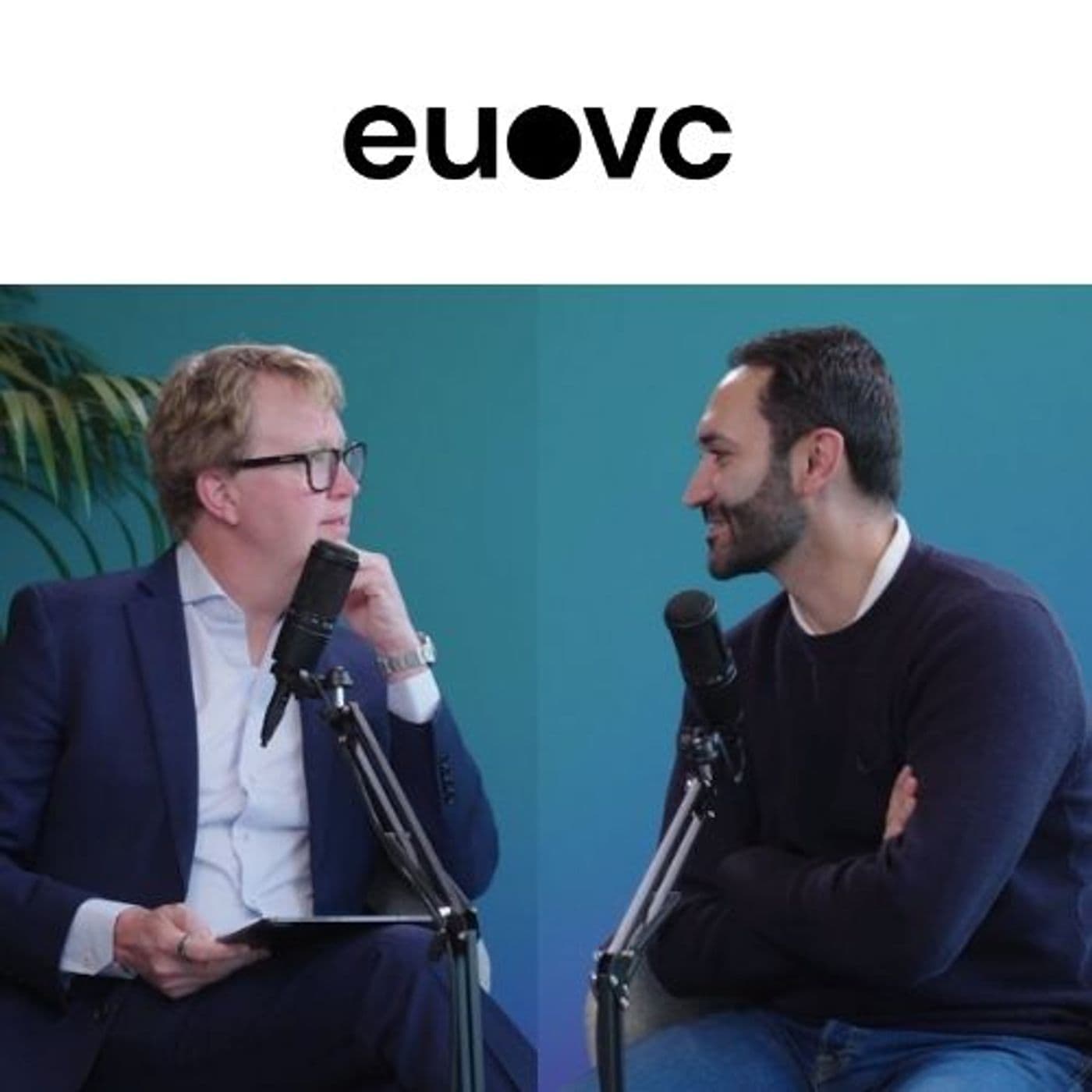
Podcast Episode Notes: EUVC - E501 | Matthew Spence, Barclays
Episode Overview
- Podcast Title: EUVC
- Episode Title: E501 | Matthew Spence, Barclays: Why Defense Tech Is Back, IPOs Are “Sneaky Good” & The Return to Deep Tech
- Co-hosts: Andreas Munk Holm and David Cruz e Silva
- Released: [Date not provided]
- Description: Matthew Spence, Barclays’ Global Head of Venture Capital Banking, discusses the state of exits, dual-use technology, and the European opportunities in defense innovation.
Key Takeaways
- Target Audience:
- General Partners (GPs) with later-stage companies or exit-readiness
- Limited Partners (LPs) and allocators interested in defense and dual-use opportunities
- Policymakers and ecosystem builders in Europe
- Individuals interested in the intersection of venture capital and geopolitics
Discussion Topics
- Introduction to Matthew Spence and Barclays' Commitment to Venture Capital
- Importance of understanding global venture trends and exits.
- Recognition of the IPO market's emerging potential.
- Current State of the IPO Market
- Spence describes the IPO market as “sneaky good,” indicating a slow but steady return.
- Companies are hitting revenue marks necessary for public markets despite higher thresholds.
- Preparing for Exits
- Emphasis on the need for GPs to plan for exits early.
- Importance of understanding benchmarks, revenue multiples, and preparation for founders.
- Focus on Defense Technology
- Transition from traditional defense to innovative technologies (AI, cloud computing).
- The government historically has been a poor customer for tech but is changing.
- Discussion of dual-use technology and its implications beyond just military applications.
- Opportunities for Europe in Defense Tech
- Call for Europe to leapfrog traditional tech and invest in cutting-edge solutions.
- Comparison of current defense technology with the need for smarter government procurement.
- Return to Deep Tech
- Discussion on how venture capital is returning to its roots, combining hardware and software.
- Historical context of venture capital’s origins in funding deep tech.
Insights on Dual-Use Technology
- Dual-use is not merely a euphemism for defense; it encompasses commercial technology applicable for government use.
- Call for better integration of advanced technologies in government sectors.
Recommendations for Policymakers
- Acknowledge the technological gaps compared to adversaries like China.
- Emphasize the need for increased European defense spending and smarter investments in innovation.
- Encourage partnerships that enhance technological development and efficiency.
Conclusion Matthew Spence highlights the pivotal moment for Europe in embracing defense technology innovation while suggesting a return to the foundational aspects of venture capital, focusing on hybrid tech solutions. The episode encapsulates the importance of strategic planning for exits and the opportunities that lie ahead in the defense sector.
Episode Structure
- 00:00 - Introduction to Matthew Spence & Barclays' focus on venture capital.
- 01:00 - Significance of Berlin for European venture capital.
- 01:39 - Insights on the IPO market.
- 03:00 - Preparing for exits.
- 04:00 - Barclays’ objectives as an LP.
- 05:10 - Evolution of defense technology.
- 07:00 - Discussion on the changing customer role of the government.
- 08:30 - Clarification on dual-use technology.
- 10:00 - Opportunities for Europe in defense innovation.
- 12:30 - Urgency for action among European leaders.
- 15:00 - The resurgence of deep tech investment.
- 16:45 - Reflection on the cyclical nature of venture capital.
Key Quotes
- "The IPO market is beginning to open up."
- "The term dual-use should not mask what we’re trying to achieve."
- "This is a genuine opportunity for Europe to invest in the best technologies."
Final Thoughts This episode offers a deep dive into the current landscape of European venture capital, specifically regarding defense tech and the importance of strategic investment in innovation. Spence's insights serve as a valuable guide for stakeholders looking to navigate and capitalize on these emerging trends.
Written by AI. May contain mistakes. Listen to the episode to check what was said.
Transcript
Automatic transcript. May contain errors.0:00Hi everyone, this is David from EUVC and I'm super excited to bring you something special. It's EUVC live from Superventure. Superventure is the place to be if you're serious about VC in Europe. We're talking about hundreds of LPs, VCs, fund managers, all hanging out in Berlin, connecting, debating, and yes, having quite some fun along the way with all side events. But for this limited series, I did catch up with some incredible people, folks shaping the future of European tech, debating if anyone actually has an edge in venture, and tacking hot topics like defense tech, secondaries, ESG. And trust me, things go real.
0:36Sometimes funny, sometimes provocative, but always insightful. We'll hear from people like Andre from Bakkt who threw parties with acrobats. Seriously. Matthew from Barclays who gave us the lowdown on why defense tech isn't just about bullets and bombs. Joe from Eisemmer reminded us that you can't buy a beer with paper games. Bjorn from the EIF brings some surprising optimism on European exits. And Jan from HV Capital reminding us all how humbling the VC game really is. So if you want to get inside the conversations happening right at the heart of Europe's venture community, then subscribe, stay tuned, and get ready.
1:12Because UVC Live from SuperVenture is starting.
1:33Let's start acting, acting, acting. This show is not investment advice, and the hosts of this episode may be invested in the funds and companies featured. My name is Matt Spence. I'm the global head of venture capital banking at Barclays, and I'm based out in San Francisco in Silicon Valley. I also lead our firm's coverage of defense and dual-use technology and investment banking. Matthew, thank you for joining us. Thanks for having me. Welcome to Berlin. Welcome to Europe. Thanks. I hope you had a nice trip. It was great. Well worth coming out for. Well, let's start with that. So here we are at SuperVenture 2025.
2:09We're here in the filming studio. Tell us, why did you come? And what are you hoping to get out of this week? Well, it's an enormous opportunity for venture capital globally right now. And I think in Europe in particular. Barclays is a bank that's very dedicated to venture and emerging technology companies. We have the great fortune of being a European bank, also have enormous operations in the U.S. And here, a big part is to look at what are some of the new trends that a lot of the venture funds are doing? How are they thinking about exits, where I spent a lot of my time thinking about the IPO and M &A environment?
2:44And then how does the capital raising part fit into that? And then the second piece, where I'm about to go on stage, is to talk about defense and dual-use technology. It's obviously just one piece of venture, but I think it's one of the most exciting areas of venture today. Yeah. We'll cover that next. But you talked about M &A, you talked about exits. Everyone probably in this conference is obsessing with that, right? They are. They are. As well as their LPs. And their LPs are obsessed with DPI. And you only really get DPI when you have exits. So that's the common thing. How do you see the outlook?
3:13How are you feeling? Not necessarily in Europe, of course, but globally and, of course, the U.S. as well. What do you expect us to see in terms of the next year or so? So it's a fascinating environment, right? I think with one of my partners, we talk about thinking about the outlook is sneaky good, right? And sneaky good in the sense are there are a number of terrific companies coming out. They have hit the revenue mark of what it means to be a public company, even though that revenue mark has become higher than it's been in the past. They have a tremendous path towards becoming sustainable, great companies and should be going into the public markets to be raising capital, which as we know is a much more efficient way than staying private.
3:55So I think the IPO market is beginning to open up. This year already, we've seen a number of great deals. There are a few others coming out. I'll be back working on one when I get back on a plane. But it has been slower than a number of folks are thinking about. And that creates some complications for venture. I mean, the unique part about the venture asset class, as you know, is you're making longer term bets. And by making those longer term bets, You know, when you're investing to make some real money, Series A, seed, pre-seed, you're making a bet for 7 to 10 years, that's what they're going to be.
4:28The challenge is that 7 to 10 years needs to happen. You know, it is not indefinite. And I think right now we're trying to think about what it means to be public. And if you're not going to be a public company, also what it means to find M &A opportunities right now. Yeah. Okay. So just to be clear for the GPs in the conference, but also those that might watch this episode or listen to it, how can they engage with you? How can they engage with you and your company, Barclays? So there are probably two ways to think about it. One part is we are incentivized the same with GPs to have exceptional outcomes for their portfolio companies.
5:05So one way to engage with us is you're looking through your portfolio and you're thinking about either what are our companies which are most likely going to have exits? An M &A exit, an IPO in the public markets. How do we think about what are the benchmarks? What are the revenue multiples? What are the marks that you need to hit? What are the test questions that I need to know in advance? And how do I prepare my founders in our portfolio to manage that? Those are the questions that we talk about with founders and funders all day long. And to have those conversations earlier, even before you're thinking about an exit, is the one that we think about.
5:40The second piece is Barclays from our private bank also invests as an LP in different funds. And some of my partners are here having those conversations about what types of things we're looking for, what sectors. I think the bottom line for that is we live in an area, as I said before, DPI is king. And so having that ability to show that we are not only investing in fantastic companies, but we have outcomes that are going to generate the returns that all of us do. All of us have a boss. When you're a founder working hard to get a venture capital fund, you forget there are a lot of VCs here having that same situation.
6:16And so everyone is pitching. It just depends on where you sit, depending on who your boss is at a given time. Yeah, exactly. Okay, so let's go back to kind of the second reason why you're here, which is this panel that you're about to go on after our recording around Defense Tech. So tell us a bit about your views, generally speaking, around Defense Tech, but also give us the insider scoop. Give us the highlights. What's in your mind when you're going on stage? Of course, it's a panel. So other views will influence also your view, maybe, in a way. But going in, what are you, what's top of mind?
6:53I mean, first of all, the panels I'm really excited to be on. We have the NATO Innovation Fund, which is a really interesting thing coming out of NATO. We have Shield Capital, one of the panelists, is one of the early directors of the Defense Innovation Unit, which I'm a huge fan of. So I'm really excited about this space right now. As we were talking about earlier, I have an unusual background for an investment banker. Before I was at Barclays, I was at the U.S. Defense Department. I was Deputy Assistant Secretary of Defense for Middle East Policy. I was at the National Security Council at the White House.
7:26And I was at a venture capital firm in Jerusalem Horowitz before I was an investment banker here. So I've seen this evolution about what it means to talk about defense. And I remember when I was at the Pentagon, we were dealing with some of the most vexing problems out there. How do you stop Iran from getting a nuclear weapon? How do you think about navigating the Arab Spring, these tremendous political changes in a way that preserves security for the region? How do you deal with the huge amount of conflict in Yemen or Syria? These are not easy problems. They're highly classified. You're dealing with cutting-edge intelligence, about 15 stories that would be on the front page every day if they would become public.
8:04And when I was there, after hundreds of hours in the White House Situation Room, the thing I kept thinking about is there are technologies that we could be deploying that both can make us safer, can give the things that the warfighter needs to fight our enemies. And whether our enemies are terrorist groups, whether it's a rising power like Russia or China, but the government is exceptionally bad, exceptionally bad at doing that. Like I left the Pentagon in 2015 and I feel like in 2015 we are just starting to use Windows 95. You know, I mean, we were using a BlackBerry way longer than everyone should have done that.
8:44And it's not that people weren't patriotic. It's not that people didn't care, but there was this enormous disconnect. And I think you saw in the tech world there was not a lot of investment in defense because the sense was a lot of funds couldn't invest in the space. The government was a pretty terrible customer. The sales cycles were exceptionally long. And I think the really exciting thing now is that is beginning to change. Now, we're still in early days, but we're changing in a few ways. One, when you talk about defense, this is not about bullets and bombs. It's about artificial intelligence.
9:19It's about sensors. It's about understanding the battlefield and understanding threats so you can navigate it in a smarter way. And it's also about how do you leverage the technologies that our adversaries are 100 % trying to use themselves? How do we do it in a better way to help all of us who are here and members of NATO countries? I sometimes feel, and maybe this is a really unfair thing to say, but I feel like the term dual use is used very generously. In a way to kind of, you know, you just said, you know, defense is not necessarily weapons and bombs and bullets. And maybe this is a European thing.
9:57I don't know. You tell me, but I feel like the term dual use is oftentimes kind of used as a way to hide, you know, oh, we're actually doing defense tech or whatever. Do you have thoughts around that? Do you have thoughts around, you know, pure defense tech plays, more dual use focus plays? And I'm coming from the perspective of, you know, being a GP and running a firm. And let's put it broadly as an investment thesis. So I think the best way to think about dual use, and I think it's genuine. is how do you find the best commercial technology to be deployed into governments? And it's not just intelligence communities or not just defense.
10:36This could be city and state governments. At least in the United States, the DMV where we get our driver's license is not a pinnacle of technological sophistication. So when you are paying your taxes, why are you not using the same best way that you do when you're on Amazon or on a website? So the best commercial technology should be brought in for all the government uses we think about. So when I was at the Pentagon and we're thinking about how do you have a cloud service provider? How do you use artificial intelligence with highly classified information? It's not creating an entirely new large language model.
11:11An entirely new thing is you should leverage what has done already. And that's really the genius of what we have in the United States, Britain, NATO countries, Germany, the others. So that I think is really the big piece. Now, the end use is what are you trying to do? There are many end uses that a number of us would not be comfortable doing. I would not be comfortable working some of those companies in there. So that's the big piece about it. But it has always been the case that great technologies have a use in a commercial way and a defense department way. Like my old boss, Ash Carter, when he was secretary of defense, used to talk about the story of GPS.
11:47You know, GPS has become a foundational technology in commercial areas. It's critical in defense, too, and really came out of an original use case. But when the military was trying to think about things and great military research technology was used in the commercial sector. What we really need to do now is think about how do we reverse that and continue to bring those pieces. I think that's really the heart of dual use. Because I think dual-use technology isn't a way to mask or hide what you're trying to do. It's like, let's look at the amazing things the funds are investing in the air and the amazing entrepreneurs.
12:19And let's find out how can you use those to compete with, frankly, how the Chinese are investing in enormous technologies. So you mentioned a few times, you know, let's call it the Silicon Valley way of doing things. move quick break things you know just act you know action first and then the more kind of traditional government way of doing things probably slower probably a bit you know a bit more wary of taking risk and so on and i think europe's going through an interesting time right now uh in terms of let's call it defense tech generally speaking but i do i do think we we we have a lot a lot to learn and and a lot to be careful with as well you know we're a bunch of member states which doesn't make things easier.
13:05So I'd love to ask you about, you know, some of your learnings in this space. And, and if you could sit down with some of the most influential prime ministers in Europe and decision makers in Brussels or whatever, what, what, what would you want to leave them with to make sure that they actually do a good job? I think, I think there are probably two big things I want to leave them with. The headline is there is a tremendous opportunity right now. And the opportunity comes from enormous risk. And so all opportunities or all dangers and crises in some ways here right now come with great opportunities.
13:42So the crisis is right now is we are facing adversaries who are more technologically equipped than ever. The diffusion of technology, all the things that we're talking about here, be it artificial intelligence, be it cyber weapons and cybersecurity, be it any number of things that provide a huge diffusion of power makes things less safe. You know, if we look at now where China is compared to the United States, China is remarkably moved ahead in quantum computing and producing batteries and producing solar panels, even trying to think about investing in new forms of food, cultivated meat that you got from growing cells.
14:19These are all amazing science fiction things that the United States in the European community is used to leading in. Our adversaries are moving there. So we need to move in the best companies. We need to have the government become better buyers. And we need to understand some of these technologies are capital intensive. So venture can provide money at the beginning, the public markets and large growth investors can go at the end. But oftentimes, there's this step in the middle that you really need to move and do something there. So message one, I would say is there's a huge opportunity to move and sort of change how things were done in the past.
14:56And then the second message is, is there actually is an opportunity with this push to increase European defense spending. Now, in a sense, that's not new. Robert Gates, who was Secretary of Defense, when I was at the White House, gave his last speech talking to the NATO members are, we are in a deep partnership, but the NATO countries also need to invest more. This has been a theme for decades in the US-European dialogue. Now, right now, when these defense spending numbers have increased, this is an enormous opportunity, both are European companies to invest, but also to invest smarter. And rather than investing in the technologies from 30 years ago, the message I would have to prime ministers are use this as an opportunity to invest in the best defense technologies right now.
15:41You know, I think about the opportunity is in Africa and other emerging markets, rather than spending all our time building landlines that would have been out of date. We can take an overleap by introducing mobile technology. It's the same opportunity now. So instead of spending all this money on things that may be out of date, let's spend some of this capital now to think about in a better and smarter way. So that's why I'm here. Like I'm betting with my time. I would not be spending this time in Europe. I didn't think there were huge technologies. And Europe has the opportunity to catch up, but European venture investment and European defense and dual use technology is behind the United States right now.
16:23And dollars applied and entrepreneurs coming out. And now is really the time to seize that opportunity and do more. Well, I hope you have some success with your time invested here. I think it would be good for the region. Let's wrap this up as I always do. Biggest learnings since you've been in this space, this beautiful industry that I personally love and most of our guests love, which is venture. not necessarily in your whole career. Let's try to make it recently, right? What would you say are the biggest learnings? I mean, I'm tremendously excited as well, as I hope you can tell. I think one of the biggest learnings right now is a lot of what I've talked about in this new trend of defense and dual-use technology is new, but it actually is not new at all.
17:06And I think that's a really interesting perspective I've been thinking a lot about. I mean, if you look at the history of venture capital, you know, at its origin, venture Capital was investing in novel technologies or what we now call deep tech, tech that has a hardware component. So some people say that modern venture capital started when the American Research and Development Corporation invested$70 ,000 in a company called the Digital Equipment Corporation. That returned$38 million at their IPO in 1966 and was a 500 times multiple invested capital. That is the original deep tap investment. That's where venture came from.
17:47Now, obviously, things moved away towards software. Software is eating the world, as Mark Andreessen has famously said. And then we saw a huge amount of investment in that space in the software and SaaS revolution. I think there were 447 venture-backed SaaS companies in 2011. That figure grew to 5 ,454 by 2022, incredibly moved into software. I think what we're seeing now is a return to investing in hybrid interesting technology. That's part hardware, that's part software. And I think the reason why this is, is capital efficiency is improving. You have a need for not just great software, but things that operate with hardware more in the real world and the combination of hardware and software.
18:34So I think one of the big lessons that I have with the takeaways from being here is this is both a new opportunity, but the more important thing is this is not new. This is something that venture investors have put their time and capital in for decades. And now we're returning to an era. We can see some new areas there. So I'm really excited to what I'm going to learn when I'm here. Awesome. We're excited to have you here. And I hope we can meet again next year, if not before. I hope so too. Here at the filming studio and do a wrap up of the year that's to come. Great. Thanks. Look forward to it.
19:06Thank you.
19:09Tear down this wall It's more than just an alliance This is a union of values Let's start acting
From the publisher
In this episode, David Cruz Silva sits down with Matthew Spence, Barclays’ Global Head of Venture Capital Banking, to talk about the state of exits, dual-use tech, and how Europe can seize the next defense innovation wave. With a background spanning the White House, Pentagon and a16z, Matt shares a unique view from the intersection of global power, technology, and venture.
Who should listen:
- GPs working with later-stage companies or exit-readiness
- LPs and allocators curious about dual-use and defense opportunities
- Policymakers and ecosystem builders across Europe
- Anyone wondering how venture intersects with geopolitics
Here’s what’s covered:
- 00:00 Meet Matt Spence & why Barclays is doubling down on venture
- 01:00 SuperVenture 2025: Why Berlin matters to a Silicon Valley banker
- 01:39 “Sneaky good”: The IPO market is back—but not how you expect
- 03:00 How GPs can prep for exits—before they’re even on the table
- 04:00 Barclays as an LP: What their private bank is looking for
- 05:10 Defense tech: From bombs to AI & cloud for the battlefield
- 07:00 “The government is a terrible customer”—but that’s changing
- 08:30 Dual-use: Why it’s not code for defense and shouldn’t be
- 10:00 The real opportunity for Europe: leapfrog, don’t lag
- 12:30 A wake-up call for Brussels and national leaders
- 15:00 The return to deep tech: hardware + software, redux
- 16:45 Why this isn't just a new trend—it's a venture returning to its roots


