
In short
EUVC Podcast Episode Notes
Episode Overview
- Podcast Title: EUVC
- Episode Title: E503 | Cathy White, CEW Communications & Dan Taylor: The Fall of TechCrunch Europe & The Future of European Tech Media
- Co-hosts: Andreas Munk Holm, David Cruz e Silva
- Guest Speakers: Cathy White (CEW Communications), Dan Taylor (former Tech.eu managing editor)
Episode Description This emergency episode discusses the unexpected closure of TechCrunch Europe's team. The hosts and guests explore the implications of this event on the European tech media landscape, the rise of AI in journalism, and the narrative control over Europe’s tech ecosystem.
---
Key Topics Discussed
- Impact of TechCrunch's Closure on European Media
- TechCrunch Europe was acquired by a private equity firm, leading to mass layoffs of the European team.
- This left a significant void in the coverage of European startups and tech stories.
- The move is considered part of a larger trend of media consolidation and narrative control.
- The Future of Media in Europe
- The closure of TechCrunch is not isolated; similar trends have been observed in other media companies.
- The reliance on AI for content curation and journalism is significantly altering the media landscape.
- New platforms and newsletters are emerging to fill the gaps left by traditional media outlets.
- Rise of Entrepreneurial Journalism
- Journalists are transitioning towards more entrepreneurial roles, creating their own platforms or newsletters.
- Examples include former journalists starting independent newsletters that tell specific stories in the tech ecosystem.
- The concept of a “creator economy” within journalism is gaining traction, allowing for more personal narratives and targeted content.
- Navigating the New Media Landscape for Startups
- Startups must adapt to the changing media landscape by diversifying their media outreach strategies.
- Smaller but impactful media outlets, such as Sifted and TechEU, are becoming more relevant.
- A unified approach to storytelling and engagement with media is critical for startups to thrive.
- Shift from SEO to LEO in Media Strategy
- The discussion shifts to the transition from Search Engine Optimization (SEO) to Language Engine Optimization (LEO) due to the rise of AI.
- Companies need to focus on how their narratives are indexed and shared by AI algorithms rather than solely traditional search engines.
- The importance of creating easily digestible and indexable content for AI is emphasized.
- Making Complex Ideas Accessible
- Journalists and PR professionals must simplify complex topics for broader audience understanding, especially for tech startups.
- While AI plays a role in content creation, there remains a need for the human touch to craft compelling narratives.
- AI's Impact on Content Creation and Journalism
- AI tools are changing how stories are written and distributed, raising questions about the future of journalistic integrity and employment.
- The potential for AI-generated content to replace entry-level journalism is a concern, with the need for high-quality journalism remaining critical.
- The Importance of Human Touch in AI
- Despite advances in AI, the nuance and creativity of human journalists are irreplaceable.
- The conversation highlights the need for collaboration between AI tools and human insight to produce quality content.
- Future of Journalism and New Publications
- Participants express optimism that new publications will emerge to fill the void left by TechCrunch Europe.
- Established platforms must step up to adapt to the evolving narrative and provide comprehensive coverage of the European tech landscape.
---
Conclusion
- The discussion concludes with hope for the emergence of new media outlets that will serve the European startup ecosystem effectively.
- The rise of AI is viewed as both a challenge and an opportunity for journalists and PR professionals.
- There is a call for collaboration and innovation in how stories are told and shared, particularly within the fast-evolving tech landscape.
---
Takeaways
- Adapting to Change: Startups and media professionals must adapt to the rapidly changing media landscape influenced by AI and consolidation.
- Narrative Control: There is a pressing need for European startups to take charge of their own narratives amid large media shifts.
- Opportunities in Crisis: The collapse of established platforms like TechCrunch Europe creates room for new voices and stories in the tech media space.
---
Listen to the full episode for deeper insights and discussions on the future of European tech media.
Written by AI. May contain mistakes. Listen to the episode to check what was said.
Transcript
Automatic transcript. May contain errors.0:00Europe's tech media landscape just suffered a seismic shock that no one saw coming. One place where there's not a lot of cookies these days is TechCrunch Europe. What happened there? When private equity moves in, entire newsrooms vanish overnight. It did mean that all of the journalists on the European team have been let go. And it just leaves a great big gaping hole in terms of telling the stories of European startups. But this isn't just about layoffs. The entire game is changing. The rules of the game have changed. We are no longer in the age of SEO. We are in the age of LEO and GEO. And the stakes?
0:37Control over who gets to tell Europe's story. This is a monopoly play as well. This is a let's buy all the companies and then we can control the narrative. In a world where AI decides what stories surface, quality matters more than ever. If you feed the machine garbage, garbage is what you will get. But from crisis comes opportunity. I'm going to optimistically say that yes, a new publication will fill the gap because I think there's a big opportunity. Join me and my expert guests as we dissect the collapse of European tech journalism and discover who will write Europe's next chapter. This is EUVC podcast where European venture meets reality.
1:18Here's a few words from our beloved sponsor. Discover where operational expertise meets innovation. With end-to-end coverage across fund admin, tax, accounting, compliance, ESG and more, we take care of the complexities so you can focus on what matters most. Whether it's supporting visionaries or maximising returns for your LPs, our tech-driven and comprehensive solutions empower you to achieve your goals with confidence. Partner with Ace Alternatives to streamline your operations and elevate your fund's success.
1:51Tear down this wall. It's more than just an alliance. This is a union of values. Let's start acting. This show is not investment advice and the hosts of this episode may be invested in the funds and companies featured. Welcome back everyone to another episode of the UVC podcast. Today, we are back with a bit of a special emergency episode because sometimes European mentor demands that we drop everything and hit record. Today's episode is sparked by the shock news of TechCrunch is axing their European tech team, which is a bit of a seismic shift to many in the media landscape. And it's too important to ignore, of course.
2:31So to unpack this and what it means and what's next, we're joined by two of the most respected voices in European tech and comms world. Of course, our good friends, Cathy White and Dan Taylor from CEW Communications. And Dan, of course, has a long background as a journalist and editor at TechEU, which, of course, means that there's a bit of an inside angle there, hopefully. Before we get to the axing of the TechCrunch team, let's just hear a bit about CEW, who you are and why it is that PR is actually more important now than ever. Oh, well, the short version for why it's more important than ever is LLMs and everything that we're seeing happening on the AI side.
3:10And I'm sure we're going to dig into that even more so on the podcast today. But for us, CEW, we're specialists in working with scale ups and VCs. We've been telling European stories for almost a decade. kind of born from my background working with startups and the London tech scene as it was kicking off 15 years ago. And today we work with a range of companies across deep tech, VC, health tech, fintech, huge range, everything from kind of pre-seed all the way up to exited and IPO. And we don't just do PR, but that's the main part that we're going to talk about today. Dan, you shifted from the journalist side to the PR side.
3:47If one says that's shifting from founder side to VC side is the dark side. I guess that is exactly the same move for journalists. It's just seeing things from the other side of the table. You know, as the joke goes, the dark side, they have cookies and cookies are good. The cookies are good. One place where there's not a lot of cookies these days is TechCrunch Europe. What happened there? Well, there's a lot of cookies in TechCrunch US. It's just on the European side that there's a lack of cookies. So the short story is that TechCrunch got bought out in a private equity deal not too long ago now.
4:23It's not the first time that we've seen TechCrunch exchange hands. It's had quite a few owners at this point. But with PE coming in, what we're seeing now is that they're trimming the fat. And I hate saying that because the team in Europe are fantastic. But they're cutting back where they need to, right? They're queuing it up for whatever the next part of the deal might look like. It could be, for instance, making more out of TechCrunch Disrupt, which is their big conference out in the US. But sadly for Europe, with what's been going on, it did mean that all of the journalists on the European team have been let go.
4:55And it just leaves a great big gaping hole in terms of telling the stories of European startups. Regent is the PE firm that acquired TechCrunch from Yahoo. Well, if you go and you look at Regent's portfolio, it includes TechCrunch, InfoWorld, ComputerWorld, NetworkWorld, PC World, Tech Hive, Tech Advisor, Strictly VC, remember that name, Cheddar News, Sunset. So this is a monopoly play as well. This is a let's buy all the companies and then we can control the narrative. Do you think so? I absolutely think so. Yes. The Trump administration has been phenomenal at controlling the narrative by controlling the media.
5:36Same thing's happening in tech. And now we've got, you know, the European part is the bit that's gone bye-bye at that end to it. it's a u.s story because no one wants to control the narrative here uh because the stories aren't big enough is that what you're saying i don't think the stories aren't big enough i think it's just more about less you're i think it's less about europe and it's more about the u.s it's controlling the narrative on that side but i'm also not the american on the call hey i've lived i've lived on this continent for 18 years i don't consider myself american anymore No, no, no.
6:11You are adopted. You are European, but there's a lens to it that you'll have that I won't. Andreas, Cathy, we can get into this one. I mean, Andreas, this is a whole other episode, I'm sure. But like, where is Europe's Y Combinator? Like, you know, I mean, Y Combinator has been around for how long? And it's still the benchmark. And every European founder, well, I say every blanket license here, you know, the business model includes, right, we build here, we proof of concept here. and then we get to America as fast as we can. Hopefully, some of the nonsense that Mr. Trump is pulling right now will dissuade that.
6:47But traditionally, historically, America has been the biggest consumer market. And so you want to go there to make the most amount of money. Let's get back to tech journalism because I think I could definitely push back. Let me away from politics, please. I could definitely also push back on some of the things you said about the path of European startups. Yes, we go to the US, but we don't do that purely to just get out of POC land. We also do that just because it is a big market, but you definitely still are building a lot in Europe. And as an example, we had just recently our summit where we had William McQuillian from Frontline showing exactly how much of the revenue of an IPO company from the States has in Europe, which was everyone thought it would be 5 % or so, but it turned out that it was actually 35 % or something like that.
7:3635 % of a US IPO and company, that revenue comes from Europe. So I don't think Europe in any way is not worthwhile and important to think about for any company that's building anywhere. But let's leave that. Also the tinfoil stuff about Mr. Trump and so on, because I think that's also a bigger conversation. I think we should talk about the future of media more specifically here in Europe, because TechCrunch Europe was not the first team to be cut. We've seen the same thing with TNW that was acquired basically just because they had a good conference and then the tech journalist team was laid off, at least the majority of it.
8:15And we've seen similar moves across the ecosystem. Is this a trend already? Is this a couple of companies where it's happened and then we make a lot of noise about it? What do you see as PR people looking into the tech landscape in Europe? First of all, in media, it's not uncommon to see layoffs. When the market takes a dip, we tend to see a lot more of them. And I've been working in PR now for 15 years. This isn't the first round of cutbacks that we've witnessed. What makes this one different is an entire team for a very well-established media outlet being waved off. the other one that we're waiting it's kind of the writings on the wall sadly but business insider also came out and they said they were going to cut their staff back by 21 percent globally one of the factors within the long email sent by the ceo was ai it puts the entire business insider team within the uk which is about 21 members of staff at the moment at risk they're kind of unionizing right now and there'll be others across the continent as well so ai is another factor and ultimately media and its business model right there's a variety of different ways within media where you can make money but it you need most of them to be working pretty well for you to be okay so subscriptions is one area sponsored content is another and then of course there's advertising and so we were also talking about changing media habits from people that are reading watching listening to the news.
9:44So there's a lot of different things going on here. And 2025, we're seeing, particularly with the companies that we talk to more frequently at the moment, that they want to cut spend right now. And usually when people are cutting spend, media is one of the areas that gets trimmed back. So there's numerous different factors at play. I'd love to ask the both of you, are we seeing anyone in the European ecosystem truly stepping up and coming into the arena and trying to make it a big difference here and be a big dent? The obvious one kind of at the top now of TechCrunch going and Business Insider being at risk is Sifted, which has been going for six, seven years, backed by the Financial Times and had investors as well.
10:30So they are filling that gap. But even with Sifted being there and also a range of other titles, right? You've got TechEU, TechFundingU, Silicon Canals, EU startups. they're not top top tier but they still do a fantastic job of trying to get those stories out there there's still not enough firepower i think to kind of do european startup european venture this ecosystem the service that it needs you know right now it's turbulent it's going to be really interesting to watch and see what happens over the next few months into the next year Will we see a brand spanking new publication be created to fill this gap?
11:10Will we see another existing publication go, ah, interesting. There's a hole there in that startup ecosystem. We could add that into what we already do and plug it. And it's kind of, you know, we're waiting to see what happens. Mike Butcher has been very quiet for Mike Butcher. I mean, my thinking about all this, you know, the journalists that were let go from TechCrunch, I don't understand why there's not a 404 media model happening here. Band together, start your own platform. You know, 404 is a newsletter and now a platform. And quite frankly, it's one of the first places I go to in the morning for news.
11:50Let's go to that because in the States, of course, you also saw a lot of people leaving Fox News as an example to create incredibly massive platforms. So this whole media persona turned creator, turned entrepreneur. Do you see that happening in Europe? Have you heard voices moving in that direction? For a journalist today, and Dan will know this more than me, but just from kind of witnessing what's happened with others, like when we've seen people in the past be let go from TNW or somewhere else. I think if you want to survive in a very difficult market, and journalism is a difficult career as well, if you want to survive, I think you do have to think entrepreneurially.
12:33Like, what else can I create? What other things can I have in my arsenal that make me not just employable and someone that, you know, a great publication wants to bring in, but you've got to think about your influence, like the readers that you also carry with you when you move to the next place. it's like andre um delia for instance is very good with podcasts and creating content and newsletters martin bryant does a range of different things at the moment but he started pre-seed now this newsletter that you know will cover just like one specific pre-seed company typically within the uk and give them a profile and he's built this whole platform from that as well alex comrade leading forbes and creating upstart media and you know so i think there's people that can shift and they can think entrepreneurially and they can come up with new ways of growing their audience and their influence as a journalist as well.
13:22But that doesn't always come naturally to everyone. I think that also raises the question of like, what is a journalist? Because there's this guy, Andreas, with a podcast that has a pretty big reach. And does that make him a journalist? I don't know. You know, this guy named Harry started talking to people and now he's got his own funds. So, I mean, the classical definition of journalist, that disappeared, like, along with the Olivetti. Who is a journalist and what is a news outlet? I honestly think that's undefinable at the moment. I can say I have spoken to two guys in Paris, two different teams in the UK, and one team in Spain that's all setting up their own newsletters and trying to figure out.
14:13And some of them are further along than others. And they're all trying to basically figure out what is the path here as a creator standalone. We have two things in the works, I would say, at ABC. One is we want to do a creator conference. We haven't gotten around to it yet. You've got to create it. Yeah, purely for that, we've got to create it, right? We've been a bit busy, unfortunately, but we do want to bring, you know, 30, 40 people together and probably in the wilderness, really. Do some cool content from there, but just make it a big conversation about where we're headed. And that's the one thing which is basically just about bringing people together.
14:50And then I have a larger thought around, I think there's something that should be done in terms of bringing the creators under one platform. Because I think that the standalone newsletters, if they charge you 20 bucks or something because they have a low subscriber base, it's not sustainable because then we'll have to pick between them because no one is going to have$300 worth of newsletter subscriptions. So we've got to figure out some way where you can get a mass subscription to all of them. And then if you're truly dedicated, you support a couple specifically. I'm looking into that, trying to figure out how it can be done.
15:28I don't know if we are the people to do it, but I definitely think someone should. I think there is a play to be made. So anyone interested in talking about that or working on that, I'd love to talk. So just a shout out to anyone working on that. If I can shift then to the situation for VCs and founders. We used to all, like I've seen enough people wanting to pitch to journalists and it was always, first I want TechCrunch and then I want, and then no one blah, blah, blah. And then we're kind of, with TechCrunch falling out now, what are the media outlets that VCs and founders should be thinking about?
16:06Is there a new roadmap? Has the story changed or have the rules in any ways changed or has TechCrunch just fallen out? the rules really haven't changed it just says there's a hole with tech crunch not being there so if i think about it from the the pr perspective and dan will have a different take because i saw his eyebrows go from aha um but you know whenever we're telling a story on behalf of a startup or a vc if they want tech crunch what we historically did dependent on the ultimately the value of that story or the monetary value connected with that story so fundraising fund for for instance if you really want a tech crunch you maybe go to them in advance you try and secure an exclusive because it was very competitive it was still very competitive to get tech crunch to cover you and then once tech crunch would break a story we would share that widely right now you're just talking about really sharing it widely from the beginning unless the piece of news is substantial and there's loosely some rules when it comes to the media that we talk to so if you're a startup or a VC and the numbers that you're talking about are in the hundred millions, then, you know, you've got the potential to talk to Forbes, you could potentially talk to Bloomberg, the FT, Royce's, that kind of that lofty level of media.
17:28For smaller figures and below, then we're kind of looking at Sifted as well, tech EU, EU startups, all of this. And that's just the tech and business side of things like dependent on what your company actually does or the areas in which your fund is focused there's a whole range of trade media at your disposal as well and there are fantastic source to stories because they're used by other journalists and that slightly loftier publication level to pull from and then on top of that you've got what we're just talking about right like among in this creator economy where people have newsletters and podcasts and youtubes and stuff There's a whole other area that you can pitch your story to, including these newsletters.
18:10The newsletters in particular and a niche audience are really powerful. So the game's not massively shifted. It's just that that tech crunch hole is kind of substantial. But we're going to watch it and see what happens. Yeah. I mean, Andreas, forgive me, I might be getting ahead of the conversation here. But the rules of the game have changed. we are no longer in the age of seo we are in the age of leo and geo and what i mean by that is language engine optimization and generative engine optimization yes of the tone that one in particular yeah exactly so i would argue i mean cassie's gonna fire me for saying this but i mean The death of the press release, we've heard that for a decade now.
19:04About a year ago, I would say, right around the same time, Lulu Cheng, former VP of communications at Substack, she published her Go Direct manifesto. I think about a week or two later, Andrew Chang, a 17-year partner at Andreessen Horowitz, did a tweet about the death of the press release and GoDirect. Personally, I strongly agree with that. Both of those messages, they weren't quite leveraging what we're seeing in search right now. Because what we've been talking about, right, is media. Well, how do you hear about media? Okay, how do you search? If you want to find out about a company, if you wanted information, traditionally, you'd go to a search engine and da-da-da-da-da.
19:52And then, of course, TechCrunch would rank top in Financial Times, et cetera, et cetera. Increasingly, more and more, like I don't know about either of you, but Google, I can't tell. Well, no, I did open Google this morning. But nine times out of 10, I'm talking to ChatGTP or Claude or Perplexity, any one of them. And so brands and companies really need to start thinking about, okay, not where am I showing up in Google results, but where am I showing up in LLM results? I could get into how it's like I've been doing research and experimenting with all this for quite a while now. But the way that AI and LLMs index and retrieve information is fundamentally different from SEO, if placed in the right areas at the right time, it could shift the game dramatically for a brand startup.
20:49it. It's interesting because when I go on KGBT and I type something about a UVC, tell me something about Andreas Moncombe or tell me, I'm surprised at how much it just echoes whatever I have put out myself, quite indiscriminatorily. So it's interesting when we talk about LEO or whatever you want to call it, there's definitely something to be grab there in terms of solidifying who you are and what you are and making it just echo what you're seeing. So, and obviously that's pretty powerful for UBC, given that we have as much content as we do. But what would you say are the tool, what's the toolbox here when it comes to actually leveraging AI?
21:33The simplest answer, optimizing content that is easily readable and indexable by AI. This is why, for example, when you talk to GPT, you will get a lot of bullet points. And in summary, that is the way that AI large language models, they love to read information like that. Another format, for example, like companies that aren't optimizing for schema, which is a massive chunk of metadata that appears before every like the human readable context you will just not get indexed by ai because it is difficult for ai ai has to use tokens and processing power to understand what it's looking at right the easier you make it for the machine to understand what it's looking at the more weight and credibility it will give to it and therefore rank it higher when it returns a search result.
22:35What's the reading age of AI? That's a good question. I don't know. I know. And I'm just thinking that because when we talk about taking something complex that a client has, whether, you know, a deep tech startup, whatever it might be, we naturally try to make what we're starting from much more easily to adjustable so that we could approach any journalist. Or if we're trying to put something together on behalf of a client for social media, then we're lowering the barrier to entry and normally you judge these things sort of based on like a reading age right like what level do we go for and different publications have different reading ages so you know we joke in the UK that something like the sun is easily accessible to a 10 year old so I'm I'm curious it's just something I'm thinking if we're talking about making things easily accessible to AI what is that in terms of language or reading age and it's probably also based on the user because as an example, for some prompts, I use a GPT that's tailored to simplicity.
23:39And then I have others that's tailored to nuance and complexity, and I don't want to lose a thing. And I imagine that it'll also, when it goes out to search information, will also go for those with a higher reading age. I just imagine that that might also be one of its tools in in Zinbox, but I honestly have no idea, so I don't want to dive too much into this. Don't forget that we're defining reading age in human terms, right? LLMs are not humans. No. LLMs don't actually read anything. They identify, match, and correlate patterns. So I don't even think you could define a reading age for AI. it would be more defined by how deeply and complex the patterns of recognition are yeah but then we still have to you know have an understanding of how that works right like i know you're doing loads of research into this and you're powering through a bit so you know what you're doing right but for me i need to put more time in now i don't i don't oh you're making it up i don't know what i'm doing i make it up every day no i i have a rough idea i'm scratching the surface but see But right, so if we change the way we communicate in order to make this all work, we've still got to keep the current way we communicate rolling because we're in this transition period, right?
25:02So for some of us, maybe we are using, you know, Claude or something to do search, but then different generations are probably still going to be using Google or asking someone. And it depends on your audience and ultimately who you're trying to reach. And so the job then becomes for that VC or that startup to really understand the audience that you're trying to get in front of and start to know what exactly their habits are looking like when it comes to how they're getting their information or accessing media. Right. And then you tailor it to fit. I still think there's space for the press release and there probably is for now, but it's going to shift.
25:42Yeah, I agree with that. I would just only add that traditional PR, you know, one of the metrics, for example, that we would use is how many places was this article or how many publications wrote about this company that we're representing? What's the readership there? Cool. Good. Yes. Readership has always been a bullshit figure, but yes. You know, cool. Yes. But in my opinion, the thinking needs to shift from how many places was it published to how many times did AI use this as a citation? Because this is where people are going to search. And there are tools out there that will measure that. I'd love to pivot the conversation actually in a way a bit back because I'd love to ask you the role of PR firms in this age of AI.
26:40we all used to struggle to tell our stories in an engaging way. Now I almost feel with AI that we've gone through a period where it was easy to now tell our story, but it was hard to not make it sound what I call chatty-bitty-ish because it would always start with imagine if, and it would make extremely elaborate small stories and allegories and I don't know what. that I also feel we've kind of gotten quite well beyond. If you use instead of a ChatGPT, but you use ChatGPT 4.0, you use ChatGPT 4.5, I think it is, the one that actually sticks quite close to your own tone of voice, but just improves, which is the one that they advise that we use for writing copy.
27:31I feel like you're at a place where you get some really good writing. it's just what you put in made a lot better so this whole step where we all felt that we need help writing our story I feel that many have now been able to get beyond am I right or am I wrong in saying that I mean if I talk from personal experience when it comes to use of AI so I am using it more and more a hell of a lot more than I was even like a year ago right and I still see it for myself as the first draft there's just things that still don't stick well for me but I also am not investing huge amounts of time in it compared to Dan and Dan has been tinkering in a really fun way and is seeing a hell of a lot better results.
28:25Dan I'd love to hear your take someone writing every day. I know that AI is part of your process. The question is for VC that wants their story out. Do they really need you? Right now? Yes. I'll summarize it as such. If you feed the machine garbage, garbage is what you will get. For me, for example, I am a brilliant coder that never bothered to learn how to code, right? Like conceptually, I have great ideas for what I would like to see and this there and how it sounds and la la la. But Python, PHP, Ruby on Rails, no, just no, I'm not that guy. What AI has done for me has allowed me to become a coder of language without ever having to learn how to code.
29:22Thinking about things analytically and structurally and what do I want the intended outcome to be? Therefore, what do I need to feed the machine to output what I want? That is what I am doing. If I translate what you say, Dan, what I think is that if you're a very good, let's call it prompter, but if you're good at putting together what you want and surfacing that in a way that the machine truly understands it. You have a perfect autocomplete button now. And then the question is, do you have taste? Do you have authoring taste? There it is. Yes. And that's what I wanted to get to was not everyone, a coder is usually not a storyteller, right?
30:10So I can feed all the data in the world and it'll spit back a brilliant piece from somebody who isn't a natural storyteller and writer. However, if you have a natural storyteller and writer feeding the machine... Yeah, or you have that person doing the last 20%, taking it and fixing it, so to say. I think you need the person doing the last 20%, but I also think you need a person doing a hell of a lot before you even start feeding the machine. So if we're talking about why a VC or a startup might need someone like us. It's not just about us being like them literally just giving us some material and us rolling with it.
30:52The whole idea of working with someone like us is that we're able to really drill into what their business is doing or what their backstory is. You know, we're there to ask questions. It's the human part to really unearth what we've got to play with and then think about strategy and then you can feed the machine. Maybe that's the bit I did leave out is that in saying, you know, I can look at a million pitch decks. I can look at all the financial reporting I want. You know, I mean, I don't know, maybe I'm lucky working with TechEU and TNW years and years ago of getting to the heart of the story, realizing it and then saying, oh, okay, which bits of this data do I need to feed the machine to get the output that I want?
Read the full transcript
31:39AI has not taken that part yet. No, and I think that if at least when I look into it, what I'm seeing also as a creator is my production capability has just increased magnificently. And I imagine that as a PR firm, you're also seeing the same. One person can handle many more clients. And then the matter is, of course, you actually end up with a bit of a bottleneck, I imagine, on the distribution side, meaning I might be able to churn out 50. articles per day instead of only five. But how many can I send to my butcher? At least as a content creator, that is where I'm seeing that there is a bit of a bottleneck is, okay, I can create this much content, but how much can the ecosystem actually absorb?
32:28That's a big thing. I mean, to slip it on its head, we're talking about the use of AI to create the stories that we're then trying to pitch ultimately and kind of seed out there. If we're talking like pure kind of two media channel but then there's also the other flip side which is the use of that AI by the media so replacing kind of journalism effectively you know and I take that from Andre because I watched a little podcast that he did the other day and he was talking about this right like the lower levels of journalism where you quite literally are just taking a press release making a few tweaks and publishing it that has historically been done by a person now it doesn't need to be done by a person it can just be done by ai right and again again this sort of i guess not directly connected to what's happening business insider but indirectly it is connected to what's happening a business insider right like if you're talking about letting go of 20 21 of your staff and you're saying you're citing ai and what you've been doing in ai is one of those reasons what it does mean is that the entry level for some journalists just disappeared there's still a place for high quality journalism that's not going to disappear because our human minds are so important and we're going to think about stories and think about what's going on in a completely different way to how ai is but how do we then train up the next generation of journalists to fill that space.
34:02It's a similar thing on our side, right? You know, we can cut back on the number of juniors that we use within PR because we can use AI in a much greater way in order to move forward and function, just like what we're seeing in VC with analysts being replaced with AI and various things as well, right? But then how do we also train up that next generation that are going to operate at the higher levels? That's just something that's been on my mind this week sorry i can tell you something that's on my mind um we are we're in the process with the branding agency because we have a lot of changes happening we're growing and so on so for that reason it's about time that we get a bit sorted everything we have happening and one of the things i said to them was i would much rather that instead of giving me a brand book or at least that in addition to it, in addition to giving me a brand book that says this is my tone of voice, I would really appreciate getting a chat TBT trained by you that actually writes in my voice.
35:03And I'm pretty good with AI by now as a content creator. So for that reason, I don't need it as such, but I would love to have it built perfectly so that anyone engaging on behalf of the EUVC brand would be able to feed it into this and then it comes out on brand. I really think that there's a big thing there. And honestly, I can imagine a ton of AI solutions, so to say, that a PR firm on behalf of a client on retainer could be delivering. Dan Taylor is sitting there. Well, it's funny you mentioned that. That's exactly what I've been building for the past few months. Yeah, I lovingly refer to it as Frankenstein at this moment.
35:50But yeah, I now know more about APIs and PMC, PCMs, multiple computers. But basically what I've been doing is bridging a bunch of generative AI services together, building my own custom databases. I hope you can't hear them, but there's three computers under my desk right now with 12 GPUs running that's my own in-house llm while it's not perfect yet um i've gotten it to the point where i ask it to write something for me as i would um and yeah i my wife can't tell the difference yeah so well that's also we should talk andreas if you need a if you need something like that i'm i'm working on it i was about to say the reason your wife can't tell the difference because the love letter she's been getting from you the last two years has been AI written.
36:46What do you think I've been feeding it? It's the training model. Yes, that's the training model. It's going to be a terrible, terrible AI to engage with. But I hear you and I absolutely agree with you. A brand, this is historically everything we've ever written. This is the tone we want to write in. you know, like, like you said, you have your, uh, your simple catalog, your more complex catalog, like all of that. Yeah. And honestly, I cannot believe that Coca-Cola or Nike or Red Bull is not already doing that. Well, maybe actually, I actually, I know Coca-Cola is doing that because they had, you saw the video campaign where they referenced, uh, they misquoted an author and did a whole video campaign about that and it got called out very quickly.
37:36So yeah, AI is great, but it's not perfect yet, but it is getting perfecter and perfecter by the day. Yes. As everyone can hear, Dan is a journalist with very good management of the vocabulary. Perfecter. Before we close, I have one final question to you. And that is, will we see a new tech crunch Europe arise and in what format do you think? I'm going to optimistically say that yes a new publication will fill the gap because I think there's a big opportunity. I don't know how quickly we will see it and obviously TechCrunch has quite a reputation. It could take quite a while for whatever does come down and you know fill that space to actually fill it at the same level i think existing publications right now if i was in their shoes i'd be thinking about how do i step up the game to take that crown um but yeah i don't oh wait hold on you know who i'm pulling for frontier we love i'm pulling for digital frontier to become the information of europe yeah yeah if you if you're not reading digital frontier yet do it it's great and we also love a lot of the journalists over there they're fantastic this is this is like some high quality nice print like coming to those to those tuned in dan is showcasing an absolutely beautiful catalog something in like i have no idea for me it ends up in the junk uh anything that i receive that's physical it goes directly into the garbage but i guess there's There's still someone out there that's more than, I guess, age 40 or something that still enjoys having something.
39:25Wow. Some of us are under 40 and we like having print. Is it the gray hair? It's the gray hair. Okay. Fair enough. All right, everyone. Thank you for tuning in today. I hope you enjoyed this small conversation between, as you could clearly hear, three friends in the creator, tech, journalist, I don't know what space. I hope you enjoyed it as much. And if any of you are looking for a good PR agent, I can tell you that Dan and Kathy at the ZW team are absolutely amazing. We work tirelessly and closely with them on many different things. They were the people that brought CNBC, Bloomberg, and I don't know who to actually not TechCrunch, I think.
40:08Did we have TechCrunch? No, no. They just literally just shut down. They thought they had. Well, now you know why TechCrunch wasn't there. Yeah, yeah. As they say about the EUVC summit, the only thing that will keep journalists away is a complete decimation of their Europe team. Thank you, everyone, for joining us on the podcast today. I hope you'll tune in another time. Here's a few words from our beloved sponsor. Discover where operational expertise meets innovation. With end-to-end coverage across fund admin, tax, accounting, compliance, ESG and more, we take care of the complexities so you can focus on what matters most.
40:47Whether it's supporting visionaries or maximizing returns for your LPs, our tech-driven and comprehensive solutions empower you to achieve your goals with confidence. Partner with Ace Alternatives to streamline your operations and elevate your fund's success.
41:17Acting, acting, acting, acting.
From the publisher
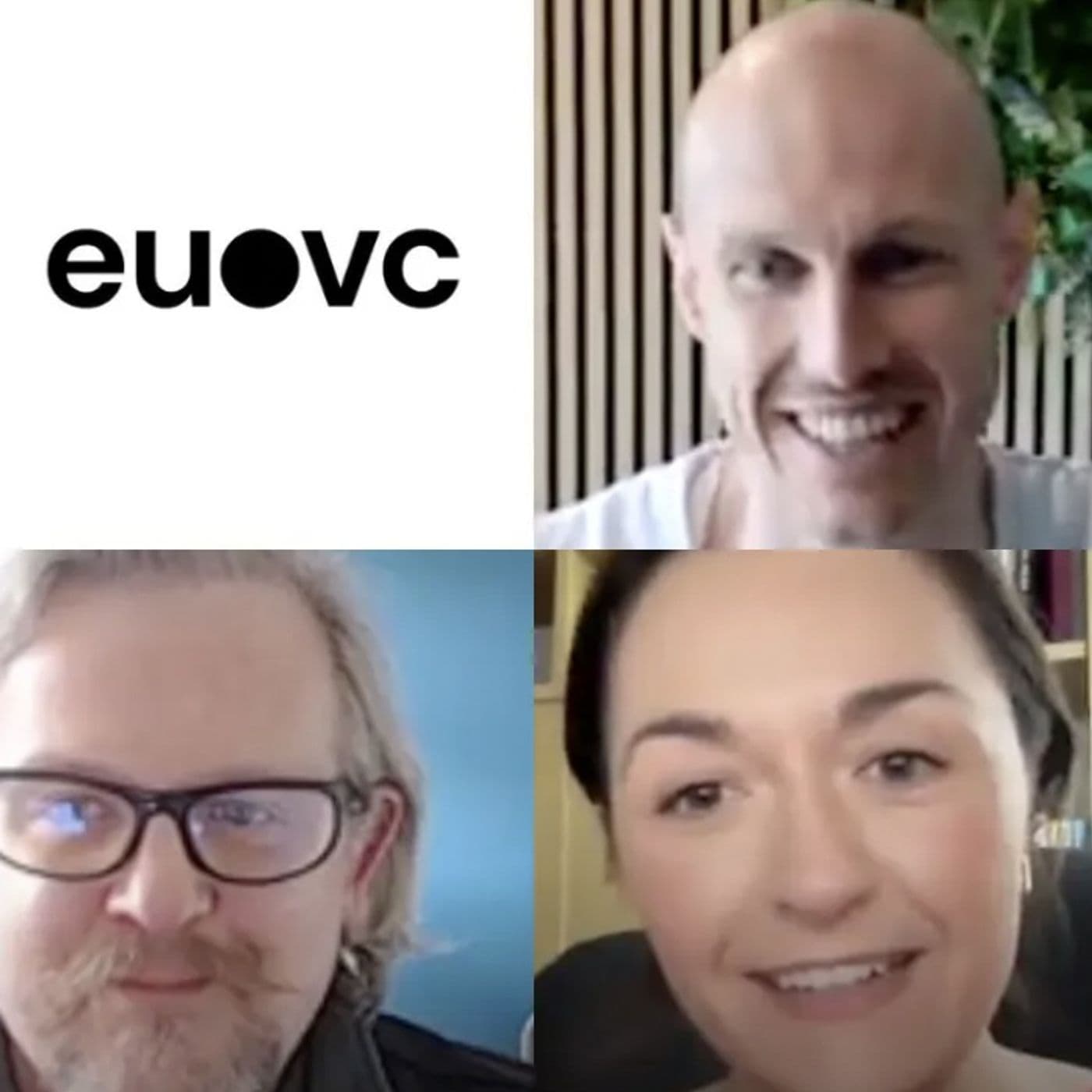
Welcome to a special emergency episode of the EUVC podcast, where Andreas Munk Holm sits down with Cathy White founder of CEW Communications and her star colleague and former tech.eu managing editor Dan Taylor —two of the most plugged-in voices in European tech media —to dissect the shocking news of TechCrunch Europe’s closure and what’s ahead.
In this raw and real conversation, they unpack:
- Why TechCrunch’s downfall signals something bigger in media
- What the rise of AI means for journalists, PR pros, and founders alike
- And how Europe’s startup ecosystem can—and must—take charge of its narrative
From the role of creators and newsletters to the shift from SEO to “LEO,” this one’s for anyone building in, writing about, or pitching European tech.
Here’s what’s covered:
- 00:10 The Impact of TechCrunch's Closure on European Media
- 06:33 The Future of Media in Europe
- 10:30 The Rise of Entrepreneurial Journalism
- 15:46 Navigating the New Media Landscape for Startups
- 18:06 The Shift from SEO to LEO in Media Strategy
- 23:13 Making Complex Ideas Accessible
- 27:18 The Role of PR in the Age of AI
- 29:31 The Importance of Human Touch in AI
- 33:12 AI's Impact on Content Creation and Journalism
- 39:37 The Future of Journalism and New Publications


