
In short
EUVC Podcast Episode Notes
Episode Title
E504 | Jan Miczaika, HV Capital: ESG, Defense, and Deep Tech from a Pan-European Heavyweight
Podcast Overview
- Podcast Name: EUVC
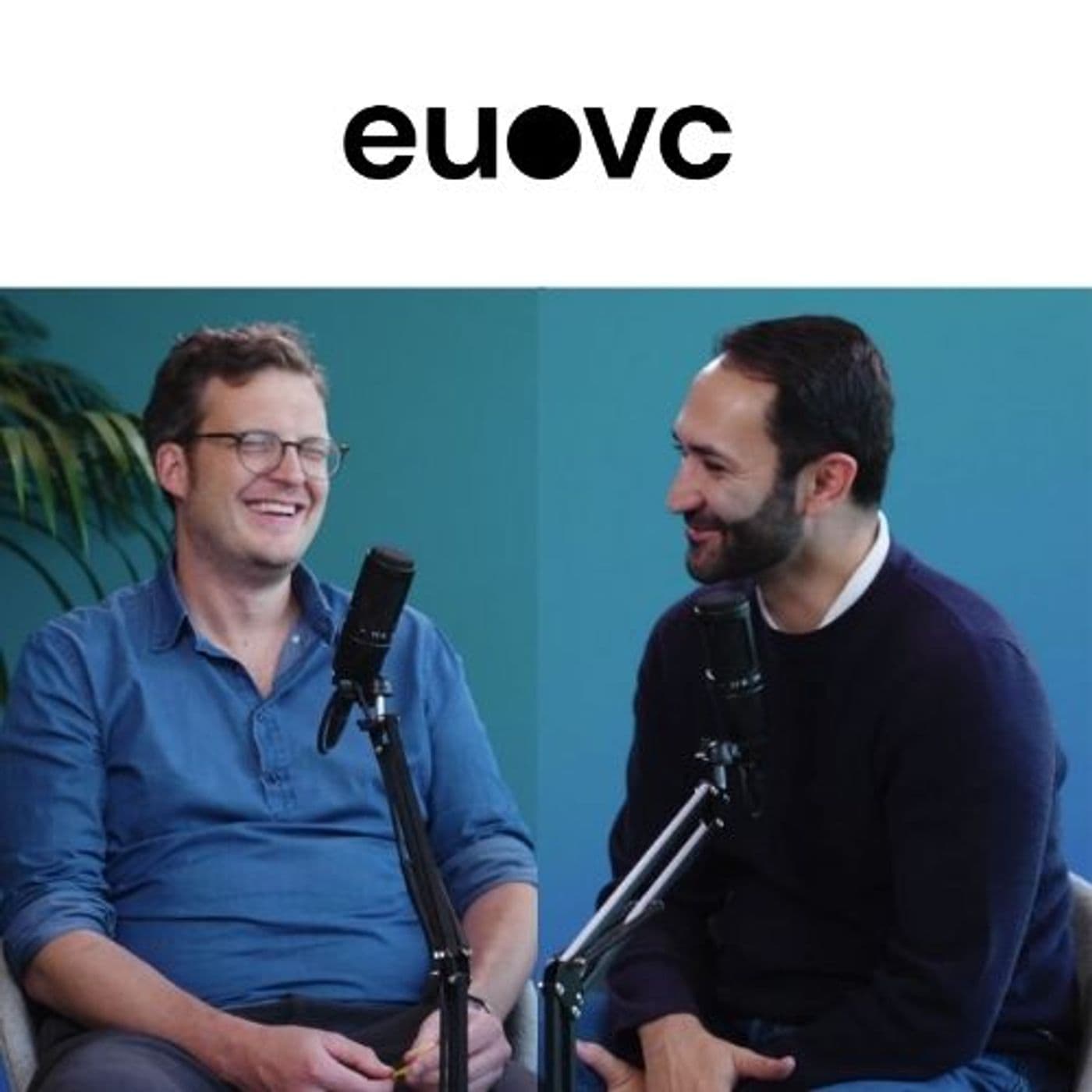
- Co-hosts: Andreas Munk Holm and David Cruz e Silva
- Focus: Insights into the European venture capital (VC) industry.
Episode Description
- Recorded live from SuperVenture 2025 in Berlin.
- Features Jan Miczaika, Partner at HV Capital, discussing macro trends in VC, HV Capital's approach to funding stages, and candid views on ESG, DEI, defense, hype, LP dynamics, and the hurdles of building a VC fund.
Key Takeaways
- SuperVenture's Significance: A cultural gathering in Berlin, showcasing a convergence of LPs, VCs, and fund managers.
- HV Capital Model: Flexibility in investment amounts ranging from €500K to €50M, catering to diverse entrepreneur needs.
Learning Points
- ESG & DEI:
- Ongoing debates about the role of ESG (Environmental, Social, Governance) and DEI (Diversity, Equity, Inclusion).
- Importance of balancing stakeholder interests and the evolving perspective on these frameworks.
- Potential for impactful companies to thrive regardless of current criticisms of ESG.
- Investment Trends:
- Emphasis on deep tech and defense-related investments, with examples of successful ventures in these fields.
- The significance of governance in ESG, especially in sectors like defense and AI.
- Advice for Emerging Managers:
- Challenges faced in raising funds, especially in the formative stages of a VC firm.
- Importance of achieving product-market fit with both LPs and entrepreneurs.
- LP Perspectives:
- Venture capital as a long-term investment opportunity despite inherent risks.
- Advice for LPs on diversifying investments, considering the timeline of obligations.
Episode Breakdown
- 00:00 - Introduction to SuperVenture and its significance in the VC landscape.
- 01:00 - Overview of HV Capital's investment strategy.
- 02:00 - Discussion on ESG, DEI, and fiduciary duty amid current debates.
- 04:05 - Case study on a successful impact company from Copenhagen.
- 05:05 - Insights into defense tech investments and their alignment with ESG principles.
- 06:54 - Guidance for emerging managers on navigating the VC landscape.
- 10:02 - Addressing misconceptions about venture capital as a "risky" asset class.
- 11:45 - Reflections on the humbling nature of venture capital.
- 13:00 - Discussion on the strategic decisions of investing in neuro robotics.
Key Quotes
- On the Nature of VC: "As a venture capital firm, what you're doing is not interested in quick flips, you're helping entrepreneurs build large sustainable companies."
- On Emerging Managers: "Fund I is hard, Fund II and III are harder."
- On ESG and Governance: "The G in ESG is about governance, which becomes very important especially in defense and AI."
Conclusion This episode presents a comprehensive look at the European VC landscape through the lens of Jan Miczaika from HV Capital, emphasizing the intricacies of ESG, the importance of governance, and the challenges faced by emerging managers. It serves as an essential resource for LPs, emerging managers, and founders in the tech and defense sectors.
Written by AI. May contain mistakes. Listen to the episode to check what was said.
Transcript
Automatic transcript. May contain errors.0:00Hi everyone, this is David from EUVC and I'm super excited to bring you something special It's EUVC live from Superventure. Superventure is the place to be if you're serious about VC in Europe. We're talking about hundreds of LPs, VCs, fund managers, all hanging out in Berlin, connecting, debating, and yes, having quite some fun along the way with all side events. But for this limited series, I did catch up with some incredible people, folks shaping the future of European tech, debating if anyone actually has an edge in venture, and tacking hot topics like defense tech, secondaries, ESG. And trust me, things go real.
0:36Sometimes funny, sometimes provocative, but always insightful. We'll hear from people like Andre from Bakkt who threw parties with acrobats. Seriously. Matthew from Barclays who gave us the lowdown on why defense tech isn't just about bullets and bombs. Joe from Eisemmer reminded us that you can't buy a beer with paper games. Bjorn from the EIF brings some surprising optimism on European exits, and Jan from HV Capital, reminding us all how humbling the VC game really is. So, if you want to get inside the conversations happening right at the heart of Europe's venture community, then subscribe, stay tuned, and get ready, because UVC Live from SuperVenture is starting.
1:27It's more than just an alliance. This is a union of values. Let's start acting. This show is not investment advice, and the hosts of this episode may be invested in the funds and companies featured. My name is Jan Michajka. I'm a partner at HV Capital. Jan, here we are, SuperVenture 2025. Thank you for joining us. Tell us a bit about, you know, your Berlin base I was just talking about. So this is probably a quick commute for you. But still, why do you attend Superventure? And what are you hoping to get out of this week? So I'm fascinated, to be honest. And this is not marketing about Superventure and Super Return.
2:11Because Berlin is A, my hometown. But then, you know, it's a deeply, in a way, you know, liberal, radical, left-wing city. And you have this congregation of everyone in capitalism comes here. you know i can't remember what the number was like 2 000 lps gps etc and so for us as a one of europe's largest funds it's an opportunity to reconnect on the one hand with our lps maybe new and existing ones but then also of course gps from other funds and founders and everything so it's a pretty wild week for us yeah you know um why don't we do it i was wondering if we should or not but let's just let's just have you give us a quick quick rundown of hv i think most people know it in the industry but in case someone doesn't what is hv capital no happy to of course um we've been around since 25 years and we're currently investing out of our ninth fund generation uh which is um combined 800 million fund about 400 million for early stage investments which for us is between one and 10 million and then we have a growth team who do 10 to 25 and so i think what is unique is what we can offer entrepreneurs is just to go with them on their journey so last year actually our smallest investment was 500k so below 1 million but yeah 500k the biggest one was almost 50 million so it really shows our flexibility in providing capital to entrepreneurs that breadth is really interesting and rules are made to be broken yeah exactly um you were on stage uh here at superventure talking uh on the topic of if i remember correctly fiduciary duty esg dei and something else i forgot the last one um so if someone is if someone uh is listening in or watching this and didn't attend what would you say are the highlights of that session well i'd say i mean i'd say the whole concept of esg and dei has come under attack in the last uh couple of months however um and i think parts of it are correctly under attack you know i think parts around regulation and reporting and doing things which don't make sense however what you have to remember is always as a venture capital firm what you're doing is you're not interested in quick flips you're helping entrepreneurs build large sustainable companies you know where you take the take all stakeholders into account and some of our most successful companies you know we also set up a continuation fund we've been invested in over 10 years so it's not about quick flips and that means fundamentally building good companies you know which take all stakeholders into perspectives into account is what we've been doing the whole time and um esg came up as a framework maybe more on how to structure these conversations and these thoughts and the pendulum in some cases maybe swung too far in a certain direction and now So it's going back towards the middle, which is good.
5:09Yeah. These terms have even been quite politicized, to be honest. Do you think because of the macro, these topics will become less relevant for the industry? What are you feeling like? What do you think? And of course, I'm not talking from a macro political perspective. I think that's not our remit. That's not our mandate. talking from a venture capital perspective, right, in terms of our industry. Because as you said, the pendulum definitely swung a bit too far. Do you think we're going to see the reverse now? Do you think it's just stabilization? I think it's an opportunity. And I mean, it's almost a bit cliche, right?
5:53I think venture capitalists always see opportunities everywhere. But I think it's an opportunity to build out impact and to fund companies and build companies which are per se good. So just using an example, I work with, again, Bio company in Copenhagen who create base chemicals like acetone, acetic acid, etc. out of CO2. And the bigger the business is, the more good they do. And sorry, I should have mentioned it's using CO2 instead of oil. And so on the one hand, it's good, it's green. But on the other hand, it's cheap and it's resilient and it's local supply chain. and we're turning waste into something useful.
6:34And so I think these are the examples of companies which will continue to get funded no matter where we stand on ESG. I think what was let out was a bit of the hot air, which was in the industry at some times. Yeah, yeah, yeah. Are you... Are you... How to put this in a nice way. we just had a couple of recordings here where he talks about defense tech and I think the same trend that put defense tech on the agenda is actually the trend that also affected the perspective on the HGDI and so on and so forth how do you think about these macro trends as an investor and I will forbid you of saying we avoid hype not because you don't but because everyone says that but just just elaborate a bit a bit a bit on that how do you pursue these micro trends well i think looking at trends is what we get paid to do yeah and uh especially being early on trends yeah and so i love hype you know especially if we if we buy before the hype and then sell during the hype uh love it yeah very good so we get paid to preempt type um and you know i could say you know we started with deep tech we invested or HV first invested in ESA aerospace the rocket company five years ago when it was quite contrarian bet about one and a half years ago we did our first defense related investments yeah in quantum systems a drone company and yeah so we get we get paid to kind of be before the hype but i think especially esg and defense are not contrarian in any way um because you know the g and esg often people think about esg is like green yeah but the g is about governance also and you know i think especially once we get into defense but maybe also in some cases in ai you know governance just becomes very very important it's a good point yeah very good point shifting topics a bit so you're probably one of the most established um vc firms in attendance at superventure um i think it's fair to say that probably 80 are emerging managers generally speaking do you have any advice for them first up i have to say i have a huge amount of respect for anyone who builds up uh vc or private equity franchise platform no matter what you want to call it um because you're on the one hand hustling for deals and hustling for deals is hyper competitive in the market.
9:16And then on the other hand, you're hustling for LPs. And so in a way, you're building up a two-sided service business or marketplace at the same time. And you need a product market fit towards your LPs. You know, to me, a fund is also a product, you know, which you sell to LPs. And maybe your product is like, for us, it's large, established, generalist, pan-European. Maybe your product is a hyper-specialized, one-person, single GP. and it's different LPs you attract. And so what you're looking for is product market fit on that side. But then, of course, the entrepreneurs. And I mean, the best entrepreneurs can choose who gets to invest.
9:54You have to hustle and have product market fit there. So it's hard. Yeah, it definitely is. I don't know what a good tip is. Keep on going. Keep hustling. No, but I think what is interesting and where I then often see people, don't want to say fail, but struggle is, you know, when I'd say the first fund is hard to raise, but it's doable, especially if you keep it small and focused and, you know, have a good network, good track record. I think then deciding what to do for the second fund and the third one is where it's really hard because you don't have a track record yet unless you hit an early success.
10:33Maybe your portfolio, you had a few strikes against it early on, which is what happens. And then doubling down and getting LPs to invest in a potentially even larger fund than your first one. So fund, I'd say from my experience, not experience, but view, explicitly not experience, I'd say fund two and three are the really hard ones. Plus you've tapped out your network in a way for fun. Yeah, and your rich uncle's like, what's your TVPI? What's your DPI? No DPI? TVPI? Do you have any, and this might be a very unfair question, but I'm going to ask it anyway. Some of our viewers and listeners might be on the other side, right?
11:15So more on the LP side here and potentially maybe even new to venture. Do you have any perspectives that you'd like to share with people who are considering getting into venture, but are probably rightfully so a bit unsure, you know, kind of, you know, it's a very risky asset class. Dispersion is high. I've you know everyone talks about diversification what does that mean in venture does that mean that I should only invest in huge funds with huge portfolios does that mean that I should invest in a bunch of small funds with small portfolios like do you have any any words that you'd like to share yeah first up this point about the risky asset class bothers me a little bit sometimes because I mean if you were investing commercial real estate in the US in the last 45 years and saw your portfolio go down by 50 % in this safe real estate class it could be risky how does public equities net of the magnificent seven look also tricky and I fundamentally believe and I mean this is a bit self-serving but I actually believe it also is that especially if you're investing with a 5, 10, 15, 20 year horizon I think technology is what will benefit always long term because it drives societal change and and it's people adapting to new things, new areas, et cetera.
12:34So fundamentally, the future is bright. However, venture, and that I agree with, is not an asset class where you should expect quick returns, quick cash flows, et cetera. That's fundamentally just not the point. And if I was a large asset manager, I'd look at what share of my also obligations are on which timeline and then match that you know if i have pensions to pay today you know i need cash if i have pensions to pay in 25 years different issues and and then i think a part of it should be in technology yeah yeah okay i always wrap up these conversations with the same question which is around biggest learnings um and i always preface it with not necessarily in the last year but recently right okay what have been some of your recent biggest learnings ah uh interesting one so maybe by context i was an entrepreneur i had two entrepreneurial journeys in my life before a venture um and i i had i thought i had developed a muscle on how to how to build a company and i think especially when you when you enter venture capital it can be quite humbling in the beginning.
13:54I've been doing VC now for eight years and slowly some successes are coming. In the beginning you know you think you know entrepreneurship, you invest in companies. Some take a while and do well but many also fail relatively quickly. And so from the high of having built two companies and having sold both of them starting a venture was was quite humbling I have to say specifically more maybe about the last year and the deep tech investments I'm doing I think what is important is to find businesses which are fundamentally really changing in the industry I see too many entrepreneurs who you know build something small in an industry where they have to work with partners etc yeah I think the you need a large target market and a large scale of ambition to then maybe pivot into a niche but I think if you smart start out targeting something small the likelihood of failing is is high and that's why an example of a company HV invested in neuro robotics full-scale integrated hardware software where on production, on supply chain, everyone said focus, but the founder said, no, we need to own this top to bottom.
15:17And in the end, the market is proving him right. Yeah, yeah. Awesome. On that note, Jan, thank you for hosting us in your hometown. I guess it's your hometown, right? Yes. You're a burliner. Thank you for hosting us here. Oh, you're always welcome. It's been a pleasure. Thank you for ordering good weather for me. I appreciate that. Well, as of Portuguese, I needed to roll out the sun. And I hope we can meet again next year. I'd appreciate that. Thank you. Awesome.
15:43Tear down this wall. It's more than just an alliance. This is a union of values. Let's start acting.
From the publisher
Live from SuperVenture 2025 in Berlin,
sits down with
, Partner at
, one of Europe’s largest and longest-standing venture capital firms.
Together, they talk about macro trends shaping the future of VC, HV Capital’s unique positioning across funding stages, and offer a refreshingly honest take on ESG, DEI, defense, hype, LP dynamics, and the challenges of building a VC fund.
This episode is a must-listen for:
- LPs trying to understand how established firms see the world
- Emerging managers finding their product-market fit
- Founders building across deep tech, defense, and climate
💡 What you'll learn:
- Why SuperVenture is a cultural paradox in Berlin—and why Jan loves it
- How HV Capital operates with flexibility across €500K to €50M investments
- The future of ESG & DEI in a depoliticized, impact-first world
- Defense investing: HV’s bets on Quantum Systems & Rocket Startups
- What the G in ESG means—and why it's more relevant than ever
- Advice for emerging managers: Fund I is hard, Fund II and III are harder
- A reflection on being humbled by VC, even after successful exits
Here what’s covered:
- 00:00 SuperVenture, Berlin, and Capitalism in the Radical Left’s Hometown
- 01:00 The HV Capital Model: From €500K to €50M in One Platform
- 02:00 ESG, DEI & Fiduciary Duty: Past the Pendulum, Toward Balance
- 04:05 Why Impact Companies Still Win: A Case Study from Copenhagen
- 05:05 Defense Tech & ESG: Not Contradictory, But Complementary
- 06:54 Advice for Emerging Managers: Fund Fit, Hustle & Dual Product-Market Fit
- 10:02 Words for LPs: Don’t Dismiss Venture as “Too Risky”
- 11:45 Lessons in Humility: From Founding Two Companies to Becoming a VC
- 13:00 Betting Big: Why NeuroRobotics Said No to Focus & Yes to Full Stack


