
In short
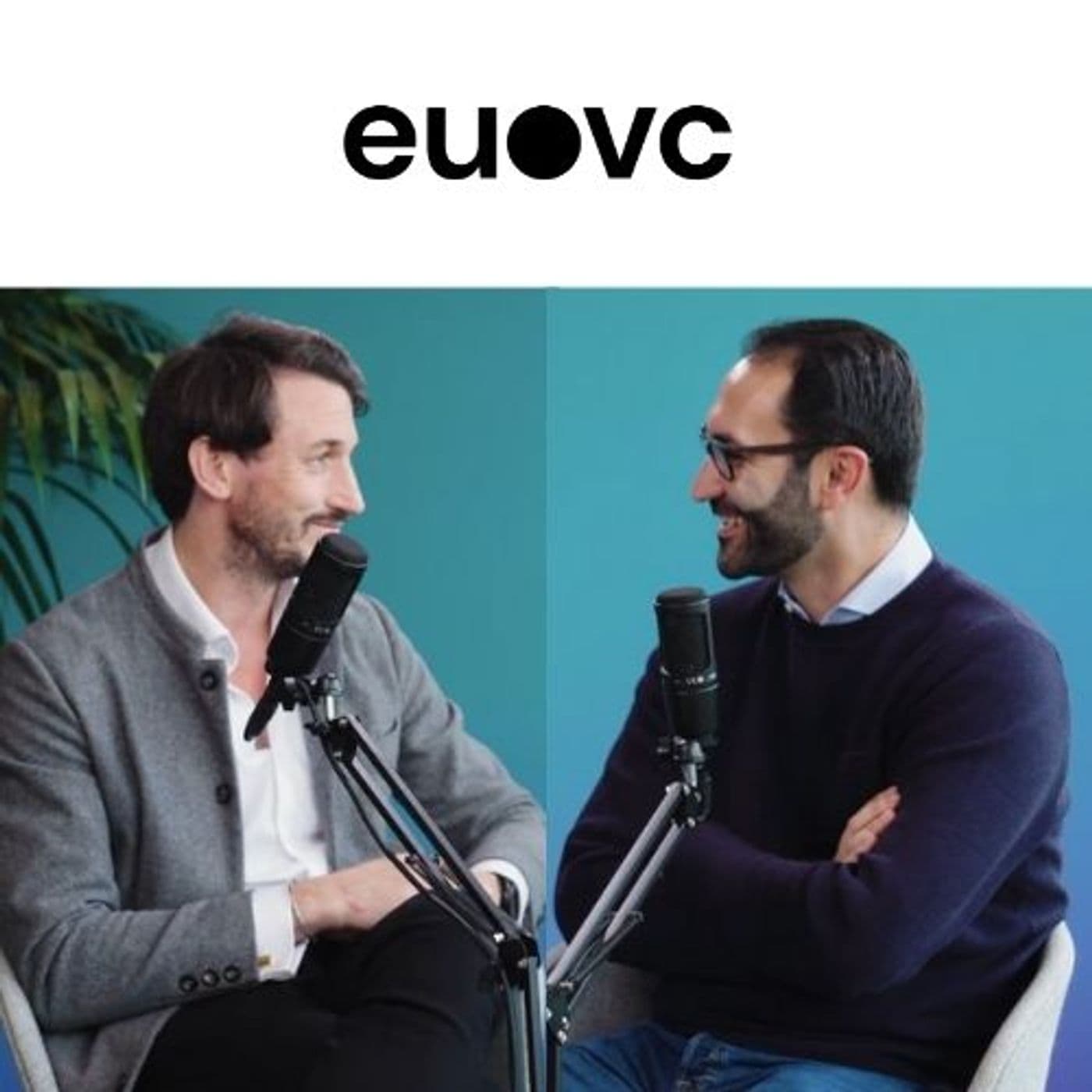
EUVC Podcast Episode Notes: E506 | Andre de Haes, Backed VC
Episode Overview Hosts: Andreas Munk Holm and David Cruz e Silva Guest: Andre de Haes, co-founder of Backed VC Event Location: SuperVenture 2025, Berlin
Episode Description In this episode, Andre de Haes discusses Backed VC, an early-stage investment fund focused on frontier tech. The conversation explores the philosophical and practical aspects of venture capital, including community building, the notion of "VC edge," and the importance of authenticity in the industry.
---
Who Should Listen
- Emerging managers seeking differentiation in the VC market.
- Limited Partners (LPs) wanting to identify a sustainable edge.
- Founders assessing long-term capital partners.
---
Key Topics Covered
- Introduction to Andre de Haes & Backed VC
- Backed VC: A London-based venture capital fund focusing on bold founders and frontier tech.
- Frontier Tech Areas: Emphasis on Fintech, Bio, and Manufacturing Software.
- Importance of Community
- Community as a core offering, not just an ancillary benefit.
- Backed VC hosts 40 events a year to foster relationships among founders.
- Events and Networking at SuperVenture
- Discussion on the value of informal networking during events.
- Andre’s role in organizing the SuperVenture speaker dinner, emphasizing personal connections.
- Building VC Edge
- Concept of Edge: Andre suggests that true differentiation in VC is largely a myth.
- To build a competitive edge, VCs must create their own unique set of rules.
- Long-Term Commitment
- Importance of patience and long-term relationship building (20-year cycles).
- Emphasis on authenticity in relationships with founders and stakeholders.
- Advice for LPs
- Identification of real differentiation in VC funds.
- Consideration of win rates as a metric for assessing a fund's competitiveness.
- Key Learnings in Venture Capital
- Humility and Leverage: Acknowledgment of the humbling experiences in VC.
- Investing at the Frontier: Insights into emerging fields like computational biology and optics.
- Capital Efficiency: Learning from notable investors like Munger and Buffett regarding strong business fundamentals over hype.
- Personal Insights and Final Thoughts
- Building leverage in teams to handle relationships efficiently.
- The necessity of being contrarian to achieve investment success.
---
Key Takeaways
- Authenticity is Key: A successful VC approach must feel natural and genuine.
- Long-Term Relationships Matter: Trust is built outside formal settings, and relationships need nurturing.
- Unique Edge: Finding a unique edge involves differentiating oneself in ways that resonate with founders.
- Learn from Failures: Embrace failures as learning opportunities; venture capital is a challenging landscape.
---
Conclusion This episode provides rich insights into the evolving landscape of European venture capital through the lens of Andre de Haes and Backed VC. It emphasizes community, authenticity, and the nuanced understanding required to build a successful VC practice. The discussions are relevant for anyone involved or interested in the VC space, particularly in Europe.
---
Episode Duration
- Full episode time: Approximately 1 hour and 16 minutes.
Call to Action For more insights into the European venture capital landscape, subscribe to EUVC and stay updated on future episodes.
Written by AI. May contain mistakes. Listen to the episode to check what was said.
Transcript
Automatic transcript. May contain errors.0:00Hi everyone, this is David from EUVC and I'm super excited to bring you something special. It's EUVC live from Superventure. Superventure is the place to be if you're serious about VC in Europe. We're talking about hundreds of LPs, VCs, fund managers, all hanging out in Berlin, connecting, debating, and yes, having quite some fun along the way with all side events. But for this limited series, I did catch up with some incredible people, folks shaping the future of European tech, debating if anyone actually has an edge in venture, and tacking hot topics like defense tech, secondaries, ESG. And trust me, things go real.
0:36Sometimes funny, sometimes provocative, but always insightful. We'll hear from people like Andre from Bakkt who threw parties with acrobats. Seriously. Matthew from Barclays who gave us the lowdown on why defense tech isn't just about bullets and bombs. Joe from Eisemmer reminded us that you can't buy a beer with paper games. Bjorn from the EIF brings some surprising optimism on European exits. And Jan from HV Capital reminding us all how humbling the VC game really is. So if you want to get inside the conversations happening right at the heart of Europe's venture community, then subscribe, stay tuned, and get ready.
1:12Because UVC Live from SuperVenture is starting.
1:33Let's start acting, acting, acting. This show is not investment advice and the hosts of this episode may be invested in the funds and companies featured. Hello, my name is André de Hayes and I'm the co-founder and managing partner of Backed VC. So André, Backed is a VC fund based out of London, backing bold founders. And you guys actually, part of your value added to these founders is a very strong community angle as well. And so we'll of course talk about that a bit, but give us a quick kind of overview of what are you doing here at Superventure? What are you looking forward to? What are you hoping to get out of this week?
2:15So yeah, quick intro on BACT is we basically do two things. We focus on frontier tech in three verticals where Europe is particularly strong and where we think we can build a globally dominant business out of a European heritage. So we do fintech and blockchain infrastructure. We do manufacturing software and we do computational bio. And in each of those areas, we have a dedicated team, a dedicated event series. And then we have a dedicated angel network. And then the second thing we do is we build community for founders so that they choose us in order to belong to the community more than to just have the VC fund as a partner.
2:57and the idea of that is that we build that community through real life events. So we do 40 events a year, almost one a week. We've actually got five this week. You're invited to some tomorrow night. That's one per day. So this weekend is one per day. Some weeks it's less, but it's 40 a year now. So we took 20 unicorn founders to Morocco a couple of weeks ago. We took 40 founders to Portugal for three days last month. We did another offsite in Portugal. We did a conference in London last month. So that ties to the second bit of your question, which is what are you looking forward to getting out of Superventure?
3:39You know, a lot. The biggest thing is actually our partnership with Superventure, where we partner with Superventure to deliver the speaker dinner. So we bring all the speakers from the conference to a really special dinner with a lot of live entertainment and surprises i'm not going to give away the surprises you have to give away a little hint but yeah there's something there's surprise acrobats there are violinists there's some of boleyn's best djs um we're on a rooftop over sunset and so yeah we've done that the last couple of years so that's very special and so what i'm you know the reason that we do that is to try and give people an opportunity to outside of the more formal bits of the conference and outside of the more formal bits of their years right we all spend a lot of time on zoom calls in one-on-one meetings you know and that sort of lpg gp relationship is often a very like formalized one but really if you're going to partner you know you're doing it for probably three vintages or more um which is 20 years because the dirty secret of vc is that no vc fund is done in its 10-year term and so it's 20 years of trust that you're signing up for and that trust gets built outside of you know a one-hour zoom meeting it gets built like in settings where you can let your hair down and talk about how your family is doing so that's why we do those events we also do this this sort of bigger party we bring 300 of you know the super venture attendees alongside the leaders of the Berlin and German ecosystem to a party.
5:18And, you know, party sounds frivolous, but again, like it's a really special way of building deeper connections. And then the other stuff I'm looking forward to is really revisiting, you know, a lot of relationships that I've built over the last decade, you know, here. You know, Superventure does an amazing job of bringing a lot of the top LPs, a lot of the top GPs together. And it's such an efficient way of catching up with people. So I do like, you know, every day I do about 15, 30 minute one-on-ones. And it's just a very efficient way of catching up with a lot of the people that aren't based in London.
5:52Yeah. You have a big week ahead. We all do. I'm not special. Nothing special about me. But yeah, it's, that's the best thing about conferences is the efficiency with which you get to catch up with a lot of people. Yeah. And the relationship building, definitely. So you touched on a bunch of different stuff there. Which I think are interesting because it feeds into my next question, actually. So immediately after this recording, you're going on stage for a discussion, very interesting discussion, in my opinion, which is how to build an edge as a VC firm, of course. Give us kind of what's going on through your mind as kind of what are the key messages that you want to leave the audience with?
6:35What are like the highlights from your individual perspective? you know people who aren't attending like it's uh it's going to be a discussion amongst people so there's going to be different perspectives and hopefully you come out of that conversation conversation with new views as well but going into it what are you thinking so when i first discussed the the topic the thing that struck me is that no vcs have edge right it's the it's the like outrageous hypocrisy of venture which is in the same way that most vcs don't have a board and yet spend all their time lauding about board governance. Most VCs look for edge in companies and have no edge themselves.
7:13And why? It's obviously not because people are disingenuous or incapable, right? There's a ton of unbelievably competent people in venture. It's because it's actually very hard. When we look for companies, not just backed, but most funds, we look for differentiation and we look for a defensible long-term right to win. At BACT specifically, we really look for an N of one. Are you the only company in your market building what you're building? And do you have a right to do that because you have a unique insight on the world? And yet when you're a venture fund, you're raising dollars and you're selling dollars.
7:54And the dollars that you're selling are not that different to the next fund. And so how do you really build edge? the only way to do it is to play the game by a different set of rules and you know what does that mean well it means different things for different people you know a couple of people have done it through content you know you guys have done it through content but if you have a really scalable podcast we've done it through events so you know our vision at backed is to build the davos of the next generation and that's going to take time to build right i think we already have a bigger event offering than any other venture fund in Europe.
8:29But is it Davos yet? No, and it's going to take another 20 years. But it'll keep compounding and our ability to draw the best unicorn founders has grown a lot. You know, now we have most of the top founders in Europe have been to a backed event. All of the top funds come every year to our backed events. And so that's how we compound that, is that people are really keen to get access to that. And then for founders, when we issue a term sheet, being part of that community and knowing that they can then get a term sheet from, you know, Sequoia or Andreessen in the US, because they all come to our events, that helps a lot.
9:07So you have to play the rules by, you have to play the game by a different set of rules. And then you have to make a really long term commitment to keep at it. you know it's you can't just you guys know this from podcasting you can't just start a podcast and hope that within within a year or two yeah it's got to scale you have to do it for 20 years yeah right we've been doing it for 10 and you know we're part of the way there but you have to commit really long term yeah you're double our age funnily we're five years old yeah cool um it's interesting so you know some of the people some of the people watching or listening to this, they might not be inside a venture, like we are.
9:48They might even be considering maybe, you know, doing some investments into venture fund or startups. Any advice kind of how to look for an edge, how to dissect what an edge looks like, right? It's an extremely hard question, I know. But I agree with you, right? Play the game by different set of rules. What does that look like because it might look oftentimes like something very hard to kind of back in a way yeah there are a lot of questions within your question right and so i think you know the one is uh like what constitutes edge the second is like how do you identify and diligence it and and the third is like how do you know that you're right on that right so what constitutes edge i think it's fundamentally uh you eliminate the noise in the answer by saying like is there a very clear reason why a founder will consistently choose you over another fund so we measure win rate right so we've since inception we've had a 97 win rate so at the beginning of this year we'd issued 92 term sheets we'd won 90 of them um and um and that's how we measure it yeah um secondly um you how do you how how do you diligence it?
11:05Yeah. Right. So you diligence it by saying like, is this something that this fund can truly uniquely do? Right. So Harry Stebbings with his podcast, you know, he's got to a level of like podcast downloads that not many other people have. There are certain like people in specific industries like Ribbit in FinTech that have like credibility in the FinTech space that really nobody else has. But unless you can really say you are better than everybody else in the world at that, you know, then that's not edge, right? Then, you know, it's differentiation among lots of others, right? Which is not true differentiation.
11:42And then how do you know that that differentiation is maintainable? Well, it has to feel authentic, right? So for example, with us within events, my first events business, my first business when I was at Oxford was an events business, you know? Like I was at age 19, I was organizing like two events a week. so um it's very natural and authentic for you know for us to be to be doing that yeah we take real joy from it you know we have people in the team who are event specialists so um i think you need to judge authenticity yeah i like that it's like second nature right in a way yeah final question which is my favorite wrap-up biggest learnings in venture and i always like to frame it as not necessarily in the last year right but recently right recent biggest learnings in venture so i mean there are this could this could obviously be a five-hour conversation there are a ton you know there's a meta one which is uh to stay humble and hungry because ventures extremely humbling you know and you look like a genius when you get it right but you you make so many very humbling mistakes along the way you know deals that go south is one but industries that you thought were more exciting and more mature than you expected LPs that you know you thought we're gonna close and and give you a no so and it's an extremely like you know it's an extremely humbling sport uh in terms of some specific learnings you know some recent ones is time is everything and venture is a structurally screwed uh industry where you have too many stakeholders as a as a seed manager you know you invest in 30 seed companies per fund you do that three times you suddenly have 90 portfolio companies and that's a huge number of relationships to manage you know and then you have 60 lps and that's a huge number of people like i've had four lps email me already today asking for an update on something and there are most important stakeholders so we need to honor them and reply with a thoughtful answer so you're very very stretched and so how do you manage that well i'm a big believer that your calendar is your most honest autobiography and that you have to find ways to find leverage and eliminate noise and so my biggest learning is on building leverage into our team so that i don't have to do the work that you know was previously very time consuming so we have a very capable coo and you know two people in finance we have three people organizing our events we have someone doing a lot of our portfolio support and we've built a lot of systems and automation so as soon as a portfolio request comes in immediately i send it into a chat yeah it gets logged someone else deals with it right so i'm not making the intro to the law firm or to the um as soon as we have an lp come in with a request it gets logged someone else replies with a data room or whatever it is um so that's one is build inherent leveraging um second learning would be that um our best deals have all been the ones where uh we were truly contrarian and we didn't invest alongside index and local globe and sequoia and those are obviously great funds that i have huge respect for but if i actually just look at our back portfolio our best deals were idiosyncratic it's when we invested with intellectual conviction into something that was truly non-obvious and into into companies that had no competition but in markets that were very very large and and it took us time to lean into courage of saying you know no one else is looking at that like we were very early into computational biology you know and we've now done 20 deals in that space but for years lp said really like software driven biology is that gonna is that gonna be a thing there's been no winners in that space yet and now it's suddenly becoming a thing but you know it took years of putting a lot of money to work you know and risking looking stupid you know we we we were very early into optics you know we did something um a business called co-mind first business to do non-invasive brain measuring um with a device that measures all the vitals in the brain um with just light and suddenly now that company is becoming very large um but it took courage to put you know uh to capital to work there um and so i think it's you know be prepared to uh look stupid and be prepared to invest on the frontier um and that's where you know really category defining businesses are built like do not be a sheep whenever we've whenever we've invested in momentum um we uh we regretted it um and then i think the third thing is like and there are some like there are some age-old truisms that you learn in other bits of investing by studying people like munger and buffett or thorndyke who wrote the book outsiders and that you don't learn from looking at like venture cases around simple things like capital efficiency you know and um and that actually the best businesses just need really really strong business fundamentals yeah you know and they don't need hype yeah yeah so you gave us really nice really nice messages i liked the the calendar is your your autobiography right don't be afraid to look stupid i like those two yeah andre thank you for joining us here at the filming studio at superventure and hopefully we'll meet again here next year yeah david thanks so much for having me i'm sorry that i've had a raspy voice i lost my voice uh over the last few days um but um i'm i'm getting some sort of odd compliments on it.
18:05So maybe I'll try and keep it. It sounds sexy. Thank you. That's what I'm going for. You're fishing for that. I'm trying to channel a Tony Robbins. Maybe I'll talk like this forever. There you go.
18:20Tear down this wall. It's more than just an ally. This is a union of values. Let's start acting. Thank you.
From the publisher
In this episode,
sits down with
, founder of
, live from SuperVenture 2025 in Berlin.
Backed is one of Europe’s boldest early-stage funds, known not just for investing in frontier tech but for pioneering a new model of VC community. In this conversation, Andre unpacks the philosophical and practical foundations of their work—from turning a value-add into a moat to why “edge” in venture is mostly a myth—unless you build your own rules.
Who should listen:
- Emerging managers figuring out how to build true differentiation
- LPs trying to evaluate durable edge in a saturated VC market
- Founders deciding what kind of capital partner they want long-term
Here what’s covered:
- 00:00 Who is Andre de Haes & What is Backed VC?
- 00:32 Frontier Tech Focus: Fintech, Bio, and Manufacturing Software
- 01:30 Why Community is a Core Offering—Not a Side Show
- 02:15 Behind the Scenes: The SuperVenture Speaker Dinner & Rooftop Surprise
- 04:00 Playing the Long Game: Trust Built Over 20-Year Cycles
- 05:08 Stage Preview: What it Means to Build VC Edge
- 07:50 Advice for LPs on Identifying Real Differentiation
- 10:50 Biggest Learnings: Humility, Leverage & Contrarian Courage
- 15:00 Investing at the Frontier: Computational Bio, Optics & Non-Invasive Brain Tech
- 16:00 What Munger & Buffett Teach Us About Capital Efficiency in VC


