
In short
EUVC Episode E507 Summary: Björn Tremmerie, European Investment Fund
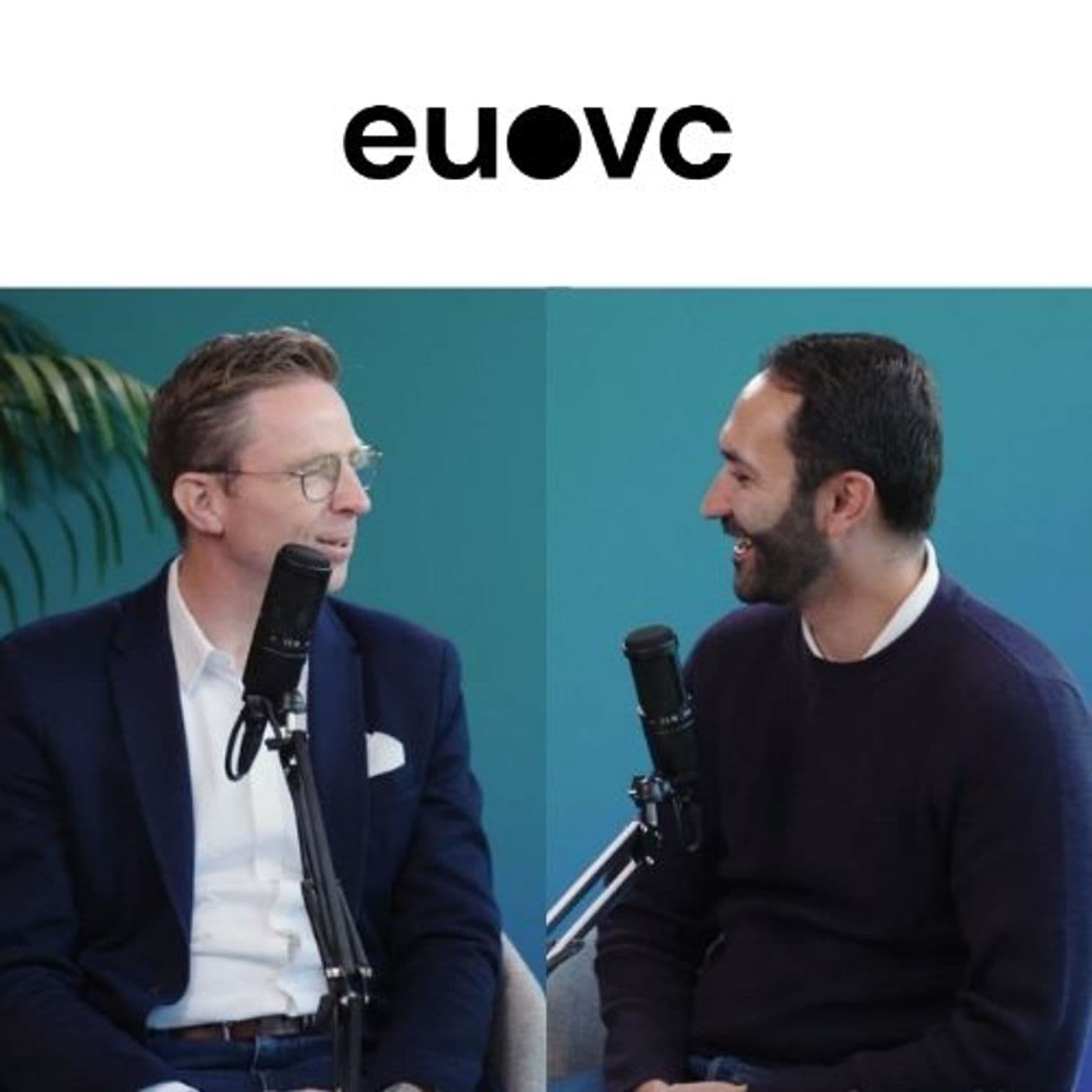
Episode Overview In this episode of the EUVC podcast, co-hosts Andreas Munk Holm and David Cruz e Silva chat with Björn Tremmerie, Head of Technology Fund Investments at the European Investment Fund (EIF). The discussion revolves around the current state of European venture capital, emphasizing key topics such as market resilience, technological sovereignty, and the evolving landscape of funding in Europe.
Key Discussion Points
00:00 - SuperVenture Loyalty & Ecosystem Energy
- The atmosphere at Superventure, an important European VC event.
- Acknowledgment of the diverse participants, including LPs, VCs, and fund managers.
01:02 - The Mood in Market: Storms, Maturity & Resilience
- The industry is navigating through challenging times without panic.
- European managers have matured and learned to handle market volatility.
03:04 - Opportunity in Venture Capital
- Current market conditions present unique opportunities despite challenges.
- The previous ease of investment led to inefficiencies; now there's a barrier that can be beneficial for quality growth.
05:15 - DPI Truths: Top 50 Funds & Historical Context
- DPI (Distributions to Paid-In Capital) metrics compared to historical data from 2017.
- Current DPI metrics show improvement, indicating a positive trend in fund performance.
06:04 - Defense Tech & Dual-Use Funding
- EIF's stance on funding: avoiding direct investment in weapons, but supporting technology that enhances security against threats like cyber attacks.
09:34 - Sovereignty ≠ Isolation
- Emphasis on the need for Europe to be technologically autonomous while remaining open to collaboration with global partners.
11:00 - Later-Stage Funding Gaps & Infrastructure Issues
- Challenges in securing large-scale funding for tech champions in Europe.
- Discussion of the European Tech Champions Initiative to address these gaps.
12:36 - Satellites, SpaceX & Strategic Dependencies
- European dependency on non-European entities for critical tech infrastructure, particularly in the space sector.
14:14 - Learnings From 25+ Years in the Game
- Insights from Björn's extensive experience in the VC landscape, noting that ecosystem maturity takes time.
15:01 - Philosophical, But Practical: VC Responsibility
- Reflection on the responsibilities of VCs in steering capital and supporting sustainable growth in technology sectors.
16:17 - A Clear Statement on Openness, Not Isolation
- Clarification that advocating for technological sovereignty is not about shutting out foreign investment but about creating a balanced and secure ecosystem.
Conclusion Björn Tremmerie's insights provide a grounded yet optimistic view of the European VC landscape, emphasizing the importance of resilience, strategic funding, and a balanced approach to technological sovereignty. The conversation highlights the evolving challenges and opportunities within the European venture capital ecosystem, underscoring the necessity for collaboration, both within Europe and with global partners.
Key Takeaways
- The European VC market is maturing, with managers learning to navigate volatility without panic.
- Current market challenges present new opportunities for growth and investment.
- Technological sovereignty is crucial for Europe, but it does not mean isolation from global collaboration.
- The EIF is strategically positioned to support dual-use technology and infrastructure development in Europe.
- The need for unified efforts across member states to strengthen the European venture capital landscape.
---
Feel free to subscribe to EUVC for more insights into the European venture capital scene and to stay updated on future discussions!
Written by AI. May contain mistakes. Listen to the episode to check what was said.
Transcript
Automatic transcript. May contain errors.0:00Hi everyone, this is David from EUVC and I'm super excited to bring you something special. It's EUVC live from Superventure. Superventure is the place to be if you're serious about VC in Europe. We're talking about hundreds of LPs, VCs, fund managers, all hanging out in Berlin, connecting, debating, and yes, having quite some fun along the way with all side events. But for this limited series, I did catch up with some incredible people, folks shaping the future of European tech, debating if anyone actually has an edge in venture, and tacking hot topics like defense tech, secondaries, ESG. And trust me, things go real.
0:36Sometimes funny, sometimes provocative, but always insightful. We'll hear from people like Andre from Bakkt who threw parties with acrobats. Seriously. Matthew from Barclays who gave us the lowdown on why defense tech isn't just about bullets and bombs. Joe from Eisemmer reminded us that you can't buy a beer with paper games. Bjorn from the EIF brings some surprising optimism on European exits. And Jan from HV Capital reminding us all how humbling the VC game really is. So if you want to get inside the conversations happening right at the heart of Europe's venture community, then subscribe, stay tuned, and get ready.
1:12Because UVC Live from SuperVenture is starting.
1:33Let's start acting. Acting. This show is not investment advice and the hosts of this episode may be invested in the funds and companies featured. Hi, my name is Bjorn Tremery. I'm responsible for technology fund investments at the European Investment Fund. Bjorn, thank you for joining us here in the filming studio at Superventure 2025. You've been to a few editions. I think all of them. All of them? Okay, there you go. We had someone here who's been to all but one, so you're the winner. you take you take the gold tell us um why do you come in specifically uh for this year what are you looking forward to get out of out of this week first of all at that eif we're one of the largest investors in european venture one of the largest backers of venture capital funds and this this the super venture is one of the prime opportunities to be to meet really all the managers in the ecosystem all people that matter in european venture and with one plane ticket to super venture and to Berlin you actually manage to in a week's time do half a year of work so in terms of monitoring in terms of feeling what's happening in the market feeling the pulse the vibe yeah it's just a second to none opportunity how you know I cannot not ask this question right how are you feeling about about micro how are you feeling about our industry what are you excited about what do you worry well worry and fear is never a good counselor so and the good thing is that the maturity of european venture has also come to a stage that the managers are no now not panicking anymore uh when when something major happens so that was different than yeah 25 years ago dot com we were clueless we didn't know what was happening we needed a sequoia letter to to help guide us as to what what advice to be given to startups or or to to to fund managers same still in 2008 when the global financial crisis hit us, we were still clueless.
3:28But in the meantime, we have founders and management teams of funds that know how to navigate these stormy waters. They've gone through a couple of crises, including the COVID, and they're all prepared and not panicking. And I think we're weathering the storm quite well. I don't feel panic here. I think they also see this as a moment of opportunity. Volatility is actually a moment where a lot of money can be made as well and that's not only on the stock market but also here and I feel actually quite a bit of comfort in the market and yes it's annoying that there's no exit that there's no DPI but this is not going to last for five or six years either so there's always sunshine after the rain and that's a bit the feeling business as usual okay it's tough but if it were too easy it's not good either there should be a little bit of a barrier to entry for an entrepreneur or for a fund manager.
4:20And actually, I think when it was too easy, like in 21, that is actually doing more damage. I was going to ask you that, yeah. More damage than good for the industry. Yeah, yeah. So what is coming ahead? I think opportunity. And for Europe as a continent, also the opportunity to show that, yeah, we need to be autonomous, sovereign, and that we need to be able to stand our own feet, not only on the geopolitical field, but also in terms of innovation and entrepreneurship. so bjorn we um yesterday you were on a panel yeah with a good friend a shared friend of ours um and it's my understanding this is something you do actually recurrently you go on this panel quite recurrently to discuss the state of venture and whatnot um if someone's watching or listening in and they couldn't join and they couldn't watch the session give us the highlights what what did you guys know we're a variety of islands we discussed indeed what I just said the outlook the current geopolitical tension and I think there was agreement with Joe and I yeah that there's more opportunity than than reason to worry we discussed upon the absence of DPI and that currently there are no exits and reflows and for some of the investors it's a necessity to recommit to funds and of course for fund managers or fund of fund managers that's that's a difficulty tea but I also brought some data into the mix that currently if you look at the best 50 DPI fund managers in my portfolio the best one has a DPI of 13.4 and number 50 has a DPI of 1.7 and if I if I look at what the status of the DPI was in 2017 when I presented data for funds raised since 2007 so yeah 10 years or more then.
6:08The highest one was 1.4 times DPI and the lowest number 30, then I didn't even have a number 50, was 0.3. So eight years ago, the DPI situation in Europe at the global scale of European venture was a lot worse than what is now. So it's just a moment in time, a snapshot in time. I'm sure that in one or two years' time, there will be again exits and IPOs and if not there will be also secondary opportunities that was something that Joe brought to the stage as well that there's a lot of secondary activity that's currently bringing some liquidity we also talked about valuation that they have come down and I think that's a good thing but that good company still commands a hefty valuation but if it's a good company then it's normal that you need to pay a good price for that as well it's just you need to stay disciplined yeah i think that's a really interesting you know especially for people that didn't intend really interesting insight there that you shared on the dpi side you know just to be clear that's dpi right it's not tvpi no no it's not it's not that is the top 50 of my all of our funds and it's really close to 14 times to 1.7 it's great it's great it's great for europe i think as as european supporters we need to we need to echo and we need to repeat that message it's an important one you spoke a tiny bit about sovereignty yeah and i think um this topic of of defense tech is very much on the trend right everyone's talking about it it's also it's a tough topic um if we're being serious about it it's it's it's a tough area to invest in for a multitude of reasons uh and this is maybe more of a personal bjorn question than an eif question i'm not sure you tell me but i'll specify how do you how how do you think about this space and how do think about the topic as well generally speaking because personally just to give you my view right um i believe we need european defense sovereignty but i'm very very unsure of what i would do as an investor i'm very very i'm i don't feel very confident um how do you see it yeah the official line personally i would agree and also on the record as as eif yeah and again when i say eif We're a policy executioner, so we execute what our mandators and our policymakers instruct us to do.
8:24But there's a European awareness that we need to do more in that area. And doing more from a sovereignty and autonomy point of view doesn't mean that all of a sudden we're going to be investing in weapons or appenitions. So when we say about defense, it's just making certain that we're not sitting ducks, that we're not naive, that we have technology that allows us to be prepared against cyber attacks, that we can securely communicate, that our data cables are protected, that our energy infrastructure is protected. And you don't necessarily immediately need to invest in bombshells or bullets or what have you.
9:04when I listen to managers that are willing to engage in that sector as well they don't necessarily say that those are the areas where where the the big opportunities are so it's really about making certain that we have access to space really space out there that we can launch satellites and have communication infrastructure it's really about all those things so we have a guideline now that we can we can invest in dual use technologies so applications that are suitable for both the civil and the military sector as long as it's not a weapon and an ammunition so yeah that's that's to the area that we don't go and we've signed up our first defense fight in that respect so it was it was publicized to skin venture partners a Dutch pan-european manager we put in some defense money there it's also some space money in there so it's it's areas that are overlapping.
9:57We already had some smaller tickets end of last year into Pan-European funds that are not exclusively on defense, but are also doing a little bit of that. So, and when I say defense, it's really dual use. And there's a big awareness. And I think it's not only awareness, it's also a refusal of trying to be naive. Yes, the geopolitical tension shows that you don't need to be an aggressor when you're just willing to make certain that as a continent you can defend yourself against aggressiveness. And that's what we really do. And it's, I would say, with words, it's as simple as that. Luckily, the fact that we now have a defense equity facility, a fund of 175 million that will be invested, if not by the end of this year, early next year, that has also created a little bit of an attention in the market.
10:48managers that had some skill sets already had some first events in that sector with a generalist fund they're now thinking of building teams that can do defense only and like i said again defense only i don't think the market needs to think that we're all of a sudden uh investing in in machine guns and what have you that will not be the case yeah and to be to be fair right going back to my original question sovereignty is also about energy it's also about uh you know it's also about communications also about cyber there's a bunch of other areas which gif has heavily been involved yeah historically and still i answered the question especially from because you insisted on the defense side but also on the other element sovereignty is also there's a whole other dimension of sovereignty that is very dear to our heart uh if we don't develop it and it's the later stage segment of of of europe so true currently all our tech champions so that the real breakout scale-up companies they cannot be where they are or compete globally without large-scale funding coming from outside of Europe and why outside of Europe because European doesn't have the infrastructure yet we don't have sufficient 1 billion euro funds that can lead 100 million plus round we're working on changing that so we have the European Tech Champions Initiative which is bringing 1 billion euro funds to the market currently we're happy that There's friendly non-European money still financing that, but we're at the risk that all of our tech champions at the end, if we don't build our own infrastructure, are completely reliant on non-European money.
12:17It's not that that is necessarily a bad thing, but it's not helping on the autonomy. Because if you're leading a late stage round, you also have your seat at the table of the board of these companies. You can help strategically drive. you can help them and find clients that might come out of Europe as opposed to the US suppliers that come out of Europe as opposed to the US and you actually can also try to keep them longer in Europe then create more employment here as well I like how you you highlighted the tech sovereignty right and I think that's an important topic of course for our industry right but also for for for a continent if i'm sorry to interject but but also europe has historically been very good at the car industry for instance yeah uh okay that that may be under pressure by by by the the bids and and other ev players from china but autonomous driving is going to be a big big play so i mentioned space as well for autonomous driving you need satellites in space yeah currently who can send satellites into space on a daily basis.
13:26This is one, it's SpaceX. It's a very specific example. Can you imagine that European car manufacturers in order for autonomous driving need to call their largest competitor to say, could you please send me a satellite into space? It doesn't feel right. That's the type of tech sovereignty that we need to have. And that's just one dimension. It could be plenty of others where it's tech sovereignty in space, on climate. We just need to get better at that. and to get better it's not the brains that are are lacking here we need the funding yeah and we need the institutions that provide the funding as well yeah yeah okay so i like to wrap this up with a small chat around learnings you've been around for a while you've seen our industry mature um you've seen our industry do mistakes as well what would you say are like your biggest learnings that you like to share with people listening in half it's difficult to really apply learns but I think with the learnings that we have is that it takes time to to develop an ecosystem I've been investing since 97 in one way or another in the European ecosystem as a direct as part of a balance sheet of a bank and then as a fund of fund so that's how recent or industry actually is Sequoia was started in 72 if I'm not mistaken so they have to have double yeah the lifespan and sometimes you just need to yeah fall on your face stand up and learn there's people that say we will do you will help you avoid the mistakes but sometimes you need to make the mistakes yourself so is it a mistake to to grow up I don't know I just call that growing up and now our ecosystem is mature what we didn't have enough in the past but it's not mistake we just didn't have it was enough fund managers that also understand what it takes to build a billion dollar company now we have many fund managers that also have operators on board Silicon Valley most of the fund managers there are are actually people that have grown a business yourself Andreessen Horowitz is one of the prime example now we have that too in Europe and is that a mistake I don't know.
15:40You just needed to allow time. I do think as well that we need to, the mistake is that, why it's not a mistake, we are not good enough yet at convincing institutional money that European venture is worth the effort. But is that a mistake? No, it's going to take time. And I do think that we do make the mistakes as Europe, as the one mistake that also at our level, the policymaker level, is that we're not unified enough. It's 27 member states and we're not speaking enough with one voice. That's something I would hope that not only as policymakers but also as a continent, we sometimes were to carry the European flag with a bit more pride.
16:23It was set up as a peace project. It may become relevant again. But that's more a philosophical debate than a venture capital debate. I do think that what I said on stage there as well is that I do believe that in the next 10 years we will see a trillion dollar company coming out of Europe. If we allow ourselves to make sometimes mistakes as well. I think the beauty of our industry is that VCs are mostly stewards of capital. But I think that comes with, honestly I think that comes with some level of responsibility. Oh it does. And I think you said it's a bit of a philosophical question, but I do think it's a type of questions we should ask ourselves at events like this, Superventure, but also on a daily basis.
17:07And I think that's really challenging. And I think we talked about defense tech, right? It raises a new set of dilemmas that founders face. And we should talk about it, right? We need to think about that. And it's our responsibility as an industry. So I think it's very, very... Thank you for sharing that, because I think it's very, very important. And it feels philosophical, but I think it's very, very important. It is, and I just want to make one absolute clear statement as well. When we talk about tech sovereignty and autonomy, it is never in a closed environment. It's just to make certain that we have our own.
17:37So it's not against foreign money that would come here. That's a very powerful thing as well. It's good that there's foreign money wanting to invest here because it shows and incorporates the case that there's good stuff being developed here, good companies. It's just we can only be relying on that. So I want to keep the hopefully not naive dimension of being an open economy as well, but not too naive either when it comes to autonomy and sovereignty. An open forum for dialogue. Let's leave it at that. Bjorn, thank you for joining us. Thank you for having me. Hopefully next year we can meet again, either here or at the event somewhere.
18:10I'll be here. To finish off, it's the event. If there's one event, I mark in my agenda. It's this one. Awesome. Great job. Thank you.
18:22Tear down this wall. It's more than just an alliance. This is a union of values. Let's start acting.
From the publisher
In this episode,
sits down with
, Head of Technology Fund Investments at the
, live from the EUVC studio at
.
They delve deeply into the true state of European venture capital, examining long-term performance trends, the role of EIF as Europe's policy-aligned capital allocator, and how sovereignty, resilience, and maturity are reshaping the ecosystem.
Here’s what’s covered:
- 00:00 SuperVenture Loyalty & Ecosystem Energy
- 01:02 The Mood in Market: Storms, Maturity & Resilience
- 03:04 What Makes This Moment in Venture a Real Opportunity
- 03:31 Recap of Björn’s Panel with Joe from Isomer
- 05:15 DPI Truths: The Top 50 Funds & A Look Back to 2017
- 06:04 Defense Tech & Dual-Use: What EIF Will (and Won’t) Fund
- 09:34 Sovereignty ≠ Isolation: The Real Role of the EIF
- 11:00 Later-Stage Funding Gaps & Europe’s Infrastructure Problem
- 12:36 Satellites, SpaceX & European Strategic Dependencies
- 14:14 Learnings From 25+ Years in the Game
- 15:01 Philosophical, But Practical: What VC Responsibility Means
- 16:17 A Clear Statement on Openness, Not Isolation


