
In short
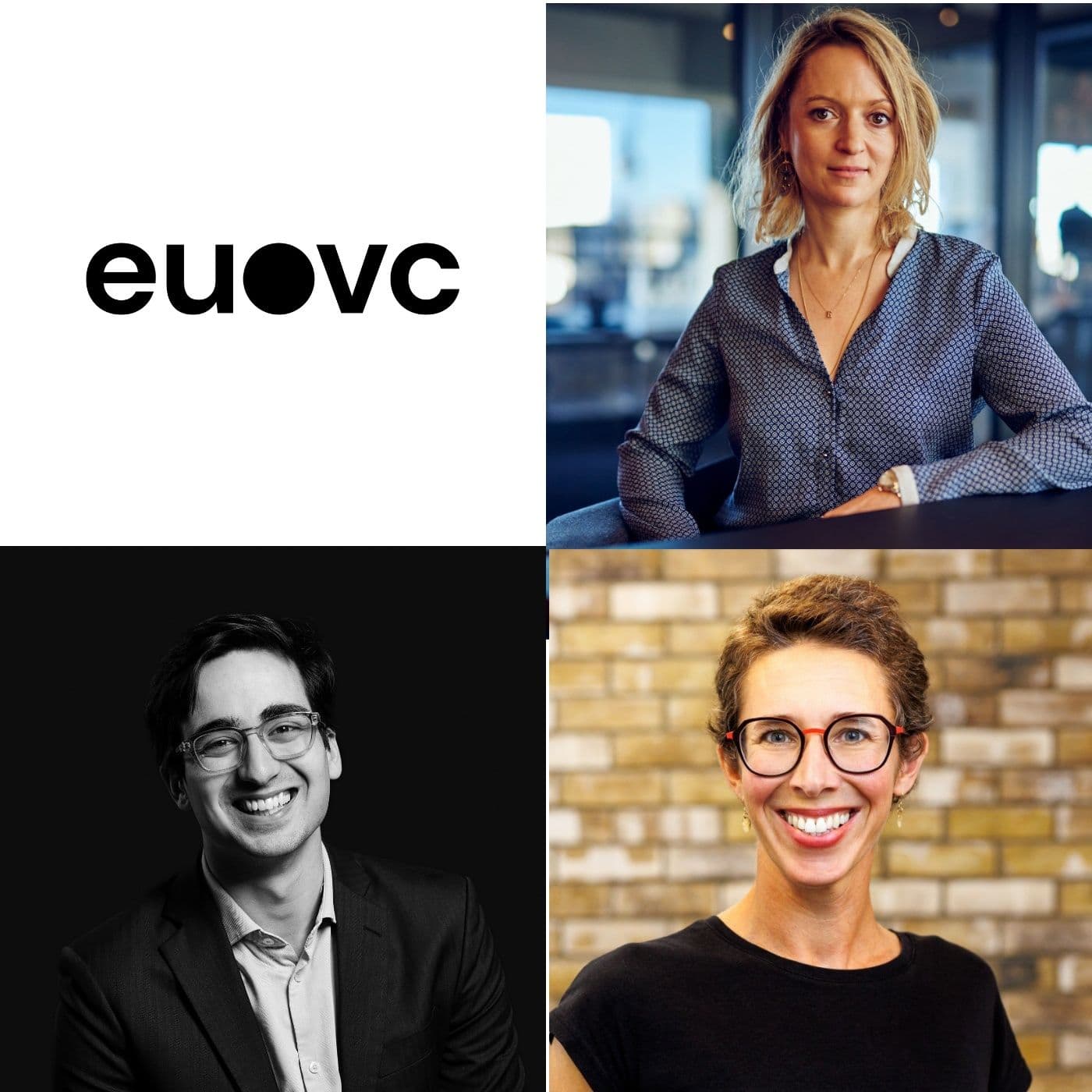
EUVC Podcast Episode Summary: E510 | Emma Steele (Ascension) & Emily Trant (Wagestream)
Podcast Overview Title: EUVC Hosts: Andreas Munk Holm and David Cruz e Silva Description: A podcast focused on European venture capital, featuring notable figures from the industry.
---
Episode Details Episode Title: E510 | Building ventures where profit and purpose scale together Guests: Emma Steele (Partner at Ascension) & Emily Trant (Head of Impact at Wagestream) Theme: Discussing the intersection of commercial business models and social impact.
---
Key Themes
- Understanding Impact in Venture Capital
- Definition of Impact:
- Importance of intent alongside outcomes.
- Emphasis on designing products that create social value.
- Commercial vs. Charitable Models
- Navigating Market Failures:
- Challenges of funding ventures focused on social good.
- Discussed the poverty premium: the added costs faced by vulnerable users.
- Intent Matters:
- Founders should aim for both profit and social purpose in their business models.
- Role of Impact Advisory Boards
- Challenges and Best Practices:
- Importance of honesty and transparency in impact measurement.
- Engaging experts from relevant fields to provide guidance and feedback.
- Building Scalable Impact
- Combining Profit and Purpose:
- Arguments for why commercial success and social good can be inseparable.
- Discussion on how large, scalable businesses can drive significant impact.
- Advice for Future Founders and Investors
- Founder Intent:
- Identifying businesses where impact is central to the growth story.
- Encourage mission alignment from the start.
---
Episode Highlights
Introduction of Guests
- Emma Steele: Partner at Ascension, focusing on impact investing and social tech.
- Emily Trant: Head of Impact at Wagestream, previously co-founded tech for good initiatives.
Key Discussion Points
- Impact Measurement:
- Data on users’ financial behaviors and its link to wellbeing.
- Importance of measuring outcomes such as savings behavior and stress levels.
- Charity vs. Commercial Models:
- Debate on when to choose a commercial model over charity.
- Need for a sustainable business model to ensure lasting impact.
- Case Studies:
- Wagestream: Focuses on financial well-being for frontline workers.
- Tembo: Facilitates access to property ownership for underserved populations.
Conclusion and Final Thoughts
- Advice for Investors:
- Encourage investors to reconsider their current portfolios for impact potential.
- Importance of being thesis-driven in impact investing to effectively measure success.
---
Takeaways
- Integration of Social Good in Business Strategy:
- For businesses aiming to create social impact, there is a necessity to embed social purpose into the core business model rather than treating it as an add-on.
- Impact Measurement is Essential:
- Successful ventures must continuously measure and communicate their impact to stakeholders.
- Future of Impact Investing:
- There is a significant opportunity in social tech and other sectors that can yield both profitable returns and social benefits.
---
Resources
- For more insights or to engage with the community involved in impact investing, visit [Impact VC](https://impactvc.co).
---
This episode provides a thought-provoking exploration of how venture capital can successfully align profit with purpose, highlighting the importance of intent and measurable outcomes in the impact sector.
Written by AI. May contain mistakes. Listen to the episode to check what was said.
Transcript
Automatic transcript. May contain errors.0:00What happens when brilliant solutions for society's biggest problems hit a brutal wall? And it had to be in the minuses. People were living in their overdrafts and it was really eye-opening. The poverty premium is real, but here's the painful truth about trying to fix it. Everybody loved the idea. Everybody wanted to have it. Nobody wanted to pay for it. So how do you break through when the market won't fund what matters most? If you want to have a big impact, you have to build a big business. The secret isn't choosing between profit and purpose. It's making them inseparable. Everything we build has to hit both a commercial note and an impact note.
0:31But even mission-driven founders face the ultimate test. In theory, every single investment we make needs to be able to pay back the funds. The next wave of category-defining companies won't ignore this reality. Don't knock social impact over sustainability. There's a lot of different themes that have a huge amount of impact that can be looked at by VCs. Join us for a masterclass in building businesses that scale impact without sacrificing returns. This is the Impact Highlight Series, powered by EUVC, Impact VC, and Impact Supporters.
1:06Welcome to the Impact Highline series powered by EUEC, Impact VC and Impact Supporters. I'm your host, Orvis Soliv. I'm the founder of Impact Supporters and a former Impact VC investor. I'm super excited for today's episode because we have both Emma Steele and Emily Tran with us here today. Emma is a partner at Ascension VC and Emily is the head of Impact at WageStream. And they're both deep into the social tech topics as well as financial inclusion a bit at large. And I think I have three things that really stood out to me here today in our conversation. Firstly, we discussed sort of the difference between when to use a non-profit model and when to use an APEC VC model, which I think a lot of founders need to think about, but also investors.
1:54Second of all, we talked about how to combat the poverty premium. How do you create models where users actually cancel out the poverty premiums that exist on quite a lot of different products in different markets? Lastly, we discussed how WageStream and Ascension are working together in sort of the impact field and how their collaboration has matured over the years. So that's also super exciting if you're an investor out there and you're thinking about how you work together with your startups. So I hope you find this episode super, super exciting. And let's jump right into it. Here's a few words from our beloved sponsor.
2:34Impact VC is a global community of VCs accelerating impact within venture. Their purpose is to cultivate a community and resources to unlock venture capital's ability to tackle the world's most pressing challenges. The community is made up of over 900 VCs, including both pioneers and newcomers, including generalist VCs and impact specialists. Visit impactvc.co to join the community and explore their resources, including the VC Impact Playbook, the founder Impact Playbook, and the Impact Investing for VC's online training, which is designed to help VCs integrate impact practices into their investment strategies.
3:09That's a lot of information to get in 30 seconds. This is a final final. Tear down this wall. It's more than just an alliance. This is a union of values. Let's start acting. This show is not investment advice and the hosts of this episode may be invested in the funds and companies featured. Super excited to be here with both Emily and Emma. I think both of all to discuss sort of the discussions you've had between you on social issues and sort of financial inclusion as well and some of these topics. but also just because you have two very exciting profiles and it's always interesting to talk with cool people.
3:56So welcome, Emma and Emily. Thanks for having us. Yeah, thank you for having us. I don't know when I was last described as a cool person, so I'll take it. Yeah, they were saying that. But you are a cool person, at least. That's for sure. But super nice that you wanted to join. I know we're going to talk about an array of things, but maybe let's start with a bit more of the personal journey and how you got to where you are and sort of the impact space. Maybe I'll just start with you, Emily. Can you tell us a little bit about who you are, what you do, and sort of what got you into the impact space?
4:31Yeah, of course. Thank you again for having me on August. So I'm the chief impact officer at WageStream, who are kind of a social impact commercial business. Prior to joining WageStream, I've been with WageStream since early 2021. I helped co-found a social impact business called Tuco which was using or trying to use open banking data to build banking products for people with cognitive impairments so kind of using new technology to try and make finance much more accessible and much more inclusive and kind of stepping back from there I've been in fintech for the last 21 years I like to say I've been in fintech since before before fintech was a word and it was one of my former colleagues who had the idea for Tuco.
5:16And she kept coming to me and talking to me and asking me questions and kind of what did I think about this and that. And eventually I was like, I just have to get involved in this. I have to come with you and be part of building this thing. And it was a really interesting experience. It was probably the first time I really understood the different financial lives that kind of existed certainly in the UK. I remember we were building a bank balance reminder and we were thinking like, oh what would be a good level maybe a hundred pounds or maybe 500 pounds and it had to be in the minuses people were living in their overdrafts and it was really eye-opening understanding that the way some people managed money was totally different and they had totally different benchmarks than than we did and that kind of got me hooked and then the other thing I realized from that experience when we you know in the pandemic we made the hard decision to fold that business for lots of different reasons um was if you want to have a big impact you have to build a big business And that's what was so exciting about WageStream was the idea that this company was already scaling, it was already growing, and I could take everything I'd become really passionate about in that experience of building 2Co from the ground up and take it to WageStream that already had the reach.
6:26so that's kind of my origin story I sort of realized how exciting it was to work in impact how much more I cared about my work when I wasn't just trying to make rich people richer sorry VCs
6:41and how much more excited I was to kind of get out of bed and do the job but you have to do it somewhere that's got that reach to be successful in the impact world I like the last point maybe just jumping at that i think it's a it's always a debate i think an impact right is if you're just making rich rich people richer i then uh you might have an impact with your investments but are you are you also doing the right thing on the on the lp side is it open open question is that real impact yeah i i don't i don't know the answer to that i think if you're having if what you're investing is in is ultimately good for society and you're impacting a lot of people in maybe different ways and if that impact wouldn't otherwise exist or wouldn't otherwise exist as quickly.
7:27So if you are accelerating impact, if you're creating new impact, often what you're doing is you're taking the place of maybe government or regulator and changing markets before anybody else is sort of stepping in to make changes to make sort of society more equitable for people. That's a positive. Making rich people richer, if that's an outcome of that, I don't think you can hold that against them because you have to be willing to kind of put the capital in to kind of make some of these movements and make some of this change but for me that can't be the only thing that you're doing that can't be the sole measure of your success and yeah Emma curious to hear your origin story and what you think of this topic aside of my origin story I think like the way I've been kind of living my professional life since kind of starting you know in impact investing is that I'm kind of a believer of inclusive, I call it inclusive capitalism, i.e.
8:21living within a capitalist framework where you understand that, you know, stakeholders, people need to be economically incentivized, but also being mindful of every single entity, markets that you're impacting and having intentionality around what impact you want to have for your stakeholders beyond the economics, I think is what makes it work. So, so, you know, I mean, impact investing, yes, you need to make money for LPs, you just you just do. But the way Yeah, the way I got into impact, I mean, this is my second, slash third career, I started in banking, I was a Santander corporate banking for six years straight, that was straight on the grad scheme, which was not my intention, but I needed to repay a master's loan, talk about it was like quite a high interest rate and repayments were kicking it.
9:21And honestly, I wanted to do an unpaid internship at the World Bank, but I just couldn't afford it. So I fell into banking and I then quit really thinking if I don't quit now, I'm just going to stay there for another 15 years and my life is kind of over so I did that and um I joined a not for but it was a consultancy that helped charities become more financially sustainable so and I was effectively building relationships with social investors and helping charities rethink their business models to kind of link more like to try and get more social investment in not-for-profit entities which made me think a lot about the different business models and the different kind of capital structures that can create impact.
10:11And I concluded that although the third sector is paramount to creating impact, actually, for probably some of the most vulnerable people in society, there are certain ways in which you can create more scalable impact more quickly in the for-profit space. And I started to think about, OK, what's going on in the in the venture space? I didn't know anything about venture, really. But I I looked for who was doing early stage tech for good investing and who had an interesting portfolio that that screams kind of tech for good. And Ascension weren't labeling themselves as impact investors at the time, but they had the best tech for good portfolio, actually.
10:58So that's why I reached out. I mean, there were only three entities at the time. There was Bethnal Green Ventures, there was Mustard Seed, and there was Ascension. And, you know, it was a cold outreach for me. And it was right when we were launching or essentially was launching the Fair by Design Fund, which was our first kind of thesis driven LP fund looking to tackle the poverty premium in the UK. So it was really thrown into a really interesting, very focused investment thesis doing early stage pre-seed and seed investing. And I've been doing that for the next seven years. I've been at Ascension seven years now.
11:45So we're on our second fund doing a very similar thesis around social inequalities. But yeah, that's how we met WageStream. in WageStream were our second investment, I think from the fund back in 2018. Emma, I think you actually jumped to the point I was gonna go to slowly, but I think you went right into it, right? Is when you talk about impact, what is then the different categories of impact side, kind of what does impact investing solve and what Cain did really solve and where you need other parts of the impact ecosystem to actually move in. So maybe let's slowly get into that. When do or what problems does Impact VC solve and what problems can you not solve in Impact VC?
12:34As Emily said, there are certain issues that should be solved by the government and certain issues that aren't solved by the government should be solved and actually are effectively solved by the third sector, charities and kicks. And I think where impact venture can be the most effective is where there's an aligned commercial model. So where typically there'll be a market failure somewhere because of inefficiencies. And generally through tech, there can be a solving of that market failure. So a concrete example, if you think of the price of a good or service is kind of split out, and if you look at where the inefficiencies can happen, obviously you can't do anything about, potentially can't do anything about the kind of raw material cost, the cost of the good in itself.
13:31You then have the cost of delivery of the good. Here, tech can do a lot of stuff, whether it's AI, whether it's cloud computing, whether it's API technology in various different industries. In energy, you can now use AI to optimize your energy consumption. For example, in banking, you can completely rethink the way financial services are delivered in a much more transparent, much more cost-effective way. Beyond the cost of delivery, you've got the whole kind of credit area where there's a huge market failure for information in general. Here, tech can solve those market failures very effectively by bringing in data, more accurate data and kind of reprice and rethink the value chain of those services.
14:21And then on top of that, obviously, you've got profit margin and tech can potentially help make it easier to create mass market products at a lower margin, but with mass distribution. This is where I think you can really start to create innovation in the service of the mass market. And that's how we think about the different areas in which we invest. They solve at one point or the other on that value chain, but they always have a scalable commercial business model that goes hand in hand with an intent of creating impact, which is very, very important, that intent from the founder. And I completely get that.
15:10And then there's the split of, as you say, commercial, non-commercial. What falls into the non-commercial part, right? or what falls into the commercial part in the end? When you're thinking about, is it a commercial business or is it not a commercial business? It's actually funny because I met Emma when I was co-founder at a business called Tuco and we were flirting with her, trying to get her to invest in us. That was working, it was working. Yeah. We knew she was interested. Everyone kept telling us we should be a charity. So we were building open banking products for people with cognitive impairments.
15:44and the question was who pays, right? Who is going to pay for this? The person who benefits from it really can't pay for it and they didn't have the capacity to pay for it or they didn't have the awareness that they ought to pay for it. A family member might have paid for it, but it wasn't really appropriate and we thought banks should pay for it. But banks were kind of getting away with doing the bare minimum and didn't really see the need to invest hugely in it and maybe times have changed with consumer duty and other sort of regulatory reforms. But we were really struggling to find who was going to pay.
16:18Everybody loved the idea. Everybody wanted to have it. Nobody wanted to pay for it. And you see other models like that. So in the space we operate in, we connect to benefits checkers to help people find their entitlement state benefits or something like 23 billion pounds that go unclaimed each year. Those companies are all delivered as charities. They all operate as charities. Even though we pay, We pay to deliver the service to our app members at WageStream. The person who's actually the service recipient, they can't pay. There's somebody who is kind of on the margins and are reasonably vulnerable and may not have the awareness that they should pay or that they would even get a good outcome if they did pay.
16:57So that's the kind of service that it's hard to make it work commercially. You can make it sustainable as a charity, but you're unlikely to tap into that growth story that would really unlock investment. particularly because in that particular case, the government could solve this by putting the onus on DWP to push benefits out more effectively, right? So there could be a really big change that makes that business model just disappear overnight and everybody would clap and the charities themselves would cheer. And so that's really where the line is. Is there that inefficiency or that market failure you're solving for where it's in somebody's interest sufficiently that you have a buyer?
17:38You have a buyer for that service and you have a buyer at scale. and that buyer understands the problem they're solving for and they're willing to pay for it. And it's that big gap between understanding the problem, willingness to pay and ability to pay, where you kind of have that third sector intervention that's needed sometimes or where businesses kind of, you see so many well-intentioned businesses start and they don't quite get there because they haven't found that thing that gets their buyer to stick their hand in the pocket and go, yes, I get it. I see it and I'll pay for it. For me, that's where the line is.
18:11It has to be, you know, you have to do right for society. You have to be providing sufficient commercial value that somebody is willing to pay for it and they're having a better outcome than they would have had otherwise and that they can recognize that in advance. I think that's key because if you think about most issues with new products in venture, a lot of the times you may see a product that comes to market that is a great innovation, but it's not solving a clear problem for enough people in the market. And I think it's a similar issue here, but you have the added. So you've got an innovation that maybe is solving a huge social issue for whoever the benefiter is, but whoever is paying for it, as Emily said, it needs to be a big enough problem and a big enough pain, basically, that it's valued by them and they're willing to jump on it and pay for it.
19:12so you can think about it it's it's a similar problem to what commercial investors would would look at but with the added kind of impact lens to it now when we're talking about it right i would probably tend to think there's there are some companies that are or some organizations that are non-commercial that would probably go into the charity or furtector category there's different we're probably saying that there are some which is a venture potential companies are there also i guess there might also be some in the middle right for both of you right that are not really fitting the venture model, but also still being able to be commercial somehow, but just a slow growth because they might need a lot of hands-on or be more close to the people, whereas a venture tech model might be a bit more techie and a little bit less close to the actual personal benefits at the end.
20:03There's even tech models that can't benefit from the venture model because most funds have minimum market size requirements. The way we think about it is quite simple. The new fund's 50 million. Every single investment we make needs to, in theory, be able to pay back the fund. And because you assume that there's going to be a majority of failures in whatever the portfolio of 35 companies we're going to build, you need, in theory, every single one of those investments to be able to be a fund returner. And that's a kind of 500 million plus exit value, which excludes a lot of businesses and a lot of tech businesses are actually doing really well, but operating in quite niche markets.
20:58And in those cases, I think the angel community can make a huge difference or small funds that don't have the same requirement. But it is quite difficult for those founders to raise from mainstream VCs just because of the market size requirement, really. Yeah, and from an impact perspective, maybe for you, Emily, right, do you sometimes think about whether if you were a non-profit or a non-commercial company, whether the impact would be higher? I guess when you're an impact officer, your end goal is to increase the impact as much as possible. And I'll kind of come back to something I said at the start, which is if you want to have a big impact, you need to build a big business.
21:43And having that commercial lens and really focusing on growth helps you scale and helps you have that big impact. I don't think that it would be more impactful on a charitable model. I think having that commercial side brings something into the equation in this sort of business where you are incentivized to hit both points. You're incentivized to hit impact and sort of have that measurable outcomes for individuals, but you're also incentivized to grow and build a business that can scale. They feed each other, so you tend to do it faster. And you wouldn't necessarily attract the same talent into a charity.
22:23and you wouldn't be able to afford the same rates of pay in a charity necessarily you wouldn't have people that have that kind of real hunger for growth but also want to feel good about that growth and that's what we see at waystream as people they're they're commercial they're commercially savvy they want to build a big business but they want to feel good about doing it and they want to be able to go home and tell their partner or their friends or their family what great things they achieve today and that's not just hitting a sales target that's impacting people's lives. So I don't think that would be the right story for a company like WageStream that really has that sweet spot of something that's valuable, that people are willing to pay for, where we can achieve that scale, and also something that is measurably improving people's lives in quite a substantial way.
23:14Yeah. Emma, what do you think? Do you think WageStream should be a charity? Absolutely not. I mean, if we look at the impact report for our fund, you know, wage stream is by far, by far the most, the biggest contributor in terms of, in terms of impact, simply because it has, it has the biggest scale, you know, the ones that come behind it are also the ones that are doing much better commercially in terms of scale, which means we're doing something right because we're, you know, we're investing in those businesses where the commercial model is in lockstep with the scale of the, of the impact. And this is where the venture model works.
23:52I mean, you know, would you be able to do more things with vulnerable customers? I don't even think you would because you're already using your commercial model to do more things on the platform to add more services that then keeps the consumers engaged. No, I don't think you would. I think the one area where maybe you would see, you might get more companies wanting to partner with WageDream. So WageDream is distributed through employers. So you might get more companies who feel like more gut feel comfortable with the idea that it's a charity rather than a commercial business. but again the product the proposition kind of the technology everything that makes it very very successful and drives that big impact relies on the talent and the ambition of the people inside of wage dream and i and i don't think that you would get an equivalent base of people operating as a charity i can i can see an argument to say well there could be some opportunities to create more comfort but i actually think we've created that comfort through our data and through our impact measurement.
24:57You know, it was the early days of trying to acquire business where that was hard. And then we had the comfort of the Fair by Design Investment Fund and the LPs that came with that to show that people who were putting their money behind impact really believed in what Wage Dream was doing. And that helped unlock early client growth. So that's been a really important part of the impact story and enabling us to hit scale more quickly. Yeah, again, kind of If I reflect back, I don't think we'd be anywhere close to where we are now if WageDream had been structured as a charity rather than a social impact commercial business.
25:32You mentioned your portfolio as well, Emma, right? And saying that WageDream is really one of the big successes. Are there any other ones that you think would be worth highlighting to sort of an audience that might be questioning a little bit if impact startups can really be successful? and especially on the social side because I think climate tech has been a lot in the media, both on positive and bad notes, but sometimes the social side gets a little bit forgotten. That's true. I mean, obviously, you know, they're like all your kids. You don't have a favorite kid. But in terms of, you know, ones that I could highlight that have had a bit of press recently, Tembo is another one.
26:15It's a digital broker that allows a lot more people to access property ownership a lot more quickly. So it aggregates basically all sorts of schemes available to you to be able to either boost your deposit more quickly, use your kind of friends and family money to increase your affordability, use guarantees, any kind of schemes that exist. And the impact of that has been amazing. It's helped a lot of people that would not have access traditional mortgages actually access deposits and unlock those mortgages. So that's been amazing. But from a commercial perspective, they're basically profitable as a business now, which is amazing.
27:08And they've grown extremely quickly and just secured a kind of Series A, early B funding round from a US fund called Goodwater. so you know if a fund like this is investing they therefore believe they can at least 10x their investment right and and that's a kind of testament to being able to again very much like being able to build a very very mission driven business which is they're very focused on their government their impact governance as well um and kpis but they use that to be able to kind of prove the commercial value proposition of the business. And that's really helped them. So yeah, PropTech, FinTech.
27:56Yes, another one is an energy. It's an energy one, but actually there's a side to sustainability that people forget that has a huge social impact, which is tackling fuel poverty. And Switchy actually was our first investment from the portfolio. And they sell, their distribution route is through social housing. So they sell a smart thermostat that you integrate in social housing tenants home. And it basically switches off the energy when the tenant is away. It helps the tenant save a huge amount of money on their energy bill. But the commercial side is that it provides a huge amount of data analytics to the social housing provider to help them manage their stock much more effectively.
28:47You know, they've grown probably a little bit more slowly than some of the traditional venture business, you know, when they started. But in the last few years, they've reached a massive inflection point because social housing is not a sexy market, but once you reach a tipping point with them, it rolls out really, really quickly. So this is, again, it's the example of, I guess, a distribution model that works really well in terms of creating great impact because obviously social housing, they have lots of different priorities, including looking after their tenant. And they have huge scale if you manage to crack how to distribute through them effectively.
29:32And you mentioned impact KPIs and impact governance for these startups, right? And I think, Emily, that's what you spend a lot of time on as well, right? At WaveStream is, and sometimes I remember myself is the, from when I was in VC, that sometimes it can also be a big challenge, right? To really prove the value you're providing and the impact that you're having on people. What are some of the learnings that you've had from having to measure the impact of what you're doing and also sort of in a relationship with a VC and doing that communication between the two of you? Yeah, I mean, we measure so much at WageDream and we're really fortunate to have a huge amount of data, which makes life really easy.
Read the full transcript
30:14You need to measure data, not for your investors, but for your clients and for your business growth. And you need to find that alignment where that data should also keep your investors happy. If you're sort of doing a box ticking job, you're not going to put your heart and soul into it. So for us, we really want to understand how we're changing people's financial lives. And we do that in a number of different ways. So one is a calculation around our impact on the poverty premium. And that is something we report to the Fair by Design Fund. And actually, increasingly, our other investors want to know that.
30:48but that's incredibly valuable for us to tell our clients as well which is the impact we've had on their employee base and the amount of money we've put back into the pockets of their people those numbers though can be a little bit hard to connect with and to kind of really understand the story they're telling so we collect a lot of data that helps us tell those stories so we look at things like how people are saving money so are they saving for the first time how that's changed for them, what their feelings of stress or control are around money, how that flows through to their broader lives. Are they sleeping better?
31:22Are they having better relationships with their friends and family? Do they feel more fulfilled at work? And it's those things that really resonate, being able to collect that data and say to somebody, you know, when we roll this out to your population, we will get, let's say, 50 to 60 percent of your population adopting and using the tool, which is really compelling anyway. And then within that base, we'll see about 90 % say that they feel less stressed. About 30 % will tell us they sleep better. You know, 60 % will feel more aware of their spendings and earnings. Like we're really changing big relationships and kind of big social factors for people that they understand.
32:04And then everything we build has to feed into that. And so we have our kind of our product governance framework that defines kind of what good looks like and what we're trying to achieve. Everything has to hit a commercial note and an impact note. So it has to do both. It has to be sustainable. And by sustainable, I mean, it does right by people and it will help grow the company. Those two things together make it sustainable. And then we have a series of checks and balances as we go. So we kind of have what I call our impact governance framework, where kind of those principles sit at the bottom.
32:36We have an impact advisory board who some of them are from our LPs or the Fair by Design LP. Some of them are kind of independent experts from areas in like labor market economics. And they help kick the tires on our decision making and actually really challenge us. We run co-creation with our app members. We bring lived experience into how we design and build so that we're building with people, not for them. And so that our engineers and our product managers and our designers who have a really different set of lived experience from our app members can really build that empathy and kind of understand the person who's using our product much better.
33:16we do the same with our customers we'll have a customer advisory board and make sure that the things that matter to employers who are kind of hr leaders that we're kind of hitting those notes as well and that's sort of not to mention all the other governance around the fact that's part of what we deliver our regulated products and financial services so it's got kind of a whole heap of hoops to jump through this is i'm making it sound like there's a ton of red tape there isn't this is just part of the way we kind of live and breathe both kind of collecting data measuring data, thinking about it, feeding it back into our product.
33:47As we learn new things, and as we see the way kind of, you know, the dial turns when we launch new features, we'll optimize even further. So we might learn that a particular way of presenting wording makes people feel better about themselves, whereas another way of presenting wording makes people feel ashamed about their money situation. And so those are kind of the softer sides of impact measurement, but we can still tell those stories to our investors. And ultimately, it's our job and it's my job to make our investors care about the things I care about and they should align. So our investors should care really deeply about the social impact we're creating.
34:26They should be really curious about how many people sleep better and the health impacts of better sleep kind of over the longer term. They should be really curious about better relationships with friend and family and the impact on the next generation of children through being in a more relaxed, supportive environment at home. But ultimately, they need to bubble it up to kind of an easy to record number. And that's where those hard lines like the poverty premium impact are really useful as a benchmark for progress, but they certainly don't tell the whole story. Just wanted to jump on one point that I know a lot of both VCs and sort of startups discuss is the impact advisory board how do you use it and where does it give the most value and and who are the members that you need to have to give the most value and it's for you emily but of course emily you probably also have an opinion from a sort of a vc impact vc perspective yeah so you need people who know what they're talking about and you need people who don't have a ton of skin in the games they're not they're not kind of they're not involved in day-to-day commercial decision making for the company.
35:28So our impact advisory board right now, we have someone from Joseph Roundtree Foundation who sits on it, someone from the Resolution Foundation. We have one of the authors of the poverty premium research from Bristol University, and we have someone from Better Society Capital. So there's some connections to the Fair by Design Fund, but really what they care about is the impact side of things rather than the commercial side of things. They're deeply interested in impact. They are also genuine experts. So when we are building a credit product, for example, we were talking about running some simulations using an ONS basket of goods for affordability.
36:05And they're saying to us, but what basket are you using? Because a lower income household will have a differently weighted basket. So you need to make sure you're using the correct basket. So they've got some insight that you don't necessarily get from somebody who's more generalists. They spend their lives thinking about this and measuring this and really going deep on how people are living and managing money in kind of more constrained economic circumstances. We meet three times a year. We make a thousand pound charity donation for each meeting that we hold. They do this as part of their day job and we recognize and kind of thank them for their time with a targeted charity donation.
36:44And our policy is total honesty with the Impact Advisory Board. We don't get value from them unless we are warts and all. So we will be really transparent about our decision-making. We'll be really transparent about our commercial constraints, where we're making decisions and where we can easily invest in things and where we can't easily invest in things. And maybe that comes back to the charity social impact kind of tension that we spoke a little bit about earlier. and I use them to pre-read papers that I write. I send it to them for feedback and input. They're an incredible sounding board. It's not a day-to-day relationship.
37:19It's an ad hoc. You know, like I said, we meet three times a year and I might reach out in the meantime for specific topics. I've reached out to one recently to talk about how we might use our saving data to drive a better understanding of our poverty premium impact. They're useful to have. they are incredibly talented and intelligent people it's useful that they are arm's length commercially so that they don't like i said they don't have skin in the game in that way they're they're super focused on impact and then when we have hard decisions we need to make for example we last year we raised our pricing for the first time in kind of the company's history we took it through the impact advisory board so that they had line of sight of it they understood why they could challenge us and ultimately they could give us their stamp of approval over that decision.
38:08And that helps us communicate that as well out to the wider market, which is we didn't take this lightly. We pulled in an additional check and we take policy decisions through them as well. So having them give their stamp of approval to policy change is incredibly valuable to us as well. And then it's not just me telling people that I think this is a good idea. I've actually taken it through a panel of experts who also agree, who independently agree that it's a good idea. And that's really useful. And if they don't agree it's a good idea, it kind of goes back to the beginning and we need to work out why not and what we need to do about it.
38:44And Emma, do you also then discuss with the Impact Advisory Board or do you more just take the KPIs or how do you sort of play together with Emily on the Impact KPI side? it's it's really shifted over time i think because at the very beginning i think it's it's a case of the student has become the master because we we you know we we set out at the very beginning to work with with founders with a framework that we you know we used a consultancy called e-chorus at that point that helped us build the calculator that would help founders understand the impact they have on the poverty premium that actually linked some of the data that Bristol University had on the poverty premium.
39:31They, with Bristol Uni and the report it did, was the kind of data bible for any data related to the poverty premium. So it inputted that in a calculator. The quantitative impact reporting framework we asked founders to work with us on was that. And then at the very beginning, it was a question of tooting and throwing what was most valuable for WageStream, what they had available for us at the beginning. Because we started working with them when they were pre-product. So we had to decide what might be feasible. And then over time, things got more and more and more sophisticated. You know, now when it's a position where WageStream is telling us information from their research on the kind of updated subtleties around the poverty premium, for example, information that Emily is collecting on the impact of savings, for example, the link between savings and mental health.
40:31Like we did not have that data and WageStream is in a position now where, you know, you guys have the resource to be able to collect that. So we went from, I guess, starting out and working with WageStream to give a bit of a framework and guideline. But WageStream kind of really went off and developed social KPIs and a government's framework that fitted them and their own value proposition. really engaged with that and became a bit of a, I guess, a pillar in themselves of impact data for people around them, which is why a lot of our LPs are interested in what WageStream is doing. And some of them joined the Impact Advisory Board because there's a lot of really interesting research coming out of what WageStream is doing.
41:26And I think the product in itself, you know, owning people's pay cycle creates so much valuable information for people's lives. Organizations are really, really interested in. And it's something that has been developed over time, but quite, quite quickly. So, yeah, I mean, I'm learning more from WageStream than we are giving them in knowledge now. But I think, I guess what we've provided you guys with is the kind of starting framework with how to think about it in a way that could make sense for the business. And then you guys kind of took that and run with it and applied it in what made most sense to you.
42:10It was a really useful starting framework. And I think as well, you know, over time, you know, the market changes, the inputs change. So kind of what might have been true three, four years ago doesn't hold true anymore. So we're constantly tweaking it so that it's a truthful representation of our impact. I think in the early days, when I first looked at it, Wage Dream had been quite confident in impact. And when you're tiny, it's fine to be really optimistic. But as you grow and grow and grow, you have to actually take a hard look at the numbers and make sure they're telling the right story. So we worked together to really fine tune that measurement and to tidy it up and change the assumptions and kind of go back and kind of fix some of the historical data as well.
42:54So that was really useful and maybe a better tool for you as an investor. It's actually the day to day social impact that we kind of live and breathe by. And that, I think, is more interesting, the way people's relationship with money changes, the way their mental health changes, what that then unlocks in terms of productive financial decision making or productive life decision making. And the work that we're doing is actually much more impactful than we realized at the start. And I think the tools that we built, we thought they would have quite sort of a monoline impact in kind of one area of people's life.
43:28And we didn't understand how far that went until we began doing our own primary research and really having those conversations. And then we understood so much more the way that people were interacting with that tool and what difference that made to them and kind of the cascade of, I'd say, sort of positive outcomes that flow from there. Yeah, you became the masters. That's a good title to have as well, right? The master of impact is pretty cool. What I would like to round off a little bit on as well would be looking at sort of more generalist people, people that don't spend time in the impact space in general.
44:08What would your advice or best tips be around impact and especially around the sort of the impact VC angle investing in social startups or social inclusion startups that they might not be used to investing in? What would be the things coming up? And of course, both from an operator perspective and an investor perspective. I mean, from an investor perspective, as I said at the beginning, I think the number one thing people need to think about is founder intent because I would bet if you look at the existing portfolio of a lot of generalist VCs, you will find a lot of really impactful startups, but they've maybe backed them not with that in mind, not with the intent of finding those impactful startups.
45:00And I think having an intention around finding founders that are mission aligned creates more impact in itself. So I think there's a lot of impact left on the table by having VCs and investors that don't care about it and not encouraging founders in the very early stages to really value that mission and use that for achieving better commercial value proposition, better hiring, better brand story, better stakeholder engagement. you know being being able to be conscious about your impact at the very beginning of your journey is really is quite paramount especially when there is that lockstep between between um impact and and commercial value proposition so i think identifying in your existing portfolio who is doing some really amazing stuff in the world and really helping them hone that is kind of step number one.
46:02And then I would say step number, step number two is, is like, understand what you want to do. What do you want to do in, in, in, as a, as a generalist VC, what, what is your, do you have a, do you have a thesis around the world and, and what kind of, what kind of problems do you care about and how are you going to communicate that to founders and, you know, start working with, founders that are aligned with you on those problems. Because we found actually being very thesis driven, as opposed to being impact investors without a specific focus, actually really helped us gather the right amount of data, the right amount of partnerships, the right people that had the right knowledge to help us understand the thesis, and really double down on that impact.
46:59I think being really focused has actually helped us become more commercially astute as a VC. So we're quite big believers in being thesis-driven investors and thesis-driven impact investors. Let me add the operator's perspective to that as well. I'll kind of say the same things you said, but using a different lens. So you spoke about founder intent. I'm going to say find the business where impact is central to the growth story, not a side note. Like in WageStream, our impact fuels our growth. We don't have one without the other. And so it is very deliberate that as we scale, we increase our impact.
47:40But the other side of that, as an investor, one of the things that Ascension did in the early days of WageStream was they had WageStream codify the social impact in the company's articles of association. and that's um although way stream has a few different subsidiaries and and we operate in different markets that's sort of baked in at the top co level which means every time we raise another round new investors come in new shareholders come in and they also have to agree to that they have to agree that part of what they are signing up to is helping to eradicate the poverty premium helping to improve financial well-being for frontline workers so then you turn every investor into an impact investor and you stay away from mission drift so you don't then get a new investor come in who's like forget about that stuff over here let's let's focus on you know ultra high net worths over there like that just isn't part of our our story and so it's the two sides which is having a positive impact is important to our commercial growth it's not it's not a nice to have it's a it's a necessity and then locking that in really early on with that kind of really deliberate moment of saying we will we will always be measured by this and if we ever need to change this we need shareholder consent and i sincerely doubt that our early impact shareholders are going to give their consent to to changing that so like it's there it's in and it is part of how we operate forevermore those are really important pieces and i think i'm saying similar things to what you said Emma, which is around being deliberate, having that focus, having that intent, kind of looking for it on both sides.
49:15And would those tips be the same for impact VC investors? If you're already in the impact space, have you seen other things that maybe other impact VCs haven't necessarily seen? Don't knock social impact over sustainability. I think there's some great businesses that are coming out, especially with the rise of AI, if you look at the stuff that is happening, for example, in health tech, the kind of problems that are being solved through tech at scale, there's a lot of different themes that are not sustainability, but have a huge amount of impact that can be looked at by VCs. So yeah, don't shy away from looking at social inequity as a venture-backable activity.
50:05That's maybe actually a perfect way to end this episode. I think it's a good shout out and good call for more investments into the space. Thank you so much for joining both of you. I really, really enjoyed the conversation and also sort of getting the duality from both of you. So thanks for joining. Thanks for having me. Pleasure. Here's a few words from our beloved sponsor. Impact VC is a global community of VC's accelerating impact within venture. Their purpose is to cultivate a community and resources to unlock Venture Capital's ability to tackle the world's most pressing challenges. The community is made up of over 900 VCs, including both pioneers and newcomers, including generalist VCs and impact specialists.
50:48Visit impactvc.co to join the community and explore their resources, including the VC Impact Playbook, the Founder Impact Playbook, And the impact investing for VCs online training, which is designed to help VCs integrate impact practices into their investment strategies. That's a lot of information to get in 30 seconds. This is what they're finding. Tear down this wall. It's more than just an alliance. This is a union of values. Let's start acting.
From the publisher
Welcome to the Impact Highlight series, powered by EUVC, where we bring you the people and perspectives shaping European venture.
This week, August is joined by
(Partner at
) and
(Head of Impact at
), two of the most vocal champions for mission-aligned tech in Europe.
In this episode, we explore the nuances of building and backing commercial businesses that generate genuine social value. Emma and Emily reflect on where the commercial model does work for impact, where it doesn’t, and why intent matters as much as outcomes.
From designing products that serve vulnerable users to structuring impact advisory boards that challenge you, this is a real look into how impact venture plays out at the fund and founder level.
🎯 This Episode’s Themes:
- What “tech for good” actually looks like in venture
- Building scalable impact and sustainable returns
- How to think about charity vs commercial models
- Why intent and design matter more than labels
- How impact boards can go wrong—and how to make them work
Here’s what’s covered:
- 00:00 | Meet Emma & Emily: Impact VC meets operating at scale
- 02:30 | What Is “Impact” Anyway? And why Ascension never used the label
- 06:15 | Wagestream’s Model: Serving those who can’t pay—at scale
- 10:00 | Market Failures & Margin Models: Why commercial still wins
- 13:00 | Data That Matters: From savings behavior to sleep quality
- 17:00 | Charity vs Commercial: The tension no one likes to talk about
- 20:15 | Impact Boards: How to make them useful (hint: be honest)
- 24:30 | The Venture Fit: Why scale and impact aren’t opposites
- 28:00 | Calling Future Founders: Be intentional from day one


