
In short
EUVC Podcast Episode Summary
Episode Title
E511 | Bernard Dalle & Thomas Kristensen, LGT Capital Partners: Lessons from Building Index (EUVC Summit 2025)
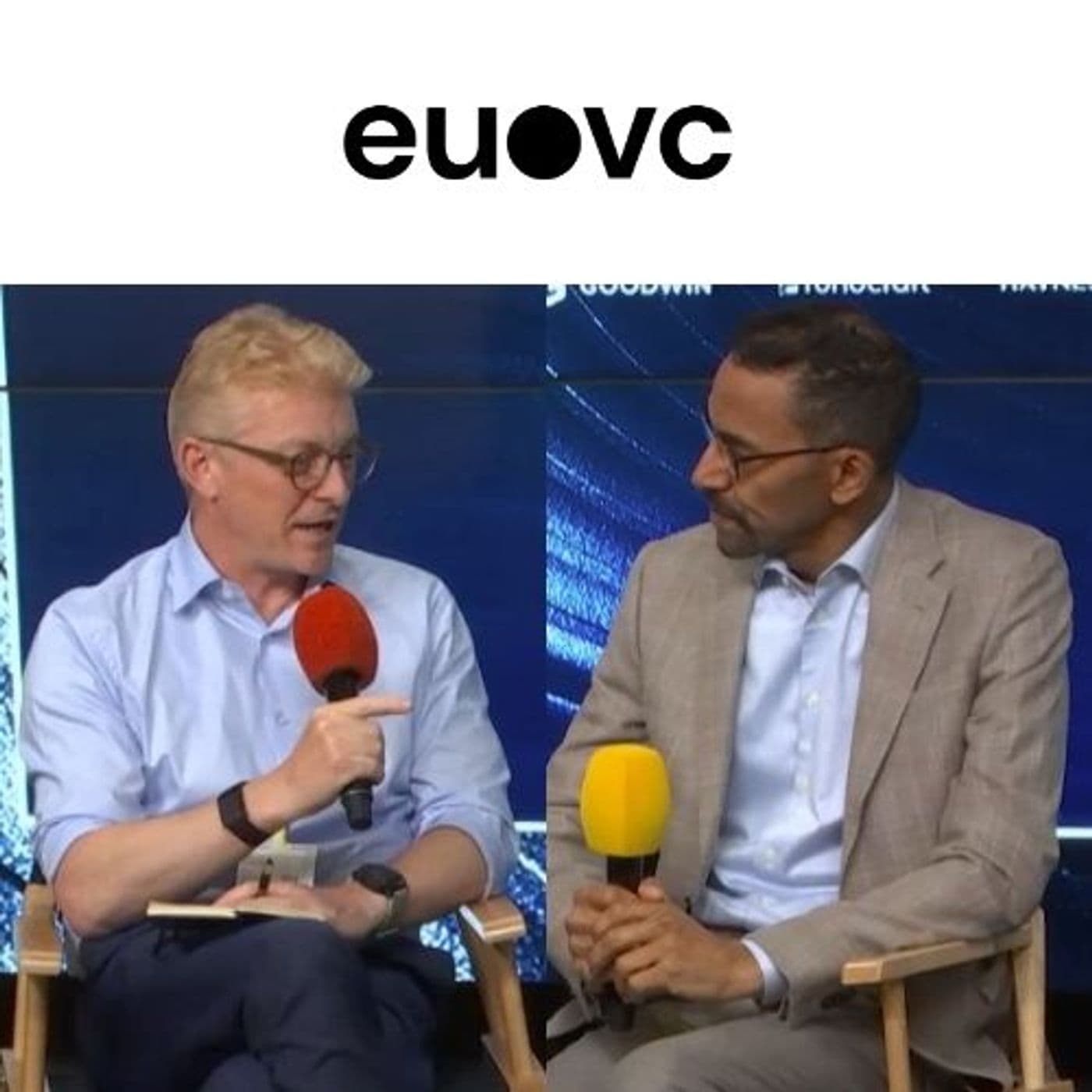
Episode Overview In this episode of EUVC, co-hosts Andreas Munk Holm and David Cruz e Silva engage with Bernard Dalle and Thomas Kristensen at the EUVC Summit. They discuss their experiences in building and scaling Index Ventures, touching upon essential lessons for emerging venture capital firms. Their conversation emphasizes cultural alignment, the importance of junior talent, and operational investments over star hires and grand strategies.
---
Key Topics Covered
- Betting on People
- Importance of hiring for cultural fit rather than just credentials.
- The focus on aligning team values and culture.
- Long-Term Talent Development
- The significance of nurturing junior talent.
- Investing in individuals who can grow alongside the firm.
- Under-Hiring on Purpose
- Index Ventures’ strategy of not hiring general partners straight out of school.
- Emphasis on promoting from within and assessing cultural fit over time.
- The Operations Edge
- Early investment in operational support teams is crucial.
- Dedicated operational roles allow investment partners to focus on building value.
- The Index Blueprint
- Insights into the firm’s early days and organizational structure.
- The role of key team members in establishing a solid operational foundation.
- Institutional Memory
- Importance of capturing insights from partners across the portfolio.
- Strategies for maintaining continuity and knowledge retention in the firm.
---
Detailed Insights
Cultural Fit Over Credentials
- Dalle emphasized that hiring based on cultural fit leads to better long-term outcomes than simply filling positions based on impressive CVs.
Junior Talent Development
- Junior hires are seen as long-term investments that can grow into leaders. Index Ventures focused on giving them a considerable runway for development.
Operational Investment
- Having a robust operations team early in the firm’s lifecycle can significantly enhance efficiency, allowing partners to concentrate on their core investment roles.
Navigating Fundraising Challenges
- Dalle shared personal experiences of fundraising challenges during the early days of Index Ventures, highlighting that success often requires patience and resilience.
Portfolio Management
- The duo discussed strategies for managing investment portfolios, particularly the importance of follow-on investments based on evolving insights into companies.
Succession Planning
- Dalle noted the necessity of planning for generational transitions within the firm. He pointed out that it typically requires a decade for new leaders to be fully integrated and capable of carrying on the firm's legacy.
---
Key Takeaways
- Cultural Cohesion: Building a cohesive culture is vital for partnerships in venture firms.
- Long-Term Perspective: Both talent development and operational support should be viewed from a long-term perspective.
- Investment Strategy: A disciplined approach to portfolio management and follow-on investments can lead to better outcomes.
- Succession Planning: Planning for succession is critical for the longevity and success of a venture capital brand.
---
Conclusion This episode of EUVC provides valuable insights into the inner workings of building a venture firm like Index Ventures. Dalle and Kristensen's reflections highlight the importance of cultural alignment, long-term talent strategies, and effective operational structures in achieving success in the competitive landscape of European venture capital. Their experiences serve as a guide for emerging firms looking to replicate this success.
---
For further insights and updates on European Venture Capital, follow EUVC at [eu.vc](https://eu.vc).
Written by AI. May contain mistakes. Listen to the episode to check what was said.
Transcript
Automatic transcript. May contain errors.0:00Index Ventures has shaped Europe's venture capital landscape, backing global success like Spotify, Revolut, and Deliveroo. Join us as Bernard Dalla, partner at Index Ventures, sits down with Tomas Christensen, partner at LGT, to share the key insights from building and scaling one of Europe's most influential VC firms. You know, never stop telling the story, telling the story about your business, and then improving the story. Raising capital is about storytelling. I still think the best investors are the ones that are out there hunting and grinding every day. They'll discuss the lessons learned from their journey, the critical decisions behind Index's growth, and actionable takeaways for investors looking to replicate this success in Europe's dynamic investment landscape.
0:48I'm Thomas, this is Bernard. Bernard was part of the early team at Index Ventures and I thought it could be interesting for some of the more emerging firms in here to hear a little bit about the journey that you went through. So prepared a few questions for that. I mean, maybe just put it into context, Bernard, would you mind just sharing the roles that you had at Index Ventures? So I joined Index Ventures before Index Ventures existed. It was an outfit called Index Securities. So I joined at the end of 97. We raised Fund One in 99. For the first 15 years of my career at Index, I invested in enterprise software company.
1:31a lot of infrastructure, storage, security. And then for the following nine, ten years, I was the global operating partner, so helping to keep the lights running. I think a lot of the concerns people have when they start on the venture capital journey is raising capital. It's a natural, maybe it shouldn't be the first step, but it's an early step. And it seems so easy for index ventures today, and it has been for quite a few years, to raise capital. But would you mind sharing the early days? Because you came from, I was about to say nothing, but you didn't have much of a track record at the time.
2:09It was obviously late 90s. But maybe if you could just explain the first few years, Index Ventures fundraising strategy, and maybe how easy or difficult it was. Yeah, so basically it took a long time to get to 99 and raise the first fund. And after that, it was still not very easy for one or two funds after that. It really started like 91, 92 with a one-man band, which was Neil Reimer. He was going around Europe and finding technology companies, startups, and trying to help them raise money. Eventually in 96, with his brother David and Giuseppe Zocco, the three of them managed to put together a$17 million fund.
2:48So that's the fund that was there when I joined, and we used that fund to create a track record because without a track record, it's really hard to raise money. So you need some sort of a track record. Then we went on the road and we were helped by the fact that it was 98, 99 and the internet bubble was inflating. And as a result, there was a high level of optimism. And that's why it allowed us to raise actually$180 million as a first fund. But it was not easy. And then the period after that, post-bubble, internet bubble bursting, Again, it took quite a lot of time to raise Index Ventures 2 and Index Ventures 3.
3:29On another note, I've also been involved since I left Index about four years ago. I got involved with P1 Ventures, which is a pre-seed, seed stage venture capital fund focused on Africa. So they're kind of a tiny track record for the two GPs. I'm not a GP, I'm a senior advisor. but I've seen again how difficult it is. So you can imagine pre-seed, seed, Africa, and it took us a year and a half to raise$50 million. So kind of, you know, starting again. So I think, you know, you need a clear story, you need track record, and you need a lot of time and patience. And when did it become, I'm going to call it easy, when did it become easy for Index Ventures to raise capital?
4:16For Index Ventures, it became easier or easy from 2005 onward. So you'd call it six, seven years after Fund One. And this is because at that time, we had made an investment and we were in the series A +, if you want, of Skype. And at that time, Skype had been acquired by eBay for$3 or$4 billion. And this was kind of a landmark deal for Europe and it put us on the map. And that provided credibility, which allowed us then to raise funds more easily after that. But if you sum up, you say, Neil started around 1991, then it took five years to gather a pilot fund, then another three years later to raise a fund one, and then another six years before fundraising became easier.
5:07Yeah, that's right. Yeah, it was a long, long process. But even if I look at P1, for example, like Mika, one of the founding GP, had been doing this solo as well for two, three years. And then it took us almost two years to raise it. So it's like four or five years and we're here with a$50 million fund. So yeah, it's hard. Yeah, it's good to hear that it's always been hard. And for the ones that seem like they have it all today, it was also hard in the beginning and probably even harder because the ecosystem was much less mature. Maybe we can talk a little bit about team building and expanding as a firm.
5:42Some venture firms want to remain small and do that forever. Some want to scale at Index. You decided to scale. Can you talk a little bit about the lessons that you've learned from recruiting at Index Ventures? And I was thinking maybe we can talk about the difference between hiring junior or partner talent to begin with. Assuming that you're not a single GP, you know, and I'm in awe of single GPs because I find that this job so hard, then to do it on your own is really kind of quasi-impossible. But assuming that you're in a partnership, a partnership is fundamentally unstable. You're tied at the hip.
6:22You are kind of sharing in decisions, in investment decisions, even though usually there is one person pushing for that investment. You're sharing in upside, downside. The upside is never going to be equally distributed. So there's going to be a star, and there's going to be a laggard. But at the same time, you're sharing the same pot. So it's really hard to keep this in a cohesive manner. So cohesion is key in partnerships. And therefore, culture is very important, articulating values, spending a lot of time together. And as a result, hiring into such a cohesive culture is difficult. And that's why at Index, we had much more success with promoting from within, hiring younger people that kind of bet into the culture.
7:16And then over time, you can assess how well they're doing or not, and then you promote them. But even for the more kind of senior hires, we were more successful when the senior hires were hired like a level below, like not straight the general partner or sometimes that principal and could kind of prove themselves and buy into the culture. Where we struggled was this kind of hire from outside at senior level. That is extremely difficult because of this kind of cohesive culture. And then if you, on top of that, add a complexity of geographic differences. So, for example, you hire in the U.S. I mean there is a kind of a cultural difference between a Dane and someone from California so you have to bridge that gap with the distance so I think yeah betting people into the culture I think is the is the key and and ideally if you can you know promote from within.
8:16Do you feel like you rushed it sometimes with hiring especially on the senior side? Occasionally we did so I think it It takes almost, it takes five to 10 years actually to figure out whether someone is really going to fit. So in an ideal world, you have five, seven, eight years before you can promote someone to GP, but the world's not ideal. And sometimes you have to do things quicker. So yes, we did brush it. We did take some risks on the culture side. And basically almost in all cases, it hasn't worked out. A lot of LPs push younger GPs to expand partnership and expand their teams. And I think it's something you have to be careful about pushing people into because they're building a business and they have to do it on their own terms.
9:04Yeah, what worked really well for Index is to hire people we knew. So even if you hire someone as a partner, it's actually someone you've worked with or one of your partners has worked with for many years, has known for many years. So these are known entities. So if you hire someone at senior level, ideally hire a known entity. And when we've done that, that has worked out quite well. Can we maybe switch the team discussion a little bit to operations? You had David on board quite early. When I first started working with Index, Pascal was already there. And you had a pretty deep operations team.
9:44I think a lot of people are tempted or maybe financially forced to neglect it a little bit at the early stages. Can you talk about the pros and if any cons of having a good operations team early on? Yeah, I think I'm quite well positioned to talk about that because I transitioned from being an investment partner after 15 years to being an operating partner. And oftentimes this is seen as a demotion. right you're kind of becoming a second class citizen which it really isn't I think operations is is key so and for those that can afford it and obviously there's if you start there's limited budget there isn't there isn't a lot of management fees going around and you have to keep the lights up and people have to do multiple jobs but as soon as one can I think to have someone senior enough focused on operations is so important because LPs are very demanding.
10:45You have ESG. You have compliance. You have ad hoc requests. Then you have to manage the portfolio. You have to think about exits. You have to fundraise. You have to manage relationships with prospective LPs. You have to manage relationships with LPs who are unhappy when things go south. And the issue beyond having the bandwidth to do that as a GP is the focus. It's really hard to kind of constantly context switch. Focus on your entrepreneurs. Focus on the new opportunity. Focus on growing your company. And then, you know, now think about that. So having one person who is a partner or an equal partner focused on that side of the business really frees up the mental space for the other partners to focus on building the value.
11:37So it's very important, in my view. Because I remember when the portfolio started to grow, it would have been very difficult to imagine you guys not having a very dedicated person at the level that you were at to make it work. I think there's no question that it added quite a lot of value to the portfolio by allowing our investing partners to focus on their core job. And I think we often underestimate that. But I also think as an LP, it added a lot that you stepped into that role and it came at such a senior level that we always know that when we talked to you, we were talking to the general partnership.
12:16I think that's right. And I think actually internally in terms of the dynamic, also when you think about there is the initial investment decision is one thing. But then there is follow on. You know, should we reinvest in this company? How aggressively should we reinvest? Should we not? Should we let it go? And when we make these decisions, to have someone who's credible enough and is able to be kind of the neutral party, I think it's very important. And also to be, to look at the portfolio. My role within Index, in a way, was to look at a portfolio with the eyes of the LPs. So I had your best interest in mind.
12:57And not that my partners wouldn't, but the nature of the job is that you get so involved with your entrepreneur and your companies that you kind of lose a little bit perspective. And the role of that third person is to help make sure that that perspective remains. So maybe a good segue, because I remember some of our conversations about portfolio where you would always say, well, this and this partner thinks such and such about this company. kind of looking at the whole portfolio we're thinking about allocating reserve reserves here and here without obviously decisions having been made but can you talk a little bit about on the portfolio management side some of the lessons you learned about where to allocate reserves and maybe also we can go into a little bit portfolio diversification i think to have a successful portfolio.
13:49I think where you want to end up is with a concentrated portfolio of your best companies. And the way to get there is, first of all, you have to invest it in a few golden nuggets. So hopefully you have picked a couple of golden nuggets. But then the second thing you have to do is ideally is to double down and either protect or build your stake in these companies. So for example, if you look at a recent success of index like Wiz, you know, we ended up number one in the cap table, but we didn't start number one in the cap table. What we did is we had very, very high conviction on the team and the opportunity and we kept building up our stake.
14:37The reason why it's important is even though we do all our due diligence on the founders, the opportunity, and we build conviction on the initial investment, the reality is that you actually know more with time. So you want to be in a situation where having learned more, good things or bad things, you're in a position to add more capital on the good ideas. And to do that, you need to reserve enough. So it's a balance between having enough shots on goals in the initial portfolio and then having enough reserves to really aggressively kind of concentrate the remaining capital on where you think that the value is being built with conviction.
15:24What are some of the lessons learned around having, let's call it disagreements around the table on where to allocate those reserves? I imagine most people like their own founders or children more than those of the others around the table. So it's very difficult, I realize that. But any particular things that you guys did to make sure that that capital was allocated optimally and taking emotions and subjectivity out of it? So I think there are two aspects to that. First of all, I think a lot of the time, if you look at our best outcomes, they were far from unanimous decisions. So it usually is the case.
16:05The second is obviously how you put a process in place, you document your investment case or your reinvestment case. So we had like a, people say that, right? You have to treat a reinvestment or follow-on as an initial investment. So we did that. We do treat a reinvestment as an initial investment. And then you need to have someone in the room who's senior enough to moderate the discussion. and then we used to vote on it. So basically we treated a follow-on investment as a new investment and it's because we realized over time how important these additional dollars that you put on the winner can be on the ultimate result.
16:50Very much agree. I think most people who start a venture capital business have the idea that they should create a brand that lasts forever. My view is that many probably shouldn't and should just stay small but there's a temptation to go and build a firm and want it to last forever. If that is your ambition, you need to make sure that some of these partners that you either have come up through the ranks or you're lucky to bring in laterally, actually take over a firm. And I think most VCs or GPs in general, both in private equity and venture, vastly underestimate the difficulty of a generational transition.
17:28I actually think Index has managed it better than anyone I can think of. Can you just talk a little bit about how long it takes to plan, how difficult it is, what are some of the critical decisions? Sometimes I look at my kids who are now teenagers, and I'm giving them words of wisdom, and I don't understand why it's not clear to them and doesn't get into their mind. And I remember in the early days of my career, I heard it from you guys, from our LPs, and they said where venture firms break down is basically success and succession. These are the two pitfalls for venture firms. And you're like, ah, come on.
18:06It's like, how can that be true? I mean, if you're successful, surely you're off to the races. And then when you live it, you realize how true that is, right? Because success, people get carried away and it creates tension for economic reasons because someone believed that they have contributed so much, etc. So that cohesion that we talked about is so important. And succession, because a brand, the reason why people want to carry on with a brand, it's so hard to build a venture brand. Once you've made all the effort to create it and you've done it successfully, it feels like it should carry on and hence you want it to carry on beyond you.
18:49But to do that, you actually need people to take over. And I think it does take, I would say about 10 years, right, to make sure that people are at the level, kind of carry on the culture, obviously their own way. The world changes. So what worked five, 10 years ago is not going to be what's going to work five, 10 years in five, 10 years. So you need evolution. You need, you know, and that's why you need younger people to kind of adapt to the changing landscape. but it probably takes five, minimum five, but I would say seven to 10 years for people to really be bedded in into the role of kind of leaders of a venture capital firm.
19:32So it's, yeah, it is something that you have to start thinking 10 years in advance. Yeah, okay. I think that's an interesting way to wrap up thinking that it takes 15 years before you become somewhat successful at it and at that point in time, you should probably start handing over your firms to someone else. So good luck, everyone. Bernhard, thank you so much.
19:58Before you go, I just want to give a massive shout out to the partners who made the EUVC Summit and awards possible. So please do not tune out. We're partnering with these firms because they're great people with offerings that we know from our friends in the ecosystem are truly world-class. First up, I want to give a big thanks to HSBC Innovation Banking. They helped us incept the awards in the very beginning. And truly, they are the leading bank for anyone in European venture. There's a reason why everyone knows them. Google Cloud, they were our venue hosted the summit. What a team, what a big effort they put on to help us.
20:34We're hugely grateful. Make sure to reach out to Arabella or Oksana at the Google Cloud team to hear how they can help you as well as your portfolio. Massive credits goes to them. Ace Alternatives. We have so many friends in the Berlin ecosystem partnered with these guys. Just the best fund ops team around. And as with any good restaurant, where the locals are is also where you get the best service. And now they're expanding across Europe, so they're definitely someone to talk to. Hainspoon, they're longtime partners of ours in both our own legal work. They're great supporters of us here at EUEC.
21:07And I definitely think that they are one of the go-to legal teams to have in your corner. CW Communications, our dear friends who helped us secure CNBC, Bloomberg, Financial Times, and many more for this summer. It's a joy working with Dan and Kathy and the team. Fundcraft, Digital Native, Full Suite, Lux Headquarter, and a great partner as you grow your firm out of Luxembourg. Definitely a fund admin to consider in your stack. I can only say that the team are incredible to work with. I'm very thankful that I've gotten to know them. I think They're one of the up and coming fund admins that you want to be thinking about.
21:44Portfolio IQ by Synaptic. You may know them for the Discover tool, which is branded on a Synaptic. But Portfolio IQ is absolutely a product you should know because there's no one that understands intelligence better than this team. And finally, Goodwin. They are a truly world class legal partner. You can trust their hands on business oriented and expert in everything and anything transatlantic. So those were our partners for the summit and awards. I know this might've been a bit long and boring, but really, if you have these guys on your side, I don't think your firm could be in any better hands.
22:18And also they're helping us do what we're doing every day for you.
From the publisher
At the EUVC Summit, Bernard Dalle (formerly of Index Ventures) and Thomas Kristensen (LGT Capital Partners) shared candid reflections on how to build a venture firm from the inside out. Instead of fixating on star hires and grand strategies, their talk emphasized the compounding power of cultural alignment, junior talent development, and early operational investment.
Drawing on first-hand experience, they unpack what it takes to build enduring institutions—where team, trust, and time matter more than titles.
Whether you're raising your first fund or scaling your platform team, this conversation offers timeless lessons from one of Europe’s most respected firms.
Here’s what’s covered:
- 00:45 Betting on People: Why hiring for cultural fit beats chasing CVs
- 02:20 Long-Term Talent Playbooks: Junior hires, long runway, big impact
- 03:50 Under-hiring on Purpose: Why Index rarely hired GPs straight out
- 05:10 The Operations Edge: Building support teams early pays dividends
- 07:00 The Index Blueprint: Early days with David, Pascal, and a deep ops bench
- 08:30 Institutional Memory: Capturing partner insights across the portfolio


