
In short
EUVC Podcast Episode Summary
Episode Title
E517 | Jacqueline van den Ende (Carbon Equity) & Dougie Sloan (Impact Venture at Better Society Capital): Rewiring capital for climate impact and making everyday investors part of the solution
Episode Description
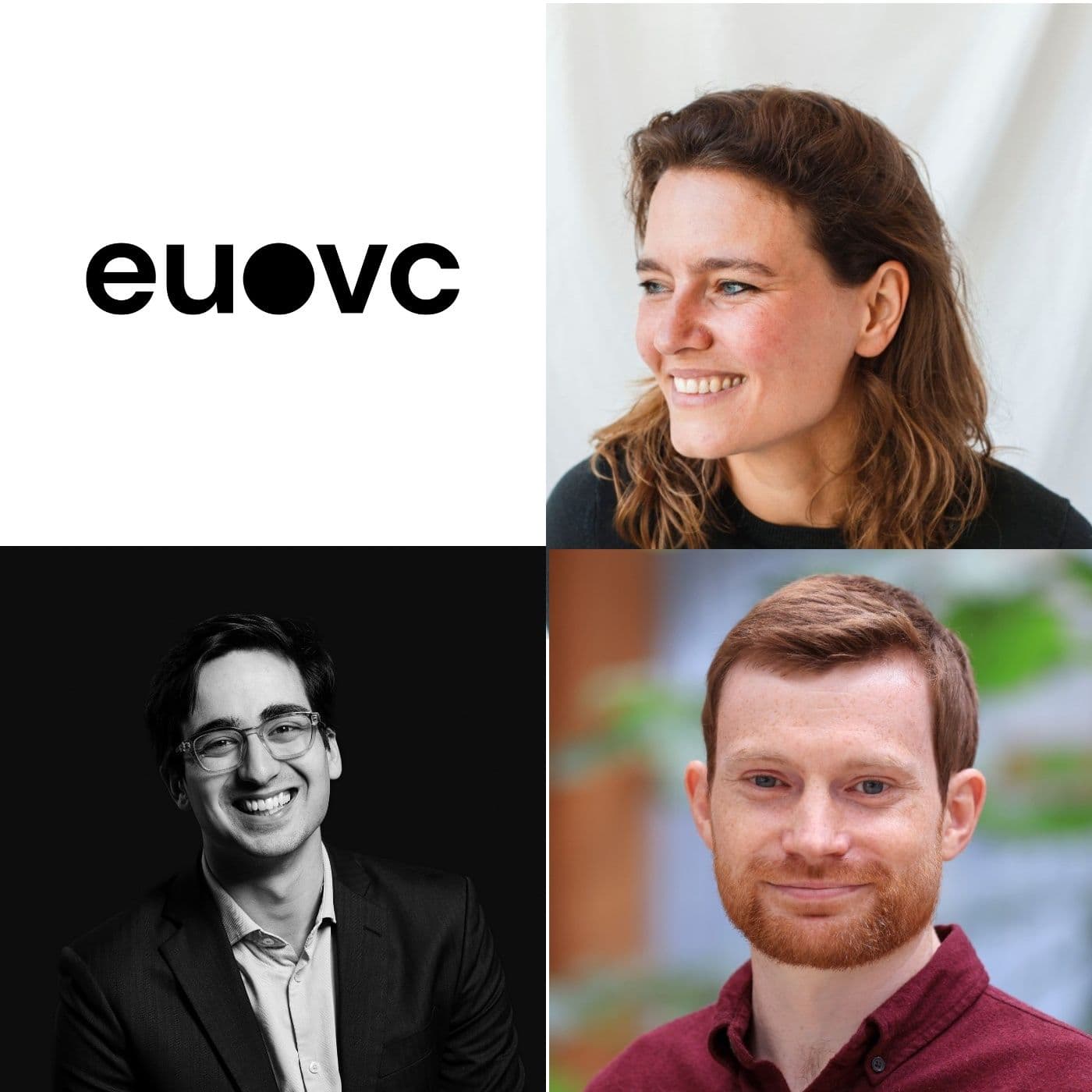
In this episode of EUVC Impact Highlight, co-hosts Andreas Munk Holm and David Cruz e Silva engage with Jacqueline van den Ende, Managing Director of Carbon Equity, and Dougie Sloan from Better Society Capital. The discussion revolves around unlocking billions for climate action by reshaping the venture capital landscape and democratizing investment access.
Key Themes Covered
- Climate Finance Challenges: Why climate finance is currently stunted and the need for innovative solutions.
- Democratizing Investment Access: Enabling more people to participate in capital markets.
- Prosumers in Investment: The evolution of the "prosuming" investor; educated and engaged individuals taking a stake in climate.
- Impact without Trade-offs: Bridging financial returns and social impact.
- Redesigning Private Markets: Facilitating broader participation in private equity.
Episode Highlights
- 00:30 - Jacqueline’s Journey: Transition from traditional VC to advocate for climate investments.
- 02:15 - The Climate Capital Gap: Only 2% of VC funding goes towards climate tech.
- 03:45 - Trust Mismatch: Discussion on trust between institutional capital and bold innovations.
- 05:30 - Rethinking “Retail”: Engaging next-gen LPs with sophisticated investment products.
- 07:00 - Tech's Role: How technology facilitates onboarding and transparency in investments.
- 10:00 - Productizing LP Experience: Making investment processes clearer and more engaging for investors.
- 14:30 - Impact with Returns: Challenge the notion that one cannot achieve financial returns alongside social impact.
- 16:00 - Future Trends: Exploration of tokenization, retail regulations, and broader access for investors.
Key Takeaways
- Capital's Role in Climate Change: Emphasizing that the weapon of capital can significantly influence climate solutions. Lowering barriers for investment opens doors to impactful climate projects.
- Retail Investors as Change Agents: Everyday investors can play a crucial role in funding climate solutions, not just wealthy individuals.
- Education and Transparency: Importance of educating investors about climate impact and ensuring transparency in investment processes.
- Diversification in Funds: Investing in diverse funds reduces risk and enhances potential returns, making it an attractive proposition for both institutional and retail investors.
- Evolving Investor Mindset: The new generation of investors is more purpose-driven and interested in aligning their investments with their values.
Discussion Points
- The importance of democratizing access to impact-driven investments and how platforms like Carbon Equity are enabling this transition.
- The debate on the balance between financial returns and social/environmental impacts, with the aim of showing that both can coexist.
- Observations on emerging trends within the climate investment space and the identification of high-impact sectors such as renewable energy and sustainable agriculture.
- Challenges related to the traditional fund-of-funds model and how Carbon Equity is innovating this approach to attract a wider array of investors.
Conclusion
This episode highlights the transformative potential of democratizing capital for climate action. By engaging everyday investors and utilizing technology, the venture capital landscape can be restructured to prioritize sustainability and make climate solutions more accessible.
Written by AI. May contain mistakes. Listen to the episode to check what was said.
Transcript
Automatic transcript. May contain errors.0:00What if the key to solving climate change isn't just technology, but who gets to fund it? And I strongly believe in the weapon of capital. Money decides, money makes the world go round. For too long, the world's most promising climate solutions have been locked behind barriers that keep everyday investors out. If we can lower the barrier for private individuals to invest in private equity, can we then unlock billions of dollars for climate solutions? But what if there was a way to change that? A digital revolution that's opening doors once reserved for the ultra-wealthy. People can invest currently from 50k euros into the world's best climate funds.
0:38And the risk lower than you might think. The risk of capital loss, I would say, is 95 % plus for an angel investment. For a fund of funds with 7 to 10 underlying funds, it would be 1.5 to 0.7%. The stakes couldn't be higher. A simple threshold change could transform who controls the future of our planet. So if we open the door by enabling access from 10K or 20K, we can literally unlock billions of dollars of additional capital that can help solutions to world's biggest challenges. Because the ultimate vision isn't just about returns, it's about ownership. But my dream is that ultimately everybody is a shareholder of the net zero economy.
1:18How can a 10K check actually move the needle on global climate action? Join us as we sit down with Jacqueline Vanden End of Carbon Equity to discover how democratizing capital is turning everyday investors into powerful agents of change.
1:35Here's a few words from our beloved sponsor. Impact VC is a global community of VCs accelerating impact within venture. Their purpose is to cultivate a community and resources to unlock venture capital's ability to tackle the world's most pressing challenges. The community is made up of over 900 VCs, including both pioneers and newcomers, including generalist VCs and impact specialists. Visit impactvc.co to join the community and explore their resources, including the VC Impact Playbook, the Founder Impact Playbook, and the Impact Investing for VCs online training, which is designed to help VCs integrate impact practices into their investment strategies.
2:13That's a lot of information to get in 30 seconds.
2:20Tear down this wall. It's more than just an ally. This is a union of values. Let's start acting. This show is not investment advice and the hosts of this episode may be invested in the funds and companies featured. Welcome to the Impact Highlight Series powered by Impact VC, EU VC and Impact supporters. We're super excited for today because we're going to have another LP conversation. We have you, Jacqueline, with us here today. Welcome to you, Jacqueline. Thank you. Thanks for having me. I have my co-host as well, Dougie, on here as well. And we're going to talk about a lot of different LP perspectives and some things about democratization of the LP scene as well.
3:08Could you tell us a little bit about who you are and what your journey into the LP impact you see was? Yeah, sure. My name is Jacqueline. I'm one of the co-founders and the CEO of Carbon Equity. And Carbon Equity is a digital platform that seeks to unlock billions of dollars in private capital to help solve the world's biggest challenges, starting with climate change. And so in the LPGP spectrum, we're sort of both. because on our platform, we offer fund-of-fund structures where we invest in the world's best climate, venture capital, growth, buyouts, and infrastructure funds as an LP. And on the other hand, we're democratizing access to impact private equity.
3:59So through our platform, people can invest currently from 50K euros into the world's best climate funds. and soon coming up in April, hopefully from 20K. So we're really trying to make it possible for almost anyone with a little bit of capital on hand to help fund climate solutions. And through our fund of funds, we offer access to world's best managers with a large amount of diversification, which mitigates risk for an easy digital platform. So that's what we're doing. And can you tell us a little bit about the journey you've been on with carbon equity? Where did you start? How did you, where are you now?
4:45How did you come to where you are? Maybe briefly on sort of like the background of carbon equity. Climate change has been a bit of a topic for me all my life. In 2019, I read the book, The Sixth Extinction. It talks about the five major extinction moments in the history of the planet. Last time being the dinosaurs. And for me, the wake up call in that book was that climate change now, since the Industrial Revolution, is exponentially much faster than anything we've ever seen in the history of the planet, which in previous episodes killed up to 95 % of all life on Earth. So that for me was a bit of the pivotal moment of like, holy shit, nothing else matters other than solving climate change.
5:28And I strongly believe in the weapon of capital. So money decides, money makes the world go round. And therefore, I decided, I asked myself the question, how can I, with a weapon of capital, change the trajectory of climate change? And our insight was to do so, we need to be investing in private markets. So we started in 2021. And this was during the emergence of ESG investing. So ESG investing was all the hype and sort of trillions of dollars were moving into listed stocks, ESG stocks, which on one hand is good. But we quickly realized when we looked into this that ESG stock investing is something quite completely different from impact investing.
6:14What we observed that if you're trading shares on the stock market, you're basically trading shares between different shareholders. And the impact of trading shares on the stock market is quite limited. So our thesis was to really have impact, you need to be investing in the private markets, not in the listed markets. And our second observation was looking in the private markets, only the top 1 % of wealth holders have access to private markets. So that's where our idea of democratizing access to impaired private equity came from. if we can lower the barrier for private individuals to invest in private equity, can we then unlock billions of dollars of capital for climate solutions?
6:56So we started in 2021. We started really small with a team of four co-founders. And we did our very first investment in Christian Hernandez's fund of 2150, like a three and a half million check. We basically called our network and said, who wants to invest in this 2150 fund? And then in December, we launched our first fund of funds where we invested in a bunch of climate funds, including energy impact partners, for example, also 2150, Alstano, and many other very cool climate funds. And ever since, yeah, we've grown to now 300 million in assets under management and 1 ,200 investors who are investing in climate solutions through carbon equity.
7:44You mentioned the focus on investing in private market funds. I know venture isn't all of what you do, but thinking about this with a venture lens, you sit right at the heart of this growing climate ecosystem in venture and have seen all of the steps of that, I suppose, since five or so years ago. So when you're looking across the market today, how would you define what makes a good impact fund? And when you're evaluating those funds, what makes a really great fund stand out from a good fund? So maybe to start off a little bit with how we evaluate funds. Our process has two stages, where the first stage is our climate impact diligence process.
8:27And in the climate impact diligence process, we look at two parts. The first part is where we look at the intention, the impact goals of the fund. And then we look at how do they deliver on their impact goals within the structure, the processes and the incentives of the fund. So we have a scorecard that's a public scorecard. If you log into our platform, you can actually see the summary score and all the criteria that we're looking at. But we, for example, start with what is the intention? What's the goal of a fund? Then how do they define the impact thresholds? What is good enough? Does a company need to have like a gigaton potential?
9:12Some companies claim is 100. Is that good enough? So we basically say, what impact thresholds or goals are they setting for their portfolio companies and how are they evaluating companies on that? Then, secondly, we also look at how are they measuring impacts, right? And are they using LCAs? Are they using other ways of measuring impact? A third thing that we look at is, for example, how are the incentives structured? Do the incentives of GPs carry incentives? Are they dependent on realizing that impact or not, for example? It's not a must-have criteria, but it's one of the things that we're looking at.
9:55We also look at governance. So who is responsible for impact? Is that everybody or is there sort of a head of impact? Who on the IC has the impact lens or is it everyone? So we look at sort of like, what is the intention? And then does the team have the team, the structure, the processes in place to make sure that that fund will stick the course and not be opportunistic and sort of straight off course? I think that's one thing. And then the second thing that we look at, and I think we're quite unique in this, is that we actually do an impact portfolio diligence. So we look at impact track record.
10:33And there we will review all of the prior investments that a fund has done. And we evaluate for every investment whether that's a critical net zero technology. And we have defined what are critical net zero technologies. So those are technologies that are Paris aligned. And so we evaluate. And our threshold is that at least 80 % of the technologies that we invest in need to be critical net zero technologies for us to invest in a fund. So we look at what is your intention? Do you have the process team, et cetera, governance and incentives in place to stick the course? And have you in the past done what you said you were going to do?
11:11That is how we do our impact diligence. And secondly, we then look at financial track record. So what has a fund delivered in the past in terms of financial returns? Obviously, who are on the team? What type of risks are there? How are they mitigated? So we'll do the regular sort of LP diligence. And that's how we evaluate funds. So what great looks like is, I think, funds. And I mean, there are many examples in our portfolio. Think of Breakthrough Energy Ventures, but also funds like Contrarian or Extancia, Voyagers, DCVC. like so many funds where, you know, impact or realizing climate impact is really intrinsic to the team.
11:56It's part of the DNA. But they are also constantly thinking not all funds are super advanced in there. Some funds are obviously sometimes first-time funds or second-time funds. But what we're looking for is people are super intentional about how they're building their impact framework. They put it in thinking. They're constantly improving on it. and they're really acting in line with their thesis when making their investments. And then I think they also really help companies sort of realize the impacts that they intended to have. So that's what good looks like for us. There's some interesting parallels between how you evaluate funds, breaking out the sort of impact practice and intention and process side, and then the kind of impact performance and track record and delivery side, which is actually very similar to how we break it out at BSE with my kind of LP add-on.
12:44although in a different sort of impact segment. But we find separating those two kind of really, really helpful, actually. An interesting comment also that you're investing in some funds that are really sophisticated from an impact practice perspective and others that are sort of learning a little bit. So how do you navigate that when you're making decisions, when you're thinking about portfolio support? What does that look like in practice when you're investing across those different stages, I guess, in the journey into impact? well our standards for what good looks like for a first-time manager would be different than for like a third-time manager or at times we'll invest in a fund of a large and proven asset manager who for the first time are setting up a climate fund right and then there is less of an existing framework already so what we're really looking for is who's the team what type of expertise or experience have they had investing in climate impact and particularly in the domain because sometimes you see funds who set up a new climate strategy but don't necessarily have the partners on board who have experience investing in those themes or have no experience with climate investing and that makes a lot yeah that's something we probably wouldn't do so we're really looking for who is then setting up the climate impact investment strategy and how are they thinking about it but our demand for are they using for example lcas or incentive structures that incentivize impact would be less rigorous but we want to see that people are thinking about it that they're making the right steps that they're adopting best practices that they're curious that they're intentional, that they have a plan.
14:33So yeah, we just basically look at work in progress there. It is really interesting how many of the things you've name checked there are almost more mindset than structural process. It's amazing how much of this comes back to people and approach. But it's mindset. And I think one thing, one of the things that we're seeing, right, with the current Trump administration and a lot of people like reverting on prior commitments. I mean, think about a BlackRock, right? Jamie Dimon, who once was sort of like the voice of the future climate unicorns, etc. And now it's completely retracting. I mean, intentionality really matters.
15:10Why are you doing this? What is your raison d 'être? How are you making sure that you're going to stick the path? And so that's really one of the most important things. Because once we invest, we don't have control, right? Maybe we sit on an LPAC. We sit on a couple of LP advisory committees, but ultimately we don't have control. So like being super confident about the thesis of a fund and their intention to stick with it, even if the going is more tough, is the most important thing we need to evaluate in our analysis. And actually picking up on just one more thing you said there around the raison d 'etre and the kind of personal drive around it.
15:49I guess the other place that shows up is in an impact and commercial sense around edge or competitive advantage or differentiation. One question in that vein is in the climate VC space, it seems there's been a real proliferation of funds in the last two years. Several doing really exciting things, some specialists, some generalists, some quite different theses. But how do you, as an investor solely in that space, think about what differentiation looks like and what sort of real edge looks like for some of these managers, both from an impact perspective, but also from that commercial perspective, which goes so hand in hand?
16:22A couple of things. One can be a really specific thesis of a fund. So at Lyams, we invest in more thematic managers. Obviously, 2150 is an example of that within the built environment. It could be Aston or within food. We've done Carbon Direct, which is really focused on carbon capture, for example. So that's one thing that sort of the thematic can differentiate, but also creates a higher concentration risk. So we will also, we will always structure our portfolios, having more generous climate investors, as well as more thematic players. I think a second thing that can really lead to differentiation is ecosystem.
17:08So there are a couple of funds, and I have to say it's often persona driven, that are very good ecosystem builders. So EIP, we're investors in the Deep Decarbonization Fund of Energy Impact Partners, where Shil Khan is the managing partner. Yeah, he has so much, Claudi. He's built such an ecosystem. He has his own podcast. He has a major voice. He's such a thought leader. And Energy Impact Partners in general has built a very big ecosystem of, for example, utilities and energy companies that are their LPs which is very favorable because they're investing in deep tech and creates commercial opportunities for their portfolio companies within their LP base so there's like a strong sort of strategic interest within their LP base in the companies that they're investing in which creates pilot opportunities it creates follow-on investments It creates co-investment opportunities.
18:10So there is where ecosystem is a great differentiator. Another example of a strong ecosystem player, I think, is Voyager. Voyager with Shira and Sarah. They've done a great job in building a distinctive brand. They have a very strong network of co-investors. They're involved in all the interesting deals. So I think that's another place where ecosystem really is a big differentiator. A third thing is the broader platform prey. So we invest in Breakthrough Energy Ventures, which obviously is sort of like, for me, it was always the gold standard in climate investing, the coolest fund still. And they, again, have a very strong network, but not only as an investor, also as a policy player.
18:58They laid off their policy team, by the way, and that is less of a thing. I think there you have a very strong player that builds a strong brand that has all of the right co-investment and commercial relationships to help companies get from lab to commercialization. So those are things that we look for in terms of distinction. Either a very strong thesis, a differentiated team with a very strong track record and or a very strong ecosystem play, which helps companies be more successful in follow-on and commercialization. Now we've talked about quite a lot of funds and we also talk about some of the climate space.
19:39What I think Dougie and I, and I'm sure you're seeing the same, Jacqueline, is what we're seeing is that there's quite a lot of capital flowing towards climate tech now and sort of it flows into a lot of different funds, as you also just explained. and there's sort of a range in terms of effectiveness or efficacy of the different solutions in really having a higher climate outcome. I think one of our reflections has also been sort of where are the places where you can make the biggest difference in climate investment right now and where are the places you're looking as well. The thesis of carbon equity as a fund of funds is actually to invest across all different industries and across all different technologies.
20:25And exactly the reason why you would invest with carbon equity is because you say, well, decarbonization of cement is a huge theme, is a big problem to solve, but there are multiple routes to roam. And so if you look at the carbon equity portfolio, there would be CarbonCure, which injects captured carbon into cement. There would be Sublime Systems, which electrify cement. There would be cabernet which replaces cement with wood. There is a biomason which uses microbes to produce cement. So there are many different routes to roam and that's exactly our play or our value proposition. Don't bet on the horse but bet on the direction of travel.
21:08So in that sense, we're industry agnostic and we're technology agnostic. I think one of the things that you do see shifting is in the coming period, and I would expect that starts really reflecting in 2025 portfolios, is that the backlash, or well, not backlash, but sort of the retraction of Donald Trump, primarily in the US, on everything climate, is that now one of the top global priorities is energy generation. cheap stable 24 7 energy that means that a lot of things that are core part of our energy supply in europe it's a lot about energy independence will get a lot of investor interest so that would be a nuclear is having a bit of a renaissance or seeing geothermal a lot of interest so one of our portfolio companies is verbal energy, for example, really a breakthrough on geothermal in the States.
22:15Batteries, solar, wind, grids, anything which improves the stability of the grid, for example, that will be very favorable. And secondly, a lot of technologies that either have a very strong cost advantage for companies or are a revenue driver. And what I expect to be more difficult is technologies, really deep tech technologies that could have a lot of impact, but where there's not a very solid business case and which still need to cross the chasm from lab to commercialization. So direct air capture, for example, is going to be a lot more difficult in the coming years. And that goes for other less mature type technologies as well.
23:03Maybe jumping a little bit on what you said in the beginning about sort of going across industries, which makes a lot of sense when you're building a fund-to-fund product. Are you then sort of trying, of course, to optimize the portfolio theoretically towards where the emissions or the environmental impact would be the highest? So for example, let's say the build environment is around 30%, then agriculture is around 30%, then you would have around 30 % of your portfolio that hits there. Or how do you do that? Yeah, so that's right. So actually, indeed, we look at that split of emissions, 30%, for example, being from energy, 20 % from food, and we try to structure the portfolio accordingly.
23:43At the same time, a lot of generalist funds invest across the whole space. So it's not a perfect match to the amount of impact that different technologies can have. And we try to diversify between deep tech technologies, which really can have a ton of impacts and more software type technologies, which perhaps are less, which are more enablers or indirect impacts. So in terms of our thesis on highest impact is one, just rollout of existing technology that is already economical. So for that reason, we set up an infrastructure fund of funds as well, which really invests in electrification, in solar and wind developers, in biogas, things that are already economical.
24:34And where we just need to scale, scale, scale to have the highest possible of absolute climate impact. And in our technology portfolio, we're really looking for things that can have a more long term material impact. So that can be, and one of the biggest areas is obviously industrial decarbonization. So carbon-free cement, carbon-free steel, electrification of industry is one of the key hypotheses there. Built environment is a very big theme for us. We did a co-investment, for example, in a company called Luxwall, which creates vacuum insulated glass. And they have the opportunity to replace glass in existing buildings, which is a huge near-term carbon reduction opportunity by increasing energy efficiency.
25:28So there we're looking for what are the highest, most impactful industries segments. but ultimately we invest across a bunch of managers and look for managers that really focus on deep tech solutions and we rely on them to ultimately do the exact allocation. And maybe just also turning the question around, maybe testing something and you just let me know if I'm completely off here, right? But are there some areas that you're then moving a little bit away from? I don't know, like where you have been or where maybe either it's overinvested or you see that the impact is not so high or there can be different reasons.
26:10Hydrogen, green hydrogen is a more difficult sell. I think that's one of the areas where there has been a lot of hype and a lot of promise, but it hasn't materialized. And looking at cost curves, it is not near commercialization. I think that's one of the technologies that we see a little bit less interest in. I mentioned direct air capture. It's a very hard technology to scale, still very far, still extremely capital intensive. I think within the alternative food space, there's been quite a decline in interest in plant-based and cell-based. There is interest in fermentation, but a little bit less on plant-based and cell-based.
26:59So what we see is funds that themselves also go through a bit of learning. And at times you see minor hype cycles emerge where there's a bit of overinvestment and then a retraction. And then ultimately, I think a lot of those sectors, which will now see a decline in interest, such as hydrogen, for example, recover. but you do definitely see a little bit of moving away or moving out of certain subsectors that are deemed too capital intensive and too far from market. Investor patience has decreased, I would say, for a very high impact, but harder to commercialize type technologies. How do you think about impacts beyond decarbonization?
27:50So ecosystem elements like biodiversity or water pollution or impacts on people through health outcomes or the economic benefits or implications, sometimes negative, of some of these technologies and the adoption of some of these technologies? How does that feature in your kind of way of looking at the world and evaluating these kinds of impact? It features within our ESG approach. So within our ESG approach we look at do no harm so we want to understand for example from companies that are in critical mineral mining so we have a couple of ai companies especially cobalt metals for example breakthrough energy venture investment helps detect critical minerals for example or lithium mining for example what the negative environmental and water impacts especially can be so within our ESG approach, we identify what other environmental risks there are.
28:48We haven't looked at societal risks yet, so we don't yet have a full systemic lens. I think that would be a further evolution in our own impact approach. But we look at other environmental risks and want to understand how managers, again, are screening for those types of risks and what type of trade-offs they're making there in their investment decision making to make sure that we're mitigating downside risks of and so if you have a pure carbon focus that can indeed definitely leads to other environmental overlooked effects and so that's what we look for in our overall ESG approach. Changing gears slightly to talk a bit more about the carbon equity journey which we touched on right at the top of the program but would love to go a little bit deeper on.
29:37What is it been like building a fund-to-fund or at least a fintech platform that has a fund-to-fund product on it, if I understood your description correctly? What are the kind of learnings from building that and what do you think are similar or different to folks building VC funds? What we're trying to do is a little bit different in the sense that we're trying to find a really scalable way of attracting capital into venture funding. So your typical venture fund would raise capital every three years and then launch a fund and invest that and then sort of launch a new fund. So that would be a cycle.
Read the full transcript
30:13And carbon equity basically turns that a little bit on its head where we say we're a continuous fundraising model and we launch many different strategies. So currently we have Climate Tech Portfolio Fund 3, which launches or which invests in 7 to 10 underlying VC growth and buy-out funds. Then we launch a climate infrastructure portfolio and then we're launching our first retail fund which is investable from low amounts and we will in the future have a co-investment fund probably a climate private debt strategy so carbon equity is more of a curated marketplace where you say i want to invest with this type of risk return into deep climate impact type companies and that you can decide what funds you want to invest in what is similar for us so what we do basically on one hand we're fundraising machines so we're always fundraising and we do that from both private individual investors so on average investors invest to 300k on our platform as well as from family offices so we have family offices investing anywhere between 1 and 20 million and private individuals anywhere between 50 and a million.
31:29That's one part. And then we have a continuous deployment machine as well, which is our investment team. And they are constantly scanning the market. We monitor 500 funds across the whole universe of VC growth, buyout and infrastructure. And we make approximately 12 allocations per year. So we're by now the world's most active climate fund investor with like 26 fund allocations. And then the third thing that we do is build technology, where we are a seamless digital platform similar to a Revolut, but for private market, where you have a sort of 2.0 digital private equity investing type experience with a five-minute onboarding process.
32:15And for the platform and the app, you can see all of the companies that you're invested in and see what they're doing. So we're also really trying to bring to life how money is moving the needle on climate change and get people excited and optimistic about the whole energy and climate transition. So those are the things that we do. Just a few things to juggle there and a few kind of quite different product roadmaps, I imagine, in each of those three, or approaches in each of those three spheres are really interesting. Why did you land on that model rather than alternative models like more traditional fund-to-funds, or other ways of sort of mobilizing capital?
32:51What was it about this approach that you thought, you know, this is the one for us? I could go raise a venture capital fund and then I'd be one of the 500 funds out there. And I have a track record as an investor. I mean, I've been a private equity investor and a VC partner, but why would I be the very best climate fund out there? Secondly, so I really believe in the fund-to-funds model because it allows us to put your capital behind the world's best climate fund managers. So instead of being like an angel investor where you're making your own investment decisions, you have Bill Gates literally investing in climate tech companies for you, right?
33:30One, you get to leverage the expertise of the world's best managers. And secondly, through a fund-to-fund structure, you're really diversifying risk. The risk of doing like a single angel investment, the risk of capital loss, I would say is 95 % plus for an angel investment. For a single VC investment, the risk of capital loss, meaning you get less than your capital invested back, is approximately 20%. For a fund of funds with 7 to 10 underlying funds, it would be 1.5 % to 0.7%. So diversification is everything in terms of risk mitigation. So I strongly believe in the fund-to-funds model as the most sensible way of investing in the climate theme.
34:17And then the reason why we took a digital approach versus being a traditional fund-to-funds is a traditional fund-to-funds typically has investors investing a million plus. And so it's very exclusive. And what we did is by combining basically a digital wealth management platform with different climate fund-to-funds, We open up access to tens of thousands of people who can now participate from low minimums, which allows us to tap a fully untapped pool of capital that had no access. So we're actually unlocking additional capital for climate solutions. And secondly, we're allowing tens of thousands of people to be part of the solution.
34:59And for me, that's really part of my personal impact mission as an entrepreneur, that when you get to invest and you're a shareholder, you get the benefit, you get to share on the upside. But you also feel this sense of ownership and excitement, hopefully, about building the net zero economy. And that's by making people feel part and actually be part of the solution. We want to inspire a bit of energy and enthusiasm for this energy transition. we've got 200 climate tech investments under like we've invested in 200 climate tech companies and we see all of those entrepreneurs you know it just gives a ton of energy and also hope about like hey this transition is well underway it's super exciting yes we can solve climate change that's our number one value at carbon equity yes we can solve climate change and that's the type of belief that we want to communicate to private individuals you can really hear that energy and enthusiasm come through when you when you talk about it as well it's really really palpable but you're picking up on one thing that you you talked about in terms of the fund-to-fund model being a really interesting way of accessing these opportunities and comparing that with the reflection that there are perhaps not so many fund-to-funds particularly in in europe particularly commercial ones as opposed to state-backed ones what's your reflection on the kind of dichotomy of those two things or those two views?
36:24That is, there's an interesting, it's a compelling way of accessing these opportunities, but there aren't so many out there and they appear to be quite difficult to set up and run. The fund of funds model historically has a bad reputation, particularly for our family offices because it introduces a second layer of fees. And so a lot of family offices have traditionally been like, I don't need a fund of funds because they can invest directly in a fund. But there are two things which are different with climate. One, the climate ecosystem is a lot less transparent. So it's very easy to invest in KKR Fund 12, because you know that that's a fund that's going to generate very strong financial returns.
37:04But in the jungle of 500 climate funds in their first, second, third, or maximum fourth vintage, it is much more difficult to pick the winners. there's much less transparency and family offices have much less expertise in how to select for true climate impact and financial returns. So given that lower transparency plus higher risk of the whole ecosystem being much less mature than, for example, the traditional buyout space or the traditional SaaS software investment space, a fund of funds really makes a ton of sense. and our costs are between 30 and 85 basis points to 0.3 to 0.85 in additional fee.
37:49So you basically have a trade-off as a family office. Am I paying 0.5 % to carbon equity or am I hiring a specialized team or a very expensive consultant to do my climate diligence for me? So in the case, so a fund of funds in my view, it doesn't always make sense. And yes, it is an expensive structure because you're paying the underlying funds 2%. And then on top of that, you're paying 0.3 to 0.85 to carbon equity. So yes, it is an expensive structure, but given the value of diversification, it makes a ton of sense. So I think that sort of education of both family offices and private individuals is really a recent thing.
38:29And I would say it's actually a big theme to see fund of funds emerge. If you look at Moonfair or other players who are democratizing access to private equity, then you're starting to see more and more fund-to-fund structures and the eu has actually recognized this by introducing the eltip regulation where the eltip regulation allows for retail distribution of fund-to-fund structures where the eu actually recognized wait a minute a retail investor is allowed to invest in a as an angel investor which is the most risky thing that you can possibly do, but they cannot invest in a fund, which is far less risky.
39:08So the ELTIP regulation makes it possible for retail investors to invest in fund-to-fund structures, realizing that it is the most risk mitigated way of investing in private markets. So I think it's an emerging theme. And I guess we're just one of the early ones out there who are doing this, but I expect to see way more fund-to-fund type structures also within climate, because it just makes a lot of sense. And maybe if we expect there to be more funds, do you have any key learnings from your journey that you want to share with those funds? The other thing that makes setting up a fund of funds quite challenging is that you need size, right?
39:45Because to be relevant and to even get into funds, you typically need like to be a serious investor, you need like a 10 million check size. So you really need to approach it from a thinking big point of view so that you need to be able to raise enough capital. So So for us, what helped is that we have both family offices who write big checks between one and 20 million. And the fact that we have that actually allows us to democratize on top because we can make large commitments to top funds. Then private individuals who are investing far less actually have sort of front row access whilst investing with a very small amount.
40:27So I think that combination of making sure that you have strong cornerstone or big LPs, which is very similar to how a VC fund would be structuring their fundraise, and then potentially leveraging private individuals on top is a good way to get started. And secondly, you need to be building relationships with all of these funds. So we spend a lot of time in the U.S. building relationships with all of the U.S. managers. and ultimately you need to bring the capital but people also kind of need to like you and so once you in their LP so it's a very human relation relationship type business and the third thing I think that is very helpful for any VC fund or fund of funds is that you build a very strong brand and a good story which attracts people both on the on as an GP people investing in your funds as well as an LP.
41:24So as a fund of funds, you're very much in that GP and LP position, which is a bit of a unique situation. Yeah, and maybe jumping a little bit to democratization, because I think we mentioned it a couple of times, and I think it's key to what you're really doing. Can you tell us a little bit more about why you believe in democratization? What's the need behind it? And then also sort of some of the limits maybe because you talked about, so right now you're at 50K minimum ticket price, 20K. I agree that many people can get access to it, but of course not everybody yet. And where do you kind of want to go with it?
42:04There was many questions, but I hope that made sense. So I think the why has two answers. One, because there is a huge capital. If you look at mass affluent investors, So Carbon Active focuses on high net worth individuals and mass affluent individuals alongside family offices. Mass affluent is defined as people with a net worth between 100K and 1 million. There's 177 trillion in wealth sitting with mass affluent individuals, which is three times the size of the total institutional asset management market. Hopefully, most affluent individuals are not going to put 100 % capital into impact private equity.
42:45But on average, people are investing less than 1 % of their net worth, most affluent, into private equity. Now, high net worth individuals, especially ultra high net worth individuals, on average are investing 16%. So if we open the door by enabling access from 10K or 20K, then we can grow that less than 1%, maybe 5 to 10, maybe one day 15%. As a result of which, we can literally unlock billions of dollars of additional capital that can help solutions to world's biggest challenges. So that is a huge opportunity. Secondly, I think the time is right because 68 trillion of capital is moving from boomers to millennials in the next 10 to 20 years.
43:33All of us are at some point getting an inheritance. That is the greatest wealth transfer there will ever be in history. And all of those millennials are now entering the wealth phase of their life. They grew up digital. They grew up with the revoluts and the heroes and scalable capitals, et cetera, of this world. and my thesis is that millennial generation is the most purpose-driven generation there ever was because you can see that during corona a lot of people switch jobs. Carbon equity is powered by a ton of people who have had stellar careers in traditional finance or at McKinsey or whatever and who now transfer to carbon equity often for a lower salary because they can work in a tier A environment but with purpose.
44:21And I think the same goes for capital. If you can offer goods up to excellent financial returns with deep impact, that's a superior value proposition. So I think the time is really right for people to, for most affluent and high network individuals to start investing in private equity or in impact private equity and to have impact with their capital. The important thing to know about private equity is that it is illiquid, right? So it also, in our case, it's liquid. We are working on launching an evergreen liquid fund in the future, which would be sort of like the global tracker of old climate tech investments in the private markets ever, which would be amazing.
45:05And like my dream would be to have a subscription type product where every month you can invest a few hundred euros or a few thousand euros in the global tracker of climate tech companies. We'll get there one day. But for now, it's a liquid. So that means that a fund lifetime is 10 years. It will take four or five years before you start to redeem returns out of your funds. So what is important for this group of people is that it is suitable and that people are investing capital that they can afford to miss. And that's again why it's so important to get those minimums low because if you have 100K in wealth, in investable wealth, then it makes sense to put maybe 10, 20K in a closed-end fund of funds like ours for example but not 100k so that's how we're thinking about that if you create a liquid world tracker of climate tech I'll be the first to invest and I'll get some trends on as well definitely cool hopefully in the next year or so we'll be there we'll get the community going as well but super super nice what is then the ambition in terms of democratization is it to get to a goal where you could invest 100 euros or is that pushing it a little bit?
46:20Maybe it should be 1 ,000 or 10 ,000? I don't know yet. I think considerations on our end are to what extent can we serve our customers with sensible unit economics? So that is a consideration. But one of the things that I'm really excited about is that we're having pretty advanced conversations with banks and wealth managers and pension platforms about distributing our funds through third parties. Once we have the liquid evergreen fund structure, that's really going to go through the roof, I think. But for now, it's with our existing funds. And then if we can leverage third-party distribution, well, there's not much reason why we wouldn't go down to$1 ,000 or$100 or a lower minimum.
47:08But we're taking it step by step to learn as much as possible about this new target market and to make sure that we're doing sensible things and that the products that we're offering, that they're suitable for our target market, that people are sufficiently educated and informed about the decisions that they're making and constantly evolving our product suite to make sure that through increased liquidity, for example, we build a product that is yet more suitable to this target market. But my dream is that ultimately everybody is a shareholder of the net zero economy and everybody feels excited because they're going to benefit from the upside of building this super valuable transition.
47:47Maybe just a reflection as well, not necessarily directed to what you're working on at Carbon Equity, but sort of it's a wider issue, right? As well to get funds into impact and into climate that you're working on. Have you seen other solutions out there or others that are hitting other groups that are really working well? or sort of what are the other types of capital owners that we need to get to? I think people talk about pension funds, but I think it's also broader, right? What are the different groups that we should get to and what models are working well to get more pencil into the impact in climate space?
48:28Yeah, it's a good point. So I think the investors that have been around for the longest time and sort of the traditional VC backer is on one hand the family office corporate investors are very important particularly in climate often they're strategic investors but they also back a lot of climate funds from an innovation perspective to learn as much as possible from r &d portfolios so those are important then there is the public funds and the sovereign wealth funds and i think they also have a very important role to play. So for example in the Netherlands we have Investanil, maybe slightly similar to Better Society Capital.
49:16Investanil tries to really jump into the funding gap. They for example invest in first-of-a-kind type plans. They do often participate in Series B type rounds of capital intensive type companies so they try to jump in when there is when it's harder to fund and i think they have a very important role as sort of bridging the the value of death uh so i think sort of public capital is really a very strong necessity to catalyze private capital and de-risk private capital then there's the pension funds and pension funds are really not doing enough at all. I think there's really only a fraction of pension capital invested in VC funds.
50:07One of the reasons for that is that it's very fragmented. So a pension fund from a cost efficiency point of view needs to be deploying tickets of like 50 to 100 million. And so you don't actually want to have like 10 million tickets in 400 different funds. That's actually where again a fund-to-fund structure does make sense so carbon equity also has early conversations with institutional investors but for example investinel in the netlands is also contemplating investinel is contemplating setting up a fund-to-funds for institutional investors to pull that capital and then make it easier so by lowering the cost of investing by enabling diversified, sort of a diversified portfolio, that can really make sense for institutional investors.
51:02And then there's catalytic capital. So philanthropic capital, which is also very important. Again, it's sort of catalyzing private market, basically mitigating private market risk. So for example, we've invested with, there's a company called Prime Impact, and they have a sister fund, Azolla Ventures, that we invest in. But Prime Impact, they only are catalytic capital, which means they're always the first investor and they don't have a return expectation. And by putting in philanthropic capital next to commercial capital through Azolla Ventures, you de-risk the investment case for the private investors that are investing commercially.
51:50And so those type of structures can really help limit risk and therefore funnel much more capital into the space. So I really strongly believe in blended finance structures where you have corporate, private and public actors coming together, especially to fund the hard to finance deep tech type of companies. Which is exactly where the impact is, but it's also where often the risk is too high for the market to absorb on its own. Sticking with the fundraising theme, on this podcast, we often close out asking for a tip or a set of tips. And you've alluded to being in a sort of LP seat at times and more like the GP seat at times.
52:31You've seen both sides of fundraising. So what would be your best tip or tips for impact VC investors raising from LPs themselves? How can they go about doing that really well, really effectively? A couple of which are already well known. And obviously make sure you get warm introductions. Share LP introductions with other funds. I think it helps to be generous. Maybe that's the theme. Be generous in making introductions for others and they will make introductions for you. And I think that's one of the things I really appreciate about the impact space that people are typically super collaborative.
53:07So be friendly to other funds and they will reward you amply. And that already makes all the difference of landing on a pile of decks or immediately having a conversation with the right people in the fund. That's one thing. And secondly, do your homework because we also still get targeted by a lot of people with funds that are outside of our thesis. So yeah, and then you immediately sort of are on the bedside. Just do a good research on what people's investment criteria are and make sure that you're relevant. And three, try to be distinctive and be super clear about what you do, what you're not in a short blurb and a teaser that is not an 80 page deck.
53:57But be efficient. Just realize that, you know, yeah, Funded Fund is talking to a lot of people. And so you want to be very clear about what your value proposition is, what you have to offer. And then make sure that you just get into the conversation. What you need is the conversation with the investment team. And then you're already 20 % in. but be generous. I think honestly, that's the perfect phrase to round this off. Be generous. I think it's a good tip for all of us. Jacqueline, thank you so much for joining us today. I think it was fun to talk about democratization. You got a little bit of tips at the end and then also talk about what makes it good fun.
54:35So thank you so much for joining. Really enjoyed it. Welcome. Thank you for having me, guys. Here's a few words from our beloved sponsor. Impact VC is a global community of VCs accelerating impact within venture. Their purpose is to cultivate a community and resources to unlock venture capital's ability to tackle the world's most pressing challenges. The community is made up of over 900 VCs, including both pioneers and newcomers, including generalist VCs and impact specialists. Visit impactvc.co to join the community and explore their resources, including the VC Impact Playbook, the founder Impact Playbook, and the Impact Investing for VCs online training, which is designed to help VCs integrate impact practices into their investment strategies.
55:19That's a lot of information to get in 30 seconds. Let's put that bonnet down. Tear down this wall. It's more than just an alliance. This is a union of values. Let's start acting.
From the publisher
Welcome to a new episode of the EUVC Impact Highlight, where we bring you the people and perspectives pushing the boundaries of purpose-driven venture. This week,
sits down with
, Managing Director,
, and
, Co-founder & CEO of
, to explore how we unlock billions for climate action by rethinking the very architecture of venture capital.
Together, they dive into how Carbon Equity is turning everyday citizens into climate LPs, why “retail” doesn’t mean amateur, and how tech, transparency, and trust can finally bring impact investing to scale.
This episode’s themes:
- Why climate finance is stuck—and how we build new pipes
- Reimagining access: giving more people a seat at the capital table
- The rise of the prosumer LP: conviction, education, and agency
- Bridging alpha and impact without trade-offs
- Redesigning private markets for participation at scale
Here’s what’s covered:
- 00:30 Jacqueline’s journey: from traditional VC to climate capital rebel
- 02:15 The climate capital gap: why only 2% of VC goes to climate tech
- 03:45 Institutional capital vs. bold innovation: the trust mismatch
- 05:30 Rethinking “retail”: building for a sophisticated next-gen LP
- 07:00 Tech as an enabler: onboarding, transparency, and scale
- 08:45 What private market investors need (and don’t get today)
- 10:00 Productizing the LP experience: clarity, ownership, conviction
- 11:45 How Carbon Equity builds education into capital deployment
- 13:00 The vision: mobilizing the masses without dumbing things down
- 14:30 Impact with returns: challenging the trade-off fallacy
- 16:00 What’s next: tokenisation, retail regulation, and unlocking access


