
In short
EUVC Podcast Episode Summary: E518 | Circularity as Strategy, Not Sustainability
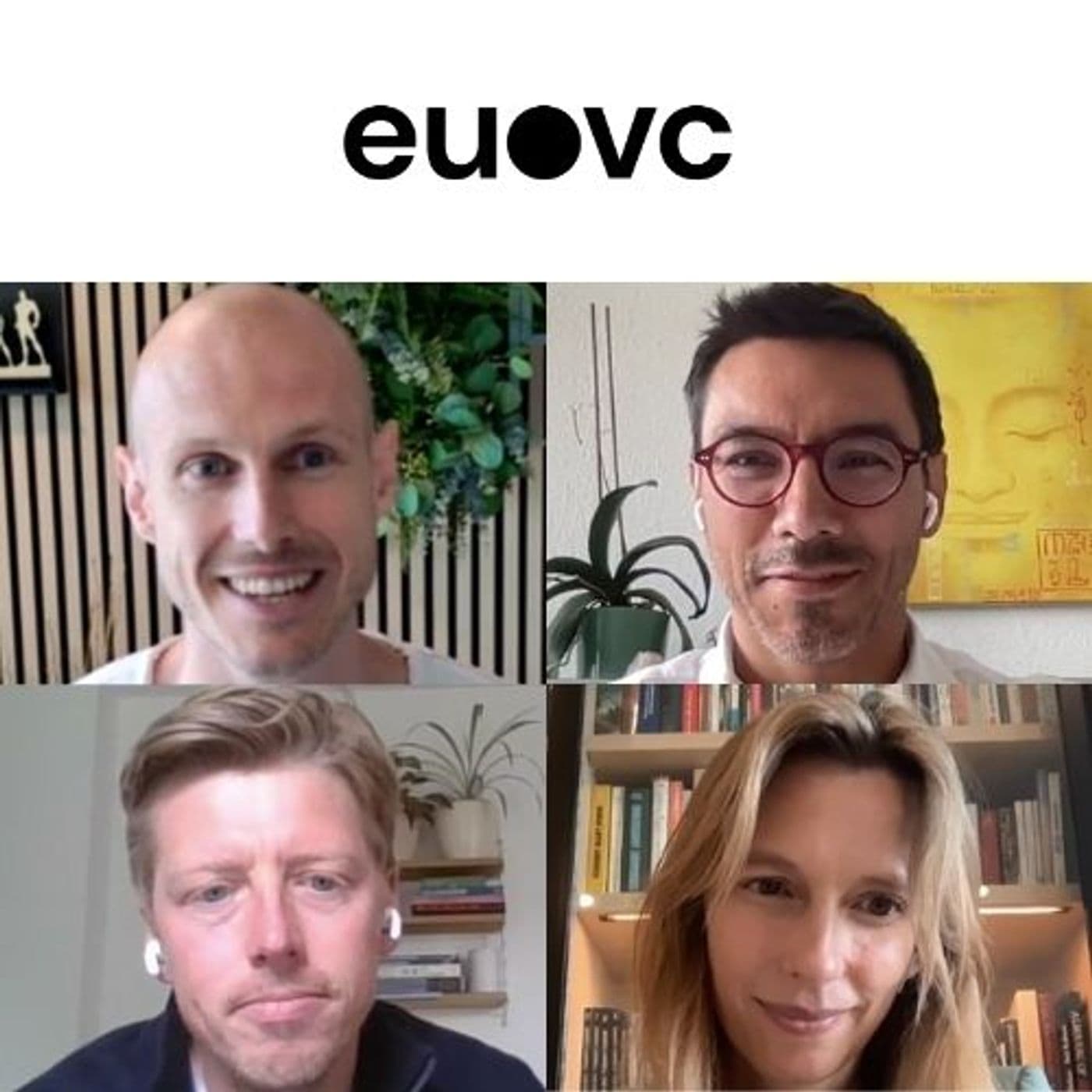
Episode Overview In this episode of EUVC, co-hosts Andreas Munk Holm and David Cruz e Silva engage with guests Julia Binder (IMD), Manuel Braun (Impact Hub), and Enrique Molina (CircularCo) on the transformative concept of circularity in the venture capital landscape. They explore the notion of circularity as a horizontal investment lens rather than a niche market, discussing how startups across various sectors are leveraging circular business models for scalable growth. The discussion emphasizes the urgency for General Partners (GPs) and Limited Partners (LPs) to embrace circularity as a viable strategy for future-proofing investments.
Key Themes & Discussions
- The Paradigm Shift Toward Circularity
- Mindset Change: Circularity represents a significant shift from traditional linear business models (take-make-waste) to a closed-loop economy where waste is viewed as a resource.
- Survival Strategy: Emphasizes that adopting circular practices is crucial for businesses to survive in a fragile global economy.
- Ecosystem Thinking: Acknowledges the need for collaboration across supply chains to achieve circularity goals.
- The Role of Startups and Corporates
- Startups as Innovators: Startups are often better positioned than large corporates to drive circular innovations due to their agility and willingness to explore radical changes.
- Corporate Challenges: Large companies face barriers in innovating towards circularity due to existing investments in linear processes and structures.
- Monetizable Circular Business Models
- Five Archetypes:
- Optimizing Resource Use: Utilizing secondary materials and minimizing operational harm.
- Capitalizing on Regeneration: Profiting from regenerative processes in sectors like agriculture.
- Monetizing Extended Product Lives: Incorporating repair and remanufacturing into business models.
- Valorizing Waste: Transforming waste into profitable resources.
- Shifting from Ownership to Access (Servitization): Offering products as services to decouple economic growth from environmental impact.
- Infrastructure and Backend Innovations
- Need for Infrastructure: Discusses the infrastructure necessary to support circular ventures, including digital product passports and track-and-trace technologies.
- Back-end Innovations: Highlights the importance of digital solutions that enable circular material flows and enhance product lifecycle management.
- Investment Trends in Circularity
- Capital Flow: Observations on where investment capital is currently flowing, highlighting the increasing recognition of circularity as a strategic focus for both startups and funds.
- Patience in Investment: Circular ventures often require longer timelines to yield returns, contrasting with traditional fast-growth investment strategies.
- The Future of Circularity in VC
- Horizontal vs. Vertical: Discussion on whether circularity should be viewed as a niche (vertical) or as a cross-cutting (horizontal) principle applicable across multiple industries.
- Call for Collective Action: Emphasizes the need for a unified approach among investors, corporates, and innovators to drive the circular economy forward.
Conclusion The episode concludes with a call to action for all stakeholders—founders, investors, and organizations—to actively participate in the circularity movement. The discussion reflects a growing recognition of circularity not merely as a sustainability initiative but as a fundamental strategy for future business resilience and profitability.
Key Takeaways
- Circularity is essential not just for sustainability but for business survival.
- Startups play a crucial role in driving circular innovations due to their flexibility.
- Investment in circular models presents significant business opportunities.
- Ecosystem collaboration is vital for successful circular economy implementation.
- The future of venture capital may increasingly incorporate circular principles across various sectors.
For further insights and to stay updated on European VC, follow the podcast at [eu.vc](https://eu.vc).
Written by AI. May contain mistakes. Listen to the episode to check what was said.
Transcript
Automatic transcript. May contain errors.0:00What if the biggest business opportunity of our time is hiding in plain sight, in what we throw away. Today, we're taking a fresh and honest look at one of the big strategic shifts happening across entrepreneurship, the circular business revolution. While most companies chase the cheapest option, they're missing a fundamental flaw in how we do business. The problem really is that the current model is just too cheap. We're just trying to optimize for where the cheapest resource and externalize social environmental costs. But what if there was a completely different way to think about growth? Circularity is a paradigm shift.
0:32A different logic in how we should run the economy just makes a lot of sense. This isn't just about sustainability. It's about survival in an increasingly fragile world. We need to be more resourceful, that we want to de-risk our supply chains, that we want to make us less dependent in our global supply chain. The pioneers are already building something bigger than individual companies. When it comes to circularity, it's a phase of development that is requiring much more ecosystem thinking, working in partnerships and collaboration, but maybe even down the chain much more with multiple stages of the value chain.
1:07The question is, will you be part of the revolution? It's an open call for people to actually join forces. We all need to play our role of like, okay, let's be part of this. Let's create some great change of the way we are creating business. Discover how the smartest founders are turning waste into their greatest competitive advantage. Join us for this episode of the EUVC podcast.
1:33Before we start the show, a quick note. If you're building or running a fund, you know it takes the right partners. At EUVC, we only work with sponsors we truly believe should be part of your tech stack. Please do take a moment to hear about them. And if you do, reach out, mention EUVC. It's the best way you can support what we do. Thank you so much. Starting off, HSBC Innovation Banking. If you're a founder, a scale-up, or a VC, you need a bank that actually understands your world. HSBC Innovation Banking backs innovation globally, from seed to IPO. And if you ask me, a strong banking partner like HSBC belongs in your stack.
2:08If your portfolio companies are scaling, they need infrastructure that won't slow them down. Google Cloud Starter Program offers$2 ,000 to$350 ,000 in credits, plus technical support to build better and faster. It's a key boost every fund should bring into their ecosystem and oh my god are we thankful to be partnering with them. Now legal is a space you cannot lag on. Legal needs to move at the speed of venture. Goodwin's team has decades of experience with startups and funds. They're trusted at every stage from formation to exit. Goodwin definitely is a legal partner every series manager should have in their stack.
2:44For Luxembourg based VC, PE and fund of fund managers, modern funds means going digital. Funcrafts gives you a full service, digital native platform built for today's European managers. It's a must have if you're scaling smart. So we all hear about the Middle East. How about you go there? From AI to deep tech to summer funds, Guy Techs in Dubai is where global future of tech gets negotiated. It's not just a conference, it's where East meets West, capital meets innovation, and the bold set the agenda. If you're playing on the global stage, join us going to Guy Techs this year. If you're gearing up for your next fundraiser and want a placement agent who truly understands emerging managers reach out to cfunds their boutique placement agency that has helped gps across here brace capital from top tier lps we've been on the other side of the table here they are actually good ones to work with so i do urge you to go to cfunds.io to go and check them out and hey before you go if you're looking to discover startups raise capital or connect with innovation leaders do check out dealflow.eu the eu-backed platform bridging founders vcs and corporates.
3:44There's no better place to find the startups that have received significant funding from the European innovation ecosystem.
4:04This show is not investment advice, and the hosts of this episode may be invested in the funds and companies featured. Welcome back, my dear friends. This is another episode of the UBZ podcast. I hope by now would you consider your community-powered backstage pass into European venture. Today, we're taking a fresh and honest look at one of the big strategic shifts happening across venture and entrepreneurship, which is, of course, the circular business revolution. For that, of course, I have my dear friend and co-host for these episodes, Enrique Alvarado Hablutel. His name still manages to fuck up my tongue.
4:44He's a partner at T-Impact Capital, of course, and as I said, our dear co-host for this. We're also joined by Julia Binder. I am the professor and director of the Center of Sustainable and Inclusive Business and Manuel Brown. And they are both the authors of the book, The Circular Business Revolution, a Practical Framework for Sustainable Business Models. So while it can be sometimes a little bit difficult to get concrete and into the nitty-gritty of this special topic of circularity, sustainability, impact, all of these things. If there are any that can do that, I guess it's our two guests today.
5:22Welcome, Julia. Welcome, Manuel. Thank you so much. We're really delighted to be here with you. Thanks for the invitation. Of course, of course. Enrique, I know that you're good friends of the two here and super excited to bring them on. Could you put a few words while you had this excitement. Of course, of course. Thank you very much to all of you for being here. I think it's really a pleasure for me to open up this discussion with the audience and with people in general to hear from the first hand about what's going on in circularity, especially for venture capital, especially for ventures. It's the field where I feel very comfortable because I have people who know a lot about this and who are building it through examples.
6:09And they even have a book that is, for me, honestly, a great framework to put things together. I have it here, by the way, I have my notes and everything. So let's start that. I've been listening to Julia's courses with Manuel, we've been in discussion. So I couldn't think about anyone else to really give us an idea of what is going on right now in circularity in Europe in terms of venture capital and ventures than them. Let's start with a big question. Why is 2025 a turning point for circularity? And what makes this moment different from past sustainability hype cycles? What we're seeing right now is very different from everything that we have seen before.
6:51We see at the same time sustainability and AI disrupt almost the entire workforce, the entire venture space as well. And I I think what we're seeing right now is that the topic itself, let's say circularity, may still be difficult to grasp for many. But the concepts, meaning that we need to be more resourceful, that we want to de-risk our supply chains, that we want to kind of make us less dependent in our global supply chains. I think this is something that now really strikes a chord. This is where everybody who is mindful of what is going on right now understands the importance of future-proving your business.
7:23And I think one of the things that we've been diving very deep into and also with the book is about this notion of how do you understand your signals for change? What is going on for your respective industry? And if we look across industry, there's so much going on. And I'm sure Manuel, he will dive deep on some of these developments. But from a bird's eye view, we have disruption. Circularity can be an answer to that disruption. And I think maybe just to also say one more word, how we interpret circularity and sustainability to back us back just a little bit. I think the importance here is that we see it as a means towards an end.
7:57So we see circularity as a means towards better business, more profitable business, but obviously also more sustainable business. And I think for the longest time, we have been striving or have been trying to position sustainability and circularity as an end in and of itself. And I think what we're seeing now is it's a very powerful enabler. And this is where I believe we now see much more traction. And before I hand over to Manuel, circularity, how we understand it is, we're moving away from these linear economies where we take make waste. We use a lot of resources. We waste a lot of these resources as well towards more of this closed loop approach where we see actually waste as a resource.
8:36And this should already be an interesting business case for most in the space because it clearly says there is some money to be made. There's a massive business opportunity. And I think this is what we're seeing as well. Maybe to add to that, for me, circularity is a paradigm shift, a different logic and pattern in how we think and how we should run the economy. It just makes a lot of sense. For me, eventually, it would replace the linear economy. What makes me optimistic is that we see more and more signs that it's working and that it is just a better way of running the economy. So we see more and more signs, for example, that circular business models, they are quite successful.
9:19If you take resale or re-commerce, quite a big trend, right? Many companies are making a profitable business case there right now. And it's gaining. It's getting bigger. Vintage is a unicorn, right? So, I mean, this is a real opportunity. On the other hand, just to emphasize what Julia said, I think circularity is also not nice to have. If we look at the current geopolitical situation, some of the dependencies that we have when it comes to critical raw materials, for example, how risky some supply chains are, it's also an answer of creating an economy that is safer, less risky, and more resilient in terms of crisis, particularly in the global situation that we have currently.
10:07and that seems not to be something which we will fix quickly in terms of the political dimension to this. So we need to find an answer on the economic dimension, which is for me, the circular economy. I'd love to ask Enrique, maybe you have a perspective here as a European investor. Julia, you put it super well when you said that we've kind of moved over these past years or in this cycle, moved from the moral and the hype, I don't think you used exactly those words, but that's at least how I would put it, to real value props around reducing waste and supply chain resilience and so on. I'd love to ask you about Europe in this context, because especially the supply chain resilience part is, of course, something we learned through COVID.
10:52And it's one thing that we're seeing everyone on shoring or taking production back and everything because of circularity. And yes, we do so or less waste and more thoughtful production processes. Yes, that's part of it. But it's definitely also because of the resilience of the supply chain and flexibility and so on. Could the three of you talk about the role of this and how much everything is being described and this is actually the lead over circularity or is it just the marriage of two concepts now that kind of makes it all make sense in a better way than what some people might call the past hype cycles.
11:35I think you put it really rightly. I think one of the things that is super important is that in the past, we tried to position circular economy as a response to sustainability issues. And it is. And it's great. However, what we realize right now, it's also a response to many of the economic issues we're facing. And by the way, it's one of the only concepts in the sustainability space that does so. because most of the time when you look at sustainability, it basically means that there is this problem of economic growth and environmental impact. And there are very, very few solutions and answers out there.
12:05And the circular economy caters to both worlds. It caters to very much a business mindset. And so if you're really only in there to make money and to make better business, circularity is for you. And if you're in there to save the planet and pass on something that is valuable to your children, circularity is for you. So I think this is what really helps us now. this realization that this caters to both worlds is what makes it so appealing and so interesting right now. Versus, again, in the past, we've used to position it solely as a response to sustainability. And I think this is where, yeah, it was adopted by some, but it still struggled to really have mass market appeal.
12:43Affinity. Thank you for that perspective. I would take it from the angle of investments, right? Like, it does make sense. If you put it in context, if we continue making investments that are just in a linear based approach. The economic growth will not leave us to anything to manage in the future. So if you invest right now into things that are actually having this circular approach, then you will create a more regenerative way of investments. As simple as that, right? So you take systemic approach to that. How do we change the whole system by looking after these kinds of concepts that help the whole way to create value, financial value from an approach that is circular.
13:33I'd love to ask you a bit about the rewriting of the narratives in venture and specifically in climate and impact and sustainability and circularity. I spoke, Julia, to you before about Pale Blue Dot, where I asked, did you know them? And you said, no, actually not. And then I told you a funny story that I'll relay here. And we, of course, we had Pale Blue Dot win the European VC Awards in the climate impact category. So a bit of a bias here. But it was, after all, a board of five very esteemed LPs in Europe that said so. But now it's out there. It's sad. It's very clear. Obviously, I'm good friends with Hampus and the team.
14:15But what he said, which I thought was absolutely incredible. And the reason why I bring up Pale Blue Dot in this connection is, of course, because many people say, well, can you be a generalist? Aren't they just a generalist that focuses on climate? And in a way, what Hampus says, and I'm paraphrasing, so it's going to be on my back saying this. But what he kind of says is, well, we're generalists with a common sense. And the fact of the matter is that the world is burning and we've got to solve that. And at the same time, much of what we're solving with climate and impact and circularity models is basically we're solving a world that's really stupid and has stupid production processes.
15:00So in a way, it's enough not to be dumb. And when we spoke about that, Julia, we also ended up on the conclusion. That's exactly why venture is so important in this space. because right now there's very strong incentives to invest in anything that gives you short-term profits in everything except for venture because venture is patient money. And the point is that it takes 10 years, it takes 15 years to rewrite how we produce steel. You can't do that in two, three years and make money on it. You've got to have that long-term perspective. And I'd love to have the take from the three of you both on this generalists with a common sense statement, but also the stupidity of existing production processes.
15:50I can go first on stupid production systems and supply chains. It's definitely a passion topic of mine. Look, I think in many ways, the problem really is that the current model is just too cheap, right? So as long as we're just trying to optimize for where the cheapest resource is, no matter what, and we externalize social environmental costs, meaning if I screw up my workforce, if I'm just taking whatever from the planet, if it's free and it's renewable, which it isn't in most of the cases, and if I just act for my own interest, and this rewards me on the market, right? If I get the best product out of it, think Timo and others, Shailin, which is really just about quick, fast overconsumption.
16:31As long as this is rewarded by the economic framework, it's very difficult to do the right thing. I think for many of us, it's not that we're getting up one morning and think that this is the best way to do it, but the economics framework really locks us in this kind of thinking and acting and doing. So you've mentioned very rightly, I think, when we're looking at who is best positioned to actually change that, usually the biggest innovations, and this is not surprising, the most radical and disruptive ones don't come from established firms, also in circularity. It's oftentimes startups that show the path.
17:01It's oftentimes startups that show it's possible to think differently. and again I think a lot of this is also that we are locked in in this thinking of cheap linear and fast and circularity requires us to rethink and I think this is where we need a different investment pieces we need a different economic framework and we need to reward those that actually do the right thing and not those that do what you call stupid Just to add to that I think you're emphasizing on one point which is quite important we're definitely seeing the innovators dilemma here are also happening. So for very big organizations, it's often easier to exploit and to capitalize on investments which they've made in the short term than to explore and to innovate in the long run.
17:47And in circularity, we see that as well. Often because it involves quite a radical change and a different mindset to move into. So for example, if you take bio-based materials, really changing the composition of the product and the design choices. That is something which might be needed, but it might be very hard for really big companies. So you need young companies that are able to innovate in that way. And it's also related to production processes, right? When it comes to recovery and recycling, for example, we are also often looking into new processes, first-of-a-kind facilities, which will take a while to finance and to return the investments which they need to collect.
18:31So both these are examples, biobased materials, but also new recovery technologies, which require new forms of innovators in order to break that innovators dilemma that we also see here taking place. Yeah, and on my side, I will take it from two different angles. I was also there with the EUVC community in London. It was amazing. And I had this discussion about, yeah, the statement of Hampus, right? Like, I just don't invest in dumb things. It's so clear, right? Like, I think I can recall to that as a way to see how we behave, how we consume. I don't buy dumb things, right? Like, so I'm not part of that.
19:13And I should also, every, every individual, be part of something that you believe. not on the way that there's no consciousness, but being at least aware. And then the other one, through these discussions also, I was having a discussion with Andreas Klinga from Prototype, right? Like everything seems impossible until someone simply does it. Yeah, Michael Jordan and every sport man is doing it, right? Like it makes it look simple after they try and try and try. But then you need more people engaged to say like, ah, well, it was not so simple, but we did it. But it is possible, right? Let's go to another part that is perfect around everything is impossible until someone does it.
19:57Let's talk about founders and the most common business model archetypes that you see founders adopting and where the execution lies in this, where the execution trouble lies in this. Maybe before we go into where we see most of them, maybe just to briefly talk about what kind of business model opportunities we see, and then we'll see how this connects to the market realities. Because I think one of the important add-ons that we believe we bring to the conversation is a little bit translating this hypothetical promise of the circle economy to something that is very tangible, let's say exploitable for business models.
20:31Because we believe we need to speak market language if we want to have much more relevance with these concepts. And I think so we see a couple of these. We coined them optimizing resource use. So this is all around how do we clean our operations, How do we use secondary materials instead of virgin ones? How do we replace fossil fuel with bio-based materials? This is oftentimes an entry into the circular economy, into circular business models. But obviously, it's an important one. It's minimizing harm. How do we, even if we don't change our entire production or business models, how do we minimize harm?
21:03There is a lot happening also in the startup side. One of my favorite examples that I always give is a company called Daiku. right? Daiku is a chemical textile. It's a textile dyeing firm and it's a startup. And basically what they invented is a process by which they can dye textiles chemical and water free. If you look at the textile supply chain in the life cycle, this is actually one of the most unenvironmentally friendly steps is the dyeing of textiles because you use a lot of chemicals, a lot of water, and to top things off, you release them in local waterways, which is polluting then local community.
21:40So they developed this process by which you can dye these textiles, chemical, and water-free, which is obviously, I mean, mind-blowing and easy, right? So in a sense, that easy that everybody would buy into this. There is a real business case for that. So that would be the optimizing resource use one. We then talk about capitalizing regeneration. How can you actually make money with regenerative processes like agriculture, for instance? We talk about monetizing extended product lives. Here, Manuel is really excited about this one. It's really this question, how do we make business sense out of repair, upgrade, modernizability, remanufacturing, right?
22:15So these are the aspects that really, really come into play here, which may, again, they seem obvious, but they're very difficult to monetize. Then the one that I'm most excited about is valorizing waste. So how can we actually capture value from waste? This is where I believe we also see most on the startup scene happening. And now, interestingly enough, not necessarily in Europe, the US and so on, But this is where a lot is happening in Southeast Asia, in Africa, because they have been, by definition, much more resourceful. And I think this is so interesting because it basically really shows that there's a lot of startup and energy and dynamics coming from these countries.
22:52There's a very vibrant startup scene, actually often one where we lack capital, but a very vibrant startup scene that we are overlooking a bit here. But a lot is happening there. and really this question, how do I make just much more money out of waste, which I think makes a lot of sense. And thereby obviously circulating these resources. And then the last one, which is a bit of the end goal of sustainability and circularity, is how do we shift from ownership to access? How do we offer servitization models? And thereby really we disentangle economic growth from environmental impact because we offer the product as a service instead of selling them off.
23:27And if you think about it, it makes a lot of business sense because you want, in a world that is increasingly resource constrained, you want to have access to resources. And servitization models allow you to keep them in cycles and have access to these. And then it becomes suddenly, it makes much more sense to extend product lives and to invest in design for reassembly and disassembly. I think it's important that we try, as you can already hear from the framing, that we connect it to a business model. We don't say extended product lives because where's the business case? But monetizing extended product lives, there's a business case.
24:00You can make money with that. And we see particular startups being extremely creative in finding ways to monetize that as well. Just like structurally, next to these business model archetypes and patterns, there's one area where a lot of innovation is also happening, which is on the enabler side. I would say almost like the backbone to circularity. this is a field where many you know young innovators are going into for example can be digital product passports and everything that has to do with you know track and trace because you need to create circular material flows you need a circular information flow so you need a layer of information that allows you to connect to the products when it's in use or end of life to understand where does the material come from all of that so this is an important dimension to innovate.
24:48There is lots of things happening. Also, analytics, for example, remote sensing, so that you're able to repair devices by not being on site or to optimize based on the data that products are generating, all of this. So this is back-end innovation that is helping others. Or white-label solutions, right? I've brought up the example of resale already. That's a good one, right? because you see, for example, startups innovating, which develop solutions to enable others to resell their products in fashion. We have that with very successful platforms who run in the backend and allow the Patagonia, the North Face, and so on, all these brands at the end of the day to offer their products.
25:35Then, for example, what's the second hand? So this is, I would say, a backend innovation layer that we also need to talk about. then we want to uncover a bit the innovator space. And then you take the angle of the investor on this. I mean, and this is an example of a very nice person who is actually also a friend and a musician, Michael Smith, right? Like, so Regeneration VC. So they focus in that specific angle of how to invest in companies that are changing systemic approaches, right? And he has a great investment also. You can see it on the website and everything. Great power up. A leader in this waste analytics.
Read the full transcript
26:19Speaking about analytics, how do we see the future? What can we reuse? What can be advanced in that sense? Once you get it back, what you can do with that? And then there is another one, right? Like in the future, we will see more of this. There is iKeep. I keep what does is really a solution for taking back any kind of specific products in the luxury brands right now. But then it will go over and over to other different industries, right? Like specialize right now in everything that is usable. So as us consuming. But in the future, it will more for even houses, offices. It is a retake solution for all e-commerce places too.
27:06So there is examples on investable projects. There is things moving. It just takes time. You know, Juna and I, what we do is also we partner with the leading networks on circularity that we see more and more coming up in Europe. These are very impressive organizations. For example, the Anne McArthur Foundation, more based in the UK, or Circular Republic, which is a network here in Germany. And they do also like a fantastic job in helping the innovators. And the Circular Republic, for example, it's a network here in Munich. They just recently, they launched a startup mapping where they looked into particularly the European circular economy startup space and they found more than 2 ,500 startups across all the different patterns that Julia has introduced.
27:57They also found that, you know, while it has not been an easy time for many startup innovators in a general space, actually circular economy is one area where there is a continued growth and we see more startups emerging, but also more capital being deployed. in Europe with some hotspots, of course. London play an important role, Munich, Berlin. But it's definitely also something where the numbers tell us the story, not only the different kind of examples. Can I ask you all three, and I don't know, maybe Enrique, you're best equipped to answer this. We had with AI a big discussion when it first came out around whether it being a vertical or horizontal.
28:43and everyone has kind of come now to the conclusion that it's definitely a horizontal. You can argue that it's a vertical play for those that do pure AI, so to say, not applications or anything, but it's truly about building foundational models and so on. But for most VCs, they consider it a horizontal that goes beyond different applications in different industries. How about circularity? Should circularity be considered a vertical in which an investor specializes? Or should it be considered a horizontal that goes beyond all different verticals? And thus, you'll find opportunities in shipping and in waste and in production of apparel.
29:30And you'll find it in the next social media platform. And so to say, do you get my point here? because oftentimes we kind of brand VC firms as these guys are circularity guys, or this is a circularity startup. But does that make sense? Are you not a efficient waste utilization company rather than a circularity company or whatever, your energy production company or your steel production company or whatever you are? Let me take it from the perspective of an investment point of view, right? Many investors are still seeking linear growth. And then we have new models like circularity that often requires more patience.
30:16They require ecosystem building. They require multiple players, you know, like corporations, innovators, different people remaining in the same kind of structure to keep it growing. The model needs to evolve, needs to change, and maybe requires sometimes term sheets different way organized. But it is definitely, I see it as a kind of horizontal change on the way we are making investments. It's difficult to say if it's a comparison between is it a circular hype or not. I mean, I will see it as in the future, we all need to think that way if we want to continue consuming and being more responsible of what we use and what we consume.
31:04In the end of the day, it obviously cuts across every single sector, every industry. And to be honest, from my perspective, it would be just good business if every business and every investor looks at this wherever they are based right now. Do we need only circular investors? Maybe not. What we need right now, though, is stores that really double down on circularity, as Enrique said, and really say, okay, we have no patient capital. And we understand that this is a bit more challenging because we're not just introducing a new product. We're introducing an ecosystem innovation, which more often than not circular business models are.
31:37And this is just fundamentally different. This requires different access to networks, different ways of engaging with the founders, different ways of looking at balance sheets and so on. for instance with sabotization models we know there is the capex opex shift and so on right so it requires a different way of thinking one which most let's say even business leaders or investors are just not used to and i think at this stage where we are right now we need some of those that really focus and say this is where we help to level the playing field for these kind of founders eventually where we want to end up with is obviously that ideally we don't even say circularity, but this kind of thinking is we've just shifted from linear to circular and we don't need to flag anyone as circular, but where we are right now, I believe we need it because otherwise it is almost impossible for many of these founders to survive in the current super linear lock-in kind of mindset, fast money, fast growth, fast everything, which I think is just not a level playing field for many of these founders.
32:36Yeah, also I think looking at the data is quite interesting here. There was recently a mapping also of the venture capital space, the investor space when it comes to circularity conducted by Patrick Hübscher. He's also running a podcast called Circularity FM that is dedicated to circularity. And he, I think, analyzed around 130 venture capital companies that he thought were investing in the space. And he found that, the majority of that was having circularity as one of their strategic investment areas, where they also had other areas. So a broader investment strategy and only a minor share, around 20 % or so, was exclusively focused on circular startups only.
33:24So that speaks a bit to your point that it's broader. And I think you also found that the majority is investing in early stage for much more investors when it comes to pre-seed, early stage investments compared to later stage growth stage investments. I'd love to ask you all to comment a bit on the past, let's say now it's June, so let's say the past six months, but it also started before, of course, January and the election of Trump and him taking office. Where are we headed? But where are you seeing both the VCs that are in this space moving, the startups that are in the space moving, but of course also the limited partners, the people putting money in funds?
34:13Yeah. I have this discussion with Douglas Sloan from Impact Ventures and a Better Society Capital. And we were thinking about, yes, what is going to happen? How are we going to track? First, I mean, what we said is we need to get stronger as a community. We need to actually join forces. We need to support each other. We need to be more open. We need to, why not even share LPs and share our opportunities for investment with many others? Because it's the only way unity, and I will say, and I'm maybe a bit fantasizing, but unity and loss is what makes us being together, right? And that is the change also in finance.
34:58If we see that we can stay together during these turbulent times and we believe that by helping others, we're going to help ourselves in this, again, circularity model. So it's even better, right? And it makes more sense for the future. Maybe from my perspective, I think we're seeing why do we feel that we're living in turbulent times? I think what we're seeing is three fundamental disruptions. One is the geopolitical one that you've mentioned with Trump and co, but it's not just Trump. There are others that are helping to create a lot of anxiety and confusion right now and uncertainty. So it's geopolitics.
35:37It's AI. There is a lot of uncertainty and hype. Both. I mean, there is opportunity and fear. And then there's sustainability, which has been, to be honest, in the last six months almost in the background. It's because of the other two that have been so loud and so vocal and so visible. I think we've lost a little bit that, by the way, we do have an existential crisis as well. So I think these are the three fundamental transformations that we're seeing. And again, also with sustainability, it always goes through hype curves. And currently, we don't have a hype. Let's be very frank and honest. So if you ask me for founders and investors, I see a massive hype around AI, which almost overshadows all the rest.
36:17So I have friends that teach entrepreneurship, and they're having all these startups coming out from diversity. I used to be one of those. So I still have a lot of connections there. 95 % is an AI startup of sort, right? So which really has AI front and center and some kind of AI solution. So I think we will, honestly, this hype will continue for a while, just like with digital and so on. It just is something that is very, let's say, tangible for many founders. This is where the youth gets very excited about it. And then investors get very excited about it because you can optimize, increase efficiencies and so on.
36:49I think where circularity now comes in, and this is, I think, where we see now also some sort of a trend or hype, is again, not under this term circularity, but under this term of resource access. Something is happening. We are now witnessing with the geopolitics. You mentioned it all started with COVID, which is absolutely right. But then it was magnified through, let's say, the sustainability sphere. And now it's really the geopolitics. I mean, if you've seen the article around China reducing access to certain minerals and material, and the response was that Germany and other countries had to reduce their production because they don't have access to resources, suddenly we're talking.
37:29I would still say, I think here we do see startups, Manuel mentioned a lot of the data here. It doesn't witness the same hype as AI. Again, we're talking about much more complex and a systemic issue where fast money and fast solutions are just not as easy as, let's say, AI, where I have a linear tech solution to a problem. So I think it's still much more complex, but it's there. It's connecting to these other trends. It will take more time, but I see that this is coming and it will play out in the future much more strongly. Yeah, maybe a third lens adding to that. I believe where we're heading when it comes to circularity is a phase of development that is requiring much more ecosystem thinking and ecosystem building, which basically means working in partnerships and collaboration.
38:19circularity is very hard to pull off for single companies whether big or small. I believe compared to other innovation areas it requires more collaboration vertically. Often you need to work very closely not only with your supplier but maybe even down the chain much more with multiple stages of the value chain and also much more closer towards the customer. So it's a much more integrated play when it comes to the value chains, more collaboration. But also with investors, I think it plays an important role. Some of these things when it comes to infrastructure building, for example, require a significant capital commitment.
38:58So there needs to be a lot of partnership with the right investors to really pull things off. So this is one type of ecosystem building. The other thing is working together with others who are on a similar mission. Partnering up in order to, for example, share the infrastructure. partnering up maybe even with competitors because you want to co-shape the regulation which enables new markets for example so advocacy getting together creating a collective voice that is playing quite an important role particularly in an in a time where often the the regulation is not yet set in stone where you have a role to play in order to co-shape that Julian and I, we call this co-operation, right?
39:40So working together with others, maybe even in a competitive environment, not to shape the right level playing field, basically. There are so many things I wish we would have had the time to cover. I would have loved to talk about the role of Brussels in this. I would have loved to talk about regulatory capture because that's also something we have in our ecosystem, of course. It's not only in the States, though I think they are better at talking about it out loud than we are here in Europe. I'll try and make a change on that on this podcast. Enrique, do you have anything to say before we close today's podcast?
40:17I think this is an open call to let people be part of a voice around. Let's leave just the circularity. Of course, we are into circularity, but as we are discussing on this, there is many elements on the circularity and we all need to play a role. Reusability, reorganization of materials, like there is multiple concepts. Yes, what put us together right now is circularity, but it's an open call for people to actually join forces on this continuation of the business model that needs to evolve. And I think corporates, family offices, myself discussing with multiple LPs also, we all need to play our role of like, okay, let's be part of this.
41:04Let's create some great change of the way we are creating business. I think that's what I will leave there. Thank you, Enrique. Thank you everyone who tuned in today. I hope that you will answer Enrique's call and reach out to him, Julia, or Manuel on this podcast, because I'm sure they will be ready to work with you. Thank you all. Before we start the show, a quick note. If you're building or running a fund, you know it takes the right partners. At EUVC, we only work with sponsors we truly believe should be part of your tech stack. Please do take a moment to hear about them. And if you do, reach out, mention EUVC.
41:40It's the best way you can support what we do. Thank you so much. Starting off, HSBC Innovation Banking. If you're a founder, a scale-up, or a VC, you need a bank that actually understands your world. HSBC Innovation Banking backs innovation globally, from seed to IPO. And if you ask me, a strong banking partner like HSBC belongs in your stack. If your portfolio companies are scaling, they need infrastructure that won't slow them down. Google Cloud Starter Program offers$2 ,000 to$350 ,000 in credits, plus technical support to build better and faster. It's a key boost every fund should bring into their ecosystem and oh my God, are we thankful to be partnering with them.
42:18Now, legal is a space you cannot lag on. Legal needs to move at the speed of venture. Goodwin's team has decades of experience with startups and funds. They're trusted at every stage from formation to exit. Goodwin definitely is a legal partner every serious manager should have in their stack. For Luxembourg-based VC, PE and fund fund managers, modern funds means going digital. Funcrafts gives you a full service, digital native platform built for today's European managers. It's a must have if you're scaling smart. So we all hear about the Middle East. How about you go there? From AI to deep tech to sovereign funds, Gaitex in Dubai is where global future of tech gets negotiated.
42:57It's not just a conference, it's where East meets West, capital meets innovation and the bolts set the agenda. If you're playing on the global stage, Join us going to GuyTex this year. If you're gearing up for your next fundraiser and want a placement agent who truly understands emerging managers, reach out to CFunds, their boutique placement agency that has helped GPs across here at Brace Capital from top tier LPs. We've been on the other side of the table here. They are actually good ones to work with. So I do urge you to go to CFunds.io to go and check them out. And hey, before you go, if you're looking to discover startups, raise capital or connect with innovation leaders, do check out dealflow.eu, the EU-backed platform reaching founders, VCs, and corporates.
43:35There's no better place to find the startups that have received significant funding from the European innovation ecosystem.
From the publisher
In this episode,
sits down with
(IMD),
(Impact Hub), and Enrique Molina (CircularCo) to unpack the evolving world of circular venture. They dive into why circularity should be viewed as a horizontal investment lens — not a niche — and how startups across materials, manufacturing, and infrastructure are already proving out scalable models.
From textile dyeing to resale logistics and digital product passports, the group highlights how circularity intersects with every vertical and why now is the time for more GPs and LPs to get involved.
Here’s what’s covered:
- 00:50 – “We don’t invest in dumb things”: The Pale Blue Dot mindset
- 02:30 – Why current supply chains reward harm — and how venture can reverse it
- 04:30 – Startups vs. corporates: Who’s best positioned to drive change?
- 07:40 – 5 monetizable circular business model archetypes
- 12:10 – What infra is needed to scale circularity?
- 15:00 – Real-world startups & back-end enablers in resale, reuse & track-and-trace
- 18:00 – Circularity: Horizontal lens or vertical category?
- 23:00 – Where capital is flowing: Startups, funds & LPs getting serious
- 26:00 – Hype cycles: AI ascendant, circularity under the radar
- 28:00 – Building ecosystems: Infrastructure, co-opetition, and collective voice
- 31:00 – Final call: Why everyone — from founders to family offices — must engage


