
In short
EUVC Podcast Episode Summary
Episode Details
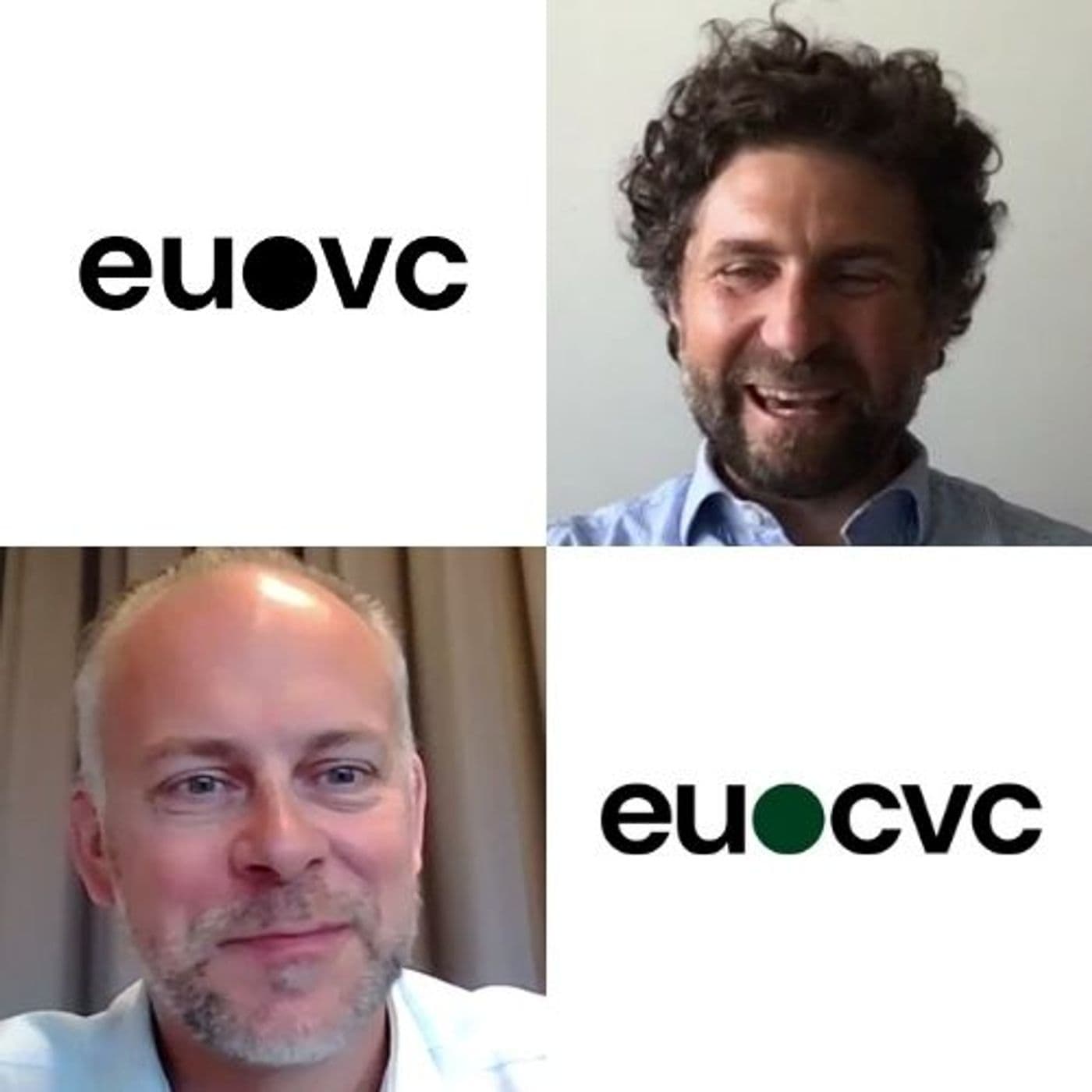
- Title: E519 | Francesco Di Lorenzo, CBS: Building Europe's Corporate VC Playbook
- Description: This episode features a conversation with Jeppe Hoya, an expert on corporate venture capital (CVC), discussing his professional journey and insights into building Europe's corporate VC landscape.
Key Themes
- Jeppe Hoya's Journey:
- Transition from an auditor at PwC to becoming CFO at a pan-European venture fund.
- Leadership role in building Maersk's corporate venture arm.
- Current focus on advising corporates and venture funds across Europe.
- Corporate Venture Capital (CVC) Insights:
- Immune System Metaphor: Corporate innovation often fails due to internal resistance, likened to the body rejecting an organ transplant.
- Strategic Alignment: Innovation and corporate strategy must align for successful CVC initiatives.
- Survival in CVC: Companies often need to survive multiple leadership changes to ensure long-term success in corporate venturing.
- CVC Ecosystem:
- Discussion on the fragmented but collaborative European ecosystem for corporate venturing.
- Importance of building a supportive community through podcasts, newsletters, and summits.
- Insights into the tension between financial and strategic goals in corporate venturing.
Episode Breakdown
- Introduction (00:00)
- Jeppe Hoya's background and transition from interviewer to interviewee.
- Professional Path (02:00)
- Early career at PwC and transition to CFO at Hardcore Capital.
- 10 years of learning the intricacies of venture capital.
- Corporate Innovation & Strategy (04:30)
- Discussion on Maersk's strategic approach to corporate venturing.
- Exploring the immune system analogy to explain resistance within corporates.
- CVC Challenges (07:00)
- Why corporate ventures fail and the importance of treating innovation carefully.
- The EU CVC Platform (10:00)
- Transition from newsletters to podcasts to build a CVC community.
- Ecosystem Challenges (12:00)
- The fragmented nature of the European venture landscape and the need for collaboration.
- Corporate Confusion (14:00)
- The misunderstanding between strategic and financial objectives in corporate venturing.
- Global Case Studies (16:00)
- Examples from TDK Ventures and Maersk Growth showcasing different approaches to CVC.
- Survival Strategies (21:00)
- The pivot playbook for adapting corporate ventures to changing environments.
- Best Practices in CVC (23:30)
- Metrics and mindsets necessary for successful corporate venturing.
- Fund of Funds Insights (25:00)
- The benefits of investing in venture funds instead of direct investments.
- Advice for Aspiring VC Professionals (27:00)
- Key takeaways for MBA students interested in a career in CVC.
Key Takeaways
- Understanding Corporate Immune Systems: Corporates need to address internal resistance to innovation by fostering alignment between innovation and corporate strategy.
- Focus on Long-Term Goals: Successful corporate ventures are not just about financial returns; they require a long-term vision and alignment with corporate strategy.
- Community Building: Creating a strong network within the CVC ecosystem is crucial for sharing insights, promoting collaboration, and driving innovation.
- Market Trends: Growth in fund-of-funds strategies indicates a shift towards collaboration and learning within the corporate venture capital space.
Conclusion In this episode of the EUVC podcast, Jeppe Hoya provides valuable insights into the complexities of corporate venturing, emphasizing the need for strategic alignment and the importance of building a supportive community within the European VC landscape. The conversation highlights both the challenges and opportunities in corporate venture capital, providing listeners with practical advice for navigating this evolving field.
Written by AI. May contain mistakes. Listen to the episode to check what was said.
Transcript
Automatic transcript. May contain errors.0:00Most corporate innovation dies before it ever gets a chance to leave. The way that I see corporate innovation and corporate venture capital is like an organ transplant. Imagine that you put in a new liver into the human body. But the body fights back. The corporate immune system is so real, it's so big, but it's also a power of persistence. And it's something that you really have to treat carefully. A huge reason more capital, it's a strategic alignment. Innovation and strategy is something that you need to combine. You need to have the internal alignment on everything when you do this. The numbers don't lie.
0:41The challenge is still that the average lifetime of a CBC is 3.7 years. Most corporate ventures fail because they chase the wrong price. First thing, don't do this for the money. The survivor knows something different. Be patient but urgent. It takes time to develop stuff inside of corporate. It is a very, very long game. How do you make your corporate venture the exception by the statistics? Join us as we reveal the survival playbook that turns corporate immune system into innovation engines.
1:17Tear down this wall. It's more than just an ally. This is a union of values. Let's start acting. This show is not investment advice, and the hosts of this episode may be invested in the funds and companies featured. Hello, everybody. And what everybody is, the group of great students from a full-time MBA, particularly sign up for the course of Entrepreneurial and Innovation Growth Strategies, which I will run soon, in a couple of weeks, down in Barcelona. And today is the day in which we are going to create this asynchronous content in which you guys have the opportunity to reflect on some content.
2:06I decided to use, again, the access to my network, and I'm very lucky to have a great network of professionals that can share with you some of the insights so you can reflect upon and also get ready for our course. So today we have the amazing, I have, we all have, but certainly me as first, the pleasure of having here with us Jeppe Hoya, a business professional to me, but also a friend, someone I definitely in Caracos learning a lot from and growing together into the Danish and Nordic big ecosystem. First of all, welcome, Jeppe, and good morning. Thank you so much for having me, Francesco. So, Jeppe is certainly an experienced venture investor, as well as the host of a podcast.
2:58But in general, I would say a newsletter writer, but he will tell you more about that. Certainly, Jeppe has a very strong experience when it comes to corporate venturing and corporate venture capital in particular. and that's why I invited him because while in the course we're going to go on specific elements in details, right? And treat each topic separately about the corporate venturing world. I actually thought that YEPI could give you somehow some helicopter perspective on in general the experience of being an expert for years in venturing and venture investing and corporate venturing. And so that's why I invited him.
3:38So welcome again, Jeppe. So I would like, therefore, to start with your story, right? So because each person has a story. And by the way, let me tell you that I'm very excited because Jeppe usually is the interviewer, and now I'm the interviewee, and I'm the interviewer of the master of the Ilka viewers. So this feels a little bit of pressure. And it's scary for me too, Francesco. So that's the beginning. So the story of a person. So what's your story? Can you walk us through your professional trajectory and maybe sharing a few learnings from each of the experience you've been going through so far?
4:18So I'm actually an MBA in auditing. Started my career at PricewaterhouseCoopers back in the day. But as a young, impatient person, I wanted to try myself out. So I had a stop over at McDonald's Denmark Corp before I went into venture capital. In 2007, I started my career as CFO in a hardcore capital that is a pan-European venture fund and did that for 10 years. I learned everything about venture capital, how to structure term sheets, how to do fundraising, how to raise funds, right? So it was an immense playground of things that I could do because it was up to me what I wanted to learn and what I wanted to act upon.
5:08It also became clear to me that I wanted to try myself out as an investor. So I went into a discussion with the partnership at Hardcore Capital and decided that it was time for me to break out. And I was lucky to be approached by Merce Growth, where they hired me in to be part of building their corporate venture fund. And basically, their corporate venture activities, because what they mostly do today is what we call corporate clienting. So the collaboration between corporates and startups without an equity flow. I stayed a good five years with Merce Growth. Some of the key learnings from my time there is that innovation and strategy is something that you need to combine.
5:57You need to have the internal alignment on everything when you do this. Otherwise, it's going to be so, so hard for you to survive. And we will come back to that. What I do today is that I advise large international venture funds and corporates across Europe and also across the globe. Recently, I've been advising a company in Washington building their corporate venture arm. Again, today, I was writing a newsletter that today is a podcast on EU CVC. And here in August, we're actually launching our first conference, which I'm looking forward to. One of my big takeaways from all of this is that the corporate immune system is so real, it's so big, but it's also a power of persistence.
6:53And it's something that you really have to treat carefully. I think it's a very interesting perspective, this corporate immune system. So this is something that we also have been discussing recently, you and I, how corporate on the one end need to understanding an intertwined relationship between innovation and strategy. At the same time, for some reason that are probably not clear necessarily to them, they they kind of resist to some changes when it comes to entrepreneurial programs, such as corporate venturing. And it's great, for sure, to a professional like you that can actually advise and open a conversation in turn to the corporate to grow through this entrepreneurial venture.
7:41So that's fantastic. So for the venture you cover from investing, hardcore kind of finance down to the strategy part in venturing in general, that's rich, I would say. And I think there's just one on the immune system, right, Francesco? Because normally the way, and you have heard me tell the story so many times, the way that I see corporate innovation and corporate venture capital is like an organ transplant. It's like, you know, imagine that you put in a new liver into the human body. What you then have to do to make the body overcome that is to take a lot of drugs. So if we take the anecdote over to corporates, right?
8:26The mind, the sea level, the board, they know they need the innovation. So they put in the liver. What they have to do all the time to not expose the liver from the body being the organization, right? It's not invented here. So it means to get out of there is that they have to communicate about it all the time. Otherwise, it's not going to be present, right? So C-suite and board, they need to communicate all the time. Otherwise, it's not going to survive. So that's just that anecdote. And I can't agree more. And this is also my personal mantra that CVC or co-prevention in general requires innovation mindset, requires investing abilities, but requires, most importantly, organizational will from the board down to the operations to make this like a very consistent and solid.
9:15approach to out-of-the-business. Moving now away a little bit from the hardcore business vocabulary, the newsletter, right? So this is how a lot of people, tons of people out there know you for, you've been extremely generous to the community to create and start this newsletter, to offer reflections, inviting speakers, fundamentally offering critical views, and most of the time insightful that allow the community interested in these topics to keep thinking and create a community as well. So I think in a way, your use letter has been not only a device to information gathering, but also community building.
9:56Fantastic to me as well. And that's also how I come to meet you when I'm going to know you. So can you tell me a little bit the story? Because now I also know that you shifted to EUBC. So can you explain to our people what EUBC is? Yeah. So when I left Maersk, I decided to do a little bit more digging into corporate venturing and what does it really encompass, right? What's in there? The learnings that I wanted to share immediately was, of course, my venture capital background and then the Maersk growth story. So I started writing a newsletter out of my LinkedIn profile. It works pretty nicely.
10:40Did the first 70 episodes, interviewed people like yourself on the newsletter. But it was more, you know, I had to plan, you know, to meet you. Then we had to do an interview, the script before, and then I would produce the newsletter and then I would release it out. that also was kind of, you know, on my own base. What I learned quickly was that it was a rough task and then podcast became a more and more natural thing. So I hooked up with a Dane. I'm a Dane myself that I didn't know of. It's a guy called Andreas Mokholm and he's running the EU VC podcast. So that podcast is everything about venture capital and their investors.
11:28So Andreas has interviewed more than 400 managing partners over the past two, three years. Wow. Very, very knowledgeable about what he does. So we decided to combine our efforts. Actually, one of the reasons why we did that is that 25 % of the capital flowing into venture capital comes from corporates. So it's a nice, clear addition. What I'm very focused on today is how corporates can leverage the existing business to create new businesses. So that is super, super important for me. But again, you know, I'm sharing, you know, how the CBC Playbook works. I have my own model of how to describe it.
12:10And today we are actually up on 85 editions and the newsletter today is more of a podcast. We have had a lot of people on the podcast from TDK Ventures over Toyota with Boven Capital, MERS, Vira to professors across the globe, yourself and also Ilya Strebulev out of Stanford. and what it actually is, is to bring Europe as a meaningful place for startups and corporates to play, right? Because we are 27 countries in Europe that are all playing together and we need to build this ecosystem, right? So that's kind of, that's the base of it. What we do also on the podcast is we do the summits. We also do masterclasses.
12:59So if you want to become an expert in portfolio modeling, we can help out with that, and we can do LP introductions and basically just show the visibility for corporates and startups. It's an ecosystem play. I think it feels very much that this collaboration that then became fundamentally sort of a merge in a way with EUVC is bringing your initial intuition to build this community to the next level because now you're not only having the corporate view. But now, actually, you can bring also the BCs, which complete, if you wish, the most important entrepreneurial finance actor when it comes to venture investing.
13:41So it seems that it's like a natural evolution to bring to the next level of community building. It's really impressive, fantastic. I think the interesting overlap between the two, right, That is that venture capital is pure financial driven. It's about, you know, creating the next unicorn, make a lot of returns for your investors. When you go over to the corporate venturing side, right, your own data shows that, especially here in the Nordics, right, the corporates, they play for a strategic reason. But I think you really have to dive deep into that because when you start asking the corporates the questions, the outcome is really that they're in there for a financial purpose.
14:27They don't throw money in the harbor, as I normally say, right? They are doing it for a financial reason in the end, right? And that is where we need to bring the parties together, right? Sometimes I feel that I'm schizophrenic because I kind of have to remind the corporates that they are financial investors, even though that the upbringing inside of a Merck or a TDK is a strategic one. It is not, right? It is a financial reason to be there. And that's something that we will discuss with the students a lot. As a spoiler, most likely Nick from BP Ventures, someone that you also have interrupted with, You know, I joined the course as a speaker exactly to also insist on this very important element that you put on the table, which is the tension between financial goals, strategic goals.
15:23So because you've been interviewing so many professionals, if you have to tell us a few stories or someone that particularly impressed you more or you just remarked out of your pocket. So can you provide us any example and maybe learn what had been interesting for you when you interviewed those people? There's a lot of important things in there when you meet people. I like especially people that dream big and like to swing for the fences because that's what's needed, right? Venture is a 10-year commitment when you do investments in startups. Of course, there are other elements when you do corporate venturing where it makes sense to have a shorter timeframe.
16:06But in general, when you do these initiatives and there are people out there saying that to be successful, you need to survive three CEOs. It's not about time. It's not about financial return. It's a matter of the strategic footprint that you have done on your corporation. And I think one of the more ambitious people that are out there is Nicolas Sauvage out of TDK Ventures. Here, you know, TDK is not a European or an American company, right? It comes from the Far East with an HQ in the valley. But the way that Nikola has structured this is very impressive, right? They're now running on their second fund generation.
16:54And also, you know, a key learning also from my time. There's nothing wrong with starting small and build from there as long as you have the visions, right? If you start small and you hire the right people externally and internally, engage with the ecosystem, you can show what you can do internally. And that is what Nicolas has done. Also, his engagement with global corporate venturing is quite impressive. And with Jim or James Morrison, as his name, that is quite impressive. So definitely go in, have a look at Nicolas Sauvage. So TDK Ventures. Yeah, TDK Ventures. Great, great example. Another one I would bring up is a Canadian lady called Nicole LeBlanc.
17:46She used to work in Copenhagen for a venture fund called 2150. But she got hired by Toyota to be a main driver of their growth fund. It's an$800 million growth fund called Boven Capital. And Boven Capital invests from Series B and onwards, but they also do fund-to-fund investments. And I think that's a tremendous thing. I know we'll get back to it, but I think, you know, that is super, super exciting. So today, Nicole actually lives a lot of her time in Japan as Toyota is located there. But she travels the globe, right, and is looking for how to engage. We're working a lot with her and her team as they're trying to expand into Europe and get their hands on things here.
18:38I think, you know, a key takeaway from my podcast with her, you know, is that strategic alignment doesn't have to slow you down, right? If your mandate is clear, you can connect in. And she's one of the ones that need support internally to move this ahead. So interesting to follow. And no, I mean, it's interesting because you actually are kind of pointing to examples of corporate that are not necessarily American. or, I mean, we all know that the portfolio, many of the corporates look at America and in North America, right, the U.S. as a primary source of deal flow. But it's interesting because the east of the world, let's say, Asian corporate, and it is less explored, as I also want to show the data to the students.
19:29So it's very fascinating that through your interviews, you can actually open a kind of a window on those corporates. Sure, you know, it's talking about Europe and what is going on in Europe. And that is a nice reflection. And that's something that we need to do in Europe, right? We need to get Europe on the map. And I think the last podcast I would bring up is my former colleague Ida Brun from Merce Grove, right? So as Ida describes in the podcast, right? They're on their front three, you can say, or their third try, because you pivot a lot in corporate venturing. And they're now more focused on corporate clienting.
20:10But they also do direct investments still, right? So they do have CBC activity that is more closely connected to green fuel investment, right? To turn Maersk and the ships more green, right? And I think the key takeaway there is, well, as long as you're open internally in a big corporation and you talk about the challenges, you know that you shouldn't close down corporate venturing activities. You should continue, but evolve over time, right? And the Merce Growth Initiative was established in 2016 and is still alive, right, with a new way of doing things. And I think this is a very, I mean, Ida and Merskroft, apart from being an environment that you know very well, obviously, but I also do too.
21:03And apart from any clear connection, even like a local champion, if you want, or the Nordic champion, is truly a global positive example of how pivoting in corporate venturing can help to keep CVC units alive and evolved in order to serve a different purpose. And you mentioned also venture client. We're going to also look at what the students about that as well as a new American strategy to look at more closely. Well, so then if you actually now have to take a little bit more again from these few cases, and I'm sure all the other ones that we don't have the time to mention has been tremendously impactful in understanding the world of corporate CDC.
21:46and I invite everybody to go to the newsletter and the podcast and look at the materials from each of these professionals. If you have to now kind of maybe look at the, from your perspective, few trends of your view in CVC and a few trends, what would you actually say is the landscape today for co-prevention? Yeah. No, I think today we're not anymore discussing about if you should do CVC, it's more how, right? So there has been established a lot of frameworks, but we are so far now. It's not about being aware of this. It's just more how we implement it. The challenge is still that the average lifetime of a CDC is 3.7 years.
22:29Just over the past month, I learned about two other corporates that are closing down. And I think again, it's lack of long-term strategic planning. It's a lack of C-suite disconnect. All you people listening in, you need to share the stories, talk to your C-suite about it. This is important. And then again, a difficult part is how do you measure success? What are the metrics? I'm sure, Francesco, you'll share that with everybody. But it's so important that you have some metrics because they tend to be soft. Because the financial ones, you will not have valuation increases. You will not have exits in the first couple of years.
23:16So all of this is very, very important. I think what we are seeing, and that's a discussion that the two of us are having right, we are seeing a focus more over on venture clienting and the collaboration there. I think there are some details in there that you need to be aware of, right? Because you're using a lot of FTE. You're using a lot of time from your corporate colleagues when you do this. So it's important to have that in mind where you then look at, you know, direct investment. You can actually do that with fewer people. So I think, you know, that's a key thing to be aware of. What I've seen lately in a dialogue with a couple of Germans is a very clear focus on fund-of-fund strategies.
24:04And that is something that I promote to my clients as well. Can you maybe quickly explain to the one less familiar with the fund on this? Yeah. So what a corporate can do is to decide to invest into a venture fund instead of direct into a startup. What you get out of that is that you can actually learn how to do investments because you can interact with these venture funds. You will build an ecosystem at the same time with these professionals, and then they can do introductions to you. So oftentimes I explain it as being a due diligence course, right? But you gain so much out of it and you also get the financial return if you pick the right fund of funds.
24:48here I would go out and ask for professional advice in the ecosystem and there are special funds out there that can help you with this. So I think that's a little bit on the fund of fund part. Yeah, I think it's a very interesting point of view that when you bring on the table, there is this idea that being a GP is the way to go, perhaps an initial step as an LP and then GP later on and keep maybe rolling the ball in these two roles without committing to either is potentially like a creates a lot of learning at the moment but again as you said probably you see there is a need of vision into this there is a need of commitment and we all agree on this it's very exciting times we all know that when economic cycles are a little bit bumpy and we are now and the short termism is really like a very big obsession of the C-suites.
25:48But as you correctly pointed out, being a champion in venturing as a corporate means also having a long-term view, right? And building kind of qualitative approach on returns before our core measuring quantity. All this takes a very big managerial vision. So now turning perhaps to our crowd, which are MBA students with quite far miles of experience, but still kind of at the beginning or the long journey to make an impact as managers. So which type of advice would you give to these young professionals that would like to look at a career in CVC or in generic corporate venturing? First thing, don't do this for the money.
26:30I know there's a lot of story that you can become quite wealthy out of venture capital or private equity. I think when you look into the data, it will show you that there's another way to go about this. I'm very pro going, you know, corporate and learning how a corporate work, because what you then need to do is to understand the venture capital handcraft, right? You need to know everything about how to do legal documents. You need to know the power laws of venture capital, that the return is in the long tail. You know, it's really about creating the unicorns and doubling down. then I think, you know, this second, you know, you need to master internal politics in corporates, right?
27:18CVCs is about, you know, 50 % being about the deal. The other 50 % is stakeholder alignment, right? So you really need to get high up in a corporate, be on a vice president level, talk to your peers, understand their challenges, and then help solve that for them. And lastly, you know, I would recommend, you know, be patient but urgent. You know, it takes time to develop stuff inside of corporate. You know, it is a very, very long game, but the value you can create of leveraging corporate assets in venture capital is so fulfilling and giving, right? So I think I will end with that for all of you.
28:02But interesting, if you love tech, go into this. If you love working with the founders and great ideas, this is the right place to be, definitely. Thank you for this few advices. It's very important to our young professionals that are about to venture themselves into the big genitals of building a career. And it's a fact that jobs in this area of corporate venturing are certainly there. Companies are committed, meaning they actually need people. and I think having the opportunity to have you today is fantastic in this sense because it's a great example of the combination of all those elements that are needed, right?
28:46As you mentioned yourself, from finance to strategy, understanding corporate stakeholder management and love for tech and understanding also what it means being a small firm as well. So guys, I hope you get actually quite inspiration for this. I first of all want to thank you for your generosity in giving us time and sharing with us your journey in your insights. Second, thank you so much for always being so clear and direct, which I think helps to really understand what actually is on the grill behind the smoke and it's something that I really appreciate about you and I hope the students will appreciate too because, again, there is a little fight as we know in the world of venturing but understanding those few concerts clearly could actually be very impactful for the future of building a career understanding the topic.
29:37And finally, I think your work is really helping to shape a lot the European corporate venture in the landscape, the one that you've been doing in different funds and the one you actually keep doing now as a community builder. I can only say thank you as a member of the community, but also, Kander, thank you for offering your view and keep pushing on this. Thank you for today, Jetter. Yeah, and grazie mille Francesco for having me, right, you know, and looking forward to having you on stage at the EUC Summit in Copenhagen in August. Yeah, let's push this agenda together. Jeppe, thank you so much.
30:14Wish a beautiful day and talk to you soon. Likewise. Take care, my friend.
Read the full transcript
30:30Let's start acting
From the publisher
Welcome to a new episode of the EUVC Podcast, where we bring you the people and perspectives shaping European venture.
This time, we flip the mic:
, normally the host, steps into the hot seat in a conversation with
, Associate Professor of Strategy and Entrepreneurship at
and an expert on entrepreneurial and innovation strategy.
In this episode, you’ll get the full backstory on Jeppe—from PwC to CFO at a pan-European fund,
, to building
s CVC arm, and now shaping Europe’s corporate VC landscape through the EU CVC podcast, newsletter, and summit.
They dive deep into how corporate venture works (and fails), why the immune system metaphor holds true, and what’s needed to build an ecosystem across Europe that actually delivers.
🎯 This Podcast’s Themes:
- From finance to strategy: Jeppe’s journey into venture
- Why CVC is more organ transplant than M&A
- How to survive 3 CEOs—and why you must
- Fund of funds vs. direct investing: what’s trending in corporate venture
- Building Europe’s corporate VC community: podcast, masterclasses, summits
Here’s what’s covered:
- 00:00 | From Interviews to the Interviewee: Jeppe in the spotlight
- 02:00 | Auditor Turned VC: From PwC to CFO of a pan-European fund
- 04:30 | The Maersk Years: Strategy, innovation, and the “immune system”
- 07:00 | Organ Transplant Theory: Why CVCs often get rejected
- 10:00 | Newsletter to Podcast: Building the EU CVC platform
- 12:00 | The European Vision: A fragmented but collaborative ecosystem
- 14:00 | Strategic vs Financial Tension: Why most corporates are confused
- 16:00 | Global Case Studies: TDK Ventures, Woven Capital, Maersk Growth
- 21:00 | The Pivot Playbook: Survive, evolve, stay relevant
- 23:30 | How to Do CVC Right: From metrics to mindset
- 25:00 | Fund of Funds 101: What corporates need to know
- 27:00 | Advice to MBAs: Learn the craft, love the long game


