
In short
EUVC Podcast Episode Notes
Episode Information
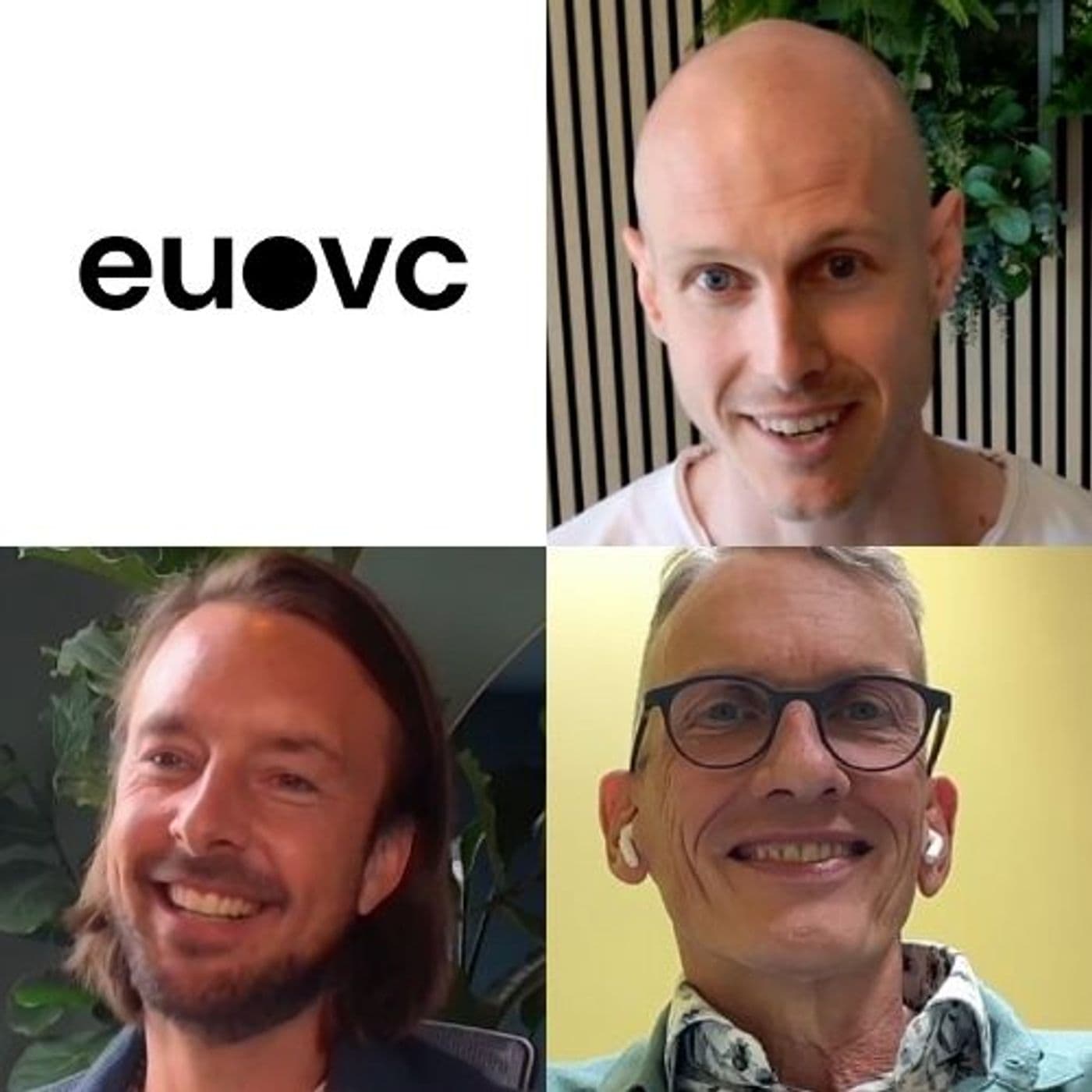
- Title: E522 | Mike Reiner, 432 Legacy: Venture Beyond: Coaching Founders, VCs & the Inner Work of Building Well
- Hosts: Andreas Munk Holm and David Cruz e Silva
- Guest: Colin Knight (Executive Coach)
- Description: A deep dive into the emotional and relational dynamics affecting founders and VCs, part of the Venture Beyond initiative aimed at exploring the human side of venture capital.
Key Themes Discussed The episode revolves around the idea that the venture journey is heavily influenced by emotional and relational dynamics. It emphasizes the importance of understanding and improving these dynamics for sustainable growth.
Overview of Content
- Venture Beyond Initiative (02:15)
- Collaboration between 432 Legacy and Stride VC to support founders and investors in developing intentional teams and resilient cultures.
- Peeling the Onion: Key relationships, teams, roles, and self (05:00)
- Discussion on how to approach change in these areas.
- Power Dynamics and Pitching (10:30)
- Resetting foundations in founder-VC relationships.
- The Myth of Pleasing (22:00)
- Importance of check-ins and authentic communication in relationships.
- Challenges within VC Firms (29:00)
- Exploration of team dynamics and common struggles in VC firms.
- Role Transitions (38:00)
- Letting go of identity and control as roles evolve.
- The “Colin Column”: Purpose Reflection (44:00)
- A tool for founders to reflect on their motivations and the impact on their teams.
- Self-Transformation Costs (47:00)
- Acknowledging the price of personal transformation and identity shifts.
- Joy in the Journey vs. Outcome Addiction (49:00)
- Emphasizing the importance of enjoying the process rather than fixating on results.
- Energy Management (55:00)
- Recognizing what drains or fuels energy, and how to cultivate a positive energy environment.
- Finding Inner Peace (57:30)
- Strategies to maintain calm despite the chaos of the venture landscape.
Insights & Key Takeaways
- Relationships Matter: The strength and quality of relationships can either propel or hinder progress. It's crucial for founders and VCs to continuously evaluate and nurture these relationships.
- Active Engagement: Founders should take initiative in board relationships, recognizing that passivity can lead to ineffective boards. Open communication fosters better results.
- Emotional Intelligence: Understanding and managing emotions leads to more productive interactions, whether in team settings or one-on-one.
- Changing Roles: As companies scale, founders must adapt their roles and responsibilities. Letting go of certain tasks can create space for growth.
- Self-Reflection: Founders are encouraged to regularly assess their motivations and the purpose behind their actions. This can be facilitated through tools such as the "Colin Column."
- Energy Awareness: Identifying activities that drain or enhance energy is vital for sustaining performance and overall well-being in high-pressure environments.
- Value of Process: Focusing on the journey rather than solely on outcomes can lead to greater satisfaction and fulfillment. Cultivating gratitude and mindfulness can enhance the daily experience.
Conclusion This episode underscores the importance of emotional and relational aspects in venture capital, proposing a more human-centered approach to building successful startups and investment firms. By fostering strong relationships, engaging authentically, and maintaining self-awareness, both founders and VCs can thrive in a challenging environment.
---
For further insights and updates, follow the podcast at [eu.vc](https://eu.vc).
Written by AI. May contain mistakes. Listen to the episode to check what was said.
Transcript
Automatic transcript. May contain errors.0:00Why do some founders struggle with boards that feel adversarial, while others turn those same relationships into rocket fuel. I sort of tend to say to founders, well, you get the board you deserve. It's a harsh truth, but here's what's even harsher, the hidden cost of getting it wrong. It failed slowly and then very quickly, but basically it failed one conversation at a time. One conversation at a time. That's how great companies crumble, not from market forces, but from the human seams that fracture under pressure. But what if those same pressure points could become your greatest advantage? And so one of the things I'm often doing with teams is coming back to, well, why do you even get in a room together?
0:35Executive coach Colin cuts through the noise to ask the questions that transform tension into clarity. Because the real challenge isn't just surviving today's pressure. It's evolving fast enough to lead tomorrow's company. How equipped they feel to be able to fulfill the role that's going to be needed from that are going to be different in the next six months. Six months. In startup time, that's a lifetime of change. And at the center of it all, your ability to find calm in the chaos. If you don't have a place of inner peace, spend some time finding it because it will help your energy. It will help your resourcefulness.
1:09Discover how to turn boardroom battles into breakthrough moments. Transform stuck teams into unstoppable momentum and build the inner resourcefulness that separates surviving founders from thriving leaders. Join us for this essential conversation between Executive Coach Colin and VC Mike Reiner, where pressure becomes possibility and every conversation counts.
1:50Thank you so much. Starting off, HSBC Innovation Banking. If you're a founder, a scale-up, or a VC, you need a bank that actually understands your world. HSBC Innovation Banking backs innovation globally, from seed to IPO. And if you ask me, a strong banking partner like HSBC belongs in your stack. If your portfolio companies are scaling, they need infrastructure that won't slow them down. Google Cloud Startup Program offers$2 ,000 to$350 ,000 in credits, plus technical support to build better and faster. It's a key boost every fund should bring into their ecosystem, and oh my god, are we thankful to be partnering with them.
2:26Now, legal is a space you cannot lag on. Legal needs to move at the speed of venture. Goodwin's team has decades of experience with startups and funds. They're trusted at every stage from formation to exit. Goodwin definitely is a legal partner. every serious manager should have in their stack. For Luxembourg-based VC, PE and Fund of Fund managers, modern funds means going digital. Fundcrafts gives you a full service, digital native platform built for today's European managers. It's a must have if you're scaling smart. So we all hear about the Middle East. How about you go there? From AI to deep tech to summer fund SkyTex in Dubai is where global future of tech gets negotiated.
3:05It's not just a conference. It's where East meets West, capital meets innovation and the bold set the agenda. If you're playing on the global stage, join us going to Gaitex this year. If you're gearing up for your next fundraiser and want a placement agent who truly understands emerging managers, reach out to CFunds, their boutique placement agency that has helped GPs across here brace capital from top tier LPs. We've been on the other side of the table here. They are actually good ones to work with. So I do urge you to go to CFunds.io to go and check them out. And hey, before you go, if you're looking to discover startups, raise capital, connect with innovation leaders, do check out dealflow.eu, the EU-backed platform reaching founders, VCs, and corporates.
3:43There's no better place to find the startups that have received significant funding from the European innovation ecosystem.
4:04Let's start acting. This show is not investment advice and the hosts of this episode may be invested in the funds and companies featured. Welcome back everyone to the European VZ podcast. As you know, we're all about connecting and championing European venture, but there's something else that's equally close at heart to us. And that is trying to help people in the venture industry deal with the incredible pressure of both raising money, trying to deploy money, and also in some way, find the time to support founders. And of course, also from the founder perspective, helping founders grind through the very hard times where we unfortunately in the venture ecosystem have maybe had a bit of a hustle culture and hustle porn has been the name of the day.
4:49So hopefully we can solve some of that by also looking inwards. To do that, we have our good friend Mike Reiner with us from 432 Legacy. And Mike is laughing because I always get that wrong. I'm not good with numbers, which is why I'm a podcaster and not a VC. Mike, could you please tell me a bit about the Venture Beyond initiative that we have going on together, as well as introduce Colin much better than I could ever do? Yeah, so look, Venture Beyond, as you know, Andreas, you will see us. Also, Fred from Stride is involved in organizing retreats. We did a bunch of podcasts there, which is really bringing VCs and founders together.
5:28We're doing more and more of these. and also from our fund perspective, work with a lot of coaches. Well, we work with a small group with selected coaches and Colin is one of them that we use also for our founders. And with this series, it's just a great way to get to know coaches and understand what makes them tick and how they help founders and how they look at the process. Exactly, I introduced Andrea. So that's the background. And then for the rest, yeah, Colin, maybe you can introduce yourself. Yeah, well, as you said, I'm a coach. I've been coaching almost exclusively in the kind of startup scale-up space for 10 years.
6:05I mean, in terms of numbers, I've done probably about 5 ,000 hours of coaching with about 200, 250 clients. A sort of a reasonable level of experience, I would say. And prior to that, I sort of described myself as a corporate escapee, not because bad things happened to me. I was extremely fortunate to work for Mars for a long period of time, which has a kind of extraordinary track record of sort of leadership training and development. And one which certainly was formative to an extent in helping with some of the challenges I support founders to work on. In terms of my clients, I work with founders, co-founders in their teams, but I also work with investors.
6:52I work with VCs, the KJ Angels. So I work sort of, I wouldn't say in the whole ecosystem, but I have a fair appreciation of how this ecosystem works. I think, which again is an advantage in, particularly in supporting founders and co-founders in sort of scaling their businesses. I think what's maybe also relevant because you're also a coach, which are coaches, right? I think that's - Yeah. Yeah, so I'm a trained coach supervisor, as it's called. It's a bit of a strange, kind of almost old-fashioned word. But in any helping profession, really, there needs to be a level of accountability. Of course, there's accountability to a client.
7:33But in reality, from a professional sense, a good coach needs professional accountability. And so I have a supervisor that I see periodically with whom I can kind of discuss the quality of work. And they will challenge me around what I'm doing. And they will also challenge my professional development. And as a consequence of that, a few years ago, I undertook a supervision course myself. And I now supervise the work of other coaches, which gives me a perspective, if you like, a continual perspective on my own work as a coach in having to do that with other people. So today's conversation, we're going to try and focus it around four core themes, core topics for any founder or VC out there.
8:18It can be referred to as peeling the onion a bit because we're going to start from the top and then we're going to get closer and closer to the individual. So we're going to go through key relationships, then to team, then to role, and then finally to the self. And these are, of course, topics that are big and we will allocate adequate time. I hope to be able to go through each of them at least a little bit on the top level. If we start with key relationships, but maybe before we go there, if you just explain to us why is this a good way to break it up? And how does it tie in with the way that you coach, the sort of coach that you are?
8:56Well, I think the theme behind all of those things really is change. I mean, that will not be at all surprising in the world in which founders and co-founders and investors are working. You know, change is inevitable and it's rapid. And so that's the thread really that throws through all of those layers of the onion. The reason why it's relevant is that most often when people look for coaching, they're trying to change something or they're trying to achieve a professional goal or some other thing. But in reality, the more you peel away the layers of that thing and down through the various things, you ultimately get to self-change.
9:37change so change sits right across the four layers of the onion and the reality is of course that some things are relatively easy to change and some things are very hard to change and often it's the things that are hardest to change that we need to shift the most in order to have the kind of results that we want so that's the kind of overlay of those four things but in terms of key relationships I guess what I notice with founders and co-founders particularly is that there are certain relationships which stick around for a while you know some come and go but you know seed investors angels tend to be there for a number of years if not five seven years co-founder relationships they're kind of constant in the early life um building a company and one of the things that i think is really evident is that whereas many things when you're found to get focused on in terms of change, I mean, the product being probably the best example where you're endlessly trying to sign product market fit, optimize the product, optimize route to market, optimize, you know, getting that opportunity.
10:47The actual relationships which underpin all of that often are neglected in terms of the change that needs to take place. You know, in some ways, it's easy to think about with our kids. You know, I suspect many of the listeners will have kids, teenage kids. And the reality is that we have to change our relationship with our kids all the time as they're growing up in order for the thing to work, in order to get the best out of each other, in order to be the most relevant. And often with particularly co-founders, but even in relationships with investors, the relationship itself can get a bit stuck.
11:28you know it can be highly effective at a certain part of the journey and then it becomes less effective as um the journey goes on and the reason for that is because actually people really don't think about the relationship itself they transact work together they get on and do the best they can but they don't really think about whether the way the relationship's constructed is is appropriate for where the business is now and where they are now. And so quite a lot of my work as a coach can be in helping people think through what's needed from this relationship now. How can we reset it? How can we recontract it?
12:11How can we get the very best out of each other for ourselves and for the business? As a VC, Mike, how does this resonate with you? and notice my use of resonate here. That is, of course, a very strong, not to the name 432 Legacy, which is all about resonance. I'll contend it. Look, I think, first of all, I think oftentimes when a relationship is stuck, you can feel it, both where there is maybe frustration and also maybe energy is draining because there's a mismatch. I think to Colin's point is, what I would call like check-ins are extremely important. You know, where it's just checking in, like, hey, first of all, also just asking the question of how are you feeling to begin with, which is often going to entirely bypass, and then going to relation, like how is it going right now?
13:05What is it that you need right now? And to manage expectations. And I think these conversations around where you are in a relationship are extremely important. So in terms of go straight to the numbers, we go straight to like how the business is doing, and not of like, hey, like reflecting on the year, where are we now? What do you need as a person? And how can we fulfill this? And in some cases, that means relationship may actually like not only between you and that person has to change, but also get someone else involved. If we think about the founder VC journey in their relationship, we first meet each other typically in some form of power skewed relationship.
13:45Either it's the VC that is the underdog and really wants to get into a sexy round, or it's the other way around. It's a founder that's been struggling and is on their heels to try and get the fundraise closed. And thus, they're very much the underdog to the VC. I want to start with you, actually, Mike. How do you think about grounding the relationship in a productive way, even though there is this pirate dynamic embedded into the relationship from the beginning? So in the very first meeting, and I'm thinking back, I have no idea how Fred from Stride thinks about this, but I'm thinking back now that I asked this question about some of the posts I've seen from Fred when he talks about how he engages with founders.
14:27He says, I don't want to hear a pitch. I don't want to be diligencing you, digging into all the core stats and so on. That's not what I want my meetings with you to be about. even in this first period together. I want it to be, let's try and solve issues. Let's try and work on your business. And through that, I will build conviction. I'll get to know you. I'll get to understand how you think and work. And you'll do the same thing with me. I might be paraphrasing completely and not living up to this process here, but I can see how that completely resets the relationship or creates the right formation, foundation for the relationship versus the typical pitch, get pitched situation.
15:14Mike, maybe you can start. How do you think about it when you're thinking about forming relationships from day one? Yeah, so look, I think first, I think we need to separate roles because there is a role of the founder and there's a role of the VC, but there's also just a human aspect, you know, and I think those two need to be separated. and I strongly believe in the highly personal approach, exactly to your point, Andreas, is like, how can we help each other? So I think one thing that needs to be clear in the beginning is also needs to be intentional. It's like, you know, and from both sides.
15:47And often it's not, you know, you jump right in. For the power dynamic, I think you both also need to learn from each other, I feel. And also acknowledge this, you know, I think too often regardless of where the power dynamic is, it's one person having the arrogance of like, oh, you know, like you need me, like I'm the one who gives, but it's never, it's never one way. It should never be one way. Right. I think that is, that is also very, very important. So, and if that's the case, if both of you have this attitude of learning from each other, if both of you also deeply want to understand the other person, it's like, that's in the beginning with the founders.
16:26It's also what we do is really going to why are you building what you're building, what really drives you, what really is it that you need, also your personal journey, and going deeper into this forms a completely different relationship that is not just about the transactional part. Well, I think the power dynamic is really interesting. And I mean, it's really odd for me, obviously, to work on, if you like, both sides of the investor-founder sort of relationship and see the various narratives that exist in those areas and how they're reflective of what the other feels. But one of the things that's really problematic is I think that many founders, and particularly seed stage and particularly, you know, maybe relatively inexperienced founders, they are inclined to be too passive in managing that relationship.
17:15They will tend to sit back. They'll complain that board meetings are relatively ineffective, that they're just reporting sessions, et cetera, et cetera. but they don't really feel a sense of agency and indeed responsibility. I sort of tend to say to founders, well, you get the board you deserve, you know, which is a pretty tough statement. That's sort of symbolic of the way I coach. But I think that's true. You know, in the end, if you want to be passive, you're going to get a certain kind of board behavior. But if you want to be active in confronting what's happening in the board, getting the best out of the board, then you've got to be courageous and get in there and do it.
17:52even though it feels scary because of you know the the power imbalance you've just got to you've got to dive in and and and do it i think the interesting thing from an investor perspective is what my observation is that really many of the investors i'm i'm working with they're time poor and again they don't proactively pay attention to the evolution of the relationship in the life cycle of their investment and whether or not that's serving the founder. So they can form a relationship at the beginning. They can form a particular way of working with that founder. And they don't necessarily check in, you know, if there's another round after a couple of years.
18:35And so, well, hang on a minute. It's the relationship that we had and we set up two years ago right now, given the context and recontract. And again, if the founder is being relatively passive around that. And if the investors are busy, they may be on, I don't know, a dozen different boards and whatever, it can be a lower priority than it ought to be. So again, part of my work is, A, encouraging founders to feel a sense of agency and responsibility around that relationship, and B, just to get them thinking about the investor's perspective on it, and therefore how they can work to get the best out of each other.
19:16I think also maybe to make passive more specific, I think oftentimes it's pleasing, which can by the way to be the other way around. Andreas, to your point, it's a very successful founder and the investor wants to be just pleasing to that founder, that power dynamic. But I think that's a problem. If one party is too pleasing, it doesn't work. And good examples are board meetings. If the founder is just there to please the investor and it becomes a reporting exercise, you know the value in my opinion is destroyed a good board meeting should be a board meeting that's highly intentional we focused on something specific and everybody comes prepared to add value and then she brings other people in experts to really solve a problem and not just sit there listen to the numbers you know and and and essentially like yeah just a reporting more meaning which which happens way too often i mean one of the things just because i'm conscious that But in the end, with a podcast like this, it's important for people to have some practical takeaways.
20:14And one of the things that I'm constantly doing with my clients is teaching very simple kind of feedback mechanisms. And one of those involves at the end of a conversation, scoring the conversation out of 10. Just saying, okay, let's just independently rate this conversation. Did it do what we want it to do? And then you rate it and you see the extent to which you agree or don't agree. with the rating of the other person. The point is not to average the rating, but the point is to say, well, okay, if it was an eight, how could it be a nine? What is it that I did that helped it be an eight? What could I have done that would have taken it to a nine?
20:52Similarly in board meetings, it should be doing the same because I think feedback could be the subject of two or three other podcasts in itself. So we won't go into that today, but the reality is most of it's ineffective. most of it you know doesn't produce any meaningful change and the reason is is because it's generalized it's relatively magnolia it's not particularly applicable and so if you ask somebody a specific conversation at the end of a you know a specific question at the end of a conversation okay how was that conversation for you it means that the feedback becomes about that moment of time that conversation that you've created and was it the best conversation we could have about this subject in this moment.
21:37There's a great quote, which I like to use occasionally, which is, you know, a founder asked why their business failed and how it failed. And they basically said, well, it failed slowly and then very quickly. But basically it failed one conversation at a time. And that was their observation that every time they'd sat in a room with a team or with an individual, there was the potential to have the best possible conversation and there was the potential to just transact the conversation walk out the room and think thank goodness that meeting's over i can get on to the next thing and it's those choices that we make in those individual moments be it with the board be it with our co-founders or we'll come on and talk about the team in a minute where if we're conscious that we have the opportunity to be intentional and get the very best in that moment to give each other feedback.
22:29We're going to get the best we can. We might be covering this later when we talk about the self, but I would love to just ask, how does one build the courage in these situations? Because I think that sometimes it's a bit self-evident that I got to put the relationship at risk. I got to say these things. I got to move the board forward to being more productive, but you're also looking at the far-reaching consequences if you do. How do you build the courage and also how do you foster the necessary environment to be able to open these conversations? I think for me, there's two possibilities. One is extremely practical.
23:11One of the things I do with my clients at times is just get them to role play a conversation. It helps to build courage if you've heard yourself say the words, you know, and if you've got difficult conversations. There's nothing like just being able to practice what you might like to say. So that's one thing. I think the other thing is just really coming back to having a kind of outcome focused in what we do and understanding the consequences of opting for short-term security, which is essentially what we all do as human beings at time. We overplay short-term security and the price is potentially long-term detriment.
23:54So it's really coming back to understanding that balance and knowing that just because we feel something is hard doesn't mean that that's the wrong thing to do. Our feelings actually at times are very unreliable indicators of what is the right thing to do. And we should be wary of responding to them without being very thoughtful about, okay, the fear I'm feeling, is that something I should be giving into or actually is the fear I'm feeling and indicating that actually something really important is at stake here and needs to be put on the table the biggest misconception is that we believe we have to act according to how others want to see us this is always this like for for the majority I think this idea of acting based on the expectation of others.
24:49Why I say that this is the biggest misconception is because at the end of the day, what we truly value is authenticity as humans. What we truly value is also vulnerability as humans. Yet, that's actually for many people, a very scary thing. But that's what we all crave. We crave realness. We don't want others to be perfect. We want others to be real. That's what it is. That's where human connection is built. And to question and courage, Andreas, at the end of the day, with pleasing, you achieve the opposite. Nobody really wants a pleaser. So actually, in terms of getting the courage of just getting to the habit of being true to yourself more and voice it more is a win-win always.
25:34And then to Colin's point of how to get there and practice it is a different discussion. So now we've gone from relationships and now we're focusing on one of the relationships, the most important ones, the team, the executive team, the leadership team of both startups and VC firms, of course. Yeah, I mean, the reason that I think this is important is because, you know, my journey as a coach, I started off effectively working one-to-one with founders. And then not that that isn't very important and, you know, extremely rewarding work, but what you've come to realize in the end is that it takes time for that kind of work to scale into the business.
26:12And if you can achieve meaningful change with a team of people, then that has a bigger impact. And also it enables you to see, frankly, the work and the behavior of founders and co-founders in the context of the team that they're working with. So the relationships that are at play within a team are essential in terms of business progress. and again what I see frequently and why I get involved in supporting teams is that the relationships are not working in the way that people want them to work and some of that comes back to what we talked already you know about candor and pleasing etc etc but one of the key things often is that the team itself doesn't spend time talking about why it exists and what work is needed from the team and in a sense it comes together as the group of individual sort of functional heads rather than as something which has a unique role in its own right which it needs to deliver for the business success and for for you know for growth and so one of the things i'm often doing with teams is coming back to why do you even get in a room together what is your purpose together you know are you fulfilling it and sometimes i i ask them that teams that and they say well we have to deliver the business results you know we have to scale you know all the sorts of things that you you hear people saying and i say well i think yeah i mean that's true to an extent but i'm not sure that's your unique role you know you've got a team of people in businesses once you get about i don't know 15 20 people you know there's a whole team of people that are trying to drive those results.
28:01It's not the unique role of the exec team to be delivering all of that. There's a critical role that the team needs to play and it needs to be super conscious of that so it can be really intentional about what it does when it meets. How do you culture there, actually? Because it's interesting you talk about about 20 people. Typically, in an organization, about 100 people becomes, there's a huge change, somewhere between 100 and 150 people because everything that was before informal has to become more formal. Our brain can't comprehend exponential relationships. About 100 becomes very complex how Tom knows Sarah, for instance.
28:39Yeah. Because why it breaks down and it has to become a more formal structure. So how do you build an effective culture for just this to manage change as the company grows? I mean, that's such a great question because, funnily enough, one of the clients I've been working with a lot recently, they they're actually in their first stage of first cycle of private equity and they made an acquisition about six months ago and one of the key questions they have at the moment is around how do we sustain momentum and how do we sort of keep everybody on the journey as the business changes so rapidly we use the word communication a lot i think it's used and abused and misused.
Read the full transcript
29:23And interestingly, in this business, one thing, they feel like they've been communicating a lot, but they're actually very diligent in doing sort of engagement surveys with their employees. And in reality, the engagement surveys suggest that really that whatever message they're trying to get into the business isn't getting through. And so they essentially come back to thinking, well, actually, we need to reduce the amount that we're trying to communicate. We need to make it more clear and we need to make it more of a dialogue with the organization rather than just standing up and rolling off some PowerPoints and expecting that a message has kind of been embedded in the organization.
30:03the more change is occurring within a business and the faster that's occurring the more you need to be absolutely on it when it comes to the way you are engaging and communicating with the team otherwise there'll be misalignment otherwise probably organization will be running behind where you need them to be and i think the difficulty is that communication is seen as a sort of necessary evil as opposed to a really positive lever for accelerating change within the business it's almost seen as okay we've got we've made some decisions we need to go and tell people about them you know uh roll of the eyes rather than actually we haven't done anything until we've engaged the organization around the things that we've just talked about and that's That's the task.
31:01That's the 95 % of the task. Sitting in a room and coming to some conclusions about some stuff is fine, but it counts for nothing. I'd love to ask you, because you also have VC clients, I'd love to ask you just one quick question about team dynamics in VCs inside the firms. Anything that you have noted in particular tends to be what's causing issues and how, if you should give some broad sweeping advice to VCs here. what do you see VCs falling into again and again and again as bad practices or malpractices, even when it comes to managing their own organizations? Well, I think I start off by saying, you know, be wary of my sample.
31:49I have a very biased sample of VC clients. And it's worthwhile acknowledging that. And that is to say that the clients that want to work with me as VCs are VCs who genuinely want and believe that if they work together as a team, they'll get better returns for their LPs. And by the way, I'm not a VC expert and there are different models of VCs. And I'm not therefore trying to suggest that what those clients believe is necessarily the truth, but it's what they believe. you know I'm sure there are there are VCs who operate as what I would call a loose affiliation of of learning wolves who believe that that's the way to get the best return so I'm really saying be wary of my experience because it is with a very biased sample I think the the biggest challenge that that is faced even within that rarefied group if you like is To be able to sort of put their egos aside, you know, most VCs are extremely high functioning, successful.
32:59And if you are in that camp, it's hard to put your ego aside. And it's hard to say that actually, I genuinely believe that we're going to be better if we have a good team dynamic and if we collaborate, if we listen to each other, you know, etc. etc and i think that that's it's tough i think it's also quite tough because i think there is quite an individual culture within vc and certainly my clients at times again their narrative is is actually that they're trying to build something which is atypical and that can breed a level of uncertainty about whether they're right you know it's actually should we just go all in with the kind of, no, no, we're just lone wolves.
33:48And, you know, all this team stuff is just for the birds. You know, that is a constant question. When it comes to learning how to put your ego aside, I think it's safe to say that spending some time here is not wasted. I'm sure someone in the audience will relate to that problem. So let's unpack that. How do you help someone who comes to you either in their self-recognition that there's an ego problem here or you spotted? And I guess it's sometimes oftentimes not very well hidden. How do you help work through ego issues? There's no substitute for candor and quality of discussion in the room. um i mean really in a way that's sort of part of my personal brand the first vc i ever engaged with i met the the individuals i had a particular issue they wanted help with i met the individuals and i came away thinking well they're kind of causing this issue themselves and why do they need a coach that was my that was my spontaneous kind of response and when you're a coach one of the things that you try and learn to do is not to put your spontaneous response aside so having had that spontaneous response I then meant went and met if the two out of the four individuals who were kind of uh interested in finding a coach and essentially I've said that to them you know I sort of said straight up I said I don't know why you need a coach you're causing these issues yourself um why do you want somebody else to come and bail you out the nice thing about being a coaches actually you're not being paid to be liked you know you're being paid to help people be effective in their professional journey in my case and therefore you're paid to to if you like say things that other people don't necessarily want to hear and the consequence of that conversation was that they engaged with me because actually that's what they liked they said we need somebody who's prepared to actually tell us what they observe.
35:56And what that meant was that we built a way of working, which meant that I did some individual work with them, but a lot of the work we did was with the four of them in the room together. And my observation was to help them actually get the candor that they were prepared to express one-to-one to me into the room, the way they felt about each other, the good, the bad, and the ugly, and to have the conversation about that together in the room and then ask the question, because this is always the thing with any team, is the way we are conducting ourselves together in the best interest of what it is we're trying to breathe life into?
36:37If it is, great. If it's not, it needs to change. And it has to be, you have to kind of go inside, but you have to go outside as well, because the danger with going inside is it can become very self-serving, you know, and the relationships become the end in itself. You need to go outside because the relationships are the means. The quality relationships are the way by which actually you're going to be more successful professionally. But actually what you're wanting to do in the case of VCs is you want better returns for your LPs. Ultimately, that's what your job is. And in order to do that, yeah, you need to have the best possible relationships.
37:20And you need, if you want to be a team, to put your ego aside. Mike, I am sure you have had your fair share of founders, at least, that you work with that have had some sort of ego issue. Could you tell me how you experienced that as a VC and how you helped founders work through that? Many people who are successful have a unique drive. Often that drive comes from some level of trauma. Let's just not label that term too much because trauma can be also relatively small things. Whether that's being bullied at school, whether that is like father wound, whatever it is, doesn't matter. Also, of the trauma, you mentioned VC.
38:05If you look at ego, the problem with VCs is you get so much people pitching you that it's so easy to have an inflated ego because everybody wants something from you. If you're a successful founder, it's the same thing. Everybody wants something from you, right? So the thing that we pay attention to the most in selecting founders is their willingness to work on themselves. Because at the end of the day, I think that's the biggest criteria also for success. As the markets and everything is continuously changing, their obsession with improving themselves as people and thereby leaders in the company is the most important thing right so it's already in this election where we pay attention to that we want to work with founders who are driven to do this and then to your question on how we help them is a combination of one really calling each other out both ways like you build a relationship where you really like encourage calling each other out where the human factor comes first where it's also like you do the check-in, you also ask how they're feeling.
39:07It's not just transactional. We help with external coaches like Colin and others to further develop their own journey. And in this, I think it's continuously just realizing that many assumptions that you have, like everybody has a different way to look at things. And that nuances a lot. Let's peel another layer of the onion. Let's go to roll. We all play roles. We all have them in our personal life. We definitely also all have them in our business life. The role of a founder is ever changing. Colin, how do you think about roles? Where are the most important things to be focusing both as a coach, as a VC, and as a founder?
39:52Well, I think one of the questions I often ask potential clients before I engage is how they think their role is going to be different in the next six months as compared with the previous six months. and how equipped they feel to be able to fulfill the role that's going to be needed from them. And that in itself is an interesting window into how people see the dynamic and the shifting of their role. My observation is that founders, they know their role is changing, they want to make changes, but often they can get stuck. They get stuck into a particular way of working. that maybe because there are particular things that they like doing and things they don't like doing, you know, and we're all like that as human beings.
40:38But somehow putting aside your own likes and dislikes and being able to focus on what does the business need of me now and in the next coming months or so is a way of getting people to think about their role today. I think it's extremely hard sometimes to be able to let go of things that give you security as an individual. You know, I mean, a simple example, you know, particularly in very, very early stage, often with founders and co-founders, you know, one of their things that they do is they code. You know, I mean, it's kind of, it gets them into the business. They probably even built the first prototype of the product themselves, you know, and in tech startups.
41:23And the danger is they get good at it. And then coding becomes kind of the thing they do, part of their identity. And letting go of that is extremely difficult. And they can build all sorts of justifications to continue to do it a little bit from time to time, you know, about, oh, well, then I can appear credible, et cetera, et cetera. But, you know, that's just an example of how difficult it can be to let go of things that we're very competent at or let go of things that brought us joy when actually they become not relevant anymore for what the business kind of does need from us. And how much attachment do you see there?
42:06Actually, let's take CEOs, attachment to keep people. you see attachment in a variety of different things but it's it's endemic i mean we're all like that i mean let's be honest it's easy for me as a coach to sit outside a little bit of a system and sort of see what's going on and that's part of the part of the benefit of a coach if you like but we're all to a certain extent want some things to stay the same and the things that we want to stay the same the most are our ability to do everything that we're good at we want our own self-image to stay the same you know we'll come we'll come on and talk about that in a minute but that's the challenge and therefore that attachment shows up a lot in what is in people's diaries you don't really have to talk to them you just say well show me your diary for the next uh three four weeks and you can see what they're attached to and you can then say well is this the stuff that actually meets your purpose the needs of your right now or is this stuff that was relevant six months ago or 12 months ago and actually now needs to be ditched or changed so the the best way of seeing a hatchment is to look at what people do on a day-by-day basis and it leaks it's the same as language the words that people use they leak people's intentions and motivations i'm fascinated by language you know again we can have a whole podcast about that but our language itself can become stuck um the way we describe ourselves can become stuck you know most interesting things i do with clients sometimes is to take them to the national gallery and i ask them to find a picture which represents a particular thing that they're they're working on the one i was working with a father and son who were both working in the same business that's another podcast you know do you really want family members you know within the same business but but but it was a very challenging relationship.
44:05And I took the son to the National Gathering. I said, well, just find a picture that represents your dad. And he found a picture and he talked about it. And I said, well, go and find a picture that represents your dad as you would like to see him. You know, and then what's the change that you want? But the purpose of using art is to find a different language around the challenge. Because often in finding a different language, you can find a way forward because we just play out the same words It's about the same issues time and time again, and therefore don't really get any change. You have described to me earlier, Colin, two core takeaways when it comes to roles that I just want to state, and then you can maybe unpack them a little bit.
44:49We're running late on time, but I think it's really two strong ones. One is the advice to ask the question, what's the purpose of my role now, and what will it be in three to six months? it's an obvious one i think everyone can imagine how powerful and important it is to remember to do that but then you have another one which i thought was a little bit less obvious which was align what you do to that purpose add a column of why am i doing this to your to-do list for a month and use it to change what you expect of yourself and others yeah this is a reasonably common And sort of piece of homework, if you like, I encourage founders to do.
45:29And it's extremely powerful. The reality is that with time-poor individuals, they transact a lot of the time. One of the core benefits of coaching that my clients report to me is it forces me to slow down and think about what I'm doing. you know it's an hour and a half or two hours in my diary where actually i don't have to just run from one thing to another and therefore what they do is they just fill their diary like in a sort of relatively thoughtless way with all sorts of stuff um and they do the same with their to-do list stuff comes on to their to-do list um and they just okay i need i need i need and i sort of just put a column of why you're doing that.
46:13The end point, if you ask why enough, is often that they actually just don't trust other people in the organization enough. They're doing it because they don't trust the capability in the organization to deliver it. And the advantage of asking that question is you can then say, well, okay, what would it take for your trust to change? what would it take for the organization's capability to be greater so that you don't have to do it but until you get to asking why why are you doing this you don't get to ask the real question which is okay what really needs to shift here and is it you're trusting an individual you're trusting the team is it actually just the way you're planning to bring capability into the business and build it and then of course there are some things on your to-do list where there's some very legitimate reason why you as the founder should still be doing those things.
47:07And you need to do them and you need to do them really well. So get rid of the other stuff. So actually the things which are yours and your unique value, you can focus your time and effort on and do fantastically well. I'll dub this column the Colin column and put it on my own. Let's go to the fourth and final level of the onion here, the self. I'll kind of tee it up with another one of those questions that I asked founders or VCs actually when I'm starting to engage which is that people often come with a sort of list or a notion of something that wants to change and one of the questions I often ask them is like well what's the price you're prepared to pay to achieve that change and the common answer is oh well I'm really committed and yes I can give my time I can give you know etc etc and I said what about if you had to change your self-image.
48:05It's a basic human nature to want to be right about ourselves. It's one of the reasons why we often reject feedback. It's one of the reasons why we feel uncomfortable experimenting around the edges of who we think we are. But the need to be right about ourselves is incredibly powerful. It's very, very disconcerting for somebody to say, you know what, actually, most of what I thought I knew about myself is not right and so it's in a way you know paying for a coach in a way giving time to a coach in a way committing to do certain things that's not an expensive thing but the idea that i may go into conversations i need to come out realizing that actually i need to change what i think about myself and my capability you know that's a big price to pay i may have to change what i think about somebody else when I've actually formed a very strong opinion about that.
49:05And it may be me that needs to change my opinion rather than change that. That's tough. If you look at the founders you're coaching, Colin, how many of those founders are happy? How many of those founders do you think are focused on the journey actually versus the outcome? I'm asking this because interestingly enough, when you continuously focus on the outcome, there's very little room to be happy because the outcome and the goal is always something in the future, right? So you're continuously chasing something that changes all the time until you die, right? And it's such an obvious statement, yet most of us keep doing it.
49:46And I think for me, a key turnaround was to really look into what are the daily things I do, right? And for instance, as a VC, it's fucking note-taking. Big part of my time is making notes. And I actually took more pleasure out of selecting the right CRM, taking notes in an efficient way, connecting it in a good way, and taking joy out of the boring small stuff. Taking joy in the moments, being fully present with someone to really, really enjoy the journey. And this relates to the role, but there's less attachment to the role. This relates to your energy level, getting more energy out of things.
50:26This relates to, I think, being effective. So to so many things, yet it's so unaddressed, I feel. I'm curious how you see this. I mean, I think it's absolutely critical. I mean, one of the saddest moments of the last 10 years for me was when I went to meet potential clients. And this person, they'd grown a great business. I know seven or eight years. And I met them and they said to me, I just have a real problem. And that's that I've got this business. By any real measure, it's been very successful. But I wake up every morning and I come into work and I just see right through it. I can't see it anymore.
51:13One of the I mean, in the end, and frankly, with that individual, we decided that actually they needed therapy. They were in a burnout state. and I'm not a burnout expert, but the reality is they got there because actually they hadn't every day been grateful for what was happening. I have a friend of mine, again, he just sold his business. It was a convenience store. By the standard, VCs, like nothing. 20 years of building a business from scratch and the sale process, like any business sale, is always traumatic. diplomatic you never get what you imagined you were going to get and there's always problems and he was devastated really by the ending and I I wrote him a note because I felt really sad for him and one of the things I said is you've got to look back and see what this gave you over the last 20 years you know it gave you a great income it gave you stability for your family it gave you an outlook for your entrepreneurial spirit through the trade association you went and you spent time with other business people, you help them grow their businesses.
52:20All of those things happen day by day by day by day. So the idea that you can assess the value of this by the amount of money that came into the bank when this completed three days ago is completely nonsensical. The encouragement, you know, exactly what you've said, Mike, is to say to founders, co-founders, to investors, it'd be great for every day for what you're getting from what you're doing because you know that's far far more valuable than what might be a load of money in the bank or what might be relatively relatively little money in the bank or nothing in the bank at some future point in time over which you have some control but frankly not an enormous amount and probably not as much as you think you have you know i mean there is there's well known and proven cycle like data from psycho psychology experiments that says that if you daily practice like what's called gratefulness you know if you write down at the end of each day what are the three things i'm grateful for you will feel better you will you will have a better a more robust mental state if you do that because actually it's about observation more than anything else.
53:39It's what do I observe in my daily life, in my daily work? And, you know, as Mike said, is my eye fixed on some sort of notional, in a verticomus exit at some point in the future? Or is it fixed on what's great happening in front of me? Another relevant story is, you know, a client of mine who had an amazing exit. And, you know, she goes and does talks now and that kind of thing. But when she's asked about, you know, how do you get such a great exit? She said, it's really very simple. You just spend each day trying to build a great business. And the rest will happen. In some form or other, good, bad or indifferent.
54:25But just spend each day trying to build a great business and enjoy that. I think there's one thing that I haven't really heard people talk about, which I feel is really fundamental and closely related to this, which is energy, the equation of energy. What I mean by this is every single activity and every single interaction either gives or drains energy. And it's incredible how little attention we pay to it because in business, energy is everything, right? The way we convince people, the energy like a VC feels when the founder comes in and like talks with passion, or you convincing like someone to join the company or just energy to work on a task.
55:04So paying attention to that is huge. So it's essentially three steps. One, to be aware of every single piece, like a conversation or an activity, whether it drains energy or gives you energy to start with. Two, to see how you can change it to give you more things that give energy versus draining and three, with also personal development and working on it, actually changing that things that previously drained energy give you energy, change that equation. I'm just curious how you think about it because I think so little disgust, yet it's at the core of everything we do as humans. I think it's fundamental to individual success and to personal success and to business success.
55:49managing individual energy is is is just critical and the reason for that is because i think if you are energized i would also use the term resourced personally you are much more capable of leading well in a business context and much more capable of leading leading a meaningful life because it means that you have a resource within you from which you can draw to get the very best out of yourself and others the moment you run that energy down to whatever means you're going to end up in a position where you just become extremely just reactive you just react all the time you've got no way of choosing uh the response that you want to make and i think part of that maintaining that energy and building it is choosing what you do what you don't do it's about also finding being grateful i think also it's about finding a place of inner peace it's about uh you know for some people they use meditation for some people that you know they're very spiritual but whatever it is you need to find a place of inner peace everything else is changing so much around you if there isn't somewhere you can go where you can just pause and think you know the world's mad but in this place in this place i can breathe and i can just pause then then i think it's extremely difficult so you know to to whoever's out there listening if you don't have a place of inner peace, spend some time finding it because it will help your energy.
57:37It will help your resourcefulness. It will mean you can deal with the ups and downs of building a business far better than if you don't have that place. Let's close the podcast on the note of being able to recognize that the world is mad, but still saying I'm good. Thank you so much for joining me for the podcast, Colin and Mike. I enjoyed it very, very much. I really hope that everyone else did. Thank you. Thank you. Before we start the show, a quick note. If you're building or running a fund, you know it takes the right partners. At EUVC, we only work with sponsors we truly believe should be part of your tech stack.
58:15Please do take a moment to hear about them. And if you do, reach out, mention EUVC. It's the best way you can support what we do. Thank you so much. Starting off, HSBC Innovation Banking. If you're a founder, a scale-up, or a VC, you need a bank that actually understands your world. HSBC Innovation Banking backs innovation globally from seed to IPO. And if you ask me, a strong banking partner like HSBC belongs in your stack. If your portfolio companies are scaling, they need infrastructure that won't slow them down. Google Cloud Starter Program offers$2 ,000 to$350 ,000 in credits, plus technical support to build better and faster.
58:52It's a key boost every fund should bring into their ecosystem. and oh my god are we thankful to be partnering with them. Now legal is a space you cannot lag on. Legal needs to move at the speed of venture. Goodwin's team has decades of experience with startups and funds. They're trusted at every stage from formation to exit. Goodwin definitely is a legal partner every serious manager should have in their stack. For Luxembourg-based VCPE and funnel fund managers, modern funds means going digital. Funcrafts gives you a full service digital native platform built for today's European managers. It's a must have if you're scaling smart.
59:28So we all hear about the Middle East. How about you go there? From AI to deep tech to sovereign funds, Gaitex in Dubai is where global future of tech gets negotiated. It's not just a conference. It's where East meets West, capital meets innovation, and the bold set the agenda. If you're playing on the global stage, join us going to Gaitex this year. If you're gearing up for your next fundraiser and want a placement agent who truly understands emerging managers, reach out to CFunds. their boutique placement agency that has helped GPs across here, raise capital from top tier LPs. We've been on the other side of the table here.
59:59They are actually good ones to work with. So I do urge you to go to cfunds.io to go and check them out. And hey, before you go, if you're looking to discover startups, raise capital, or connect with innovation leaders, do check out dealflow.eu, the EU backed platform, bridging founders, VCs, and corporates. There's no better place to find the startups that have received significant funding from the European innovation ecosystem.
From the publisher
In this episode,
is joined by Colin Knight, a leading coach in the startup ecosystem, and
, co-founder of
, to dive deep into the emotional and relational dynamics that power — and often derail — the venture journey.
This conversation is part of the Venture Beyond initiative: a space to reflect on the human side of venture, supporting founders and investors in building intentional teams, resilient cultures, and sustainable energy for the long game.
Here’s what’s covered:
- 02:15 – What is Venture Beyond? (feat. 432 Legacy & Stride VC)
- 05:00 – “Peeling the Onion”: Relationships → Team → Role → Self
- 10:30 – Power dynamics and pitching: resetting the foundation
- 22:00 – The myth of pleasing and the power of check-ins
- 29:00 – Why VC firms struggle as teams
- 38:00 – Role transitions: letting go of identity and control
- 44:00 – The “Colin Column”: Why am I doing this?
- 47:00 – The Self: Paying the price of transformation
- 49:00 – Outcome addiction vs. joy in the journey
- 55:00 – Energy is everything: what drains you, what fuels you
- 57:30 – Finding your inner peace in a mad world


