
In short
EUVC Podcast Episode Summary: E527 | This Week in European Tech with Dan, Mads & Lomax
Episode Overview In this episode of the EUVC podcast, co-hosts Dan, Mads, and Lomax dive into critical discussions surrounding European venture capital, exploring the macro and micro forces shaping the tech landscape. They unpack various subjects, including EU corporate structure reforms, the dynamics of startup formation, innovations in AI, and the current state of the European venture capital market.
Key Topics Covered
- EU Corporate Structure Reforms
- EU Inc. Initiative: A movement pushing for a single pan-European legal entity to streamline company registration and taxation, aiming to reduce friction for startups operating across borders.
- Challenges: Resistance from notaries and complications within existing legal structures hinder progress. The latest proposal has been downgraded from a regulation to a directive, making enforcement difficult.
- Potential Impact: If successful, could enhance cross-border investment and startup formation across Europe.
- The SAFE Envy
- Comparison to US Models: The hosts discuss the U.S.'s SAFE (Simple Agreement for Future Equity) instrument, which simplifies early-stage funding processes. In Europe, high legal fees and notarial requirements create significant barriers for startups, particularly in pre-seed funding rounds.
- Founders as Fund Managers
- Dual Roles: The trend of founders also managing funds is noted, raising questions about conflicts of interest and the evolution of venture funding frameworks.
- Innovations in AI
- China's LLM Advancements: Discussion on recent developments in large language models (LLMs) in China and how they compare to Europe's progress, highlighting concerns about the West’s competitive edge in AI innovation.
- Valuation and Investment Trends: Speculative exuberance surrounding AI valuations is critiqued, emphasizing the need for caution and realistic assessments of emerging technologies.
- UK Startup Ecosystem
- Current State: Conversation on whether the UK startup ecosystem is losing its prominence compared to its former self. The potential for future growth is noted, but issues remain regarding regulatory environments and market confidence.
- Fundraising Cycles and Trapped Capital
- Market Dynamics: Examination of the current fundraising climate, with insights into trapped capital situation where funds have not been successfully deployed, affecting overall market activity.
- D2C Health Comeback
- Resurgence in D2C Health: Noteworthy mention of a D2C health company, Newman, successfully raising funds and pivoting to new product offerings, indicating renewed interest in the sector.
- The Crypto Landscape in Europe
- Potential for Crypto Week: Discussion on whether Europe should adopt a similar proactive approach to the U.S. in terms of crypto legislation and regulation, with insights into the challenges and opportunities present.
- Macro Policy and Economic Sovereignty
- Geopolitical Concerns: The conversation concludes with reflections on macroeconomic policy, sovereignty debates, and cautious optimism for the future of European tech amidst complex regulatory challenges.
Key Takeaways
- EU Inc. as a Game Changer: The success of the EU Inc. initiative could potentially revolutionize the ease of doing business across Europe, facilitating startup growth.
- Importance of Regulatory Clarity: As seen in the US, clear regulations can provide certainty for investors in emerging sectors such as crypto and AI.
- Investment Landscape Changes: The episode highlights the need for new investment strategies in response to evolving market conditions, particularly for VCs navigating through lower capital raises.
Conclusion This episode offers valuable insights into the current European tech landscape, addressing both the challenges and the potential pathways forward. The hosts emphasize the importance of collaboration among investors, founders, and policymakers to foster a vibrant venture ecosystem in Europe.
Listeners are encouraged to stay engaged with the evolving dynamics of European VC and the broader tech landscape.
Written by AI. May contain mistakes. Listen to the episode to check what was said.
Transcript
Automatic transcript. May contain errors.0:00Welcome to Upside, where we look at the big stories that live behind the headlines affecting European venture. Today it's Mads and Lomax and myself and we have it's been a relatively slow news week. I don't know if you guys have found the same. It feels like apart from AI which seems to be pumping which we are going to go into a bit more detail in a few minutes.
0:25Tear down this wall. It's more than just an ally. This is a union of values.
0:38This show is not investment advice and the hosts of this episode may be invested in the funds and companies featured. I think the bar has been set incredibly high in the last 12 months across, you know, Ukraine, Trump, everything, UK government, like German government, all, you know, the tech news, everything. So the bar has been set high. So yeah, in that context, yeah, it does feel a bit light. Well, here's what we are going to talk about. So we're going to talk about the United States of Europe. We've got the EU Inc. updates. I want to just give them a bit of a shout out. We have some UK government reforms and some updates, not as dull as they sound.
1:13Crypto Week, should we have one on this side of the pond? Not my happy topic, but we're going to go there anyway. And Europe is on target for VCs to raise the least amount of fresh capital into venture capital for a decade. Again, not super great news, but there are upsides and we are going to look at everything we discuss. We're going to frame in the future. We're going to make some predictions. We're going to have a look at how we can materially make changes and do good stuff. So let's start right at the top. The United States of Europe. My little turn of phrase. So I want to share a quick update about EU Inc.
1:47I want to give them a shout out for what is an incredibly important mission. also for us to focus on the future and see and basically just ask ourselves what if and should it pass or should it not pass but if you don't know what eu inc is all about and what's going on behind the scenes let me just share a little bit of what it's what it's doing and what eu inc as a movement is all about it's been signed it's a a movement an initiative that's been signed by thousands of founders investors pushing for the creation of a single pan european legal entity which is why I'm playing on the phrase the United States of Europe.
2:20It hopes to deliver a streamlined company registration, taxation, legislation, a very simple structure so that if you want to start in Amsterdam, raise in Paris, move to Berlin, do something in London, all of those paths are open to you. Now, to be globally competitive, I think it's a really smart thing to do. We have the talent, we have the cash, but we have this very kind of dislocated, weird notaries in Germany, weird and wonderful, different countries doing different things, even though we have the EU trying to tie things together. Now, after the damning Draghi report from 2024, highlighting Europe's productivity issues and what to do about them, it's been a massive challenge.
3:01And EU Inc. is trying to use that momentum to ask the EU for structural changes that will support startups, investors, and ultimately our whole ecosystem across Europe. Ursulo von der Leyen, the president of the European Commission, has rebuttled this idea as the 28th regime. So you might hear stuff about EU Inc. or you might hear stuff about 28th regime. It's all in the same ballpark. And the latest news is that there's a draft version from the MEP Rene Rapassi, which was put forward. But it's a watered down version which downgrades it from regulation to a directive, which means it's not really truly enforceable.
3:36We don't like that. No. No. However, the consultation closes at the end of September. And to get the full leaded version, we need a unanimous vote from the European Council, which is going to be extremely tough to pull off. So I know that was a bit word salad-y, but this is a big thing. The guys that are building the initiative, Andreas Klinger and the crowd, have full-time jobs. This is not their job. They are fund managers, they're founders, they're in the ecosystem and they're doing an incredible job. and there's a lot of love for this. But will it be passed? So Lomax, let's start with you.
4:12If passed, what will it mean for us? How is this going to work for startups, investors? How will this play out? Conversely, to balance with that, if it is watered down, is there even any point in having such a system? What do you reckon? I think it's a great thing. The 28th regime, right, is because there are 27 member states. So 27 legal systems, this would be the 28th. So if they add a new country to the EU, then what do they become? The 29th? They're behind the EU Inc. So the whole of this, I think, is a very noble agenda. And actually getting anything through a supranational level like this, I think these guys, Andreas and the team, have got incredible traction in a very, very short amount of time.
4:53It's been a year. It's been roughly 12 months since the inception. And actually, if you look at their Notion page, it's very, very clearly and well set out. So I think actually hats off to these guys. And I think they've moved faster than I would have expected. You know, the context here is that in the UK, as we just said, we have 27 different member states with 27 with their own company law. And that creates complexity. It creates difficulties when investing from one country to another. The individual laws can be cumbersome and therefore increase friction in funding rounds, both incorporation companies and pre-seed and seed funding rounds.
5:32When you're, you know, for a precedence seed round, you're still largely, you know, testing a hypothesis, right? A commercial hypothesis or a business plan. You don't want to spend a lot of time and money and resource on legal fees, for example. So, you know, for context here in the US, if you wanted to set up a, you know, off the shelf Delaware company and you use, for example, an all-in-one provider like Stripe, have this Stripe Atlas all-in-one, it's$500, which gets you a company and a bank account. In the UK, actually, to set up a company is 50 quid, 5-0. And then to set up a bank account is free with Tide, Starling, Revolue, any of the, you know, wise.
6:07So actually to get off the ground in those two jurisdictions, we've actually got the Romans to thank, right, for the problems because... Oh, go on, you have to unpack that one. Well, you know, obviously in continental Europe, you have civil law, which is, you know, inherited from the Romans. And, you know, it tends to have these, you know, these dreaded gatekeepers, the white collar taxi drivers, I would call them the medallion waving notaries, right, who effectively act as... Did you see the German notary bill for a seed stage funding round today, which was 60 ,000 euros? Yeah, so this is the context.
6:38So I think like, you know, this is leakage in both terms of time and cost, you know, like in the UK, for example, I don't know what you guys see, but let's imagine a pre-seed or a seed round. if you do full equity docs, you know, anywhere from 10, 15, 20 grand, both, you know, the investor and the startup side, obviously, you can simplify it with more off the shelf solutions. Now, in Europe, that can be a lot higher, because you have not only lawyers for both sides, you have notaries for both sides. And you have these cumbersome processes where in Germany, the notary has to read every single word of the document, which there could be 300, you know, 300 documents.
7:10So it's a crazy process with a lot of friction. So this is what the EU guy, the EU guys are trying to smash. But you know, they're coming up against the notaries of Europe, who are an incredibly resistant bunch and are very politically connected. So I think they've got their work cut out in that respect. And this is a lot of money. I was thinking about it. Let's just take pre-seed, for example, right? Because in the US now, you've had this instrument called the SAFE, the Secure Agreement for Future Equity that YC pioneered. It's a very simple three-page document that gives you access to an instrument.
7:42It's not shares, but an instrument to get exposure to a pre-seed company. roughly 90 % of pre-seed deals done in the Bay Area are done with a safe. And actually, those don't really require lawyers, right? So that's removing a lot of time and a lot of cost and complexity from a system when you're still testing this commercial hypothesis at the early stage of a startup. In Europe, clearly, you're going through lawyers and notaries, etc. I did some maths. In Europe, you've got roughly 1 ,500 pre-seed deals, right? You can take out seed deals, pre-seed alone. if you're if you're basically leaking i don't know 20k to lawyers and notaries on both sides investors and companies you're potentially leaking you know 350 to 500 million that's nearly half a billion of cost that's just going out the door at the beginning so the eu inc guys want to simplify this they want to harmonize the come up with a simple company structure that everyone uses that's very simple that has a simple document the equivalent of a safe that's digital first so you can connect to it by api and it'd be interesting for us as an investors because then you'd have one central company registry, right?
8:40That you could access digitally and see all the companies being incorporated. If I'm going to go and track incorporations in France, it's very different to doing it in the UK. And the UK is actually very, very easy. So I think it's a noble goal. One of the things that they're also looking at is ESOPs. So employee share option schemes. That is a bit trickier because that includes tax. And tax is a national competence. Each country sets its own tax rates, et cetera. But I think that's a massive one they need to change because I think as we've talked about before, the way you tax share options can have massive impact on how you retain and incentivize and hire talent.
9:20And that's a big problem in the EU and in the US, it's much more simplified. I've talked a lot. I think they've done a great job. I think they've got their work cut out. I think it would be great if this came in. It would reduce time and complexity and increase the speed to get things off the ground. and I wish them all the best and we should lobby anyone that we know in the European Parliament or sign whatever petition we can and I'm full in favour and great job to these guys. Someone's got to do it. It's pretty miserable bureaucratic work. But it's been listened to, right? Osir Wanderlund was speaking at the World Economic Forum, I think in January, so it has become part of the language set.
9:57I did see today that the Germans have rejected the new budget from 27. I think the initial bid was for 2 trillion, I think. And the last set was about 1.2 trillion. So it's a big uplift and the Germans have rejected it. And I'm wondering if and as and where we'll get stuck, this conversation will get stuck or overridden by slightly larger topics. But they are talking about it in the EU. So Mads, if this is in any way successful and does break down these barriers, what's going to be the outcome for Europe? How will this chess out? Well, if successful, it feels like the first small step on a long journey to make Europe a better integrated economy, more competitive in enabling us to better leverage all the skills and abilities we have across the continent.
10:46Make it easy to start companies, make it easier to operate across borders, make it easier to dream and build and do, because that's the only way we'll ever get anything done. That's the only way we'll ever be able to compete globally. So as Lomax says, this is important. It's an important small first step. Now, you might sort of lament a little bit and say, look, we used to have a great 28th regime, if you will, the UK legislative framework, which enabled us to, as you said, for people to travel, take it one way, take it to the UK, no visa, friction, and set up a company for 50 quid and off you go.
11:25So, you know, Brexit was a massive step backwards in that sense for everybody on both sides of the channel. But yeah, I think it'd be great to get this new EU Inc. framework here in place. And hopefully that can shift some things. I think the challenges you say the guys have is they're up against massive vested interests. You just did the math there, Lomax, on pre-seed deals. You know, take feed deals and other transactions on top. I mean, you're talking about billions of notary fees, and that and other lobbies are fighting this intensively. People are talking about social dumping and the ability to incorporate in places and jurisdictions and kind of circumvent things and operate with less scrutiny.
12:07But of course, the truth is that so much of this is down to vested interest, is down to people that have no interest in reforming or making the continent more dynamic. And this is one of the reasons why we're in this morass. And so, you know, in many ways, this is really what the single market should be about, right? And kind of weird situation the UK is in where, you know, Thatcher originally was one of the proponents of the single market and this idea of creating a proper integrated European economy. And now we're seeing things like EU Inc actually, you know, being a vision of taking some of that and putting it into reality and let's hope it doesn't get headed off at the past let's hope they can actually push it through because i think it'd be a great step in the right direction i i think it's very cool but you know you imagine remember like the uber battles with the taxi drivers i think this is even this is even worse and this takes this takes place in the corridors of power with some pretty powerful people you know when i when i lived in milan for a bit and i remember some very very smart lawyers there who were all passing them trying to pass the notary exams which were very very hard but if they passed them they basically had a you know they basically sat on a toll bridge and collected fees.
13:15They could probably work four days a week for the rest of their lives with guaranteed income. And these were, I guess they were smart. Maybe they were, in a company building sense, they weren't necessarily ambitious, but they were sort of smart to realize that they could just sit there, get this license from the government effectively to print money. And it's, as Matt says, unfortunately to be dynamic, et cetera, we need to smash down all this kind of stuff because it ultimately gets in the way of, they would argue it protects people, But unfortunately, at the early stage, you don't need protections.
13:45You need to allow people the freedom and speed to move and operate, to test new things, new technologies, new business models, etc. To bake a cake, you've got to break some eggs, right? Well, they've got until the end of September. So we'll see if it gets watered down. We'll see how the structure works out. And I think about it. I just think about the deals I do where I do them on a safe versus when I do a priced equity round with a notary in a European jurisdiction. I mean, it's literally chalk and cheese. The flip side, of course, is we sometimes meet US companies that have taken on 30 different safes at different prices.
14:19They've forgotten what the caps were, what the discounts were. And you've probably got 200 grand of fees with one of the big US law firms to fix all of it. But at least by that point, the company's probably actually got product market fit and it's worth actually fixing everything. It's the right time to incur the cost. Right? Once you've proven there's something there. Spot on. We are going to have this conversation again, I have no doubt, and I look forward to it. But we are going to move on to AI Corner because, Mads, we're going to bring you back. We're going to bring back AI Corner because there's been, in our slow news week, there's been a heck of a lot of AI news.
14:55There's been Mirrors Racer thinking machines. You've got Meta's hiring plans, and there's some intricate stuff going on in there. Will their new AI lead basically flip the switch on open source? big tech buying up energy hydro nuclear whatever it might be apple is now looking to buy mistral i'm sure it was perplexity last week and anthropic deals the week before that got nvidia now able to sell to china did you did you guys see the um interview with jensen huang talking about being available to sell whatever the h20 chips into china it was he's normally really clear and and crisp with his logic and and how he speaks and it was a little bit like Like, dude, you're just making up words to justify selling into China.
15:42I don't know if either of you saw that. And then we've got Kimi 2, the new model from China as well. So a bit of China, which is, we are going to obviously talk about how that's relevant to Europe. So there are a lot of, and also chat GPT-5 and complexity. We've got even more, even more baked into AI corner. So Mads, let's kick off with you. Tell us a bit about the bed-hopping status, what's happening with people and hiring and breakdown, who's going where. let's start with that and then we'll and then we'll fold out from there yeah i guess i mean to add to the vows of sam altman you know we've got mirror who did leave open ai a while ago now raising two billion dollars just two billion just two bill 30 people in the company no products yet it's it's coming soon however and that's only fair that you get a two bill valuation in the back of that, of course.
16:30Two bill raised, right? Not Val. Absolutely, yeah. Two bill raised. Two bill of cash and bank from A16Z, NVIDIA, AMD, Excel, and other good people. So it's about$400 million per employee. So obviously well valued there. I believe Mira, she's retaining super voting rights, so total control of the business. So corporate governance is not in the, should we say, front and center of those deal docs. Let's hope it works out. We've had Ilya over at Safe Superintelligence. He recently lost Daniel Gross to Meta. He was pushed by Zuck there, who was going all guns blazing in the spending spree on AI. And then, of course, we've had everything else that's happened, right?
17:17It's a while since Dario left OpenAI and set up Anthropik, and he's built an awesome business there. So the pattern we have is every OpenAI co-founder is now running a billion dollar startup. This is like, this reminds me of this tuning into the football summer transfer market. It's not over yet, right? The numbers are about the same. 200 million for a center forward or 200 million for a developer. But this is sort of what I thought was interesting because you touched very briefly on KME2, which is the new Chinese model I think we should talk about. There is a European angle on this which is we've often said, look, we're lacking capital in Europe and that's why the US is so far ahead in AI and in these LLMs.
18:07But China has really shown another way. We had the DeepSeek moment in late December but kind of really reverberated in January. This week, Moonshot AI which is another Chinese AI company, they've changed the game again. they've dropped this new open source model Kimmy K2 kind of the background of the company is that it was founded in 2023 and the name is is not moonshot as in what you think it's from the Pink Floyd album Dark Side of the Moon that's that's uh yeah I was raised on that that was my mom and dad's that was their that was their album yeah but I think it's sometimes it's an us versus them Right.
18:49And you just listen, we need to say music like Yang is literally said that's his favorite album. So good, good old, good old London, London rock. It's actually funny. I mean, just on that us versus them. This is just an anecdote. But I had a I had a coffee this morning with a very successful European entrepreneur who now runs his own fund who just did a two week trip in China. And he had many takeaways. But one of them was like, you know, this like the media is really portraying this them versus us, which is just like not what, you know, People were very friendly, very open. It's just maybe we should go and spend some time there rather than just listening to Trump.
19:28Competition is great. I think we're really seeing that here because if you compare what the Moonshot team has done to what we've done in Europe, so they've raised 1.7 billion, which is just a smidgen more than Mistral did at 1.3, but they've just done something phenomenal with the money. So over the span of two years, they released first this chatbot, which was one of the most popular chatbots in China, expanded the context window to 2 million Chinese characters, so really kind of created some novelty there. And they've now taken some of that innovation to the LLM space and released the new model this week.
20:04And so in terms of what they've created with the model, well, it's a 1 trillion parameter model, so it's fairly big. They're building on the mixture of experts approach that DeepSeq took, which means that they can train very big, very sophisticated models, train and run them on much less sophisticated hardware. They're doing a number of other things. This applies to both inference and training, but they're also solving a number of the technical problems that make it easier to train on less industrial grade hardware. So when you have great hardware, like all the Western labs have, and you could throw more money at it, you can create models that can crash from time to time during training runs.
20:45You can then rerun them. That's harder when you have slow hardware, because every time you crash, you have to go back to a prior save point or you have to start over. And so because they've solved some of these problems, they were able to run on much slower hardware, but in a way that meant they could do the whole training run with zero crashes, getting to a very powerful model on effectively, you know, hardware that they could buy, even with these chip bands we've seen. Why wasn't this news? Two things for you. DeepSeek didn't stop the crazy levels of investment we saw, even though it felt quite transformational.
21:22You know, everything was full steam ahead in the States. And this hasn't even really hit the news cycle. Why hasn't this become news? If you remember what happened with DeepSeek, quietly, the first model, the kind of E3, dropped 26th of December, and nobody was paying attention. And it wasn't until January when the success of reinforcement learning model and the reasoning model, when that dropped, that people started paying attention. Whereas actually, the news had probably been out there a month earlier, people just hadn't been paying attention. I think there might be a little bit of the same here.
21:54People don't really internalize just how meaningful this is we are looking at a new model that looks like it is proper state-of-the-art but fully open source. So the way it's been trained, kind of done some of the post-training, the reinforcement learning, the way that's been done is it's been tuned for agentic work like coding, and it looks like it's outperforming Opus 4, so Anthropics flagship model on coding. Only this is an open source model. I just don't think people have really internalized what that means yet. No, this is nuts. Everybody, like the model's just dropped. Everybody has not had the chance to put it through the ringer yet.
22:35That's going to happen over the coming days and weeks. But it's open source. It's out there. It'll be given the run for the money. And it looks like from the early benchmarks that the only model that's better today is Grob 4. That's nuts. Yeah. Right? There he is again. Yeah. So look, I mean, obviously not investment advice. Always do your own research and that stuff. But possibly one thing people could consider is lightening their exposure to US major tech stocks right now. Because I think once people start to internalize the implications of this, it could be an interesting ride. But it's not going to happen.
23:19Everyone has happy ears. It's like all guns blazing, full steam ahead. We're going, la, la, la, la. Well, it is until it isn't, man. Come on. It is until it isn't, you know? The truth is the prize in AI is so big. You're saying everybody has got happy AI. I mean, it's a little bit like the internet, right? Everybody knew it was going to be a big thing. It just didn't happen quite in the way that the pace everybody thought. If you just bought Amazon stock at the peak of the dot-com boom, you would have made out like a bandit, right? 65 times. Even if you'd bought it the day of the crash in March 2000, you would have made 65 times your money back.
23:56And so there will be roller coasters from here going forward. How long will it take for some of this stuff to pull through? I mean, what we can see today is OpenAI is already at$10 billion run rate revenue. Anthropic has already made it to$4 billion. These are big companies. They've grown very rapidly. There is a lot to have it in. They're adding on a billion per month, basically. And it's not pets.com, basically, is it? No, it's not Webvan. Pulling it back to Europe, and I think it's disappointing that we couldn't do more in this space. I think we've let ourselves sort of be a little bit intimidated by all the money that's been thrown around the Silicon Valley.
24:32I actually think what China has shown us is, look, with a bit of grit and ingenuity, you could get a lot for your money, and we could probably have done better. So, okay, great. What do we do now? I think there's still a massive play in vertical AI. I think we've got everything to play for. And I think it's time to stop this sort of, you know, we don't have the money, we don't have the capital, we can't get it done. We can get it done. Let's just, you know, do it, build great companies, back innovative founders. It's all there for the taking. Yeah, I've always been passionate about that angle, as in let's use these incredible foundational technologies and build amazing businesses.
25:08And Europe can absolutely lean into that without any whatever. I mean, it'll become a commodity, whichever models they choose to use. But on that point, Lomax, you know, we obviously hear a lot about this foundational level of PR and these big tech behemoth stories, but we're going to see these application layers. So I'll ask you the question I partly answered is, are we going to see Europe's boom because of this application layer, do you think? well i don't think it's necessarily europe specific but yeah i mean it's funny i mean you say this on the day that lovable's just announced a 200 million raise at the 2 1.8 billion valuation right series a now gone from naught to 75 million what is series a well what exactly but you know naught to 75 million of uh ar 180 000 paying subscribers in eight months actually if you asked me that question today it seems a very fitting day to ask that you know funnily enough there are you look at actually across verticals now in health you know we talked about tandem health raising a 50 million dollar series a in the last month there's lagora the legal ai company and also in sweden that raised a large series a in the last six weeks so you know at the kind of vertical ai application layer which is very very interesting particularly as models get cheaper and cheaper and cheaper and let's not forget as a sort of broad kind of rule of thumb is that technology wants to be cheap ultimately right if you think if you I don't know if there's a very simplistic you know way I would explain it to my granny but if technology seeks and desires like to be cheap as it gets you know some people would say commoditized then you know the owning the paying customer is where the value could accrue and so that's what we're seeing in the application layer I think that's got a long long way to go I mean you know I think on the application side, companies will pop and some of them will drop quite quickly.
Read the full transcript
27:01You know, remember Jasper? Jasper, one of the big original kind of application-led companies in, you know, SEO content automated generation was quick out the gates, maybe even a bit too quick out the gates. Timing is everything, right? I think ended up laying off timing is everything and laying off a lot of people. But look, I think, you know, if Europe is lost on the model race, it hasn't lost, you know, the application race is up for grabs. And, you know, there are amazingly talented people here in my backyard in Lisbon and clearly in Stockholm, as we've seen. And we 100 % know that in London and Berlin and Paris.
27:39And again, talking again recently with you guys, like as Mads says, where greatness comes from great people, you know, getting together in person and magic happens. And I think that can happen very, very quickly. I mean, look at the speed of this. You know, these companies going from the new benchmark is what, you know, at least 0 to 10 million of ARR in 12 months now. So the growth rates are off the charts. And I think Europe's got a good a position. And, you know, unlike the model companies, this requires less money. And we know, we all know that Europe has less money than the US. So at least if we have less money, this is actually a game that we can play.
28:18Well, let's talk about how this is going to affect our investment strategies, how we work with founders, what we encourage them to do, not do. So question for the room, maybe Lomax, you can kick this one off. Is this going to affect how venture is done, what we invest in, how we work with founders? is this going to change your strategy at all i think often in venture and technology or venture there's often a people are a bit too quick to call the models changed the you know the new rip up the old playbook it's all about the new playbook when it comes to venture investing i know dan you like to say that a lot but i but i i still think to push for i'm keen to push for new models to evolve to be one step.
29:08I'm keen, I'm keno keno, not only how we do what we do, but what we do. But and so I'm always going to be poking that bear. Yeah, no, of course, poke away. But I think especially pre-seed and seed investing, I think like at the later stage, you can start to innovate at the financial product level once you get more data, more patterns that you can sort of underwrite to. So, you know, For example, we saw General Catalyst do that revenue-based financing for Grammarly a month ago, for example. So you see new models apply where perhaps non-dilutive to founders. But I think at pre-seed and seed, I think it's still a very, very simple concept of just backing highly ambitious, highly talented, highly focused young, but also middle -aged individuals, to do big, big things.
30:02And I think that's very, very simple. And I think we can sometimes overcomplicate it. Maybe we do it on purpose because we wanna try and make what we do seem more complex than it is. But the thing that even just doing what I just said is actually very hard to do because to find those people and get them to take your money is extremely complex. And obviously to build those companies is extremely hard, much harder than the investing side. So you know what? I think at seed, precedence seed, no, I think the metrics might change, as we just talked about at Series A. You often used to talk about, oh, 1 million ARR is the sort of benchmark for Series A.
30:39I think, you know, maybe it's a lot higher now. Maybe it's 5 million, you know, about 5 million ARR and maybe the growth rate is higher. You know, clearly companies like Lovable, Bolt, Cursor have all set new benchmarks that, you know, unfortunately other founders are having their, you know, heads beaten with by investors. but I think no I think yes we may incorporate more technology into ourselves as early stage investors but I think the fundamental concept of taking small amounts of capital giving it to smart people they use it in a focused way to drive short-term ROI with a with a focus on generating long-term value not going to change how do I drop this mic just lift it up baby there you go there were some other other aspects that we got the uh gp5 we've got the other perplexity models coming out what else is happening there's some other stuff which we haven't spoken about what have we missed mads it's a rumor are that uh rumors are that uh gp5 gp5 will come out end of the month i think you know sam he has had a bit of headwind recently and you know i think actually rock 4 was uh it was a bit of a bit of a punch in the nose potentially so yeah you know he he knows he needs to come out with a with a new state-of-the-art model he needs to he needs to to you know kill all the benchmarks when he does and so and rumor is that it'll be a great model that'll come out in a couple weeks but you know rumors so far did we talk about mistral mistral and apple we didn't talk about that no go what what's the deal linux what's happening with them Well, Mistral is the, I don't know if it's real.
32:19I mean, I'm just going by what's reported in the press that we've talked before about Apple missing the boat in many respects with regards to AI. And it may look to recoup some ground by acquiring the French LLM company Mistral. there are reports of a 15 billion dollar acquisition apple has i think 50 billion of cash and marketable securities on the balance sheet so it's easily within scope for them to do mr i was raised as mad's just said 1.3 million euros i think it is the last value at 6 billion yeah 1.3 billion yeah 1.3 billion and last valuation is roughly 6 billion so the numbers would stack up for everyone involved i mean you know i remember what i used to do i've done a few you know set aqua hires you know where you sell for sell for um for the team you know the old price back in the old days was like two was two million dollars you know for a for a machine learning engineer this was you know this was only six seven years ago um clearly i guess to mr alice more than just talent you know clearly i'm sure there's the the foundational work they've done as well with le chat that's the rumor going around i don't know mads if you have any more um more insights but yeah nothing more to add i mean you know back to the european context right so that would be kind of the last the last uh hope but then you're also saying listen things are moving very fast you know could there be a uh kind of an open source group coming out of could them out of the woodwork somewhere the truth is even some of the chinese open source outfits have had you know quite generous backing, not to the tune of the tens of billions you've seen in the US, but certainly in the hundreds of millions to low billions range.
34:02And so it is unlikely that we see another European contender come up at this stage. So if Mistral calls it quits and sells itself to Apple, that probably means there will be no European model company left. And maybe that's fine. Yeah, well, we'll do what we already have, which is we currently have Apple research labs in munich will now have an apple research lab in paris of course and deep mind deep mind in london right and and uh and messa and paris etc so plenty of researchers here they're just on american payroll internally in apple it would sideswipe a lot of the internal struggles that are making the press a lot so maybe it would help apple on that on that front doesn't help us at all but um i'll welcome the cash through the through the ecosystem so we'll take it i'm sure the french government will be very happy talking about government no no no i well i actually don't know if they would sovereignty baby really as you would say as you would say listen they're gonna spin it macron is gonna spin it to like whatever he's gonna get his two three x uplift that's fine you know billions in billions out live to fight another day i mean i guess it would be what it would be if it was cash it would be the biggest cash exit of all time in europe i guess it would be no i if i was if i was yeah as the government have been so pushing for this no no no no i could almost i could almost see if i was mistral i'd be going to the french government and i'd be leveraging this and saying guys you know give me some more money look what they're doing this politically would be very bad look i mean you know this politically would be very bad and don't forget that i mean i don't know where this probably wouldn't seep through into everyday day politics in France, but there's a strong nationalist sentiment in France.
35:49And maybe this is tying two things that aren't in reality tied together, but giving up kind of talking a game of sovereignty, whether it's defense or technology at the same time as selling your crown jewels is, well, it's what Europeans have been doing for years. So I guess it would be no change, but it would - I think it can be spun. We'll see over the coming weeks. it'll be um it'll be open ai next or it'll be anthropo whoever whoever's next on the list that apple is looking to target but talking about governments i want to talk about some government reforms and updates this is not as unsexy as it sounds uh reeves has been out treading the boards had a busy week calming nerves and making announcements all against this mini backdrop of a mini inflation spike but looking looking at the numbers it's not crazy there is a consumer price index, which is pushed up a little bit to 4.1%, slightly wrong direction, with the biggest drivers of that being fuel and clothing.
36:43But that's the backstory to Reeves' talks. So she's made a couple of speeches this week, notably the Leeds Reform and the Mansion House speech. She's been pushed to streamline EIS and VCT, which is ways of getting early stage innovative capital into the system. But there was no response on that. Her Mansion House speech is all about encouraging, basically encouraging the city to take more risk. And some of the specific elements that she focused on were cutting capital reporting requirements, so removing some of the red tape, overhauling the financial ombudsman service. I'm not sure that has any impact on us.
37:18Launching a new task force to support listings on the LSE. We desperately need some more listings on the LSE. As said, she'll reserve powers to mandate pension funds to invest in a wider range of risky assets. We've heard that many times before. Considering changes to ISAs, sure, get more money into Publix, great. And then obviously helping banks to focus their retail customers on investing more into public markets. I'm not quite sure how that's going to work. So lots of noise, lots of soundbite. It doesn't quite add up to me. It doesn't feel like anything solid or needle moving or meaningful.
37:57Mads, is that fair? I think the intention was good. I'll take that as a no. Yeah, I mean, look, they're kind of easing some of the restrictions around mortgage lending, make it a little bit easier for banks to lend to first-time buyers. I think that's good. I think it should go much further. I think it's still too much nanny state around it. About ring fencing of bank capital, making it easier for banks to move capital between investment banking and retail banking to free up more capital to invest i think good thing raising the threshold for emergency funding for smaller banks again making it easier for them to lend more it's a good thing it's kind of a little bit of bit of tinkering there but i think overall it feels like a bit of a damn script there's some evolutionary tweaks it's not really revolutionary we have mega high inflation 3.6 It's way, way up, nearly 2x the target.
38:51And we have low growth. The projections for 25 are 1.1 to 1.3%, but the start of the year has not been great. So we'll really have to run faster in the second half of the year to catch up. And does it feel like the country is on that trajectory right now? I'm not sure. High tax burden since the Second World War. Low productivity behind the EU. kind of our Brexit friends always said we should unshackle ourselves from the you know the course of the EU right then we have this this this this you know low productivity I mean it's just it just it doesn't really add up and it feels like you'd have to be much more ambitious to really make the country run faster and do more and then you also have the geopolitical gaps right you have the the US trying to do reforms on their side you have China actually doing a lot of things and running fast as we've just seen in tech.
39:40So I don't know, it feels like we should be much, much more ambitious here than what we've seen. Lomax, what would you highlight? So if you can bring it back down to like our ecosystem investing startups, but what would you add? Well, firstly, they need to get a handle on all these names. I mean, Mansion House speech, Mansion House reforms, whatever. She needs to go and give these speeches in different places, so we can keep track. I think this is the third Mansion House speech we've had in 18 months anyway i think big picture they are trying on the one hand to do business friendly things at the same time they are doing the opposite and being a classic labor government and you know they have their hands tied by the left of the party and they are having to they are unable to reduce spending on benefits and disability benefits etc and welfare and have been unable to push through those reforms and then they're trying to do a little bit here that's seemingly business friendly and cut some red tape but it doesn't i don't think move the needle i mean you're now talking about the context i think of for the fifth consecutive month the uk has you know shedded shedded jobs each month month on month right which pretty much tracks exactly with the national insurance increase that kicked in in april this year so you sort of have on the one hand a very anti-business move on the other hand you have this pro business move of cutting red tape it's all very high level at the kind of broader financial services banking industry domain i mean a lot of this came in after the last financial crisis right they probably overreached and over-regulated so it's good they're drawing it back taking it down to startups and financing and funding i think it's head down and keep building and yeah you know maybe maybe some of this if she mandates pension funds to invest in in private um or even you know the stock market and and they so they rotate out of government government bonds which would be a great thing that might mean down the road more more fundraising at the sort of series abc level and eventually in the public markets but that stuff just takes time to trickle through so look i think there is a you know as always in everything there's fundamentals and there's sentiment and the uk seems to have low scores on both at the moment which is not brilliant i'm not really sure how it's um going to improve i don't want to be too pessimistic the only thing i would say is just exactly what I just said.
42:04Head down and keep building. Forget about it. It's fine. You can raise your pre-seed money. There's plenty of seed funding around. There's literally plenty of it. And if you can prove that you have product market fit, you'll find Series A funding. You know, I just think it's, it's not gonna be easy, but it, you know, no one said this was. So heads down and get to work. Heads down and build, baby. Let's do it. Ourselves included. You know, ourselves included. Yeah, I mean, for us, we know we follow the money. I know that there's this kind of ideological emotional push to feed our own. But we'll follow the money and we'll support startups however they need to be supported and do whatever we need to do.
42:37I'm going to change tack. I'm going to talk about the money, not money. It's been crypto week in the USA. It's not quite been crypto week in the USA because it was blocked in the House. It was temporarily blocked by the Democrats and the Republican rebels. Here's what it should have been. Was it this week or last week? Bitcoin peaked at$120 ,000. So Crypto Week, just to dig into a little bit of what it should have been or maybe will be, is the official designation by the US House of Representatives for the week of this week, the 14th to the 18th, during which lawmakers aim to debate and vote on three landmark pieces of cryptocurrency legislation.
43:15There was the Clarity Act, which is this comprehensive framework for regulation. The Genius Act, which is all about stable coins and pegging coins to the US dollar and the anti-CBDC or the Surveillance State Act, which is intended to prohibit the Federal Reserve from doing anything that gives potential government overreach. So the three acts, but it has been stuck because there's a few rebels putting some procedural pauses down. But all of this is with the aim of making the US the center of crypto, owning it, regulating it, layering it into the economy and just making it a fundamental way that business is done.
43:51Now, I have very strong opinions on the topic. You may or may not do two. But before we start, just one observation, Mads, maybe you can pick up on this. As crypto's up, gold is up, and cash seems to be really, really unpopular. What's happening with the non-cash assets in general? Just forget crypto for a second, but what's going on slightly behind the scenes? Yeah, so gold is up 37 % in the past year. Bitcoin is up 80 % in the past year. We've got persistent fiscal challenges in most major economies. The US is running a 6 % annual deficit of GDP, the federal government. Federal debt is now at 120 % of GDP.
44:36And there is not really any signs that there's any desire to manage that. This new BBB is going to have a big, big, beautiful bill of Trump's. We'll have another$2 to$3 trillion to the U.S. debt. Now, the U.K. government, on our side, we couldn't even slow the growth of welfare spending, right? So the proposal was to slow the growth, not to actually cut, but to slow growth by£5 billion. And that's in the context of a£300-pound welfare budget. That couldn't be done. Look, I mean, I think Starmer's probably thinking, what am I going to do? I think he's turned around now and said, look, we're going to propose that 16-year-olds should have voting rights because that's the only hope we have of staying in power.
45:16We just can't get anything done. I think there's a suspicion in markets that the only way for Western governments to resolve this spiraling debt is to inflate it away. And therefore, investors are seeking haven assets as inflation protection. Lomax, should Europe have a crypto week? Should we be embracing, celebrating, crypto-tastic-ing? Well, I mean, I just sort of made a quip about the third Mansion House speech in 24 months. It's all confusing. You know, the sort of poor branding that the British government are doing about, you know, regulatory reforms. At least the US are like giving their, you know, regulatory changes like good soundbite-y names.
45:59I think like, look, no, no, I don't think, you know, it would be great if Europe sort of, I mean, there's not normally much to celebrate when it comes to regulation, quite frankly. I think in the US, this is probably good in that this signifies crypto coming in from the cold or certainly less cold than it was from a regulatory and institutional standpoint. Investors love certainty. So if you can start to give certainty, you know, whether it's a commodity, whether it's a security, and they've obviously gone for the lighter touch regime being a commodity. if you can give clarity and security without uncertainty, without overburdening industries, then that's good.
46:35So I think, you know, clearly we have, I think David Sachs is still in the White House and, you know, the US. Very quiet. Very quiet at the moment. But, you know, this regime is very pro. You know, Democrats may, if they win the next election, row things back a bit. But don't forget, Europe's already done all of this stuff. but europe's like already had big sweeping crypto regulations so in a way you know they just didn't label it crypto week much to celebrate and well also it didn't really move the needle at all when it comes to actual crypto prices but no i you know don't even need a crypto week and um but i think it's probably good to have some um certainty i mean this asset class is now coming in for the certainly stable coins the kind of use case there and it seems to be getting broader and broader broader adoption.
47:23Yeah, I think the more regulation, the better. I think it would just remove the value of the crazy. And as soon as it's fully layered, I think that's it. I think that will be the end of Bitcoin and Ethereum, apart from their usage as an application, which I think anything blockchain-based to me makes sense in certain application situations. But taking money out of money will never end well. Let's talk about... So this is the, we are, my request of you both is that we keep everything extremely positive, activity centric, no moans, no groans, because we are going to have to talk about an uncomfortable truth that Europe is on, Europe is now, European VCs are on track to raise the least amount of capital, fresh capital for a decade.
48:09So we might see H2, so the next six months, you might see some of the baked in inertia, which I do believe there's an aspect of, and some of the megafunds starting to tip the scales the right way. But this isn't looking good. However, we're called upside, so we are going to keep it on the upside. And before we kick in, I'm just going to share some of the facts and some of the details that are going on behind the scenes. So 2025 on target for the least amount of capital raised, it's going to possibly be this year at about$10 billion. dollars peak was 2022 at 38 billion just for some context and then 2015 if we go back the 10 years was around 12 billion and all the years in between bounced in this kind of 15 to 30 this 20 to 30 bucket so that's that's the contextual bucket according to pitch book now it's hard to know how much exact dry powder there is in europe but doing my research it looks to be between 30 and 40 billion available still to deploy.
49:12Around roughly 1 ,000 active VCs, although that's a number that's also really hard to pin down. But these numbers have both dropped quite significantly since the peak in 2022, probably about 30 to 40 % down. And there are still plenty of zombie VC firms out there. Another interesting tip bit is that 80 % of EU deals are now more than$10 million. dollars. So also an interesting aside, 30 to 40 percent of European VC and startup deals have some kind of government backing, either EIF or BBB, British Business Bank. No bad thing. I want to see more of that. Maybe we need to do more of that to encourage more private capital.
49:48However, end point before I shut up, there are fewer investors investing more capital into fewer startups. So there's fewer deals, higher value, fewer investors, and it's all a bit of an unholy mess. So what do we do? I don't know, Mads, do you want to kick this one off? How do we encourage more LP activity on what basis? Yeah, I mean, I'd start with what essentially Lomax said earlier, which is as VCs, you just get on with it. VCs and founders build great companies. Heads down and build, baby. Yeah, heads down and build. But if you're asking the question about what should governments do, I think there's plenty to start with.
50:24So one is we need more risk capital and more money in productive assets. So you're just step one, we can make it easier for VCs to raise funds. We can make it easier for retail investors to invest. Today, retail investors, they can invest in crypto products with a few taps on their phone. I don't have a problem with that, but I do think it's rather odd that you can buy a rather speculative product in crypto, but to buy a diversified VC fund, that's effectively prohibited or at least very, very difficult. The burdens are very onerous, both for the investors and certainly also for managers. Maybe we could rebalance that a little bit.
50:57We should also make it a lot easier for pension funds to invest in private equity. We can merge pensions games. We could reform the definition of prudence. So we balance some of the short-term volatility towards long-term return. Now today, as we talked about in previous shows, it's really hard for pension funds to invest both in private markets, but also even in public equities because they have this prudence rule. So I think if you have a plan that's long dated, you've got people that aren't going to retire for decades, they should have a lot more equity than they do today and a lot less bonds.
51:32And this is purely down to legislation. The governments could change the rules today. I think they should. We could encourage more investment in the UK. We give massive tax breaks for pension savers. I think it's fair to ask that some funds in return are invested back into productive assets for the local economy. So these are just three ideas. I mean, in general, I'd say, you know, cut red tape and where we have tax incentives, make sure they align with the UK economic interest. One of the big unlocks in US venture capital was getting pension funds to invest into US venture funds in the 70s and 80s, which was both a, it was twofold.
52:13It was a both relaxation of the regulations, which enabled pension trustees to actually take exposure to venture funds. And then it was also a sort of growing sophistication amongst pension fund managers about investing in venture funds, as well as performance. And I think there's this sort of trifecta that is needed because we always say, oh, you know, talked about Manchin House earlier, talked about Rachel Reeves mandating pension funds to invest in, you know, whether it's the stock market or in private funds, which would include private equity and venture capital. But I think there's a sort of three things that you need.
52:48If we're talking about a lack of capital, well, okay, fine. But where is the money? So governments have some money. They can invest. They already do. They already put in roughly 50 % of the AUM of European venture. Where else do we have money? In the UK, we have$3 trillion of assets and pension funds. A very, very, very small proportion of that goes into venture. We have$2 trillion to$3 trillion in insurance companies, so the insurance premiums they take and hold. And then in households, you probably have$2 trillion to$2.5 trillion sitting there. So that's a lot of money. That's potentially$10 trillion.
53:14Just in the UK alone, across the EU, it's probably more like$40 trillion,$50 trillion. this is a lot of money could be unlocked. How do you make that happen? Number one, you change the regulations to make it easier. Number two, particularly at the pension fund and the insurance level, you try to increase sophistication. You get more and more people actually doing it, developing the muscle of looking at and investing in funds. And thirdly, you need performance. And that's sort of where we come in. The founders build big companies. We're lucky enough to back those companies. We deliver returns. We are in a slight liquidity crunch in the market at the moment where you know lots and lots of money has gone into our industry and not enough has come out so that's also explaining what's happening is there's a lot of trapped capital in the market and so until that money starts coming out then you know like you and i know when i when i send money back to my lps they're both happy with it but some they also reinvest back into my new funds you know and that happens at a much bigger scale and we just talked about the mistral you know example it's like well if they do sell and ignoring the sovereignty issues aside if that's 15 billion of cash going into the you know the french and you know french ecosystem that is a lot that's a lot of capital i mean that's more than europe is what proposing to raise in the whole year so it's it's a mixture of things but clearly we need to get i think uk and eu pension funds have certainly less than one percent of their aum in venture probably 0.5 something ridiculous it's tiny in the us it's probably more like five to ten percent in venture.
54:43So that's where the money comes from. But you need those three levers to work, the regulation, the sophistication and the performance. Well, let's see if the small little measures that Reeves has been talking about are these various speeches, poke the bear in any way in those three buckets. Right, gents, we are nearly out of time. Very, very quickly. Deal of the week. Lomax, it's yours. It's Newman. What's happening here? So Newman started out life as a men's D2C health company has just raised$57 million,$30 million in equity,$27 million in debt, revenue doubled to$90 million in 2024. So this is a D2C health company that pivoted in, started out in stigmatized men's health problems, such as erectile dysfunction and hair loss, pivoted in late 2023 to GLP once and has been on a tear.
55:37And actually, in a way, D2C health has been a bit of a graveyard in the last five, six years. But look at hims and hers now in the US, which is now 11 billion market cap company, which also did the same pivot. It's an interesting lesson is like, if you've actually built distribution and brand within D2C Health, you can then ride as new products that can be consumerized come along, you can plug into those. So we now have GLP-1s, which have driven the growth in these companies. Well, what will be the next thing? There'll probably be a next generation of those drugs, but there'll be other drugs that can be dispersed in this way um so d2c health is going through a bit of a renaissance at the moment driven uh by these weight loss weight management drugs so good for that sector and i think um with longevity and wellness now and you see function health in the u.s which is um you know raised a lot of money and is also on a bit of a tear commercially you know d2c health is is a bit of an interesting category at the moment having been in the graveyard Thank you.
56:38Like everything. Sounds like solid distribution. Also, you know, big reminder that everything is circular and cyclical. It's great. Lovely. Gentlemen, thank you so much for your time. I'll catch you next week. Bye-bye. Thanks, mate. Bye-bye.
56:56Tear down this wall. It's more than just an alliance. This is a union of values. Let's start acting
From the publisher
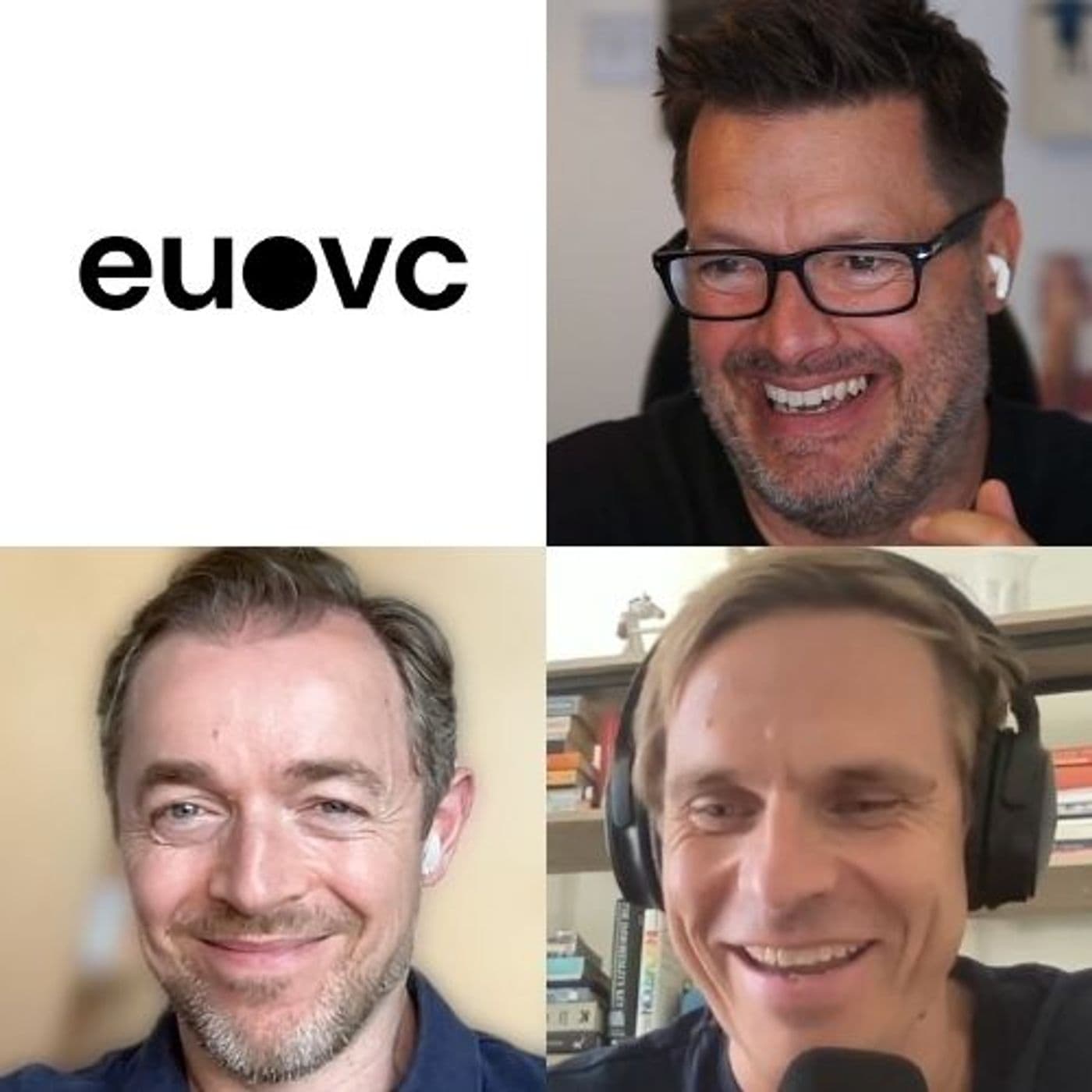
Welcome back to another episode of the EUVC Podcast, your trusted inside track on the people, deals, and dynamics shaping European venture.
This week,
and
of
and
from
, gather to unpack the macro forces and micro signals shaping European tech and venture.
They dive into the EU’s latest corporate structure reforms, the battle with resistant notaries, and the implications for startup formation and cross-border investing. Then it’s onto LLM innovation in China, valuation exuberance in AI, and the strategic shifts in capital allocation. The group finishes by zooming out on macro policy, sovereignty debates, and a cautious optimism for European tech.
Whether you’re an investor, founder, or policymaker trying to navigate Europe’s choppy regulatory waters — this one’s for you.
Here’s what’s covered
- 02:00 | Startup law, friction, and EU Inc.
- 06:30 | The SAFE envy
- 09:30 | Founders as fund managers — and vice versa
- 12:00 | From Pink Floyd to trillion-parameter models
- 17:30 | Capital efficiency and compute arbitrage
- 21:00 | UK startup ecosystem: a shadow of its former self?
- 25:00 | Fundraising cycles and trapped capital
- 28:00 | D2C health — a comeback?
- 31:00 | Crypto week in Europe?
- 35:00 | Macro clouds and haven-hunting


