
In short
EUVC Podcast Episode Summary
Episode Title
E553 | EUVC Summit 2025 | Financing the Future: Evolving the Capital Stack
Guests
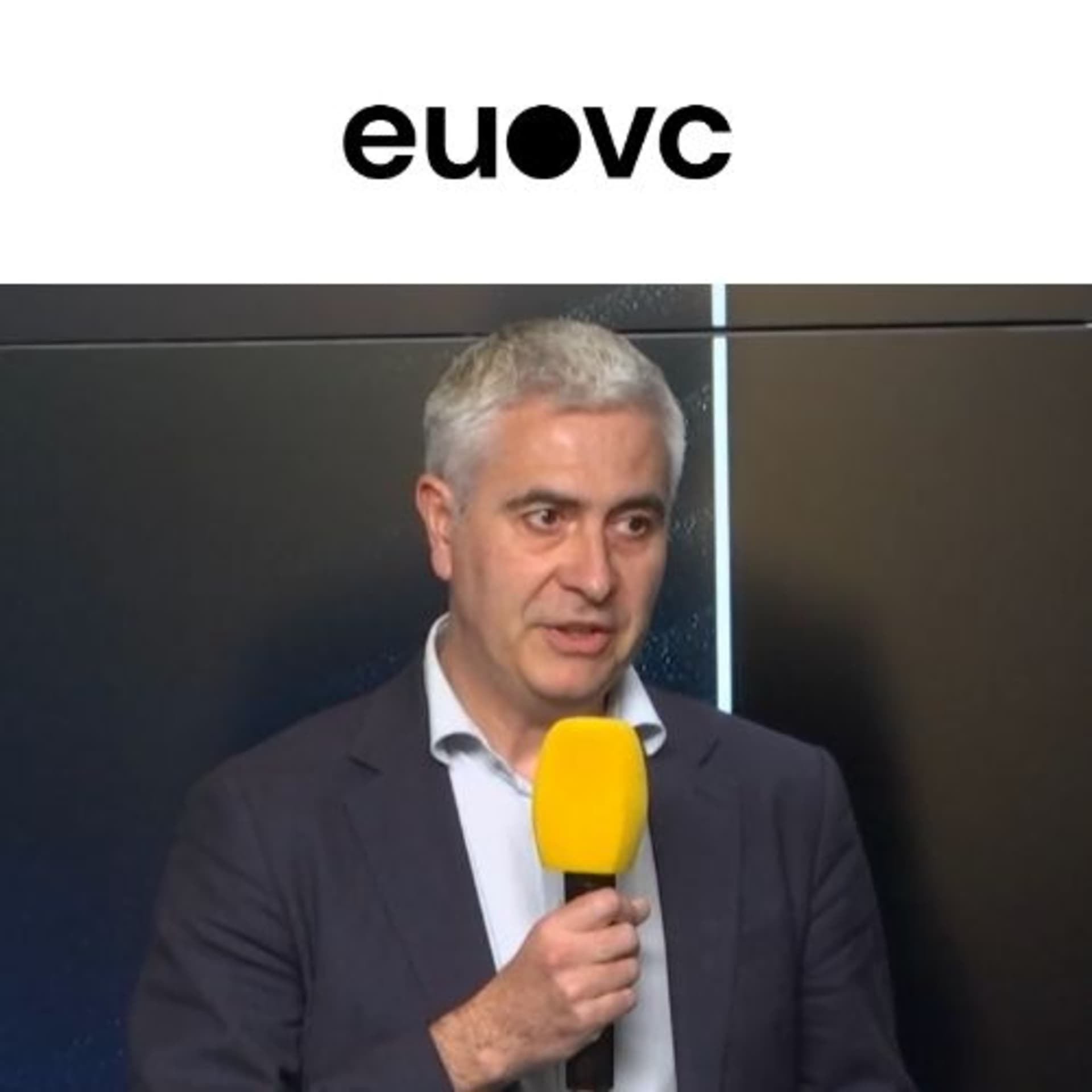
Stephen Lowery from HSBC Innovation Banking
Episode Overview In this episode of EUVC, Stephen Lowery, Managing Director at HSBC Innovation Banking, addressed the critical need for a reimagined financial infrastructure to support emerging technologies and deep tech companies. His insights at the EUVC Summit 2025 emphasized that merely providing capital is insufficient; instead, a transformative approach to the capital stack is necessary.
---
Key Themes and Discussions
- The Need for a New Financial Infrastructure
- Current Limitations: Existing financial tools and structures are outdated, primarily designed for older technology models (pre-SaaS era).
- Emerging Technologies: Fields like robotics, deep tech, and AI require tailored financial solutions that are not yet available.
- Historical Perspective on Financing Innovation
- Evolution of Software Financing:
- Transition from upfront license fees to subscription models (SaaS) enabled software businesses to predict revenues more effectively and reduce cash flow gaps.
- A parallel innovation is necessary for hardware and deep tech sectors.
- Building Blocks for the Future Capital Stack
To facilitate the next wave of innovation, Stephen proposed three foundational components:
- Blended Capital:
- Combine long-term venture equity with creative debt structures.
- Utilize revenue-based financing alongside contract support and credit insurance to mitigate risks.
- Category-Specific Models:
- Introduce concepts like 'robot-as-a-service' and 'compute-as-a-service'.
- Enable hardware businesses to monetize similarly to software companies.
- Collaboration:
- Foster partnerships among VCs, banks, LPs, and operators.
- Shift focus from merely financing innovation to creating the infrastructure enabling it.
- Call to Action for Builders
- Architects of Financial Solutions:
- Investors are encouraged to take an active role in designing financial solutions tailored to the needs of future technologies.
- Collaboration is vital to create the necessary tools for financing the industries of tomorrow.
- Finance as a Frontline Enabler
- Reframing Finance:
- Finance should be viewed not just as a support function but as a crucial element in driving innovation and growth.
- The urgency to develop new financial tools and structures to support ambitious European ventures is emphasized.
---
Conclusion Stephen Lowery’s discussion at the EUVC Summit 2025 highlighted the evolving nature of the capital stack necessary to support breakthrough innovations in Europe. His insights point to an urgent need for collaboration among various stakeholders to create a robust financial infrastructure that can effectively meet the demands of the next wave of technological advancements.
Call to Action
- Innovators and investors alike must recognize the importance of integrating financial strategy with technological development, ensuring that the necessary capital flows are established to support the growth of deep tech and other emerging sectors.
---
Acknowledgments The episode also featured acknowledgments to various partners who contributed to the EUVC Summit, emphasizing the collaborative spirit needed in the venture capital ecosystem.
Key Partners Mentioned
- HSBC Innovation Banking
- Google Cloud
- Ace Alternatives
- Hainspoon
- CW Communications
- Fundcraft, Digital Native, Full Suite, Lux Headquarter
- Portfolio IQ by Synaptic
- Goodwin
---
This structured summary captures the essence of Stephen Lowery's vision for the future of capital in innovation financing and the collaborative efforts required to realize this vision.
Written by AI. May contain mistakes. Listen to the episode to check what was said.
Transcript
Automatic transcript. May contain errors.0:00As Europe pushes to lead in deep tech, climate and frontier innovation, capital alone isn't enough. What's needed is a reimagined capital stack, flexible, layered, and tailored to the unique demands of breakthrough companies scaling across uncharted terrain. Europe's innovators need access to blended instruments, cross-border banking, and financing solutions that move at the speed of their ambition. At the forefront of this shift is HSBC Innovation Banking, helping founders and funds rethink how capital flows from first check to global scale. To explore how the capital stack is evolving and what it takes to finance the future, we're joined by Stephen Lowry, Managing Director at HSBC Innovation Banking and a key figure in shaping Europe's next financial infrastructure for innovation.
0:54Look, it's great to be here. And I just wanted to take a few words, a few moments to talk about one of those things that's often invisible before people find it to be missing, and that's the financial infrastructure to finance and build great deep tech companies. Now, venture is all about backing breakthrough technologies. So we think about things like fusion. We think about things like advanced manufacturing. We think about things like bio. But we come from a place that's worked a lot with software companies and fintech, and in many ways we need to reimagine the capital stack that is going to finance these.
1:30Working with bold founders is necessary but not sufficient. We need the tools that are going to take them there on that journey. And not all of those tools exist. The current way that we finance businesses with debt and other instruments isn't going to be able to fund the next generation of technologies alone. So over the last 20 years we've done a great job of financing software companies and fintech companies and consumer companies. These are things that are very asset-light, where there's very fast iteration in design and development, and there's a very fast sales cycle that turns revenue into profits very fast.
2:09Deep tech is very different. Long R &D cycles, slow iteration cycles, long procurement. The way that we finance fusion is not the way that we're able to finance fintech. Again, we need more tools that are able to address those, and many of those tools don't yet exist and need to be built. Now, the good news is we've been here before and need to innovate in finance. So 20 years ago, in software, for many of you who were investing then at the time, as I was, when a software business sold its product, it sold it with a license fee up front. It got three years' worth of capital, and it used that to be able to fund the working capital of the businesses as they grew.
2:54Then came the cloud, and then we sold software as a service, which is fantastic because we get much longer-term revenue streams, much more predictability in those revenues, understand churn metrics, client engagement. But one of the challenges is it created a cash-hold liquidity gap for companies, which is why software as a service financing, recurrent new revenue financing was invented and used to plug that gap and scale companies efficiently. and it's gone on to become a mature part of the financial ecosystem, funding now buyouts with ARR lending against annual recurring revenues. So there's an example of innovation.
3:28FinTech is another great place where people need to build in their financial infrastructure from day one. I was listening to an interview with Tavit, the founder of Wise, recently, and he was talking about his business. He was talking about how he had raised a billion dollars of capital to be able to scale his business. and 160 million of that was primary capital. And of that, 100 million actually was used in the building of that business to create something that was worth 10 billion of enterprise value, which is fantastic. I guess the bit that people don't see is that alongside that, to be able to build a fintech company, you need a lot of other financial infrastructure as well.
4:06And we were fortunate to be able to put together 300 million to be able to finance some of the working capital payment cycles that are required to finance those companies. So the way that we finance atoms and molecules needs to be different to bits and bytes. And we've recognized that for deep tech companies around hardware and hardware as a service. A similar idea to software as a service, but instead of allowing companies to basically sell a robot, we would allow the financing of that robot to happen so it can be turned into a revenue stream. And we see a lot of other examples in hardware that are starting to develop, whether it's LLMs and compute-based financing models to allow people to take advantage of that.
4:50What that's telling us is we need more purpose-based financing to support these companies as they grow. Now, what are the sort of things that we need to think about building to fund these industries of the future? Well, the first thing is blended capital. We need to look at how we fit together long-term patient venture equity, alongside debt to be able to support contracts and revenue streams, along with things like credit insurance and guarantees to be able to underpin the risk of those projects. And those need to come together into a specific package. We need tools like first-of-a-kind financing to be able to take new technologies through from design, development, and into full-scale manufacturing.
5:34And we've seen that to some degree in the UK. We've been involved in a couple of carbon-captured storage facilities, where actually that's been a really important part of getting these technologies off the ground. We need things like specialist project finance. We saw this through the solar revolution, through the wind revolution, where, again, people were taking a risk on these at the first point in time. Now, the good news on all of this is there are plenty of assets around. So we think about fundraising for venture capital, but there's a lot of assets in the world. There's a lot of assets in Europe.
6:06It's just they need to be in the right place. People like pension funds, people like insurance companies, they have very, very long-term liabilities. and long-term assets that are able to pay a return over a long period of time are a great thing for them. Asset intensity is fantastic if you're looking after tens and tens of billions. It's all about how we're going to bridge that from where we are today with equity into these long-term developed mature capital markets. And for founders, it's not just about therefore engineering the financial roadmap. Sorry, not just about the technology roadmap, but also backing that up with the financial roadmap as well.
6:43So it's about understanding what type of capital they need for this phase of the journey. When do they need it? How do they de-risk their access to it for when it comes? And then how do they blend all of this together? And this comes back to the role of the investors and people like us in that journey as well. Because we're not just a financier. We need to be a design partner in the architecture of those businesses. And where those things don't exist, we all together need to work to build them. If a company we know is going to require billions of capital or hundreds of millions of capital to build hundreds of millions of revenue, people need to know where that capital is going to come from as they set off early in their journey.
7:27So what are the things that we should be thinking about as investors? Well, the first thing is be aware of the tools that are already out there to be able to finance companies. the second is to be able to work closely at the early stage to be able to develop that capability and understanding within businesses whether that's bringing in financial talent that's got experience of structuring or whether it's just making sure it's modeled so people know where that future capital could come from and then the third is around working to help together build some of those solutions that we need for the future so the future is not going to finance itself We're going to need to work together in partnership to build these.
8:07And let's do more than just financing innovation. Let's build a financial infrastructure that we all need to finance the future today. Thank you. Before you go, I just want to give a massive shout out to the partners who made the EUVC Summit and Awards possible. So please do not tune out. We're partnering with these firms because they're great people with offerings that we know from our friends in the ecosystem are truly world class. First up, I want to give a big thanks to HSBC Innovation Banking. They helped us incept the awards in the very beginning. And truly, they are the leading bank for anyone in European venture.
8:42There's a reason why everyone knows them. Google Cloud, they were our venue hosted the summit. What a team, what a big effort they put on to help us. We're hugely grateful. Make sure to reach out to Arabella or Oksana at the Google Cloud team to hear how they can help you as well as your portfolio. massive credits goes to them. Ace Alternatives, we have so many friends in the Berlin ecosystem partnered with these guys. Just the best fund ops team around. And as with any good restaurant, where the locals are is also where you get the best service. And now they're expanding across Europe. So they're definitely someone to talk to.
9:19Hainspoon, they're longtime partners of ours in both our own legal work. They're great supporters of us here at EUEC. And I definitely think that they are one of the go-to legal teams to have in your corner. CW Communications, our dear friends who helped us secure CNBC, Bloomberg, Financial Times, and many more for this summer. It's a joy working with Dan and Kathy and the team. Fundcraft, Digital Native, Full Suite, Lux Headquarter, and a great partner as you grow your firm out of Luxembourg. Definitely a fund admin to consider in your stack. I can only say that the team are incredible to work with.
9:55I'm very thankful that I've gotten to know them. I think they're one of the up and coming fund admins that you want to be thinking about. Portfolio IQ by Synaptic. You may know them for the Discover tool, which is branded on a Synaptic, but Portfolio IQ is absolutely a product you should know because there's no one that understands intelligence better than this team. And finally, Goodwin. They are a truly world-class legal partner you can trust. They're hands-on, business-oriented, an expert in everything and anything transatlantic. So those were our partners for the summit and awards. I know this might've been a bit long and boring, but really, if you have these guys on your side, I don't think your firm could be in any better hands.
10:36And also they're helping us do what we're doing every day for you.
From the publisher
At the EUVC Summit 2025, Stephen Lowery of HSBC Innovation Banking laid out a vision that wasn’t just about capital—it was about building the infrastructure to unlock the next wave of innovation.
“The future is not going to finance itself.”
And the tools we need? Most of them don’t exist yet.
We’re entering a new era—one where emerging categories like robotics, deeptech, AI hardware, and compute-intensive models demand new forms of financial support.
But most of our current instruments were built for a different generation of tech.
Stephen reminded us of the pre-SaaS era, when software businesses lived and died by upfront license fees. It wasn’t until financing models evolved that subscription software (and eventually SaaS) could flourish.
“Just like we innovated in software 20 years ago, we need to do the same now—in hardware, robotics, and beyond.”
Stephen called for three key building blocks:
Blended Capital
→ Mix long-term venture equity with creative debt structures
→ Pair revenue-based financing with contract support
→ Add credit insurance into the mixCategory-Specific Models
→ Think robot-as-a-service, compute-as-a-service
→ Let hardware businesses monetize more like software onesCollaboration
→ VCs, banks, LPs, and operators need to co-build
→ “Let’s do more than finance innovation—let’s finance the infrastructure that enables it.”
Stephen’s message wasn’t just for investors. It was for architects—those willing to help engineer the future of capital itself.
“We need to work together in partnership to build the tools that will finance the industries of tomorrow.”
Finance is no longer a back-office utility. It’s a frontline enabler of innovation.
And if we want European ventures to lead the next wave—we need to start building the financial rails today.
The Problem: Our Financial Stack Is OutdatedWhat We Need: Purpose-Based Financing for a New AgeA Call to Builders (Not Just Founders)


