
In short
EUVC Podcast Episode Summary
Episode Information
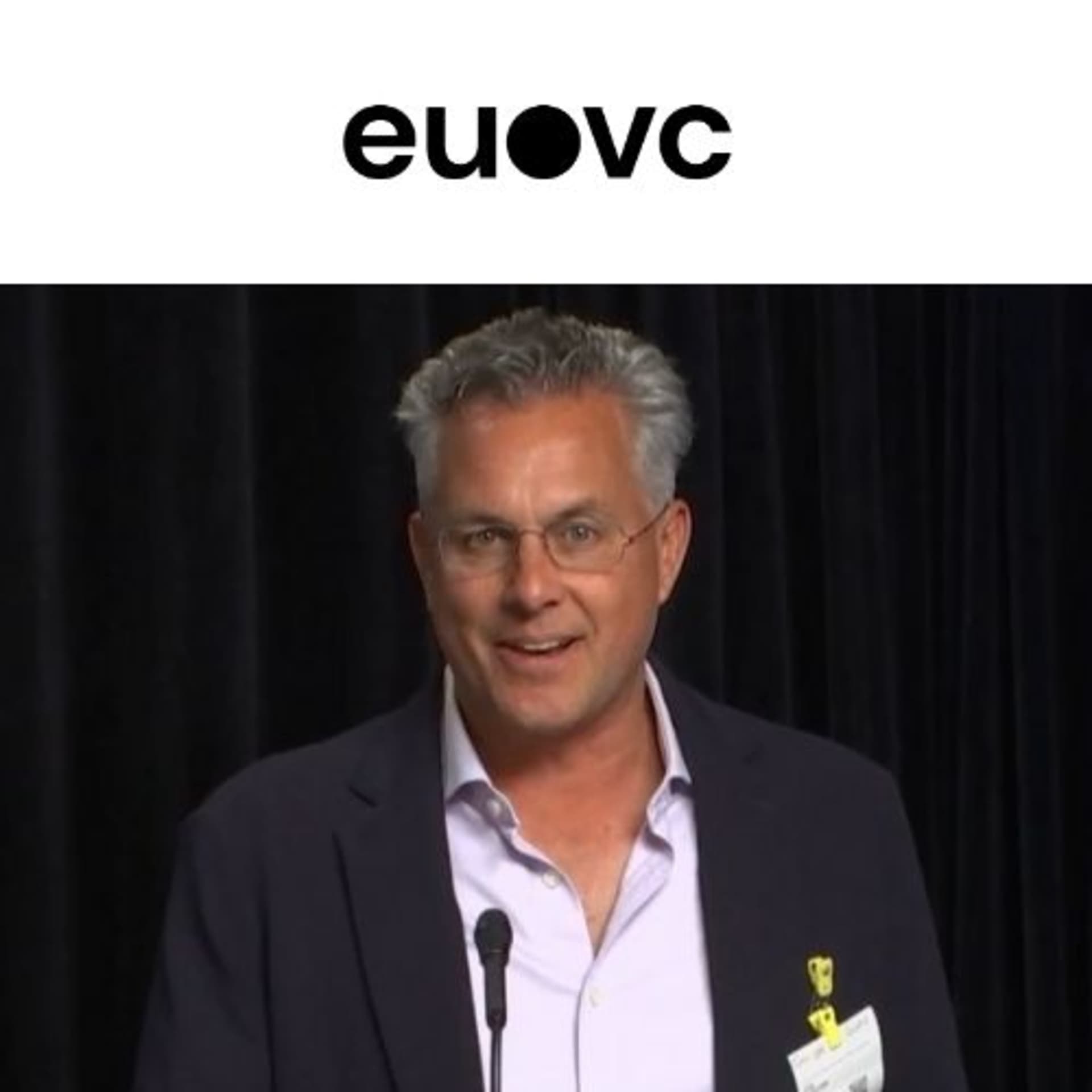
- Title: E554 | Joe Schorge, Isomer Capital: Winning in European Secondaries (EUVC Summit 2025)
- Hosts: Andreas Munk Holm and David Cruz e Silva
- Guest: Joe Schorge, Founder and Managing Partner of Isomer Capital
- Event: EUVC Summit 2025
Episode Overview In this episode, Joe Schorge discusses the evolution and significance of the secondary market in European venture capital. Using a metaphor of orchards and fruit harvesting, he highlights the current state of European tech and the necessity of adopting secondary sales as a strategic tool for liquidity and growth.
Key Concepts and Arguments
The Metaphor of Orchards
- Joe presents the idea of European tech as a bountiful orchard that has been cultivated over 12 to 14 years.
- The metaphor emphasizes that while there is a high volume of successful venture-backed companies, the ability to sell or exit these investments is currently challenged due to a closed exit market.
Current State of the Market
- High-Quality Portfolio: Europe boasts more high-quality venture-backed companies than ever before.
- Challenge of Exits: Despite abundance, the market for exits (M&A and IPOs) has been largely inactive for three years, inhibiting returns for investors.
- Necessity of Secondaries: Schorge argues that secondary transactions are not just a workaround but provide essential liquidity for founders, GPs, and LPs.
The Case for Secondaries
- Increase in Supply: The market currently has more to buy (mature companies, vintage funds, GP stakes) and sell (GPs needing liquidity, LPs rebalancing).
- Changing LP Expectations: Limited Partners (LPs) are looking for distributions (DPI) rather than just returns on investment (IRR).
- Investment Strategy: Schorge emphasizes the importance of viewing secondaries as a strategic tool for managing liquidity and capitalizing on ripe investment opportunities.
Recommendations for Stakeholders
- For Limited Partners (LPs):
- Loosen restrictions on secondary transactions to facilitate liquidity.
- Support capital that enables these transactions.
- Understand that secondaries can help achieve meaningful progress, not just shortcuts to exits.
- For General Partners (GPs):
- Educate themselves on the mechanics of the secondary market.
- Review their portfolios to identify ripe opportunities for exit.
- Engage with secondary players to explore potential transactions.
- For Government Investors:
- Recognize the importance of secondary capital and consider including it in funding strategies.
- Promote the use of secondary transactions as a standard practice to enhance market liquidity.
Steps to Winning in the Secondary Market
- Self-Education: Familiarize oneself with available resources online regarding the secondary market.
- Portfolio Assessment: Identify which investments are ready for exit and their potential impact on overall portfolio performance.
- Networking: Engage with other players in the secondary market to explore opportunities.
Closing Thoughts Joe Schorge encapsulates his vision with a call to action: "Let’s harvest, replant, and build the future together." He emphasizes the need for discipline in the harvesting process and preparation for the next cycle of investment.
Key Takeaways
- The European venture ecosystem is ripe for secondary sales, and GPs must adapt their strategies accordingly.
- Exits are not automatic; proactive management of portfolios is crucial to realizing returns.
- The secondary market is growing and presents unique opportunities for liquidity and investment.
Conclusion This episode of EUVC highlights the critical transition in European venture capital towards embracing secondary transactions as a means to foster liquidity and enhance investment returns. Joe Schorge's insights provide a roadmap for stakeholders to navigate this evolving landscape effectively.
Written by AI. May contain mistakes. Listen to the episode to check what was said.
Transcript
Automatic transcript. May contain errors.0:00As Europe's venture capital ecosystem matures, secondary markets have become essential not just for liquidity, but as strategic levers reshaving Europe's competitive competitive edge. globally. Where do you find the most value abroad? Well, we've seen Europe outperform in a significant way, and that's effectively what has occurred year to date. Europe has outperformed the U.S. in large cap. Joe Schorge, founder and managing partner of Isomer Capital, sits at the nexus of this transformation as Europe's most active VC fund-to-fund, deploying over 100 million euros into secondary investments. Okay, I'm an optimist, but I believe that if we choose to, we can solve the big problems like poverty, like climate, like disease and other major problems in the world today.
0:46It's a question of how we apply our time and our effort and our money. In a landscape marked by volatility and shifting investor dynamics, secondaries aren't just transactions. There's strategic moves that can define the next era of European tech leadership. With his unparalleled insight and extensive track record, Joe Schorch is uniquely positioned to chart the path to winning in this dynamic market. Well, let this be a lesson to you. Be careful what you say in front of the EUVC guys because they will put it on a big screen one day soon. On a serious note, thanks guys for getting us together today.
1:28This is a really cool event. I love this format, I have to say. It reminds me of the early days of Superventure, and I love the people in this room. Part of the reason I got into this business was that I could work with people like you, spend my days on big ideas, and this is great. So I wrote down what I want to say because if I don't, I will wander off and tell you a story about someone I met in the lift or whatever. So I'm going to stay uncharacteristically on track. It's a pleasure to be here today at the summit. The guy has asked me to talk about winning in secondaries in Europe. This is a hot topic right now.
2:10It's hotter than 10 minutes can really serve well. So if you'll come along with me for a moment, I would prefer to start by talking to you about fruit and farming. I didn't bring any slides to show today because I know something about the powerful imagination and vision of the room. Therefore, if you would take a little walk with me, use your mind. Do you like apples or oranges? Orange. Clear. Somebody decisive. So picture, you can have either one. I'll give you either one. Picture in your mind an apple or an orange, your favorite, and picture really the best example of one, a beautiful one that you'd love to eat next time you eat one of those.
3:01Now picture a tree that's full of that. Now picture a field that's full of those trees. Now picture a farm that's full of fields. Can you see that in your mind? Not London and cars and tubes, but really, don't look at me. Picture the field.
3:27It looks good. It smells good. It's good for you. Now imagine those fields stretch into the distance, far beyond where your eyes can actually make out. That's my view of European tech, venture capital today. When I look across the UK and Europe, I see fruit that has grown over the last 12 to 14 years. So much has grown that I believe today we have more great VCs and more great tech companies than ever before in the history of Europe. I guess you would agree with that. That's great. The volume and the variety of European tech companies is greater than has ever existed before in the whole history of Europe.
4:13Think about that. That's amazing. Right? I mean, congratulations to you who contributed to building that. And isn't it an amazing time to build and to invest into that? We're pretty lucky. However, there's always a but coming, right? However, exit markets have been mostly closed for almost three years now. And not all that fruit on the tree is ready for harvest, but a lot of it is. And we haven't been able to sell a lot of that. We're all struggling in that way, or most groups are. So that's why secondaries are a hot topic right now, because in the absence of a vibrant M &A market and an open IPO window, we're looking for how can we exit great companies and return capital and move on.
5:04And so just a definition, people always ask me, what do I mean by secondaries? Companies or funds? Yes, all of it. I mean, something that someone owns and wants to sell, which could be company stakes or fund positions or GP economics or blends and derivatives of all of that. But, Joe, I hear you say, I need to hold my winners to the end to capture all the upside. That's what we all learned in BC school and what you read online. And it's true. Of course. Of course you have to hold your winners and capture all that upside to a point. and within a fund management context. Today, in 2025, we're all suffering from this lack of exits, a lack of DPI in our funds, and in many cases, a lack of fresh capital to invest.
5:56There are groups today going out to raise Fund 4 and haven't really returned much of Fund 1 yet. That's tough. That was not the original plan, and that is a tough situation for everybody around the table, including the LPs there. They're asking for fresh capital. So when I think about the open exit markets, the last one we had in 20 and 21, I recall that a lot of investors, VCs and others, neglected the harvest work. I remember at that time talking to a lot of people who took their job as planting, nurturing, growing great fruits, if you will, growing great companies, but somehow magically expecting that that fruit gets to market and is sold and it all works.
6:47Some people sold things, of course, and later they found fundraising a bit easier, but many did not sell, and that leads to the pressure of today. So here we are in 2025 with ripening tech fields, if I can torture my analogy a bit longer. Lots of great companies are ready to go to market when it reopens. And even more, some of those fruits have grown so big that you need a special truck to take it away. There's only a few trucks in the world that can take away some of those big fruits. But please, I can say to this room, let's not make any more special acquisition trucks to take away those, if you don't mind.
7:32So where do secondaries come into all of this? Well, in the right cases, partial or full sales are good for everyone. There have not been many secondary buyers in Europe over the last 10 years, and I think that's a simple function of the maturing of the market. But they're coming, they're growing all the time, there are a bunch, and more are launching. So to my VC friends in the room, what I'd say is please think about your farming duties. You need to source to develop great companies, but you also need to sell. You're not only a planter, you're an asset manager. And I would encourage you to investigate routes for selling assets that have grown greatly.
8:15Perhaps you could sell part and have a material impact on your fund, or you could sell all of it. and these companies need to find a new home. Buy and hold is great, but we're all running 10-year funds. To my LP friends, you want cash back. We know that. But at the same time, today's market offers two great opportunities for you. Firstly, you can use the growing secondary market for liquidity. In the U.S. and in the private equity markets, secondaries are a common tool used for portfolio management, and it's time to adopt more of that in Europe. Secondly, if you are in a position to provide liquidity, you can pick up some wonderful fruit in the market at wonderful prices today.
9:01Buying in this way has less risk and a shorter time to get to a natural exit. So buying secondaries can have a lot of value in your portfolio. So finally to come to the topic they asked me to talk about. So how can you win? Well, like everything else, You have to put some work in on it. Review your portfolio to see what might be ready for a partial or full exit. Check the market pricing and see if that sale would have a material effect on your funds or your portfolio. There's no reason to sell just for selling sake. However, the right deal at the right time can have a really win-win for everybody around the table.
9:42Finally, to the government investors that provide about 40 % of the capital in European venture, please consider secondary capital. Dedicated funds or even portions of VC funds as a mature financial tool that the market needs. Increased liquidity will help the system prosper. and I would ask you not only to reconsider the restrictions you put on funds for doing secondary components but also encourage you to support secondary capital. So how do you start and anyone thinking about secondaries and I talked to a couple already in the room. As usual there's a mountain of educational stuff online, debate and the rest of it as always.
10:31Start there and then look at your own portfolio and then come talk to somebody like us or or come talk to another secondary players there's a lot of growing firms in this area so that's it um let's harvest replant and build the future together before you go i just want to give a massive shout out to the partners who made the evc summit and awards possible so please do not tune out we're partnering with these firms because they're great people with offerings that we know from our friends in the ecosystem are truly world-class. First up, I want to give a big thanks to HSBC Innovation Banking. They helped us in SAP the awards in the very beginning and truly they are the leading bank for anyone in European venture.
11:14There's a reason why everyone knows them. Google Cloud, they were our venue hosted the summit. What a team, what a big effort they put on to help us. We're hugely grateful. Make sure to reach out to Arabella or Oksana at the Google Cloud team to hear how they can help you as well as your portfolio, massive credits goes to them. Ace Alternatives, we have so many friends in the Berlin ecosystem partner with these guys, just the best fund ops team around. And as with any good restaurant, where the locals are is also where you get the best service. And now they're expanding across Europe, so they're definitely someone to talk to.
11:51Hainspoon, they're longtime partners of ours in both our own legal work. They're great supporters of us here at EUBC and I definitely think that they are one of the go-to legal teams to have in your corner. CW Communications, our dear friends who helped us secure CNBC, Bloomberg, Financial Times and many more for this summer. It's a joy working with Dan and Kathy and the team. The Fundcraft, Digital Native, Full Suite, Lux Headquarter and a great partner as you grow your firm out of Luxembourg. Definitely a fund admin to consider in your stack. I can only say that the team are incredible to work with.
12:27I'm very thankful that I've gotten to know them. I think they're one of the up and coming fund admins that you want to be thinking about. Portfolio IQ by Synaptic. You may know them for the Discover tool, which is branded under Synaptic, but Portfolio IQ is absolutely a product you should know because there's no one that understands intelligence better than this team. And finally, Goodwin. They are a truly world-class legal partner you can trust. They're hands-on, business-oriented, an expert in everything and anything transatlantic. So those were our partners for the summit and awards. I know this might have been a bit long and boring, but really, if you have these guys on your side, I don't think your firm could be in any better hands.
13:07And also they're helping us do what we're doing every day for you.
From the publisher
At EUVC Summit 2025, Joe Schorge of Isomer Capital didn’t come with slides—he came with a metaphor. And it stuck.
He asked the room to imagine orchards of fruit. Not just apples or oranges, but a whole harvest cultivated over 12 to 14 years. Venture-backed companies. GPs. Fund positions. GP stakes. A record crop, grown with care across the UK and Europe.
“We’ve never had this much high-quality fruit in European venture. The question now is—how do we get it to market?”
For years, Europe has been laser-focused on planting:
→ Backing great founders
→ Building great firms
→ Cultivating portfolios patiently
But as Joe reminded the audience:
“People expected the fruit to somehow sell itself. But we’ve learned: exits aren’t automatic. Distribution isn’t easy. And not everyone has the truck to move a watermelon.”
Secondaries aren’t just a workaround. They’re a solution. Partial or full sales, done right, serve founders, GPs, and LPs alike.
The market is waking up:
There’s more to buy than ever before: mature companies, vintage funds, GP stakes
There’s more to sell than ever before: GPs needing liquidity, LPs rebalancing
There’s more need than ever before: LPs want DPI, not just IRR
“We’re all running 10-year funds. Buy-and-hold sounds noble, but LPs want cash back. And founders want momentum.”
Joe’s message to LPs?
→ Loosen your restrictions on secondary transactions
→ Back the capital that makes liquidity possible
→ Recognize that secondaries are a tool for progress, not shortcuts
Joe kept it simple:
Educate yourself – There’s a wealth of info online. Learn the mechanics and the nuance.
Look at your own portfolio – Where’s the fruit starting to ripen?
Talk to players in the space – From Isomer to a new wave of specialized secondary platforms, this market is growing fast.
“Let’s harvest, replant, and build the future together.”
Secondaries aren’t just about exits. They’re about creating circulation, maturity, and movement in a market that’s ready for it.
European venture has planted well. Now it’s time to harvest with discipline—and get ready to sow the next cycle with even more conviction.
Planting Was Easy. Harvesting Is Hard.The European Secondary Market: Why Now?Where to Begin?A New Era of Venture Hygiene


