
In short
EUVC Podcast Episode Summary
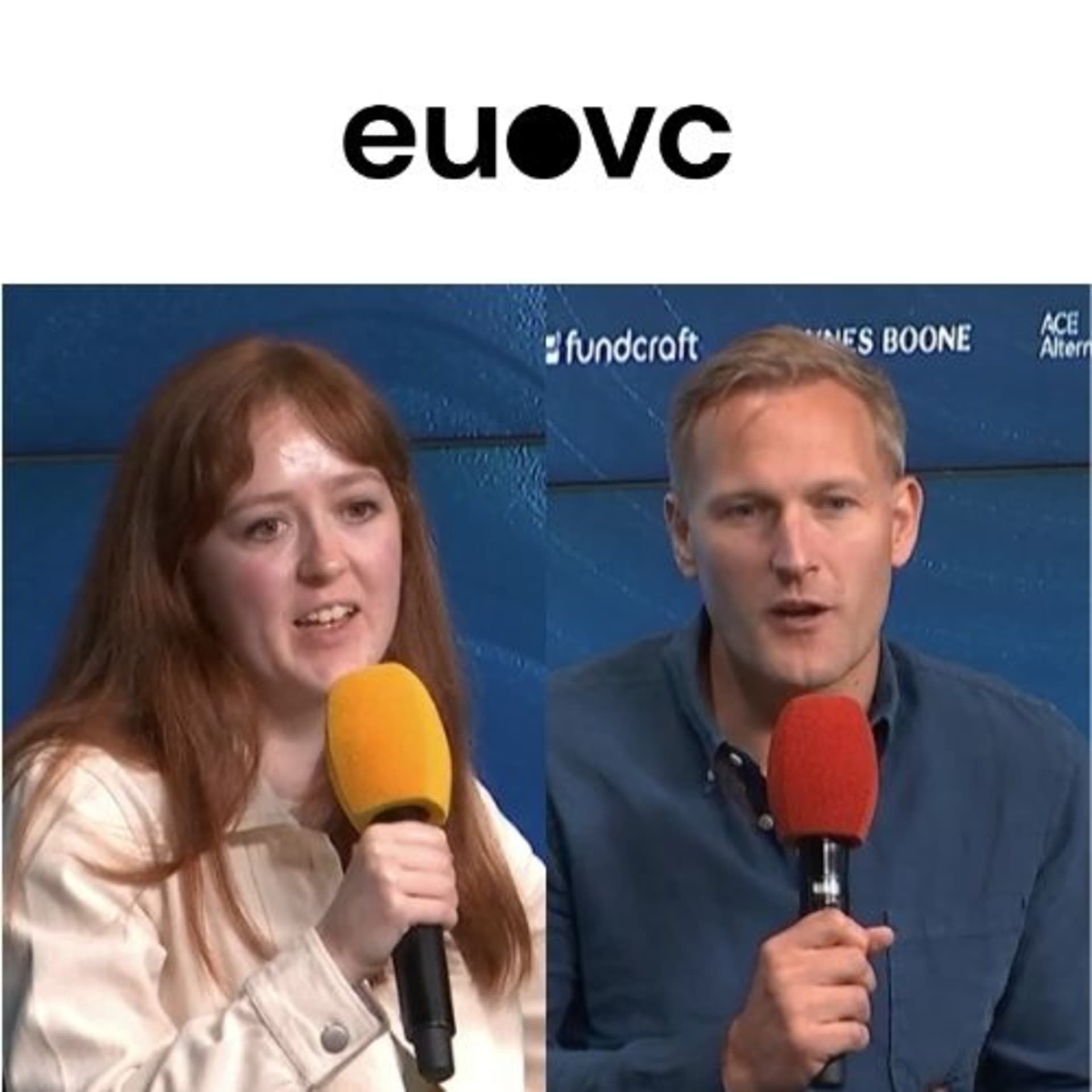
Episode Title E564 | EUVC Summit 2025 | Christian Meermann, Cherry Ventures & Elsa Deseilligny, Cambridge Associates: The Next Generation of European VC Franchises
Episode Description In this episode, Christian Meermann from Cherry Ventures and Elsa Deseilligny from Cambridge Associates provide insights into building enduring venture capital firms while keeping the founder's success at the forefront. They discuss the evolving landscape of European venture capital and the importance of maintaining a strong mission and intentional scaling.
---
Key Themes and Concepts
- Founders First Philosophy
- Core Principle: Cherry Ventures operates under a "Founders First" model, emphasizing the importance of placing founders at the center of their focus.
- Quote: "Putting the founder at the center—doing everything to make them thrive—that’s the foundation of how we build." - Elsa Deseilligny
- This principle influences all strategic decisions made by the firm, ensuring that every action taken supports founder success.
- Challenges in Scaling
- Tension in Growth: Christian addressed the dilemma of how large VC firms can grow without losing their competitive edge or distinctive character.
- Institutional Footing vs. Dilution: Scaling can lead to professionalization but may dilute the uniqueness of investment strategies. The goal is to find a balance between growth and maintaining a clear, repeatable strategy.
- Engaging with Limited Partners (LPs)
- Stakeholder Relationships: Strong relationships with LPs are crucial. Regular communication, including quarterly calls and one-on-one meetings, fosters trust and collaboration.
- Feedback Loop: Seeking advice from LPs can lead to valuable insights, although it’s essential to maintain independence in decision-making.
- LP Perspective: Often, LPs prefer smaller funds due to historically higher returns, but there’s a need for enough scale to ensure a repeatable strategy.
- Market Dynamics
- Evolving Landscape: The venture capital market is changing, with a divide emerging between large AUM-driven platforms and smaller, agile firms.
- Emerging Managers: There’s a growing interest in emerging managers who demonstrate agility and adaptability in their investment strategies.
- Building a Lasting Firm
- Intentional Growth: The emphasis is on scaling with a purpose rather than for the sake of growth. Intentionality and mission-driven development are key to fostering a resilient firm.
- Sweet Spot: A successful strategy combines adequate scale with the capacity to remain differentiated and competitive without overextending.
---
Key Takeaways
- Prioritize Founder Success: Building a venture capital firm around the needs and success of founders is essential for long-term sustainability and success.
- Maintain Relationships with LPs: Consistent communication and engagement with LPs can enhance trust and strategic alignment.
- Be Mindful of Growth: While scaling is necessary, it must be handled with caution to avoid compromising the firm’s identity and effectiveness.
- Adapt to Market Changes: Understanding market dynamics and positioning within the venture ecosystem is crucial for emerging managers looking to establish themselves.
---
Conclusion This episode of EUVC provides a nuanced view of the European venture capital landscape, emphasizing the importance of founder-centric approaches, strategic scaling, and robust LP relationships. Christian Meermann and Elsa Deseilligny share valuable insights for both emerging and established funds aiming for long-term success in a rapidly evolving market.
Written by AI. May contain mistakes. Listen to the episode to check what was said.
Transcript
Automatic transcript. May contain errors.0:00As Europe's venture capital landscape evolves, uncertainty defines the moment. A tightening capital environment, driven by an LP financing crunch and more cautious allocation strategies, has created a proving ground for emerging managers. Today, it's not just about backing bold ideas, but about surviving prolonged fundraising cycles and demonstrating staying power. Is European venture headed for a clear split, with giant AUM-driven platforms dominating one end of the spectrum, leveraging infrastructure and global reach, while nimble solo GPs carve out the other, defined by sharp theses, speed, and personal brand?
0:43Or will there be room for a resilient middle ground, firms that combine the scale of institutions with the adaptability of insurgents? To explore how the next generation of VC franchises is being forged and what it takes to win in this fragmented and demanding environment, we're joined by Christian Miermann, founding GP at Cherry Ventures, Elsa De Signale, senior investment associate at Cambridge Associates. So my job is just to moderate this talk and I hope that I don't have to speak much. So a panel, 10 minutes panels are really hard to do. So Christian, we were chatting a bit yesterday and I was commenting, it feels like to me that Cherry's been around for ages, but it's actually less than I thought.
1:28And here we are in a panel saying Cherry's a franchise and you're saying it's a bit overwhelming. But tell us a bit about what did you do right in the firm to actually scale it to what it is today? Yeah, look, I think we're doing this for eight years now. So, you know, on the one hand, it feels like we're doing this for quite some time. On the other hand, it still feels very young, also compared to other firms that are around for longer. I think what helped us is always see this as we're building a firm and not a fund, right? So we see this as a very kind of long-term endeavor and always thought about, okay, what does it take for us to build kind of a great brand?
2:06Because we believe that is kind of important. And then stay true to our DNA, right? and our DNA is that we are entrepreneurs by background, all of our partners are, and that's also in the end how we win deals, how we convince founders, because we've been on their side, know how it is to scale a company. And I think always staying true to that has helped us a lot. And then I think the mantra of founders first, which is one of our big models, that helps putting the founder in the center, doing everything to make them thrive, and always being reminded of that. And then also, if you think about building out the firm further, like what can we do that helps the founder's first mission and makes it an even better platform?
2:49You just had a talk about firm building, consolidation, etc. What's the hardest part? What has been the hardest part for you? Yeah. Look, I think generally switching from operator to investor, I think the toughest is how long feedback cycles are in investing. So as an operator, as a CMO at Zalano, so if you spend, I don't know,$2 million on marketing today and you put it in the wrong channel, you know it pretty much tomorrow. So you can just correct your mistake and you move on. As an investor, it's very different. So if you invest today, the money is gone. It has left your bank account. Worst case, it never comes back.
3:29So you need to be way more cautious, way more thoughtful, more kind of long-term thinking than if you're an operator. And I think that's, I would say, the biggest difference in the end. Elsa, you've witnessed the cherry story from the other side of the table, but also you've witnessed many stories or similar ambitions at least. What would you add to this? What do you think allows for funds and firms to become a franchise? What do you see from your perspective that actually makes you excited with these companies, with these firms? Yeah, I mean, I would say this might sound pretty basic, but what we look for and what we want to see in VC funds is at every turn in the scaling journey, at every decision you have to make, always asking yourself as a VC, is this going to enhance fund level returns?
4:23And if the answer is no, then don't do it. Now, there's many different ways that that can happen, but just really focusing on that and on maintaining your right to win. It doesn't really matter what your right to win is. as long as it's there and as long as you're scaling, you're making sure that you're not losing that. So, for example, in Cherry's case, the kind of operator turned investor focus, then that's what really matters. I would say also one thing that VCs could probably do more of is if you've got an LP base and they've probably seen people scale so many times and seen people make the kind of mistakes or the right decisions that you're thinking about.
5:10So when you're on your kind of scaling journey as a VC, one of the best things that you could do is go to your LP and actually just ask for feedback. You don't have to take the advice. You know, we're not VCs and we know it. We don't know everything. But yeah, ask your LP. They'll probably give you a few points to chew on, whatever the question is. And also LPs love nothing better than to be asked for advice by their managers. So, you know, it'll be a great ego boost for them. You'll be in their good books. Can I build on that? Because you're hinting a bit into relationship building as well, in a way.
5:50You are in some ways, or the company you're representing today, in some firms, the best LP that scales with your firm, right? Do you have any advice for those that want to build relationships with LPs like yourself? What matters to you as you think of an early relationship with typically a more emerging, still somewhat established, but yet all the way up until building a long-term relationship? How do you think about that? Any tips you have for that? I mean, if you put yourself in my shoes, Cambridge is mostly an advisor. So we, at the end of the day, have to look our clients in the eyes and tell them, you should invest in this VC because of this, this and this.
6:36So we need to understand what the differentiating factor is. And I think really getting what your, as I mentioned earlier, right to win is and focusing on that, that's really what's going to make the difference vis-a-vis LPs in the end. Christian, same question. Yeah, look, I think in the end, it is important to always kind of have good exchange with your LPs. I think it's not that you go there every three years when you raise a new fund, get some money in, and then three years later you show up again. I think the way we look at this is a constant exchange. We have quarterly LP calls plus kind of one-on-one meetings with some LPs.
7:21Also, a bit depending on what they want. I think some are kind of more hands-off. Others want to be more involved. But I think, yeah, asking for advice. And then, as I said, I think chew on it. I also wouldn't say always do exactly what LPs tell you, right? Because in terms of fund size, there's always a bit of a natural conflict that kind of LPs would always love to stay at exactly the same fund size, but then how can you grow, right? And also I remember when we expanded to London and opened an office here, there were also a few LPs saying, hey, why the hell London? Like it's a crowded market.
7:57What's your right to win there? Why are you going there? But, yeah, in the end, we're super happy that we did it. It works extremely well for us. So, you know, you need to carefully decide kind of how you then take that feedback. But there's always something to it that you take into account. So you said something about LPs that don't necessarily want you to grow, right? Guide us through the narrative for Cherry, right? Because that might be interesting. Yeah. So, look, maybe why do LPs not want you to grow, right? Because obviously kind of smaller funds have higher returns, right? So therefore, the bigger you get, the more kind of go your returns usually down.
8:37I think there's 100 statistics about that. And then, so that's the IP view, right? On the other hand, how we saw it is the first fund we had was 150 million. We're now in a 500 million kind of fund generation. And to get there, what we saw is also the market is evolving, right? So what used to be a seed round eight years ago when we started, that was a two to three million round, is now suddenly, if it's a team of serial entrepreneurs, it can be like an eight to ten million round. And then we say, hey, we want to be the leading kind of seed firm. So that means we need to be able to lead these rounds.
9:12And if you then do the math of you want to have 35 to 40 companies and a fund, you want to be able to lead these eight to ten million rounds. If they happen, it's also not kind of every round like that. that gets you then kind of to the fund size where it still makes sense right and i think then in the end it's a question of being very disciplined when you are in the fundraise and you get more demand than you had actually planned then not go all the way and say yeah sure i'll take all the money in then i have more management fee and it's amazing that will definitely ruin kind of your returns and and and will also crash with your strategy also can i ask you to comment christian said it um then built on it like smaller funds high returns data out there how do you think about it yeah for sure so i mean as christian said there's a lot of data out there i think the the way cambridge associates sees it is that there's kind of a little bit of a sweet spot in terms of staying small but where your strategy is still repeatable so for us we need to see a certain amount of scale and a certain amount a certain amount of sort of institutionality of the manager where we can, as I said earlier, go to our clients and say, we think this is going to, you know, repeatedly produce our performance because of X, Y, and Z.
10:28But you don't want to scale beyond a certain point. So I think a lot of what Cambridge Associate does in the VC market is look for emerging managers, precisely for that reason, so that we can sort of, you know, start when the manager is still small and then kind of scale to that sweet spot where it's a fund size where you are an institutional manager the success is repeatable but at some point ideally they stop increasing the fund size and it sort of stays there and then you're kind of one of the lucky few that found the manager before everyone else did and now no one else can get in and you can have a laugh and say, Tihi, I knew it.
11:09Before you go, I just want to give a massive shout out to the partners who made the EUVC Summit and awards possible. So please do not tune out. We're partnering with these firms because they're great people with offerings that we know from our friends in the ecosystem are truly world class. First up, I want to give a big thanks to HSBC Innovation Banking. They helped us incept the awards in the very beginning. And truly, they are the leading bank for anyone in European venture. There's a reason why everyone knows them. Google Cloud, they were our venue hosted the summit. What a team, what a big effort they put on to help us.
11:45We're hugely grateful. Make sure to reach out to Arabella or Oksana at the Google Cloud team to hear how they can help you as well as your portfolio. Massive credits goes to them. Ace Alternatives, we have so many friends in the Berlin ecosystem partnered with these guys, just the best fund ops team around. And as with any good restaurant, where the locals are is also where you get the best service. And now they're expanding across Europe, so they're definitely someone to talk to. Hainspoon, they're longtime partners of ours in both our own legal work. They're great supporters of us here at EUEC, and I definitely think that they are one of the go-to legal teams to have in your corner.
12:24CW Communications, our dear friends who helped us secure CNBC, Bloomberg Financial Times and many more for the summer. It's a joy working with Dan and Kathy and the team. Fundcraft, Digital Native, Full Suite, Lux Headquarter and a great partner as you grow your firm out of Luxembourg. Definitely a fund admin to consider in your stack. I can only say that the team are incredible to work with. I'm very thankful that I've gotten to know them. I think they're one of the up and coming fund admins that you want to be thinking about. Portfolio IQ by Synaptic. You may know them for the Discover tool, which is branded on a Synaptic, but Portfolio IQ is absolutely a product you should know because there's no one that understands intelligence better than this team.
13:08And finally, Goodwin. They are a truly world-class legal partner you can trust. They're hands-on, business-oriented, and expert in everything and anything transatlantic. So those were our partners for the summit and awards. I know this This might have been a bit long and boring, but really, if you have these guys on your side, I don't think your firm could be in any better hands. And also they're helping us do what we're doing every day for you.
From the publisher
At the EUVC Summit 2025, Cherry Ventures’ Christian and Elsa Deseilligny from Cambridge Associates offered a behind-the-scenes view of what it takes to stay true to your mission while building a firm that lasts. At the center of it all? The founder.
For Cherry, “Founders First” isn’t just a slogan. It’s a system.
“Putting the founder at the center—doing everything to make them thrive—that’s the foundation of how we build.”
– Elsa
That principle doesn’t stop at deal selection or portfolio support. It shapes how Cherry builds its own team, firm, and platform. Every strategic decision—from hiring to productizing services—is filtered through one lens: Will this help our founders thrive?
And when it comes to fundraising?
“Your right to win with LPs ultimately ties back to that clarity of mission.”
Christian addressed a tension many top-tier funds face: how big is too big?
He acknowledged the importance of honest, iterative conversations with LPs—but also highlighted a view shared by allocators like Cambridge Associates:
“There’s a sweet spot—where a strategy is still repeatable, but hasn’t lost its edge.”
In VC, scaling up can mean professionalization—but it can also lead to dilution of edge. The best funds find the institutional footing they need without drifting into sameness.
“You want to reach a size where you're clearly outperforming with discipline… but then stop there. That’s where true long-term relationships are built.”
The insight many LPs quietly share?
They’re often betting on managers before they peak.
“Ideally, we find the manager early. We scale with them to that sweet spot—and then, no one else can get in.”
It’s not just about performance. It’s about conviction. The best LP–GP relationships are forged when the firm still feels like a startup—when the ambition is high, but the capacity is still intimate.
Cherry’s message was clear:
If you want to build a lasting firm, don’t chase scale for the sake of it. Build around your mission. Build with intentionality. And stay small enough to stay sharp.
The founders will notice. And so will the LPs.
A Platform Built Around “Founders First”Scaling with Intention (and Limits)The Emerging Manager Advantage


