
In short
EUVC Podcast Summary: E566 | This Week in European Tech with Dan, Mads & Andreas
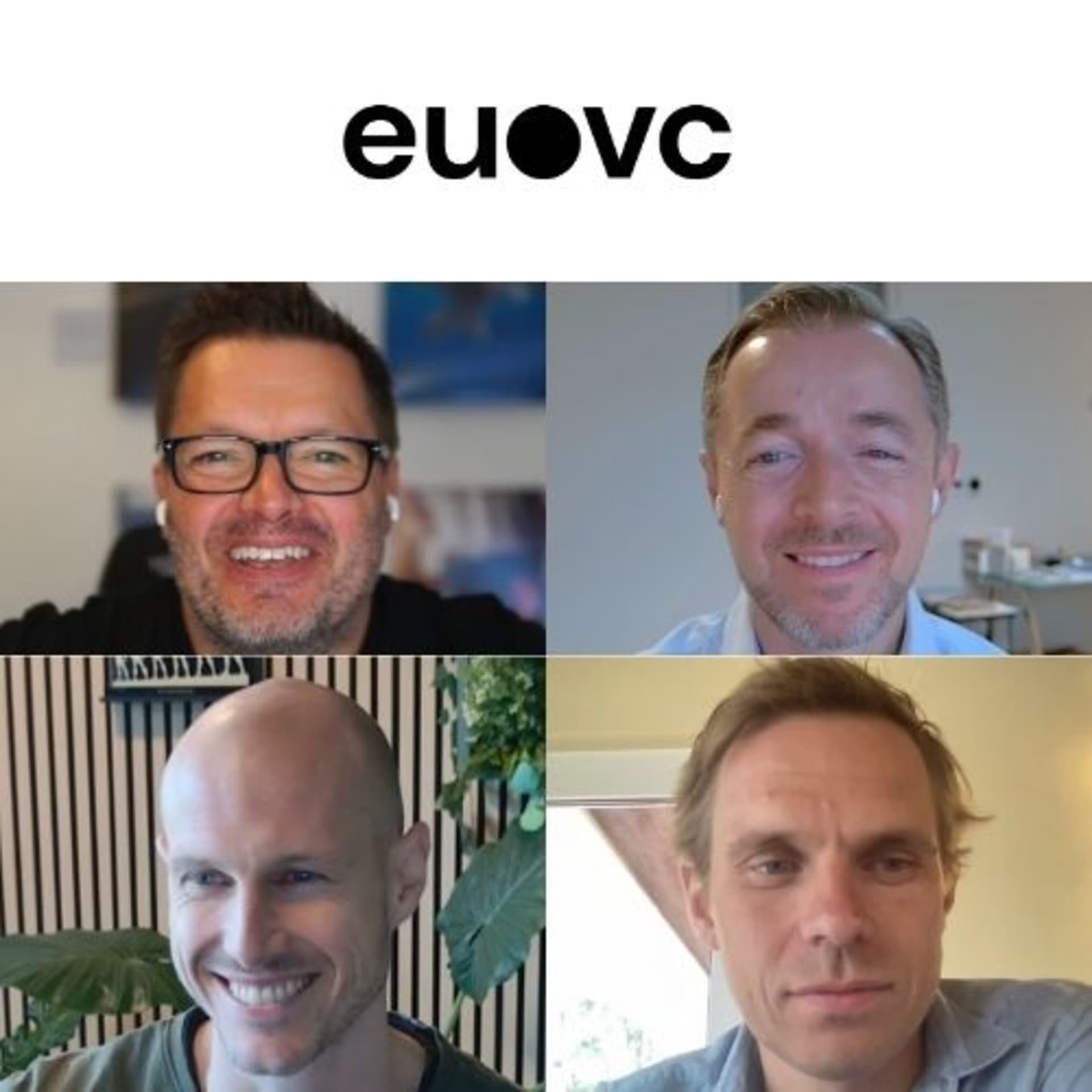
Episode Overview In this episode of the EUVC podcast, co-hosts Dan Bowyer and Mads Jensen are joined by Andreas from EUVC to discuss significant events in European venture capital and technology. The conversation covers Nvidia's recent growth and slowdown, Apple's regulatory challenges in the UK, the implications of Trump's Intel equity grab, and the concept of digital sovereignty in Europe amidst geopolitical tensions.
---
Key Topics Discussed
- Nvidia's Growth and Market Position
- Current Performance:
- Nvidia has seen extraordinary growth but recently reported a deceleration in growth rates—down to a 5% quarter-on-quarter increase.
- It contributes significantly to the Nasdaq, holding a substantial market cap share (5%-6%).
- Importance:
- Nvidia serves as a bellwether for the AI economy, as it provides the infrastructure and products that other companies rely upon.
- European Counterparts:
- Discussion on European companies that could parallel Nvidia, such as ASML and Infineon Technologies.
- Apple vs. UK Regulators
- Regulatory Challenges:
- The UK Competition and Markets Authority (CMA) is challenging Apple's "30% tax" on app developers, raising questions about market competition and regulations.
- Debate on Market Dynamics:
- The hosts discuss whether regulation can effectively curb monopolistic practices or if market forces (creative destruction) will ultimately prevail.
- Trump's Intel Equity Grab
- Government Involvement in Tech:
- The episode discusses Trump's controversial approach of taking a stake in Intel as part of the CHIPS Act, raising questions about the role of government in tech industries.
- Ethical Implications:
- Concerns about retroactive government deals and implications for future contracts and trust in public-private partnerships.
- Europe's State Aid Constraints
- Comparison with Other Markets:
- Difference in how Europe and the US support strategic industries, highlighting the challenges European companies face due to strict state aid regulations.
- Lessons from Airbus and Ørsted:
- Discussion on the need for Europe to foster its champions in technology and infrastructure sectors.
- Digital Sovereignty in the Age of AI
- Defining Digital Sovereignty:
- The hosts delve into what it means for Europe to act autonomously in technology, especially given its dependencies on US tech and Chinese manufacturing.
- Implications for Security and Economy:
- The potential risks of outsourcing critical technologies and the need for Europe to develop its capabilities.
- Pension Funds and Investment:
- A call to action for European pension funds to support local startups and companies to enhance the region's competitive landscape.
---
Key Takeaways
- Nvidia as a Market Indicator: Nvidia’s slowing growth could indicate a broader trend in the tech economy, impacting investment decisions and market strategies.
- Regulatory Landscape: Ongoing conflicts between tech giants and regulators highlight the challenges of balancing competition with innovation.
- Government's Role in Technology: The necessity of careful government intervention in critical industries, such as semiconductors, is underscored, with a focus on obtaining benefits for taxpayers.
- The Importance of European Sovereignty: Emphasizing the need for Europe to regain control over its technological future to avoid dependencies that can compromise national security and economic stability.
- Investment Shifts Needed: Encouraging a shift in investment strategies by pension funds to foster local innovation and strengthen European sovereignty in technology.
---
Conclusion The conversation in this episode provides a comprehensive overview of the current landscape of European venture capital and technology, highlighting the intricate interplay between regulation, market dynamics, and the quest for digital sovereignty. It advocates for a proactive approach to fostering local champions and emphasizes the critical role of investment in shaping Europe's technological future.
Written by AI. May contain mistakes. Listen to the episode to check what was said.
Transcript
Automatic transcript. May contain errors.0:00Welcome to Upside, where we dig into the real stories that live behind the headlines affecting European venture. This week, we've got an interloper in our midst. We've got Andreas from EUVC. I'm going to get you to do a little intro in a sec, or let everyone know you. Mads Lomax and myself. And we're pretty much talking about digital sovereignty this week, not just digital sovereignty. We are going to take a little look at NVIDIA and why that's important. Some UK government and Apple getting feisty and some trouble at mill with what's going on with regulation and the EU and the UK government, but mainly digital sovereignty and what sovereignty is, why it matters, and all the unpickings there.
0:39So we're going to start right at the top.
0:51This show is not investment advice and the hosts of this episode may be invested in the funds and companies featured. First up, Mads, this is you. Before we go into some of the context, Why is NVIDIA so important? It's the poster child of the AI economy. I think it's the one company that everybody pin their hopes on. It's the bellwether, the canary in the coal mine. It's the thing that's telling us whether things are heading in the right direction or not. We all have a sense that AI is going to transform the world and how we live and what's happening around us. And so far, NVIDIA has been the one that's more than anybody else been able to capitalize on that because they sell the shovels and picks that everybody else is using.
1:29And so, you know, everybody's looking closely at the numbers here to try and give us a sense of which direction are we going in. And then, of course, let's not forget, it is the largest and most valuable company in the world. It's, what was it? I think it's 3 % of global market cap or something. It's nothing to say like that. 5 % to 6 % of S &P 500 is 20 % of NASDAQ. I mean, it's extraordinary now. What I also didn't realize was until reading behind the headlines that for a$50 billion data center installation, NVIDIA will take half. I mean, it's just a behemoth. And Jensen thinks that by the end of the decade, we'll see three to four trillion in AI infrastructure spending.
2:13So I guess that's why it's important. I think this quarter, 100 billion in revenue, 25 billion in net income. I was looking at historic net income numbers. In 2018, their net income was$250 million. So in seven years, it's gone from$250 million in Q2 to$25 billion. Even in 2023, it was only$600 million in Q2. So, I mean, these numbers are absolutely extraordinary. And I think one of the key pieces of news here is that the markets didn't really move off the back of this. And it's already priced in this growth. You know, it's staggering. We are in a bit of a deceleration phase, though, aren't we, with the growth numbers?
2:51The company is already so big. They are the market in many ways. As you said, such a huge proportion of data center spend is funneled towards them. And we've been through that massive inflection on hyperscale at data center spend. It keeps growing, but it's just growing more slowly because now the base is so much bigger. A couple of quarters ago, it was 17 % growth quarter on quarter, and then 16%, then 10%. And then this quarter, it was 5 % when you look isolated at the data center business, so the AI business. So 5 % quarter on quarter, it's just a lot less exciting than some of those massive growth rates we saw previously.
3:27And of course, that's changing things. Analysts weren't jumping out of their chairs to shout about the, I mean, it was, what is it, 56%. Mads, what were the numbers? They did their earnings report on Thursday, I believe. So it was 56 % year over year, but only 5 % quarter on quarter when you look at the data center business. So it just says that growth is starting to plateau. I mean, they'll keep growing for at least a while yet. But we've certainly shifted kind of that extraordinary growth we saw previously. Andres, what would you add to this? I mean, do you still see NVIDIA as being the poster child, the bellwether?
4:09Well, of course, it is on a global scale. what I'm sitting here thinking was, while the three of you talked here was, who are our European counterparts to an NVIDIA? We have ASML, we have STMicroelectronics, we have Infineon Technologies, you can argue we have ARM as well. I don't know where you place that entirely, which actually, if you look at the market cap of those companies, we're getting to something like 700 billion, which is actually a lot. And this takes me back to something that I think a lot about in the European context is, why is it that we always talk about what's happening in the U.S.
4:46ecosystem and how do we get out of that U.S. orientation in both our media? Your talks here, my talks on my podcast, Sifted, TechEU, Financial Times, it continues down to everyone. And that's kind of my thinking here. But to your question, Dan, I 100 % believe that, yes, of course, NVIDIA is where You can always see where the market is moving. And then, of course, this very much shows how that geopolitics now completely can change the game for actors, private market actors like NVIDIA or anyone else in the current market. Which, of course, I think gives us a very important learning in the European ecosystem, which is we've got to cut our dependence somehow from the U.S.
5:33and everything else that's going on. not saying that we got to just focus on Europe, but we have to find a way, a path where we can do this ourselves. We're going to talk a lot about digital sovereignty, unpack it, what it means, who's buying what from whom, and how that's going to play forwards. First up, I wanted to just touch on Apple's contentious conversations with UK government. It seems to be a Europe-UK regulation challenge with big tech. And this week, Apple and the UK government are still kind of tussling over regulation. Apple warning about overreach, stating, if not careful, we could damage user privacy and security, stifle innovation and compel the company to share its proprietary technology with foreign competitors for free, which sounds like a lovely threat.
6:25Now, the CMA insists that greater competition can be achieved without sacrificing any of that. But the fact is that we're in a geopoly. We've got Google and Apple fighting out for our mobile world. I kind of personally think that it's fair to think beyond capitalism and money and work out what kind of market, society, economies we want to create. So I kind of welcome the discussion. But what's going on here? What's the tussle about MADS? Can you kick this one off? Well, I guess you could say at a headline, another week, another sort of UK regulatory threat to Apple. So, you know, competition and markets authority in the UK, they want some strategic market status, some rules around payment alternatives and interoperability.
7:12And, you know, I think we'll discuss all the issues with the stance. But if we sort of just steel man the argument for a minute. So Apple takes 30 % of the, you know, app economy, right? Everything on the Apple ecosystem is the Apple tax. And you could argue that smaller developers, They get genuinely disadvantaged. You could argue that if there is an alternative to this duopoly you talk about, then that could save consumers millions. And that would benefit, you know, consumers would benefit citizens. You could also argue that interability between wallets and watchers could bring a lot of benefit, could open up the possibility to create new apps in the ecosystem.
7:52And then there's sort of the whole idea of the UK finding its post-Brexit regulatory path, right? Not sort of Brussels, but also not Washington. So the Singapore and Thames striking out our own. You're trying to create, as you say, the world as we think it should be, not just accepting what is. Going broader and looking at where regulation has worked, not worked, where any kind of intervention like this has made the world a better place for us. What have you seen? So one thing I will just touch on before that is the Singapore and Thames dream, I think, of many is dead. I was actually chatting to a family office the other day.
8:33In the family office circles in London, they're now calling it Soviet Union on Thames is the new moniker.
8:42So look, I think just when it comes to competition, Dan, just picking up, I don't think there's an inconsistency, but there's clearly not an inconsistency between wanting to curtail the power of big companies and a thriving capitalist ecosystem, right? In fact, any functioning capitalist system needs the ability to break and stop and curtail the power of monopolies, right? Otherwise, fundamentally, capitalism, competition, free markets, et cetera, doesn't work. I think there's a big picture here is that the network effects of technology companies and the speed at which they've grown have just caught traditional ways of the competition watchdogs on the back foot.
9:30In the past, you'd be worried about, I don't know, a steel mill generating hundreds of years ago, generating too much of a monopolistic position. And there'd be a way of doing something about it. If you look at what's happened with Google in the past 20 years, and now it's happening with the AI companies, the competition watchdogs have been completely caught flat-footed and have been playing catch up. And one thing I was wondering why the UK isn't, this isn't a new issue, Apple and Google. This Apple issue is not, this isn't been, suddenly it's a new thing that the UK is flexing its muscles on.
10:06This has been the position for the last 10, 15 years. So, look, I think there is generally a big, there is generally, I think we as a society need to think about if we want to benefit from technology and see them funded and see the technology kind of get to the level of maturity and cost for us to actually derive productivity benefits from it. You know, we need companies to grow, et cetera, et cetera, and the technology to develop. But at the same time, you know, society needs this kind of break with the competition watchdogs actually calling out the monopolistic practices of these companies. So I'm not averse to this.
10:45And I don't think that doesn't sound like you are too, Dan. When it comes to this sort of regulation being good, I mean, we often bemoan European regulation on technology. and Europeans are better at regulating than building. There are some examples where the kind of thing that what the UK CMA is planning on doing now actually works. And I would point to open banking. I don't think the banks were that keen on that, right? And you've seen them forced open to open some of their stack. And we've seen tremendous technology built off the opportunities of businesses, Monzo, Revolue, et cetera, built off the back of that.
11:20So there are good things that can come of it. Apple clearly will scream all sorts of bad things that will come from it because they are the monopolist or duopolist here. But anyway, that's that's it's not all bad. Mads, what's the reality here with the with the with the actual fight? Yeah, I'll just I'll just take the the other side for a minute, because, you know, my the thing is, the CMA in the UK is actually staffed by some pretty smart people. I met them. I respect them. I wonder whether they're in the right organization. It feels like we often, and that's not just a competition watchdog in the UK, but more generally, we spend a lot of time fighting the last war.
11:59I mean, let's look at some of the reality here. The UK is less than a percent of Apple's revenue. We could surer leverage. We failed on encryption where the UK government tried to force Apple to open up the encryption algorithm. And then Apple basically said, well, listen, we're just not going to offer the deep encryption to UK consumers. What a terrible outcome for us. The U.S. has now reportedly made the U.K. back down, at least those are the latest reports, which is both embarrassing and just shows that all that wasted effort on trying to force somebody to do something when actually there's so many other things we should be focusing on.
12:36So to say, you know, maybe the thing that's happening right now is we're getting the worst of both worlds, right? It's not kind of light touch Singapore, but it's also not sort of some of the market power that comes out of Brussels because we're just so small on our own. And so to me, the big question is, should we be fighting what feels like a 2010 battle around mobile platforms in 2025 when everything is about AI? And I'd argue maybe we should have some smart people in the CMA more focused about thinking about how can the UK become an AI superpower? Because actually, I think that's the only thing that matters now.
13:09And to some extent, some of this other stuff is just theater. Yeah, I couldn't agree more. Andreas, what's the path forwards? What would you do if you were in the CMA or in the European body? How would you tackle this? Well, first and foremost, I would say that I think Apple and Trump and Marc Andreessen and every other U.S. commentator that mock our regulatory term or RAS, they're not wrong when they laugh at us. I think GDPR has held starters back. And honestly, I think it poses a major risk to any real AI innovation as it blocks access to a lot of important data. And you've also seen in the Atomico State of European Tech report that the CMA has increased startup compliance costs by 25%.
13:50So we have some real stuff to solve internally. That said, when I look at what's happening now between Apple and Trump and everything here, I think it's really a matter of a rebalancing of power between the U.S. giants and, of course, us here in Europe. I think UK and EU, I think we need to think of this as the same thing. And I really hope that the two administrations do so. So I really think this is the U.S. playing hardball with their lobbying and their terrorism and their saber rattling. And I think that we should, too. And I honestly think that this is a moment for us all to recognize that the European visa system is growing up.
14:30We've got 60 billion raised in 2025. We've grown our ecosystem 10x over the last 10 years. So we're on a great path. But I really think that now is the time for VCs to do the same thing as you three are doing here, which is start talking, getting into the debates, taking a stance. We have incredible goodwill in society. We have more than 70 % of Europeans are favorably inclined to tech founders, which I think that should really be our rallying cry to go public with our stances and call out when there's problems in the CMA, as an example, or with the GDPR, because it's stifling innovation. I think we really need to do it.
15:13And I think we have the ability to do it because we have the public behind us. And I think we're making a huge mistake by not leveraging our incredible founders like Daniel Dines from UiPath or Mr. Arthur Manj, because they can really sway policymakers. We've seen it in the States. I think we've got to learn from that playbook. And I think it's time that we, as VCs, revisit our alliances, stop taking the side of private equity and take the side of tech founders instead, because that is where we get backing from society. We don't do that by allying with the people in our European Wall Streets. That's not where we will get power.
15:53We'll get it by being with our founders. Very aligned with our upside mantra. Battle rally cry. Let's go for it. Before we move on, because we are very naturally leaning into the sovereignty piece. We're talking about ownership, sovereignty, government intervention, more control and regulators. But anything else on the Apple piece before we move on? Yeah, I mean, amen to what Andreas was saying, but I think there's a point that I was getting at, which is that, yes, we want technology to be pervasive, to be cheap, to be beneficial. But I'm afraid if you want a functioning capitalist society, you need to have a check on monopolies, right?
16:33And I feel like going after Apple probably, as Mad said, is going after the horse has already bolted. I would use the lessons from web 1.0, 2.0 to inform what we do about AI. Because AI, there will be potentially with the network effects involved could potentially be winner takes all. And so what do the UK and Europe do about monopolistic positions taken by AI companies going forwards? I think that's an interesting theme. I think the European, the CMA and the equivalents in the EU need to think about that. And they probably need to rip up what they did before and do something going forward that's much more collaborative with the US.
17:19Yeah. But the EU is a massive market for these companies. The EU has some power, but it needs to be, it doesn't need to be done through black letter law issued out of Brussels. It needs to be done in a much more collaborative way with our counterparts over the Atlantic and with business, right? Look, the problem is us, Peter Thiel, you read the Founders Fund manifesto. What do we want to back? We want to back monopolistic businesses. Yeah, that's what we do. That will make huge amounts of money for RLPs, and hopefully we'll have more pension funds invested in us and et cetera, et cetera. So we do our job.
17:54That's fine. You show us the incentive, you see where the outcome and result comes. But they need to think about this in a much more broader, holistic way. And I think there needs to be a smarter way to think about this. And we can learn the lessons from the past and try and apply them to the future. I think going after Athens is the wrong bone to be chewing on at the moment. I think we should be thinking very seriously about what we do. Otherwise, you know, we've all seen Ready Player One, right? You know, the one industry that controls the world. Like, that is a serious thing. And yes, I'm a maximalist when it comes to technology.
18:27but I'm afraid that there does need to be some... Otherwise, you know, broader society. I don't know if I spent my summer holidays chatting to a lot of people who don't work in tech, very suspicious of AI. A lot of... Most people on the street. Yeah, but, you know, chatting to someone in government the other day, the UK government, every time that AI is mentioned, that's a net loss for the government. They don't want people to be talking about AI because most people are scared about it. So I think we need to think about it, and that could become a major... a major inhibitor on the adoption of AR more broadly, right?
19:00So anyway, that's sort of more Matt. Well, we are going to talk about that. We're going to talk about the UK government buying AI because there's some stories to discuss there. Do you want to retort to the retort? I love this discussion. Yeah. So listen, I don't fundamentally disagree with you. Okay, we need some rules. But here's the thing. It wasn't the Department of Justice that brought IBM to its knees. It was Microsoft. It wasn't the Department of Justice that brought Microsoft to its knees. It was Google and Apple. Creative destruction is the most powerful thing in capitalism. If we want to set the agenda globally, we have to compete.
19:34We can't regulate our way to greatness. This idea that we can sit in Westminster or in Brussels and just make the rules and then the world will be great. It's total nonsense. We've got to create the conditions for innovation and for great companies. I fully agree with you. I was advocating for a more collaborative state with Washington first, but I think you're right. And the private sector. I think the problem fundamentally, so we're completely aligned. I think the problem fundamentally is so many of the people that are tasked with both the legislation and the regulation are fundamentally quite far from what actually happens in the startup ecosystem in terms of how to build companies, how to grow them.
20:12And so they are a little bit afraid to engage at the quote unquote grassroots level in the detail to figure out, as you say, collaboratively talk meat. And so you end up sitting at a distance writing these slightly technocratic rules that end up breaking all kinds of things instead of actually making things go faster. Now, Dan, I don't want to take any more of your thunder. I know we're going to come back to kind of regulation and sovereignty and all this stuff. But there is so much to unpack here. Yeah, well, we are. I mean, the next three topics are leaning very heavily into sovereignty and looking at the US, looking at China, looking at UK and Europe.
20:48But I also, to your point, Lomax, I also wonder how you negotiate or work collaboratively with the Trump administration when he is basically threatening via truth social at 2 a.m. Whatever, whatever topic he wants to threaten us. I don't know. I don't know the reality of working more collaboratively when everything seems to be a heavy leaded foot. But anyway, let's get into sovereignty. The next three topics are very much talking about governments, public, private markets, regulation, what is data sovereignty, how and what and where and why we should do. So the US government has just, this kind of triggered it for me.
21:28So the US government has just bought 10 % of Intel. Now, I didn't realise the full deal until I looked behind the headlines. They haven't just paid for 10 % of the stock. What they've done is this equity comes by converting previously awarded but unpaid grants. So these come from the US Chips and Science Act and other initiatives. And they also have, I thought, quite interesting, they also have a 5 % warranty if Intel's foundry business, think like TSMC, their production arm, if that drops below 51 % ownership. So to kick off, Mads, maybe you can start this. I mean, broadly, forgetting Intel for now, but broadly, should governments be involved in tech?
22:12Should they buy? It's so hard to disentangle the question from the specifics here. I mean, this is a unique situation where the US government had already promised Intel money and now a bit belatedly is waking up and saying, well, gosh, if we're giving you$10 billion, maybe the taxpayers should get something in return other than sort of a feel-good factor we help potentially to save a company. So I actually think the idea here of making sure the taxpayer gets some upside from the money, I think is absolutely right. I think the challenge of doing it retroactively is challenging, right? The deal certainty is gone.
22:49You'd like to think as if whether you're a private citizen or whether you're an entrepreneur or a business, if you make a deal with the government, that deal stands. And the challenge with Trump is he'll wake up the next day and he'll get a new idea and then he'll sort of, quote unquote, rip up what people thought were an agreement and then change the rules. I don't think that's a good way to run a country. I don't think that's a good way to do business. Moreover, if we recall the backdrop leading up to this, he basically was gunning for the head of the CEO of Intel. Yeah, it was only two weeks ago, right?
23:24Absolutely. So it's a classic Trump shakedown where you put a gun to the guy's head and you say, listen, you're not really an American and you're, you know, you're, and Intel has had huge problems. But it's just that kind of the optics here of Trump putting that level of pressure on the CEO of Intel, then to go back and rip up a past agreement and say, oh, that 10 billion we promised you, well, actually now we want the equity in return. It's just, it's not a great way to run a country. It feels a little bit more like sort of the shadier world of, you know, of the shady part of the world, if you will.
24:00It's a classic company, isn't it? It's like quid pro quo, art of the deal. What am I getting in return for my 10 billion? I want some equity. The thing is, the deal's been struck. You'd like to think that new administrations, they honour the agreements that have been done in the past. I mean, we've just had the same now with Orsted, the large Danish wind power company. Sorry, I crossed myself with his points. Exactly. Right? I mean, Trump, he wants Greenland. The Danes have said no. And then he starts to cancel contracts and sort of rip up agreements that have been made with Danish companies. It's just, it's an odd way to do this.
24:39Guys, come on. As in, we know this now. The only thing about Trump is his unpredictability. He doesn't care about what was agreed before. He will do whatever he thinks, depending on what side of bed he gets out that morning. So I do think that, yeah, I completely agree with you, Mads. This is a change in the way governments have done business for years. And it's also a change of a pre-existing deal. I do, in terms of seeing a wider trend here, yeah, it's consistent with industries of critical national significance taking on an even more prominent role than they have in the past in the current kind of retrenchment from globalization.
Read the full transcript
25:18However, this is just Trump being Trump, isn't it? But this is, I mean, governments have always stepped in when companies have struggled, like you're talking about nationally dependent companies. But obviously, Intel isn't that, but they are a bit of a sitting duck, Limex. So give us some of the context as to kind of how you feel about Intel specifically. The point, Dan, is that the benevolent hand of the state has stepped in in times of trouble in choppy waters. We saw it with the bank bailouts. We've seen it with the airplane manufacturers over the years. We've seen it, obviously, with the GM, Chrysler, and we've seen it with AIG in the US, where I think the government took an 80 % to 90 % stake at one point.
25:59So normally, and we've seen in Europe and the UK, is when in times of crisis, the government steps in to steady the ship. This is slightly different here. I mean, Intel's problems we know are well publicized, but this is not a company that's about to go bankrupt. This is a government coming in in a critical industry and a big listed US company. So it's a departure from what's happened in the past. I think, as I said, it's consistent with what's going on now. Governments are now much more interested in critical industries. So I think there may be similar kind of things that happen in minerals, for example, in clearly continuing in semiconductors and chips.
26:45I'll tell you what it is, Lomax. I mean, I think building a market-leading semiconductor and foundry business takes decades. And once it's gone, it's gone. You can't, it's not like a steel mill where you could probably, you could probably, you know, go back up and boot it up again and get some people in and maybe put in, you know, a little bit of new technology and maybe a year or two and you have it back. If Intel dies, that's it. And you're saying it's not about to die. And I think you're right. I mean, you know, Microsoft systems are probably going to be running on Intel for the foreseeable future.
27:15But you risk losing so much technological edge that it will be impossible to catch up. And at that point, you may have an issue. So I think there is an argument that it is a strategic asset. I think the CHIPS Act was probably done incorrectly in the sense just doling out the money instead of actually taking equity in return. I think it's the retroactive changing of the deal that's a real problem here. governments propping up national champions has has happened for decades it's been as old as you know corporations are you've had this going on i mean look in in europe for example what how do governments do this they become contractors customers which is what we talked about here before they become big customers they issue subsidies or will reduce taxes or cash etc or they invest or a combination of all three and we've seen that over decades right and you've seen it now with Orsted right you just talked about them Mads the big rights issue they're about to do the Danish government I think is going to underwrite that rights issue or certainly be a big big contributor to it so that's an investment for equity look at Airbus which is basically being propped up by a combination of you know national contracts from national aircraft um national flag carriers over the years and probably from subsidies and probably from investment from all the European governments, right?
28:36Look at it with UTELSAT now and satellites in Europe, which is looking to try and take on Starlink with OneWeb, et cetera. That's all very government backed. So ultimately, this is nothing new. It's just in the US, it's a slightly new way of doing things, I'd say. Well, this comes back to my original question is should governments buy? I guess the real question is, should they buy outside of downturns or problematic times or when companies are in trouble? Should this be, could this be part of a strategy rather than giving grants, subsidies and, you know, should governments take equity? That was the initial question.
29:16Any other thoughts on that before we ask Andreas for the upside? I'd say absolutely not, except in special circumstances. I do think there's a big argument to be made for sovereign wealth funds. But that's done in a completely different way, right? That's government acting as an investor that invests in assets that can generate a return, as opposed to, as Lomax says, picking champions. Because picking champions generally is a terrible idea. And then there are exceptions to that. There are strategic areas. There are things where government has to be involved because they're so critical for us. It's things like energy.
29:49Nothing works without power. We've totally failed in Europe with our energy policy. That's one of the reasons why our manufacturing is struggling so much. And I'd argue that semiconductors is another area like that. It's the physical layer of the digital economy. And if you don't have some semiconductor autonomy, that can put your whole economy at risk. We saw that during the COVID times when the semiconductor supply chain suddenly froze, and that completely stopped the European automotive industry. So we have to have access to semiconductors. There's also the inputs to these sectors, the rare earths, the critical minerals, the input for everything.
30:25If we allow others to have chokeholds on those sectors, they can freeze our economy. And then you have things like food security, and you have things like the inputs to pharmaceuticals, the health, which is really important. And then finally, space and satellite. You know, as Andrew, he likes to say, right, the one who controls space controls the earth. It's the access to everything. So I think there's sort of five or six critical sectors where you can't just say, less fair, it's fine. You've got to be a little less naive about things. But what you should certainly try and avoid picking winners, it's much more about creating the conditions for all the competition that can help bring European companies to be the very best they can be.
31:02So they can be global champions, not because they get propped up by the government, but because they have the best products in the world. Andreas, you've already teed yourself up in my head as the voice of optimism and our champion of upside. So what would you do? I'm going to lean on you for the positive outro to this piece. I look at it with a bit of a different angle. And I'm a bit thrown off by the whole conversation around what's the role of the governments in this whole type of situation and how should they act? Because Matthew said, well, it's a completely different system when we're talking about how the sovereign wealth funds operate.
31:44And in Europe, the EIT and EIF and EIB and these whole systems. And I'm curious if it is that much of a difference. Like this is a different instrument that they go in and use. But in the end, they act very much like an investor. and then they use a bit their clout over Intel because of their situation and what they're ready to lean in to doing. But I wonder if, in the end, haven't we seen too often our states, especially up against the big industrial complexes, be too lenient, too kind on industry? If we look at the bailout of the banks after the financial crisis, we didn't get enough out of that, right?
32:35We saved the whole sector and now it's kind of running beautifully again. And they're pumping more money out into the system, making more money for themselves than they ever have. And we didn't really, as society, get much out of that. It was just one big handout to Wall Street. And I think I kind of come down on this side where as long as you protect the integrity of the system, I actually think that it is good if our society, if our state starts to go in and say, we want more. No, sorry. I mean, just on that, that's just not factually correct, right? I mean, if you're talking about Wall Street, the top program was profitable for the US government.
33:16But we could have gotten considerably more, right? No, but that's not the point. Right. The point you're saying is it was just a handout. If you make profit on something, it's not a handout. And I make a huge distinction there. The original CHIPS Act was a handout. That was just a handout. TARP wasn't a handout. And the argument I'm making is I don't think we should be making handouts. I think, as you're saying, absolutely, the taxpayer should reap some benefit and some upside when money is handed out. My question is then, how brutally do you do that. And I don't know whether the approach of the Trump administration here has been too heavy handed or if it has not, I really do not know.
33:58But that's easy because you make an agreement with somebody and you wrap it up later unilaterally and you breach the terms of that agreement. Of course, that's too heavy handed. If we as citizens can't trust the government as a counterpart, what does that do to the rule of law? What does that do to our ability to plan? And we know as businesses, one of the most important things is the ability to plan. Now, governments will make good deals and bad deals. Hopefully, they can make more good deals. And one of the challenges I have is that some of the same people that say Singapore and Thames and want the UK to become as sophisticated are also the first ones to scream that civil servants are paid too much.
34:32Well, guess where they're paid more than anywhere else, right? That's in Singapore. Because if you want smart people doing good deals, you, surprise, surprise, you have to attract the best and the brightest, but you have to compensate them. The only thing I would add in terms of thinking about this for Europe, right? I mean, we talked about, you know, this effectively state aid, whatever form it comes in being, it happens, you know, every day across a number of industries is actually the US has more freedom to operate in this regard than Europe, right? Because of the very complicated state aid rules that we have in the EU.
35:03The moment one country starts, you know, investing in a local champion, et cetera, the other companies, the other countries call foul. so actually will we be seeing a bunch more deals like the intel deal in europe maybe i mean but actually it's much is a much harder environment to do it in um than the u.s for example which isn't really subject to these rules because it doesn't have this big supranational um organization over sitting uh sitting above it i always think it's funny that the the anything state aid feels gray and and subtractive and negative and yet the whole of the u.s government is basically subsidized so the u.s markets are subsidized by the u.s government via various mechanics but that's probably a podcast for itself so let's talk about the uk buying ai we are in a an interesting time in h1 2025 the uk government contracts for ai related projects have reached 573 million this year surpassing the whole total of last year and i'm looking at who is on the vendor list of the top 16 vendors selling into government in the last five years 10 are from the uk or from europe however the top two microsoft and palantir have already commanded over half of the awarded contracts value at 1.4 billion i think the total is 2.4 billion so that those two companies alone are taking 1.4 billion.
36:30And none of these figures include the new open AI deal, which was announced a few weeks ago, working with the UK government. So again, we're sticking with sovereignty. And Mads, again, I'm going to lean on you first for this. Is this good, bad? How would you start this conversation? Well, of course, the UK government has to buy technology. I think we talked about that before. It's so important that we invest, that we bring in some of the best tools. I think about 20 % of their spend over the last five years has gone to UK firms, the rest to predominantly US firms, with Microsoft and Palantir being the big suppliers.
37:06And that's true across all of Europe, by the way. So will it work? Yes, I think for efficiency it will work. It will certainly not give us more autonomy. To do that, we have to develop more homegrown capability. Lomax, where would you take this one on? Okay, so two things I think here. Firstly, we've talked about this before here. It's great that the UK government is adopting AI, and this is evidence of it, right, and spending real money for the reason that, you know, with an aging population, with government spending at record highs and the need to trim some of the fat and keep the tax burden low, which only keeps going up and up.
37:46And we talked about Soviet Union on Thames now. This is really, really great to see. So it's good to see the numbers dropping down. The second point, which is a broader conceptual point, is actually if the UK is not going to compete at the foundational model level, if it's not going to compete at the chicks level, if it's not even potentially going to compete at the application layer level with a big global AI tech leader, if it's not, you know what? the best thing the UK can do is become an early adopter and a big buyer of this and shape and form the development of these products. Now, I'm sorry, this is not original thinking.
38:33I was actually listening to Matt Clifford talking last weekend, and he's a big advocate of this. So this is not my own, you know, me plagiarizing other people's work. I'm happy to attribute it. But it's a really powerful point, which is that if we're not going to do any of the three things that I just mentioned, which there's a high chance that we won't because we don't have the investment, we have the constraints we've talked about before. You know what we can do is become a big earlier adopter of this. We shape and form the development of these products. We get to know the people building them.
39:04That will deliver a lot of soft power to the UK economy and the same could be said for Europe. And you know, maybe you're calling me unambitious, but I'm also being realistic here. Yeah. And we can sit here and talk. I mean, I think you've missed the boat. We talked about network effects earlier on many of these technologies, right? So why not become a power user effectively and become a key stakeholder that way rather than trying to build these things ourselves, which we don't have a potentially great history of doing so and a significant lack of capital. So for those two reasons, I think it's great to see this and call me an ambitious, but I'm trying to take the upside out of something that could be very beneficial for us.
39:53So Mads, first off, do you have any retort for Lomax? Slightly unambitious, perhaps, Lomax? I mean, I don't want to put words in your mouth. I think, Liz, yes, we have to adopt technology. We've talked about it before. I think the best thing to do would be very aggressive around adoption. Lomax, you've talked about some of the issues you have with pushback in society. But the challenge we have is as a country, we are heading towards being broke, right? I mean, you're looking at a welfare state that's going to cost£3 ,000 per citizen per year just in terms of transfer payments. I mean, it's unpayable if we don't start to change things.
40:29And so you absolutely would invest very aggressively in automation. I would let a thousand flowers bloom. I think that's important. We know these massive government procurement projects often end up going wrong, doing more experimentation. Of course, we need to bring in the U.S. players for, you know, maybe it's right today to have them for the 50, 60, 70 percent of the workloads. But why not do a lot of experimentation on the side with European players, you know, get some new technologies in? Mistral is still in the game. Why could they not be suppliers for some contracts that we could develop some more homegrown capability here in Europe?
41:04I think there's no reason not to. We don't have to go, okay, fine, the US are the best. We'll just buy 100 % their stuff and not develop anything ourselves. I would just, yes. So I would say to row back a little bit, or at least to sprinkle a little bit of optimism into maybe my lack of ambition, is the application field is wide open, right? So that's fine. And we have the talent, the capital, certainly like the entrepreneurs to build big companies. And actually that's where being a power user comes in, because actually if we are going to adopt those companies at the application layer two, but that gives a great initial customer for these like local companies and local champions.
41:49So, you know, the other thing is actually application layer companies aren't all going to be founded by engineers. They're going to be, you know, maybe a commercial co-founder too, for example. And actually the more adoption you have, I'm not suggesting a lot of them are going to be government employees. Right. But the point is, is the more adoption you have across public and private sector, you have the more people working with these tools, the more entrepreneurs who see the benefits of them, the more entrepreneurs who might be encouraged to set up their own company and team up with an engineer to do so.
42:16So I think all of this stuff is great. So there's nothing to complain about here. We can go back to the old complaints of not enough money, et cetera, too much red tape, not enough compute. We still need to be investing in compute. We still need to be investing in data centers. We still need to be investing in talent and cultivating all of that stuff. I'm just trying to take a very optimistic lens on what's happening here because you know what? The counterfactual here is that the UK government isn't spending any money on this damn stuff at all. And then we'd be even more morose about it. I'd love to ask the three of you a question here because government adoption or public institution adoption of AI tools, I think is absolutely critical.
43:04It will really make a big difference. But then I look at things like GDPR, which is completely making it at least the overimplementation of GDPR in Denmark has made it so that everyone I talk to are even afraid of knowing the name of the person they talk to almost, much less write it in any system that they don't know how it's being treated by whatever model is then sifting through that data. So I'm curious to ask you, because you're all investors investing every day in companies that are considering, at least, whether they should sell into government. Do you see startup founders thinking of this as too much of a roadblock for it to be possible?
43:49Or are you seeing a lot of ambitious companies focusing on government and governmental institutions as the adopters? I think it's a great question. I mean, the track record of selling into government is just really, really complicated. And, you know, Microsoft and Palantir can do it because they've got massive teams that know how to master the procurement cycles and navigate these difficult, difficult procurement processes. But for a startup, kind of a seed stage company, it's almost impossible. And so I think for so many venture capital investors, it's just been a bit of a, we're just going to stay well clear of that.
44:23And this is the point we've made so many times. Why don't we allocate a lot of the grant money that today is just, as we say, being doled out to procurement contracts and make it easier, kind of efficient procurement processes for smaller experiments to optimize and make more efficient different parts of the public sector. And specifically targeted at novel leading edge solutions from young companies. That's what we need, right? Let a thousand flowers bloom. Let lots of people have a go at creating a solution. And we'd fund that if we know that the procurement process on the other side is really efficient and not a kind of 24-month marathon.
44:57Early adoption sandboxes in limited use case scenarios are fantastic. So I think the more of those, the better. But to answer your question, Andreas, I mean, unless it's essential, for example, in defense, where governments basically are the buyers, you know clearly for a startup on startup timelines raising money every 18 months it's quite hard to advocate a b2g strategy left i think there are two kind of conflating main key forces one is a willingness now with the changing of the new world order to try new things and ai has opened opened people's eyes and technology is much more at the front of people's brains generally and that's government and all of them in government is a massive massive multi-faceted organization and i also think that the i don't know what generations we're on now xza whatever whatever's coming through into the workforce are also much more tech savvy so i think there are these two kind of key conflating forces which may unlock the ability for more startup friendly government quasi-government interactions i don't know i maybe that's just That's just wishful thinking, but it does feel like those two forces are not.
46:12Maybe, you know, if you look at the UI, the UX of these like laggard government, these systems, right? Like Epic and Cerner selling into, you know, US hospitals. And you look at, you know, that's basically aimed and set up for, you know, non-tech literate government employees, right? Now, as people who work in the state are technology literate, I think there will be a shift. those systems you know i often say to our startup selling into healthcare which is often government backed it takes a generation to get in and once you're in for you're in for three generations we're going to come to the end of like as andrew would say like laggard like um legacy systems right and and i think as you're right dan as as more employees are more literate with using these tools that will open the way for more dynamic more forward thinking um systems and or applications and products to be sold in, right?
47:08I'm sure. I have to be optimistic on that. I think so. I think so. I don't know if that answers your question, Andreas, but I think my sense is that there is an energy of change and we will see how long that change takes to come through. But I'm hopeful and I do think that the government's spending as much in H1 as they did in the entirety of last year, although we don't know the timelines of some of those contracts, to be fair. I think that's a really positive sign. So I think we need to experiment. We need to do more. We need more AI in key services. So I think they're positive. I don't know, guys.
47:44Across your portfolio and companies you meet, except for defense, how many seed stage companies do you know or meet selling or trying to sell into government? I mean, it's less than one. But I think there's a slight blur insofar as from what I can understand, there are many government employees who are using AI tools without upward approval. So I don't know how deep and broad that goes within whatever organization, whether it's the DWP or in MOD or in HMRC, but you do hear and see stories of employees applying tools to manage their workflow. And there's obviously kind of a gray intake, uptake of these AI toolkits.
48:32So I think it's a great thing. I think it's a great thing that the government's buying more and doing more. And I hope more startups are given more opportunity to get engaged. So I want to stay with digital sovereignty. I was reading two things this week. One was the Mario Draghi who released his report on the failure of European competitiveness and some very clear directives as to what he thought Europe should do. And he's basically come back this week and said it's all too late, which I thought was quite depressing. However, that is the backdrop. Also reading the boss of SAP on Europe's botched approach to digital sovereignty.
49:11So a couple of quotes from him. It'll be the application of AI that creates demand for massive computing power. Yep, we understand that. Public investment should flow directly into applied AI and software to create tangible competitive advantages, which I think we will all agree with. And coming to our previous points, we're now at this application layer where this very smart AI tech tool pack is going to lean into all of the core manufacturing product services, supply everything that we need in our economies. So I don't know where to take this specifically, but I had two key questions. One is, do we think, if anyone's heard Maria Draghi's recent commentary, do we think it is all too late?
49:53Have we missed the boat? And I also want to kind of ask what we can learn from other countries, especially China and the US around this digital sovereignty piece. So Mads, I don't know, where would you like to start with this one? But I think you asked the question about sovereignty and what is sovereignty? And it's really this ability to act autonomously without being subject to coercion or diktat by the outside. Kind of the fundamental question is, can you act without somebody else's permission? And Europe's pickle is, we've outsourced production and manufacturing to China, and we've outsourced our defense to the US, and now we're also outsourcing our AI.
50:29And the challenge is that really erodes our sovereignty because it means we can no longer act without those geographies' permission. We saw in years gone by, whenever we had issues with China, they would threaten a set of countermeasures and we'd quickly back down. We've seen with the US that Trump basically threatened to revoke the defense umbrella and we sort of quickly succumbed and said, okay, yeah, sure, you can slap tariffs on us. It's okay and we'll remove ours, completely rebalancing global trade. So it just shows the price you pay for not having the sovereignty and being subject to others.
51:08And I think another question you asked is, what about other countries? What can we learn from them? I think China has really shown what works in some of these respects. You define sectors, you unleash a lot of competition, and then you let winners emerge. People sometimes think that China is all about the government picking winners. If you look at the EV industry, so BYD that's now emerging as an absolute champion was the result of fierce competition. So there were 500 Chinese EV companies all competing in a very Darwinian style. And only about 15 of those are likely to survive. So I think it's creating, as we've talked about earlier, this condition for a very competitive environment where you let a thousand flowers bloom, and then you see who rise to the top, and you harness the best of free markets and capitalism, I think is what can get us back on the front foot.
52:01And it's eminently possible. I think we just have to think differently about how do we regulate and how do we police and where do we invest and stop being so laid back about some of the stuff. Interesting that China, I think most people wouldn't think that the Chinese government would behave like that. So I think that's a really interesting point. Lomax, what is sovereignty? Well, I think Mads gave a very elegant definition that I don't really want to tamper with. it's not his, the ability to be in control effectively. And as Matt said, and I would add in terms of what Europe has outsourced in terms of defense production to China, we'd also have outsourced a lot of energy to Russia, right, particularly in Germany.
52:49So we'd actually lost sovereignty energy as well. So I think, you know, Europe has, this was, you know, in a way this was globalization. You know, in a way, everyone was supposed to be bought into this. The Americans too, like this was the, you know, the peace dividend. This was, you know, no more wars again. We were all supposed to be - Make trade, not war. Yeah, exactly. And now we've that sort of big experiment is effectively over, I would say, and potentially over at least certainly for our lifetime. And so we're now growing back from that. The problem with, you know, energy sovereignty, you can look at it, you know, right, well, or just build some nuclear, for example, or build whatever you know, whether you want to build windmills, solar, et cetera.
53:36That's an easier thing to grapple with. I think digital sovereignty, even defense potentially, I mean, you build your own weapons. I mean, you're still going to, there'll still be some global supply chains to a certain extent, but technology, as we all know, is a much harder thing to have sovereignty over because by definition is much more nuanced than those industries, right? So talking about sovereignty over compute, over chips, over, talked about it earlier in the context of the UK government, over models. This is, what do we mean? Do we build all of this? Does Europe build all of this and have its own sovereign capability in every single area and America has its own and China has its own?
54:17You know, unfortunately, I'm not sure in a way I don't see the world operating like that. And frankly, Europe hasn't got the dynamism or the capital to compete. And we've also probably missed the boat, I think quite frankly. I think what it will probably mean is not having an over-reliance on one geography, on one partner, right? So it will mean having some reliance on some Chinese technology. It will mean having some reliance on US for technology and not having, but not being underwritten solely, for example, in the case of defense by effectively by one country. So yeah, I think that's, it's a harder, more nuanced question when it comes to digital sovereignty than in other areas.
55:06I love the context of setting it in being a power user, power buyer, power investor. I think that's one thing I've taken from this conversation today is to think, not to use your unambitious rant against you, Lomax, but I think there is something about thinking in those three buckets, right? No, you're totally right. But then if the NHS puts all of its data on a US cloud provider, suddenly you get a nefarious act. Isn't it already? Yes, exactly. But do you see what I mean? That's not sovereignty. So what do you do? Do you spread it across data sets? In those cases, you suck it up, buttercup, and you think, okay, we're going to become power users.
55:51That opportunity maybe isn't there, or we're going to do that behind the scenes, and we're just going to absolutely apply the application to create the efficiencies that are at least going to give us some gains. No, and you become a big customer. Don't forget, the EU bloc, including the UK, has incredible buying power, right? So you can lean into that, but it doesn't help you in times of war. It's the problem. So guys, let me come in here for a thought. And I'm going to champion the European startup ecosystem as always. So pension funds, I think, are really important here. And we talk about how do we get to digital sovereignty.
56:27European pension funds allocate a pathetic 0.018 % of their AUM to European venture. That's against 1.9 % to the US. So we're funneling billions into American VCs and startups from scale up that only serve to further build the U.S. dominance and U.S. sovereignty. We really need that our pension funds start backing Europe and not U.S. dominance. Because the way we're doing it now, yes, we might be getting returns back. But honestly, European venture performs beautifully. We've got 18.95 % net IRR over 10 years as per Invest Europe. So you're not necessarily sacrificing gains by investing here as a European pension fund.
57:16You're just backing our society's future strength. I really think this is so important. I think it's like US pension funds fuel 50 % of their VCs. And we're basically propping up our own rivals. it was really time that we earned our pension funds around the European venture and startup market. I think it's so important. And it's ridiculous to see this continuing going on when we have this complete breakup between the US and Europe. And then we continue having our pension funds. But when they say, Andreas, when they say, give us the winners first, you give us the winners, we'll invest. When they say that?
57:57Yeah, something like that. Mads, anything else on this topic before we close off? So much more to unpack here, Dan. I mean, Lomax, you picked up on the point of globalization and how that's been an issue. And I think that's something we often talk about, but I actually think it's a little more nuanced than that. I think to some extent we've had these, I call them luxury beliefs here in Europe, that said that we don't like pollution, we don't like climate change, we don't like all the bad stuff. So we'll just sort of, we'll legislate against it. And the implication is then that energy prices in Europe, they go up four times or six times compared to Chinese competition.
58:35The manufacturing moves out to China. The manufacturing moves out to India. We've looked at things like some of the ingredients in pharmaceuticals. We have to import so many of those today because we can't manufacture them or won't manufacture them in Europe anymore because it's too expensive and there's too much regulation that prevents it. The pollution hasn't gone away. we've just transported it somewhere else in the world. And then, you know, I think one can do that. One can say, listen, I don't want to pollute my backyard. I want to pollute kind of China's backyard instead. But if we then don't put some trade mechanisms in place, that just completely undercuts our own manufacturing base.
59:12And I think that's what's happened. So I don't think it's just globalization by itself. It's also that we were quite naive in how we implemented it. And if there is one takeaway, I'd say, from Trump's rather bizarre style, I think actually one thing he's right in is I think we were far too naive in how we kind of let China into the WTO in terms of how we have outsourced some of these things without asking for things in return. if we had been a little bit more shrewd around the implementation of globalization, I think we'd have had a better economic outcome, less dependency, and a stronger manufacturing base still in Europe.
59:47And that would have been a much better outcome for us. Yeah, but I mean, it's quite natural as economies develop that they move into services and away from manufacturing, right? That's quite a, I can't think of one economy that hasn't done that. Well, I mean, the one who controls manufacturing dominates the world. The US won the Second World War on the base of an unrivaled manufacturing base. And if what we're saying is we want to give up manufacturing, then it's game over. Well, we already have. We already have given up manufacturing. Germany still has a strong manufacturing base, and I wouldn't say it's game over for Europe yet.
1:00:19But if the implication of what you're saying is we should, then I'd say, well, then it is game over. Well, no, I was just thinking it's actually quite timely that there's such levels of automation now that manufacturing isn't necessarily going to be Daisy and Johnny, you know, building missiles or sewing sequins onto things or pressing car metal plates. So maybe there is this technological availability now where manufacturing onshore or managing your own supply and your own manufacturing plants is completely available because it's all automated. I think it's beautiful thinking. I think it's beautiful thinking.
1:00:57The truth is that still today on a per capita basis, China implements many, many more robots and much, much more automation in manufacturing than we do. Because the thing is you have to have the manufacturing base to automate it. Now, the old system, the old setup in Europe was that you had the manufacturing base in the heartland of Europe, in Germany, and then you had the financial services and the services around that in London. And it was not two different economies. It was one ecosystem. supporting each other, right? And obviously any attempt to try and kind of fragmentize that or balkanize that and breaking it up, that just makes the system fall apart completely because the German industrial base does need a strong financial powerhouse to finance it, and the UK certainly needs manufacturing.
1:01:44We can't just do services. You were going to mention the B word then, weren't you? I could feel the B word just bubbling in your brain. It's always there somewhere. gentlemen what a pleasure and a gift andres thank you so much for joining us this week anything anything more from you or anything else on your mind this week that's bitten your backside no i was just saying it was a true pleasure to join you guys i'm so happy to be continually supporting you guys so thank you yeah you are awesome thank you so much mads anything else you've seen this week that you wanted to just chat about before we close off Well, we do have potentially big news, right?
1:02:19Google might be broken up. Really? I don't necessarily know if it'll go that bad, but we are expecting kind of a verdict coming soon. And will it be forced to spin off Chrome or something else? We don't know yet. Don't you think, Max, that it all now, based on the intel story that we discussed earlier today, is going to come down to what agreement can be struck between Trump and the Google management? You know, you're probably right. so we'll see we'll see the u.s government taking 10 of google just to and with a little little backhander for the trump children somewhere i'm sure be nice if you can get it right allegedly um gents thank you so much this has been upside we will catch you next week
1:03:14Thank you.
From the publisher
Welcome back to another episode of Upside at the EUVC Podcast, where Dan Bowyer, Mads Jensen of SuperSeed, and this week’s guest Andreas from EUVC unpack what’s happening in European venture capital.
This week: Nvidia’s meteoric rise (and first signs of slowdown), Apple’s clash with UK regulators, and why regulators may be fighting yesterday’s battles. Plus: Trump’s Intel equity grab, whether governments should hold stakes in strategic industries, and what Europe can learn from Airbus and Ørsted. Finally, what digital sovereignty really means for Europe in an age of AI, energy bottlenecks, and geopolitical dependency.
Here’s what’s covered:
00:01 Nvidia’s Reality Check: From 20% of Nasdaq to slowing 5% quarterly growth.
00:06 Apple vs UK Regulators: The 30% “Apple tax” and post-Brexit CMA ambitions.
00:13 Competition vs Regulation: Why IBM and Microsoft fell by creative destruction, not regulators.
00:21 Trump’s Intel Shakedown: Retroactive equity grabs and should states take stakes?
00:29 Europe’s State Aid Constraints: Airbus, Ørsted, and why Europe can’t do national champions like the US or China.
00:36 The UK Buying AI: £573M in H1 government contracts, Microsoft & Palantir dominance.
00:49 Defining Sovereignty: Europe’s dependency on US tech and Chinese production.
00:57 Europe’s Luxury Beliefs: Outsourcing energy, defense, and manufacturing — and why pension reform is key.
01:02 Closing Takeaways: Sovereignty is more than regulation — it’s about competing, investing, and not being naïve.


