
In short
EUVC Podcast Episode Summary: E567 | EUVC Summit 2025
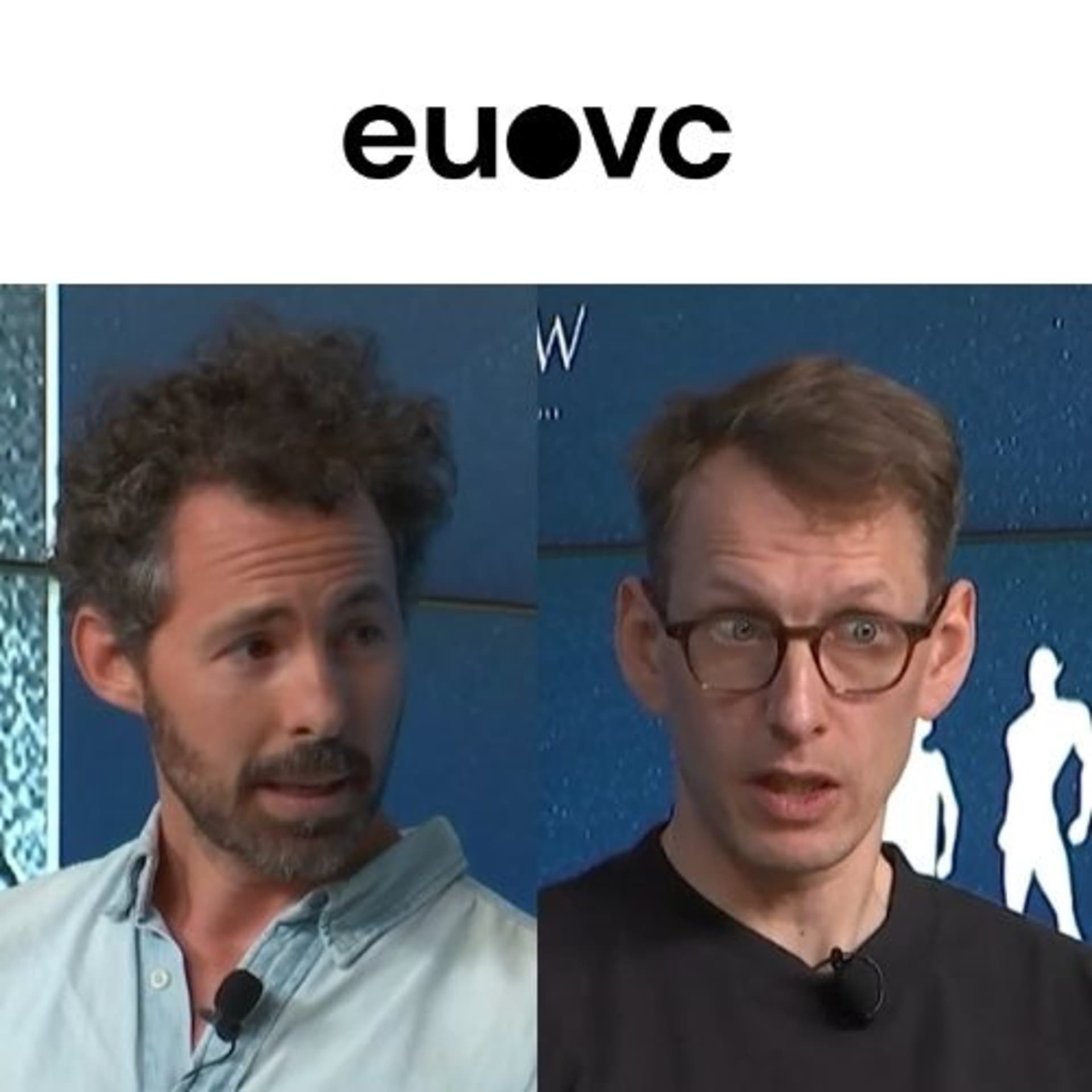
Episode Overview Hosts: Andreas Munk Holm and David Cruz e Silva Guests: Hampus Jakobsson (Pale Blue Dot) and Romain Diaz (Satgana) Focus: The conversation revolves around critical issues in climate investing, specifically addressing how to fund the climate transition effectively without compromising on ambition.
Key Discussion Points
- The Current Climate Context
- Shift from Awareness to Action: The dialogue emphasizes that the awareness of climate change is no longer the issue; the challenge now is implementing effective funding strategies for the climate transition.
- Industry Perspectives: Hampus Jakobsson articulates that climate investing should not be seen as philanthropy but as a structured venture with a clear thesis and expected outcomes.
- Understanding Different Investor Perspectives
- Types of Limited Partners (LPs):
- Impact-maximizers: Demand for carbon reporting and ESG metrics.
- Return-seekers: Focus on financial returns over data metrics.
- Narrative-driven: Interested in the symbolic value of investing in climate.
- Alignment vs. Agreement: A successful fund needs to navigate these diverse motivations, where alignment with the fund’s mission is more crucial than mere agreement on methodologies.
- A New Framework for Climate Investing
- Climate as a Vertical Sector: Jakobsson compares climate investing to sectors like mobile technology and AI, emphasizing that unlike AI, where the problems are often unknown, climate has defined challenges needing solutions.
- Rejecting Indulgence: Both guests express discomfort with taking money from investors who view climate investment merely as a means for carbon offsetting without genuine commitment to impact.
- Portfolio Development
- Long-Term Vision: Investors are encouraged to build portfolios that will be relevant and profitable by 2050, focusing on sustainable innovations rather than short-term trends.
- Case Examples: The discussion includes specific sectors, such as agtech for methane reduction and fintech solutions, illustrating the broad applicability of climate-oriented investments.
- Challenges and Future Directions
- Velocity Over Virtue: The closing message underscores the need for speed in deploying capital and supporting ambitious founders to reshape LP mindsets.
- Proof of Concept: Demonstrating successful portfolio outcomes is pivotal in shifting perceptions about climate investing from niche to mainstream.
- Capital Flow Dynamics: Increasing capital flow into decarbonization efforts is essential for sustainable growth.
Conclusion The episode encapsulates the urgency of acting on climate change through innovative and responsible investing. Jakobsson and Diaz stress that the climate transition is already underway, and stakeholders must adapt to this reality without getting bogged down by ineffective frameworks and metrics. Their call to action is for the venture capital community to prioritize 'velocity' in their efforts to invest in meaningful climate solutions.
Key Takeaways
- Investing in Climate is Not Philanthropy: It requires a structured approach with tangible outcomes.
- Investor Alignment is Crucial: Understanding the motivations of LPs leads to more effective collaborations.
- Focus on Long-Term Relevance: Investments should anticipate future needs and align with sustainable practices.
- Demonstration of Success is Necessary: Showcasing positive outcomes will help legitimize climate investments in the broader market.
- Call for Increased Velocity: The climate transition requires swift and decisive action from all stakeholders involved.
Episode Resources For further information and updates on the European VC landscape, follow EUVC at [eu.vc](https://eu.vc).
Partners of the Summit
- HSBC Innovation Banking
- Google Cloud
- Ace Alternatives
- Hainspoon
- CW Communications
- Fundcraft
- Portfolio IQ by Synaptic
- Goodwin
These partners play a vital role in supporting the EUVC community and promoting best practices in venture capital.
Written by AI. May contain mistakes. Listen to the episode to check what was said.
Transcript
Automatic transcript. May contain errors.0:00ESG, CSR, DEI. Once seen as essential, now at risk of becoming corporate lip service. As political winds shift and skepticism grows, do these frameworks still drive impact or are they losing relevance? Leading the debate are Hampus Jakobson, co-founder of Pale Blue Dot, investing in climate tech. When you're a teenager, it's like you really feel that your parents don't get s***. And they don't, but they've been there. That's exactly what investors are. They don't get s***, but they really want you to succeed. and Roman Diaz, CEO of Satgana, backing planet-positive startups. One year later, I'm very, very pleased and honored to announce the final closing of our fund with 8 million in LP commitments, which is...
0:46Thanks so much. Together, they'll unpack where these acronyms go from here and whether they still matter in building the future. Thank you so much. You gave us a pretty clear-eyed view on what's not working. So the post-2020 hype cycle, the behavioral preachiness, sometimes the moral superiority, the over-reliance on policy to fix everything. And we've all felt it, the pressure to align with the acronym alphabet soup, D-E-I-C-S-R-E-S-G-S-R-I-P-R-I-G-R-I-C-S-R-D, and my favorite G-Fans. The truth is, most of these acronyms have become either diluted or worse, weaponized, distraction from the real work.
1:29But the climate transition does not care about acronyms. Whether it is noisy or quiet, whether Trump wins or loses, it's happening. And it's irreversible. So you've talked about the climate tech hype in the past few years. Let's open this up. Now that the froth has cleared, what do you think is the right frame for investors and founders right now? And do you have any concrete examples from your own experience, from your own portfolio? I think at the end of the day, I think that some of these abbreviations are amazingly smart. Like, if you're a CFO today, or if you were a CFO in December, you had an interesting incentive on figuring out your supply chain to reduce your risk.
2:07And there was an acronym for me. So I had that support of telling my boss, of like, we actually need to look at this. And that was rolled back, which mean now as a CFO, I can spend less of my time in 2015, 2025, sorry, and 2026 doing that work, I guess. But at the same time, I mean, whenever Given was stuck in a canal, I think every single corporate in Europe were thinking that maybe we should map out our supply chains better. So I do think that a lot of these abbreviations are actually really good, because they set up a framework of handling risk. And the risk, at the end of the day, is money in the future.
2:39So I mean, the thing that worries me is actually more of shareholder interest in some of these things. So I wish that if I was on a board on a big corporate, it, I would essentially sit down with the CEO and say, I don't care about any of these abbreviations, but just tell me how we handle climate risk. You don't need to tell me how you've checked some boxes, but I just need to know the property we own. Do they handle floods and storms, extreme weather events? Or do we have an issue? How do we handle grid? What happens if we lose energy for days? We're a cold storage company. What do we do? And I think that that's the question I would have.
3:14And I think some of the companies I've been really impressed by are companies such as some of the trucking companies, or for example, if you take IKEA, which is not one of our portfolio companies, actually, is that they realize that some of these things are very future aligned, and they should invest their way to get to a point where they make most money in the future. And I think that's a very interesting thing. So yeah, I think for me, the abbreviations are a support for a CFO, but I think smart boards should implement them, abbreviations or not. And I think what we're seeing is that climate tech is maturing, And actually, climate doesn't really care about these acronyms.
3:52It's physics first and foremost. And it's not about political ideology. So we're not betting on vibes. We're not betting on virtue. That's one of the things that I think we share. It's not about belief. It's about science. It's about relevance. It's about the future. And more and more, what we are going to see, and I think more and more people are being convinced about that, is that climate tech is not going to be a sector or seen as a sector as a whole anymore. But it's really the foundation, as you said in a previous session of the next economy. So it's post-political. And in 10 years, it won't be a niche.
4:23It will be basically the baseline. So now we have a room full of GPs and LPs. So let's talk a bit about LP motivations and how you deal with that. So some of the LPs are in for the impact funds. Some of them are in for returns. Some of them for the narrative and a mix back of a bit of everything. And so what we learn as climate funds, I think a lot of us, to live with that tension. And so my question is how you navigate that mix. How do you sleep at night knowing that you have one fund catering for a wide range of motivations? Yeah. So what we did actually completely cruelly is that we actually asked our LPs before we accepted them why they invested.
5:05And we did not accept, in Pilbara.one, we did not accept sovereign states that we feel very uncomfortable having, even if they would give us money. And we did actually not accept funds that were extremely into Article 9. Article 9 didn't exist back then, but Article 9-ish language or carbon accounting for us. Because we felt that at the end of the day, we want to be GPs that say we invest in this company, and we don't want to have a long motivation of how we do carbon equivalents or anything. We just want to say we think this is a great company. So we declined on both ends. People that we think were kind of climate deniers who were using it, but also people who were absolutely agreed to climate change is a big thing, because we felt we don't want their burden.
5:43So we've tried to pick and talk to LPs a lot about why they're investing. And I think that's been a very important strategy for us. And I think we had, I think in Fund One, we had one of our LPs who we wanted, who ended up not joining, because they said, if you can't do carbon reporting for us, we can't join. And we said, we won't. There's just no chance we will. And we had a bit of attention. And they kind of asked us, are you a climate fund or not? And we said, yeah, we believe climate to be just like mobile was a sector or like AI is a sector. I think AI is a funny thing, by the way. AI is like, it's a solution to we don't know which problem.
6:16The interesting thing with climate is we know the problem. We just got to figure out the solutions, right? So I think it's like so strange when people say, oh, you're a climate tech fund. Oh, but I love this AI fund. It is like, what are you talking about? Like, it's just a word. Like, climate is every single sector, right? It's anything from heating to transportation to FinTech, whatever. It's everything. So for me, it's really talking to those LPs and asking them or investing because you believe this crazy macro shift and the expected value of the macro shift, or you're investing as a way of doing indulgence letters that you want to say that you put money in climate.
6:44Because if it's the latter, I am fairly uncomfortable with your money, actually. So I'm super happy about, like, we have, like, IIP, the pension funds of all the nurses of Denmark. It's awesome to think sometimes we're investing in a company, do I think that nurses of Denmark is going to get their pension in 10 years? Is this a good investment? It's good to have that alignment. But it's harder to have somebody who's, like, a bank who needs to do carbon accounting, who uses us to carbon offset, how proud would I be to be like, oh, we're carbon offsetting for them. I feel like go buy carbon offsets.
7:10It's left their headache. So short answer is we didn't take those sell piece. And when you analyze a company and you see that there's a potential trade-off between returns and impact, do you sometimes see a company and say, this is two impact, not enough returns focus. Sometimes it's two returns are not climate enough, and we decline it for the same reason, and you need to have the interlock between the two? No, for us, it's like actually the conversation we're having is do we think this company makes sense in 2050? And the reason we use 2050 is that, I mean, now we're in 2025. Some of our companies are going to happily IPO in 10 years or 15 years.
7:43When they IPO, when they're going to be valued at the stock exchange, people are going to say, is this company going to print money in 5, 10 years, right? So 2050 is, like for our startups that are pre-seed, it's very relevant, right? So when we're looking at a company that moves around herds of cows, which is like a very important thing both for the farmers and for climate, for methane emissions, We look at it and ask us, do we think we're going to have tons of cows in 2050? And the easiest question for us is, do we want to sponsor a future where we have tons of cows? And we're dependent on a lot of cows.
8:11So then we feel like, nah. So we don't do it. So one company we didn't do, for example, which I think is amazing, I love the founders, I love the idea, they do pralines, like really high in pralines. Like amazing founders. One of the founders is an astrophysicist, which I always tend to fall in love with. So I was completely in love with them. But I couldn't motivate myself to do a praline company. I was just like, pralines? Sorry for all the praline lovers. If we run our pralines in 2050, I guess that's OK, right? So we didn't do it. The company ended up raising a lot of money. They're really great.
8:37But we just felt, I don't know. So I think that it lines our goals perfectly, because we don't think that the stock exchange will value a praline company highly in 2050. But maybe we're wrong. So what we can say is that probably, generally, VCs and LPs will come and go into climate, depending on hype cycles. but I think we're here for the long run, depending on how we define it. And in 10 years, the big climate aligned won't be a radical, it will be default. And yet we're here in 2025 with mostly, I think the gender balance is fairly good here. Congrats guys. But still a majority of men, because it's also DEI, it's not only climate that we're talking about here.
9:21And it's still men that are mostly in funding teams and investment teams and so on, whereas the data proves us that gender balance teams seem to outperform men only. And from a climate perspective, that climate is only 10 % of VC funding so far. So how do we increase these flows of capital into deep decarbonization? And how do we stay grounded in the long term when these cycles are still up and down and public markets thinking quarterly cycles and so on? So how do we increase these capital flows in the long term? For me, it's really about proving huge exits. I think that the headache, I think, is when people go for hype.
10:00I think it's insane. I run this conference every year called The Drop, where a lot of climate investors are coming. I think it's amazing where more than half of the investors are not climate investors. They're just other investors. Because they want to figure out, can we invest in fusion without having all these stupid risks? Because they also see that this could actually be huge, right? So I love the fact that so many people are attracted by it. So at the end of the day, how to solve it is just prove that it's a really high returning sector. I mean, a lot of sectors were like that when they came out.
10:29I mean, who would think that, you know, 10, 20, 30, 40 years ago, there's so many ideas that are now prevalent that when they came out, they were insane. Like neobanks. I remember like looking at some of the first neobanks when they came out as an angel master. I was like, I don't want to be up against the banks. I don't know because, I mean, banks are, I don't know, most, they just suck, right? They're so bad as a product. But I was just thinking, building a bank from scratch? That sounds insanely hard. And then you're thinking about now, how many neobanks is here? Lots of them. And they're great.
10:56I think we all use them, right? They're great. We also, yes, use another bank on the side sometimes. But I think it's crazy to think about how many of these things, when they came, I mean, I think it's more insane when I meet a fintech founder. Because if you're innovating in the fintech ecosystem, that must be the most horrible ecosystem to be in. Everybody's so conservative. Everybody's against you. Everything is horrible. Regulation, everything. Fintech companies? Is there one thing that VCs love, especially in London? It's Fintech companies, because it's proven into Prince Money Rights. So I think we're going to see the same.
11:24We're going to see a lot of VC funds. They don't, as you said, they don't care if it's called climate or not. Like, I remember talking to Christopher Jantz when they did, what's it called? The clean meat company they did. And I said, oh, I didn't know you did clean meat. And he was just like, I just love the founders. It was great. And he hadn't really reflected the fact that it was climate. It doesn't matter. It was like an interesting company. So for me, I think that's at the end of the day. When we meet amazing founders and they say they save a lot of money for the customer, I think we're all leaning in.
11:50But then, I mean, there are, of course, things that are tricky. There are like sucking on carbon from the sky. How do you fund geoengineering or chart like that cover dumps and capture methane or biodiversity? Yeah, that's really, really hard. It's really hard to come up with business models. And I think we will see interesting business models coming about. One of our companies worked with biodiversity. When they started out, they started very, very optimistically saying, oh, everybody will care about it. Everybody loves walking in a lush forest. And then they started meeting companies like L 'Oréal.
12:19And L 'Oréal is spending insane amount of money to make sure they can get those small parts of flowers for a certain mascara. So for them, they really want that biodiversity. And they really care. So at the end of the day, I think raising on climate is like raising on ought to do. Nobody wants to do that. You have to figure out the business goal. Thank you, Hampus. Wrapping up, so basically there will be new acronyms coming up. old ones leaving, new ones coming back. But what we need is ambition. It's not so more virtue, it's more velocity. And we don't need everyone to believe. We need to continue showing examples through portfolio successes, fund returns, because the climate transition isn't waiting.
12:59It's happening. And we're building and investing for what comes next. Before you go, I just want to give a massive shout out to the partners who made the EUVC Summit and awards possible. So please do not tune out. We're partnered with these firms because they're great people with offerings that we know from our friends in the ecosystem are truly world class. First up, I want to give a big thanks to HSBC Innovation Banking. They helped us incept the awards in the very beginning. And truly, they are the leading bank for anyone in European venture. There's a reason why everyone knows them. Google Cloud, they were our venue hosted the summit.
13:36What a team, what a big effort they put on to help us. We're hugely grateful. Make sure to reach out to Arabella or Oksana at the Google Cloud team to hear how they can help you as well as your portfolio. Massive credits goes to them. Ace Alternatives. We have so many friends in the Berlin ecosystem partnered with these guys. Just the best fund ops team around. And as with any good restaurant, where the locals are is also where you get the best service. And now they're expanding across Europe. So they're definitely someone to talk to. Hainspoon, they're longtime partners of ours in both our own legal work.
14:11They're great supporters of us here at EUBC, and I definitely think that they are one of the go-to legal teams to have in your corner. CW Communications, our dear friends who helped us secure CNBC, Bloomberg, Financial Times, and many more for this summer. It's a joy working with Dan and Kathy on the team. Fundcraft, Digital Native, Full Suite, Lux Headquarter, and a great partner as you grow your firm out of Luxembourg. definitely a fund admin to consider in your stack. I can only say that the team are incredible to work with. I'm very thankful that I've gotten to know them. I think they're one of the up and coming fund admins that you want to be thinking about.
14:50Portfolio IQ by Synaptic. You may know them for the Discover tool, which is branded on a Synaptic, but Portfolio IQ is absolutely a product you should know because there's no one that understands intelligence better than this team. And finally, Goodwin. They are a truly world-class legal partner you can trust. They're hands-on, business-oriented, an expert in everything and anything transatlantic. So those were our partners for the summit and awards. I know this might have been a bit long and boring, but really, if you have these guys on your side, I don't think your firm could be in any better hands.
15:24And also, they're helping us do what we're doing every day for you.
From the publisher
When Hampus Jakobsson and Romain Diaz took the stage at EUVC Summit 2025, the conversation wasn’t about convincing people that climate matters. That part’s done.
This was about the harder bit:
→ How do we fund the climate transition without compromising ambition?
→ How do we handle LPs who see impact as indulgence, or carbon reporting as box-ticking?
→ And how do we build conviction-led portfolios in a world that wants both velocity and virtue?
One of the most powerful reframes came from Hampus:
“Climate is like mobile or AI—it’s not a virtue, it’s a vertical. The difference is: in AI, we don’t know the problem. In climate, we do—we’re just figuring out the solutions.”
That means climate investing is not philanthropy. It’s not reputation management. It’s venture—with a horizon, a thesis, and real outcomes.
“If you're just looking to carbon offset with our fund, I’m fairly uncomfortable taking your money.”
As Romain and Hampus both pointed out, climate LPs today fall into three broad groups:
Impact-maximizers – want carbon reporting, ESG scoring, metrics.
Return-seekers – want DPI, not data tables.
Narrative-driven LPs – want the signal value of “being in climate.”
A good fund has to navigate all three—with alignment being more valuable than agreement.
“We had an LP walk away from Fund I because we wouldn’t do their carbon reporting. And we were okay with that.”
Instead, Pale Blue Dot found alignment with LPs like IIP, the pension fund for Denmark’s nurses:
“I sometimes ask myself—will this startup help deliver a pension to Danish nurses in 10 years? That’s the kind of alignment I want.”
From methane-reducing agtech to fintech disruptors, the pair underscored the importance of building for what the world will need—not just what it rewards today.
“We’re backing founders who are asking: will this still make sense in 2050?”
The subtext: stop treating the climate transition as a hypothetical. It’s already here. And it’s reshaping everything from agriculture to infrastructure to insurance.
“We don’t need everyone to believe. We just need to keep showing portfolio wins. The returns—and the reality—will take care of the rest.”
The closing message from Romain and Hampus was clear:
We don’t need more virtue. We need more velocity.
Velocity in:
Deploying capital
Backing bold founders
Scaling actual solutions
And reshaping LP mindsets—one fund, one return, one story at a time
The climate transition isn’t waiting. Neither should we.
Climate Is Not a Virtue Signal—It’s a SectorThe Tension: Impact vs Reporting vs ReturnsOn Methane, Neobanks & the Year 2050Climate Investing Is Growing Up


