
In short
EUVC Podcast Episode Summary: E580 | EUVC Summit 2025 | Marius Istrate, Romanian Tech Angels: The Need for Inspirational Leadership in Europe
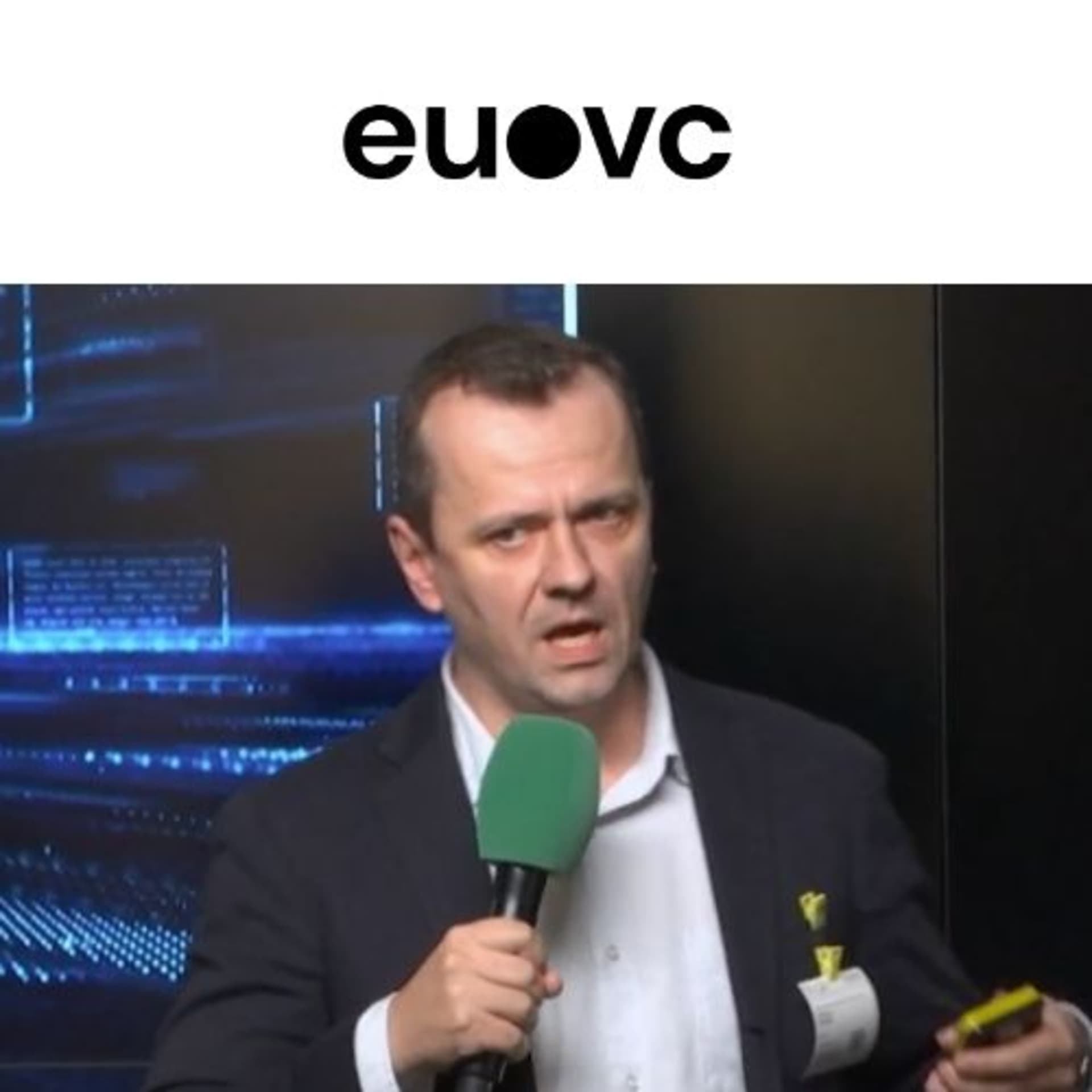
Overview In this captivating episode of EUVC, co-hosts Andreas Munk Holm and David Cruz e Silva feature Marius Istrate, who discusses the pressing need for inspirational leadership in Europe during the EUVC Summit 2025. Rather than focusing on traditional VC discussions, Marius emphasizes the importance of clarity, empathy, and ownership in leadership, proposing a distinct European identity that moves away from the Silicon Valley model.
Key Concepts and Discussions
Inspirational Leadership
- Definition and Importance:
- Leadership transcends power; it is rooted in clarity, empathy, and ownership.
- Marius stresses that inspirational leaders are not just visionary but also possess a deep understanding of the challenges faced by their communities.
- European Context:
- Marius articulates that Europe's focus should not be on emulating Silicon Valley but rather on embracing its unique cultural and moral compass.
- The need for European leaders to embody qualities that inspire citizens amidst political and societal challenges.
Reactions to Leadership Challenges
- Critiques of Silicon Valley Mimicry:
- Marius discusses the numerous European regions that aspire to be the "Silicon Valley of Europe," arguing that this obsession is a distraction.
- He advocates for each city to shine in its own right (e.g., Bucharest, London, Brussels) and develop a local identity.
- Perceptions of Capability:
- Some reactions to Marius's ambition of producing "10 unicorns in 10 years" have been skepticism and dismissal, indicating a broader perception of European inferiority.
- He challenges this notion by advocating for a mindset shift — moving from a sense of fairness to a sense of greatness.
Core Arguments on Leadership
- Fairness vs. Dignity:
- Marius emphasizes the European perspective on fairness, noting societal frustrations about employment and retirement insecurity.
- He argues that people desire dignity and empathy from their leaders, which can foster a more engaged citizenry.
- Political Leadership vs. Venture Capital:
- Marius contrasts the two realms, suggesting that while venture capital is exclusive and focused on outliers, political leadership should aim to include and uplift the entire populace.
- Call for Action:
- Inspirational leadership is framed as essential in contemporary Europe, particularly in combating populism and fostering a unified vision for the future.
- He invites listeners to engage in meaningful conversations about defining European leadership collaboratively.
Conclusion Marius Istrate's address at the EUVC Summit serves as both a critique and a call to action for European leaders in the tech and venture capital sectors to step into a role that reflects the continent's values and aspirations. His plea for a renaissance of purpose reflects a desire for a more cohesive and inspiring leadership approach that resonates with the populace, urging a collective commitment to build a future that is distinctly European.
Key Quotes
- “It’s great to win together with others. But we should be capable of winning alone if needed.”
- “People don’t want perfection. They want dignity. And when possible, empathy.”
- “Give us something to hope for—something we can call our own.”
Partners Acknowledgment The episode also recognizes key partners who supported the EUVC Summit, such as HSBC Innovation Banking, Google Cloud, and various other organizations that contribute to the European venture ecosystem. These partnerships reinforce the summit's mission and the collaborative spirit needed to foster growth and innovation.
---
This summary captures the essence of Marius Istrate's insights on the need for transformative leadership in Europe, stressing the importance of local identity over imitation and advocating for a future marked by dignity and inspiration.
Written by AI. May contain mistakes. Listen to the episode to check what was said.
Transcript
Automatic transcript. May contain errors.0:00Europe's future depends on bold political leadership that embraces technology as the disruptive but powerful force it is. As the U.S. and China fight it out, Europe must decide. Will it shape its own destiny or remain at the mercy of foreign innovation and capital? Europe famously has two engines, Germany and France. They drive the European economy forward. They also determine Europe's politics. But right now, both engines are stored. Enter Marius Istra, the former chief people officer at UiPath, who helped scale the company from 100 to over 3 ,000 employees across more than 50 offices. It's just what I believe right now, that you need to go full circle.
0:42I think you need to see all facets of work, you know, as an entrepreneur to respect what other people are putting in for you. Now, as chairman of Tech Angels Romania, he's backing the next wave of European founders, pushing for 10 unicorns in 10 years. I've been a follower of great leaders, And I know the kind of energy and passion and the number of sleepless nights it takes to help build something great. Europe's founders embody the leadership Europe needs, visionary, relentless, and committed to big outcomes. The question is, how do we inspire our political leaders to be more like them? Hi everyone, I realize being here on stage instead of all of us having a break is making me immensely unpopular right now.
1:31And I'm about to become even more unpopular. I'm about to start my presentation about European inspirational leadership that I have researched a little bit over the last few months with two quotes from two French statesmen here in London. So, you know, again, I don't expect this to make me more popular, but I thought since we talked about geopolitics today, since we talked about the ties between Europe and the U.S., I really searched for leaders who embody this vision and this narrative that, yes, it's great to win together when possible with others, but we should be capable of winning alone if needed.
2:15And the two quotes that I found are from De Gaulle and from Emmanuel Macron, you know, 65, 60 odd years apart. Those of you who are mean towards the French might argue, you know, broken clocks, clocks shows the right time two times per day and the French are right two times per century. but I am going to refer to the fact that the underlying statements and the underlying truth here is that indeed we should be capable of winning alone. And when I started this presentation and when I was invited to talk about European inspirational leadership, the things that have happened over the past six months had not happened.
3:03So this is a conversation dating back to October and November. This discussion about strategic autonomy and whether or not we're capable of making it alone, it's kind of brought back into consciousness right now. But I think both of them are right. I think we were very lucky that Emmanuel Macron was still in office when Trump retook office. That is my personal opinion. And since the French were right, the rest of the presentation will be in French. So if you're not fluent in French, I'm sorry. That's it. That's it. That's it. That's it. I'm kidding, je plaisante. Happy to talk to you in French or in English.
3:41I'm going to get back to the subject, though, now, and the core of the subject and why I care about European inspirational leadership and why this kind of subject came about. So, as you've heard, I've been leading the largest angel group in Romania and, frankly, in Southeastern Europe for the past couple of years, and last year we came out with a pretty bold mission, but a mission that's grounded in economic facts. You've seen before that you have a high density of technical talent in Eastern Europe, and you have success stories like UiPath, like PayHawk, like Vinted, 11 Labs, that have inspired people, executives, founders of those companies, people who worked at those companies to contribute more.
4:28And quite frankly, we are in this unique and good position where technology is a great contributor to those economies. So in the case of Romania, where I'm from, technology is second or third largest contributor to the GDP of the country every single year for the past seven or eight years. And we believe it's not unusual for countries with economies of that size to generate a number of very valuable companies. For me, the idea was to articulate this in a way that's clear, that's clear for those participating in the ecosystem, just to give a North Star, right? And say what you will, 10 unicorns in 10 years, it's short, it's clear, it's punchy.
5:14But it generated a lot of, I wouldn't say noise, but reactions, and I want to talk about some of those reactions because they inspired me to talk a little bit about this, about the need for inspirational leadership more broadly in Europe. So the first reaction is you make a statement like this and you kind of chart a path, and suddenly it's, you know, you should get into politics because you're good at this. So, you know, I want to show you what I believe VC people into politics look like. I don't know if you know the scene, but it's the vice president of the U.S. kind of dropping the small award that he was granting out.
5:52So I want to deconstruct this trope a little bit of people who are good at charting a path or laying out a vision should get into politics. If all the people who are good at this in every domain would go into politics, we would be left with no leaders in other domains. So I don't believe that inherently if you're capable of that, you should go into politics. I think there are people who are good at politics and they should be the one doing politics, right? That's one thing. I also, and I'm going to close this chapter with this, venture capital, in my view, is fundamentally different from politics in multiple ways.
6:30Politics is inclusive. Venture capitalism is exclusive, by definition. You identify outliers. In politics, you bring everybody along. That's the role of a political leader, to bring everybody along into the journey. Venture capital is about strong convictions loosely held. politics is about fuzzy convictions strongly held. People are good. I care for people, right? These are political statements. And there are a number of other things that I think contrast these two domains fairly well. I'm happy to talk them through with you over a glass of wine later today. Second kind of reaction that we got was, yes, let's create the Silicon Valley of Europe.
7:19You've heard this numerous times. If we look at the map and we put a pin into every single place that has been called the Silicon Valley of Europe, it's full of pins, right? Silicon Valley, well, except for the fact that historically it just happened to be there because William Shockley's mother was living in Palo Alto. That's the reason why Silicon Valley is in Palo Alto and the surrounding regions. Beyond that, Silicon Valley is a state of mind, not a place. And the only thing I will say about this is that I believe we don't need a Silicon Valley of Europe. I think Bucharest should be the Bucharest of Europe.
7:55I think London should be the London of Europe. I think Brussels should be the Brussels of Europe and Paris, so that my French friends forgive me for my earlier statements, should be the Paris of Europe and that's it. And it's doing a decent job at that, to be fair. So, you know, I'll leave it at that with the Silicon Valley of Europe. Third reaction was it can never be done. We are too far behind. Of course it can never be done when the first thing you're thinking about, this was supposed to be an animation, is getting up from your desk at 5.59pm and hitting home. I'll just say this with regards to how much effort we are willing to put into this.
8:31There's a fundamental difference between us and Americans, it's true, and Warren Buffett outlined this very well. He says, and I quote, if you want to achieve something in America, appeal to people's sense of greatness, not to people's sense of fairness. In Europe, it seems to be the other way around. We care a lot about things being fair, right? It's not fair that I should work more than my parents. It's not fair that I should live in a world where returns for people as they grow old are diminishing because we don't have enough pension funds. It's not fair. It's not fair. Well, it isn't fair.
9:07Life isn't fair. Grow up. And last but not least, the reaction I got most often was, you're crazy. Listen, in absolute terms, I probably am, but in relative terms, it shouldn't seem like I'm crazy. And this is the core of the matter. What I'm trying to relate to you here is, how do we get to a point where we have sufficiently strong political leaders so that people like me don't seem crazy? Again, it's not that we're not, it's that we shouldn't seem crazy, right? In relative terms, we shouldn't look like we're crazy. So what can our political leaders do to make me look normal? First of all, be competent and hardworking.
9:48I think that's a baseline, right, in whatever you do, in whatever you do in life. And to be fair, those of us who lead us in public administration, in public policy and regulation, which we hold so dear here in Europe, they finish very good schools, whether it's law schools, political science, history, philosophy. There are people who finish great schools, right? So we expect them to be competent and hardworking. We expect political leaders to treat people with dignity and with empathy. I'm not saying respect, and I'm purposely not saying respect. I think inspirational leadership in Europe over the next few decades is going to require all of us having a deeper understanding of this.
10:31All people, independent of their political views today, expect to be treated with dignity, like human beings, and with empathy when possible. And I think that word empathy makes the difference between inspirational political leadership and political leadership, period. Well, you know, this is... I didn't even know when I started talking about this a few months back how true this would be today. You know, stand up to bullies and defend those in need. I mean, it seems obvious, right? But it's not. And to put it in very plain terms, we can't just bow our heads anymore. We need to stand up to bullies, and I expect our political leaders to do that.
11:15And it shouldn't be my job to go and do that because nobody else wants to. It shouldn't be any of our jobs to do that because our political leaders don't want to do that. They should want to do that. Give us something to hope for that we can call our own. And this is why the presentation is about European inspirational leadership and not something more broad, something that we can call our own. And these are the closing thoughts I would like to leave you with. Thank you very much for your time and hope to have some engaging conversations with you later today. Thank you. Before you go, I just want to give a massive shout out to the partners who made the EUVC Summit and Awards possible.
11:58So please do not tune out. We're partnered with these firms because they're great people with offerings that we know from our friends in the ecosystem are truly world class. First up, I want to give a big thanks to HSBC Innovation Banking. They helped us incept the awards in the very beginning. And truly, they are the leading bank for anyone in European venture. There's a reason why everyone knows them. Google Cloud, they were our venue hosted the summit. What a team, what a big effort they put on to help us. We're hugely grateful. Make sure to reach out to Arabella or Oksana at the Google Cloud team to hear how they can help you as well as your portfolio.
12:35Massive credits goes to them. Ace Alternatives, we have so many friends in the Berlin ecosystem partnered with these guys. Just the best fund ops team around. And as with any good restaurant, where the locals are is also where you get the best service. And now they're expanding across Europe, so they're definitely someone to talk to. Hainspoon, they're longtime partners of ours in both our own legal work They're great supporters of us here at EUBC, and I definitely think that they are one of the go-to legal teams to have in your corner. CW Communications, our dear friends who helped us secure CNBC, Bloomberg, Financial Times, and many more for this summer.
13:13It's a joy working with Dan and Kathy and the team. Fundcraft, Digital Native, Full Suite, Lux Headquarter, and a great partner as you grow your firm out of Luxembourg. Definitely a fund admin to consider in your stack. I can only say that the team are incredible to work with. I'm very thankful that I've gotten to know them. I think they're one of the up and coming fund admins that you want to be thinking about. Portfolio IQ by Synaptic. You may know them for the Discover tool, which is branded on a Synaptic, but Portfolio IQ is absolutely a product you should know because there's no one that understands intelligence better than this team.
13:50And finally, Goodwin. They are a truly world-class legal partner you can trust. They're hands-on, business-oriented, an expert in everything and anything transatlantic. So those were our partners for the summit and awards. I know this might have been a bit long and boring, but really, if you have these guys on your side, I don't think your firm could be in any better hands. And also they're helping us do what we're doing every day for you.
From the publisher
At EUVC Summit 2025, Marius Istrate didn’t come to pitch a fund or debate capital structures.
He came to talk about something harder to define—but more urgent than ever: inspirational European leadership.
And it wasn’t all comfortable.
“It’s great to win together with others. But we should be capable of winning alone if needed.”
Marius spoke as someone who’s helped shape ecosystems from the ground up. As the leader of Romania’s largest angel group, he’s seen firsthand what local ambition looks like—and what it lacks.
“I don’t want to be the VC who accidentally becomes a politician because no one else stepped up.”
But leadership, he argued, isn’t about power. It’s about clarity, empathy, and ownership.
“If you pinned every place in Europe that calls itself the ‘Silicon Valley of Europe,’ the map would collapse.”
The obsession with copying Silicon Valley is a distraction. What Europe needs isn’t mimicry—it’s confidence in its own identity. And that means policies, capital structures, and culture that reflect our values, not someone else’s blueprint.
One of the most poignant parts of Marius’ talk centered on something distinctly European:
“It’s not fair that I should work more than my parents. It’s not fair that my retirement is uncertain.”
That sense of fairness—a shared European moral compass—isn’t a bug. It’s a feature.
And it can inform the kind of political and ecosystem leadership we need now.
“People don’t want perfection. They want dignity. And when possible, empathy.”
In a time of rising populism and political gridlock, this felt like a quiet manifesto for something different.
“It shouldn’t be our job to inspire people—because our political leaders should already be doing that.”
Marius wasn’t calling for VCs to become politicians. He was calling for a renaissance of purpose in Europe. For a generation of builders, thinkers, and yes, investors, to step up and fill the vacuum—not with slogans, but with systems, strategy, and soul.
“Give us something to hope for—something we can call our own.”
This wasn’t a policy talk. It was a wake-up call.
And in classic EUVC fashion, it ended with an open invitation: Let’s talk more. Let’s build better. Let’s define what European leadership really means—together.
From VC to VisionSilicon Valley of Europe? Please.Fairness, Dignity, EmpathyA Call to Build What’s Ours


