
In short
Podcast Summary: EUVC Episode E586 - EUVC Summit 2025
Overview
- Podcast Title: EUVC
- Episode Title: E586 | EUVC Summit 2025 | Itxaso del Palacio, Notion Capital: Building European Cloud Challengers
- Description: The episode discusses insights from the EUVC Summit 2025, focusing on a data set of 100 breakout startups in Europe, highlighting trends in the venture capital landscape and analyzing the characteristics of successful companies.
Key Insights from the Episode
Dominance of Major Markets
- Approximately 75% of the startups in the discussed cohort are based in Germany, France, and the UK.
- This dominance is indicative of the maturity of these ecosystems, posing challenges for supporting breakout teams in emerging regions (Nordics, Baltics, Southern Europe, CEE).
Shifts in Sector Focus
- Fintech has dropped significantly in ranking, from 12% last year to 5% this year, marking the first decline in its sector influence.
- A notable increase in AI-native sales and marketing tools, which are geared towards enhancing company growth and customer acquisition.
Emergence of Solo Founders
- A significant rise in solo-founders is observed, attributed to:
- Increased confidence in focused execution.
- Enhanced early-stage tooling and support.
- A shift in VC biases, as many founders successfully operate without co-founders.
AI-Native Startups
- 49% of the cohort are described as AI-native, meaning AI is integral to their products rather than an added feature.
- Founders are progressing towards verticalized applications and monetizing through specific use-case depth.
- Comparison of employee sizes: previous cohort had an average of 25 employees, whereas this year’s cohort averages 14 employees, representing a 40% decrease.
Tool Adoption and Market Behavior
- Low tool loyalty among founders, indicative of rapid evolution in AI-native teams who continuously optimize their tech stacks.
- A controversial assertion that European AI regulation may actually accelerate enterprise adoption, providing clarity and frameworks for corporate buyers.
Future Predictions
- AI is expected to become a fundamental platform, similar to cloud and mobile technologies.
- The trend towards specialized, lean teams will continue, with a focus on quality over quantity.
- A shorter time frame to reach Series A funding is anticipated in the coming years.
- Europe is likely to enhance its focus on AI applications, while the U.S. may continue to prioritize LLMs (Large Language Models).
Final Takeaway
- The episode underscores the notion that AI-native companies are not merely a trend but represent a new category of business, positioning Europe as a leader in this domain with a focus on efficiency, precision, and innovation.
Acknowledgments The episode concludes with thanks to partners who supported the EUVC Summit, highlighting their contributions to the European venture ecosystem.
---
This summary encapsulates the discussions and insights from the EUVC Summit 2025, offering a comprehensive view of the current landscape and future directions in European venture capital, particularly in the context of cloud challengers and AI innovation.
Written by AI. May contain mistakes. Listen to the episode to check what was said.
Transcript
Automatic transcript. May contain errors.0:00Today's breakout B2B startups aren't chasing blitz scale, they're mastering precision. They're built by experienced operator founders who know how to hire lean, ship fast, and win market share without burning capital. Ichazo del Palazzo of Notion Capital is tuned into this shift. She backs cloud challengers who start AI native, lead with product, and bring commercial rigor from day one. These founders aren't waiting for big rounds. They're building with small teams, short feedback loops, and sharp go-to-market motions. They're not just solving problems, they're building infrastructures others will rely on.
0:41It's not about being loud. It's about being right and relentless. Capital efficient, design obsessed, distribution savvy. That's what Europe's next SaaS giants will look like. And Ichazo is backing them early. So, Cloud Challengers are the next generation of B2B software disruptors. They are those companies that are reinventing the way B2B businesses are consuming, are building, are buying and sharing software in the cloud. Hi, everyone. My name is Ichazo, and I'm a GP at Notion Capital, which is a B2B software investor in Europe. for the last 15 years, we've been backing the next generation of the Cloud Challenger founders.
1:30And since 2022, we started a report, an analysis on the 100 up-and-coming and most likely to be the next generation of the big cloud players in the world. So what we've done is that we have a tech and data infrastructure internally. Maybe some of you know we've been building data and infrastructure for the last 10 years. And what we've done is we layered on a scoring methodology on top of it to identify the most promising businesses within Europe in the cloud and software space. And so we use a methodology based on three different... Oops. methodology based on three different pillars. The first one, we look at the founders, the founder's background, whether they have relevant background in the industry, they are successful founders before, they are able to attract really good talent, and also the growth, the relative growth of those companies in terms of employees.
2:39The second thing that we look at is the fundraising in background of the companies, looking at how much money they raised in a certain period of time, so to look at the momentum and the type of investors they raise money from. And finally, we look at product feedback in places like Product Hunt or GitHub, and also in some publications like Gartner or Forrester. Just to be clear, we started with a sample this year of over 20 ,000 businesses in Europe, all of them that have raised less than five or six million. So they are before series A rounds. And we identify from those the leading 100. And I know you all want to know what this 100 look like.
3:23I'm not going one on one through all of those, but I'm showing you here just a sample. Oops. OK. That wasn't it. That wasn't a sample. I don't know why this video is playing. But why is this playing? Can we go back to the slides? And so we can see the sample. Anyway, there was a sample of companies in the slides, in slide number two or three, which basically shows some of the companies that have gone to raise a lot of money in the space. Can we? Back. to the companies, please. Also because I don't know some of the numbers. I can mess this in here that they'll have to fix this. PowerPoint, exactly.
4:15But hey, I'm not here to tell you about and promote my Cloud Challenger report. I'm here to tell you about the characteristics of those companies because I do believe that by looking at the characteristics of the 100 more promising businesses every year, we can identify where the trends are going in the market particularly in the B2B space. So I have divided the outcomes or the key insights in three different buckets. I'm going to start with general insights on those companies. I'm going to move to talk a little bit. Who? Those are... Where is the video going? You guys want to watch the video again?
4:53I'm going to move to talk about the insights related with AI particularly and then at the end I'm going to talk a little bit more about what we think we will see next year within those companies looking at the trends in the market. Okay, so the first insights, which are the key insights, and I will love that slide on the screen, because I don't know all the numbers, basically. The first insight is that around 75 % of the businesses in this 100 are based in Germany, France, and the UK. And I think that's an interesting number. And as we've seen today, we've been talking a lot about some emerging ecosystems.
5:41And I think everyone gets really excited about those new ecosystems coming up and really creating or being the home for some of the new unicorns. But the reality is that in the last three to four years, the majority of those companies, 70 to 75 percent consistently have been from the UK, France and Germany. The second thing is related. Here you can see some of the companies. Woohoo! Some of the companies that I mentioned before, that they were in previous reports and have gone to raise quite a lot of money. By the way, those companies, the 100 is all published on our website. If you cannot find them, because obviously there's always a lot of information, just message me and I can send you the whole list for this year.
6:31But we have invested in many of those companies that they were there, and they've gone to do great things. So some of the companies in this list are also in our portfolio following that. Let's see if it goes. It doesn't work anymore. Can you go to the next slide?
6:53Exactly. Thank you. Just let's keep this one. The second thing I want to talk about is the sectors in which we are seeing those companies. Interesting enough, in the last two, three years, most of the companies that we've seen, they've been in the fintech space. And for the first time, fintech has gone down in this ranking. And they moved from 12%, in fact, last year, to 5%. And I'm talking about pure fintech businesses. So we still are seeing a lot of fintech businesses, but we see fintech in combination with other applications and in other verticals, in verticalized solutions and so on. The interesting part is that the first vertical this year, for the first time, is in the developer tool space.
7:46So there are a lot of companies coming up in Europe on the developer tool ecosystem. them. And that includes AI solutions for developers to be able to more efficiently build LLMs, train LLMs, deploy LLMs, or there are in some cases solutions that are provided to developers to be able to code more efficiently, right? So some of them are for developers for their job that they are doing on the LLMS space or using AI to code more efficiently. And finally, there is a new sector coming up that we didn't have in previous years, and that is the sales and marketing. I think everybody around the table who is in the investment side, we've seen so many new sales and marketing tools that they are using AI for improving their go-to-market and attract new customers.
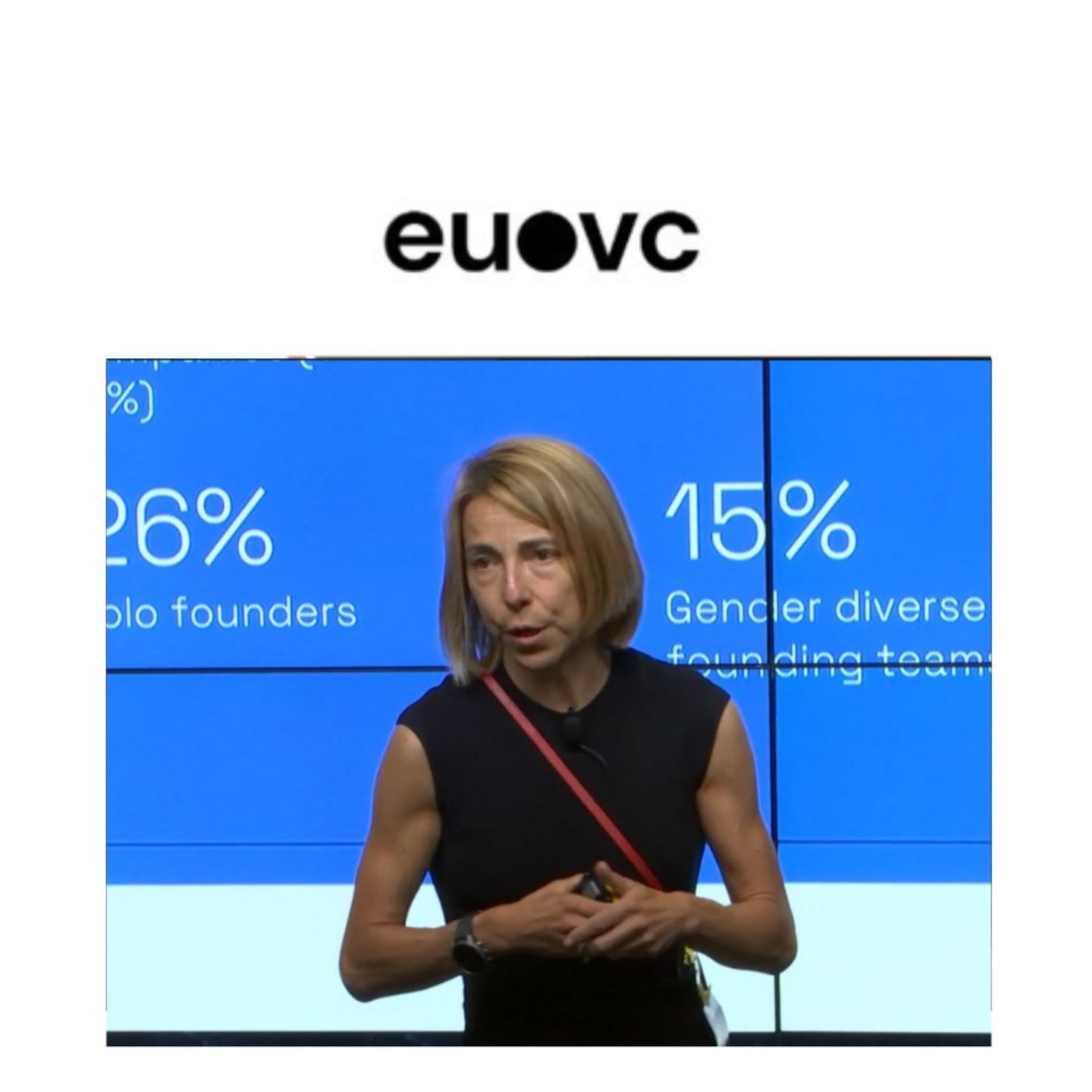
8:50In terms of founding teams, we see that there is a significant increase in solo founders in those companies, which is interesting. It's a higher risk appetite by solo founders. And in fact, there is an increase on female solo founders, too, which is right now around 5 % of the companies, which is great to see. And there is about 15 % of businesses that have gender diverse founding teams these days, which is a little bit higher than previous years, too, which is also a great thing to see. So those are some general insights. I know everybody wants to hear about what is going on in AI and what those companies are doing with AI.
9:37So almost half of those companies, 49%, so almost half of the companies are AI native businesses. And we look at all the companies one by one. In fact, we interviewed most of the companies, if not all of them. We reach out to them and we've been talking to them. So those are AI native businesses, which means that they would not be able to exist without AI. And they are embedding a YANG within the product in a certain way. And so based on that, it is interesting to see that the number of employees of those companies this year, which is at the same stage as last year, have 40 % less employees than last year.
10:23Last year, 100 cohort had an average of 25 employees. This year, cohorts has an average of 14 employees. So that's a 40 % less. It's a significant cut from last year. And in fact, we've seen that there are many more specialized roles in the companies. So the titles of the people in the companies are much more specialized to those roles. In terms of the interviews, because we conducted interviews with all these companies, we basically got feedback from the European companies that there is a very still a very low adoption of AI from enterprises they see there is more appetite in the US for an adoption of AI there are a lot of POCs happening but it's very difficult to move from POC to full deployment and that's that's something that many of the founders have mentioned and a couple of points on the go to market, for those who know me, I've been always in love with PLG because I love products and you always want to put your product first.
11:34The reality is that today the search behaviors have changed and people are not going to Google anymore to search and rather that they are using agentic search solutions. And because of that, the top-down approaches have become the best way to reach out to the customers, in fact, for those companies. And finally, talking about DLLMs and the adoption of the different DLLMs, there is very low loyalty. So we ask those companies about the language models that they are using, and the reality is that they are not attached to any of them for any specific reason, and they change them very easily. So there is very low loyalty, and I think most of us have already noticed that many of those horizontal LLM providers have already moved to build applications on top of the LLMs to be able to monetize because in reality, it's getting commoditized in the space, and we've seen it from the companies.
12:40So based on this, obviously, we will run our Cloud Challenger report next year. What do we expect to see? So the first one is we are going to move. We are at 50%, 49%, 50 % of companies AI native today. We believe that AI is going to become a platform. In the same way that we've seen cloud and mobile becoming a platform, meaning all the companies are using it as a mean to go to market, AI is going to be embedded within every company that we see probably by next year. That's going to be a reality. The second thing is that we are going to see even more high-quality specialized team, less people, less in quantity, and more in quality of those teams, specialized teams, and less employees, and more efficiencies built through AI within those teams.
13:40The third thing that we are going to see, and I think everybody is noticing, that companies are getting into the Series A metrics much faster. And so the time to Series A is going to be shorter. Every year we've been measuring the time between their seed and Series A of all those companies. So we are going to be able to show whether this time is shortening that we believe is true. The number four is that I think we will continue to see Europe focusing on applications. According to Dealroom, we know that 25 % of the AI investment in the world came to Europe, again, 75%, the majority in the U.S.
14:24and other places around the world. And we think that is going to increase, and the U.S. will continue to focus on LLMs. And finally, we believe the enterprise readiness is going to be there for next year. And in fact, I'm going to be a little bit controversial on this one because I know everyone is talking about European regulation and the difficulties that that creates. I do believe that having a framework in which corporates will know what they can do and what they cannot do with AI is going to make it easy for them to decide whether they are going to use AI or not. So I do believe that Europe, in fact, might be on the first place, on the first mover in that sense to adopt AI through enterprises.
15:11So that's it. Thank you. Before you go, I just want to give a massive shout out to the partners who made the EUVC Summit and awards possible. So please do not tune out. We're partnering with these firms because they're great people with offerings that we know from our friends in the ecosystem are truly world class. First up, I want to give a big thanks to HSBC Innovation Banking. They helped us incept the awards in the very beginning. And truly, they are the leading bank for anyone in European venture. There's a reason why everyone knows them. Google Cloud, they were our venue hosted the summit.
15:45What a team, what a big effort they put on to help us. We're hugely grateful. Make sure to reach out to Arabella or Oksana at the Google Cloud team to hear how they can help you as well as your portfolio. massive credits goes to them. Ace Alternatives, we have so many friends in the Berlin ecosystem partnered with these guys. Just the best fund ops team around. And as with any good restaurant, where the locals are is also where you get the best service. And now they're expanding across Europe. So they're definitely someone to talk to. Hainspoon, they're longtime partners of ours in both our own legal work.
16:20They're great supporters of us here at EUEC. And I definitely think that they are one of the go-to legal teams to have in your corner. CW Communications, our dear friends who helped us secure CNBC, Bloomberg, Financial Times, and many more for this summer. It's a joy working with Dan and Kathy and the team. The Fundcraft, Digital Native, Full Suite, Lux Headquarter, and a great partner as you grow your firm out of Luxembourg. Definitely a fund admin to consider in your stack. I can only say that the team are incredible to work with. I'm very thankful that I've gotten to know them. I think they're one of the up and coming fund admins that you want to be thinking about.
16:59Portfolio IQ by Synaptic. You may know them for the Discover tool, which is branded on a Synaptic, but Portfolio IQ is absolutely a product you should know because there's no one that understands intelligence better than this team. And finally, Goodwin. They are a truly world-class legal partner you can trust. They're hands-on, business-oriented, an expert in everything and anything transatlantic. So those were our partners for the summit and awards. I know this might've been a bit long and boring, but really, if you have these guys on your side, I don't think your firm could be in any better hands.
17:33And also they're helping us do what we're doing every day for you.
From the publisher
At EUVC Summit 2025, one of the most anticipated sessions broke down a powerful data set: 100 of Europe’s breakout startups. This wasn’t theory—it was company-by-company insight, straight from interviews and bottom-up analysis.
Yes, there were rogue slides.
Yes, the crowd wanted to skip to the AI part.
And yes, it delivered.
~75% of these startups are based in Germany, France, and the UK.
Despite growing noise around new hubs, Europe’s big three remain dominant. It reflects ecosystem maturity—but also a challenge: how do we better back breakout teams in the Nordics, Baltics, Southern Europe, and CEE?
For the first time in years, Fintech dropped in sector rankings.
Instead, we saw a wave of AI-native sales and marketing tools—building products that help companies grow smarter, automate go-to-market, and personalize customer acquisition at scale.
“This year’s cohort is selling before building. AI is their leverage.”
One of the most notable shifts: a significant increase in solo-founder companies.
This reflects:
A rise in repeat operators
Greater early-stage tooling
More confidence in focused execution
It also implies VCs may need to shift their bias—many of these founders are no longer waiting for a co-founder to “complete” them.
The moment everyone waited for: AI-native insights.
49% of these 100 startups are AI-native at their core.
This means:
AI is not bolted on—it's the product itself
Many founders have already moved beyond horizontal LLMs to verticalized applications
They're monetizing via use-case depth, not just model architecture
Last year’s 100 had an average of 25 employees per company.
This year’s cohort? Just 14. That’s a 40% drop.
But don’t mistake that for weakness—roles are more specialized, and teams are more surgical. These aren’t MVPs—they’re hyper-focused execution machines.
“Today’s teams are smaller, sharper, and trained on efficiency from Day 1.”
Across hundreds of founder interviews, one theme stood out:
Tool loyalty is low.
Founders are switching infra, models, APIs, and tooling with no hesitation.
That’s not a sign of flakiness—it’s a sign of rapid evolution, where AI-native teams optimize continuously.
Controversially, the speaker closed with a contrarian take:
“I believe European AI regulation will actually accelerate enterprise adoption.”
Why?
Clarity breeds confidence
Corporate buyers need frameworks
Knowing what’s allowed = faster go/no-go decisions
In a twist, Europe might become the first-mover on enterprise AI—not in spite of regulation, but because of it.
Final Message:
“AI-native is not a trend. It's a new category of company. And Europe is building it—faster and leaner than ever before.”
Let’s keep watching the signals. Let’s keep fueling the flywheel.
🇫🇷🇩🇪🇬🇧 Still Rule the Map📉 Fintech Cools, GTM Tools Rise🧍 Solo Founders On the Rise💡 AI-Native: Not Just a Feature—A Foundation🧑💻 Teams Are Leaner, Sharper🔄 Low Loyalty, High Velocity🇪🇺 Regulation: Burden or Opportunity?


