
In short
EUVC Podcast Episode Summary
Episode Title
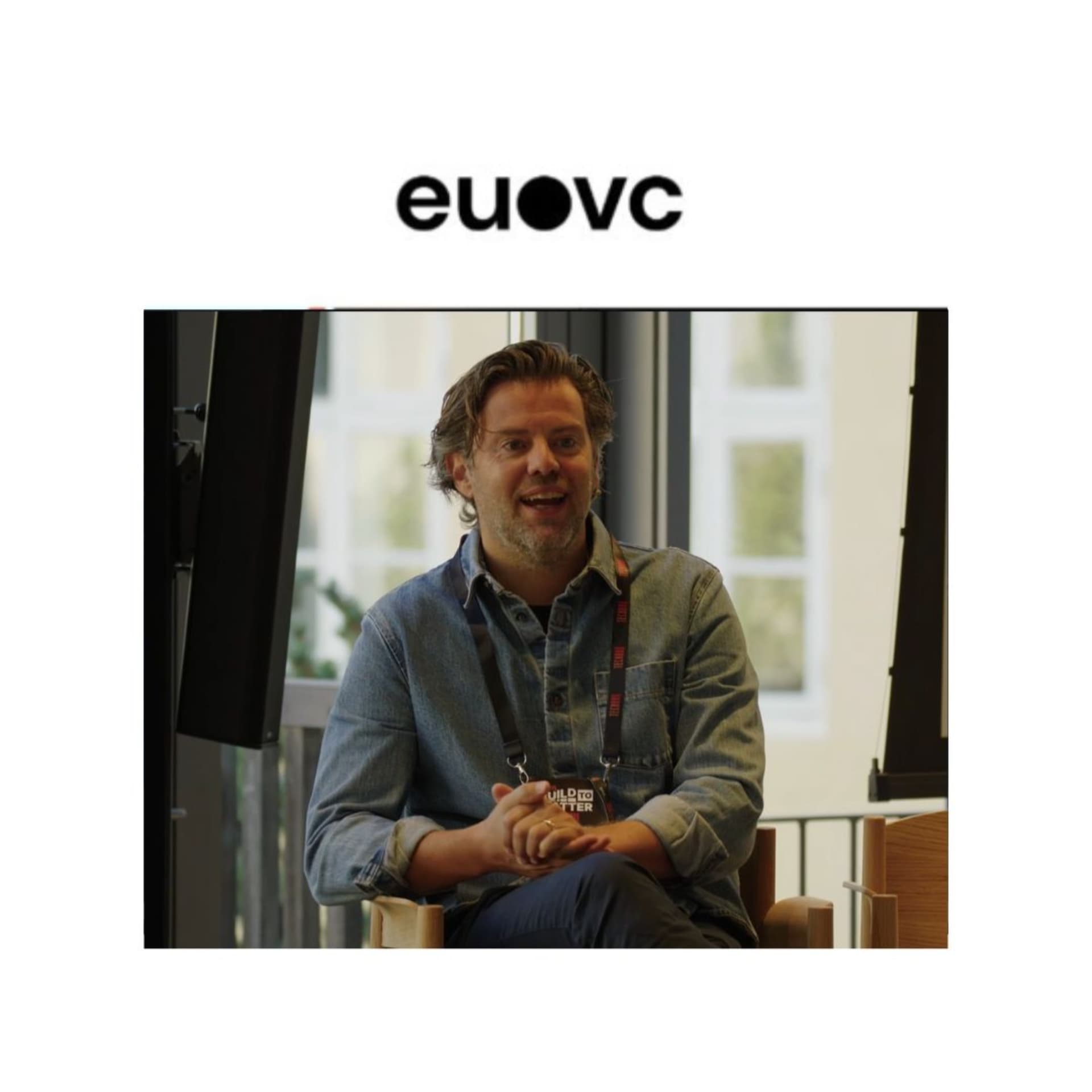
E595 | EUCVC Summit 2025: Kasper Hulthin & Heini Zachariassen: Getting Acquired by a Corporate
Podcast Hosts
- Andreas Munk Holm
- David Cruz e Silva
Episode Overview In this episode of EUCVC Summit Talks, co-hosts discuss the realities of corporate acquisitions with two seasoned founders:
- Kasper Hulthin: Co-founder of Peakon and Podio
- Heini Zachariassen: Founder of Vivino
Both guests share their experiences and insights on what happens post-acquisition, touching on themes such as culture shock, governance friction, and the balance between autonomy and scale.
Key Themes and Discussions
- The Acquisition Journey
- Initial Intent: Both founders did not initially design their companies with the intention of being acquired.
- Kasper's Exits:
- Podio: Acquired by Citrix in 2012, originally popularized as a no-code collaboration platform.
- Peakon: Sold to Workday for over $700 million in 2021, strategically aligned with Workday's HR offerings.
- Timing and Strategy:
- Importance of timing in the acquisition process.
- COVID-19 affected employee engagement needs, leading to the strategic acquisition by Workday.
- Cultural Integration Post-Acquisition
- Culture Shock: Founders often experience a clash between startup agility and corporate bureaucracy.
- Example: Citrix's initial integration approach led to disconnection and inefficiencies.
- Governance Friction:
- Founders may feel they transition from leadership to middle management within a corporate structure.
- Leadership teams from the acquiring firms may lack an understanding of startup dynamics, leading to failed projects.
- Success Rate of Acquisitions
- Mixed Outcomes:
- Kasper mentioned a 50-50 success rate for acquisitions, with neither Podio nor Peakon fully delivering on corporate expectations.
- Cultural clashes and risk aversion are common reasons for failures.
- Strategic Differences
- Startups vs Corporates:
- Corporates often allocate resources based on established products rather than on potential growth areas, which can stifle innovation.
- In startups, resources are typically focused on high-growth potential areas.
- Key Takeaways for Founders and Corporates
- For Founders:
- Understanding the implications of an acquisition, focusing on how to maintain the entrepreneurial spirit within a corporate context.
- Consider the timing of selling and the strategic fit with potential acquirers.
- For Corporates:
- Need to foster trust and agility within acquired teams to retain talent and maintain innovation.
- Recognizing the unique attributes of startups and adapting corporate structures to support, rather than stifle, these dynamics.
Conclusion This episode provides valuable insights for any corporate venturer, founder, or investor involved in M&A activities, highlighting the complex realities that accompany corporate acquisitions. The candid discussions between Kasper Hulthin and Heini Zachariassen reflect both the challenges and learnings derived from their unique experiences in the European VC landscape.
Follow the Podcast Stay updated with everything European VC at [eu.vc](https://eu.vc).
Written by AI. May contain mistakes. Listen to the episode to check what was said.
Transcript
Automatic transcript. May contain errors.0:00Startups dream of exits, but what happens next? Two of Europe's most seasoned founders, Kasper Hulten and Heine Zakariasen, share what it's really like to be acquired by a corporate. From culture shock to strategic alignment, they reveal the trade-offs, surprises, and truths most founders never hear before signing the dotted line. Here we go. Yeah? We're sitting. We're sitting. Yeah, we're sitting. Good morning. Good morning. How are we doing? Cool. Let's get going. We only have a very short time. Oh, my God, he's counting already. Okay, let's go. My name is Heinz Akharaasen. I'm the founder of Vivino.
0:39And I've actually never been on a journey like this, meaning selling to corporate. Many good reasons. Obviously, I could never get hired by a corporate and would last around four seconds in a corporate environment anyway. But that's why I'm super curious about Kasper, because he's done it a few times. We're both founders. But you've done it twice. Let's start with that. Let's go through the two of them to begin with. What were they? So, the first exit we did was a company called Podio, which was a no-code collaboration platform where you could build apps to run your custom workflows. That's become very popular again, but this was in 2012.
1:23We sold the company to Citrix, which at the time had GoTo platform. You all remember GoToMeeting. We tried desperately to tell them that that probably wouldn't last. We even built them soon, but that didn't work. But we can come back to that. We went back to Copenhagen, built another company called Picon, which was an employee engagement platform, which we sold to Workday in 2001. No, not 2001. 2021. Yeah, COVID, it fucked up everything. No one remembers COVID. No, that's true. Amazing. So how does that start, right? So you've done it twice, which means, like, I suspect that you actually designed the companies for selling to corporates.
2:04But how does that journey start? Is it M &A people starting very early to get in touch with you, or how does that go? So actually, we didn't design the companies to get acquired. No, but I think it's actually important. We did it to build the actual company, and I think that's why they ultimately had a value. In Podio's time, it was, I mean, I think the honest answer is we went to San Francisco. we managed to make a lot of noise. Obviously, there was the synchronous communication, which was the go-to meetings at the time. That was a very successful acquisition, actually, by Citrix. They bought a company called Expert City, made the go-to meeting.
2:45It was hundreds of millions of AR. And quite frankly, I think the leadership team was bought. And then these crazy Danish people came around, and we sort of formed this vision that you put synchronous and asynchronous together and angels will fall from the sky. And they kind of fell in love with us. Your position did really well back then. I remember that. Yeah, we were very good at making noise at the time. So I think that was less so of a corporate. That was the actual leadership team that sort of saw this and ended up acquiring us. And there was also a smaller acquisition, like$50 million plus.
3:26Whereas in Workday, it was a little bit more corporate. We had partnerships with Workday in the platform running for a while, so we had quite a lot of their customers. We actually ran some of their largest customers inside our, or our largest customers was kind of top 10 potential for them. And that became more of a corporate thing. That was more of a strategic buy for them. That was more of the street gig. COVID hit. We were doing real-time employee engagement. And when you run an HR platform and everyone left job, then everyone was excited about doing real-time. So one thing we've talked about earlier is also, so why did you sell and what's the timing of that sale?
4:15And I think in corporates, timing can be really important. It can be a very competitive environment, I would assume. So let's dig into a peek on a tiny bit of what happened there. Because like you say, it was a big strategic buy-sell. Why did you sell and why did they buy? We had plus 700 million reasons to sell as a start. This sounds like a really bad idea. No, but I think for us, it was like we had built a company. It was actually only five, six years old. We sold a company for$700 million plus. And when you run this company for a while, not everyone's like a hammer. and just keeps going forever.
4:55But you have to kind of change your own company. So it was a perfect time for us. I think for them, as I said, it was COVID times. The multiples were high. They could get a good return multiple-wise on our investment. I honestly think it has been a good investment ever since. Now it's all incorporated. And so now the acquisition is done. You guys go into the company. How does that go? Yeah, so I was actually only part of the Podio Times because in Picon I was already out sort of in the board. But in Podio Times, the interesting part as a founder is that the ones who buy your company is the leadership team.
5:40So your closest friends is the leadership team. But you actually operate as sort of a mid-level manager to some degree. and you see that it's a very interesting dynamic of seeing how a corporate works. So for me, it was a fantastic learning ground. We had this idea, they had this idea of putting synchronous and asynchronous together and the two by two, everything goes up to the far right and they hired like 50 people to build this thing, which obviously was called Project Zeus. All corporate projects are called Project Zeus or something like it. And at some point, we got a new GM at Citrix, and he came and he said, can you show us the demo?
6:24And the guy in head of it, he said, demo. And it's like, what do you mean? And the only thing they had was like 10 PowerPoint slides. There was 50 people working on this project. And this is where startups go to die in corporates. So if you look at Pecon after, if you look now, it's been a few years. So a lot of people joined. What happened to them? Did they stay? and if not actually podium we also stayed for two three years we managed to keep podium like pretty much its own unit it's still a still a company i've been trying to buy it again for a dollar a few times which it's like a very good cash machine but they want to sell it uh in in pecan they changed things very quickly which meant that quite a few people left like there's quite a few engineers that was heavily subsidized to stay.
7:16But I think that got integrated much faster. So that was kind of the difference. Okay. So I want to spend the last couple of minutes here on success rate. So it sounds like Podio was maybe not super successful for the corporate, whereas Picon was. 50-50, is that the average in the industry, or is that high or low? I guess it depends. I don't know the average, but obviously not every acquisition is successful. And I guess 50-50 is actually pretty good, to be honest. I don't know. But I don't necessarily think they've made the 50 million back for sure. Picon is on track to do. So I think it's okay, but it isn't easy to make it work.
8:04When it really fails, why does it fail? I think you have clash of cultures, first of all. Day one with Citrix back in the day, they sent the whole corporate team, the HR lady that came with all the anti-harassment clauses and all of that stuff, and we were all sitting around laughing. It's like, what is this? What are we going to use this for? So you have this clash, and I think you need to work that out. What about risk? What about risk aversion? Because that's sometimes the thing with corporates, they're afraid of taking risks. I found it more like, let's go. The main thing is you have in big corporates, you have a portfolio strategy.
8:41You have$100 and you need to divide it on like 15 or 10 different products. And corporates typically divide it so that the ones that's the biggest, which typically is the one that grows the slowest, they get the most amount of money because that's how you protect yourself. And the small ones that grow the fastest, they get the smallest amount of money. But in a startup, it's all the other way around. Like you bet your house on where the growth is. And I think that strategic clash can be tough. That's it. Thank you very much, Kasper. Thank you very much. Thank you.
From the publisher
Welcome back to the EUCVC Summit Talks, where we bring you candid conversations with Europe’s leading founders, corporate leaders, and investors shaping the future of venture collaboration.
In this episode, Kasper Hulthin, serial founder now at Future Five (and co-founder of Peakon, Podio, and others) and Heini Zachariassen, founder of Vivino, the world’s largest wine app and marketplace. Both have experienced firsthand what it means to be acquired by a corporate—and they don’t hold back on the reality behind the headlines.
From culture shock and governance friction to the trade-offs of autonomy versus scale, Kasper and Heini share the inside story of what happens post-acquisition. They also reflect on when collaboration works, how to preserve founder spirit, and what corporates must do to retain the trust and agility of entrepreneurial teams.
This is essential listening for any corporate venturer, founder, or investor navigating M&A.


