
In short
EUVC Podcast Episode E596 Summary
Episode Overview
- Podcast Title: EUVC
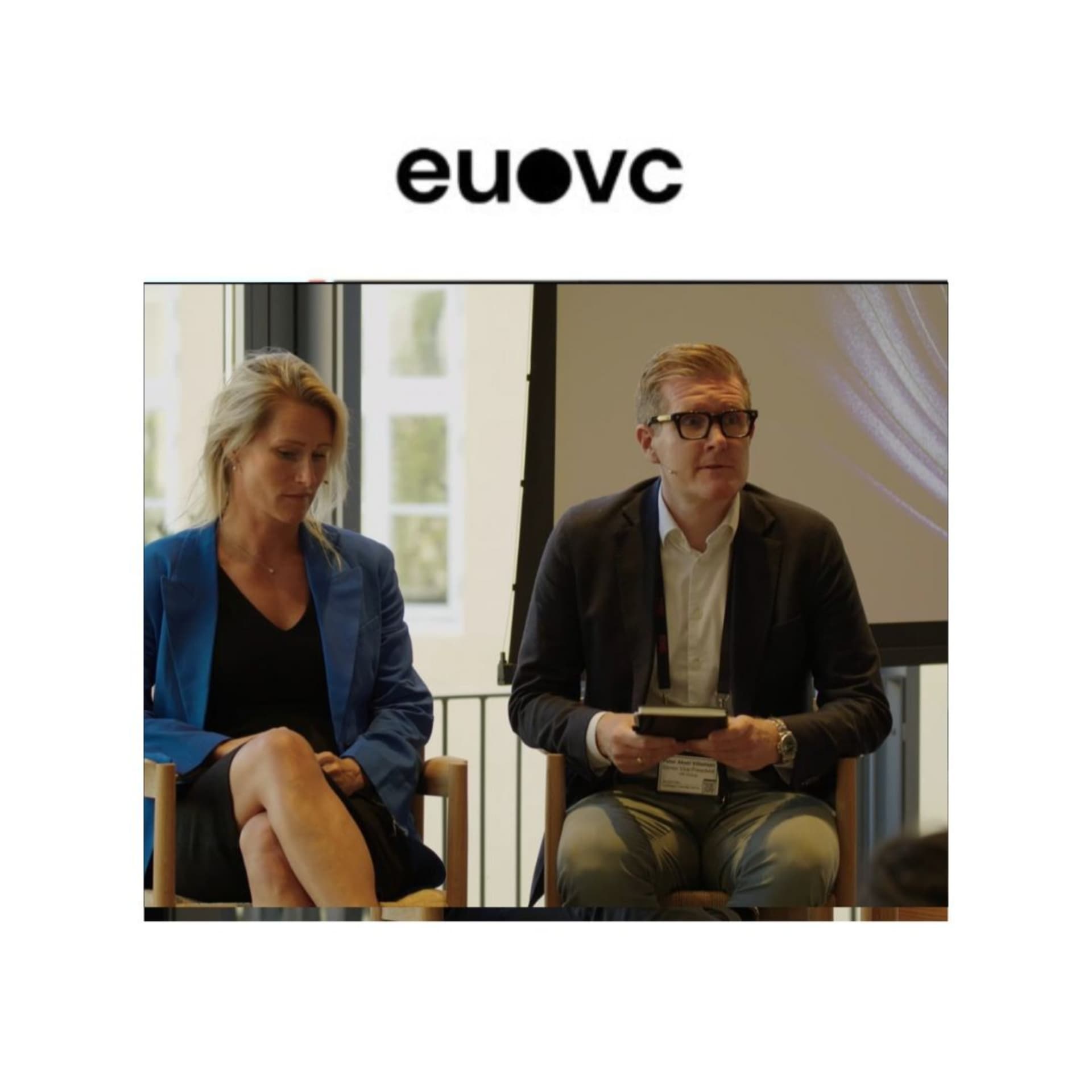
- Episode Title: E596 | EUCVC Summit 2025: Peter Aksel Villadsen, GN Hearing & Helle Hee, PwC: Integrating Acquired Companies
- Hosts: Andreas Munk Holm
- Guests: Peter Aksel Villadsen (GN Hearing), Helle Hee (PwC)
Episode Description This episode features a discussion on the complexities of post-merger integration (PMI) with a focus on how to successfully align strategy, culture, and operations after acquiring companies. The hosts and guests delve into common pitfalls, the importance of planning, and methods for ensuring a successful integration process.
Key Themes and Topics Covered
- Importance of Integration
- Opening Context: Many corporate acquisitions fail primarily due to poor integration strategies.
- Key Insight: A successful integration can create significant value, yet it is often mishandled.
- Pre-Close Preparations
- Day-1 Readiness: Immediate readiness on the first day is critical to capitalize on the momentum generated by the merger.
- Leadership Alignment: Clear leadership roles and responsibilities must be established prior to closing the deal.
- Culture and Talent Retention
- Protecting Culture: The integration must consider the unique culture of the acquired company to retain its talent and entrepreneurial spirit.
- Communication: Open channels for communication are vital to ease the transition for employees from both companies.
- Operating Model
- Decision Rights and Governance: Defining who makes decisions and how governance will be structured post-acquisition is crucial.
- Metrics that Matter: Establishing key performance indicators to measure integration success.
- Tech and Data Integration
- Risk Management: Identify "don’t touch yet" zones during integration to avoid disrupting critical operations.
- Sequencing: Plan the integration of technology systems carefully to minimize disruption.
- First 100 Days
- Locking In Success: Identify what changes to implement immediately and what to observe before making adjustments.
- Measuring Impact: Regular feedback and metrics should be evaluated throughout this period.
- Role of Corporate Venture Capital (CVC)
- CVC's Function: Acts as a sponsor, translator, and problem-solver during the integration process.
- Facilitating Synergies: Balancing corporate resources with the innovative capabilities of the acquired company.
- Common Failure Modes
- Early Warning Signs: Identifying potential pitfalls early in the integration process can help mitigate risks.
- Cultural Mismatch: A frequent reason for integration failures is cultural misalignment.
- Case Studies and Lessons Learned
- Real-World Applications: Sharing past experiences and adjustments can guide future integrations.
- Adaptable Playbooks: Successful integration strategies should be flexible and not one-size-fits-all.
Key Takeaways
- The success of a merger largely depends on how well the acquiring company integrates the new entity.
- Culture, talent retention, and clear operational frameworks are as critical as financial considerations.
- Early and constant communication, along with a deep understanding of the acquired company's unique attributes, can significantly enhance integration success.
- Regular assessment and adaptation of integration strategies are necessary to ensure ongoing alignment and performance.
Conclusion The episode provides valuable insights into the intricate process of integrating acquired companies, emphasizing the importance of culture, leadership, and strategic alignment. It serves as an essential resource for corporate venturers, founders, and investors engaged in M&A activities in Europe.
Written by AI. May contain mistakes. Listen to the episode to check what was said.
Transcript
Automatic transcript. May contain errors.0:00Europe's corporates are buying innovation, but very few know how to integrate it. This session goes behind the M &A curtain with Peter Axel Willitsen from GN and Helle He from PwC. Together, they tackle the post-deal journey. How to protect culture, retain talent, and actually create value when startups become subsidiaries.
0:25So, now we just heard about getting acquired. Then there's a process that follows. and so setting a little bit the stage you know why integration matters now peter helle given today's environment where europe's corporates are buying innovation and only few excel integrating tell us what is the biggest breakthrough moments well for me personally i think when the founder stays on uh casper holtine was on stage and he said it's not as easy but casper is also from the northern part of Jutland, right? It is extremely difficult. And when the founder stays on board, and of course they will never stay on board forever because they are founders, but when they stay on board and they help funnel up some of that culture into the corporate acquiring company, that is beautiful.
1:16It doesn't happen that often, but I've seen it happen at least one or two times and it's a miracle. Yeah, I would say from my point of view, the breakthrough moment is very much about utilizing the deals momentum, which is generated by the transaction. And we say that there is no value in delay in integrations. So the breakthrough moment is actually on day one, where the acquiring company knows exactly what they want to do. The people in the organization is equipped to embrace and absorb or receive at least the acquiring company and explain to them what is going to happen now. Hele, where do you actually spend most of your time in these integrations?
1:57In the planning phase. Yeah. It's very much about being ready to day one and to know the answer to the questions that the acquiring company is going to ask. But then also meeting them with a decent level of curiosity to make sure that all the things that you were not aware of before you signed the deal and got to know the people that are joining your organization, what kind of value they are really bringing with them to your company. Going a little bit into culture and entrepreneurial DNA, Peter Axel, how does GN ensure that culture and agility of newly acquired startup survive the integration?
2:36So you got to make a promise. You got to make a promise to make it work and not a promise that you are making to the target and the company coming in. It's a promise that you make within the company, in the core company that you want to make the most of it and you want to accept the new organ into the body. It's like an organ transplant, right? And companies, big old corporate companies often work in a way where they will start to reject the organ because it's not the right culture. No. They don't look like us. They don't speak like us. They don't do PowerPoints. They just want to actually do stuff, right?
3:10So you want to make a promise within the company that you find a really good immunosuppressive that you can help the organ stay in the body. And that is all about making sure that you acknowledge that what you have acquired is not necessarily leads. It's not necessarily only new technology. It's an entire new way of working. It's an entire new culture. Hele, on the same, right, you know, how do you best structure that playbook? You must have a playbook at PwC, right? And how do you know? Because I also in my opening speech talked about culture and that is the starting point, right? But what can make that startup unique and that experience from your playbook?
3:51Yeah, and I also heard that you said that there was really no suitable playbook and that's also true, all right? But there are certain steps whereby you structure and make sure that you actually cover the decent things you need. And talking about the metaphor that Peter used now to identify what the organ is and talking to the right people about what part of this culture is actually what we need to preserve when we're acquiring it and then speculating in what does it take to ring fence that. There are multiple opportunities to generate synergies and absorbing back office aspects, for instance, in a venture acquisition, without destroying necessarily the culture and the energy which you are acquiring.
4:31So that's what you start doing. Then you design and also deliberately set up your integration like a hybrid. So there are certain aspects where you can use your corporate integration playbook and just absorb it into your functions. and then there are certain areas where you have to design a new way of working. And those efforts is something that you put a lot of energy into. Then you start doing the integration, and then you mitigate your integration success by way of surveys, talking to the people. How are we doing? How are you feeling here? Looking at the innovation pipelines, how are things developing here?
5:07Is things actually going as we were hoping for? And while we are on DNA, I'm just going to go outside of script for a second, Peter Axel. We met the first time in 2017 at Leo iLab. You inspired me. And don't get yourself up there for the inspiration. I met you as a corporate with all the corporate energy, all the working hours, but you still have that founder deep inside of you. How have you leveraged that in your past for that? I'm kind of living a little bit of a hybrid world, a scriptophanic world, because I'm also a founder myself, caught in the strings and the incentives of a corporate organization.
5:56And I think we met in Palo Alto. I think maybe that was where the energy was at at the time. But it is being founder-centric. And I agree with everything Hilde just said. And when you have your playbook, you also want to ensure that you constantly go back and revisit it and ask yourself what would the founder, what is relevant and right for the founder. And then when you have had that conversation on an academic level within the organization, then you actually go and you have a conversation with the founder, a face-to-face one. I think from the previous speakers, we've seen how founders tend to get completely derailed and defocused once the whole corporate machinery starts running.
6:32And maybe if we keep that and move over to you, Helle, right? Because one of the biggest risks when you acquire a company is that you lose talent. So, you know, can you talk a little bit into your incentives and structures to minimize that flight risk? Yeah, there are certain key elements to do here. And first and foremost, it's about figuring out what does it take to motivate these people? And how can I be forthcoming and provide those aspects to them? In addition to that, obviously, there are certain financial incentives. First and foremost, you don't overload the founder with cash. We make sure that they have up front.
7:08You make sure that they have a strong incentive in ensuring that the success of this integration is at everyone's interest. When I was working in Falk before I was in PwC, we used to acquire a majority stake, but we left a significant minority with the founders of the businesses that we were acquiring during the global expansion projects. to ensure that these guys had a strong motive in continuing the businesses that we were acquiring, that they utilized their local networks and all the opportunities that they had at hand, which we could have killed as a corporate if we implemented our bureaucracy.
7:46Peter, GN acquired Lively. Can you just talk a little bit to that? What's your key findings from that acquisition? Well, we acquired Lively because it was an amazing new business model that would potentially and potentially will revolutionize the way that we distribute our products. So it's targeting a completely new user segment. And I think targeting a completely new user segment, coming back to culture, and way of looking at the industry is what is really key. So we did not only acquire that piece of technology and that business model, we also acquired a team of individuals that really can help us, guide us throughout the next couple of years.
8:26And also going back into the question of retaining that talent is that we involve them. And they want to be involved and they want to stay on and they want to become part of the new DNA for the entirety of the group. Hele, we are at kind of the last part of this fireside. So I will fire at you with this. What is the most important thing in an acquisition from the acquiring company? To be ready at day one. We'll wrap it up here. Thank you so much for joining us today. Thank you.
From the publisher
Welcome back to the EUCVC Summit Talks, where we bring you candid conversations with Europe’s leading founders, corporate leaders, and investors shaping the future of venture collaboration.
In this episode, Andreas Munk Holm sits down with Peter Aksel Villadsen (GN Hearing) and Helle Hee (PwC) to unpack the messy middle of post-merger integration: aligning strategy and governance, protecting talent and culture, and getting the operating model right so the deal value actually shows up. From pre-close planning to the first 100 days, they share what works, what fails, and how to keep the integration machine honest.
This is essential listening for any corporate venturer, founder, or investor navigating M&A.
🎧 Here’s what’s covered
00:00 Opening context / why integrations fail more than they should
03:23 Pre-close prep: value thesis, Day-1 readiness, leadership alignment
06:15 Culture & talent: retaining the A-team, incentives, and communication
09:08 Operating model: decision rights, governance, metrics that matter
12:01 Tech & data integration: sequencing, risk, and “don’t touch yet” zones
16:07 First 100 days: what to lock, what to leave alone, what to measure
19:10 CVC’s role post-deal: sponsor, translator, and blocker remover
23:20 Common failure modes and how to spot them early
26:31 Case lessons & playbook tweaks founders would like to know


