
In short
EUVC Podcast Episode Notes
Episode Title
E597 | EUCVC Summit 2025: Petr Mikovec, Inven Capital & Andreas Munk Holm, eu.vc: Building a Culture for Innovation
Episode Overview In this episode of EUVC, Andreas Munk Holm interviews Petr Míkovec, Managing Director of Inven Capital, the corporate venture capital (CVC) arm of ČEZ. The discussion focuses on the cultural challenges and strategies involved in fostering innovation within a large, conservative corporate structure. Míkovec shares insights into how Inven Capital was created and how it has navigated the complexities of operating within a traditional utility company.
---
Key Themes and Discussions
- Culture by Design, Not Default
- Concept: Míkovec emphasizes the importance of intentionally designing a culture that fosters innovation rather than allowing it to emerge by accident amidst conservative corporate norms.
- Quote: "If your culture kills new ideas, it all fails."
- Building Credibility in a Conservative Environment
- Challenge: Gaining trust within a conservative corporate culture and establishing credibility as a new venture entity.
- Strategy: Focus on engaging early adopters and innovators within the organization to champion new initiatives, rather than trying to win over the majority at first.
- Workshops and Cultural Transformation
- Approach: Conducting workshops with innovative employees across the corporation to gather input and design the vision for Inven Capital.
- Activities: Utilizing unconventional methods like wearing t-shirts and building pyramids to break down hierarchical barriers and foster founder empathy.
- Board Involvement and Continuous Support
- Importance: Securing ongoing sponsorship and alignment with the corporate board is critical for the success of Inven Capital.
- Communication: Keeping the board informed about the venture’s objectives and achievements ensures continuous support.
- Bridging Brand Gaps
- Challenge: Managing the perception of Inven Capital vs. ČEZ, particularly in terms of decision-making speed and investment practices.
- Solution: Cultivating transparency and maintaining open lines of communication with founders to build trust and clarify operational processes.
- Respecting Failures and Learning
- Mindset: Emphasizing that failures should be respected and analyzed as learning opportunities.
- Feedback Mechanism: Instituting structured feedback processes to communicate with founders, reinforcing a culture of respect and growth.
- Striking the Right Balance
- Dilemma: Finding the right distance between Inven Capital and its parent company, ČEZ, to maintain independence while benefiting from the corporate structure.
- Risk Management: Understanding the differing attitudes towards risk within the corporate environment compared to the venture landscape.
---
Key Takeaways
- Intentionally Designed Culture: Inven Capital showcases that thoughtful cultural design can help a conservative corporation innovate successfully.
- Early Adopters Matter: Engaging and empowering early adopters within a corporate structure can pave the way for broader acceptance of innovation.
- Importance of Transparency: Clear communication with founders builds trust and enhances the venture’s reputation.
- Learning from Failures: Acknowledging and structuring feedback around failures can catalyze growth and adaptability.
---
Final Thoughts The episode concludes with Míkovec urging corporate venture capitalists and corporate leaders to respect various cultures while fostering a spirit of innovation. Balancing the needs and characteristics of both the corporate environment and startup mentality is crucial for successful venture collaboration.
---
Additional Notes
- Recommended Actions for CVCs: Consider how to leverage the strengths of both corporate and startup cultures, aiming for an optimal distance that allows for flexibility and innovation while respecting existing structures.
- Future Insights: As more conservative industries explore venture capital, the lessons learned from Inven Capital will be invaluable for similar initiatives.
---
Podcast Information
- Listen to EUVC: Stay updated with European VC insights at [eu.vc](https://eu.vc).
- Hashtags: #VC #VentureCapital #Investing #TheEuropeanVC #Podcast #Tech #Startup
Written by AI. May contain mistakes. Listen to the episode to check what was said.
Transcript
Automatic transcript. May contain errors.0:00You can buy tech, you can hire talent, but if your culture kills new ideas, it all fails. Inven Capital's Petar Mikovec explore what it takes to build innovation from the inside out. From board dynamics to internal incentives, this is a look at how culture drives or drains transformation.
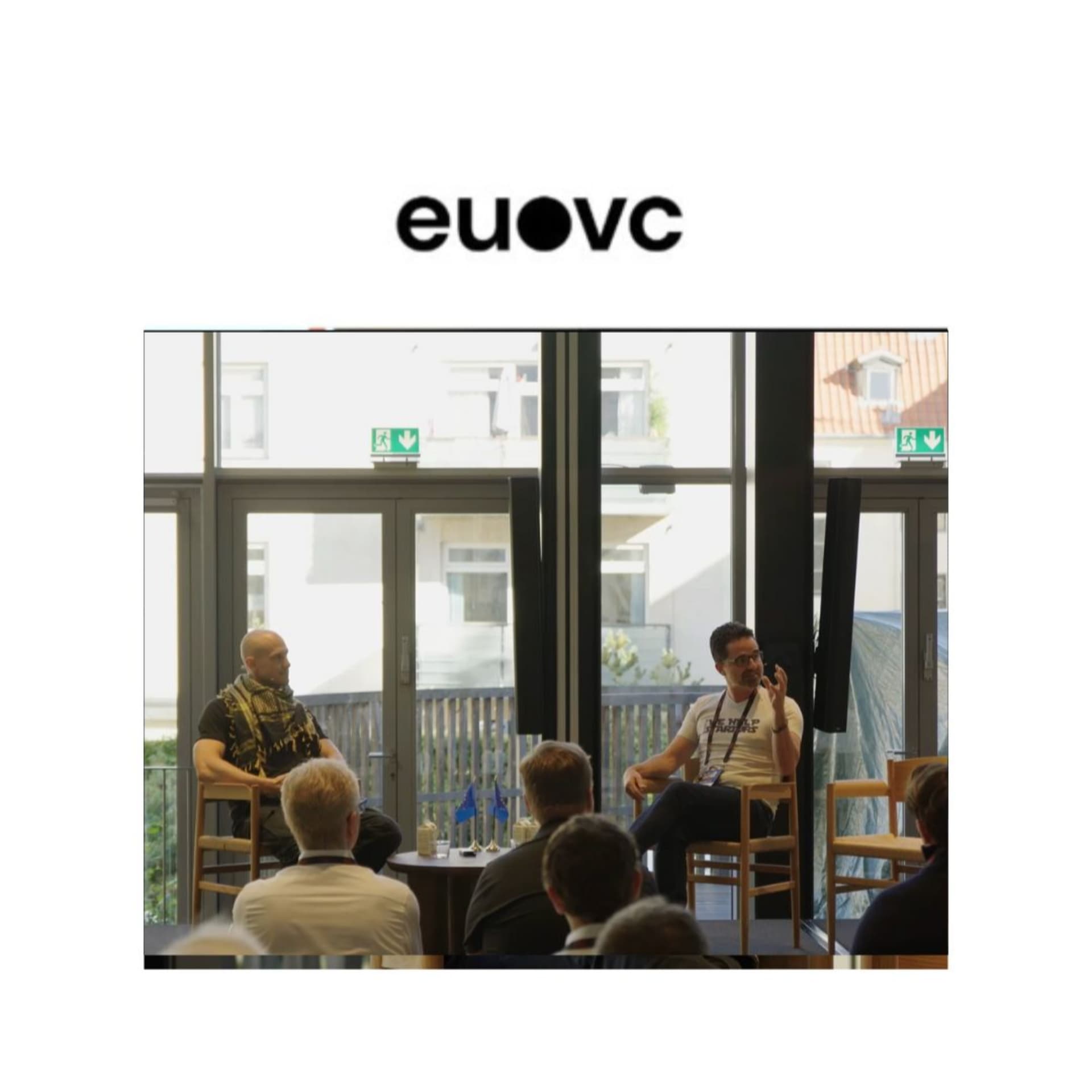
0:27It looks like a Star Wars logo. Tell me a bit about how you, as a venture investor within Van Capital, managed to bridge up against the corporate's culture. Yes, and let me give you the context a little bit about where I'm coming from. Try to pick the most conservative corporation in Central Europe, and you will end up with chess, CZ. We operate infrastructure, critical infrastructure. We operate nuclear power plants, but we still gave a birth to something like this. 15 people running around Europe, UK, and Israel with the T-shirts. We help startups, striking deals and exits, actually. So, look, whenever we talk about culture, we tend to talk about it when things doesn't fly well, right?
1:23We try to deliver on some results or we're trying to hire someone, it doesn't fly. We try to deliver on some numbers, it didn't fly well. So my advice and my experience is let's try to think of a culture by design, not by default. Because if I would be thinking, being the head of corporate strategy at Chess, about the culture, conservative culture, I would never set up invent capital, right? So you need to turn it around and design your own culture. And we thought that if you want to really strike amazing deals and become respected investor out there, we better live like those guys out there too and really do that.
2:09And it's painful. I have in my team investment bankers. I got consultants and all that. I mean, and they don't like to wear T-shirts, and we do a lot of other weird stuff on the stages, like building pyramids. But it was part of the cultural transformation, culture change, and we really enjoy that. I think if anyone goes and searches Invent Capital and searches some of the events you do, you will realize firsthand that it is very true what you say. You're doing something very non-corporary. How do you ensure that you're allowed to continue doing that and what does that, because yes, it's communication to the market.
2:49Yes, it's how you interact with founders and build empathy. But it also serves a purpose towards the corporate. Yes, yes. Talk about that. You have to start right from the beginning, right? And it's good for business, for definition, right? So let me give you a short story about how we started it, right? So look, again, very conservative culture. As I said, we are operating nuclear power plants. Now, the good news is there is 30K people within CHESS, right? And you want to involve these guys to be part of this delivery of this baby called Invent Capital, right? Now, the important thing is that there is this law of diffusion of innovation you have heard about, this bell curve, right?
3:41and even in this room there are guys who already got my point and guys who you know will ask you for money back but there are guys in the middle who might be a little bit interested like the same with the with the with those people the so we have early adopters innovators early early majority late majority those guys will never change right so kind of the the rule was to speak to the early adopters and innovators and disregard within chess and disregard the majority. Don't try to convince them. Don't try to persuade them, manipulate them into this. Let the work be done by the early adopters and innovators.
4:21So we set up a workshop with these guys across the whole corporation who met for one day at the incubator run by very successful venture capitalists just to send a message, and we let them design Invent Capital. We asked them the question, how would you like to run this? What is important for you? And you found those people everywhere in your corporation, and they then came back home to their departments, and then the whole change really started. Then we formalized it a little bit, strike a deal. So what is important that Invent is not an invention of one guy out there who just had a great idea to make his life nicer and a great job, right?
5:05It become a baby of the whole group, actually. And it started with the innovators and early adopters, and they did the job for the others. They persuaded the majority. And then, obviously, you need a sponsor at the board, a lot of other things. But you better start in a way that you are not something new and isolated from them, and you respect the culture. It gave you a birth. Let's talk a bit about the board. About what? About the board. Okay. So you have your sponsor in the board. How do you ensure that the collaboration with the board continues to be fruitful? Yeah, it's all about communication, right?
5:48You know, we are, first of all, it starts with the why. Why we really exist, right? What's the role of us? And why do we have it? So we are part of a strategic initiative of chess. We are sitting on the third horizon of the three horizon strategy. We are those guys taking bets. Now, in energy sector, climate tech, there's a lot of stuff you don't know, and a lot of engineers within the chess group who actually understand this. So it's all about bringing value back home, right? It's exchange. We got the money and independence in exchange for sharing what we have learned. And we share with the board, and we make sure that, again, the people who set it up in the first place are gaining from this and learning more and being part of our due diligence, et cetera, et cetera.
6:42So it's really an exchange of the experience out there. How do you bridge the brand of Inman Capital and chess? Because you are communicating completely differently to the market. Yeah, but at the beginning, the first question the founders asked us, who the hell is taking decision here? And how long would it take to wire capital? And would you change your mind in the middle of a due diligence like corporates do? And we said, no, no, no, but we haven't done a deal yet. So at the beginning, it was very, very difficult. So now, if you look at our portfolio, if you call our founders, they will give you the answer, right?
7:30And that now is much, much better. They will tell you who we are, how we work, what our value set. And for us, what was really important to build a culture of respect and where every day we ask ourselves a question as a team, how did we help today the concrete founder out there? Which is sometimes we're seeing a lot of no's. We see 500 of those guys' stories to make this world a little better per year. But we write structured feedbacks back, really. We honor the failures we see out there because that's the best way to learn which way not to go. So this is something we try to live and do every day and improve.
8:14And now the founder speaks for us. We just won a deal, which will be announced hopefully soon. Because our founders who provide references, obviously, to the founders we want to invest in, they just fight for us. They don't take the money from Inven. It's worth it. What's your top advice to CVCs and corporate leaders that really want to get their founders and their founder mentality into the corporate? Do you do that at all? Should you try that? Or is that not the role of an investor? Look, I think you have to respect the cultures, right? And it's not like wrong and bad culture. It's just a different culture.
8:58Now, I think if you want to run a corporate venture in a way that you will be respected by the founders out there, you better find the right distance between your mother as a daughter and strike the deal so you are independent enough so you can actually act. but still combine the best from both worlds, right? The fast decision-making and the corporate. So I think you need to find the distance and finding distance is not easy, actually. It's not with communication, maybe the way you deliver the whole thing, right? As I, to my point at the beginning, right? And respect the culture, right? Risk is not taken by chess.
9:37When you run, when you operate nuclear problems, you don't take risk. Now, we love risk. we dance with the risk. We cuddle the risk. Now, we need to acknowledge that, both mother and the daughter, and find the distance, and not too far, not too close. Beautiful. Thank you so much, Peter. Thank you.
From the publisher
Welcome back to the EUCVC Summit Talks, where we bring you the candid insights of Europe’s leading founders, corporate leaders, and investors reshaping venture collaboration.
In this episode, Andreas Munk Holm speaks with Petr Míkovec, Managing Director of Inven Capital, the CVC arm of ČEZ, one of Central Europe’s most conservative utilities. From nuclear power plants to climate tech bets, Petr shares how Inven Capital was born inside a 30,000-person corporate giant—and why culture by design, not default, is the only way to make innovation stick.
From boardroom alignment to founder empathy, this conversation reveals what it takes to balance corporate DNA with startup speed—and how Inven Capital won founders’ trust despite starting from scratch.
00:00 Culture by design, not by default—why Inven Capital had to reinvent itself inside ČEZ.
01:38 Building credibility in a conservative culture—why early adopters matter more than the majority.
03:25 Workshops, t-shirts, and pyramids—breaking hierarchy to create founder empathy.
05:00 Involving the board—how Inven secured sponsorship and continuous support.
06:30 Bridging the brand gap between ČEZ and Inven—winning trust with transparency and feedback.
08:00 Respecting failures—why structured feedback became a cornerstone of founder relationships.
09:00 Finding the right distance—how to be independent from the mothership but still connected.
💡 One-liner takeaway: Inven Capital proves that even the most conservative corporates can build trusted venture arms—if they design culture intentionally, empower early adopters, and earn founders’ respect through transparency and empathy.
#VC #VentureCapital #Investing #TheEuropeanVC #Podcast #Tech #Startup


