
In short
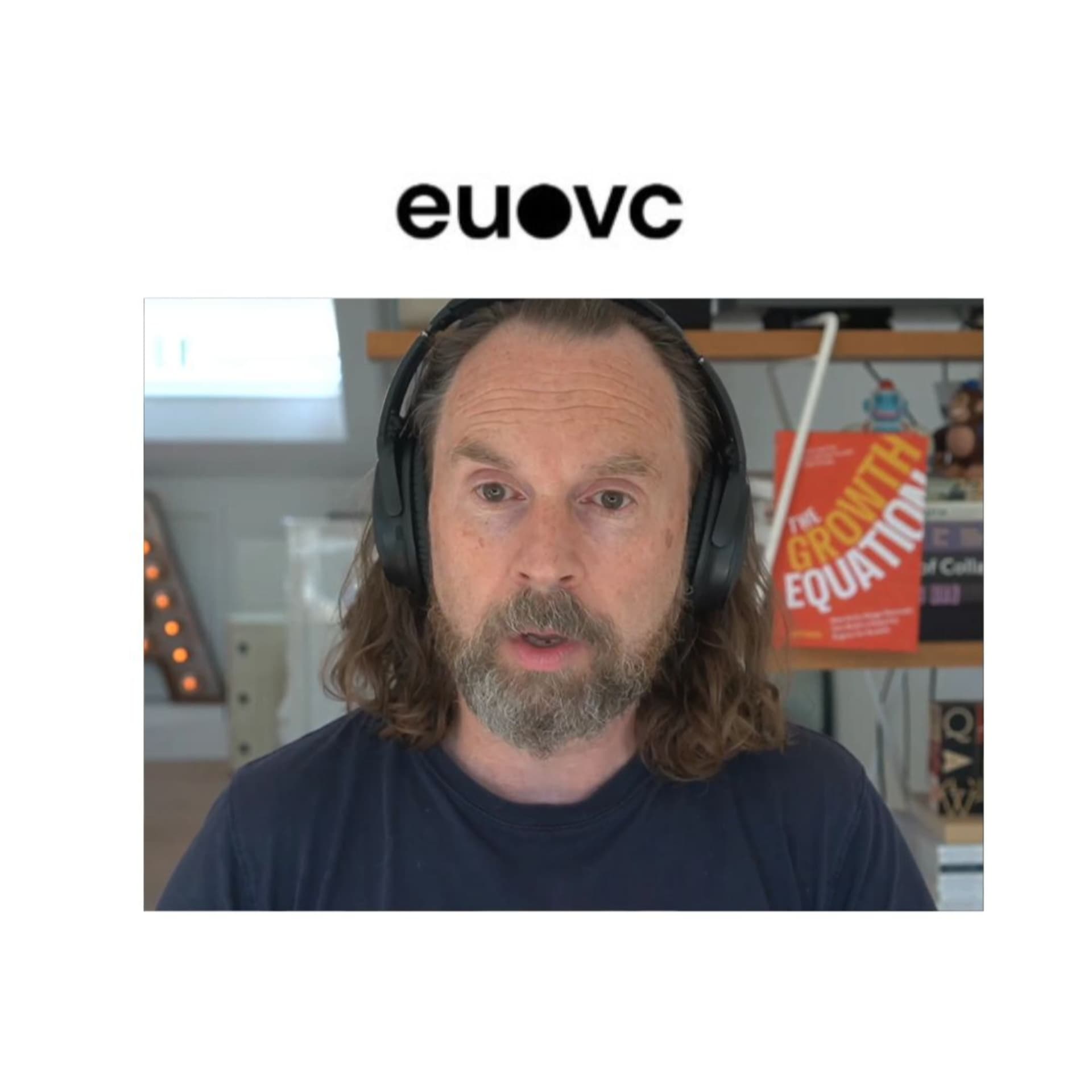
Summary of EUVC Podcast Episode E601: Andy Budd, Seedcamp
In this episode of the EUVC Podcast, co-hosted by Andreas Munk Holm and David Cruz e Silva, the guest is Andy Budd, a Venture Partner at Seedcamp and a pioneer in UX design. The discussion traverses Andy's career journey, the critical role of design in startups, and insights into product-market fit and AI.
Key Concepts Covered
- Andy Budd’s Journey
- Background:
- Early involvement with CSS; built one of the UK's first CSS-based websites.
- Founded Clearleft, Europe's first UX agency.
- Transitioned from designer to investor at Seedcamp, where he now mentors startup founders.
- Importance of Design in Startups
- UX as a Driver for Success:
- Design should be central to the startup's strategy, not merely cosmetic.
- Poor user experience can obscure product-market fit, leading to challenges in customer acquisition and retention.
- Designers play a crucial role by empathizing with users and improving the product experience.
- AI and UX Design
- AI's Role:
- Discussed how AI could automate certain tasks in UX design but emphasized the need for human insight initially.
- The importance of designing user-friendly interfaces is magnified in the age of AI.
- Tools should enhance ease of use rather than complicate the user's journey.
- The Growth Equation
- Andy introduced the concept of the Growth Equation, outlining seven factors vital for startup growth:
- Audience: Cultivating a motivated audience is crucial.
- Motivation: Users need a compelling reason to engage.
- Value Delivery: Users should experience quick value from the product.
- Stickiness: Features that encourage repeat usage.
- Virality: Leveraging existing users to bring in new users.
- Friction: Minimizing obstacles in the user experience.
- Competition: Understanding and mitigating competitive pressures.
- Fundraising as UX
- Pitching to Investors:
- Fundraising is likened to UX; clear communication of value, audience, and differentiation is essential.
- Founders must articulate their story while demonstrating traction to attract investment.
- Trends in Startup Ecosystem
- Lean Startups:
- Observations on the trend towards smaller, more efficient startups that leverage modern tools to reduce costs and increase speed to market.
- Discussion on the potential for bootstrapped companies to thrive without pursuing unicorn status.
- Product-Led Growth
- Current Status:
- Although popular, product-led growth works best after achieving product-market fit.
- Founders should first focus on developing strong sales strategies before relying solely on product-led growth.
Conclusion In summary, Andy Budd emphasizes the intertwined nature of design, user experience, and growth dynamics in the startup ecosystem. The key takeaway is that while tools like AI can aid in scaling efforts, the foundational work of understanding users and refining strategies must come first.
Andy’s insights provide a robust framework for founders navigating the complexities of early-stage startups, encouraging them to focus on the essentials that drive engagement and retention.
For more insights and updates on European venture capital, follow the EUVC podcast at [eu.vc](https://eu.vc).
Written by AI. May contain mistakes. Listen to the episode to check what was said.
Transcript
Automatic transcript. May contain errors.0:00Welcome back everyone to what I hope for you is yet another good EUBC podcast. As you know, our mission is all about to connecting champion European venture and someone who's truly been leading the charge is of course heat camp who we are lucky and honored LPs of and today we're talking to Andy Butt who is a venture partner with the team Andy has an absolutely incredible unique journey from designer founder to investor and he has a bunch to offer to anyone who's thinking about design and how design thinking can drive startup success and innovation in the European tech ecosystem.
0:51This show is not investment advice and the hosts of this episode may be invested in the funds and companies featured. So here is a true, I don't know, Can I call you an OG, Andy, in design in Europe? I think that's, yeah, I think you're safe to call me an OG. Definitely go for it. Amazing. I'll stick to the OG labeling then. Andy, tell us about your journey and how you end up as a venture partner with Seedcamp, but also what we now have established is an OG. I mean, I don't know how far back you want to go, but like my early days of working in the tech space. I was one of the very first people in the UK to start playing around with CSS.
1:33I think I'd built the third ever website in the UK or maybe even Europe using CSS. This is back in kind of maybe 2002, 2003, when the only browser that could use it was Microsoft IE 5.2 on Mac. I wrote the third ever book on CSS-based design, which sold about half a million copies for a while. It was outselling Harry Potter. So my journey started as a front-end developer. But I really quickly realized that front-end development, CSS, HTML, web standards were going to just become the bread and butter of building. It wasn't going to be anything unique or special in it. So when I started thinking about running my agency, I started an agency called Clare Left.
2:15We decided that we were going to lean into this new process that was coming about, which in the US people were talking about user experience design. There was an agency called Adaptive Path, the first UX design agency in the world. And we became the first UX design agency definitely in the UK, possibly in the whole of Europe. And when we started, it was really hard because the way that design happened then is people would open up Photoshop and start moving rectangles around. It was like graphic design. It was making things look nice. And we would want to go and talk to our clients and run workshops and talk to their users and do usability testing and all of this kind of extra stuff.
2:52We were taking a scientific approach to solving these problems. It wasn't just making something look pretty. It was really about understanding what the customer wanted, what the business outcome was, what the users wanted to achieve and marrying those two. And so in the first few years of running my agency, my studio, it was hard work, but it got better and better and better. Really in the early stages, I saw all of my friends over in San Francisco and thought, they're all working in these amazing startups. I want to do startup stuff in the UK. But at the time, the UK ecosystem wasn't very well developed.
3:25In fact, the only real play is at the time with this little accelerator at the time called Seacamp. And so I went and talked to Carlos of Rashom and said, hey, look, can I come along to your very first, they were doing these kind of Seacamp weeks. I was like, can I come to your Seacamp week and I'll be a mentor. And basically for the next five or six, seven years, I'd come to Seacamp in their kind of weeks, they'd do pitches, they'll do kind of mentoring sessions, I'll help out. And sometimes I would speak and I speak about the value of design. I happened to be in Berlin once where they're doing one in Berlin.
3:56And so I joined the Berlin cohort. I happened to be in South Africa once where they did something in South Africa. And so I got to know the founders really well, especially kind of Carlos, we put up a really good relationship. We go out for dinners every now and again. I had maybe five or six other friends who were also VCs. And so I'd bring, gather people together and we'd go and have lunches and chat about this stuff. Now, from my perspective, I know it was really good fun. I mean, it was amazing. It was a really great time to be there. This was kind of like, you know, fund one on two in Ccamp's history.
4:25Like Ccamp are now up to fund six. So, you know, 18 years old. But I always had this kind of interested in wanting to use my skills to help early stage startups. But the company that I run, like we were more attracted to big businesses. Like we redesigned Penguin Random House. Like we took 57 Penguin book websites and turned them into one. We were designed Virgin Atlantic, Virgin Holidays, you know, British Gas, British Telecom. Like these are all major kind of infrastructure companies that come to us because they had big problems. But I always had this inkling of wanting to work with startups and working with founders.
5:01And so when I sold my business four years ago, I reached out to a bunch of friends just for coffee. And I had a conversation with Carlos and Carlos like, Hey, look, you know, we love working with you. Why don't you come and be an EIR, an entrepreneur in residence, come hang out, talk to our customers, talk to our sort of portfolio companies, share with them your expert design knowledge. And, you know, like, it'd be a fun thing for you to do and I was like yeah great and so I did that for three or four months and at the end of it it was like a limited program at the end of it Carlos was like look you know people have been really enjoying working with you our portfolio companies are getting a huge amount of involvement do you want to come on board on a more significant role you know come work with us two days a week I will give you a portfolio of companies to lead and so at the moment I'm sort a point of contact for around a dozen of our portfolio companies.
5:53And I'll have calls with them every couple of weeks. I'll hop on, you know, like we've got a couple of people fundraising at the moment. And so it's having daily conversations, helping them as a back and forward fundraising, you know, for companies that are trying to reach product market fit, I'm constantly helping them shape their team, shape their processes, you know, iterate towards product market fit, you know, that whole go to market strategy stuff. Having somebody that's run a, not a big business, but a 30-person business, I really feel what it's like to go from two people in a studio to 10 people in a co-working space to 20 to 30 to 40 people.
6:27And so because I've been on that journey before, I can really empathize with a lot of the feelings and emotion and challenges that these people have. A lot of VCs understand it intellectually, but having an operator that can actually recall those stories, I think can be really powerful. And so Seacamp have two or three venture partners. myself and Devin are two of them who are operators who spend two or three days a week working with the portfolio companies. We obviously got to talk AI, but I don't want to like just throw a big question at you with how does AI change UX design? It's obviously something we should talk about, but I'd rather ask you the question, how do you as a UX first focused builder work with startups and what's the value that you bring to them?
7:18How do they best use you? And kind of this, and then I'm thinking that this will automatically get us into the AI conversation because I can imagine it's quite a shift right now. I mean, I would say this because I come from a design background, but I think design is hugely important in the first few years of a startup's journey. I think it's really tempting for founders to think that the way they are going to succeed is by building a product that has more capabilities in the competition. You know, we have more functions, those functions, you know, deliver more power that, you know, we get them to market quicker.
7:56And, you know, I'm not denying the fact that having capabilities is really important, but I believe it's the way those capabilities are assembled. You know, most of the people at the moment are satisficing. They are using products that are kind of allowing them to do the thing that your new product is going to make better. So they've already got that capability. Often the real frustration is it doesn't work the way they want it to work, that it's frustrating, that it's a broken process, and they've got to jump to three or four different screens. It logically doesn't make sense why they've got to kind of bounce around this interface in a really frustrating way.
8:28And we've got so trained through consumer apps, we've got so trained through games about how we expect a smooth, with meaningful user experience. And so just assembling a group of functions and then giving it to people and then having them struggle their way through it is not enough. And so I really believe that design is a big part of finding product market fit. And I think designers play a massive role in that. I think a lot of the time founders have this vision in their head, but they really struggle to articulate that because words are quite limiting. They go and they talk to the engineering team and then the engineering team will go away and build a thing.
9:05And it's not quite what the founder thought. And so they'll go and ask them to change it. And there'll be this back and forth. And that can be a really time consuming and wasteful experience. It could be a really frustrating experience. And often, I see this all the time, the first version of a product usually isn't how the founder envisioned it. But worse, it usually isn't good enough to make a rush of people come in and use the product. All the capabilities are there, but there's no key USP. There's no real hook. The value is buried. The value is hidden. You know, it takes ages to sign up. It takes ages to kind of, you know, get using the product and getting the value out.
9:42And I think designers are really great at understanding that. Designers have a real empathy for users. They're really good at putting themselves in the user's position. Like a lot of founders, a lot of engineers are super users. You know, they have that mindset of like, oh, users will figure this stuff out. You know, like it might not be obvious, but we're smart and we'll figure it out. And designers are like, well, we might, you know, a certain number of people might be able to. But what if we made it easier? What if we made it more obvious? What if we chose language that they use rather than we use?
10:09What if we organize the interface so it's easy for customers rather than easy for the engineers to put together? Like, why do we have to build a system that is purely around visualizing the back end to customers? Why don't actually we build a back end that is focused on what the users need? And so designers are really good at talking to customers, understanding their pain points, understanding their frustrations, what isn't working with the current product, what isn't working with the way they're doing things at the moment, and how the new product needs to be assembled in a way that makes sense, that makes their life easier, that removes all the barriers and blockers, that makes it smoother, they can get to value quicker, and they can make the big change of shifting.
10:51because it's really scary. Like if you've got a product, even if you're using a product that's a bit broken, shifting to a new product is challenging because you've got these behavioral pathways. And so trying to make sure the product is 10 times better rather than just one time better, two times better is really important. And I think designers can be key in that journey. I imagine, Andy, you've seen the post by Sam Altman. It was actually not a post. It was a nestled point within a longer write-up by him, but where he said that we might be entering the era where the idea guy of the startup landscape will truly end up actually being valuable and not just the idea guy.
11:36And of course, to anyone that doesn't get that reference, the idea guy is, of course, the guy who shows up, has this great idea and then thinks he can kick it to the designers and the engineers and they'll go build it for him. And then they're like, well, what do you bring to the table, my friend? If I'm the one building it, what do you bring to the table? But now in this era of AI, the point is, of course, well, the idea guy doesn't bring it to the engineering team. And they basically go to Lovable or something like that and build it themselves. And they don't need anymore the engineering team, the design team.
12:10It's all in the AI tool. What do you say to this? Is this true? Is there some truth to it? I thought you was actually going to use a slightly different example. Because obviously, Sam Altman has also gone to buy Johnny Ives' company that has, I think it's 39 members of the team. no existing public product for$6.5 billion. And so I think in a world that's been dominated by AI, why would you spend$6.5 million on a 40-person team? Well, you're doing it because you're buying Johnny Ives. Some of that is the brand. Some of that is the idea guy. But some of it is also a realization that form and function matter.
12:55Trying to figure out how to popularize AI, trying to figure out how to get it into the hands of not just like one percent of engineers but the hands of me you your parents the plumber the you know just the the people in the street and so i think design is going to become more important rather than less important but i think this is also about like people's understanding design you know you have a good point let me just uh try and clarify this, at least for myself, is the point here that the power, the strength of AI is many times higher than its current adoption. So what really will be the limiting factor if we don't think about energy and all this stuff that everyone's talking about geopolitically is, will people be able to adopt it?
13:45And right now we have some power uses like I'm sure you are, and I am myself, I often ask people just to get a check with people outside of the ecosystem. How often do you use ChatGPT? And I use it probably, I am definitely doing 40 queries per day, if not more. And there are many that are like, well, per day? What do you mean? So the point here is to unleash ChatGPT, you will truly have to figure out how do you solve the adoption problem. And seemingly having a one type interface where you can chat is not enough. There are application after application after application where you'll have to get people out of their CRM into this world or out of whatever, whatever.
14:37Is this a bit your point that Johnny Ive and the team bring so much to the ChatGPT team around design? Because if you truly think about what is design, it is making a good experience, delightful experience with something that is actually rather technical, but it is all happening behind. All you have is one button or an infinite scroll. And that infinite scroll is then giving you everything you want, but as a user, all you got to do is scroll. I mean, I think that AI, LLMs, ChatGPT has a huge amount of value currently. And if the companies leading the charge just want to focus on super users, I still think they can be$100 billion businesses.
15:25But my suspicion is that they are wanting to see AI as a generational change and they want to put it in the hands of as many people as possible. and I see it really similar to the the the sort of the growth and the emergence of mobile phones to be honest you know the early stages of mobile phones they were they were sort of you know stock traders and drug dealers you know they were the only people in the world that needed to be contacted at any you know time and you know the mobile manufacturers would produce 10 20 30 40 different phones for very specific use cases and some of these phones were good but they were a bit clunky they were a bit frustrating.
16:02Yeah, Apple didn't invent the smartphone. What Apple did is it looked at emerging market and said, there's massive bifurcation. There's all of these competing products. And we're going to create something simple. We're going to create something delightful. We're going to create a phone for everybody. We're going to create a phone for the masses. And Johnny Ives was a huge part of that story. And I wouldn't be surprised if someone is trying to do a similar journey with AI. At the moment, we are seeing dozens and dozens and dozens of very, very targeted, specific niche products. And I suspect they're thinking, is there an opportunity to create a device that can kind of bring all this together and have the same impact on the AI space as the first iPhone had on the smartphone space?
16:45Now, we'll wait to see. But the fact that they're willing to spend$6.5 billion on a tiny team, I think is evidence that they think that the value of design is huge. They think that in order to make these tools popular, in order to get them in the hands of as many people as possible and improve utilization, make people using it five times a day, 10 times a day, rather than just once or twice a week, design is the answer. It's not more firepower. It's not more service. It's not chicks that call quicker. I mean, this is all part of that. you know my cousin or my uncle doesn't care about you know speed or you know even you know as much like the accuracy of the model they want to have an experience that kind of speaks to them and design is a big part of that story yeah at least it's definitely what's not what's keeping them from using it right now because it could there's so much to still gain okay well ai is definitely going to go through all of this conversation naturally because it is a big landslide in anything that's UX, I imagine.
17:53I'd love to ask you just to go back to the work with founders because you described it very clearly, but I would love to ask you, kind of where do you go in? So you're working with about a dozen of the Seat Camp team, sorry, of the Seat Camp portfolio. When is it that a design person like you is incredibly powerful to inject into those teams? Do you think about it like that? Is it more about empathy with the founders or the problem that they work with? Or is it more about a stage or a current situation that someone like you is super powerful to be brought into? I mean, it's an interesting sort of framing.
18:33I guess it is easy to see me as a design person. But then it would be easy to see somebody else on the Seacamp team who was once a lawyer, the legal person, or somebody who was once a finance person, the finance person. But as a team, we have all been around the block. So we bring more than just the kind of the background of the label. And so I am a founder. I founded companies. I've run companies of not huge, but 30, 40 people. I've got a startup that was doing a million in revenue ARR. That's not massive, but that is experience. I know how to build teams. I know how to scale teams. I know how to lead teams in terms of a cultural perspective.
19:13I know how to fundraise. I know how to advise people around fundraising and what a good narrative is. And obviously, I know how to help teams iterate towards product market fit. And I think product market fit is the big mission of the first couple of rounds of funding. What typically happens is a founder launches with this massive level of expectation. You know, they've quit their job. It's really scary. They've gone out on pitch. They've raised a million or two million dollars. Everyone's told them they're amazing. They're genius. Our idea is going to explode. And so they spend six months building it and then they launch.
19:44and they expect to be one of these sort of stories where suddenly hundreds of thousands of people start pouring in. And sometimes that happens, but more often it's a trickle. More often it's a few people here, a few people there. They have a 300 person mailing list, but actually only 30 of those people sign up. And they suddenly sort of fall into this bit of a trough. You know, they had certainty that go to market would just be natural. It would just explode organically. And when it they do is like starting to throw features at the problem. Well, maybe the reason people aren't using our product is because it doesn't have this feature or that feature.
20:19Maybe because it's not SOC 2 compliant. Maybe because we don't have deep ingrained user management controls. Maybe it's because we're missing this feature and that feature. And they go and they throw loads of features at the problem. Nine turns out of 10, each feature they throw gives a little bit of a bit of growth, but not much. And then it sinks back down. It's this whole kind of feature fallacy, The idea that you keep throwing features, but often the problem isn't that you're lacking features. The problem is somewhere else. Maybe the problem is that you're not very good at telling the story of your product.
20:49That people that are kind of comfortable using a broken product are scared to move because you haven't articulated why and how your product is better. Maybe you've got a terrible website. Maybe you've got awful positioning. Or maybe people do sign up. Maybe you're a great salesperson. Maybe you've got an amazing account executive or marketing team and you bring people in. But when they come in, they're struggling to get through sign up. Maybe they get through sign up, but then the value isn't obvious. And so they don't come back. And all of these things, that journey to finding product market fit is difficult and challenging.
21:23And that's why I excel. I excel at helping founders that expected a huge amount of growth. That growth isn't coming. And they're then panicking and thinking, oh, crap, I need to get something going because they can see the runway running out. They can see that they maybe need to raise seed or series A in six or seven months' time. They know that the market is getting a lot more focused on sort of progress and momentum than ever before. And they're really starting to think, hey, I need some help here. And I think that's where I come in. And that is around product. It's also around founder-led sales and founder-led marketing.
21:59It is also around assembling the right team because you need the right players on your team to be able to succeed. And so it's all of these things I think are bringing together. It's not just like purely a design lens. Yeah. And maybe this is the perfect pivot to talk about the book you've got behind you, because you've got a book that's called The Growth Equation, which is, how should I put it? You nail seven key influencing factors for startup growth. And maybe we could talk about those. Maybe I'll just tee it up for you and let you go through the seven and then we can play a bit of ball here.
22:33The reason I wrote the book first off is because I've spent the last four or five years at Seacamp helping founders. And previously to that, I spent 20 years helping a range of different companies sort of solve these problems, you know, figure out how to get more users in, how to get them kind of sticking around. out. And I found myself having the same sort of conversations over and over again with founders. When their sort of growth isn't going the way that they want it to go, I've been sort of finding myself repeating myself. But each time I repeated myself, I did it in a slightly different way.
23:10I use a slightly different analogy. And so what actually happened with the book is I started writing a blog post. And then that blog post turned out to be a series. And then that series started to be a new small book and then the small book started to be a big book. Basically, I had all this information I was trying to get down. And what I ended up writing is about 50 ,000 words that turned out to be pretty much a sort of a playbook for the first two or three years of your startup journey. I've got a lot of amazing friends that work at startups, folks from companies like Intercom, for instance, there's Trainer who read the book.
23:44And a lot of them have said, hey, look, Andy, I really wish I'd read your book when I started my journey because you've basically highlighted all of the pitfalls I found. And I discovered them and I got through them, but it took me time. And actually I had to go and read a whole bunch of articles and listen to loads of news, like, you know, podcasts and newsletters and all this information was hidden out there. And what you've done is you've pulled all this information into a single, single book. And so that was really the point. Like I see so many companies struggling, so many founders struggling unnecessarily, like the information is out there, but they don't know how to access it.
24:17And so if I can make that journey to put a market fit, rather than take three years, take a year and a half, you know, allow people to get through that process faster, then it benefits me. It benefits all of your portfolio companies because they get there quicker. And, you know, and so that's the reason I wrote it. The idea of the equation itself, like it's a bit of a bit of a sort of a McGuffin. Like I just found that there are kind of like seven high level factors. There are always the things that come up when I start talking to founders about why things aren't growing. And they're all really basic, really simple.
24:50Like literally the first chapter of the book is a growth equation. So the growth equation isn't like the whole book. It's just like, here are the things that keep coming up. But then what I do is I go through each phase. I go through how to find your first 10, 100, 1 ,000 customers, how to figure out your go to market strategy. whether as a founder you should choose product-led growth or founder-led marketing or founder-led sales how to put a growth team together like how to do good onboarding how to do you know good activation how to do retention how to do pricing these are all the same questions that come up and they come up because i think when founders get stuck they panic and they go oh well maybe i need to do a better online tour for my onboarding maybe i need to change a different pricing model.
25:34Like it's panic. And when they're panicked, they just reach for the last thing they saw. They'll have seen Lenny's newsletter. In the last edition, it said someone was talking about doing an amazing onboarding flow. And so they try and do onboarding. It doesn't work. And then the next week, somebody else shares something about a new pricing model. So the purpose of the growth equation is to act as a bit of a diagnostic lens, just in a way to say to founders, don't panic. You don't need to just start throwing things against the wall to see what sticks. Just take a step back, look at your product and try and figure out where in the flow the problem exists and then focus in on that and try and find solutions.
Read the full transcript
26:13All the good kind of lean startup stuff, come up with a bunch of hypotheses, figure out what those hypotheses are, do some tests, etc. But the equation itself is really basic. And again, I almost kind of like avoid talking about it because it's so simple. I meet so many founders who are product builders. They've got an amazing product, but they're not thinking at all about putting users into the pipeline. And so they haven't really thought about their audience. So they build a product, but there's no audience there. Maybe they've got the wrong ICP. Maybe they haven't even thought about the ICP.
26:43Maybe they haven't got the right positioning. Now, maybe their website is in stealth mode or they've got 20 followers on Twitter. They assume that loads of people are going to come through. And so the first thing is like, you're not going to be able to get people sticking around unless you've really cultivated the audience. And so I do a lot of stuff in the book around how to build that audience. The problem is that audience needs to be highly motivated because there's a lot of friction that's involved in switching to a new product. Like, you know, people will sign up for your mailing list and then two months later, you'll invite them in.
27:17And by the time you invite them in, they'll have already kind of got bored and found something else. If you invite them in and the first thing is, well, we've got to do a big product demo. People are like, well, I don't want to do a product demo. I just want to self-serve. So the ways to get over this friction is to build motivation, to make sure that there's a really strong story and narrative and reason why people will stick around. And so that's another big part of the market side of product market fit, like audience and motivation. When people start using your product, they need to get to value really quickly.
27:47And so I talk about the delta of value over time. You know, that first hit of value, you need to be getting it not in the first week or the first day, but maybe in the first hour, maybe in the first few minutes of use. And then you need to be giving people value over time. I meet so many products or see so many products where it takes ages to find that value. And it's taken so long that it doesn't create new behaviors. So you need to find a way to kind of it's almost like a kind of a slow release or even quick release kind of medicine. You need to be giving small hits of value quickly over time.
28:21You want people to experience that from day one. I've seen so many people that put all their value behind convoluted descriptions and signups rather than getting it in front of users as quickly as possible. So that's really important. Obviously, you need to have stickiness. That's sort of the fourth argument in the growth equation. You need to have a reason for people to keep coming back. So a lot of this is around product-led growth. It's around messaging systems. It's around bringing people back. you want that first two or three weeks to kind of have people keep coming back to your product time and time again so they bake it into their processes virality is a big part of that as well like this is the big secret of like product-led growth and product acquisition so i have whole chapters about that and then the two things which are a negative effect are friction and competition i see so many products are so badly designed that they're so full of friction and bumps that people just can't be bothered to get through the process and people aren't thinking about what the other way of doing things are.
29:18So the competition is kind of outgunning you. And so using these sort of lenses of just looking at these seven things and saying, where are we falling down? Where do we need to focus in? You know, it's almost like going to the doctor and the doctor asks is, where does it hurt? You know, you focus in on the area and then you double down on that. And then, like I say, that's chapter one. And then all the subsequent chapters are like how you can, how you can lean into these areas to grow your business. I'd love to ask you, Randy, And the one thing that every founder has in common and everyone listening to this show will know very well the fundraising journey.
29:55A startup in the end is also a product which is being bought by investors. Do you think that this framework also has application? Do you go back to this framework and your thinking around growth and, of course, user experience when you also think about engineering FOMO and traction towards investors? I mean, I think part of your fundraising deck is ultimately communicating how you're thinking and solving these problems. You know, the reason that we tend to invest in people that, you know, maybe as an industry, as a community, that have already had some kind of success and some kind of, you know, traction in their previous career is because we're learning that they are good at selling, that they're good at kind of building an audience.
30:45They're good at motivating people. They're good at telling stories. You know, we're looking for product builders that can demonstrate that they've built things in the past that have delivered value, that have hooked people in. that there is some kind of clever go-to-market strategy, that there is some kind of wedge or moat that you're building into your system. So all of these things, audience, motivation, value delivery, kind of stickiness and virality are all a big part of the story that you tell in your pitch, as are the friction and the customer, so the competitors. A big part of your deck will be who the competition is and why they're failing, and that usually is because there's some kind of something that's broken.
31:27There's some friction there that the other competitors haven't seen that you've identified and said, hey, well, what if we do it this way? And so absolutely, I think a big part of that comes into your storytelling process as well. I'd love to ask you just because we spoke a bit about AI before and now we spoke about the size of companies and so on. Something in what you said just made me think about this trend toward smaller, more lean startups. And few funds in Europe see as many new startups as Seekam does. Are you seeing a trend here? Are you getting more excited, less excited? Do you think it's an overhyped thesis to be backing things that are more efficient slash at least built by fewer people?
32:14And I say that because it's not necessarily super efficient, but there's a beauty to not having to throw people at a problem. I think starting a startup has got increasingly cheaper and easier and faster over the last 20, 30 years. I remember the days when in order to start a startup, you had to go up to buy a hardware box and have it installed in a telephone exchange because you needed to have your servers rather than pre-AWS. A lot of the early stage investment back in the day used to be literally just tooling up the hardware. Now it's all in the cloud. It used to be that you had to build everything from scratch.
32:52Now there are amazing tools, libraries, UI kits or whatever that you can lean into. And so I think AI and LLMs and co-pilots are just the latest way of bringing the early stage cost down. And so, yeah, absolutely. Three or four years ago, I can't remember who wrote it, but there was a really good article about the emergence of the small Silicon Valley startup. up. This idea that you don't need to have two, three, 400 engineers to build a startup. You can maybe build something really impactful with 10 or 20 engineers. And I think, you know, if you are looking at AI tools that mean that you can 10 extra engineering team, then absolutely, I can see you building something really, really impactful, you know, with a 10, 20, 30 person team.
33:33Now, I think this has a couple of effects on the startup world. I think if teams need less capital, and if the barrier to entry to starting a startup becomes lower because maybe you don't need to be an engineer now. You can be a designer and use it lovable or whatever to prototype. I think we're going to be seeing a massive rise in the number of people that start businesses because the barrier to entry has dropped. And at the same time, you can get a lot further with a lower level of investment, which means I think we're going to be investing more and more, small amounts in more and more startups.
34:05You know, Seacamp is a fund that's really well known of investing in maybe 30 startups a year, whereas other funds might invest in five or 10. I wouldn't be surprised, you know, in the future, we start investing even more because we can, you know, as an industry, we can write smaller checks into companies that have the same impact. But the chances of them succeeding are fewer because, you know, finding room in the market is more difficult. And so we'll probably still be spending the same amount of money, but it will be smaller individual checks on a larger portfolio of companies because the barrier has been reduced.
34:38Are you seeing this? It's hard for me to say at the moment because we operate in that kind of space. I mean, we get a lot of people reaching out to us. And I think the volume is definitely increasing. And I think we are seeing companies who are delivering more and more with less and less. I mean, again, it used to be the case that you could get to Series A on relatively little traction. And now people are expecting millions of revenue. But I'm seeing companies that are able to deliver millions of revenue. on a smaller team with funding that's taken them further because they're not having to spend so much money on engineering or sales.
35:18They're using automated services for AI services for marketing and sales. And so, yeah, I think you're finding companies are ever more efficient. And because of that, later stage funders are wanting to see ever more traction. But also, what I'm seeing is more and more later stage funds getting earlier. People would argue that there's been less maybe sort of series B, C, D deals in the market. And maybe people would argue that funds are more used to doing series A or B are now starting to spin up separate arms focusing on seed stage deals. So I think as the energy and the heat moves more into the earlier stage where you can go further with less money, it's natural that people will kind of get earlier and earlier into the market.
36:07And so, yeah, I believe I'm definitely seeing funds move ever earlier because the amount of capital you need is less and there's more energy and enthusiasm in that end of the market. Are you seeing a move towards the seat strapping approach of building, like taking early money from an investor, but not really having a plan to raise anymore? I mean, it's a really attractive proposition. I mean, you understand the mechanics of VC funds probably better than anybody. VC funds, in order for their dynamics to work, they are generally looking for companies that can be doing 100 million in revenue, 10x revenue for their valuation.
36:50You're looking for a billion dollar plus unicorns. I think the area of seed strapping is not necessarily creating those billion dollar, 10 billion dollar businesses, but they are probably creating really, really great 50 million, 100 million dollar businesses. I think that is at the moment very, very attractive to angels. and so I think that's it. I ask obviously not from a Seedcamp perspective because it's not really a fit for Seedcamp because you run the power law model which is even more like you're going to maybe play a model where you go for more sizable chunks of lower outcomes. That's one that there are people here and you're running Seedcamp.
37:35I love the model of going for the Holy Grail but I'd be curious to hear because nonetheless we all look at founders in the beginning and we are all on a journey. Some are, and I'm curious to hear or see kind of, are you seeing more coming in to the funnel, building something that could be great, but where you're seeing, they probably have a different growth trajectory or growth plan than what we would be looking for because they can see it's perfectly viable now where there, before there would be many things that you couldn't do if you didn't scale massively, even on a team size. And you can argue, well, whether it's 30 or it's 50 or 30 or 200, maybe not that much of a difference.
38:22But there's a massive difference between we're going to stay five guys in a garage and then we're going to hit a couple of million AR and that's going to be absolutely awesome. Or do I go on the real growth trajectory? I think whether you go to 30 or you go to 300, it is a bit of matter of success. But whether you stay super small or actually go large, that's a matter of a decision. And I can see many very successful, good people wanting to stay small. But I think it is also a matter of the fundraising ecosystem. As you said, like VC tends to work in a power law. We invest in a lot of companies.
38:57Many of them don't succeed, but the ones that do pay for all of the others that don't. And so we have an expectation that you're going to have in any fund, three or four breakout companies, and that pays for everything else. And we just know that. That's the model. I think you're absolutely right that there is a whole group of companies now that you can build a 30, 40, 50 person company and not necessarily become a unicorn, but become a really, really decent mid-sized business. At the moment, that is not necessarily attractive to VC funds, but it is attractive to angels. And I think we are seeing funds like tiny VC in...
39:31There's two tinies. I'm talking about tiny in the US, not tiny in Berlin. where their model is basically to invest once, to invest an initial seed round and not expect their founders to ever raise again. And I think that's a really intriguing model. And their model is basically like, we're not looking for one or two breakouts. We're expecting of our 30 or 40 investments that 15 or 20 of them will carry on and do decent amounts of money. So I think I can definitely see a future where there are more funds that have that model that are leaning towards the sort of tiny sort of bootstrapped kind of companies that are not going to be a unicorn, but might be doing 20 million, 30 million, 50 million a year in revenue, who could still be a really big company, who could sell for 250 million.
40:22And that would be a really good outcome for them because of their model. So I would love to see more VC funds experiment with different models. But at the moment, the standard model is not that. I can give you a funny or interesting thought-provoking piece of data in this, which is Partek, their growth fund. I met Omri from them and had them on the podcast. And what they focus on and note their growth fund. So here we're talking late stage. What they're focusing on are the bootstrap founders, but they're focusing on them at a later point. So it's kind of the tiny model, whereas then turned out that they ended up actually needing growth funding and there's a good reason to do it.
41:08But they just haven't been diluted as hell along the journey and they're just much more capital efficient. And I think that's really smart. I mean, I think there are companies like MailChimp. I think they either didn't raise any money or they raised so little money that the founders basically own kind of like 97 % of the company when they sold. I think there's an opportunity for these bootstrap businesses, for investors to come along and say, hey, look, you don't need our money. But if we come and, you know, you've only had one round of funding before. If we come and, you know, you're not the usual seed, pre-seed seed, series A, series B, series C, but you're now a 200-person company.
41:49And if we give you a small little$20 million check or$50 million or whatever it is, then that will accelerate things further. And all the risk has been reduced. So absolutely, I can definitely see a model where later stage funds are writing very strategic single checks in bootstrap businesses to kind of get them to the next level. So, yeah, I think that's a smart, smart, smart play. Okay. Andy, I have a final topic that I'd love to make it to cover with you. That's product-led growth. It was all the rage. I'd say a couple of years ago, maybe three, four. And then it seems like it's maybe been a bit less so for a while.
42:26And maybe not because it's being used less, maybe just because the ecosystem can only take so much focus and we tend to then jump to another thing after everyone has exhausted one topic. I'd love to first get it straight from you. Has it kind of fallen also in application and value? What's the status of it? And tell me a bit about product-led growth in this next common journey. I mean, I'm a product person at heart. So I'm a huge fan of product-led growth. And I think it matches my belief to some extent that the best products are the ones that are most successful. The problem is that reality doesn't match that.
43:08You know, I see a lot of mediocre products that sell amazingly because they've got a great go-to-market strategy. They've got great distribution. They've got amazing sales and marketing teams. And I see lots of really amazing products that out-compete those in terms of product that die in the vine because they haven't got that go-to-market strategy. And so while I would love to think that the best products always succeed, I don't think they do. But if you are a product-focused founder and you're being told that there are two approaches, you can do the thing that you hate to do, which is to phone up customers and talk to them, or to talk about what your product is in social media.
43:45and that makes you cringe, or you can add another feature, or you can try and discover some clever acquisition loop or retention loop. Of course, you're going to go to the thing that makes you feel comfortable and reinforces your beliefs. And I do think that product-led growth is really powerful, but the weird thing is, I think it's powerful once you've found product market fit. And that kind of makes sense, because how are you going to use product-led growth to grow a product unless you've got product market fit. And so you're typically finding that the companies that actually do really well with product-led growth are Series B companies, they're growth companies, where they've got a product that works, they've got a sales playbook that works, they've got a decent number of customers, and then they can utilize their customers to get more customers.
44:36They can utilize their customers to spread their message, to acquire huge numbers of users. And so a little bit of investment in sales and marketing you can have some gearing that creates lots of growth through the product. But until you find product market fit, if you've got 10 customers, 20 customers, 50 customers using your products and your product is rubbish, product-led growth isn't going to make much of a difference. Even if you have the best product possible, like of those 20 customers, they're probably only going to add one or two a month. And so what you tend to find is if you focus on product-led growth before product market fit, growth is usually much, much slower.
45:14if you start to lean into product-led growth, once you've got product market fit, it can be a real supercharger. And so I spend a lot of my time trying to talk founders down from leaning into product-led growth early. I try and encourage them to do the thing that's uncomfortable, which is usually get amazing at sales. Really figure out your sales approach, really figure out your pattern, really figure out your marketing approach. Because once you've got thousands of people using your product, then you can lean pivot into product-led growth and the gearing is there and the value and the payoff is there.
45:47And so, yes, I think it's an easy, comfortable place to hide. But I think often what you need to do is you need to do the thing that isn't comfortable. You need to do the thing that is counterintuitive because that's probably where the biggest opportunity is going to be, I think. I've got a final question for you. connecting AI and product-led growth and the fact that you now can potentially sit behind your desk and design yourself out of needing to do what you just described. You don't need to go and learn sales because you can actually build a model, an agent that goes out and does the sales, and then you can actually stay in your comfort and you can build as a founder from behind the desk, so to say.
46:29Do you think that there's any truth to that? Or do you think that, like, I just put the two pieces together here and thought that a person like you that is an absolutely genius when it comes to thinking about user experiences and design could maybe have an incredible impact as someone designing these systems of agents. because it's in the end basically a design of the journey of the user and how they're being hit by the different agents that you have. Yep. I mean, I think it's really tempting, particularly like you say, if you're a builder, to think you can operationalize and tool your way out of these things.
47:14And this is why like automated SDRs are so tempting to people. Like, oh, I don't need to learn this awkward thing. I can just hire an agent and it will do it for me. unfortunately i've met a lot of founders that have of you know tried these automated agents and actually found them not particularly effective and have gone back to the old sort of not quite manual way of doing things but i think it's in the same ways i used to meet a lot of people that would go and hire outsource their work to an sdr agency and then three or four months later when they got no useful leads they would come and bring it back in house i think there is a time for automation but i think the time for automation is at the point you figured out your playbook you know it's about scaling you know like what happens in vc what happens in as a startup is you get to product market fit and that takes a long time and it's slow going and once you've found product market fit then you throw a bunch of cash at it to scale i think the same is due to sales and marketing i think you have to iterate your way through your sales and marketing approach initially you have to talk to a lot of people you have to you know start optimizing your own outbound sales sequences.
48:20You have to figure out how to connect with people in a meaningful way. And once you've done that as a founder, then you can go and start automating it. You can start finding ways to kind of shortcut the process with, there's loads of Apollo, Lem list, kind of, there's amazing tools out there that can help automate that. And like I say, the automated SDRs, like 11X or whatever it's called. But I think you have to do it first before you can outsource it. I think also you have to do it first because ultimately you're going to need to hire a team around this. And I think it's your responsibility. I see so many people that will hire an SDR or a head of growth and six months later, that won't work.
48:59So they'll fire them and hire another one. That doesn't work as they fire them and hire another one. And what usually happens is they then go back into the trenches. They do it themselves. And so when they hire that person next, they know what good looks like because they've been doing it for six months. They know what the playbook looks like. Their playbook isn't perfect, but they've got a playbook that's 80 % there. And they can say to that person, here's your playbook, come in and optimize it. And if you've got a great SDR, if you've got a great account executive, they will come in and they will use the tools to optimize the existing thing.
49:29But that existing thing needs to be there first. And so I think AI is a great way to speed up the process, but I don't think you can initially outsource it to an AI process. I think you need to figure this stuff out yourself. In the same way, there's loads of tools for your product, but at the moment you can't multivariate test your way to product market fit. You can't A-B test your way there. You have to do the hard graft yourself, but then you can operationalize the scale. And so that's all the thing I'm trying to get people to do. Like the operization, so the operationalizing level comes a little bit later.
50:05As everyone who is listening to this episode will have noticed, I sought to rewrite the playbook many times, both with seed strapping, with AI in the design process and AI instead of selling. But we have it here from Andy, our dear friend. There's nothing else to it, but you got to go do it. Andy, Harry Potter is the book that I'm reading for my son these days. We're at the third book now. I guess our next book, instead of being the fourth, will be your CSS book. And then after that, maybe the growth equation. Thank you so much Andy. Really, it's been lovely chatting to you. Thanks for having me.
50:46Tear down this wall. It's more than just an alliance. This is a union of values. Let's start acting.
From the publisher
Welcome to a new episode of the EUVC Podcast, where we bring you the people and perspectives shaping European venture.
This week, Andreas sits down with Andy Budd, Venture Partner at Seedcamp, founder-turned-investor, and one of the earliest pioneers of UX design in Europe.
Andy’s journey spans two decades of building and scaling—from creating one of the UK’s first CSS-based websites to founding Clearleft, Europe’s first UX agency, to now advising founders at Seedcamp. He’s used that knowledge to write a new book all about startup growth. Something we’re sure your portfolio companies will find super useful.
In this episode, Andy unpacks why design is central (not cosmetic)to early-stage success, how product-market fit often hides behind poor UX, and what AI might (and might not) automate in a founder’s journey.
Here’s what’s covered:
02:00 | UX Before It Was Cool: Launching Europe’s first UX agency
04:00 | Mentor to Partner: The Seedcamp connection and how it evolved
07:30 | Design in Venture: Why UX is essential to product-market fit
11:00 | AI & UX: Johnny Ive, ChatGPT, and designing for mass adoption
15:00 | Super Users vs. Everyone Else: Where AI tools fail the average user
18:00 | Operator Value: What Andy brings to the Seedcamp portfolio
22:00 | The Growth Equation: Seven factors every founder needs to master
30:00 | Fundraising Is Also UX: Using growth principles to pitch better
33:00 | Small Is Smart: The rise of leaner, faster, better startups
39:00 | Can Seed-Strapping Work? Why not all winners need to be unicorns
43:30 | Product-Led Growth: When it works—and when it doesn’t


