
In short
EUVC Podcast Episode Notes
Episode Title
E605 | EUCVC Summit 2025: Jesper Bang Olsen, BEAM & Kerk Wichmann, Jungheinrich: Incubating Startups
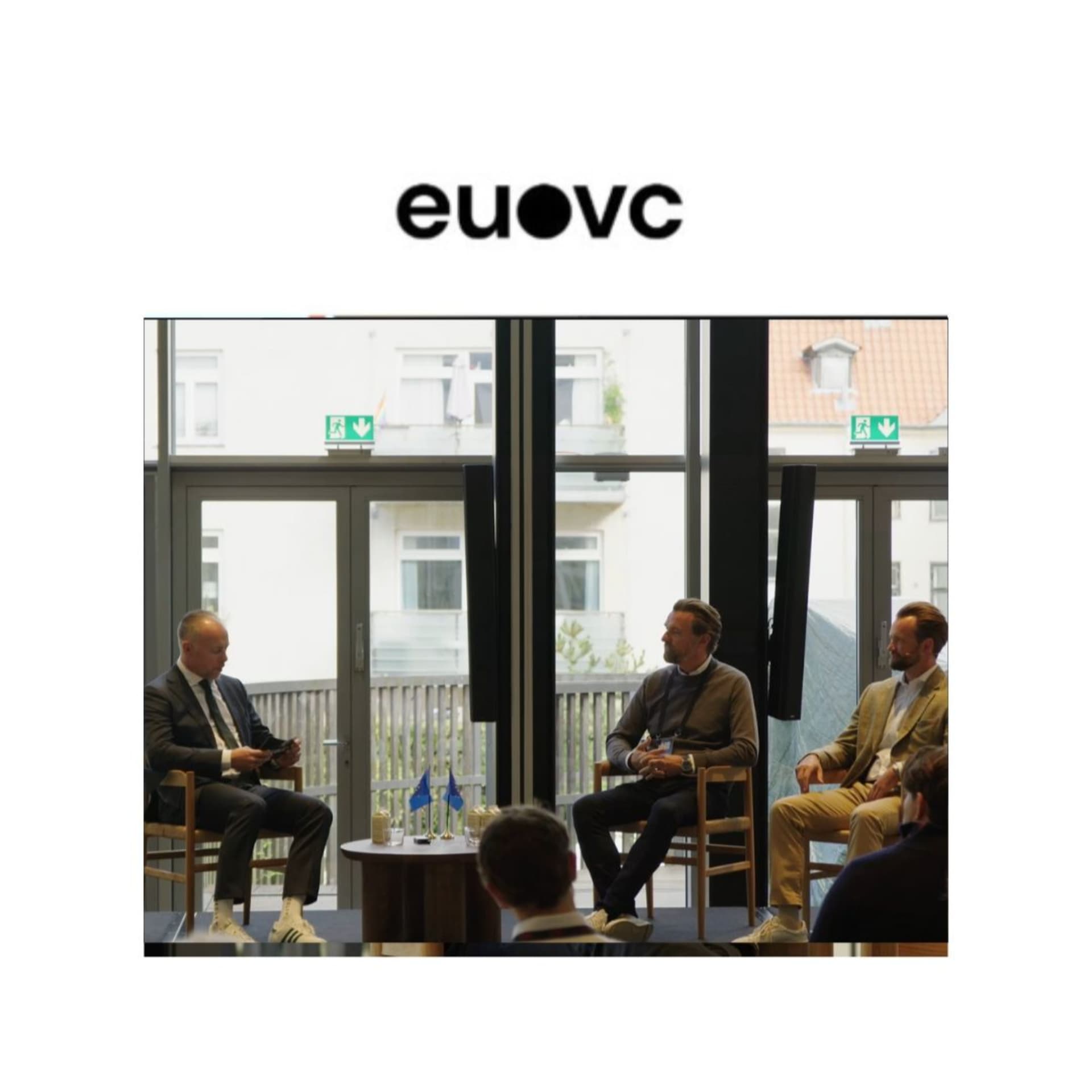
Episode Description In this episode of EUCVC Summit Talks, Jeppe Høier interviews Jesper Bang Olsen of BEAM and Kerk Wichmann of Jungheinrich. The discussion revolves around corporate venture building, addressing the necessity for corporates to differentiate venture initiatives from their core businesses. The conversation covers strategic anchoring, the importance of governance, and balancing agility within startups and established industrial scales.
---
Key Topics Covered
- Genesis of Uplift Ventures
- Reason for Establishment: Responding to increased competition from China and the rise of software-driven competitors.
- Strategic Shift: Need for innovative business models beyond the core operations of Jungheinrich, which involves over 20,000 employees and €5.5 billion in turnover.
- Challenges within Corporates
- Failure of Ventures Inside the Mothership: Issues such as slow governance cycles, rigid rules, and outdated mindsets hinder innovation.
- Learning and Adaptation: Uplift Ventures was created to address these failures by adopting a different approach.
- Jesper’s Journey with BEAM
- Background: Jesper’s transition from traditional sectors (e.g., DVD production) to creating a venture builder focused on future-proof business ideas.
- Value Triggers: Emphasis on identifying unique niche problems rather than competing in oversaturated markets.
- Strategic Anchoring
- Top Management Commitment: Essential for the success of corporate venturing initiatives.
- Balancing Two Worlds: Leveraging Jungheinrich’s existing resources (e.g., engineers and sales personnel) while learning from startup methodologies.
- BEAM's "Secret Sauce"
- Separation from Corporate: BEAM operates independently to avoid bureaucratic constraints, facilitated by support from the company’s management.
- Championing Internal Innovation: Building relationships with internal champions who advocate for the venture’s speed and innovation.
- Customer Infiltration
- Creating Positive Friction: Engaging directly with customers to elevate the venture’s credibility and ensure alignment with market needs.
- Networking: Developing connections within customer environments to enhance collaboration and respect for the venture initiatives.
- Governance and Decision-Making
- Independent Venture Board: Creation of a dedicated board to streamline decision-making and ensure focus on market viability.
- Stage-Gate Process: Implementing strict criteria for evaluating venture ideas, emphasizing market readiness over internal corporate approval.
---
Key Takeaways
- The need for corporates to innovate and adapt in response to external threats, particularly from agile software-driven companies.
- Understanding the importance of separating venture initiatives from the core business to facilitate agility and innovation.
- The role of strategic commitment from top management in fostering a successful corporate venture environment.
- Emphasizing customer relationships and market feedback as vital components for the development and success of new ventures.
- Utilizing independent governance structures to enhance decision-making speed and resource allocation.
---
Conclusion This episode provides a compelling look into the dynamics of corporate venture building, emphasizing strategic separation, customer engagement, and agile governance as critical components for success. Jesper and Kerk's insights illustrate the complexities and potential of incubating startups within established corporates, serving as a practical guide for other organizations facing similar challenges.
Written by AI. May contain mistakes. Listen to the episode to check what was said.
Transcript
Automatic transcript. May contain errors.0:00Startups are fragile in the early days and the right incubator can make all the difference. Jesper Bang Olson of Boeimer Group is joined by Kirk Wichman, VP of Corporate Strategy and Development at Jungheinrich and Managing Partner at Uplift Ventures, to reveal how leading corporates are designing incubation programs that go beyond mentorship. From pilot opportunities to strategic alignment, this is a blueprint for turning early-stage ideas into real corporate collaborations and building venture arms that deliver more than capital. So, here we are. Kerk, welcome. Jesper, welcome. Talking a little bit about venture building, and I want to start with you, Kerk.
0:45So, managing partner at Uplift Ventures, part of Jungheinrich. You're also head of strategy at Jungheinrich. Can you share a little bit, you know, what is the strategic gap and what has prompted the establishment of Uplift Ventures? Yeah. So the idea of Apple Ventures actually was based on a challenge we faced over the last couple of years, increased competition from China. And also the reality that we as a machine building company are more and more faced with software driven competitors that we never knew before. So it was clear that we need to shift our focus towards new business models, the business models in five to ten years.
1:26And it was also clear that we won't be able to do that in our core business. And that was one reason why we strategically invented Upleventures to tackle those business models of the future. You will also be adding CVC to that. You're doing LP investments at the same time. Can you share just in a few sentences why you started it right there with Venture? Yeah. So, of course, we tried before to, let's say, create our own new business models or ventures within our core business. And we are a huge company, more than 20 ,000 employees, 5.5 billion euros of turnover, worldwide active. And that's also the problem, because if you want to invent ventures in such a big corporate, you will fail because of governances, because of rules, because of the wrong mindset, because of too slow innovation circles.
2:27So we took all that learnings and said, okay, we need to do it completely different to really be successful with what we're doing there. And that was the moment where the whole idea was born. Fantastic. Yes, but you have been a founder yourself. You've been in the game for a long time. working out of Beams office in Berlin. Can you share, you know, how did that all come about? So what happened was actually that the family owner of the company, Boeum Group, Christoph Boeum, he had an epiphany back in 2015 where he had an entire CD sortation division doing CD sortation equipment for also DVD production, etc.
3:12And it was wiped out in a few quarters by Spotify and YouTube. And he went back and said, okay, that was not so good. I have six divisions. Now one of them is wiped out. It's 10 % of the revenue. So he said, I want to go to Berlin and see what the hell is going on in that startup environment. And then he decided to create a venture builder that could see the future Spotify's of the other division and try to come up with new companies based on software ideas that could essentially destroy the core business. You've been quite successful in what you do at Beam, right? Could you share a little bit about where are the value triggers you see when you design these processes?
3:59So I think it comes to the good problem. We try to find really good problems that are unique. They have to be a little bit niche based, not too much red ocean around the problem solving. We try to anchor them to the core business, but not too much because then we will fail in our projects. So it has to be on the rim of the core. We also try to find really good people. We try to find outliers, people that have done something spectacular in their life, that are also founders, and we try to find them as a needle in the haystack and try to onboard them into our program. Thank you. Kirk, also, you know, being fairly new in the game, right, there's something about, you know, being a corporate and then all of a sudden have to start this, you know, startup agility, finding all these key hires and so forth, you know, how do you see, you know, how would you calibrate that tension that are between the two cultures?
4:59First of all, I think it's of greatest importance that you really have the strategic anchoring. It needs to be a clear strategic initiative to do venturing as a corporate. If it's an only innovation playground, it will die after the first one or two years because it becomes not interesting anymore. So this is clearly anchored. Second point is that we have top management and also C-level commitment very clearly on that initiative. I think this is the first starting point. The second point now is to balance these two worlds. And I have a quite, let's say, luxury role because I'm in these two worlds and it's also about learning from each other.
5:42So on the one hand we want to have Uplift Ventures leveraging the assets we have within Juncker Heinrich and they are huge. We have 6 ,000 service engineers, we have 2 ,000 salesmen, we have factories, we have R &D facilities and so on and so forth. And on the other side, Jung Heinrich right now sees how fast you can bring ideas into execution and scale them. So after the first six months now, Upload Ventures is alive. We are just before founding our first venture and bringing these two mindsets together and making sure that there is a learning exchange. This is quite important, but accepting that these two worlds are working completely different from each other and that's okay.
6:25There is no worse and good. It is completely fine that these two vehicles work in a completely different way. Yes, Bokerk shared a little bit about value creation, all the engineers, all of that, right? So it's new for Uplift Ventures. Could you share about a little bit the secret sauce? What have you been able to do in Beam? So I think what we had was a clear mandate from the top, right from the family of the company. They wanted this and they also saw that it was difficult for the organization to be in charge of this. So they separated us completely from the organization. So we're a separate company working against the holding, which I think is an important exercise to do that because then you are not subordinated to divisional directors or center of competence heads because we are on our own planet in Berlin.
7:22I think that's important. But I also think that we have appointed several champions in the organization that really likes to work with us, that likes the speed, that likes the way we offer products to their customers that are unique and differentiated versus what they can offer from the core business. So there's a good synergy around that. We're kind of like the circus coming out at customer meetings and showing our things, and they like that as well. But you have to build it together with the organization as well so that they don't see us as a threat, but more as an extended opportunity to show what the group can do.
7:59Maybe digging a little deeper. So one of the things that EUVC does is also we do different kind of offsides and elements. We had the chance to sit around a campfire one day, and it was a little bit about sometimes it's also challenging to get these VPs to do what you want to do. and get them to do, could you share, you know, how do you soften that up? How does that work in Beam? So the best answer to that is to get their customers to be on our side, right? So we try actually to infiltrate the customer environment of the mothership and be as good friends with the customers as the divisional directors are.
8:36So we have our own network now in the customer groups of Boima Group with all the executives that are buying products from the mothership, and they also respect what we do. So then we create a positive friction and dynamic around that so that we can work together on proactive and positive measures. And wrapping it up with a question for you, Kirk. I know it's early on and so forth, but have you made a kind of a playbook about how you will go about scaling these ventures? Yeah. So I think you need to have a very fast decision-making and these decisions are not made by our C-level board of the mother.
9:12That's important. We have an own venture board. There's nobody from the sea level. We even have external people in that venture board. And we are very strict on this stage gate process we are running. So all the venture teams, they are pitching from face to face. And we are very early in killing ideas that not work for the market. Not for Jung Heinrich. They need to work in the market. And by doing that, I think we have a very good process to spend resources efficiently, but also gain speed on the ones where we really want to bet our money on. Thank you so much.
From the publisher
Welcome back to the EUCVC Summit Talks, where we bring you behind-the-scenes conversations with the founders, corporates, and investors shaping Europe’s venture collaboration landscape.
In this episode, Jeppe Høier sits down with Jesper Bang Olsen, Partner at BEAM, and Kerk Wichmann, VP of Corporate Strategy at Jungheinrich and Managing Partner at Uplift Ventures. Together, they unpack the realities of corporate venture building: why corporates need to separate venture initiatives from the mothership, how to anchor strategically, and what it takes to balance startup agility with industrial scale.
From governance and champions to customer infiltration and fast decision-making, this is a candid look at how leading corporates are building real ventures—not just innovation playgrounds.
🎧 Here’s what’s covered
00:19 Why Uplift Ventures was born—responding to Chinese competition and software-driven disruption.
01:00 Why ventures fail inside the mothership—rules, governance, and slow cycles.
03:00 Jesper’s story: from DVDs wiped out by Spotify to creating BEAM as a venture builder.
04:00 Value triggers at BEAM—finding good niche problems, anchored near but not inside the core.
05:00 Anchoring strategy: why top management commitment is non-negotiable.
06:00 Balancing two worlds—leveraging 6,000 service engineers and 2,000 sales reps while learning startup speed.
07:00 Secret sauce at BEAM—separation from the corporate, but with champions inside who love the speed.
08:00 Customer infiltration—winning over corporate clients directly to create positive friction.
09:00 Venture governance—independent venture board, external members, and strict stage-gate decisions.


