
In short
EUVC Podcast Episode Notes
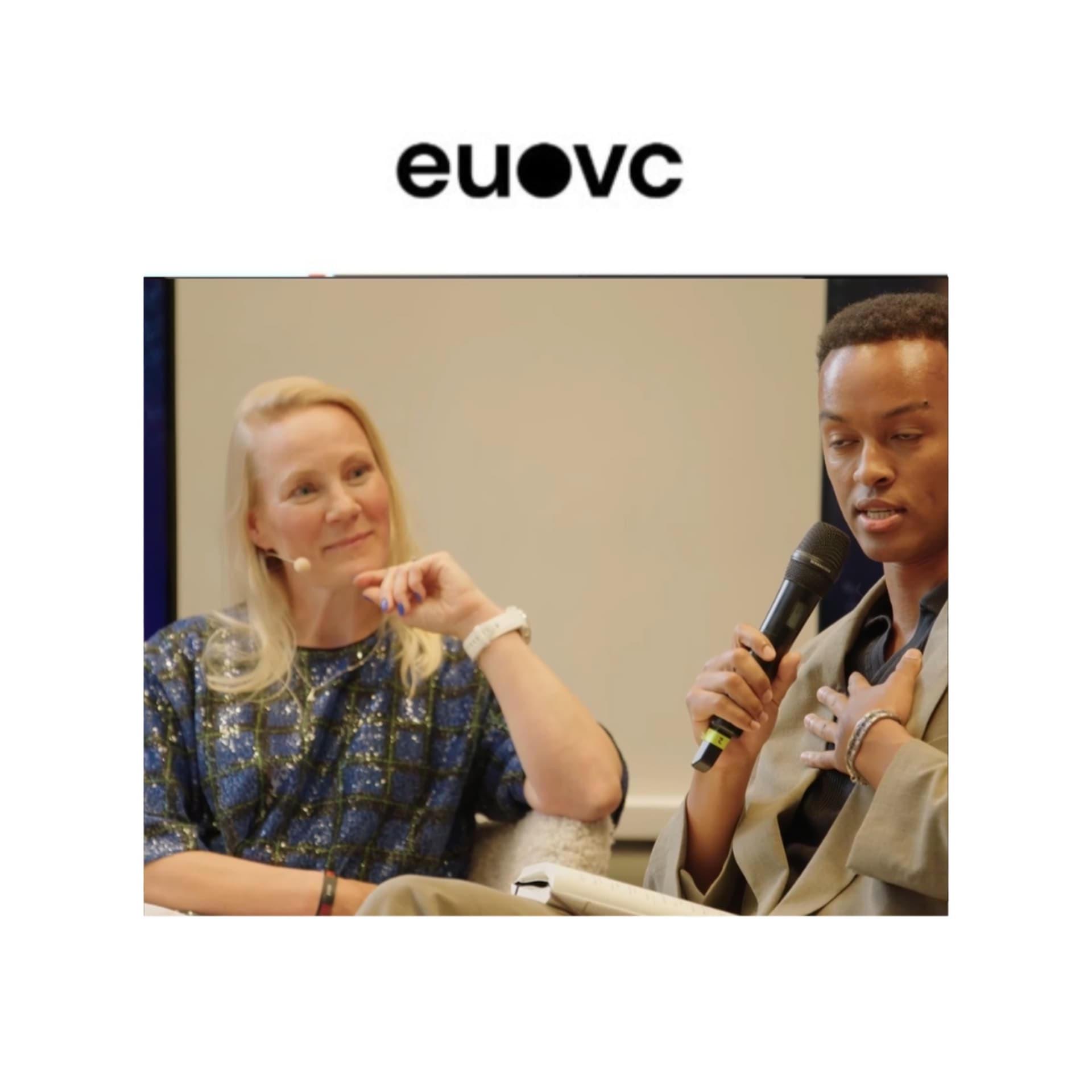
Episode Overview Title: E607 | EUCVC Summit 2025: Linn Clabburn (Inter IKEA Group) & Destana Herring (Regeneration.VC) — Scaling With, Not Over, Founders Host: Andreas Munk Holm and David Cruz e Silva Description: This episode features a conversation about how corporate venture capital (CVC) and venture capital (VC) firms can effectively collaborate with founders, emphasizing trust and alignment in their partnerships.
---
Key Themes and Discussions
- Scaling With Founders
- Importance of building trust as the foundation for collaboration.
- The need for corporates and VCs to support rather than overshadow founders.
- The "Love Triangle"
- The dynamic relationship between the CVC, VC, and founders.
- Different motivations and objectives among VCs (fast-moving, disruptive) and CVCs (deliberate, well-resourced).
- Alignment Before Investment
- The necessity of aligning on objectives, timelines, and priorities before making investments.
- Understanding the ambitions of both VCs and CVCs is crucial for successful partnerships.
- Case Study: IKEA + Regeneration Joint Investment
- Discussion on the joint investment process, emphasizing the importance of aligning Key Performance Indicators (KPIs).
- The case exemplifies the benefits of pre-investment discussions leading to more effective collaboration post-investment.
- Translating Corporate Scale to Startups
- VCs play a critical role in translating corporate jargon into actionable steps for founders.
- The distinction between what "scale" means for IKEA versus a startup.
- Challenging Dynamics in the Boardroom
- Emphasis on the importance of open dialogue and courage in board meetings.
- Investors should spar privately to present a unified front publicly, ensuring founders are not pulled in different directions.
- Iterative Success
- Success may look different at various stages of a startup's growth; iterations may lead to better market fit over time.
- Ongoing dialogue is essential to adapt strategies to support the startup’s evolving needs.
---
Key Takeaways
- Trust is Essential: A strong foundation of trust facilitates better collaboration among corporates, VCs, and founders.
- Alignment is Key: Prior to investment, all parties must clarify their goals and expectations to avoid conflicts later.
- The Role of VCs: VCs act as interpreters and negotiators, ensuring that corporate goals are effectively communicated to founders.
- Private Sparring: Effective collaboration involves challenging one another privately to present a united strategy to founders.
- Iterative Processes Lead to Success: Flexibility and ongoing dialogue can lead to better outcomes as market realities change.
---
Conclusion The conversation between Linn Clabburn and Destana Herring underscores the importance of collaboration in venture capital. By focusing on building trust, aligning goals, and fostering open communication, corporates and VCs can effectively support founders in scaling their businesses while respecting their vision and operational realities.
Written by AI. May contain mistakes. Listen to the episode to check what was said.
Transcript
Automatic transcript. May contain errors.0:00Everyone talks about scale, but few talk about what it takes to scale with founders, not over them. Lynn Clappern of IKEA and Destana Herrick of Regeneration.vc unpack how they work hand-in-hand with entrepreneurs to bridge the gap between corporate ambition and startup reality. From defining what scale really means to preserving founder vision and values, this is a candid conversation on how to build trust, alignment, and long-term impact with love at the core.
0:37Hey, everybody. We have heard a lot today about the role of CVC, the different forms CVC can take. Today, with Lynn, I'm hoping to discuss a bit of the dynamic in the relationship between a VC fund, like myself, representing Regeneration.VC, a CVC, as Lynn is representing IKEA, InterIKEA Group, and Founders. Understanding that three-way love triangle, as we call it, is an interesting dynamic the first few times. So, VCs can be characterized as sometimes fast-moving, as disruptive, perhaps contrarian, whereas CVC is usually thought of as deliberate and well-resourced. I think if you put these puzzle pieces together, you have a really, really formidable duo that can do a lot for founders.
1:31But where do you start? Well, I mean, to start with, I totally agree with you, Destana. I think coming from a VC background, now working in CBC, I see a great deal of potential in us really coming together and creating something bigger than the sum of the parts. I think, however, though, there is a challenge. I think for us as a CVC and for you as a VC, it's important to recognize from the very outset that we have slightly different ambitions. We have different objectives. We have different things we want to achieve with the capital that we deploy. And I think the really key thing is how do we build the foundation and align before we make an investment.
2:20And I know you guys, you kind of position yourself as someone who invests alongside a lot of corporates. So where do you tend to start in this? So doubling down on the theme, and this is the last time I'll try it if I don't hear a reaction. You need to know who you're in bed with, right? And for us, that means understanding the objectives, but also the timelines, also the priorities. There's a lot of different teams and different groups within a CVC or within the attachment between a CVC and the parent corporate. And so navigating that sphere takes time. I think the two of our groups, this is year three, four of our working relationship, now having cleared multiple soon investments together.
3:07So, you know, these things do take time, but it does involve understanding that by 2028, there's ambitions to be plastic-free in consumer packaging across the board, and 2030, fully circular. And that's all the way down to the components, the adhesives, the colors. Absolutely. And I think, you know, that level of understanding is something that you have to build up over time. And I think, you know, what we see when we sort of look at this, and kind of coming back to Metta's point a little bit earlier, you know, what happens and what we have seen in our investments is in those that we have gone in very heavy on our own, where we have, you know, quite a big stake and quite a big role to play, that it's not necessarily working out to the best of for us or for the company that we've invested into.
3:59So, you know, that kind of sparring partner that we can get in a VC, we see as a really key way of actually to deliver the best possible value, both for ourselves and for the company we've put our investment into. So, I mean, for example, we have a joint investment in a company in the UK where we spent an awful lot of time prior to the investment. So together with Regeneration, we sat down and we really went through our different objectives and our different KPIs that we were going to measure success on to make sure that those were as aligned as possible. And then the next stage in that is always bringing the founder into this love triangle.
4:43Yeah, exactly. When it gets to the boardroom, often you see if the work was done pre-investment or not. But if it works, what you should see is the ability for a venture fund to do what we do best, which is middlemen, to be frank, right? We interpret, we translate, we negotiate on behalf of our founders, but we also do the same on behalf of the interests of the corporate. We are trying to distill lofty ambitions that are delivered through corporate jargon into a very, very tangible action item for a founder with a million different things on the mind, especially when you lean into a more technical founder landscape.
5:25So there's a lot, a lot of work that happens beforehand. And when you do get to the boardroom post-investment, it's very apparent. If you're able to communicate clearly, if goals are being met and parties remain happy, then that makes us as the VC pretty happy. Yeah. And I think, you know, what you're saying about that translation piece and that communication piece is essential because, you know, we talk volumes as IKEA and scale as IKEA. That's a very different thing from a startup founder when they think about volumes and scale. And so, I mean, in the most successful collaborations that we've had between ourselves, a VC, and the founder as sort of a key group of investors or key people within the business, you know, where we can contribute with our expertise, which might be very niche in a technical area.
6:18And we have the VC who can kind of take that role of mentoring the founder, supporting more on the commercializing, looking at the picture beyond our core strategic needs, and to be there to kind of help the founder find that path, build the milestones, budget against those. I think those are the most impactful collaborations and the most successful companies that we're working with at the moment. It's so, so crucial. I mean, where regeneration can bring on an existing advisor or find one who really, really understands a domain, IKEA might have an entire floor of experts and triple IQ individuals who can really, really help validate the techno economics from a standpoint that a VC can't compare to.
7:08So it's an important, important partner. sometimes success looks different. We've had cases in our Fund 1 portfolio where we co-invested alongside a corporate venture fund and found down the road that the first market application wasn't the initial one that that corporate venture fund really invested for, right? So sometimes it is a less price-sensitive market application where you start and the development and iterations that happen along the way make it even more valuable when it finally comes down the pipe for that corporate. Yeah, and I think that's challenging for all corporates. You invest with sort of a strategic objective, somewhere you think you're going to go with this company, and then things happen and things change.
7:56And you need to have that dialogue, that ongoing dialogue to really understand how are we doing what's best for the company. You know, we are there as behalf of our corporate, but at the same time, we have a commitment to the company. We have a really important role in making sure that they also are successful. And I think, you know, it also comes into the boardroom. So it's really important to build that foundation before you go into the investment, because then when you get into the boardroom, when you sit there and you're sharing ideas and you're challenging each other to really have the kind of courage and the kind of openness between the different investors to be able to challenge each other and to be able to say, look, we're moving in this direction.
8:48We need to kind of have a clear path and not start pulling things to, pulling founders in particular in different directions. Spot on. We do some of our best sparring outside the view of our founders and then when we come to that board meeting, we kind of deliver a unified front. I think the point is that collectively, our job is to empower founders and if instead our different rhetoric is pulling them apart or pulling the company in different directions, then we really need to reconsider what we're doing in the first place. Thank you all. I think it's not a problem to walk away at that point.
9:25Indeed. Thank you.
From the publisher
Welcome back to the EUCVC Summit Talks, where we bring you candid conversations with Europe’s leading founders, corporate leaders, and investors shaping the future of venture collaboration.
In this session, Linn Clabburn, Head of CVC at Inter IKEA Group, and Destana Herring, Partner at Regeneration.VC, explore how corporates and VCs can partner with founders without overshadowing them.
From aligning on objectives to translating “corporate scale” into startup reality, Linn and Destana share how trust, sparring, and clarity in the boardroom can make or break collaboration.
🎧 Here’s what’s covered:
00:10 Scale with, not over, founders: why trust is the foundation.
01:00 The “love triangle” — navigating the CVC, VC, and founder dynamic.
02:30 Different ambitions, shared value — why alignment before investing is key.
04:00 Case study: IKEA + Regeneration joint investment and aligning KPIs.
05:00 Translation role of VCs — turning corporate jargon into tangible founder action.
06:00 What scale means at IKEA vs. in a startup — and how to bridge the gap.
07:00 Success looks different — iterating market applications until corporate fit arrives.
08:00 Boardroom courage — how to challenge each other without pulling founders apart.
09:00 Unified front — why investors must spar privately, align publicly.


