
In short
EUVC Podcast Episode Summary
Episode Title
E609 | EUVC Live at The Drop: Hampus Jakobsson — From Corporate VC Scars to AI’s Role in Climate
Co-Hosts
- Andreas Munk Holm
- David Cruz e Silva
Guest
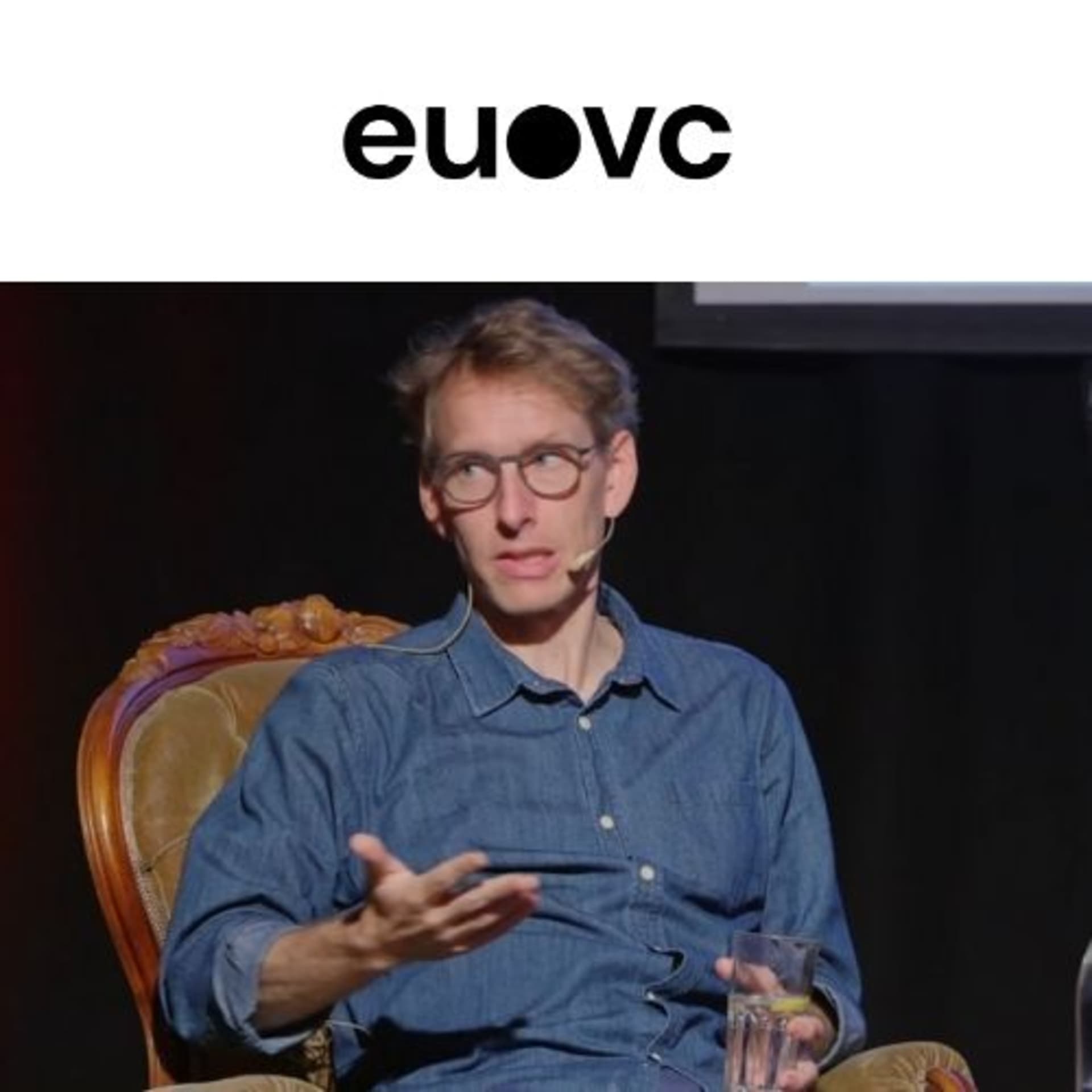
- Hampus Jakobsson, serial founder, angel investor, and a driving force behind The Drop.
Episode Overview In this episode, Hampus Jakobsson shares his insights on two main themes:
- Lessons Learned from Corporate Venture Capital (CVC) Experiences
- The Role of Artificial Intelligence (AI) in reshaping energy demand and climate solutions
Key Topics Discussed
Corporate Venture Capital Insights
- Initial Hesitance Toward CVCs:
- Hampus discusses his initial reluctance to engage with corporate venture capital due to previous negative experiences with failed corporate deals.
- CVCs often lack commitment, leading to delays and missed opportunities for startups.
- Realization of CVCs' Importance:
- Hampus emphasizes that corporates are essential for scaling industries such as construction, mobility, and climate solutions.
- Corporates represent a significant portion of investment activity (25% in Europe) and can provide valuable resources and infrastructure.
- Need for Clarity:
- A clearer language is needed to explain CVCs' spectrum—from strategic to financially driven.
- Hampus cites the example of Motorola's innovative deal structure with his first company, highlighting the importance of aligning incentives and understanding corporate motivations.
- Enterprise Sales Realities:
- Discusses the lengthy enterprise sales cycles (averaging 18 months) and substantial contract sizes (€7M), reinforcing the value of corporate partnerships in scaling ventures.
AI's Impact on Climate Solutions
- AI’s Energy Demand:
- Hampus indicates that AI could account for 10-50% of global energy consumption, raising concerns about off-grid energy solutions.
- The current grid infrastructure cannot support rapid increases in demand, necessitating new off-grid strategies.
- AI as Efficient Tools:
- Hampus describes AI as “a thousand free interns,” emphasizing its potential to improve efficiency in traditional industries (e.g., waste management, construction) rather than as a magical solution.
- AI can optimize processes that are often seen as unprofitable, allowing for improvements in industries that are slow to innovate.
- Practical Applications Over Over-Simplification:
- Hampus cautions against oversimplifying AI’s role, advocating for practical applications that drive real impact.
- He encourages startups to focus on actionable solutions that can make a significant difference rather than relying on AI as a catch-all solution.
Closing Thoughts
- Hampus concludes by reiterating the importance of solving off-grid energy production challenges and effectively deploying AI to make meaningful contributions to climate solutions.
- He expresses a desire for more constructive discussions around AI’s role in solving complex problems in traditional industries.
Key Takeaways
- Corporate venture capital is crucial for scaling startups in traditional industries.
- A clear understanding and communication of corporate strategies and incentives can enhance collaboration.
- AI holds potential for both increased energy demand and efficiency improvements, but it requires practical application and thoughtful deployment.
- The conversation on AI must move beyond hype to focus on actionable solutions that address real-world challenges.
About the Podcast
- EUVC focuses on the European venture capital landscape, providing insights from industry leaders and fostering discussions that illuminate the ecosystem's complexities.
- For more information, visit [eu.vc](https://eu.vc).
---
Feel free to dive deeper into each topic by listening to the full episode for a richer understanding of Hampus Jakobsson's insights and perspectives on corporate venture capital and AI's transformative role in climate solutions.
Written by AI. May contain mistakes. Listen to the episode to check what was said.
Transcript
Automatic transcript. May contain errors.0:00But the encouraging part is that 25 % of investment volume actually comes from corporates in the ecosystem. them and also that 42 % of all CVCs actually likes to co-invest. Because corporates are, I mean, as Jeppe said, they're a large investor. But the thing about it is that corporates are also a crazy amount of how the economy runs today, obviously. Like there are ways of like a Tesla or whatever, building a car out of nowhere. But hey, why not take an automaker who's really great and actually make them like do it, right?
0:33Mic check. Oh, welcome. to EUVC Live at the drop. Powered by Woven Capital.
0:49So Hampus, I said I wanted to talk to you about two things. One is AI. Surprisingly, none of the other people that we invited on stage today said they wanted to talk about AI. So that was a beautiful topic that we should touch on. But tying it into what Jeppe just said around the corporates in our ecosystem, they make up a substantial part of investment activity in Europe, 25 % by many accounts. Why do you think that the drop is important and where do corporate ventures fit in this? Yeah, no, and I think that I was actually super public about it last year, but actually declined for when I was to come.
1:27And the reason was because I had a long and scarred history of investing like 150 plus angel investments and a couple of funds I've been at and I opened a couple of funds and there's one thing that was clear the last 20, 30 years was like you bring in a CBC and then the manager leaves or the CEO changes or it's not strategic and like you know there's so many companies I've been in where they've hunted down the CFO for a signature to code that A round or B round because the CBC doesn't bother anymore and you're now past the legal team and they're like this startup is almost dying if you can't get the final signature and so like I had all those scars and then during the drop years people always like and I'm like I'm too scarred I'm too scarred I'm too scarred and last year I wrote a LinkedIn crossword and I had I don't know plus calls with people who explained differently and I like I write a summary for myself every year of things that I changed my mind no no and one of the things I wrote in my notes were that I was completely wrong about that so then after new year I was really thinking okay so i had a lot of more like you know personal and intimate and interesting stuff i was wrong about as well but i was wrong about that and i was thinking okay so at the drop what do we do so then we decided to have a pre-day for corporates and really say like how do we involve corporates and corporate ventures because corporates are i mean as jeppe said they're a large investor but the thing about it is that corporates are also a crazy amount of how the economy runs today obviously like there are ways of like a tesla or whatever building a car out of nowhere but hey why not take an automaker who's really great and actually make them like do it right and the same with anything like construction or or like absolutely every single industry is way better to improve an existing industry with all the might and power knowledge they have and instead of like just compliant you know trying to just believe we can build a completely new way of building buildings or whatever um and i think that was really a like epiphany for me so i was thinking how do we do that and i think it is still not uncomplicated and i think the thing for me is I wish we had a better way to explain corporate ventures so that the startup understood it better, so that the GPs at the, whatever you call it, the financially driven fund or whatever, that they understand it better.
3:40Because there's such a gradient from corporate ventures that invest from the balance sheet, highly strategical, decided and signed by the CFO, to all the way in the other sector, which is spun out fund. that sure they only have one or they might have multiple LPs but like here you have single LP fund, financial returns and the whole span, right? And I think that I wish we were better as an industry to explain where we are on the spectrum because they're all values, right? Like, I mean, I today talked with a friend who's joined a massive construction company. Like, I don't remember the numbers now.
4:1115 ,000 people in Germany. They built Potsdam Platz. They built like Halbbahnhof. They built, yes, Berlin Airport as well. but like one of our companies is like a next gen cement company and I saw them and introduced them and Marta the CEO of the company was like is this real? like you're like our ideal customer and it was like yeah so like it's so stupid that she would think I mean or she doesn't of course she's smart but that I would think that the best person to sell to if you're a cement company would be like another startup obviously not like it's the people who build like the post-term paths of the world that you need to talk to and who is better than to have them to get an incentive.
4:50And to round that off, like my first company, we worked with massive corporates. Like our average sales time was 18 months. So yes, enterprise sales and massive corporates. And our average contract value was like 7 million euros or something. So massive. Most of our customers were just like, you know, sign the papers and put a lot of covenants around it. Motorola did something super smart. They said, hey, we want to invest in Pilbara Dot, but we are, or sorry, in TAT, but we understand that we can't invest in TAT because it's going to be spook off Nokia and Samsung and Google and everyone else.
5:23So they said, can we get like a warrant that for every million phones we ship with your software, we get an option to buy this many shares at exit only. Like at exit, like nothing in between. Like we have no information, right? Nothing. We gave them that option. They shipped enormous amount of phones with us. Really, like we were great. Like, you know, they were super instant. Sometimes the board knew that this is the one we're backing. When we got acquired by BlackBerry, all the software they've ever bought from us, all the services they've ever done from us, was free. Because of the acquisition, they got all the money back.
5:57So for us, it was like we were super aligned with Motorola because we were trying to figure out how to get into our biggest platforms because we wanted the royalty. They were incentivized because they knew that one day we would exit and then they would get tons of money back. And it was one of those things that I thought, it was such a great partnership. and it was done by them knowing that if we're their investors, Samsung will not be able to work with us anymore. So it was really one of those things that we intelligently talked together, how do we do this? And there's so many of our startups that today, like what I advise them about this is really trying to figure out where the company, the CVC or the corporate is in this spectrum and how to collaborate and that the rose is not a rose, it's not a rose.
6:35The CVC is not a CVC. Depends. Is it strategic? Is it like, you know, is it financial? Is it like to learn? What is it? And I think that's the thing I wish we had more language about. That was a long answer. I should have said no or yes or something, I guess. I was just about to say that this is a typical interview with Hampus because they get to ask one question, half the time is gone. So I'll already now go to our other topic. You can choose any topic. I'll go to AI now. I want to ask you, how does AI change the game that's on the field and climate? Yeah. Okay. So I actually did my degree in AI.
7:09It's like, I know it's 25 years ago and it was not called AI. But yeah. No, but the thing, I think the thing, I think so fascinating right now that we're talking so much at PalibraDot about is the fact that AI really changes both the demand part and the solution part of the problem. Like obviously AI will be, I don't know, 10%, 20%, 30%, 50 % of the world's energy demands. And the headache is when you're scaling a demand that quickly, you cannot have it on grid. The grid is the largest machine humanity has ever built, like a physical machine. The financial market might be bigger intangibly. But the thing about it is that you can't put gigawatt plants like this on the grid.
7:52It doesn't work that way. So we have to figure out off-grid, which is just super exciting just economically how that works. And of course on-grid. If it's inference, people will do it. If it's training, you can do it off-grid. All of that is something I think we're just not thinking enough about. Then the other thing I find, like if you look at the solution side on climate i mean and people are so oversimplifying it because essentially they're just saying oh we have ai it will solve it and for me i always try to like talk about when i talk to a startup or anyone else about that it's like is this like the phd in the cloud like the the crazy magic that nobody like the material you know the material science company that we meet that can just make a novel plastic ai makes it nobody understands it is it that company I personally I think those are going to be far and few between because like it's very messy like you know there's like a lot of details it's really messy the company I love are the thousand free interns it is the company where like it's a waste management software company business waste management is one of those industries which is like it's not it's hard to actually make the economy work and you're up against big encumbrance or whatever but then you add software to make it better but if you start adding like ai which means that you can do data cleaning e-sd reporting for free you can figure out the sites you can route planning bit by bit you're improving your margins like two or three four or five suddenly and suddenly you're up at 18 and the cool thing about old industries is that tam is insane like it's so much better to go into an old industry and do that like every time we build a building right i think about this all the time when you build a new property i know that most properties are already built in the world, but if you build a new property, there's so many rules about like, oh, this is where the ventilation shaft is, this is where the bathroom is, this is where the toilet is, this is where like so many rules, right?
9:45I'm not smart enough to put all the rules. I'm not an architect, obviously, but I can't put all those rules in my head and look at this thing and say, if it works, this is what's called a compiler. It's a super simple problem for AI. Just take that thing and say, here are the errors, here are the warnings, please fix, and I can move them for you, which means that we can optimally design buildings, envelope design, wind, all of these things are not PhD in the cloud. They're just like a thousand free interns that just like, and I think that's really what excites me. So like, I wish that more people who talked about AI talked about how the heck do we solve off-grid energy production, be it solar or be it nuclear, whatever.
10:25And the other one is like, how do we actually deploy more thousand free interns to solve all the problems that are not profitable enough to solve now with our mindset. But if you have a thousand free interns, of course you can. So that excites me so much. And what I'm also saying is I wish there were not as many startups who said the AI will solve it. I don't believe in that. I made it to give you two questions. I don't want to go further. Thank you so much, my friend. I think you gave a strong thesis. Thank you. And thank you all for coming to the drop. I'm super super happy and I'm also going to be super happy tomorrow at lunch when it definitely is over but thank you very much and thank you for all you who did side events ripples and I mean some of you have been here from year zero I mean the 2150 people are like aiming in a couple of hours I mean like from so day zero it hurts and like it's crazy to see people coming back year after year and us trying to improve it slightly every year so thank you very much and thank you for doing this
From the publisher
Welcome back to EUVC Live powered by Woven Capital at The Drop, where we bring you raw and unfiltered insights from Europe’s venture ecosystem.
In this episode, Hampus Jakobsson - serial founder, angel investor, and one of the driving forces behind The Drop - takes the stage to share two big themes: his hard-earned lessons on corporate venturing, and how AI is set to reshape both energy demand and climate solutions.
From scars of failed CVC deals to the epiphany that corporates must be at the table, and from the risks of AI’s off-grid energy needs to its potential as “a thousand free interns” in old industries, Hampus delivers a candid, fast-paced perspective you won’t want to miss.
🎧 Here’s what’s covered:
00:30 Why Hampus once banned CVCs from The Drop — scars from 150+ angel investments and failed corporate deals.
01:30 The epiphany: corporates aren’t optional — they’re core to scaling industries like construction, mobility, and climate.
02:30 Why we need a clearer language to explain the full spectrum of corporate venture — from balance sheet strategics to spun-out financial-first funds.
03:30 Case study: Motorola’s smart deal structure with Hampus’s first company, aligning incentives without blocking other partnerships.
05:00 Enterprise sales realities: 18-month sales cycles and €7M average contracts — why corporates matter most for scaling.
06:30 Transition to AI: how Hampus’s background in AI shapes his view of its role in climate.
07:00 The challenge: AI’s energy demand could reach 10–50% of global consumption, forcing off-grid solutions.
08:00 The opportunity: AI as “a thousand free interns” — driving efficiency in old industries from waste management to construction.
09:30 Why AI isn’t magic — it’s about practical applications, compilers for design, and tools that boost margins in unsexy industries.
10:30 Closing thoughts: solving off-grid energy production and deploying AI where it can have real impact.


