
In short
EUVC Podcast Episode Summary
Podcast Details
- Title: EUVC
- Description: A podcast providing insights into the European VC industry, co-hosted by Andreas Munk Holm and David Cruz e Silva.
- Episode Title: E614 | EUCVC Summit 2025: Hampus, Pale Blue Dot & Andreas Munk Holm, EUVC: Climate Tech in a Trump Era
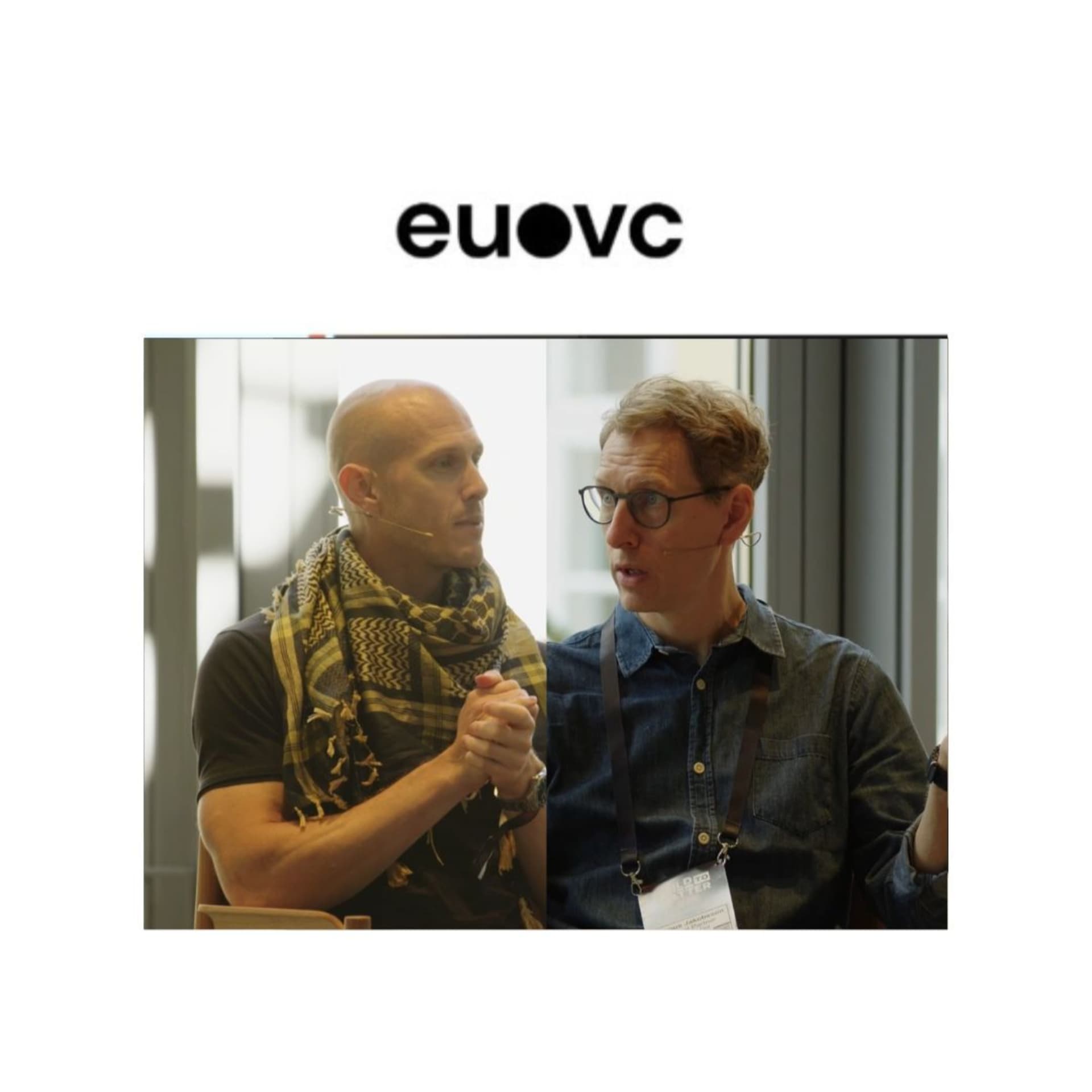
Episode Overview In this episode, Andreas Munk Holm interviews Hampus Jakobsson, General Partner at Pale Blue Dot, focusing on the intersection of climate technology and the political landscape influenced by Donald Trump's recent return to power. The conversation delves into challenges and opportunities in climate investing amid changing U.S. policies and growing skepticism towards climate initiatives.
Key Themes & Discussions
- Political Whiplash
- Trump's resurgence poses a significant stress test for climate policy.
- The impact of U.S. politics on global climate action and European green tech funding.
- Europe's Response to U.S. Politics
- Discussion on Europe's need to focus on local risk management rather than relying on U.S. guidance.
- Acknowledgment of the shift in perception towards self-reliance post-Trump.
- Redefining Climate Investing
- Hampus redefines climate investing as "not dumb investing," highlighting overlooked opportunities in inefficient systems.
- The focus is on practical, scalable solutions rather than high-tech, niche technologies.
- Case Studies
- Last-Mile Delivery:
- Disruption through addressing mundane problems led to a significant improvement in efficiency and customer satisfaction.
- Emphasizes the necessity of a data-driven approach in traditional sectors.
- Practical Advice
- For Corporates:
- CFOs should consider the long-term viability of supply chains and risk management.
- Emphasis on understanding the true costs associated with climate-related risks.
- For Founders:
- Transition from offering free pilots to "forward deployed engineering," enhancing customer integration support.
- Focus on securing paying customers as a measure of business sustainability.
Key Takeaways
- Resilience Amid Uncertainty: European companies and investors are encouraged to look inwards and innovate independently of U.S. political influences.
- Opportunities in the Mundane: Significant improvements in climate impact can be realized by addressing traditional business inefficiencies rather than solely pursuing cutting-edge technology.
- Strategic Risk Management: Both corporates and startups should prioritize understanding and mitigating climate-related risks to ensure long-term success and sustainability.
Conclusion This episode provides a compelling analysis of the current climate investment landscape, emphasizing practical solutions, strategic thinking, and the importance of resilience in navigating political and environmental challenges. The conversation serves as a guide for investors, corporates, and founders in the climate tech sector.
Written by AI. May contain mistakes. Listen to the episode to check what was said.
Transcript
Automatic transcript. May contain errors.0:00With Donald Trump returning to the White House earlier this year, climate policy and green investment are seeing their biggest stress test yet. Hampus Jakobsen from Pale Blue Dot joins EUVC host Andreas Munkholm to explore what shifting U.S. politics means for global climate action, European green tech, and the capital flows driving the transition. From policy risks to unexpected opportunities, this is a conversation about resilience in an age of uncertainty. How are you, Andreas Munkholm? Yeah. Sorry. I'm doing good every time I'm on stage with you because I know it's going to be this first row seat to a bull run or something like that.
0:47Let's see what happens. So, Hampus, we had you at our summit in May and you said there that you had blocked the orange clown from your Twitter feed. Tell me a bit about that decision and whether you think that's what we all should do. I read an amazing book a couple of years ago called 4 ,000 Weeks, which is really about life is 4 ,000 weeks. Sorry, that's roughly how long it is. You want longevity, you have 6 ,000 or something, but the rest of us are on four. And I read in that book, there's an amazing thing about a stock dealer in New York who decides during Trump's first term to just not read any news about Trump and refuse to do it.
1:25And the crazy thing is the media goes bananas on him and calls him irresponsible and just says, like, you're just like such a privileged person that could ignore this. And he literally says, I'm trading in the stock exchange. I'm really thinking of long-term value. I cannot be distracted. I'm really sorry. This is the biggest distraction this country has ever had." And I think when I read that, I was really realizing how many times, like, you lock your house, like, I lock my house, lock my bike, lock my car, but allow everybody to go to complete yard sale in my mind. So I was like, okay, who is essentially Marikendo when I looked at everything around me?
1:55Does this bring me joy? No. And the orange clown did not bring me joy. So I was like, okay, he's out. So I stopped following him. I also followed the other clown guy, like Elon Musk, which is, like, great, but, like, it's just too much, too much, like too much, sorry. So, Hambris, as a, and I'm going to say climate investor, and we're going to talk about why I put it like that, but what do you make of the movements that are happening in the States and also somewhat similar pullback, maybe a little more dampened in Europe? I think that, I mean, Trump is very much vibe coding everything, right? So, like, Trump might be the best thing that ever happened to climate investing ever.
2:34Like maybe fusion reactors are going to be the new thing. I think the thing that I think very sound is we had this massive tourist investor wave back during the Zerp era when interest rates were zero and you had to put the money somewhere. And climate just became the new fad of what we want to put money in. So if you're doing anything in quote unquote sustainability, the money is obviously going to get you, like you can get back. So I think it's really good that we start talking about who's the customer, what's the revenue and all of those things. What's the value? I think that the tricky thing I find is that I'm mostly scared of what Trump is doing, which is very random.
3:09That makes Europe and EU do very short-term decisions that are actually fairly dumb. And I think we are seeing a couple of those when they've changed, like the US changed stuff that feels like maybe this is not smart. A lot of the legislation is about risk. And I think that I don't think we should be too strict on measuring everything. But if you roll back and tell the CFOs of all the corporates that you didn't measure risk, while like, you know, Portugal is losing all the electricity or like Greece is burning or Morocco is burning, that's a bit weird. So I much more wish that Europe and you would say, let's ignore that guy.
3:44And actually, let's talk about what is risk and what we need to handle. And I think what Trump is doing, which I think is very fascinating as well, without following him, is I think Europe has never been so, like we've never looked inwards and cared about as much as each other as ever before, which is very interesting, I find, because I think that it's as if we had this big brother, not big brother, the surveillance, but we're like, big brother is going to bail us out. Like we have the dad over there, they're the sea, they will give us the cash. And when Trump came to office and became crazy, I think Europe was like, maybe it's not that trustworthy.
4:17And I think that I am super happy that Europe is now talking about like, how do we manage this on our own? And I'm not really fascinated how we're turning our eyes east towards China and saying this whole thing about China being the biggest enemy of the planet, that is American narrative. And like, can we collaborate? So I've seen so many companies that now set up like China plus one, like they're really realizing, hey, what's our China strategy? Not as in like, let's just sell to China, but like, what if you produce and do this? Whereas like three or four years ago, China was enemy number one.
4:47And I think that, I think this shakeup is probably really good for the EU and Europe, but we need to get over the hump of like actually looking at our own house instead of thinking that they're going to come and save us. Hempers, you have, for some that are followers of yours, redefined climate investing to being not dumb investing. Can you unpack that? Yeah, absolutely. I think there are many times I think that when people think climate investing, they think suck down carbon from the sky, or they think measure the shit out of everything. and I think that's like the certain niche of climate domestic investing obviously.
5:22I love when I talk to a startup, there's nothing so exciting when I talk to a company and I ask them, how does it currently work in your industry? How do you currently produce steel or whatever? And then they tell me and I'm sitting there for five minutes being super nice and polite to them and then I say, thank you very much, this was great, Robert, but how do you do it in 2025? And he says, that is how you do it in 2025. I'm like, oh shit, that's insane. Wait, every morning there's one dude who does a very large spreadsheet, makes the whole spreadsheet, prints it out in 200 copies, and hands it to the truck drivers.
5:56It's like, yeah, best case, they keep it after lunch. Seriously? And it's like, yeah. And they're like, oh, my God. So why is it not a dashboard in every car? Why is it an updated real-time? Why are they not cameras? It's steel production. They never needed to do that. It was high-margin business. And a steel plant is like 12 soccer fields. It's a large place, right? So when you hear it, you're like, this sounds like it's easy peasy disrupt yeah and it's amazing like we've done so many companies where one of our companies is a last mile delivery company when we met them they had one box delivered per day now they have like 20 000 plus and then scaling the insane thing about that if you hear how people do last mile delivery in large cities like in Copenhagen it's probably semi-functional if you're in London New York it is so dumb it is insane how it works like you have these TikTok talk videos, when you have people in the warehouse throwing boxes and they lose packages, and it's the industry that most people hate working in.
6:50It's the industry that the customers hate the most. Everybody hates it. Rethink. You buy a laptop. Somebody comes in with you. It's a gift. You take it. It's worth a lot of money. You're super, super happy. How can that be a shit industry to work in or to receive from? So these guys just got in, or these two people got in, and essentially thought about how do you build vast millinery in the 21st century? Software-based, data-driven, and the pitch to their customers are, do you want the packages on time by people who are nice, the people who know the postcode, blah, blah, blah. And by the way, it's cheaper.
7:24And oh, a fifth thing on the bucket list, it's actually all EVs, which means you can drive in central London, you can park in different places or Paris, all these places that don't want pollution because kids can't think in school, the corporate is like, yeah, it's cheaper. Oh, by the way, it's good for our ESG agenda as well, right? It's great. Those businesses, I just love them. And there's so many businesses that try to be smart. They do something which is like, maybe we can create a new material using AI and we can innovate. And the algorithm is, well, or we just do dumb shit and make it better.
7:57So I'm very boring. I do dumb shit. Tell me, Hampus, how do you translate this into advice for founders and investors and corporates that are trying to navigate this new world of how to think about climate? For me, it is like there are two parts. Climate is insane about a risk. Like when I talk to like often when I do DD and I talk to our like the customers of our startups, I just super simply ask the CFO or whoever I'm talking to, how do you handle forest fires today? And then they explain it. and then I'm just saying, oh, wait, what are the costs of this? And they explain it. And I'm just saying, what are you doing about it?
8:32And they look at me and say, yeah, tell me. And I think that's the thing. I think if you're the CFO of a corporate today, I would ask myself, can we deliver the same product that we're doing with the same supply chain, with the same margins to the same customers the coming 10 years? If you're a CFO of any company today, anywhere in any industry, the answer is no. And the question is, wait, what are we going to do about it? And I think that's the interesting thing. That's the way I would think and go about it. And if I were a startup, I think what's changed between 2000 and today is that you don't do free pilots.
9:02You do forward deployed engineering, which is what in my first startup was called consultancy revenue. You just charge the company to help them integrate it and they pay you. Which is like when you look at that company as a VC, they have 12 customers, the customers pay you. And then you ask, have you deployed product? Is it recurring? No, but you have five large enterprises that pay you lots of money and their CEOs talk to them, the founders. That's a good business. And then of course, can you scale it quickly and everything? That's the due diligence question. But it's way better than the companies who say, we use AI and we can do magic.
9:34No customers, what are we going to do? Hamvis, this conversation was awesome as always. We'll continue it at the drop. The North Europe's most important conference happening in Malmö next. It's the best conference in Malmö. 17th of September, see you there. Anyone doing stuff in climate for sure. I continued the conversation with Hampus, myself, and a bunch of other climate investors in, what, 14 days or so? Now you're making me nervous. 17th of September. It's going to be great. See you there who wants to. Beautiful, everyone. Thank you.
From the publisher
Welcome back to the EUCVC Summit Talks, where we bring you candid conversations with Europe’s leading founders, corporate leaders, and investors shaping the future of venture collaboration.
In this episode, Andreas Munk Holm sits down with Hampus Jakobsson, General Partner at Pale Blue Dot, one of Europe’s leading climate-focused funds. With shifting U.S. politics, renewed uncertainty around climate policy, and growing skepticism of “green hype,” Hampus shares why he defines climate investing as simply “not dumb investing.”
From Donald Trump’s return to the White House to Europe’s resilience, China’s role, and the gritty reality of scaling “boring but effective” solutions, this conversation is a masterclass in how investors, corporates, and founders can navigate climate risks — and seize opportunities.
🎧 Here’s what’s covered:
00:10 Political whiplash — Trump, vibes, and the stress test for climate policy.
02:41 Why Europe must stop looking to the U.S. and start managing risk at home.
04:55 Climate investing = not dumb investing — the overlooked opportunities in obvious inefficiencies.
06:50 Case study: last-mile delivery — why disruption often comes from solving “boring” problems.
08:15 Advice to corporates — how CFOs should think about risk and resilience.
09:30 Advice to founders — why no more free pilots, and how forward-deployed engineering wins.


