
In short
Podcast Episode Notes: E618 | EUVC Live powered by Woven Capital at The Drop | Jamie Beck, Regeneration VC: Europe’s Conscious Consumer Lab
Overview In this episode of EUVC Live, Jamie Beck, Partner at Regeneration VC, discusses Europe's pivotal role in the global climate transition and presents the concept of consumer climate tech as a potential hidden superpower for the continent. The conversation emphasizes how Europe's affluent consumer market can drive sustainability and innovation in various industries.
Key Themes & Discussions
Introduction to Regeneration VC
- Regeneration VC's Focus: A transatlantic early-stage fund investing in consumer climate tech, which combines sustainability with everyday products across food, fashion, electronics, and personal care.
- Shift from California to Europe: Regeneration VC has transitioned its focus from California to Europe in recent years, adapting to the macroeconomic landscape.
Climate Tech 2.0 Landscape
- Current Challenges: The sector faces skepticism and political challenges, particularly in the U.S., where climate change is heavily politicized.
- China's Manufacturing Edge: China has gained a lead in renewable manufacturing and battery technology, while Europe maintains strengths in branding, culture, and consumer awareness.
The European Consumer Market
- Potential of the European Market: Comprised of 450 million affluent consumers representing over half of Europe’s GDP, primarily across consumer-oriented industries.
- Impact of Overlooked Industries: Notably, the fashion industry has a carbon footprint exceeding that of shipping and aviation combined, highlighting the need for climate solutions in these sectors.
Regeneration's Investment Thesis
- Circularity and Regeneration: Investments focus on the entire value chain, from molecule to product, emphasizing sustainable and circular systems.
- Metaphor of the Movie: Brands as directors, climate technologies as actors, and consumers as the audience represent the potential for narrative change from extractive to regenerative practices.
Europe's Unique Role in Climate Leadership
- Influence of European Brands: Europe hosts major consumer brands like IKEA and Adidas, which lead in sustainability initiatives.
- Taste as a Driver of Change: European design and lifestyle influence global demand for better, circular products, driving systemic change.
Partnerships and Collaboration
- Corporate-Startup Collaborations: The next decade of climate progress will rely on partnerships between startups and established corporations to innovate and implement sustainable practices.
Next-Gen Climate Solutions
- Innovative Materials and Technologies: Examples include microbes for dyeing clothes, enzymes digesting plastics, and circular chemistry reshaping industries.
Consumer Awareness and Health
- Link Between Health and Planetary Well-being: Increasing consumer awareness of issues such as PFAS and microplastics is transforming purchasing behaviors and regulatory landscapes.
Regulatory Environment
- European Standards as a Catalyst: Strict product regulations in Europe are viewed as an accelerator for innovation rather than a hindrance.
Conclusion
- Living Experiment in Regenerative Consumer Capitalism: Europe is positioned as a "conscious consumer lab," where cultural, capital, and ethical considerations align to foster sustainable consumerism.
- Call to Action: Emphasis on the collective responsibility of consumers and brands to drive climate action through informed choices and innovative practices.
Key Takeaways
- Europe can leverage its consumer market to lead in climate tech innovation.
- The intersection of culture, consumer demand, and sustainability is critical for systemic change.
- Collaboration between startups and corporates will accelerate climate solutions and drive the transition to regenerative practices.
Additional Resources
- [Regeneration VC](https://regeneration.vc/) for insights on consumer climate tech investments.
- Follow EUVC for further discussions on European VC trends and insights: [eu.vc](https://eu.vc).
Written by AI. May contain mistakes. Listen to the episode to check what was said.
Transcript
Automatic transcript. May contain errors.0:00The net zero goals by 2050, it's really something that is part of the DNA of a lot of the climate tech companies here in Europe. I think the people that really do this, they do it for it because if you get it right, this is like really detrimental and impactful. And it changes like historically even the course of how like we operate as economies and human beings. Taste drives demand and demand can drive system change. Great friends at IKEA making circularity very mainstream. Adidas scaling shoes made from motion plastics, right? These are companies with leadership and ownership structures that can hopefully see past political cycles and think in generations.
0:36So I think that's an important point.
0:41Mic check. Oh, welcome to EUVC Live at the Drop. Powered by Woven Capital.
0:57Good evening, everyone. Jamie, I work with a fund called Regeneration VC. We're a transatlantic early stage fund focused on what we call consumer climate tech, which are I think two of the kind of more dirty words right now in the venture industry. But I will give a little bit more on that to follow and why we think differently. But as Andreas kind of asked, and we have a British phrase, which is a hospital pass. Michael was supposed to be here, but then gave me the honor of doing this. So he told me that on last Friday, but we were asked to talk about the role of Europe and kind of what we could think about that in the ongoing transition.
1:32So actually, we're a fund that started in California, and we've actually shifted our center of gravity towards Europe in the last couple of years, pre-Trump, actually, setting up offices and team. And so I think we've thought about that macro quite a bit. Yeah, I guess we're coming into, you know, five years into this climate tech 2.0 cycle. and it's an interesting moment to reflect. We really did start to see quite an unprecedented amount of capital into a sector that I think was frankly bemoaned historically as a noble place to lose your money. And I guess despite blog posts and invigorated fund pitches of which we're all guilty as to why this time is different, the return of a pretty climate-skeptic administration in the US does kind of show us that we have a problem here, which is that climate change is still really quite political.
2:28And in the US, it's 100 % partisan. So I think if you followed the tour de force of Energy Secretary Chris Wright, who's the guy drinking the fracking fluid, you'll realize there's a pretty decent uphill battle to go. So we're here at the drop, Premier Climate Conference, asking ourselves, what's Europe's role? I think there's a consensus maybe that right now China is winning or has won on some of the core transition technologies on the manufacturing side, renewables, electrification stack. And then maybe on the intelligence layer and the moonshot technologies, fusion, et cetera, I think we're in the race, but probably not in the lead.
3:13Europe is committed. It's deploying climate tech. And there are still lots of technologies still to be developed. We have gaps across every industry to get to where we're trying to get to. So why are we, Regeneration, committed to invest here? Well, I think our hypothesis is actually rooted in the strength of the European consumer. So Europe represents one of the largest, wealthiest consumer markets out there, second only to the US. It's greater than China, 450 million developed consumers. And of that buying power for us, the consumer industries, think food, CPG, electronics, home, personal care, you know, these represent over half of that GDP.
3:59And these are industries that are actually significantly overlooked from a climate standpoint, both as investment dollars and potential impacts. Fashion alone counts its carbon footprint, you know, greater than maritime and airplanes, right? So there are some problems in these industries, but they're multi-trillion dollar globally fragmented markets. And they do have huge impacts beyond carbon into water, biodiversity, toxics. So that kind of underpins our thesis of regeneration. And I guess what does that translate to into an investment strategy? Briefly, we basically do frontier technologies looking at the value chains behind the products we all buy day to day.
4:41and from the molecule to the product and back, we think in circularity, we think about regenerative systems. But actually, Europe is a particularly fertile ground for this. And I'm trying to bring a bit of US flair. You'll have to humor me here. As we think about regeneration, and we do have a little bit of Hollywood DNA, so I guess we like to think about the system change as a movie. So I think of brands here as actually the directors. I think of the climate technologies as the actors and the consumers of the audience. So to change a script from extractive and linear to circular and regenerative, we are going to need to amplify what are brilliant actors.
5:22We're going to need to empower these directors and ultimately inspire a new audience. So I think we're in a room of CVC friends and collaborators, some great ones here. I actually have a CVC backstory, having spun out an environmental fund from Sky, a European media company. So, yeah, I have been inside the beast, but also been outside the beast. But, you know, Europe has some of the most important consumer brands in the world. Some of them absolutely in the room. And I think I was reflecting in Europe has actually been always at the forefront of taste. and taste, what the world aspires really to consume.
6:04And it's done that for generations. And that's quite unique. And I think this matters because taste drives demand and demand can drive system change. So great friends at IKEA making circularity very mainstream. Adidas, scaling shoes made from ocean plastics. These are companies with leadership and ownership structures that can hopefully see past political cycles and think in generations. So I think that's an important point. And actually, we're seeing an increasing acceleration of their willingness to work with these climate technologies. You know, I think energy transition was about complete disruptive replacement, you know, fossil versus clean, ice versus EV.
6:46And so in consumer markets, incumbents can integrate these technologies down the value chain. And that's where we're seeing actually really impressive partnerships where there's a step function removed between ultimately the brand, but where they're trying to invest to make an intervention in the value chain because it's one of the most polluting or high leverage points. So we're very positive about working with corporates. It's a huge part of what we do. And I think then it's about the cost. It's about these next generation of climate technologies. And actually, I think this is where Europe has a real shot to shine.
7:19New materials, new products, new platforms that distribute products. We are a consumption-based economy now. And so, I mean, we think we have some of these companies in our portfolio creating dying clothes with microbes or enzymes eating plastics. There's a range of solutions that really do make quite meaningful interventions in these value chains. So we are very excited when we see these accelerating efforts when brands and these startups come together. So it's hopefully a virtuous circle. And then finally, maybe the skeptics in the room would say, you know, we have an audience, we have a European consumer, remembering we all touch products day to day that have the potential for high leverage interventions, right?
8:05So it's a huge multiplier effect if we get this right. So I think we do know European consumers are different globally. They do factor the planet into their purchases. and maybe not overpaying for it, let's be realistic, but it's more than that. I think it's linked to health, it's linked to heritage, it's linked to quality. And so of course, there's always going to be a challenge scaling things up, crossing the chasm, getting to the mass market. But there's a growing tailwind we see in consumer products today, which is there's a sort of inextricable link between human and planetary health, right?
8:46PFAs, microplastics, These are very prominent current examples that shift mindsets into how we can think about our interaction with the planet. So the EU will always have its regulatory approach. It will always set a high bar for product standards, whether you're a skeptic of regulation or you're pro. I think that's another important tailwind here. So, sorry. Yeah, so look, we think Europe will continue to be potentially the world's conscious consumer lab. It's a consumer base, demanding better, healthier products for people and planet. And these are corporates willing to act on long term commitments and to hopefully work with a new crop of technologies that are being born here with a renewed enthusiasm for building in Europe and competing on a global stage.
9:30So that's how we think Europe can still be a big part of this transition. So thank you very much.
From the publisher
Welcome back to EUVC Live in Malmö, where we bring you unfiltered conversations with the voices shaping Europe’s venture ecosystem.
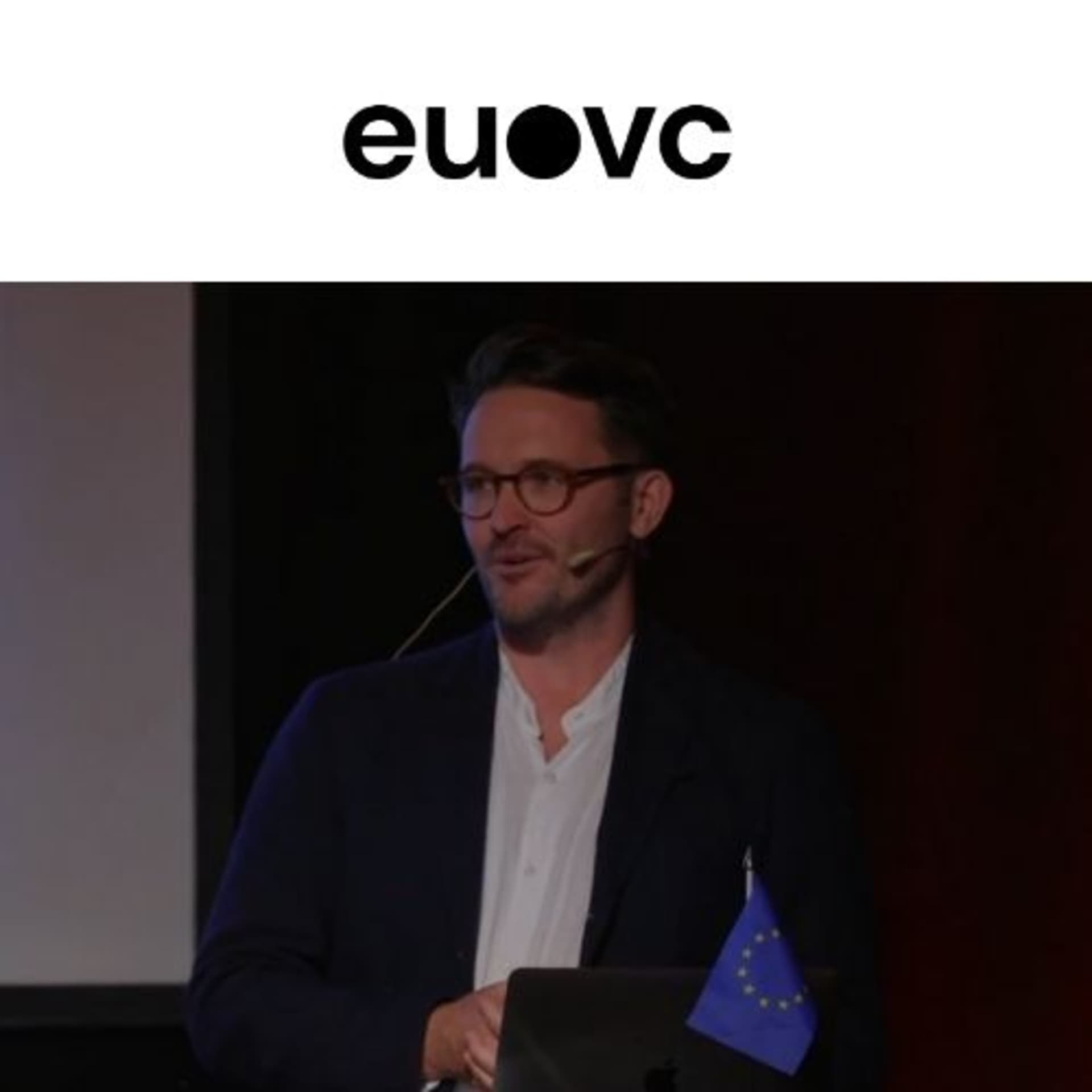
In this session, Jamie Beck, Partner at Regeneration VC, takes the stage to explore Europe’s role in the global climate transition — and why consumer climate tech might just be the continent’s hidden superpower.
Regeneration VC is a transatlantic early-stage fund investing in what they call consumer climate tech — the intersection of sustainability, circular systems, and the products we touch every day. From fashion and food to electronics and personal care, these industries account for over half of Europe’s GDP and are ripe for climate-driven reinvention.
Jamie makes the case that Europe is the world’s “conscious consumer lab” — home to 450 million affluent consumers, global brands with long-term outlooks, and cultural leadership in taste and sustainability. In a world divided by politics and partisanship, Europe’s climate leadership might emerge not from regulation or tech — but from what people choose to buy.
🎧 Here’s what’s covered:
00:30 From California to Europe — why Regeneration VC shifted its center of gravity across the Atlantic.
01:00 Climate Tech 2.0 — five years in, why the sector still battles skepticism and political headwinds in the US.
02:00 What China has won — manufacturing scale in renewables and batteries — and where Europe still has an edge: brands, culture, and consumers.
02:40 Europe’s $17T consumer market — 450 million developed consumers representing half of Europe’s GDP across food, fashion, electronics, and home care.
03:30 The overlooked industries — fashion’s carbon footprint beats shipping and aviation combined, yet remains underfunded in climate solutions.
04:10 The Regeneration thesis — investing across the value chain “from the molecule to the product and back,” with circularity and regeneration at the core.
04:30 The “movie” metaphor — brands as directors, climate technologies as actors, and consumers as the audience. Changing the script from extractive to regenerative.
05:30 Europe’s unique role — home to the world’s most influential consumer brands, from IKEA to Adidas, that define global taste and culture.
06:00 Taste as system change — when European design and lifestyle drive demand for better, circular products, the world follows.
06:30 Partnerships that matter — why the next decade of climate progress will be built on collaboration between startups and corporates.
07:00 Next-gen materials — microbes dyeing clothes, enzymes digesting plastics, and circular chemistry reshaping trillion-dollar industries.
07:30 The European consumer advantage — more conscious, regulation-aware, and quality-driven than anywhere else in the world.
08:00 Human health = planetary health — how awareness of PFAS and microplastics is shifting mainstream behavior and regulation.
08:30 Regulation as tailwind — why Europe’s high standards and strict product rules accelerate innovation, not stifle it.
09:00 The takeaway — Europe as a living experiment in regenerative consumer capitalism, where culture, capital, and conscience align.


