
In short
EUVC Podcast Notes: Episode E621 - Lessons from China’s Climate Tech Scale-Up with Nick de la Forge
Podcast Overview Podcast Title: EUVC Co-hosts: Andreas Munk Holm and David Cruz e Silva Description: EUVC is your go-to podcast for everything related to European Venture Capital (VC), featuring insights from prominent figures in the industry.
---
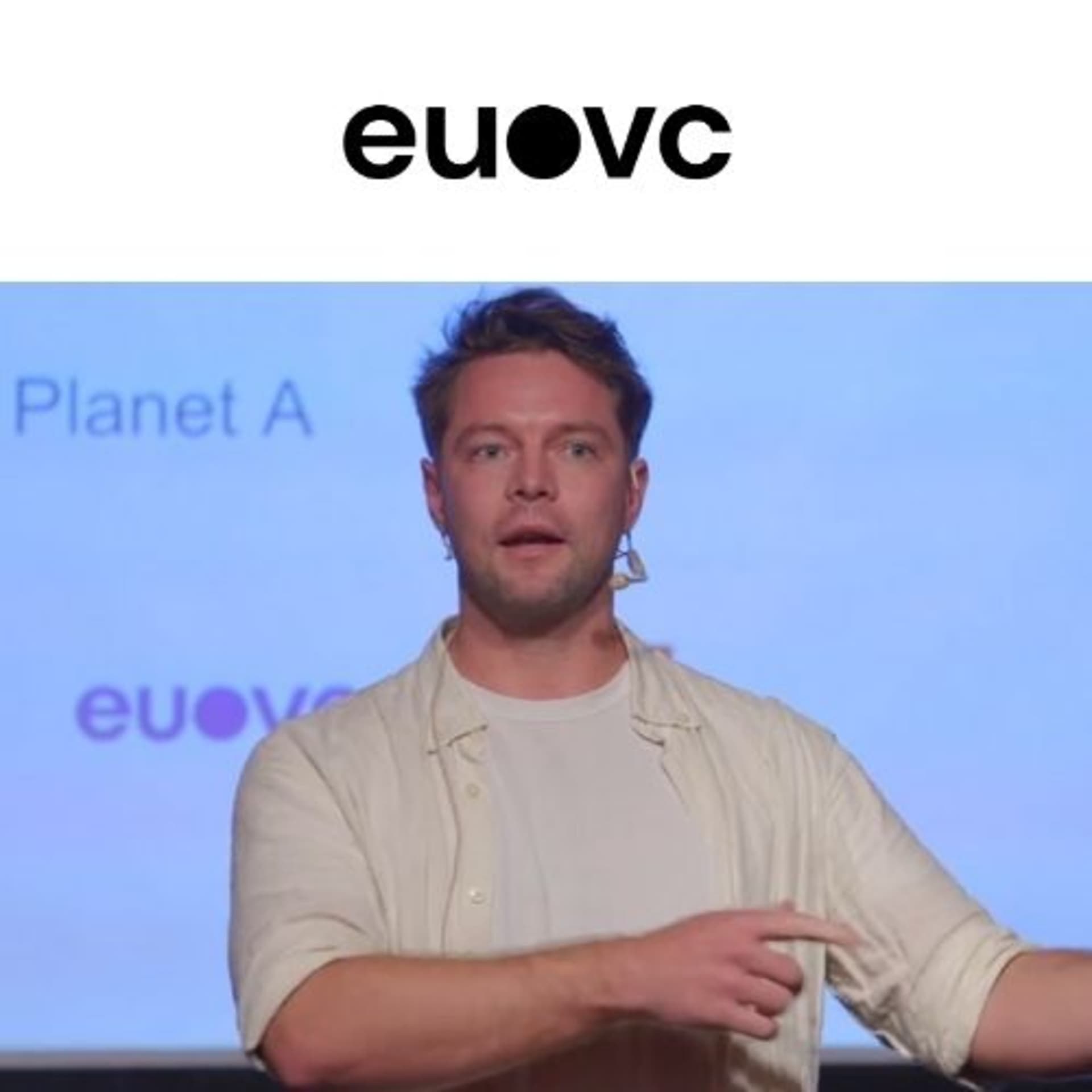
Episode Information Episode Title: E621 | EUVC Live powered by Woven Capital at The Drop Guest: Nick de la Forge, Partner at Planet A Ventures Location: Malmö Focus: Insights from Nick de la Forge’s field trip to China’s climate and hardware startup ecosystem.
Episode Description In this episode, Nick de la Forge discusses his enlightening experience during a trip to China, exploring the rapid advancements in the climate tech sector. He challenges preconceived notions about China’s advantages and emphasizes the importance of learning from their efficiency and scalability.
Key Discussion Points
Introduction to the Trip
- Why China?
- Motivated by the question: "What if we’re wrong about China’s advantage?"
- The trip was initiated as an exploratory journey with fellow investors from various funds including 2150, Energy Impact Partners, and Compass.
Key Takeaways from Factory Visits
- Factory Tours and Companies Visited:
- Visited CATL and BYD, along with various innovative startups.
- Companies observed included those involved in solid-state batteries, precision fermentation, and more.
- Impressive Revenue Growth:
- Startups established between 2020-2022 achieving revenues of $30-$60 million.
- Highlighted the capital efficiency of Chinese startups, contrasting with European counterparts.
Misconceptions About China's Success
- State Subsidy Myth:
- The belief that China's success is solely due to cheaper labor or state funding is challenged.
- Evidence suggests that Chinese innovation is driven by effective supply chains, buyer maturity, and talent availability.
Real Drivers of Scale
- Supply Chains:
- Quick response times and proximity of suppliers significantly reduce lead times for hardware.
- Maturity of Buyers:
- Chinese companies exhibit a culture of rapid decision-making compared to European counterparts.
- Talent Depth:
- The availability of motivated talent at scale poses a challenge for Europe.
Lessons for Europe
- Need for Humility and Realism:
- Europe should recognize its strengths and areas where it can compete, particularly in ultra-high precision manufacturing and advanced polymers.
- Strategic Focus:
- Suggests finding niches where Europe still leads, rather than competing directly across the board with China.
- Encouragement for Founders:
- Advocates for hardware founders in Europe to visit China and learn from the market firsthand.
Intellectual Property (IP) Management
- New Best Practices:
- Recommends sourcing below component level to mitigate IP risks.
Conclusion
- Shift in Global Dynamics:
- Reflects on how 20 years ago, Europe was the leader, and now finds itself learning from China.
- Opportunities for Europe:
- Encourages leveraging China’s speed and efficiency as an advantage for European innovation.
Final Message
- Emphasizes the importance of humility, intelligence, and leveraging Europe’s world-class talent in the global venture landscape.
---
Overall Implications The episode highlights a pivotal moment for European entrepreneurs and investors, underscoring the need to adapt to a rapidly changing global landscape while acknowledging the strengths that Europe can still offer. The insights from Nick de la Forge provide a motivating call to action for those in the European VC ecosystem to innovate and learn from the successes and challenges of the Chinese market.
Written by AI. May contain mistakes. Listen to the episode to check what was said.
Transcript
Automatic transcript. May contain errors.0:00The tools of the green and digital and industrial future are being built elsewhere. Not here. Not yet. So if we don't reverse that, Europe risks becoming a spectator in a game it helps to invent. That was a business that basically was the kind of start of Americans dominating the solar industry, but it never happened. Chinese kind of took over that technology and made it scalable and cheaper and better. And so we deployed that infrastructure made by them and they captured the most of the value, to be honest. And that's the reason why China is where it is today. They've raised something between 15 to 30 million in equity and they do revenues between 30 to 60 million euros this year or dollars.
0:38I haven't seen a single company in Europe doing that, not a single one.
0:45Mic check. Oh, welcome to EUVC live at the drop. Powered by Woven Capital.
1:00Andreas asked me what I wanted to talk about and I said China and he was like wow that's punchy and so I he asked me for another title so this is kind of the direction that we're going into where did this start so I'm sure you've caught yourself in the moment of hearing something like we shouldn't invest into batteries because China has figured it out and so on and I've gone through the same experience and then by the beginning of this year I at some point said hey I actually would love to see it myself. And so this kind of kicked off a bit of a Disneyland trip of a couple of funds. I don't think anyone is in the room.
1:34So it was Exantia 2150, Energy Impact Partners, Compass and Planet A going to China with, in German you would say, green behind the ears. So not really knowing what to expect. And we went for an eight-day lasting trip. We pulled down thousands of kilometers, we've seen something like 15 companies, and we learned a lot. And it was honestly extremely revealing, and I wanted to talk a bit about that because there is a couple of inspirations that I think are relevant for everyone in this room. So what we did is we basically flew to Hong Kong and then spent a couple of days in Shenzhen or the greater Shenzhen area.
2:12Then we went to visit the CATL headquarters, and then we went to Shanghai and saw a couple of companies there. and it was honestly absolutely mind-boggling and you've you've heard this or read this before about the china scale and then seeing what it means in in real life um but we were um you could kind of throughout the week you could see the hardware exposure and the different portfolios in the faces of the participants and we only saw besides besides two companies we only saw hardware companies and we saw two hyperscalers so CATL and BYD talked to the board talked to the innovation teams talked to the venture units and like have been in the factories and the rest were startups and I'll give you some some high level stats about those startups I'm not going to specific companies we saw semi-solid state solid state battery companies recycling a tri-fuel turbine so that can run on ammonia gas and hydrogen a peroskyte solar company biomanufacturing and precision fermentation company and all of those companies were founded somewhere in between 2020 to 2022 so three to five-ish years old they've raised something between 15 to 30 million in equity and they do revenues between 30 to 60 million euros this year or dollars i haven't seen a single company in europe doing that not a single one and that blew our minds like the capital efficiency was through the roof and we went there with a couple of expectations we went there with, okay, they can do it because labor is cheaper.
3:40They can do it because they are state funded and so on. And it turned out that all of those were pretty much misbeliefs. So you get a postdoc in China for 60k which is not significantly lower than what you get in Europe. State funding is completely out. There is a movement in China right now called Involution which is basically them having produced over capacity for a lot of things like batteries, solar and so on. And so they are kind of by pure principle of Darwinism trying to boil it down into the strongest companies to survive. But what is true and how they are able to do that and having the capital efficiency is basically three things.
4:16And I wanted to bring them in as a topic for discussion for tonight. So first off, supply chains. I don't know who tried to source anything in Europe, but it's somewhat difficult. We see lead times in our hardware portfolio companies between half a year to a year and a half for more complex parts. The longest that we've seen for anything in China is half a year. Most stuff you can get within a month or two. and this is because everything is in the proximity of 100 kilometers in range. The second part is the maturity of the buyers. One of our portfolio companies is negotiating an NDA, not a contract, an NDA, with a large European enterprise now for over a year.
4:52In China, most of the buyers, like a CATL or BYD or so, they've been startups until very recently. So the buying mentality is a very different one and they get shit done much quicker. And we've seen this, like in any of the conversations that we've had, we've had like a red line, And this is true. And then lastly, and this is simply also correlating with the size of the country, it's talent depth. We think that we have incredible entrepreneurs in Europe. We think that the moment that you go a level deeper, you have to struggle. We're fighting really, really hard to get highly motivated people at scale.
5:23And we came back and we're scratching our heads and be like, what the fuck do we do with this now? And there were a couple of takeaways. And we haven't found answers to all of it. But we're getting to some parts of it. So I was talking about this like maybe last week or so and somebody said, yeah, but Nick, if you approach a tennis match with Djokovic and you think that you're going to lose, you're also going to lose. To which I said, yeah, absolutely. And I wouldn't play Djokovic at tennis at all. Like I fucking suck at tennis. I would find something that I'm actually better at than Djokovic if there is something.
5:52And I think this is kind of the mentality that we're trying to see. So I think as venture and as entrepreneurs, we can squeeze into the units in between. Like what is not covered right now? what is not dominated by China. Because I think if there isn't a large systemic movement by the European Union, which I am heavily supporting to build up battery production in Europe, I don't think we can really compete with Chinese or maybe soon Indian prices. If it is deemed and seen as critical enough, then there is an opening. And then I think Europe should take that. But I think it needs continuous support across all fronts.
6:28And so I think some of the fields that we've identified where there is still a lot of advanced manufacturing, like really advanced manufacturing, where it's about ultra-high precision, where Europe has an edge, where the technical universities, the institutes like Fraunhofer and so on, where there is cutting-edge technology that is being developed that needs to be commercialized. And so this is elite. Another part that we managed to identify was advanced polymers, so that there is still something in the advanced polymer space that the Chinese really don't understand as of today, and where some innovation can happen.
7:00And I think it kind of outlines the pattern that we think is realistic to really find those niches and start to be cutting edge in those. Another thing that we derive that is all of our hardware company founders, they need to go to China. They need to see it. They need to feel it. They need to experience it. They need to really get to see this with their own eyes and understand how can we source from here. And then you suddenly and very quickly are in IP discussions because obviously this is a topic that needs to be addressed. And so the strategy that we are outlining right now is to not order anything above component level so that re-engineering is made pretty hard, but to kind of try to tap into that.
7:41And I think what then dawned on us is it's really reversed worlds. 20 years ago, we had those moments where we were like little kids running through the factories. I'm like, wow, this is incredible. You've built this in two years. And it's really like 20 years ago, we had delegations after delegations coming to Europe, taking pictures. and now it was us. We were like, oh my God, this is really fucking crazy and like taking photos of everything. And I think there is value in that. And there's also value in exploring how can we now take this as an unfair advantage and kind of see ourselves a bit in some situations as an underdog and then source from China wherever we can to accelerate, to get that flywheel going.
8:18Because you notice of the three things that I've described, they are very systemic, right? It's not that we can easily increase the talent pool. It's not that we can easily accelerate supply chains. It's not that we can easily accelerate buying speeds from corporates. So all of this needs to be kind of through entrepreneurial ingenuity outperformed and outsmarted. And so this is kind of where we landed for the moment. And I can really, really recommend to go. It's been a mind-blowing experience. It's given us a lot of humbleness around our hardware investments. And it also paves the way into seeing, okay, this can work and this is why it can work.
8:52And we always need to have a perspective on what is happening in China because there is a couple of incredible companies. We are not investing in China. We are also not going to invest in China, but we need to be aware of what is happening. And I think that's the impulse that I wanted to leave you with, to really be aware. I'm very hopeful and I'm very optimistic because the talent and the science that we have in Europe is incredible, but I think we need to be really, really smart of how we use it. So I hope that wasn't too depressing and I fully back what Daniel said. Go Europe, we can do it, but let's be smart about it.
9:25Thanks. Oh.
From the publisher
Welcome back to EUVC Live in Malmö, where we bring you unfiltered conversations with the voices shaping Europe’s venture ecosystem.
In this session, Nick de la Forge, Partner at Planet A Ventures, takes the stage to share insights from an eye-opening field trip through China’s climate and hardware startup ecosystem.
Nick’s story begins with a simple question: what if we’re wrong about China’s advantage? — and ends with a humbling realization of just how fast and how efficiently the world’s largest manufacturing ecosystem now moves.
Joined by fellow investors from 2150, Energy Impact Partners, and Compass, Nick toured factories, startups, and hyperscalers like CATL and BYD, witnessing firsthand what “scale” really looks like. The takeaway? Europe’s biggest competitor isn’t just cheaper — it’s faster, leaner, and far more integrated.
🎧 Here’s what’s covered:
00:30 Why China — what sparked the trip, who joined, and how a week-long “Disneyland of hardware” tour changed everything.
01:30 Inside the factory visits — from solid-state batteries to precision fermentation, startups founded just 3–5 years ago already hitting $30–60M in revenue.
02:30 The myth of state subsidy — why cheap labor and government handouts aren’t what’s driving China’s success.
03:00 The real drivers of scale
04:30 Capital efficiency at another level — $20M raised, $40M revenue, full-scale factories operational within 24 months.
05:00 What Europe can learn — humility, realism, and the need to choose its battles wisely.
05:30 Competing with China = playing Djokovic at tennis — pick a different game. Find niches in ultra-high-precision manufacturing and advanced polymers where Europe still leads.
06:30 The founder takeaway — every European hardware founder should go to China, see it, and learn from it firsthand.
07:00 Managing IP risk — why sourcing below component level is the new best practice for protecting innovation.
07:30 The role reversal — 20 years ago, China came to Europe to learn. Today, Europeans visit China in awe.
08:00 Europe’s opportunity — use China’s speed as leverage: source smarter, integrate faster, and turn dependency into advantage.
08:30 Final message — be humble, be smart, and keep perspective: Europe has world-class science and talent — but must learn to play to its strengths.


