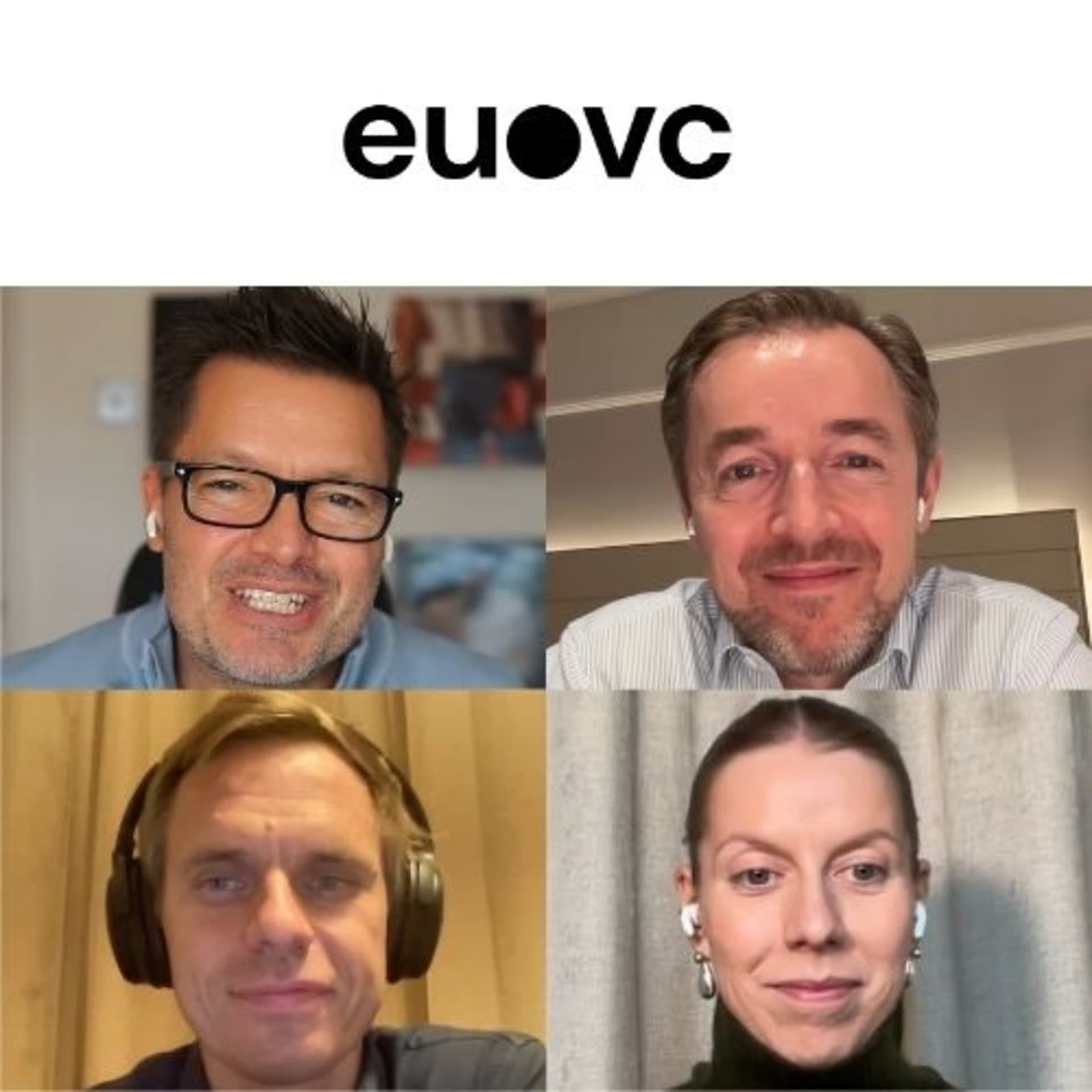

In short
EUVC Podcast Episode Summary: E648 | This Week in European Tech: The Baltics, Bureaucracy & Building Boldly
Episode Details
- Podcast Title: EUVC
- Episode Title: E648 | This Week in European Tech: The Baltics, Bureaucracy & Building Boldly
- Co-Hosts:
- Andreas Munk Holm
- David Cruz e Silva
- Guests:
- Dan Bowyer (SuperSeed)
- Mads Jensen (SuperSeed)
- Lomax Ward (Outsized Ventures)
- Jone Vaituleviciute (Firstpick VC)
Episode Overview This episode dives into the evolving landscape of European venture capital, with a special focus on the Baltic region, particularly Lithuania. The discussion encompasses the dynamics of early-stage investing, the macroeconomic climate, responses to regional tensions, and the burgeoning tech scene in the Baltics.
Key Topics Discussed
- Firstpick VC and Baltic Ecosystem
- Jone Vaituleviciute’s Background:
- Co-founder of Firstpick, spun out from Startup Wise Guys to focus on supporting early-stage companies in the Baltics.
- Investment Focus:
- Early-stage investments in fintech and technology that improves humanity.
- Preference for pre-seed investments, which are seen as the most cost-effective entry point for capital.
- Baltic Edge in Startup Culture
- Distribution vs. Product Perfection:
- Emphasis on the ability to distribute products effectively over perfecting the product itself.
- Bootstrapping culture prevalent in Lithuania, leading to sustainable growth for startups.
- Impact of Bootstrapping:
- Discussion on how many successful companies in the region like Hostinger and Kilo Health have thrived without outside capital.
- Defense Investments in Lithuania
- Rheinmetall’s €300M Defense Deal:
- A major joint venture to build an ammunition plant in Lithuania.
- The economic implications and political motivations behind defense investments in response to regional threats.
- Matt Clifford’s Call for “Permissionless Growth”
- Critique of UK Bureaucracy:
- Discussion on the stagnation of productivity in the UK over a 17-year period.
- Matt Clifford’s argument for reducing bureaucratic hurdles to foster a more conducive environment for entrepreneurship.
- Quant Capital and AI Developments
- Emergence of Quant Trading Firms:
- Discussion on the rise of quant trading firms and their significant investments in GPU infrastructure.
- Contrast between the scale of quantitative investments in London versus traditional industries.
- AI Corner
- New AI Models and Investments:
- Examination of the Calm model from China and the implications for AI.
- NVIDIA’s and Deutsche Telekom’s investment in building European AI capabilities.
- Recent Deals and Market Movements
- Notable Deals:
- Nexus AI’s $8M raise and Poolside’s $2B round led by NVIDIA.
- Analysis of the broader trend in European investments across tech sectors.
Key Takeaways
- Baltic Region's Strengths: The Baltic startup ecosystem is characterized by a strong bootstrapping culture and effective distribution capabilities, positioning it as a promising area for early-stage investment.
- Impact of Defense Spending: The strategic importance of defense investments in the region not only boosts the economy but also reinforces political alliances amid growing tensions.
- Bureaucratic Challenges: The discussion highlights a critical view of bureaucratic impediments affecting growth in the UK, with a need for a shift towards more entrepreneurial-friendly environments.
- AI and Quant Capital: The landscape for AI and quant trading is rapidly evolving, with significant capital influx indicating a potential shift in Europe’s technological landscape.
Conclusion The episode provides a comprehensive overview of the current state of European VC, with a spotlight on the Baltics, emphasizing the importance of a supportive ecosystem for startups amidst regional challenges and macroeconomic shifts. The discussions also pave the way for understanding the future trajectory of venture capital in Europe, especially in the context of technology and innovation.
---
*For more insights on European venture capital, follow the EUVC podcast at [eu.vc](https://eu.vc).*
Written by AI. May contain mistakes. Listen to the episode to check what was said.
Transcript
Automatic transcript. May contain errors.0:00Hello and welcome to Upside where we dig into the click rage that lives behind the news affecting European venture the real stories and the real news you need to pay attention to. Today, we're talking about the Baltics because we have a very special guest. We've got Matt Clifford's rousing speech at the LFG conference, A Tale of Two Quants, AI Corner. Now, one thing is Calm, a new model from China going to radically transform anything or not. That's kind of intriguing for me. And Deal of the Week. Now, today we've got Mads, Lomax and a very special guest, Yona from First Pick. She's from Lithuania.
0:38She's the managing partner of First Pick, which is a VC firm focusing on the Baltics, investing early in fintech and tech for the betterment of humanity.
0:56This show is not investment advice, and the hosts of this episode may be invested in the funds and companies featured. Jona, tell us a little bit more about you and First Pick and Lithuania and the Baltics. No pressure. Okay. Yeah, I think it's... So, hi, everyone. I don't think it's easy to talk about myself and who am I. I don't even know that. So, you will help me figure it out. I can tell what I do. But I think your intro was super and pronunciation of my name as well. But let's see how you pronounce my surname. I think that's another thing. I didn't even go there. I didn't even go there. That's very Lithuanian.
1:37And actually, one thing about the region and the Baltics is that you can tell from the surname if the female is married or not. So that's quite a special thing. But we will not go into that. And you can keep on guessing about my surname. So, yeah, you said it very well. So first pick is fun. That's focusing completely on the Baltics. We launched it back in 2022. Because you were ex-Startup Wiseguys, weren't you? Because a lot of listeners will remember Startup Wiseguys from, is it TechChill? What was that Latvia? What was the thing? I met loads of startups. So you started in there and then did that spin out first pick or what was the connection?
2:22Yeah, so we actually started that in 2019 with Startup Wiseguys to make it a bit more confusing. but their focus was to invest all across Europe or even more to the east we saw that our best investments came from those founders that are you know that we knew before and then we thought okay and we made exits we we made some cash and then we said okay let if we are doing this tough job which I think you all agree then let's do it properly in the way that we actually believe even the strategy, we know how to do it. So we bought the brand out basically from the management company. And then we started off with a new fund, first pick one.
3:08So that's then 2022. And then we said like, we only focus on the Baltics because this is, we know how to do it. We know how to return the fund from here. I don't know how you guys do it of like finding the best early stage company in Europe. I'm like, this is so tough. We do podcasts. We do lots of podcasts. Yeah, but it's really a lot of options to choose from. And I think it's just constant hustle, which I wouldn't say that in the Baltics, it's not like that. It is. But yeah, it's a little bit more concentrated. You can reference people very quickly. You usually went to school with that person or you know someone who's like now going to school with that person.
3:54And that's also very light. Right. So this is what First Pick is about. We are early stage. So it means that we invest in the very first stage. And now I think even earlier than before, because a lot of people try to kind of push us to the seed stage, but we somehow felt that it's not for us or we didn't really like it. And then we saw this big new movement of early builders coming into Lithuania. And then we said, okay, let's back them there. because it will never get cheaper than pre-seed, right? Yeah. Or riskier, though, to be fair. But maybe, obviously, because it's such a closed network, then you kind of get the pick of the bunch.
4:35Yeah, exactly. And I think what we see in the Baltics is that pre-seed and seed doesn't de-risk you a lot. Like pre-seed doesn't help you make better decisions at seed stage. It's still very early. And when it really takes off, like a couple of companies lately here in the region, it's just too late. Then foreign funds are coming in and you cannot match them because the size of our funds in the Baltics are somewhere between 10 to 100 million and no more. So it means that we are out of series A game, et cetera. We need the funds, much bigger funds to come in and fund it, which we are very happy to invite.
5:17And so, yeah, so I think this is also like a good kind of segue to what I wanted to tell. Last week, we had a dinner with Creandum. So they're very hyped about the region. They really like it. And I think... Have they got an office there? No, no. None of the foreign funds actually have a base here. So this is also a good thing for us. We are kind of guarding, you know, the land.
5:45But then we are also actively sharing some good deals with those bigger funds. And what I really liked to what Philip from Criandum said, he was like, this country is insane. Like the region is insane when it comes to distribution. We don't have good product people. We are a bit scarce on tech people, like very good tech people, but we have super good distribution people. It means that whoever starts something, it might be a bit shaky product, but revenue is just like going up all the time. So this is what I think it's really important. Which, by the way, Jonny, I think flies against the perception of perhaps the Baltics in Eastern Europe, where you've got great technical talent, but maybe less good on the distribution side.
6:34I mean, that's a very, very high level perception. No, no, but it's exactly what I think, especially for us here, we are already used to this. And then like speaking with someone from UK or Germany or France, everyone's like, oh, you have like the best tech talent. And I'm not really, actually, like they are good, but they are not like much better than probably like selection of AI people in France. So this is something that, you know, we are super happy about. And I think like from the latest news is that this week, Hostinger, a web hosting company, obviously, which was completely bootstrapped for the past 10 years.
7:14And I think they will continue being so. As many other companies in Lithuania, they've been named second fastest growing company in Europe. And before we had Kilo Health, which is a hub for like kind of a spin-off hub for health products, consumer health products. they were second fastest growing in Europe. I don't know why we are always second fastest, but it's still good enough. That's good, I'll take it. I'll take top 10 any day of the week. It's like 80 % year over year, 200 million revenue, really, really good. So I think that's something that's very important to know about. People here in the Baltics and so many companies are bootstrapped.
7:59This is also something that has never changed. it's very difficult to say why is that but i think it's even more and more founders want to be bootstrapped and it questions the need for venture capital actually but how many VC funds are there in nithuania how many early stage VC funds yeah around 10 okay okay that's how many is it a cultural thing to not to not want to raise venture is that becoming a cultural thing it is it is exactly so so you have to convince them you have to go and do the sales job absolutely it was like not not it's not something that i i dreamed of but you really have to tell them if it's a good founder getting them to believe that they need investment is one thing second is to get into the round it's really tough so it's it's not that easy that you know them and you will definitely invest it's becoming more and more uh scarce like those type of routes so i think that whoever is invested by vc then it's good it's a win but otherwise we have a lot of companies like you probably have heard of nordvpn and i'll mention them at the end of the pod as like one of the newest rounds but they have glued so many companies that were bootstrapped and Kilo Health, Hostinger, and many others.
9:23So whenever someone is raising, we are super happy. And then also, I think one trend, maybe you can comment what's happening in UK or elsewhere in Europe, is that we have those hubs for early builders, like super early builders coming in, hacking for a few days, trying to see what's cooking, especially obviously in AI space. We have base pace in Lithuania, Rum in Estonia, like, you know, many other names. But they've really managed to brew almost 200 teams in half a year. That's a significant number. And yeah, I think the numbers are a bit smaller on the Baltic side, so don't get surprised. But it's growing insanely.
10:08So this is what makes me super happy. This is where I see really the future of first pick. and that's why we are not moving out and we are just backing more early teams with like half a million tickets. And yeah. Listen, we're going to stay with Lithuania because our first kind of semi-digging is the defence story, which is we saw this week, 300 million euros joint venture named Reinmetall Defence Lituva. I'm going to absolutely ruin that name. It's a German-Lithuanian JV where Reinmetall is the leading German international system supplier to the defence industry. And they've got this JV in Lithuania.
10:46Now, this is the largest defense investment there. Lomax, set this one up for us. And what are the facts and the figures? So this is an ammunition plant in Lithuania operated by, as you said, joint venture between Rheinmetall and Defence Lietuva. It will be a modern production facility for 150 millimeter artillery shells. It's absolutely massive, this plant. It's 340 hectares. I guess I shouldn't be surprised. It's only 150 jobs, though, which is not many. AI, baby. Automation, baby. I think so. I think there's definitely a bit of that going on there. You know, Lithuania clearly is on, sadly, you live and breathe it, but being more acutely aware of our friends in the Far East or Middle East and right on the front line there.
11:37So one of my questions really about this was why, and Yone, maybe you have a view on this, is like, why do we build this in Lithuania? If Lithuania is at risk of being invaded, why would you have this there? Right in the way. I mean, one thing that clearly is the Lithuanian economy, which maybe we get onto in a minute, is one of the fastest growing in Europe. And it also has the highest percentage of GDP spending on defense. So clearly there's a big defense push in Lithuania because the problem is acute, unlike me sitting here in Portugal, where it's felt less keenly. I'd love to hear a bit more from that, Yoni, what your views are.
12:10Yeah. Yeah, I think what's interesting is the closer you are to Russian borders, the less threatened you feel. We have been living with that neighbor for so many years. It's been 35 years now of our independence, only that. So it's not that much. We are, as you said, getting back on track. Economy is booming. GDP is growing and all of that. And obviously, there are a lot of financial incentives for the plant to be opened here. And I'm not sure what our incentives may be in Poland or somewhere a bit further. But, well, the border with those neighbors has to start somewhere, right? We also have nuclear power plants from Belarus, like sitting, I think, 60 kilometers from our capital, Vilnius, which is also another pretty big threat.
12:57but somehow really make no mistake like Baltic people are somewhat calm we believe that you know if something starts it's a super good sign that NATO is with the Baltics so probably as also I don't think the the decision was made on like like those philosophical premises you know it's probably much more financial than that but it is a good sign and it shows that NATO is here they will be around if someone tries to invade. Like the internally, the analysis and conclusion is that, yes, we need to be prepared, but obviously we need to expect NATO's help. Otherwise we are such a small country or like free countries that we would not defend ourselves in no possible means, but at least we can have like a few days delay until everyone comes in.
13:51So I think that's that. I completely agree on 150 jobs. Why is that little? But it's a super good win for the region. Really super grateful that they are moving it there. They will be hiring people. It will be changing the landscape quite a lot. Mads, I don't know if you've got anything to add to this. I knew it was going to be a bit of a short topic, but I thought we'd raise it seeing we had a lovely Lithuanian with us. But anything you would add? No, I think it's great. I think, you know, Lovacs is asking the right question. when us would you put your munitions depot right on the border of your main enemy.
14:31And I think you want to hit it bang on the head. It's financial reasons. You know, of course, you could say there is some psychological reasoning and sort of saying that we're putting something really important really close to the enemy so they can see that this is NATO turf and we're going to defend it. But I think what's really driven this is Lime Metall has been told they've got 0 % corporate tax for 20 years and any profit the plant makes. We're going to pull out all the stuff and planning so you can get it all built in six months versus two years. as you might expect elsewhere. And oh, by the way, the local government is going to finance 80 % of the construction project.
15:02It's hard to say no to. Sweet deal, baby. Sweet deal. And that's actually a very good point because, you know, you wouldn't get 80 % of that funded by the Portuguese government or the Spanish government who don't feel the problem. Do they have any money? Portugal runs a budget surplus, by the way, Dan, which is somewhat better than the UK. 93 euros. We're going to change tack. I want to talk about Matt Clifford's speech. This is one of yours, Mads, that you put in here, and I think absolutely rightly so. So for those that don't know Matt Clifford or what this speech was, so Matt Clifford is from Entrepreneurs First.
15:35He's also chair of ARIA, and he's been working with the UK government as part of the AI task force. And he gave a very rousing speech at the LFG gathering. I think he was with Dominic. Actually, Mads, you went, right? I was. How's that? I'm going to let you tee this one up, my good man. tell us tell us about it and was it rousing because there's loads of noise on social where i felt that there was an uplift in energy from brits and from europeans okay all right i like what this guy is saying but you were there so you you you tee this one up the lfg is really really cool and it's driven by a group of young young folks right that are like what's going on here britain used to be great and now it's maybe not great britain that's more sort of just britain And can we be Great Britain again and get stuff really going?
16:24And so they've been doing all kinds of cool things. One of the things they've been doing was they were like, gosh, there's all this graffiti on the tubes. What's up with that? You know, getting hold of TFLs. Can you clean the graffiti on the tubes? TFLs saying, well, we're paying 95 million pounds a year to clean graffiti. It's fine. The LFT crew, they went out. There was graffiti everywhere it was being cleaned. So they're like, we're going to clean it. And so they marched with a lot of people and they started clearing. the two carriages and got them played. What a lovely guerrilla marketing campaign.
16:56It was absolutely... So a couple of days later, the head of the TFL goes to a press conference and says that essentially he's accusing the LFG team of putting up the graffiti so they could take it down again. Right. It turns out they're a pretty smart bunch. So the next thing they do is they send a Freedom of Information request into TFL to ask for any evidence this public body has got that says that any of this was done by anybody from the TFL team. Turns out not even was there no evidence. There was no evidence, but there was all kinds of CYA from across the bureaucracy of people trying to say, well, we really have to come up with something because people are getting very stressed over this.
17:43And obviously it was just all a big sham. And it shows that although they're spending nearly 100 million pounds a year, they can't get the bloody thing done in terms of cleaning these garages because there's just so much bureaucracy and so much inefficiency. And it's all very sad. And the reason I'm raising this story is because it's symptomatic of what the LFG team says, which is if you're actually focused on getting stuff done, if you move the bureaucracy out of the way, you permit people to do business, build stuff, we can create an amazing economy. And it's not that hard, right? We just have to will it and we have to will it to make it happen.
18:17And that was also very much the topic of Mac Clifford's talk, which was very inspirational. And he sort of said, look, we've had 17 years of stagnation. And if you project the growth per capita, the productivity growth per capita from prior to the 2008 financial crisis and until today versus what has actually happened it's effectively the same as losing 16 000 pounds per year we haven't lost productivity now that's massive per person right yeah yeah per person so that means that over a generation it turns into sort of one percent growth instead of three over a generation that turns into a 3x difference in GDP.
19:04It's just staggering. Compound interest, compound growth and all that. So he's sort of saying, look, the issue is that we have, you know, so we're no longer making it legal to build and do. And says the mother of greatness is permissionlessness, right? So we need to have a society. We don't need to get a permit to do everything. But we allow entrepreneurs to do things without having to come and ask for permission all the time. And then having 17 layers There's bureaucrats and legal institutions and things that can challenge them and stop them, meaning you can't do anything. I thought it was great.
19:38And I thought it really caught the zeitgeist. And a lot of people have come out and basically said, Matt, you're great. Matt for PM. Let's go. The other side of it is I sort of there's a slight part of you that fear that it's maybe kind of us in the little London bubble here that think it's great. I don't know how much this resonates in the rest of the country. But for now, let us live in this dream of, you know, let's go to something that's a little bit more, you know, growth orientated and not quite so stagnant. Quick one on Lithuania and kind of geographic spread. Are all of the startups, businesses in one bit, a bit like London is the center of the universe in the UK?
20:19And then there's a challenge between a north-south divide. How does it work in Lithuania? I would say it's very much so. So like complete majority are concentrated in Vilnius. Then we have Kona, Skleipeda, like two other larger cities where like there are a lot of efforts being put to raise those ecosystems. But it really just goes down to the fact that a lot of people move from regions to like other cities to Vilnius to study. And this is where they stay. This is where they find a job. This is where all of the unicorns are located with their offices. So it's really the hub. And I think it's exactly what Matt said.
20:59It's also a bubble where for us, it's a bit difficult to evaluate. Like, is everyone thinking like us? Like, is everyone seeing that? Interesting. Because I was speaking to some Germans yesterday, and they were saying that a lot of like the family offices, there's not, there's none in Berlin, I assume they would be. And they were like, why would you be there? That was like, that was Russian only so five years ago. We're all in Munich, and we're all in Frankfurt. so they obviously have their zones and the family offices are much more distributed and the money is much more distributed so I guess London is very much the centre of the UK universe so that was part of it, Maz we don't think this is a very London thing well that's Maz's suspicion although don't forget Matt Clifford is from Bradford and actually in his talk is he?
21:46by the way it's only 15 minutes by the way so I encourage you to go and listen to it he actually references bradford which he says effect you know unashamedly this has become a bit of a a bit of a dump now but if you go to the center of bradford it does have the most unbelievable um city hall town hall which actually is a kind of gothic masterpiece i was actually googling it while watching the um the video and he said at one point bradford was the richest city in the world at one point you know which would have been back in the industrial revolution so So anyway, I think I would encourage everyone to go and listen to that.
22:21It is very short, as I say. One of the biggest takeaways is that the words he uses to describe the past 17 years in the UK, he describes it as the biggest economic disaster in the history of our country, the biggest economic disaster, right? The apps. And he's not wrong. And so I think it is a great call to action. As Mad said, it's all about cutting red tape. It's also about a mindset shift of being proud to be successful, being proud to be rich and not being suspicious of success, not thinking that the game is rigged when other people are successful and bringing back that kind of building ethos that the UK has had to create all these wonderful things.
23:09And he reels off a huge long list of everything that the UK has borne. And I wonder, you know, on the political angle, because by the way, LFG is not it's not just a bunch of business people talking about growing business. They're actually, you know, academics. And it's much more a movement, political movement, rather than a kind of let's all go and make loads of money organization. So I think, as Matt said, they do do very interesting things. i wouldn't be surprised if matt clifford gets a call from danny krueger in the next few days if he hasn't already who is i think going to be the sort of main architect of of reform going forwards you know he he um was the conservative mp who used to write david cameron's speeches and defected from the tories to reform in the last in the last month and i think is the real he's not an eminent it's Greece.
24:00He is like the sort of brains behind the next. Are we going to crystal ball three years out to say reform will win the next election? Is that where you're going? Well, I don't want to go into that, but I would say I think Danny Kruger, for example, I think there's a consistency between what the direction that I suspect reform will go, which has a Trumpian air to it, but actually without a lot of the Trumpisms. and I think you know Matt Clifford to be honest is kind of going in that direction in his speech you know it's like cut red tape let's grow and and there will be there will be some collateral damage I'm afraid which is you know I I think Matt probably himself was relatively centrist I suspect in his political views and maybe still is but I think that in order to realize the outcomes that he is he's talking about and expounding there needs to be a bit of a kind of shock therapy to the UK.
24:56I don't like the sound of that, but I'm giving away my politics there. Lovax, did you see the analysis that compares the correlation between the percentage of people in constituencies that claim benefits and then the percentage predicted reform vote? Yeah. No. It's an almost perfect correlation. Yeah, of course. Okay. Okay. I have two predictions for you. Okay. Reform will win the next election and there's no chance they're going to reform anything. no they can't well yeah turkeys and christmas you know the uk you i mean there's i mean there's good article this week and the uk spending 85 billion i think on disability benefits people i think one in five adults of working age are out of work yeah there's a big boost after covid wasn't there there were um adults out of work after covid has gone up by 20 but we have yona here from lithuania where everything you know apart from the russian threat everything economically is pumping.
25:50The funny thing that is a correlation is, well, just because of all this negative macro sentiment about the UK, there are some amazing stories on the ground in the startup level, which goes back to that old adage of head down and build. But I want to fight you for a second, Lomax, because entrepreneurs first, shipping everyone, Delaware Seacorps, directly shipping European founders directly to the state at inception. So entrepreneurs first, incubation, very smart people, our smartest brains in the UK and across Europe. Matt and Alice are now shipping them directly across. So that offends me and that bothers me.
26:28But you don't worry about that, do you? No, I'm not offended by it. We live in a global world where, unfortunately, you need to, first of all, you need to play the game as you see it on the field. And the way that I see it, and I think many people see it, is actually Europe has amazing founder talent. And that is getting better and better. And you can see that as evidenced by the quality of companies that we're seeing now getting funded and started. And actually just the conversations probably you guys are having week in, week out. But the funding landscape is just so much more dynamic and bigger in the US.
27:07And that's across the whole stack. You know, you look at like market cap of US listed entities is basically 2x the US GDP. Yeah. And it used to be 1x GDP. In the UK, for example, market capitalistic companies is basically 1x GDP. So in a way, the US has just outperformed the UK, for example, like so much in the last 20 years. There's so much more money. There's much more dynamism. You know what, Dan? Matt and Alice are giving these European founders the best chance of success by doing that and they're still going to be European and they're still going to want to build European business lines look at Clio, the guy went to the US built his business to 100 million he's back in London now the norm is to not come back the norm is to not recycle here the norm is not to invest here, the norm is not to build here it's just not, that's the norm and I don't know how you square that circle I actually disagree with that.
28:08Is this happening at an earlier stage? Yeah. Establishing a company right away, moving to Delaware. Yeah. Which is, by the way, completely consistent. Yes, it is. Yes. That's what entrepreneurs first are doing. Yeah. And I don't know how you can have a rousing speech about, you know, the UK can turn this around. We can right the ship. Oh, by the way, all of your smartest people, I'm going to ship them straight off to the States. That just feels totally... You're probably both right. Right. I mean, because, yes, I mean, it's one thing to run a company and say, this is the best thing for my business today.
Read the full transcript
28:39And something else to say that here is what we should do as a country to make conditions better for entrepreneurs. The truth is I don't think it'll take that much. We don't have to fundamentally reform every single thing. There's some of the big moves we have to get right. You can get UK growth back to 3%. And if you do that, it's going to be an amazing place for founders of all stripes. And there you go. Okay. Okay. Well, listen, we could talk about this one forever, but we are going to move on to a very, very quick topic. UK's quantum opportunity. So Lomax reading this week about two quants.
29:11So quantum and quants, which we're going to come on to next. But just tee up what's happened. Is there something in this quantum opportunity or not? I think this is taken from an article in the FT just talking about the UK playing a key role in quantum technology, particularly quantum computing software and hardware it feels quite a european we've got quite a lot of european smarts in this area and i don't know what is happy is or happy pr but it feels like a lot of that uk aside but across europe there's a lot of good stuff going on with quantum no there definitely is there's a lot of core ip that's been developed um in labs in europe and has now been been spun out and well you know not not to go back to the conversation we just had But if you look at two of the best funded private quantum computing companies, which is Quantinium and CyQuantum, both had roots in the UK.
30:05CyQuantum out of Bristol, Quantinium was a result of a merger involving Cambridge Quantum Computing. And Quantinium, just a very boring fact, Quantinium is top three of the Q3 deals out of the top 10. Quantinium, I think, came in second. But we'll talk more about the success of what's happening in Q3. Yeah, I mean, Quantinium and CyQuantum are valued one at 7 billion or 8 billion, one at 10 billion. And INQ, which is listed, is 23, 24 billion market cap. And all of these companies, by the way, are long way away from any revenue. So just take that in context. Yeah, they're like three years old, right?
30:42They're babies. No, no, they're not three years old. I mean, I think the projects are probably decades old. The companies, yeah, they're more like six, seven years old. Oh, I thought Quantinium was 2021.
30:58Quantinium is a merged entity. But anyway, the UK has two of the leading, aside from hardware, and I'm not going to talk about my own book because both Andrew and I have a very, very interesting quantum company, which is going to be announcing big things very soon. but on software this article is um is covering software and actually two companies facecraft and river lane one again out of bristol one again one out of cambridge um are both becoming key components of the sort of middleware software part of the stack in in quantum still a very very long way to go these companies could flame out etc the article is basically saying on quantum uk not bad and i think that's that's basically right but again we've seen two of the most interesting projects already go to the US and tap those capital markets because they couldn't do it in Europe.
31:46Okay. Well, hopefully we'll see more of that. Quantum is super interesting. Always 10 years off. We'll see what happens with that. Thank you. Another quant. So again, reading this week about quant firms and how traders are crushing it currently. There's a lot of money going through algorithmic traders like XTX and quantitative investors like Cube and Quadrature. Now that each made more than a billion pounds in revenues in the last year. So is this another UK edge? Is it meaningful? Would it save the city, the economy, the UK? Just a little bit of financial context. XTX is spending more than a billion euros building its own data center in Finland, which I found absolutely fascinating.
32:23Now, Mads, you are a resident polymath geek. What's happening in the quants, the other quants? It's a fascinating area. These quant funds are big, big money. There are many implications of that kind of a lot of innovation is happening there it's attracting a lot of really smart people a lot of the investment we're seeing is there and you know one of the things i think we're going to be talking about a little later on i'm just going to lift the lid is this new german ai factory that's being built got lots of money being pulled in and and they're building this kind of cluster with 10 000 gpus to help you know strengthen the german industrial world using AI.
33:04But it turns out that XTX, just for the quant trading, are building a cluster with 25 ,000 GPUs. Okay, so the industrials manufacturing kind of the heart of Europe gets 10 ,000 and the quant traders that just does financial markets arbitrage and makes bucks on that, they get two and a half times as much. It's a good thing in some ways, but in other ways, it is a problem because, you know, many the best and brightest graduates that should be creating technology companies are learned by Jane Street and XTX and others. Brilliant starting salaries, you know, straight out of school, you can get really, really good money going there being a trader, as opposed to going into a startup and building stuff that will change the world.
33:46And that is perhaps a little bit of a shame. Now, I believe in the free market. I think it's a great thing. You know, we've let the city of London down in so many other ways. So this is an important component. But I would say we've got to fix the kind of the talent gap issue. And if all the best quants coming out of Cambridge, they go to be quant traders in the city of London, we got to find other ways to bring the best talent from elsewhere in to build startups because we got to build startups. Nothing is more important than building the next generation technology companies. It's okay. Jona's on it.
34:15She's rocking the Baltic. She's going to bring it all in and solve our talent issue. Although we just said that there's not that many techies as we think there are, which I think is interesting. And then probably we'll end up in like the same situation where you're now, where all the top talent is migrating somewhere instead of staying in Lithuania. So now I'm happy that everyone is staying in the regions. Yeah, the other thing I learned yesterday was that Germany has an exit tax. If you've been there seven years or you're a resident, you have to pay on your unrealized gains before you're allowed to become another nationality, which I thought was a lovely way of kind of keeping people absolutely still.
34:51Norway has the same, actually. You're not segwaying into the upcoming Rachel Reeves budget, budget discussion i promise you i will not do that i promise listeners i will not do that i promise no more no more no more uk politics doom and gloom budget because she is planning an exit tax no so you guys have what have you guys got like you got two weeks left i've actually got some space here i've got a spare room and i've got a surfboard you know i've got i have got a spare surfboard and i've got you know we've got plenty of room in the office guys so i'll put up i'm traveling so much these days i'm not even clearing the 180 day in the uk bar so i'm scott free is that why is that why yeah is that why you're in singapore mads is that is that what you nailed it you nailed 179 now um lomax anything before we move on on the quants now and i obviously know that new york is is supposed to be the center of good um i think this is a good news story for the uk in the sense that you know sentiment would would dictate that the uk is terrible at everything at the moment and we're actually saying well the uk has actually been doing very well on the startup upfront and actually financial services industry in the uk which has been a huge contributor to gdp and jobs has really been suffering in this you know economic disaster period that matt clifford described it as but actually this is one shine of light which is the you know quant trading actually london does remain a leading center for because actually don't forget the last 10 15 years the uk has not only lost out big time to the us but it's also as a financial center lost out hugely to amsterdam paris milan so actually this is a place where uk does retain its crown and actually quant trading has been going on you know for 20 30 40 years and the uk kind of pioneered or had some of the old the old names like winton man group um who started all of this and now handing on to the sort of next handing the baton onto the sort of new wave the xtx markets the cube research and the quadrature, the kind of new wave quant funds.
36:51So that's kind of good to see an evergreen nature to that. Interestingly, if you look at Man Group share price, Man Group, which is the kind of old school OG of quant trading, share price is basically flat for 20 years. Really? So yeah. Quant trading is just part of Man Group's strategies, right? Because they bought AHL. Very true. Very true. They bought AHL, yeah. Yeah. But they also do other stuff. These are big houses. You know, James Street's AUM is 140 billion. which is much bigger than any venture firm. Sequoia is about 80, 90 billion. Maybe GC is maybe 100. Jane Street, we have - And how many times will they lever that?
37:26I mean, they can do some real damage, right? True. We have them to thank for SBF, no? Sam Bankman-Free came out of Jane Street. Maybe he was part of that talent. He's a fantastic angel investor. You know, he wrote the seat check in and profit, didn't he? Yeah. If you've been allowed to keep the shares, you're going to repay everybody so many times over. and interestingly some of this money is being recycled into our industry you know like alex xtx sort of is is putting a lot of money into yeah we just probably don't deal with it xtx is probably one of the most prolific ai investors in in london at the moment so i'm at the seed stage so good it's coming back down and actually mads yeah it is taking out the best the best computer science and maths grads but you know what it's taking them a lot of them away from banking so that's not such a bad thing.
38:13So there is every cloud. Well, we'll see. I wonder when quantum comes online, what happens with quant and with more AI developments, what's happened between them all? So that'll be an interesting one. Talking of AI, Mads Deed, it's AI Corner. So we've got loads in AI Corner this week. We've got more circular funding from NVIDIA. We've got this Calm model from China, this continuous auto-aggressive language model, which is potentially a paradigm shift, but I'm going to let you shoot that one in the face. OpenAI stopping legal advice. Is that a new story? I'm not so sure. We have NVIDIA and Deutsche Telekom building that 1.2 billion euro data center, which you've already touched on, Mads.
38:54And Nebius launches Token Factory, which is an aggregation and infrastructure for open source AI models. So Mads, all of that, go, 10 seconds, boom. We've sort of started opening the topic a little bit of AI. It's hard not to touch it. OpenAI, as you said, did a deal with AWS and Amazon,$37.8 billion, seven-year cloud deal. What's a billion between friends? Let's take 38 of them. Amazon shares really liked it, popped more than$100 billion on the announcement. There's a lot of continuous talk about this Circulus Funding question. How is Sam going to fund his hundreds of billions of promised spending with absolutely no profit whatsoever?
39:35He's lost you know, many, many billions this year alone. And he said, you know what, whether I burn 500 million, 5 billion, 50 billion a year, I don't care. I'm going to solve AGI. I'm going to solve all the problems of the world. So I think there isn't that much new to see here. Other than that, that he very specifically is not letting himself be locked into any one company. We saw how he took a big investment from NVIDIA and turned right around and then decided to spend some of that money with AMD. So, you know, kudos to him. He is absolutely going all in. And I think it's just a really exciting entrepreneur to watch.
40:13The Calm model that you talked about, look, there are new papers coming out all the time. I think this one particularly, I've got to spread out by now. I mean, it's not why it's decided. It has limited interaction on Hocking Face. I think it is one more potential technical improvement, but there are so many, there is so much incredible stuff coming out of especially China right now. But not a deep seek moment, Mads? You don't think it's a deep seek moment? No, no, no, no, no. I don't see this as that. There's another one. There's actually quite a lot of clickbait here because there was sort of this whole open AI is no longer going to provide legal advice.
40:49I saw there were people discussing. I think that's pure clickbait. I mean, they were just, from what I could see, consolidating existing policies to say, look, we're not providing legal advice. Make sure you have a real lawyer if you need legal advice. But in terms of how the model works. You can still go and make it produce draft documents. You can analyze contracts. You can do all that good stuff. That actually is really useful, not to replace a lawyer, but sometimes you just need a quick take on something or you don't have time to get a hold of a lawyer Sunday afternoon or whatever. You need something analyzed quickly and it's better than nothing, right?
41:20And in many of those situations, I think it's really useful. And it potentially opens a new business model for them at some point, like lead gen for lawyers. I mean, because actually they'll have very, very... I think so. Yeah. Yeah, I think so. There's a marketplace in there somewhere. Well, that's the direction of travel for the business. While Anthropic really has captured the corporate market, the developer market. Anthropic has more market share in developers and API use now than OpenAI does. But OpenAI is a consumer product and it's a replacement for search. And it's a challenger to Google.
41:56And boom, there you go. Lead gen, ads, anything that points to transactions and commerce. I think you're right. I don't know if you guys saw it, by the way. There's just been a huge fracas between perplexity and Amazon. I didn't see that. Yeah, perplexity. They've got the whole shop with perplexity. And Amazon is basically like, if you want to shop with Amazon, you've got to be on our side and get our experience. You know, don't let perplexity disaggregate us. Because, of course, what's the first thing that happens then? Power travels somewhere else. And Amazon can be swapped out for other alternatives.
42:31So they're basically like, it's not in terms of service. You're not allowed to use this if you're a droid. So you go to perplexity and you can buy products through Amazon Store? You can tell it to shop for you. Nobody can tell it to shop for you. I need X, Y, and Z. Go buy it for me. Pay for it. Get it shipped here. As in find the lowest, find the quickest, find the greenest, find whatever your sort and filter is. Do it on those bases. Okay. And of course, you can say as a consumer, it should be my right to do this. I can sort of also see why Amazon is doing what they're doing. They've got such a powerful position.
43:06They're the default for almost, at least all men shopping. I know women are a little smarter. They like to sort of look at different places. But I just want the, you know, single click shopping, right? That's how I buy 95 % of the stuff I buy. And the last thing Amazon want is to have that disaggregated by somebody else. A disintermediated, I think is the right term. German data centers, NVIDIA and Deutsche Telekom. They're launching a 1 billion euro industrial AI cloud. Exactly. Now, once upon a time, a billion euros, dollars, sterling, sounded like a lot of money. Today, it's pocket change. We're talking about 10 ,000 GPUs.
43:46And part of me is like, great. It's better than nothing. But also just feels like not very much in the grand scheme of things. And the scale comparison kind of exposes, I think, the ambition gap a little bit here. When you compare that to the hundreds of thousands of GPUs we're seeing installed in the U.S. data centers. I wanted to know if the Nebius token factory was a thing or not. Is this going to be a game-changing thing or not? I didn't know if you had any thoughts on that. Nebius is actually a really cool company. So after the Russia invaded Ukraine, Yandex spun out this needless cloud and it became kind of an EU neo cloud.
44:33So Amsterdam, the Dutch incorporated in the Netherlands, they've captured the balance sheet. They've signed this big deal now with Microsoft. It'll be somewhere between 17 and 20 billion dollars over five years. So that's a meaningful kind of revenue for a neocloud maker. And in some ways, they are the European parallel to CoreWeave. So it's pretty cool. They've got data centers in Europe and the US. It's a profitable business on a, well, okay, not quite community adjusted, but adjusted EBITDA basis. I don't know whether that's because they're running 10-year depreciation schemes or what it is.
45:12Maybe some accounting artistic license. But the numbers are better than CoreWeave's. And now there's a lot of revenue coming too from Microsoft. Challenge perhaps is that with the Microsoft revenue, it looks like they'll have as much as 80 % to 85 % revenue from one customer. So let's hope they can get some more in. A bit like CoreWeave. CoreWeave is slightly less. It's between 60 % and 70 % from Microsoft. And then OpenAI is 15%. isn't nebius the biggest like one of the most important tech companies in europe that no one's ever heard of no i think so i think it feels like it which is why i wanted to ask the question it feels like you know this isn't something that you read about in the press and is that hang on a second this is like in fact tell us tell us more about what it is and why it's important well nothing i i i think that um well as as mad said it's a neocloud company i one thing that people are seeing Nibis as is a answer to European sovereignty when it comes to cloud and compute, which it may well be because it's a European headquartered company listed in the US.
46:21The irony is that the answer to Europeans tech sovereignty problems comes from a forced spin out from Russia's most successful tech company. It's not lost on me or any of you by the looks of things so um but i think the open source models chinese originally the models which models isn't this isn't this an aggregation of like 60 different os is the infrastructure in the model don't so you what you're touching is something we didn't quite get to unpack which is this new thing they're launching this token factory but they're basically saying we're taking all this panoply of wonderful chinese open source models we're putting them in the cloud you can get incredible tokens at really attractive prices.
47:05It's going to be much cheaper than Anthropic. Almost as good, if not as good. Let's go. And I think it's a super nice story. It's not, this is kind of what we've been talking about the last year, right? Which is that Anthropic has been right on the bleeding edge of what you can deliver, but it's incredibly expensive. And if you are any of the application layer companies like a lovable and you're spending all your revenue with Anthropic, well, what are you going to be looking for? you're going to be looking for a displacement or kind of a placement model and a token factory could be just a ticket.
47:38So I think the industry here is evolving like we thought it would. Question is, how will the frontier labs respond? They've got to respond in some way. Somebody comes in office, you use something that's 99.5 % the quality of what you do at 10 % of the price, it's going to be an issue. So it's interesting to see how that develops. in context, if it's good enough at 95.5 % or whatever, that's all you need. And if you have access to this super low cost, and these are all managed, hosted in incredible infrastructure and data centers, that feels like a really compelling proposition. So that's why I found this story interesting.
48:22And I think we may not see it overnight because the truth is, if you're a developer, phone, okay, and you're spending 200 bucks a month on cloud code. Do you know what 200 bucks a month for the productivity gains you get? It's fine. It really is. Like whether you spend 200 bucks or 100 bucks a month, nothing to see here. Like the productivity gains are worth tens of thousands of dollars. But lots of workloads are going to sit beyond that. And there's going to, people are going to start finding more and more places where that 99 % as good model will be, you know, fine if it's a 10th of the price.
48:59And so you will see workload displacement over time. And of course, this is the thing we've been talking about for some time. Okay. Okay. Lomax, Yona, any more on the AI piece? Anything grab your eye? Anything else that you'd like to dig into, Yona, starting with you? No, I would just probably like finish on the Nibius, which is obviously if it's a from Yandex, it's like very clear, like in our region, it's a Russian company. You know, like this is kind of the mentality, how we view it. But very honestly, I haven't heard of it like much. So I think they have done that perfectly. It's a bit like the car model hasn't really hit the press, maybe for the right reasons, Mads, before you shoot that one down.
49:42And it hasn't really. My take is because the foundational models from the States capture all of the oxygen, we don't seem to pay attention to maybe some of the other fascinating stories companies and models and technologies that are there around there which is part of the point of this pod just to just to give it a little bit of a bit of a prompt one general observation is i think there's a very lazy piece of analysis going around which reminds me of a sort of old man in a pub sitting there in the afternoon, which is around this circular financing, is that whenever any of these deals get done, everyone just goes, oh, circular financing, we're in a bubble.
50:26I don't think anyone is looking actually at what the substance of these things is. And I don't think we're going to get into this debate here, but if OpenAI is booking ahead some compute with AWS, that's not circular. So as in like, just when one AI company does a deal with a hyperscaler or with another AI company or a chip company, it doesn't mean it's a circular arrangement. If you go back to the classic definition of a circular arrangement, or you look at the vendor financing that NVIDIA has been doing, which General Motors used to do with consumers to buy cars. They used to lend money to people to buy cars.
51:05That was a very accepted thing. So I'm sure there may be, if you spend a lot of time looking at this, some things that raise some question marks, but I just think there's a sort of a lazy piece of analysis that flies around everywhere. And you see it a lot on the social media, writing any of these deals off a circular, when actually I don't think it's as, the analysis is as simple as that. It feels like it's a much broader observation rather than looking at an individual flow. The web, the intricate web of who is buying who is investing the flow of money i think there's my take is that it's just an interesting narrative but yona sorry i interrupted you please carry on no no all good but i completely agree here with lomax i think there hasn't been a podcast last week that we didn't show a picture of like uh the bloomberg plugging itself yeah and it was like all over the place.
52:00It's nice to debate, but I agree here. This might age very badly when the whole house of cards comes down. Just for the sake of argument here, because arguing is fun. There's a good old rule of thumb, which says that at some point cash needs to change hands. Otherwise, it's not real business. And I think one of the challenges we have here is you've got Microsoft offering open AI free credits as investment. No cash is changing hands. Open AI then turns around and uses the credits at Microsoft. No cash changes hands. And so I think those are some of the things that look a little bit iffy, right?
52:45If you think about it. So Microsoft is turning their cash into equity in open AI without ever sending any cash in a round trip, which means you're disabling some of the normal free market economy a little bit. You're sort of, you're creating some weird structures. And I can see why people would ask questions of that. But I think there's some things that are completely different, which is NVIDIA, for example, saying, listen, we've got so much cash on the balance sheet. There are all these amazing companies out there. We want to put some cash into them and invest, right? We want to buy a slice of OpenAI, and OpenAI turns around and spends some of the money with AMD.
53:21I can't see any problem there. I mean, other than it's just, Gen's means like it's a generational company. I want a slice of it. What's wrong with that? Yeah. Well, let's talk about generational company. So let me just set the scene with deal of the week. I was reading this week about how Europe has broken all records across AI defense and quantum in Q3, as in investing. Deal making spiked, seven new unicorns, two jumbo AI raises, the top three deals being Mistral, N-Scale, and Continuum that we were talking about before. Now, between just those three, there's been four billion raise. That's two UK startups and one French.
53:58So that's the scene. It's been a bit of a bumper Q3. I think that's super cool. But, Jona, what was your deal of the week? It's probably not the one in billions. That's okay. We can take millions. We can take millions. Yeah. And when I was thinking of the deal of the week, it's actually like more of a deal of the past week, which was announced and probably done like back a few months ago. but it's nexus yeah yeah they all are that's actually true but it's nexus ai so it's the founders of tessanet which includes nordvpn and many other companies that i've mentioned that are bootstrapped they've uh they're building like uh ai uh different ai llms rerouting for for the companies which actually there are quite a few other companies doing that but they basically raised on the pitch deck they raised eight million and then later from index ventures and then very quickly were followed up by eventic capital creando and divantic capital is actually one led by matt miller ex-partner of sequoia uh so they've had a challenge this week haven't they as sequoia saw as all kind of had a bit of a reshuffling at the helm oh yeah yeah i'm not surprised you know that's kind of the legacy house.
55:16So yeah. Roloff Bonsai, he says one week that Venture Capital is done in the asset class. The next week he's out. Right? Double teacher. Okay. I'm almost saying that so I should be careful about that. You won't complain if they mark up your deals, Giannis. Exactly. No, no. I love it. It's really nice. We have Sequoia Scouts all over the place so that's good. So yeah, so that's I think like the deal and not that they need money. They're printing money like crazy and they just want network. They have networked themselves as well, but they want to, you know, be there on TechCrunch, show competition that they are there.
55:57It's really great. And, yeah, I think it's really good news for the region. Did you try and get into the deal, Yoni, or not? No, too late. Yeah, no, we did not even try. Like, we asked, do you invite local fans? And they said, like, no, it's basically. At least they took your call. They could have just ghosted you. Actually, yeah, it's true. But this is what I said about the network. We are all so close here that it's very easy. And I wrote on Signal, I asked, they said, no. Lomax, what's on your docket? This is definitely the billions. So NVIDIA is preparing to invest up to$1 billion in poolside, a sort of French-American company.
56:41his valuation is set to leap to 12 billion, a fourfold jump from its 3 billion valuation last year. And this would form a big part of the 2 billion fundraising round, which has already drawn more than 1 billion. So what the 2 billion round, 1 billion from Nvidia. Poolside is kind of an anti, I guess, anti-vibe coding. Like it's really focusing much deeper on the automation and deployment of code. Founded in 2023, it's a very young company as well, founded by Jason Warner, the former cto of github and iso cant very impressive um company well let's see how things go but that in the context of europe is a is a mega raise you know 2 billion a 12 billion valuation um is one of the biggest rounds in europe this year so very nice to those guys and what i would say if you want to if you want to kind of a bit of behind the scenes i got to know iso uh a few years ago because he he spent a lot of time in lisbon but clearly i didn't spend enough time with him because I didn't get access to pool sides.
57:41What the hell? No surfing for you two. What the hell? I know. Don't order Lomax. I spent enough time with Nexus founders. But congrats to those guys. And they actually do, because ISO does have a bit of a link to Lisbon, they have a big role in the AI hub here, actually. So I think they have a bit of their team here as well. So definitely a nice story, which kind of, going back to the conversation about entrepreneurs first, you know, building big global tech companies. There's got to be a transatlantic element to them at some point. And, you know, Poolside is a really true transatlantic company.
58:17Well, lovely people. What is happening this week before we disappear? So I'm off to Turkey meeting some founders and some LPs. So this is my first trip to Turkey. I've not been before. So I'm looking forward to that. Yona, what are you up to this week? I'm always with home. It's kids holiday. They want to go to countryside. Oh, we've just done that over here. We've just had all that. Yeah, and then we have some LP dinners planned because we are fundraising. So that's a little bit on the work side. But yeah, no turkey for me, unfortunately. I've heard it's great now. Yeah, I'll feed back next time we speak.
58:55Lomax, what are you up to? Well, Lisbon's got Web Summit next week, which is the big tech conference. Although I do feel that Web Summit, you know in the context of startups and and gps and lps early stages it's not now a kind of big tech conference for yeah and it's obviously now no longer cancelled right because there was that big fracas the ceo said something but it's never it's never recovered from that i remember web summit in 2022 all the big us funds were here everyone and to be honest if you look at the you know you look at the app on early next week and the gps and lps coming it's um it's slim pickings to be honest it's never recovered from really interesting everyone is going to slush now yeah it's the following so slush is the is the week after i think interestingly i i think in a in some kind of in i would call probably fantasy marketing i got an email from web summit yesterday saying oh if you're coming by private jet to web summit um unfortunately there are no more slots left i mean i don't know anyone coming to web summit on a private jet i suspect there is no one i I suspect it's a bid from the organizers to appear relevant still.
1:00:07Yeah. Mads, what are you up to this week? Next week, speaking at a conference in the Middle East. So back on the road. Jesus, Mads. Yeah. He is avoiding this exit charge. Yeah, yeah. The 180-day king. Guys and girls, thank you so much. Yona, thank you so much for joining us. Gentlemen, always a pleasure, always a gift. And we will catch you next week. see you in the next one bye bye thank you
From the publisher
Welcome back to another episode of Upside at the EUVC Podcast, where Dan Bowyer, Mads Jensen of SuperSeed, Lomax Ward of Outsized Ventures, and this week’s guest Jone Vaituleviciute, Managing Partner at Firstpick VC, unpack the forces shaping venture across Europe and the Baltics.
This week’s conversation bridges Lithuania’s booming early-stage scene and Europe’s macro tensions — from defense investments and bootstrapping culture to Matt Clifford’s call for “permissionless growth,” the rise of quant capital, and how Europe’s AI reality is evolving fast.
🎧 Here’s what’s covered
00:31 From Startup Wise Guys to Firstpick: why Jone spun out to back Baltic founders even earlier.
04:22 “It will never get cheaper than pre-seed”: on starting at the first line of code.
05:47 The Baltic edge: distribution over product perfection and why bootstrapping still wins.
11:22 €300 M defense deal: Rheinmetall’s Lithuanian factory and why incentives trump fear.
16:23 Matt Clifford’s speech: 17 years of UK stagnation and a call for permissionless growth.
25:04 The politics of productivity — shock therapy vs. bureaucracy fatigue.
33:18 Quant trading boom: XTX’s 25 k GPUs vs. Germany’s 10 k, and where talent flows.
40:19 AI corner: Calm model, Nebius cloud, and Europe’s token factory moment.
52:36 Circular financing or just capital cycles? The debate behind AI mega deals.
55:45 Deals of the week: Nexus AI’s $8 M raise and Poolside’s $2 B round.


