
In short
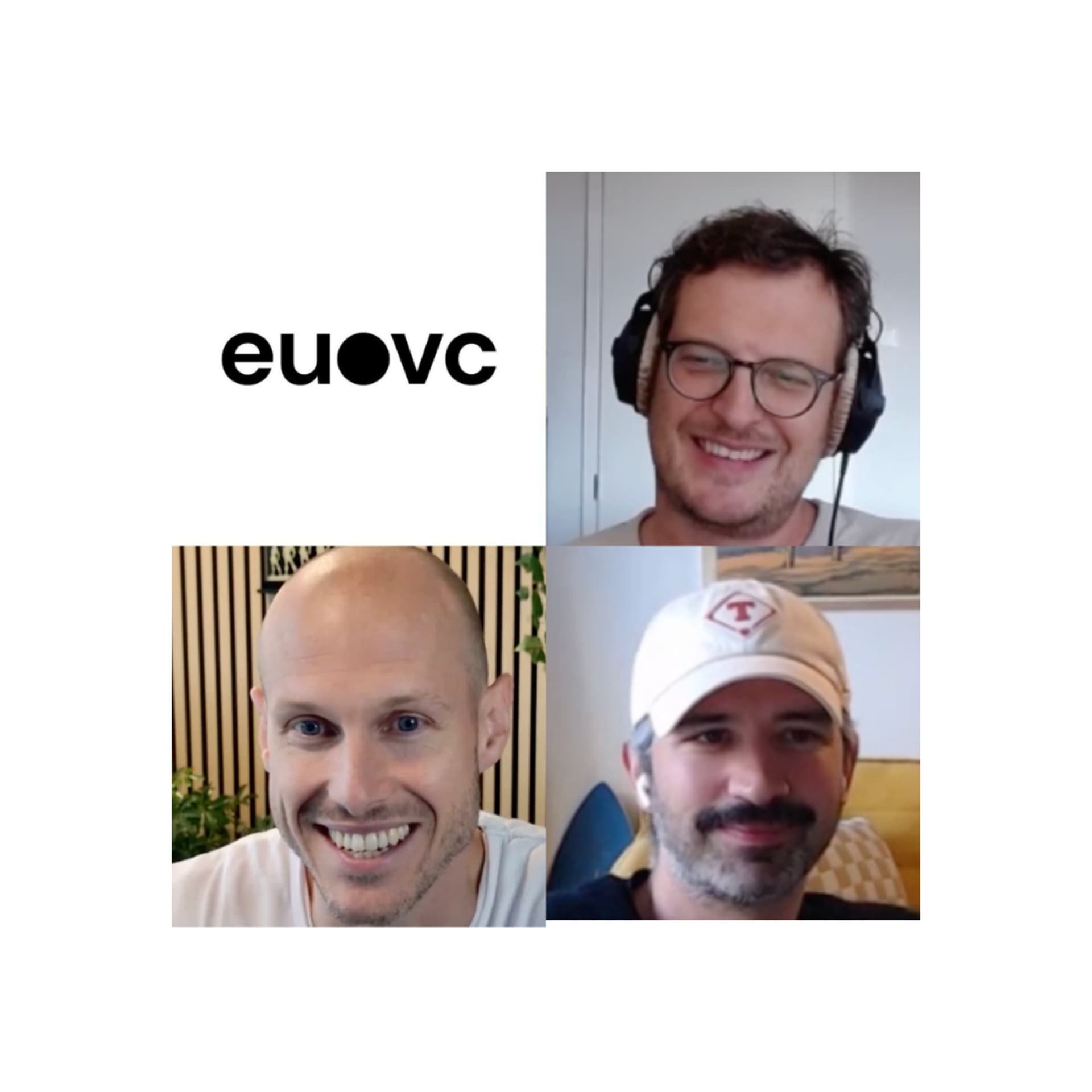
EUVC Podcast Episode Summary: E659 | Max Kufner, Again & Jan Miczaika, HV Capital
Episode Overview In this episode of the EUVC podcast, co-hosts Andreas Munk Holm, Max Kufner (Co-Founder and CEO of *again*), and Jan Miczaika (Partner at HV Capital) discuss groundbreaking advancements in deep tech and the role of venture capital in climate tech. *again* is a company that utilizes gas-eating microbes to convert CO₂ emissions into valuable chemicals, aiming to redefine the European chemicals industry.
Key Themes
- Deep Tech Innovation: The discussion revolves around how *again* is leveraging deep tech to address climate issues by repurposing CO₂ emissions.
- Venture Capital Perspective: Insights from Jan on why HV Capital invested in *again* and the potential to reshape the European chemicals sector.
- Building a Sustainable Future: The notion of decoupling industrial growth from fossil fuels and the importance of talent in the European deep tech landscape.
- Navigating Challenges: The episode touches on key challenges in scaling deep tech companies, including talent scarcity, board dynamics, and the path to Series B funding.
Detailed Breakdown
Introduction to *again*
- Overview (01:24): *again* uses gas-eating microbes to convert CO₂ emissions into chemicals without extracting fossil fuels.
- Foundational Background: The technology is rooted in research from DTU, Stanford, and MIT.
Investor Insights from HV Capital
- Investment Motivation (02:53): HV Capital sees significant climate upside and the opportunity to redefine the European chemicals landscape.
- Deep Tech Focus: HV began investing in deep tech startups, focusing on those emerging from academic innovation.
Entrepreneurial Journey
- Investor to Founder Transition (04:31): Max shares his experience moving from investor to co-founding *again* and the benefits of having prior startup experience.
- Advantages and Traps of Serial Founders (06:20): The benefits of having prior experience are highlighted, along with potential pitfalls.
Challenges in European Deep Tech
- Talent Scarcity (10:17): The difficulties in sourcing talent in Europe and the decision to move operations to the US for better opportunities.
- Cultural Differences (15:30): Contrasting attitudes towards risk and innovation in the US and Europe.
Board Dynamics and Governance
- Effective Board Management (23:38): Strategies for utilizing the board's expertise without falling into over-management traps.
- Collaborative Decision-Making: Importance of leveraging the unique skills of board members for different aspects of the business.
Scaling and Growth Strategies
- Preparing for Series B (33:17): Key differences between validating technology in early stages versus preparing for scaling.
- Milestone-Based Investing (36:59): The complexities of setting and meeting milestones in deep tech versus conventional industries.
The Future of Deep Tech in Europe
- High Risk, High Reward (43:12): Deep tech investments are acknowledged as high-risk but potentially high-alpha opportunities.
- Building a Strong Foundation (46:08): Emphasizing the importance of customer co-creation and rapid iteration in development.
Final Reflections
- Industrial Renewal through Deep Tech (48:06): Both speakers express optimism about the potential for deep tech to lead Europe's industrial renewal and the importance of understanding global markets.
Key Takeaways
- Transitioning from traditional fossil fuel extraction to innovative use of CO₂ is critical for sustainable development.
- European deep tech faces challenges but holds significant potential for growth and innovation.
- The right board composition and effective governance strategies are crucial for navigating the complexities of deep tech ventures.
- Founders should prioritize customer feedback early in the development process to ensure product-market fit.
Conclusion This episode offers valuable insights for founders, investors, and LPs interested in the European deep tech landscape, emphasizing the importance of adaptability, innovation, and collaborative governance in fostering a sustainable industrial future.
Written by AI. May contain mistakes. Listen to the episode to check what was said.
Transcript
Automatic transcript. May contain errors.0:00Welcome back, everyone, to another episode of the EUVC podcast. Today, I have two new friends of mine to talk about a Danish company, despite none of them being Danish. Max Kofner, he is of course the first we should touch on because he's an investor turned co-founder and CEO of AGAIN, a Copenhagen-based biotech scale-up using ancient bacteria to unlock the holy grail of biomanufacturing. Yulxing, bear with me here, I'm very bad at tech, so for that reason, I'm going to say a bunch of stuff I don't understand. Utilizing CO2 emissions to produce supply chain resilient chemicals and materials. Again, he's built on decades of research at DTU, Stanford, and MIT, and is backed by GV, HV Capital, and a bunch of other great firms that I should mention the names of, but I will not.
0:44Secondly, we've got Jan Michaka, a partner at HV Capital. Jan began his entrepreneurial journey co-founding the German e-commerce marketplace Hitmeister, went on to become CEO of mobile game studio Wuga, and then joined HV Capital in 2017, where he now focused on deep tech. Before we start the show, a quick note. If you're building or running a fund, you know it takes the right partners. At EUVC, we only work with sponsors we truly believe should be part of your tech stack. Please do take a moment to hear about them. And if you do, reach out, mention EUVC. It's the best way you can support what we do.
1:18Thank you so much. First up, Ace Alternatives. Every fund manager needs clean operations behind the scenes. From fund admin to tax and compliance, ACE handles it all across VC, PE, private debt, and real assets. They're trusted by some of the best investors in the world. And if you want peace of mind and a scale ready back office, ACE should be part of your step. Finding deals and managing your portfolio is at the heart of running a fund. Synaptic helps you discover status before others do. And Portfolio IQ keeps your portfolio data sharp and ready for LPs. Together, they're essential tools for modern fund managers.
1:53When it comes to legal, you need a team that truly knows venture. Hainspoon supports LPs, GPs, startups and scale-ups across the full fund lifecycle. Smart managers make Hainspoon part of their stack. We have two at EUVC. Tech BBQ. Oh my god, who doesn't love BBQ? Europe's startup scene meets the loudest, friendliest family reunion ever at Tech BBQ. From Nordic founders to global VCs, this is where ideas catch fire and relationships get real. If you're building or backing in Europe, Tech Barbecue is where you want to show up. And hey, if you've got a big fun announcement coming up, want to hit the headlines or just want to tell you a story about, do reach out to us because we'd love to help.
2:30And we've got some killer partners to help you get in the right media places. They've held us land Bloomberg, CNBC, Financial Times, Forbes and many more for the EUVC Summit. And we'd love to do the same for you.
2:58this show is not investment advice and the hosts of this episode may be invested in the funds and companies featured so guys welcome to the pod thank you hi thanks for having us so i said i was going to say a bunch of stuff that I don't understand. I did talk a bit to Grok about again, I understand a little bit, but Max, could you just tell everyone what is again all about? Yeah, for sure. I think one maybe simpler analogy to use is, you know, if you think of the way that we make most chemicals, fertilizers, kind of base products today, is we pull carbon out of the ground. We've been doing that for hundreds of years.
3:36We pull carbon out of the ground, and then we repurpose that carbon into different carbon molecules that you know is basically taking petrol or oil or natural gas whatever and converting it into commodity chemicals especially chemicals fertilizers all the kind of things that essentially are used to manufacture everything in your room around you from your wall to your microphone to your t-shirts what we've figured out is how to do that without pulling the carbon out of the ground but instead taking gaseous carbon that is already being you know emitted elsewhere it's the same thing though it's repurposing carbon molecules, just that we use bacteria and gas-eating microbes to do that rather than using chemokitalysis and oil.
4:13So that's the super simplified version. The more complex version is definitely what my two co-founders would be able to tell you about, who are PhDs and professors of the DTU at Stanford and MIT who worked on this technology for about 15 years before we spun it out and started the company about three to four years ago. And Jan, then tell me, why is this exciting from a VC perspective? And I noted, of course, you guys are not the usual climate VCs. And actually, quite a few of the big investors behind this round and also prior rounds are not the natural climate VCs that you'd expect in something like this.
4:47And exactly. That's what makes, again, so exciting. So maybe a bit of context about HV. About five years ago, we started investing into what for us was a new class of startups, which is deep tech startups. And for us, these are similar to, again, companies where the business value is not in a new business model or in a new geography or some twist, which is all fine. My colleagues do that. However, Maxi, me, Fabian, Emma, our team looks for companies where there is a spark and innovation, ideally from a lab, from a university. And what we saw is that on the one hand, it has a very positive climate impact, which is great.
5:27But then on the other hand, it really has the potential to redefine chemicals, one of our base industries in Europe. And so what we said is this looks like a very interesting journey we want to be part of, where on the other hand, we can maybe also help. Am I an expert on bacteria? No, definitely not. On the other hand, can I try and help Max and the team on setting up production facilities, internationalizing, figuring out funding, etc.? Yes. And this is why HV is very proud to have had the opportunity to invest in again. Thanks. You come with a very special background for someone to be co-founder of a company, which is you used to be a very prolific angel.
6:10And then you also was part of the Atlantic Labs team. Shout out to Marc Olivier, of course, and the team there. Tell me about the decision to go and be a founder again. yeah thanks i i mean i guess i guess the the the more interesting and unique element is that i am not a biotechnologist and i'm running a biotechnology company that's the first thing that we all collectively had to get comfortable with which luckily i've learned my way into the topic specifically on the on the kind of investor turned founder thing i mean i was a founder before becoming an investor so i like to think it's more of a pendulum swinging each way and to be honest i kind of continue to view myself as both in the sense that i really enjoy doing both and i feel like by doing both, you learn, you know, the kind of best of both worlds, you know, by building a great company, I learned what a great company looks like, I learned what great talent looks like, which on the flip side, you know, makes me a better investor.
6:58And also by being an investor, I kind of understand what other investors want to see, which obviously helps us raise capital, you know, from great other investors like Jan and like the GB team, etc. So I kind of view it as more of a symbiotic relationship. And I think that it's a model that, you know, one, I was lucky enough at Atlantic to be allowed to do. You know, the rest of the team at Atlantic was super flexible when I said, hey, I kind of want to semi-incubate this company and, you know, do two jobs at once. And they let me do that. And that's kind of how we ended up really starting and scaling the company and taking the IP out of university and making sure it could be the success that we thought it could be at the time.
7:36You know, I think it's not an uncommon model in the US. I think there's a bunch of funds where you have partners that incubate companies and invest at the same time. I think that, you know, Founders Fund have proven many, many times that you can do that very successfully doing what Anduril, Vada, Palantir, you know, and a bunch of other companies. And so I think it's maybe something that will catch on more in the EU. I think from my perspective, I love it. And I think it's beneficial. Maybe both of you can talk from the investor perspective or more broadly on the perspective of the power of serial entrepreneurs and people that really understand the journey and maybe also reflect a bit on the lack of that in some founding teams, both of you from that investor angle.
8:19because it is i often think about this the more i get into the ecosystem oh my god what a daunting task you're on if you've never been in the venture tech ecosystem before and then set out to build something big and great compared to someone like you max who have seen the whole journey and been on it before and pointing a young here definitely so i had i started my first startup out of university and I was clueless and I had the huge advantage of having very low personal burn rate very low opportunity cost and this was also a time when the venture ecosystem was not as mature as it was today so this is literally 25 years ago and I was able to build that company over seven years sell it then joined one of my angel investments as a COO built that company over seven years and sold it again.
9:15Now as an investor looking at serial entrepreneurs, I think serial entrepreneurs have huge advantages and one big disadvantage. I think the big advantages are they know how to work with investors, they know how to raise money, they may have a talent pool they can tap into, they have a personal brand depending on how it went, they may have personal net worth to invest in the company. So on the one hand, it is very, very useful as a starting tool. Does it guarantee success? No. Does it increase chances? Yes. There is, however, a big disadvantage, which to use the classic analogy is the hammer and a screwdriver.
9:56I went from e-commerce to gaming, which is maybe not a natural jump, but it's still somewhat close. My fear is always when serial entrepreneurs choose a completely different domain to start their company in. That's when they can run around with a hammer when what you really need is a screwdriver. And so what I love are models where you have entrepreneurs. And I hope I'm not saying anything stupid now about Max. But I'd say the more parallels there are between the first, the second, potentially the third venture, the more effective serial entrepreneurs become. So I'd probably agree. I think one area where it's interesting is focused specifically on deep tech, because one of the things about deep tech is that, you know, it requires huge amounts of capital up front.
10:45And so you have to be very good at both getting two things, one, large commercial contracts and two, you know, capital in the form of funding. And I think that that's something that lends itself more towards someone who's been through those cycles, you know, relatively agnostically of what the actual underlying technology is. and I think that was the case in our business. We managed to, we work with a fantastic partner who's been a great supporter of the business from the early days and has given us very large sales contracts that to an extent help de-risk future cash flows for the business. And at the same time, that's been a flywheel and allowed us to raise a decent amount of capital.
11:22And so I think that's one area where having been an entrepreneur before made it easier to know that those are the vectors we need to focus on to kind of pull the company towards the future because you're selling a vision and a story for much longer than you would be if you're building some kind of software-based company where you can have revenue of the metric really early on. Can you both comment a bit on the playbook of building in deep tech in Europe? Because a lot of people say, we're missing this, we don't have it yet. And others say, well, you just need to know to where to go and have the right advisors around you.
11:54And then it's actually not that lacking. And now I put in the Europe word and I actually don't like that I did that because I think that we're just as much finding our way as they are in the US when it comes to building with a venture funded model in deep tech. So I'd love to just hear your take on the on the playbook of deep tech. One of the things that I've found the most insightful in building a deep tech company in Europe is that ultimately it's been really challenging from a talent perspective. And I think I'm willing to be, I'm quite open and vocal about that in the sense that, you know, we struggled to find the right talent that we wanted in Europe.
12:32And so we moved the company to the US very early on. And, you know, that was something that, you know, we'll talk about that more in a second, but that was something that was the result of basically learning about how optimistic, fundamentally American scientists and engineers are in a way that's a little bit differentiated to European scientists and engineers. You know, I think that's just a cultural factor. We all know about it, but I think having lived through it, it ended up in us basically taking that leap way earlier than we may have done. And I think my general view to date is that, you know, even the greatest European deep tech companies should be looking towards abroad.
13:08It doesn't have to be America, but should be looking towards abroad to find people who have a more risk on appetite. at the end of the day there's one vector which is the co-founder and co-founders will traditionally always be cultural outliers in some regard but you need more than just a strong co-founder or a strong group of co-founders to build a company especially with these deep tech companies you often have like multi-disciplinary skill sets across three different areas three or four areas whether it's you know in our case genetic modification fermentation science chemical engineering and you have to find just outlier personalities across all of those to build the business and so that's kind of been the main thing for us um you know i always like to invoke the spacex spacex example like they built three of those rockets and had them all blow up before they got the fourth one to work and i think the mindset of being like you know fuck it we'll blow it up and see how it works is something that doesn't really lend itself to us and you know that's why we went so aggressive early on about hiring non-europeans to help us build the company even though we're still a european company uh in many ways that's my kind of view on that i'm keen to hear what Jan has to say on the topic.
14:14I think a lot about like comparative advantages and I love these studies on, you know, a figuring out who is leading in which technology, which country, which continent, et cetera. And then I often think about probabilities of success, you know, and I think, let's say you're doing a fundamental AI startup, you know, you have all the labs, all the semi-con, on all the people and all the customers, probably in like 50 miles around San Jose and close to San Francisco. Will that increase your chances of success? Yes. On the other hand, if you're in chemicals or precision engineering or manufacturing, et cetera, is San Francisco a natural place to do that?
15:01Probably not. In the same way, if I'm starting a fashion label, I'd go to Paris and not to Oregon or whatever to choose a random place and so I think on the one hand what Max says is obviously true this risk appetite but then if you are looking for these key people then you can also figure out where to kind of where to find them and and then play on your strengths so that's kind of one answer and the other one is I'm a bit unhappy on how multipolar the world is becoming I purposely spend time in San Francisco to get exposure should Max spend time in the US definitely should he spend all his time there probably not if you're an AI founder it may be three out of four weeks if you're a chemicals founder it may be one out of four weeks I think every founder needs to figure out what ratio he or she spends in Europe versus the US and also Asia and not not exclude any of these talk a bit more I would love to see you sorry I would love to see you start a fashion company the Lian so sign me up for when that happens you mean me I don't know if I can say the word was a brand but wearing a 10 euro t-shirt 10 euro t-shirt advice is very welcome on the podcast so please do see the brand it's a it's a very niche uh Japanese uh department store I called something with low low something I would love to hear a bit, talk a bit more about that multipolarity thing and also maybe hear you comment on it, Max, how you think about dividing your time, dividing your inspiration, dividing also when you're building connections for the business.
16:49Like multipolarity means multiple things, right? What we're definitely also seeing is the geopolitical environment is such that you probably want optionality in your supply chain to be resilient. So I'd love to hear you comment on this current state of affairs. I mean, I'm not a politician or an economist. And generally, when I veer into any of those topics, I tend to say dumb stuff. I think the thing that's been the most insightful for me in building this business is realizing to what extent, particularly Germany, I won't speak for the EU writ large, but particularly Germany used to be, you know, an industrial powerhouse.
17:28ignoring obviously what happened in the first half of the 20th century and focusing on the rebuilding of the German economy. It was very much an industrial engine that we built, auto manufacturing, chemical manufacturing. I mean, if you look at businesses like BASF, we were the leaders in this space. And I think the industrial sector made up something like 50 to 60 % of German GDP and today it makes up 20 % of German GDP. And you could obviously argue that the professional services took over and, you know, but what we're seeing is we're seeing, you know, businesses like BASF that used to be the powerhouse of German innovation and the economy shutting down production and moving out of Germany.
18:10And I think that's a huge shame, one. Two, I think that there's, you know, that's kind of part and parcel of what's going on. You know, we shifted our economies out, you know, a lot of our manufacturing out to low labor cost economies. And, you know, that kind of worked for a short amount of time until we started realizing, oh, we don't actually make anything here. And if, you know, we end up in a position where we actually do see the need to make things because things go downstream from making T-shirts, that's actually technological innovation that ends up becoming making chemicals and then making, you know, semiconductors and making weapon systems and all that kind of stuff.
18:44That's a really bad place to be. So, you know, I don't have the solution for that. I think that what I spend a lot of time focusing our efforts on is how can we build in Europe? You know, I mentioned that we're going to the States. We do spend a lot of time thinking about ways that we can roll out our technology in Europe. There's a lot of industrial partners. We have partnerships and we're in discussions with most of the blue chip industrial players in the European sector. You know, they're all very eager for our technology and to roll out our technology. There's not a lack of will. I do think there is a big regulatory problem that hampers European innovation.
19:16I think there's also a huge energy cost problem that unfortunately I'm not going to solve. But, you know, I think that I am a strong proponent that we need mass scale reform to turn around certain European economies, segments of the economy. But until that happens, you know, we as a business will allocate our capital to whatever area is the most productive for us. Yeah. And how do you see this? You're investing in deep tech across Europe, obviously. Do you see founders think in the same way about production in Europe and partnering in Europe? Or do you see that now there are strong nuances? I'd say there's not a lot of geographic differences within Europe.
19:57I think also most startups are pretty flexible, as Max was also saying. You know, if you have a high energy need and you want to stay in Europe, you're probably going to gravitate towards Spain. And then there's other comparative advantages. What I am seeing is certain founders, and I mean, defense being the obvious one, is also being strategic around which investors to bring in board and from which countries. I think this is something which slowly is also permeating into other parts of deep tech. I mean, semiconductors is hugely geopolitical, as an example. So we're starting to see that slowly.
20:36So I'd say it's less about different countries, the Danes having a different view than the Germans. It's more about certain sectors where maybe internalization, internationalization plays a different role than in others. One thing which I'm interested in, so one company which HV has invested in Neuva Robotics, just opened a first production facility outside of Germany in China. and where I think the typical standard way would have been to go from Germany to the US. They're going east and south and west. Sometimes I wonder if, and I mean, this is not news, but if we should not also for certain industries look at India, China, Indonesia, Japan, Korea, etc.
21:24and have a kind of multiple poles which we rely on also as startups. However, have you thought about that, Max? I mean, we've got our hands full with being such a small company and already moving across Atlantic so early on. I think what's the nature of, let's say, the chemicals industry and the products that we make across specialty chemicals, commodity chemicals, fertilizers, and foods and ingredients. These are all fundamentally such important markets and you need the products that we make everywhere. ultimately it's really a question of the sort of feedstock costs and the production costs right again going back to europe we're net importers of most of the products that we make and that's because energy costs are too high to reasonably produce these things here now we think that we might be able to crack that not because we have a slightly differentiated technology that allows us to not be fully dependent on the cost of you know natural gas or the cost of petrol and oil and all that kind of stuff but ultimately yeah we look at where feedstock costs are the lowest and when we think that we can be the most economically value adding and that's what guides us whether that's you know the middle east whether that's asia whether that's um you know north america south america we look at everything maybe to add one thing i feel most deep tech startups are also less in their sales less geodependent than other startups because if i'm a fintech selling insurance, I choose one country and then maybe I add a second one like five years later.
22:58Well, I think if your business model is based on technical innovation, that is almost always global by definition. Yeah, it's interesting you spoke about China just before because I'm literally putting together now a study trip to China in 2026 because it's just clear that anyone building deep tech and especially hardware need to understand what's going on there and just exactly how to navigate it. Planet A and World Fund and 2150 went last year and it's on the back of their experiences like this is something we should definitely all be thinking about as a European tech ecosystem. You're both smiling so feel free to comment on that if you want.
23:36I saw a frustrating stat this morning. China added the photovoltaic capacity deployed in Germany over the last 25 years in the last six months. I mean HV has invested for example in Marvel Fusion on on the basis of this promise of free energy. I wonder if at some point photovoltaic will bring quasi-free energy and what that will mean for production in China. It's fascinating to think about it, but to quote Max, I'm also not a geopolitician and I tend to talk about things I have no clue about. That's why we have great board meetings. Yeah. Let's talk about board meetings. Let's talk about that dynamic.
24:15Founders, what should founders, like you're both very accomplished. You've both seen boards from both, like both with Hitmeister for you and for you, Max, of course, but also both as an investor and as a founder. I'd love to hear both of your take on when should a founder be using their board to make their decisions? When should they stand up and say, okay, I got your feedback. I'm going this direction instead. Can you talk a bit about the governance dynamics and how you as a founder should navigate that.
24:52It's a Mexican standoff on this one. Okay. So we'll leave the long pause here because we had a very saying moment between the two guests on the podcast who were looking each other in the eye, trying to figure out who goes first. No, I think then I'll go first. I was just being polite, of course. so if you go back to the function of the board i mean there's a certain set of governance things you know so we try to avoid max selling the company from for one euro to his buddy or things like that you know so there is a certain list of like protective measures procedures and so on let's put those aside for a moment and then my philosophy is really the board and the investors need to be very very careful to not over manage the company because the board members are not better CEOs and it's very dangerous to be kind of armchair quarterbacks and trying to meddle into the affairs of the CEO however what I do feel is that board members I say if I add value like three four times a year I'm doing pretty good if I don't kind of annoy founders like Max the rest of the time which could be maybe a key hire a push an introduction to uh to another fund it could be an insight i pick up because the advantage of being a board member and especially investors you see hundreds of companies hundreds of founders you just have a bird's eye view of how markets are developing and i believe this you should try and translate into impulses i think board members who have a tendency to micromanage or to try and be the better CEO, it can become very, very dangerous.
26:40I think what I would add to that is at least what works for me and the board that we built is two things. One, we mentioned earlier that we don't have any climate VCs on our cap table. I think one of the things I was very conscious of is working with venture capitalists who have experience in scaling large successful businesses, which HV has done many times over, GV has done many times over. And, you know, all the other investors on our cap table have done because specifically what I was looking for in board members is people who can guide me through that journey and have seen what great looks like and can make sure that we emulate that.
27:16And I think that's a really important point. And then the second thing that I specifically, the way I specifically like to work with board members is different board members have different unique skills. You know, Jan has operational skills that, you know, some other board members who haven't run companies don't. And so Jan and I can spend time working on that together. Coincidentally, my next call is with Jan, where we're actually talking about hiring for a crucial management role. And, you know, that's something where Jan has insights that are value adding, and he doesn't give bad advice. You know, at the same time, Jan is not the guy that I go to when I specifically want to figure out how we can optimize a certain R &D work stream, right?
27:53And And Jan would be the first person to say, no, I'm not getting involved in that. Whereas, you know, for that instance, we brought on recently Christoph Schilling, who is the founder of Genomatica, the leading global industrial biotech company. And he's the perfect person to do that. So we have been relatively strategic about how we build the board. And then I think I like to work in a way where I, you know, go offline outside the board and work with individual board members one-on-one on certain topics where they're strongest in so that we, you know, yeah, to keep everyone working on the things that they do the best at.
28:25Let's do a really quick on-the-air sparring session. Bye, Jan, on your current issue with hiring a crucial role. So tee it up in a generic way that it can actually be said on the podcast. it's not really a challenge per se but i think i think to reframe well i have i'm happy to actually openly frame that the the problem set which is the business is going well we're starting to think about the series b and how the series b comes together as part of that we're looking to combine two different elements of the business one we have a top co you know the business again biotech that has developed some really really interesting technology across two layers one is a manufacturing platform where we invest in capital into production assets that manufacture chemicals, fertilizers, et cetera.
29:13The second is our AI platform. It's a computational biology platform that allows us to discover new materials and scale them up. And we've kind of done both. Now, those two businesses essentially and the production assets that fall away from that have different IRRs, right? The growth rate at which you can scale a capital asset is simply different from the growth rate at which you can scale a computational biology platform. And so what we're trying to figure out collectively is how we do that. And, you know, I actually think that Jan has been very proactive in thinking through different ways and different models and different capital structures.
Read the full transcript
29:46And so really what we're doing is we're now brainstorming what a role looks like that could help us continue to improve that even more. I think that's probably as transparent as I can get. I don't know if that was the right way to answer your thing, because I think I was meant to say something that would piss Jan off or vice versa. maybe we have we have we don't have that we're on the same page on this one so no not at all not at all my my goal was for uh our audience to be able to see how an expert board member like jan from a great firm like hv capital would answer the question by a very successful entrepreneur i think the key point is not answering the question it's about you know given that max knows so much more about the business and the details is trying to support him in his thinking on this and then maybe occasionally you know interjecting something I've seen from another business or or helping structure his thoughts you know in a way when maybe the founder has his or her head in the thicket of problems and issues and challenges etc once in a while to help the founder lift the head up but i think it's rare to say you know this is i know what you should be doing um because that's probably not the right thing i think it's more i don't know in this situation you know what are the implications legal financial hiring fundraising capability valuation of the different parts of the business you know these uh trying to think through these plans yeah and if you were to go a bit out on a limb here and go into the conversation with Max on the air here.
31:24Your next step would be to ask, like try and probe and see how Max is thinking about the different topics. Am I getting that right? So let's say now to try and be more specific, a technique I quite like to use is to like oversimplify things, you know, and tell, you know, in this situation, tell Max, okay, let's stop producing chemicals. You know, it's low margin, high volume, low margin business with low valuations who cares let's go all in on on ai and then the other approach would be all this ai stuff it's a bubble it's going to burst in three days when people figure out the inveter and vendor financing is all bogus uh let's produce chemicals like germans have done since 500 years you know and then try and paint a very stark picture and push the the founder the entrepreneur to think through the implications because in a situation like this reality is probably somewhere in between.
32:22Let me ask you another question that also from what you just said, Max, I'd love to hear about the preparation of a Series B. A lot of literature in Europe covers how do you raise a seed round, how do you raise a Series A. There's not a lot on the later stages. So I'd love to hear both of your take on the growth journey and what kind of changes, what are the dynamics that you really need to be aware of and that are completely different from the earlier stages. I'll be in a better position to talk about this after raising the same race to me, to be honest. So I don't know. I think, you know, at least what I can talk about is that the risk profile of our business has materially changed, right?
33:11We've done, I think, a few things really well. One, we've validated our core technology, which is the binary stochastic risk, which is the risk that no one wants to take at the kind of early growth stage. And luckily, Jan was willing to do it. The second thing we've done is we've validated the pace with which we can execute, which I think is really, really important with deep tech because until you build out production assets, it's all theoretical and R &D driven. And then once you validate it, you can build up production assets very, very quickly. you've kind of shown to future investors that you can move as fast as venture scale returns want you to be and then i think the third thing at least in our business is we've kind of shown that we can expand the total addressable market of our business and therefore the the corresponding potential market cap by you know going both horizontal and vertical and what i mean by that is we've expanded the product portfolio massively we no longer just make one product which is what we we did you know 18 months ago we now make five products with like 10 in the pipeline.
34:11And then we've also added, as I mentioned earlier, this computational platform that allows us to basically drive high margin revenues, license our technology, et cetera. And so I think what I'm getting at, at least from our perspective, is since the series A to series B, there's been kind of acceleration across a whole three or four different really important factors, each one of which is probably a startup in its own right, which then gets the next round of investors incredibly excited about what we can do. And that's obviously what we're leaning into and the story that we're telling. And one of the most important exercises we do, which we just did with another startup, is where we invested in a round is to then, these letters have become increasingly meaningless, but let's call it a seed, is then to figure out and back solve what do we need to raise a strong Series A.
35:00You know, and to take an overly simplistic view, you know, let's say in typical deep tech companies, you have some function on supply and demand, you know, and supply could be we have a production facility up and running, we have a first of a kind, blah, blah, blah thing, you know, and then on the demand side we have maybe takeoff agreements, we have LOIs, we have first contracts, etc. And that kind of takes care of the core fundamentals. Then we may need to have a section on IP, you know, which is about freedom to operate, patents, this type of thing. We need to build an organization organizational capability where we have maybe key hires and what i think is a really good tool for entrepreneurs is to kind of i don't like okrs it's like management fetish somehow but you know to to then say okay you know on a where do we want to be in 18 months and how do i from that derive individual work packages uh for the teams that's a very good conversation to have between founders and investors, because most investors can kind of tell you what you need for the next funding round.
36:08I'd love to ask you both about that a bit, because milestone-based investment investing has, of course, always been around and been the bread and butter, so to say, of the VC model. However, milestone-based investing is very difficult in deep tech. Oftentimes, things are moving in a different pace than you expected. And that's, of course, also back a bit to the lack of a VC playbook in this space, meaning that it's not as clear cut as building a SaaS business where you can say, well, either you hit these metrics or something is fundamentally broken and we can't fix it. Here it's a lot more fluid and you think that this is attainable, but you then learn something along the way that it is not.
36:50And for that reason, I also speak to some deep tech investors that say, well, the first investment is the easy one in deep tech, it's the bridge rounds that are difficult because you got to anticipate that they're going to come. And I'd love to hear your take on that, both of you setting those milestones and how you then navigate through them afterwards and make sure that you as a founder, keep the investor updated on. It's okay that we might not hit it. Let's keep the money flowing nonetheless. And from the investor's side, also knowing that you should feel comfortable despite some timelines slipping i mean i'm just going to come out and say it you know i think the the the way that we hedged against that is we just didn't allow timeline slipping to be a thing yeah we're nice you know like like we've we've been we've just been super aggressive and um yeah it's true you know we built a petrochemical plant in like 10 months uh you know that kind of thing usually takes three to four years and that was just you know i think that's more going back to the thing i mentioned around culture and optimism and just going at it you know which by the way was the hardest challenge for us as a business.
37:54We, you know, about 18 months ago, we were an R and D science company and now we're like a petrochemical business. And, you know, soon we're going to be an operations business. And I always, you know, Jan and I talk about this, you know, ultimately we want to be a spreadsheets business where it's just a function of like, okay, what is the IR on this asset? And so, you know, I think that's been one thing that we've done that has probably been a little bit lucky, but also a function of focusing on, on engineering risk. and that's been the main journey of the last 18 months. It's been, you know, we'd already validated our technology walks to a large degree at the R &D stage in academia and the last few months have been really focused around that.
38:32So that's probably my main thing. But we also spend a lot of time every board meeting making sure that we're on track and, you know, talking about the timeline and, you know, that then distilled down to our whole company. So, yeah, that's my flippin' answer. But I think Jan probably has more insight. I think, I mean, first up, I agree to what Max said. And I mean, this is a public forum, so of course I will. But I think it really is the case. You know, people always say, oh, selling software B2B is easier because I'll have like some MRR scale up and run up and so on. Your reality is no. You know, it's just a different type of risk.
39:09For me, the GTM motion in SaaS has become so incredibly hard that most startups fail there. And that's why you need to keep an eye on it. Obviously, in deep tech, in an ideal world, and this is the case for, again, who have a very public off-take agreement, if they manage to build the plant and it looks like it, the market side is the GTM motion is not a risk. It's been completely de-risk. So I think you have different types of risks. And regarding the milestones, I think, I mean, A, in an ideal world, again, you don't have slippage. But then if you do, I think what becomes tricky for the entrepreneur is to show investors progress and value creation, which could be progress on the patent, on the technology, on the efficiency curve, driving down the cost, where investors can say, oh, if this continues another 12, 18, 24 months, the company will be so much better that as a greedy grubby capitalist it's a really good idea to put in a bridge financing if you don't have this progress to show that you're moving towards these value creation points then it does become very hard obviously it's not easier to build a b2b sas business that's massively successful than it is to build the deep tech company that's not the point right it's just that the playbook is much more thoroughly written and you know them and the different tastes and shapes they come.
40:41And then when you go to deep tech, there are many different shapes. And on top of that, a lot of results are quite binary. So it's a bit like, how do we dare bridge when we are looking at a binary answer that is not coming before we put this money in? If I want to piss off my colleagues who do B2B SaaS investing, who I really respect for what they do, to me, it's become very well understood how a high-performing B2B software company looks like. You know, you can use the Meritech, Bessemer, cloud index ratings, net dollar retention, churn, blah, thing. As an investor, how do you generate alpha is by seeing something someone else doesn't see.
41:26And, you know, I think that's what makes deep tech so interesting is that it is complicated. It is hairy, but I really believe this is high risk, high return investing because it is not as well understood. And for us at HV Capital, being one of the whatever largest European funds, however you want to define it, I think we're actually in a pretty unique position to help entrepreneurs in these hairy fields rather than someone who does only B2B SaaS and kind of focuses on that. Yeah, I think you're absolutely right. And I think that as much as I welcome and love generalists coming into deep tech, I think it's also something that a founder should think seriously about.
42:10And you don't want a full board consisting or full funding round consisting of people with limited deep tech experience. You can definitely have one because there's a lot of value from the generalist investors. But you also want some people that know exactly the journey you're about to go on. Am I somewhat correct in saying this or am I oversimplifying this? I don't know. I think I'd actually disagree. I think from my angle, the most valuable skill set to have from any investor is people who've seen what greatness truly looks like. I think there's probably no shortage of deep tech investors who have invested in a bunch of companies where the companies went nowhere versus the inverse.
42:52I'd rather work with people who have genuinely been part of the journey of building huge successful businesses, whether it's deep tech or not. Because ultimately, I think there's, once you pass the R &D stage, it's kind of all the same stuff, right? It's how do I hire the best people? How do I move incredibly quickly? How do I, you know, push against the boundaries of what's possible, whether that's in rolling out new SaaS widgets or that's, you know, curing cancer. Like, you know, it's all really about moving quickly and building great companies and having seen that before. I think for me, that's the most important thing.
43:27I pride this podcast on being nuanced. And I think you're absolutely right. I think there's truth to what I said and there's truth to what you said. And I think let's actually leave it there in terms of, because I do think that both perspectives are absolutely right. And obviously you have a dream and master that have done both, that understand the technological complexities and understand and have relationships with the partners and so on because they come from a deep tech background. but at the same time have also seen what great looks like. And by the way, that is maybe also a founder who is great to kind of turn it around is who purposely constructs not only the board, but also the advisors he or she works with, you know, as to really figure out, you know, I have a football team.
44:16I need a goalie and a striker to stay in Max's world. You know, how do I combine the two? All right, Dan. I want to round us off. I just like to say, I think that's the first time I've heard Jan do a sports analogy. I love it. Yeah, he seemed proud enough to. I'm a huge sports fan. Jan is entertaining me here. I appreciate it. This is the true value we see. I love it, guys. Let's round off this episode with some closing realities and advice. I want to ask you, Max, for founders building deep tech companies. in the industrial space, what do you think are the three most important lessons you've made?
45:00I'm very wary of giving advice because until I've IPO'd the company or sold it for$50 billion, I'm always a little bit careful on that one. I think what I can say, one thing I feel strongly about that worked well for us, and I think is an interesting concept for deep tech companies, is we started working. A lot of deep tech founders will spend a huge amount of time working on their technology and developing the R &D behind it and not enough time speaking with customers super early on. I think that's something that they should think about the other way. At least we did. We actually went to our very first customer before we even knew what product we'd make.
45:36We said, hey, here's the technology working on. It might work. It might not work. If it does work, here's some things we could maybe make. How do you feel about it? And we ended up workshopping our way into what became a massive massive contract and a fantastic partnership. And so, So I think that's the number one thing that I see with a lot of great scientific founders. They come out of their PhD or university. They spin out that great tech that their dissertation is built on. And then they spend a huge amount of time building the tech and not enough time doing the commercials and figuring out your customer base.
46:08And we did it essentially almost the other way around. And it worked out fantastically for us. So I encourage other founders to try and do the same. And VCs like seeing contracts. So it's not going to hurt them in the fundraising process. Jan, I want to ask you, for investors in LPs wanting to bag Europe's deep tech reindustrialization, what mindset shifts or structures are needed to make that possible? I mean, LP can give us money and we're happy to invest it on their behalf. No, but I think to me the important part is A, being open-minded about risk and return and then B, not transferring too many templates of kind of old knowledge into the space because I, on the one hand, thinking about risk return, if you look at kind of the different asset classes between public equities, private equities, real estate, yada, yada, yada.
47:01And this is something I'm actually working quite a bit on how to get more European capital into our asset classes. People were saying, oh, you know, commercial real estate is a great asset class until the market absolutely collapsed in the US and they were getting 80, 90 % write downs, which I believe there's never been a VC fund that horrible. you know so and on the upside for return of whatever five six percent and so to be kind of to take an honest look at the risk return profile of what we're doing especially if you build portfolios of great companies if you as an asset manager build portfolios of portfolios I truly believe this is an asset class which is interesting from a risk return perspective and for then my VC colleagues I think what you cannot do is blindly come with your standard set of metrics which you've perfected for for other let's say to not always pick on it but let's say if I look at consumer I look at CAC LTV retention you know if I look at B2B I look at NDR and churn and so on does the revenue profile of again look good for B2B SaaS investment of course not is there a lot of value in this company definitely you know so i think as a as a vc take the time look at the business model understand you know the dynamics at play and you know the potential strength and then do the work and do your investments both of you have been amazing i'm so happy we did this episode i'm so happy that we did it despite despite you guys not being danish and again being a dinghy founded company i have to say you both did an amazing job and Thank you for coming on the pod.
48:45Next time we'll bring Torbjörn. Exactly. My two co-founders are very Danish, so they make up for it. And we'll bring them along next time. Thank you so much, Andreas. It was a real pleasure. Thank you, gentlemen. Thanks, guys. Before we start the show, a quick note. If you're building or running a fund, you know it takes the right partners. At EUVC, we only work with sponsors we truly believe should be part of your tech stack. Please do take a moment to hear about them. And if you do, reach out. Don't mention your VC, it's the best way you can support what we do. Thank you so much. First up, Ace Alternatives.
49:17Every fund manager needs clean operations behind the scenes. From fund admin to tax and compliance, Ace handles it all across VC, PE, private debt, and real assets. They're trusted by some of the best investors in the world. And if you want peace of mind and a scale-ready back office, Ace should be part of your step. Finding deals and managing your portfolio is at the heart of running a fund. Synaptic helps you discover startups before others do and Portfolio IQ keeps your portfolio data sharp and ready for LPs. Together they're essential tools for modern fund managers. When it comes to legal you need a team that truly knows venture.
49:53Hainspoon supports LPs, GP, startups and scale-ups across the full fund lifecycle. Smart managers make Hainspoon part of their stack. We have two at EUVC. Tech BBQ. Oh my god, who doesn't love barbecue? Europe's startup scene meets the loudest friendliest family reunion ever at Tech BBQ. From Nordic founders to global VCs, this is where ideas catch fire and relationships get real. If you're building or backing in Europe, Tech BBQ is where you want to show up. And hey, if you've got a big fun announcement coming up, want to hit the headlines or just want to tell you a story about, do reach out to us because we'd love to help.
50:27And we've got some pillar partners to help you get in the right media places. They've held us land Bloomberg CNBC Financial Times Forbes and many more for the EUVC summit and we'd love to do the same for you.
From the publisher
Welcome back to another episode of the EUVC Podcast, your trusted inside track on the people, deals, and dynamics shaping European venture.
This week, Andreas Munk Holm is joined by Max Kufner, Co-Founder and CEO of again, and Jan Miczaika, Partner at HV Capital.
again is one of those rare European deep-tech stories that blends academic brilliance, industrial execution, and venture pace. Born out of DTU, with roots at Stanford and MIT, again uses gas-eating microbes to turn CO₂ emissions into valuable chemicals and materials. In plain English: they take carbon that’s already in the air (not the ground) and repurpose it into things we use every day, from plastics to fertilizers.
Backed by HV Capital, GV, and a handful of top European and US investors, again is on a mission to decouple industrial growth from fossil carbon. But the conversation goes far beyond climate tech.
Max and Jan unpack what it takes to build deep tech at venture speed, the reality of talent scarcity in Europe, the cultural differences between US and EU deep-tech ecosystems, and how to navigate board dynamics, milestone-based investing, and the journey to a Series B in a capital-intensive world.
Whether you’re a founder, investor, or LP curious about deep tech’s reindustrialisation wave — this one’s for you.
Here what’s covered:
01:24 | again in one line — gas-eating microbes → chemicals (no oil out of the ground)
02:53 | Why HV Capital backed again — climate upside and a chance to redefine European chemicals
04:31 | Investor → founder pendulum — why Max went from Atlantic Labs partner back to operator
06:20 | The serial founder advantage (and its hidden trap)
10:17 | Building deep tech in Europe — talent constraints, optimism gaps, and moving early to the US
15:30 | Multipolarity — global operations, risk appetite, and where to spend your time
23:38 | Boardcraft — how to use your board (and avoid being over-managed)
28:39 | On-air sparring — asset-heavy vs. platform-heavy business models
33:17 | Prepping for Series B — risk, IRR, and the difference between validation and scale
36:59 | Milestone-based investing in deep tech — bridges, binaries, and how to keep momentum
43:12 | LPs and VCs — why deep tech is high-risk and high-alpha
46:08 | Founder lessons — customer co-creation, speed, and building fast with scientists
48:06 | Final reflections — Europe’s industrial renewal through deep tech


