
In short
EUVC Podcast Episode Notes: E660 - This Week in European Tech
Episode Overview
- Podcast Title: EUVC
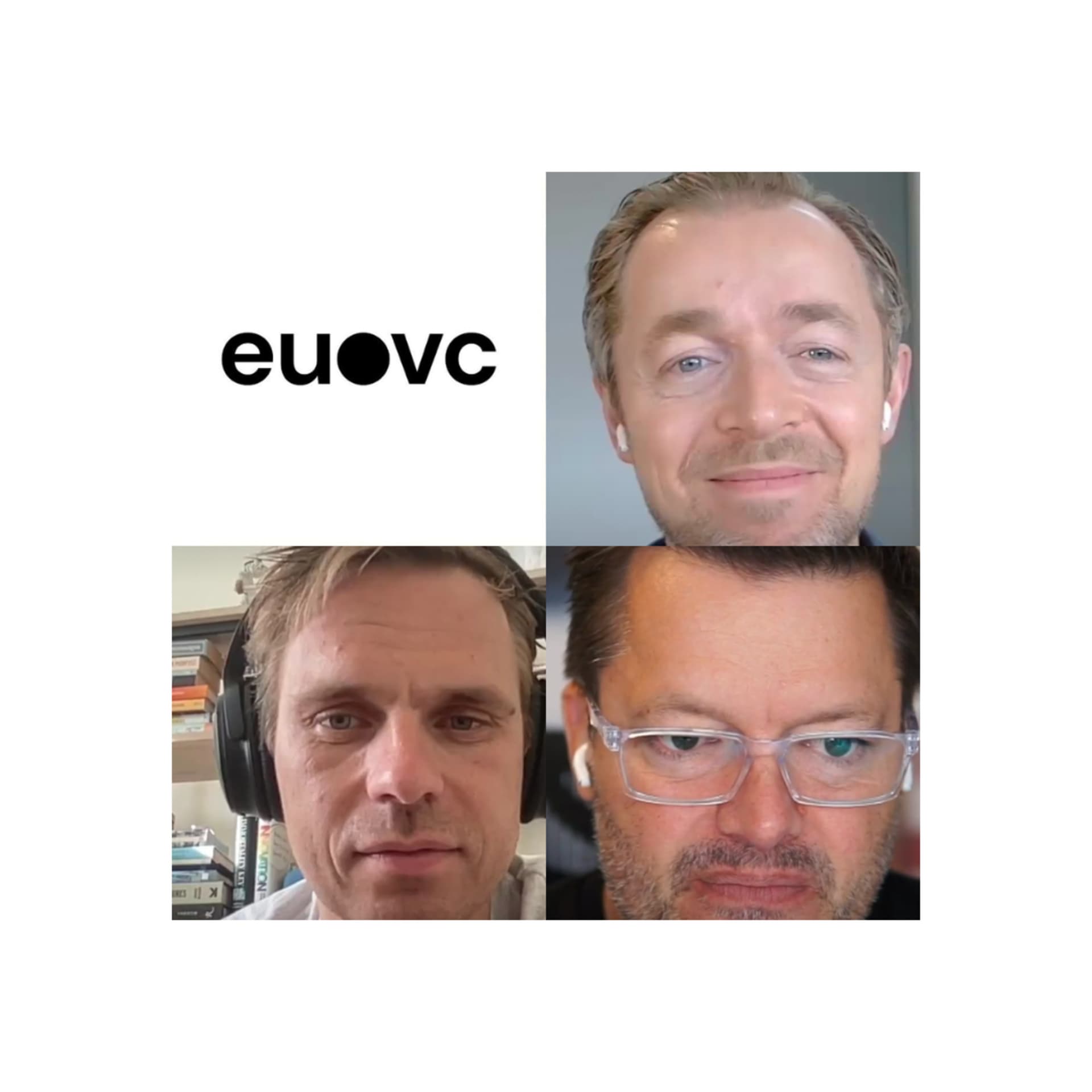
- Episode Title: E660 | This Week in European Tech with Dan, Mads, Lomax & Robin
- Description: This episode features Dan Bowyer, Mads Jensen, Lomax Ward, and special guest Robin Haak discussing current events impacting the European tech landscape, with a focus on insights from the German ecosystem.
Key Themes and Discussions
- Social Media Regulation
- EU Proposals: Discussion on the EU's proposals to restrict social media for minors, with debates on safety versus potential overreach.
- Mental Health Concerns: The impact of social media on children’s mental health was highlighted, particularly among young girls.
- Surveillance Issues: Concerns over potential government surveillance capabilities embedded in these proposals.
- UK Budget Insights
- Startup-Friendly Measures: The UK budget is perceived as surprisingly friendly to startups, with reforms in EMI options and EIS/VCT clarity.
- Market Reactions: The market showed a positive response, indicating a more innovation-forward stance from the UK government.
- Compliance Challenges in Europe
- VAT Scandal: Lovable.ai faced scrutiny over VAT compliance, igniting discussions about the complexity of Europe's regulatory environment.
- Startups and Compliance: The difficulty of navigating VAT and other regulations for startups was a recurring theme.
- The Struggles of N26 and German Fintech
- Regulatory Challenges: N26's ongoing struggles with German regulators (BaFin) and the implications for growth and valuation.
- Comparative Analysis: Speculation about whether N26 would have been more successful if it operated under a different regulatory framework.
- German Economic Outlook
- Stagnation: Analysis of Germany's economic performance, citing stagnation and challenges such as energy scarcity, demographic changes, and high welfare costs.
- Education and Healthcare: The need for systemic reforms in education and welfare funding due to rising costs and a shrinking productive workforce.
- Energy Availability and AI Infrastructure
- Nuclear Power Shutdowns: Discussion of Germany's decision to shut down nuclear reactors and its impact on energy availability.
- Comparison with Other Countries: Mention of France and Nordic countries potentially becoming new AI infrastructure hubs due to better energy access.
- Rise of Solo GPs in Venture Capital
- Emerging Trend: The growth of solo general partners (GPs) in venture capital, including insights into their operational models and the appeal to startup founders.
- Differences in Approach: Notable differences between full-time GPs and those operating part-time or as solo entities.
- AI Developments
- Investment Landscape: Insights into the capital expenditures required for AI development and competition between OpenAI and Google.
- Technological Advancements: Discussion of new AI technologies coming out of major companies and the implications for the future of AI.
Key Players Mentioned
- Robin Haak: Founder of Robin Capital, active investor in startups, and contributor to discussions around the German economy and venture capital.
- Dan Bowyer: Co-host providing insights on UK regulatory changes and their impact on startups.
- Mads Jensen: Co-host discussing broader European tech trends and insights.
- Lomax Ward: Co-host providing a fintech perspective and insights into regulatory challenges.
Conclusion This episode of EUVC provided a comprehensive look at the current state of the European tech landscape, with a particular focus on Germany's economic challenges and opportunities. The discussions emphasized the need for regulatory reform, the importance of energy availability for tech innovation, and the evolving landscape of venture capital in Europe.
Listeners are encouraged to stay connected with EUVC for ongoing insights into European venture capital and tech trends.
Written by AI. May contain mistakes. Listen to the episode to check what was said.
Transcript
Automatic transcript. May contain errors.0:00Welcome to Upside, where we dig into the real news that lives behind the headlines affecting European venture. Today, we have a very special guest, Robin Hawke. I'm going to lean on you in a sec. We've got Lomax Mads and My Good Self.
0:24This show is not investment advice, and the hosts of this episode may be invested in the funds and companies featured. But Robin, tell us a little bit about you and what you do and why you're fabulous.
0:38with an intro hi i'm robin uh i run a company called or firm and venture firm venture capital firm uh it's a solo gp it's called robin like me robin but also robin like the birth you know like the red he has the best swag in the industry if anyone gets any hands on robin's swag you will love it you can check it out on the website if you like it you can ping me you get the code or you know what the code is malinovka because malina malina in russian is raspberry so they call the bird raspberry bird so it's malinovka is the code for the if you go to the website now you go to robincap.com then you go to store and then you pick your piece there is a button says still available you press on the button then you see what's still available and then you press the code is malinovka it's completely for free and it will be shipped within a week to you loving you know you're going to be so famous now this was this will be sold out within 24 hours they already are my t-shirt still hasn't arrived so just just saying just saying um now robin yeah we did we did international we did international today okay okay i'll look forward to that my dhn in about a month's time now robin cap just to give us a little bit of a kind of a backstory to robin capital you are ex-operator founder ex uh larger firm gp and now you're a solo gp which we are going to talk a little bit more about later this new trend and this kind of growing into solo gps but you do pre-seed seed business software enterprise focus europe plus i think a europe maybe plus no no i think it's fair it's fair i could say i could say it yeah so so me me me as a person it's it's robin i'm german i'm based in berlin uh yes i i invested in like a hundred companies i think i'm doing this for 15 years eight of them are unicorns i have built a unicorn myself called smart recruiters we were so fortunate to sell it to sap uh like two months ago we were making a hundred million in arr profitable business application tracking system so basically attract, select, and hire people.
2:48So I learned a lot about enterprise sales in B2B SaaS for a very long time, based in San Francisco, before in Berlin. And then, yes, I have been an investor. I started in M &A for Axel Springer. It's a big media company. I did early stage. I founded an accelerator where I invested in N26. And then later, yes, I was one of three GPs building a firm called Revia in Paris, Berlin, and London. It's now 600 million AUM. We are, I think, top 5 % in Brickwin and invested in companies like Algolia. And I would say, like, Sweet Spot is serious C. And I did this. And then ultimately, I thought about a product I want to do for the next 50 years.
3:30Like, when I'm, like, 100 years old, once a week, I go there. You're going to live forever. And then I started the solo GP thingy. Loving it. I invested in this longevity thingy on Angel. But it was, you know, maybe if I take the supplements every day. then. That's the one thing I think loads of VCs are now investing in longevity, aren't they? So thank you for that, Robin. So today we are talking about in the quick news, we've got banning social media. We've got this US request to play nicely with big tech. Please, Mr. Mrs. European Union. A little bit on the UK budget. I know everyone is sick of it, but we have to touch a little bit on it.
4:05And we're going to look at some European success stories. Then we're going to do some deeper dives. Then we're going to lean on you, Robin, to dig into what's going on in Germany, the current stagnation, the automotive issues. Then on the counters at 500 billion euros being kind of baked into investment into Germany and the future. Also, like you, Robin, solo GPs, solo VCs and part-time VCs. We'll have a look at these new trends and AI Corner, one for you, all of the latest good stuff in AI Corner. Now, on the quick news front, I don't know who, if anybody wants to pick up on any of these things.
4:42So we've got Banning Social Media. We've got Howard Lachnick, who is now asking, he's the US Commerce Secretary, is asking the EU to play nicely and let big tech do what it needs to do in Europe. We've got the UK Budget. A little one, Mads, you might want to go into some of this new space surveillance. There's a new Space Surveillance for Europe initiative. Revolut at 75 Bill and some other European success stories. So before we get on to Germany and specific and Robin, Anything in there, Mads, anything in there that you'd pick up on? Yeah, lots of good things. I think at least lots of interesting things this week.
5:20This social media ban, the European Parliament has passed a resolution to say, look, we really need to think differently around how young people engage with social media and what we allow them to do and where we draw the lines and especially where big companies should think about how to restrict access. And resolutions are not legally binding. It's just kind of advisory for the commission and the commission has no obligation to act. But I think the wider context is that we know that social media can be very damaging for children. There's been lots of longitudinal academic studies looking at the impact, especially for girls, where there is a clear correlation between a heightened social media use and depression or even suicidal thoughts.
6:09And of course, this is just terrible, kind of the impact it can have. And so we do need to think carefully around what we do with it. I think the proposal from the European Parliament is that we restrict kind of access for under 16s. Between 13 and 16, it should be with parental consent and below 13, it should just not be allowed. And I have a lot of sympathy with that. As you know, I have sort of wonderful young ladies in this house that are exactly in those age groups. You have four daughters coming through. Indeed. Indeed. Yeah, no. And so it's something we have a lot of focus on. And it's not just us.
6:46It's all the parents, of course, around us. It is really a huge thing. And so I'm always really, really skeptical of heavy-handed legislation. But I must say that the academic, the studies, we have the evidence from what's happening here and what social media is doing to our young population is just extraordinary. And it's very damning. And we do need to think about whether it is time for more regulation around it. Lomax, on the… There's two. Go on, Robin. no no i just i one one thing i i remember that there was something about it in the in the german parliament and then they initially voted against it because but there's two things one was that um i agree with everything that met just said on uh especially in in young age not good for your brain wiring and and everything around it and ideally you don't even use a phone until you're 15 years old and for all the other things you just mentioned on top and in and in the first part it was even I think on child pornography that they then potentially have certain rights the only problem about the the regulation itself was I think that it would have allowed you to that the government in each individual country could have tracked whatever you write on whatsapp so it was like kind of a surveillance of 500 million people being like having direct surveillance on being able to access for whatever reason um your whatsapp and whatever you're writing and this was why i think at least the german right now currently ruling which is uh conservative and social um vote against it in the in the first place and i think they made adjustments to it but this is just what I've read a couple of weeks ago and started.
8:34Yeah, and rightly so. I think any rule that proposes that should be general surveillance of what people message each other. I mean, it's just completely unconscionable, and we can't, you know, it's way too heavy-handed. But I do think giving parents better tools, more tools, to help them manage and regulate, you know, how their children interact with social media is a good idea. and so can we find things that are not too heavy-handed? We know that everything can be circumvented, right? People are creative, but there's also an element of can we put up maybe just a few more speed bumps so it isn't a complete free-for-all the way it has been?
9:13I think so. And I mean, look, the Australians have already banned this, right? They've already banned social media for 116s. The Malaysians are about to do it. In Denmark, I think your home country, Mads, it's being heavily advanced now and proposed. In France, you've had to have parental consent to open social media accounts since 2023. So there have been movements. But the point that started off this segment is that Howard Lutnick was over in Brussels recently saying, look, you guys have got to stop doing this. You've got to stop regulating the hell out of big tech, which includes all of these things, even though we think they're very wholesome and necessary for society.
9:45Because he's basically saying, look, this gets bundled into the whole tariff war discussion. And if you guys want tariffs cut on aluminium, on steel, on various other products, this all gets counted in taken into account and actually google was fined recently 2.95 billion by the by the commission for yet another kind of antitrust um suit so google for them that probably is a relatively small amount of money given that they're making 35 billion their income every every quarter but um this is the us again saying look guys i don't care about any of this stuff this is these are our companies and you've got to take their services and products if you want to sell into the biggest economy in the world.
10:27Yeah, and I think that's a really interesting discussion. The challenge I have with it a little bit is this conflation between antitrust and protecting our kids. Because I think they're actually two very different things. I couldn't agree more with you, but Lutnik is bundling all in together. Yeah, but we should help and untangle it. And I think the kind of the stock response from the EU was, we are not for sale, our principles are not for sale, yada, yada, yada. And actually, I think that's wrong. I think we should do a deal with Lutnik. I think some of the antitrust stuff is misguided. I think some of the DMA stuff is misguided.
11:00You know, all these antitrust cases, it's always antitrust authorities trying to fight the last war, right? You had the IBM antitrust case. It was 13 years from the 60s to 82. And then it was dropped. I mean, it was kind of the Department of Justice's Vietnam, right? just more than a decade of absolutely going nowhere because markets have moved on. You had the case against Microsoft and you've had the case against Google. Every time they're fighting the last war. And so I have a lot of sympathy with, let's just not waste as much time and energy as we are on the antitrust stuff now. And I think if there is a deal to be done, could that be a deal that says, okay, we'll do a deal with you on tariffs and DMA and antitrust stuff.
11:41But in exchange, we're going to need some concessions here on the other side, which is how do these social media companies interact with our kids? because I think that's a much stronger case. And this stuff is so powerful. I mean, I came off Instagram. I basically banned myself from Instagram. I just deleted it because, you know, this stuff is, it's so addictive if you don't control it. It's heroin, 100%. Yeah, I've not been on any social platforms for 15 years. I think the only one I'm on is LinkedIn, which I think is a necessary evil, but all the rest were sacked off 15 years ago. um i do want to very quickly talk about the uk budget if you're willing and able um lo max anything to me uh it felt like a bit of a kicking of the can it felt like there was some moderate support for our ecosystem it didn't it felt like it could be a lot worse not supportive enough i would argue but it didn't feel like a uh anything too negative nancy in there with regards to our ecosystem but Lomax any quick thoughts on UK budget before you will punch me very quickly let's just cover up the most important thing which is she basically survived the most important test which is the market didn't hate it in fact the market actually quite liked it you know the pound has traded strongly since the budget and at the same time the the yields from 10-year gills have come down so actually the market unlike you know in the case of Liz Truss didn't hate the budget which I think is the most important thing at the moment, given the precarious state that the UK is in.
13:13Clearly, there's a bunch of people, kind of middle, higher earners who absolutely hated it. But I don't need to get into that and the politics of it and the welfare state. We've talked about that a lot before. I think the most interesting thing in direct startups is actually she's done some things which are helpful for startups. So they've loosened the rules around the EMI option scheme to make it apply to bigger scale-up companies, which is great because we all know that having as many employees as possible engaged in the equity of your company is generally more conducive to long-term success.
13:47So that's great. And I think the UK now has been ranked number one in all global stock option charts for friendliness to number two. And they've also relaxed the EIS and VCT rules, which basically mean that you can now raise more money through EIS, which I guess is good and not a bad thing, particularly for people who run those funds and people who invest in those funds and people who like those schemes. And I guess if, you know, she's taking more money out of your pay packet, then maybe, you know, EIS, which can be efficient and reduce your income tax bill is a good thing. So I think in the very narrow world that we live in, I think that's good.
14:33I mean, the broader stuff is a longer conversation that we don't have time for today. That's my take on it. I want to just say very quickly, I've never heard a chancellor talk about startups, scale-ups, innovation, and she did. And I thought that was kind of cool. I don't remember. Well, maybe Cameron did a little bit, I guess when he got kind of sucked into Silicon Roundabout stuff. But I thought there was quite a lot of focus on the importance of this next technical revolution and all of the innovators and the communities that are going to build it. And I found that quite warming. So I'm kind of pleased.
15:12Now, Mads, let's quickly talk about this space surveillance piece, because this is another little bit of interesting news this week.
15:23Yeah, so the European Space Agency has enacted the first explicit military program. It's 1 billion euros for European resilience from space. And it was, you know, the defense is all the vogue and European resilience. And we've got to be able to stand on our own two legs. And that's all very important. For context, the U.S. Space Force, they have one of those, spends$29 billion a year, and the total kind of U.S. government spends$70 to$75 billion a year on space. So we are still not quite reaching that level. But look, it's a step in the right direction. It's clear to me that we need to spend a lot more to get the capabilities we need around communication, surveillance, command and control, just all the stuff that unfortunately the Americans have said, and Trump has said, look, you know, I'm kind of using this as a bargaining chip.
16:19If you're not going to fall in line with my view on how to end the war in Ukraine, I might just pull it all and kind of the ability of Ukraine to defend itself will collapse without those surveillance capabilities. And obviously that is not in Europe's interest and that's not necessarily how we think things should be done. So clear to me that a lot more is needed, but look, it's a welcome start. Nice. Robin, I want to talk about N26. There's a bit of trouble at the mill. co-founders leaving sanctions being threatened valuations being dropped do you have any any inside scoop before we move on to a bit of a deep deeper dive into germany sure i mean not insights right but i was the i was the very first check investor in n26 when they were still a credit card for children called papaya and then they made a pivot and then early bird invested in nhorizon ventures and so on and then they as you know in 2021 i I guess in the peak, they raised a very big round.
17:15So the overall question would be, I guess, because Revolut is so big now, plus 70 billion, and did N26 have a chance to be as big if they would not have had founded in Germany, right? Because some people would argue, I need to be careful what I'm saying now, but especially on banking and licenses, and everything around fintech, arguably in Europe, Italy and Germany. Some people would argue it's very difficult and bureaucratic. And the BaFin, the German banking license overview authority, was banning them a couple of times for potential fraud, scam. I think, again, I need to be careful what I'm saying, but there were certain times again and again where they were blocked and they couldn't increase growth.
18:15And then they had a certain number where they were kept that accounts they were max allowed to open. So there was enough demand, but they couldn't grow faster because they were kept to a certain number. I don't know what the number is, 10, 20, 30 ,000, but for sure they couldn't grow as fast. So their core market, and they wanted to expand in the US and UK, and they left this and then they came back. and I think their core markets were Italy, Spain, France, Germany, somewhere around this. But especially in their core market in Germany, they then had massive trouble. So now there is a big talk about if situation, bureaucracy, German politics would have been different and we would be more modern.
18:58Like could this company have scaled faster, bigger, and now would have been plus 10 billion too. And yeah, that's one. and then because of this trouble that happened over and over again, I can only quote from the newspapers, there has been a change in command and then Valentin left and is in the board and they just added two more board members of which one is Jörg Gerwig came before, the founder of Takeaway. And so they're restructuring and professionalizing it. I guess this is all I can say from what you read. I do not have deeper insights, but this is one of the core thoughts on do we need to make the german button more lean faster and different kind of regulations instead of too much bureaucracy well listen let's stay with germany because often on this pod we are a little bit down on the uk but europe can we dan can we do one thing though can we um yeah oh can we talk about lovable quickly in the vat issue they've had Do it.
20:07Yeah, no, bring it to life. So another entrepreneur, weirdly, in Sweden, acted as a bit of a sleuth this week and put out, I think, a tweet or a LinkedIn message accusing Lovable of basically breaching all the European VAT regulations. And a bunch of people jumped in on both sides of the debate. So it's been a relatively lively debate in our industry this week because it does appear that Lovable hasn't been in full compliance with the European VAT rules, God bless them. And a bunch of people have used this, allegedly, but a bunch of people have used this as an example to a Europe bash. So, well, actually, Europe is so difficult to do business in, tax, red tape, et cetera.
20:56I mean, you have sales tax in the US, so it's not a particular kind of phenomenon isolated to Europe. But I thought that Anton Asika's response was worth looking at. So he actually replied once things have settled down and basically said, look, Lovable just got called out for not paying VAT in Europe yet. Many came to their defense saying Europe isn't built for hyper growth. And actually took a different line than people might have expected him to take, which may be because he needs to show some contrition in front of the tax man. It's basically saying, look, you know, this is fine. We'll comply.
21:29We'll deal with it. It's actually still a great place to build a company. and let's move on. So I thought that was an interesting kind of debate that took place in the market this week. Has it settled? I think, well, I think they're going to have to go and settle now with the tax man is probably what happens now. Pay some fines. Maybe there's more to the story to come. The amount of money they're raising and the amount of money they're printing. Exactly, yeah. Well, I want to stay with Germany. So off the end 26 story, Robin, and we're going to lean a lot on you for this, but we're obviously seeing a lot of...
22:08I mean, we only hear one side of the story and you can tell us what it's like on the ground, but Germany as this kind of mega European manufacturing hub is struggling. Q325 GDP, again, stagnant, below 2019 levels still, 11 ,900 insolvencies in H125, which is the highest in a decade. And then counter to that, we've got this constitutional amendment, there's this debt ceiling lift, 500 billion euros, infrastructure stimulus. But there are some challenges around that where we're possibly not going to see the benefits until 27. So no time, maybe year two in. But what's the story on the ground, Robin?
22:51What's the reality that we don't see, feel or hear? and obviously as a GP investing in Germany and across Europe, does any of this affect you at all or is it heads down and build and you don't care?
23:06No, no, it's massive. It's everywhere. Like I can go to the restaurant next door and they have 40 % less revenue per month. And I can go to my favorite wine bar, beer bar, restaurant everywhere. It's like down 20 to 30 to 40 % people struggling. And now in 2021, you know, they still went down, COVID up. Then there was Ukraine war. And again, they put some savings, but now people are out of savings. And you touched on so many things when you entered this. So I need to, you know, to maybe give some background here. I think one is historically, we were growing to some extent well, but Angela Merkel as a chancellor for the last agenda we really had in Germany was before Angela Merkel, it was Gerhard Schröder, and he made something called the Agenda 2010.
23:58So that was the last time we had like a massive restructuring for social welfare and all of these things. And our well, like our well-being is based on what everything that happened before and this guy who set the foundation. And it's funny because he's social, but he made a very conservative program back then. And then you had Angela Merkel living off this. you could say, for 16 years and managing the wealth. But we didn't invest much in new technology, infrastructure, all of these things. And then the CDU became like, who was Angela Merkel, was the chancellor of, became old, didn't really had the chance to recalibrate and they became fed and old.
24:47And so because of this, they tried to win with the chancellor, potential chancellor, and it was not strong enough, so he lost. And for that reason, we had a coalition the last three years that broke, which was out of the liberals, the Greens, and social SPD. So SPD, FDP, and Grüne. And these guys, you could arguably say that Robert Habeck, who was our economy minister, was the worst minister in the history of politics ever. And you can see it in every graph that you see this COVID thingy where it goes down, then it goes up. And then every other country in the world goes up. Just Germany goes down.
25:36And especially manufacturing, industrial and so on. because all these dreams and and some people will hate me now for this saying this but all these like green steel tussengroep didn't work out we were we were we are not able to produce um competitively against anyone in the world there and it was the same with with all the electricity and the infrastructure that's just not there yet and it would take longer and then proactively shutting down six percent of where our electricity came from from from the safest nuclear power plants in Europe, ISA2 in Munich, was the safest nuclear power plant in Europe and the most modern.
26:14And they shut it down proactively and saw our electricity prices rise. Then, as you know, because of Macron and some other acts, nuclear power plants became green in Europe. So now Germany had to pay because we had the fallback is coal. So we're producing electricity now, of course. So our green minister basically made us the most dirtiest producing country in Europe. And so electricity is one because and I also think the future will be based on it and Germany has a massive problem on having enough infrastructure for electricity and all these gas in between emergency thingies that we wanted to build.
26:57This not working out and it's not 2035 and no one knows and they wanted to do it green again And again, they don't have a solution for it. And so one is electricity. And then two for sure is bureaucracy. Risen and risen. It's growing and it became like an unbelievable monster from building. And they all promoted each other. So while also the Greens and where they're in for the first time ruling. So, of course, they were here and there trying to bring up their own people. and then you have this massive amount of billions of euro going into NGOs and then even the opposition, the CDU, was sending 550 questions about what's going on here and no one ever answered this and then they settled it post this election.
27:49So it was a complete nightmare and our wealth was going down and we can't fix it now. So then it broke because ultimately the liberals were saying, look we can't stand this anymore but they also tried to make it work and then the green at the liberal and the social and Olaf Scholz obviously also was a very weak chancellor and then it broke and then we had new elections where our new chancellor Friedrich Merz came in saying we will not take more debt we will have less bureaucracy we will have we will find the solution for the electricity problem all these things and we have a migration problem because we're paying i don't know 54 billion and in into social welfare every year and now if you look at our GDP and what we spend every year we are completely stuck we're making minus because we don't put anything into education school infrastructure etc because everything now is eaten by social welfare of which and again don't hit me here of which the majority or more than 50 percent is migrants and the the the other thing is that it's the same for um you know on health care that and this is not even in this budget that that it's rising so i'm getting these letters all the time that that it's like my my it increases um because the the system can't carry it anymore right and at the same time we are not growing so we can't pay for it um so now we have this bureaucracy we have the electricity okay what did they do against they so they lied to us and they say we know we're taking on i think 800 billion or something so as a debt new debt so we would invest this into infrastructure and defense and schools and everything i just mentioned which we have not because it's taken by social and so it was a lie that they will not increase it so now every person in germany has a debt instead of 30 000 i now have a debt of 70 000 per person and this the biggest problem now is that out of this money 140 billion a year is not sustainable into our pensions.
30:13So now they're taking this debt and financing the pensions out of money that we're not making ourselves. So this whole the next generation is paying for doesn't work anymore. And now these days, and they had a massive fight because the young people of the party said they don't want to carry this, but they pushed them through. They actually put the pistol on the chest and said, if you don't do this, we will not put you on the list again for the next election, that they were blackmailing their old people. And now it's going through and they're holding the index on pension until 20, 31, 34, and then after two, and then they increase by 1%, which will cost another hundred billion and no one knows how to pay this.
30:58So end of story, we are completely stuck. Social welfare is eating everything. Migration is completely out of control and nobody knows where the future goes and people going to Poland or other countries in Europe or even leaving Europe from Germany for production and manufacturing. And we do not yet have any solution to it and the ruling parties cannot because the social party is blocking everything that the ruling that the who won the that our chancellor cdu wants to do because they won everything as keep it as the same and do exactly the same politics we had the last 25 years gosh robin what what's the bad news yeah i was gonna say the pods the thing is if you now look at for example you you look at the you look at the ai act or all of these things they go to france why because they have nuclear power plants you know so many so you they think about the future who produces the cheapest on electricity and then there are other countries if you look at czech republic or poland who are especially poland who are increasing in gdp right what do they do we don't do and there are certain things and it's clear what the problems are i just mentioned all three of them, bureaucracy, migration, and electricity.
32:18And we're not changing it. I've got a stupid question. It's a huge problem. Mads, before you jump in, I've got one stupid question for Robin and possibly for the room. Why don't they recommission the nuclear power plants?
Read the full transcript
32:37I mean, it was ideology. It was because there was Fukushima in Japan, which is certain geographic also ordered right at the ocean and they have earthquakes and so on which we don't so the risk is different in germany and also different reactors but it was out of ideology and it was played with fear when america or russia play with fear of war to get elected in germany people were playing with the fear of nuclear or climate change don't get me wrong i'm not saying no climate change i'm just saying they are proactively using media ngo etc to bring fear into the society to get elected and and being against nuclear still though even even with what everybody now knows in the press and they possibly read and see and consume on a daily basis there's still no hunger little appetite to recommission nuclear?
33:3575 % of the German society of the people living here want this for a decade now. Um, but the, the, the politicians who are ruling Germany are representing the minority because the ruling party is handcuffed by the smarter partner, the SPD. Wow. Mad, so I didn't mean to interrupt you. I'm sure you've got some thoughts and insight, Mads. I need to give you one more reason why this is. Because we have the AfD on the right, the conservatives. And some people argue they love when they get bigger. Because when they get bigger, we have something, we call it the Brandmauer. So there's like a wall that no one can work with them.
34:16And when they're bigger, the only one you can left with, for example, is then the left party. Our links, left, are the ones who were shooting people at the wall. like the SED the former communist party in the DDR the people who are shooting people trying to escape the DDR this is the left they call it links in Germany and now because you are forbidden to go with conservative you need to go to communist and this is why they love that the AfD is rising because then they can dictate as a minority the majority what to do because 25 % of the voters do not count. But you have a, Robin, you have a Conservative Chancellor now, don't you?
35:01Exactly. He's CDU. Exactly. And he can't do anything because the minority partner, SPD, tells him if he doesn't do what they want, then they're not doing it. And he doesn't have an alternative because he can't work together with the AfD. It feels to me like all of this is on borrowed time. The worst thing is sometimes things have to get worse before they get better. But when you recite the litany of failures that have been happening in politics in Germany for the last decade and a half, I do feel a slight resemblance to what we've seen in the UK, where you also have, unfortunately, welfare spending.
35:38And who doesn't like more welfare? I mean, it's all very nice. The welfare and the pensions are crowding out investment in infrastructure and education and all the things that will create the, should we say, the welfare of the future. So we're eating tomorrow's cake for today. One thing that strikes me, and we talk about the German economy being flat, and actually, one of the challenges you have is, even though the economy has been flat and growing ever so slightly, the population has also grown. And so my impression is that actually when you look at GDP per capita, that has been going down, if I'm not mistaken, in Germany for five years.
36:17Of course, it's migration. And of course, we want the best people here, right? We would love to have people from all over the world who come here and then work and help us to bring the GDP up. Obviously, we also like to have refugees and take them and integrate them best we can. But now we have two things. One is that I think the capacity of integration is beyond, like we're not able to handle it. So now you have like out of 30 pupils in a school class, it's 25 are non-German speaking. So now the teacher can't teach them German because no one speaks it. So now it will, and you wonder, you have this PISA study, right?
37:05And it's going down in Sweden and Germany all the time since years now. so yeah because of migration and then they and they going straight into social welfare many of them where i mentioned that over 50 percent of social welfare are non-germans right and and this takes a lot of the money because also people who are here who are not working um and and then yet on the one hand side we have shortage and on the other side people want to work less than 40 hours a week and four four days a week and then you have china and other countries going into automotive and so on and what they're now doing instead of pushing they are reducing so they now actually taking out the volkswagen and a couple of others are this week firing 10 of thousands of people and i think they're paying 54 months so it's like billions uh to them so they can retire but these people are the backbone when shit hits the fan, like the 55-year-olds working in the production line knows what to do.
38:09But yeah, all like very on efficiency and EBDR margins and all of this. So Robin, there's no doubt that Germany is the locomotive of Europe and we're not going to see high European growth if we don't have Germany growing. So we have all these challenges, But from your perspective, how do we solve this? I don't think that in this legislation there will be a solution. So I'm not sure how it is in the UK. And I'm happy to hear from you. Also, you have been changing your ministers a couple of times. And now you're Starmer and so on. And I think the majority now wants to vote for Nigel Farrell, I guess, in three years from now.
38:49And people estimating that it won't be Starmer. But it will be this party for the next two years. But it won't be Starmer. and then we see where this goes. But in Germany, I also think that there will be an election in three years from now. And then we need to see where it goes after. With the current parliament set up and the SPD blocking everything that would be to some extent middle, liberal, and I'm not even making liberal. I'm talking about the liberal because things that has been in the center is now right to they adjusted it but it's not right it's just middle thought you know it's like you should go to work oh that's fashist you know things became very crazy the woke agenda is that what is that is that is that work about 40 hour week how very dare you but i always thought the proportional representation was the answer but it doesn't yeah like 34 Four and 30 days holidays.
39:49Lomax, what? So I don't see that in the next two years, anything will be better. Okay. Lomax, any thoughts on this before you move on? How does this flow through to the startup ecosystem, Robin, and sentiment and what's going on in our world? Yeah. I think at the one hand side, a couple of things are done that are good. you know in in france you have the bp bpi france and in germany of kfv and they receive billions and it's good because it goes into the funds and from there it gets reinvested so i think this is good slightly sometimes they make some adjustments so we had like the worst esop you talked about it earlier in the world now we still have a really shit one but we pay 50 but at least when you leave the company you don't have to pay immediate on money that's not there so you pay when the cash flows finally so it's it so it's so now at least you're not going you know you're not private insolvent you when you work in the startup so that's that used to have like yeah terrible rules and it just got changed recently so that was before so if you if you left a company they would take the book value and charge you for this or you leave it and you don't take it and they changed this to now you pay 50 on your easel or 47.5 um so that's new so it's better but not perfect could be adjusted much better and i mean the taxes are so high uh for everything you do and especially on salary um that that this is all difficult and they they will they and we had the reichs what was it um this is all my grandparents had to pay you pay one time one percent of all your wealth and they are considering this again so right now what's going what's happening is there going down they took the debt then the debt will be empty and then they will come after everyone who's still here and it will squeeze it more and increase the increase the taxes um until there's nothing left this is my my prediction and on we are not start up sorry go go robin go tell us about startups no on on startup you know we have this horrible notary system where you have to be there in person and if you do it somewhere else you have to do apostille and translate to german and send it here and then something is wrong and sometimes it's blocking the deal so much and i've seen this even with andreessen or tomico or anyone doing something wrong that then it took again another eight weeks and then the startup was insolvent because they couldn't put it in the register and they couldn't transfer the money so by by the process of it and they there is a strong lobby they will not adjust this and so you see that many startups and you know that some people are fighting for a European solution on ongoing IPO on the stock market.
42:38Some people are fighting for a European solution on Andreas Klinger as you know on having one entity but right now of course many startups doing a C-Corp Delaware and then below there is a German GmbH which they're operating on. They're living here but ultimately the the holding structure is in the US. It's really interesting hearing, because we talk about the UK a lot because we're here, well, Lomax isn't, but, you know, being British, it's really interesting hearing the inside scoop from a German about Germany, because there's a depth that we don't get in the press here. So that's really interesting.
43:16One quick question before we move on. Will the automotive industry in Germany be rescued by the defense push, do you think? Is there a balancing or a recalibration of what was automotive focus now shifting into defense, whether that's kinetics or other, now that China is kind of pushing in? How will that work, do you think? Yeah. I mean, you know, I'm invested with Robin Capital. I'm invested in ARX Robotics. I'm also seeing a little bit. It's one of these big, there's Helsing, there's Stark, there's ARX, there's a couple, there's like five big five big wars are one of them so i'm seeing a little bit what's going on so the one thing is of course these budgets that that are now being used is for the next five years so if there's war in ukraine or not this is happening right so that's for sure that's for sure happening and there's some to some extent they're they are filling some vacuum and then And they can reuse some production lines and so on.
44:18And that's good for people having jobs. But it's overall, if you think about it, like Volkswagen, like 600 ,000 people working there. And then a Rheinmetall who produces these leopards. What is this? This is now 80 billion, maybe on a 9x revenue multiple. So you could arguably say hi before it was like one and a half to three. So in current times, just very up. So you could say it's overpriced, so maybe it's not the real price, so maybe the company's only worth 20. And then if you add all the others to it, like Diel, Heckler-Koch, or Deutz, or RENK. What's RENK? RENK is like 5, 6 billion on the...
44:57It's stock market trade, but 5, 6 billion. So if I put all of this together, even with the current trading, it's less than 150 billion. That's good, but it's not so much. And it's increasing. but even if it would double it would not be so this only ev right this is the enterprise value market cap it's not it's not the revenue so if you divide it then by seven so even if it's 300 billion it's producing let's even say 10x right then it's 30 billion revenue it's not so much in total but yeah it's good but it's not enough it's good but it's not enough that's that's what i'm hearing mad you've got some of the data points haven't you about um german automotive
45:41Yeah, definitely can drill into some of those. I mean, there's a lot of jobs are at risk and we know there's been a sort of a reorientation towards defense. I wonder whether it's sustainable in the longer term. I mean, I think, you know, I hope we can go back to actually building things that we can, you know, build and make and export and enjoy as civilian goods and not just for defense. But clearly there is a shorter term need for us to arm ourselves here in the face of Russian aggression. Actually, Robin, I wanted to go somewhere else, kind of a question for you. We've sort of talked a lot about and agonized a lot over Brexit here on this side of the channel over the last few years.
46:19I've always thought there was a natural ally in Germany. And in many ways, the German economy and the UK economy, they were great partners and have a lot of ways that can help each other. There has been a rapprochement, if you will, there was a new treaty made between the German government and the UK government this summer. I think the first treaty since the Second World War. So it's quite meaningful in that sense. But I guess the question from my side is, How is this seen on the German side? What's the view in terms of how the country should work together going forward? And how do people think about the EU and the UK post-Brexit?
47:01I mean, I almost cried the day there was the Brexit. I love the British. I love UK. I love Europe. Also shortly, because it became very political, so maybe let me shortly position myself. I think I'm very liberal, tolerant, open, pro-prolisman, socialist. I am pro-welfare. I am pro-Europe. I am an international person. I am the most open, tolerant person you can imagine. And when I saw UK leaving Europe, it was so sad for me. And UK, I think, and maybe I'm arguably wrong, but I think UK people were voting for this because they wanted less migration. and they were afraid that because of Angela Merkel, they had migration.
47:46This was one of the major, you saw the polls and the reasoning. People were asking the UK why. This was the main reasoning and instead they got more. And this is one. And then of course we had to make all these treaties and contracts new. And in Ireland, I was afraid too because of the border and I was like, oh my God, hopefully they figure it out and they did. And so for me, as much as we can strengthen this relationship and building technology and whatever we built in France, in UK, in Spain, in Italy. They are all for me. I love what we have created here. We had wars for thousands of years and we have created this union that is free and trades for now.
48:29It will be soon 100 years and that's great. So I want to strengthen it and I think the same for everyone living in Germany, very pro-UK. The only thing is how we perceive now the UK is I've heard you have 160 Sharia courts now in the UK and this is the media and I've heard and I saw it in London by the way I saw one in front of me with the bike where it was stolen you cannot help your phone outside anymore right and I talked to the taxi drivers and the people there on the street when I was in London and they were having a hard time for the housing prices and yeah of course they tell me about the crime and rapes increased and all of these things so i'm i'm seeing this in sweden in uk in belgium and france and germany and i'm not seeing this in poland or czech republic and i'm concerned for that part for sure and one great example is that everybody tells you everybody tells you in london not to have your phone outside yeah i i don't know i mean i don't know if anyone else has any reflections on that, I think there is definitely a mood shift that is kind of being conflated by multiple factors.
49:47And people like Nigel Farage in reform are obviously not helping the cause by amplifying a lot of mistruths. I think generally we're a fairly tolerant society. I think generally the UK is still a fabulous place to be, not without challenges. And obviously you don't get those exposed until you have bad times, until economies do badly, until you feel like there's too much migration, for example. But I don't feel, I feel like there's a lot of exaggeration by social media around not being able to have a phone out in London or Sharia law courts. Here's a question for you. I mean, you know, I died in the world liberal, right?
50:28I've always been, you know, peace and free trade and we should all just get along and people should just be able to move and go wherever they want. But I think there's sort of maybe been a tendency to blame the populists when people are upset with stuff. Whereas actually, I think as the years progress, kind of my view now is maybe more that, you know, maybe it's our fault that the populists are getting as much airtime as they are because we haven't fixed the problems, right? I mean, people are struggling with housing. There are issues around crime. There are issues around, as we know, around the economy.
51:01And, you know, we keep making bad decisions and society is not working properly. And then, yes, that makes it easier for populists to, you know, get in their soapbox and, you know, promise all these fantastical plans that we know are, you know, usually not funded or usually can't work. But, of course, the voters become receptive to this stuff because they have been voting for mainstream parties and mainstream parties have not been delivering. And so, you know, I think it's, yes, you say, you know, lots of stuff about Nigel Farage, right? And he's not a very, you know. He's just a reflection, isn't he?
51:41He's just a reflection of the populace. And he's and exactly, exactly. And so rather than blaming him, the question I have is, what can and should we do differently as a society? So the populace don't get all the attention that they're getting right now. Well, I mean, for not for a nonpolitical show, when all of you lot shout at me whenever I want to do political stuff, we've been we've been extremely political today. so i would argue let's not go there if that's okay with you mads go on lomax go on one of the answers is is growth like people people are happy when they got money in their pockets and they feel there's opportunities and when so basically ultimately politics is fixed by the economy um and germany's flatlining uk's flatlining apart from poland and spain and a few other countries and in the Baltics, GDP growth is flat and that starts to expose a whole bunch of problems.
52:44So people feel dissatisfied. One thing is very interesting chatting to Americans. They think the UK is a complete basket case for some of the reasons you just said, but also from a civil liberties kind of standpoint. Many Americans think we live in a, you know, a police state and we're got freedom of speech we get locked up for saying stuff that we shouldn't or that we should be able to say so the uk definitely has a um perception problem at the moment for sure this this i heard too huh this guy who was praying uh in front of this abortion yeah yeah yeah because jd vance mentioned it no when he came to munich security thing in march in in munich jd vance mentioned Listen to Palmer Lucky on Joe Rogan.
53:31Did a long story the other day. He talked about it a lot. Elon Musk talks about it the whole time. But is it true? Is it true? Is the story true? So there was a guy who was on the other side of this abortion clinic and he was praying in silence. And then the police came over and said, what are you doing? He says, he's praying. He says, what are you praying for? He says, I'm praying that the child that have abortion, like the souls that are dying go to heaven. That's what he's praying for in silence alone. and then they took him to prison for this? I don't know. I think that's a story. He was loitering.
54:07Yeah. But there are some very famous cases in the UK where people have said unpleasant things on social media and have been prosecuted for inciting violence. And I think some of them, I mean, the Graham Linium, the anti-trans the um father father ted director or writer that um i think he's been cleared now but there was there was some there was a lot of police activity around arresting him for having a twitter spat with a trans activist so yeah there's a problem but guys and girls i want to move on and away from politics because we went too dark too dark and deep and normally that's my my purview and you buggers did it so robin you're a solo gp i want to talk about this new movement of solo gp solo vcs and even looking at carlos reyner from uh he's the gtm at where is he from it's set up 11 laps my brain has gone dead 11 laps thank you thank you thank you he he's a part-time vc he's not even a solo solo vc he's a part-time solo vc but robin as as a solo dude tell us your thoughts track the good the bad the ugly about being a solo dude yeah so i think it's just also the americans did it first they started 10 years ago and there you have like orange eve elad gil lucky groom and arguably elad gil is likely in the top 10 best gps alive and now raising one and a half billion as a solo gp and they made a survey where they asked 4 000 gps in america who are the best brands to invest like to get investment from number one was sequoia number two was elad gil number three was founders fund so elad gil made it before like big venture firms being alone so this product and and i could josh buckley could there there are so many there that i could name that are very famous doing great job and great performances with plus 5x dpi every fund and even big funds and even leading growth and leading early depending what they do on there but it's everything's possible i think very attractive for some founders and now you you on this part time i just want to differentiate the category of people doing this i think there's someone like me or someone like Ramzi Rizk from NoNable.
56:33He invests in migrants. I love him. He's a fantastic guy. And he left KKR after almost 10 years and he did this because he loves what he do. He wants to work with these migrant founders who are doing an outstanding job and want to support them. And when you ask him, he says, I want to do 20 funds in my life. I want to do this in the next six years. And then you have another example of people who have been employed maybe in a VC fund and they really love it and they want to start their own firm, but they cannot raise a hundred million tomorrow, 250 million tomorrow. So what they do is they start being a solo GP.
57:07So an example would be Max Badenau, Max Schwarz, Maximilian Schwarz from Nucleus Capital. Again, I absolutely love this guy, deep respect for what he does. And he started with his first fund, number one, and he made it and he did great investments and then he used this to enter becoming a VC and now he has a partner, Isabel, and they They have a venture capital firm with, I don't know, 40, 50 million. And they're doing a fantastic job. So first of all, you have these two, right? Am I a solo GP forever or is this just an entrance into venture? And then there's the third one, which is rare, is a part-time.
57:42I saw the comments. Someone was complaining another solo GP that this is not good, that it's part-time. The guy, I don't know, but my venture partner is Carolina. She's the former GP from Credo, which is one of the best performing CE funds ever. and she's great obviously she's my mentor partner she's the greatest person i know but she works with this guy and said he's absolutely amazing and what you see is a fragmentation in the market that certain people have certain x's in certain areas and then they are worthy to be funded in finance and this guy as you can sell like you saw on his linkedin post sendana and he had like all these tier one fund on funds invested in him big so basically that i think to a certain if two things you're a million dollars right it was yeah 30 million euros it's not it's not like he's gone off and raised 1.5 bill exactly so i think it's absolutely fair i heard he does a fantastic job and he's great he has great exit access and if you want to if you're a fund on fund and you do 35 investments and one of it is i want to invest around great founders in the universe of what he does in defense and AI and 11 laps and surrounding then I chip in money there and a couple of other people thought this too and I think and someone made a comment and now I'm finishing but someone made a comment and saying it's great you will do it in your first fund and then you will do the second fund full-time because as everybody knows here in this group including myself you have fund admin and all of these this work and it will take a lot of time from you and when you raise your second or third fund at some point you have to do it full-time so likely it's a start for him as we as i mentioned earlier and then he will likely pivot or convert or evolutionize into being full-time solo gp if he does two or three fund tour mads any any thoughts from you on the solo gp front i think it's great more vc investments more people backing more great founders let a thousand flowers bloom i'm all in favor yeah bring it on well let's move on to ai corner mads your happy space um we have a whole bunch of stuff we've got open ai the investment numbers you were going to say something what was that face for yeah no i yes absolutely so open ai i mean there was an interesting piece in the ft this week uh saying that open ai was it was a money pit with a website on top.
1:00:16Of course, that's slightly clickbait-y. The quants over at HSBC have done a little analysis saying that for OpenAI to honor the spending commitments they've made with the hyperscalers and others in terms of all the CapEx build-out they've been talking about, running into in excess of a trillion dollars, with some revenue assumptions and money coming in, they'll still have to raise another$207 billion by 2030. So that's$40 billion a year for the next five years, which obviously is a staggering amount. It is more money than the US venture ecosystem raises and invests in an entire year. So that is quite a lot of cash.
1:00:58I would say that some of these assumptions are, you know, obviously they're determining how kind of where you end up on that calculation. And I do still think there's a strong case for OpenAI ending up making an incredible business. But they are not the given winner anymore. I mean, as we've seen just in the last few weeks, Anthropi keeps powering ahead. The new Opus 4.5 is formidable in coding. We've seen Google come out with Gemini 3, which is a fantastic model beating OpenAI on, I think, 19 out of 20. And Warren Buffett investing in Google now. Yes, and I can see why. Because the gook took three years to wake up, but boy, are they back.
1:01:43And the tech they're turning out is incredible. So they know something we don't know what you think about. Because you made all these comparisons, right? And now people bought secondary OpenAI on this price, like even friends of mine. And I'm like, whoa. And then at the same time, you see Warren Buffett doing the exact opposite. He sold, sold, sold, didn't do anything for years. And then he's like, let's go Google. Yeah, let's go. Now, Google is a fantastic business. It seems like they're out of the worst of the antitrust shenanigans for now. It seems that OpenAI is surprisingly moving slowly on monetizing ads.
1:02:17They've got their 800 million users, just a small fraction of paying. I think 5 % of paying today. So a small proportion of monetized. The way to monetize the rest of that long tail is ads. And I don't understand why it's taking them so long, because I think they're vulnerable until they get it right for two reasons. A, you could say they may not need the revenue, but it will be nice. You could say for now they can fund with debt, but obviously they can grow a lot faster if they can monetize a larger proportion. But B, it is the biggest single threat to Google, right? It is that OpenAI will start taking Google's ad revenue dollars away.
1:02:50And with all the users they have, I think there's a real case to be made that they could be. So I'm sure Sam has a plan. He's a brilliant founder. but gosh this continues to be one exciting showdown between the two it's exciting i think it's exciting yeah i just i mean i yeah absolutely i'm uh i'm always torn between the the commoditization and productization angles of this and how how how who's going to buy who how it's going to roll up or not who's going to productize first will johnny ive and sam altman build a thing will google bioanthropic because I'm massively intrigued by this space. But Mads, what else is there in AI Corner this week?
1:03:34Anything on GPUs from you from Google, just before we close off? Yes, you know, absolutely. So, you know, what are the big takeaways from November? Well, if we go back sort of 10, 11, 12 months, people were starting to say scaling laws, maybe we've hit the wall, maybe we can't keep scaling, maybe just, you know, putting more processes at this, more GPUs won't quite do it. And I think some of that was put to bed this month because we saw Google sort of saying, look, we've got the money, we've got the talent, we've got all the tech, we've got our own TPUs, and we are going to brute force this baby.
1:04:11And they've created some incredible tech that has come out of all that scaling power and prowess. And what does that mean? Well, the scaling laws certainly aren't dead yet. There is more to go and more to do. A lot of that was powered by the TPU. They started that journey kind of creating their own AI chip more than 10 years ago. Before the transformer was invented, right? Before we had LLMs, they could see that there would be a big need for processors that could do this type of deep, deep learning. But they invented the transformer as well, didn't they? Did indeed, did indeed. Now, all the authors of the attention is all you need white paper that originally outlined the technology since left Google.
1:04:54And when ChatGPT was released three years ago and, you know, happy birthday, ChatGPT. It will be your birthday by the time our listeners listen to this. By the time that they released it, Google had not productized the tech and it was several years later. And so they were really caught flat footed, but they mobilized and they brought the founders back in. right? Sergey Brin is back in the lab every day of the week building AI stuff and obviously the power that came out of DeepMind and Google Brain and the TPUs and all the data they have is a really, really formidable list of ingredients to put together these powerful models.
1:05:32So yes, it's very exciting. And Barry shorting AI feels like a bunch of noisy nonsense. Do you agree? Look, there will be winners and losers in this game. I think shorting AI as a category is just dumb because you think about how we work today and how we worked three years ago and how absolutely transformed everything is. I can't imagine going back to a world without AI. I use it for everything. And, you know, OpenAI does not have 800 million users from nothing. This is massive and world transformational. So are there companies that are... He's gone big on yeah the companies that are overvalued now of course are the companies that are that are undervalued now absolutely are there good deals to be made on either side of that bed yeah i'm sure but as a category no no i we're still we're still in the foothills of this ah this is not investment advice by the way always do your own research yeah yeah thank you for the caveat uh yeah i mean he's he's he's shorted palantir and nvidia but uh Robin, any thoughts on you on the big melee that is AI, maybe from a German perspective?
1:06:50I mean, one thing is that what I said earlier is more in politics that AI takes a lot of power. They want to create a god AI and it takes nine nuclear power plants to create one. But it was actually an interesting speech. It was Eric Schmidt, you know, like I think three months ago on this TEDx in Canada. and then he was literally saying someone asked from the audience what if china has it first and then he answered like then we have to bomb it like so they're the clothing yeah so they are all super afraid of this whole god ai thing this is like the next level because like what we're doing now is like kindergarten you know we exactly from three years to now to now now we can use 160 iq person to do whatever we want and then it's also only what everything it does is what we filled it in right so it's it's recreation of something that already existed but then this god ai obviously could create a new universe if they if it if it wanted so i'm but i'm assuming that destroy the god ai was to destroy not to destroy the chinese inverted commas but to destroy the technology that could destroy the globe is that this was the idea yeah so they are afraid of someone has what is it from terminator called skynet so they are afraid someone is doing skynet skynet uh and they're all kind of afraid we got our own miles dyson we'll we'll send him in to blow it up it'll be fine yeah so but this is one and then two is it's it's all about um to some extent electricity and power that you can power all of this and germany is for sure short on it they made a prediction over the next 10 years and we don't have enough power to power it so other other countries are more well off on ai i think to like if if you're a big ai company that needs a lot of electricity and you create data centers you may be choosing a different country than germany but other than this yeah on data like layers there's this idea of america does these kind of companies and we in Europe, we create the Spotify's, right?
1:08:53So I think there's no lack of Germany having the opportunity to create the next AI Spotify, you know, whatever it is. On that layer, I think everything is obviously every day possible. And I think 11 Laps is a fantastic example of, or a lovable or whatsoever, of European grade examples of doing it fantastically and riding the wave. And there will be, I guess, another, I mean, people always say, yeah, you need to be in one of these three preeminent companies a year. and it's probably more likely like 10 or more that will have fantastic outcomes. So it's all possible. And Germany, equally as every other country, can achieve this.
1:09:30We have the right engineers in universities. The only thing I would argue is that an amazing American engineer, like a VP, whatever, at Google or Apple, is not likely to move into Germany, right? It's not as attractive anymore, just I have to admit. But we still have like, you know, CDTM, TUM, RWTH, ETH Zurich, German speaking also to some extent, right, in Switzerland and Austria. But we have these great engineers coming out of university and building and producing. And I think it's great. So the environment and culture is good. And especially on deep tech now in Munich and all over, I think there's fantastic new founders every day creating.
1:10:07And I'm actually very positive on this because I was very negative all the time on politics. But on this and people wanting to create. Yeah, I can feel the energy shift is great. Yeah, because now it's very different. One thing is like, what are politicians doing for us? And I'm unhappy with it. And this is what you felt when we talk about politics. But if we talk about people creating and producing and so on, I'm very proud of every founder getting out of bed and doing something. And I think there is a great new generation also, young people even younger than 20, out of university or not, or dropout and so on, and just creating even earlier, earlier.
1:10:41When I started, PhD was still a thing. And now it's like, let's go and fucking build. and on robotics and in manufacturing. It's fantastic. And I'm seeing this every day and I'm amazed. Also, you said it earlier on space and space defense. I saw a deal that the first biolab in space and another deal, they make satellites so they could real-time tell defense like tanks where to go and avoid mines or whatsoever. And it's great. I'm fascinated every day. So yeah, the energy is shifting because I'm very, I'm super pro on Europe and also on Germany and also on this creation and all of this. The only thing is I just don't like our politics giving us a hard time doing it.
1:11:27Yeah. Well, I love that we ended on an upside. Thank you very much for lifting that at the end there. Mads, anything before we close off? Any final thoughts? Anything happening this week? Any, any, any? well what's happening this week is it's december right ahead of us we're on the final runway to the end of the year i think that's exciting q425 wow yes i'm having my first close in two weeks what are you up to because uh of course because you're awesome um how big is this fund robin same i had one five fifteen and now i'm doing one five fifteen um 50 target we started raising first of october so i'm very very thankful you know how hard it is that within a short amount of time on only two months we have been managing to do 50 we have the first close on 11 december i think and i'm now working on the first four deals of which one is biotech in space and the other is satellites for defense um so yeah i'm riding the wave and another one is robotics in in munich so i'm excited about all of this and i'm excited for this fund and continuing working with amazing founders well i love it well let's end there you are both a gift and i love you dearly um on and up my dear fellows and i'll catch you next week great being here robin great to see you
1:13:02Thank you.
From the publisher
Welcome back to another episode of Upside at the EUVC Podcast, where Dan Bowyer, Mads Jensen of SuperSeed, Lomax Ward of Outsized Ventures, and this week’s special guest Robin Haak break down the real stories behind the headlines shaping European tech and venture.
Robin joins us as the founder of Robin Capital, an early employee at SmartRecruiters, angel in 100+ companies, including eight unicorns, and one of the most active emerging GPs in Europe. He brings deep operator insight, especially into the German ecosystem, politics, and economy, which this episode leans heavily into.
We cover everything from UK policy signals to German recession warnings, AI dominance to Europe’s bureaucratic drag, the rise of solo GPs, and why the next decade of tech will be won or lost on energy availability more than anything else.
What’s covered:
04:00 EU wants to restrict social media for minors
The team debates the proposals to ban or limit social media for children under 16, the mental health case, and the tension between safety and overreach.06:00 Surveillance creep & messaging regulation
Robin explains concerning drafts that would’ve allowed governments to read private messages. The group breaks down the slippery slope of “protect the children” legislation.10:00 UK Budget: surprisingly startup-friendly
Dan and Lomax unpack EMI reforms, EIS/VCT clarity, and why the market reacted calmly. Signals of a more innovation-forward UK emerge.12:45 Lovable.ai’s VAT scandal & Europe’s compliance maze
A Swedish engineer’s viral post on LinkedIn sparks a discussion on Europe’s inconsistent VAT rules, compliance complexity, and whether hypergrowth and European regulation can co-exist.17:00 N26’s long struggle with German regulators
Robin, an early angel, offers an insider's view on the fintech’s challenges—BaFin restrictions, governance issues, and the counterfactual: “Would N26 be worth €20B if it were French?”20:00 Germany’s big macro problem: stagnation + overload
A brutally honest breakdown of the German economy: energy scarcity, migration overload, rising welfare costs, labor shortages, and political paralysis.28:00 Education, welfare, pensions & the cost structure crisis
Robin explains why Germany’s systems are buckling: the collapse of PISA scores, overloaded municipalities, and an economic model no longer supported by productivity.33:00 Nuclear shutdowns & Europe’s AI energy deficit
Why Germany shut down its safest reactors, how it backfired, and why France and the Nordics will become the new AI infrastructure hubs.40:00 Startup ecosystem: the good, the bad, the bureaucratic
From Munich’s deep tech boom to notary nightmares, ESOP fixes, GmbH limitations, and how founders are learning to hack the system.55:00 The rise of Solo GPs
The team discusses the American roots, European trajectory, operator funds, fund-of-funds appetite, and why founders increasingly prefer solo GPs.01:00:00 AI Corner
OpenAI’s trillion-dollar capex future, Google’s TPU resurgence, Anthropic momentum, Michael Burry shorting AI (and why it’s misguided), and the geopolitics of compute.


