
In short
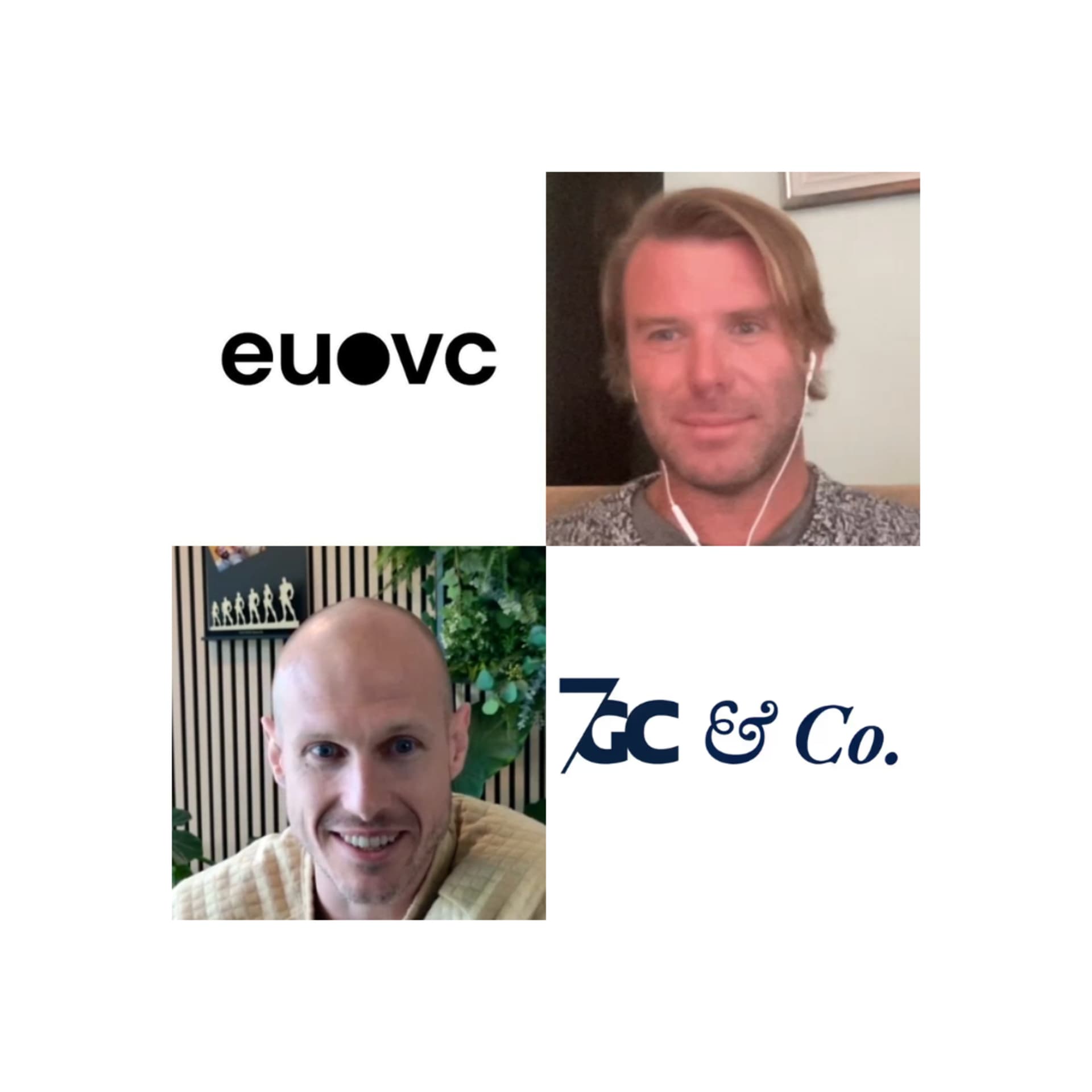
Podcast Notes: EUVC - Episode E661 | Jack Leeney, 7GC
Episode Overview In this episode, Andreas Munk Holm interviews Jack Leeney, co-founder of 7GC, a transatlantic growth fund that bridges Silicon Valley and Europe. The discussion revolves around several pressing topics in the European VC landscape, including the AI supercycle, IPO dynamics, and the challenges of mergers and acquisitions (M&A) in Europe.
---
Key Themes and Discussions
- 7GC's Unique Investment Approach
- Transatlantic Model:
- 7GC operates with a dual-continental strategy, primarily investing where liquidity exists.
- Their investor base largely consists of European limited partners (LPs).
- Market Positioning:
- Focus on high-return markets, emphasizing infrastructure and platforms as primary investment areas.
- The AI Supercycle
- AI Investment Landscape:
- Jack categorizes AI investments into different layers: infrastructure → platforms → horizontal applications → vertical applications.
- Emphasis on the distinction between hype cycles and actual compute cycles.
- Current Market Dynamics:
- Jack believes we are witnessing a true compute cycle with significant long-term potential.
- The demand for AI is seen as rapidly growing, with early adoption still in its infancy.
- Comparative Analysis of AI Companies
- OpenAI vs. Anthropic vs. Mistral:
- Discussion on how these companies are positioned in the market, with OpenAI dominating the consumer space and Anthropic focusing on enterprise applications.
- Response to Competition:
- The competitive landscape is characterized by hefty investments and rapid growth, particularly in the enterprise sector.
- Navigating Regulatory Challenges
- EU AI Act:
- Jack expresses skepticism about the efficacy of the EU AI Act, suggesting it may not adequately capture the nuances of AI technology.
- Regulatory frameworks need to evolve alongside technology to avoid stifling innovation.
- US vs. EU Regulation:
- Jack challenges the notion that US regulation is more favorable for AI development, citing potential overregulation and its implications.
- IPOs and Market Liquidity
- US IPO Trends:
- Jack notes a resurgence in IPO activity in the US compared to a more dormant European market.
- Factors influencing IPO windows include market conditions and seasonal variations.
- European IPO Challenges:
- Lack of significant IPO activity in Europe, with high-quality companies often opting for US listings due to better market conditions and investor access.
- M&A Landscape in Europe
- Missing M&A Flywheel:
- Jack identifies a critical gap in large-scale M&A activity in Europe, noting the absence of transformative deals that could stimulate the ecosystem.
- Market Fragmentation:
- The conversation highlights the need for European corporates to engage more actively in the VC ecosystem to boost M&A activities and liquidity.
---
Key Takeaways
- AI is in a Compute Cycle: The current investment landscape reflects a genuine compute cycle with the potential for massive value creation, particularly in infrastructure and platforms.
- Regulatory Nuances Matter: The effectiveness of regulations like the EU AI Act is still uncertain, and successful navigation of these waters is crucial for European companies.
- IPO Opportunities in the US: European companies often pursue US listings due to more favorable conditions, indicating a need for improvements in the European IPO environment.
- Importance of M&A: The lack of large-scale M&A transactions in Europe is a barrier to growth and liquidity, necessitating an increased focus from corporates and investors.
---
Conclusion Jack Leeney's insights shed light on the evolving landscape of European VC, particularly in the context of AI investments, regulatory challenges, and the overall market environment for IPOs and M&A. His perspectives emphasize the need for strategic adjustments and increased collaboration between European growth companies and established corporates to enhance market dynamics and drive growth.
Written by AI. May contain mistakes. Listen to the episode to check what was said.
Transcript
Automatic transcript. May contain errors.0:00Welcome back everyone to another episode of the EAVCast podcast. Today we're joined by Jack Jack Leamy, co-founder of 7GC and a transatlantic powerhouse inventor. From IPOs at Morgan Stanley to leading Telephonicus US venture efforts, and now backing AI giants like Anthropic while bridging European and US ecosystems, Jack's journey is nothing short of remarkable. We'll dive into what it really takes to operate globally, the hard truths of AI investing, and the evolving IPO landscape, all from someone who has seen cycles from every side of the table. Before we start the show, a quick note. If you're building or running a fund, you know it takes the right partners.
0:35At EUVC, we only work with sponsors we truly believe should be part of your tech stack. Please do take a moment to hear about them. And if you do, reach out, mention EUVC. It's the best way you can support what we do. Thank you so much. Starting off, HSBC Innovation Banking. If you're a founder, a scale-up, or a VC, you need a bank that actually understands your world. HSBC Innovation Banking backs innovation globally from seed to IPO and if you ask me a strong banking partner like HSBC belongs in your stack. If your portfolio companies are scaling they need infrastructure that won't slow them down.
1:09Google Cloud Starter Program offers$2 ,000 to$350 ,000 in credits plus technical support to build better and faster. It's a key boost every fund should bring into their ecosystem and oh my god are we thankful to be partnering with them. Now legal is a space you cannot lag on. Legal needs to move at the speed of venture. Goodwin's team has decades of experience with startups and funds. They're trusted at every stage from formation to exit. Goodwin definitely is a legal partner every serious manager should have in their stack. For Luxembourg-based VC, PE and Fund of Fund managers, modern funds means going digital.
1:47Fundcrafts gives you a full service digital native platform built for today's European managers. It's a must-have if you're scaling smart. So we all hear about the Middle East, how about you go there? From AI to deep tech to sovereign funds, Guy Tech in Dubai is where global future of tech gets negotiated. It's not just a conference, it's where East meets West, capital meets innovation, and the bulls set the agenda. If you're playing on the global stage, join us going to Guy Tech this year. If you're gearing up for your next fundraiser and want a placement agent who truly understands emerging managers, reach out to C-Funds, their boutique placement agency that has helped GPs across here, brace camera from top tier LPs.
2:22We've been on the other side of the table here, they are actually good ones to work with. So I do urge you to go to cfunds.io to go and check them out. And hey, before you go, if you're looking to discover startups, raise capital, connect with innovation leaders, do check out dealflow.eu, the EU-backed platform, bridging founders, VCs, and corporates. There's no better place to find the startups that have received significant funding from the European innovation ecosystem.
3:01This show is not investment advice and the hosts of this episode may be invested in the funds and companies featured. Welcome to the pod, Jack. Hey, thanks for having me. So for those that want the big background on 7GC, we did an episode about a year ago with Jack's co-founder, Paul Stephens, who is also running Moonfair. So let's not dive into that too much, but just to brush it up for everyone, Jack, say it really quick. What does 7GC do? Yeah, without a doubt. So we are a multi-stage venture investor from day one, have been built with the team split between really California and Europe. And so Stefan and my co-founder at 7GC, both of us were coming from backgrounds where we had either been based in Europe and spent a lot of time working and investing and sort of through the ecosystem in the U.S.
4:00or vice versa. You know, I've spent my whole career in Silicon Valley and investing in tech and then, you know, tech banking beforehand. Right before we launched 7GC, I've been running a venture program for Telefonica, but in the U.S. And a lot of what we had thought in our original strategy and what we really set out to do was we wanted to build a global venture firm. But frankly, in markets where we thought we could generate the highest returns and the highest liquidity. And so we spend most of our time investing in the U.S. We invest in Europe as well. And then how we deliver an international perspective or, you know, what are the teams doing in the different geographies is the majority of the capital we've raised and the limited partners that have been with us for the last few funds are actually all based in Europe.
4:49And we spoke about that value add. It's a very typical one for a European-based firm, so to say, or at least a routinated firm to bring the value add of helping bridge over to Europe in the growth stage companies that they invest in the US. Tell me a bit about the dynamics of deals happening in the US right now when we talk about AI. Because it's what everyone talks about. Does this really make sense? How do you make it make sense inside your firm? Sure. There's a lot to unpack. And I would say the way we try to look at it is there's many different flavors of just saying sort of blanket AI. It's really, it'd be like going back, you know, 30 years ago and just saying internet investing.
5:35Well, that can mean a lot of things. That can mean a lot of things from the app level all the way down to the chip level. And I think the way we've approached it before, you know, what is it now, sort of two, three years since ChatGPT has taken over the conversation and is in every press article and is really sparked this kind of global awareness of AI. But, you know, this is an 80-year-old topic. Like Alan Turing was talking about AI. And more specifically, if you just think about what was going on in the market when all of this sort of fever pitch and hype took a hold, Google, Facebook, Microsoft, and then Alibaba, Tencent, and Baidu had already been devoting billions of their R &D budget to machine learning, neural networks, you know, the predecessor to all these things that are, you know, now these LLMs we kind of take for granted and have scaled dramatically in that time period.
6:27But this wasn't new, so to speak. The theme had been, you know, really already kind of consuming a ton of capital. And it was before NVIDIA was really able to be, you know, the beneficiary of what's been all this surge in demand. So from our point of view, we sort of said, all right, step one, is this a hype cycle or an actual compute cycle? We've seen both, but the compute cycles are more rare. However, they generate, you know, upwards of trillions of dollars of value. we started to see coming out of a really, really difficult market. I mean, the kind of post-COVID, post-zero interest rate period was the most hubris we've seen since 1999.
7:05The valuations, the amount of capital, the scale, and frankly, the asset quality. Everything was in the wrong direction. And then at the beginning of 22, the bottom really started to fall out, which was around the same time you saw very, very well-regarded venture investors invest at eye-popping valuations into no-revenue research companies focused on AI. And you're kind of scratching your head saying, have we learned nothing? What is this? Is this sustainable, et cetera? Anyway, long story long, we sort of spent our time understanding how it was developing, seeing what the commercial opportunity could be, which is really hard to sort of put your finger on.
7:47I mean, now it's so easy to, in hindsight, and sort of say everyone's a genius. The point of view we ultimately took is this absolutely is a compute cycle. It has the potential to be massive. You look at the sort of macro trends and compare it back to cloud or compare it back to the move from desktop to mobile. And you sort of say, how big is the TAM? What's the adoption like? How are people spending? And I'm a big believer of the history doesn't repeat, but it rhymes. And we said, this really has the elements of, it could be something huge. Now, it's different. Just cloud in its most simple form.
8:25I mean, the whole cloud revolution or evolution was all about efficiency, even down at the chip level. You know, Moore's Law is still going gangbusters 30 years on. How can you hack together server farms, cheaper, faster, better, using okay equipment? But basically have, you know, at its most rudimentary cost, push all this stuff online. You don't need to have it on-prem. The apps can be sort of lighter touch and sit in a browser, et cetera, et cetera. I mean, that was the whole premise of cloud. You know, with this one, it's the opposite. The spend is unreal. It's eye-popping. However, we're not building efficiency.
9:03We're building unbelievable capabilities, like truly unfathomable stuff when it comes to the capability of AI across a number of disciplines. So I think all that being said, we had to have like a bigger picture point of view before we could really dip our toe in. So we do believe it's a new compute cycle. I think it's really a super cycle as far as if you look at the penetration, the kind of scale. Nobody knows what the TAM is. You see Oracle report earnings a week and a half ago, and they just tell you revenue and spend associated with data centers is up 25 % from what we thought last quarter.
9:37So the absolute truth is it keeps the supply demand is totally imbalanced. We see it all the way down to NVIDIA. There's huge demand here. it's just starting to make its way into the real economy. What's really interesting, another kind of frame of reference, Menlo Ventures does this great survey around kind of AI usage and consumption, et cetera. And it's a little bit dated, but the report they put out at the very end of last year showed that 51 % of all prompts going into LLMs, and they do their best to categorize across private and open source and international models. But 51 % of it is being used in some co-gen or engineering capacity.
10:16What do you infer from that? It just means that we're earlier in this cycle. This hasn't really hit the real economy yet as far as the true commercial potential. With that in mind, these are usually eight to 10 year things to get to kind of a maturation. And what's also very interesting or can kind of help you decide how to spend your time is if you have a whole new compute cycle, you generally need a whole new tech stack. and from the hardware to the infrastructure software, to the platforms, to the horizontal applications, all the way up to the vertical applications. And kind of, frankly, in my opinion, in that order, that's generally all new and necessary and where you can see the value being created.
11:01So for us and kind of where things are, you've got Anthropic and OpenAI as fastest growing companies in history on a revenue basis that are sitting as pretty critical layers in this stack. I mean, they've only been generating revenue for kind of two and three years, respectively. Now, the scale is astronomical. But from our point of view, if you believe all those things, and this is sort of how we're defining the map, you know, the best place to be right now, without a doubt, is in infrastructure and platforms and, you know, horizontal software to a degree, because it is early, early days. And those companies tend to create huge market value because they're critical.
11:43And then they're also really sticky. It's not that anything's cheap. There's no bargains. But if you're looking for compounders and companies that can continue to 10x every year and kind of get to these massive revenue numbers that are durable and they'll stay, that's how we've been playing it. things higher on the stack or more in the vertical software or specific use cases or widgets or tools. There's all of that going on too. And to me, that is where the risk premium is way too high or the valuations are a bit more nonsensical. So I think at the end of the day, it's really all just about positioning for where you are in the cycle.
12:21And if you can find the companies that are going to continue to just capture a ton of market share as this all rolls out. I have questions around how, and you kind of alluded to many of the underlying answers, I think, but if we just take Anthropic as one case study because you're invested there. I'd love to ask you, how do you kind of make sense of all of, like when we're standing here as bystanders, we can kind of see one week Anthropic is projected to be the next big thing. And then the next week after they're like, it seems like all the commentators are saying it's going to be only OpenAI and Google.
12:59And then the next week after you hear that Google no longer like has no play at all. It's all going to be, you know, meta and OpenAI. How do you manage to kind of zone out from all the chatter that's in the ecosystem and focus on what you know about Anthropic? Sure, sure. Without a doubt. Look, I think the easiest way or the best way to try to separate the signal from the noise is just how can you understand the market positioning and sort of the data to support it. And for the last two years, whether it's within Google and Meta or whether it's private companies like Anthropic and OpenAI or Mistral, which is definitely worth noting, it has been an arms race without a doubt.
13:46I mean, the capital velocity required to have these companies sort of get to the or continue to be on the bleeding edge of what the technology is capable has been immense, like nothing we've ever seen. You know, the burn associated with these businesses is hard to wrap your head around. And like OpenAI, for example, has said with their last round that it's going to take another$100 billion before cash flow positive in 2030. I mean, that's$100 billion is twice the size of the biggest public IPO ever. Like these numbers get thrown around casually. We're in a whole different environment. And I think what has made sense to me or the way we look at the environment now is, you know, the war has already been fought.
14:31And there are winners within the key elements of the market around the world. So if you look at what I would say is most of the Western world, I mean, OpenAI has really hands down one consumer. And it's by the last sort of numbers I heard were the revenue is 85 % north of consumer. And I think their goal is to be a lot of things to a lot of people. And they talk about enterprise and sort of coding development and everything. But if you just boil it down to the big picture numbers, it's a consumer company. It's one consumer. They've absolutely killed it on consumer. I think their paid consumer user growth last year was 8x.
15:07Or sorry, within the last year, so last 12 months. I mean, that's just a runaway train. You know, that's kind of Google-like sort of historic patterns. And on the contrary, you know, Anthropic without a doubt, I think has won the enterprise and is whether you're using it in, you could define like enterprise as really just any corporate customer. and a ton of that usage has been coding assistant and just kind of coding related platforms. And it's just Fortune 500 companies that need to buy something enterprise grade, can be deployed at the CIO level, can sort of fit within their framework and their security and understand the huge complexity of systems being used in an enterprise.
15:48I think Anthropic has absolutely done that. So on the private company landscape, you have those two. Then you have other just realities of the world we live in where the EU from the EU political climate has been more in front of how they want AI to roll out. And it's quite clear that Mistral is the business that will be the biggest beneficiary of the framework sort of the EU wants AI to be delivered in. And whether that's protected or covered it. And look, it's worth noting, all of these models from a pure tech or academic point of view, I mean, they're all best of breeds. These companies are all building Ferraris off the assembly line.
16:31There is no deviation on the margin, and it does vary. But it's not like there's been a massive dispersion in really the quality of what people can do with these. Now that, in my opinion, the capital wars are kind of over, the people who have won their area in the world or their area of the market have already happened. And it's worth noting, you have these huge, you asked about Google. you have these incredibly high quality models that sit within huge corporates too. And I think a bit more about the Chinese ones. I mean, the capabilities with them, which are largely in within the Alibaba, Bytee, Tencent ecosystems, they're incredibly strong.
17:12But that will also exist in China, for China, under a China watch. And I think they will, that's just sort of the reality for the rest of us. And then, you know, last but not least, you have Lama and Google, which have other realities. The Google, you know, Gemini and Bard and the sort of LLM framework they have, that all has to still exist within a profit generating cloud division of a public company. You know, they have to have this be integrated, it has to be cross sold. They don't have the luxury of putting$50 billion rounds together when they feel like it to sort of subsidize what is market share growth.
17:53Defensive play is not the wrong word, but it's more of a piece of their product suite they have to have to stay relevant, but they have totally different business realities. And the one that's kind of confounded me the most is Llama because their approach from day one, which is also a top product, was to just give it away for free. And they did that because they don't sell their cloud. I mean, Meta's cloud is on par with what Microsoft and Google and Amazon can offer, like as far as the scale goes. And they all, you know, those companies all have cloud businesses because they built such complex infrastructure for themselves.
18:31Meta never sold their infrastructure externally. It's only been for their benefit, but they are of the same scale. And my opinion was they decided to give Llama away from free because it was a completely defensive move against their other major competitors. They thought they could take the market share and kind of, you know, own a lot of that customer and keep them in their environment. But I'm very curious as to how long that will continue to make sense. You know, they're subsidizing all of that for, you know, the benefit of anyone who wants to use it. And I mean, I think it's because it's giving them faster development cycles that it's open source.
19:06So it's being used by more so they get more feedback. And I suppose so. I'm not, you know, I'm not really a big believer of open source software, frankly. And if you look Historically, Red Hat and Linux and things like that, it's very, very tricky. They're in a unique position. The company does how many hundreds of billions of revenue a year and has the profitability and the scale to be in a position to subsidize this. But I don't understand how it'll make sense forever. They obviously have the insights and are able to leverage everything that comes back from all the training and inference that happens on their open source.
19:47platform, but it's still at a very significant cost. Okay, then let me ask you something, because you're, of course, investing across the Atlantic, and you've also invested here in Europe in poolside and fluid stack. I'd love to ask you, how do you think about European competitors in the AI space? Do you think of it completely same terms as if it was a US investment, or are there parts that you're a bit more aware of? Like a founder point of view, a talent point of view, And now if it's AI, we're really talking about data scientists, not engineers, which is nuanced. The data scientists and PhDs that develop AI are not your average engineer.
20:29It's a very different kind of day-to-day. And also how they kind of collaborate in packs and come out of different sort of centers of excellence. It's not just sort of hiring engineers in the open market, so to speak. But I would say on that level, on a human level, there is no difference between the US and Europe. I mean, the talent and the intelligence is negligible. There's great people everywhere. And I think that's been a very, very exciting kind of last couple of years to see the things that have come out of Europe or have been primarily developed here. From an investing point of view, and when we think about capital and liquidity and valuations and sort of a whole myriad of investing decisions you have to come into, I think what we're looking for is with any business we're backing is what markets are they selling into?
21:17What are we underwriting from a value point of view today? And then at the end of the journey, how are we generating liquidity and what are our expectations there? So, you know, the two businesses you mentioned are incredible companies. We're thrilled to be partnered with them. And what you'll see from both of them is they've been very, I mean, international isn't the right word because they're really just European and U.S., you know, from the management team down companies. And you've seen them both commercialize and sell at huge scale, but from the early days in their journey within both markets.
21:53So in instances like that, it's a lot easier for us to have an exit thesis as it's kind of a global company from day one. Or maybe not to give such a PG answer. I think what's harder is when we find, you know, we could be blown away by the quality of the team and sort of the success of where they are. But if it is operating within one market in the EU and maybe has only garnered interest from a local area, it would need a lot more for us to understand how can we sort of see the next five years here? And is it going to get to a global scale? What are the things we have to believe in order to get there?
22:32Because the unfortunate reality is the volume and the return profile of exits in Europe is just not comparable to the US. So unless you have those other elements, it could be a great company, but it might just stay private here forever. I have to ask you about the European AI Act and how you think, because our friends in the U.S. are very quick to say that the U.S. basically decided that we don't want to have AI developed in any way. And we're going to decimate the entire sector because we've become so regulated, blah, blah, blah. You, though, have invested in both Poolside and Fluidstack that are European companies.
23:12I'd love to hear your take on, is that just over-pumped U.S. rhetoric, or is there truth to it? How do you think about it? Ultimately, the customers will decide, and it'll flow through the revenue. So, I mean, that's all that matters. and I appreciate the comment, you know, how much of this is noise and headlines and stuff like that. I mean, I think what you don't want to see, and it's very worth noting, we almost had a very similar fate in the U.S. with the last administration. And, you know, the committees and hidden committees and subcommittees that were, you know, shadow regulating fintech and crypto were, you know, conspiring to do the same within AI.
23:58If OpenAI and Anthropic were founded now and you sort of adjusted the calendar, or if there was a different political party in place kind of when they were founded, Microsoft would have bought OpenAI and Amazon would have bought Anthropic. The FCC said they couldn't. And in the absence of that, the companies invested huge amounts of capital in each of them to sort of back this critical technology. So, you know, I don't like playing this U.S. versus the EU game. It's all nuanced. And the politicians can have tremendous influence, despite I'm sure we'd all like them to just get out of the way with a lot of this stuff.
24:33So, look, I think we'll see how it ultimately pans out from the customer appetite. But if there is products and services that have what, in my opinion, would be ill-informed or artificial regulation over them, because I don't think the regulatory frameworks are properly defining what the software can and can't do or should or should not do. It's a weird situation of people regulating in the dark. They don't know what they're looking at, is my opinion. So it's a headwind you'd rather not have. But ultimately, if the quality of the product is unhindered, customers will see that and they'll buy it.
25:13And the revenue will speak for itself. So in other words, when you look at a European company in AI and you're investing here at the growth stage, which makes it interesting, I think, because at the early stage, you would always say, well, so much can happen. and blah, blah, blah. So that's why, because the AI regulation in Europe really hits hard once you get larger. So that's why I think it's interesting to hear from your side. No, I actually don't, with a European company, I don't look at the regulatory headwinds as being necessarily in any way so big that that's a significant consideration for us if we want to invest.
25:48Look, I think the way it'll play out is you're going to have EU-based champions like Mistral. and up and down the ecosystem that they will orient their strategy to play well within the EU framework as it continues to evolve, because it'll have to evolve. It's too early to put such a fine point on these things. So my guess is smart management teams will say, you know what, there's actually an edge to be partner of choice in Europe. And let's actually just sort of focus on scaling within the biggest GDP markets in Europe and kind of keep the Western companies out or at bay, or maybe even sort of block them.
26:26If the regulatory bark is more noise than actually an inhibitor and the quality of the product that comes from Europe speaks on its own, I mean, customers don't care. It's more of an investor and management team worry than customers. They won't be held back by buying good products wherever it comes from. Now, let me go to IPOs because you've got a big, you started your career in IPO land with Morgan Stanley, as we discussed before we started the podcast, not necessarily leading IPOs, but at least pairing the pitch decks. Let me hear from you, your take on the European IPO scene, as well as the current window that's opened in the US.
Read the full transcript
27:06Tell me about your big take. Right now, we've kind of finally turned a corner. And IPOs are very, very delicate products in that it really has to be all the conditions. You know, the weather forecast needs to be looking really good for anyone to want to do it. And it still is also, you know, a consideration a lot of people probably don't realize. It's still a very manual kind of hand-to-hand combat process where you are going to sort of 12 cities, 10 in the U.S., usually two in Europe. and absolutely face-to-face talking with portfolio managers and fund managers and giving them real face time with management in order to solicit big, big junkie anchor orders and partners in something that will trade well for them to work well.
27:57And the reason I say that is because there are absolutely certain times of the year where you can't do that. You can't launch an IPO in the end of August. You can't do it in certain times in the fall because there's certain religious holidays where you'll miss a lot of people. And so when they talk about the windows, it's not just the macro climate or tariffs or et cetera, et cetera. There are really specific times of the year when you kind of can and can't go public. Now is a truly wide open sort of time period. The post-summer break is usually a very good window to go out. And the volumes this year have not been what people were hoping for.
28:33Earlier in the year, I think without a doubt, totally links to, you know, with this, with the tariff program, create total kind of economic unrest. And what's worse about that is when you do something like that is it takes a quarter or two to understand in the data, whether there has been unrest, you know, it's like chasing inflation data. Anyway, look, I think from a market's point of view, there's less worry about that. And then now we also know rates have been cut and will continue to be cut. So that's pretty favorable from like a volatility point of view. And the IPO window is open. And, you know, if you look at the companies that have gone out, I think it's super interesting.
29:08You've got a real mixed bag of tech assets that have traded. It's everything from Klarna, European unicorn, longstanding, really high quality company, gone public in the US, a trend we've seen many times before as just easier listing requirements, better access to capital and more volume and breadth and depth and market. And then you have things like CoreWeave earlier this year, which barely got done, required investor support to have a deal close and clear, priced at the low end of the range. And then the stock's been through the roof all year. And it's been heavily shorted and has had all sorts of factors to play around with the price.
29:49But CoreWeave is, in its essence, a kind of commoditized infrastructure company. It's not the bleeding edge of technology, software doing incredibly complex sort of, you know, applications. It's, they're providing access to chips. It's a derivative play on NVIDIA. And no, but that's great. I mean, we have businesses that are in that world too. And then you've got, you know, Netscope, leading kind of cybersecurity company, huge scale. And last but not least, more recently as well, too, Subhub, which is one of the oldest kind of web 1.0 businesses, which has been owned by eBay, has been in and out of all sorts of different portfolios, just a regular old consumer marketplace.
30:31And they've all priced with, I think, pretty considerable demand. These are all businesses that are like, from memory, I think they've all raised somewhere between like$750 and$1.5 billion in the offering. So they're really, they're quite sizable. They're upper end of the transaction for tech, definitely for growth. And they're also, they're priced in valuations that are based in reality. These are, you know, again, roughly all kind of$5 billion plus market cap companies. So I think that's really positive. Look, I think it speaks to quality of the assets. And I think it also speaks to different investor types playing deals.
31:10It's not what would worry me or would give me a bit of pause is if you just saw all these old vertical SaaS companies from 21 rushing out immediately and going. Oh, and then, and of course, you know, Figma too. I mean, Figma is part of one of those classes and they went out. So you've got this kind of within tech and I doubt it's too nuanced, but it is a mix of offerings and deals that I would say all, you know, fundamentally went well and continue to go well. So I view that as all positive. I hope there's nothing big picture to shock the system and kind of continue getting these all out because once the big sort of higher quality or safer ones cross the chasm, now you'll start to see more of the mid caps and the small caps and the$100 million dollar deals.
31:54And that should continue. I mean, with respect to the European IPO scene, to my knowledge, basically totally dormant. And I think the big question is, where's Revolut going to go? Will they do a UK or a US? And it's a landmark asset. Wherever it goes, it'll be, I'm sure, incredibly well received. So maybe that could, if they could do that in London, that could hopefully be some sort of a bellwether event or catalyst for maybe some more EU listings. But I think for the best European assets, it's kind of a hard choice to not pick a U.S. exchange just because of the quality of the trading and the investors.
32:38Let me ask you, Jack, not to put you on the spot more on especially Revolut. I'd love to ask you, what are the principles that you have inside 7GC for when an IPO happens? Do you keep the stock? Do you sell it to the, do you give it back to the LPs? How do you deal with that? Sure, yeah, no big secret there. As soon as the lockup is up, we give LPs the option to receive stock or cash. It's just a different job. I don't want to pretend to play hedge fund manager. God forbid it went wrong, then it's all on me. I think our investors are all smart folks. that can make that decision on our own. And let me ask you this, because you said it's a different theme, and yes, it is.
33:23But on the other hand, you can also argue that you hold companies as Anthropic that are private, that are worth far more than any of these companies that are going out. So in a way, you could argue, at least from a valuation standpoint, and probably also liquidity of Anthropic is almost similar to at a stock exchange with a very liquid secondaires market in the well-performing AI companies. So how do you think about that? It's without a doubt a factor. I think for us, the general high-level underwriting for companies we like to partner with is they should be between 10 and 50 million revenue when we start to invest.
34:05And God willing, that all gets astronomically higher. But even with Ananthropic, we invested with them the first quarter they turned revenue on. Now, it went from zero to 100 million in a quarter, but still is those early days of scaled revenue. When it is much later stage like that, and you're talking multi-billion in valuation, that's a huge consideration for us. We want to see that there is, hopefully, a relatively active secondary market. because if you're investing privately, if you're investing privately in an asset north of a billion, what you've basically said to yourself is it's going to be one of the top 10 M &A trades of the year or it's going public.
34:48You've boxed yourself out of a lot of where the liquidity market is. You know, 90 % of venture-backed exits are M &A. And the median M &A price, it varies year to year. And last year, a lot of the values were unreported. But like the median is around like 750 million in value. So if you're doing anything later stage, and I'd call that post a billion dollars in valuation, you're really betting on a thin set of viable outcomes. And what's the world going to look like when they want to go public? So without a doubt, secondary markets have become incredibly important. I think there's so much more to do.
35:26I was at a conference not long ago and there was a gentleman on a panel who said the amount of secondary volume compared to all dry powder and fundraising in private equity is basically 1%. So the inputs don't match the outputs. There's no reason why it shouldn't continue to grow. I think the unfortunate reality is the public markets have really failed investors. and I think a lot of management teams as far as how they want to run their companies and what sort of requirements are obliged upon you for this, you know, perceived benefit of being public and having liquidity. I mean, ultimately how it shakes out over the next 10 years is, in my opinion, I think all the value is being created in private markets in the absence of like the top 10 public companies.
36:18The idea that we're going to just always be beholden to unpredictable timelines or interest areas with M &A or the viability of IPOs, it's just not going to continue to be sustainable. And there's tons of investor interests to participate at a secondary level. So we'll see. But sorry to go on and on a bit of a long-winded answer to a simple question. Secondary activity is hugely important to us when looking at later stage companies. Yeah, I could imagine. Let me ask you, because you've advised quite a few governments over your time, I'd love to hear kind of what your take is on what's most important to get done in Europe now.
37:00We have so much happening at the growth stage. You're one investing out of a fund that's primarily backed by European families and you're investing primarily in the States. What do we need to get right, get better in Europe for you to put more of your focus here? I think there's no silver bullet. These things are nuanced, but it is interesting to kind of look at the two markets and what has worked really well and what puzzle pieces are maybe still outstanding. And the biggest hurdle without a doubt is liquidity. And just kind of go backwards and some of the comments I was making about M &A versus IPO.
37:37The thing I don't understand is the lack of scaled M &A in Europe. And take in vogue space, like the amount of incredible fintech companies that have come out of the UK and Germany and just across the continent. And you've not seen that sort of multi-billion M &A from a traditional banking sector or even an investment banking sector where they've had a number of issues to tackle with and a customer base that's migrating and volumes dropping. And, you know, you would think the large strategic acquirers would be incredibly interested in what the innovative fintech businesses are doing here. And there should be these, you know,$2 billion M &A events at kind of leading European banks, et cetera, et cetera.
38:20And that hasn't happened. And I don't know why, and I don't know how to fix that, but that would be a huge catalyst. And this is a bit of a funny example or a parallel example, but if you just looked at the U.S. venture environment, which has been around for longer, And, you know, we all know about Silicon Valley, et cetera. But for the longest time, for decades, all the funding activity was in the Bay Area. And Boston was clustered around research centers and universities, the Stanford's and the Harvard's of the world, a bit more of a biotech bent in Boston, a bit more of a software bent in the Bay Area.
38:56A tremendous amount of kind of big, big acquirers in both the health care and the tech scene, you know, within both of those markets and a feedback loop of returning a capital. And it sounds a bit soft or qualitative, but, you know, there's angels that are constantly being refreshed with huge paydays. There's employees that have, you know, have had a life-changing event and then go on and become founders. There's venture capitalists that now have more sort of success and muscle memory under their belt, and they will be more prolific, you know, as a result of that, you know, to state the obvious.
39:28But the capital has to be recycled. And in the States, for years, New York was pretty de minimis for venture and tech activity. You saw some ad tech things, some consumer tech things, but not a place where the best investors in the world were. Also not a place that was a real hotbed of innovation. And it's a financial capital of the world. It's the home of Wall Street. There's more money in New York than God. And what we saw, or I think what the real catalyst for that changing New York in the last 10 years has been gangbusters. And I believe it's a result of Google buying DoubleClick. There was a multi-billion dollar exit.
40:06You had all these angels pop up. You can trace the provenance of New York venture funds back to that exit. And it really, really does matter. It creates a cycle. And so I think that is, you know, just working backwards, that's what we're kind of missing in Europe. A few more, a few more often, I don't know what it's going to take to change that. But to have some of that transformative M &A happen, I think would be incredibly positive for the ecosystem. You know, the IPO environment here is always going to be trickier just because the exchanges, there's less breadth and depth in the market. It's just a factor of being smaller.
40:44I mean, NVIDIA is almost worth the same size as all UK lists of equities right now. But the listing requirements are more onerous and it's a bit more of a burden of time and cost to sort of go through a European offering versus a U.S. offering. So that is why you see the Clarnas of the world sort of go to the U.S. And that's structural. That could be changed. That's going to take the will of the counterparties to sort of attract great companies and do that. But just going backwards, maybe to be a bit more positive, what has happened and what does take time is the influence of the EIF and other investment programs at the kind of state level, I think really has been transformative.
41:27They've been able to, like in a smaller ecosystem or a smaller environment, there's always going to be angel investors, seed investors, you know, enthusiasts, and then series A funds. And just because of the scale, it's just the quantum of capital and what do you need to believe and what do you need to get there? And in a very, very short amount of time, as far as looking at a whole ecosystem rolling out, you know, the EIF, as well as the British Business Bank and, you know, KFW in Germany and some of these other programs, They have come in with some pretty investor-friendly and kind of aligned structures to create all the stages in a stage financing.
42:03And the growth piece is the most important because you weren't seeing international investors come in and jump on the Series B and C winners. So all of that is tremendously positive. And now you have, I think, a unicorn class that sort of matches the opportunity, matches the population. You look at the underlying performance of these companies, they're fantastic. They're great margins, great growth. They're businesses that have completely successfully kind of scaled across all the markets and all the nuance that exists here. but you're missing that last piece of the puzzle to recycle it all back and ultimately call it a victory and sort of have that expansion of the activity as a result of the victory.
42:47So we'll see. It's interesting because you say the exact same thing as my good friend, Japa Hoyer, who we're doing a series of CVC podcasts with. And he says exactly that part around the M &A market in Europe. For some reason, it's not entirely missing, but it's just not as active as you would expect. And we got to get the big corporates in Europe, the banks as well, more involved in the tax scene and in the M &A market. So that was interesting to hear that you point to the same thing. And it's junky, too, at the end of the day. Like venture is not investing in fixed income. Like there's big, giant, disparate outcomes that could create half of the volume for the year.
43:31You know, Google buying Whiz for what, 20 something billion. I mean, that will be a huge percentage of the M &A volume for the year. So it's not an incremental thing. It has to happen at scale. And you have these kind of lumpy, big, almost like big movie premiere outcomes that really can, you know, carry the tide for a few years or, you know, then you see the effects compounding years after. Amazing. Jack, thank you so much for coming on the podcast today. It was super interesting to get the growth perspective of someone investing on both sides of the Atlantic. Thank you so much, my friend. Andres, thanks a million.
44:06This is a lot of fun. Before we start the show, a quick note. If you're building or running a fund, you know it takes the right partners. At EUVC, we only work with sponsors we truly believe should be part of your tech stack. Please do take a moment to hear about them. And if you do, reach out, mention EUVC. It's the best way you can support what we do. Thank you so much. Starting off, HSB's Innovation Banking. If you're a founder, a scale-up, or a VC, you need a bank that actually understands your world. HSBC Innovation Banking backs innovation globally from seed to IPO. And if you ask me, a strong banking partner like HSBC belongs in your stack.
44:43If your portfolio companies are scaling, they need infrastructure that won't slow them down. Google Cloud Starter Program offers$2 ,000 to$350 ,000 in credits, plus technical support to build better and faster. It's a key boost every fund should bring into their ecosystem and oh my god are we thankful to be partnering with them. Now legal is a space you cannot lag on. Legal needs to move at the speed of venture. Goodwin's team has decades of experience with startups and funds. They're trusted at every stage from formation to exit. Goodwin definitely is a legal partner every series manager should have in their stack.
45:18For Luxembourg based VC, PE and Fund of Fund managers, modern funds means going digital. Funcrafts gives you a full service, digital native platform built for today's European managers. It's a must have if you're scaling smart. So we all hear about the Middle East. How about you go there? From AI to deep tech to sovereign funds, Guy Techs in Dubai is where global future of tech gets negotiated. It's not just a conference, it's where East meets West, capital meets innovation and the bold set the agenda. If you're playing on the global stage, join us going to Guy Techs this year. If you're gearing up for your next fundraiser and want a placement agent who truly understands emerging managers reach out to cfunds their boutique placement agency that has helped gps across your brace capital from top tier lps we've been on the other side of the table here they are actually good ones to work with so i do urge you to go to cfunds.io to go and check them out and hey before you go if you're looking to discover startups raise capital or connect with innovation leaders do check out dealflow.eu the eu-backed platform bridging founders vcs and corporates.
46:18There's no better place to find the startups that have received significant funding from the European innovation ecosystem.
From the publisher
This week, Andreas Munk Holm sits down with Jack Leeney, co-founder of 7GC, the transatlantic growth fund bridging Silicon Valley and Europe and a backer of AI giants like Anthropic, alongside European rising stars Poolside and Fluidstack.
From IPOs at Morgan Stanley to running Telefónica’s US venture arm and now operating a dual-continental fund, Jack shares how 7GC reads the AI supercycle, why infrastructure and platforms win first, and what Europe must fix to unlock the next wave of venture liquidity.
🎧 Here’s what’s covered:
02:00 7GC’s transatlantic model: investing where liquidity lives
05:00 AI’s stack order: infra → platforms → horizontal → vertical
10:40 Hype vs. compute cycles: why this time is different
11:30 OpenAI vs. Anthropic vs. Mistral: the new map of winners
17:40 Llama, open source, and Meta’s defensive play
19:00 European AI bets: Poolside, Fluidstack, and dual-market strategies
22:40 The EU AI Act: noise, nuance, and why customers still decide
26:30 IPOs are back: US windows, European silence
33:00 Liquidity, secondaries, and when 7GC hands stock to LPs
37:40 Europe’s missing link: scaled M&A
43:00 What policymakers and corporates must do next


