
In short
EUVC Podcast Episode Notes
Episode Overview
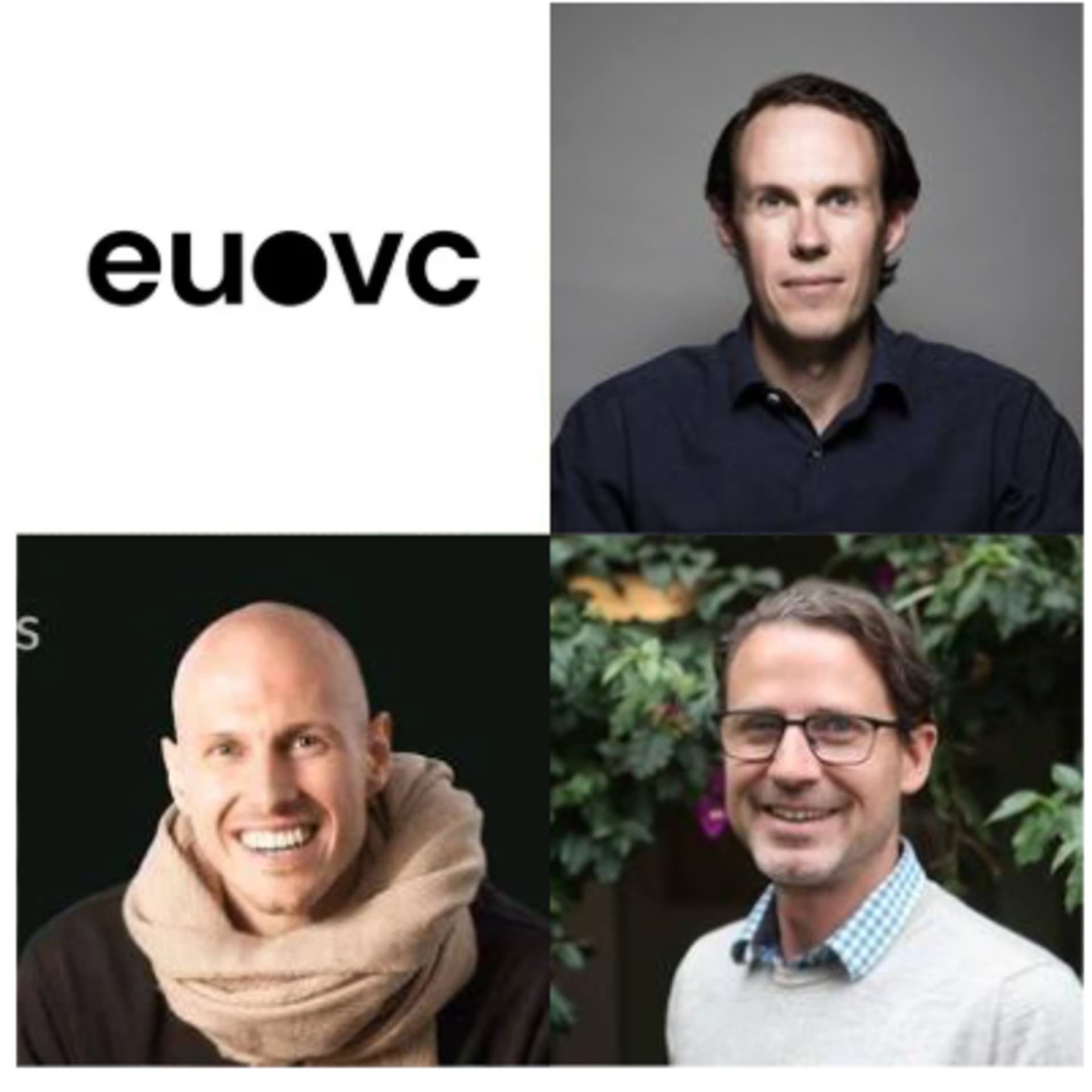
- Title: E682 | Sean Mullaney (Seapoint) & Will Prendergast (Frontline Ventures): Rebuilding Europe’s Startup Financial Stack with an AI-Native Playbook
- Description: In this episode, Sean Mullaney, Founder & CEO of Seapoint, and Will Prendergast, Founding Partner at Frontline Ventures, discuss the challenges of the current European startup financial landscape and how Seapoint aims to revolutionize it with an AI-first approach.
Key Participants
- Sean Mullaney: Founder & CEO of Seapoint, with previous experience as CIO at Stripe.
- Will Prendergast: Founding Partner at Frontline Ventures, with extensive experience in venture capital and supporting startups.
Main Topics Discussed
- The Mission of Seapoint
- Goal: To become "the financial home for European startups."
- Current Context: European startups are facing a fragmented financial stack, leading to inefficiencies and confusion.
- Challenges Faced by Founders
- Fragmentation: Startups typically use several financial tools (banks, expense management, accounting software) leading to a lack of clarity and real-time visibility on finances.
- Founder Pain: Many founders express frustration with current systems, often having to manually reconcile data from multiple sources.
- Solution Proposition
- AI-Native Development: Seapoint’s approach is to create an AI-first product suite that can automate financial processes and provide a cohesive financial management experience for startups.
- Productivity Gains: With the use of AI, senior engineers can deliver features faster and with fewer personnel.
- Cultural and Structural Changes in Startup Teams
- Team Composition: The shift towards hiring more senior, generalist team members who can handle ambiguity and take ownership of their work.
- Work Philosophy: Encouraging a culture of experimentation and curiosity among team members to foster innovation.
- Investor Perspective
- Frontline Ventures' Approach: Will Prendergast shares insights on how Frontline identifies promising startups and the importance of having a supportive investor network.
- Funding Strategy: Discussion on the implications of increased productivity and the potential to raise larger funding rounds due to higher ROI with fewer resources.
Key Takeaways
- The Need for a Unified Financial Solution: The fragmented financial landscape creates significant hurdles for European startups, highlighting the necessity for a robust, integrated financial solution.
- AI as a Game-Changer: Embracing AI not only enhances productivity but also alters hiring strategies, focusing on a more senior workforce capable of navigating complex challenges.
- Importance of a Supportive Investor Network: Investors must not only provide capital but also actively assist in the startup's journey by sharing insights and facilitating connections.
Important Moments
- 01:07: Introduction to Seapoint’s mission.
- 03:32: Moment of conviction for Frontline Ventures to invest in Seapoint.
- 06:24: Discussion on the pain points experienced by founders related to fragmented financial tools.
- 12:19: Comparison of the European financial landscape with that of the US.
- 19:33: Productivity insights emphasizing that increased efficiency does not equate to reduced funding needs but rather expands ambitions.
- 40:23: Future vision of Seapoint to support mid-market companies with enhanced financial tools.
Conclusion The episode provides deep insights into the challenges faced by European startups in navigating the financial landscape and illustrates how Seapoint aims to transform this experience through AI-driven solutions. It also highlights the vital role of supportive investors like Frontline Ventures in fostering innovation and growth in the startup ecosystem.
Written by AI. May contain mistakes. Listen to the episode to check what was said.
Chapters
Tap a time to open that second in VOIntroducing Seapoint and Its Mission
0:45 to 3:25
Discussion about Seapoint's goals and the founders' backgrounds.
“If you're building or running a fund, you know it takes the right partners.”
Scaling Financial Processes with AI
14:00 to 15:06
Learn how AI can automate financial processes for scaling startups.
“And it's really approaching the financial processes that a founder, a startup that's scaling has to adopt.”
Technical Discovery in AI Development
15:07 to 16:44
Explore the importance of technical discovery in developing AI products.
“Every three or six months, the models change, the architectures change with agents.”
Impact of AI on Startup Development Speed
16:45 to 17:55
Understand how AI influences development speed and team structure.
“with a small team in a short period of time.”
Rethinking Investment and Ambition in Startups
17:56 to 19:42
Discover how increased productivity from AI changes funding strategies.
“But you've said very clearly, well, here we're shipping faster and we're shipping with fewer people.”
Navigating the Emotional Roller Coaster of AI Productivity
19:43 to 21:26
Learn about the emotional aspects of realizing productivity gains with AI.
“So we're kind of going backwards again in order to go forwards.”
Evolving Talent Needs in AI-Driven Startups
21:27 to 23:15
Understand the changing talent requirements in startups adopting AI.
“And if we understand that and where it intersects with that, now we're on the path to true productivity gains rather than prototype productivity gains, which is where we were six months ago.”
The Shift in Engineering Roles with AI
23:16 to 24:58
Explore how AI alters the roles and responsibilities of engineers.
“It's interesting to hear, Sean, because we're literally now hiring on the content creation side.”
Optimal Hiring Strategies for AI Startups
24:59 to 26:55
Learn about effective hiring strategies for startups leveraging AI.
“Actually now that you're, you're more like a staff engineer or engineering manager, and you have like multiple junior developers who you're coaching who are the AI agents.”
The Role of Founders in Managing Senior Teams
26:56 to 28:00
Discover how founders can effectively manage senior teams in startups.
“and are curious to use the new tools and discover how to do their jobs again.”
Show all 18 chapters
The Evolving Role of VCs in Founder Collaboration
28:00 to 29:00
Learn how VCs are adapting their strategies to support founders in the AI age.
“And they're obviously still things that a founder is uniquely placed to do.”
Learning Faster: Strategies for Founders and VCs
29:00 to 30:20
Discover methods VCs use to accelerate learning among their portfolio companies.
The Importance of Technical Mindsets for Founders
30:20 to 32:00
Understand why a technical mindset is crucial for modern founders.
“It's just trying to figure out who in your portfolio of companies is further ahead on a certain topic.”
Funding Needs in a Changing Market
32:00 to 34:20
Examine the evolving funding landscape and its implications for startups.
“And, you know, turning up on a Monday morning and going, hey, look what I hacked together this week.”
Building an Effective Investor Syndicate
34:20 to 36:20
Learn how to strategically assemble an investor group for your startup.
“And I think it will follow that kind of cloud moment.”
Leveraging Angel Investors for Success
36:20 to 39:20
Explore the role of angel investors in startup ecosystems.
“is a large amount for a company at this stage.”
Sean's Vision for Financial Infrastructure
39:20 to 42:03
Discover how Sean aims to revolutionize financial infrastructure for startups.
“So, you know, our much wider mission is to help all of your kind of mid-market and enterprise customers with great software.”
The Resilience of Founders Post-COVID
42:03 to 42:22
Learn about the journey of a travel company that thrived after COVID.
“across across europe and it's uh you know it's a it's a travel company that survived covet came out the far side and got through to a 6 billion IPO and NASDAQ.”
Transcript
Automatic transcript. May contain errors.0:00Welcome back everyone to the European Easy Podcast. As you know, we're trying to go behind the craft of building and backing venture-scale companies in Europe. And today we're joined by Sean Mullaney, former CIO at Stripe and now co-founder at Seapoint. And Will Prendergast, founding partner at Frontline Ventures. Seapoint has just come out of stealth with$3 million pre-seed to rebuild the fragile financial stack European founders and also, of course, larger-scale companies rely on. With a team shaped by Stripe, Tide and Years of Seeing, where systems break and backed by operators from Revolute, Tide and Tines, we're exploring conviction, risk and what it takes to build financial infrastructure that doesn't collapse under pressure.
0:43Before we start the show, a quick note. If you're building or running a fund, you know it takes the right partners. At EUVC, we only work with sponsors we truly believe should be part of your tech stack. Please do take a moment to hear about them. And if you do, reach out, mention EUVC. It's the best way you can support what we do. Thank you so much. Starting off, HSBC Innovation Banking. If you're a founder, a scale-up, or a VC, you need a bank that actually understands your world. HSBC Innovation Banking backs innovation globally. from seed to IPO. And if you ask me, a strong banking partner like HSBC belongs in your stack.
1:18If your portfolio companies are scaling, they need infrastructure that won't slow them down. Google Cloud Starter Program offers$2 ,000 to$350 ,000 in credits, plus technical support to build better and faster. It's a key boost every fund should bring into their ecosystem. And oh my God, are we thankful to be partnering with them. Now, legal is a space you cannot lag on. legal needs to move at the speed of venture. Goodwin's team has decades of experience with startups and funds. They're trusted at every stage from formation to exit. Goodwin definitely is a legal partner every serious manager should have in their stack.
1:54For Luxembourg-based VC, PE and Fund of Fund Managers, modern funds means going digital. Fundcrafts gives you a full service, digital native platform built for today's European managers. It's a must-have if you're scaling smart. So we all hear about the Middle East. How about you go there? From AI to deep tech to summer funds, Gaitex in Dubai is where global future of tech gets negotiated. It's not just a conference, it's where East meets West, capital meets innovation, and the bold set the agenda. If you're playing on the global stage, join us going to Gaitex this year. If you're gearing up for your next fundraiser and want a placement agent who truly understands emerging managers, reach out to CFunds, their boutique placement agency that has helped GPs across Europe, raise capital from top tier LPs.
2:36We've been on the other side of the table here. They are actually good ones to work with. So I do urge you to go to cfunds.io to go and check them out. And hey, before you go, if you're looking to discover startups, raise capital, or connect with innovation leaders, do check out dealflow.eu, the EU-backed platform, bridging founders, VCs, and corporates. There's no better place to find the startups that have received significant funding from the European innovation ecosystem. Finally, tear down this wall. It's more than just an ally. This is a union of values. Let's start acting. This show is not investment advice, and the hosts of this episode may be invested in the funds and companies featured.
3:25Sean, you just said I've pitched this a million times, so I'll ask you to do it one more time. Tell everyone what you're all about at Seapoint. Yeah. So our mission is to be the financial home for European startups. So I've spent a lot of time, I'm a founder myself. I founded three companies back in the early 2000s as my fourth business. And I had spent a lot of time with founders, both as a scout, as a mentor and advisor. and every time I talked to the founders about how they were running their business from a financial standpoint, what became clear is that there was really no clear financial stack and there was no clear financial software out there that helped them run their business.
4:03The amount of pain and frustration they were experiencing, we used to joke in our customer interviews that the level of profanity that founders would use when they describe all the different banks and spreadsheets and accountants and manual processes they had to deal with. Founders are not just like frustrated, they're just like emotionally really upset with the situation. And so I've been spending a lot of time with founders and, you know, I really thought that we could do better. So at Stripe, I kind of joined when there were about 10 folks, we built the European payment system here for Stripe.
4:34And what I realized is, is that there was a moment in time right now where we can actually build new financial infrastructure in Europe very fast because we have a lot of banking as a service and other financial partners that you can build on now. And I'd also just come off of a role where I was the CTO at Algolia, and we just implemented one of the first AI search engines. And so I knew that AI was one of the core kind of why now principles about how we could help founders automate finance in their business. And I definitely think we should get into the playbook of building in an AI native startup, because you've seen both building pre-AI and building now with AI, I imagine it's quite a different journey.
5:12Maybe, Will, you could just say a few words about your first conviction moment, the moment where you saw what Sean and team is doing at Seapoint and thought, we've got to be part of this. I guess I was lucky enough, first of all, to get to know Sean in advance of building Seapoint. We never had worked directly together on the same company, but he'd helped me out on due diligence on a bunch of companies over time. And so you get to form a view as to who's insightful about topics. And so a number of the companies that looked at it, you know, he taught me different ways of looking at those businesses.
5:44And so I thought, OK, here's a person who thinks he looks at things differently. And so when he came, you know, when he came to me with this business idea, it's funny. Often as a VC, you kind of opportunities are obvious in the market, but you see teams coming along, all approaching it in similar ways. I think back to Mark Cummins in Pointy when he came to us first it was he was trying to make offline products searchable online and you know I probably had seen five or six companies that were doing the same way and then he came along with a completely different way and we went like okay different way of doing it insights and great team and so the same was true of Sean we I think back to the Silicon Valley Bank moment where everything got kind of upside down in a couple of days and we went to all of our companies and said like where's your money what are you doing and that was a revealing moment in time people had money in lots of different places and you said okay like we're going to come back to that tomorrow it's not stressed today but it became obvious that like it was a real patchwork of what people were doing there was no kind of default answer and you started then understanding that as sean said the people going through to manage their finances so so really it was about finding a team that you felt gonna change things in a fairly significant way.
6:58And yeah, that was when we met Sean and he started talking about AI intersects with some of the infrastructure that's now available to build applications. But we thought, okay, this is the journey we want to go on. Now, Sean, let me ask you, you said it before a bit about the headaches of startup founders, but maybe you can describe it completely clearly when you ran early discovery, what were the failure points that kept resurfacing? And maybe also I imagine that the strongest example is exactly the Silicon Valley bank moment where we had everyone struggling. Well, when you talk to founders about how they run finance today, the first thing is they have a very fragmented and custom financial stack that they've built from day one in the company.
7:39So if you think about a founder who's raised two or three million, it's a seed round. They'll typically have a kind of old school legacy bank where they will store their venture investment. It's considered safe, but actually the user experience of the product is just so bad and so painful to use that they literally can't do anything in it apart from make a payment. So they turn to the neobanks and think, okay, well, this will be easier to use. And what they realize is that the neobanks make it easy to open a bank account, but actually the level of service and support and the AML policies and things like this means that actually the And Neobank doesn't help support them very well.
8:21But it has a great user experience and it works on a mobile phone. So they end up using that for day-to-day payments, basically. They then turn to an expense management and a cards platform. There, they're able to submit their receipts and do their invoices. They turn to an FX partner in order to manage multiple currencies. And finally, they look for someone to help accept payments. So someone like a Stripe, for example. And so the typical founder has probably about five different financial products that they've stitched together in the stack. And their money is scattered across each of these different five accounts.
8:54They have to pre-fund many of them. They're constantly sweeping capital between them. They have no real-time visibility of our cash position. And all of their transactions and spend are also distributed across this, like, ledger of five different banks. So then what they do is they turn to the accountants, and they bring the accountants in, and the accountants spend, you know, a lot of time at the end of the month pulling hundreds of different bank transactions from these places and trying to reconcile them, categorize them, do the bookkeeping, the that. But typically the accountants don't know the business.
9:25So what happens to the founder, you end up with a spreadsheet of like 60 transactions. You have to now support the accountant and tell them who they are, where the invoices are. And just finally, there's no visibility really on how you're running your business and what you're spending money on. You might get a PDF a few days later, sorry, a few weeks after the end of the month. And the founders really have no clue about how they're spending money and what's happening. And all of the core processes, whether it's like payroll, it's VAT, it's invoice reconciliation, it's paying suppliers, it's all done manually in spreadsheets.
10:00And the number of founders who just told us like they've forgotten to pay a supplier, it's buried in their inbox, or they didn't run payroll on time, or they're missing like half of their invoices. And the other thing is that over half of them aren't earning any interest on the millions of euros that they've received from their venture investors because it's just so hard to get a treasury account in Europe right now. And even if you do, it's a sixth account you've got to deal with. So highly fragmented, they're running this custom finance stack. And often another solution is they hire a finance person way too early.
10:32I've seen, you know, it breaks my heart to see a founder hire a full-time finance person in the first 10 people in a company. because that's a seat that a salesperson, an engineer, or a product person could be taking. Maybe you can comment a bit on that, Will, because you've seen many founder journeys as well. And thus here we have a startup that is focusing specifically on helping founders on their journey on this side of the problem. Maybe you can talk a bit to your understanding of the issues around finance and the importance of solving this. Yeah, it's funny. I think in the venture seat, you're somewhat shielded from the day-to-day fatigue that goes on with managing these things.
11:09So I think the more time I've spent with Seapoint, the more my eyes have been opened as to the waste of time that's been going on in the background. So actually, I'm motivated for many reasons. One is the financial investment. Another is just the accelerating companies where the founders aren't kind of dragged aside to kind of deal with some of this stuff. But it seems the more you spend time kind of working with Sean and Seapoint, the more obvious it becomes that, of course, there's like one fan should be one financial home for all of your activities in the same way that if you've got a you know a sales stack or a technology stack like there's one place where everything is and so i think people have just accepted things they're kind of going that's just the way it is like i just have to deal with this you know i'm going to try and solve these problems i'm trying to change the world i'm not going to try and change the banking system thankfully sean stepped in as uh you know superman from seed points to uh to solve the problems on their behalf But I think they have been accepting rather than loving this.
12:05And if you think about it, like across Europe, there's just, you know, there are thousands of banks, you know, in any country that we're based in, you know, you think about the five or 10 banks that you might go to open up, but there are thousands of business banks. there's just so much opportunity there in general, starting with startups, because they'll be early adopters of the technology and get great feedback. But longer term, there's just such a huge opportunity to change how companies manage their finances. Well, we've done a full episode before on the power of frontline being investors, both in the US and Europe.
12:41And I'd love to ask you just to comment a bit on, because we could get caught up in thinking this is a solution to a European and problem because we're fragmented and so on. But I know that you're using your US presence and focus to also have an edge in terms of understanding what's going on in the US, what's actually important and viable there as well. The thing that we looked at a lot when we were looking at Seapoint is just the developments within AI. So how do those apply to fintech? How do those apply to the financial stack? And so as we looked into the US market, we were seeing some things happening.
13:15but actually what Cpoint were working on seemed to be kind of more advanced in how they were thinking about it. So, you know, the classic why now question, I think was, is kind of somewhat obvious, but finding a team that's thinking in a very forward way about it. Yeah, we just weren't seeing that as much in the US right now. And this is why, you know, we wanted to work with Cpoint specifically. And even like, Sean, it's worth going in a little bit about how you manage your team to embrace all of the aspects of AI, because the different founders that we work with are trying to figure out what does this mean for them internally, never mind their product and how it works, but how do they orientate internally?
13:52And I think Sean and team have been doing it quite differently. Yeah. And our approach to solving this problem is not just create another bank account. As Will points out, there are like 5 ,000 places you can store money in Europe. And it's really approaching the financial processes that a founder, a startup that's scaling has to adopt. And so when you look at financial processes first, it's really clear that you reach a scale limit when you're in a business. Like if you're a plumber or a gardener or run a coffee shop, there's not a lot of financial processes. You're a small business. And that's where the neobanks have been able to serve the market well.
14:28But as soon as you start to scale your business out, you've got 10 or 15 employees, and you've got hundreds of bank transactions and monocle suppliers and taxes. What's fair is that AI is the solution to be able to automate at scale these types of financial processes. So we've tried to look at every single one of the core financial processes that a founder needs to run their business and take an AI first approach to solving it. And one of the really exciting things in the early days is that we didn't know it was technically possible. And I think this is, if you're building an AI right now, you have to accept that technical discovery is a really important part of your product development process.
15:03Just trying a bunch of stuff and finding out what works today. And then, you know, you have to retry as well. Every three or six months, the models change, the architectures change with agents. And you have to do a new technical discovery process to find out what's possible. And when you see something promising, you then have to double down on it in terms of trying to get users to use an early version of your AI so you can collect data, You can get real-time feedback from humans. You can create training and evaluation data sets and then optimize the AI and the processes again. So it's a very different kind of process than a typical kind of software development process where you're like, you spec out a feature really clearly.
15:44The engineers go and build the feature works. So it's been a lot of like, you know, exciting experimentation. And some of our early results and how we're kind of like automating invoice payments, automating kind of like management reporting. it's been incredible to see how great AI is actually taking these tasks and then literally a matter of minutes automating it for founders and I think also you know Sean's been getting the team to allocate time to go and explore the tools which I think is a hard decision to make so everybody's trying to ship ship ship you know so take the time out to and I think we'd all probably like to do that but I think the culture and z point is go explore spend a week going deep on this new technology and what might that mean for us and and so i guess as an investor in the investor seat you're seeing that investment in that kind of discipline of exploring these tools pop up six months later where you know they're they're doing things that you didn't imagine that you know the team would be able to it was one of our hypotheses when we started cpoint was if we fully embrace ai agentic software development that we'd be able to ship a large amount of product with a small team in a short period of time.
16:53And in our first nine months, we've been able to automate three of the core processes, bring business accounts online, and build a product that honestly in the pre-AI era would have taken us two or three times longer, probably with two times the number of engineers. So it's been incredible to see the early results of it. As Will says, last week, we just did this experiment where we asked our engineers to stop building features and figure out how we can take Figma designs from our designer and automate the creation of front-end components in a production level quality. It's been experiments like that that keep our software development and our product moving fast.
17:30And as a startup, speed is the only major advantage you have against your company. And I'm obsessed about trying to get the team to take the time to figure out how to build stuff and find processes and hacks so that we can move as fast as possible. I'd love to ask you both about the consequences of this, because here you said very clearly, I was about to ask a question about what is the impact on pace of development and what is the impact on the team that you need and thus the recruitment needs and thus also the funding needs and so on. But you've said very clearly, well, here we're shipping faster and we're shipping with fewer people.
18:07So I'd love to ask both of you to reflect a bit on the impact of this on the venture model. And maybe I'll leave the venture model to you, Will, but you could talk a bit, Sean, maybe about, well, now that you are seeing that you have all of these productivity gains and the speed gains, did that make you think differently about the money that you had to raise in this round and maybe the money you'll have to raise later on and the scale at which you want to build? So on. Yeah. And I have a kind of contrarian opinion on this, which is that a lot of people say, okay, well, you can build faster with smaller teams.
18:41So therefore, go and raise less money, right? Have smaller teams and just deliver faster for a smaller amount. But the way I look at it is every one of our engineers, the return on investment of having a new engineer to our team, just like quadrupled. And what it means is, is instead of like bringing the same ambition level and bringing it in with a smaller amount of money to smaller timeline i would rather look at it and say we can massively expand the ambition of what we can do we can build four times as much product right in the same time period the same team and actually when i think about what's the roi of bringing on a new engineer it's substantially higher now than it used to be so therefore like the calculation of the value we can deliver to customers by expanding goes up oh you know a lot and so actually i think it the counterintuitive idea is we should go out raise more money because the roi of us investing a product and value has just increased massively we should just expand the ambition of what we're doing rather than keep the ambition same and then you know reduce the number of people of capital yeah well uh reflect on that specifically what you see across the portfolio and then we can go to the venture model afterwards which is a bit abstraction level yeah i'm lucky enough to have a kind of a sideline sees um with you know the companies that we we work with and the journey over the last let's call it nine months on this productivity question it's funny i remember receiving a text message like late at night from sean i think it was in like september last year it was like you know some profanities in there as well but like this stuff is amazing i can't believe the productivity gains that we can get out of this and it feels like since then it's kind of been on a little bit of a roller coaster which is and i remember sean you talking about the the moment when the next moment when you realize It can get us 80 % of the way there, but the last 20 % is hard because we don't know how we did the first 80%.
20:33So we're kind of going backwards again in order to go forwards. So I think it's kind of been a bit of an emotional roller coaster to understand what is the true productivity gain. What I find interesting is there's different types of teams. And I think some teams are very in the tools, hacky, changing tools every week. And then there's some people who are not really embracing AI properly. I think what Cpoint have got right is they're investing heavily in understanding the tools, but are thinking about production-grade scaled systems. And you need that. And I think those are the companies, and when we're looking at teams, it's like that's what we're looking for, that kind of magic intersection of this has to work at scale in production and let's say in a regulated environment.
21:14But that doesn't mean that we're not going to go super deep and be on the edge of all of these new tools. I don't think anyone could answer that question properly six months ago, but I think we can now see it. But it is only those teams who are stepping back and saying, how does it change the software development lifecycle? And if we understand that and where it intersects with that, now we're on the path to true productivity gains rather than prototype productivity gains, which is where we were six months ago. Sean, I'd love to ask you, because you've seen kind of the growth of startups before, obviously, with Stripe, an incredible journey.
21:51Could you contrast a bit the talent that's needed for a startup that's building today versus earlier? Because I imagine that when you do experimentation, that also impacts culture, of course, and where you as a leader lead the team. but it also definitely impacts the personalities and the proclivities that you want to find people that have. As we built the early team here at SeedPoint, about half the team were at Stripe, which really helped in the early days. And we're starting, we have shared culture, shared value, shared quality bar in terms of shipping production products. We also understand how to build financial infrastructure.
22:30The area where you're talking about is like when I interview folks, I spend my entire interview talking to them about how their job has changed through the use of AI. Everyone who joins Seapoint has to rethink the role based on how AI can make it more efficient, higher quality, higher velocity. And whether that's obviously from the engineering side, I'm looking for folks that are deeply curious about experimenting and trying new things and doing technical discovery work. because that is going to be the difference between us like kind of experimenting, discovering and figuring out what works and what's differentiated.
23:05Not just folks who are great at shipping a feature where a product manager and designer have like specified really clearly. So we tend to skew higher in terms of the seniority of the folks that we hire. And what we're finding is that like senior engineers with the AI tools are able to own feature development and shipping and discovery work kind of end to end like it used to be that you meet a team of two or three folks one one who was doing front end one that was doing back end one that was maybe doing some ai and the coordination overheads of three different people trying to time them get them to collaborate and just slowed everything down and now we can hire a more senior engineer who can really understand the technical design product problem and individually with the use of agents ship the entire feature end to end.
23:51It's interesting to hear, Sean, because we're literally now hiring on the content creation side. And I'm seeing the same thing. There's a whole group of potential hires that are completely ruled out for me. And if I should call them one specific group, I would almost call them journalists. Because you become a journalist because you love writing and you love the craft of writing. But it's just, that's not what you want anymore. You want people that love the output of writing and are perfectly fine having chat gpt and and other things doing that for you and then what you're doing is overseeing and making sure that you produce at a higher level and and so on incredibly interesting to see how that it plays out in the same way but in two completely different industries the same with engineering is in like every single role you become a expert in a craft an individual contributor has spent years getting experience being the best at the craft.
24:47And now with AI, your job kind of turns more into being a coach, a reviewer, and the person who's coming up with a high level strategy and structure. I kind of like describe it as a senior engineer. Actually now that you're, you're more like a staff engineer or engineering manager, and you have like multiple junior developers who you're coaching who are the AI agents. And your job is given the context to give them clarity and to give them the feedback so that the agents can do their job better in the future. Sean, you had a comment on seniority before, and I see that as well. Another thing I see that I'm also very much looking for lateral thinking, so to say.
25:27I don't know if that's the right way to call it, but the capacity, because you're able to have 30 things running at the same time. Some people really thrive in doing three things every week, and that's what they really nail. and then there are others that are really good at having 50 things going on at one time and remember to come back to them and proceed i'd love to hear both of your take on this will you're about to say something go yeah just it's funny because internally in frontline we talk about the the team that sean's brought on and you know when you talk about ability to move across a lot of topics that's often what we see in founders and so the the people that sean's hired into the seed point team like a lot of them we would back you know frontline would back as founders themselves.
26:09So they're of that caliber. And so I think, you know, Sean has hired this kind of founding type team with that level of curiosity and ability to move across to us in each of the functions kind of reporting into him. And that for us is a real force multiplier. So it's like having a portfolio of investments within one investment. You can see that the hiring kind of bar and style is quite different in Seapoint. Yeah. And, you know, typically in a startup pre-AI, you would have probably hired a lot of junior folks to do the work. You kind of pay them less, the salary is lower. You can just throw tasks at them.
26:44They get stuff done. That's how you move fast. And I do think now when folks are doing startups, it's better to have a smaller number of, as Will said, you know, kind of generalists who could be founders who can take ambiguity and ownership and are curious to use the new tools and discover how to do their jobs again. And I think with us, that's how we've been able to like build out cpoints so quickly is by focusing on more senior journalists and giving them the tools can you sean talk a bit about managing such a group of senior founder mentality people because that's very different well first of all like it's actually a lot easier as a founder when you have people that you know and trust can do the job my role turns from you know often the founder can feel like you are responsible for everything and you need to spend your time like micromanaging every single person, the company, what they're doing, checking their work, making sure that they're on strategy, they know what they're doing.
27:40And that can be exhausting and consume all of your time. I think when you have more senior folks who have like autonomy and, you know, can handle ambiguity, I feel a lot more like I'm a kind of support to them. So like my meetings every week are much more like, how do I help you? Like I'm there in your service. your job is to do the great work and I'm here to help you do it, unlock things for you. And they're obviously still things that a founder is uniquely placed to do. But I think that list is much smaller now when you have folks that are really, you have that founder mentality and you can trust them to like run with stuff.
Read the full transcript
28:16Well, I want to ask you a hard question. You always say the beauty of being a VC or one of the really important things you bring to the table is patent recognition, but it's also having seen what great is. And now you're seeing Sean rebuilding with a completely new model that's AI first and so on. Part of what we want as founders when we take on our investors is, of course, we want people that are also looking across and saying, that's a smart way to do it. So how do you think about that as a VC? Do you say that they're doing this in a specific way with Sean, let's bring him in for a morning breakfast with all the other founders in there and let's try and get some of that best practice between them.
28:55Or how do you do that? How do you think about cross-pinalization of a frontier mindset like this? Yeah, it's changing fast. It's funny, we actually got together in New York about two weeks ago where we brought 13 of our CEOs to New York from Europe to meet with a bunch of our US portfolio companies on their go-to-market teams to talk about like building in the ai age and the go like how has go to market changed and just rolling in speaker after speaker to try and share those learnings amongst the group we also did like a lightning round where we got each of the 13 ceos to stand up and say here's an experiment i ran that worked or didn't work so we're trying to like get all that to happen faster because it's this whole concept of learning faster than the speed of your own experience and so if we can help our founders learn faster than speed of their own experience like they win we win um so So kind of we're obsessed with that.
29:48On the technical side, I think Sean doesn't know it yet, but we asked him to come in and talk to a group of founders a month or so ago called Building in the AI Age to talk about the software development lifecycle that I touched on earlier, but Sean doesn't know yet. I'm asking him to come back in January to do the updated version of that because I do think that he's figured out more about how to take the changes in these AI tooling and bring them into the production-grade software development lifecycle. So that is as simple as that. It's just trying to figure out who in your portfolio of companies is further ahead on a certain topic.
30:29We know that they'll be generous with their time and learnings because those are the sort of people we want to invest in. It's like these learn-it-alls. It's just trying to identify in the group who's doing something interesting and getting people together. So yeah, both on the commercial side and data marketing And on the technical side, it is our role to help people in a really unique position in a VC fund to see that happening and who's doing it better. And it's incumbent on you to help your other founders by creating those opportunities to learn. I think being a technical founder today helps more than ever, because I think one of the things that the technology is changing so fast right now, and the kind of what is possible and what can we do now that we shouldn't do, you know, a month ago, a year ago, five years ago.
31:14It really, I think, requires a founder to have a technical mindset to be able to challenge the team, push the team, experiment and understand. And, you know, one of the things I enjoy the most is actually spending time doing founder engineering work with the team. And because I'm not on the critical path of shipping features, I have a lot more time to experiment and think and research and try things out. And I think that's been really powerful when the founder is setting the tone for the whole company by actually like role modeling and showing people these types of kind of activities. And obviously, I think, you know, probably the same is true with go to market.
31:51I imagine as Will said. But yeah, it has to come from the top from the founder has to set, I think, that culture of being open to curiosity and learning, experimenting. And, you know, turning up on a Monday morning and going, hey, look what I hacked together this week. I figured this stuff out and it gives everyone, you know, the license and the expectation that they too need to kind of like operate. Well, as a VC, I wanted to just get your take on this change in the market around, around the funding needs or that, like, are you of the same view as Sean described that now you just got to maximize your ambition and then, you know, go even faster, even bigger and that's how you build companies and that's why the venture model remains relevant or do you think that that there's an more important or equally important or it's the only path which is the the seed strapping path where you maybe take money to get the first super powerful team together but then after that maybe you don't ever raise money again it kind of seems like there's a bifurcation of views and i think that uh obviously the social media algorithms are best to optimize and give us energy when we only put out one statement.
33:03So oftentimes the same person will argue for one side of the coin and then next week the other. I think history repeats itself a little bit here. I remember when we were starting Frontline, it was kind of the cloud moment and everybody was saying, okay, now you don't need the infrastructure, now the costs are lower. So it was more an infrastructure thing rather than a talent cost. And what happened in the early days of that is like it was true. People started, the entry point was much easier, lower. and so people raised smaller rounds they got going quicker but what didn't change is you know the amount of capital that was required to create a category winner and so that if anything probably increased so easier to start you need as much or more capital to scale because there was more competition coming up and so i think the same applies here now what we haven't seen in the funding market here is is funding sizes round sizes go down they're either stable or slightly increasing.
33:56Yeah, probably increasing. So I think people are maybe just factoring in, you know, I'm going to be highly productive, but maybe to Sean's point, I'm hiring slightly more senior people. So it's, you know, it's a little bit more expensive. But then I know once this gets going, there's still going to be lots of other things that I'm going to need to spend money on because the competition will be fast. And therefore, like I need urgency myself. So in some ways, the outcomes might be bigger, but the funding needs have not declined, in my view. And I think it will follow that kind of cloud moment. Just here it's talent for other infrastructure is the change.
34:34Sean, I was about to ask you, could you tell us a bit about how do you put together the investor makeup for the round that you put together? And here specifically, I think what's interesting is that we all know that you're putting together a round of people that you think are additive to your mission and what you're going to need to build. But now with this change, have you put together a round of people that are all entirely AI natives and know how to do that type of thing? Or has that changed at all? Yeah, no. I mean, first of all, I think you kind of want a group of investors that can complement you.
35:11And I remember the thing that impressed me the most about Frontline when we kind of chose them as our lead investor pre-seed was just the primary research that Will and the team put into understanding the market and the opportunity. And they went off and done a ton of interviews, talked to people in industry, customers, partners, and actually came back and presented to us a whole bunch of data that we hadn't even seen at the time about folks that we could work with and the business model. Second, we just had huge high conviction on what we're doing. And I mean, it sounds obvious as a founder, but like you really want a backer who has enormous conviction in what you're doing because it gives them the patience and discipline to be with you through the whole journey.
35:56And what I also love is that Frontline don't make a lot of investments. They're not one of these firms that have got like 20 or 30 companies every single quarter that they're investing in. And so Will and the team have been like co-founders to me. They have helped us so much. And the amount of time we spend together is enormous. And it's been really important at this early stage. But then there's another group. And so we've taken on, I think we'll be up to 30 or 40 different angel investors, which is a large amount for a company at this stage. But we really see angel investors as part of our ecosystem going to market.
36:32So if we want to basically be the category winner for startup finance and banking, what is most valuable is when we have people who deeply believe and are invested in Secoid's success and are willing to go out and tell founders, show founders why they also believe in what we're building. And that's the kind of best, you know, kind of PLG style go to market we can have with a network of folks who believe in us and are helping us kind of connect with customers. Will, you are very deliberate and frontline about being the lead investor. And for that reason, you always are very thoughtful about putting together the syndicate.
37:10Maybe you can talk a bit about the principles and how you can approach that as a good lead investor. Yeah, I think the syndicate, as you said, is very important for us. And so we do spend a lot of time doing it. Something we've started doing a little bit more recently is separating out the rest of the syndicate and the timing of securing that from the lead investor check. Because I think the founders are often like a little bit exhausted of the venture process. And there's a danger that they're so exhausted that they'll just take in whatever capital is around the table. So we're trying to, I think now more than ever, we're trying to say, okay, take a breath.
37:42Let's take some time. Let's figure out what the challenges are as you see them. And then let's map some people against those that are going to help against those challenges. And so, yeah, we're a strong believer in bringing in people alongside us who can help with those things. And I think most people that, you know, you bring in from our network, either in the US or in Europe, they're always very helpful when you reach out. I remember like Ron Conway in SV Angel meeting him years ago and he said you know when we invest you got two calls and I kind of like that as a way of thinking about things he was like you can call me twice with something that you need and I'll do it but like bear in mind you've only got two calls so I think about that with the angels and people that we bring in is like not pestering them you know every week for can you introduce me to x customer but thinking there's going to become a point in time where we need something that's kind of the expectation we often set with angels we bring in it's like we don't need anything from me but we might need two things over two years and and those can be the turning points you know there's just there's a hurdle there's friction and you know it's uh it's our job as the investor group to try and get some of those hurdles out of the way we have five minutes left i want to ask you a final question on where you're headed sean and then will i want to give you some flowers but let's do you first sean yeah well we have a very big mission, right?
38:56To be the financial home for startups in Europe. And we're just getting started. We're kind of taking on design partners at the moment to make the product fantastic. And yeah, I mean, our goal really is to help the startup industry to start with, and then more broadly to help everyone who's operating a kind of mid-sized business in Europe and who's facing these kinds of problems of financial automation and having the kind of embedded finance products. So, you know, our much wider mission is to help all of your kind of mid-market and enterprise customers with great software. And, you know, the one thing that, you know, I think about is the number one reason why startups fail is they run out of money before they can prove the thing that they need to prove.
39:39And, you know, giving founders the right financial infrastructure to be able to run their business a better way to be able to make better fiduciary financial decisions, to have access to more capital because they're investing in wisely, to be able to help them access the capital markets. We're looking at things like lending and invoice factoring, all sorts of different financial products. Financial infrastructure really matters as leverage. And if we can make a small contribution to helping founders have a better chance of success, that's really going to move the needle in terms of Europe's economy.
40:16I used to love Stripe's mission is to increase the GDP of the internet. These mid-market companies are a third of Europe's economy, an enormous part of our economy, our ecosystem. And giving better financial infrastructure, tools, capital is a huge part of success. What you're doing is incredibly important. And it is so good that you're focusing as your first B-Chat market on startups because that gives us an opportunity on EVC to give you a bit of extra love. and hopefully there'll be some people in the ecosystem that reach out on that background. I'll definitely follow up with that to you. Will, now your flowers.
40:51I wanted to just give you some flowers for the first IPO, I think at least, am I right in saying that's the first one for you guys at Frontline? Yeah, first Nasdaq IPO in our history. Congratulations. Maybe you would just share the news here and I just wanted to say, just goes to prove exactly how powerful of a company you are at Frontline. you've done incredible work here in Europe and now you're proving out that you can definitely do it in the States as well yeah thank you it's very kind of you it's um it's certainly for me personally I find it like very motivating and it's it is a milestone for frontline you know for those who know me well I'm by nature I'm not a patient person but I think in venture you have to be very patient so that's a real struggle for me but I think I you know when you start working with a company and believe in them so much you you don't mind being patient so we're lucky enough to to work with uh the company was trip actions was what it was called at the time as they took their step into europe as you know we work with european companies expanding globally out of europe and also the us companies expanding into europe and my partner steven was able to intersect with them early in their journey as they were moving this direction and setting up base in in europe so we invested at their series b and kind of went with them on that journey as they kind of rolled out across across europe and it's uh you know it's a it's a travel company that survived covet came out the far side and got through to a 6 billion IPO and NASDAQ.
42:12So it's certainly one of those moments to be grateful for the founders that we get to work with. And I think hopefully there's many more of those to come. Thank you for the kind words. I think we're speaking to one of them here. Gentlemen, thank you so much for joining me on the podcast today. Thank you so much. It's been great. Before we start the show, a quick note. If you're building or running a fund, you know it takes the right partners. At EUVC, we only work with sponsors we truly believe should be part of your tech stack. Please do take a moment to hear about them. And if you do, reach out, mention EUVC.
42:46It's the best way you can support what we do. Thank you so much. Starting off, HSBC Innovation Banking. If you're a founder, a scale-up, or a VC, you need a bank that actually understands your world. HSBC Innovation Banking backs innovation globally, from seed to IPO. And if you ask me, a strong banking partner like HSBC belongs in your stack. If your portfolio companies are scaling, they need infrastructure that won't slow them down. Google Cloud Starter Program offers$2 ,000 to$350 ,000 in credits, plus technical support to build better and faster. It's a key boost every fund should bring into their ecosystem.
43:21And oh my God, are we thankful to be partnering with them. Now, legal is a space you cannot lag on. legal needs to move at the speed of venture. Goodwin's team has decades of experience with startups and funds. They're trusted at every stage from formation to exit. Goodwin definitely is a legal partner every serious manager should have in their stack. For Luxembourg-based VC, PE, and funnel fund managers, modern funds means going digital. Funcrafts gives you a full service, digital native platform built for today's European managers. It's a must-have if you're scaling smart. So we all hear about the Middle East.
43:56How about you go there? From AI to deep tech to summer funds, Gaitex in Dubai is where global future of tech gets negotiated. It's not just a conference, it's where East meets West, capital meets innovation, and the bulls set the agenda. If you're playing on the global stage, join us going to Gaitex this year. If you're gearing up for your next fundraiser and want a placement agent who truly understands emerging managers, reach out to C-Funds, their boutique placement agency that has helped GPs across Europe, raise capital from top tier LPs. We've been on the other side of the table here. They are actually good ones to work with.
44:28So I do urge you to go to cfunds.io to go and check them out. And hey, before you go, if you're looking to discover startups, raise capital or connect with innovation leaders, do check out dealflow.eu, the EU-backed platform bridging founders, VCs and corporates. There's no better place to find the startups that have received significant funding from the European innovation ecosystem.
44:52Tear down this wall. It's more than just an ally. This is a union of values. Let's start acting.
From the publisher
Welcome back to the EUVC Podcast where we go behind the craft of building and backing venture-scale companies in Europe.
Today, we’re joined by Sean Mullaney, Founder & CEO of Seapoint, and Will Prendergast, as the Founding Partner at Frontline Ventures.
Seapoint has just come out of stealth with a $3M pre-seed to rebuild the fragile and fragmented financial stack that European startups (and later: mid-market companies) rely on.
With a Stripe-forged team, AI-native development culture, and operators from Revolut, Tines & more on board, Seapoint wants to become the financial home for European startups.
This conversation dives deep into founder pain, broken tooling, AI-native product building, engineering culture, the changing shape of startup teams, syndicate-building, and why Frontline backed Sean with high conviction.
Here’s what’s covered:
01:07 The Mission: “The financial home for European startups”
03:32 Frontline’s conviction moment
06:24 The founder pain: 5 tools, 5 accounts, zero clarity
08:07 The invisible tax: fragmentation, reconciliation hell, no real-time view
10:14 Why this problem is structurally important
12:19 European vs US lens: why Seapoint is ahead
13:18 AI-native engineering: “We rebuild the stack from processes, not accounts”
15:19 AI agents allow senior engineers to ship full-stack features alone — compressing timelines that previously required 2–3× more engineers.
17:19 Rethinking teams: fewer people, more senior, more generalist
19:33 Productivity does NOT reduce funding needs — it increases ambition
21:27 Culture: curiosity, experimentation, and founder-led technical push
36:11 Syndicate design: Angels as a go-to-market weapon.
40:23 From startup financial home → to powering Europe’s mid-market backbone: lending, treasury, automation, embedded finance.


