
In short
EUVC Podcast Episode Summary: E683 | This Week in European Tech with Dan, Mads & Lomax
Podcast Overview Title: EUVC Description: A comprehensive podcast focused on European venture capital, co-hosted by Andreas Munk Holm and David Cruz e Silva. The show features insights from prominent figures in the European VC industry.
Episode Title: E683 | This Week in European Tech Episode Description: The hosts, Dan Bowyer, Mads Jensen, and Lomax Ward, discuss various current events impacting technology, venture capital, and geopolitics in Europe.
---
Key Themes and Highlights
- OpenAI's Health-Focused ChatGPT
- Launch Details: OpenAI introduced a health-focused version of ChatGPT.
- Challenges: Europe faces barriers to access this service.
- Deregulation Impact: The FDA's shift towards deregulation could benefit health startups.
- Political Commentary
- Trump’s Greenland Interest: Discussed as a signal of changing European sovereignty dynamics.
- European Defence Spending: A strategic reassessment is needed in light of global changes.
- Social Media Regulations
- France's Initiative: The country is moving to ban social media access for individuals under 15.
- Major Corporate Moves in AI
- Meta's Acquisition Strategy: Meta is investing heavily in AI applications, aiming to integrate deeply.
- Nvidia's Ambitions: The company explores advancements in physical AI, with a focus on autonomous technology.
- Venture Capital Insights
- Pension Fund Crisis: Discussion on the underperformance of UK pension funds and implications for venture returns.
- Kraken's Spinout: Kraken has successfully separated from Octopus Ventures, reaching a multi-billion valuation.
- Economic Indicators
- FTSE 100 Reaches 10,000: Analyzing what this milestone signifies for the market.
- Revolut's Growth: The firm is pushing towards 100 million users, expanding its reach in Turkey.
- Technological Advancements
- CES Developments: Nvidia's foray into autonomous technologies and physical AI.
- Grok's Valuation and Ethical Concerns: The company faces backlash over the generation of non-consensual imagery.
- Healthcare Innovations
- AI in Healthcare: Strategies around AI’s integration into healthcare systems and its impact on professionals.
- Anthropic's Claude for Healthcare: A new tool bridging B2C and B2B healthcare needs.
---
Detailed Breakdown of Topics Discussed
ChatGPT Health and European Access
- Timecode: 03:00
- Discussion Points:
- The launch of ChatGPT Health and the implications for European users.
- The potential impact of FDA deregulation on health tech startups.
Political Dynamics
- Timecode: 13:00
- Discussion Points:
- Trump’s commentary on Greenland and its implications for European autonomy.
- Increased European defense spending in response to global pressures.
Meta and AI Investments
- Timecode: 27:00
- Discussion Points:
- Meta's acquisition of AI technologies to enhance their application layer.
- Exploration of Nvidia's push into autonomous systems.
Venture Capital Performance
- Timecode: 37:00
- Discussion Points:
- Analysis of the UK pension fund's underperformance.
- The importance of venture returns beyond management fees.
Regulatory Changes and Social Media
- Timecode: 45:00
- Discussion Points:
- France’s ban on social media for minors and its societal implications.
Healthcare and AI
- Timecode: 56:00
- Discussion Points:
- The introduction of AI tools like Claude for Healthcare.
- The potential for AI to democratize healthcare access.
---
Conclusion This episode of EUVC brings to light the interconnected nature of technology, health, and politics in Europe. The discussions reflect on significant corporate moves, evolving regulatory landscapes, and the ongoing challenges within the venture capital ecosystem. The hosts provide insightful commentary that emphasizes the need for strategic responses to these developments.
Key Takeaway The episode underscores the notion that power dynamics are shifting in both technology and geopolitics, illustrating a need for European entities to adapt and respond to these changes proactively.
Written by AI. May contain mistakes. Listen to the episode to check what was said.
Chapters
Tap a time to open that second in VOBBC's YouTube Venture
0:45 to 2:36
Discussion on the BBC's move to distribute children's shows via YouTube.
“We know there's been a ton of great content created over the years.”
Sovereign AI Fund Overview
2:36 to 3:56
Analysis of the UK’s £500 million AI fund and the search for a managing partner.
“Anthony from Seedlegals was part of the original iPlayer team, wasn't he?”
EU Trade Deal Insights
3:56 to 5:26
Exploration of the Mercosur trade deal and its implications for the EU.
“I mean, they're all in our network, in our community.”
Impacts of the MACOSA Trade Deal
5:26 to 8:43
Discussion on the MACOSA trade deal between the EU and South America.
“The MACOSA deal, which in principle looks pretty solid, which is the South American deal.”
Emergence of Open Cosmos
8:43 to 11:49
Updates on the EU's satellite initiative and competition with Starlink.
“So in terms of technology and software, et cetera, and often, as we talked about before, technology software tends to be exempt from, doesn't really get caught up by the ambit of tariffs and or trade deals.”
Energy Trends and Nuclear Agreements
11:49 to 14:00
Discussion about energy deals in the US and their relevance to Europe.
“I then looked at what was happening across the EU.”
UK Government's U-Turn on Digital IDs
14:00 to 17:20
Explore the implications and controversies surrounding the UK government's decision regarding digital IDs.
“The other quick news item was the another U-turn by the UK government you you can't you can't spend a day's news cycle without seeing starmer U-turn on something and this one is the government dropping digital IDs.”
Challenges of Identity Management in the UK
17:20 to 21:20
Discuss the challenges and emotional backlash related to identity management systems in the UK.
“And there's been a campaign that it seems that two thirds of the country not hate this idea of a digital ID.”
AI News Highlights and Anthropic's Cloud Code
21:20 to 23:10
A roundup of recent AI news and an introduction to Anthropic's new Cloud Code initiative.
“You can have a bit of a command console to everything you're doing in a sort of semi-visual way.”
Anthropic's CoWork: A Game Changer for Productivity
23:10 to 27:40
Delve into the features and advantages of Anthropic's new CoWork application for enhanced productivity.
“And the powerful thing here is it was built entirely by plot code.”
Show all 26 chapters
Understanding World Models in AI
27:40 to 29:00
Learn about the significance of world models in advancing AI understanding and capabilities.
“The other question I had for you specifically, Mads, was Yannick's world models.”
Generative Models and Their Limitations
29:00 to 31:00
Learn about generative models and their current limitations in understanding the physical world.
“If you've got something that understands all the words and we're saying that's the, you know, you take that to the nth degree, it'll understand all the words.”
The Future of AI Learning
31:00 to 33:30
Discover new approaches in AI learning and how they may outperform traditional models.
“that are trying to predict in an abstract space what will happen if something does X.”
The Complexity of Achieving AGI
33:30 to 35:50
Discuss the challenges in achieving Artificial General Intelligence and why LLMs may not be sufficient.
“And I think it does still mean potentially that the current generation of LLMs is the search destination site analogy, the Yahoo's and the hotbots.”
Concerns Over Social Media and Free Speech
35:50 to 37:50
Examine the issues surrounding social media regulations and the balance of free speech.
“And therefore, there'll be no AGI in 2026 is what we spoke about on the pod a couple of weeks ago.”
The Impact of Recent Events on Free Speech
37:50 to 42:00
Analyze the implications of recent events on free speech and societal beliefs in Europe and the US.
“You know, it's just like yet another, almost every week there's something, right?”
Critique of Government and Industry Insights
42:00 to 43:11
Discussing the current state of critiques towards government and the JPM Health Conference.
“any form of critique of the government would have you clapped in irons, which is not the case.”
JPM Health Conference Highlights
43:11 to 44:12
Key insights from the JPM Health Conference, including major partnerships and industry trends.
“on the conference from what I've read online and catching up with people behind the scenes, is normally there's a bunch of big biotech announcements stapled to this conference.”
Healthcare Innovations and AI Integration
44:12 to 46:29
The impact of AI technologies on healthcare, including new product releases and trends in patient care.
“Clawed has now come out and announced Clawed for Healthcare.”
The Future of Healthcare Professionals
46:29 to 51:34
Debating the need for healthcare professionals in light of AI advancements and technology integration.
“since we didn't chat about last week, because OpenAI came out again, this is kind of like constant, like one-upping each other.”
AI in Stroke Care and Clinical Decision Support
51:34 to 56:00
Exploring the role of AI in improving stroke care outcomes and clinical decision-making.
“But I think all of this stuff is just, you know, keeps getting better and better.”
Exploring Quantum Valuations in Europe and the US
56:00 to 56:49
Learn about the significant valuation differences between quantum tech companies in Europe and the US.
“using Continuum's technology, then you can sort of sleep better at night.”
The Capital Gap and Its Implications for European Investors
56:50 to 59:03
Understand the challenges European investors face due to capital shortages affecting company valuations.
“Loving it, loving it Yeah, they filed INQ is at 16 billion market cap, right?”
Need for Local Investment Structures
59:04 to 59:42
Discuss the importance of creating investment structures to strengthen local equity markets.
Weekly Deal Highlights: Unicorns and Major Funding Rounds
59:43 to 1:01:04
Discover recent significant funding rounds and the emergence of new unicorns in Europe.
“Lomax, while we're with you, Aikido, tell us more.”
Innovative Companies and Military Contracts
1:01:05 to 1:02:29
Explore recent advancements in defense technology and the contracts awarded to emerging companies.
“Well, as I said, the largest deal is with the British Army.”
Transcript
Automatic transcript. May contain errors.0:00This week on Upside, we are talking about the BBC selling kids shows on YouTube. We've got a mega EU trade deal. EU's version of Starlink can open cosmos do the do. US energy deals versus the EU. The UK is now dropping digital IDs. We're looking inside Anthropics Cowork, Grok vs. Government and Deals of the Week.
0:36This show is not investment advice and the hosts of this episode may be invested in the funds and companies featured. first up i don't listen i'm going to go through some quick news and then please chime in where you think there's something worth talking about um the first in the quick news bucket is bbc's on youtube which is one of yours mads and i thought this is quite an interesting one that the bbc is obviously now looking in my assumption is survival mode distributing through youtube maybe for younger people so i did a little bit of digging into youtube which is just bloody massive i mean they own two and a half billion active users globally youtube where iplayer 14 million weekly active users bbc roughly 500 million weekly consumers of bbc content so youtube's just a behemoth but did anyone want to pick up on anything here mads you threw this in anything you wanted to chat about yeah there's some interesting comments to share there perhaps that the bbc is obviously not without controversy they've had their challenges over the last few years several mid-judgments, especially about BBC News and the editorial line.
1:40But it's not all bad. We know there's been a ton of great content created over the years. And actually, the BBC was early around digital. And the iPlayer was quite a visionary product when it was brought out. In fact, to the point of Netflix being originally inspired by some of the iPlayer innovation and saying, look, this is great. This is one of the directions we should consider going in. Now, at that time, the BBC was keen to develop the iPlayer concept into something commercial, and there was a fear that it could be a monopolistic move and that they would crush startups and it's sort of a quasi-government entity and they shouldn't be allowed.
2:20So regulators clamped down on that. You know, the rest is history. But there is still a lot of good content coming out of the BBC, and now they're pondering this collaboration with YouTube to get more of it out to more people. I think it's a good thing. I mean, why not? Anthony from Seedlegals was part of the original iPlayer team, wasn't he? It was a visionary product. Yeah, it was great. The other quick newsy thing was, and I'm going to fly past this, Sovereign AI Funds are the UK 500 million AI fund. They're looking for a managing partner to run the fund. So that's via James Wise at Baldwin.
2:57I don't know if any of you fine gentlemen want to go and run a 500 million pound AI fund. Anyone up for that? I actually had a comment on the to jump back I actually had a comment on the previous news article on the BBC go Andrew I've never understood when I want to see something why it's not available like just charge me oh this is not available in your region it's like I don't care how much it costs I want to watch the damn thing just make it available to me so I think it's fantastic news and you're absolutely right Mads I mean iPlayer started the same year as Netflix I think 2007 so they were right up there and good for the BBC.
3:32As a boy who grew up with a BBC micro in the early 80s, I think the BBC should be doing this stuff. I had a BBC B and a Texas Instruments TO99 4A with speech modulator. Look at you. I used to love the BBC B. Dan's just earned his geek credentials this episode. Okay, so nothing on the Sovereign AI Fund. I thought it was quite interesting there looking for a managing card. Although I didn't understand why James just doesn't take the he's chair of the of the doesn't want to give up his carry in his day job is that what it is i don't that's a guess no no listen we're not casting any aspersions here but i just wondered why it wasn't absorbed into bolderton or one of the existing partners anywho eu trade well it's a it's a but it's a government i mean it's completely separate for bolderton it has to be right and that and the politically that would be impossible no i don't know the politics of it i I don't know the structure of it, but if you are looking for smart people to deploy capital who know what they're doing, we know them all.
4:34I mean, they're all in our network, in our community. And I don't know that finding another managing partner is the answer. Surely there's some version of getting this through funds that are investing in AI and looking at infrastructure for the UK. Maybe it's just part of a way of structuring particular deals that lives within multiple funds rather than its own separate vehicle. But I know nothing. I don't know if anyone else here does before we move swiftly on. No, I'll take that as a no. EU trade deal, the Mercosa trade deal. Lomax, you've got some notes on this. So as the intra-EU trade volume slows, we're looking at roughly 23.5 % of intra-EU by GDP.
5:17This is intra-EU countries trading with each other to 22. So that's 23.5 % down a point and a half to 22 across the last two years. The MACOSA deal, which in principle looks pretty solid, which is the South American deal. But the overall macro, as in pounds, euros, dollars, quantum piece, doesn't look that impressive. And obviously, the EU farmers are unhappy with this. But Lomax, what's happening here with the MACOSA trade deal? I think it's important. So this is a trade deal between the EU and MACOSA, which is Brazil, Argentina, Paraguay, and Uruguay. It's by far the EU's biggest ever trade deal.
5:54It did take 25 years. I mean, these things do take a long time. Creates one of the largest free trade areas in the world with 700 million people and 20 % of global GDP. And it's against the backdrop of the EU kind of failing to agree, you know, a trade deal with the US and also the EU looking to diversify away from China. So actually it's very important. Do you think that accelerated it? Do you think that the actual final kind of let's get the deal done was accelerated by? Most probably. Most probably. You know, clearly there was a lot of, as you alluded to, there's been a lot of pushback, especially from farmers, particularly farmers in Poland, Ireland, France, especially worried on beef imports from the region.
6:35So there was a lot of, you know, last minute horse trading between the various countries and various concessions. Hang on, we'll unpack that a bit, Lomax. Wasn't the issue the fact that effectively the South American farmers don't have to adhere to the same safety standards as the Euro farmers? Was that the challenge? Well, it's not only that, but it's a tariff thing. So all of those have tariffs on them at the moment. If you remove the tariffs for them or you reduce them down from, say, 75 % to 20%, then you're basically flooding the market with cheap beef. This is how the French and the Irish and the British farmers would view it, right?
7:09So look, in any trade deal that you do like this, there's always going to be people who push back against it. And that's slightly the problem with the EU, right? There's always the lowest common denominator who are taking things or sticking their oar in and or seeking to block things. But the important thing is this has now been agreed. And actually for the EU to do the biggest trade deal in its history at this time, there is a sort of element of rare earths here because the EU is looking to diversify away from China. Certainly in parts of South America, there are important stores of lithium, for example, that would be a better source for the EU.
7:51So I think it's a good thing on the macro level. The other thing, I don't know if anyone's got any thoughts on the MACOSA agreement. Yeah, I mean, briefly, anything that eats away at the absurdity of support for French farmers, as far as I'm concerned, is a good thing. I mean, still nearly 40 % of the EU budget goes towards the common agricultural policy. It used to be until a few years ago, well over 60 % of the whole budget. And a big proportion of that went to French farmers. So they're probably not happy, but there are quite tight restrictions, my understanding, on actually how many chicken breasts or steaks that these countries can import.
8:28It's like one or two per year per head of population. Their quotas, yeah, exactly. Yeah, exactly. So they've probably texted themselves, but I think it's a good thing. Good thing for consumers. But as a reminder, this all relates to goods, right? Not services. This is all goods. So in terms of technology and software, et cetera, and often, as we talked about before, technology software tends to be exempt from, doesn't really get caught up by the ambit of tariffs and or trade deals. The other euro news this week was Open Cosmos. so i put in my notes here are they going to be a an eu starlink are we going to see any kind of version of eu starlink and then i read the notes and they're launching two satellites compared to starlink's nearly 10 000 with a license for another seven and a half thousand more i know the bandwidth that they operate in is a challenge and lomax you can you can unpack this for us.
9:24But OpenCosmos, they have beaten Rivada, which was the teal-backed competitor. But tell us what's going on. We've got a new EU satellite constellation going up. So this is actually a UK startup. I went to the Entrepreneur First Program in 2015 and raised a bunch of money since then. Has just won from the Lichtenstein government. Has just granted them high priority KA banned spectrum rights for a satellite constellation. They've actually done something very un-European and very swashbuckling and very maverick. And actually these rights were held by... No, not Liechtenstein, the company, OpenCosmos.
10:08Sorry. These rights were actually already held by Rivada, the company you mentioned, which is backed by Peter Thiel, a US company, but they missed a payment on whatever the terms of the deal they had with the Liechtenstein government. And so the Lichstein government used that as an excuse to basically retender it. And the UK company, OpenCosmos, won it. This is a critical thing for them. It's a key to have access to this spectrum is crucial for high-speed satellite broadband and secure data links. And clearly, they are not trying to recreate what Starlink is doing because they've got more than two satellites.
10:47There's 20, 25 now. but they are building a satellite constellation so there's definitely a story of European sovereignty here and it's one to be excited about I think. It's also different tech right I think the Starlink's used KU band for consumer upload down. They also use KA as well no? Yeah but they use KA for backhaul and so this stuff will be sort of high capacity for governments for secure transmission, which is all fantastic because it's European sovereign capability, but they're not about to set up a competitor to start. And as I understand it, the way that their constellation works is actually a lot of the hardware and the satellites are owned by and launched by individual nation states, but they're providing effectively the constellation, the communications, as far as I understand it.
11:43Let's keep an eye on... Keep a regular eye on what they're doing and how it's all working. The other quick news story this week was Meta signing 20-year agreements to buy power from three nuclear power plants in the US heartland and develop projects. So they're looking at SMRs as well. I then looked at what was happening across the EU. I saw that the commission was looking to pull out a report, I think, first half of this year about SMRs, these small modular reactors. And in the UK, I saw the UK government also this week awarded offshore wind farm contracts that will power 12 million homes. That's about eight and a half gigawatts of power.
12:23And I'm pretty sure that was to go towards their target of 40 to 50 gigawatts by 2030. So energy, energy, energy, no great surprise. Lomax, unpack this one. Well, no, I think this is just relevant. It's not a big piece. is just, you know, these kind of deals are being signed the whole time in the US where you actually have the tech companies, the hyperscale is doing direct deals with the nuclear energy companies entering into these long-term PPAs, these power purchase agreements, you know, for a staggering amount of electricity, right? You know, six to seven gigawatts of power. That's enough to, you know, power, I think five to six million homes.
13:01Like it's just a reminder that AI is, And the proliferation of AI is so fundamentally driven by energy and energy costs. And it's such a big problem in Europe. I mean, I think in this year, just to take the case of Ireland, by the end of the year, a third of the Irish grid will be used purely, or electricity generation will be used purely for data centers, right? And Dublin's one of the bigger data center centers in Europe. so um actually we have a problem these deals are being done all the time in the u.s they have the space and these these clusters are in ohio in in the middle of the in the middle of the country you know we're constrained by space and by location by actual space and we're constrained by um you know nimby's planning laws cost of getting stuff done all the regulation stuff right yeah exactly so so i think like it's just a reminder that this stuff is happening the whole time in the US and you know it's very very slow the rollout here so we need to just need to get on with it.
14:04Mads any thoughts on this? Andy Rue? The other quick news item was the another U-turn by the UK government you you can't you can't spend a day's news cycle without seeing starmer U-turn on something and this one is the government dropping digital IDs. It's not a complete drop of the principle of a digital ID as a worker, but it is another U-turn, a bit of a mess. Mads, what's happening here? So taking a step back, what is the project about? It's been said that it's about managing immigration and managing right to work. But of course, that's just the tip of the iceberg. At the end of the day, two of the most fundamental principles in technology is identity management and access management.
14:53So understanding who you are and understanding what that gives you right to access. It's completely fundamental to all information management. It's one of the oldest principles of developing systems back to the era of the mainframe. But it's such a political hot potato, isn't it? That's the thing. That's the thing. So for some reason, and we could speculate as to why, which I'll do in a minute. Now, 80 to 90 % of citizens in OECD countries, so wealthy, advanced Western countries, have digital IDs. That's just the norm, right? It's the way you interact with your government. It's the way you sign your tax form.
15:35It's the way you sign your letters. It's the way you lock into your bank. It's the way you establish who you are and then the way to control who can access what. And that's seen as something that this is just the way things are done. All modern countries have this in some form, except for very few of which the UK is one. And you could speculate as to why. I mean, it's possibly some Orwellian, 1894, psychological, big brother, libertarian streak that I in many ways have a lot of sympathy for. We don't want to be controlled by the state. We don't want everything to be monitored. But we're swimming in digital ID matter.
16:12We're swimming in, you know, register a car. Instead of having one, you then have 25 and they don't speak together very well. And, you know, hand on heart, the UK is well behind when it comes to the digitalization of government because you have so many systems and they don't speak together. What we've seen over the last 18 months alone or 12 months alone is this whole notion of Companies House, which is the place where UK limited companies, which is a great structure where you register what the company is and who the directors are of that business. Companies House doesn't actually know who people are.
16:48So you could file and you could say, I'm the director of such and such, and Companies House doesn't really know that these people exist, which is completely nonsensical. And so now they've started to roll out some form of ID, but it is yet another new identification system that's being created to try and pluck this gap. Whereas most countries have just said, listen, we need one ID so we know who people are. And they can use that from everything from the library and health care and companies house and filing the taxes and everything else. Because, of course, that is the foundation. Now, there is an emotional backlash towards it in the UK.
17:20And there's been a campaign that it seems that two thirds of the country not hate this idea of a digital ID. but it's hard to escape the thought that there's more emotion than reality in this because dan as you point out now we just have 25 other ids instead none of you know which talk to each other and kind of the whole systems architecture side of it is just a bit of a mess but it's also a cost though isn't it mads i mean it would be such an expensive rollout so i'm assuming there's a cost quotient to this as well as the political backlash you think it's cheaper to run 25 incompatible systems i think short term it's cheaper to run 25 and i think and if there's one thing we're good at in the UK, it is muddling through short term.
17:58Long term, don't worry about that. This thing is going to cost, I think, two billion, which is quite a big one-time hit, like new entry into an annual budget, especially given that we can't find any money for defence and various other important things. But if you think about the money it should save over the long term in terms of wheedling out fraud. Starman is in such a weak political position though, isn't he? He's in such a precarious political state. Well, the corner he painted himself into was he linked it to immigration. He kind of found the one thing where he's like, okay, if I say it's about immigration, nobody can object to this, which of course is not really anything to do with immigration, right?
18:34It's not. But the problem is when you tell a lie and you get caught out and people figure it out, well, you just, you lose double credibility. Oh gosh. It's absurd, isn't it? The fact that we don't have a single sort of biometric idea at this point. And to Matt's point, you've got national insurance numbers, you've got passport numbers, and you've got it's just they just need to have a strategy have a goal singular id so that people can't rip off the social security systems that people can't work illegally so that it's you know universally available maybe you base that on the national insurance number and you bake biometrics onto the side of that rather than a brand new system you know use what we have yeah and i'm extremely frustrated that i don't care whether the government u-turns in principle or i care about is whether the utah or not is it's the consequence the one that gets us the outcome and in this case i think it's a step backwards and the conservatives can't say a word because you know they were they were they were arguing arguing the toss when they were saying they were going to do it saying oh well you know we should have a national debate there's good and bad things about the idea now of course they reversed it now the conservatives say oh it's terrible they reversed it so that's just politicking but to mads's point is on the money the fact that this has been kicked The can's been kicked down the road again.
19:46It's absurd. Yeah, it's nuts. We have, changing tack, we have loads of little itsy-bitsy AI news pieces pick up at will. So, Apple announcing Gemini to Power Siri. We've talked about that. Anthropic launching healthcare features. ChatGPT Health last week. Anthropic launched Claude Cowork. Mads, I really want to go into a bit more of this with you. OpenAI acquired Torch. Cursor launched Agent Skills. if I can get my words out. Alphabet hit four trillion. Open AI invested in Sam Altman's Neuralink competitor Merge Labs. Loads of super lovely, random, juicy AI news bits. But anything in there that anybody wants to pick up on before Mads, I pounce on you for the co-work piece.
20:34Then we should continue. Mads, co-work, what's happening here? It's the big tech announcement of the week. Sort of about a year ago, Anthropic launched CloudCode. And CloudCode was an experiment done over at Anthropic. At the time, you already had some great AI-powered development environments, especially things like Cursor. And Anthropic wanted to try something new, which is really interesting. It was this of Cloud Code. And it was built as a Gentek coding platform to help coders use Anthropics AI models to build new apps. And it was counterintuitive to do it in the way they did it. Why not code in an IDE where you can see the code?
21:20For those who are listeners that are not developers, traditionally when you make software, you have what's called an integrated development environment where you can see the code you're writing, you can set up multiple windows open, you can execute some things, you can run some tests. You can have a bit of a command console to everything you're doing in a sort of semi-visual way. Whereas Cloud Code is not that. It's a command line app. It's a command line interface. And you log in and you sort of have a very old style chat interface. You just chat with Cloud Code and you tell it what to do and it'll go off and do stuff.
21:55But of course, the seminal insight there was that because the coding agents are getting so good, we are now coding in a new way. It's no longer about every developer seeing every line of code that they're writing and they're having to assess everything. We can actually send the agents off to do stuff, sometimes a lot of stuff. And then rather than returning a few lines of code, they'll return the finished product or at least a version of it. So it solves problems in a way that nobody had really seen before, and it grew like wildfire last year. And Boris Churney, who was the creator of Cloud Code, He was surprised after he released it because he walked through the halls of Anthropic and he saw that not only were the developers using CloudCode for coding things, but many other colleagues were too.
22:43The data scientists were using it for data science-y things and the marketing people were using it for marketing things. And it turns out that this whole agentic harness it gives you of being able to instruct the AI and give it some parameters, some objectives, and then send it off agentically to work for seconds or minutes or maybe even hours pursuing a project or an idea is really, really powerful. and now so now today many people like me use cloud code for everything whether it's processing emails or analyzing decks or kind of synthesizing information because it can integrate to everything via another anthropic invention this model context protocol and so you can fetch data you can manipulate data you can work with data and it's just really really powerful and so tourney and this team they thought well seeing as we have all these knowledge workers using cloud code why don't we build a version for them.
23:37And it is. And it was released this week. And that's CoWork. And the powerful thing here is it was built entirely by plot code. Journey said it took 10 days. That's amazing. Pretty much all of the code was AI written. I mean, it's just, it blows my mind in so many ways. We saw kind of last year, end of November, Opus 4.5 Anthropics flagship model came out. And it's the first one to reach more than four hours on the meta model, meaning that about 50 % of the time, you can send it off to do a task that a developer would normally take four hours to do. And about 50 % of the time, it'll get it right.
24:20So think about this, sort of half a workday's work completed agentically. It's very special. So plot code work, what is it? It connects to your Asana, it connects to your Notion, it connects to your emails, it connects to your local files. And so you can ask it to analyze a stack of decks and pull together an analysis of that and put it into Notion. It's like having an assistant on hand, but it's really cool. Now, what I'd say is this. It's still early, okay? They built it in 10 days. They've just released it. It's beta alpha territory. But it's working. It's still quite buggy. Is it? It's still good.
24:58It works most of the time. But it is still quite buggy. And another question is, I'm not sure how the Venn diagram of users look. The question now is, are the users that will use, kind of the power users, are they going to be happier using Cloud Code? Because Cloud Code work has got more of a harness. You sit in a virtual machine, you're a little more sandboxed in. Whereas Cloud Code, it's like, give me all the weapons, right? Just upgrade me to superpower max mode. so it's possible that users that would be intimidated by the command line will find this more attractive and this is what we're going to be seeing over the coming weeks i mean everybody's raving about it now and it certainly has a lot of potential and if it does take off in the way we think it could it could become the application of 2026 anyone got any thoughts anyone used it andrew learn back said we've been using co-work right not yet mads so how what's been the single most useful thing that it's done apart from the nice things you said like is there a the the one power powerful thing that that you've seen so far i'll talk to you about how i use cloud code today which i use all the time and that is as i said it's to process emails it's to manage the backlog of projects it's to integrate information it's to do research right it's you know come up with a topic you know um pair through all this information read these reports to summarize that in a document, it's just working with knowledge becomes a completely different experience.
26:31And that's the experience that Anthropic now is putting to Cowork. The only main difference is that it's not a terminal. It's chat. So Cowork is very skewed to the layperson who can get all of the power of clawed code in a much cuter interface that they can interplay with. Is that right, Mads? I mean, that's how I've been using it. It's also running in a virtual machine. Right. Okay. So you are running in a sandbox. It is a more protected environment than Cloud Code. Okay. Okay. I didn't appreciate that. I mean, I just love the way it was just so much easier to use. But then I'm more of a lay body than you are, Mads.
27:10No, 100%. And look, here's the thing. If CoWork captures users like Dan, frankly, like you, right? then you're seeing a massive new market opportunity. I won't take that in any pejorative sense, Mads. I'll take that in the positive that we are expanding to the very smart other people who don't think in binary like your machine code like you do, my good man. A similar. One layer down. The other question I had for you specifically, Mads, was Yannick's world models. And just to share a little bit more, because we're starting to see more noise. Obviously, he's been poaching and the great shuffle of team members and we saw Thinking Machines.
27:56There was a whole shuffle over at Miramirati's bunch. But Yannickern, world models, what are they and why do they matter? So as we think about the evolution of AI over the last decade, and we've gone from kind of big data and data science to machine learning to deep learning. And then suddenly there's this whole explosion of generative models, right, where we found out how to make the deep learning models create new content and generate new content. The challenge is even if you have the best LLM, even if you have Opus 4.5 Anthropics flagship model, it still doesn't really understand how the world works.
28:39I mean, it'll understand the words, but it can't navigate a room. It doesn't understand intuitively how physics work or how a ball would bounce. It could probably recite all Newton's laws to you, but if it observes them in practice, it doesn't mean anything to it because it doesn't have a notion of space. And so world models, what are they? Well, that's the next generation paradigm, right? If you've got something that understands all the words and we're saying that's the, you know, you take that to the nth degree, it'll understand all the words. Well, the next thing then becomes how can you understand the space around you, not just the words, but what they mean in real life.
29:14And so world models, they are that frontier. And they're interesting because everybody's talking about them. They're also interesting because they mean different things to different people. So you've seen the video generators that are all around predicting what things look like. So things like Sora and Vio that can create beautiful movie-like things. Some people would say that's a world model. I'll contest that. But some people are saying this. You've got interactive simulators like Genie that will respond to action. So it's still a pixel-by-pixel model. It's still a model that understands things visually as opposed to really have a proper spatial intelligence, but it'll create a world you can move around in.
Read the full transcript
29:54So in Gini, which is one of DeepMind's models, you're in a world and you can provide input to the model and it'll move you around in the world and generate what you see. Move right, move left. What do I observe based on where I go? And it does that without an understanding of physics. It just knows that this is probably what happens if you walk left or if you fly forward or if you fly up or down in this world. And then you have what you call sort of the physics engines. Those are things like iSexim from NVIDIA and others that actually understand physics. Okay, so they have a physics model of how does the world really work.
30:34But iSexim can't perceive things from cameras. Isaac Simp doesn't have a visual understanding of the world. It knows physics. It can say if a ball is this big and it flies at this pace, etc., then it should end up over there. It'll move in this way. And then you have this fourth generation, fourth category, these latent world models. And that's where Laconi comes in. His model is called Jepa, that are trying to predict in an abstract space what will happen if something does X. For example, if the robot picks up the ball and drops it, what's going to happen? If the robot turns over the hand and pours out the liquid, what's going to happen?
31:19How is that going to impact things? It's super interesting. JEPA have taken a dramatically different way to learning than NVIDIA's models, for example. So they're also using video to learn. And they can use that to predict the ball trajectory. And they've done it without labeling the data. So lots and lots of new things they're creating here. One of the comparisons they did was they said, well, if we have a robot and we try to take a pick in place, right? So I want this robot to pick up an object and then put it somewhere else. Can I get it to do that right? and it was able to do that in 80 % of situations, whereas a similar model from NVIDIA was not able to do that, despite the JEPA model being trained on many, many fewer GPU hours a year.
32:13So there's some interesting things they're building here. That's really what it's all about. It's this world model, understanding the world and using it in robotics and physical AI. Well, he's definitely an interesting character and I can't wait to see how this all unfolds and what other models are going to come online and how they're all going to interconnect. It feels like they're going to be a blend which is going to create maybe if we get to AGI, SI. Well, I've said for a long time, I think that the LLMs are just the tip of the iceberg and much smarter people than me were crowing about how LLMs were going to become super AI, AGI, and I never understood why or how.
32:52I just, including people who are far more technically adept than I am when it comes to the nitty gritty of AI. It just doesn't make sense. When you think about how a child learns, they don't learn language first and then learn about the world. They learn about the world around them and then they learn language afterwards. We are, our brains then use that as a communication layer to help define the world. But first of all, we experience the world physically. So there's no question in my mind that this next generation of companies and the R &D that's going on, if it is, within the open AIs and elsewhere will be the next step change.
33:33And I think it does still mean potentially that the current generation of LLMs is the search destination site analogy, the Yahoo's and the hotbots. I don't think we've seen the Google come along yet in AI because, you know, however hard you try, you're not going to match word pattern recognition and probability to the complexities of the world, the physical world we experience. And so that needs to be grown from the causal dynamics of the environment we live in, the sensory data, and not just actually from observations, but actually evolving and thinking in response to interventions within the physical world.
34:22And that's where it gets really, really exciting. And I think we'll see some really interesting technology be built over the next five years, and it will not be LLMs. Well, I think this is where, you're absolutely right, Andrew, and I think this is where people get confused. They see what Opus can do with Cloud Code, and you give it tasks, and it'll go off and work for hours and do things that are incredibly impressive. And people will say, gosh, it's AGI is here. I can ask it to build an app, and it'll build an app, and it'll connect it up to my database, and it'll do all this stuff by itself.
34:55But, you know, ask it to get a robot to walk across the floor and pick up a ball. I mean, you know, we even take the first three steps. It's got no idea. But it also has no idea what it's building, really. Actually, it doesn't know if it's building. No, I have some sympathy with people saying that, you know, because there's a discussion at the beginning, right? How can LLMs be anything meaningful? They're just, you know, stochastic machines randomly stringing together words to make up stuff, and they sometimes lie, and I think that's remarkably similar to many humans I know. So many police commissioners who were against the, it was in the Maccabee trial, there's a made up football match.
35:37I think the police commissioners fighting in court. But I think that the key thing here is, you know, when we talk about AGI, right? For me, you cannot have AGI if you don't have an understanding of the world. And there is no LLM that will ever get that understanding of how the world really works. And therefore, there'll be no AGI in 2026 is what we spoke about on the pod a couple of weeks ago. Yeah. no further away i'm um i'm up for i'm totally in agreement with no agi the the one thing i did see this week was meta laying off loads and loads of engineers from the meta team but it did seem counter to and i don't i don't know the practical technology around this but it did seem counter to your point maswell i would have thought surely zuckerberg would want those in the department and looking at real world interactions and avatars and how things would move in time and space with regards to building new world models.
36:33But maybe there's no connect. Is that the case? Have that followed the meta engineers closely? I mean, he's had a bit of a start-stop approach to AI. I think if you follow it blow by blow, you're going to get tough. No, I think what's clear, that takes us into a new point, which is that meta are going all in on the glasses and they're scaling back the oculus program that's fair so that's vr is being as to your question could you repurpose the vr team and use learnings from them for world models or whatever i think that i think that's maybe a um a bit of a stretch a bit of a stretch to be honest okay it just felt like if we're now moving into context and and you know spatial awareness i think that's It's a very romantic notion.
37:19Yeah, yeah. You're a romantic view of HR. I am a romantic, that's for sure. But not romantic. In fact, quite the opposite is the Grok ex Western governments. Lots of people suing Grok for sexualized imagery of themselves that they weren't even aware was being created. Obviously, they've stopped that image generation now. But what's Lomax, what's the coup on this piece? This is just like yet another battlefield. in the continuing dispute between big tech and non-US governments. You know, it's just like yet another, almost every week there's something, right? And last year it was played out around in Europe, predominantly around competition, antitrust, and the digital services bill, and sometimes about tax.
38:09This time it's about grok and sexualized images of us, people like us, but also, you know, minors, which is the kind of shocking thing. And a bunch of governments, quite rightly, to people generally have been shocked by this to the point where some governments have actually outright banned X in Indonesia and Malaysia. And now this has prompted a whole bunch of discussions across the world as to what we do about this. And then the pushback from the States and from Elon is that we are all, or many of these countries are suppressing free speech. And then we're just constantly in this battle. So it will, you know, two weeks last week, we were talking about, you know, access for teenagers to social media.
38:59This week it's this, and it's highly politicized, especially given what's going on in the White House at the moment. The UK government is looking to potentially ban social media for under 16 years. Yeah, because they're rightly saying it's like, well, actually, if, you know, we're in a world where sexualized images of minors can be proliferated like this and the platforms are not good enough to self-police these issues, then I think that is a public policy question and I think it's a legitimate one. I often come out on these arguments berating the EU and siding with big tech, but when it came to social media access to under 15-year-olds last week and this week it's the Grok sexualized images of children, then I see that there's very, very valid arguments here.
39:47It's quite a funny conversation to even be having, as in it shouldn't come up, as in these things should never have been able to function as they do. It just shouldn't have happened is my take. Yes, but the problem at the moment is it's getting chucked into, there's a whole perception, particularly amongst the right in the US, around suppression of free speech in the UK and Europe, right? And so that's going on adjacent to this or absent of this. And then this just comes into it. So it's this kind of worms that keeps getting opened time and time again. Yeah, yeah. Anything else? Do you have any sympathy with that, Lomax?
40:25I mean, kind of this whole free speech discussion? Sympathy with what? Sorry. With the assertion that there is, you're always trying to strike a balance, but that maybe when it comes to free speech, we maybe have been less encouraging of free speech than we could have been or should have been. Of course, of course, of course. I think in Europe, some prosecutions have been pursued overzealously, basically, yes, for sure. Yeah, fair. But you listen to Joe Rogan. That is a big problem, right? Because if we think about what distinguishes us from everywhere else, I'm super impressed with what China is doing industrially, but I'm also very happy to live in a place where I tell myself I have free speech.
41:15I think if we don't have that freedom of expression, then what's really the difference? Yeah. And there was this week, I don't know whether you guys followed this story, this kind of Dutch far-right, not even, I don't know if she's far-right, like right influencer just had her um visa rescinded by the uk because they didn't agree with her i didn't see no i think she maybe said that starma was you know evil and shouldn't be prime minister or something but the point is this i think in the uk and maybe other european countries we've overcorrected on this for sure yeah yeah the you know you listen you listen but if you listen to what they say in the states i think they've also uh paint a picture of the uk that is not the reality on the ground.
41:57If you listen to some people in the States, they would have it that, you know, any form of critique of the government would have you clapped in irons, which is not the case. We're quite happy to. I mean, maybe I should lock the door because, you know, we're quite happy to berate those in charge in the corridors of power in the UK and the rest of Europe at the moment. Last on the docket, Lomax, another one of yours. So the JPM Health Conference was in San Francisco last week. What did you want to pick up on here? There's a few things and some of it segues into AR and to Claude and into Anthropic.
42:34Yeah, that's where I was going to go. The GPT health and the Anthropic health. Which actually, you know, NLMs are so big right now, they even basically dominate JPM. Right, JP Morgan is the 44th year. It kicks off the year in San Francisco. You know, 40 odd thousand people convene for basically biotech and health, right? It's been a very good. Do you normally go? I used to go a lot. Now that I have small kids, I go a bit less. But every couple of years, I should definitely go. And as always, you don't go to the main event. You go to the side events around it. Like all conferences, exactly. Normally, basically, just a quick readout on JPM, on the conference from what I've read online and catching up with people behind the scenes, is normally there's a bunch of big biotech announcements stapled to this conference.
43:24There actually haven't really been any big ones this year. So that's just something to note. Probably one of the more interesting deals was that$1 billion partnership between NVIDIA and Eli Lilly for a partnership for AI for drug discovery. I mean, there's so many partnerships now between big pharma and various different AI companies for drug discovery, but this is just yet another example of that. The sort of themes for this year are what we talked about before here is that GLP-1s continue to dominate the narrative a lot, but the shift to oral formulation is an interesting one that will happen this year.
43:54And then a big thing that's happening on biotech at the moment is not just for this year, but certainly for the next couple of years, is there's a bunch of patents on very, very lucrative drugs are coming to an end that are held by Big Pharma. There's something like$200 to$300 billion of drug revenue that is coming off patent in the next two, three years. What does that mean? That means that those companies will be highly acquisitive to buy new assets and new technologies right so it ties into this longer term narrative that i i have a you know biotech had a very good year underneath the radar last year and that will continue to pick up and pick up right so i think that's any of these off patterns i mean i remember when what ibuprofen went from like three quid a pack to 30p a pack because obviously all the i think it's most interesting in the context of some of the big oncology drugs yeah that'll come off that'll come off so that's really good news anything that you know of that people would know any of these off patent drugs I think Keytruda is coming off patent I mean Keytruda is not a consumer nothing that people would use I'm always intrigued as to when people walk in the booth you would use Keytruda if you had a whole bunch of cancers but you wouldn't you know you wouldn't be buying it in a pharmacy no right okay okay well nothing to look out for then kids any other points on GPS but then really basically the biggest not the biggest thing the biggest things is actually the release.
45:12So last week we talked about the release of ChatGPT Health, which is the sort of consumer chatbot for health, which I think definitely, well, it's only released in the US at the moment, but if you get a VPN, worth playing with. Clawed has now come out and announced Clawed for Healthcare. So last year, Anthropic came out and launched Clawed for Life Science, which was an enterprise offering to help teams within clinical trials, within drug discovery, effectively, you know, B2B application of LLMs to those areas. Claude for Healthcare has been released and that has both a B2C and a B2B element. So they have a similar kind of chatbot style interface, you know, with similar to the chat CPT, similar concept, but then they also have a much bigger, as Anthropik is generally leading into enterprise, a much bigger kind of enterprise offering to help both providers, insurers, and ultimately protect, well, drug companies are covered by the life science product, but to help the administration of healthcare.
46:17So to help hospitals, to help insurers. And that's classic knowledge work. That's classic LLM territory, isn't it? That's where they really cut a lot of fat. So I think it's very interesting. And sorry, just actually, since we didn't chat about last week, because OpenAI came out again, this is kind of like constant, like one-upping each other. OpenAI came out with their own OpenAI for Health, which is their B2B offering. So there's a lot going on. And as a reminder, in the US, healthcare is roughly 20 % of GDP. And so there's the consumer bit, which is you and me uploading our health records, attaching our wearables.
46:56I think that's definitely a big thing and that's definitely really cool. But the sort of the big prize is the administration and the bureaucracy that LLMs could be potentially very powerful in. One thing that actually caught my eye, which is that OpenAI put out a report summarizing some of the usage of ChatGPT for health. So 5 % of queries relate to health. One in four of weekly active users prompt about health every week. So I think it's very interesting um the other thing is which which plays makes a point on the the really cool thing about llms and the democratization of health care is that you know open air makes a case for chat gpt closing access gaps with seven out of ten health conversations happening out of hours and 600 000 messages per week coming from underserved rural areas so if you're looking to basically expand like provision of health care you know to out of hours and to kind of under deprived areas that's a really cool um i mean that is their own report so clearly they're you know um a little bit biased on that and then just just to continue on this thread you mentioned earlier torch acquisition um opening i acquired a four-man four-person startup for a hundred million dollars raise no money and this is kind of what we're seeing the whole time at the moment what does torch do they acquired torch torch so torch was only one years old one year old they are effectively they were founded by a former healthcare founder who built a primary care business which actually shut down and I think basically the summary is with health you really need the models to really know you intimately as the individual and so Torch has been working on this basically so their core tech is a unified medical memory as they call it which is basically designed to put data from hospitals labs wearables and voice recordings of doctor visits um to effectively provide a very very bespoke um uh bespoke set of set of answers to to queries um i was having a debate with the founder the other day about um jevons paradoxy in hell no well it was the debate was effectively my side of the debate was we will see fewer or lesser need for health professionals.
49:16And he was in the opposite camp. And I was wondering with the proliferation of AI, will we see more healthcare professionals needed? Should we be telling our kids to become doctors and healthcare professionals, obviously not radiologists, but is that the direction of travels? Will we see more people? It's a very good point. I mean, look, we're seeing the use, I think the Jevons paradox kind of is being thrown around a lot at the moment. But I think that's a very good point because the more you learn about your health through LLMs, at some point, you're going to, you might take that to a doctor.
49:50So you might end up actually getting yourself to a position where you become so proactive about your health. But won't the LLM be the doctor? No, I think we're a long way from that. We're a long way from that. And I've talked about this before when we had, you know, there's a thousand FDA approved medical devices for imaging, basically, right? But they are all doctor plus technology, doctor plus technology. The medical regulators are very, very reluctant to have the technology as the last port of call. And so that will be a long time away. That's also a public policy question, really, I'd say.
50:23There's one thing while we're on health, I will do cool paper alert, which is a paper I came across that came out this week, because I think it's a very tangible example of how AI can help, right? So this is a paper that came out, an analysis of 450 ,000 patients. They found that 15 ,000 directly benefited when CT scans were reviewed by a stroke imaging platform, which flags clots. So at primary stroke centers, it was linked to a 64 minute reduction between arrival and transfer to a specialist center, right? And in the context of stroke care, where 2 million brain cells die every minute, right, an hour is a huge difference.
51:03So that's an example of, you know, AI being used to triage patients, the patient then being accelerated to a specialist center much more quickly and potentially lifesaving. It's also another example of the ability for, this is not an LM actually, this is imaging, but um of ai to up skill you know lower skilled people so you can actually come up with a very skillful decision in a kind of regional kind of triage center and get them into the specialist the specialists are seeing i don't know 50 100 stroke patients a day or whatever the number is but if you can basically get the people on the ground able to make much more quicker like more difficult decisions you know much more accurately more quickly then you can get patients like in In the context of, as I just said, in the context of stroke, that really, really matters.
51:52So that's a really cool paper. But I think all of this stuff is just, you know, keeps getting better and better. So, yeah, exciting times. Definitely an exciting direction to travel. I would personally trust an LLM. I'm going to measure my words here. I would be much happier trusting tech to diagnose than a human. So I don't know about, you know, look, But to be honest, if you want to jump into that, Dan, just go and look at all of these imaging tools, algorithms. They're good, yeah? But they're not like, a lot of them need human oversight. I'm with Dan. I mean, if you threw the data that's available, then, you know, an AI engine was optimized for this stuff.
52:43It would inevitably come up with better pattern recognition than a human. And they proved this, you know, even 10 years ago, they proved this at Columbia in the US. They took a bunch of historical data over 30 years and it predictably, the AI predicted far more accurately than the doctors based on the symptoms, the likelihood of the patient having a terminal illness. The problem remains explainability and liability. I don't think actually at this stage it is even a problem of patient trust because most people I talk to got to the point where they're like I've had so many bad experiences with a doctor, I would rather trust the computer.
53:23And I don't know if you were in the deal, Lomax, but we had a company, Kieran Medical, which is a UK startup. Yeah, which was not a success. No, not because it didn't have efficacy. They proved in the NHS a 10 % more accuracy. Sorry, they could reduce female deaths by 10 % if they were in their trial with the NHS, which is huge. And unfortunately, the government then cancelled their contract and didn't adopt the technology, which I just think is disgraceful. Well, that company then had a cash issue. It was strategically badly handled. And then it flipped out, guess what, to an American company for not a huge amount of money.
54:11It flipped out to a company called Radnet, which is basically buying all of these imaging companies, AI imaging companies that couldn't quite get to standalone status, basically, on a P &R basis. But it wasn't an issue. I mean, it was deployed. It was not an issue of the technology not working. No, I think you're right. It was a strategic problem. No, and also it's an execution issue with sales. It's execution and it's the healthcare system, man. As in like, I think for something like that, a clinical decision support system into health, I think it's a three-year sales cycle. I literally think it's that long.
54:47It must be tough in the UK as well. So yeah, you need to have the cash to stomach that. Boys and girls, we're going to move on to deal of the week. Mads. Wow, yes. Mads. I think, Andrew, I don't know if you've got one, but I think otherwise we have. You have, we haven't. Oh, exciting. We've got four deals of the week. Mads, kick off. So, Continuum has filed confidentially for an IPO. It's a very exciting company because the technology originates here in Britain. It's Cambridge Tech that then merged with Honeywell's quantum division to create this new entity that now is filing for an IPO. So the Quantinium team says that they're very, very good at making quantum that actually works.
55:34But it's still early. They're not really selling production quantum systems yet. They do a revenue, I think$100 million,$200 million, something around that. It's mostly around kind of selling tech that can create random numbers that can be used for encryption. so that when the real quantum systems arrive and threaten to crack all the RSA codes and expose all our secrets, well, if you've sort of protected them using Continuum's technology, then you can sort of sleep better at night. It's very exciting. They raised the round reasonably at$10 billion. And I think, Lomax, you mentioned you thought the price tag of this could be as much as$20 billion, which will be something like 80, 90, 100 times revenue.
56:23It doesn't feel cheap. Clearly given that it's not production revenue on the quantum systems yet, it does feel like you're sort of slightly buying into an R &D roadmap. There's nothing wrong with that, but it's a little bit unusual to do that in the public markets. So let's put all that to one side. It's Cambridge Tech, it's quantum, it's probably IPOing this year and let's celebrate that as a good thing Loving it, loving it Yeah, they filed INQ is at 16 billion market cap, right? So they filed, they last raised 600 million at 10 billion As I said, insiders tell me they're going for 20 but even if they don't get there they'll certainly go for the 15, 16 of INQ and as I think I was chatting to you Mads earlier is, you know, there is just this big cap Quantum is a very good way to illustrate the capital markets gap between the US and Europe.
57:20Take the top three most highly valued quantum companies in the US. INQ at 16 billion, Quantinium is going to be roughly 15, 16 and PsyQuantum at seven. You know, you average them out, you're north of 10 billion, right? In Europe, you've got the top three teams, which technologically are not much further behind and law are potentially better than some of those teams. The average of the top, I mean, Andrew will have a view on this, but I think the average of the top three teams in Europe is about$700 million probably. So you've got like European best content, best in class, this is valuation, right?
57:57Not like best in class, 700 million, US 11, 12 billion. It's a really good example of the massive delta. That's capital. That's nothing else. And what's cool as well is that, well, maybe you're cool or not, is two of those three leading US companies came out of the UK. One came out of Cambridge, one came out of Bristol. But they had to go to the US to raise the money, and they command those valuations at that point. But we Europeans, as early investors, are leaving a lot of money on the table as well, quite frankly. We're also getting diluted out, right? I mean, if you invest early and then you don't get these step changes, you ultimately get more diluted out as an early investor.
58:38And it's extremely frustrating when the technology is as good or better. But I've seen it multiple times, and it's a problem. I mean, just for the sake of discussion, so Lomax, I think you said last week that you felt European venture investors should show better returns before they can ask for more money to be put behind the asset class. Isn't this exactly undermining that very argument? i.e. the only reason why the returns aren't better is because there's not enough capital to push into the companies to push up valuations I'm with Mads no of course yeah of course yeah I mean like this goes back to the chicken and egg point you mean well I don't think I think we're saying the egg is here let's make some chickens yeah yeah yeah I mean it you know it kind of like it kind of basically means that we as Europeans have to keep playing this arbitrage game all the time all the time Or we need to create structures that make it easier to funnel more of the capital we have into local equity markets, whether it be private or public.
59:42Yeah, yeah. Fortune favors the bold. I'm going with that one. Lomax, while we're with you, Aikido, tell us more. Deal of the week. I got two deals of the week, if that's all right. I got Aikido Security out of Ghent, or Ghent, I guess as they say, has just become a unicorn. raised$60 million Series B. They were only founded, did their seed around two and a half years ago, led by DST Global, who have been around for a long time, early big backers of Facebook. And it's a cybersecurity company. Exciting to see at the same time. You mean Ghent in Wales, right? Ghent in Wales? You're joking, no? No, I wasn't.
1:00:28It's in Belgium. Ghent, yeah, as in the altar, you know, the altar of Ghent, no? No, but now you say it, I know, but the only other one I know is in Wales. Isn't it the altarpiece of Ghent, like one of the, I don't know, seven wonders of some, not the ancient world, obviously, but it's a very, very important masterpiece. It's out of Ghent in Belgium. So, yeah, backed by some European, by UK funds. I think Connect did one of the early rounds, but DST have come in and led a big round there, so good for them and parloa which is a um german uh company working in kind of call center automations has just raised a series uh what are they raising now series d 350 million at three billion valuation six months after the series c led by general catalyst triple the valuation in less than one year so big rounds are happening do it and all euro even if it's not wales it's still euro we'll take it uh mine was an irish news piece ucd spin out equal one raising 60 million another quantum jobby they're doing quantum servers in data centers andrew what was yours so french joint manufacturer um harmerton ai uh did a 200 million series b 1.4 billion valuation uh including investment harmerton is a very young company andrew no yeah 2024 and it's got a young founder as well um or one of the co-founders is pretty young so they've landed a contract with the um the the french military they're supplying a thousand drones i think the uk army french investors french military french drones but harmattan harmattan the larger deals with the uk military actually it's with the british army but and the round was led by dasault the round was led by dasault wasn't it is that harmattan how should we view harmattan is it basically like a french helsing that's going to be very french because the french don't want to buy stuff from anybody else.
1:02:23Is that how we think about it? I mean, or not? Well, as I said, the largest deal is with the British Army. So they're... But that's sales. They're wings wider than France. Yeah, fine. And we still wait... In the UK, we still wait for this DIP, Andrew, you know, this defence investment plan or whatever it's called. Still hasn't come out yet. Wait, wait, wait. Yeah, gosh. Boys and girls, thank you so much for your time. That was a pleasure. Any more, before we stop, any more for any more, Any last thoughts? Any last news cycles you want to poke? All good with me. Great seeing you all, you fine fellas.
1:03:01Then we shall say goodbye. All the loves, my lovelies. See you next time. Goodbye.
From the publisher
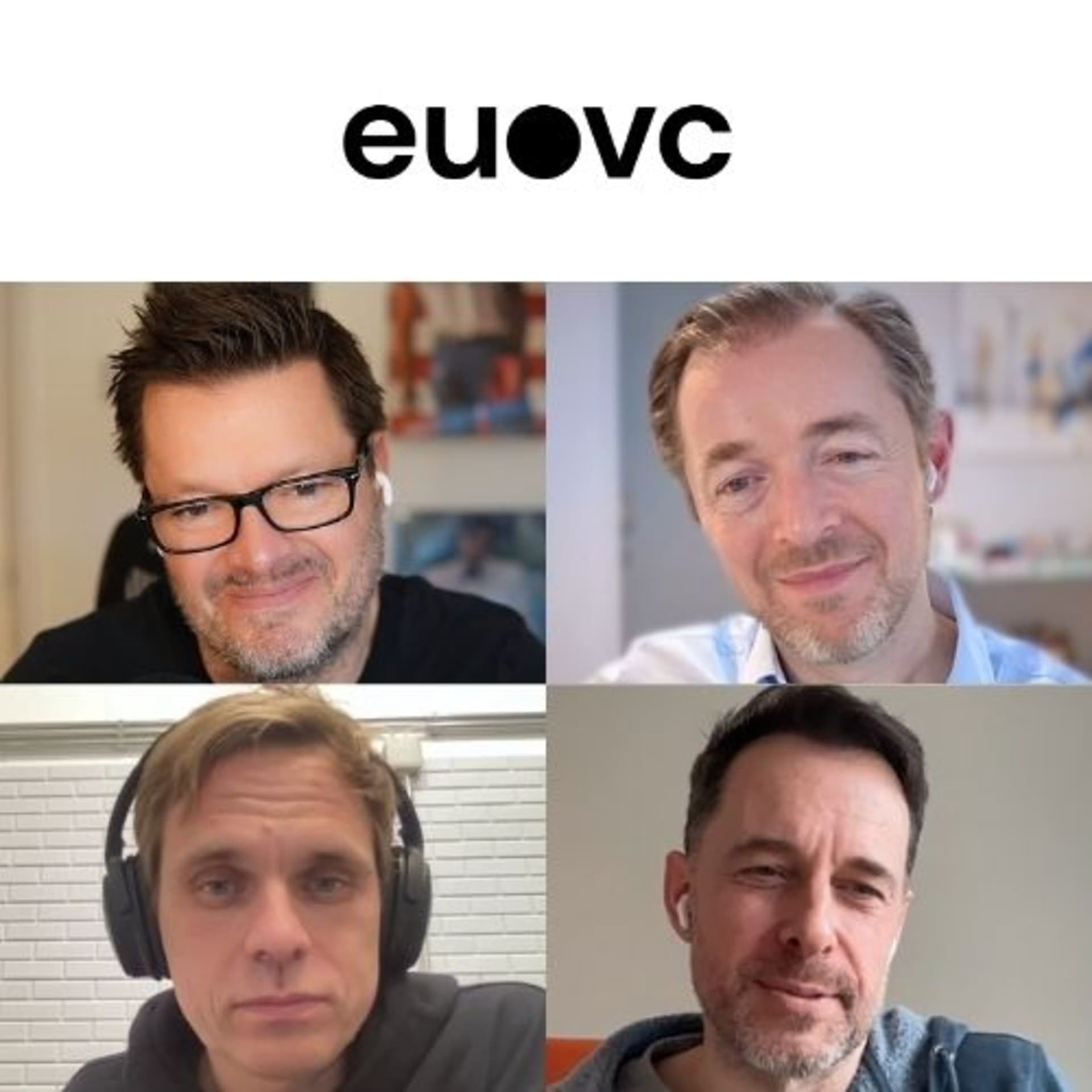
Welcome back to another episode of Upside at the EUVC Podcast, where Dan Bowyer, Mads Jensen of SuperSeed, and Lomax Ward of Outsized Ventures cut through the noise shaping tech, venture, and geopolitics in Europe and beyond.
This week starts lightly, as all good episodes do, with kids, illness paranoia, and the small joys of enforced medical naps. It escalates quickly.
From OpenAI’s new health-focused ChatGPT and the FDA’s sudden sprint toward deregulation to Trump’s Greenland fixation and what it really signals about European sovereignty, to Meta buying its way into the AI application layer, pension funds destroying value at scale, and Nvidia’s push into physical AI.
This is one of those episodes where everything connects.
The common thread is power. Who has it. Who’s losing it. And who’s still pretending nothing has changed.
This is Upside, where the takes are sharp, the systems are breaking, and the optimism is… cautiously conditional.
What’s covered:
03:00 ChatGPT Health launches and why Europe is locked out
05:00 The FDA’s pivot to deregulation and what it means for health startups
10:00 Using multiple LLMs as a “second medical opinion”
13:00 Trump, Greenland, and the slow collapse of Pax Americana
18:00 Sovereignty, defence spending, and Europe’s strategic wake-up call
23:00 France moves to ban social media for under-15s
27:00 Meta buys its way into the AI application layer
30:00 Kraken spins out of Octopus at multi-billion scale
34:00 Revolut’s Turkey move and the march to 100 million users
37:00 UK pension funds, catastrophic underperformance, and broken incentives
45:00 Why venture returns matter more than fees
49:00 FTSE hits 10,000 and why it doesn’t mean what you think
56:00 CES, Nvidia’s autonomous ambitions, and physical AI
01:04:00 Grok’s $230B valuation and free speech trade-offs
01:07:00 Deals of the Week


