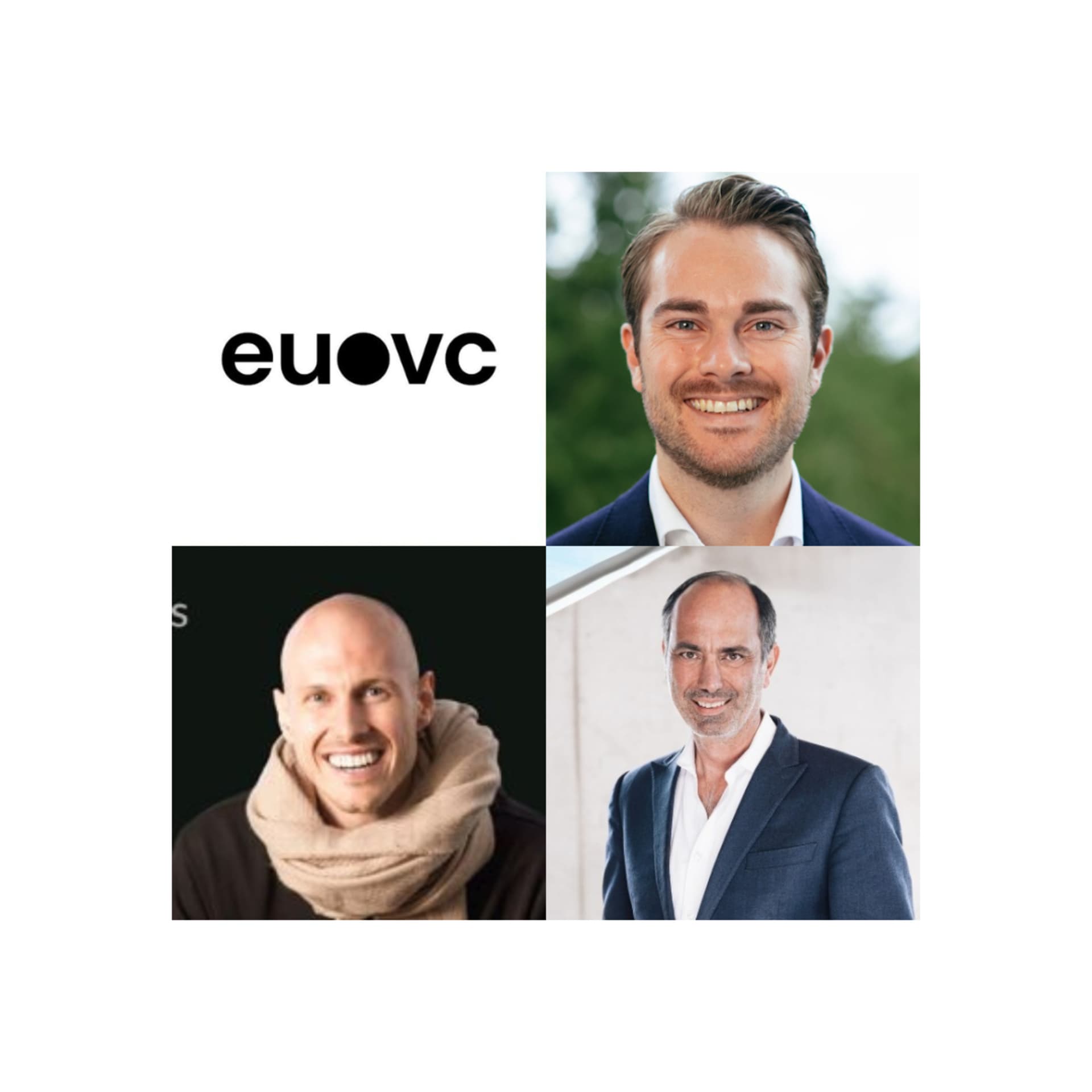

In short
EUVC Podcast Episode Notes
Podcast Details
- Title: EUVC
- Description: A podcast focused on European Venture Capital (VC), co-hosted by Andreas Munk Holm and David Cruz e Silva, featuring key figures in the European VC industry.
Episode Title
- E686 | Jan Hofmann, Viessmann Generations Group and Christian Hernandez, 2150: From Climate Hype to Industrial Reality
Episode Description
- The episode addresses the current state of climate tech, arguing that climate tech is not dead but evolving, with a focus on robust business models and realistic narratives. The discussion includes insights into capital consolidation, the emergence of resilient companies, and the potential for investment in climate tech.
Key Topics Covered
- Capital Dynamics in Climate Tech
- Climate tech is evolving, moving away from weak business models.
- Current capital is consolidating around resilience, industry, and infrastructure.
- Emerging Business Models
- Strong climate companies are quietly being developed.
- The importance of discipline and execution over hype.
- Resilience as a New Framework
- Shift towards resilience in sustainability discussions.
- Central EU climate tech investments are still in demand despite regulatory challenges.
- Energy Supply and Infrastructure
- Discussion around energy transmission bottlenecks and the significance of transformers.
- The need for robust infrastructure to support energy demands from industry and electrification.
- VC Landscape Changes
- Capital discipline in hardware investing is crucial.
- Generalist VCs may struggle to add value in climate tech, necessitating specialized knowledge.
- 2150’s Investment Strategy
- Transition from Fund I to Fund II amidst market volatility.
- Emphasis on identifying scalable hardware solutions and understanding paths to profitability.
- Viessmann’s Evolution
- Transition from an industrial giant to an ecosystem investor.
- Engagement in sustainable energy solutions and investments aligning with their core mission.
- Future of Climate Tech in Europe
- The importance of storytelling and the need to focus on positive advancements in climate tech.
- Encouragement for bold innovation and leadership in addressing climate issues.
Episode Highlights
- 02:40 - Discussion on capital flows and deal volume.
- 04:00 - Resilience as a key concern amid infrastructure failures.
- 07:40 - Industry focus taking precedence over climate headlines.
- 16:40 - The changing VC playbook and capital discipline.
- 25:50 - Principles guiding climate investing moving forward.
- 33:40 - Importance of platform scale in urban investment strategies.
- 47:40 - Europe’s role in climate tech over the next decade.
Key Takeaways
- Reality of Climate Tech: The sector is not dead; it is evolving with stronger business models and a focus on practical solutions.
- Resilience is Key: The conversation around climate tech is shifting towards resilience, emphasizing the need for sustainable solutions that address core human needs.
- Investment Opportunities: Significant opportunities exist in hardware and physical solutions to environmental challenges, necessitating a disciplined approach to capital deployment.
- Professionalization of the Industry: There’s an ongoing need for a more professionalized approach in climate tech investing, focusing on competence beyond just capital.
Conclusion The episode wraps up with a call to action for Europe to embrace innovation, focus on positive narratives, and collectively work towards a sustainable future through effective climate tech investments.
Written by AI. May contain mistakes. Listen to the episode to check what was said.
Chapters
Tap a time to open that second in VOIs Climate Tech Thriving?
2:38 to 3:55
Discussion on the evolution and resilience of climate tech amidst challenges.
“Let me just first ask you, why do you say that climate tech is not dead, but instead we are just having stronger models than ever before in this ecosystem?”
Sustainability Needs and Investments
3:59 to 5:03
Exploring the ongoing demand for sustainable solutions and investment in climate technologies.
“I mean, that's why we are on the same page when it comes to investing, so to say.”
Customer Demand and Regulatory Landscape
5:12 to 8:01
Insights into customer needs and the impact of regulations on climate tech.
“How do you see the infrastructure demands maintaining a very strong pool for climate sustainable, strong solutions?”
Industry Focus in Climate Tech
8:05 to 10:34
Examining the shift from climate tech to industry-focused solutions and their economic potential.
“So adaptation, resilience, energy, independence, all these things are talking about the same thing.”
Energy Demand and Grid Challenges
10:35 to 14:00
Analysis of energy demand from electrification and the challenges in grid infrastructure.
“Yeah, this is going to be boring because we're agreeing on a lot of stuff.”
Innovative Energy Solutions
14:00 to 15:00
Learn about advancements in energy transmission and production technologies.
“There's actually some pretty cool companies.”
Challenges in Energy Infrastructure
15:00 to 16:30
Explore the major hurdles in energy infrastructure development and investment.
“And Gritech is basically electrifying the cities.”
Understanding Capital Needs in Climate Tech
16:30 to 18:40
Gain insights on the capital requirements and financial strategies in climate tech.
“A lot of people are talking about capital discipline and the importance of being able to build in a disciplined way in this category.”
Professionalizing Climate Tech Investment
18:40 to 21:40
Discuss the increased professionalism and necessity for expertise in climate tech.
“And that's very different to traditional venture.”
The Impact of Economic Shifts on Climate Tech
21:40 to 24:40
Understand the repercussions of economic shifts on climate tech investments and company viability.
“We will also see companies drying out for sure.”
Show all 20 chapters
Climate Investing Principle
24:40 to 25:00
Learn the core principle that will anchor future climate investing.
“And I know funds that have exposures of like a billion, 2 billion, 3 billion across their portfolio, that there is no ability for that individual fund to make up for it.”
The 2150 Journey: Fund Growth and Challenges
25:00 to 28:00
Explore the evolution of the 2150 fund from its inception through its growth and challenges.
“And then a question mark around this whole sector of the asset class and how it continues.”
Fundraising Dynamics in Venture Capital
28:00 to 28:50
Learn about the changing landscape of venture capital fundraising and investment strategies.
“We didn't know if the LPs would have appetite for it.”
Importance of Long-Term Partnerships
28:50 to 30:20
Discover the significance of building long-term partnerships in the investment space.
“And the realization that there are groups out there where actually I reached out to a couple of our LPs as we were going to announce Fund 2 and I'm like, do you want to be included?”
Urban Partners and Their Role in Innovation
30:20 to 34:10
Understand how Urban Partners integrates various investment strategies for city improvements.
“Are there those the points that you had mentioned when you were to recap the 2150 journey and your commitment to them?”
Thesis-Driven Investment Approach
34:10 to 38:30
Explore the thesis-driven approach to investment and addressing climate issues.
“And we have a bunch of other ideas of things that will come in the future.”
The Evolution of Wiesmann into a Family Office
38:30 to 42:01
Learn about Wiesmann's historical background and its transformation into a family office.
“Now, we just did a bit of a deep dive on 2150.”
The Evolution of Viessmann and Climate Solutions
42:01 to 44:28
Learn about Viessmann's journey and its adaptation to industry changes.
“It's been around for three generations or four generations.”
The Narrative of European Climate Tech
44:29 to 47:09
Explore the importance of storytelling in the climate tech sector.
“And if I may add just one thought about that, what became quite clear is back then it was not perceived as a climate tech divestment or climate tech partnership.”
The Future of Climate Tech in Europe
47:10 to 49:28
Discuss the urgent need for innovation and the positive developments in climate tech.
“We are pretty good at cutting people down when they try to be bold.”
Transcript
Automatic transcript. May contain errors.0:28Welcome back, everyone, to the European VC podcast. about how that alignment actually gets built and why it's accelerating not retreating. Before we start the show, a quick note. If you're building or running a fund, you know it takes the right partners. At EUVC, we only work with sponsors we truly believe should be part of your tech stack. Please do take a moment to hear about them. And if you do, reach out, mention EUVC, it's the best way you can support what we do. Thank you so much. First off, ace alternatives. Every fund manager needs clean operations behind the scenes. From fund admin to tax and compliance, Ace handles it all across VC, PE, private debt, and real assets.
1:05They're trusted by some of the best investors in the world. And if you want peace of mind and a scale ready back office, Ace should be part of your step. Finding deals and managing your portfolio is at the heart of running a fund. Synaptic helps you discover status before others do. And Portfolio IQ keeps your portfolio data sharp and ready for LPs. Together, they're essential tools for modern fund managers. When it comes to legal, you need a team that truly knows venture. Hainspoon supports LPs, GPs, startups and scale-ups across the full fund lifecycle. Smart managers make Hainspoon part of their stack.
1:38We have two at EUVC. Tech BBQ. Oh my god, who doesn't love BBQ? Europe's startup scene meets the loudest, friendliest family reunion ever at Tech BBQ. From Nordic founders to global VCs, this is where ideas catch fire and relationships get real. If you're building or backing in Europe, Tech Barbecue is where you want to show up. And hey, if you've got a big fun announcement coming up, want to hit the headlines or just want to tell you a story about, do reach out to us because we'd love to help. And we've got some pillar partners to help you get in the right media places. They've held us land Bloomberg, CNBC, Financial Times, Forbes, and many more for the EUVC Summit.
2:14And we'd love to do the same for you.
2:32This show is not investment advice, and the hosts of this episode may be invested in the funds and companies featured. Let me just first ask you, why do you say that climate tech is not dead, but instead we are just having stronger models than ever before in this ecosystem? So there is a prevalent meme about the fact that the climate tech is dead. Let's backtrack to climate tech becoming a word in 2020, 2021, before that was clean tech. So maybe it's an evolution, but for me, climate tech is simply technologies that are better, faster, cheaper, that improve industrial process, that actually generate value, and also happen to do some good for the planet.
3:16And that has not abated, right? People still want to buy stuff that's cheaper, faster, better, and are deploying it at scale around the world. If actually, if you look at what gets categorized as climate tech by CTVC or others, you actually have seen an increase from last year to this year in terms of capital deployed. We can talk later on about where that capital is going. And if you look at my CRM system and my deal flow, we looked at 2 ,500 companies last year that categorized themselves as climate tech, which is why they came to us. That's a pretty healthy deal flow. So no, I would not say it's dead.
3:48I think it's simply it's morphing and evolving into different categories and definitely a stronger filter about what will get backed and what will get scaled. So a question I couldn't agree more. I mean, that's why we are on the same page when it comes to investing, so to say. I would add a different perspective that is complementary to Christians. And I would say that the underlying need for capital hasn't changed. So the need for investing into climate technologies that would use CO2 emissions that preserve our planet. I think the need is even bigger than two, three, four, five years ago. So it's just, let's say, some noise that has found space above the need for these investments.
4:30So when you think, for example, of sustainability and all the typical three angles as part of sustainability, I think there is some movement around thinking sustainability in a bigger scheme, in a bigger context, for example, including resilience. And when you think about the Central European climate tech investments that we look at at least one group in particular, not only, but in particular, what we see is that the need is still the same. The willingness to go into these positions is still the same. It's just a different, let's say, naming, a different phasing that is used describing the same need and the same kind of investments.
5:11If we make it super concrete and talk about the pool that is completely undeniable that you're describing here, how do you see customers reacting? How do you see regulation developing? How do you see the infrastructure demands maintaining a very strong pool for climate sustainable, strong solutions? So what we see on the customer side is that when you think about very central aspects like very basic human needs, there is heat, there is energy, so electricity, all these needs have not changed but are actually growing. And when you think about how to serve these needs, for example, heat, it's a common denominator that we have in the European Union, but also far beyond that, that we need to have solutions that are sustainable in the long term.
6:03And now coming back to the world of sustainability, in the end, sustainability can also be substituted by resilience. So we need solutions that are able to serve the need of heat, for example, on a very long-term trajectory. And for example, district heating solutions that we are quite active in are solutions that are serving these customer needs and they are growing heavily. And when you think about what just happened in Berlin a few days ago in the electricity grid and the infrastructure there, this is, let's say, screaming for solutions to protect very central human needs like electricity and also with solutions that are increasing the resilience of a society.
6:49So that goes even beyond climate tech only. Yeah, and I think that, I mean, we talked about the elephant in the room, which is the perception that regulation is going the wrong way. And that is true in one country in North America, where in the last government, we had probably the most aggressive deployment of capital to support the scaling of climate positive solutions. And that has very, very, very quickly been retrenched. And actually, if anything, pulled back. But I think focusing on just the US would actually forget the rest of the world. Whereas, as Jan says, there's still all these needs.
7:25And if you look at what happened in the last year, right? So EVs actually accelerate around the world The UK is actually the second largest market for both Tesla and BYD outside of their home markets. 24 % of all cars sold were electric. Solar became the cheapest and fastest scaling deployment of energy around the world. Battery prices were getting slashed down, deployment of solutions. So yes, there is headwinds in one country around anything with the word climate around it. But there's actually significant momentum just simply because it's back to the term I used earlier. cheaper, faster, better to do it that way.
8:02You talked about the word resilience, which I think is becoming a port-a-mento for climate. So adaptation, resilience, energy, independence, all these things are talking about the same thing. I actually went to a defense tech conference recently, and they had five companies on stage. And three of those companies I would have called climate tech, they called defense tech. So fine, semantics, let's actually find those companies that can actually support the resilience, defense, energy efficiency, and costs, and scale them out as quickly as possible. I care less about semantics than I care about them rolling out.
8:38There's two specific points I would love to touch on. One is, and both of them fall within resilience, one is energy and one is industry. If we start an industry, could you talk a bit about how the rise of industry as a focus area for climate, At least to me, it seems like where we would have a couple of years ago spoken more clearly about climate as the header. Now it seems to be more often industry as the header, the need to change how industry works, the need to digitize, the need to make everything in the supply chains more resilient. All of these topics all fall within climate. But now I'm seeing more phrasings that use the word industry rather than climate.
9:20Can you talk a bit about that and both the technologies that you see maturing and coming to the market within industry? I would like to build on what Christian said regarding semantics. So basically, when you look at the business models that we touched upon with what you just said, I think not that much changed. But the kind of angle that you look at them has changed. So in some years back, let's say 2020, 2021, the discussions had pretty much semantics and let's say purpose driven. So we wanted to save the climate. And this has been the key driver for business models to be perceived as a good business model.
10:02And nowadays, it's much more about the economic opportunity of this business model. And this, I think, is the rephrasing. But if you look at the business models, it's still the monetization of CO2 reduction. It is still about the monetization of energy efficiency gains. So it's pretty much at the same spot right now, but a different angle to the problem and also to the solution. And this comes back to the semantics, as Christian said. What do you think, Christian? Yeah, this is going to be boring because we're agreeing on a lot of stuff. So last year out of Davos came out a term I had not heard before called green hushing.
10:45So not greenwashing, but green hushing. The notion that people were still taking action to deploy solutions that made industry more energy efficient or companies more energy efficient or reduce their CO2 footprint, but nobody wanted to talk about it. They did not want to be in the crosshairs. I highly expect there will be very little language around climate initiatives at this year's Davos. But people are still buying. People are still deploying. People are still putting industrial heat pumps into their factories to replace natural gas because it makes economic sense. So interesting stat about energy and industry.
11:20So everybody right now is talking about the energy demand from data centers between now and 2035, 2040. And yes, we're going to need a lot of energy to actually power or chat GPT queries, for sure. And that's highly concentrated in a couple of different nodes. Northern Virginia, Ireland, Sweden, the rest of the world, the largest load of energy demand that will be needed between now and 2035, 2040 actually comes from the electrification of industry. The current grid cannot support it. The business case is there. So the demand is there. So that's number one. And it's like three times bigger than data center energy load.
11:59Electrification of vehicles, which is 1.5 times bigger from memory. Electrification of cooling, which actually is still bigger than data centers. So yes, data centers are going to be a driver of innovation around energy sources, energy efficiency, but we need it for the whole rest of the economy around the world. What's your read on our current trajectory to meet the demand of electrification? Because one part is like we've all seen these charts showing that if everything that has been signaled around data center build-out was to come to fruition, we would be maniacs below demand or below supply in electricity.
12:39And I think we could do similar charts. I'm personally not, I haven't checked that out, but I'm pretty sure that we could do the same thing for the demand for energy, for the electrification of our mobile, our car fleets and our industrial base. So what are you seeing? And do you see the energy grid as a core investment area, investment space for you? So the grid, I think there's two components to it. One is the source of energy, where, I mean, my favorite example is Microsoft's recommissioning a nuclear plant in the US for their data centers, three mile islands. Japan actually beginning to talk about nuclear again after effectively being a taboo subject.
13:19I think one of the largest recipients of climate tech dollars in the last year was actually nuclear fusion. By the way, if we solve nuclear fusion, we're having a whole different conversation. We're talking about energy abundance and what we do with that. But that's still 10 years away every 10 years. So there's a lot of stuff going on around energy supply, geothermal, which I think Jan can talk to as well. Geothermal is magical. It's the most democratically available source of energy. It's just expensive to get to. And then the second is transmission of that energy from where it gets produced to where it gets consumed.
13:53We lose about 30 % of electricity through transmission lines. That is a solvable problem. There's actually some pretty cool companies. There's one, I think, in Germany that actually runs a little robot on top of the cables and actually coats it so that you can actually lose less electricity as you transmit it. There's a couple of others in the U.S. So there's both the production and the transmission. We've looked at a bunch of transmission solutions. We haven't done anything in that space yet. We have looked at fusion and other stuff. Some of it feels a bit too CapEx heavy for a venture capital of our size, fund of our size.
14:26But that is a significant amount of focus across defense tech or energy independence funds or climate tech funds and something that will be critical. The carrying grid can just simply not support the energy load that's coming. Period. And the speed to build a new nuclear reactor, even a small nuclear reactor, or to build a new hydropower plant is just decades. It just takes way, way, way too long. I couldn't agree more, Christian. And if I may add a different perspective once again from our portfolio. So as you know, we have Gritech as part of our majority portfolio. And Gritech is basically electrifying the cities.
15:03So what they are producing are technical stations where you have, for example, transmission from high voltage to mid voltage within the electricity grid of, for example, Europe. And what we see there is that the whole discussion is not covering the end-to-end perspective. So from electricity generation to electricity usage. But we have kind of isolated discussions. So we discuss electricity usage at the point of, for example, data centers. We discuss generation around nuclear power plant and taboo topic. What we don't discuss is how to bring that all together and how to make sure that our grid is able to connect both dots, so the generation and the usage.
15:46And what I think is, coming back to your question at the beginning, we miss two things. not only, let's say, the extent of investments, so it needs more funds like 2150. And second, we miss the integrated view from generation through transmission to the usage. And you know what the biggest gap right now is? Transformers. Right now, if you wanted to buy a transformer, you're probably waiting at least a year to get a new one. And we know how to make these. We know how to make these at scale. So if I had all the money in the world, I would go build a transformer plant. The demand is there. The man's going to be there for a long, long time.
16:24And it's not rocket science. I mean, Lily, we know how to make them. It's not rocket science. We just need more of them. Let me ask the two of you another question when it comes to climate and industry and the built world. A lot of people are talking about capital discipline and the importance of being able to build in a disciplined way in this category. Can you talk a bit about how we as VCs are coming to grips with that and how founders that oftentimes come from the pure tech sector is also learning how to play in this sector? Yeah. So right now, the hardest place to be in climate tech is raising a Series B or Series C for building physical stuff.
17:06And by the way, I don't think you can be a climate tech investor without investing in some physical stuff to replace bad physical stuff, along with software, along with low CapEx stuff. Just CapEx, the meme that VCs don't like hardware, but you need to build some of these physical stuff. Therefore, you'll need a factory. Therefore, you'll need a capital infrastructure. what we spend a lot of time with our founders doing, especially when we'd look at early at the investment initially, is how much capex are they going to need? And where is that money going to come from? And ideally, the answer is not from my money.
17:42It shouldn't, equity is a very expensive piece, part of the capital stack. At which point do they become bankable so they can get financing, non-dilutive financing from, be it a grant, be it a bank, be it a financing organization. So just to put a metric to it, across our portfolio, for every euro raised of equity, our portfolio has now raised 0.75 cents of non-dilutive funding, and most of that is commercial paper, debt. To go build factories, to have working capital, to go build inventory. In a five-year's time, I expect that ratio to be completely skewed. I expect to be like three to one, five to one of debt versus equity.
18:21working with them very early on to understand that capital stack and capital formation needs, probably pushing for them to have a CFO sooner than you would in a traditional pure software company because the CFO needs to understand capital markets, the structuring of the product, off-take agreements, well, interest payments and warrants that comes with some of this debt. And that's very different to traditional venture. I didn't think I'd be doing this much structure finance many, many years after my MBA, it is very much a part of the advice that we have to give the founders and the need for them to scale.
18:55And then secondly, on where the capital is flowing on the equity side, a lot of higher bar in the last, let's call it 18 months or two years on what's getting funded. Yes, of course, team matters the most, business model matters as well, but also path to profitability is probably something that comes up way earlier in the conversations and it would have back in 2020, 2021, when the next round was just around the corner or being preempted. Jan, do you have similar observations? I do, but I'm not going to copy all that, all what Christian just said. Just in a sentence, I would say it's professionalizing the whole industry, what's going on right now.
19:34And it starts with the port course, goes through the funds, but also on our end as investor, I think it covers the whole chain and professionalize a lot. Can you ask both of you, and you, Jan, as an LP, and you, Christian, as a VC, what's your take on the current state of VC capability within this part of it, being able to actually meaningfully help build companies that are hardware intensive? because we're seeing, I think, a lot of generalist VCs being interested in this space, talking about the importance of resilience and doing investments that touch the real world, the atoms parts of the world.
20:23But sometimes I think to myself, are they really as value-add as they were as B2B SaaS investors when they all of a sudden have found this investment space as well? To me, it's a bit like the intersection point between psychology 101 and economics 101 so on psychology 101 everybody is running towards where the money goes so this is a bit like everybody was running into climate tech now everybody is running into defense and on the economics part you can only win if you have a competitive advantage so and this is why we have invested for example into 2150 because it's a combination of people that bring expertise, experience, and the right conviction to the table.
21:09And it also holds true for ourselves. We don't go into positions where we do not have competence. And we don't go into positions where we don't bring something to the table that, let's say, brings the company to the next level. And this is, once again, I think a professionalization of the whole industry. What you said between the line and this is a bit like, are we going to see VCs, let's say, drying out for sure? We will also see companies drying out for sure. But I think that once again, if you have these kind of pivotal changes as we have right now, it's just a moment of separation. So who is going to win and who's not?
21:53Yeah, and it's a very different skill set to talk about hardware, right? And working capital and cost curves. It still happens that my partner, the other Christian, his prior career was actually inside industrials, actually inside factory floors, building physical stuff and rolling that out across different geographies. Most people know me as the Facebook guy, but actually one of my early jobs was building early mobile phones and understanding building materials and going to Taiwan and looking at factories. So there's some knowledge, not that we're experts, but at least there's some understanding of what it takes.
22:28However, we also need partners that can help us. And that's a large part of why we're excited to have the Wiesman Group as one of our anchor LPs for Fund2. This is a multi-generational group that actually built a massive company out of Germany and then obviously had a fantastic exit a couple of years ago. The expertise that they have in-house around what it takes and actually being able to spar with them around some of the things that we're looking at is pretty important. and having somebody kind of inside the tent that's willing to say, that's just crazy, don't even go there, has been pretty critical.
23:03And then secondly, it's also understanding the pathway to profitability. So yes, when we invest in a company that's making a hardware, the first unit is going to be insanely expensive. It was made by hand. It's a multimillion-dollar piece of kit. At which point does the price start coming down? Is it the 10th unit? Is it the 100th unit? is a thousandth unit for it to be profitable. And we spend a lot of time when we're looking at investments, understanding how they get the cost down. And obviously some of the cost comes down just because you're buying more volumes. Some of the cost comes down because you've done it multiple times.
23:36And then at which point does it actually start having profitability on a per unit basis? And at which point it's become profitable at a company basis. Actually, I literally had a board this week in which we were talking about their pathway over the next 18 months to increase profitability through better purchasing, better scaling of the manufacturer. That's a very different conversation to a SaaS B2B software board conversation. I will talk about the black swan moment that happened in climate hard tech last year. So overall, VC had a PTSD moment with Silicon Valley Bank. We all spent the weekend literally not knowing if the industry was going to survive by Monday, and we did.
24:18Climate tech had a black swan moment with the elections in the US and the withdrawal of the IRA. Billions and billions of dollars that had already been deployed, or so we thought. People had already started building 200,$300 million factories in the US. Shovels are in the ground building these factories. And all of a sudden, you show up at the next board meeting and that money is gone. And I know funds that have exposures of like a billion, 2 billion, 3 billion across their portfolio, that there is no ability for that individual fund to make up for it. So that is definitely going to lead to some challenges in terms of just some companies dying.
24:56And there were some that already died last year, to some funds having significant troubles on both performance and ability to raise again. And then a question mark around this whole sector of the asset class and how it continues. I knew there was a risk. So luckily, we were not very exposed. We had a bit of exposure to IRA capital in the portfolio, but generally we don't back companies that can only exist if grants get given. But if you only could exist if somebody willingly gave you 200 million because you were cool, that's going to create a massive knock-on effect across the whole sector and this year, next year, the year after that.
25:32Let me ask you both to summarize this first part of the conversation in a principle that you think will anchor climate investing in the years going forward. Don't do it because it's good. Do it because it's good business. If I should make one as well, it's actually, it's exactly that. That's how I am feeling that every single investor that I have come across that are really performing well still and having good traction in their fundraisers, both from the investor side and the founder side, honestly, they're explaining exactly that. And you can actually, you can say that it's a bit of the green hushing part because you do not want to be leading with that in your decks and in your materials anymore.
Read the full transcript
26:15I think as an investor, it's quite a good moment in time because prices have gone down on the one hand and quality has increased on the other hand because you will not have idiots running into the industry because they think it's a good moment to make money. But you have the right people on the spot because they are convinced of doing the right thing with doing good business. So I think it's a very good spot to be in right now. which is exactly why VC returns tends to be inverted with the hype cycles because you really don't want to be in a hype-y market. It's both expensive and there's a lot of opportunists acting in it.
26:54All right, now let me ask you, because the next section I want to talk about here is a bit the 2150 journey. And obviously, the Wiesman Group has known 2150 for a long time and been following you. And Christian, you've been building 2150. I want to ask you about your journey from Fund 1 to Fund 2 and open this conversation up by asking you to share some of the moments in which the 2150 journey gave you hope in the face of a very tumultuous market. Yeah, it's been a fun couple of years. So I think we did the first podcast right when we announced Fund 1. At the time, I think it was the biggest Fund 1 ever raised for venture in Europe.
27:33For climate venture, yeah. So, I mean, we got started in 2021, right? So we started incubating this idea in 2020, closed fund one in 2021. Fast forward to 2025, we ended up closing fund two right before the holidays or early in December. So between fund one, fund two, and SPVs, we're now at half a billion of AUM, which is honestly beyond my expectations as to where we would be. When we started with this idea, climate tech wasn't even a term yet. We didn't know if the LPs would have appetite for it. We didn't know what level of deal flow we would get and type of good companies. And they kind of just all accelerated.
28:10The founders were there, mission aligned, people willing to fund us, like purposely LPs reaching out to us when they found out we were raising. It was a very different market to what happened over the last two years, where obviously BC overall has slowed down. Sorry, LP allocation into BC has slowed down. And yet we were able to raise a significantly sized fund. By the time this podcast comes out, we will be announcing Fund 2, 210 million euros with a very concentrated number of LPs. I think we have 34 LPs. So it's actually large checks from institutional capital and large family offices like Wiesman.
28:47So people are doubling down on us, but also on the belief of this space. fund one was 20 companies median check was 6 million euros initial check with then follow-ons fund two will be the same it'll be another 20 something companies median initial check will be 6 million that's series a or whatever letter you want to apply to it at the point where that company can scale and we will continue investing half in north america half in europe we're seeing more and more deal flow at our stage coming out of europe than we did in fund one but we still think it'll have the right mix. And the realization that there are groups out there where actually I reached out to a couple of our LPs as we were going to announce Fund 2 and I'm like, do you want to be included?
29:31I mean, we have Nova Holdings who's a repeat investor from Fund 1. We have Agustino's Foundation, the Nordics who's a repeat investor from Fund 1. And then we have new pools of capital like Wiesman that have a US pension fund that I assume would not want to be mentioned. You know, probably want to stay below the radar. There's the church pension group. It's the pension fund of the Episcopalian Church in the U.S., a$17 billion AUM fund, very, very active in venture for many, many years. Their answer was, no, we absolutely want to be mentioned. We want to tell the world that we're actually doubling down in this space.
30:05And so that actually gives me hope that there's actually pools of capital, big pools of capital out there that want to say, no, it doesn't matter to us. It matters to the people whose money we deploy. And it matters to actually the mission that we have to deploy that capital and return that capital. What, Christian, does that resonate with you? Is that the point? Are there those the points that you had mentioned when you were to recap the 2150 journey and your commitment to them? We have a dual role, so to say. On the one hand, we are a general partner with urban partners. so to say the roof of a bus 2150 and at the same time we are a limited partner with the 2150 fund too why is that because we are completely purpose aligned as you would say so we are convinced of the same things and we run into the same direction we as wisman have a very clear purpose of why we do things and what we do is derived from that and it's a purpose of three elements to co-create living spheres for generations to come.
31:06And when you think about the middle element, living spheres, CO2 generation or CO2 reduction, greenhouse gas reduction is pretty much at the core of it. And we are also very, let's say, aware of our limitations internally and where we need partners. And 2150 is one of these partners who have a very, very strong skill set in this specific space they are active in. And this comes back to the beginning of our conversation. We go along with partners who bring something to the table beyond capital. And in particular, it's competence, it's experience. And Christian, for example, brings both the hardware perspective and the tech perspective.
31:49The other Christian brings in particular the hardware perspective. So they are also within 2150, a quite complementary team that we know quite well. So I can fully echo that. But if we now zoom out again, we double down on that space because we see that the problems need to be solved and that it needs to have both mature solutions that we invest into as beastman as well. And at the same time, disruptive technological solutions that, for example, 2150 is focusing on. And it will only be solved in a combination of both with mature, let's say, more hardware, capex-driven businesses like Greetech, ISO Plus companies that are part of our portfolio, and we more VC-like solutions.
32:35Christian, maybe just to tie a knot on something that Jan mentioned here, the Urban Partners Group. Could you talk a bit about the platform in which 2150 plays and how that's a value add to everything you do? Yeah, because I think when we did the podcast for fund one, it didn't exist, right? So Mikkel, our co-founder, had created this real estate private equity group in the Nordics called NREP, most successful real estate private equity group in the Nordics, actually in Europe. Actually, also the biggest, the last fund was 3.6 billion euros. And we got incubated inside it, but actually we're purposely independent and separate of brand, of focus.
33:16is I should not sit on an IC of a real estate investment. A real estate partner should not sit on my IC. What we realized during that voyage is that we had these pockets of capital that were all mission in line, right? We were all trying to make cities and citizens better. And that there was a benefit to actually bring it all together under an umbrella while allowing the strategies to be independent. We effectively rolled everything up into this platform called Urban Partners. It's a 21 billion AUM multi-strategy asset manager with a core focus around how to make everything inside the city wall and everything that feeds in and out of the city more efficient, more resilient, and better for the citizens that live inside it.
33:57We do that through real estate in Germany and the Nordics and Poland. We do that through a private credit vehicle that actually teaches others how to do brown to green. We do that through the part that I lead, which is the solution side, the technologies that we back and scale. And we have a bunch of other ideas of things that will come in the future. What I get out of it is access to knowledge, because these people are actually building, deploying, implementing. To a gravitas that I would not have as a 500 million AUM fund. We get invited as a part of the formal Danish delegation to COP. We get to be at Davos.
34:33We get to be at tables that a VC by itself would not actually get access to. And we show up with insights into innovation, insights into trends that others might not have. And then finally, we get the scale that a platform of this size can actually provide us to go not only pass technologies onto the real estate side that they can deploy, but actually to have them be the test bed that we can then roll out to others. The urban partners real estate side is very forward-thinking, like literally funds from the US come to Copenhagen to go learn from them. They've developed literally sections of cities.
35:10One section in Copenhagen, for example, called Nordhaven, which Bloomberg called the most sustainable neighborhood in the world. We have the chance to work with them to actually ensure that our technologies get deployed early on as these urban regeneration projects are being developed to make sure they're actually baked in by the time the buildings get built on top of it. But my day job is still hunting, finding, managing, scaling early stage technology companies as a part of Urban Partners. And I want to double click on the hunting part because that's one of the things that you've always been very special around, meaning that you are thesis driven.
35:46You're not just a magnet for deal flow and then you pick the best that comes in the door, but you really have thoughtful theses built around different spaces. Maybe you can talk a bit about that. And you're obviously European-based and European-focused, but you do invest globally. So I'd love to hear your take on that and how that distinguishes you from others, how it changes your operating manual, so to say. Yeah, so this is part of our thesis. I think we're a bunch of mission-driven, intellectually curious geeks. That's, I think, the core definition of what a 2150 team member is. So in the early days, when we're incubating the idea of what became 2150, we knew we had a big problem, 50 gigatons being emitted per year.
36:27We started drilling down into what actually causes it, which is why we focus on this stage, right? So 50 % of global emissions come from buildings and industry. When we got started, 11 % of all venture capital dollars was going into those two segments. So, right, misallocation between problem set and capital deployment. Within industry and buildings, what actually causes the emissions? Well, number one and number two are cement and steel, 7%, 8 % between both of them. We did deep dives on both sectors. We now have a number of investments, two that have been announced, a couple more that will be announced in the cement and concrete space.
37:04We've been looking for steel investments. We don't have any yet. But then what else causes the problem? And then we've been doing these deep dives into other problem sets where we start with the problem. We create a thesis around what technologies could solve it. and then we find teams working in those technologies. Just because we do a deep dive doesn't mean we immediately do an investment. My favorite example is water. We did a deep dive on water. It's a massive global problem for both adaptation, but also mitigation. We keep looking for a venture backable, so venture case type investment in the water space.
37:35We haven't found one yet, but at least we know what we're looking for. And we actually very actively share this deep dives with our LPs, with co-investors. We do the work, but we want to teach others about the solutions. We have a fellow VC that we co-invest with quite a bit. We both looked at the cooling space. We did one company. They did another. It's fine. We probably need a dozen of solutions for that problem set. They might compete in the future, but the whole point is we'll do the work and then we'll evangelize about it. We do webcasts, podcasts, blog posts around these kind of deep type problems.
38:08And it allows us to win deals. We won a deal against a very high profile US VC fund, which is much, much, much bigger than us because we've done the work. We show up educated. We build trust with the founder. And they know that we know the problem. And they don't have to spend slide two, three, four, and five of the deck explaining why that specific problem is a big issue. Now, we just did a bit of a deep dive on 2150. Jan, you're also here. So let's definitely get one for Wiesman as well. It's not so often that we hear from the family offices. And you, of course, do not only invest as an LP, but also are actively engaged.
38:43So maybe just to those that don't know your operating story and how you came to be a family office, touch a bit on that journey and then tell us a bit about what you're investing in and how you're focusing that. So Wiesbund is a more than 100 year old German family business. And we would always call ourselves a family business because we are actively engaged in operational activities. And what we do is deeply rooted in why we do things. and this is around our purpose to co-create living spheres for generations to come and below these three let's say columns we have defined strategic investment fields and one of these for example is co2 redundant co2 avoidance another one is food preservation or water preservation so pretty much in line with what christian just said and below the third one generations to come we for example go into healthcare and well-being but for example also into defending democracies so this is what we do in terms of the strategic investment fields if you now think of a matrix the lines so to say running across that are our strategic um our investment strategies first we have majority positions so we go all in like a typical buyout where we bring something competitive to the table So, for example, where we have a very strong knowledge.
40:11Second, we go into minority positions where we have the right partner at hand. For example, in the healthcare context, we have some very strong connections in the German family business sphere. And we partner up to do something good. And then third, we go into what we call ecosystem multipliers. And this is, for example, 2150 or urban partners as a total. And what we do there is quite, let's say, a specific solution to a specific problem. Because when you think on a broader scale, we are pretty convinced that it still needs a lot of capital and a lot of solutions to secure this planet, to say it very straight.
40:58and it takes both mature solutions, for example, typical capex-driven industrial businesses and the more disruptive tech-driven businesses, usually low capex, a bit more, a bit more techie. And we are very much aware of what we can do and what not and where we need to partner. And 2150 is one of these partners that brings a specific set of expertise to the table that we don't have in-house, but that we know is needed to solve the problems. So this is pretty much the, let's say, those are the two dots that are connected between VGG, Recent Generations Group, and 2150 as part of Urban Partners. Can I throw in a question?
41:46Because this goes back to a tweet that I sent out when I first met the Visman Group. And I tweeted, there is a climate positive exit, the biggest climate positive exit that nobody calls Climatec. And it's a family office in Germany. It's been around for three generations or four generations. So Jan, tell the story of Wiesmann, the company, and how it evolved into this massive family office. As I mentioned earlier, the family business is around for more than 100 years now. And for many years, it has been at least perceived from the outside as a fully integrated industrial conglomerate. So we had a large, you would say, division or business area called Wiesmann Climate Solutions.
42:33And this business has for a long, long time been active in serving a very central human need, being wheat. So making your home warm. This is why, let's say, solving central problems is so close to our art, because it always has been for more than 100 years. And then there was a moment in time a few years ago where the industrial landscape changed a lot. There have been a lot of external factors driving that. I'm not going to go into all the details, but basically it changed the whole dynamic within the industry. And the shareholder family came to the conclusion with the executive board to, let's say, find the right way to live up to social responsibility as a shareholder and make sure that the jobs around within Climate Solutions will be around in the next few years or even decades.
43:29And the best possible solution was partnering up with, once again, a like-minded partner, in this case coming from the U.S., being Carrier Global. And in roughly two years ago, so the closing was on the 2nd of January 2024, the closing took place. And since then, VGG, VEASAN Generations Group, is the biggest single non-institutional shareholder in Korea. So we are still very active in delivering heating solutions, cooling solutions globally, and have had what we call a responsibility event. So it was not a cash event, but a responsibility event to stay true to our purpose and use the funds that have been generated to double down on what we believe in.
44:24And since then, for example, having these three strategies of majority positions, minority positions and the ecosystem multipliers. And if I may add just one thought about that, what became quite clear is back then it was not perceived as a climate tech divestment or climate tech partnership. But later on, as you said, Christian, people understood that this was something happening in the space driven by the attractiveness of our industry. And I think it still is. You just have to think around the corner a bit more than it was a few years ago. I actually think you make a very important point there, Christian, because I think that one of the unfortunate characterizing characteristics of Europe is that we have incredible stories that are untold, similar to what you just said here, Jan.
45:18And that is one of my very biggest missions is trying to get some of them on Earth and give them the moment in the sunlight. Now, I want to close this episode with one final question, and that is to both of you to look a bit in the crystal ball and tell me the next decade in European climate tech, what's most important for us to get right? It's not regulation. And I think we're very good in Europe at trying to solve everything through regulation. It's actually giving a clear lane for innovation and then competition. Yes, Northvolt folded. And there was a lot of press about that. Nobody talked about the fact that the largest gigafactory for batteries got announced that same week in Spain.
46:02It just happens to be a CATL factory. And I don't care that it's a CATL factory. There's still a massive megafactory making batteries in Europe, employment, jobs, solutions being delivered by a Chinese player. And so everybody focused on the negative. We forgot to mention the positive or just got buried. So I think, like you said, we need to tell the good stories. And then the hope that there is... And then we need to celebrate that Northworld, despite having ended up folding, was in a massive bet and a lot of powerful people and institutions got together to try and make a real moonshot attempt at something in Europe, which I think is just as great a story, if I'm being very honest.
46:48And I don't know the Northworld story well enough to absolutely be able to say that maybe we could have actually recovered it or saved it from going the journey it did. I think there are many views on that. But I do think that it is a hallmark of Europe that we too often talk about the bad things when there are actually absolutely incredible angles to it as well. Yeah, and we need to be bold. I think that's... We are pretty good at cutting people down when they try to be bold. And I think there's a number of new generation... Founders have been successful who are now becoming VCs are actually becoming angels or becoming doing their next startup, where they actually have the ability to be a bit more chest-thumping American style.
47:29And you know what? That's okay. Somebody wants to try to insult me in France by telling me I was too Anglo-Saxon because I was educated in the US. I worked for American companies. That's good. Sometimes you need a bit of that hubris and being proud of what you accomplished. And if that leads to success, financial and otherwise, good for you. Because you will reinvest it back into the ecosystem through mentorship, angel investments, VC funds. And that's the flywheel that this podcast tries to exemplify. And I mean, on the climate side, I'm hopeful that we as Europe can actually play a role in leadership.
48:02Individual small countries are already playing the leadership role. My favorite meme, I mean, half my teams in Denmark, half my teams in the UK, the UK had the most aggressive climate mitigation commitments until the last COP, where Denmark actually surpassed it. So we now have an inter-office rivalry going as to who will actually win. By the way, if we solve all the UK and we solve all of Denmark, we're still screwed. But at least we can play a role in actually being at the forefront of deployment, investing, capitalizing. And the Danish Sovereign Fund is one of my other large LPs, IFO. So making these small countries bellwethers for what others can emulate around the world.
48:38I think we have all the takes available. and there is a nice saying where energy goes, no, where focus goes, energy flows. And I think it's not only a nice, let's say, combination with the topic we have been talking around, around climate tech, but actually when you think about the different countries in Europe, if you think about the different disciplines that are needed from engineering over deployment, they are all required to solve that big, big problem. I think we have such a strong position in Europe that we can make use of. When you think about having the geographic position we have, the funding, the democratic, let's say, environment to actually innovate and actually deploy capital in a forward-looking way.
49:28We just have to think about the positive aspects, the opportunities, and get them done rather than focusing on the negative and talking each other down. Absolutely. Thank you for ending on that note. Exactly, Jan. Gentlemen, I hope you really enjoyed this episode. Everyone in the audience, I hope you did too. I am very committed to this mission of championing both the climate investors in Europe, but especially also the family offices that are out there building the next generation together with our VCs. Thank you so much for listening in and thank you guys for joining me on the pod today. Before we start the show, a quick note.
50:01If you're building or running a fund, you know it takes the right partners. At EUVC, we only work with sponsors we truly believe should be part of your tech stack. Please do take a moment to hear about them. And if you do, reach out, mention EUVC. It's the best way you can support what we do. Thank you so much. First off, Ace Alternatives. Every fund manager needs clean operations behind the scenes. From fund admin to tax and compliance, Ace handles it all across VC, PE, private debt, and real assets. They're trusted by some of the best investors in the world. and if you want peace of mind and a scale ready back office, ACE should be part of your stack.
50:38Finding deals and managing your portfolio is at the heart of running a fund. Synaptic helps you discover status before others do and Portfolio IQ keeps your portfolio data sharp and ready for LPs. Together, they're essential tools for modern fund managers. When it comes to legal, you need a team that truly knows venture. Hainspoon supports LPs, TP, startups and scale-ups across the full fund lifecycle. Smart managers make Hainspoon part of their stack. We have two at EUVC. Tech BBQ. Oh my god, who doesn't love barbecue? Europe's startup scene meets the loudest, friendliest family reunion ever at Tech BBQ.
51:13From Nordic founders to global VCs, this is where ideas catch fire and relationships get real. If you're building or backing in Europe, Tech BBQ is where you want to show up. And hey, if you've got a big fun announcement coming up, want to hit the headlines or just want to tell you a story about, do reach out to us because we'd love to help and we've got some pillar partners to help you get in the right media places they've held us land bloomberg cnbc financial times forbes and many more for the eubc summit and we'd love to do the same for you tear down this wall it's more than just an ally this this is a union of values values let's start acting acting acting acting acting Thank you.
From the publisher
This episode kicks off the new year with a clear provocation: climate tech is not dead. What has died are weak business models, shallow narratives, and capital that confused virtue with value.
Andreas is joined by Jan Hofmann of the Viessmann Generations Group and Christian Hernandez, founding GP of 2150, for a wide-ranging conversation about what is actually happening inside climate and industrial investing right now.
Together, they talk about:
why capital is consolidating around resilience, industry, and infrastructure;
why the strongest climate companies are being built quietly;
and why this moment may be one of the best entry points the ecosystem has seen in years.
This is a conversation about discipline, realism, and long-term ambition. Less hype. More execution.
What’s covered:
02:40 Capital flows, deal volume, and what investors are really backing now
04:00 Customers, infrastructure failures, and why resilience is the new framing
07:40 Industry replaces climate as the headline, but not the substance
11:30 Electrification demand versus grid reality
14:20 Energy supply, transmission bottlenecks, and why transformers matter
16:40 Capital discipline, hardware investing, and the changing VC playbook
20:30 Do generalist VCs really add value in hard climate tech?
25:50 The principle that will anchor climate investing going forward
27:40 2150’s journey from Fund I to Fund II in a volatile market
33:40 Urban Partners and why platform scale matters
37:20 Viessmann Generations Group’s evolution from industrial giant to ecosystem investor
47:40 What Europe must get right in climate tech over the next decade


