
In short
EUVC Podcast Episode Notes
Episode Details
- Podcast Title: EUVC
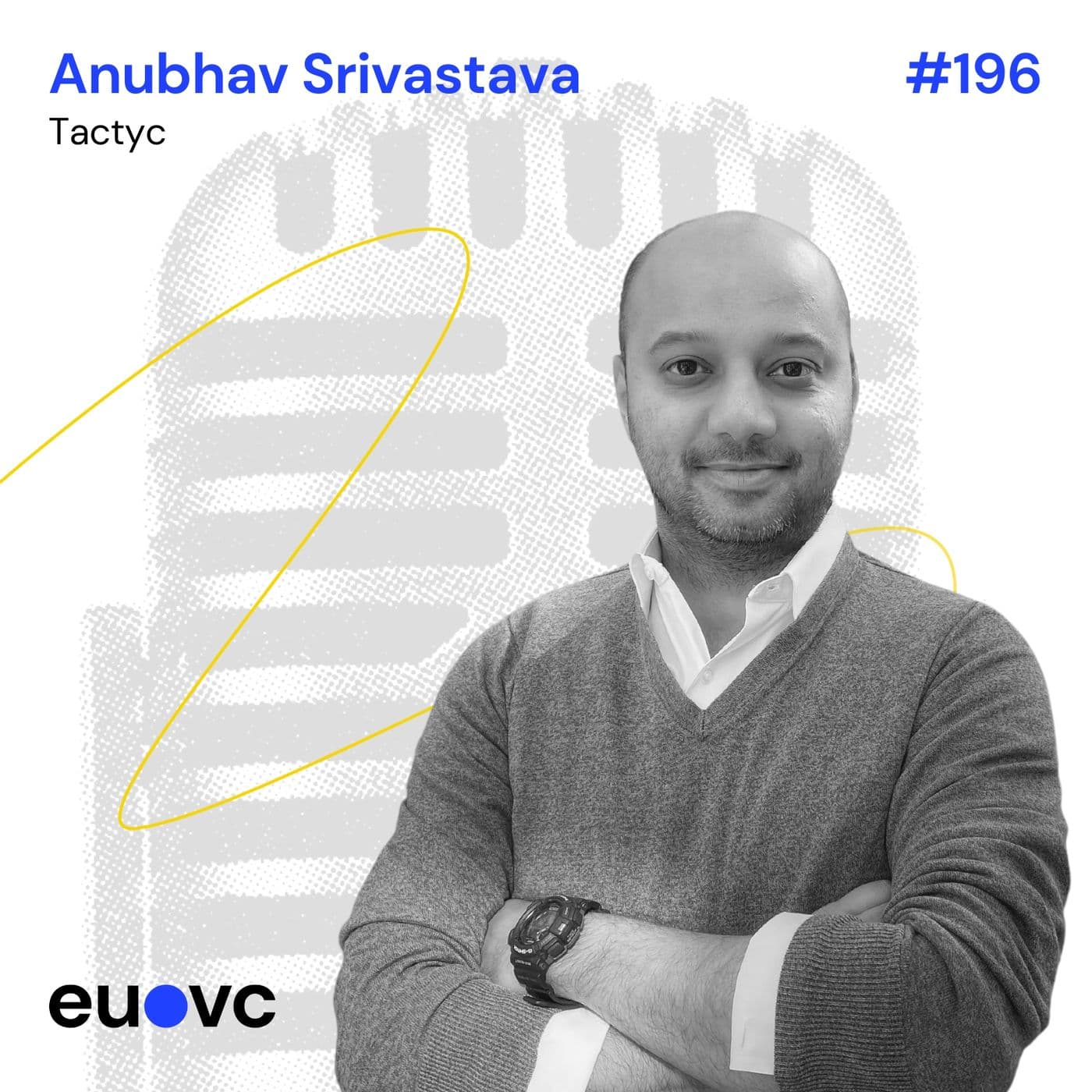
- Episode Title: EUVC #196 Anubhav Srivastava, Tactyc
- Hosts: Andreas Munk Holm and David Cruz e Silva
- Guest: Anubhav Srivastava, Founder and CEO of Tactyc
- Air Date: [Insert Date]
- Description: Anubhav discusses the challenges in portfolio management and fund modeling for venture capitalists, sharing insights about Tactyc, a platform designed to facilitate these tasks.
---
Key Themes
Introduction to Tactyc
- Founded in 2019 by Anubhav Srivastava, combining engineering and finance to address pain points in portfolio management.
- Works with 250 VC clients globally, emphasizing a data-driven approach to empower general partners (GPs).
Anubhav's Journey to Venture Capital
- MBA from Wharton and experience in investment banking and venture capital at CAA.
- Shift from traditional financial modeling to creating a user-friendly portfolio construction tool.
Portfolio Construction Insights
- Transition from a broad financial modeling platform to a specialized tool for venture capital.
- Early feedback indicated a need for simpler, more intuitive portfolio construction tools.
- Importance of flexibility in portfolio models due to various investment strategies and market conditions.
Value of Venture Capital
- VCs primarily provide capital, but their true value can extend beyond financial support.
- GPs have a responsibility to leverage their VCs' networks and advice actively.
Challenges in Portfolio Management
- Many GPs struggle with the complexity of Excel-based models.
- The need for a living, adaptable portfolio model that reflects real-time investments and market conditions.
Reserve Allocation Strategies
- Importance of understanding reserve strategies during investment deployment.
- Funds should aim for a balance between initial investments and follow-on rounds.
---
Key Takeaways
- The Evolution of Tactyc
- Initial tool failed to gain traction; pivoted to address specific VC needs.
- Portfolio construction tool gained rapid popularity after demonstrating clear utility.
- The Debate on VC Value
- Differing opinions on the level of value VCs add to their portfolio companies.
- Founders must actively engage with VCs to maximize benefits.
- Importance of Portfolio Size
- For seed-stage funds, a larger portfolio size (minimum of 30 companies) is often necessary to increase the likelihood of unicorns.
- Need for thoughtful reserve allocation based on data and realistic expectations.
- The Role of Family Offices and Angels
- Increasing sophistication among family offices and angels, akin to VC firms in their approach and reporting.
---
Audience Questions
Common Mistakes in Reserve Allocation
- GPs often set global reserve ratios without considering specific company performance or market conditions.
- Importance of having a structured analysis for reserve allocation based on actual performance metrics.
Trends in VC Reporting
- Movement towards more qualitative reporting, assessing not only financials but also strategic positioning in the current market landscape.
- GPs should maintain transparency and regular communication with LPs regarding both forward-looking and retrospective analyses.
---
Conclusion
- Anubhav emphasizes the importance of adapting portfolio management tools to meet the evolving needs of venture capitalists.
- With a focus on data-driven decision-making, Tactyc aims to empower GPs to navigate the complexities of portfolio construction and management effectively.
---
Call to Action
- Listen to the full episode for deeper insights into portfolio management, the impact of Tactyc, and Anubhav's personal journey in venture capital.
- Subscribe to EUVC for more discussions on the European VC landscape and trends.
---
Feel free to adapt this structure based on specific listeners' needs or further insights gained from the episode!
Written by AI. May contain mistakes. Listen to the episode to check what was said.
Transcript
Automatic transcript. May contain errors.0:00Today, we're happy to welcome Anubav, founder and CEO of Tactic. Anabov founded Tactic in 2019, combining his passions for engineering and finance to solve the major pain points fund managers face today with portfolio management and fund modelling. They work with 250 VC clients globally and have a large and growing European presence, including clients such as Munich RE and Otomico. At Tactic, they believe in empowering all GPs to be more data driven. If you're listening in and love our show, drop us a review, follow the pod and subscribe at eu.vc.
0:59Europe is a story of new beginnings, new beginnings. Let's start acting. This show is not investment advice and the hosts of this episode may be invested in the funds and companies featured. Hello, everybody, and welcome to the European VC Podcast. As usual, I am David, also known as the LP Syndicate Lead, and I am joined by my dear co-founder and co-host, Andrea L.P. Heitman. Today, we have Anubab from Tactic with us to deep dive into the exciting world of portfolio construction and best practices. And yes, I did say exciting. Yes, I am proudly a VC nerd when it comes to fund modeling and portfolio construction.
1:36So he was our guest today. So bear with us. Anubab, let's start this thing off with how you got into venture. Would you share with us your story? Yeah, first of all, thank you for having me, having followed you guys for a while. It's tremendously exciting to be here. So thank you for giving me this opportunity. I started my way like most MBAs did. I went to Wharton for my MBA, worked on Wall Street for a few years, doing my classical investment banking in New York. After that, I actually went to work for a Hollywood talent agency called CAA, Creative Artist Agency. And they had a venture capital arm that was backed by TPG Growth.
2:10It was basically a vehicle for you to invest in Series A, B, companies in the media space, things where CAA as an agency could be accretive to that company value. To our audience, that's how we got to meet Anobab because they were looking at doing a serious B interview. Yeah. The term sheet wasn't good enough. We didn't like it. Valuation was too low. No, that was tremendous. I worked there for five years, six years almost doing principal investing as well as some advisory work for my media clients. And that's where I kind of got my chops in investing. It was a very data-driven fund. There was a lot more analysis than what I would say are typical or average run-of-the-mill VC.
2:51And spreadsheets is where I lived. I spend more time than it's healthy for anyone to be in financial models than spreadsheets. And so when I first considered launching my own thing, it was a very logical problem that I was looking to solve because the financial model in the spreadsheet ecosystem was just too cumbersome. It's something I'd come to realize. And that's what led me to build Tactics. And maybe that would take us perfectly into your pivotal moment because that's what we enjoy hearing here. What is the pivotal moment that kind of, you know, shaped you as an investor? I'll say it shaped me in where I am today and where we took Tactic.
3:29The first version of Tactic that we built had nothing to do with venture capital. It was a very broad financial modeling solution. It was actually a platform that I built in Python where you could upload any spreadsheet, any financial model with formulas and detailed valuation model, let's say. And it would convert that into this beautiful, what I thought was beautiful, dashboard, interactive dashboard. So let's say you upload like a DCF model, this kind of cash flow model. You could then like change the slider on the discount rate, change the slider on your perpetuity growth rate or terminal value.
4:04And it would like change all the charts in front of you. So the problem we were looking to solve is if you send an Excel file to someone, they have to learn how to use that model before it can be of any use to them. This removes that layer. You now just have a very simple dashboard that you can play around with different variables. And we would do like a Monte Carlo simulation in there. We'd do like a whole host of things. We launched that platform as an MVP. And it was crickets. Silence. Everyone was like, you know, I got the classic. I would do demos. And I did demos for like the biggest banks in the world.
4:38Goldman Sachs, Deutsche Bank, UBS. Like name all of them. And it was like, yeah, this is really cool. It was like, yeah, this is really cool, but like, cool. Like, I don't know if we need it. We're happy with spreadsheets. And so it was one of those things where I decided that we needed to figure out a better use case to solve. I didn't want to hear the word cool anymore in any of my demos. I wanted to hear things like, I'm desperate for this. Where have we been for the last 10 years of my life? This is what I wanted. But as you guys know, as VCs, that's looking to solve that pain point. And fortunately, that process led me to find a very specific use case.
5:16So we had built out this portfolio construction calculator where it was for ventures only. It was really meant to be a marketing tool for us that, hey, if you don't know how to work with spreadsheets as well, here's like a really simple portfolio construction calculator. Set up your allocations, your management fees carry. It'll like create a construction model for you. We launched that. The Kauffman fellows picked it up. They actually broadcasted it. That is the first way I got in touch with Tactic. That was using that and needing to model something up. So, yeah. Yeah, exactly. That's how most folks came to know about us.
5:50It blew up. I would say in about 72 hours, I had 300 to 400 VCs reach out to me saying, I don't really care about the rest of your platform. I just want this one dashboard. How can I buy this? And at that point, it was a very simple dashboard. There was no way for you to add any investments. It was just a construction tool. But it led me to that epiphany that, okay, this is a problem. Portfolio construction needs to be simpler, needs to be more intuitive. These traditional models and spreadsheets are just way too cumbersome sometimes. And frankly, a lot of them are just plain wrong. And so we took all of that learning and we built out the first version of Tactic, which is basically the first web app that lets you build a fun model, update that model over time with actual deals.
6:34and that's what led me to so it's a classic story of like you know a pivot along the way but that was a pivotal moment for us
6:53Annabeth will you comment on this quote by Sabine from Creandum which is one thing that I found my investor peers thinking is very controversial is when I say, I think VCs add way less value than they think they do. They're less pivotal to the businesses they're advising. It's a classic cliche you almost hear all the time. I would say, first of all, the primary goal of a VC, and maybe this is controversial, but the first value add of VC is capital. It's venture capital, first of all. It's not venture introductions. It's not venture strategy helping. It's venture capital. So your The first value as a VC is obviously provide the right capital at the right terms.
7:33And I think for the most part, VCs do a great, good job at that. Everything else after that is nice to have. It depends on how the founder is working with the VC. It depends on the specific attributes of that VC. Things like introductions, help around, go to market. These are all things that are qualitative in nature sometimes. And I would say the onus here rests mostly on the founder. You have to do your diligence as a founder on the VC as well, how well connected they are. What have they done for their prior portfolio companies? And then a lot of this comes down to simply asking. A lot of founders that I've talked to, sometimes there's a sit back and wait approach where, okay, we've got a VC on the cap.
8:11They will help us with everything. But they forget to actually ask for help. And I'm saying this from experience. I leaned on my investors a lot. Like when I did, that pivot came from, because the initial portfolio construction plan was built by my investor, Mac Venture Capital. They were the ones that provided me that construction plan. So they could be the greatest value add to me. And over time, I've gone back to that well multiple times. So I would say I sometimes disagree with that statement. I think it's a little bit unfair to VCs and I'm not just saying this because I'm a VC friendly podcast, but I think the onus here rests on the founder.
8:43You have to ask, you have to demand your VCs for more.
8:51So Anubav, you just shared with us your aha moment, which is really cool. and I want to go a bit off script, but it will lead us perfectly into what we wanted to deep dive here, which is why do you think, you know, when you look back, why do you think this resonated so well with the VCs that you just had that simple dashboard, as you said, it was kind of limited at the time, but it had this amazing kind of impact where you have like 300 inbound or whatever right at 48 hours after. So I'd love to hear your reflection. I think part of the reason is a lot of the emerging managers when they're coming up, they don't all come from a traditional investment banking background where they've spent five years doing financial models and they like deeply understand how every formula works.
9:34So like part of it is just mechanical in nature. They may not have that spreadsheet skills to actually be able to build this on their own. And candidly, GPs are busy people. Their job should not be to build financial models, it's to find investments. And so like spending a lot of weeks and months building a construction plan is a start of good use of time. The second thing that I realized is the existing models that existed in spreadsheets, they were just way too overwhelming to use. You have to go through a learning curve to understand how to use this stuff. And so the more sophisticated guys would just say, let me just do this on my own.
10:09I'll just try and take three weeks and build this on my own. The final thing, and I think this is what is unique about VC portfolio construction, is there's a lot of variables. There's no correct or wrong way, I think, to do portfolio construction. There's just waves that are flexible or inflexible. Most of the construction models we've seen, GPs would build a very deterministic view of their portfolio. Okay, I'm going to do 30 deals. 20 of them are going to fail. Three of them are going to be 3x. Four of them are going to be 10x. And that's my construction model. That's not portfolio construction.
10:40That's building a very specific version of the world that you think is going to happen. But then tomorrow, if you decide to change your check size strategy or reserve strategy, you have to throw the whole thing out and build it from scratch. So the problem is because the number of variables that go into a construction plan are so many and so interactive with each other. It needed a much more flexible platform to do that. And spreadsheets are just not the way to do that. And there's a final thing I'd say. You guys probably know this better than even I do. Portfolio construction is something that everyone pays a lot of attention to when they're raising a fund.
11:14Once they've raised the fund, that spreadsheet never gets open again. Unless, like, you know, you're a big fund with an army of associates. It gets open when you're raising the next one, right? The next one. That's it. Exactly. But most folks forget to look back on how am I doing compared to my plan or maintaining a live forecast of their fund. And that, I think, is almost impossible to do in Excel in a way that's actually. Yeah. There's a lot to unpack there, obviously. And I'm a bit too excited about it. But I think, you know, let's start with the basic because I think you have kind of an interesting view that even I and Andres, I don't think we really have it, which is, you know, obviously through this process of, you know, pivoting, because that's basically what you had to do as a company, pivoting to servicing the VC industry.
12:04You did a lot of research and you saw a lot of what was being done. And, you know, I'm really curious because, and I ask this also us as LPs, right, into funds, we start seeing a bit of everything. So we see very, very simple models that, as you said, just paint a very particular picture of what the world could be. To be very honest, extremely complex Excel-built models that are surprisingly interactive and even entertaining to some point that really allow us to model out different scenarios. And I literally have one GP in mind that literally did that. But I'd love to ask you, you probably did more research than I have data points, right?
12:44So I'd love to hear what did you see out there? What different ways are GPs or were GPs using Excel, I guess, mostly to do this? Yeah, great question. Here's what we did. A platform like Tactic cannot be built in isolation. So we actually work with about 80 funds. These are some of the biggest managers all the way down to emerging managers. We took a look at their exact portfolio construction model. We reverse engineered a lot of what that logic looks like. And what came from it was some commonalities. some common patterns that we saw in all of these best-in-class models. I'll share with you a few of those.
13:22So firstly, these models were all probabilistic in some form. They were not deterministic. So you would have variables like graduation rates or exit rates, or if you're doing a Monte Carlo simulation, you might have a probabilistic element around that. But these GPs were very cognizant of the fact that they're modeling a world that could be downside or upside, and they had to take that into account. So not at all deterministic, first of all. The second thing is all of these models had a very clear and almost counterintuitive way of thinking about reserves. If you take a look at any regular portfolio construction model, they ask you for your reserves.
14:01They might tell you, what's your reserve strategy? 45%. And they put that number in. That actually hides away a lot of complexity. By just putting one number, it hides away so much about what that story means for your fund. these best-in-class models that we saw, they were much more granular in assumptions. Instead of asking for a reserve number, they would ask the GP to think about what do I think my graduation rate is going to be? What do you want your target ownership to be held at for the next three rounds? Much more basic assumptions. And the reserve ratio was actually an output based on all these basic assumptions you've put in.
14:36So they had a different way of thinking about the world. I would say those are the two big things. And then the last thing is, I think a lot of these funds were solving for something very specific, which is size of my portfolio. Forget about everything else. Forget about reserve strategy. Forget about allocations even. I just want to solve for my minimum number of deals that I think a fund should be doing. We'll probably get into this later on, but I have some strong opinions about what an early stage fund should be solving for in terms of portfolio size. Because I think if you go too low, it's actually detrimental, even though you may have the greatest result strategy.
15:13But these funds were very clear that that's my North Star, number of deals I can do. Everything else falls out. In the end, there's not a true answer to what you just said, what should the perfect size portfolio be? But there's definitely differing answers. And there's definitely two schools, though. There's one that says as many shots on goals. And then there's one that says concentrated, I work with my founders, and then they preach that whole story. And I think that given we're on EU.VC here, or on the EUVC podcast, we are talking primarily to seed stage, pre-seed stage investors. So let's take that as the, you know, focal point here.
15:58And then tell us, Anilav, how do you think about those two contrasting to each other? what's the pros and cons and and how do you then kind of say well this this is how it then impacts the portfolio model the way to do that is to look at actual data so one of the things i guess going back to the earlier question which i'll answer another part of it to answer this question it's it's a lot of these great models that we saw being built by these 80 funds they were all built with actual market data in mind. So like if I'm investing in just Western Europe, then I want to use around sizes valuation in Western Europe in the fintech space or in the crypto space, whatever sector you're in.
16:39It needs to be very specific to that. As part of that market research exercise, you also need to figure out, okay, what have other funds done and what is their reserve strategy looks like? Sometimes the data is not available. Sometimes it is. But all of that to say, if you look at the actual data on what performs for the fund, the number one variable is usually portfolio size. It's not your reserve strategy. It's usually, especially for the pre-seed seed stage. That is a single most determinant factor of whether or not you will have a unicorn in your portfolio or not, or a couple of unicorns. Let's not kid ourselves.
17:15I believe, and I think just to kind of cut to the end, I think I fit in the first bucket there, Andreas. I believe that this is still a power law curve. And no matter how great your diligence strategy is, how well connected you are, these are still very early stage bets with high execution risk, which obviously lends you to the power law. So if you're solving for a portfolio of 15 companies and you're a pre-seed investor, you must have the greatest diligence in the world to be able to de-risk some of those portfolios, because that's a very hard thing to do. And candidly, I haven't seen much of that.
17:50That's not to say it's not possible. I think in specific sectors, like let's say biotech, where maybe the GPs come from a very specific experience level where they have better insight into whether or not this specific technology might work or not. Maybe that's a unique edge, and I take that. In that case, you could follow that strategy. But if you're a general agnostic investor with not really a very specific edge around a sector, in that case, I think you're solving for at least a minimum of 30 deals, at least their pre-season stage. Because at that point in time, like we all know, with the power law, you might have a couple of deals that might not actually end up returning the entire fund.
18:28I like how you put it out of well, because you said, I think I fit it to that first bucket, but then what you said immediately after, I think, is very insightful. I would definitely agree with that, which is, unless you have, it's not good access, it's not great access. To put it bluntly, it's like fucking amazing access. There's probably one out of 200 that has that. It's not that it's impossible. it's more like what is more likely right and and given your profile and the way your brain works I think you realize by now that you think a lot in numbers and obviously that that that that comes through but you also mentioned something uh a while back about keeping the model alive and working with it over time I'd love to hear you talk a bit about that uh not only what you saw but how tactic allows that but one specific thing that I am seeing and I'd love to hear your thoughts on this and if you're seeing it as well with your user data, whatever you have access to, which is because of our love for emerging managers here at UVC.
19:27So meaning we work with them, we don't shy away from working with a fund one or a fund two, we don't really care. But we do see something interesting, which is as the fund is going through the closings, right? So let's put numbers on it to be concrete. So Emerge's first-time fund, like 20, 25 million euro fund, right? target size. They're now at 8, 10, whatever that number is. And they've done first close, right? They can't afford to stop investing, right? But they don't know at what stage they're going to end the fund. Will it be at target? Will it be smaller? Will it be bigger? And then I see, to be very honest, a lot of kind of lack of knowledge of how to navigate that, right?
20:07How should I deploy the money that I have versus, you know, kind of run with my kind of the model I presented to my Albi Zonai fundraiser versus the reality today. And I think it's one variation of the model having to be alive, but it's one that I don't hear a lot being said about. So I'd love to hear your thoughts, generally speaking, but also for the specific case that I talked about. No, that's a great point. We see this all the time. So especially in this market, right? If a GP was looking to raise$70 million in a first-time fund, the reality is they're not raising that money. They're probably raising$35 million and they have to make do with that.
20:42so what happens in this case obviously you could do two things one you could say i assume i will still raise my 70 million and i'm going to deploy my checks based on that original strategy yeah if i don't make 70 million then i'm gonna i'm gonna end up falling short i may not be able to do as many deals and have as many shots on goal um the other approach is to be a bit more conservative which is to say i'm not going to fully deploy based on my original check size is, I'm going to still try and solve and try and get to it in a stepwise fashion. So I might reduce my check size initially and then try and get to the end, hopefully, if I raise my second close.
21:18If there's one thing you know about me is I'm not hesitant to pick a path. I think the second approach works better in this case. You want to be conservative in this market. And this is something that's very easily explainable to LPs later on, of course. and you want to prepare for the scenario where you're not able to get that second close. But the way to do this, you need a constantly alive model. You cannot have a completely brand new construction model because the second time you're doing portfolio construction, you have some real deals. So now you're polluting that original model with your actual deals and how are the actual deals going to perform?
21:54It becomes this mess of actual versus projected. So that's where maintaining a live forecast of your fund is really helpful. The way we do this in tactic, because there's multiple ways of doing this as well, as we found out. But the way we've seen this work and how we do this in the software is, let's say you have a$70 million fund. Let's say investable capital of$70 million is your target. And you have deployed so far$10 million. You model out those$10 million. You model out those deals based on what you think those companies are going to do. with their graduation rates, risk rates, whatever.
22:31Remaining 60 million, you assume that will perform as per your original construction strategy. And so you assume that that is going to create X number of deals going forward. Your overall portfolio forecast is now your$10 million that you've deployed plus that remaining 60 million of how that's going to perform. Put the two together, that's your new construction plan. So now you're telling your GPs that I have modeled my 10 million. and yes, there were lower check sizes because I want to be more conservative but the remaining 60 million, I'm assuming I'm going to get back to my original strategy.
23:04To do that in a spreadsheet, again, is difficult because you're modeling out individual deals plus you're modeling out fund levels and you're combining the two together. So yeah, so that's what we hope. We hopefully make that super simple attack. Within what you're just saying, Anabab, I wanted to ask you because what I've also seen and I don't really have strong opinion about it to be very honest because i've also seen kind of gps not going for the or assuming they wouldn't have the follow-on capital but keeping everything the same right operating within that premise which i don't really have strong feelings about neither way love to hear your thoughts so basically you're saying they're they're they're solving for the initial checks first yes and let the follow-on come where they may yeah and and you can you what i've seen the arguments for it is one obviously i'm talking about pre-seeds heat so again the sheer amount of deals is the most important thing right but also secondly the understanding that you might be able also to do follow-ons in different ways so you don't necessarily have to do that out of this fund that hits the fan you could do spvs you could do opportunity funds you know we all know that, right?
24:16So that being kind of the premise under which they operate as well. I personally like that approach and we see this a lot because first of all, it's really difficult to reserve capital up front. Like if you've done six deals today, how much capital should you reserve for it? That's a number in the air. And you have to probably wait two years to get an opportunity to even deploy that capital. So there's no point trying to wait for that. Do what you can today. Control what you can do today, which is invest into new companies as fast as you can. With an eye towards that, okay, two years down the line, you might need to either raise an opportunity fund, or if you still have leftover capital, then of course, go ahead and deploy your reserves.
24:55But over-reserving up front might sometimes be too conservative. I'll tell you the way we solve this in tactic. In tactic, of course, everybody knows how you can calculate what a pro rata for the next round might be. But what a lot of folks sometimes forget is that you can also apply that graduation rate concept. So for the benefit of your audience, when I mean graduation rate, I mean the probability of a company going from one round to the next. Let's say 70 % graduation rate from a C to a Series A. What you want to do is you want to risk weight your reserves as well. So if you need a million dollar pro rata to get into that A round, you only reserve 700K because that's a 70 % probability you believe of a company actually making it out there.
Read the full transcript
25:40So what you end up with then is at a portfolio, at a fund level, your total parada needed if everything does graduate and you need to reserve. And then a risk-weighted follow-on reserve, which is weighted for that graduation rate, which is going to be a smaller number. That gives you a better feel for how much capital I might need, because some of the companies might never graduate. You might never get a chance to put that reserve behind them. So this gives you a better measure of how much you might want to park away for the future. Could I ask you on about, and this is, we're getting a bit technical in terms of your product, which I guess you're probably also more than happy to.
26:18But to our audience listening, and this is what I definitely saw with the emerging managers I worked with in the past. You come with a certain skill set and then you start building your Excel model. Then maybe you get some consultants in or whatever, or some friends that know about modeling and then they help you out. which then takes you a bit to the next level. Contrast that to using tactic. How does, you know, how do you kind of go into that coach role of saying to make sure that you, as you just said, you know, described how you would think through your reserve allocation and the principles that you lie behind that.
27:00Well, do you do that? Do you guide there? almost like a tutorial in fund modeling? Or do you assume that the user has that knowledge and then they apply the variables that they need to and so on and so forth? Yeah, great question. As a founder, I spend probably 40 % of my time with my clients. Some of it is educational. I'm actually showing them how they should be using it. And I'll be the first one to say, I'm not coming up with this stuff out of thin air. This is actual best practices we have seen. So hopefully that gives some credibility to what I'm actually talking about here. But yeah, I spent a lot of time in education.
27:41We have like a very extensive documentation on the guiding principles around how this stuff works. The other thing that we also show people is, away from tactic, just like how they should be thinking about quantitative techniques, is what is the benefit of doing this? Like, what is the real benefit of actually having a forecast with your actual deals? Other than just like, you know, I guess it's nice to have a model, but like, how do you use it to make decisions going forward? And that is the real crux of what we try and get across to our clients. I'll give you a couple of examples. This is happening real time.
28:18This is actual stuff we're learning from our clients. And whenever we see a client doing something that we think could apply to their broader base, we crystallize that into a feature. So one of the things we have seen is if you've done 10 deals and you want to, the time has come for you to start to deploy that reserve capital, which one should you invest in? Company A, company B, or maybe a new investment? Everybody knows this is an opportunity cost analysis, but how do you do that analysis? How do you actually figure out which company should you invest in? And what we've seen is the way some of these managers think about it is they boil it down to multiples.
28:53So what is my next$1 or euro into company A? How much is that forecasted to grow? Okay, that's going to grow 6x. Company B, the way I've modeled it based on the company's TAM, based on the company's education, what is that next one euro going to grow? 3x. You do that for all of your portfolio companies and you rank all the companies based on that multiple. Now you have an optimization function that if you were to figure out where do I put most of my dollars, it's towards the companies that have the greatest multiple. You can also measure that against your actual multiple you're getting on a brand new deal.
29:23How do you model that in? Maybe that's 10x. And so in that case, don't do any reserves, put it towards your initial capital. This may not always be correct, but it's a framework for you to help you think through in a more subjective or objective manner on how to allocate reserves. Another one is, and this is very topical because we're seeing a lot of clients do this. People want to convert their RBPI to DPI. So they're sitting on a couple of deals that have done really well. They've held them on maybe for two years. Maybe it's time to sell 50 % of that position and realize some of those distributions.
29:56But you can't just do that. You can't just sell it at the fair market value today because it might actually be dilutive to your fund's IRR if you do that because you're giving up on a bigger exit down the line maybe. The way to do that analysis is to figure out what's your current projected IRR and then do an analysis where, okay, if I sell 50 % of my position, at what valuation can I sell it at so that the IRR is going to be the same as my current projected IRR. So I don't lose any IRR in doing that partial sale. It's a really deep, complicated thing to do and you have to like do a solver to kind of figure out what that valuation it should be, but we've done this in fact.
30:32We do an automated minimum partial sale valuation account where for each of your deals we tell you if you were to sell it today, what price should you sell it at so that's still equative to your fund's IRR. So, sorry I forgot what that intention of the question was, but these are the types of analysis that we learn from our clients and we try and communicate back and educate back to our clients. Yeah and my question was do you kind of guide the fund manager or do you just leave the manager in a, I was about to say, a very sophisticated Excel sheet built with a nice UI and then say, go ahead and try and build your best.
31:09And then, in fact, you've got control that you don't know how to use, right? Yeah, we spend a lot of time educating. Frankly, we do like a full two-hour onboarding session with all of our clients initially where we show them all the stuff. We then have to hold our hand in the first one quite intimately to make sure they are setting up the system correctly. Tactic doesn't work if it's one guy working with it. Your entire team has to be on it. From the investment associate all the way up to the GP. So we have to make sure everyone is trained on that to use that role. Who doesn't love some intimate told handling, by the way?
31:41Could I ask you one about a question here, which is, and maybe it's even the question we should have started with, honestly, because I think that to a VC that is running a fund, 10 million, 20 million, 50 million, I don't know what. And you're then being told that, you know, here's something that will help you get better at your portfolio model, blah, blah, blah. And we're talking here about, as David just made a bit of fun at holding your hand, right? it's a level where you're very easily caught trying to tell a chef how to cook. How do you address that in a way where you don't come off as an idiot?
32:30Do you even see that? I can realize from your reaction that is definitely something that you're experiencing that there's something to get across or get over before we can actually start talking about portfolio modeling? No, it's a great question. And look, at the end of the day, I'm dealing with folks, my clients are GPs. So I'm dealing with folks that very formally think they are always correct. These are some of the most confident people in the world. And I'm always very upfront about it. Look, this is the way I think about things. We're telling this to you because this is the way we've seen fund managers work, some of the best practices.
33:09This may not always apply to you. You might have a different strategy. you might have a better way of doing things. And frankly, we'd love to learn from you there. If you have a way that works, we might even crystallize that into our software. At the end of the day, the decision is always on the GP. And this is, I mean, almost going into a little bit more of how we think about product development. The biggest challenge with a product like Tactic is it has to be flexible. It can't be very opinionated. It has a guiding light on how things should do. But if a GP wants to deviate from it and they want to say, I don't really care about maintaining ownerships.
33:44I just want to invest X dollars in the next amount in the next round. Then we should be able to work with that. And so the biggest challenge of the tactic is to actually create a flexible UI that can work with all sorts of strategies. And so we don't get in the way of a GP trying to model that strategy. We can advise them, but if they want to do it their own way, by all means they can. So you don't have a big flashing button in the corner that says wrong, wrong, bad stuff. we've actually had some clients tell us, can you just put like sell now? And we're like, no, that's exactly what we don't want to do.
34:24Or we have other folks tell us that if I add a deal, I want you to automatically reserve the parata for me. I'm like, no, I can't do that because that's your decision. Do you have something that would, because I actually think that is something that wouldn't be too bad to have, which is how close are you to consensus or how close are you to, you know, portfolio model theory? Meaning I think it's a pretty good health check and say, okay, I know that I'm not consensus here, but I'm gonna, you know, like, I think it's, it was an A16C that put 70 % of a fund in one company and, you know, ended up being a pretty good bet there.
35:02But most people probably shouldn't do that. But do you have something that says, if you're modeling, if you're pursuing this strategy, you're definitely off the beaten path? We have some friendly informational alerts, warnings even. Like a Garmin watch that says, get moving. You may not have enough capital left over to do the rest of your investments if you do this. So we have some of those warnings pop up. But at the same time, we try and stay out of the way as much as we can. Yeah, but I do think it is a pretty cool thing in terms of warnings and not them saying you're doing it wrong, but just saying, be aware that you're now moving away from what would be normal portfolio model theory.
35:48Yeah, a lot of that actually happens live in a conversation. So, I mean, I am on a call with my client once a quarter, all of my clients, and that's 300 of these guys. And during those times, I actually look at their model. I give my opinion. If something looks off to me, I tell them that. So a lot of it is actually human to human. I wanted to ask another question. And this might be difficult to answer because maybe we should have asked you to dive into that data beforehand. But you've got clients in the US and you've got clients in Europe. I'm curious to hear it because this is definitely something that I think I see in Europe, which is we tend to be a bit more concentrated in our portfolios than our US counterparts.
36:27I'm curious to hear if you've seen something along those lines and where you see Europe being different from the US. Yeah, I certainly see that pattern. I don't know if it's a function of access to deal flow, if there's just more companies starting up in incubators, accelerators in the US, or therefore people are more comfortable solving for a bigger portfolio size. But I certainly see that. Having said that, I think the larger the fund gets. So like if you're a sub$10 million fund, then yes, you're probably fitting that approach of a smaller portfolio size. But we have seen even in Europe, if you're getting to$40,$50 million plus funds, that time, those funds look and feel exactly like a U.S.
37:10fund. The only difference I've seen is the waterfalls are a lot more complicated in Europe. And maybe that's because of some of the tax implications, there's tax credits in some of the geographies. there's always almost always an anchor investor with some awesome term compared to the rest of the LPs the U.S. waterfalls are very simple in general they are all LPs are treated pretty much the same same fees same carry but but we do see that preferential treatment for certain anchor investors in Europe and that sometimes leads to a problem because it sometimes GPs are spending a lot more time negotiating and modeling that waterfall up front than even their overall portfolio construction.
37:55And so I usually tell at least some of my European GPs, if I can, and I try to be as diplomatic about it, is that don't worry about the waterfall for now. Figure out the portfolio construction for us. The waterfall is going to be a function of the negotiation that you come up with with the LPs anyway. So let the chips fall where they may. Try and try and bake in a standard waterfall today and know that it's going to change in the future. but we'd certainly see that. The last point I would say is, and this is me being extremely generalizing entire countries here, but I will say that in general, we see a greater quantitative edge in some of the European GPs.
38:35They come on board, especially the emerging managers, they come on board with a much more quantitative skill set or I guess mindset to want to actually solve portfolio construction. They're getting into the details very much. I think in general, a lot of the American GPs tend to want to stick to boilerplate templates of constructions that they found. And that's fine. It's a great strategy as well because LPs know what they're looking at. They've seen this pattern recognition. They've seen this stuff before. But those are the two different schools of thought or ways of approach that I've seen across the two geographies.
39:13that is the perfect segue for us to wrap up the first part of this interview with a question from the audience it's not from the audience it's from from one of our dear uh friends and european gps john from ecoventures or ecoventures i always get it wrong i apologize and he asked uh the following what is the most common mistake you see with allocating reserves for folio warrants and then follow-up question do you have a view on what the right amount of reserves is for a 30 company seed portfolio. And bear in mind, John is probably very much like us, a nerd on these topics. So go as detailed as you can.
39:49Yeah. I think it's fair to say that he's even worse than us. I think it's, I mean, those are very big questions, right? You can go many ways on those. I'll tackle the second one first, which is for a 30 company portfolio, what should your reserve strategy be? And my answer to that is wherever the chips may fall, you should not be solving for reserve. You should be solving for that 30 company portfolio first. So my response to that question is your reserve strategy then is a function of how big your fund is. If it's a$30 million fund, your reserve strategy is going to look very different than a$10 million fund or a$70 million fund.
40:23Because once you solve for that minimum 30 company threshold, everything else sort of falls after that, what the reserve looks like. And I guess the first question is, how should I think about allocating reserves? I'm going to take that question in two different ways. One is, how should you think about reserve during portfolio construction? and then two, how should you think about reserves in portfolio deployment, actual active portfolio. And I think the question is also kind of mistakes that you see, because you have like this unique place in the market where you see stuff that most of us don't really see.
40:54Yeah, so I'd say it's a little bit of a repeat, but the biggest mistake I see is just setting a global reserve ratio and then just like assuming everything will happen. But you have to actually go deeper than that. You have to look into what does the data say about how many companies actually graduate. Second thing is to think about what should your reserve strategy really be? Should it always just be pro rata? Do you want to try and maintain that ownership percentage or should it be fixed dollar amount? And I would say there's nothing, there's no right or wrong here, of course. By and large, we do see most funds try and just maintain their pro rata.
41:27That's, of course, the standard approach. But we are seeing a lot of pre-seed investors initially get in the game with a small check, maybe like a 250K euro or US dollar check. and maybe gives them a 2.5 % ownership in the company. But then really scale up in that resort, really in that seed round, going for like a 750K check even to try and get to a 5 to 10 % ownership. And that is a very common approach we are seeing a lot. I will say that is probably the way to solve for everything because if you try and go with a big check out the door, you might not have enough set up for results later on.
42:05So those are the big things. And then I would say, just in terms of common mistakes, it's to figure out how long do you want to follow on. Like if you're going to have a 10-year fund and you make an investment in year two, you're probably going to see about four rounds of that company. How long do you want to follow on? Is it all the way to the four rounds or just the first two rounds? Do you see many doing more than one, maybe two? Two. Two is the most I've seen. But we have seen some funds try and say they want to do all the way. And then, of course, it never happens. At least modeling that out.
42:48Could I ask you, because this is a standing discussion, and I think our audience is tired of hearing Andreas talk about this, but I kind of like the GPs that say, well, we build a model that's all around doing as much as we can. First ticket, that's it. We focus on our first round and that's it. We don't follow on because they're probably a strategy that's been better in the times that we've just been in because nothing really happened between rounds other than companies getting more expensive and practically a company couldn't die. That's a bit changed now. So I'm looking forward to see how these funds will navigate in the new climate.
43:30But I do think that there's still, you know, there is still a good rationale behind saying, well, it's never going to get cheaper than now. And I'm doing pre-seed at seed. I really don't think that there's that much more learnings to be made in terms of there's still going to be a shitload of risk. So I'd rather have it 50 % cheaper now. We've seen that a lot. Yeah. We're seeing that in this market. we're certainly seeing some funds reduce their reserve levels to try and capitalize on making as many initial investments as possible. This is obviously the extreme end of what we just talked about, which is like, instead of solving for a 30 company portfolio, let's solve for a 300 company portfolio.
44:09And let's really let the power law play for us. I would love to know how this plays out. Like, I think I'm very curious about it. I don't know if there's enough data out there yet. Of course, you could look at, this is starting to look more and more like an incubator model or accelerator model, where you're going for scale. I just saw a statistic, right? That Y Combinator still has the greatest level of unicorn generation across the world. Not surprising. So it makes sense. I think it makes sense. But I'd love to see how this plays out over multiple vintages, not just on this curve. Yeah. I want to shift lenses a bit.
44:44So we're still the same topic, but we're very different lens. And it's probably the lens that I use the most, which is thinking about the GPLP relationship, right? And obviously, you know, to all our listeners, they know what we do, they know how we think about our LP investing. But just to state it is, it's it's for us, it's very much it's as much as it is a financial play as it is a strategic play, because there is a strategic intent of empowering the super angels and families that invest with us, learning how the GPs think, GPs think, how venture works, etc, etc, right? So there are different levels.
45:19with it. So we all obviously have this lens of when we can learn from the GP, it's just so much nicer. The relationship is so much better and the stakeholders that we do would get much more out. And there's definitely different types of GPs out there and the ways they report or even interact with LPs. So I'd love to hear, well, maybe first and foremost, what does Tactic enable, if anything, on that GPLP level? And then any trends, any comments, anything you're seeing? And always, it's super cool to hear you talk about US versus Europe if you have any data points there. Yeah. So first of all, we get to talk to a lot of LPs because GPs share their model that they built in tactic with their LPs.
46:04So a lot of times LPs are like, hey, what is this? This looks pretty cool. Maybe I should use this for my fun. And so we end up getting introduced to a lot of LPs, and this is happening even more frequently now. And so these LPs obviously have a fund of funds model. And so we've actually supported that in Tactic as a response to that. In Tactic, you can actually have, we can model five different funds and have one main fund invest in all the five funds. And we take care of all the double management fees, the waterfall, everything that's taken care of in the waterfall. The best thing you can do in that is you can actually have those five funds that you're invested into managed by the GPs.
46:40So you guys create your fund on tactic and you are invested in 10 funds. All the GPs then actually manage their own funds and tactic and you have a direct link to their model. So whenever they add a new route, it automatically updates their model. This has worked for some of our clients. Of course, a lot of this then becomes on what that relationship looks like because are the GPs really comfortable sharing forward-looking guidance as part of this, this, this workflow that gets enabled for them. And I would say most of them are not. And so, and for the right reasons, of course they want to they don't want to be held to that um but for the ones that have that real great level of transparency this works amazing and well it saves time and effort on both the both their parts um i would say there's no real differences in geography across gps and lps but the one thing i am seeing is differences in reporting um and this is more what we're seeing recently i'd be loved to know from you guys as well if you're seeing different types of reporting But what we're seeing is the GPs are becoming or the LPs sometimes are asking for more than just your standard report.
47:44In this market, some of the LPs have asked for, you know, how strongly do you believe on these valuations that you're currently marking your deals up by? How much have you reserved for them? What's your next 12 months look like in this market? Some of this is qualitative information, not quantitative, but just a little bit more stress testing. Like, are you positioned well to navigate this market? Are you deploying capital or are you not deploying right now? All of this is, again, dependent on you actually having, not to go back to it, actually having a forward-looking model that can help you answer these questions on why you are making these claims.
48:19And so we are seeing GPs report a lot of this forward-looking guidance in terms of their strategy on what that might look like over the next 12 to 18 months. It's funny that you bring that up and above. And to answer your question, right, The thing on the topic of reporting specifically, what I feel is like you quickly get used to the best one or the benchmark, right? Whatever you call it, which is kind of a pain because then you're kind of measuring everyone toward what you think is the best one within specific subtopic that I'm thinking about, right? But to be very honest with you, we're not seeing a lot of, as you just said, kind of forecasting is maybe a bit loaded as a word, but we're not seeing much forecasting in terms of what will happen.
49:03What we are seeing and we do like a lot, and I think it's already kind of above averages, is how are we dealing with the current market right now? right whilst others take a very quantitative approach we see some taking a more qualitative approach of saying well these are the numbers this is kind of the report that whatever admin whatever tool I'm using generates which is great right that's nice it's good but then we're seeing some kind of thing well and we're seeing you know less deals and for that reason we're doing that or we're seeing more deals and for X reason we're doing Y you know so that we're seeing but we're not seeing a lot of forecasting from you know no actually that's fair and I think a lot of this stuff is probably should be qualitative.
49:43It's the GP telling the LP that, look, in this market, we want to be more opportunistic. So we're going to actually increase our investment velocity. And maybe it's as simple as that, but just as a response that we are doing this and we've taken a look at the numbers, we run some models, and here's what our thesis is. You know, just as a tangent, if you guys are curious about this, one thing we have learned from our clients is the best GPs in terms of reporting, or I should say the happiest LPs are where the GPs have a very strong internal review process. So a lot of fund managers obviously have some kind of quality reviews, and then they have those quality reports that go out.
50:21But most of the successful folks that we work with, they have a, it's a tip, it's an iceberg thing. The LPs just sees a very small piece of a much greater reporting mechanism that is happening within the fund. Backward looking, forward looking, reserve analysis, industry analysis, the whole nine yards. And the LPs just see a small part of it. And we actually see that the better the internal review process, the easier the external reporting process. Unfortunately, some of the leaner funds who don't have the resources to be able to do all of this stuff, they just focus on external reporting because they don't have the time and effort to be able to do really deep internal reviews.
50:59You said just before that it's obviously funder fund LPs. And we've only spoken about VCs. We don't talk about angels here. I kind of can't help but think that, and it might be because your whole system is only built for closed-end funds. For that reason, it doesn't work if you try and model something that's not like that. But I'm curious to hear, how do you think about all of this and the application of Tactic for a family office or for a wealthy angel that has done 30 deals and is kind of feeling, maybe I should start modeling things out a bit more. So, yeah, we're seeing more of that. And by the way, in Tactic, you can also model open-ended funds.
51:48It's basically you just start changing your commitments over time and you can increase your commitments. So you can have a rolling fund as well, for example, if you wanted to. But what I would say two years ago, if you asked me this question, it's amazing how quickly the market is moving. But even two years ago, a lot of the family offices or angels we were talking to were, for lack of a better word, just not simply sophisticated enough to be able to work with some of these deep portfolio construction tools that we are putting out there. That is changing now. I think we're actually seeing not so much on the angel side, but definitely on the family office side.
52:22They are becoming a lot more sophisticated. They want to look and feel exactly like a VC, have the same internal processes. So they're actually getting up. I would say the number of family offices that we serve now is actually 10x since we launched. And along the same lines, I know this is not exactly probably where it's relevant for you guys, but CVCs. We're seeing CVCs grow exponentially. And they have the same thing. We know they have a different value proposition, but they want to look and feel exactly like a VC. So the level of sophistication, I think, is just broadly increasing across the entire space.
52:57And on the note of CVCs, let's get running for the hills. No, I'm kidding. We don't mind CVCs at all. Of course, some people think that we do, but it's just because it's not our core focus.
53:17now and about i'd like to ask you to give a shout out to cohen master angel lp for just being plain out awesome and of course do share us a small story connected to that i think i said before we have pivoted our company and the way we pivoted is we released a portfolio construction dashboard. The person who built that dashboard or that model was, he's a gentleman named Michael Polank, a GP at Mac Venture Capital. And I couldn't be more grateful for the pivot that he gave us. He has been tremendous in terms of connecting with the Coffin Fellows, broadcasting about us, speaking about portfolio construction.
53:51Him and I have done podcasts together, webinars together. We've written blog posts together. So I'm fortunate to have an investor like them, not just because of the capital, but in this case, more for actually guiding our product. And then secondly, I would say, as I said, a product like Tactic cannot be built in isolation. Folks like Tusk Venture Partners, Atomico, Motivate, Munich Re, these are clients of ours. We've built Tactic looking at the workflows of these funds and then actually elevating these funds. So some of our earliest clients I will always be grateful for.
54:25We've spoken about Tactic for quite a while now. And we haven't asked the question and I kind of feel like we should just put it in here. What's the pricing of using something like Tactic for a GP, 20, 30 million GP? Yeah, it's really simple. So if you're looking to just build construction models, it's$249 a month. You can build your model. You can share that with LPs. You can have multiple people as part of it as well. And then if you're looking to do actual portfolio management, deployment, reporting, all of that, so the other side of things, it scales up based on the size of your largest active fund.
55:05You can have as many funds as you want. We just charge based on the size of your largest active fund. On the low end, it's about$5 ,000 to$7 ,000 a year. If you're a billion-dollar fund, it goes all the way to$40 ,000 a year. So it's a linear scale based on the size of your largest active fund. I just thought it was cool to get it out there in case someone has been listening and you know sometimes you're like yeah yeah tell me more about that amarni suit i already know that i'm not gonna buy it uh well maybe maybe in this case 249 a month you don't get many amarni suits suits for that um on that note let's uh let's get to the uh the next session here or section here which is the three biggest learnings from the last 10 years of your life i would love to just ask you to list them and then we'll dive into uh to to whichever we feel most excited about?
55:55So these are learnings. I'll just preface by saying these are learnings I've had as a founder. And so just take all of that with my lens of life. Number one, what I've realized is never underestimate the power of small teams. Today, Taptic is a team of three people. That's it. We have done all of this with just three people. When I launched it, it was just myself. We're growing, of course, because I think with 300 clients, we need that help and we're hiring people, but the sheer amount of, actually, you just asked me to list out first. So never underestimate the power of small teams until the competitive advantage it gives relative to your competition.
56:35The second one I've learned is to, as a founder, we're always, we're like filled with stress and security about all the things that could go wrong in the business. There's about a million and one factors. And the reality is I could probably only control seven of them. And so focus on what you can control, the rest of it, let the chips fall where they may. That's something, it's a work in progress. I'm still trying to be true to that, but I find whenever I'm true to that, it pays off for me. And then the last thing I've seen is, this is a bit cliche for me to say as a founder, but I will say it anyway, is to, if you're raising a company or if you're starting a company, ignore the naysayers.
57:12As MBAs, you know, we're always, it's very easy to say, oh, what's your competitive moat? Or what's your positioning strategy, what's your go-to-market, all these nice sounding words. But bias to action is very rare. And the reality I've come to realize is all these other things, you'll solve them eventually. When you're first starting a company, it's mostly just about the passion, about wanting to see a product out in the world. And then the rest of the chips, you figure it out as you go. So if an investor or if someone else is asking you in your first year, what's your competitive mode, just ignore it.
57:48Right now, just continue building. I want to jump into the first one because I think every VC or most VCs listening in are probably pretty small teams. And we all always struggle with the trade-off of growing and adding people, or should you stay lean? And I'm curious if you have found some type of general principles that you are in yourself by? I'm curious to hear because I think that you're in this space of talking to VCs all day long. So I actually don't think even though you're building a startup, it's probably not that different in terms of how you think. Yeah. I talk to, I do every demo of Tactic myself.
58:34If you go to Tactic and you click on schedule a demo, it plugs directly into my calendar. Oh, that's terrible. I don't want that to change. it's not going to change for the next year even because I, I learn every time I'm talking to my clients, it shapes a product strategy. It shapes my engineering, shapes everything. And so that's the power of a small team. If I probably had another layer of a sales rep doing the demo and then another engineer or two engineers building out this thing, it, there's stuff that gets lost in translation. My greatest advantage is I can move fast. Sometimes I get a feature request on a Thursday at 2 p.m.
59:11And by Thursday at 6 p.m., that feature is implemented because I can because I'm the product manager as well. I can tell whether or not this makes sense and we go ahead and reimplement it. So on the other hand, I see some of the competition. And I would say my closest competition in what I do is Microsoft Excel at the end of the day, because there's no other software that really does forecasting planning. but there's of course there's a lot of other tools that does you know that do fund administration obviously and portfolio management and and i see that their product may come out looking really better you know polished look and feel on day one but it takes them a long time to do it and sometimes we have gone through thousands of reps with our clients by the time they even release their product and so uh that speed that gives that that the small team gives us uh i i want to try my best to maintain that as long as you can.
1:00:01I've got another question to your focus on controllables part. And we've spoken a bit about it before. I think it didn't come as a surprise to our audience when you said it either, because you've said it as well when it comes to portfolio planning. But I am curious to hear, because I spoke to someone who said very well, well, the way I built my portfolio, I want my portfolio to, in the conservative scenario, using all the conservative assumptions, I want it to perform where I'm performing what I've promised my LPs. And in that way, he's going to set himself up for success. And if he has that outside or outlier in there, it's just amazing.
1:00:46And then he has a home run and everyone's going to be bathing in champagne. I'm curious if this is also the mindset that you're seeing VCs applying or the best VCs applying when it comes to portfolio model. Yeah, I think where I take that is a GP can't really control, of course, the performance of their portfolio companies. They can influence it, but they can't really control it. But what they can control is how are they deploying capital, which companies are deploying it to, how much, what their check size is and all the portfolio construction bits. So, and where they're deploying, you know, where they're setting up their reserves, which companies are allocating to.
1:01:24So what we've seen is the GPs that do well, they are very clear on what they can control. And so even things like, things like, sometimes a lot of GPs, not a lot, but we've seen some funds spend a lot of time just tracking what the cash balances of all my companies are, what the revenue profile for all my companies are. and then spending a lot of time on that stuff. And that's, you know, I think it's good to do. Yes, you should know where your companies are in terms of revenues and cash balances and it should be part of your reporting. But there's not a lot more you can do with the data. You can't really change it.
1:01:59What you can only change is how your fund is deploying. And so these GPs spend more time flexing and playing with the downside scenarios of their controllables, their reserve strategy. Whether the market goes down, how would I respond then? control that and being very clear about that. And now, the quickfire.
1:02:29Now, Anubal, it's time for the quickfire round where we ask you three quick answer questions. What advice would you give your 10-year younger self? You know, I read one of the best books I've read in the last 15 years or so was a book called, of course, Malcolm Gladwell's Outlier. That I think was like a really awesome book in terms of like the power of doing something really well for 10 years and becoming a world-class expert in that. But there's another book called Talent is Overrated by Jeff Colvin, I believe, which is about that you know talent is overrated and what really matters is like what he calls deliberate practice which is like doing something for an extended amount of time to the point where you're like no one in the world can compete with you i never had that and i was like obsessed with that idea i wanted to be like i want to do something for 10 years and be really good at that but instead i went a different different approach which is which is i got pretty good at multiple things So like I worked at, I'm an engineer.
1:03:34I'm a reasonably good engineer. Worked in investment banking, worked in venture capital, did sales myself as an investment banker. So like I was never world class at one thing, but I was like reasonably good at multiple things. And that allowed me to connect the dots. It allowed me to be creative in one particular thing that then suddenly is a competitive advantage to other people. I think there's a word for it that's escaping me right now. but if I were to go back 10 years I would say just continuing that do explore more try and try and try and do other things things that might be different than what you thought you want to do try and be as good as you can and you never know there could be like really interesting creative opportunities that come out of it I am very cognizant that the answer that Anabab is going to give us in the to the next question is not going to be a short one even though this is a quick part.
1:04:23But how about tell us what are your top tips for immersing VCs that are fundraising across Europe? Number one, I would say something I've already repeated before. Don't try and over-engineer the waterfall from day one. Just go with the standard waterfall. Two in 20 for now. It's good enough for your initial portfolio construction. Maybe put in an anchor investor or if you really feel like you're not going to be able to get a standard waterfall. But try not to spend too much time on that. And spend more time on the portfolio construction side of it. Be really clear how you're going to communicate to LPs what your power walker is as projected.
1:05:07One of the common things that I get asked is, I built up this beautiful model and tactic. What do I share with my LPs? Because I've got like 50 charts here. Which charts are really important? and of course we have like a best practices guideline on this but one of the charts we always tell is to share with your LPs what you believe your power lock code was projected to be how many deals are you expecting to be to be failure or how many are going to be between 1 and 3x and why do you think that is what is the underlying graduation rates exit rate so like be very clear about what that looks like second thing is know what your fund admin can do and cannot do we've had a lot of folks tell us not a lot of folks some folks like be a little confused like I don't think I need tactic because I already have this you know fund admin X who's gonna do things for me we don't do what a fun admin does but a fun admin doesn't do what we fun admin is gonna be great of course for your reporting for your accounting you don't need them there must have critical operations but they're not gonna do forecasting planning resource allocation portfolio construction strategic things that you're gonna need to do whether you use tactic or use an Excel spreadsheet or use the back of a napkin.
1:06:14It really doesn't matter. What matters is that you actually do it. And so just realize that you're not going to get that from an admin. You still need a function for that. The third one is something I think I have said a lot of times on this podcast, but if you are a pre-seed investor and you have, you're solving for a portfolio size of 20 companies or less, 18 companies, then like you want to be a biotech investor with like a great unique thesis on that space or you need to have an edge and that at least needs to be very clearly communicated because just know that you are probably deviating a little bit from the standard pattern um and the final thing i think is like just reserve allocation um make sure if you're if you get to the point when you're actually deploying capital as i said reserve allocation is an opportunity cost analysis so you want to be you want to you want to you want to you to have some objective measure of where that next$1 is going to be best used at.
1:07:11Whether you do it in a multiple fashion or you do IRR calculations, whatever it is, but have some framework because one of the more common problems that a GP falls into or pitfalls is reserves become an emotional decision. I really like Anaba, the founder, and so I'm going to just, you know, I have great beers with him, so I'm going to follow on into his next round. And it becomes a subjective decision and it needs to be more objective. What's the most counterintuitive thing you've learned since you've been in venture? I would say, I don't know if this is like very counterintuitive, but the smaller the fund, then the more complicated it is.
1:07:49We've seen the most complicated waterfalls with like multiple investors and all sorts of complications if they are a$2 million fund or$3 million fund. And it's something that sometimes even tactic can solve for because like they're just completely broken all boundaries of what standard models look like. And I think that's just the way it is. I understand that these are angels who have organically grown into a VC. So they are bringing with them a lot of baggage that they collected as angels. And I understand why that happens. But that's a tough problem for us to always resolve. The last thing I would say, I don't know if this is super counterintuitive, but this is my learning as a founder.
1:08:28Do not overhire. I think the faster you hire sometimes because candidly, sometimes I get pressure that, hey, you should be hiring a lot more people. You should be 10 times your company size. And the reality, as I said, is I'm going to slow myself down. And I think there's going to be a lot of dilution in terms of the product velocity, in terms of our focus, if we end up scaling too fast. There's a time to scale. And we're not there yet. I think we'll get there, but I want to be very deliberate about how I'm hiring. I love that. That couldn't be more relevant for us as individuals, Anubav, by the way, because we're also building a very, very small team to hopefully conquer a big part of the world.
1:09:11So very cool that you say that.
1:09:17Anubav, thank you for joining us in the episode. No, thank you guys. Thanks so much for having us. Again, been hearing you guys for a while, so it's great to be on here and look forward to working with more of your European clients as well in the future. All right, everyone. If you enjoyed this episode of the European VC podcast, drop us a review, follow the pod and subscribe at eu.vc. I am David, the LP syndicate lead, joined by my dear co-host Andreas de Heitman. Thank you so much for tuning in today and can't wait to see you all out there.
1:09:49This one, it's more than just an alliance. This is a union of values. United and determined, we can serve as a model for other regions of the world. The nature of a problem requires a European response. Europe is a story of new beginnings. New beginnings. Let's start acting.
From the publisher
They work with 250 VC clients globally and have a large and growing European presence including clients such as Anthemis and Atomico. At Tactyc they believe in empowering all GPs to be more data-driven.
In this episode we will deep dive into the exciting world of portfolio construction and best practices.


